1. Introduction
Wastewater treatment is a critical environmental intervention aimed at removing pollutants from domestic and industrial effluents to protect public health and receiving water bodies [
1]. Two predominant treatment approaches are widely employed: the activated sludge (AS) system and the pond system. The selection between these hinges on factors such as land availability and capital resources. Pond systems, while requiring larger land areas, offer lower operational costs, whereas AS systems are favoured where land is limited but demand higher capital investment [
2].
Over time, both system types can fail to perform as designed. Increasing population loads, inadequate maintenance, and ageing infrastructure often result in effluent that no longer meets regulatory standards [
3]. This is precisely the situation at the Palapye wastewater treatment plant in Botswana. Originally a waste stabilisation pond (WSP) system, it was upgraded in 2005 to the Pond Enhanced Treatment and Operation (PETRO) system, incorporating trickling filters (TFs) and humus tanks (HTs) to enhance solids removal [
3]. Despite this upgrade, the plant has consistently failed to comply with Botswana’s discharge standards [
4]. The effluent, characterised by high turbidity, COD, TSS, and nutrients, is released into a stream that drains into the Lotsane Dam, a critical local water resource. Continued non-compliance poses a significant eutrophication risk and threatens the dam’s water quality, with downstream consequences for ecosystems and communities that rely on it. This environmental threat provides the urgent impetus for identifying a cost-effective upgrade solution.
Coagulation-flocculation is a well-established separation process for removing suspended and colloidal particles. While traditionally applied as a primary treatment step [
5], its application as a tertiary polishing stage following biological treatment is gaining traction for achieving stringent effluent limits [
6,
7]. The process works by destabilising particles and aggregating them into larger flocs that can be removed by sedimentation. However, its effectiveness is highly dependent on coagulant type, dosage, and pH, necessitating systematic optimisation.
The choice of coagulants is central to process performance and cost. Metal salts like aluminium sulphate (alum) and ferric chloride are the most common synthetic coagulants, each with distinct pH optima and removal mechanisms [
5,
8]. Ferric salts, for instance, are often effective over a broader pH range due to the formation of various hydrolysed species [
9]. In parallel, there is growing interest in natural coagulants, particularly from
Moringa oleifera seeds, as a sustainable, biodegradable, and potentially lower-cost alternative [
5,
10].
Moringa oleifera seeds contain cationic proteins that act as effective coagulants for turbidity removal [
11].
The selection of the pH range (8.38–12.6) for this study was deliberate and based on the specific characteristics of the PETRO system secondary effluent. Preliminary characterisation of the trickling filter effluent revealed significant concentrations of hardness ions (Ca2+, Mg2+), with total hardness averaging 180–220 mg/L as CaCO3. At elevated pH (>10.5), these hardness ions precipitate as Mg(OH)2 and CaCO3, forming voluminous flocs that can enmesh suspended particles through a sweeping mechanism—a process known as precipitation softening or lime softening. This phenomenon is well-documented in water treatment for hardness removal but is less commonly exploited in wastewater tertiary treatment.
Rather than operating at the classical optima for metal salt coagulants (pH 5.5–7.5 for alum; pH 4–11 for ferric chloride), we hypothesised that leveraging pH-induced precipitation of native hardness ions could provide a dual benefit: (1) substantial baseline removal of turbidity, colour, and TSS through sweeping flocculation, and (2) a high-pH environment where added coagulants, although not forming traditional hydroxide precipitates, could act as bridging agents to refine floc structure and enhance settling. This synergistic approach was therefore designed to maximise overall treatment efficiency while potentially reducing coagulant demand.
Several studies have compared coagulant performance, but predominantly in synthetic waters or at the primary treatment stage [
11,
12]. For example, Desta and Bote [
13] compared ferric chloride and alum for surface water treatment, while Sánchez-Martín et al. [
12,
14] evaluated purified
Moringa oleifera coagulants. However, comparative studies evaluating both synthetic and natural coagulants specifically for tertiary polishing of municipal secondary effluent, particularly within an integrated system like the PETRO process, are scarce. Furthermore, the application of modern statistical optimisation tools to this specific context is limited.
This study addresses these gaps by providing a systematic, comparative evaluation of three coagulants (Al2(SO4)3·18H2O, FeCl3·6H2O, and Moringa oleifera seed powder) for tertiary treatment of the PETRO system effluent. The overarching goal is to generate actionable data that can guide a cost-effective upgrade of the Palapye facility and offer a replicable methodology for similar wastewater treatment challenges globally. The specific objectives are to: (1) determine the optimal pH and dosage conditions for each coagulant using jar tests; (2) develop and validate predictive models for turbidity, colour, COD, and TSS removal using Response Surface Methodology (RSM) with Central Composite Design (CCD); (3) apply multi-response optimisation to identify compromise conditions balancing all four water quality parameters; and (4) assess the practical viability of the optimised process by evaluating its ability to achieve regulatory compliance and estimating operational costs.
Study Area
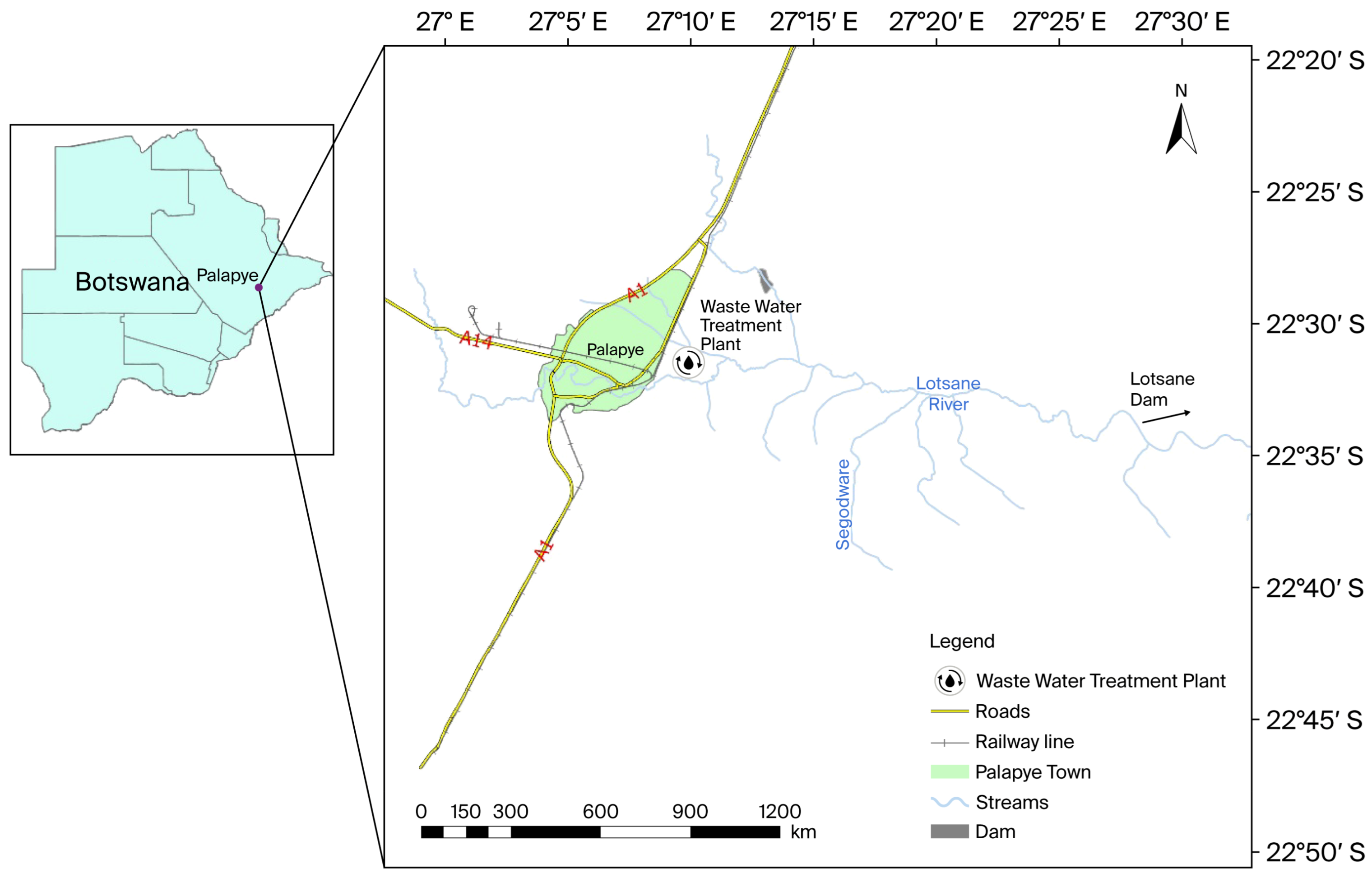
Palapye is a large village in Botswana with suburbs and is growing rapidly. Originally, Palapye served as a railway siding. It is situated in the Central District, some 271 km from the capital Gaborone along the A1 Road towards the northern side of the country. The Palapye 2011 population census was 37,000. Located 5 km to the west of the village is the Morupule coal mine and power station that supplies electricity to the whole country of Botswana. The construction to expand the power station to meet the demand of the country started in 2010, with the construction of the Morupule Power B station. The geographical location of Palapye wastewater treatment plant (PWWTP) is latitude 22°32′26.13″ S and longitude 27°10′22.65″ E (
Figure 1). The treatment plant is located northeast of the village (
Figure 1). The Palapye Petro system consists of 4 facultative ponds (FPs), 1 primary pond, 3 secondary ponds, and 6 oxidation ponds as a primary treatment stage. In this system, the TF and HT, which make a secondary treatment, are used. The FP 1, TFs and HTs were introduced to enhance the performance of the already existing pond system that consisted of 3 anaerobic ponds (APs), 2 FPs and 4 maturation ponds (MPs).
2. Materials and Methods
2.1. Sampling
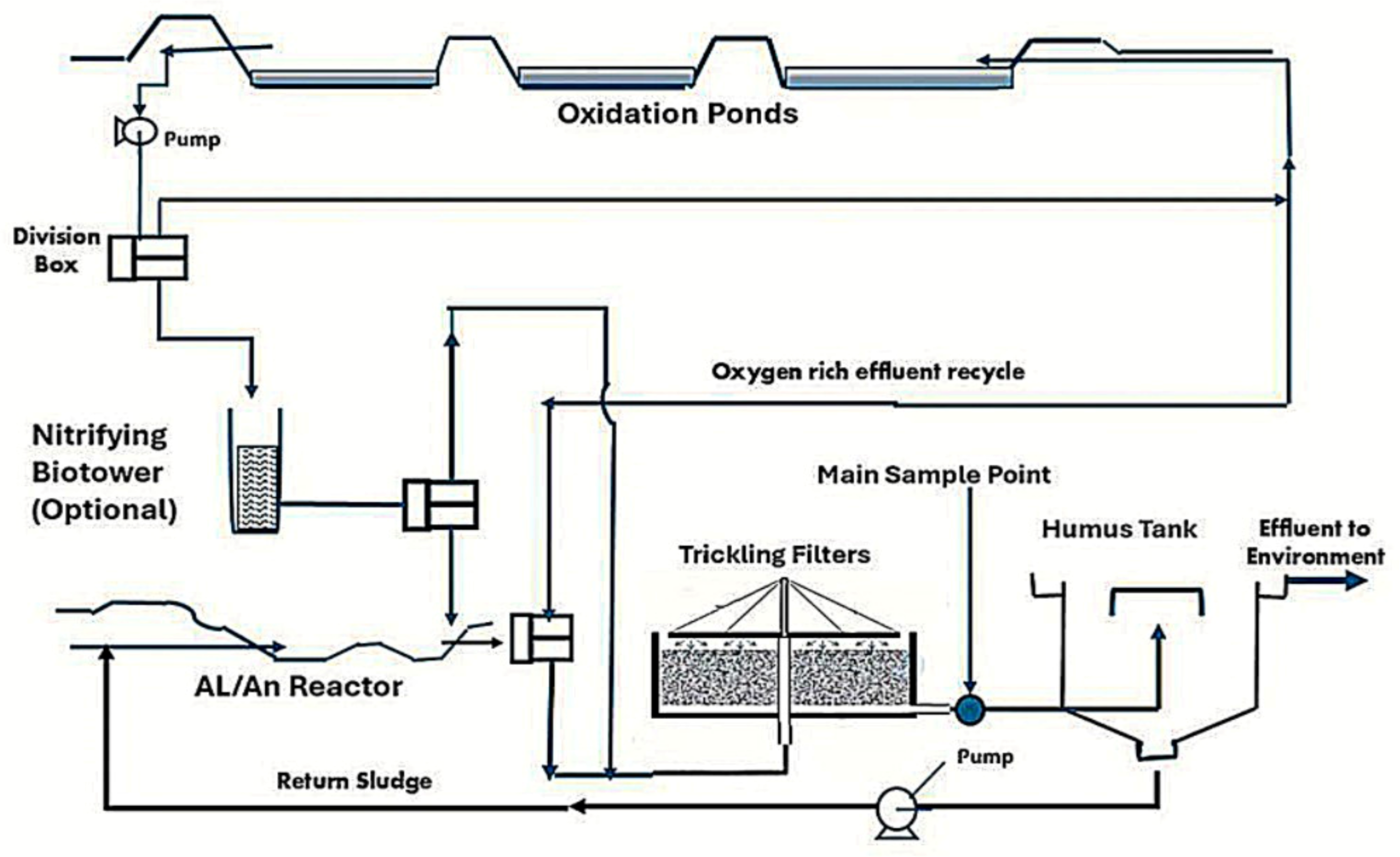
The samples were collected between the TFs and the HTs, using 25-litre containers and subsequently transported to the Mmamashia laboratory for jar tests. This is the point where tertiary treatment would be introduced as shown in
Figure 2. The collected TF effluent and jar test samples were meticulously preserved and analysed for turbidity, colour, COD, and TSS, in accordance with the Standard Methods for the Examination of Water and Wastewater (23rd Edition) [
10]. Sampling was conducted on eight occasions between March and September 2020. Preliminary studies involved triplicate testing for each parameter. Subsequently, the 39 experimental runs required by the Response Surface Methodology (RSM) design were performed with a single test per parameter. Jar tests were conducted using a standard six-paddle jar test apparatus (Phipps & Bird, Richmond, VA, USA). The procedure consisted of rapid mixing at 200 rpm for 2 min (coagulant addition and flash mixing), followed by slow mixing at 30 rpm for 20 min (flocculation), and a quiescent settling period of 30 min. After settling, supernatant samples were collected from a depth of 5 cm below the surface for analysis of turbidity, colour, COD, and TSS.
All collected samples were stored in a cold room maintained at a temperature range of 6 to 8 °C and analysed immediately upon arrival at the laboratory.
The Pond Enhanced Treatment and Operation (PETRO) system is an integrated wastewater treatment process that combines natural and engineered systems to effectively treat sewage and industrial effluents. The system typically includes oxidation ponds, where algae and aerobic bacteria work synergistically to degrade organic matter. A nitrifying biotower facilitates the conversion of ammonia to nitrates, while a trickling filter further breaks down pollutants through a biofilm of microorganisms. Settled biological solids are removed in a humus tank, and an Anaerobic/Anoxic (AL/An) pond reactor promotes denitrification and anaerobic digestion, converting nitrates to nitrogen gas and breaking down organic matter in oxygen-deprived conditions. This multi-stage approach ensures comprehensive removal of organic pollutants, nutrients, and pathogens, making the PETRO system a robust solution for sustainable wastewater treatment.
The pH range for the CCD (8.38–12.6) was selected based on preliminary experiments that identified optimal turbidity removal above pH 11, coupled with the known precipitation pH for magnesium hydroxide (pH > 10.5) and calcium carbonate (pH > 9.5). Given the secondary effluent’s hardness concentration (180–220 mg/L as CaCO3), this range was chosen to systematically evaluate the synergistic effects of pH-induced precipitation softening and coagulant addition.
2.2. Materials
The following materials were used in this study: Aluminium sulphate octadecahydrate (Al2(SO4)3.18H2O) from Sigma-Aldrich Inc., St. Louis, MO, USA (Lot number BCBX4913), Iron (III) chloride hexahydrate (FeCl3.6H2O) from Sigma-Aldrich (Lot number STBJ3986) and Organic Moringa oleifera powder (Batch 20003, imported and marketed by Moringa Technology Industry, Gaborone, Botswana). Nitric acid (HNO3) from Sigma-Aldrich Inc., St. Louis, MO, USA (Lot number MKCJ9713). Sodium hydroxide (NaOH) from Sigma-Aldrich (Lot number SLCC8729). All chemicals were of analytical grade.
Moringa oleifera seeds were obtained from community-based suppliers and small-scale growers in Botswana. The seeds were dehusked manually, and the kernels were dried at 60 °C for 24 h in a laboratory oven. The dried kernels were ground using a laboratory grinder and sieved to a particle size of <0.5 mm. The resulting powder was stored in airtight containers at room temperature until use. No chemical extraction or purification was performed; the crude powder was used directly as the natural coagulant.
2.3. Statistical Analysis and Model Evaluation
Statistical analysis was performed using Design Expert software (Version 12, Stat-Ease, Minneapolis, MN, USA). Polynomial models were fitted to the experimental data, and model selection was guided by FIT statistics, including R2, adjusted R2, predicted R2, and adequate precision. Model terms with p-values < 0.05 were considered statistically significant. Analysis of Variance (ANOVA) was used to assess overall model significance, with F-tests evaluating regression coefficients. The lack-of-FIT test was examined to ensure model adequacy, and diagnostic plots (normal probability plots, residuals vs. predicted, etc.) were used to verify ANOVA assumptions.
In addition to the diagnostic statistics generated by Design Expert software (Version 12), external validation was performed using 3 independent experimental runs (not included in the original 39-run CCD). These validation experiments were conducted at random points within the design space, and predicted values from the regression models were compared with actual measured values using percent error and root mean square error (RMSE) calculations. Additionally, residual analysis was performed to check for homoscedasticity and normal distribution of errors.
Model Graphs
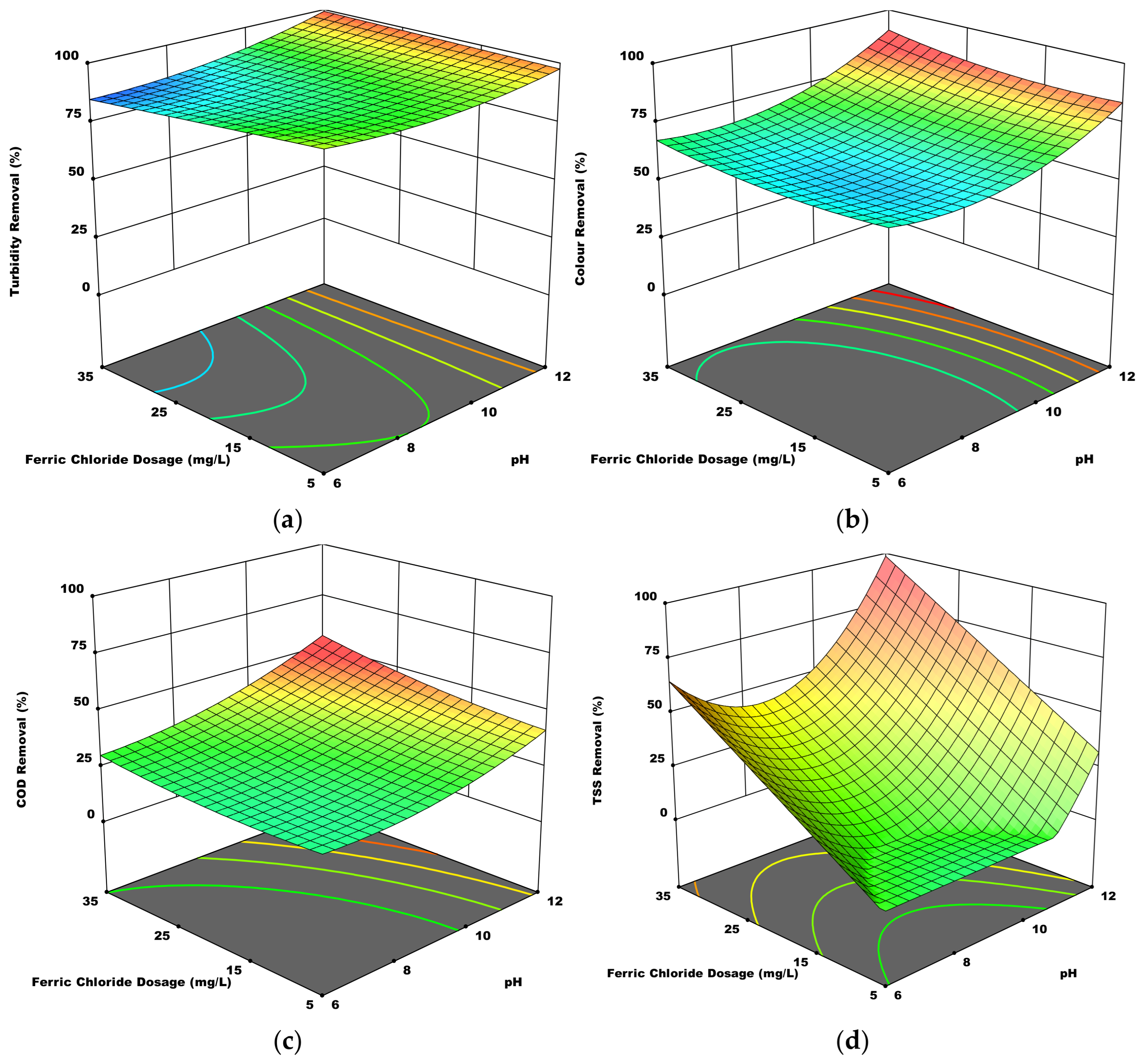
Model graphs were employed to aid in interpreting the selected model. A 3D Surface plot illustrated how the response varied as factors changed in a three-dimensional display encompassing the actual design points. These plots depicted the impact of Al2(SO4)3.18H2O, FeCl3.6H2O, and Moringa dosage on turbidity, colour, COD, and TSS as pH and dosage changed.
2.4. Quality Assurance and Replication
All jar test experiments were conducted in triplicate to ensure reproducibility, and results are reported as mean ± standard deviation. Laboratory blanks and control samples (without coagulant) were included in each experimental run. Analytical measurements followed [
12] with appropriate quality controls: turbidity was measured using a calibrated Hach 2100N turbidimeter (Hach Company, Loveland, CO, USA) with daily verification against standard formazin suspensions; COD analyses included potassium hydrogen phthalate standards and blank corrections; TSS determinations used pre-weighed glass fibre filters (Whatman GF/C Maidstone, Kent, UK) dried at 105 °C to constant weight. Instrument calibration was verified before each analytical batch.
2.5. Final Equation in Terms of Coded and Actual Factors
The regression computations were performed using the coded scale, allowing predictions about the response for specific factor levels. High levels were coded as +1, and low levels as −1 by default. The coded equation was valuable for comparing factor coefficients’ relative impact. Subsequently, the coded model was converted to the actual model, represented by the final equation in terms of actual factors.
2.6. Apllication of Response Surface Methodology
The data acquired from preliminary studies were employed in conjunction with the Central Composite Design (CCD, rotatable) and Response Surface Methodology (RSM) to optimise coagulation and flocculation parameters. The efficiency of pollutant removal was calculated using the following equation:
where
= the initial concentration
= the final concentration
The limitations of the one-factor-at-a-time OFAT) approach, including its time and resource-intensive nature, limited statistical analysis, and inability to bridge gaps between tested values, prompted the adoption of Response Surface Methodology (RSM). RSM is a statistical technique capable of comprehensively evaluating experimental data and developing mathematical models [
13,
14].
It is worth noting that Machlor et al. [
14] highlighted the scarcity of studies utilising RSM to model coagulant dosage. In the literature, RSM has been applied with various experimental designs, including the Box–Behnken design [
15], Central Composite Design (CCD) [
13,
16], and Uniform Design (UD) [
17]. The primary objective of our Design of Experiment (DOE) was to determine factor settings that maximise the removal efficiency of turbidity, colour, Chemical Oxygen Demand (COD), and Total Suspended Solids (TSS) for optimising the treatment process.
To achieve this, we employed Central Composite Design (CCD) and Response Surface Methodology (RSM) using Design Expert (DX) software version 12, obtained from StatEase, Minneapolis, MN, USA. The categorical factor in our study consisted of three levels: Al
2(SO
4)
3·18H
2O, FeCl
3·6H
2O, and
Moringa oleifera. These coagulants were evaluated based on their effectiveness in achieving optimum dosage and pH for turbidity, colour, COD, and TSS removal. The equation model used for predicting the optimal conditions is as follows [
18]:
where
Y—Predicted response (dependent variable).
—represents the linear coefficient.
—represents the quadratic coefficient.
—represents the Intercept coefficient.
, —Independent variables (factors).
—represents the quadratic effect (curvature) of the independent variable on the response.
—the squared value of the independent variable , accounting for non-linear relationships.
—represents the interaction effect between independent variables and on the response.
—the product of independent variables and , accounting for synergistic or antagonistic effects.
k—Number of independent variables (factors) studied and optimised in the experiment represents the random error.
, —denote specific independent variables.
We conducted a total of 39 experimental runs, as recommended by CCD for robust design purposes.
Table 1 presents the actual and coded values for the independent variables and their respective levels used in the RSM and CCD experimental design:
2.7. Economic Analysis Methodology
Cost analysis was performed based on local market prices in Botswana as of September 2020. Coagulant costs were obtained from major chemical suppliers in Gaborone: FeCl
3·6H
2O at USD 1800/ton (bulk industrial grade), Al
2(SO
4)
3·18H
2O at USD 1550/ton, and
Moringa oleifera seed powder at USD 650/ton (processed locally). Operational costs were calculated using Equation (3) [
19].
where
= Total operating cost per unit volume treated (USD/m
3),
= Coagulant unit price (USD/ton),
= Coagulant dosage (ton/m
3),
= Energy cost for rapid and slow mixing (USD/m
3) and
= Sludge handling and disposal cost (USD/m
3).
Energy costs were estimated based on 0.05 kWh/m3 for rapid mixing (1 min at 100 rpm) and 0.02 kWh/m3 for flocculation (20 min at 30 rpm), with electricity at USD 0.10/kWh. Sludge production was estimated at 0.5 kg dry solids/m3 treated, with disposal costs of USD 50/ton (dewatered sludge). Capital costs for dosing equipment (pumps, tanks, controls) were estimated at USD 15,000–20,000 based on quotations from local equipment suppliers. All costs are presented in 2020 USD.
4. Discussion
4.1. Interpretation of Coagulant Performance and Mechanisms
The comparative evaluation of Al
2(SO
4)
3·18H
2O, FeCl
3·6H
2O, and
Moringa oleifera seed powder within a single RSM-CCD framework revealed distinct performance profiles and mechanistic behaviours. The superior turbidity and TSS removal efficiency of FeCl
3, particularly at high pH, aligns with established literature on ferric salts, which are effective across a broad pH range due to the formation of highly charged polymeric species like Fe(OH)
3+ that enhance charge neutralisation and sweep flocculation [
7,
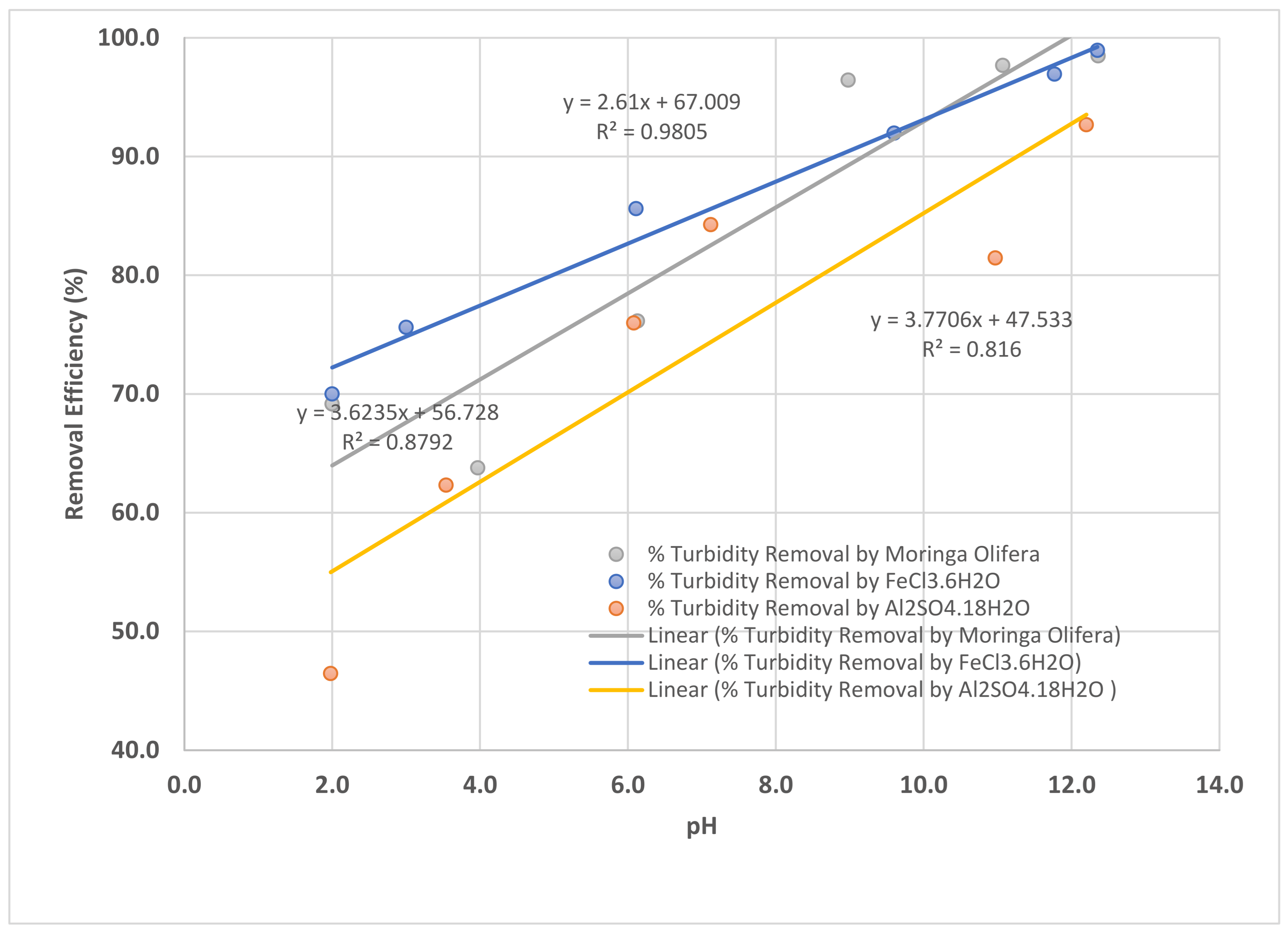
24]. The strong linear correlation (R
2 = 0.9805) between pH and turbidity removal for FeCl
3 underscores its high pH-sensitivity, likely due to the increased precipitation of ferric hydroxide at alkaline conditions, which enmeshes colloidal particles.
Conversely, the performance decline of
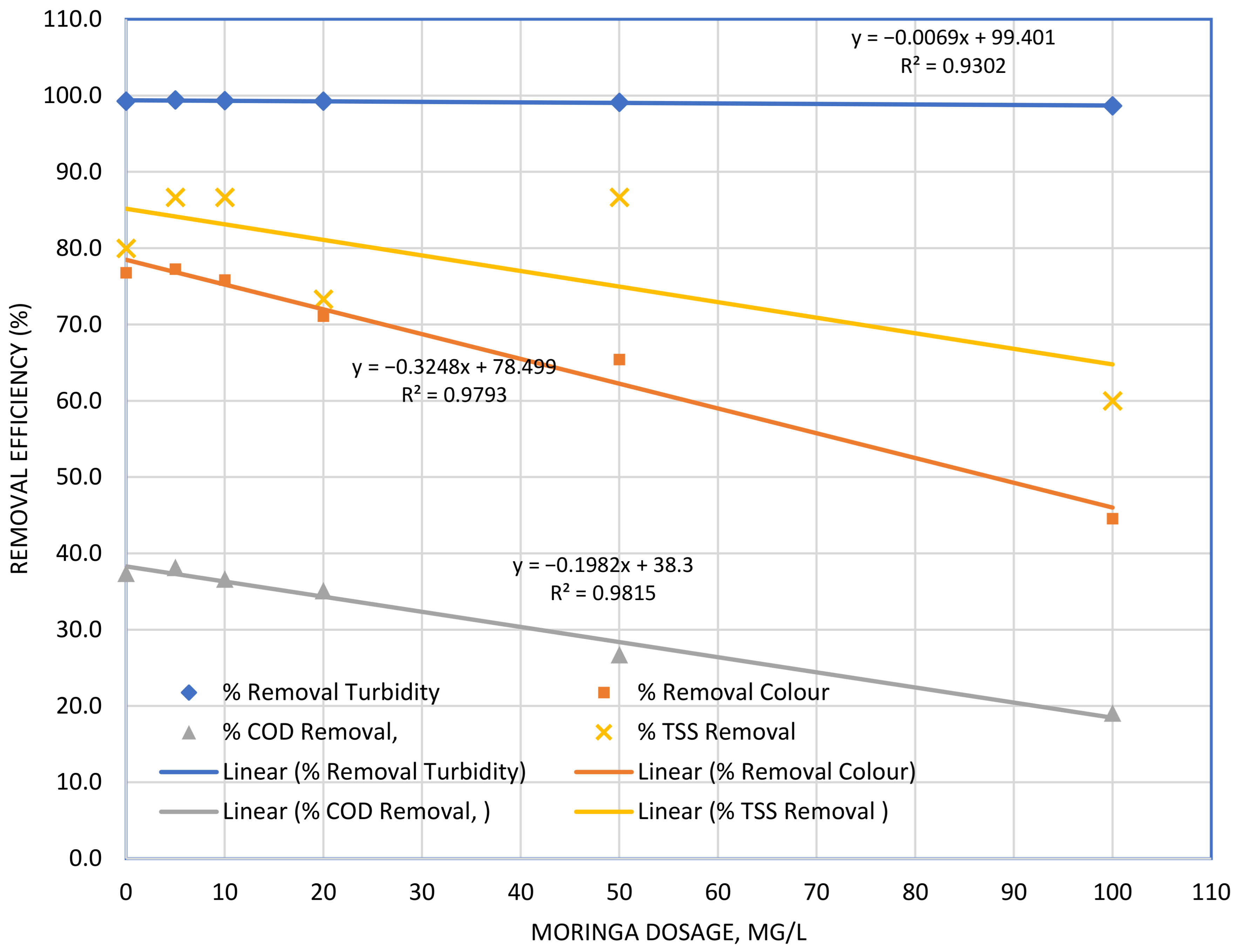
Moringa oleifera at dosages exceeding 20 mg/L is a critical finding. This phenomenon, where increasing coagulant dosage reduces removal efficiency, is characteristic of restabilisation via charge reversal [
5,
25].
Moringa oleifera proteins (cationic polypeptides) initially neutralise negatively charged particles. However, excess dosage can lead to an overall positive charge on particle surfaces, reinstating electrostatic repulsion and causing dispersion [
8,
25]. Furthermore, the leaching of soluble organic matter from the
Moringa oleifera powder at high doses may increase the soluble COD and colour of the effluent, as observed in our results (
Table 5). This highlights a significant operational constraint for natural coagulants: their optimal dosage window is narrow and must be precisely controlled, unlike the broader effective ranges of metal-based coagulants. Alum demonstrated consistent, robust performance, particularly for turbidity and colour removal. Its mechanism is primarily based on the formation of Al(OH)
3 precipitates that adsorb and entrain contaminants. Its moderate pH dependence (R
2 = 0.819) suggests effective performance across a wider operational pH band, making it a reliable, if less pH-optimised, alternative to FeCl
3 for the parameters studied.
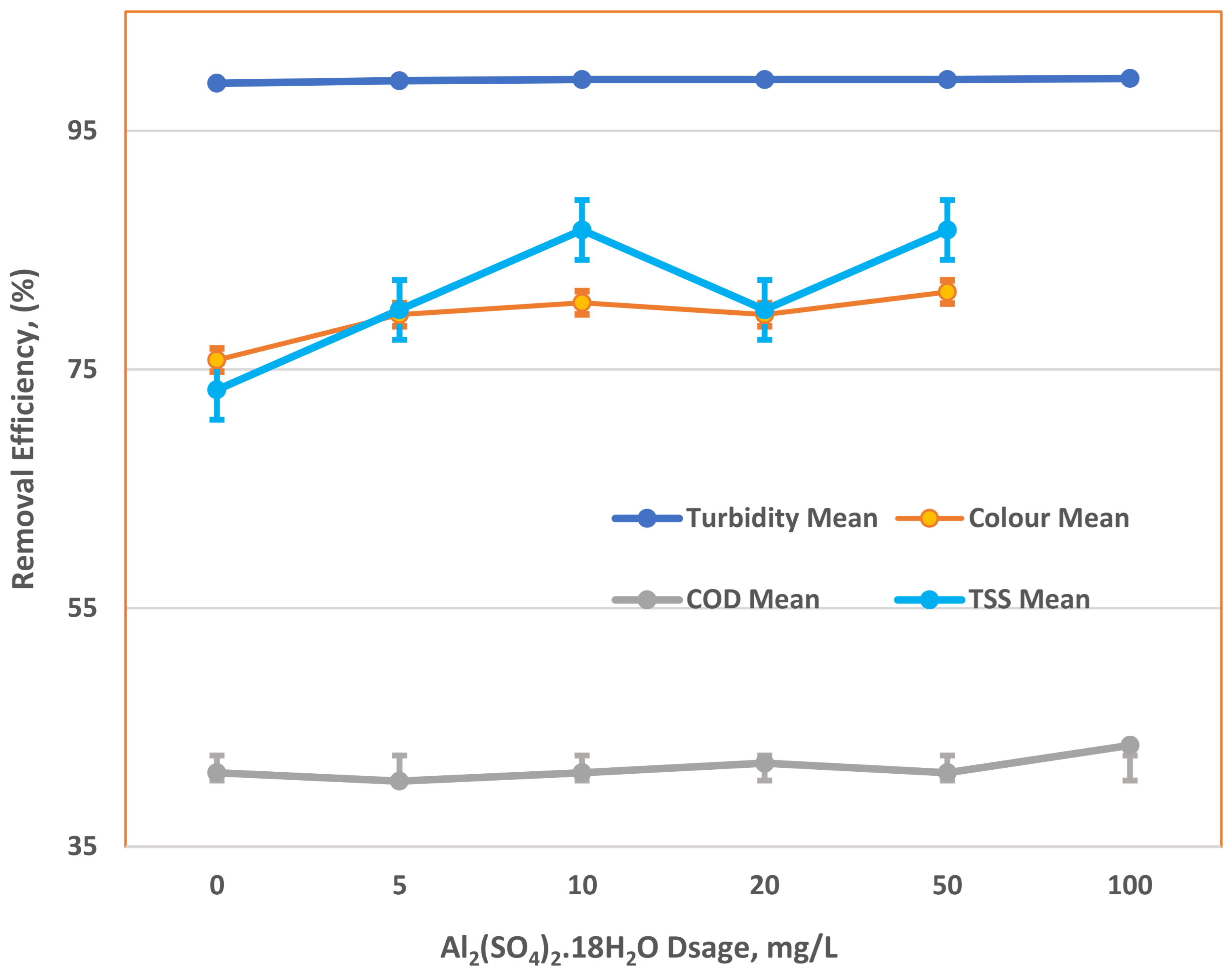
The residual COD (40–60 mg/L) represents soluble, non-settleable organic matter that remains after coagulation, consistent with coagulation’s inherent limitations. Coagulation-flocculation is primarily effective at removing particulate and colloidal organic matter, while soluble COD fractions (such as low molecular weight organic acids and carbohydrates) are not efficiently removed by this mechanism. This explains why COD removal efficiencies (56.6–63.8%) were consistently lower than turbidity and TSS removals (>90%) across all coagulants tested.
Coagulation vs. pH-Induced Precipitation at Alkaline pH
The optimal pH range identified in this study (pH 12–12.6) exceeds the classical optima for hydrolysing metal salts, where Al
3+ and Fe
3+ typically form insoluble hydroxide flocs (pH 5.5–7.5 for Al; pH 4–11 for Fe) [
15,
17]. At pH > 11, aluminium exists predominantly as soluble aluminate ions (Al(OH)
4−), incapable of forming Al(OH)
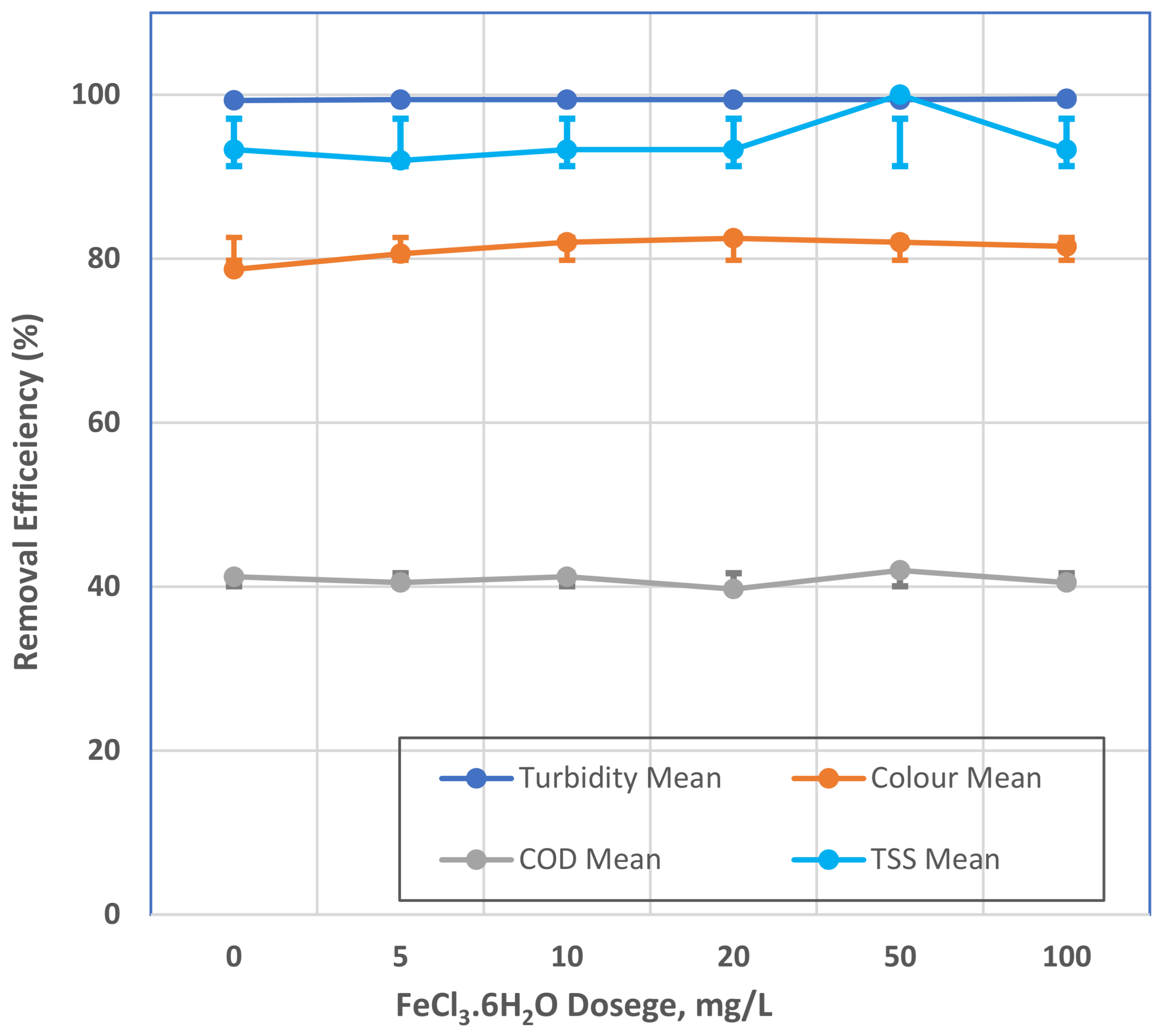
3(s) precipitates for sweep flocculation. The significant pollutant removal observed at 0 mg/L coagulant dose across all coagulants (e.g., 99.0–99.3% turbidity removal in
Table 3,
Table 4 and
Table 5) demonstrates that pH elevation alone, via NaOH addition, is a primary driver of treatment. This baseline removal is attributed to pH-induced precipitation of native hardness ions (Ca
2+, Mg
2+) present in the secondary effluent. At pH > 11, magnesium hydroxide (Mg(OH)
2(s)) and calcium carbonate (CaCO
3(s)) precipitate rapidly, forming voluminous microcrystalline flocs that enmesh suspended particles and organic matter through a sweeping mechanism [
25,
26]. Thus, the process at zero coagulant dose is better characterised as enhanced precipitation softening rather than conventional coagulation.
The true contribution of the added coagulants becomes evident when comparing removal efficiencies above this baseline. For FeCl
3 and Al
2(SO
4)
3, incremental improvements in residual turbidity, TSS, and COD (e.g., TSS removal increasing from 93.3% to 100% with 30 mg/L FeCl
3 in
Table 4) indicate that the added metal ions play a refining role. At extreme alkaline conditions, these metals form anionic hydroxo complexes (e.g., Fe(OH)
4−, Al(OH)
4−) that can adsorb onto the positively charged surfaces of freshly precipitated Ca
2+/Mg
2+ particles, acting as bridging agents to enhance floc density and settling [
7]. This incremental benefit, while modest in percentage terms for parameters already achieving >99% removal, is critical for consistently meeting the most stringent discharge limits, particularly for TSS and residual turbidity. For
Moringa oleifera, its cationic proteins are likely impaired at pH > 11, so its modest additional removal is probably due to organic matter being passively enmeshed within the sweeping flocs, explaining its narrow effective window and performance decline at higher doses [
5,
19]. In conclusion, the overall treatment efficiency results from a synergistic combination: NaOH-driven precipitation of hardness ions creates the primary sweeping flocs, while the added coagulants refine floc structure and enable the system to consistently achieve the most stringent discharge limits.
4.2. Insights from RSM Optimisation and Model Validity
The application of RSM with a Central Composite Design proved highly effective in modelling the complex, non-linear interactions between pH, coagulant dosage, and multiple response variables. The high R2 values (>0.97 for turbidity, colour, and COD) and insignificant lack-of-FIT tests (p > 0.05) for the primary models confirm that the quadratic polynomial models adequately represent the system within the experimental domain. The successful external validation, with low prediction errors (e.g., average RMSE of 5.mg/L for COD), affirms the models’ robustness and practical utility for predicting treatment outcomes under varied conditions.
The lower R2 for TSS (0.89) is attributed to greater inherent variability in biological floc characteristics in the secondary effluent, which affects settleability more than turbidity or colour. TSS removal is particularly sensitive to floc density and settling dynamics, which can be influenced by variable organic content and particle size distribution in the trickling filter effluent. This variability is not fully captured by the quadratic model, resulting in slightly lower predictive accuracy compared to the other parameters.
The multi-response optimisation using desirability functions provided a pragmatic solution to the common engineering challenge of balancing competing treatment goals [
16]. For instance, maximising turbidity removal often required a higher pH, which had a less pronounced effect on COD reduction. The desirability approach allowed for the identification of a compromise optimum that achieved high performance across all four key water quality indicators, demonstrating a methodology superior to single parameter optimisation [
26,
27].
4.3. Regulatory Compliance and Economic Viability
The core impetus for this study was the longstanding non-compliance of the Palapye PETRO system. The proposed placement of the coagulation unit between the trickling filters (secondary treatment) and humus tanks confirms its role as a tertiary polishing stage, targeting residual pollutants after biological oxidation. When evaluated against Botswana’s Effluent Standards for Wastewater Discharge, Botswana Department of Water Affairs (2012) [
4], the optimised coagulation process presents a viable solution for compliance. The relevant standards for discharge into a dam (Lotsane) typically include limits for TSS, COD, and turbidity. Under the optimal conditions identified for FeCl
3·6H
2O (30 mg/L, pH 12), the treated effluent quality was assessed for compliance, as summarised in
Table 10.
This analysis confirms that integrating a coagulation-flocculation unit between the trickling filters and humus tanks can bring the plant into full regulatory compliance for the critical parameters of TSS, COD, and turbidity. The economic analysis (
Section 3.5,
Table 9) indicates manageable operational costs, with FeCl
3 at approximately USD 0.089/m
3. While
Moringa oleifera offers a lower chemical cost (
$0.034/m
3), its sensitivity to overdosing and lower COD removal efficiency necessitate more sophisticated dosing control, potentially increasing operational complexity and cost [
26,
28]. Therefore, for guaranteed, consistent compliance, FeCl
3 is recommended despite its slightly higher chemical cost. The capital investment for dosing equipment (
$15,000–
$20,000) is modest compared to the cost of major plant upgrades or non-compliance penalties.
4.4. Limitations and Recommendations for Future Work
This study was conducted at the laboratory (Jartest) scale, which is an essential first step but has inherent limitations. Scaling up to full plant operation may introduce variables such as fluctuating inflow characteristics, imperfect mixing, and differences in settling dynamics [
25,
28]. Therefore, a pilot-scale trial is strongly recommended as the next step before full implementation.
Furthermore, the study focused on physicochemical parameters (turbidity, colour, COD, TSS). Future work should investigate the impact of this coagulation stage on downstream processes, particularly disinfection (e.g., chlorine demand may change) and the fate of nutrients (Nitrates, Phosphates). The effect of sludge production from the added coagulants on the existing sludge handling processes at the plant also requires evaluation.
Lastly, while
Moringa oleifera showed limitations in this secondary effluent context, its potential as a sustainable, low-cost pre-coagulant or in hybrid treatment schemes (e.g., combined with a reduced dose of FeCl
3) warrants further investigation [
26] to harness its benefits while mitigating its drawbacks.
4.5. Residual Metals: A Priority for Future Work
An important consideration for full-scale implementation is the residual concentration of coagulant-derived metals (Al
3+, Fe
3+) in the final effluent. At optimal pH (12–12.6), aluminium shifts to soluble aluminate (Al(OH)
4−), potentially increasing residual Al [
15]. Iron, while less soluble across a broad pH range, also requires verification [
7].
Notably, in magnesium-bearing waters such as secondary effluent, Al
3+ may precipitate as hydrotalcite (Mg
2+-Al
3+ layered double hydroxide) at high pH, effectively scavenging Al
3+ from solution [
7,
29]. This mechanism could mitigate residual Al
3+ concerns at Palapye, but direct experimental confirmation is lacking. Therefore, future work must quantify residual Al
3+ and Fe
3+ concentrations under optimal conditions and compare results against Botswana’s discharge standards, Botswana Department of Water Affairs (2012) [
4]. If national standards lack Al
3+/Fe
3+ limits, comparison with international guidelines (WHO, USEPA) or ecotoxicological benchmarks [
2,
6] is recommended. Long-term monitoring of sediment accumulation in the Lotsane dam would also assess potential metal enrichment over time. Addressing this gap ensures comprehensive environmental protection.