


Abstract
Poorly soluble hydrophobic organic pollutants, such as indole and diethyl phthalate (DEP), are difficult to remove efficiently from complex industrial wastewater due to low solubility and competitive adsorption. In this study, low-rank coal-based activated cokes derived from Wanli long-flame coal and Zhaotong lignite were modified through a combined process of acid-washing pretreatment and trimethylchlorosilane (TMCS) grafting. The acid-washing step effectively removed ash and unblocked pores, increasing the specific surface area and pore volume of the optimized Zhaotong lignite-based sample by 43.7% and 53.3%, respectively. Subsequent TMCS grafting successfully introduced hydrophobic methyl groups onto the surface, significantly enhancing hydrophobicity. The water contact angles of the composite materials (acid-washed plus TMCS-grafted) increased to 127.3° and 139.7°, compared to 117.8° and 112.6° for the original samples. The modified adsorbent derived from Zhaotong lignite exhibited high adsorption capacities, reaching 139.47 mg·g−1 for indole and 120.19 mg·g−1 for DEP in single-component systems, representing an increase of 20.1% for indole and 28.7% for DEP compared to the unmodified adsorbent. More importantly, in a competitive system containing phenol at PH = 10, the materials demonstrated superior selectivity towards the target hydrophobic pollutants. The phenol removal rate was 65.97%, and the removal rates for indole and DEP increased sharply to 98.17% and 92.17%, respectively. This work provides a feasible strategy for the advanced treatment of complex organic wastewater using coal-based adsorbents, achieving a dual enhancement in both adsorption capacity and selectivity.
1. Introduction
Wastewater from coking, coal chemical and fine chemical industries is typically characterized by high concentrations of difficult-to-degrade organic compounds; such effluents contain large quantities of aromatic and heterocyclic organic compounds that are structurally complex, highly toxic and poorly biodegradable. Their discharge not only causes eutrophication of water bodies and disrupts aquatic ecosystems, but certain pollutants also possess teratogenic, carcinogenic and mutagenic properties. Through bioaccumulation via the food chain, they pose a potential threat to human health, and thus represent a key focus and challenge in the advanced treatment of industrial effluents [1,2,3]. Indole and diethyl phthalate (DEP) are typical representative hydrophobic pollutants in this type of wastewater. Among these, indole [4] is widely found in wastewater from coking by-products, coal tar processing and the production of nitrogen-containing organic intermediates. As a nitrogen-containing heterocyclic core structure, it is chemically stable and readily forms synergistic toxicity with other pollutants. DEP [5], a typical phthalate plasticizer, is widely detected in wastewater from industries such as plastics processing, paint manufacturing and personal care product production due to its massive production and usage volumes. This substance exhibits both environmental persistence and bioaccumulation, and has been included on the priority control pollutant lists of many countries [6]. Reported concentrations of phenolic compounds in coking wastewater are generally at the level of hundreds to more than 1000 mg·L−1, while individual indole concentrations are commonly reported at the mg·L−1 to tens of mg·L−1 level, and DEP is usually detected at μg·L−1 levels in real wastewater. These pollutants share core characteristics of low water solubility, high hydrophobicity and strong aromaticity. In conventional biological treatment units, they tend to accumulate on microbial surfaces, causing metabolic inhibition, and are difficult to degrade completely by microorganisms. Consequently, pollutants frequently bypass treatment systems, becoming a key limiting factor in achieving compliant wastewater discharge [7].
Due to its mature process, simple operation, high treatment efficiency, and rapid capture capacity for recalcitrant organic compounds [8], adsorption has become one of the mainstream technologies for advanced treatment of organic wastewater and is widely applied in the end-of-pipe treatment and reuse processes of coking and fine chemical industry effluents [9]. Compared with traditional powdered activated carbon and granular activated carbon, coal-based activated coke (activated coke) is produced from low-rank coal [10] through carbonization and activation. It offers significant advantages such as a wide range of raw material sources, relatively low production costs, adjustable and controllable pore structures, high mechanical strength, excellent wear resistance and regenerability. Furthermore, its surface is rich in aromatic carbon skeletons and oxygen-containing functional groups, giving it a natural affinity for adsorbing aromatic organic compounds. It has demonstrated significant potential for application in the treatment of high-load organic wastewater, such as coking wastewater and coal chemical wastewater [11]. However, in practical engineering applications, complex organic wastewater containing indole and DEP often coexists with a large amount of hydrophilic, ionizable organic pollutants (such as phenol, benzoic acid, and ammonia nitrogen). The adsorption process of coal-based activated coke is easily constrained by multiple factors, including competitive adsorption by coexisting solutes, the formation of a surface hydration film, and increased diffusion resistance in the pore channels. Hydrophilic/ionizable components can preferentially occupy polar adsorption sites on the surface of activated coke and form a dense hydration layer on the material surface [12], significantly reducing the probability of effective contact between hydrophobic target pollutants and the pore walls. This results in a significant portion of the adsorbent capacity being consumed by non-target pollutants, which not only weakens the selectivity and utilization efficiency of the adsorbent towards target pollutants, but also increases the frequency of adsorbent regeneration and operational costs, severely limiting the engineering application value of coal-based activated coke in the targeted treatment of complex organic wastewater [13].
Consequently, the key to overcoming the bottlenecks in the engineering applications of coal-based adsorbents and enhancing their engineering value lies in how to achieve hydrophobic modification of the material surface through interfacial chemical regulation, while retaining the advantages of the coal-based adsorbent’s pore structure, thereby improving its affinity and selectivity for hydrophobic target pollutants. In recent years, hydrophobic modification has been widely investigated as an effective strategy to improve the adsorption affinity of carbon-based adsorbents toward weakly soluble organic pollutants. Reported modification methods mainly include polymer coating, surface carbonization, inert element doping, and silane grafting [14]. Polymer coating using polydimethylsiloxane or polystyrene can significantly enhance surface hydrophobicity, but the polymer layer may block pore channels and increase mass-transfer resistance, resulting in reduced pore accessibility. Surface carbonization can decrease the content of polar oxygen-containing groups, but the modification conditions are relatively harsh and the degree of hydrophobic regulation is difficult to control. Inert element doping can adjust the surface electronic structure of carbon materials, but the modification cost is relatively high and its contribution to hydrophobic selectivity remains limited. Compared with these methods, small-molecule silane grafting has attracted increasing attention because silane molecules can react with oxygen-containing functional groups on carbon surfaces through Si-O bonding and introduce low-polarity organic groups with relatively limited pore blockage [15]. Although previous studies have demonstrated the feasibility of hydrophobic modification for activated carbon, biochar, carbon nanotubes, and other carbonaceous adsorbents, several issues remain insufficiently clarified. First, most existing studies focus on conventional carbon materials, whereas low-rank coal-based activated coke has received much less attention, despite its low cost, abundant raw material source, adjustable pore structure, and potential for large-scale wastewater treatment. Second, the synergistic effect of acid washing pretreatment and silane grafting on pore accessibility, surface chemistry, and hydrophobicity of low-rank coal-based activated coke remains unclear. Third, most studies mainly evaluate adsorption capacity in single-component systems, while the selective adsorption behavior of hydrophobic target pollutants in the presence of coexisting hydrophilic or ionizable organic compounds has not been sufficiently discussed [16]. Therefore, it is necessary to clarify how pore-structure regulation and hydrophobic interface modification jointly affect the adsorption capacity and selectivity of low-rank coal-based activated coke toward typical hydrophobic organic pollutants.
Based on the above research gaps, this study takes low-rank coal activated coke (LAC) prepared from Wanli long-flamed coal (WL) and Zhaotong lignite (ZT) as the subject of study, and establishes an acid washing pretreatment–TMCS grafting hydrophobic modification: the acid washing pretreatment is used to remove mineral ash from the LAC, unblock pores clogged by inorganic fillers, and simultaneously expose more active sites on the pore walls, thereby providing sufficient reaction sites for subsequent salinization and grafting; TMCS grafting was employed to introduce hydrophobic methyl groups onto the surface of the LAC via covalent bonding, thereby reducing surface polarity and enhancing surface hydrophobicity, which in turn strengthened its selective adsorption capacity for indole/DEP. In this study, nitrogen adsorption–desorption, static water contact angle measurement, and Fourier-transform infrared spectroscopy were used to systematically analyze the changes in pore structure, surface wettability, and functional groups of low-rank coal activated coke before and after modification. Single-component adsorption experiments were then conducted to investigate the isothermal and kinetic adsorption behavior of the modified materials toward indole and DEP, thereby clarifying the main factors governing the adsorption process. Furthermore, under simulated alkaline wastewater conditions, through phenol–indole/DEP two-component competitive adsorption experiments, the selective enrichment of hydrophobic target pollutants by the modified materials was verified, revealing the selective adsorption mechanism under the coupled effects of pore structure, surface chemistry and solute properties. The research findings aim to provide new insights into the interfacial engineering modification of coal-based adsorbents, while offering experimental evidence and theoretical support for their targeted application in the advanced treatment of complex organic wastewater from coking and fine chemical industries.
2. Materials and Methods
2.1. Raw Materials and Reagents
The low-rank coal activated coke used in the experiments was prepared from Wanli long-flamed coal (WL) and Zhaotong lignite (ZT), and was named WL-LAC and ZT-LAC respectively. Indole, diethyl phthalate (DEP), and phenol were analytical-grade reagents. Trimethylchlorosilane (TMCS), pyridine, acetone, anhydrous ethanol, and hydrochloric acid were commercially available analytical-grade reagents and were used without further purification.
2.2. Acid Washing Pretreatment
To remove mineral ash and release blocked pores, LAC was pretreated with hydrochloric acid. Briefly, 10 g of LAC sample was placed in a conical flask containing 500 mL of 2 mol·L−1 HCl solution. The flask was equipped with a reflux condenser and heated in an oil bath at 85 °C under magnetic stirring for 5 h. After the reaction, the acid-washed sample was repeatedly rinsed with ultrapure water until no precipitate was observed when the washing solution was tested with AgNO3 solution, indicating the removal of residual chloride ions. The acid-washed LAC was then vacuum-dried at 75 °C for 24 h and stored in sealed bags for further use. The obtained acid-washed samples were denoted as WL-LAC-AW and ZT-LAC-AW.
2.3. Hydrophobic Modification with Trimethylsilane (TMCS)
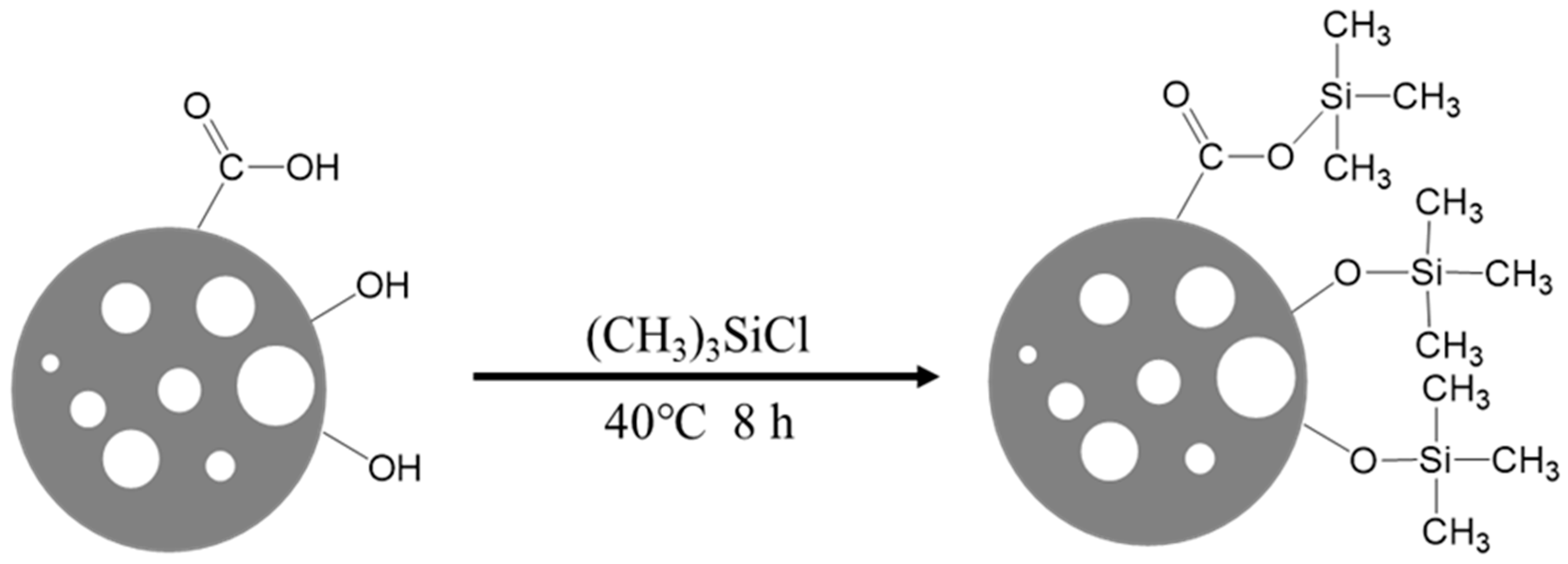
TMCS hydrophobic graft modification was carried out using WL-LAC, ZT-LAC and acid-washed samples (WL-LAC-AW, ZT-LAC-AW) as matrices. TMCS grafting modification was carried out as follows. First, 2 g of LAC sample was dispersed in 100 mL of acetone by ultrasonication for 30 min, which was used as the reaction solvent. Then, 10 mL of trimethylchlorosilane (TMCS) was slowly added under continuous stirring, followed by the addition of 5 mL of pyridine to neutralize the acidic species generated during the reaction. The reaction was performed in a thermostatic water-bath shaker at 40 °C for 8 h with a shaking speed of 150 r·min−1. After the reaction, the solid sample was separated by filtration and washed with anhydrous ethanol to remove residual TMCS and acetone from the modified LAC surface. The sample was then washed with ultrapure water until the washing solution did not react with AgNO3 solution to form precipitates, indicating the removal of residual chloride species. Finally, the obtained sample was vacuum-dried at 75 °C for 12 h and sealed for further use. The selected TMCS dosage and reaction conditions were determined based on preliminary trials and the consideration of maintaining a balance between effective hydrophobic grafting and pore accessibility. Samples grafted directly without acid washing are designated as WL-LAC-TMCS and ZT-LAC-TMCS; samples grafted after acid washing are designated as WL-LAC-AW-TMCS and ZT-LAC-AW-TMCS. A schematic diagram of the organic grafting reaction during the modification process is shown in Figure 1.
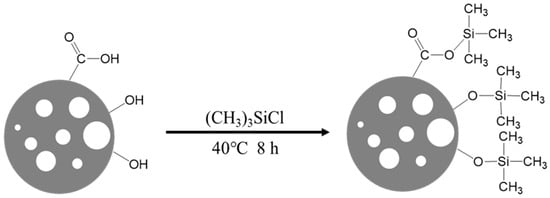
Figure 1.
Schematic diagram of the reaction for the graft modification of low-rank coal activated coke with trimethylsilane.
2.4. Characterization Methods
The specific surface area, pore volume, and mean pore diameter of the samples were determined by nitrogen adsorption–desorption analysis. The surface wettability was characterized by static water contact angle (WCA) measurement. Fourier-transform infrared spectroscopy (FTIR) was used to analyze changes in surface functional groups and characteristic grafting peaks.
2.5. Adsorption Experiments
2.5.1. Method
In total, 0.01 g of adsorbent was added to 25 mL of a pollutant solution of a specific concentration, and the mixture was shaken at 150 r·min−1 in a constant-temperature water bath at 25 ± 1 °C for 3 h until adsorption equilibrium was reached. The concentrations of phenol and DEP before and after adsorption were determined by HPLC, while the concentration of indole was determined using a UV–Vis spectrophotometer. The concentration of the pollutant after adsorption was calculated from a standard curve, and the pollutant removal rate γ and adsorption capacity Qe were calculated using the following formulae:
In the equations, C0 and Ce represent the initial and equilibrium concentrations of the pollutant, respectively. Ct is the concentration of the pollutant at adsorption time t, in mg·L−1. V is the volume of the pollutant solution, in L, and m is the mass of the LAC adsorbent, in g.
2.5.2. Adsorption Isotherms
DEP solutions with initial concentrations ranging from 8.88 to 88.8 mg·L−1 and indole solutions ranging from 25 to 125 mg·L−1 were prepared. A specific mass of LAC adsorbent was added to each, and the mixtures were shaken at a constant temperature until adsorption equilibrium was reached. The equilibrium concentrations were measured and the equilibrium adsorption capacities calculated. The Langmuir [17] and Freundlich [18] models were used to fit the adsorption isotherm data. The model expressions are as follows:
Here, Qm is the maximum adsorption capacity of the Langmuir model, mg·g−1. b is the Langmuir adsorption constant, L·mg−1. KF is the Freundlich adsorption constant related to adsorption strength, and n is the Freundlich adsorption constant related to the heterogeneity of the adsorption system.
2.5.3. Adsorption Kinetics
Under conditions of fixed initial pollutant concentration, LAC adsorbents before and after modification were added to the solution. Samples were taken at different adsorption times, the pollutant concentration was measured, and the instantaneous adsorption amount Q(t) was calculated. The adsorption kinetics data were fitted using the quasi-first-order kinetic model and the quasi-second-order kinetic model [19] respectively. The model expressions are as follows:
Here, Qt is the pollutant adsorption capacity at time t, in mg·g−1. K1 is the pseudo-first-order adsorption rate constant, in h−1, and K2 is the pseudo-second-order adsorption rate constant.
2.5.4. Selective Adsorption Experiments
To simulate the water quality conditions of actual organic wastewater, a two-component simulated wastewater with a phenol/indole ratio of 10/1 and phenol/DEP = 10/1, and constant-temperature adsorption experiments were conducted by adding LAC adsorbents before and after modification, respectively, to compare the selective removal behavior of the material towards hydrophilic pollutants (phenol) and hydrophobic target pollutants (indole/DEP).
All adsorption experiments were performed in triplicate under identical conditions, and the average values were used for data analysis. The relative standard deviations of the repeated measurements ranged from 0.65% to 5.31%, indicating good reproducibility of the adsorption experiments.
3. Results and Discussion
3.1. Characterization of Low-Rank Coal Activated Coke Before and After Modification
3.1.1. Pore Structure Changes in Hydrophobic-Modified Low-Rank Coal Activated Coke
Pore structure is a key factor determining the adsorption performance of activated coke. The specific surface area, pore volume and mean pore diameter parameters of samples at different modification stages are shown in Table 1. Both the original WL-LAC and ZT-LAC exhibit a pore structure characterized by mesopores, with an average pore diameter of approximately 3.2–3.7 nm. The pore size of the mesoporous structure matches that of medium-molecular-weight pollutants such as indole and DEP, facilitating the entry of pollutant molecules into the pore channels and enabling their enrichment within the pores. The specific surface area of the original ZT-LAC is 393.278 m2·g−1, which is slightly higher than that of WL-LAC (355.814 m2·g−1), while the difference in pore volume between the two is small, at 0.362 cm3·g−1 and 0.330 cm3·g−1. This difference is primarily attributed to the degree of coalification, volatile matter and functional group content of the raw coal, as well as the evolution of pore wall structure during the coking process. The molecular structure of low-rank lignite contains a greater abundance of oxygen-containing functional groups and structural defects, which provides more active sites for subsequent acid leaching and silane grafting, thereby exhibiting more significant structural and interfacial tunability [20].

Table 1.
Pore structure parameters of low-rank coal activated coke before and after modification.
Following TMCS grafting, both samples exhibited varying degrees of pore structure degradation, manifested specifically as a decrease in specific surface area and pore volume. In the unwashed samples, the specific surface area of WL-LAC decreased from 355.814 to 280.654 m2·g−1, a reduction of approximately 21.1%, while the pore volume decreased from 0.330 to 0.284 cm3·g−1; for ZT-LAC, the specific surface area decreased from 393.278 to 360.769 m2·g−1, a reduction of approximately 8.3%, while the pore volume decreased from 0.362 to 0.349 cm3·g−1. This indicates that although TMCS is a small-molecule grafting agent, it may still render part of the available surface area inaccessible to the nitrogen probe by covering the microscopic roughness of the pore walls, occupying pore mouth sites, or forming a low-permeability organosilicon layer locally on the pore walls, thereby resulting in a decrease in the apparent BET parameters [21]. It is worth noting that the average pore size of the modified samples underwent only a slight change, ranging from approximately 3.6 to 4.4 nm, suggesting that TMCS grafting merely caused a narrowing of the effective channels at the pore entrances and walls, without triggering a collapse of the overall pore network.
The acid washing pretreatment had a more pronounced effect on optimizing the pore structure of the activated coke. The specific surface area and pore volume of WL-LAC-AW increased to 368.451 m2·g−1 and 0.394 cm3·g−1 respectively, representing increases of approximately 3.6% and 11.9% compared to the original WL-LAC; ZT-LAC-AW, on the other hand, increased to 565.322 m2·g−1 and 0.555 cm3·g−1, representing increases of approximately 43.7% and 53.3% respectively compared to the original ZT-LAC. These results indicate that the masking effect of mineral ash and inorganic fillers on the pore channels is more pronounced in the ZT samples; acid washing to remove minerals can significantly release the blocked pore volume and expose more micro- and mesopore surfaces. Furthermore, after acid washing, samples subjected to subsequent TMCS grafting still exhibited a certain degree of pore blockage; for instance, the specific surface area of WL-LAC-AW-TMCS decreased by approximately 11.5% compared to the acid-washed sample, while that of ZT-LAC-AW-TMCS decreased by approximately 6.3%. However, their overall pore structures remained superior to those of samples grafted directly without prior acid washing. This indicates that acid washing has a synergistic effect in terms of removing ash, exposing pore wall sites, and enhancing the effective grafting rate: on the one hand, it increases the accessible surface area of the activated coke; on the other hand, it reduces the masking effect of mineral components on the grafting reaction and interference from side reactions, thereby achieving more thorough surface modification while retaining the advantages of the pore structure.
3.1.2. Contact Angle Analysis of Hydrophobic-Modified Low-Rank Coal Activated Coke
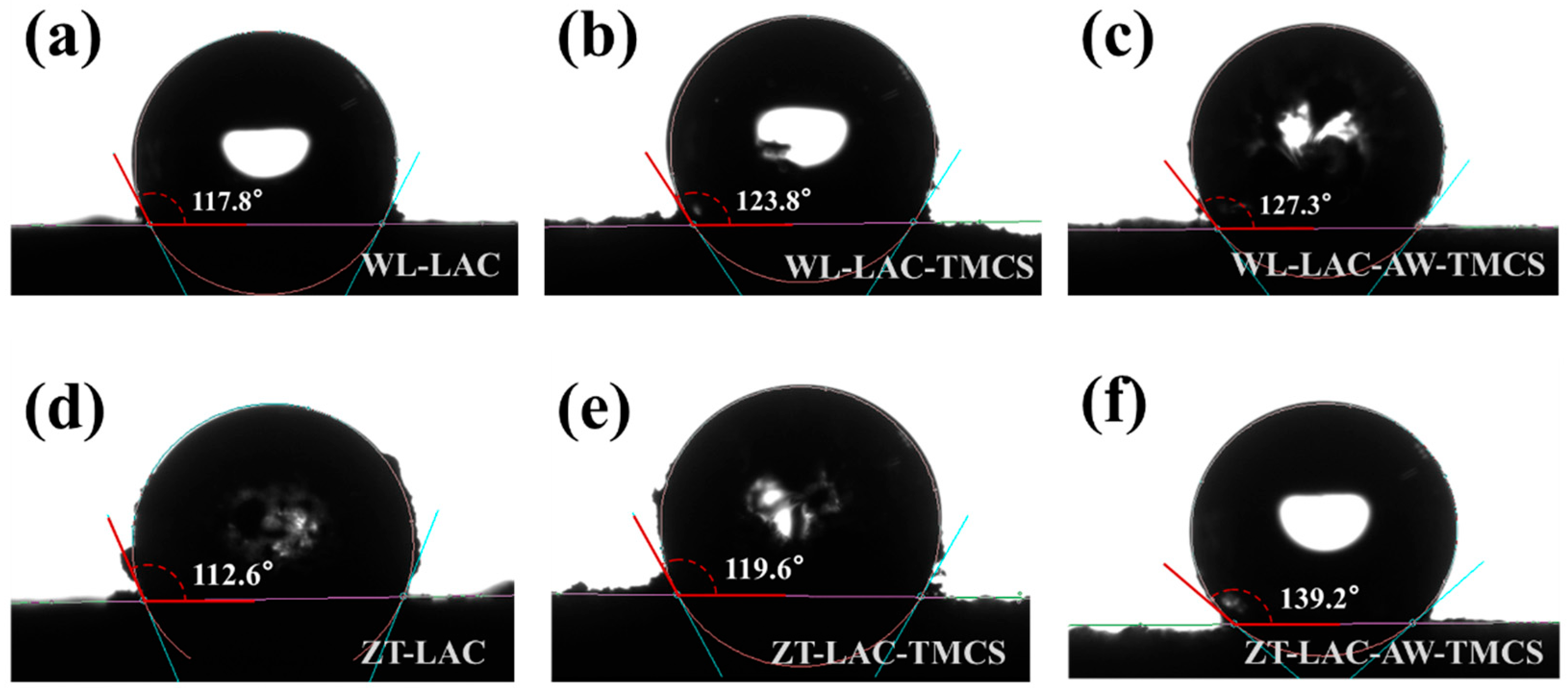
The wettability of the material surface directly affects the interfacial distribution and pore penetration behavior of pollutants in aqueous systems; the static water contact angle results for samples at different modification stages are shown in Figure 2. The original WL-LAC and ZT-LAC already exhibited strong hydrophobicity, with water contact angles of 117.8° and 112.6° respectively. This represents a moderately hydrophobic interfacial characteristic determined by the aromatic carbon framework of the coal-based carbon matrix combined with a small number of polar sites [22]. After TMCS grafting modification, the water contact angles of the WL series samples increased to 123.8° (grafting without acid washing) and 127.3° (grafting after acid washing). For the ZT series samples, the water contact angles increased to 119.6° and 139.7°, respectively. These results are consistent with the previous inference: ZT raw coal has a lower degree of coalification, with a greater abundance of surface oxygen sites and structural defects, which is more conducive to the grafting reaction of silane reagents, thus yielding a more pronounced hydrophobic modification effect.
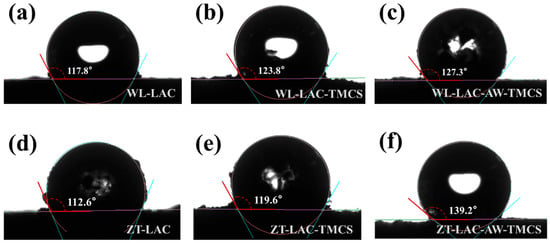
Figure 2.
Changes in the static water contact angle of low-rank coal activated coke. (a) WL-LAC, (b) WL-LAC-TMCS, (c) WL-LAC-TMCS, (d) ZT-LAC, (e) ZT-LAC-TMCS, (f) ZT-LAC-TMCS before and after modification.
3.1.3. FTIR Analysis of Hydrophobic-Modified Low-Rank Coal Activated Coke
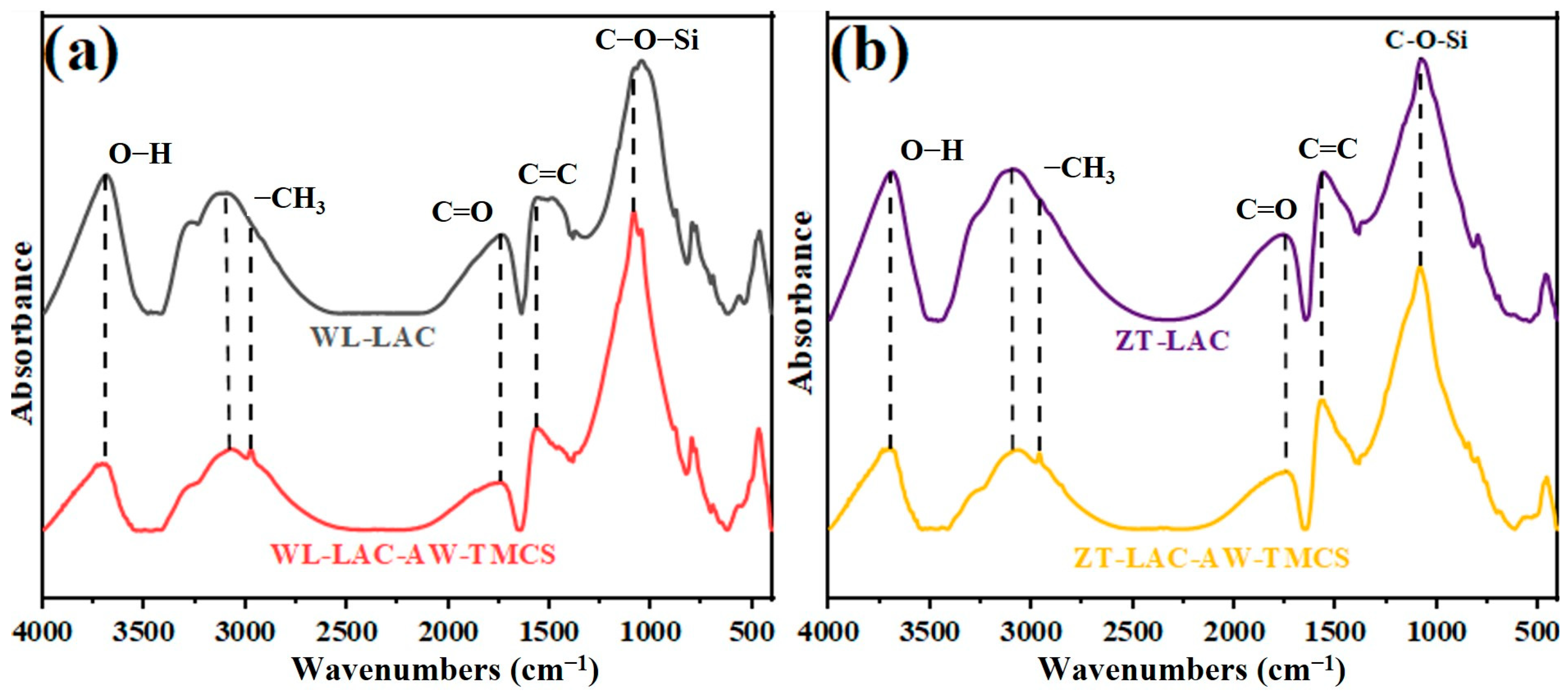
FTIR spectra provide information on changes in the surface functional groups of the samples. The infrared spectra of WL-LAC and ZT-LAC before and after modification are shown in Figure 3. Prior to modification, the samples exhibited a distinct -OH stretching absorption peak in the 3200–3700 cm−1 wavenumber range. This peak mainly originates from hydroxyl groups, phenolic hydroxyl groups, and physically adsorbed water on the sample surface. In the range of 1000–1100 cm−1, the stretching vibration signals of C-O bonds were observed, indicating the presence of oxygen-containing functional groups on the sample surface [23]. After TMCS modification, the infrared spectra of the samples changed markedly. The characteristic -OH signal in the range of 3200–3700 cm−1 was significantly weakened, indicating that surface polar groups were consumed during the grafting reaction or covered by the hydrophobic layer formed by grafted TMCS. In addition, a new peak corresponding to the -CH3 stretching vibration appeared at approximately 2958 cm−1, confirming the successful introduction of methyl groups from TMCS onto the activated coke surface. Combining the results of wettability and FTIR analyses, it is evident that [24] TMCS grafting can effectively reduce the surface polarity of low-rank coal activated coke and enhance surface hydrophobicity, thereby providing a more favorable environment for the interfacial partitioning and intra-porous enrichment of hydrophobic pollutants.
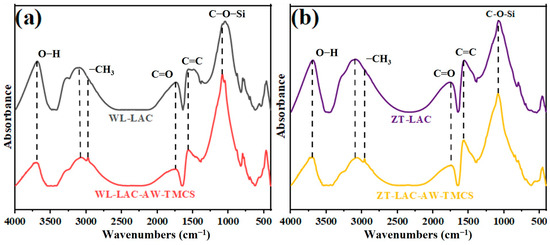
Figure 3.
Infrared spectra of (a) Wanli and (b) Zhaotong low-rank coal activated coke before and after modification.
3.2. Monocomponent Adsorption Behavior of Indole on Modified Activated Coke
3.2.1. Effect of Initial Concentration and Fitting of Adsorption Isotherms
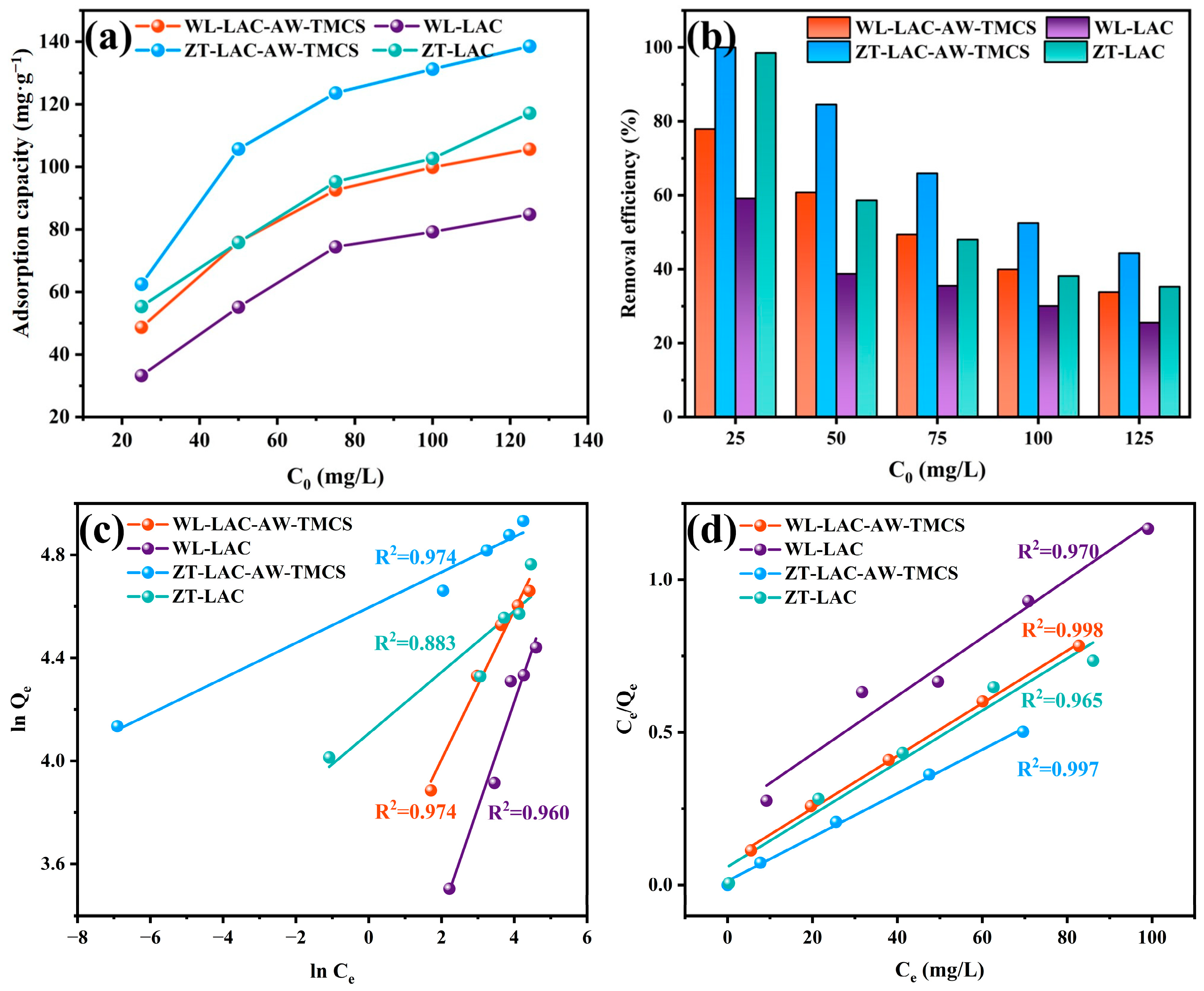
The indole molecule contains fused aromatic rings and a pyrrole nitrogen structure. At room temperature, it mainly exists as a neutral molecule, exhibits pronounced hydrophobicity, and can interact with carbonaceous surfaces through π–π conjugation and hydrophobic association [25,26]. Figure 4 shows the indole adsorption performance of the samples at different initial concentrations and the results of isotherm model fitting. As shown in Figure 4a,b, the equilibrium adsorption capacity for indole increased continuously with increasing initial concentration, showing typical concentration-driven enrichment behavior. Across the entire concentration range, the acid-washed and TMCS-modified samples generally exhibited higher adsorption capacities than the unmodified samples, indicating that the hydrophobic interface regulation strategy can significantly enhance the material’s effective adsorption capacity for indole, even under conditions of some pore blockage.
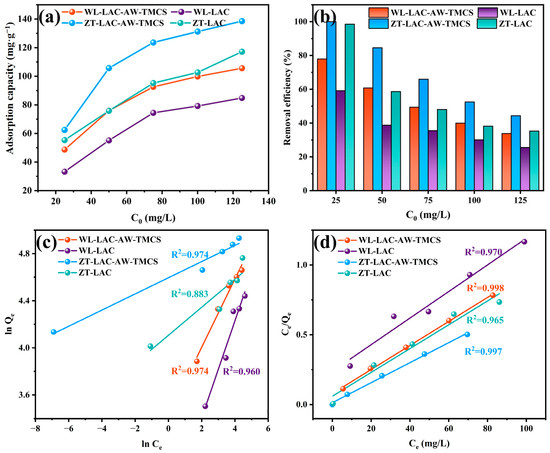
Figure 4.
Effect of initial indole concentration on adsorption performance and isotherm model fitting. (a) Effect of indole concentration on adsorption capacity. (b) Effect of indole concentration on removal efficiency. (c) Langmuir model fitting. (d) Freundlich model fitting.
Judging from the results of isotherm model fitting (Figure 4c,d), the adsorption behavior of the modified samples towards indole is more consistent with the Freundlich model [27], with a higher coefficient of determination (R2), suggesting a certain degree of heterogeneity in the surface adsorption energy distribution of the modified samples: on the one hand, the aromatic structure of the carbon framework provides strong π−π conjugation sites for indole; on the other hand, the hydrophobic layer introduced by TMCS grafting creates a low-polarity environment on the pore walls, promoting the entry of indole molecules into the pore channels via hydrophobic association and facilitating their directed enrichment near the pore walls. In terms of maximum adsorption capacity, the equilibrium adsorption capacity of indole in the modified system ranges from 116.14 to 139.47 mg·g−1, indicating that the grafting of small-molecule silanes did not cause a significant decrease in adsorption capacity; rather, it maintained a high upper limit of adsorption capacity while enhancing selectivity [28]. Although TMCS grafting led to a partial decrease in BET surface area and pore volume, the adsorption capacity of the modified samples increased. This result suggests that the adsorption of indole in aqueous solution is not governed solely by the nitrogen-accessible surface area, but also by the interfacial affinity between the adsorbent and adsorbate. The introduced methyl groups reduced the polarity of the pore walls and weakened the hydration layer on the carbon surface, thereby facilitating the desolvation, hydrophobic partitioning, and pore enrichment of indole molecules. Therefore, the improved adsorption capacity can be attributed to the enhanced hydrophobic affinity of the modified surface, which compensated for the slight loss of pore structure caused by TMCS grafting.
The more significant improvement observed for the ZT series can be attributed to the lower coalification degree and more developed defect/oxygen-containing structure of the ZT lignite precursor. These characteristics make the ZT-derived activated coke more responsive to acid washing and silane grafting. Acid washing removes mineral matter and releases blocked pores, while the exposed oxygen-containing sites provide more reaction sites for TMCS grafting. Therefore, the ZT-LAC-AW-TMCS sample exhibited higher pore accessibility, stronger hydrophobicity, and better adsorption performance than the corresponding WL-derived sample.
3.2.2. Adsorption Kinetic Characteristics
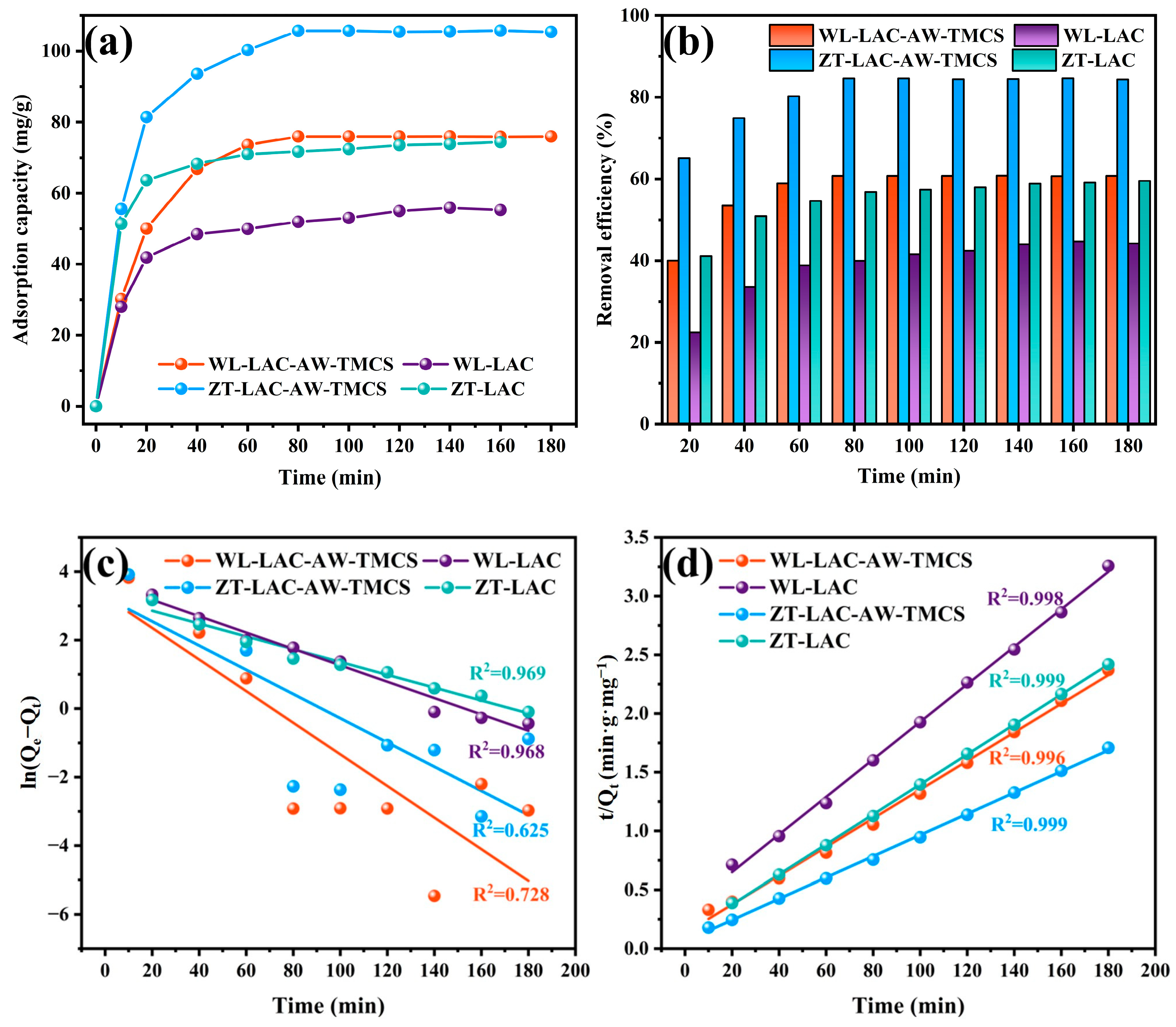
The adsorption kinetics results further reveal the influence of interfacial regulation on the indole adsorption rate. The adsorption kinetics curves and model fitting results for each sample are shown in Figure 5. As shown in Figure 5a,b, the indole adsorption process for each sample consists of two stages: from 0 to 60 min is the rapid adsorption stage, during which the adsorption capacity increases rapidly with time. This stage is mainly driven by external liquid-film mass transfer and diffusion near the pore entrances, during which contaminant molecules rapidly occupy active sites on the material surface. The period from 60 to 180 min corresponds to the slow equilibrium stage, during which the adsorption rate gradually decreases and tends to stabilize. This stage is mainly controlled by intra-pore diffusion, as contaminant molecules progressively enter the internal pores until the adsorption sites approach saturation.
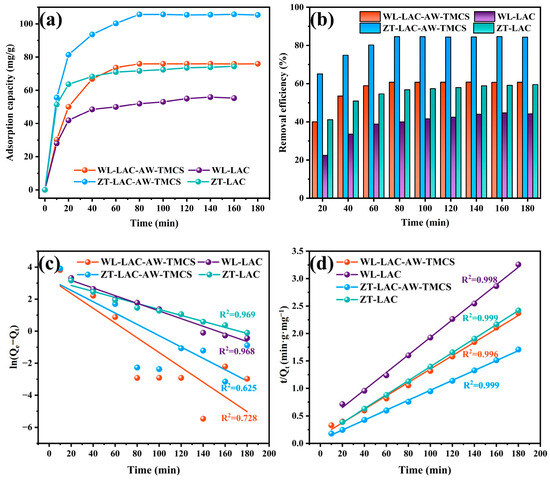
Figure 5.
Adsorption kinetics curves and model fitting for indole on modified activated coke. (a) Adsorption capacities of the two activated cokes for indole at different time points. (b) Removal efficiency of the two activated cokes for indole at different time points. (c) Pseudo-first-order kinetic fitting. (d) Pseudo-second-order kinetic fitting.
Judging from the results of the kinetic model fitting (Figure 5c,d), the pseudo-second-order kinetic model provides a better fit to the experimental data [29], with R2 values all exceeding 0.99. This indicates that the adsorption rate of indole by the sample is not only related to the concentration of indole in the solution but also to the degree of occupation of available adsorption sites on the material surface. Furthermore, the good fit of the pseudo-second-order kinetic model suggests that this adsorption process is governed by the coupling of surface effects/chemical interactions and diffusion. It should be emphasized that the adsorption kinetics of organic compounds on coal-derived porous carbon materials are often influenced by multiple mechanisms acting in concert. In subsequent studies, the Weber–Morris intra-porous diffusion model or the Boyd film diffusion model could be further integrated to quantitatively separate the contributions of mass transfer through the external liquid film and intra-porous diffusion, thereby providing a more in-depth analysis of the rate competition between the pore-blocking effect induced by TMCS grafting and the enhancement of hydrophobic partitioning.
3.2.3. Effect of Adsorbent Dosage
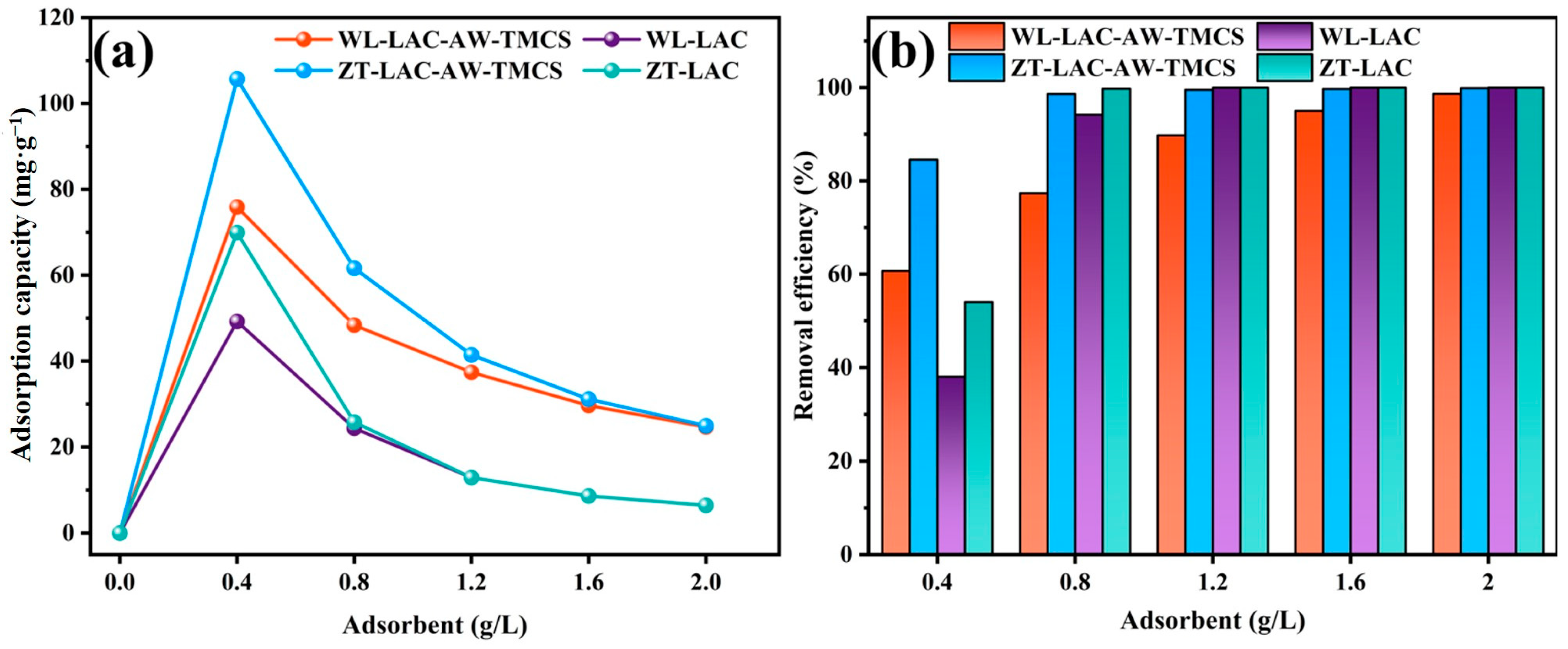
The adsorbent dosage is a key parameter in engineering applications, directly influencing the balance between pollutant removal efficiency and the utilization rate of the adsorbent per unit mass. The adsorption performance of the samples towards indole at different dosages is shown in Figure 6. As shown in Figure 6, when the adsorbent dosage increased from 1 to 10 g·L−1, the total number of available adsorption sites and the external surface area in the system increased significantly. As a result, the indole removal efficiency showed an overall increasing trend. However, the equilibrium adsorption capacity Qₑ per unit mass of adsorbent decreased. This is because under fixed initial concentration and solution volume, the total amount of pollutants in the system is limited. When the adsorbent dosage is excessively high, some active sites cannot be fully utilized, resulting in lower adsorbent utilization efficiency.
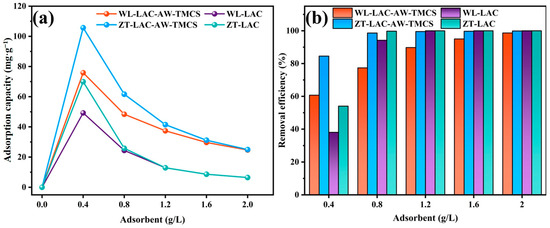
Figure 6.
Effect of adsorbent dosage on indole adsorption performance. (a) Adsorption capacity of the two activated cokes for indole at different adsorbent dosages. (b) Removal efficiency of the two activated cokes for indole at different adsorbent dosages.
It is worth noting that, at the same dosage, the modified samples consistently showed higher indole removal efficiency than the unmodified samples. This indicates that hydrophobic interface regulation can enhance the effective capture of indole by individual adsorption sites. The improvement was especially obvious at low dosages of 1–4 g·L−1, which is a more economically relevant range for wastewater treatment applications. As this range is also the economically viable dosage range of greater concern in wastewater treatment engineering, this indicates that this modification strategy possesses good potential for engineering applications.
3.3. Monocomponent Adsorption Behavior of Modified Activated Coke Towards DEP
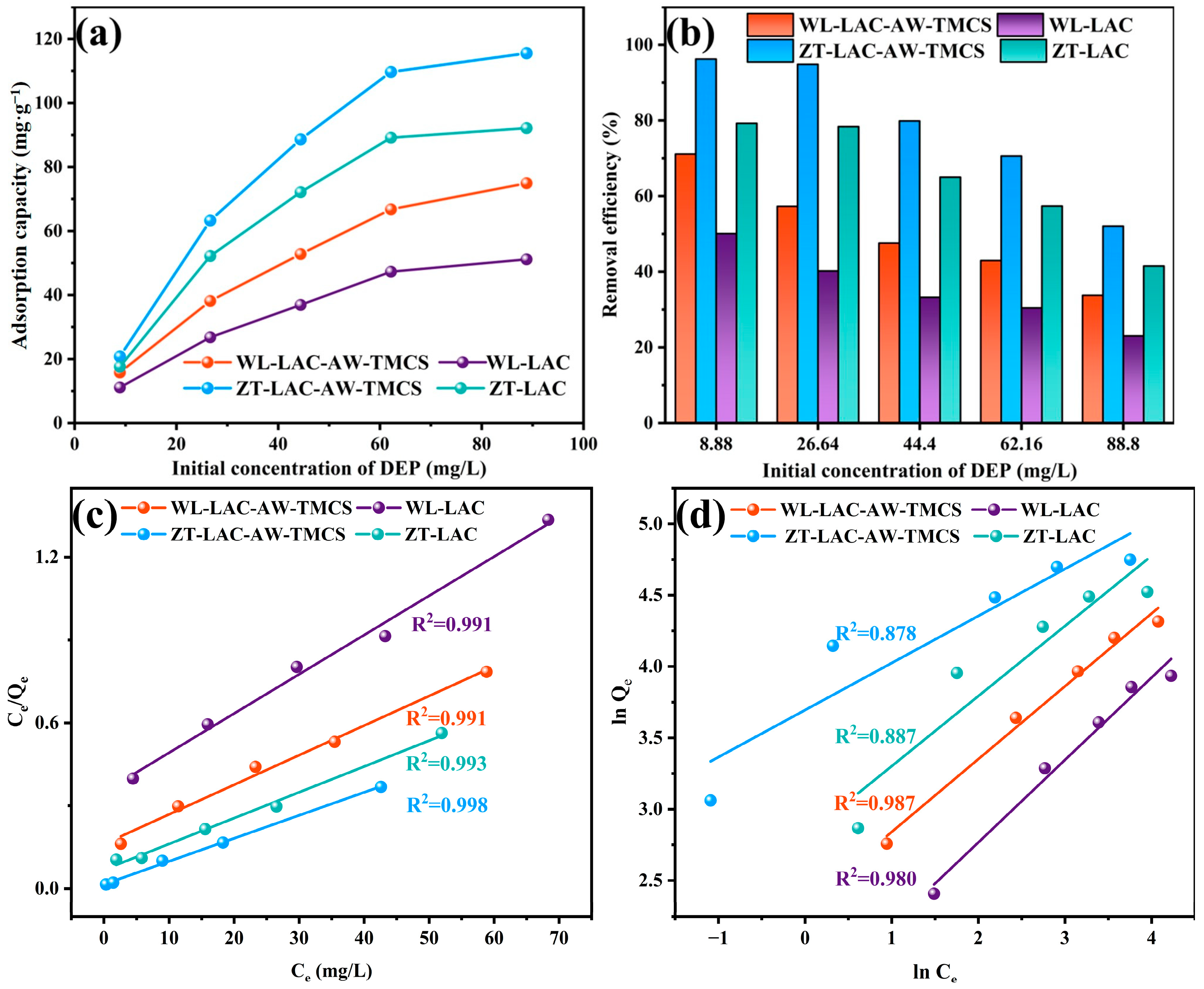
DEP is a typical hydrophobic ester pollutant. Its molecular structure contains both an aromatic ring and ester groups, giving it both hydrophobic and weakly polar characteristics. Consequently, its adsorption behavior on the surface of modified activated coke differs somewhat from that of indole. Figure 7 shows the effect of the initial DEP concentration on adsorption performance and the results of isotherm model fitting. As can be seen from Figure 7a,b, the equilibrium adsorption capacity of DEP also increases with rising initial concentration, and the adsorption capacity of the acid-washed + TMCS composite-modified samples is generally superior to that of the unmodified samples and the single TMCS-grafted samples. In terms of adsorption capacity, the maximum equilibrium adsorption capacity of the modified samples for DEP ranged from 93.37 to 120.19 mg·g−1, which is slightly lower than the adsorption capacity for indole. This difference is primarily related to the molecular size of the two compounds, solvation effects, and conformational constraints within the pore channels: DEP molecules have greater steric hindrance, and their diffusion and adsorption within the pore channels are somewhat restricted, resulting in a slightly lower adsorption capacity [30].
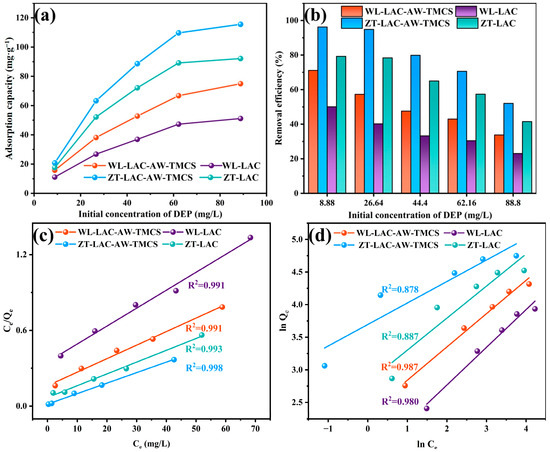
Figure 7.
Effect of initial DEP concentration on adsorption performance and isotherm model fitting. (a) Effect of DEP concentration on adsorption capacity. (b) Effect of DEP concentration on removal efficiency. (c) Langmuir model fitting. (d) Freundlich model fitting.
Although TMCS grafting results in a partial decrease in the BET available surface area, acid washing pretreatment significantly enhances the pore volume and pore accessibility of the activated coke. This enables the acid-washed and grafted samples to maintain a high adsorption capacity while achieving a superior hydrophobic interfacial environment, fully demonstrating the synergistic modification effect of pore structure preservation and enhanced interfacial affinity. The results of isotherm model fitting indicate that the adsorption behavior of the samples towards DEP also conforms more closely to the Freundlich model [31], suggesting that the distribution of adsorption energy for DEP on the surface of the modified samples is similarly non-uniform, with hydrophobic interactions and π-π conjugation acting as the primary adsorption driving forces [32].
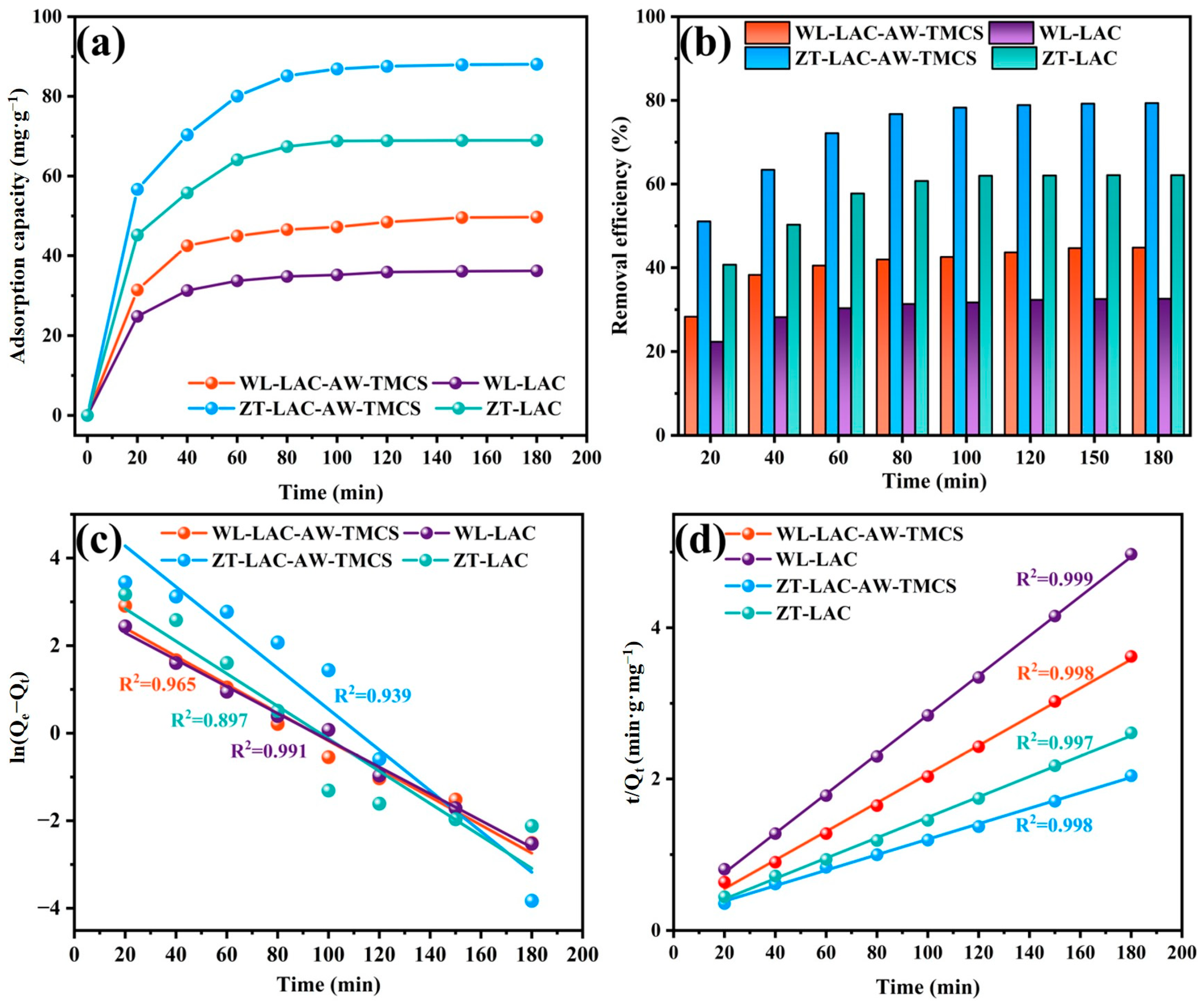
The adsorption kinetics curves and model fitting results are shown in Figure 8. As shown in Figure 8, the adsorption process of DEP is similar to that of indole, exhibiting the same two-stage characteristics of rapid adsorption followed by slow equilibrium; furthermore, the pseudo-second-order kinetic model provides a better fit to the experimental data, indicating that this adsorption process is also governed by the coupling of surface interactions and diffusion [33]. From the perspective of adsorption mechanisms, DEP adsorption on carbon material surfaces mainly involves three interactions [34,35]. First, π–π conjugation can occur between the aromatic ring of DEP and the graphitized domains of the carbon material. Second, the hydrophobic surface can promote hydrophobic partitioning and enrichment of DEP within the pores. Third, weak hydrogen bonding or dipole interactions may occur between the ester groups of DEP and residual oxygen-containing functional groups on the material surface.
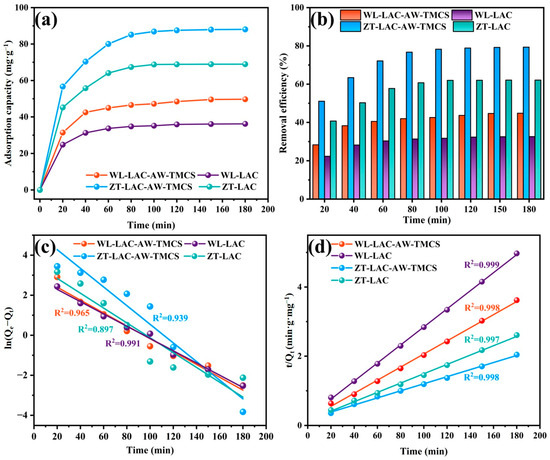
Figure 8.
Adsorption kinetics curves and model fitting of modified activated coke for DEP. (a) Adsorption capacity of the two activated cokes for DEP at different times. (b) Removal efficiency of the two activated cokes for DEP at different times. (c) Pseudo-first-order kinetic fitting. (d) Pseudo-second-order kinetic fitting.
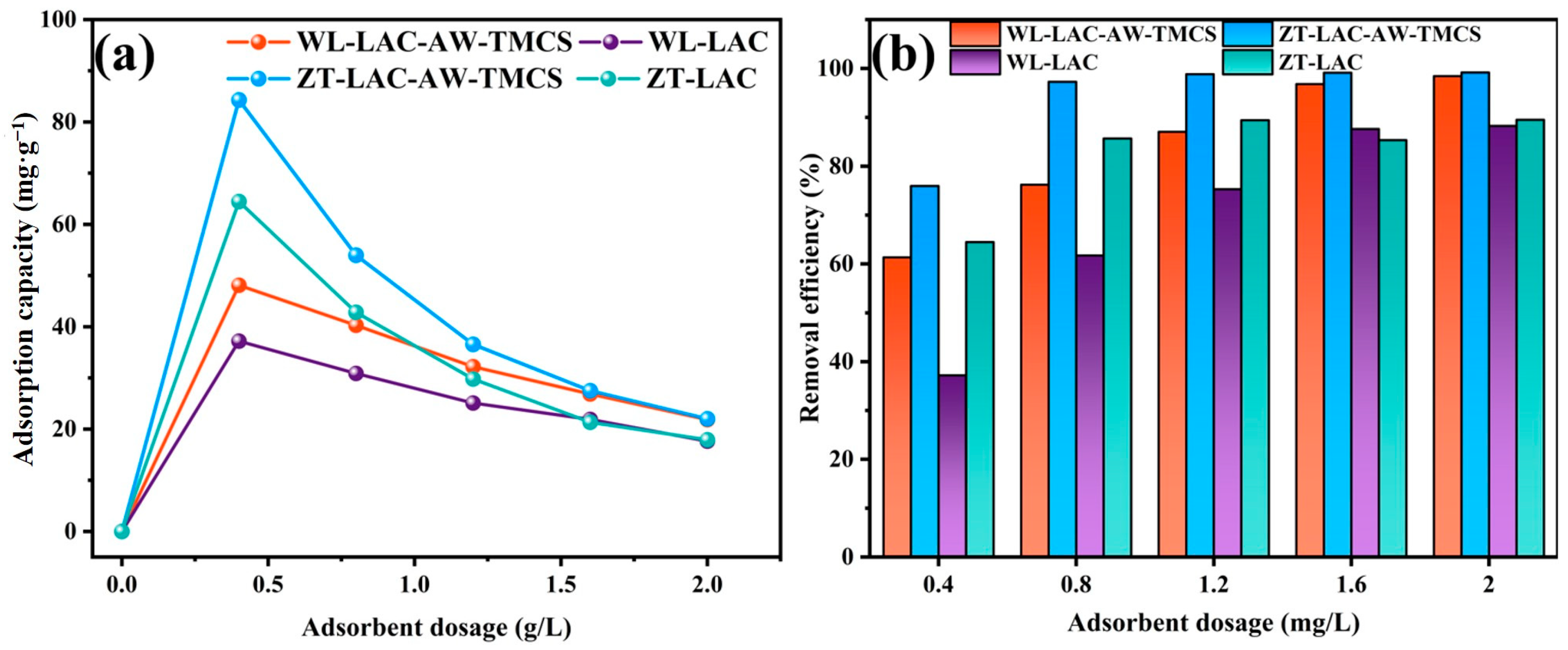
TMCS grafting weakens the polar sites on the material surface and reduces competitive adsorption by hydrophilic solutes. For pollutants such as DEP, whose adsorption is mainly driven by hydrophobic partitioning and π–π conjugation, a low-polarity pore-wall environment is more favorable for desolvation and entry into the pore channels. Consequently, the modified samples exhibit higher removal rates for DEP and superior adsorption selectivity. The results of the dosage effect in Figure 9 are consistent with those for indole: as the dosage increases, the DEP removal rate rises while the adsorption capacity per unit mass decreases; furthermore, the removal rate of the modified samples at the same dosage is significantly higher than that of the unmodified samples, further validating the effectiveness of the hydrophobic modification strategy.
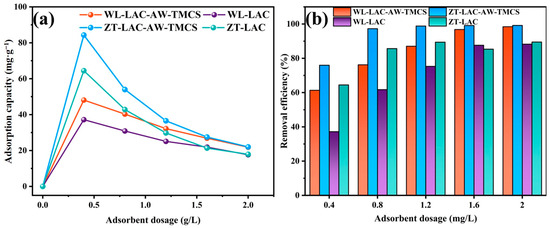
Figure 9.
Effect of adsorbent dosage on DEP adsorption performance. (a) Adsorption capacity of the two activated cokes for DEP at different adsorbent dosages. (b) Removal efficiency of the two activated cokes for DEP at different adsorbent dosages.
3.4. Selective Adsorption Behavior of Modified Activated Coke
In practice, organic wastewater often contains a variety of ionizable or hydrophilic organic compounds, and competitive adsorption is a key factor determining the material’s effective capacity and target enrichment capability. To simulate a typical co-existing system, a competitive system comprising 1000 mg·L−1 phenol and 100 mg·L−1 indole/DEP was established at pH = 10. The pKa of phenol is approximately 9.95; at pH ≈ 10, a significant proportion is converted into phenolate ions, which exhibit enhanced hydration and a reduced tendency to distribute onto hydrophobic pore walls. Under alkaline conditions, oxygen-containing groups on the carbon surface can deprotonate and become negatively charged, which further weakens the driving force for phenolate ions to enter the pore channels. Therefore, the competitive system at pH = 10 amplifies the difference in interfacial distribution between hydrophobic neutral molecules and hydrophilic or ionic molecules. This provides a suitable model system for evaluating the selectivity improvement caused by hydrophobic modification [36,37].
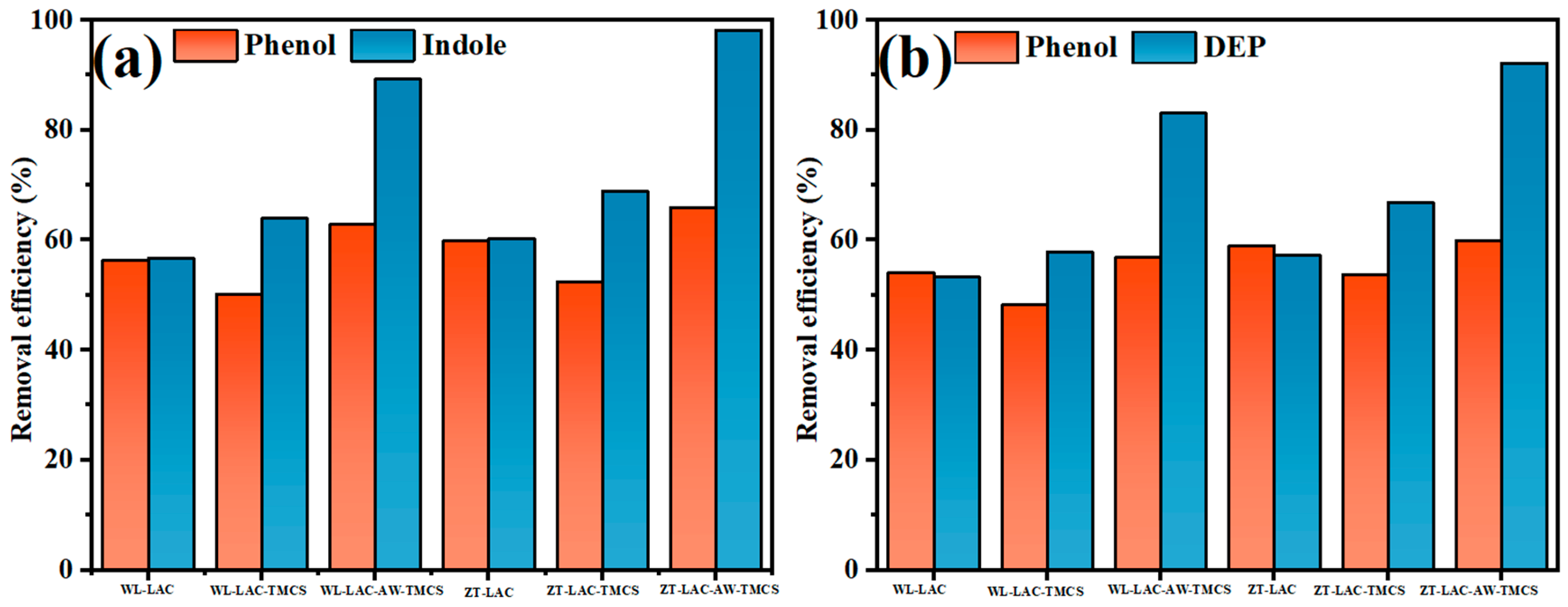
As shown in Figure 10, in the phenol–indole binary system, the two unmodified LACs exhibited phenol removal efficiencies of 56.24% and 59.96%, while the corresponding indole removal efficiencies were 56.75% and 60.21%, respectively. Similarly, in the phenol–DEP binary system, the phenol removal efficiencies of the two unmodified LACs were 54.06% and 58.92%, whereas the DEP removal efficiencies were 56.85% and 59.97%, respectively. This suggests that the original surface still possesses certain polar sites, enabling phenol to be adsorbed via mechanisms such as hydrogen bonding and π-π interactions under alkaline conditions, thereby competing with hydrophobic contaminants. Following TMCS modification and acid washing, the increase in phenol removal efficiency was limited, with WL-LAC-AW-TMCS and ZT-LAC-AW-TMCS achieving approximately 62.85% and 65.97% respectively, while indole removal efficiency increased significantly to 89.27% and 98.17%. Using the removal rate ratio Rindole/Rphenol as a simplified selectivity indicator, the values for the WL and ZT acid-washed and grafted samples were approximately 1.42 and 1.49, respectively, which were significantly higher than the level of nearly 1 observed for the unmodified materials, indicating a shift from non-selective adsorption to preferential capture of hydrophobic targets. A significant increase in DEP removal efficiency was also observed in the phenol–DEP system, ranging from 83.08% to 92.17%, while the phenol removal efficiency showed little change, further validating the universality of the selective advantage of hydrophobic modification towards hydrophobic target pollutants.
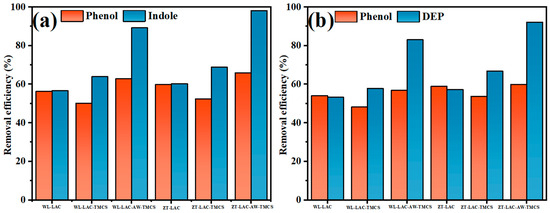
Figure 10.
Binary competitive adsorption performance of modified activated coke under alkaline conditions. (a) Binary adsorption experiment of LAC with phenol and indole. (b) Binary adsorption experiment of LAC with phenol and DEP.
This enhanced selectivity may be related to the combined effects of pore structure, interfacial chemistry, and solute properties. At the pore-structure level, acid washing increases pore volume and releases channels blocked by minerals [38], especially in the ZT-derived material. This reduces the structural barrier for hydrophobic pollutants to enter the pore channels. At the interfacial-chemistry level, TMCS introduces -CH3 groups and reduces polar groups such as -OH. The resulting increase in water contact angle indicates that the pore-wall surface becomes less polar and more hydrophobic. From the perspective of solute properties, indole and DEP mainly exist as neutral molecules in aqueous solution and show stronger hydrophobic partitioning and π-π interaction with the carbon surface. In contrast, phenol is partially ionized at pH = 10 and tends to remain in the aqueous phase because of stronger hydration. Therefore, hydrophobic modification may facilitate the enrichment of hydrophobic target pollutants in competitive systems by reducing pore-wall polarity, weakening the influence of the hydration layer, and enhancing hydrophobic affinity [39].
It is worth noting that although TMCS grafting caused a decrease in BET parameters, its effect on adsorption performance in aqueous systems should be evaluated together with surface wettability and pollutant affinity. In a competitive system, the key to effective adsorption is not the total surface area measured by the nitrogen probe, but rather the accessibility of the pore walls under aqueous conditions and the interfacial affinity of the target contaminant. For hydrophilic components, the reduction in polar sites weakens their adsorption contribution. In contrast, for hydrophobic components, low-polarity pore walls can reduce the desolvation barrier and promote intra-pore enrichment. Consequently, despite the decrease in BET parameters, the adsorption selectivity of the material in aqueous competitive systems was improved. This suggests that surface wettability and interfacial affinity should be considered together with specific surface area when evaluating adsorbent performance in complex aqueous systems [40,41]. Although increasing surface hydrophobicity can enhance the affinity of activated coke toward hydrophobic pollutants, excessive hydrophobic modification may not always be beneficial. Over-grafting of TMCS could block pore entrances, reduce pore accessibility, and increase mass-transfer resistance, thereby decreasing adsorption performance. Therefore, an optimal balance should exist between surface hydrophobicity and pore structure preservation. In this study, the selected TMCS modification condition improved hydrophobicity while retaining sufficient pore accessibility, which contributed to the enhanced adsorption capacity and selectivity.
4. Conclusions
(1) TMCS grafting achieves a significant enhancement in the interfacial hydrophobicity of low-rank coal-based activated coke, with the water contact angles of WL and ZT series increasing from 117.8° and 112.6° to 127.3° and 139.7° respectively. The successful introduction of -CH3 groups and the attenuation of polar groups are observed on the material surface. Acid washing enables efficient ash removal and pore unblocking, increasing the specific surface area and pore volume of ZT samples by 43.7% and 53.3% respectively. A synergistic effect forms between acid washing and TMCS grafting, and the pore structure of composite modified samples is superior to that of directly grafted samples.
(2) The modified adsorbents exhibit high adsorption capacities, reaching 139.47 mg·g−1 for indole and 120.19 mg·g−1 for diethyl phthalate (DEP) in single-component systems, representing an increase of 20.1% for indole and 28.7% for DEP compared to the unmodified adsorbent. Their adsorption behavior conforms to the Freundlich isotherm model, and the adsorption kinetics follow the pseudo-second-order model, indicating a significant enhancement in hydrophobic affinity and adsorption kinetics towards the target pollutants.
(3) In the alkaline competitive system at pH = 10, modified materials realize a transition from non-selective adsorption to the preferential capture of hydrophobic target pollutants. The removal rate of phenol rises slightly to 62.85% and 65.97%, while the removal rates of indole and DEP increase significantly to 89.27% and 98.17% and 83.08% and 92.17% respectively. This improvement may be mainly associated with hydrophobic interface regulation, which weakens the competitive adsorption of hydration films and hydrophilic solutes and simultaneously strengthens the hydrophobic partitioning driving force for target pollutants.
Author Contributions
S.H.: Conceptualization, Formal analysis, Data curation, Methodology, Writing—original draft. X.L.: Data curation, Investigation, Visualization, Software. J.H.: Conceptualization, Funding acquisition, Supervision, Project administration, Writing—review and editing. H.Z.: Validation, Writing—review and editing. All authors have read and agreed to the published version of the manuscript.
Funding
This research was funded by Basic Research Program of Jiangsu grant number BK20251636, National Natural Science Foundation of China grant number 52504320, Jiangsu Funding Program for Excellent Postdoctoral Talent grant number 2024ZB724, The Fundamental Research Funds for the Central Universities grant number 2025QN1107.
Data Availability Statement
Data is contained within the article.
Acknowledgments
This work was supported by the Basic Research Program of Jiangsu (BK20251636), the National Natural Science Foundation of China (Grant No. 52504320), the Jiangsu Funding Program for Excellent Postdoctoral Talent (2024ZB724), and the Fundamental Research Funds for the Central Universities (2025QN1107). We are grateful to the editors and anonymous reviewers for their valuable comments and suggestions for our paper.
Conflicts of Interest
The authors declare no conflict of interest.
References
- Zhang, L.; Sun, Y.B.; Yang, Z.C.; Li, H.C. Surface interaction-driven Fe self-cycling in MoO2-cocatalyzed Fenton-like system for efficient organic wastewater treatment. Sep. Purif. Technol. 2026, 382, 136097. [Google Scholar] [CrossRef]
- Wang, A.; Xu, H.; Shen, Z.; Tao, H.; Yao, C.; Ma, J.; Zhang, Q.; Wang, J.J.; Hu, T.L.; Lin, T. Fate of mineral and organic foulants during membrane cleaning in hybrid membrane distillation of hypersaline organic wastewater. Sep. Purif. Technol. 2026, 382, 135845. [Google Scholar] [CrossRef]
- Liu, C.X.; Yao, Y.; Qin, W.; Wu, X.H. Coupling redox flow battery desalination and Fenton reaction for high-salinity organic wastewater treatment with salt recovery and energy storage. Desalination 2026, 626, 119972. [Google Scholar] [CrossRef]
- Ma, Y.; Wang, F.; Liu, J.; Zhang, H.; Zhang, X.; Fu, R.; Song, P.; An, Q.-F. Sulfonated poly (indole ketone)/polyaniline (SPIK/PANI) composite membranes for aqueous organic redox flow batteries (AORFBs). Adv. Membr. 2026, 8, 100221. [Google Scholar] [CrossRef]
- Yin, S.Q.; Liu, W.Z.; Gao, C.X.; Li, C.Y.; Wu, J. Diethyl Phthalate (DEP) as a potential osteosarcoma risk factor: A multi-omics study integrating network Toxicology, single-cell RNA sequencing, and molecular docking. J. Enzym. Inhib. Med. Chem. 2026, 41, 2611582. [Google Scholar] [CrossRef]
- Georgy, A.N.; Omar, M.A.; Mostafa, M.R.; Mohamed, G.G.; Fouad, O.A. Enhanced adsorption of organic pollutants from wastewater using Chitosan and MAS/CS nanoparticles (MAS/CS-NPs). J. Mol. Struct. 2026, 1364, 145793. [Google Scholar] [CrossRef]
- Zhong, S.; Tian, Y.; Chen, C.; Nie, B.; Wang, H.Y.; Zhang, S.Y. Roles of intrinsic defects on nitrogen, sulfur-codoped biochar in peroxymonosulfate activation toward organic contaminates degradation. Chem. Eng. J. 2025, 506, 160062. [Google Scholar] [CrossRef]
- Jiang, Y.H.; Xiong, L.W.; Li, W.Z.; Yuan, L. Ultrafine and highly dispersed PdO catalyst prepared by strong electrostatic adsorption for efficient lean methane combustion. Appl. Surf. Sci. 2026, 718, 164777. [Google Scholar] [CrossRef]
- Huang, Z.X.; Huang, K.T.; Zhang, J.Q.; Li, S.J.; Zhao, R.K.; Zhao, L.; Deng, S. Active temperature control strategy in adsorption-based carbon capture: Principle, methodology and case study. Sep. Purif. Technol. 2025, 364, 132581. [Google Scholar] [CrossRef]
- Jin, X.L.; Wang, H.; An, H.; Huang, X.M.; Zhang, W.Y.; Deng, L.; Che, D.F. Preparation of amorphous coal-based activated coke via a two-step process of carbonization and steam activation. Fuel 2024, 371, 131973. [Google Scholar] [CrossRef]
- Yang, L.; Liu, Y.J.; Zhang, A.N.; Liu, Z.; Yang, Z.Z.; Wei, C.X.; Li, Z.H. Cumulative effects and metabolic characteristics of aromatic compounds in microbial cells during the biochemical treatment process of coal chemical wastewater. Chem. Eng. J. 2023, 471, 144307. [Google Scholar] [CrossRef]
- Zhang, Z.P.; Wang, L.; Qian, Y.Z.; Wang, G.Z.; Liu, W.; Hao, J.C. Superhydrophobic-activated carbon coating: A path toward demulsification and separation of crude oil emulsions. Langmuir 2025, 41, 12465–12477. [Google Scholar] [CrossRef]
- Li, Z.R.; Jin, Y.Q.; Chen, T.; Tang, F.; Cai, J.; Ma, J.Y. Trimethylchlorosilane modified activated carbon for the adsorption of VOCs at high humidity. Sep. Purif. Technol. 2021, 272, 118659. [Google Scholar] [CrossRef]
- Zhang, M.X.; Zhu, H.X.; Xi, B.D.; Tian, Y.X.; Sun, X.J.; Zhang, H.X.; Wu, B.B. Surface hydrophobic modification of biochar by silane coupling agent KH-570. Processes 2022, 10, 301. [Google Scholar] [CrossRef]
- Dou, B.J.; Li, J.J.; Wang, Y.F.; Wang, H.L.; Ma, C.Y.; Hao, Z.P. Adsorption and desorption performance of benzene over hierarchically structured carbon-silica aerogel composites. J. Hazard. Mater. 2011, 196, 194–200. [Google Scholar] [CrossRef] [PubMed]
- Hao, P.X.; Shi, Y.X.; Li, S.; Cai, N.S. Hydrophobic activated carbon for elevated-temperature pressure swing adsorption. Adsorption 2020, 26, 1093–1100. [Google Scholar] [CrossRef]
- Langmuir, I. The adsorption of gases on plane surfaces of glass, mica and platinum. J. Am. Chem. Soc. 1917, 40, 1361–1403. [Google Scholar] [CrossRef]
- Freundlich, H.M.F. Over the adsorption in solution. J. Phys. Chem. 1906, 57, 1100–1107. [Google Scholar]
- Ho, Y.S.; Mckay, G. Pseudo-second order model for sorption processes. Process Biochem. 1999, 34, 451–465. [Google Scholar] [CrossRef]
- Mahdavihezaveh, K.; Neshati, S.; Awad, R.; Heydari, R.; Boluk, Y.; Hashisho, Z. Electrospinning of porous PS-MOF composite nanofibers for VOCs adsorption: Effects of porous structure on equilibrium and dynamic adsorption. Chem. Eng. J. 2026, 534, 174996. [Google Scholar] [CrossRef]
- Hu, L.G.; Wu, W.H.; Hu, M.; Jiang, L.; Lin, D.H.; Wu, J.; Yang, K. Double-walled Al-based MOF with large microporous specific surface area for trace benzene adsorption. Nat. Commun. 2024, 15, 3204. [Google Scholar] [CrossRef]
- Zhao, P.; Vadlamudi, S.R.G.; Zhou, M.; Zhao, B.; Huang, J.; Auernhammer, G.K.; Hampel, U.; Ding, W. Large contact angle hysteresis enhances post-impact droplet oscillations. Droplet 2026, 5, e70047. [Google Scholar] [CrossRef]
- Zhang, X.; Zhang, J.; Guo, R.; Yan, R.; Liao, F.; Hu, W.; Xiao, Q.; Li, Y. Highly reactive coke made from low-rank coal: Relationship between the behavior of CO2 + H2O gasification reactions and multilevel structure. ISIJ Int. 2025, 65, 1078–1088. [Google Scholar] [CrossRef]
- Raiah, W.; Guendouz, M.; Piratesh, P.; Thomy, V.; Charrier, J.; Coffinier, Y. Copper-decorated porous silicon for the bimodal detection of DMMP, a sarin simulant, by FT-IR spectroscopy and matrix-free laser desorption ionization mass spectrometry. Microchem. J. 2025, 217, 115034. [Google Scholar] [CrossRef]
- Aziz, R.A.; Tahiruddin, N.S.M.; Ali, R.; Taib, N.I. Fruit waste to wealth: Adsorption isotherm, kinetics, and thermodynamic studies of methylene blue removal using activated carbon derived from jackfruit peel (Artocarpus heterophyllus). Next Mater. 2026, 11, 101901. [Google Scholar] [CrossRef]
- Chauhan, P.R.; Tyagi, S.K. Optimized biosorbent for ethanol sorption refrigeration: Adsorption kinetics, thermodynamic performance, and entransy evaluation. Int. J. Refrig. 2026, 182, 169–187. [Google Scholar] [CrossRef]
- Almarri, M.; Ma, X.L.; Song, C.S. Role of surface oxygen-containing functional groups in liquid-phase adsorption of nitrogen compounds on carbon-based adsorbents. Energy Fuels 2009, 23, 3940–3947. [Google Scholar] [CrossRef]
- Chai, Z.C.; Bi, X.S.; Jia, H.B. Use of typical wastes as biochars in removing diethyl phthalate (Det) from Water. Processes 2022, 10, 1369. [Google Scholar] [CrossRef]
- Zhao, Q.; Han, H.; Jia, S.; Zhuang, H.; Hou, B.; Fang, F. Adsorption and bioregeneration in the treatment of phenol, indole, and mixture with activated carbon. Desalin. Water Treat. 2015, 55, 1876–1884. [Google Scholar] [CrossRef]
- Weber, W.J., Jr.; Morris, J.C. Kinetics of adsorption on carbon from solution. J. Sanit. Eng. Div. 1963, 89, 31–59. [Google Scholar] [CrossRef]
- Zhou, Y.; Zhao, B.; Wang, L.; Li, T.; Ye, H.; Li, S.; Huang, M.; Zhang, X. Adsorption of phthalate acid esters by activated carbon: The overlooked role of the ethanol content. Foods 2022, 11, 2114. [Google Scholar] [CrossRef]
- Fang, G.D.; Liu, C.; Gao, J.; Zhou, D.M. New insights into the mechanism of the catalytic decomposition of hydrogen peroxide by activated carbon: Implications for degradation of diethyl phthalate. Ind. Eng. Chem. Res. 2014, 53, 19925–19933. [Google Scholar] [CrossRef]
- Zhang, X.K.; Sarmah, A.K.; Bolan, N.S.; He, L.Z.; Lin, X.M.; Che, L.; Tang, C.X.; Wang, H.L. Effect of aging process on adsorption of diethyl phthalate in soils amended with bamboo biochar. Chemosphere 2016, 142, 28–34. [Google Scholar] [CrossRef]
- Zhang, Y.Y.; Li, S.Y.; Chen, H.X.; Song, H.X.; Zhou, Y.H.; Sun, X.Y.; Jia, R.B.; Ye, H.; Li, H.H.; Xu, Q.Q.; et al. Novel magnetic biochar in-situ loaded with MOF for the efficient adsorption of phthalate esters from water. J. Chromatogr. A 2026, 1766, 466621. [Google Scholar] [CrossRef] [PubMed]
- Ogora, E.N.; Getenga, Z.M.; Gichumbi, J.M.; Shikuku, V.O. Unary adsorption of phthalates from wastewater onto water hyacinth biochar: Parameters, drivers and mechanism. S. Afr. J. Chem. 2025, 79, 1–9. [Google Scholar] [CrossRef]
- Li, H.Y.; He, J.; Chen, K.Y.; Shi, Z.; Li, M.N.; Guo, P.P.; Wu, L.Y. Dynamic adsorption of sulfamethoxazole from aqueous solution by lignite activated coke. Materials 2020, 13, 1785. [Google Scholar] [CrossRef]
- Hang, W.L.; Sun, J.X.; Zhao, R.H.; Chen, H.; Li, J.J. Selective adsorption of VOCs/water vapor on activated carbon: The role of adsorbent and VOC molecular polarity. Separations 2025, 12, 86. [Google Scholar] [CrossRef]
- Chen, L.X.; Qu, Z.B.; Sun, F.; Yang, J.C.; Li, X.H.; Xu, Y.H.; Li, L.M.; Gao, J.H. One-step catalytic activation promoting pore development of zhundong coal-based activated coke: A compared study with conventional carbonization-activation combined process. Energy Fuels 2022, 36, 9171–9181. [Google Scholar] [CrossRef]
- Li, L.Q.; Sun, Z.; Li, H.L.; Keener, T.C. Effects of activated carbon surface properties on the adsorption of volatile organic compounds. J. Air Waste Manag. Assoc. 2012, 62, 1196–1202. [Google Scholar] [CrossRef]
- Han, N.; Cui, R.; Peng, H.; Gao, R.; He, Q.; Miao, Z. Synergistic treatment of congo red dye with heat treated low rank coal and micro-nano bubbles. Molecules 2022, 27, 4121. [Google Scholar] [CrossRef] [PubMed]
- Wießner, A.; Remmler, M.; Kuschk, P.; Stottmeister, U. The treatment of a deposited lignite pyrolysis wastewater by adsorption using activated carbon and activated coke. Colloids Surf. A. 1998, 139, 91–97. [Google Scholar] [CrossRef]
Disclaimer/Publisher’s Note: The statements, opinions and data contained in all publications are solely those of the individual author(s) and contributor(s) and not of MDPI and/or the editor(s). MDPI and/or the editor(s) disclaim responsibility for any injury to people or property resulting from any ideas, methods, instructions or products referred to in the content. |
© 2026 by the authors. Licensee MDPI, Basel, Switzerland. This article is an open access article distributed under the terms and conditions of the Creative Commons Attribution (CC BY) license.