
CEGSS Yesterday, Today and Tomorrow

A Topical Collection in Separations (ISSN 2297-8739) belonging to the section "Chromatographic Separations".

Submission Status: Closed (1 September 2026) | Viewed by 22936

Editors


E-Mail Website
Collection Editor
Department of Environmental Chemistry and Bioanalytics, Faculty of Chemistry, Nicolaus Copernicus University in Toruń, Gagarina 7, 87-100 Toruń, Poland
Interests: analytical chemistry; physical chemistry; separation sciences; chromatography and related techniques (HPLC, SPE, SFC, GC, CZE, adsorption, sample preparation); spectrometry; bioanalytics; metabolomics; nanotechnology; environmental chemistry; modeling and chemometrics
Special Issues, Collections and Topics in MDPI journals

E-Mail Website
Collection Editor
Institute of Chemical Technologies and Analytics, Vienna University of Technology, Getreidemarkt 9/164, A-1060 Vienna, Austria
Interests: gas chromatography; liquid chromatography; hyphenated techniques; comprehensive two-dimensional separations (GCxGC and LCxLC); sample preparation; automation; column materials; environmental analysis; industrial analysis; green analytical chemistry
Special Issues, Collections and Topics in MDPI journals

Topical Collection Information

Dear Colleagues,

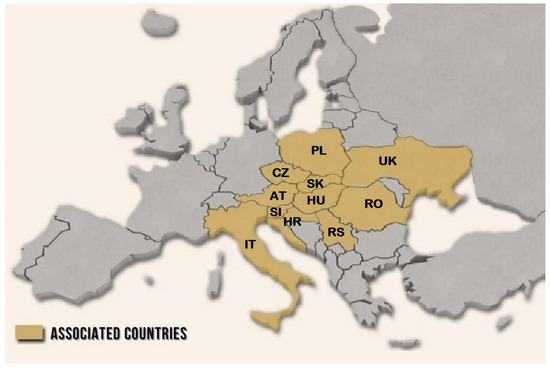
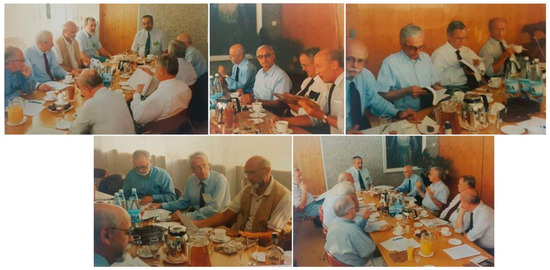
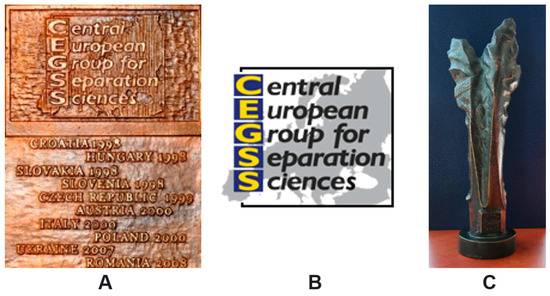
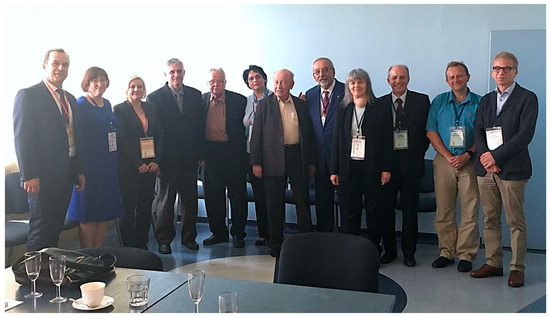
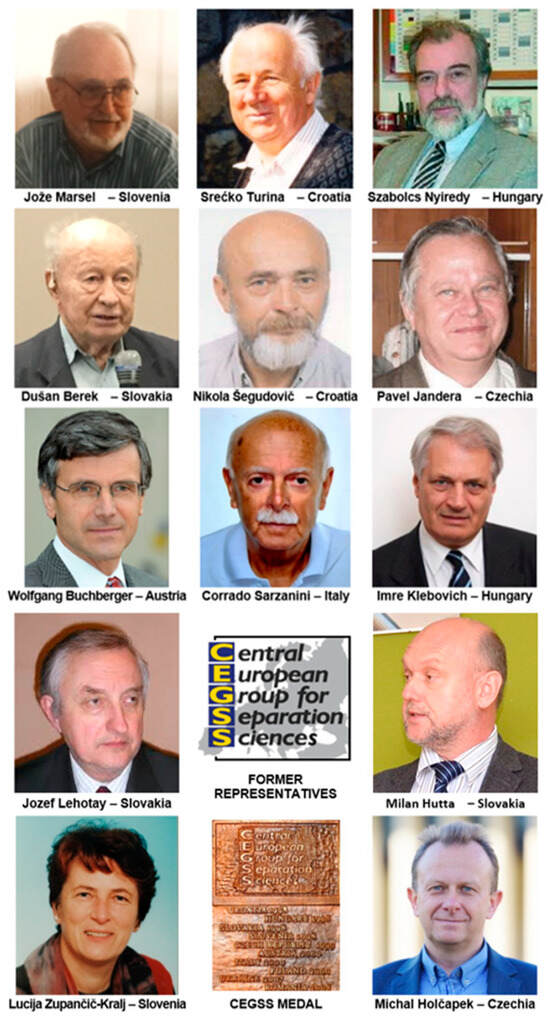
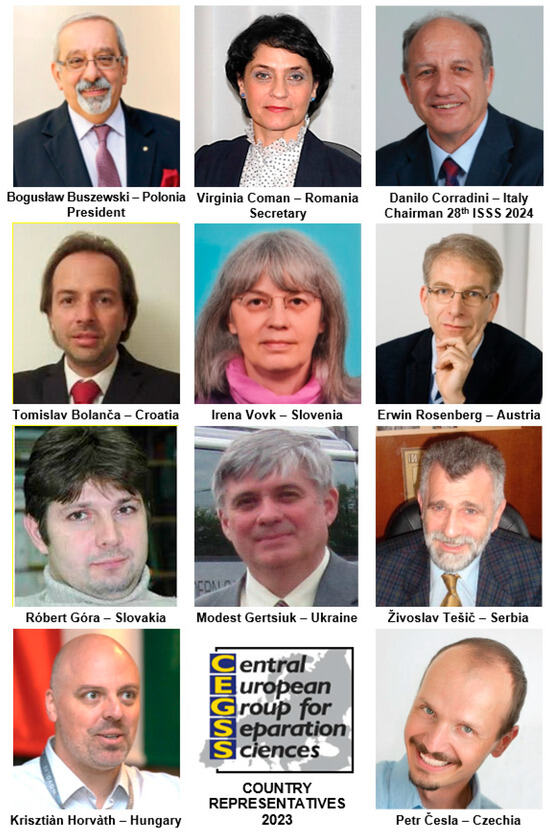
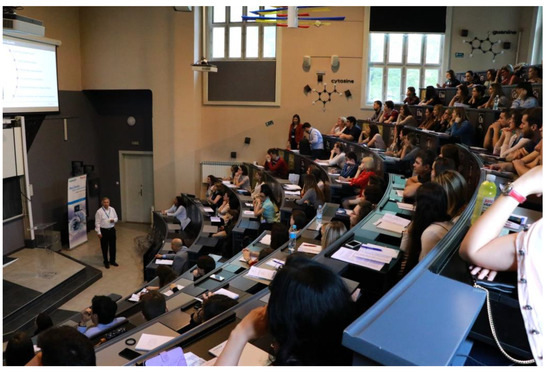
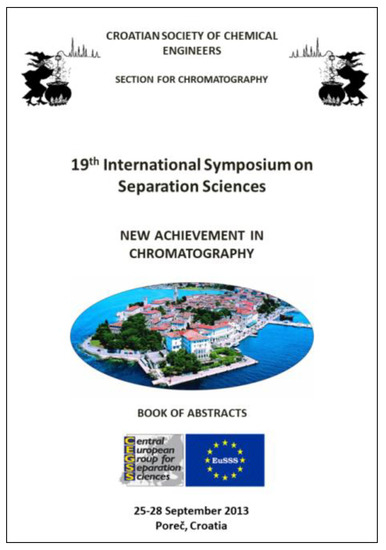
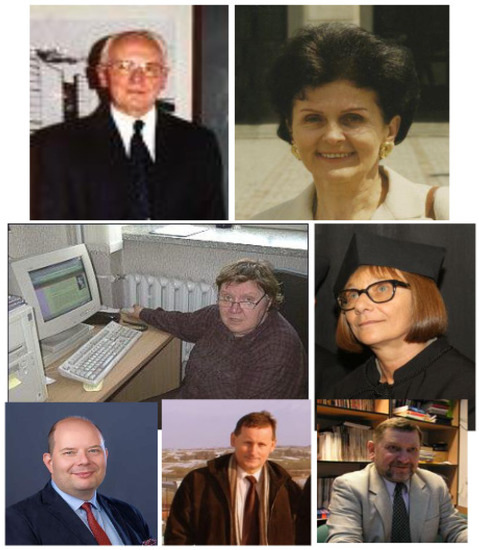
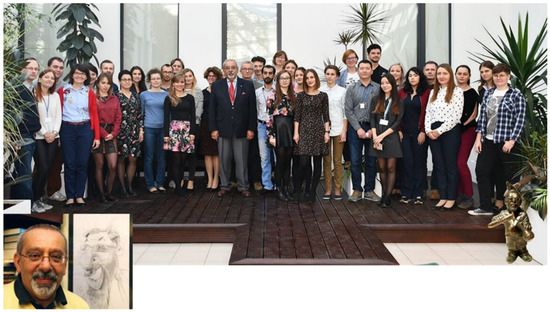
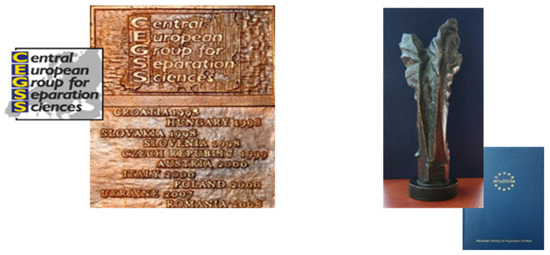
Central European Group for Separation Science (CEGSS) was established at the beginning of the 1990s. Initially, it consisted of 4 countries (Slovenia, Croatia, Hungary, and Slovakia), while currently, it consists of 11 countries (Austria, Czech Republic, Italy, Serbia, Poland, Romania, and Ukraine, in addition). In line with this mission, its goal is the cooperation and scientific exchange of Central European countries and the popularization of sciences related to separation science. Furthermore, it is supporting the young generation of scientists and practitioners and organizes international symposia on separation science. The history of CEGSS and separation science will be devoted to a special volume of Separations, in which the history and current state of separation sciences in individual member countries will be discussed, as well as the institutions and achievements of representatives of individual member countries, will be described. This volume will be dedicated to deceased colleagues who created and worked for CEGSS.

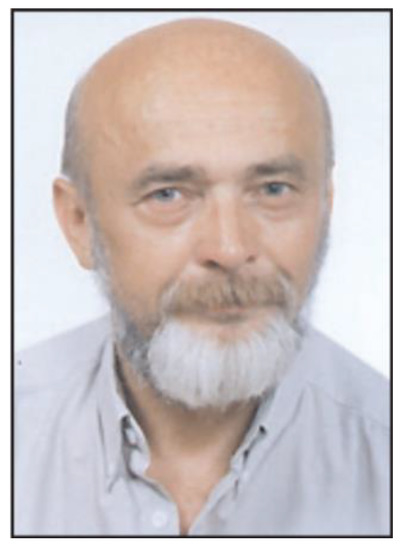
Prof. Dr. Bogusław Buszewski
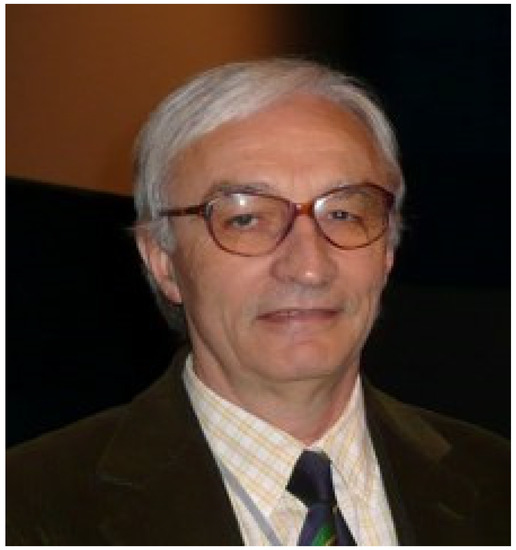
Prof. Dr. Erwin Rosenberg
Collection Editors

Manuscript Submission Information

Manuscripts should be submitted online at www.mdpi.com by registering and logging in to this website. Once you are registered, click here to go to the submission form. All submissions that pass pre-check are peer-reviewed. Accepted papers will be published continuously in the journal (as soon as accepted) and will be listed together on the collection website. Research articles, review articles as well as short communications are invited. For planned papers, a title and short abstract (about 250 words) can be sent to the Editorial Office for assessment.

Submitted manuscripts should not have been published previously, nor be under consideration for publication elsewhere (except conference proceedings papers). All manuscripts are thoroughly refereed through a single-anonymized peer-review process. A guide for authors and other relevant information for submission of manuscripts is available on the Instructions for Authors page. Separations is an international peer-reviewed open access monthly journal published by MDPI.

Please visit the Instructions for Authors page before submitting a manuscript. The Article Processing Charge (APC) for publication in this open access journal is 2600 CHF (Swiss Francs). Submitted papers should be well formatted and use good English. Authors may use MDPI's English editing service prior to publication or during author revisions.

Keywords

  • separation science
  • CEGSS
  • ISSS
  • history
  • state-of-the-art
  • characterization of national representatives

Published Papers (9 papers)

2026

Jump to: 2024, 2022

21 pages, 4124 KB  
Review
The Evolution of Separation Sciences in Türkiye: A Historical Perspective
by Levent Pelit, Berfu Yığrık and Sibel A. Ozkan
Separations 2026, 13(8), 226; https://doi.org/10.3390/separations13080226 - 12 Aug 2026
Viewed by 317
Abstract
Separation sciences in Türkiye have evolved from early laboratory-based instruction into a robust, multidisciplinary field integral to analytical chemistry. The foundational roots were established before the Ottoman period and were further strengthened with the integration of chemistry into medical, pharmacy, military, and technical [...] Read more.
Separation sciences in Türkiye have evolved from early laboratory-based instruction into a robust, multidisciplinary field integral to analytical chemistry. The foundational roots were established before the Ottoman period and were further strengthened with the integration of chemistry into medical, pharmacy, military, and technical curricula. Following the inception of Darülfünun, the first European-style higher education institution and subsequent Republican-era academic reforms, chemistry emerged as an independent discipline supported by specialized institutes and training programs. Collaborative efforts by Turkish and foreign scientists fostered a rigorous laboratory culture, laying the groundwork for modern analytical practices. Since the mid-twentieth century, advanced sample preparation, chromatographic, electrophoretic, and mass spectrometry-based methods have become pivotal across Turkish research centers. Today, these methodologies drive critical applications in environmental monitoring, pharmaceutical and biomedical analysis, food safety, toxicology, forensic science, and industrial quality control. Reflecting this sustained growth and rising international prominence, Türkiye was formally admitted to the Central European Group of Separation Sciences at the 29th International Symposium on Separation Sciences in Belgrade, Serbia, in September 2025. This article provides a comprehensive historical overview of separation sciences in Türkiye, highlighting institutional evolution, major scientific contributors, and the contemporary research directions shaping the field’s future. Full article
Show Figures

Figure 1

28 pages, 1209 KB  
Review
Separation Sciences in the Czech Republic: From Historical Foundations to Recent Advances
by Petr Česla and Václav Kašička
Separations 2026, 13(7), 188; https://doi.org/10.3390/separations13070188 - 26 Jun 2026
Viewed by 832
Abstract
Research in the analytical and preparative fields of separation science has a long-standing tradition in the Czech Republic and former Czechoslovakia. Czech and Slovak scientists recognized the advantages of the two most widely used separation techniques, i.e., chromatography and electrophoresis, soon after their [...] Read more.
Research in the analytical and preparative fields of separation science has a long-standing tradition in the Czech Republic and former Czechoslovakia. Czech and Slovak scientists recognized the advantages of the two most widely used separation techniques, i.e., chromatography and electrophoresis, soon after their discovery and broader adoption. Their contributions to the development of the fundamentals and applications of chromatography and electrophoresis are demonstrated not only by numerous publications in renowned scientific journals and books, but also by several breakthrough innovations that led to patents and sometimes also to successful commercialization. The contributions of the earlier most prominent Czech scientists to the development of separation sciences have already been summarized in the literature. In the following lines, we instead aim to highlight less well-known, yet important, contributions within the Czech chromatographic and electrophoretic community. Moreover, recent developments since the last comprehensive reviews are covered in greater depth. Full article
Show Figures

Figure 1

14 pages, 478 KB  
Editorial
Development and Institutional Mapping of Chromatography Research in the Republic of North Macedonia: A Historical and Scientometric Analysis
by Jasmina Petreska Stanoeva and Marina Stefova
Separations 2026, 13(6), 162; https://doi.org/10.3390/separations13060162 - 29 May 2026
Viewed by 699
Abstract
Chromatography represents a cornerstone of modern analytical chemistry, enabling the separation, identification, and quantification of constituents of complex chemical systems. Its development in the Republic of North Macedonia is closely linked to the evolution of national academic institutions and industrial analytical capacity. This [...] Read more.
Chromatography represents a cornerstone of modern analytical chemistry, enabling the separation, identification, and quantification of constituents of complex chemical systems. Its development in the Republic of North Macedonia is closely linked to the evolution of national academic institutions and industrial analytical capacity. This study provides a combined historical overview and Scopus-based scientometric analysis of chromatography research in North Macedonia, focusing on institutional development, research groups, methodological evolution, and industrial contribution. Data were obtained from Scopus-indexed publications, institutional records, and key publications. Ss. Cyril and Methodius University in Skopje (UKIM) emerges as the dominant research hub, particularly through the Institute of Chemistry, Faculty of Natural Sciences and Mathematics, and the Faculty of Pharmacy, Faculty of Agriculture, supported by the Macedonian Academy of Sciences and Arts (MANU), Goce Delčev University in Štip, and several specialized applied research institutions. The pharmaceutical industry, particularly Alkaloid AD Skopje and Replek Farm, plays a significant role in chromatographic method application and validation. High-performance liquid chromatography (HPLC), gas chromatography (GC), and liquid chromatography–mass spectrometry (LC–MS) dominate research applications, primarily in phytochemistry, pharmaceutical analysis, food chemistry, and environmental science, while MALDI-TOF mass spectrometry has been integrated into the proteomics activity at MANU. The results demonstrate a highly centralized but scientifically productive research system with increasing methodological sophistication and international cooperation. Full article
Show Figures

Figure 1
20 pages, 931 KB  
Editorial
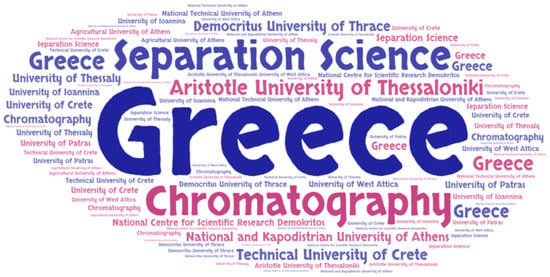
The Evolution of Chromatography in Greece: A Historical Perspective
by Victoria Samanidou
Separations 2026, 13(5), 144; https://doi.org/10.3390/separations13050144 - 9 May 2026
Viewed by 2026
Abstract
Chromatography started to grow in Greece in the 1980s and it has expanded from basic primary separation methods to a sophisticated, multidisciplinary scientific infrastructure operated today by various expert groups distributed in universities and research institutes located in several cities. Over time, chromatography [...] Read more.
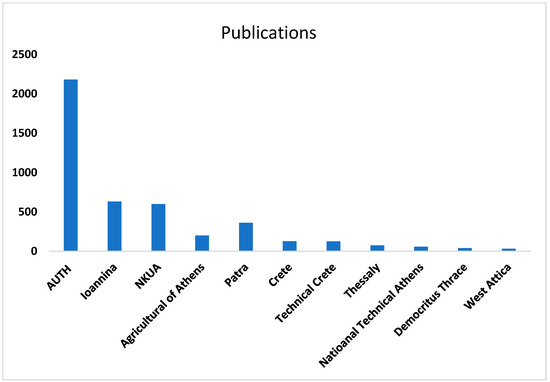
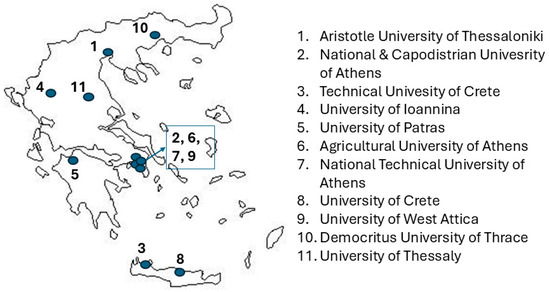
Chromatography started to grow in Greece in the 1980s and it has expanded from basic primary separation methods to a sophisticated, multidisciplinary scientific infrastructure operated today by various expert groups distributed in universities and research institutes located in several cities. Over time, chromatography has become a fundamental scientific field constituting a substantial portion of Greece’s scientific output. Food authentication, environmental analysis and monitoring, biomedical and pharmaceutical research, archeological science, dentistry, veterinary medicine, etc., are, to a great extent, progressing based on advances and applications of chromatographic techniques. The contribution to the scientific field is profound, well established and globally recognized. The proof of this international recognition is reflected in the fact that Greece has been recently accepted in the Central European Group of Separation Sciences after being invited by the Steering Committee of the Group, during the 29th International Symposium on Separation Sciences (ISSS 2025) that took place in Belgrade, Serbia, in September 2025. Herein, a brief historical overview is provided briefly describing the main institutional and group contributors in chromatography all over Greece. Full article
Show Figures

Figure 1
2024

Jump to: 2026, 2022

14 pages, 3089 KB  
Editorial
Central European Group for Separation Sciences (CEGSS)—Brief History and Memoirs on the Creation and Activity
by Bogusław Buszewski, Dušan Berek and Virginia Coman
Separations 2024, 11(1), 21; https://doi.org/10.3390/separations11010021 - 5 Jan 2024
Viewed by 2845
Abstract
The origin of the International Symposia on Separation Sciences (ISSS) can be found in the national gas chromatography scientific meetings held in Zagreb, Croatia, from 1967 and later at Plitvice Lakes until 1988 [...] Full article
Show Figures

Figure 1
2022

Jump to: 2026, 2024

6 pages, 1401 KB  
Review
A Brief Review of Chromatography in Croatia
by Šime Ukić, Danijela Ašperger and Tomislav Bolanča
Separations 2022, 9(6), 134; https://doi.org/10.3390/separations9060134 - 27 May 2022
Cited by 1 | Viewed by 3140
Abstract
Although the Republic of Croatia is a relatively small country geographically, it can boast numerous scientists who have left indelible marks in various scientific fields. However, this paper is exclusively about chromatography as one of the most important analytical techniques of our time. [...] Read more.
Although the Republic of Croatia is a relatively small country geographically, it can boast numerous scientists who have left indelible marks in various scientific fields. However, this paper is exclusively about chromatography as one of the most important analytical techniques of our time. The development of chromatography in the Republic of Croatia and the role that three institutions have played in it—the Faculty of Chemical Engineering and Technology of the University of Zagreb, the Croatian Society of Chemical Engineers, and the Central European Group for Separation Sciences—will be briefly discussed. Full article
Show Figures

Figure 1
15 pages, 5544 KB  
Review
The 20-Year Jubilee of the Interdivisional Group of Separation Science of the Italian Chemical Society
by Danilo Corradini and Luigi Mondello
Separations 2022, 9(5), 123; https://doi.org/10.3390/separations9050123 - 16 May 2022
Cited by 1 | Viewed by 2831
Abstract
This paper illustrates the origin, mission, organization and main activities of the Interdivisional Group of Separation Science (Gruppo Interdivisionale di Scienza delle Separazioni, GISS) of the Italian Chemical Society in occasion of the twentieth anniversary of this organization, whose mission is [...] Read more.
This paper illustrates the origin, mission, organization and main activities of the Interdivisional Group of Separation Science (Gruppo Interdivisionale di Scienza delle Separazioni, GISS) of the Italian Chemical Society in occasion of the twentieth anniversary of this organization, whose mission is to promote and disseminate knowledge on all aspects of separation science and to facilitate strong peer-to-peer relationships. GISS originates from a discussion group, also belonging to the Italian Chemical Society (SCI), having similar finality and the same promoter (the Italian pioneer of Chromatography Prof. Arnaldo Liberti), but less extended scientific interests than the GISS, since it was mainly focused on liquid and gas chromatography. The interests of the GISS span theoretical and practical aspects of separation science and cover all key topics requiring high-performance separation techniques to carry out advanced investigations and/or solve challenging analytical problems. The panoramic view of the GISS includes a synthetic review of the main activities carried out since its foundation, which comprises fast-track discussion meetings, participation, promotion and/or organization of national and international congresses, sponsorship of participation grants for young trainees and Ph.D. students, recognition of scientists who have made and continue to make an outstanding contribution to separation science, as well as young scientists who have evidenced their attitude to carry out significant studies in the field of separation science. Full article
Show Figures

Figure 1
9 pages, 664 KB  
Review
Chromatography in Ukraine: Development and Achievements
by Modest Gertsiuk
Separations 2022, 9(5), 114; https://doi.org/10.3390/separations9050114 - 3 May 2022
Cited by 2 | Viewed by 4073
Abstract
The development of chromatographic science in Ukraine is due to the widespread use of chromatography to solve practical problems. The centers of chromatographic research in Ukraine are in large cities: Kyiv, Kharkiv, Lviv, Odessa, and others. Along with the development of chromatographic research [...] Read more.
The development of chromatographic science in Ukraine is due to the widespread use of chromatography to solve practical problems. The centers of chromatographic research in Ukraine are in large cities: Kyiv, Kharkiv, Lviv, Odessa, and others. Along with the development of chromatographic research methods, analysis methods for control of food and agricultural raw materials, medicinal products, petroleum products, and determination of the environmental pollution state are created. Chromatography is used in medicine, pharmacology, biology, and other sciences. Full article
Show Figures

Figure 1
13 pages, 5700 KB  
Review
Separation Sciences in Poland
by Bogusław Buszewski
Separations 2022, 9(2), 50; https://doi.org/10.3390/separations9020050 - 11 Feb 2022
Cited by 1 | Viewed by 4062
Abstract
This paper describes the most significant achievements related to the creation and development of separation methods. Tswiett Nerst’s achievements and the role of such centers as Lublin, Warsaw, Gdańsk, Poznań, Łódź, Silesia, Kraków and Toruń are presented, as well as the role of [...] Read more.
This paper describes the most significant achievements related to the creation and development of separation methods. Tswiett Nerst’s achievements and the role of such centers as Lublin, Warsaw, Gdańsk, Poznań, Łódź, Silesia, Kraków and Toruń are presented, as well as the role of leaders who created theories and methodological studies on chromatography and related techniques. The role of sample preparation methods is emphasized based on the same or similar theoretical foundations. The directions of developing these techniques in Poland today and in the future are presented. Full article
Show Figures

Figure 1
Back to TopTop