1. Introduction
Due to the exceptional magnetic, optical, and electrical properties, rare earth elements (REEs) are widely used in various fields, including aerospace, information technology, electronics, energy, and medicine [
1,
2,
3,
4]. The typical hydrometallurgical refining process for rare earths involves acid leaching, extraction and separation, precipitation, and calcination [
5,
6,
7,
8]. During the extraction and separation stages, liquid caustic soda (NaOH) is commonly employed as a preferential saponification agent [
9]. However, it produces high-salinity wastewater with a high concentration of sodium chloride (NaCl). Currently, rare earth metallurgy enterprises take no measures to control the salinity levels in NaCl-containing wastewater. This oversight can lead to severe environmental consequences, including pipeline and equipment damage, soil compaction, and accelerated salinization and desertification [
10,
11,
12,
13].
Thermal desalination is a commonly used approach for treating high-salinity wastewater [
14]. It primarily includes multi-stage flash evaporation (MSF), multi-effect evaporation (MED), and mechanical vapor recompression (MVR) [
15]. MSF suffers from low thermodynamic efficiency, high energy consumption, and susceptibility to scaling and corrosion [
16]. In contrast, MED improves the cascade utilization of steam thermal energy by connecting multiple evaporators in series, which significantly reducing steam consumption and thereby enhancing overall thermal efficiency [
17]. Theoretically, an increasing number of effects can yield greater energy savings. However, the marginal benefits diminish with each additional effect, while equipment costs rise, reducing the overall economic efficiency. Compared with MED, MVR concentrates solutions with minimal energy input through vapor recompression, offering higher efficiency [
18]. For high-salinity wastewater, MVR typically achieves a concentration factor of 4 to 6 and a desalination rate of 99%, producing concentrated brine at 230.0 g L
−1, which constitutes approximately 15% of the original volume [
19]. Additionally, this process consumes significantly less energy than MED [
20]. Nevertheless, MVR requires high-pressure-resistant and well-insulated pipelines. Its treatment cost exceeds 20 US
$ t
−1, and it remains highly energy-intensive. Furthermore, scaling issues severely constrain its performance, markedly limiting the practical water recovery rate to around 70% and resulting in relatively low daily processing capacity [
21]. Solar–thermal evaporation offers advantages such as low operating costs, no additional external power supply, long equipment lifespan, and convenient maintenance [
22,
23]. However, its evaporation rate remains low compared with MED or MSF. It also requires substantial land area and is dependent on climatic conditions [
24,
25]. Therefore, developing more economical, environmentally friendly, and efficient strategies is imperative.
Electrodialysis (ED) operates on the principle of selective ion transport through ion-exchange membranes [
26]. By alternately positioning anion-exchange and cation-exchange membranes between electrodes, a series of concentrated and diluted compartments is generated. This setup can achieve a desalination efficiency of up to 99.8% in seawater desalination applications [
27]. Compared with thermal evaporation processes, ED offers superior process controllability and lower energy consumption [
28]. However, its application is limited for treating highly loaded brines. The optimal salinity range for ED typically spans from 0.1 to 10 g L
−1, whereas rare earth high-salinity wastewater can reach concentrations of about 130 g L
−1 [
29]. Additional challenges include membrane fouling, high capital costs, and the limited service lifespan of ion-exchange membranes [
30,
31].
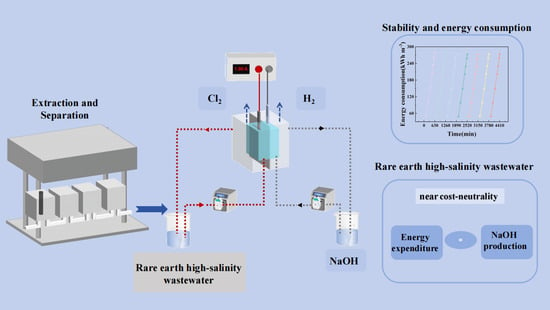
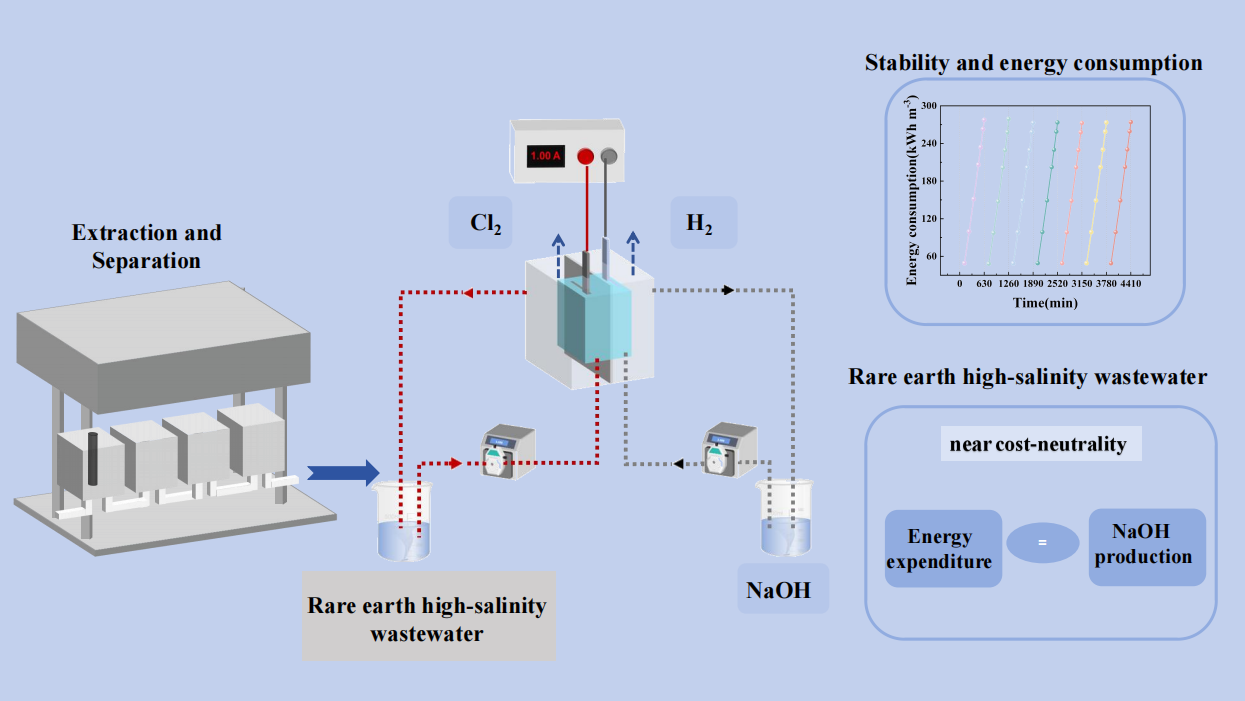
Previous studies have investigated conventional methods for treating saline wastewater, but most have focused either solely on desalination performance, with limited attention paid to the simultaneous recovery of resources from rare earth metallurgy wastewater. For example, thermal desalination exhibits excellent performance, achieving a desalination rate of up to 99%, yet it remains highly energy-intensive and economically unfavorable for dilute wastewater streams. Furthermore, membrane-based processes such as electrodialysis demonstrate high desalination efficiency, but suffer from membrane fouling and high capital costs when treating high-concentration brines. Based on the above considerations, cation-exchange membrane electrolysis was attempted to treat rare earth high-salinity wastewater. On the one hand, this method can directly convert NaCl in the system into NaOH, facilitating resource recovery. On the other hand, its structure is relatively simple, requiring only a single-layer ion-exchange membrane, which makes it more straightforward in terms of cost and operation compared to some membrane stack systems.
The core objectives of this study are to systematically evaluate the feasibility of an integrated electrolysis–membrane system for simultaneous desalination and sodium hydroxide recovery from high-salinity rare earth wastewater, and to identify the key operating parameters governing the trade-offs among ion transport efficiency, side reactions, and energy consumption. Furthermore, the long-term operational stability and economic competitiveness of the proposed process are to be demonstrated through validation using both synthetic and real wastewater. By explicitly focusing on these objectives, this study aims to provide a technically viable and economically attractive pathway for transforming problematic industrial wastewater into valuable resources. Guided by the above objectives, an integrated electrolysis–membrane system was developed in this work to treat high-salinity rare earth metallurgy wastewater while simultaneously recovering sodium hydroxide as a valuable byproduct, thereby closing the loop between wastewater treatment and resource recovery.
2. Experimental Section
2.1. Materials
The chemical reagents employed in this study included sodium hydroxide (NaOH, >96% purity), sodium chloride (NaCl, >99.5% purity), hydrochloric acid (HCl, analytical grade), phenolphthalein (≥98% purity), and hydrogen peroxide (H2O2, 30 wt.%), all of which were supplied by Xilong Chemical Co., Ltd. (Guangzhou, China). A Nafion N117cation exchange membrane (Chemours, Wilmington, DE, USA) was used as the membrane separator. The electrodes consisted of a pure titanium mesh (dimension of 40 mm × 40 mm × 1 mm) and a ruthenium-iridium-titanium-coated titanium mesh (DSA) (dimension of 40 mm × 40 mm × 1 mm).
2.2. Experimental Setup
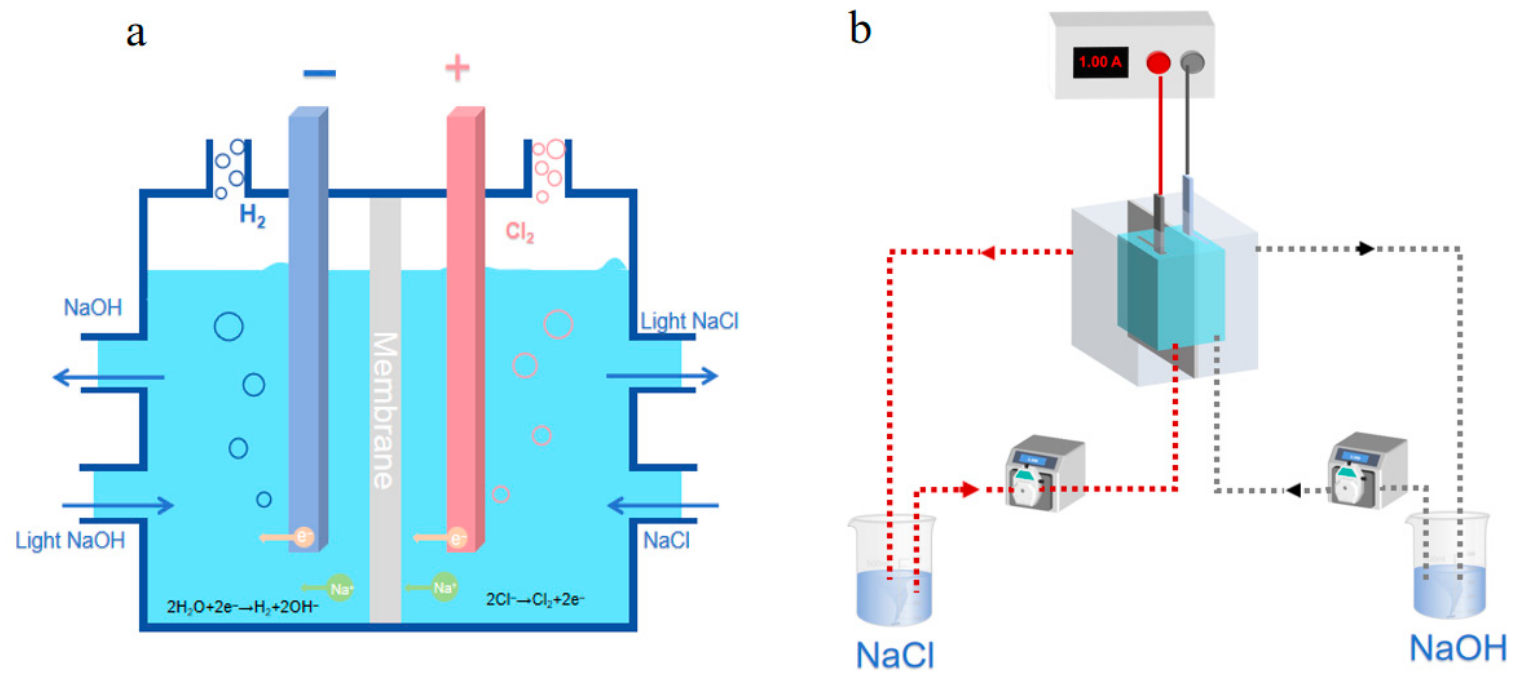
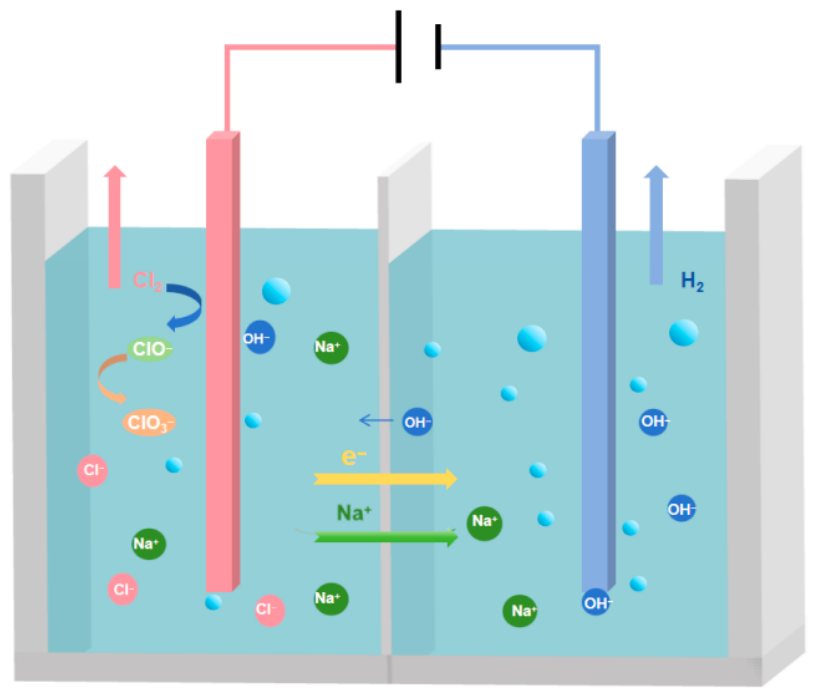
Under direct current operation, Na
+ ions in the anolyte migrate from the anode compartment to the cathode compartment through the cation-exchange membrane. This migration is accompanied by substantial water transport. In contrast, Cl
− and OH
− ions are primarily retained in the anode and cathode compartments, respectively, due to co-ion exclusion. As the reaction proceeds, Cl
2 is generated at the anode, while H
2 and NaOH are produced at the cathode (
Figure 1a). The electrolysis setup was designed and assembled as illustrated in
Figure 1b. The cell body was fabricated using two acrylic plates (dimension of 80 mm × 80 mm × 13 mm). Each plate featured a central recess (dimension of 40 mm × 40 mm × 5 mm), which together formed the electrolyte chamber upon assembly. Key electrolysis components included a ruthenium-iridium-titanium-coated mesh anode, a pure titanium mesh cathode (dimension of 46 mm × 46 mm × 1 mm), and a Nafion N117 cation-exchange membrane as the separator. The cell was sealed using polytetrafluoroethylene (PTFE) and fluororubber gaskets.
A DC power supply (DH1765-3, DAHUA, Beijing, China) was used to provide a constant current and record the corresponding cell voltage. Fresh brine was uniformly fed into the electrolytic cell using a peristaltic pump connected to silicone tubing (BT300-YZ215, VCL, Shanghai, China and chemical 16, PHARMED BPT, Paris, France). All experiments were conducted at room temperature. All aqueous solutions were prepared using deionized water.
2.3. Experimental Procedure
This study systematically investigated the influence of key operational parameters on system performance to determine the optimal operating conditions. The parameters examined included the NaCl concentration in the anolyte, current density, electrode spacing, feed flow rate, and NaOH concentration in the catholyte. All experiments were conducted under constant-current mode throughout the entire study. The initial baseline conditions were set at a current density of 80 mA cm−2, an electrode spacing of 4 mm, a feed flow rate of 15 mL min−1, and a catholyte NaOH concentration of 5.0 g L−1. The NaCl concentration in the anode compartment was varied from 0.1 to 3.0 mol L−1. After determining the optimal NaCl concentration, the current density was varied from 40 to 160 mA cm−2 under the same conditions. Subsequently, the electrode spacing was adjusted from 2.0 to 6.0 mm while maintaining the optimal current density. The feed flow rate was then varied from 5 to 50 mL min−1. Finally, under the selected flow conditions, the initial NaOH concentration in the cathode compartment was adjusted from 0 to 20.0 g L−1 to further evaluate its effect on ion transport behavior and overall system performance.
Following parametric optimization, the long-term stability of the system was evaluated under the optimized conditions. Each electrolysis cycle lasted 630 min, and seven consecutive cycles (total duration of 4410 min) were conducted to assess operational stability and overall energy consumption performance. Finally, to evaluate the practical applicability of the process, a representative sample of sodium saponification wastewater from a rare earth metallurgy plant in Ganzhou (China) was treated. After pretreatment involving oil removal, the water softening process was initiated by the addition of Na
2CO
3, which reacts with Ca
2+, Mg
2+ and other ions in the wastewater to form a precipitate. Subsequently, HCl was added to adjust the pH to a suitable level. The concentrations of various ions in the wastewater are clearly shown in
Table 1. Prior to this saponification step, the rare earth elements had been largely extracted into the organic phase. Therefore, their concentrations in the wastewater were negligible and below the detection limit. The efficacy and practical applicability of the optimized process were further validated using simulated rare earth high-salinity wastewater from rare earth metallurgy
The desalination rate (
) is calculated using Equation (1):
where
C0 is the initial ionic mass concentration of the water sample, and
Ct is the ionic mass concentration at time t.
Current efficiency (
η) of the integrated electrolysis–membrane system is defined as the ratio of the actual mass of a product generated at an electrode to its theoretical mass calculated by Faraday’s law using Equation (2):
where
m, (g) is the experimentally determined mass of the product;
m is the theoretical mass of the product calculated by Faraday’s law;
I is the current;
t is the electrolysis time, and
k is the electrochemical equivalent. In this study, the relevant values are
k = 1.323 for Cl
2 and
k = 1.492 for NaOH. The cathode energy consumption, which refers to the electrical energy required per unit mass of NaOH produced, is calculated using Equation (3):
where
E is the cathode energy consumption,
U is the average cell voltage, and Δ
m is the mass of NaOH produced in the cathode chamber.
In the cathode compartment, water is electrolyzed to produce H
2 and OH
−. Meanwhile, water from the anode compartment migrates to the cathode compartment along with Na
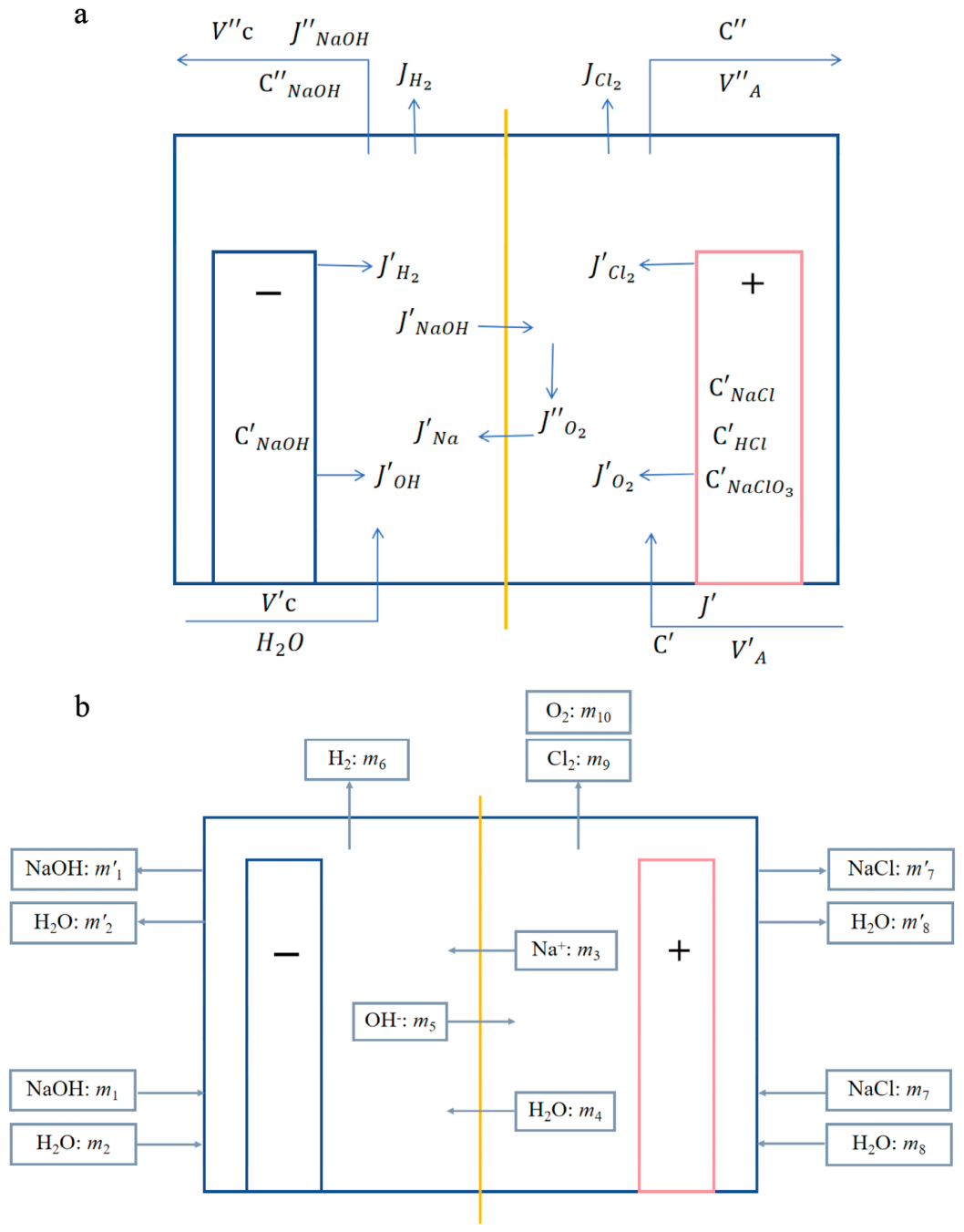
+. As a result, the electrolyte in the cathode compartment shows no significant change during long-term electrolysis. In contrast, the anode compartment undergoes reactions that involve water loss, leading to noticeable changes in the electrolyte over extended experiments. Therefore, when calculating the anodic current efficiency in long-duration electrolysis experiments, it is necessary to account for the change in electrolyte volume. To simplify the calculations and enable a feasible evaluation, reasonable assumptions were made for parameters that are difficult to determine precisely. All processes are assumed to operate under steady-state conditions, and all flows are considered laminar. In the material balance model for the ion-exchange membrane electrolysis, the volumetric flow rate through a given surface is denoted by V, the molar flow rate by J, and the concentration of a substance by C. The material balance within the membrane cell unit is illustrated in
Figure 2a.
Based on the flowchart shown in
Figure 2, the mass balance equations within the electrolytic cell can be formulated as presented in Equation (4):
Here,
m1 and
m2 represent the masses of concentrated salt and water entering the anode compartment, respectively, while
m’
1 and
m’
2 denote the masses of diluted salt and water leaving it. The term
m3 refers to the mass of Na
+ migrating from the anode to the cathode compartment, and
m4 is the mass of water transferred along with Na
+.
m5 represents the mass of back-migrated alkali from the cathode to the anode compartment. On the cathode side,
m7 and
m8 are the masses of dilute alkali and water entering the cathode compartment, whereas
m′
7 and
m′
8 are the masses of concentrated alkali and water exiting it. Finally,
m6,
m9 and
m10 correspond to the masses of hydrogen, chlorine, and oxygen gases leaving the cathode and anode compartments, respectively, as illustrated in
Figure 2b.
Water transport across the ion-exchange membrane occurs via two primary mechanisms. The first is sodium ion hydration water, in which Na
+ ions migrating from the anode to the cathode compartment carry a specific number of water molecules through the membrane. This mechanism represents the dominant contribution to overall water transport. A constant number of water molecules, denoted as n, accompany each sodium ion during migration from the anode to the cathode. This type of transported water is referred to as sodium ion hydration water. Under typical operating conditions, n is approximately 4, meaning each sodium ion transports about four water molecules. The second mechanism is net permeation, which encompasses not only hydration water but also water transferred as a result of concentration and pressure gradients across the membrane. In engineering practice, to simplify calculations and estimations, the predominant contribution from sodium ion hydration water is typically considered, and the mass of water transferred from the anode to the cathode compartment is therefore calculated using Equation (5):
Here,
is the cathode current efficiency. The electrolytic volume of the anode compartment,
V is calculated using Equation (6):
The energy consumption (
W) for treating the high-salinity wastewater is calculated using Equation (7):
where
W is the volumetric energy consumption for wastewater treatment, and
V is the volume of wastewater treated.
2.4. Characterization
The major ionic constituents of the saline solutions in this study were Na
+ and Cl
−. Ion chromatography was employed to analyze the concentration change in Cl
− before and after electrolysis, while Na
+ concentration was determined using inductively coupled plasma optical emission spectrometry (ICP-OES). Solution conductivity was measured with a conductivity meter. The concentration of NaOH in the catholyte was quantified by titration in accordance with the Chinese National Standard method GB/T 4348.1-2013 [
32]. Scanning electron microscopy (SEM, SU8010, Hitachi, Ltd, Tokyo, Japan) was employed to characterize the N117 membrane before and after electrolysis in order to observe its surface and cross-sectional morphologies. Cross-sectional samples were prepared by cryofracturing in liquid nitrogen. Both surface and cross-sectional samples were sputter-coated with gold and then observed at an accelerating voltage of 10 kV. Cross-sectional analysis was performed on the membrane in its hydrated state, whereas surface morphology analysis was conducted on fully dried samples.
3. Results and Discussion
3.1. Effect of NaCl Concentration
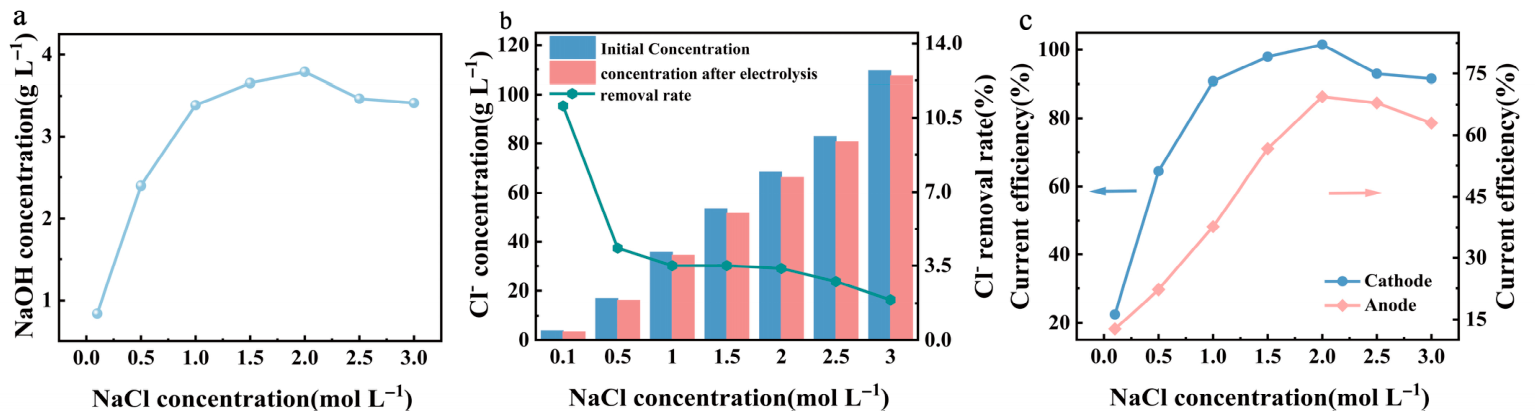
Figure 3 shows a non-monotonic dependence of system performance on the NaCl concentration in the anolyte. As the NaCl concentration increases, the cathodic NaOH production initially rises, reaches a maximum at 2 mol L
−1, and then declines (
Figure 3a). This trend is likely associated with the combined effects of enhanced ion transport and competing side reactions. At relatively low concentrations, increasing NaCl facilitates the migration of Na
+ across the membrane, thereby promoting NaOH formation. However, at higher concentrations, the reduced solubility of dissolved Cl
2 may favor the formation of hypochlorite (ClO
−) and chlorate (ClO
3−) via Equations (8)–(10) [
33]. The consumption of active chlorine species through these pathways could partially divert the current away from NaOH generation, which may account for the decline in current efficiency observed in
Figure 3c.
In addition, the gradual decrease in Cl
− removal efficiency with increasing NaCl concentration (
Figure 3b) suggests that ion transport becomes increasingly constrained at higher influent loads. This constraint appears to arise from mass transfer limitations rather than being solely limited by electrochemical kinetics. Although a higher electrolyte concentration improves conductivity and reduces cell voltage, further increases beyond a certain level do not appear to yield proportional performance gains, possibly due to the intensification of side reactions. On this basis, a NaCl concentration of 2.0 mol L
−1 was considered a suitable operating condition for subsequent experiments.
3.2. Effect of Current Density
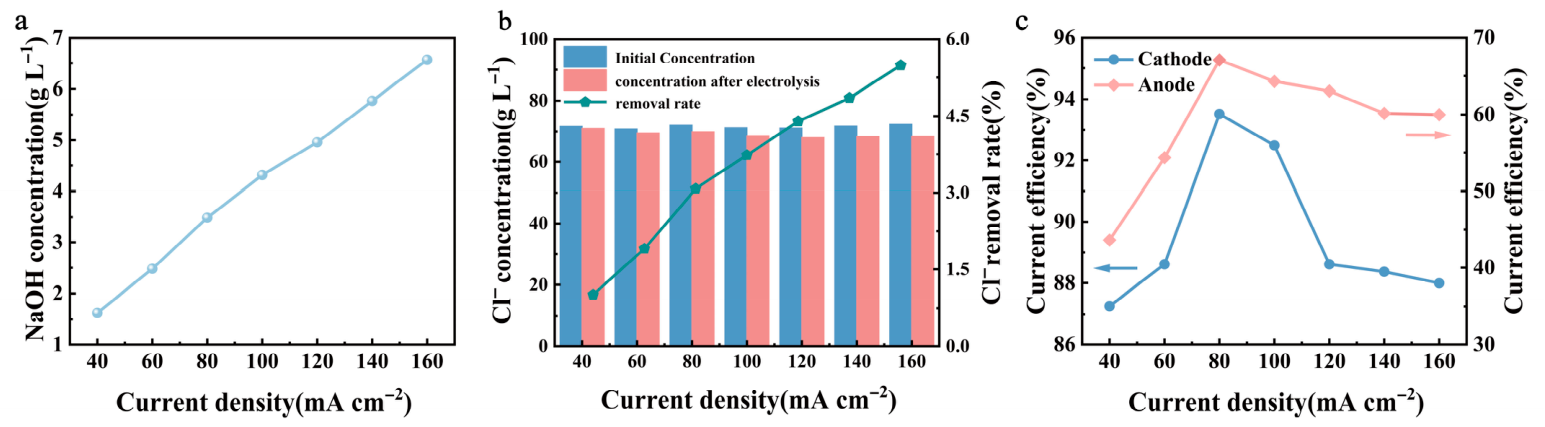
The effect of current density on system performance is presented in
Figure 4. The NaOH concentration increased approximately linearly with increasing current density (
Figure 4a). A similar trend was observed for Cl
− removal (
Figure 4b), which is likely related to the enhanced charge transfer at higher currents, facilitating the involvement of Cl
− in electrode reactions. In contrast, the current efficiency exhibited a different behavior, increasing with current density up to 80 mA cm
−2 and then gradually declining at higher values (
Figure 4c).
At relatively low current densities, the increase in current appears to promote the oxidation of Cl
−, allowing the chlorine evolution reaction (CER) to proceed more favorably compared to competing side reactions [
34,
35]. However, as the current density increases further, the generation rate of Cl
2 may exceed its detachment rate from the electrode surface. The accumulation of dissolved Cl
2 could enhance its subsequent reaction with OH
− to form hypochlorite (ClO
−), as described in Equation (11). This pathway consumes active chlorine species and may partially divert the current from the desired reaction, contributing to the observed decrease in current efficiency.
Overall, these results suggest that the selection of current density involves a trade-off among Cl− removal, cell voltage, and current efficiency. Under the conditions investigated, a current density of 80 mA cm−2 was therefore considered a suitable operating value for this system.
3.3. Effect of Electrode Spacing
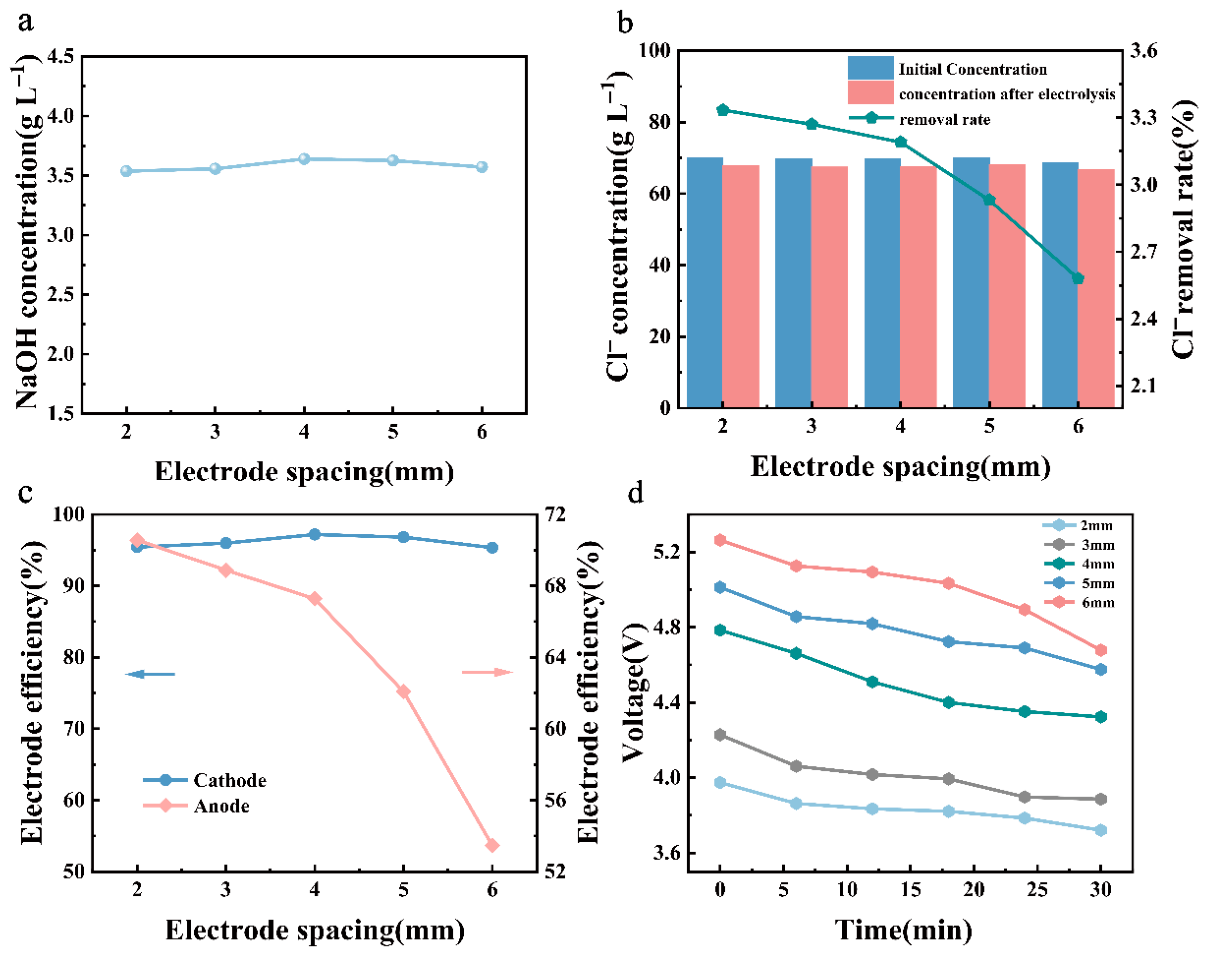
The effect of electrode spacing on system performance is shown in
Figure 5. As the spacing increased, the NaOH concentration exhibited a non-monotonic trend, while Cl
− removal rate gradually declined (
Figure 5a,b). These trends are associated with variations in mass transfer behavior as well as the increase in ohmic resistance at larger electrode gaps. The cathodic current efficiency increased with electrode spacing up to 4 mm and then decreased at higher values. In contrast, the anodic current efficiency generally showed a downward trend across the investigated range (
Figure 5c).
At relatively small electrode spacing, hydrogen bubbles generated at the cathode may not detach efficiently. This can lead to the formation of a bubble layer, which increases local resistance and hinders ion transport [
36]. A moderate increase in spacing appears to facilitate bubble release, which can improve mass transfer and contribute to the initial increase in current efficiency. However, as the spacing increases further, the ion migration distance becomes longer. Consequently, the resulting mass transport limitations gradually outweigh the benefits associated with improved bubble removal, leading to a gradual decrease in current efficiency [
37]. In addition, increasing electrode spacing is accompanied by a reduction in Cl
− removal and anodic current efficiency. This behavior may be related to the dependence of the chlorine evolution reaction (CER) on a continuous supply of Cl
−. With increasing spacing, the transport path for Cl
− to reach the anode becomes longer, which may promote the development of a thicker diffusion layer. As a result, Cl
− transport could become more restricted, potentially lowering the effective limiting current density for CER and increasing competition with the oxygen evolution reaction (OER), thereby contributing to the observed decline in performance.
As electrode spacing increases, the cell voltage also rises, mainly due to the larger ohmic drop across the electrolyte (
Figure 5d). The increased resistance may further elevate the reaction overpotential, resulting in a higher overall cell voltage. From an energy perspective, reducing electrode spacing can help to lower power consumption [
38]. Considering the combined effects on cell voltage, Cl
− removal, and current efficiency, an electrode spacing of 2 mm was considered a suitable operating value for this system.
3.4. Effect of Feed Flow Rate
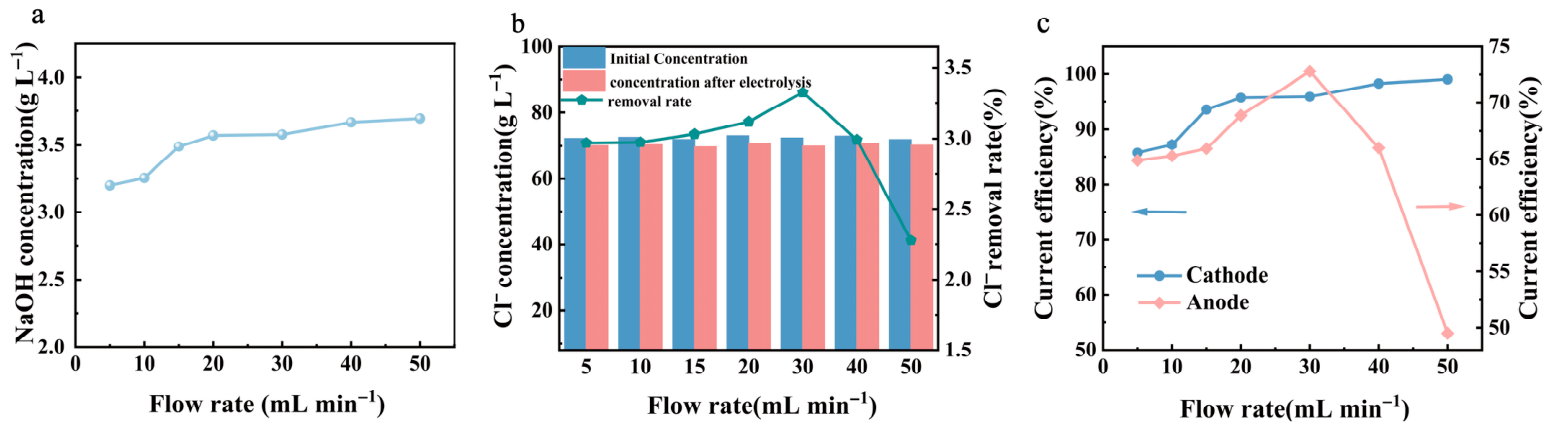
The effect of feed flow rate on system performance is summarized in
Figure 6. As the flow rate increased, the NaOH concentration in the cathode chamber increased (
Figure 6a). In contrast, the Cl
− removal rate initially increased but began to decrease once the flow rate exceeded 30 mL min
−1 (
Figure 6b). A higher feed flow rate was found to enhance the cathode current efficiency throughout the tested range (
Figure 6c). In the cathode chamber, increased flow rates reduce the accumulation of OH
− near the electrode surface and shorten the residence time of hydrogen bubbles. This improving electrolyte–electrode contact and enhancing mass transfer. Conversely, the anode current efficiency increased only at lower flow rates and began to decrease above 30 mL min
−1 (
Figure 6c).
At flow rates below this threshold, the limiting current density tends to increase and the diffusion layer becomes thinner. This enhances Cl
− transport to the anode surface [
39]. However, at flow rates above 30 mL min
−1, although OH
− accumulation is suppressed at the cathode, the corresponding thinning of the boundary layer near the anode can increase the diffusion flux of OH
− toward the anode. This promotes the parasitic formation of hypochlorite (ClO
−), thereby reducing the anode current efficiency. Considering the combined effects on NaOH production, Cl
− removal rate and current efficiency, a flow rate of 30 mL min
−1 was considered a suitable operating condition.
3.5. Effect of Initial NaOH Concentration
The crossover of NaOH from the cathode to the anode can initiate side reactions with dissolved Cl
2 in the anolyte, thereby reducing current efficiency [
40]. To optimize this process, the effect of the initial NaOH concentration in the cathode was further investigated.
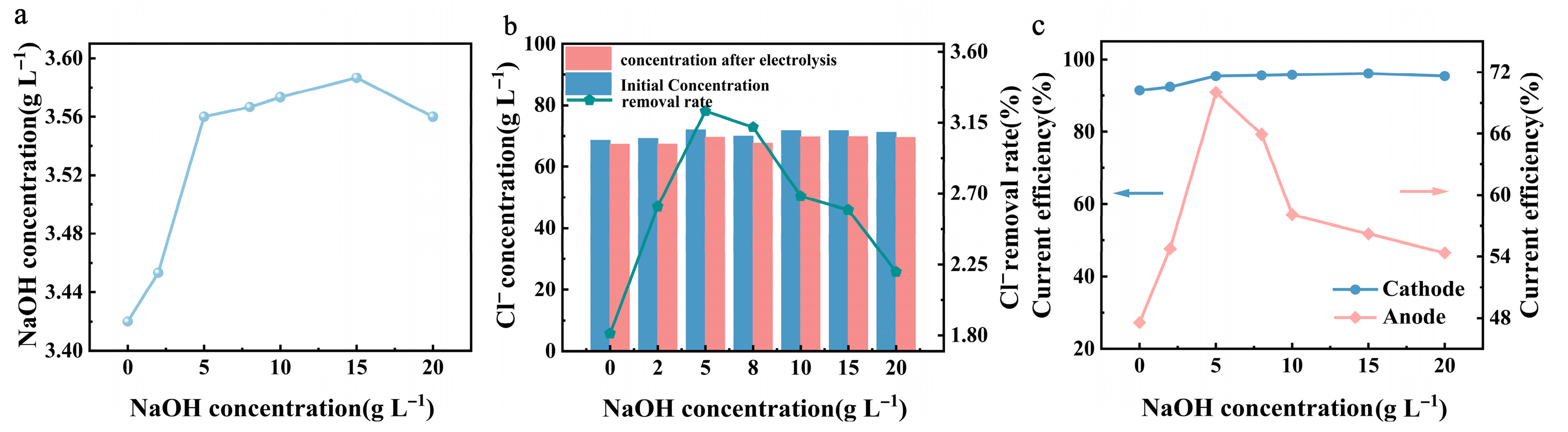
As the initial NaOH concentration increased, the NaOH production in the cathode chamber increased and reached a maximum at 15.0 g L
−1 (
Figure 7a). In contrast, the Cl
− removal rate reached its highest value at 5.0 g L
−1 and then decreased with further increases in NaOH concentration (
Figure 7b). The overall current efficiency initially increased, peaked, and then decreased as the NaOH concentration was raised (
Figure 7c). In the cathode compartment, a higher NaOH concentration enhances solution conductivity and reduces ohmic resistance, thereby improving electrolysis efficiency. However, the anode behavior is also influenced by OH
− crossover from the cathode. At NaOH concentrations below 5.0 g L
−1, the concentration gradient is relatively small, which limits significant insufficient OH
− migration across the membrane [
41]. When the NaOH concentration exceeds this level, the increased OH
− flux promotes the parasitic reaction between electrogenerated Cl
2 and OH
− in the anode chamber. This reaction forms hypochlorite (ClO
−) and reducing the anode current efficiency [
33]. Consequently, increasing the initial NaOH concentration in the catholyte lowered the cell voltage but resulted in a trade-off in chlorine evolution performance, which improved initially and then deteriorated. Considering the overall performance, particularly the anodic Cl
− removal efficiency, an initial NaOH concentration of 5.0 g L
−1 was selected as the optimal operating condition.
3.6. Stability and Energy Consumption Analysis of the Process
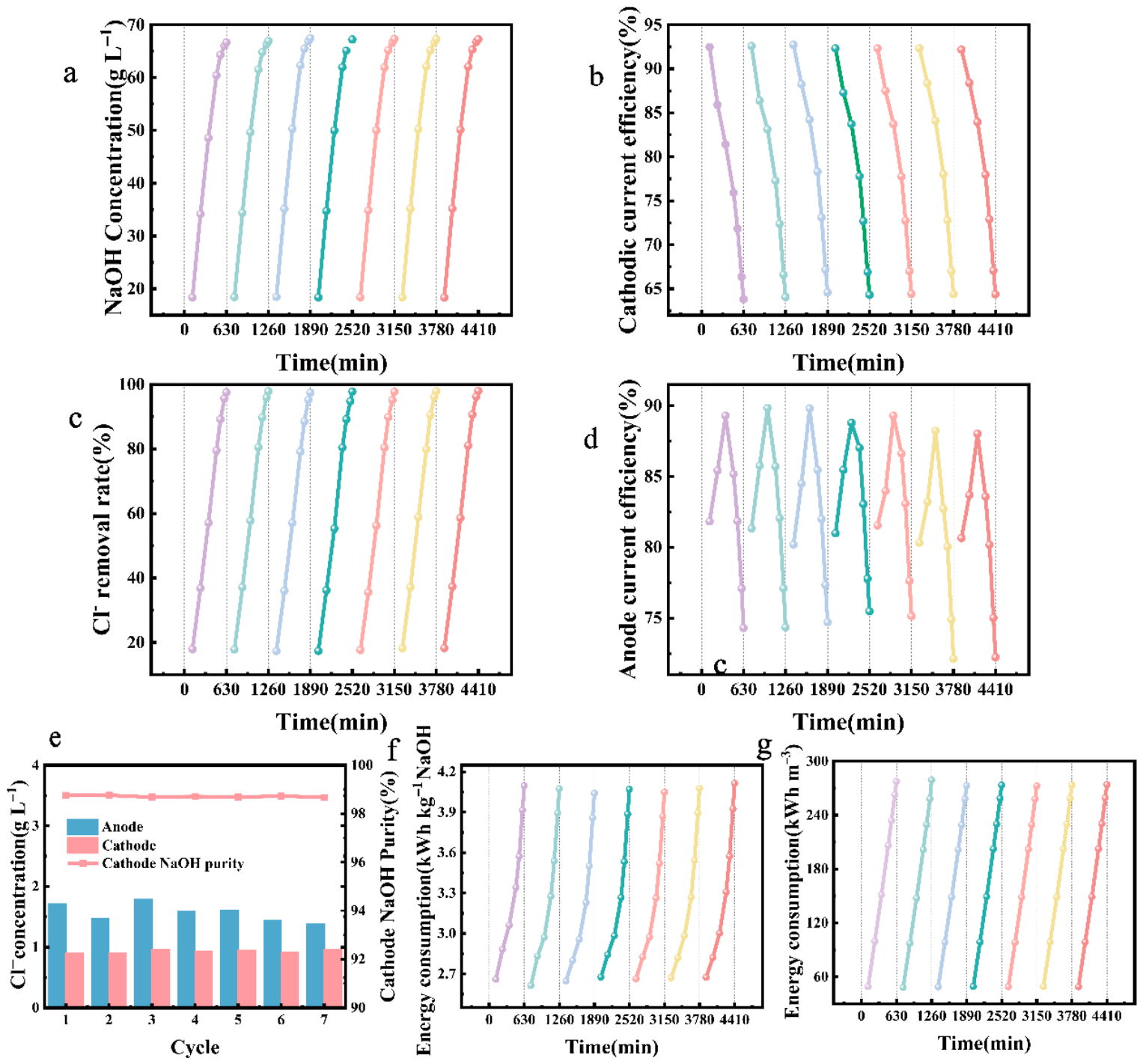
The long-term stability and energy consumption of the optimized electrolysis process were assessed over seven consecutive cycles. The overall electrolysis performance stabilized after multiple operational cycles (
Figure 8). The NaOH concentration in the catholyte increased from an initial 0.125 mol L
−1 to 1.75 mol L
−1 after 540 min, 1.79 mol L
−1 after 600 min, and 1.80 mol L
−1 after 630 min of electrolysis (
Figure 8a,b). The cathode current efficiency reached a maximum of 92% at the beginning of operation but gradually decreased to 64% as the reaction progressed. This decline can be attributed to the gradual saturation of active sites, leading to the inhibition of the hydrogen evolution reaction.
In the anode compartment, the Cl
− removal rate stabilized at approximately 97.5% after seven electrolysis cycles (
Figure 8c). During the early stages of electrolysis, a significant portion of the generated Cl
2 dissolved into the electrolyte. As the solution neared saturation, the removal efficiency increased to its maximum (
Figure 8d). However, as the Cl
− concentration in the electrolyte decreased over time, competing side reactions at the anode intensified, leading to a reduction in current efficiency. These results demonstrate that electrolysis performance with high Cl
− removal efficiency and effective NaOH production can remain stable under optimal process conditions.
After seven electrolysis cycles, the Cl
− concentration in the anode compartment decreased from 70.0 g L
−1 to 1.5 g L
−1, while that in the cathode compartment reached 0.9 g L
−1. The purity of NaOH produced at the cathode was calculated to be 98.75% (
Figure 8e). This high purity is attributed to the concentration-driven migration of Cl
− from the anode to the cathode during the later stages of operation.
The specific energy consumption for NaOH production from high-salinity wastewater via membrane electrolysis was initially 2.6 kWh kg
−1 NaOH and gradually increased to approximately 4.0 kWh kg
−1 NaOH over time (
Figure 8f). Achieving a 90% Cl
− removal rate required about 9 h and 230 kWh m
−3 of treated wastewater (
Figure 8g). Increasing the removal rate to 95.6% and 97.5% extended the required time to 10 h (258 kWh m
−3) and 10.5 h (273 kWh m
−3), respectively.
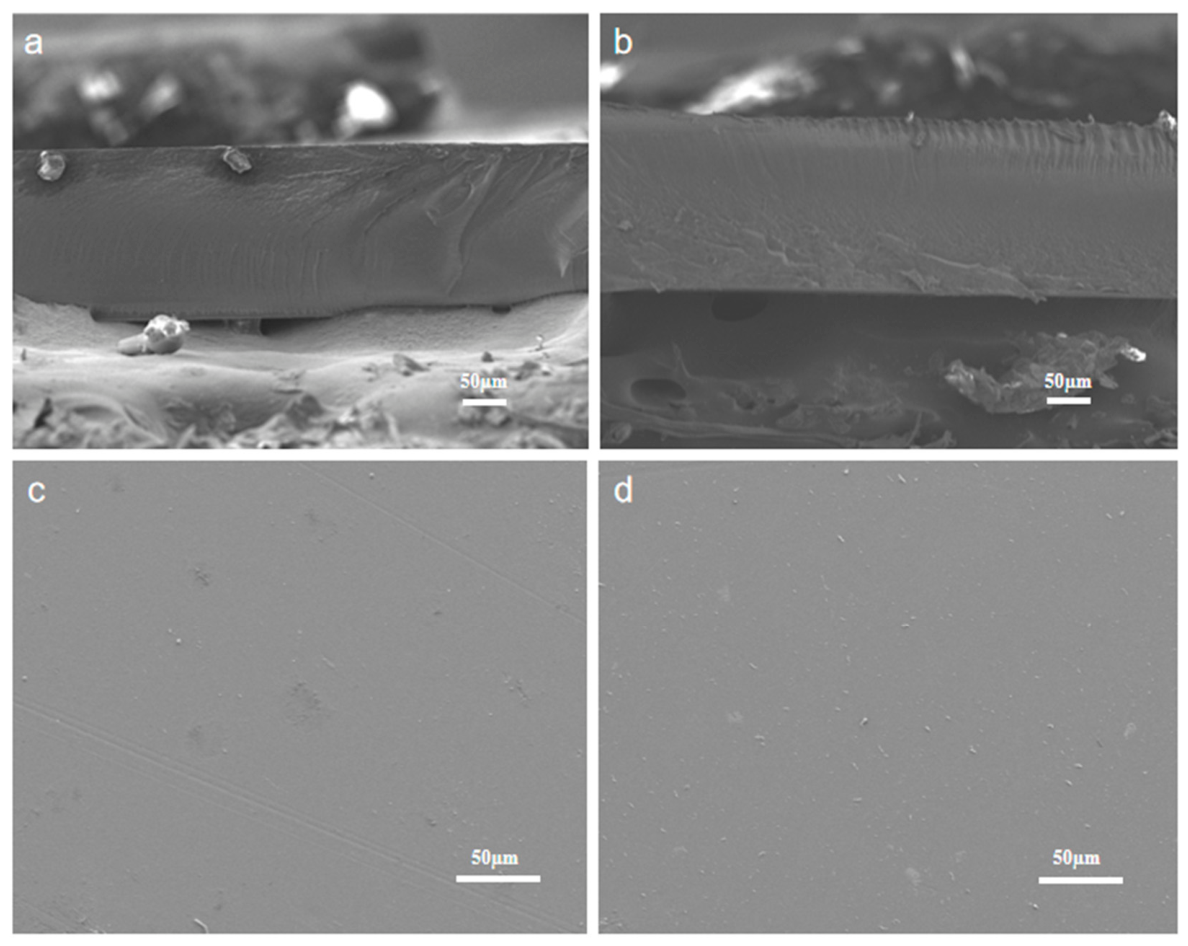
The chemical and morphological stability of the N117 membrane was examined before and after long-term operation (
Figure 9). The membrane is a non-reinforced perfluorosulfonic acid/PTFE copolymer. It exhibited a dense and uniform layered structure without visible pores or defects. No significant changes were observed after electrolysis (
Figure 9a,b). The surface remained smooth and intact, showing only minor pre-existing scratches (
Figure 9c,d). The absence of notable morphological alterations on both the surface and cross-section confirms the excellent chemical and mechanical stability of the N117 membrane under the harsh conditions of high-salinity wastewater electrolysis. This supports its suitability for long-term operation.
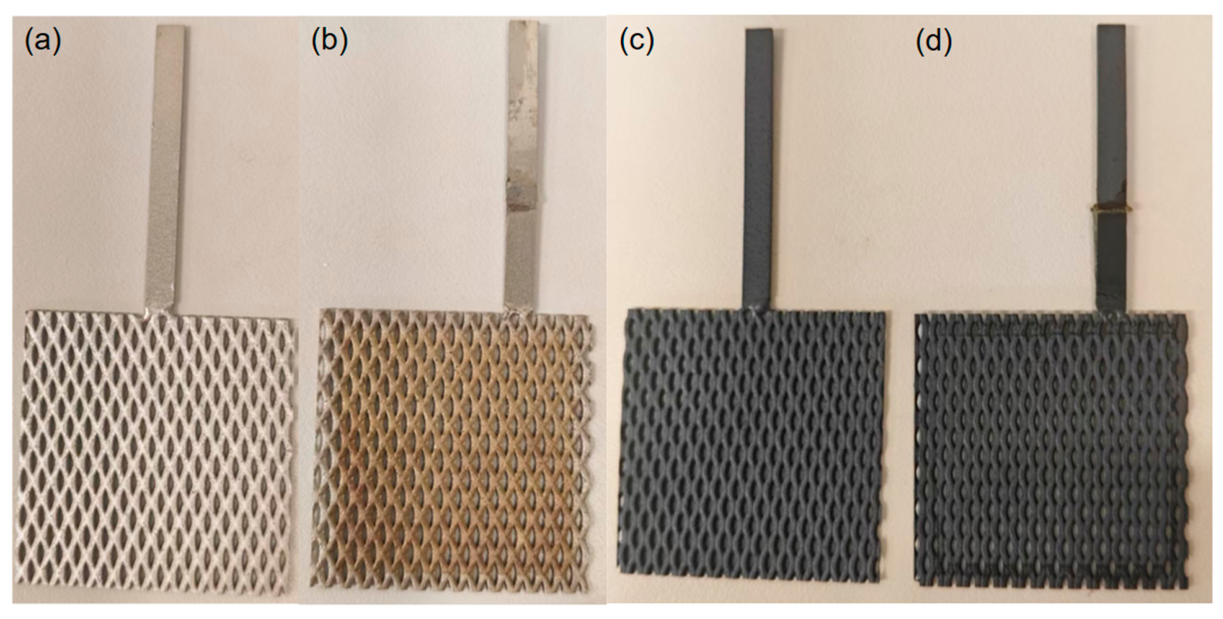
During long-term electrolysis, the surface of the titanium cathode mesh exhibited uneven discoloration, with a notably darker shade observed in the bottom region (
Figure 10). This phenomenon is primarily attributed to the naturally occurring oxide film on the titanium surface, which is only several nanometers thick. In the strongly alkaline environment, the oxide film undergoes repassivation. Dissolved oxygen or water molecules act as oxidants and react with the titanium substrate, resulting in an extremely slow thickening of the oxide film over the course of electrolysis. Owing to the bottom-inlet and top-outlet flow configuration of the electrolytic cell, the NaOH concentration in the cathode compartment was relatively higher at the bottom. This led to a more intense reaction in this region compared to the top, which consequently caused uneven discoloration of the titanium cathode mesh. No obvious morphological changes were observed on the ruthenium–iridium–titanium-coated anode mesh. Furthermore, combining with the monitoring data of NaOH concentration and anodic Cl
− removal efficiency shown in the figure, the results from multiple electrolysis cycles revealed no significant degradation in the electrolytic performance of either the titanium cathode mesh or the ruthenium-iridium-titanium-coated anode mesh. This indicates that both electrodes maintained excellent electrolysis efficiency after repeated operation.
3.7. Process Mechanism Elucidation
3.7.1. Ion Migration and Reaction Processes
Based on the above experimental results and combined with relevant theories from the chlor-alkali industry, the ion migration in the electrolytic cell (
Figure 11) and the process mechanism of electrolytic treatment of rare earth high-salinity wastewater is systematically analyzed as follows.
Under the influence of a direct current electric field, ion migration and electrochemical reactions in the electrolytic cell follow the pathways described below. In the anode compartment, Na+ ions migrate toward the cathode driven by the applied electric field and enter the cathode compartment due to the selective permeability of the cation-exchange membrane. Because the cation-exchange membrane carries fixed negatively charged groups, it exerts a repulsive effect on anions; thus, anions such as Cl− and OH− are retained on one side of the membrane and can hardly migrate across it.
In the cathode compartment, water molecules undergo a reduction reaction at the cathode surface, generating H
2 and OH
−. The Na
+ ions migrating from the anode compartment combine with the OH
− generated at the cathode to form NaOH. The main cathodic reaction is shown in Equation (12):
In the anode compartment, Cl− ions undergo an oxidation reaction at the anode surface, generating Cl2. The main anodic reaction is shown in Equation (8).
The overall electrolysis reaction can be expressed as Equation (13):
In addition to the chlorine evolution reaction (CER), various side reactions occur at the anode, among which the most significant is the oxygen evolution reaction (OER), as shown in Equation (14):
Under electrolysis conditions, the chlorine evolution reaction can dominate due to differences in the catalytic selectivity of the electrode material and the overpotential. The ruthenium-iridium-coated titanium anode used in this study possesses a relatively high oxygen overpotential, and the actual electrode potential for the OER is higher than that for the CER, which effectively suppresses the oxygen evolution side reaction. When the Cl− concentration in the anolyte decreases or the current density becomes too high, the proportion of the OER increases, leading to a decline in current efficiency. When a portion of the Cl2 generated at the anode dissolves into the anolyte, it reacts with water to form hypochlorous acid and chlorate, as shown in Equations (9) and (10).
These side reactions not only consume active chlorine and electrical current, thereby reducing current efficiency, but also generate byproducts such as chlorate, which affect the composition of the anolyte.
Although the cation-exchange membrane effectively blocks anions, OH− ions can back-migrate through the hydrated channels within the membrane toward the anode compartment, driven by the concentration gradient. The back-migration of OH− reacts with the Cl2 generated at the anode to form hypochlorite, as shown in Equation (11).
3.7.2. Energy Analysis and Efficiency Implications
To provide a more mechanistic understanding of energy consumption in the proposed system, this section analyzes the key factors governing energy requirements and the trade-offs between removal efficiency and energy input.
The total electrical energy input to the system is consumed by three primary components: ohmic losses in the electrolyte and membrane, electrode overpotentials, and mass transfer limitations, particularly at low Cl− concentrations.
As shown in
Figure 5d, cell voltage increases with electrode spacing due to higher ohmic resistance. At an optimal spacing of 2 mm, the ohmic contribution is minimized. However, excessively small spacing may hinder bubble detachment, as discussed in
Section 3.3. The specific conductivity of the anolyte and catholyte contributes to a baseline ohmic loss of approximately 0.3–0.5 V under operating conditions.
The chlorine evolution reaction (CER) at the anode and the hydrogen evolution reaction (HER) at the cathode each contribute activation overpotentials. At the optimal current density of 80 mA cm−2, the combined overpotential is approximately 0.4–0.6 V. Higher current densities increase overpotentials exponentially, as described by the Tafel equation, leading to diminished energy efficiency.
As Cl− concentration in the anolyte decreases during electrolysis, the system approaches the limiting current density—the maximum current at which Cl− can be transported to the electrode surface at a rate sufficient to sustain the CER. Beyond this point, further increases in applied current do not enhance Cl− removal but instead exacerbate side reactions and increase energy consumption without proportional benefit.
Figure 8g illustrates the trade-off between Cl
− removal efficiency and energy consumption. Increasing removal from 90% to 95.6% requires an additional energy input of 28 kWh m
−3, while further increasing removal to 97.5% requires an additional 15 kWh m
−3. The marginal energy cost per additional percentage point of removal increases sharply at high removal efficiencies due to mass transfer limitations. This non-linear relationship suggests that the economically optimal target removal efficiency is application-dependent. For most discharge standards, a removal efficiency of 90–95% offers a reasonable balance between environmental compliance and energy cost.
The energy analysis underscores the importance of operating at optimized parameters: 2.0 mol L−1 NaCl, 80 mA cm−2 current density, 2 mm electrode spacing, and 30 mL min−1 flow rate. Operating outside these ranges increases either ohmic losses, overpotentials, or mass transfer limitations.
3.8. Electrolysis of Actual Rare Earth High-Salinity Wastewater and Economic Feasibility
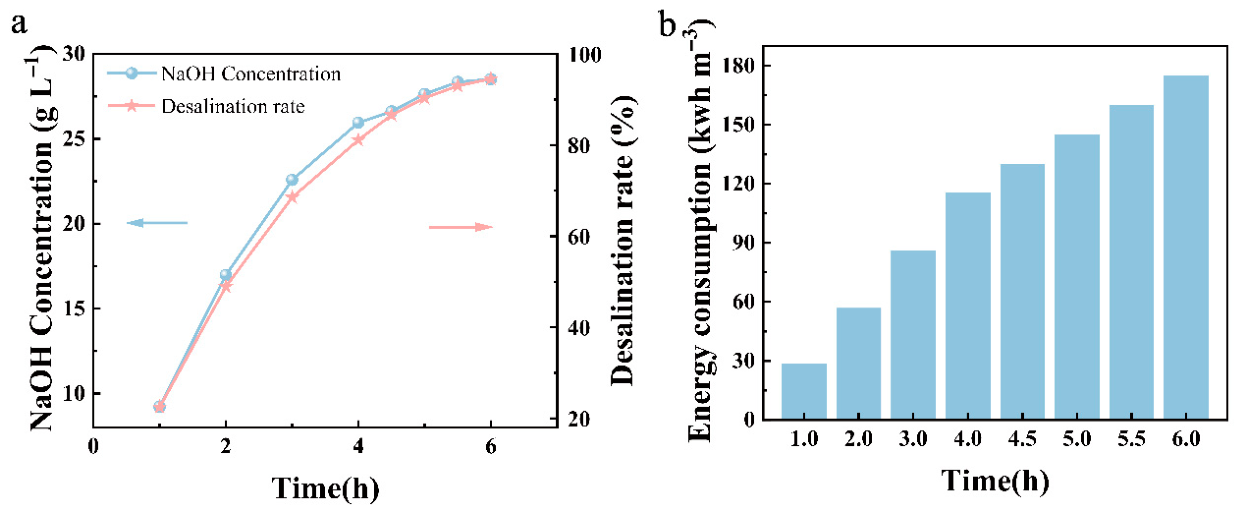
The pre-treated rare earth wastewater was electrolyzed for 6 h under the following optimized conditions: current density of 80 mA cm
−2, flow rate of 30 mL min
−1, catholyte NaOH concentration of 5.0 g L
−1, and electrode spacing of 2 mm. The desalination trend of the rare earth high-salinity wastewater closely resembled that observed in the synthetic system (
Figure 12a). As the electrolysis time increased, the increase in the desalination rate gradually slowed. This behavior is characteristic of electrochemical systems, where the process progressively becomes limited by mass transfer as the concentration of the target ion (Cl
−) decreases. Lower ion concentration reduces solution conductivity and the effective current density, thereby weakening the driving force for ion migration. After 4, 5, and 6 h of electrolysis, the desalination rates reached 81.1%, 90.3%, and 94.5%, respectively.
The corresponding specific energy consumption was about 115.2 kWh m
−3 at 4 h, 144.8 kWh m
−3 at 5 h, and 174.7 kWh m
−3 at 6 h (
Figure 12b). Industrial electricity prices vary substantially depending on region, voltage level, time of use, and tariff structure, with national baseline rates generally ranging from 0.04 to 0.11 US
$ kWh
−1. Based on these data, the treatment cost per ton of wastewater was calculated. At a desalination rate of 90.3% and an industrial electricity price of 0.08 US
$ kWh
−1, the total energy cost was calculated to be 11.58 US
$ t
−1. The proposed electrolysis–membrane coupling process is competitive with conventional methods. When comparing different technologies for treating high-salinity wastewater is shown in
Table 2, the proposed process exhibits relatively higher energy consumption. However, in contrast, the electrolysis–membrane coupling system is less prone to scaling and imposes no concentration restrictions on the high-salinity wastewater to be treated. Furthermore, it generates valuable byproducts such as NaOH, which significantly reduces the overall treatment cost for rare earth high-salinity wastewater. The sodium hydroxide produced during electrolysis possesses considerable market value: industrial-grade caustic soda is priced between 373 and 427 US
$ t
−1. When the desalination rate reached 90.3%, the NaOH concentration in the catholyte attained 27.6 g L
−1 (
Figure 10a). Consequently, treating one ton of wastewater yields approximately 27.6 kg of NaOH, corresponding to a byproduct value of approximately 10.3–11.8 US
$, with an average of 11.1 US
$. Therefore, the revenue generated from the byproduct NaOH can essentially offset the electrical energy costs of the treatment process, driving the operating expense (OPEX) towards zero or even negative. This demonstrates significant economic viability and embodies the principles of resource recovery.
3.9. Critical Assessment and Industrial Implications
Although the proposed integrated electrolysis–membrane system demonstrates promising performance for treating high-salinity rare earth wastewater, a comprehensive assessment of its advantages, limitations, and applicability is essential for guiding future industrial implementation.
The primary advantage of the proposed system lies in its ability to simultaneously achieve high-efficiency desalination and resource recovery. Unlike conventional methods that merely concentrate waste streams without producing valuable byproducts, this system converts NaCl into NaOH, Cl2, and H2. The recovered NaOH, with a purity of 98.75%, possesses substantial market value, which can largely offset operational energy costs. Furthermore, the system achieves a Cl− removal rate of 97.5% over prolonged operation without membrane fouling, a key advantage over electrodialysis, which suffers from severe membrane fouling when treating high-salinity brines. The simple cell configuration reduces capital costs compared to conventional membrane stack systems.
Despite these advantages, several limitations must be acknowledged. Side reactions lead to the formation of hypochlorite (ClO−) and chlorate (ClO3−), particularly at high current densities or when OH− crossover is significant. These parasitic reactions reduce the anodic current efficiency and consume active chlorine that could otherwise be recovered as Cl2. Energy consumption remains relatively high when targeting Cl− removal rates above 95%, which may limit economic viability in regions with high electricity prices. Although the Nafion N117 membrane showed no morphological degradation over 4410 min of operation, its long-term durability under continuous industrial-scale operation remains to be validated. In addition, the system currently does not include chlorine handling or crude alkali purification units, which would add to capital and operational expenditures in a full-scale implementation.
The proposed technology is particularly suitable for high-salinity wastewater streams generated from rare earth saponification processes, as validated by the real wastewater experiment. It is also applicable to other industrial brines with similar compositions, such as those from chlor-alkali plants or textile dyeing processes. However, the system is less suitable for low-salinity wastewater, where electrodialysis or reverse osmosis would be more energy-efficient.
In summary, the integrated electrolysis–membrane system represents a technically viable and economically attractive option for high-salinity NaCl-rich wastewater treatment, with the distinct advantage of resource recovery.
3.10. Sensitivity Analysis and Conservative Cost Scenario
To provide a more comprehensive and transparent economic assessment, membrane replacement costs and electrode replacement costs have been incorporated into the initial analysis, together with pretreatment costs. It should be noted that NaOH purification costs are incurred only when high-purity products (>99%) are required. For most industrial applications, the purity of 98.75% achieved by the present system is sufficient; therefore, this cost is excluded from the analysis. Furthermore, the chlorine gas generated at the anode can be recovered as a byproduct, the value of which could offset part of the treatment cost [
42]. In a conservative approach, the revenue from chlorine is considered zero in this analysis.
Based on the typical service life of Nafion membranes in industrial chlor-alkali applications (3–5 years) and considering the operating conditions of this study, the amortized membrane replacement cost is estimated at 1.2–1.8 US
$ t
−1 of wastewater [
43]. In the conservative scenario, the membrane service life is assumed to be shortened to 2 years, with the cost taken at the upper limit. According to industrial chlor-alkali electrolysis experience, the ruthenium–iridium-coated titanium anode typically has a service life of 3–5 years, while the pure titanium cathode has a longer service life (5–8 years). The electrode replacement cost is estimated at 0.8–1.2 US
$ t
−1 of wastewater [
44]. In the conservative scenario, the electrode service life is assumed to be shortened to 3 years, with the cost taken at the upper limit. The actual rare earth wastewater used in this study was subjected to oil removal, water softening using Na
2CO
3 to precipitate Ca
2+ and Mg
2+, and pH adjustment using HCl. Based on chemical reagent consumption and industrial prices, the total pretreatment cost is estimated at approximately 2.0 US
$ t
−1 of wastewater.
A sensitivity analysis was conducted on three key parameters: electricity price, membrane service life, and electrode service life, as shown in
Table 3. Overall, under the baseline scenario, the revenue from the byproduct NaOH can substantially offset the operational energy costs, resulting in a net treatment cost of approximately 6.8 US
$ t
−1 of wastewater. Even under the conservative scenario, the net treatment cost is approximately 12.8 US
$ t
−1 of wastewater. Compared with the treatment cost of mechanical vapor recompression (MVR), which is approximately 20 US
$ t
−1, the treatment cost of the proposed process is reduced by 36%. The above analysis demonstrates that the proposed process exhibits favorable economic feasibility for treating rare earth high-salinity wastewater, and the valorization of byproducts can significantly reduce the treatment expense.
4. Conclusions
An electrochemical system integrating membrane separation was developed for the treatment and resource recovery of high-salinity rare earth wastewater. The key operational parameters, including NaCl concentration, current density, electrode spacing, feed flow rate, and initial NaOH concentration, were optimized. The system achieved optimal performance at 2 mol L−1 NaCl, 80 mA cm−2 current density, 2 mm electrode spacing, 30 mL min−1 flow rate, and an initial NaOH catholyte concentration of 5.0 g L−1 NaOH. Under these conditions, the process demonstrated excellent long-term stability over seven consecutive cycles (4410 min), maintaining a consistent Cl− removal rate of approximately 97.5% without noticeable membrane fouling. When applied to authentic wastewater, the system achieved desalination rates of 81.1%, 90.3%, and 94.5% within 4, 5, and 6 h of operation, respectively. Economic evaluation showed that at the 90.3% desalination level, the energy cost was competitive with conventional mechanical vapor recompression (MVR). Moreover, the market value of the co-produced NaOH nearly offset the operational energy expenditure, highlighting both the economic viability and the resource recovery potential of this integrated approach for sustainable wastewater management.
In summary, the proposed electrolysis–membrane technology effectively treats rare earth high-salinity wastewater while concurrently recovering valuable NaOH, demonstrating strong potential for industrial desalination and resource circularity. For future large-scale industrial implementation, further integration of chlorine recovery and crude alkali purification units is recommended to enhance process economics. Pilot-scale studies incorporating dechlorination and hydrogen collection could further improve the yield of marketable byproducts, thereby enhancing the overall feasibility and sustainability of the technology.