

Skip to Content
You are currently on the new version of our website. Access the old version .

Pathogens, Volume 11, Issue 4

2022 April - 104 articles

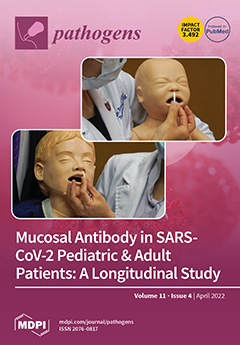
Cover Story: SARS-CoV-2 enters through mucosal surfaces. Our longitudinal study in 34 pediatric and 47 adult patients depicts an independent landscape of mucosal and systemic antibody (Ab) responses. Conjunctival and nasal epithelial lining fluid and plasma were collected up to 6 months post-diagnosis. The higher mucosal IgA levels are protective and commonly found in asymptomatic subjects. The high mucosal IgA level is in great contrast to our understanding of the Ab profile in circulation, in which higher Ab levels are linked with severity. This invites attention, particularly when characterizing the mucosal Ab spectrum and its implications for clinical presentations. Our findings provide a dimension for the diagnostic use of the mucosal IgA measurements, especially for individuals at an early phase of infection and in asymptomatic patients. View this paper.
  • Issues are regarded as officially published after their release is announced to the table of contents alert mailing list .
  • You may sign up for email alerts to receive table of contents of newly released issues.
  • PDF is the official format for papers published in both, html and pdf forms. To view the papers in pdf format, click on the "PDF Full-text" link, and use the free Adobe Reader to open them.

Articles (104)

  • Brief Report
  • Open Access
6 Citations
3,477 Views
11 Pages

CXCR3 Expression Pattern on CD4+ T Cells and IP-10 Levels with Regard to the HIV-1 Reservoir in the Gut-Associated Lymphatic Tissue

  • Max Augustin,
  • Carola Horn,
  • Meryem Seda Ercanoglu,
  • Ute Sandaradura de Silva,
  • Vincent Bondet,
  • Isabelle Suarez,
  • Seung-Hun Chon,
  • Dirk Nierhoff,
  • Elena Knops and
  • Clara Lehmann
  • + 8 authors

(1) Background: The gut-associated lymphatic tissue (GALT) represents the largest lymphoid organ, and is considered to be the largest HIV reservoir. The exact size of the GALT reservoir remains unclear. Several markers, such as the chemokine receptor...

  • Article
  • Open Access
10 Citations
6,500 Views
19 Pages

A Variant Carbapenem Inactivation Method (CIM) for Acinetobacter baumannii Group with Shortened Time-to-Result: rCIM-A

  • Dieter Mitteregger,
  • Julian Wessely,
  • Ivan Barišić,
  • Branka Bedenić,
  • Dieter Kosak and
  • Michael Kundi

Carbapenem-resistant Acinetobacter baumannii group organisms (CRAB) are challenging because the choice between targeted, new antibiotic drug options and hygiene measures should be guided by a timely identification of resistance mechanisms. In CRAB, a...

  • Article
  • Open Access
23 Citations
3,747 Views
12 Pages

Outer Membrane Vesicles of Avian PathogenicEscherichia coli Mediate the Horizontal Transmission of blaCTX-M-55

  • Chao Li,
  • Renqiao Wen,
  • Rongrong Mu,
  • Xuan Chen,
  • Peng Ma,
  • Kui Gu,
  • Zheren Huang,
  • Zijing Ju,
  • Changwei Lei and
  • Hongning Wang
  • + 1 author

The CTX-M-55 type extended-spectrum β-lactamase (ESBL) producing Enterobacteriaceae is increasing in prevalence worldwide without the transmission mechanism being fully clarified, which threatens public and livestock health. Outer membrane vesicles (...

  • Communication
  • Open Access
14 Citations
4,311 Views
8 Pages

Detection of Periodontal Pathogens from Dental Plaques of Dogs with and without Periodontal Disease

  • Jana Kačírová,
  • Miriam Sondorová,
  • Aladár Maďari,
  • Eva Styková,
  • Rastislav Mucha,
  • Radomíra Nemcová,
  • Nikola Marečáková,
  • Jana Farbáková and
  • Marián Maďar

Dental plaque bacteria are one of the main factors responsible for the development of a periodontal disease, which is the most common infectious disease in dogs. The aim of this study was to identify the presence of periodontal disease-related bacter...

  • Review
  • Open Access
6 Citations
4,293 Views
14 Pages

Merkel Cell Polyoma Virus and Cutaneous Human Papillomavirus Types in Skin Cancers: Optimal Detection Assays, Pathogenic Mechanisms, and Therapeutic Vaccination

  • Ramona Gabriela Ursu,
  • Costin Damian,
  • Elena Porumb-Andrese,
  • Nicolae Ghetu,
  • Roxana Gabriela Cobzaru,
  • Catalina Lunca,
  • Carmen Ripa,
  • Diana Costin,
  • Igor Jelihovschi and
  • Luminita Smaranda Iancu
  • + 1 author

Oncogenic viruses are recognized to be involved in some cancers, based on very well-established criteria of carcinogenicity. For cervical cancer and liver cancer, the responsible viruses are well-known (e.g., HPV, HBV); in the case of skin cancer, th...

  • Article
  • Open Access
27 Citations
4,734 Views
16 Pages

Changes in the Density and Composition of Rhizosphere Pathogenic Fusarium and Beneficial Trichoderma Contributing to Reduced Root Rot of Intercropped Soybean

  • Huiting Xu,
  • Li Yan,
  • Mingdi Zhang,
  • Xiaoli Chang,
  • Dan Zhu,
  • Dengqin Wei,
  • Muhammd Naeem,
  • Chun Song,
  • Xiaoling Wu and
  • Wenyu Yang
  • + 2 authors

The dynamic of soil-borne disease is closely related to the rhizosphere microbial communities. Maize–soybean relay strip intercropping has been shown to significantly control the type of soybean root rot that tends to occur in monoculture. Howe...

  • Article
  • Open Access
15 Citations
3,679 Views
12 Pages

Tick-borne hemoprotozoan and rickettsial diseases affect the health and productivity of small ruminants in tropical and subtropical regions. Despite the large population of goats in the southern part of Thailand, there is limited information on the p...

  • Review
  • Open Access
10 Citations
5,872 Views
15 Pages

Viral Pathogens in Oesophageal and Gastric Cancer

  • Kishen Rajendra and
  • Prateek Sharma

Tumour virology was born with the discovery by Peyton Rous in 1911 of a filterable agent in chicken cellular extracts that caused neoplasia in healthy chickens. Universally, 20% of all human cancers have a viral aetiology. Viruses are involved at var...

  • Article
  • Open Access
13 Citations
4,815 Views
12 Pages

One of the tools to contain the SARS-CoV-2 pandemic was to increase the number of performed tests and to improve the access to diagnostics. To this effect, mobile collection sites (MCSs) were established. This study was performed on samples collected...

  • Article
  • Open Access
21 Citations
3,837 Views
13 Pages

Group B Streptococcus-Induced Macropinocytosis Contributes to Bacterial Invasion of Brain Endothelial Cells

  • Eric R. Espinal,
  • Teralan Matthews,
  • Brianna M. Holder,
  • Olivia B. Bee,
  • Gabrielle M. Humber,
  • Caroline E. Brook,
  • Mustafa Divyapicigil,
  • Jerod Sharp and
  • Brandon J. Kim

Bacterial meningitis is defined as serious inflammation of the central nervous system (CNS) in which bacteria infect the blood–brain barrier (BBB), a network of highly specialized brain endothelial cells (BECs). Dysfunction of the BBB is a hall...

  • Article
  • Open Access
1 Citations
2,384 Views
12 Pages

Feedlot mortality negatively affects animal welfare and profitability. To the best of our knowledge, there are no publications on predictive models for weekly all-cause mortality in feedlot cattle. In this study, random forest models to predict weekl...

  • Article
  • Open Access
8 Citations
4,141 Views
14 Pages

Antiviral Activity of Contemporary Contact Lens Care Solutions against Two Human Seasonal Coronavirus Strains

  • Christiane Lourenco Nogueira,
  • Scott Joseph Boegel,
  • Manish Shukla,
  • William Ngo,
  • Lyndon Jones and
  • Marc G. Aucoin

Background: Given that reports have suggested SARS-CoV-2 can be transmitted via conjunctiva, the ability of contact lens (CL) care products to reduce the infectiousness of two seasonal human coronavirus (HCoV) (HCoV-229E and HCoV-OC43) surrogates for...

  • Article
  • Open Access
20 Citations
4,576 Views
14 Pages

No Correlation between Biofilm-Forming Capacity and Antibiotic Resistance in Environmental Staphylococcus spp.: In Vitro Results

  • Matthew Gavino Donadu,
  • Marco Ferrari,
  • Vittorio Mazzarello,
  • Stefania Zanetti,
  • Ivan Kushkevych,
  • Simon K.-M. R. Rittmann,
  • Anette Stájer,
  • Zoltán Baráth,
  • Dóra Szabó and
  • Márió Gajdács
  • + 1 author

The production of biofilms is a critical factor in facilitating the survival of Staphylococcus spp. in vivo and in protecting against various environmental noxa. The possible relationship between the antibiotic-resistant phenotype and biofilm-forming...

  • Article
  • Open Access
4 Citations
5,311 Views
12 Pages

While Bacillus cereus typically causes opportunistic infections in humans, within the last three decades, severe and fatal infections caused by isolates of the B. cereus group harboring anthrax toxin genes have been reported in the United States. Fro...

  • Article
  • Open Access
11 Citations
4,701 Views
14 Pages

Staphylococcus is a major bacterial species that contaminates retail meat products. The objective of this study was to clarify the prevalence, antimicrobial resistance and genetic determinants of Staphylococcus/Mammaliicoccus species in retail ground...

  • Article
  • Open Access
20 Citations
3,617 Views
11 Pages

Assessing the Epidemiology of Rotavirus A, B, C and H in Diarrheic Pigs of Different Ages in Northern Italy

  • Elena Ferrari,
  • Cristian Salogni,
  • Vito Martella,
  • Giovanni Loris Alborali,
  • Alessandra Scaburri and
  • Maria Beatrice Boniotti

Rotaviruses are classified in 10 groups (A to J), where rotavirus A (RVA) is the major cause of diarrhea in humans and animals. With some exceptions, there is scarce information on the epidemiology of non-A rotaviruses in human and animal hosts. Curr...

  • Article
  • Open Access
19 Citations
3,581 Views
18 Pages

Prevalence of Tick-Borne Pathogens in Questing Ixodes ricinus and Dermacentor reticulatus Ticks Collected from Recreational Areas in Northeastern Poland with Analysis of Environmental Factors

  • Anna Grochowska,
  • Justyna Dunaj-Małyszko,
  • Sławomir Pancewicz,
  • Piotr Czupryna,
  • Robert Milewski,
  • Piotr Majewski and
  • Anna Moniuszko-Malinowska

Ticks, such as Ixodes ricinus and Dermacentor reticulatus, act as vectors for multiple pathogens posing a threat to both human and animal health. As the process of urbanization is progressing, those arachnids are being more commonly encountered in ur...

  • Review
  • Open Access
16 Citations
5,206 Views
11 Pages

Protection and Pathology in Leishmania braziliensis Infection

  • Augusto M. Carvalho,
  • Olívia Bacellar and
  • Edgar M. Carvalho

Leishmania killing is mediated by IFN-γ-activated macrophages, but IFN-γ production and macrophage activation are insufficient to control L. braziliensis infection. In American tegumentary leishmaniasis (ATL), pathology results from an ex...

  • Review
  • Open Access
17 Citations
3,542 Views
14 Pages

Severe acute respiratory syndrome coronavirus 2 (SARS-CoV-2) is believed to affect central nervous system functions through various indirect, and possibly direct, mechanisms. We are only now beginning to understand the possible effects of the virus o...

  • Article
  • Open Access
10 Citations
2,970 Views
16 Pages

Edwardsiella piscicida is a pathogenic bacterium, which can infect a number of fish species and cause a disease termed edwardsiellosis, threatening global fish farming with high prevalence and mortality. Thiamine (Vitamin B1), functioning in the form...

  • Article
  • Open Access
5 Citations
2,436 Views
8 Pages

Desiccation-tolerance of cells of four strains of Mycobacterium chimaera and individual strains of Mycobacterium avium, Mycobacterium intracellulare, Mycobacterium abscessus, and Mycobacterium chelonae were measured by two methods. The survival of wa...

  • Article
  • Open Access
11 Citations
3,524 Views
14 Pages

Several professional societies advise against using real-time Reverse-Transcription PCR (rtRT-PCR) cycle threshold (Ct) values to guide clinical decisions. We comparatively assessed the variability of Ct values generated by six diagnostic approaches...

  • Article
  • Open Access
14 Citations
3,691 Views
18 Pages

Efficacy of Blackleg Major Resistance Genes in B. napus in Germany

  • Dima Alnajar,
  • Andreas von Tiedemann and
  • Birger Koopmann

Leptosphaeria maculans is one of the major pathogens of oilseed rape (B. napus). It causes blackleg disease, which accounts for significant yield losses worldwide. Using cultivars that harbor major resistance (R) genes is one of the most effective co...

  • Article
  • Open Access
24 Citations
5,997 Views
15 Pages

Epidemiology and Comparative Analyses of the S Gene on Feline Coronavirus in Central China

  • Hehao Ouyang,
  • Jiahao Liu,
  • Yiya Yin,
  • Shengbo Cao,
  • Rui Yan,
  • Yi Ren,
  • Dengyuan Zhou,
  • Qiuyan Li,
  • Junyi Li and
  • Changmin Hu
  • + 4 authors

Feline coronavirus (FCoV) infections present as one of two forms: a mild or symptom-less enteric infection (FEC) and a fatal systemic disease termed feline infectious peritonitis (FIP). The lack of epidemiology of FCoV in central China and the reason...

  • Article
  • Open Access
16 Citations
3,340 Views
15 Pages

Pathogenicity of Different Betanodavirus RGNNV/SJNNV Reassortant Strains in European Sea Bass

  • Lorena Biasini,
  • Paola Berto,
  • Miriam Abbadi,
  • Alessandra Buratin,
  • Marica Toson,
  • Andrea Marsella,
  • Anna Toffan and
  • Francesco Pascoli

European sea bass (Dicentrarchus labrax) is an important farmed marine species for Mediterranean aquaculture. Outbreaks of betanodavirus represent one of the main infectious threats for this species. The red-spotted grouper nervous necrosis virus gen...

  • Article
  • Open Access
11 Citations
4,761 Views
14 Pages

Fecal DNA Virome Is Associated with the Development of Colorectal Neoplasia in a Murine Model of Colorectal Cancer

  • Yingshi Li,
  • Fan Zhang,
  • Huimin Zheng,
  • Sanjna Kalasabail,
  • Chloe Hicks,
  • Ka Yee Fung,
  • Adele Preaudet,
  • Tracy Putoczki,
  • Julia Beretov and
  • Howard Chi Ho Yim
  • + 3 authors

Alteration of the gut virome has been associated with colorectal cancer (CRC); however, when and how the alteration takes place has not been studied. Here, we employ a longitudinal study in mice to characterize the gut virome alteration in azoxymetha...

  • Article
  • Open Access
9 Citations
3,730 Views
15 Pages

Antimicrobial Susceptibility of Microbiota in Bacterial Vaginosis Using Fluorescence In Situ Hybridization

  • Alexander Swidsinski,
  • Alexander Guschin,
  • Lorenzo Corsini,
  • Vera Loening-Baucke,
  • Lenka Podpera Tisakova,
  • Sonja Swidsinski,
  • Jack D. Sobel and
  • Yvonne Dörffel

Background: Testing of antibiotic resistance of intact vaginal microbiota in pure culture is not feasible. METHODS: Metronidazole, antiseptic octenisept®, antimycotic ciclopirox, bacterial probiotic Lactobacillus crispatus, yeast probiotic Saccha...

  • Article
  • Open Access
6 Citations
2,949 Views
25 Pages

Free-living relatives of the Apicomplexa such as Colpodella species, Alphamonas species, and Voromonas pontica are predators that prey on ciliate, bodonid, and algal prey using the process of myzocytosis. During myzocytosis, the pseudoconoid is used...

  • Article
  • Open Access
57 Citations
7,806 Views
12 Pages

Haemaphysalis longicornis (Neumann, 1901) (Acari: Ixodidae), the Asian longhorned tick, is an invasive tick species present in the USA since at least 2017 and has been detected in one-third of Virginia counties. While this species is associated with...

  • Article
  • Open Access
9 Citations
3,500 Views
14 Pages

Vibrio parahaemolyticus can change their usual lifestyle of surviving in an aqueous environment attached to a host, wherein both swimming motility and swarming motility play important roles in lifestyle changes, respectively. VPA0041 is a novel trans...

  • Review
  • Open Access
4 Citations
3,111 Views
7 Pages

Prevention and Control of COVID-19 after Resuming General Hospital Functions

  • Jingwen Li,
  • Hanshu Liu,
  • Chao Duan,
  • Lan Chen,
  • Qing Zhang,
  • Xi Fang,
  • Lei Tan,
  • Na Li,
  • Xinyi Wang and
  • Nian Xiong
  • + 3 authors

During the COVID-19 pandemic, many general hospitals have been transformed into designated infectious disease care facilities, where a large number of patients with COVID-19 infections have been treated and discharged. With declines in the number of...

  • Review
  • Open Access
14 Citations
5,662 Views
15 Pages

Noroviruses (NoVs) are one of the emerging and rapidly spreading groups of pathogens threatening human health. A reduction in sporadic NoV infections was noted following the start of the COVID-19 pandemic, but the return of NoV gastroenteritis during...

  • Article
  • Open Access
2 Citations
3,372 Views
13 Pages

Ferrate (VI), Fenton Reaction and Its Modification: An Effective Method of Removing SARS-CoV-2 RNA from Hospital Wastewater

  • Dušan Žabka,
  • Barbora Konečná,
  • Peter Celec,
  • Monika Janíková,
  • Nadja Ivašková,
  • Ľubomíra Tóthová,
  • Michal Tamáš,
  • Andrea Butor Škulcová,
  • Noemi Púček Belišová and
  • Tomáš Mackuľak
  • + 9 authors

The outbreak of the coronavirus disease 2019 (COVID-19) raises questions about the effective inactivation of its causative agent, Severe Acute Respiratory Syndrome Coronavirus 2 (SARS-CoV-2) in medical wastewater by disinfectants. For this reason, ou...

  • Article
  • Open Access
5 Citations
3,014 Views
17 Pages

Treatment with Ad5-Porcine Interferon-α Attenuates Ebolavirus Disease in Pigs

  • Chandrika Senthilkumaran,
  • Andrea L. Kroeker,
  • Gregory Smith,
  • Carissa Embury-Hyatt,
  • Brad Collignon,
  • Elizabeth Ramirez-Medina,
  • Paul A. Azzinaro,
  • Bradley S. Pickering,
  • Fayna Diaz-San Segundo and
  • Teresa de los Santos
  • + 1 author

Under experimental conditions, pigs infected with Ebola Virus (EBOV) develop disease and can readily transmit the virus to non-human primates or pigs. In the event of accidental or intentional EBOV infection of domestic pigs, complex and time-consumi...

  • Review
  • Open Access
6 Citations
7,476 Views
10 Pages

Like other kinetoplastid protozoa, the flagellum in Leishmania parasites plays central roles throughout the life cycle. Discoveries over the past decade have begun to elucidate flagellar functions at the molecular level in both the insect vector stag...

  • Review
  • Open Access
31 Citations
5,674 Views
11 Pages

Oral Microbiota during Childhood and Its Role in Chemotherapy-Induced Oral Mucositis in Children with Cancer

  • Silvia Triarico,
  • Pierpaolo Agresti,
  • Emanuele Rinninella,
  • Maria Cristina Mele,
  • Alberto Romano,
  • Giorgio Attinà,
  • Palma Maurizi,
  • Stefano Mastrangelo and
  • Antonio Ruggiero

The human oral cavity harbors the second most abundant microbiota after the gastrointestinal tract, with over 700 species currently identified in the oral microflora. The oral microbiota develops from intrauterine life and after birth is continuously...

  • Article
  • Open Access
16 Citations
3,450 Views
14 Pages

SsNEP2 Contributes to the Virulence of Sclerotinia sclerotiorum

  • Chenghuizi Yang,
  • Wei Li,
  • Xingchuan Huang,
  • Xianyu Tang,
  • Lei Qin,
  • Yanan Liu,
  • Yunong Xia,
  • Zhihong Peng and
  • Shitou Xia

Sclerotinia sclerotiorum is a notorious soilborne fungal pathogen that causes serious economic losses globally. The necrosis and ethylene-inducible peptide 1 (NEP1)-like proteins (NLPs) were previously shown to play an important role in pathogenicity...

  • Review
  • Open Access
33 Citations
6,639 Views
14 Pages

Patients with viral illness are at higher risk of secondary infections—whether bacterial, viral, or parasitic—that usually lead to a worse prognosis. In the setting of Corona Virus Disease 2019 (COVID-19), the Severe Acute Respiratory Syn...

  • Article
  • Open Access
14 Citations
3,925 Views
21 Pages

Increased Indoleamine 2,3-Dioxygenase 1 (IDO-1) Activity and Inflammatory Responses during Chikungunya Virus Infection

  • Thiara Manuele Alves de Souza,
  • Caroline Fernandes-Santos,
  • Jéssica Araújo da Paixão de Oliveira,
  • Larissa Cristina Teixeira Tomé,
  • Victor Edgar Fiestas-Solórzano,
  • Priscila Conrado Guerra Nunes,
  • Gabriel Macedo Costa Guimaraes,
  • Juan Camilo Sánchez-Arcila,
  • Iury Amâncio Paiva and
  • Elzinandes Leal de Azeredo
  • + 7 authors

Chikungunya virus (CHIKV) infection causes intense cytokine/chemokine inflammatory responses and debilitating joint pain. Indoleamine2,3–dioxygenase 1 (IDO-1) is an enzyme that initiates the tryptophan degradation that is important in initial host in...

  • Article
  • Open Access
14 Citations
3,310 Views
11 Pages

Salmonella Enteritidis Subunit Vaccine Candidate Based on SseB Protein Co-Delivered with Simvastatin as Adjuvant

  • Xilong Kang,
  • Tingting Huang,
  • Huanhuan Shen,
  • Chuang Meng,
  • Xinan Jiao and
  • Zhiming Pan

Salmonella enterica serovar Enteritidis (S. Enteritidis) is an important zoonotic pathogen that can lead to diarrhea and systemic infections in humans and mortality in animals. This is a major public health issue worldwide. Safe and effective vaccine...

  • Article
  • Open Access
11 Citations
2,425 Views
12 Pages

Characteristics and Clinical Course of Alveolar Echinococcosis in Patients with Immunosuppression-Associated Conditions: A Retrospective Cohort Study

  • Ansgar Deibel,
  • Cordula Meyer zu Schwabedissen,
  • Lars Husmann,
  • Felix Grimm,
  • Peter Deplazes,
  • Cäcilia S. Reiner and
  • Beat Müllhaupt

Objectives: Since the change in the millennium, an increase in cases of alveolar echinococcosis (AE) has been observed in endemic European countries. Previous studies indicate that a significant proportion of the new AE cases have an immunosuppressio...

  • Article
  • Open Access
13 Citations
3,146 Views
14 Pages

Predicting Bovine Respiratory Disease Risk in Feedlot Cattle in the First 45 Days Post Arrival

  • Hector A. Rojas,
  • Brad J. White,
  • David E. Amrine and
  • Robert L. Larson

Bovine respiratory disease (BRD) is the leading cause of morbidity in feedlot cattle. The ability to accurately identify the expected BRD risk of cattle would allow managers to detect high-risk animals more frequently. Five classification models were...

  • Communication
  • Open Access
10 Citations
3,907 Views
9 Pages

Antimicrobial Synergy between Aminoglycosides and Licorice Extract in Listeria monocytogenes

  • Myungseo Park,
  • Liz Horn,
  • Victoria Lappi,
  • Dave Boxrud,
  • Craig Hedberg and
  • Byeonghwa Jeon

Listeria monocytogenes is a foodborne pathogen that can develop serious invasive infections. Among foodborne pathogens, L. monocytogenes exhibits the highest case fatality despite antibiotic treatment, suggesting the current therapy should be improve...

  • Article
  • Open Access
14 Citations
3,264 Views
10 Pages

Development of a Real-Time Recombinase Polymerase Amplification Assay for the Rapid Detection of African Swine Fever Virus Genotype I and II

  • Titov Ilya,
  • Sezim Monoldorova,
  • Shin-Seok Kang,
  • Seungri Yun,
  • Hyeon-Seop Byeon,
  • Nefedeva Mariia and
  • Bo-Young Jeon

African swine fever (ASF) is a contagious viral disease in pigs and wild boars which poses a major threat to the pig industry. Rapid and accurate diagnosis is necessary to control ASF. Hence, we developed a rapid diagnostic method using a recombinase...

  • Brief Report
  • Open Access
4 Citations
2,186 Views
9 Pages

Concentrations of PGE2 and TXB2 in the Eyes of Mice with Disseminated Acanthamoebiasis

  • Karolina Kot,
  • Daria Kołodziej,
  • Patrycja Kupnicka,
  • Danuta Izabela Kosik-Bogacka and
  • Natalia Łanocha-Arendarczyk

Previous studies have shown that Acanthamoeba spp. may invade the eyes by migrating along the optic nerve to the eyes from the brain. This study aimed to confirm the presence of inflammation in the eyes of mice with disseminated acanthamoebiasis by e...

  • Article
  • Open Access
11 Citations
5,953 Views
10 Pages

Molecular Characterization of Toxoplasma gondii in Cats and Its Zoonotic Potential for Public Health Significance

  • Mian Abdul Hafeez,
  • Muntazir Mehdi,
  • Faiza Aslam,
  • Kamran Ashraf,
  • Muhammad Tahir Aleem,
  • Abdur Rauf Khalid,
  • Adeel Sattar,
  • Syeda Fakhra Waheed,
  • Abdulaziz Alouffi and
  • Mashal M. Almutairi
  • + 3 authors

Toxoplasmosis is a globally distributed disease of warm-blooded animals. It is caused by the opportunistic parasite Toxoplasma gondii (T. gondii). One-third of the global human population is believed to be infected with T. gondii. Cats serve as final...

  • Feature Paper
  • Article
  • Open Access
19 Citations
6,485 Views
13 Pages

Pathophysiology of Acute Kidney Injury in Malaria and Non-Malarial Febrile Illness: A Prospective Cohort Study

  • Michael T. Hawkes,
  • Aleksandra Leligdowicz,
  • Anthony Batte,
  • Geoffrey Situma,
  • Kathleen Zhong,
  • Sophie Namasopo,
  • Robert O. Opoka,
  • Kevin C. Kain and
  • Andrea L. Conroy

Acute kidney injury (AKI) is a life-threatening complication. Malaria and sepsis are leading causes of AKI in low-and-middle-income countries, but its etiology and pathogenesis are poorly understood. A prospective observational cohort study was condu...

  • Communication
  • Open Access
7 Citations
5,055 Views
11 Pages

Coronavirus disease 2019 (COVID-19) is the most dramatic pandemic of the new millennium; to counteract it, specific vaccines have been launched in record time under emergency use authorization or conditional marketing authorization by virtue of a fav...

  • Article
  • Open Access
4 Citations
3,167 Views
8 Pages

Paramyxovirus Diversity within One Population of Miniopterus fuliginosus Bats in Sri Lanka

  • Therese Muzeniek,
  • Thejanee Perera,
  • Sahan Siriwardana,
  • Fatimanur Bayram,
  • Dilara Bas,
  • Mizgin Öruc,
  • Beate Becker-Ziaja,
  • Inoka Perera,
  • Jagathpriya Weerasena and
  • Claudia Kohl
  • + 6 authors

Bats are known as typical reservoirs for a number of viruses, including viruses of the family Paramyxoviridae. Representatives of the subfamily Orthoparamyxovirinae are distributed worldwide and can cause mild to fatal diseases when infecting humans....

of 3

Get Alerted

Add your email address to receive forthcoming issues of this journal.

XFacebookLinkedIn
Pathogens - ISSN 2076-0817