



Next Issue
Volume 16, July
Previous Issue
Volume 16, May


Metals, Volume 16, Issue 6 (June 2026) – 124 articles
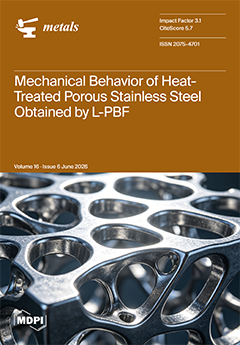
Cover Story (view full-size image): Currently, porous stainless steel materials produced by Laser Powder Bed Fusion (L-PBF) are widely used in many industrial applications. Therefore, optimizing their mechanical properties is crucial. This work studied the effect of the aging heat treatment on the mechanical properties of L-PBF specimens with 3% porosity. The main highlights drawn were that the aging heat treatment produces a negligible effect on the static and dynamic Young’s modulus, significantly increases Vickers hardness, increases the bending strength by about 25% and the compressive plateau strength by about 17%. Built and aged heat-treated specimens exhibit similar fatigue strain accumulation for short-term cyclic compression. View this paper
  • Issues are regarded as officially published after their release is announced to the table of contents alert mailing list.
  • You may sign up for e-mail alerts to receive table of contents of newly released issues.
  • PDF is the official format for papers published in both, html and pdf forms. To view the papers in pdf format, click on the "PDF Full-text" link, and use the free Adobe Reader to open them.
Order results
Result details
Section
Select all
Export citation of selected articles as:
20 pages, 6525 KB  
Article
Cavitation Erosion of the Biodegradable AM50 Alloy After Artificial Aging Heat Treatment
by Ilare Bordeasu, Dorin Bordeasu, Lavinia-Madalina Micu, Filip-Sebastian Tatu, Nicusor-Alin Sirbu, Radu-Nicolae Popescu, Cristian Ghera, Liviu-Daniel Pirvulescu, Alexandru-Nicolae Luca, Brandusa Ghiban and Raluca Faur
Metals 2026, 16(6), 684; https://doi.org/10.3390/met16060684 - 22 Jun 2026
Cited by 1 | Viewed by 269
Abstract
Magnesium-based alloys remain poorly researched, particularly regarding their behavior and resistance under hydrodynamic loading conditions. Interest in these materials is driven by their low density, lower even than that of aluminum alloys, and their excellent pressure die-casting capability, leading to manufacturing components with [...] Read more.
Magnesium-based alloys remain poorly researched, particularly regarding their behavior and resistance under hydrodynamic loading conditions. Interest in these materials is driven by their low density, lower even than that of aluminum alloys, and their excellent pressure die-casting capability, leading to manufacturing components with high geometric accuracy and structural homogeneity. Due to their biodegradability and biocompatibility, recent research has focused on using them in reconstructive surgery devices, similar to Zn-Mg alloys. As the blood circulatory system can, at certain stages, be considered similar to a hydraulic system, it is subjected to hydrodynamic flow regimes, including cavitation erosion. In this context, the current research, conducted on the AM50 magnesium-based alloy, provides new insights into its behavior and structural resistance exposed to shock waves and microjets generated by cavitation. Cavitation tests were performed using a standard 20 kHz vibratory device on three material conditions: one semi-finished (initial) state and two aged, heat-treated states at 200 °C for 12 and 24 h. Analyses of the characteristic erosion curves, cavitation resistance parameters, and macro- and microstructural examinations of the eroded surfaces revealed that, compared with the semi-finished condition, the applied heat-treatment regimes increased the HV5 hardness by 6.8–17% and the cavitation resistance by 27–61%. Full article
(This article belongs to the Special Issue Structure and Properties of Biomedical Alloys)
Show Figures

Figure 1

13 pages, 4166 KB  
Article
Abnormal Decrease in Fatigue Properties of DD6 Single Crystal Superalloy After Hot Isostatic Pressing
by Maodong Kang, Jun Wang and Xu Li
Metals 2026, 16(6), 683; https://doi.org/10.3390/met16060683 - 22 Jun 2026
Viewed by 194
Abstract
The abnormal effect of hot isostatic pressing (HIP) on the fatigue properties of DD6 single crystal superalloy was investigated. The results showed that HIP combined with standard heat treatment (SHT) reduced the fatigue life under 880 °C and 800 MPa. HIP treatment eliminated [...] Read more.
The abnormal effect of hot isostatic pressing (HIP) on the fatigue properties of DD6 single crystal superalloy was investigated. The results showed that HIP combined with standard heat treatment (SHT) reduced the fatigue life under 880 °C and 800 MPa. HIP treatment eliminated inner shrinkage porosity effectively; however, the amount of micropores increased in the subsequent SHT. Moreover, HIP treatment enlarged the size of γ′ precipitates gradually and altered the morphology of carbides greatly. Small MC carbides decomposed into M23C6 carbides, and a serrated structure formed on the surface of large-size MC carbides, which led to the positive and negative effects on fatigue properties, respectively, depending on the morphology and size of carbides. Recrystallized microstructures were observed after HIP treatment, accompanied by fine, continuous precipitates along recrystallized grain boundaries. This led to a sharp decline in the elevated-temperature fatigue properties of DD6 superalloy fabricated at a drawing velocity of 150 μm/s. The abnormal decrease in fatigue life of DD6 single crystal superalloy was attributed to micropore formation, coarsening of γ′ precipitates and recrystallization. Thus, it is essential to optimize the HIP treatments in the future development of single crystal superalloy blades. Full article
(This article belongs to the Special Issue Microstructure and Performances of Superalloys)
Show Figures

Figure 1

20 pages, 11660 KB  
Article
Fracture Behavior of Twin Boundaries in Pure Titanium Under Biaxial Loading
by Binbin Zhou, Liangfu Zhou, Xiang Dai and Le Chang
Metals 2026, 16(6), 682; https://doi.org/10.3390/met16060682 - 22 Jun 2026
Viewed by 243
Abstract
Six different twin boundary interface models were constructed by molecular dynamics simulations to investigate the effect of biaxial load ratio on the fracture behavior of titanium twin boundaries. Analysis of microstructural evolution indicates that twin boundaries exhibit a dual role during crack propagation. [...] Read more.
Six different twin boundary interface models were constructed by molecular dynamics simulations to investigate the effect of biaxial load ratio on the fracture behavior of titanium twin boundaries. Analysis of microstructural evolution indicates that twin boundaries exhibit a dual role during crack propagation. On one hand, they serve as preferential sites for void nucleation, promoting crack propagation along the twin boundary; on the other hand, they provide favorable sites for dislocation nucleation, inducing local plastic deformation at the crack tip, altering the crack path, and thereby hindering crack propagation. The crack propagation behavior in the (1¯011) and (1¯013) twin boundary models shows evident asymmetry: the crack on the left side mainly propagates through the void nucleation mechanism and exhibits a faster growth rate, while the right-side twin boundary inhibits crack propagation by favoring dislocation nucleation. In contrast, the crack propagation behavior in the (1¯012), (2¯111), (2¯112) and (2¯114) twin boundary models is largely symmetric on both sides, showing no significant difference in propagation rate. Stress field analysis further reveals that the differences in crack propagation behavior among the various twin boundary models mainly originate from the disparity in dislocation activity on both sides of the crack, resulting in different levels of stress concentration at the crack tip. When void nucleation occurs at the twin boundary interface, the stress concentration between the main crack and the void intensifies, promoting their coalescence and further propagation. Meanwhile, with an increase in biaxial load ratio, the stress concentration at the crack tip becomes more pronounced, further accelerating crack propagation. Full article
Show Figures

Figure 1

15 pages, 6985 KB  
Article
Physical Vapor Deposition of Carbon-Doped TiAlTaZrNb High-Entropy Alloy Coatings for Corrosion Protection of H13 Steel
by Ferley A. Vásquez, Mariana Duarte and Libia M. Baena
Metals 2026, 16(6), 681; https://doi.org/10.3390/met16060681 - 22 Jun 2026
Viewed by 300
Abstract
High-entropy alloy (HEA) coatings exhibit enhanced chemical stability when doped with carbon, primarily due to the strong bonding between carbon and transition metals. Typical transition metals used in these coatings include Cr, Fe, Co, Ni, Cu, Ti, V, W, Nb, Ta, and Zr. [...] Read more.
High-entropy alloy (HEA) coatings exhibit enhanced chemical stability when doped with carbon, primarily due to the strong bonding between carbon and transition metals. Typical transition metals used in these coatings include Cr, Fe, Co, Ni, Cu, Ti, V, W, Nb, Ta, and Zr. Owing to their excellent chemical stability, HEA coatings are widely employed to protect component surfaces operating in highly corrosive environments. Against this backdrop, the present study investigates the effect of carbon doping introduced via methane gas flow during the physical vapor deposition of TiAlTaZrNb HEA coatings on corrosion resistance. The morphology and structure of the coatings were analyzed by field emission scanning electron microscopy, X-ray diffraction, and Raman spectroscopy. Corrosion protection and coating resistance were assessed through potentiodynamic polarization and electrochemical impedance spectroscopy. While increasing the methane flow resulted in an approximately 34% reduction in coating thickness, the overall coating resistance increased by one order of magnitude, reaching a maximum at a methane flow rate of 9 sccm, corresponding to the carbon solubility limit. This improvement was evidenced by a decrease in the corrosion rate from 8.02 × 10⁻² mm y−1 for the uncoated H13 steel to 8.00 × 10⁻⁴ mm y−1 for the HEA-coated samples. However, at higher methane flow rates, carbon precipitation and the formation of parallel microcracks contributed to an increase in corrosion rate. Full article
Show Figures

Figure 1

10 pages, 4815 KB  
Article
Substrate Holder Material-Driven Microstructure Evolution and Hydrogenation Behavior of Pd/Mg Thin Films Prepared by Magnetron Sputtering
by Nanxiang Deng, Dan Wang, Guoying Pang, Tong Yu, Hao Zhang, Yangyang Yu, Ying He, Juan Chen and Liming Peng
Metals 2026, 16(6), 680; https://doi.org/10.3390/met16060680 - 21 Jun 2026
Viewed by 284
Abstract
Mg-based thin films are promising candidates for hydrogen-responsive optical devices. However, their performance is strongly influenced by microstructural evolution during deposition. In this work, Mg thin films were deposited onto glass substrates placed on different substrate-holder materials (Si and 304 stainless steel) to [...] Read more.
Mg-based thin films are promising candidates for hydrogen-responsive optical devices. However, their performance is strongly influenced by microstructural evolution during deposition. In this work, Mg thin films were deposited onto glass substrates placed on different substrate-holder materials (Si and 304 stainless steel) to investigate the influence of substrate-holder configuration on microstructure formation. Fluorocarbon (FC)/Pd/Mg multilayer films were subsequently fabricated to evaluate hydrogenation and dehydrogenation behaviors. The results show that the substrate-holder material significantly affects film morphology and hydrogenation performance. Mg films prepared using the Si holder exhibit relatively uniform hexagonal-like surface morphologies, whereas those prepared using the stainless-steel holder show a transition from granular to hexagonal-like morphologies with increasing sputtering power. Hydrogenation measurements reveal that FC/Pd/Mg films prepared using the stainless-steel holder exhibit superior performance, including a reflectance modulation of approximately 70%, a transmittance modulation exceeding 40%, and a hydrogenation time of about 30 s. In contrast, films prepared using the Si holder show reduced optical modulation and slower hydrogenation kinetics. The observed differences in hydrogenation behavior are closely correlated with variations in film microstructure induced by different substrate-holder configurations. The results suggest that substrate-holder-dependent growth conditions may influence defect formation and hydrogen diffusion pathways in Mg-based thin films. This study highlights the importance of substrate-holder configuration as a processing parameter affecting microstructure evolution and hydrogen-responsive performance in FC/Pd/Mg multilayer films. Full article
Show Figures

Figure 1

18 pages, 19385 KB  
Article
Dynamic Process Modeling of Electric Arc Furnace Steelmaking Using Direct Reduced Iron Charges: Focusing on Dephosphorization
by Lin Li, Pengbo Wang, Mingming Li, Shiyi Chen, Lei Shao, Ren Chen and Chen Chen
Metals 2026, 16(6), 679; https://doi.org/10.3390/met16060679 - 21 Jun 2026
Viewed by 442
Abstract
The use of direct reduced iron (DRI) in electric arc furnace (EAF) steelmaking has grown in popularity, yet dephosphorization, as a special concern because of high phosphorous levels, is yet to be fully understood. Here, a dynamic process model, accounting for phosphorus behavior [...] Read more.
The use of direct reduced iron (DRI) in electric arc furnace (EAF) steelmaking has grown in popularity, yet dephosphorization, as a special concern because of high phosphorous levels, is yet to be fully understood. Here, a dynamic process model, accounting for phosphorus behavior under the circumstance of a continuous charge of raw materials and semi-continuous flushing slag in an industrial DRI-charged EAF, is developed and verified to predict trajectories of steel and slag phosphorus levels and slag chemistry in real time based on process conditions. The model is then employed to evaluate dephosphorization in a wide range of DRI phosphorus levels and process conditions. It is found that dephosphorization in industrial DRI-charged EAFs does not occur in equilibrium, with the phosphorus partition range of 20~70, compared to 130~170 for equilibrium conditions. For the phosphorus content in DRI, ranging from 0.02 wt.% to 0.2 wt.%, a dephosphorization ratio of more than 81% can be achieved at a slag basicity of 2.3. Dephosphorization is likely easily achieved even at a relatively low slag basicity of 1.5~1.7 when DRI containing phosphorus levels as high as ~0.1 wt.% is used, attaining a dephosphorization ratio of more than 70%. The current model can serve as a valuable tool, providing a knowledge base to assist in the design, operation, and optimization of DRI-charged EAF practices. Full article
(This article belongs to the Special Issue Metal Extraction and Smelting Technology)
Show Figures

Figure 1

28 pages, 11177 KB  
Article
Compositional and Microstructural Evolution of Electric Arc Furnace Dust During Alkaline Treatment for Metallurgical Recycling
by Ioana Fărcean, Mirel Glevitzky, Gabriela Proștean and Erika Ardelean
Metals 2026, 16(6), 678; https://doi.org/10.3390/met16060678 - 20 Jun 2026
Viewed by 367
Abstract
Steel dust is a waste generated during steelmaking in an electric arc furnace (EAF), which contains a high proportion of iron-bearing compounds, leading to the inclusion of this waste as a resource in the circular economy for steelmaking. In addition to the limitation [...] Read more.
Steel dust is a waste generated during steelmaking in an electric arc furnace (EAF), which contains a high proportion of iron-bearing compounds, leading to the inclusion of this waste as a resource in the circular economy for steelmaking. In addition to the limitation related to granulation (the waste must be processed to obtain larger particle sizes), a limiting factor is the increasingly high Zn content due to the low-quality ferrous charge. For the recycling of steelmaking dust, preliminary processing is necessary to reduce zinc. The paper presents, in addition to qualitative characterization of steel dust, laboratory experiments on the compositional changes associated with zinc redistribution applying the hydrometallurgical leaching process in an alkaline environment, using sodium hydroxide (NaOH). The changes in the chemical composition were identified and evaluated using X-ray fluorescence (XRF) and energy-dispersive X-ray spectroscopy (EDX). The experiments consisted of treating steel dust samples with 5 M NaOH at 25, 70, 80 and 90 °C for 60 min, using solid-to-liquid ratios of 10, 15, and 25 g/L. The results indicate a reduction in ZnO content ranging from 4.52% to 16.82%, as determined from Na2O-free normalization data. Room-temperature samples show only marginal changes in ZnO content. The XRF and EDX analyses indicate a moderate and condition-dependent redistribution of zinc in the solid phase after alkaline treatment, as evaluated using Na2O-free normalized data. These values are derived exclusively from solid-phase measurements (XRF/EDX) and do not include zinc in the leachate; therefore, true zinc extraction efficiency cannot be determined. The research results attest to the viability and efficiency (as a solid-phase compositional transformation process) using NaOH as a leaching agent for the studied steel dust, thus providing a potential pathway for improved waste recycling in the steel industry. Full article
Show Figures

Figure 1

15 pages, 1858 KB  
Article
Comparison of FE Modeling Approaches for the Prediction of Cutting Forces and Chip Morphology During Turning of Ti-6Al-4V ELI Alloy
by Nikolaos E. Karkalos, Nikolaos A. Fountas and Nikolaos M. Vaxevanidis
Metals 2026, 16(6), 677; https://doi.org/10.3390/met16060677 - 19 Jun 2026
Viewed by 323
Abstract
The significant challenges of machining hard-to-cut materials pose an important problem for the manufacturing industries, as it can lead to increased tool wear, higher machining costs, and reduced productivity. Apart from experimental investigations, which are rather expensive and cannot always provide a comprehensive [...] Read more.
The significant challenges of machining hard-to-cut materials pose an important problem for the manufacturing industries, as it can lead to increased tool wear, higher machining costs, and reduced productivity. Apart from experimental investigations, which are rather expensive and cannot always provide a comprehensive view of the process outcome due to limitations in measurement techniques, it is possible to use validated models to predict the temperature and stress state of the workpieces or test the effect of different process conditions. Although many Finite Element (FE) models have been developed for the turning process, usually accurate representation of the machining setup with a realistic 3D geometry for both cutting tool and workpiece is not taken into account. Thus, in this work, two different representations of the machining setup, including curved workpiece geometry, which is more rarely studied, are compared for the case of Ti-6Al-4V ELI turning under various conditions, and their effect on the accuracy of the prediction of the cutting force and chip morphology is investigated. It was found that the model with the straight workpiece overpredicts the cutting force to a higher extent compared to the model with the curved workpiece and also predicts a much higher workpiece temperature, whereas chip morphology was mainly affected by feed rate. No noticeable differences were observed between the two models. These results indicate that in most cases, the use of geometry with curved workpiece is more suitable for better prediction of the cutting forces. Full article
Show Figures

Figure 1

24 pages, 78271 KB  
Article
Influence of Transfer Modes and Process Parameters for Wire-Arc Directed Energy Deposition of Maraging 250
by Ryan M. Stokes, Jeffery Logan Betts, Shiraz Mujahid, Jack H. Canaday and Matthew W. Priddy
Metals 2026, 16(6), 676; https://doi.org/10.3390/met16060676 - 19 Jun 2026
Viewed by 364
Abstract
Wire-arc directed energy deposition (arc-DED) of maraging 250 (M250) steel is of growing interest for aerospace, tooling, and defense applications, yet systematic process characterization data remain limited. This study presents a mixed quantitative–qualitative factorial comparison of three Fronius synergic transfer modes, GMAW-CMT-Mix, GMAW-CMT-Universal, [...] Read more.
Wire-arc directed energy deposition (arc-DED) of maraging 250 (M250) steel is of growing interest for aerospace, tooling, and defense applications, yet systematic process characterization data remain limited. This study presents a mixed quantitative–qualitative factorial comparison of three Fronius synergic transfer modes, GMAW-CMT-Mix, GMAW-CMT-Universal, and GMAW-Pulsed-Arc, for single-bead M250 deposition across wire feed speeds of 4.45 to 8.26 m/min and travel speeds of 0.3 to 1.5 m/min. Bead geometry and process behavior are characterized using non-contact optical profilometry and destructive methods (i.e., metallographic sectioning, optical microscopy, and Vickers microhardness). The material feed rate ratio, Rwt, is introduced as a unifying process descriptor; heat input and cross-sectional area scale linearly with Rwt, while travel speed primarily governs bead height and wire feed speed primarily governs bead width. At the highest travel speed tested, GMAW-CMT-Mix and GMAW-Pulsed-Arc exhibit bead humping, rendering those conditions unsuitable, while GMAW-CMT-Universal maintains stable deposition with consistent dilution and the lowest heat input at equivalent Rwt. GMAW-CMT-Mix yielded the highest dilution and hardness. Linear regression of process responses against Rwt gives R2 exceeding 0.83 for both height and width across all modes. These results establish a characterization baseline supporting future multi-layer studies. Full article
(This article belongs to the Special Issue Advances in Metal Additive Manufacturing: Process and Performance)
Show Figures

Figure 1

30 pages, 57518 KB  
Article
Microstructure and Abrasive Wear Behavior of Fe–Cr–C Hardfacing on Hammer Tips for Sugarcane Shredders
by Buntoeng Srikarun, Hein Zaw Oo, Anuchit Teherng, Shayfull Zamree Abd Rahim and Prapas Muangjunburee
Metals 2026, 16(6), 675; https://doi.org/10.3390/met16060675 - 18 Jun 2026
Viewed by 534
Abstract
This study investigates the influence of an austenitic buffer layer on the microstructure, hardness, and abrasive wear resistance of Fe–Cr–C hardfacing applied to high-chromium white cast iron (HCWCI) hammer tips used in sugarcane shredders. Hardfacing was performed by shielded metal arc welding with [...] Read more.
This study investigates the influence of an austenitic buffer layer on the microstructure, hardness, and abrasive wear resistance of Fe–Cr–C hardfacing applied to high-chromium white cast iron (HCWCI) hammer tips used in sugarcane shredders. Hardfacing was performed by shielded metal arc welding with two Fe–Cr–C layers deposited directly on the HCWCI substrate and with an austenitic buffer layer followed by an Fe–Cr–C hardfacing layer. Microstructural characterization was carried out using optical microscopy, scanning electron microscopy with energy-dispersive X-ray spectroscopy, while hardness profiles were determined by micro-Vickers testing. Abrasive wear behavior was evaluated using a dry sand–rubber wheel test according to ASTM G65. The non-buffered hardfacing layer exhibited a hypereutectic Fe–Cr–C microstructure consisting of coarse primary chromium carbides, resulting in high hardness values of approximately 840 HV. In contrast, the buffered sample showed an austenite-rich matrix with finer eutectic carbides and reduced hardness of around 600 HV. Abrasive wear tests of the non-buffered sample showed a lower mass loss, whereas the buffered sample exhibited a substantially higher mass loss. These results demonstrate that Fe–Cr–C hardfacing without a buffer layer provides superior wear resistance. Full article
(This article belongs to the Section Welding and Joining)
Show Figures

Figure 1

17 pages, 9894 KB  
Article
Improvement of Weld Strength by Investigation on the Effect of Welding Parameters on the Mechanical and Microstructural Properties of Friction Stir-Welded Al6061 Alloy
by Fatmagül Tolun
Metals 2026, 16(6), 674; https://doi.org/10.3390/met16060674 - 18 Jun 2026
Viewed by 362
Abstract
Al 6061 is widely used in the automotive, aerospace, railway and shipbuilding industries due to its excellent mechanical and metallurgical properties. Friction stir welding is a solid-state method preferred in the welding of Al6061 alloy. In this study, Al 6061 plates with a [...] Read more.
Al 6061 is widely used in the automotive, aerospace, railway and shipbuilding industries due to its excellent mechanical and metallurgical properties. Friction stir welding is a solid-state method preferred in the welding of Al6061 alloy. In this study, Al 6061 plates with a thickness of 3 mm were joined at tool rotational speeds of 900 and 1120 rpm, feed rates of 50 and 80 mm.min−1, and tilting angles of 0° and 2° by friction stir welding using a tapered pin tool in the Universal Milling Machine. To examine the mechanical properties of welded specimens, tensile tests and microhardness tests were applied to them. The microstructural evolution of the welded zones was studied using an optical microscope and scanning electron microscope, and energy-dispersive X-ray spectroscopy analysis. The tensile test results demonstrate that the specimen welded at 900 rpm tool rotational speed, 2° tilting angle, and 80 mm.min−1 feed rate exhibited the highest welding strength of 243.77 MPa and welding performance of 82.93%, while specimen welded at 1120 rpm tool rotational speed, without tilting angle, and 50 mm.min−1 feed rate exhibited the lowest welding strength of 105.76 MPa and welding performance of 36%. Full article
(This article belongs to the Section Welding and Joining)
Show Figures

Graphical abstract

14 pages, 4225 KB  
Article
Fatigue Behavior of Hybrid Additive/Subtractive Manufactured Ti-6Al-4V
by Nicholas Parolini, Andrew Ikeler, Ryan Kinser, Abhendra Singh, P. G. Allison and J. B. Jordon
Metals 2026, 16(6), 673; https://doi.org/10.3390/met16060673 - 18 Jun 2026
Viewed by 556
Abstract
Additive–subtractive hybrid manufacturing (ASHM) allows for the rapid manufacturing of metal components with complex and precise geometries for ready-to-use or near-ready-to-use applications. Laser wire-directed energy deposition (LW-DED) can be used to quickly manufacture metal components, while CNC machining can achieve precise geometric tolerances. [...] Read more.
Additive–subtractive hybrid manufacturing (ASHM) allows for the rapid manufacturing of metal components with complex and precise geometries for ready-to-use or near-ready-to-use applications. Laser wire-directed energy deposition (LW-DED) can be used to quickly manufacture metal components, while CNC machining can achieve precise geometric tolerances. In this study, Ti-6Al-4V alloy specimens were fabricated using an LW-DED process combined with CNC machining and tested to evaluate the effects of ASHM on mechanical performance. Post fabrication, the Ti-6Al-4V material was evaluated through hardness mapping, monotonic tensile testing, and fully reversed axial fatigue testing. Vicker’s micro-hardness mapping showed a range of hardness results from 300 to 350 HV in the ASHM Ti-6Al-4V that remained consistent throughout the build. Tensile results showed a similar response to cast and wrought Ti-6Al-4V, with an average yield stress of 819.4 MPa, ultimate tensile strength of 935.5 MPa, and modulus of 119 GPa. When tested in fatigue, the material had a reduced life compared to wrought Ti-6Al-4V, which is attributed to defects originating from the additive process. While no run-outs were observed from the testing, the fatigue results remain aligned with trends reported for other methods of additively manufactured Ti-6Al-4V. Fully reversed high-cycle fatigue loading revealed that the ASHM-fabricated Ti-6Al-4V fell into a Basquin power-law fit with a fatigue strength coefficient of 1942 MPa with a fatigue strength exponent of −0.115. The fatigue life of the ASHM material is found to be dependent on the resulting porosity of the material that stems from the LW-DED process used in the ASHM process described. Full article
(This article belongs to the Special Issue Research on Fatigue Behavior of Additively Manufactured Materials)
Show Figures

Figure 1

17 pages, 6909 KB  
Article
Technological Studies on the Production of Spodumene Concentrate and Lithium Carbonate from Low-Grade Pegmatite Ores
by Feruza A. Berdikulova, Nazigul Zhumakynbai, Daulet Sagzhanov, Medet A. Mendeke and Arman Koishibaev
Metals 2026, 16(6), 672; https://doi.org/10.3390/met16060672 - 17 Jun 2026
Viewed by 414
Abstract
This study investigated the production of spodumene concentrate and lithium carbonate from a low-grade pegmatite ore containing approximately 0.26 wt.% Li2O. The ore consisted predominantly of a quartz–feldspar aluminosilicate matrix with dispersed spodumene mineralization, which complicates conventional processing approaches. Preliminary lithium [...] Read more.
This study investigated the production of spodumene concentrate and lithium carbonate from a low-grade pegmatite ore containing approximately 0.26 wt.% Li2O. The ore consisted predominantly of a quartz–feldspar aluminosilicate matrix with dispersed spodumene mineralization, which complicates conventional processing approaches. Preliminary lithium concentration was performed by dense media separation (DMS) using an industrially applicable ferrosilicon-based suspension. The highest separation efficiency was achieved for the −4.0/+2.8 mm fraction, producing a DMS concentrate containing 5.77 wt.% Li2O with 98% lithium recovery. The obtained spodumene concentrate was subjected to decrepitation at 1000–1100 °C to convert α-spodumene into the more reactive β-modification, followed by sulfation roasting with concentrated sulfuric acid at 250–270 °C. The productive leach solution obtained after water leaching contained up to 12.1 g/L Li2O. After purification from iron-bearing impurities and precipitation with sodium carbonate, a lithium carbonate product containing at least 98.8 wt.% Li2CO3 was obtained. Approximately 53% of the lithium contained in the original ore was recovered into the DMS feed fraction, whereas the overall lithium recovery into lithium carbonate reached about 45% relative to the ore and approximately 70% relative to the concentrate. Full article
Show Figures

Figure 1

24 pages, 19436 KB  
Article
Dissimilar Friction Stir Welding of Al and Ti: Elucidation of Microstructural Evolution, Material Flow, and Spring-Based Tensile Fracture Behavior
by Amlan Kar, Satyam Suwas and Satish V. Kailas
Metals 2026, 16(6), 671; https://doi.org/10.3390/met16060671 - 17 Jun 2026
Viewed by 437
Abstract
Welding aluminum (Al) to titanium (Ti) is particularly challenging because of the large differences in their melting points and the tendency to form cavities and brittle intermetallic compounds. Such issues can be mitigated in friction stir welding (FSW) by understanding the underlying mechanisms [...] Read more.
Welding aluminum (Al) to titanium (Ti) is particularly challenging because of the large differences in their melting points and the tendency to form cavities and brittle intermetallic compounds. Such issues can be mitigated in friction stir welding (FSW) by understanding the underlying mechanisms of microstructural evolution and tensile fracture behavior. In the present study, FSW was carried out on commercially pure Al and commercially pure Ti. X-ray micro-computed tomography results show that the distribution of Ti fragments depends on their morphology, with fine particles (volume 103–104 µm3) being distributed homogeneously, while large flakes (107–109 µm3) are concentrated near the joint interface. A three-dimensional analysis of Ti fragment distribution was performed to clarify material flow and particle dispersion within the weld nugget. EDS (Energy-Dispersive Spectroscopy) and EPMA (Electron Probe Microanalysis) composition mapping confirmed the formation of AlTi and Al3Ti intermetallic phases, with Al3Ti as the dominant phase (consistent with its lower Gibbs free energy of formation). Because Al is the primary element in the matrix and undergoes the highest degree of deformation, its microstructural evolution in Al was examined using Electron Backscatter Diffraction (EBSD). Grain refinement in Al was attributed to continuous dynamic recrystallization (CDRX). Mechanical mixing and intermetallic formation increased the hardness of the weld, while the tensile response corresponded to a joint efficiency of approximately 77%, alone with an 11% improvement in elongation over base Al. The study further establishes a correlation among Ti particle distribution, local microstructural evolution, and the tensile response of the joint. Fractographic analysis indicates a bimodal fracture mechanism, and failure occurred away from the joint interface, indicating a strong joint. To interpret this behavior, a spring-based model was proposed to relate the fracture location and tensile deformation to the spatial variation in microstructure across the welded zones. This approach provides a conceptual framework that is extendable to other dissimilar material systems with spatially varying microstructures. Full article
(This article belongs to the Special Issue Advances in Welding Processes of Metallic Materials—2nd Edition)
Show Figures

Figure 1

32 pages, 12524 KB  
Article
Enhancing Phenomenological Crystal Plasticity Simulations of an Additively Manufactured AlSi10Mg Alloy by Leveraging Deep Neural Network Surrogates, Optimisation Algorithms, and Explainable Artificial Intelligence
by Dayalan R. Gunasegaram, Najmeh Samadiani, David Howard and Najmeh Fayyazifar
Metals 2026, 16(6), 670; https://doi.org/10.3390/met16060670 - 17 Jun 2026
Viewed by 443
Abstract
Phenomenological crystal plasticity (CP) models are widely used in Integrated Computational Materials Engineering (ICME) to bridge microstructural features with engineering-scale mechanical behaviour. However, their practical application is hindered by two major challenges: high computational costs of physics-based simulations, and the labour-intensive, trial-and-error nature [...] Read more.
Phenomenological crystal plasticity (CP) models are widely used in Integrated Computational Materials Engineering (ICME) to bridge microstructural features with engineering-scale mechanical behaviour. However, their practical application is hindered by two major challenges: high computational costs of physics-based simulations, and the labour-intensive, trial-and-error nature of parameter calibration. These challenges are amplified in additively manufactured (AM) materials, where location-dependent properties require calibration to be repeated at multiple points to produce a detailed property map. Additionally, a limited understanding of how individual parameters of the CP models influence stress–strain predictions across the strain spectrum compounds these issues, making it challenging to utilise CP models for efficient materials design. To address these limitations, we developed an integrated framework that combines deep neural network (DNN) surrogates, optimisation algorithms (OAs), and explainable AI (XAI) techniques. We also utilised experimental tensile data from AM AlSi10Mg alloy as ground truth since AM materials are expected to benefit the most from our investigation. We demonstrate that, by using OAs such as a Natural Evolutionary Strategy or a Genetic Algorithm, the calibration process can be made more accurate and significantly accelerated. We also investigated the utility of employing deep neural network (DNN) surrogates of CP simulations in the calibration process. The fast-solving DNN surrogates achieved substantial time savings in the absence of OAs, i.e., during exhaustive parameter searches mandated by trial-and-error strategies. However, their effectiveness in parameter discovery was context-dependent when used in conjunction with OAs, since OAs can sometimes converge with fewer simulations than required for DNN training. Furthermore, we applied Shapley Additive exPlanations (SHAP), an XAI method, which revealed intricate interactions among some CP parameters, offering insight into why conventional trial-and-error calibration approaches often prove challenging. Our study contributes to strengthening the practical relevance of CP models for modelling-informed materials engineering and optimisation applications. Finally, our integrated framework offers broad applicability beyond materials modelling, enabling accelerated discovery of tuneable parameters in phenomenological models and providing deeper insight into their contributions to predictions. Full article
Show Figures

Figure 1

21 pages, 18430 KB  
Article
Effect of Load Partitioning Under Different Pressing Temperature Conditions During 2P1A Compaction on the Densification Behavior and Electromagnetic Properties of Fe–5.0 wt.%Si SMC Core
by Minseop Sim and Seonbong Lee
Metals 2026, 16(6), 669; https://doi.org/10.3390/met16060669 - 17 Jun 2026
Viewed by 388
Abstract
Soft magnetic composites (SMCs) are attracting increasing attention for electromagnetic applications owing to their three-dimensional shape flexibility and reduced eddy current loss. In this study, the 2-Pressing 1-Annealing (2P1A) process was applied to Fe–5.0 wt.%Si SMC toroidal cores to investigate the effects of [...] Read more.
Soft magnetic composites (SMCs) are attracting increasing attention for electromagnetic applications owing to their three-dimensional shape flexibility and reduced eddy current loss. In this study, the 2-Pressing 1-Annealing (2P1A) process was applied to Fe–5.0 wt.%Si SMC toroidal cores to investigate the effects of pressing temperature and 1st pressing level on densification behavior, interparticle insulation structure, and frequency-dependent electromagnetic response. DEFORM-3D FEM simulations compared relative density distribution, hydrostatic stress, effective strain, and reaction load under single-press and 2P1A conditions. The 1st pressing stage was conducted at 350 °C with 30%, 50%, and 70% pressing levels, followed by final densification at 550 °C. Increasing compaction temperature reduced reaction load and hydrostatic stress range, while the 1st pressing level affected the final density distribution and stress state after 2nd pressing. TEM-EDS confirmed continuous interparticle insulation layers, and thickness measurements were used to compare local boundary structures. Among the 2P1A conditions, the 50% → 100% condition showed the smallest upper/lower relative density difference and the narrowest insulation-layer thickness range, indicating the most balanced condition in terms of densification uniformity and interparticle boundary structure. Compared with the 550 °C single-press condition, the 2P1A compacts showed higher permeability retention and Q-factor values in the 5–20 kHz range. These results indicate that the 1st pressing level influences staged densification behavior, interparticle boundary structure, and frequency-dependent electromagnetic response in Fe–5.0 wt.%Si SMC cores. Full article
(This article belongs to the Section Powder Metallurgy)
Show Figures

Figure 1

16 pages, 4050 KB  
Article
Unraveling Copper Nucleation from Cu(I) in Reline: Coupling Thermodynamics, Kinetics and Interfacial Structure
by Beatriz Maldonado-Teodocio, Manuel Palomar-Pardavé, Mario Romero-Romo, Claudia Ramírez, Perla Morales-Gil, Miguel Torres-Rodríguez and María G. Montes de Oca-Yemha
Metals 2026, 16(6), 668; https://doi.org/10.3390/met16060668 - 16 Jun 2026
Viewed by 347
Abstract
The nucleation and growth mechanisms of copper electrodeposition from Cu(I)-containing-reline, a deep eutectic solvent, were investigated through a combination of electrochemical techniques and surface characterization. Cyclic voltammetry revealed the characteristic nucleation loop associated with an overpotential-driven electrocrystallization process, from which the equilibrium potential [...] Read more.
The nucleation and growth mechanisms of copper electrodeposition from Cu(I)-containing-reline, a deep eutectic solvent, were investigated through a combination of electrochemical techniques and surface characterization. Cyclic voltammetry revealed the characteristic nucleation loop associated with an overpotential-driven electrocrystallization process, from which the equilibrium potential of the Cu(I)/Cu(0) redox couple was determined to be −0.35 V vs. a Ag quasi-reference electrode. Experimental potentiostatic current density transients were analyzed using nucleation models capable of accounting for both adsorption and three-dimensional (3D) diffusion-controlled growth, thereby allowing deconvolution of the individual contributions to the overall current response. The kinetic parameters, including the nucleation frequency and the number density of active sites, exhibited an exponential dependence on the applied overpotential, thus indicating enhanced nucleation kinetics at greater driving forces, while determining a Cu(I) diffusion coefficient of (3.39 + 0.09) × 10−7 cm2 s−1. Thermodynamic analysis showed that the Gibbs free energy of the formation of the critical nucleus decreases with increasing overpotential and follows the expected dependence on the inverse square of the overpotential, in agreement with classical nucleation theory. The estimated critical nucleus size was found to be smaller than one atom, suggesting that nucleation occurs at highly active surface sites. Furthermore, an exchange current density of (3 ± 1) μA cm−2 was estimated for the Cu(I) electrochemical reduction. Scanning electron microscopy revealed a high density of copper nanoparticles (~20 nm) distributed across the electrode surface, along with larger aggregates (~100 nm) formed by coalescence and growth, consistent with a progressive nucleation mechanism. X-ray photoelectron spectroscopy confirmed that the deposits consist exclusively of metallic copper, with no evidence of oxidized species. These results demonstrate that copper electrodeposition in reline is governed by a complex interplay between the thermodynamic driving force, the interfacial kinetics, and mass transport, comprehensively providing fundamental insight into the electrocrystallization processes in deep eutectic solvents. Full article
Show Figures

Figure 1

17 pages, 10498 KB  
Article
Galvanic Corrosion Behavior of H59 Brass Coupled with Electrogalvanized and Hot-Dip Galvanized Bolts in a Salt Spray Environment
by Sihao Huang, Junjie Chen, Qianwen Feng, Yiheng Jiao, Wei Jiang and Chuchu Chen
Metals 2026, 16(6), 667; https://doi.org/10.3390/met16060667 - 16 Jun 2026
Viewed by 225
Abstract
Neutral salt spray tests were conducted on assemblies comprising H59 brass and either electrogalvanized or hot-dip galvanized bolts. The polarization curves, electrochemical impedance spectroscopy (EIS), corrosion morphology, elemental distribution, and corrosion product composition of the H59 brass were systematically characterized. The results demonstrated [...] Read more.
Neutral salt spray tests were conducted on assemblies comprising H59 brass and either electrogalvanized or hot-dip galvanized bolts. The polarization curves, electrochemical impedance spectroscopy (EIS), corrosion morphology, elemental distribution, and corrosion product composition of the H59 brass were systematically characterized. The results demonstrated that upon coupling with galvanized bolts, the formation of a protective Cu2O film on the H59 brass is significantly weakened, leading to accelerated corrosion. After coupling with electrogalvanized bolts, the icorr reached a maximum value of 0.21 mA/cm2. A corrosion layer predominantly composed of ZnO formed on the sample surface with a thickness of approximately 13 μm, and no penetration or enrichment of Cl was observed in the matrix. More seriously, when the brass was assembled with hot-dip galvanized bolts, the icorr never dropped below 0.2 mA/cm2. A porous and complex Zn-Cu-O-Cl mixed corrosion layer developed on its surface. This loose structure allows Cl to reach a depth of 55 μm into the matrix and continue causing corrosion. The mechanisms underlying the different corrosion behaviors of H59 brass caused by different galvanizing bolt processes require further investigation. Full article
Show Figures

Figure 1

36 pages, 13556 KB  
Article
OAD-YOLOv8n: A Lightweight Direction-Adaptive Framework for Steel Strip Surface Defect Detection
by Yuji Liu and Piwei Chen
Metals 2026, 16(6), 666; https://doi.org/10.3390/met16060666 - 16 Jun 2026
Viewed by 390
Abstract
Steel strip surface defect detection remains challenging because defects are often elongated, weakly bounded, low-contrast, and sensitive to imaging degradation. To address these issues, this paper proposes Orthogonal Direction-Adaptive YOLOv8n (OAD-YOLOv8n), a lightweight detector based on You Only Look Once version 8 nano [...] Read more.
Steel strip surface defect detection remains challenging because defects are often elongated, weakly bounded, low-contrast, and sensitive to imaging degradation. To address these issues, this paper proposes Orthogonal Direction-Adaptive YOLOv8n (OAD-YOLOv8n), a lightweight detector based on You Only Look Once version 8 nano (YOLOv8n) and centered on Orthogonal Direction-Adaptive Efficient Multi-Scale Attention (OA-EMA), an orthogonal direction-adaptive attention module that combines debiased strip descriptors, adaptive direction selection, and local directional convolution. Dynamic upsampling by learning to sample (DySample), a lightweight neck structure (SlimNeck), and Adaptive Threshold Focal Loss (ATFL) are further integrated to improve detail-preserving upsampling, efficient multi-scale fusion, and hard-sample optimization. Across five independent runs on NEU-DET, OAD-YOLOv8n improves Precision, Recall, mAP50, and mAP50:95 by 5.0, 3.6, 4.4, and 3.7 percentage points over YOLOv8n, while reducing FLOPs and parameters by approximately 10.3% and 7.0%, respectively. Complementary experiments on GC10-DET, cross-dataset transfer/adaptation, simulated practical image perturbations, failure cases, and measured inference speed provide a broader characterization of the model’s benchmark-level generalization, robustness, and deployment-related behavior. These results indicate that OAD-YOLOv8n provides an effective accuracy–efficiency trade-off for lightweight steel strip surface defect detection. Full article
Show Figures

Figure 1

16 pages, 5740 KB  
Article
Effect of Basicity on Consolidation Behavior and Phase Evolution of Mg-Bearing Medium Silica Fluxed Pellets
by Haoyu Cai, Jianliang Zhang, Yaozu Wang, Jixiang Han, Rui Deng and Zhengjian Liu
Metals 2026, 16(6), 665; https://doi.org/10.3390/met16060665 - 16 Jun 2026
Viewed by 285
Abstract
Against the background of blast furnace burden optimization and the low-carbon transition of the steel industry, the development of high-quality Mg-bearing fluxed pellets is of great significance for the efficient utilization of medium-high silica iron ore concentrates. In this study, Mg-bearing medium-high silica [...] Read more.
Against the background of blast furnace burden optimization and the low-carbon transition of the steel industry, the development of high-quality Mg-bearing fluxed pellets is of great significance for the efficient utilization of medium-high silica iron ore concentrates. In this study, Mg-bearing medium-high silica fluxed pellets with a fixed SiO2 content of 5.5% were prepared, and the effect of basicity in the range of R = 1.0–1.4 on compressive strength, liquid phase behavior, slag phase composition, and pore structure evolution was systematically investigated. The results showed that the compressive strength of the pellets decreased from 2527 N/pellet to 2079 N/pellet as the basicity increased from 1.0 to 1.4. At 1250 °C, the liquid phase content first decreased from 2.66% to 1.30% and then increased to 7.38%, while the liquid phase viscosity decreased continuously. Meanwhile, the liquid phase composition evolved from a SiO2-rich calcium–iron silicate system to a Fe2O3 and CaO-rich system. XRD results indicated that Fe2O3 was the dominant crystalline phase in the pellets, accompanied by a small amount of Fe3O4, whereas no distinct highly crystalline slag phase was detected. The slag phase was mainly a Fe-Ca-Si composite slag, in which the Fe2O3 content increased and the SiO2 content decreased with increasing basicity. At higher basicity, the number and size of pores increased, and the pore morphology evolved from dispersed fine pores to irregular large pores and locally connected pores. Meanwhile, the slag phase became more widely distributed and locally enriched, weakening the continuity of the iron oxide load-bearing skeleton, which was the main reason for the decrease in compressive strength. This study provides a theoretical basis for preparing high-quality Mg-bearing fluxed pellets from medium-high silica iron ore concentrates. Full article
(This article belongs to the Special Issue Recent Developments and Research on Ironmaking and Steelmaking)
Show Figures

Figure 1

14 pages, 1979 KB  
Article
Phase Evolution and Deuterium Storage Properties of TiVNbZrCr High-Entropy Alloy: A Temperature-Resolved Synchrotron X-Ray Diffraction Study
by Karel Saksl, Katarína Kušnírová, Lenka Oroszová, Katarína Nigutová, Jakub Kubaško, Jens Möllmer, Marcus Lange and Mária Podobová
Metals 2026, 16(6), 664; https://doi.org/10.3390/met16060664 - 16 Jun 2026
Viewed by 278
Abstract
TiVNbZrCr high-entropy intermetallic alloy was investigated as a deuterium storage material using gravimetric sorption measurements, thermogravimetric analysis, and temperature-resolved synchrotron X-ray diffraction during deuterium desorption. The as-prepared alloy had an experimentally determined composition of Ti17V19Zr19Nb22Cr [...] Read more.
TiVNbZrCr high-entropy intermetallic alloy was investigated as a deuterium storage material using gravimetric sorption measurements, thermogravimetric analysis, and temperature-resolved synchrotron X-ray diffraction during deuterium desorption. The as-prepared alloy had an experimentally determined composition of Ti17V19Zr19Nb22Cr23 and a density of 6.59 g·cm−3. Empirical alloy-design parameters indicate that the alloy is not a single-phase bcc solid solution, but rather a compositionally complex intermetallic alloy. The calculated hydrogen-affinity descriptors suggest a strong thermodynamic driving force for deuteride formation. Under 5 MPa D2, the alloy absorbed 3.28 wt.% D, corresponding to D/M = 1.1. After ex situ deuteration, additional diffraction reflections were indexed using tetragonal deuteride reference structures corresponding to ZrV2D2.35 and TiD2, while the Cr-rich bcc phase remained comparatively stable. Thermal desorption released 2.28 wt.% D up to 600 °C in three partially overlapping steps. These results demonstrate that deuterium storage in TiVNbZrCr is governed by phase-selective deuteride formation and decomposition rather than by homogeneous bcc lattice expansion. Full article
(This article belongs to the Special Issue Advances in the Study of Metal Crystals)
Show Figures

Figure 1

29 pages, 2228 KB  
Article
Pseudo-Closed-Loop Metallurgy and Quality-Adjusted Circularity of Secondary Copper: A Conceptual Framework
by Vesna Alivojvodić, Natalija Dolić, Jelena Zarić Kovačević and Nela Vujović
Metals 2026, 16(6), 663; https://doi.org/10.3390/met16060663 - 15 Jun 2026
Viewed by 501
Abstract
Mass-based circularity indicators, such as ISO 59020:2024, quantify material recovery as a share of total throughput but do not account for chemical composition or functional performance, as a consequence of their sector-agnostic design. In copper metallurgical systems, trace tramp elements (e.g., As, Sb, [...] Read more.
Mass-based circularity indicators, such as ISO 59020:2024, quantify material recovery as a share of total throughput but do not account for chemical composition or functional performance, as a consequence of their sector-agnostic design. In copper metallurgical systems, trace tramp elements (e.g., As, Sb, Bi, Fe, Sn, Ni) present in WEEE-derived scrap, anode slimes, and refinery residues can significantly reduce electrical conductivity. Even at nominal purities of ≥99.7 wt.% Cu, conductivity may drop to 85.0–88.0% IACS, as illustrated by selected reported cases—a level of functional degradation that remains undetected by mass-based accounting. Analysis of Grade A cathode standards (EN 1978:2022, LME Cu-CATH-1, ASTM B115-10:2021) shows that impurity limits as low as 2 ppm (Bi) constrain the achievable share of secondary feed in closed-loop recycling. For a specific flash-smelting–refinery configuration, modeling indicates that secondary feed shares above approximately 30% may lead to impurity accumulation beyond the stated specification constraints unless low-impurity primary copper is introduced. This study introduces the Quality-Adjusted Circularity Indicator (QACI), a conceptual, specification-constrained indicator framework that applies a dilution factor fdil derived from a binary blending mass balance to adjust ISO 59020:2024 inflow-based circularity indicators using a feed-composition blending constraint anchored to Grade A specification limits. The QACI functions as a feed-composition screening indicator operating at the anode blending stage and does not represent a correction of the full electrorefining system. Parametric scenario analysis across six stylized impurity configurations shows that, at identical mass-based circularity (Cmass = 25%), the QACI ranges from 7.1% to 25.0%. This corresponds to a 1.3- to 3.5-fold difference between the mass-based and quality-adjusted indicator values under the stated feed-composition assumptions, illustrating the potential overestimation introduced when feed-quality constraints are not considered. This ratio quantifies the divergence between two indicator values under stylized conditions and should not be interpreted as a directly measured fold-difference in actual loop-closure performance. Positioned within the ISO 59020:2024 Annex C complementary method space, the QACI is positioned as a first-order screening approach of existing circularity metrics that may inform future research discussion of quality-differentiated approaches in EU secondary metals policy. Full article
Show Figures

Figure 1

14 pages, 27721 KB  
Article
Experimental Investigation of Microstructural Evolution and Fatigue Damage of Pearlite Wheel Steel During Tread Braking Based on a Full-Size Wheel–Rail Test Rig
by Mingzhe Fan, Guanzhen Zhang, Xiang Li, Guang Li, Shuo Sun, Yi Wu and Pengtao Liu
Metals 2026, 16(6), 662; https://doi.org/10.3390/met16060662 - 15 Jun 2026
Viewed by 323
Abstract
This study investigated the relationship between the surface microstructure of pearlite steel wheels and the formation of fatigue cracks during the braking process by using a full-size wheel braking test rig. After fatigue failure, the surface microstructural evolution and fatigue crack initiation and [...] Read more.
This study investigated the relationship between the surface microstructure of pearlite steel wheels and the formation of fatigue cracks during the braking process by using a full-size wheel braking test rig. After fatigue failure, the surface microstructural evolution and fatigue crack initiation and propagation of the wheel sample were systematically analyzed by optical microscope (OM), scanning electron microscope (SEM), and transmission electron microscope (TEM). The results showed that after braking of 1572 cycles, a large number of fatigue cracks formed at the wheel tread, which caused the wheel to break. After fatigue failure, some dark areas formed at the wheel tread, which were composed of Fe3O4 compounds. This indicates that severe oxidation was produced at the wheel tread during braking due to the high temperature. After fatigue failure, a continuous thermal white etching layer (T-WEL) was formed in some areas of the wheel tread, while crescent-shaped T-WEL was found in other areas. The microstructure of the T-WEL was composed of martensite phase. The rapid increase and decrease in temperature at the wheel tread during the braking process caused martensitic transformation at the wheel tread. The hardness of the sample reached to about 900 HV in WEL and it reduced with the increase in distance from the surface. The cracks were initiated from the surface and gradually propagated into the matrix. However, the crack propagation mode in the continuous T-WEL and crescent-shaped T-WEL was different. In the continuous T-WEL, the continuous T-WEL of the wheel can be peeled off during the braking wear process, and then the crack was gradually propagated into the matrix in the T-WEL peeled area. As for the crescent-shaped T-WEL, due to the large hardness difference between T-WEL and pearlite, the crack initiated at the interface between the T-WEL and pearlite and gradually propagated into the matrix. Full article
(This article belongs to the Special Issue Advances in the Fatigue and Fracture Behaviour of Metallic Materials)
Show Figures

Figure 1

15 pages, 11370 KB  
Article
Tempering Behavior of 420 MPa Grade Steel with Cu Alloying
by Tao Pan, Zezhong Wang, Zhunli Tan, Zhongran Shi, Zhihang Ma and Yu Tian
Metals 2026, 16(6), 661; https://doi.org/10.3390/met16060661 - 15 Jun 2026
Viewed by 313
Abstract
Nodes made from steel are widely applicable to the structure of pipe racks. In this paper, the Cu content and tempering temperature of 420 MPa grade (yield strength grade) steel alloyed with Cu were studied for their effect on strength and toughness. The [...] Read more.
Nodes made from steel are widely applicable to the structure of pipe racks. In this paper, the Cu content and tempering temperature of 420 MPa grade (yield strength grade) steel alloyed with Cu were studied for their effect on strength and toughness. The precipitation behavior of different Cu contents during the normalizing cooling and tempering process of the steel, and the corresponding strength and toughness levels, were clarified. The research results showed that an experimental steel with ferrite as the matrix was prepared by the normalizing and tempering method. A strengthening method mainly based on Cu precipitation was proposed, which effectively promoted the steel to have a good toughness reserve while meeting the strength requirements. With the increase in Cu content, the contribution of Cu particle precipitation to strength gradually slowed down, mainly due to the weakening of the contribution of Cu particle growth and coarsening to precipitation strengthening. Full article
(This article belongs to the Special Issue Heat Treatment and Mechanical Behavior of Steels and Alloys)
Show Figures

Figure 1

21 pages, 4454 KB  
Article
Effect of Mechanochemical Activation in the “Dust–Na2S” and “Dust–Na2S–NaOH” Systems on the Phase Transformations of Arsenic in Copper Smelting Dust
by Timur Osserov, Kaster Kamunur, Lyazzat Mussapyrova and Aisulu Batkal
Metals 2026, 16(6), 660; https://doi.org/10.3390/met16060660 - 15 Jun 2026
Viewed by 306
Abstract
Copper smelting dust is a heterogeneous by-product of pyrometallurgical processing containing sulfate- and arsenic-bearing components, which accounts for its high chemical stability and environmental hazard. In this context, mechanochemical activation is considered a promising approach for initiating structural and phase transformations in such [...] Read more.
Copper smelting dust is a heterogeneous by-product of pyrometallurgical processing containing sulfate- and arsenic-bearing components, which accounts for its high chemical stability and environmental hazard. In this context, mechanochemical activation is considered a promising approach for initiating structural and phase transformations in such systems. The aim of this study was to investigate the effect of high-energy planetary milling in the “dust–Na2S” and “dust–Na2S–NaOH” systems on changes in the phase composition of arsenic-bearing dust. The samples were prepared by dry mechanochemical activation in a planetary mill for 15 and 30 min with varying reagent contents. According to X-ray diffraction analysis, PbSO4 and ZnSO4·H2O remain the major phases in the binary system, while the formation of elemental sulfur (S6) and the arsenic sulfide phase (As4S4) is observed against a decrease in the As2O3 content. In the presence of NaOH, a more pronounced redistribution of arsenic species is observed, accompanied by the appearance of a Na-containing As–O–S phase, preliminarily identified as Na3AsO2S2, and a further decrease in the proportion of As2O3. Thermodynamic analysis indicates the energetic favorability of arsenic sulfidation when the oxidative contribution of the air atmosphere during milling is taken into account. The obtained results refine the possible mechanochemical pathways of arsenic transformation and may be used to substantiate preliminary activation regimes prior to subsequent leaching. Full article
(This article belongs to the Special Issue Extractive Metallurgy: From Metallurgical Waste to New Products)
Show Figures

Figure 1

18 pages, 17325 KB  
Article
The Modification Effect of Sr and La-Ce Mixed Rare Earth on Microstructure and Mechanical Properties of AlSi9Cu3 Alloy
by Zhichao Yu, Liuhuan Nie, Qisheng Feng, Dong Zhang, Pengyue Gao and Chonghe Li
Metals 2026, 16(6), 659; https://doi.org/10.3390/met16060659 - 15 Jun 2026
Cited by 1 | Viewed by 361
Abstract
This study systematically investigates the synergistic effects of Sr and La-Ce mixed rare earth (RE) additions on the microstructure and mechanical properties of AlSi9Cu3 alloy. The results show that adding 0.02 wt.% Sr and 0.10 wt.% RE together produces the most pronounced refinement, [...] Read more.
This study systematically investigates the synergistic effects of Sr and La-Ce mixed rare earth (RE) additions on the microstructure and mechanical properties of AlSi9Cu3 alloy. The results show that adding 0.02 wt.% Sr and 0.10 wt.% RE together produces the most pronounced refinement, reducing the secondary dendrite arm spacing (SDAS) from 40.12 μm to 26.98 μm and decreasing the aspect ratio of eutectic Si from 12.3 to 7.8. Sr modifies eutectic Si by inducing twin formation and suppressing anisotropic growth, while RE promotes the dispersion distribution of Al4Ce phases and enhances constitutional undercooling. The synergistic effect leads to a more uniform appearance of dendrites and secondary phases. Consequently, the tensile strength reaches 258.6 MPa, accompanied by a transition in fracture mode from brittle cleavage to ductile dimple fracture. This work provides experimental support for microstructural control and the strengthening–toughening design of AlSi9Cu3 alloys. Full article
(This article belongs to the Special Issue Light Alloy and Its Application (3rd Edition))
Show Figures

Figure 1

14 pages, 7361 KB  
Article
Oscillatory Precipitation and Re-Dissolution of Mn-Ni-(Si)-Based Precipitates in Aged Reactor Pressure Vessel Model Steels
by Fan Yang, Zhiwei Cao, Jianbin Zhang and Ting Hao
Metals 2026, 16(6), 658; https://doi.org/10.3390/met16060658 - 14 Jun 2026
Viewed by 324
Abstract
The irradiation-induced precipitation of Mn-Ni-rich precipitates (MNPs) or Mn-Ni-Si-rich precipitates (MNSPs) is the primary cause of embrittlement in reactor pressure vessel (RPV) steels. In this study, high-precision electrical resistivity (ER) measurements (10 nΩ·m accuracy) were employed to probe the thermal stability of aging-induced [...] Read more.
The irradiation-induced precipitation of Mn-Ni-rich precipitates (MNPs) or Mn-Ni-Si-rich precipitates (MNSPs) is the primary cause of embrittlement in reactor pressure vessel (RPV) steels. In this study, high-precision electrical resistivity (ER) measurements (10 nΩ·m accuracy) were employed to probe the thermal stability of aging-induced MNSPs in RPV model steels that were aged at 600 °C for 30 h. We report the discovery of oscillatory precipitation and re-dissolution of MNPs/MNSPs, evidenced by alternating ER peaks upon repeated thermal cycling to 950 °C. This oscillatory behavior is further confirmed by scanning transmission electron microscopy (STEM) and energy-dispersive X-ray spectroscopy (EDS) observations. Internal friction (IF) results indicate that the oscillatory precipitation and re-dissolution of MNPs/MNSPs should occur predominantly within the grain interiors rather than at grain boundaries (GBs). Full article
(This article belongs to the Special Issue Advanced Metals and Alloys for Nuclear Applications)
Show Figures

Figure 1

30 pages, 11756 KB  
Article
Real-Time Crack Segmentation and Geometric Parameter Calculation of Mandrel Bars Based on an Improved YOLO Framework
by Jianzhao Cao, Zhu Sun, Jingguo Ding and Xu Li
Metals 2026, 16(6), 657; https://doi.org/10.3390/met16060657 - 14 Jun 2026
Viewed by 337
Abstract
Surface cracks on mandrel bars affect product quality and production stability in seamless steel pipe manufacturing. Existing vision-based methods mainly rely on bounding-box detection, which is insufficient for precise crack delineation and geometric characterization. This study proposes a lightweight segmentation framework for online [...] Read more.
Surface cracks on mandrel bars affect product quality and production stability in seamless steel pipe manufacturing. Existing vision-based methods mainly rely on bounding-box detection, which is insufficient for precise crack delineation and geometric characterization. This study proposes a lightweight segmentation framework for online mandrel bar crack inspection using grayscale industrial images. Based on YOLO11n-seg, the framework incorporates single-channel input adaptation, lightweight network reconfiguration, and crack-oriented feature enhancement to improve the extraction of weak, thin, and irregular cracks while reducing computational cost. A dedicated industrial dataset and a sample-balancing strategy are introduced to alleviate severe crack–background imbalance. Based on the predicted pixel-level masks, crack area, projected length, maximum width, and average width are calculated for online evaluation. Experimental results show that the proposed method achieves a mask mAP@0.5 of 88.5%, a false negative rate of 1.72%, and real-time inference at 204 FPS with 3.01 GFLOPs. Field deployment further demonstrates the effectiveness of the proposed framework for online crack inspection and geometric parameter calculation of mandrel bars. Full article
(This article belongs to the Special Issue Recent Progress in Metal Rolling Processes)
Show Figures

Figure 1

15 pages, 5718 KB  
Article
Tailoring Interfacial Bonding and Tensile Properties in Cu/Al/Cu Laminated Composites by Adjusting Thickness Ratio
by Wenbo Bai, Mahmoud Ebrahimi, Huisheng Cai, Yuchao Zhao, Nannan Zhang and Qudong Wang
Metals 2026, 16(6), 656; https://doi.org/10.3390/met16060656 - 14 Jun 2026
Viewed by 300
Abstract
The design of the overall thickness and thickness ratio in multilayered composites is vital because it affects interfacial microstructures and mechanical properties. These elements are significant in the application of multilayered composites in diverse scenarios. This study systematically investigated the interfacial microstructure, mechanical [...] Read more.
The design of the overall thickness and thickness ratio in multilayered composites is vital because it affects interfacial microstructures and mechanical properties. These elements are significant in the application of multilayered composites in diverse scenarios. This study systematically investigated the interfacial microstructure, mechanical properties, and fracture mechanisms of Cu/Al/Cu trilayered composites with varying overall thicknesses and copper thickness ratios. The microstructure results showed that the distribution and thickness of intermetallic compounds (IMCs) at the Cu/Al interface changed significantly with different thickness designs. As the Cu thickness ratio increased from 20% to 35%, the intermetallic layer transitioned from a continuous structure to a fragmented one in both the 1 mm and 2 mm composites. Additionally, the bonding mechanism evolved from primarily metallurgical bonding to a combination of metallurgical and mechanical bonding. In the 4 mm composite with a 35% Cu thickness ratio, the interfacial intermetallic layer comprised three sublayers identified as Al4Cu9, AlCu, and Al2Cu. Tensile results indicated that increasing the Cu thickness ratio markedly enhanced strength and ductility: the 1 mm composite showed increases of 22.3% in ultimate tensile strength and 70.9% in elongation, while the 2 mm composite exhibited increases of 32.4% and 38.7%, respectively. In contrast, increasing the overall thickness had only a limited effect. Fractography revealed ductile fracture features in both the Al and Cu layers, characterized by more compact interfaces, deeper dimples, and more pronounced tear ridges at higher Cu thickness ratios. These findings demonstrate that optimizing the Cu thickness ratio is an effective strategy for enhancing interfacial bonding strength and overall mechanical performance in Cu/Al/Cu composites. Full article
Show Figures

Figure 1

17 pages, 3630 KB  
Article
Effect of Internal Reinforcing on Impact Axial Collapse Behavior of Hat-Shaped Tubular Structure
by Gusmao Robbinson Noviano, Minoru Yamashita and Makoto Nikawa
Metals 2026, 16(6), 655; https://doi.org/10.3390/met16060655 - 14 Jun 2026
Viewed by 751
Abstract
A hollow steel structure with a hat cross-section was axially compressed under impact or quasistatic conditions. The hat height and hat width were 40 mm. The thickness was 0.6, 0.8, and 1.0 mm. The effect of the reinforcing member attached to the main [...] Read more.
A hollow steel structure with a hat cross-section was axially compressed under impact or quasistatic conditions. The hat height and hat width were 40 mm. The thickness was 0.6, 0.8, and 1.0 mm. The effect of the reinforcing member attached to the main structure on the collapse behavior was experimentally investigated. The formation of buckling lobes was observed, and the energy absorption performance was evaluated. The addition of the internal reinforcing member achieved increased compressive force, exhibiting a stepped force variation. This step became more pronounced as the wall thickness increased, and it was larger under impact conditions. When the height of the reinforcing member was 20 mm, or the hollow shape is square, a higher crush strength was achieved, with a very regular collapse pattern. To explain the increase in compressive force by using the reinforcing member, the deformation energy was calculated by considering the deformed shapes and the mechanical properties of the material. The calculated increase ratio of 3.18 was comparable with the experimental result of 3.54. The strain measurement at the hat top of the structure during the initial compression revealed that the damage, where the strain level is greater than 0.003, was successfully delayed at the reinforced section in the partially reinforced structure. Full article
(This article belongs to the Section Structural Integrity of Metals)
Show Figures

Figure 1

Previous Issue
Next Issue
Back to TopTop
