


Abstract
This study investigated the production of spodumene concentrate and lithium carbonate from a low-grade pegmatite ore containing approximately 0.26 wt.% Li2O. The ore consisted predominantly of a quartz–feldspar aluminosilicate matrix with dispersed spodumene mineralization, which complicates conventional processing approaches. Preliminary lithium concentration was performed by dense media separation (DMS) using an industrially applicable ferrosilicon-based suspension. The highest separation efficiency was achieved for the −4.0/+2.8 mm fraction, producing a DMS concentrate containing 5.77 wt.% Li2O with 98% lithium recovery. The obtained spodumene concentrate was subjected to decrepitation at 1000–1100 °C to convert α-spodumene into the more reactive β-modification, followed by sulfation roasting with concentrated sulfuric acid at 250–270 °C. The productive leach solution obtained after water leaching contained up to 12.1 g/L Li2O. After purification from iron-bearing impurities and precipitation with sodium carbonate, a lithium carbonate product containing at least 98.8 wt.% Li2CO3 was obtained. Approximately 53% of the lithium contained in the original ore was recovered into the DMS feed fraction, whereas the overall lithium recovery into lithium carbonate reached about 45% relative to the ore and approximately 70% relative to the concentrate.
1. Introduction
In recent years, the demand for lithium has increased steadily due to the rapid development of electric power technologies, energy storage systems, and lithium-ion batteries for electric vehicles and portable electronic devices. Consequently, lithium is regarded as one of the key elements of the global energy transition and the emerging green economy, highlighting the need to expand the raw material base and improve lithium extraction technologies [1,2].
The primary sources of lithium include brines and hard-rock mineral deposits, among which spodumene (LiAlSi2O6) is the most widely exploited lithium-bearing mineral. Industrial processing of spodumene ores, such as those from the Greenbushes and Jiajika deposits (Table 1), traditionally involves dense medium separation and flotation to produce a spodumene concentrate, followed by thermal activation (α → β phase transformation), acid decomposition, and subsequent leaching to extract lithium into solution, with further precipitation as lithium carbonate or lithium hydroxide. However, current industrial technologies are primarily designed for high-grade ores containing more than 1.0 wt.% Li2O (Table 1) [3,4].
Table 1.
Characteristics of lithium-bearing ores.
Flotation beneficiation of low-grade spodumene ores remains a challenging and relatively inefficient process due to several mineralogical and physicochemical factors. The primary difficulty arises from the similarity in the physicochemical properties of spodumene and gangue-forming minerals, such as quartz, feldspars, and micas, including comparable isoelectric point values, which significantly complicates selective mineral separation during flotation [5,6,7,8].
Additional challenges are associated with the fine dissemination of spodumene and its close intergrowth with aluminosilicate minerals. This necessitates finer grinding, resulting in increased energy consumption and reduced separation efficiency. Moreover, excessive grinding promotes slime formation, which adversely affects flotation performance. Previous studies have shown that the use of single collectors, either anionic or cationic, does not ensure efficient lithium recovery because of the low surface reactivity of spodumene and the limited number of active adsorption sites for reagent attachment. Even when mixed collector systems, such as NaOL/DAA, are applied, lithium recovery from low-grade ores generally remains limited and typically does not exceed 30–50% [9].
Under these conditions, dense media separation (DMS) is of particular interest as an effective method for the preliminary beneficiation of spodumene ores. The efficiency of this approach is attributed to the density difference between spodumene (ρ ≈ 3.1–3.2 g/cm3) and silicate gangue minerals (ρ ≈ 2.5–2.6 g/cm3), which enables their separation in a gravitational field. Previous studies have demonstrated that, at an optimal medium density of approximately 2.8 g/cm3, up to 85–90% of lithium can be concentrated into a relatively small fraction of the processed material. However, these values generally apply only to specific coarse ore fractions subjected to DMS treatment, while finer fractions are directed to subsequent processing stages, thereby reducing the overall lithium recovery relative to the feed ore [5].
It should be noted that sodium polytungstate is frequently employed as a dense medium in laboratory-scale investigations because of its high density and solution stability. Nevertheless, its industrial application is constrained by high cost and limited scalability. Other dense media, such as barium tetrakis(iodocadmate) (Ba(CdI4)) and bromoform, are also unsuitable for large-scale implementation due to their toxicity. In this regard, ferrosilicon- and magnetite-based suspensions, which are widely used in industrial practice, are of considerable interest. These materials offer advantages including medium recyclability, process stability, and improved technological and economic feasibility under industrial operating conditions.
The aim of this study was to investigate the technological parameters governing lithium carbonate production from low-grade spodumene ores of the Akhmetkino deposit, including dense media beneficiation using ferrosilicon and magnetite suspensions, sulfation roasting, leaching, and solution purification, as well as to evaluate the overall efficiency of the proposed processing flowsheet.
2. Materials and Methods
2.1. Feed Ore
According to XRF analysis, the ore was predominantly composed of SiO2, Al2O3, and Na2O, with Fe2O3 and K2O present as minor oxide components (Table 2), which is consistent with the results of the X-ray diffraction analysis.
Table 2.
Elemental composition of the ore.
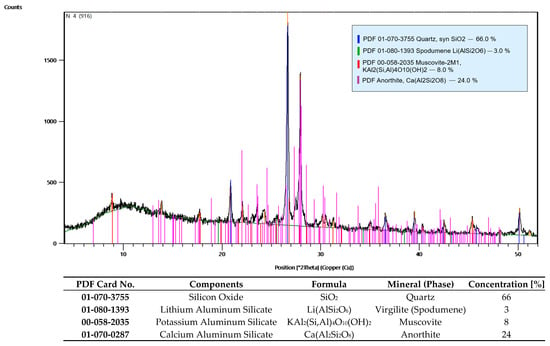
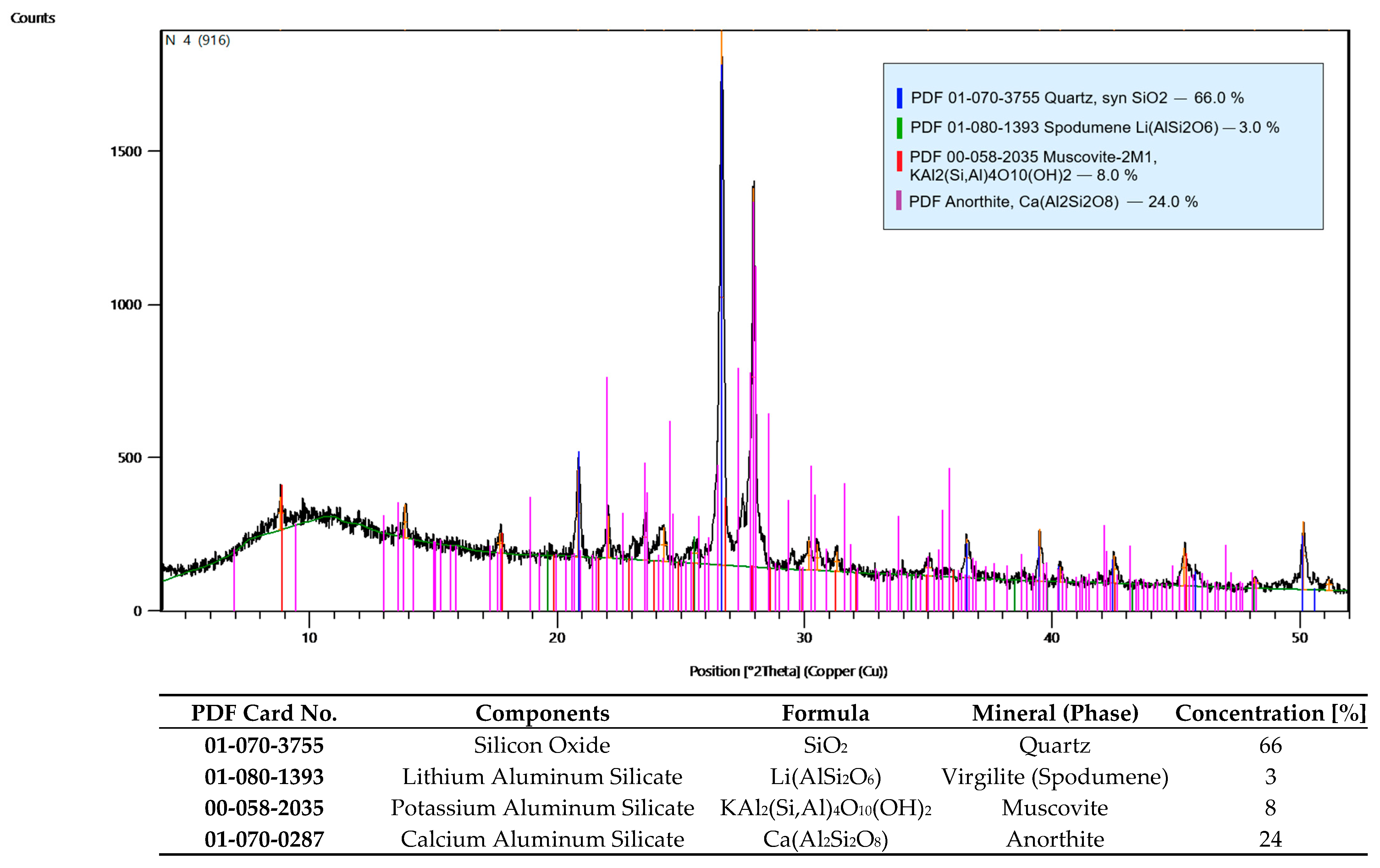
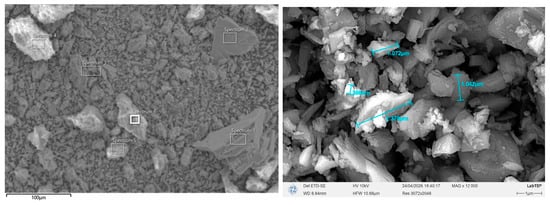
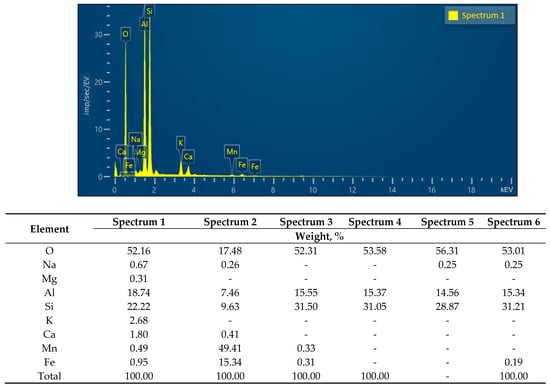
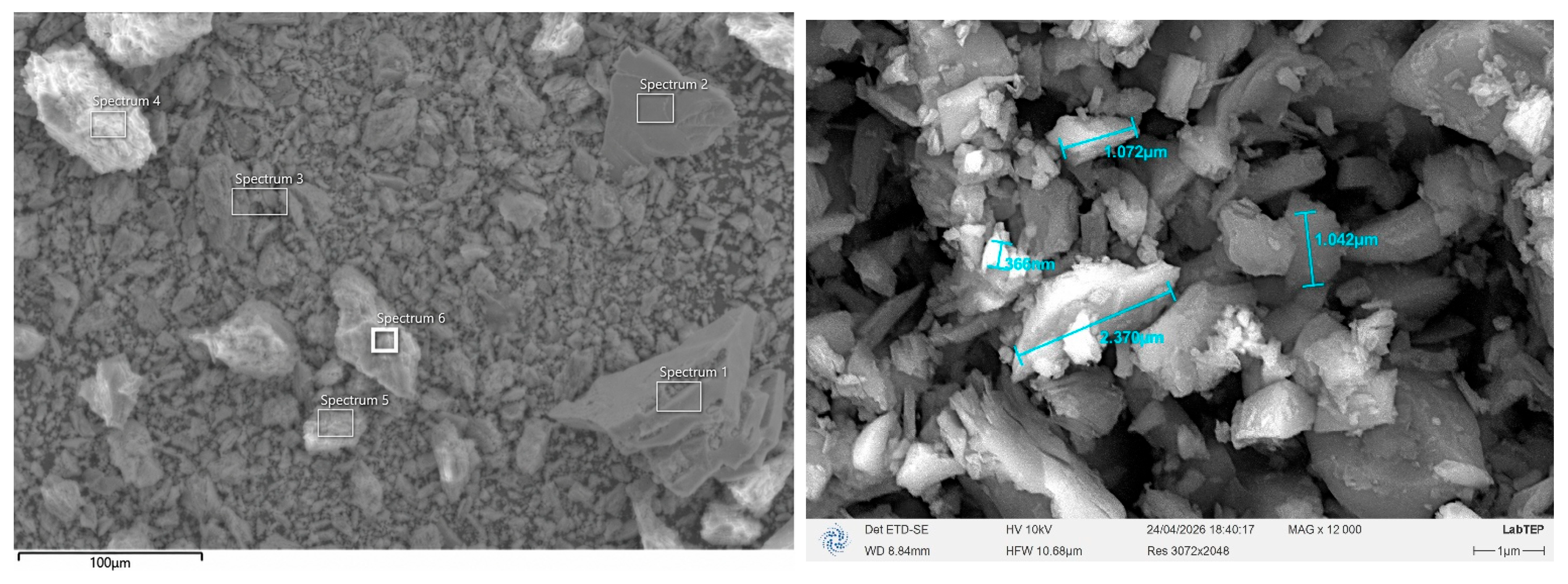
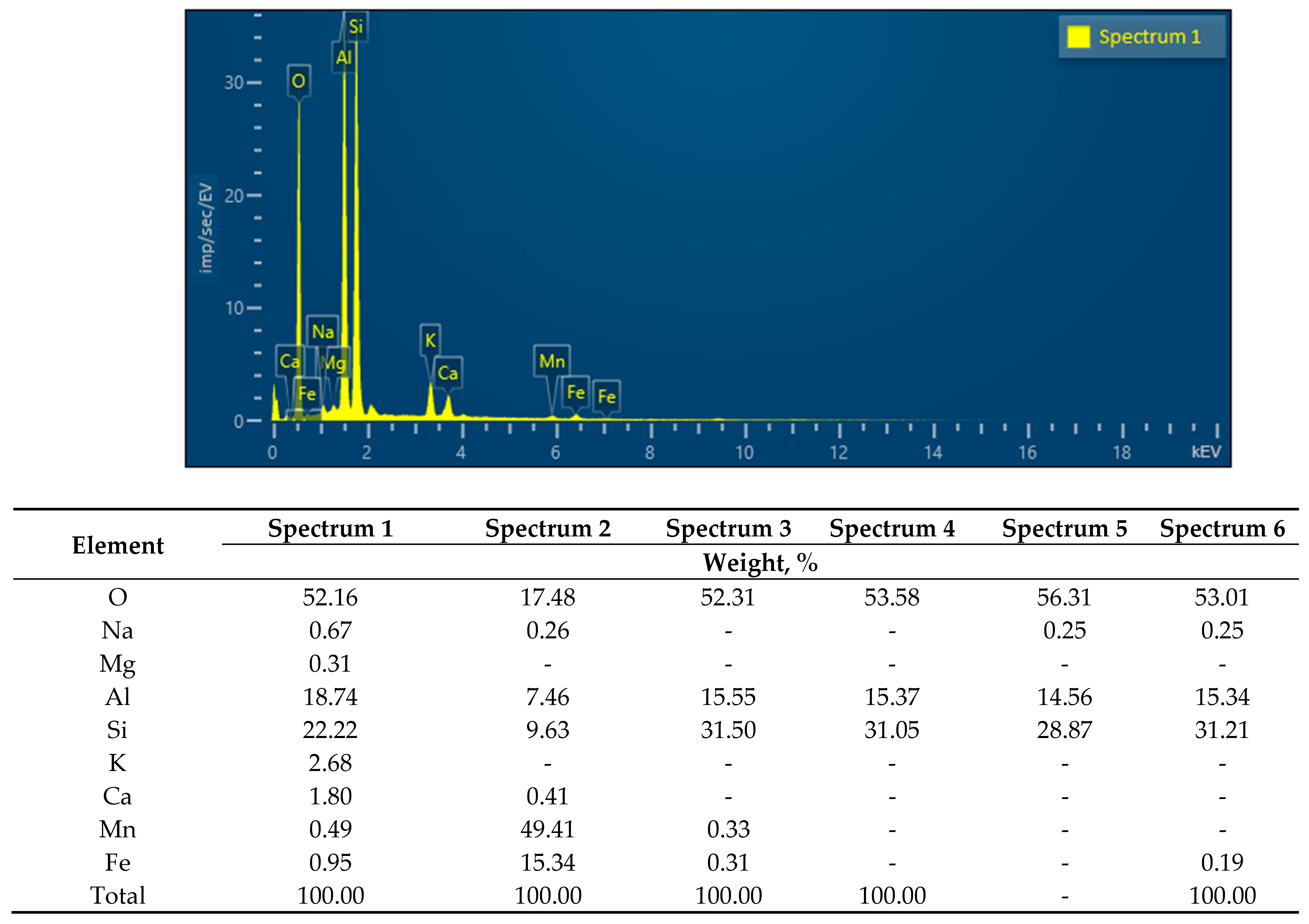
The ore was found to consist predominantly of quartz (66%) and anorthite (24%), while spodumene minerals accounted for approximately 3% and were identified as virgilite (Figure 1). The presence of these mineral phases was additionally confirmed by SEM and EDS analyses (Figure 2 and Figure S1).
Figure 1.
X-ray diffraction analysis of spodumene ore.
Figure 2.
SEM-EDS images of the ore.
It should be noted that scanning electron microscopy (SEM), even when combined with energy-dispersive spectroscopy (EDS), does not allow for reliable lithium determination because of the low atomic number of lithium (Z = 3) and its extremely weak characteristic X-ray emission. Therefore, direct confirmation of lithium by SEM/EDS is methodologically limited. Nevertheless, it may be assumed that lithium is associated with Spectrum 4, since the theoretical composition of pure spodumene (LiAlSi2O6) contains approximately 51.6 wt.% oxygen, 14.5 wt.% aluminum, and 30.2 wt.% silicon, which is in close agreement with the elemental composition obtained for this spectrum.
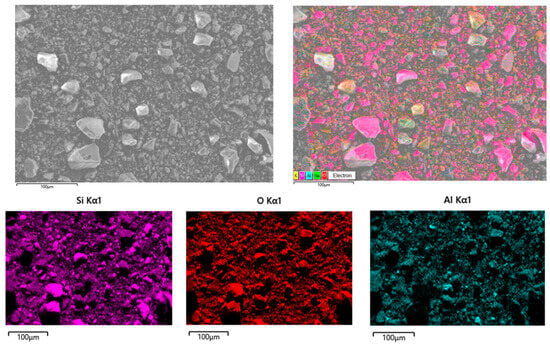
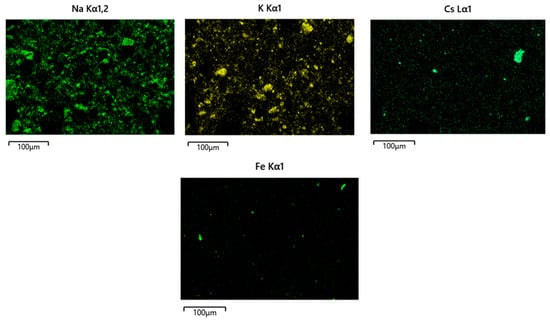
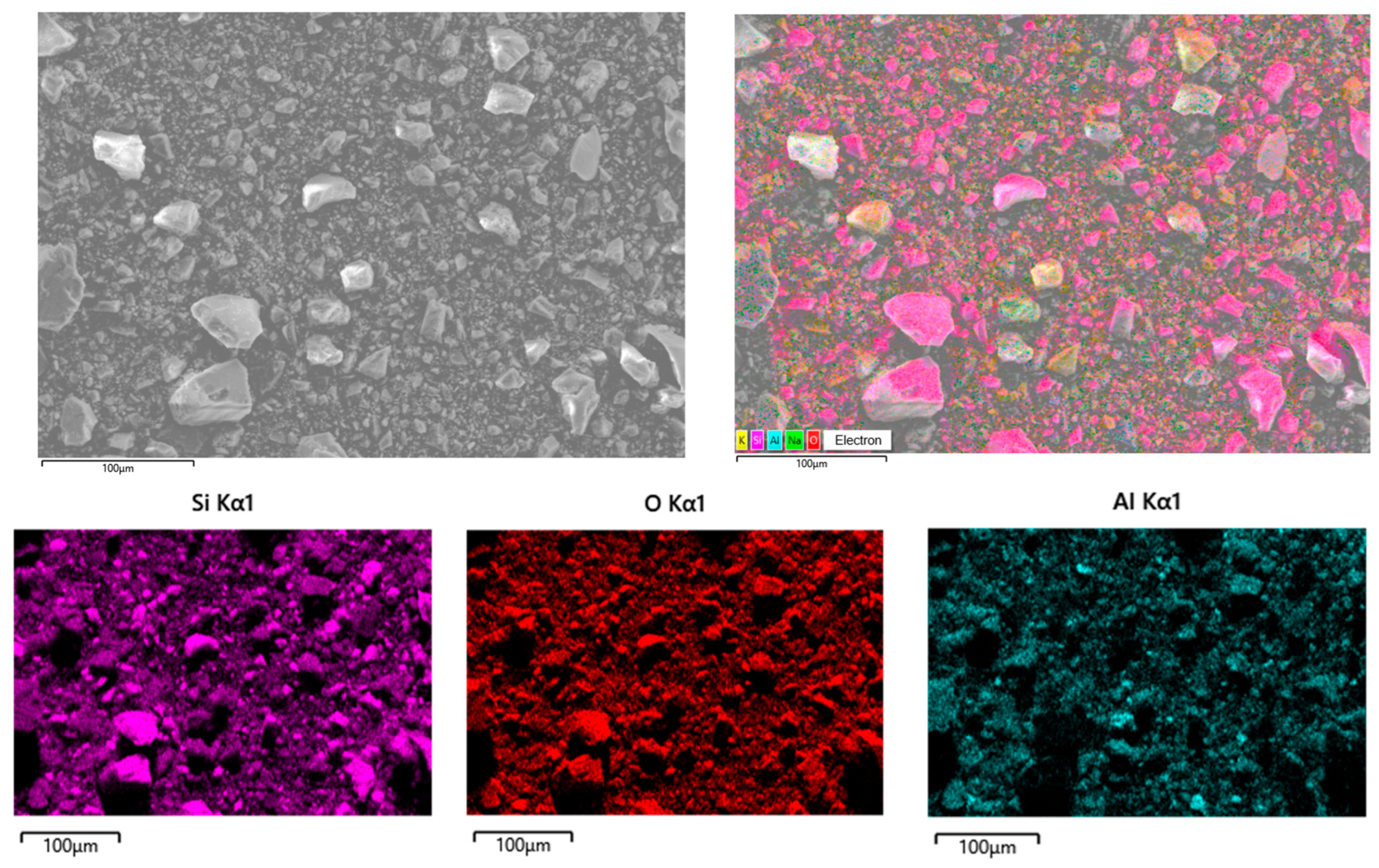
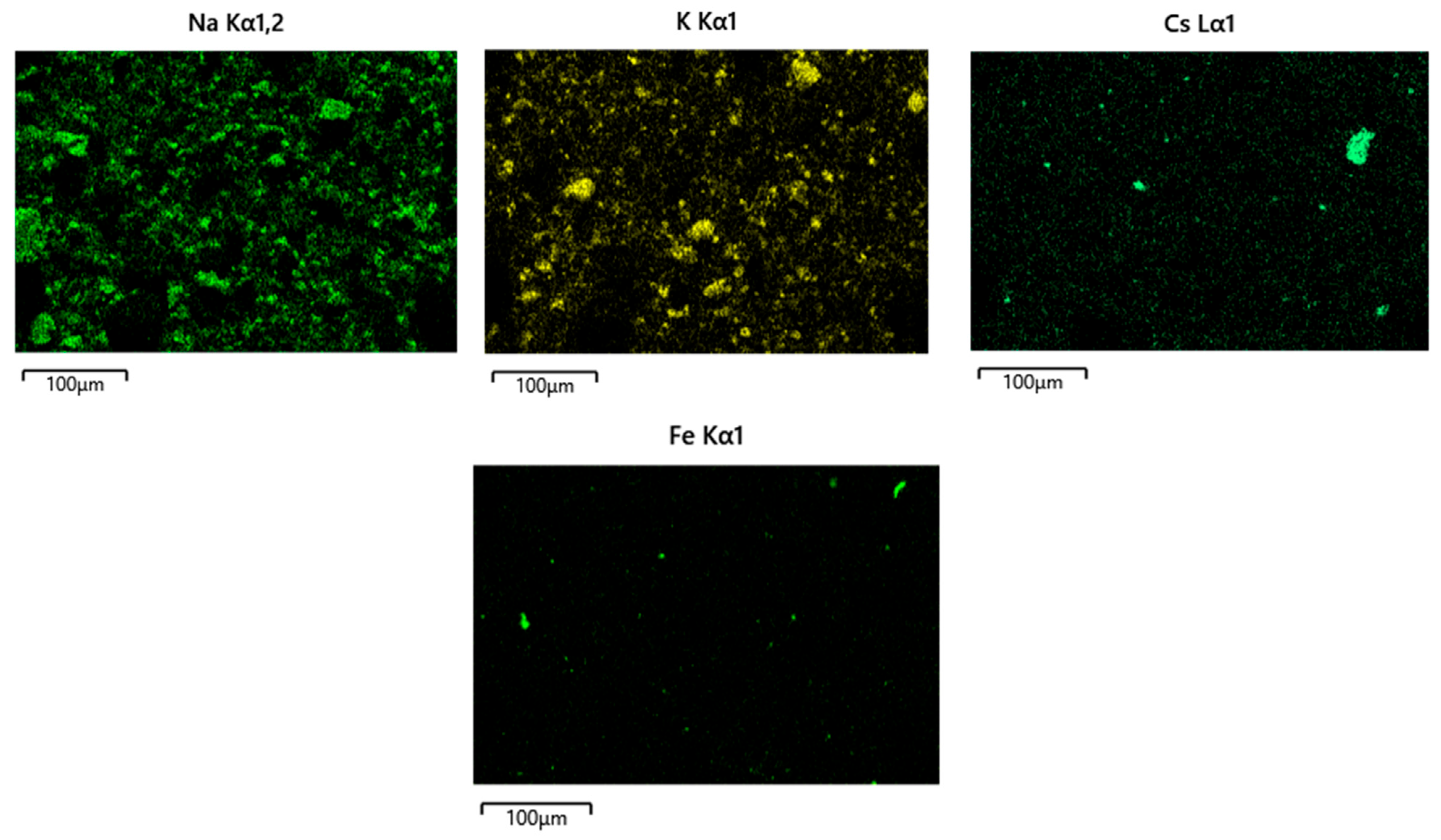
Elemental mapping further revealed that Si and O form the dominant silicate matrix, whereas Al and Na exhibit overlapping distributions, indicating the presence of sodium aluminosilicates, most likely albite or compositionally related feldspar phases (Figure 3). Potassium is localized in discrete regions, which may correspond to potassium feldspars. Iron occurs in minor amounts and shows localized distribution. In addition, Spectrum 2 exhibited elevated Mn and Fe contents, suggesting the presence of a separate manganese-iron-bearing impurity phase.
Figure 3.
SEM micrographs, layered images, and elemental distribution maps.
The lithium content in the ore was determined by flame photometric analysis, with the average lithium grade found to be 0.26 wt.% Li2O.
2.2. Experimental Procedure
A 50 kg ore sample was crushed and ground in a ball mill to a particle size below 5 mm, after which the material was classified into several size fractions exhibiting different lithium contents (Table 3).
Table 3.
Lithium distribution across size fractions.
The lithium distribution results across the size fractions indicate that the highest Li2O grades are associated with the coarse and intermediate ore fractions. The maximum Li2O content (0.28–0.29 wt.%) was observed in the −4.0/+2.8 mm and −2.8/+2.0 mm fractions, which also accounted for the largest proportion of lithium distribution, 22.4% and 17.8%, respectively. As particle size decreased, the Li2O content gradually declined to 0.20 wt.% in the finest fractions. These results indicate that lithium-bearing minerals are predominantly concentrated in the coarser size classes, thereby confirming the feasibility of preliminary dense media beneficiation of coarse-grained material.
Ferrosilicon grades FeSi65 and FeSi90 were used for the preparation of the dense medium because of their ability to form high-density suspensions due to the high alloy density (~6.7–7.0 g/cm3). Magnetite (Fe3O4) was additionally introduced to regulate the operating density of the suspension and to improve medium recovery efficiency through magnetic separation.
The ferrosilicon was ground in ball or vibration mills to achieve at least 90% passing 74 μm, whereas the magnetite was ground in rod mills to at least 85% passing 74 μm. It was established that excessively coarse particles tend to settle rapidly, while an excessive proportion of ultrafine particles increases the viscosity of the suspension.
During dense medium preparation, the components were introduced into a mixing vessel containing water under continuous mechanical agitation. The ferrosilicon-to-magnetite ratio was adjusted to obtain an operating suspension density of 3.0 g/cm3 in order to achieve selective separation of spodumene minerals. The pulp density was determined using the pycnometric method.
The separation of spodumene minerals was carried out as follows. Crushed ore of a specified size fraction was introduced into the ferrosilicon–magnetite dense suspension, after which the mixture was mechanically agitated and allowed to settle until density-based separation of mineral fractions occurred. The separation of heavy minerals, predominantly spodumene, from light aluminosilicate minerals, including quartz and feldspars, was performed in a glass vessel using a sieve basket that enabled the settled heavy product to be separated from the floating light fractions. The sink product obtained during the dense media separation (DMS) stage constituted the spodumene concentrate at the selected suspension density, whereas the floating fraction represented silicate tailings.
Dense media separation experiments were carried out in laboratory glass vessels and separatory funnels using a ferrosilicon–magnetite suspension. Prior to each test, the suspension density was adjusted to the target value (2.8–3.0 g/cm3) and mixed for 1–2 min to ensure homogeneous distribution of the dense medium particles. A 200 g ore sample of a selected size fraction was then introduced into the suspension and mixed.
Following agitation, density separation occurred within several seconds. In experiments performed in laboratory beakers, the floating fraction was carefully decanted and collected as tailings, whereas the settled heavy fraction was transferred to a separate container and washed with water to remove residual ferrosilicon suspension. In experiments performed using separatory funnels, the heavy sink fraction was discharged through the bottom outlet and subsequently washed to remove adhering dense medium particles.
It was observed that prolonged settling promoted partial sedimentation of ferrosilicon particles and deterioration of suspension homogeneity. Therefore, the separation procedure was carried out immediately after mixing to maintain stable operating conditions.
The decrepitation of α-spodumene was carried out in a muffle furnace at 1000–1100 °C for 2–4 h in order to transform the α-modification into the more reactive β-phase.
Sulfation roasting and subsequent lithium carbonate production were performed using concentrated sulfuric acid at an acid consumption of 220–225 kg/t of concentrate and a roasting temperature of 250–270 °C for 30–60 min. The sulfated product was subsequently subjected to water leaching. The lithium-bearing solution obtained after leaching was neutralized, and the resulting hydroxide precipitates were removed by filtration, followed by precipitation of lithium carbonate.
2.3. Analytical Methods
The lithium content in the feed ore, intermediate products, and leach solutions was determined using an FP6450 flame photometer (Shanghai Precision & Scientific Instrument Co., Ltd., Shanghai, China). The instrument operates according to the flame emission spectroscopy principle and enables direct determination of lithium concentrations in aqueous solutions. Calibration was performed using standard lithium solutions prior to analysis.
The phase composition of the ore and processing products was investigated by X-ray diffraction (XRD) using an automated DRON-3 diffractometer (Bourevestnik Inc., Saint Petersburg, Russia) with CuKα radiation and a β-filter. Diffraction patterns were recorded under the following conditions: voltage U = 35 kV, current I = 20 mA, θ–2θ scanning mode, and detector scanning rate of 2°/min.
Semi-quantitative phase analysis was performed on powder diffraction patterns using the equal-weight and artificial-mixture methods. Quantitative relationships between crystalline phases were determined. Diffractogram interpretation was conducted using the ICDD PDF-2 database (Powder Diffraction File, Release 2022) and HighScore Plus software (version: HighScore suite 4.0).
In addition, scanning electron microscopy (SEM) combined with energy-dispersive spectroscopy (EDS) was employed to investigate morphology and elemental distribution.
Scanning electron microscopy investigations were performed using a JEOL JXA-8230 electron probe microanalyzer (JEOL Ltd., Tokyo, Japan). The analyses were carried out at an accelerating voltage of 20 kV, a beam current of up to 5 nA, and a dead time not exceeding 17%. These operating conditions enabled reliable observation and characterization of structural features ranging from submicron dimensions to several hundred micrometers at magnifications from ×40 to several thousand times.
For all selected sample areas, imaging was performed predominantly in backscattered electron (BSE) mode, which provides more informative compositional contrast than secondary electron imaging (SEI). In BSE mode, phases containing elements with higher atomic numbers appear brighter than the surrounding matrix, facilitating mineral phase identification and the interpretation of textural relationships.
Quantitative determination of the elemental composition of ores and solid processing products, excluding lithium, was carried out by X-ray fluorescence spectroscopy (XRF) using a laboratory stationary Niton XL3t X-ray fluorescence spectrometer (Thermo Scientific Portable Analytical Instruments Inc., USA).
3. Results and Discussion
For the experimental studies, 200 g samples of the feed material were used for the following size fractions: −4.0/+2.8 mm, −2.8/+2.0 mm, and −2.0/+1.4 mm. Finer fractions were not subjected to dense media beneficiation using the ferrosilicon-based suspension because the separation of fine particles from the dense medium becomes significantly more difficult due to the high viscosity of the suspension and the deterioration of gravitational separation conditions.
The DMS results demonstrate that the most efficient lithium concentration was achieved in the coarse −4.0/+2.8 mm fraction, where the Li2O content in the DMS concentrate reached 5.77 wt.% with a lithium recovery of 98%. With decreasing particle size, the Li2O grade in the concentrate decreased to 4.64 wt.% and 3.49 wt.% for the −2.8/+2.0 mm and −2.0/+1.4 mm fractions, respectively (Table 4).
Table 4.
Performance indicators of dense media separation of lithium-bearing ore in a ferrosilicon suspension.
The obtained results indicate that the efficiency of dense media separation is strongly dependent on particle size. The superior beneficiation performance observed for the coarse fractions can be attributed to more effective density-based separation of spodumene-bearing particles in the ferrosilicon suspension. At the same time, the results indicate that lithium-bearing minerals remain predominantly concentrated in the coarse and intermediate size fractions, which contributes to the increased yield of the heavy lithium-bearing product. Nevertheless, the differences in DMS concentrate yield among the investigated size classes were relatively minor, indicating that spodumene remained closely associated with the aluminosilicate matrix even after crushing.
In addition, the lithium distribution analysis demonstrated that approximately 53% of the lithium contained in the original ore was concentrated in the coarse fractions selected for dense media separation. The highest beneficiation efficiency was achieved for the −4.0/+2.8 mm fraction, where the Li2O grade reached 5.77 wt.% at a lithium recovery of 98%. These results indicate that the majority of recoverable lithium is associated with coarse spodumene-bearing particles, whereas finer fractions contain lower lithium grades and are less suitable for gravity-based concentration. Similar observations were reported for low-grade spodumene ores from Eastern Kazakhstan, where the highest DMS performance was also associated with coarse spodumene-rich fractions [9].
Additional experiments demonstrated that suspension density had a significant influence on concentrate grade, whereas its effect on lithium recovery was relatively limited. At a suspension density of 2.8 g/cm3, the concentrate contained approximately 4.1 wt.% Li2O with 97.8% lithium recovery. Increasing the density to 2.9 g/cm3 increased the concentrate grade to 4.9 wt.% Li2O at 98% recovery. The highest concentrate quality was achieved at a suspension density of 3.0 g/cm3, where the Li2O content reached 5.77 wt.% while maintaining 98% lithium recovery. These results indicate that higher suspension density suppresses the entrainment of gangue minerals and improves concentrate quality without significantly affecting lithium recovery.
The selected operating conditions included suspension mixing for 1–2 min followed by rapid density separation within several seconds. Under these conditions, stable suspension behavior and efficient sink–float separation were achieved.
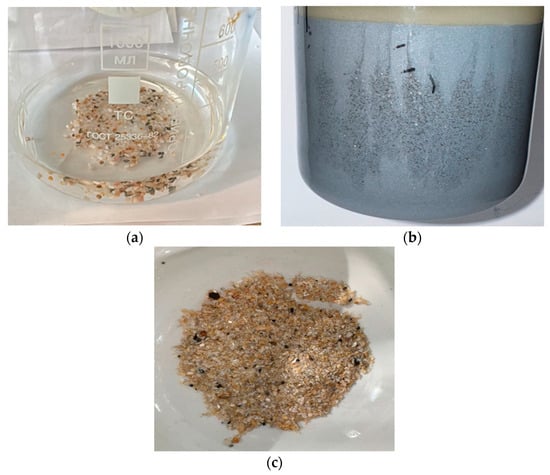
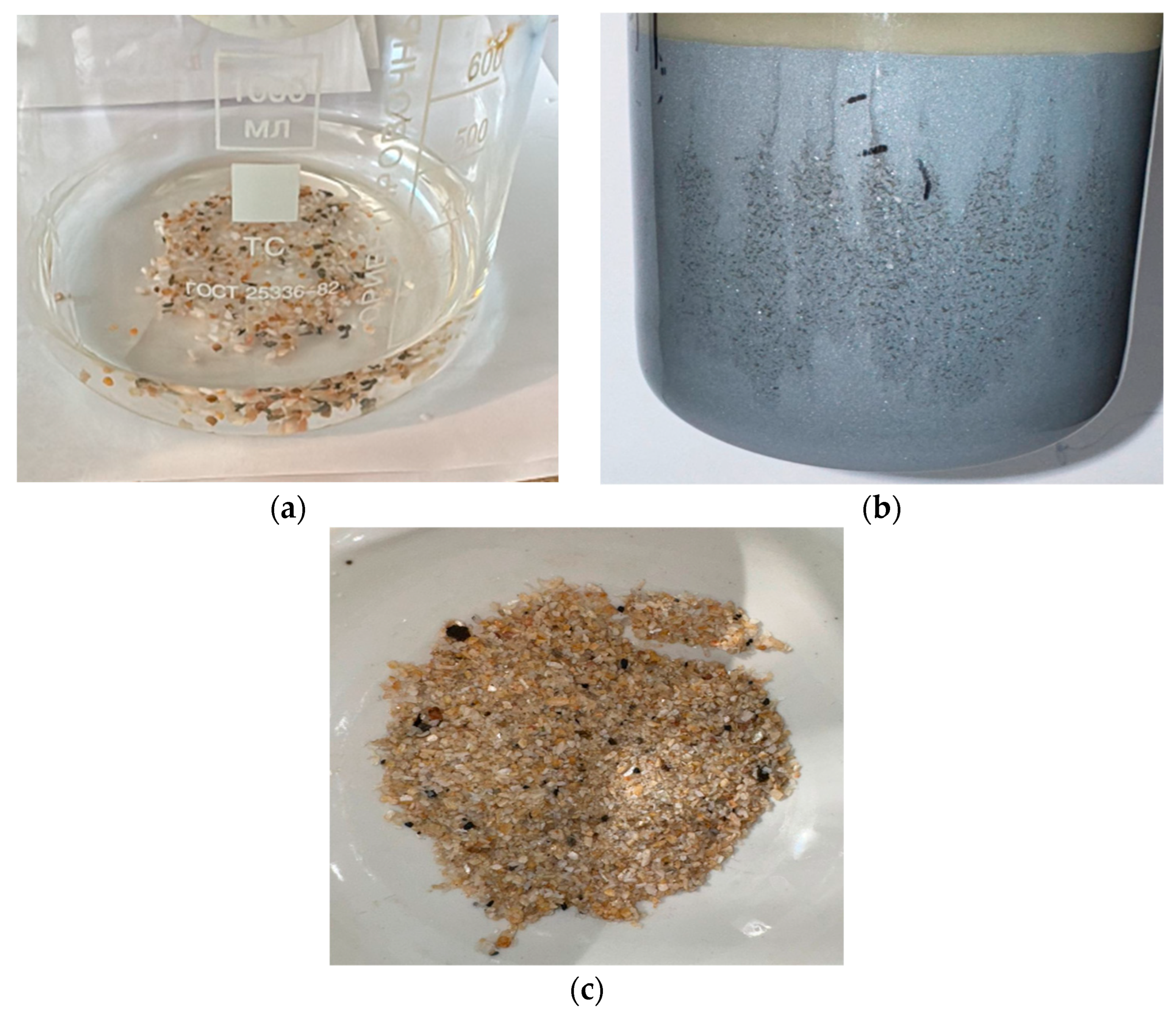
To visually evaluate the efficiency of dense media separation, experiments were carried out using both M45 heavy liquid and a ferrosilicon–magnetite-based suspension. The results showed that heavy lithium-bearing minerals were predominantly concentrated in the sink fraction, whereas light aluminosilicate minerals, including quartz and feldspars, were transferred to the floating fraction (Figure 4).
Figure 4.
Heavy Media separation of lithium-bearing ore and the obtained spodumene concentrate: (a) Separation in M45 heavy liquid; (b) Separation in a ferrosilicon–magnetite suspension; (c) Obtained spodumene concentrate.
The resulting heavy product constituted a spodumene concentrate characterized by a substantially higher lithium content compared with the feed ore. The use of a ferrosilicon–magnetite suspension provided effective density-based mineral separation and may therefore be considered a promising approach for the preliminary beneficiation of low-grade lithium-bearing ores.
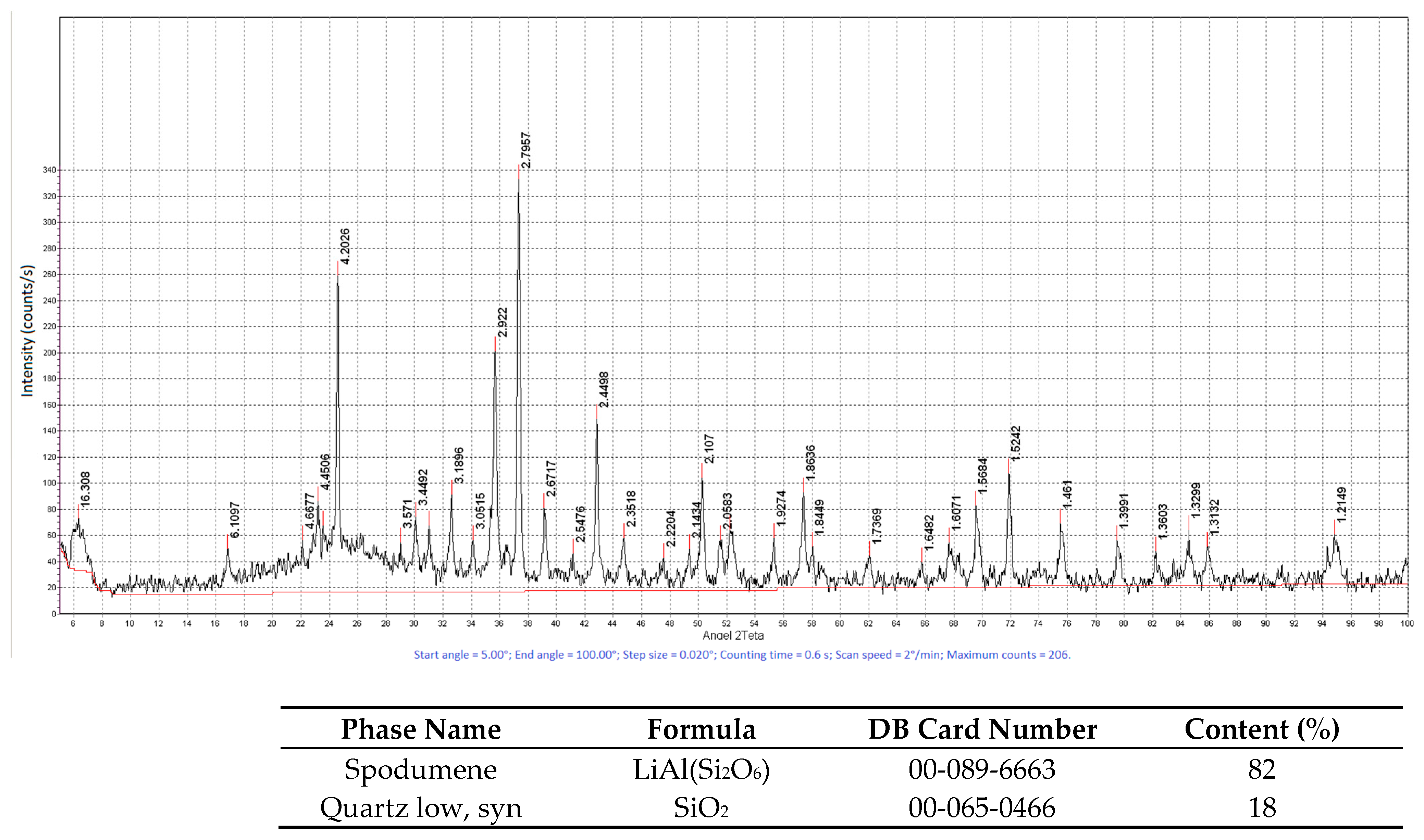
The visual separation results are consistent with the chemical and phase analysis data (Figure 5) and confirm the feasibility of concentrating spodumene minerals by dense media separation.
Figure 5.
X-ray diffraction analysis of the spodumene concentrate obtained from the −4.0/+2.8 mm fraction.
The high lithium recovery achieved during dense media separation is primarily attributed to the density contrast between spodumene (3.1–3.2 g/cm3) and the major gangue minerals, including quartz and feldspars (2.5–2.7 g/cm3). The selected suspension density of 3.0 g/cm3 provided favorable conditions for efficient separation of spodumene-bearing particles from the gangue matrix, resulting in a concentrate containing up to 5.77 wt.% Li2O at 98% lithium recovery.
Previous mineralogical studies of the Akhmetkino deposit and other Li-bearing pegmatites of the Karagoin–Saryozek ore zone demonstrated that lithium mineralization is predominantly associated with albite–spodumene pegmatites. Spodumene commonly occurs as coarse prismatic crystals closely associated with albite, quartz, feldspar and muscovite minerals. Such mineralogical features are favorable for density-based pre-concentration and are consistent with the results obtained in the present study. The enrichment of lithium in coarse size fractions and the high Li2O grade achieved in the DMS concentrate indicate that spodumene occurs in a sufficiently liberated form for effective gravity separation [10,11].
Subsequently, the obtained DMS concentrates were combined. The resulting bulk spodumene concentrate, containing 4.5 wt.% Li2O, was subjected to decrepitation at 1000–1100 °C for 3–4 h. During thermal treatment, α-spodumene underwent phase transformation into the more reactive β-modification according to Equation (1):
α − (Li, K)Al [Si2O6] + Q = β − (Li, K)[AlSi2O6]
The selected decrepitation temperature range of 1000–1100 °C is consistent with published studies on spodumene processing, which report that the α → β phase transformation generally occurs within the temperature range of 950–1100 °C. Previous investigations demonstrated that thermal treatment within this interval results in crystal lattice expansion, increased porosity, and enhanced reactivity of β-spodumene toward subsequent acid treatment. Therefore, the roasting conditions used in the present study are comparable with those commonly applied in laboratory and industrial spodumene processing [3,5,12].
The extent of α-spodumene decrepitation into the β-modification can be visually observed: after thermal treatment, the dense rock-like material transforms into a loose porous mass with a calcite-like appearance. This morphological transformation is associated with volumetric expansion of the crystal lattice during the α → β phase transition, accompanied by the formation of extensive cracking and increased material porosity.
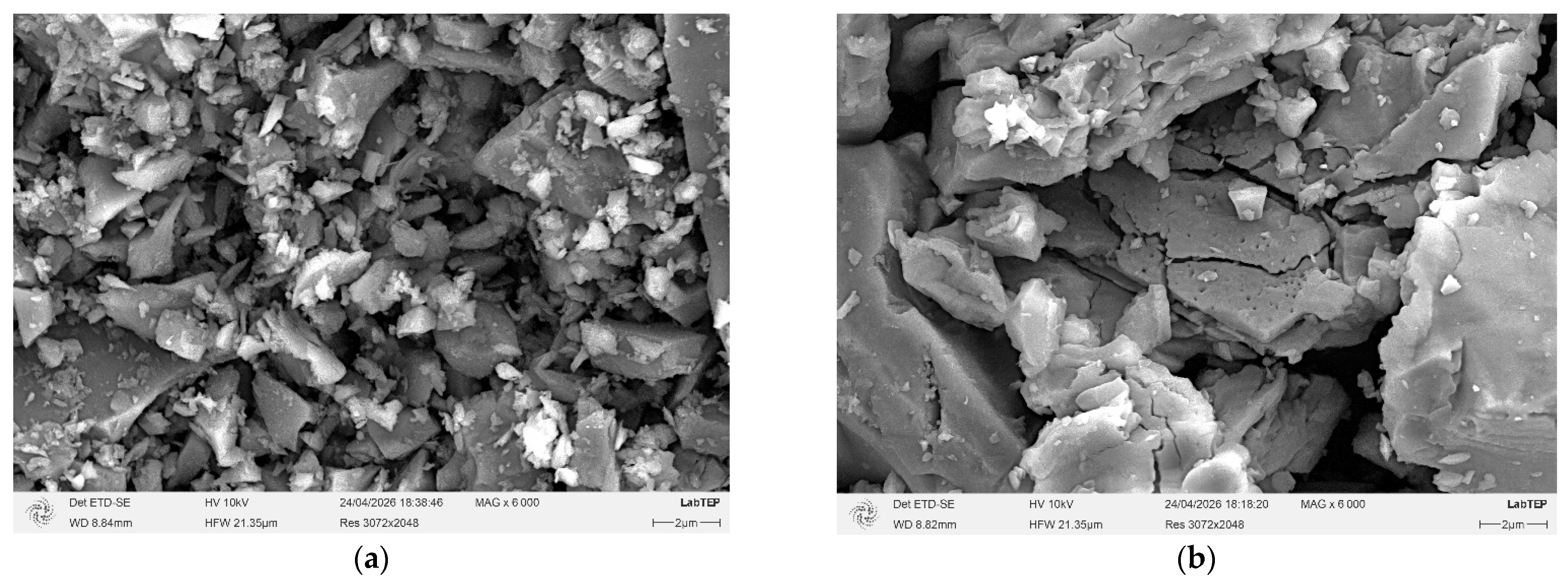
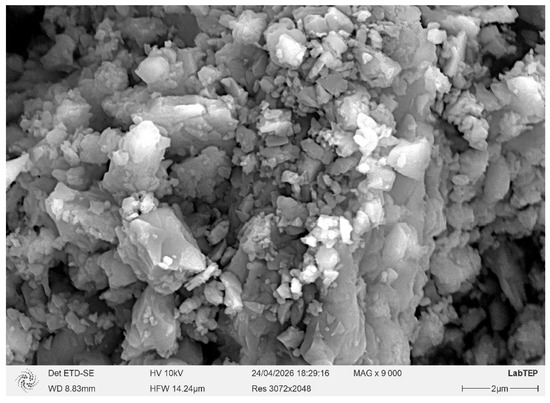
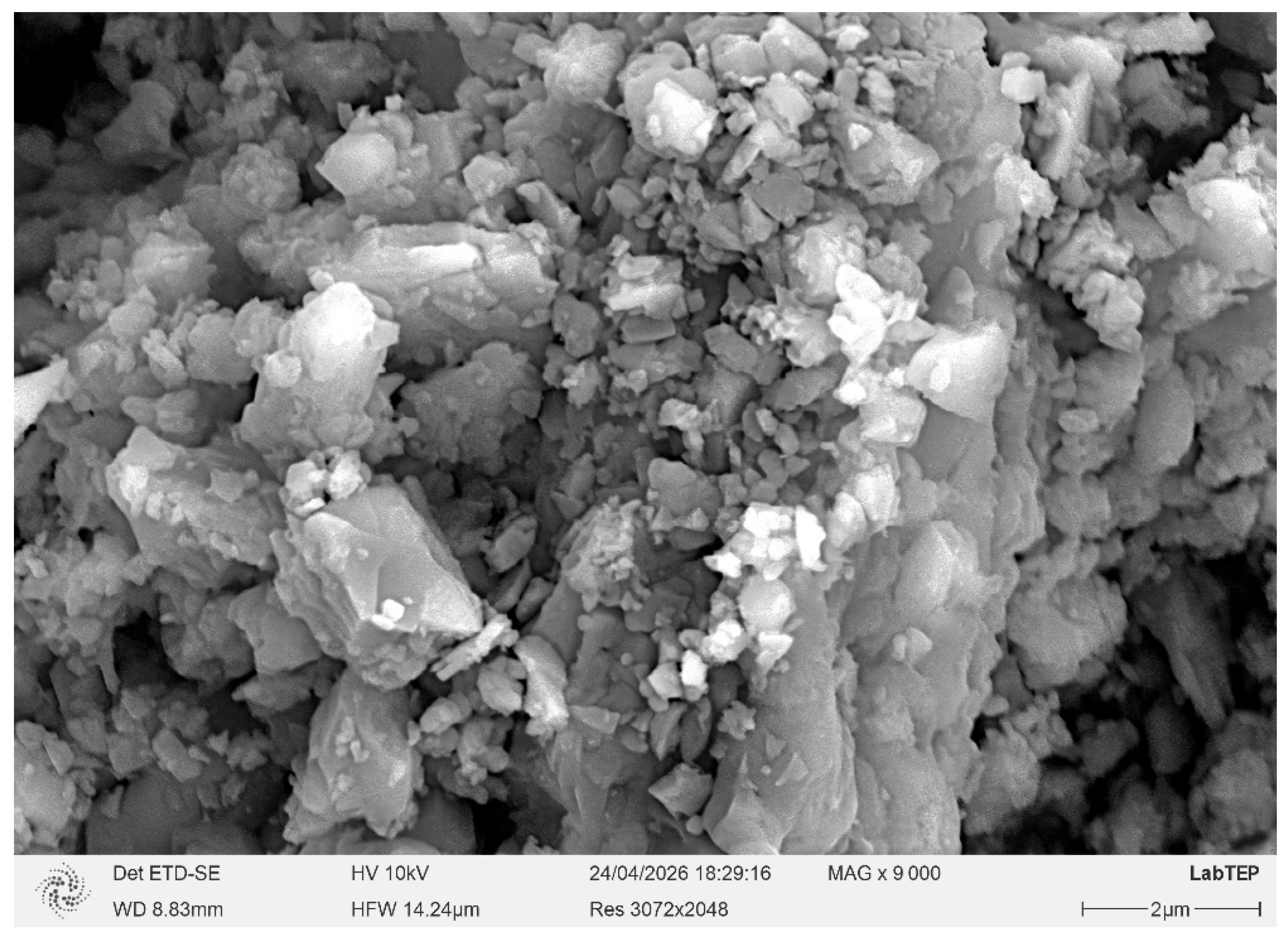
SEM analysis revealed significant morphological differences between the initial ore and β-spodumene. α-spodumene is characterized by a dense and compact structure with a low degree of mineral grain liberation. The particles exhibit predominantly massive and angular morphologies with limited development of porosity and microcracks.
Following thermal treatment and transformation of α-spodumene into the β-modification, substantial changes in material morphology were observed. β-spodumene is characterized by a loose, disintegrated structure with extensive cracking and exposed surfaces. The formation of microcracks is associated with crystal lattice expansion during the α → β phase transition. The resulting porous and defect-rich structure of β-spodumene enhances the reactivity of the material and facilitates subsequent acid interaction and lithium extraction (Figure 6).
Figure 6.
SEM images of (a) α-spodumene with dense compact morphology and (b) β-spodumene showing extensive cracking and porous structure after thermal activation.
Following thermal activation and the transformation of α-spodumene into the β-modification, the material was subjected to sulfation roasting with concentrated sulfuric acid at 250–270 °C, according to Equation (2). The optimum sulfuric acid consumption providing maximum lithium recovery was determined to be 225 kg/t of concentrate. The sulfation duration was 120 min.
LiAlSi2O6 + H2SO4 → Li2SO4 + Al2O3 + SiO2 + H2O
SEM analysis of sulfated β-spodumene revealed substantial structural changes compared with both the initial ore and the thermally activated material. During sulfation, intensive destruction of the silicate matrix occurred, accompanied by the formation of a highly porous structure and the development of intergranular cracking. After sulfation, β-spodumene particles exhibited a loose, disintegrated morphology with numerous pores and reaction zones distributed across the particle surfaces.
These structural transformations are associated with the interaction of sulfuric acid with lithium-bearing phases and the subsequent formation of lithium sulfate. The development of microcracks and porous reaction layers significantly increases the reactive surface area of the material and facilitates subsequent lithium leaching into solution. The observed morphology confirms that the α → β phase transition plays a crucial role in enhancing the reactivity of spodumene during sulfation roasting. The volumetric expansion and structural loosening accompanying β-spodumene formation promote acid penetration into the mineral structure and intensify sulfate-forming reactions.
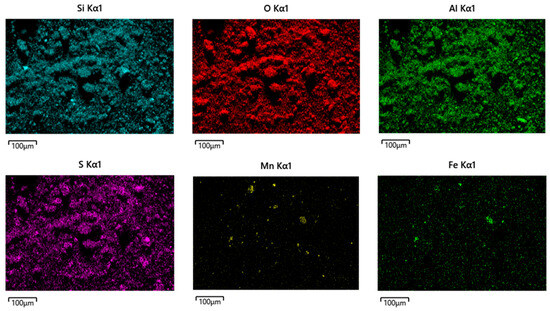
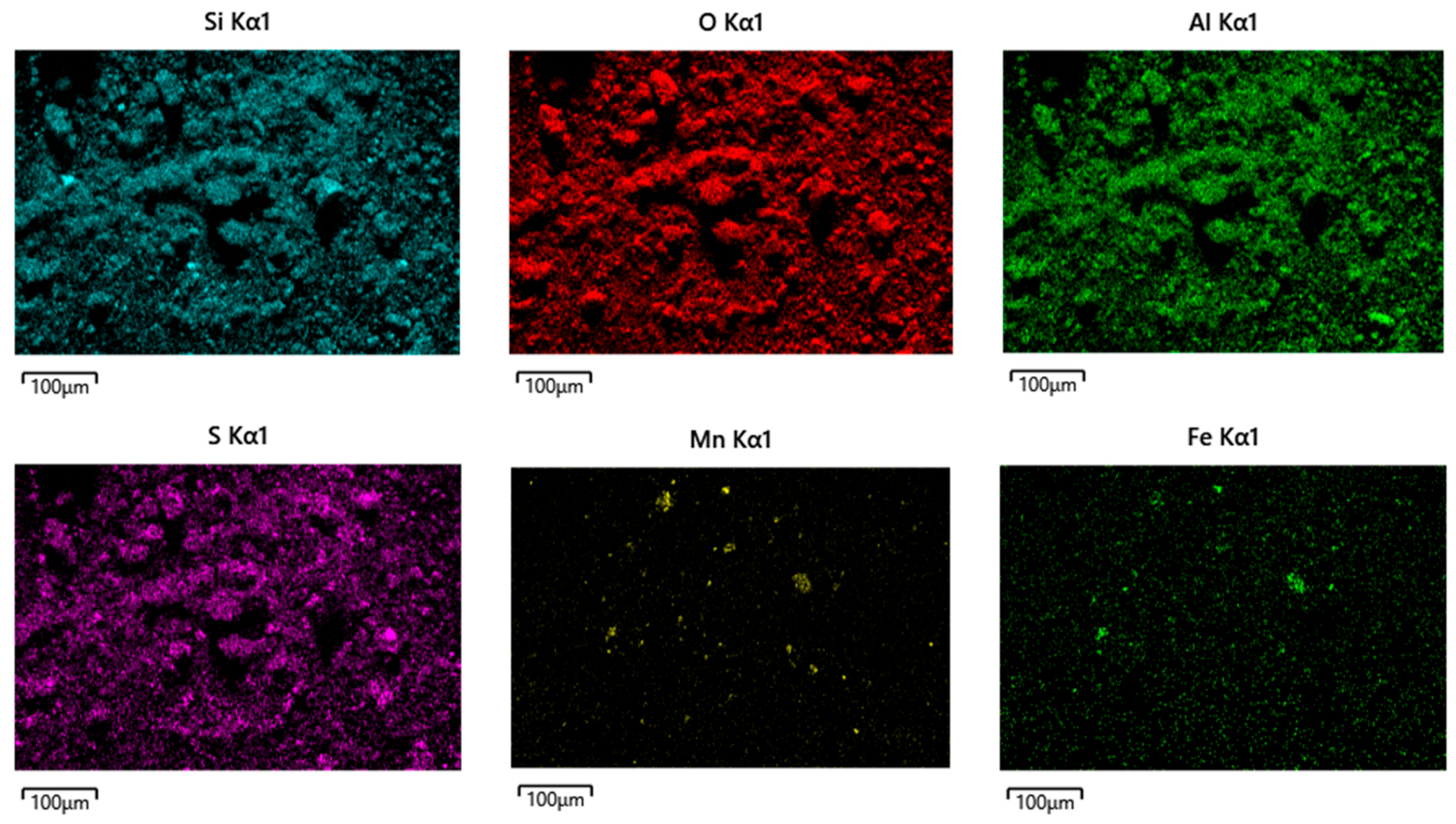
Compared with the initial material, sulfated β-spodumene is characterized by a substantially more developed and chemically altered surface (Figure 7), indicating the effective progression of the sulfation process (Figure 8) and the creation of favorable conditions for subsequent hydrometallurgical lithium extraction.
Figure 7.
SEM image of sulfated β-spodumene showing extensive structural destruction, pore development, and formation of sulfate reaction products after sulfuric acid treatment.
Figure 8.
Elemental distribution map of the sulfated spodumene concentrate.
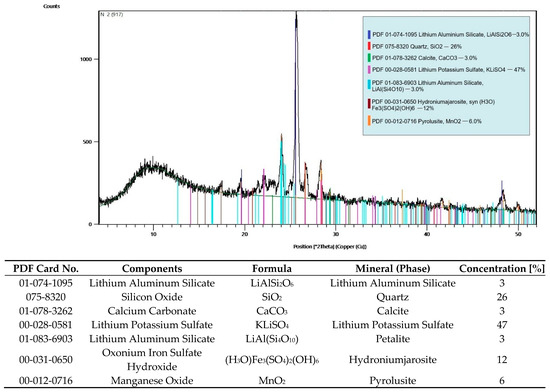
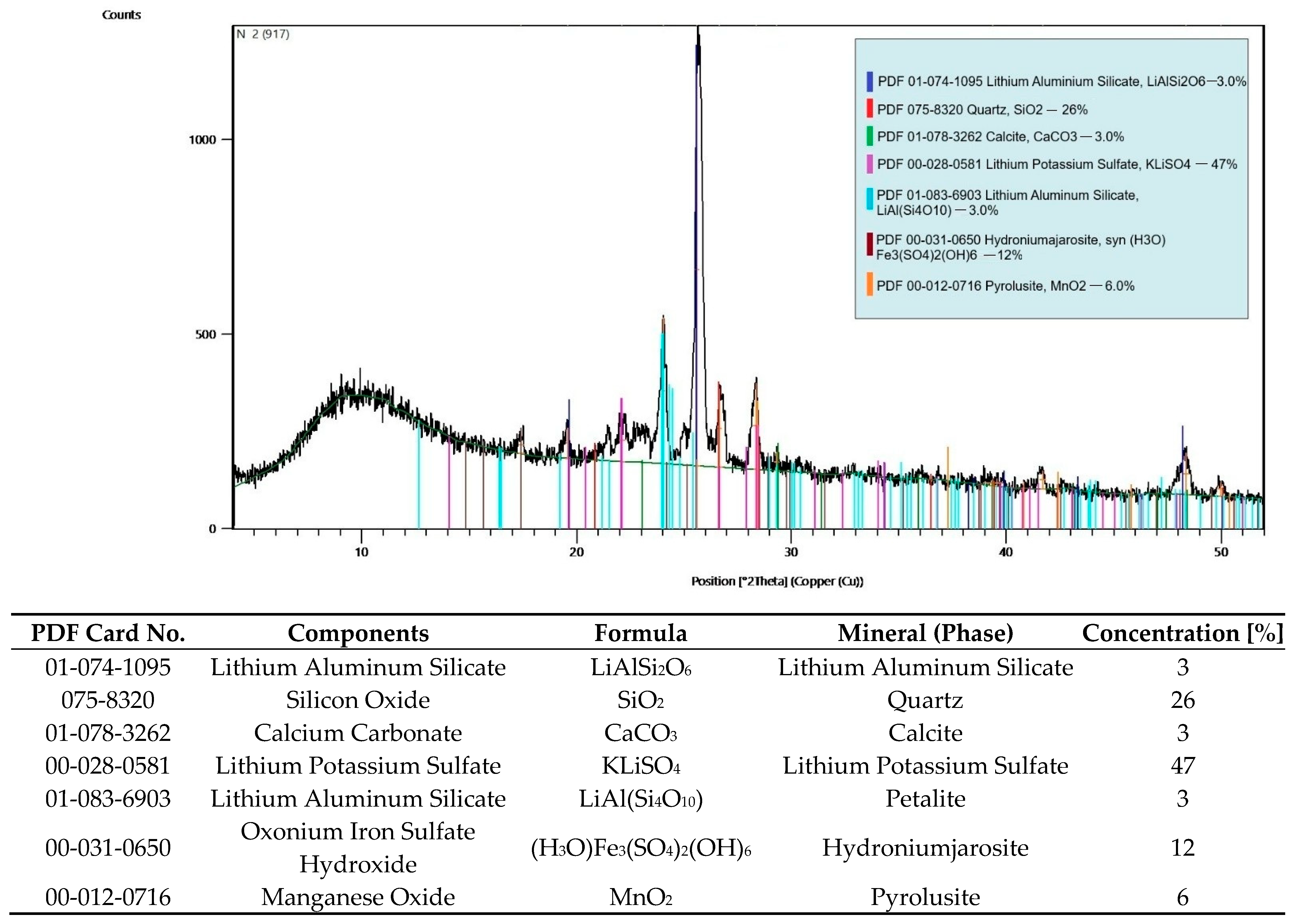
The results of the X-ray phase analysis (Figure 9) of sulfated β-spodumene showed that the major phases in the product were potassium lithium sulfate KLiSO4 (47%), petalite LiAl(Si4O10) (3%), and lithium aluminum silicate LiAlSi2O6, corresponding to residual β-spodumene (3%). The material also contained quartz SiO2 (26%), calcite CaCO3 (3%), hydronium jarosite (H3O)Fe3(SO4)2(OH)6 (12%), and pyrolusite MnO2 (6%).
Figure 9.
X-ray diffraction analysis of sulfated β-spodumene.
The predominance of the lithium-bearing sulfate phase KLiSO4 indicates the effective progression of β-spodumene sulfation and the conversion of a significant portion of lithium into a water-soluble form. The persistence of residual lithium-bearing aluminosilicate phases suggests incomplete interaction between certain regions of the mineral matrix and sulfuric acid, which may be attributed to structural heterogeneity and variations in mineral liberation after thermal activation.
The presence of quartz and calcite is associated with the composition of the original ore and accompanying gangue minerals. The formation of hydronium jarosite is related to the interaction of iron-bearing components with the sulfate medium during thermal treatment. The occurrence of pyrolusite (MnO2) indicates oxidation of manganese-bearing compounds under oxidizing conditions.
According to chemical analysis, the lithium content in the sulfated concentrate corresponded to approximately 4.5 wt.% Li2O. Semi-quantitative X-ray phase analysis indicated an Li2O content of approximately 4.7 wt.% within the sulfated portion of the product, confirming a high degree of lithium retention in the sulfated material and its suitability for subsequent hydrometallurgical extraction.
Following β-spodumene sulfation, water leaching was performed. The sulfated calcine was treated with water at a solid-to-liquid ratio (S:L) of 1:3, a temperature of 70–80 °C, and a leaching duration of 90 min. During leaching, Li2SO4 dissolved into the solution together with part of the impurity components, whereas the insoluble residue, composed predominantly of SiO2 and Al2O3, remained in the leach cake.
To ensure more complete recovery of dissolved lithium sulfate, the cake was washed twice with water at an S:L ratio of 1:2. The chemical composition of the productive solution after filtration is presented in Table 5. Impurity concentrations were determined by Niton XL3t X-ray fluorescence analysis (XRF) (Thermo Scientific Portable Analytical Instruments Inc., Billerica, MA, USA), while lithium concentration was measured using an FP6450 flame photometric analyzer (Shanghai Precision & Scientific Instrument Co., Ltd., Shanghai, China).
Table 5.
Composition of leach solutions obtained from the sulfated product.
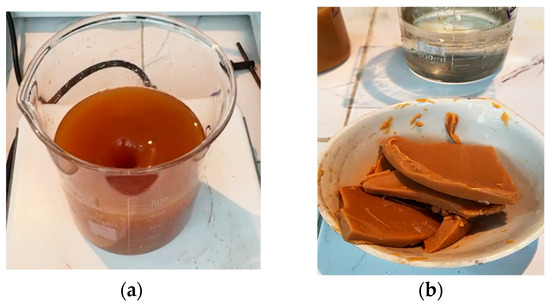
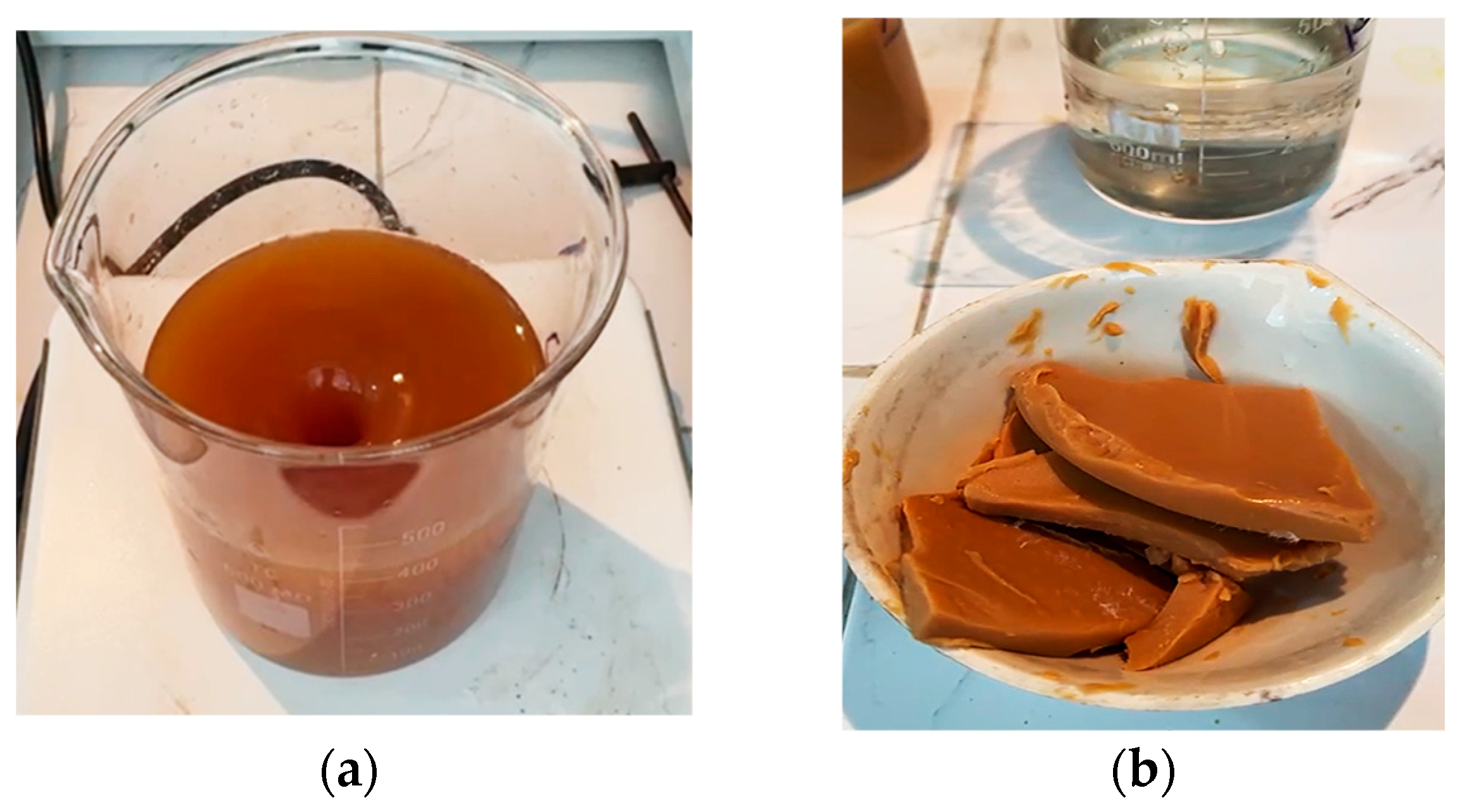
After water leaching of the sulfated product, a brownish-yellow lithium-bearing solution with a pH of approximately 2.2 was obtained, which is associated with the dissolution of iron-containing and sulfate species into the solution.
The chemical analysis of the leach solutions demonstrated that the majority of lithium was transferred into the productive solution, where the Lithium concentration reached 12.1 g/L, corresponding to approximately 5.62 g/L Li. Lithium concentration in the wash waters was significantly lower, amounting to 1.27 g/L for the first wash and 0.20 g/L for the second wash (Table 5). Considering the obtained solution volumes, the total amount of Lithium concentration transferred into solution was approximately 3.92 g. Based on the Lithium concentration content of 4.5 wt.% in 100 g of sulfated concentrate, the overall lithium leaching efficiency, including wash waters, was approximately 87.1%.
In addition to lithium, impurity components, mainly Si, Al, and S, were also transferred into solution, with their highest concentrations observed in the productive solution and the first wash water. The elevated concentrations of silicon and aluminum are associated with partial dissolution of residual lithium aluminosilicate phases during sulfation and subsequent leaching. At the same time, Nb, As, and Cd concentrations remained relatively low, indicating limited dissolution of these elements. The elevated iron concentration in the productive solution (up to 4529 ppm) suggests partial dissolution of iron-bearing phases during sulfation and leaching.
Subsequent solution neutralization was carried out by adding lime until the pH reached 6.0, resulting in the precipitation of a brown iron hydroxide–sulfate sludge with the following composition: S (wt.%)—6.7, Al (wt.%)—1.5, Fe (wt.%)—1.03, P (wt.%)—0.83, and Si (wt.%)—0.48 (Figure 10). The formation of hydrated iron precipitates is associated with the hydrolysis of Fe3+-bearing species and the precipitation of iron hydroxide and hydroxy-sulfate phases.
Figure 10.
Solution after leaching of the sulfated product (a); Iron hydroxide precipitate formed after solution neutralization, and the purified filtrate (b).
At the same time, lithium was predominantly retained in solution in the form of soluble Li2SO4, confirming the feasibility of subsequent lithium carbonate production from the purified solution.
Lithium was precipitated from the purified solution using a conventional carbonate process at 85–90 °C with sodium carbonate (Na2CO3). The sodium carbonate consumption was calculated stoichiometrically with an excess of approximately 10% to ensure more complete lithium precipitation. The precipitation process proceeded according to Equation (3):
Li2SO4 + Na2CO3 → Li2CO3↓ + Na2SO4
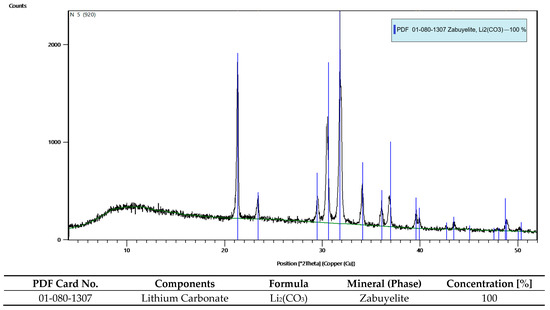
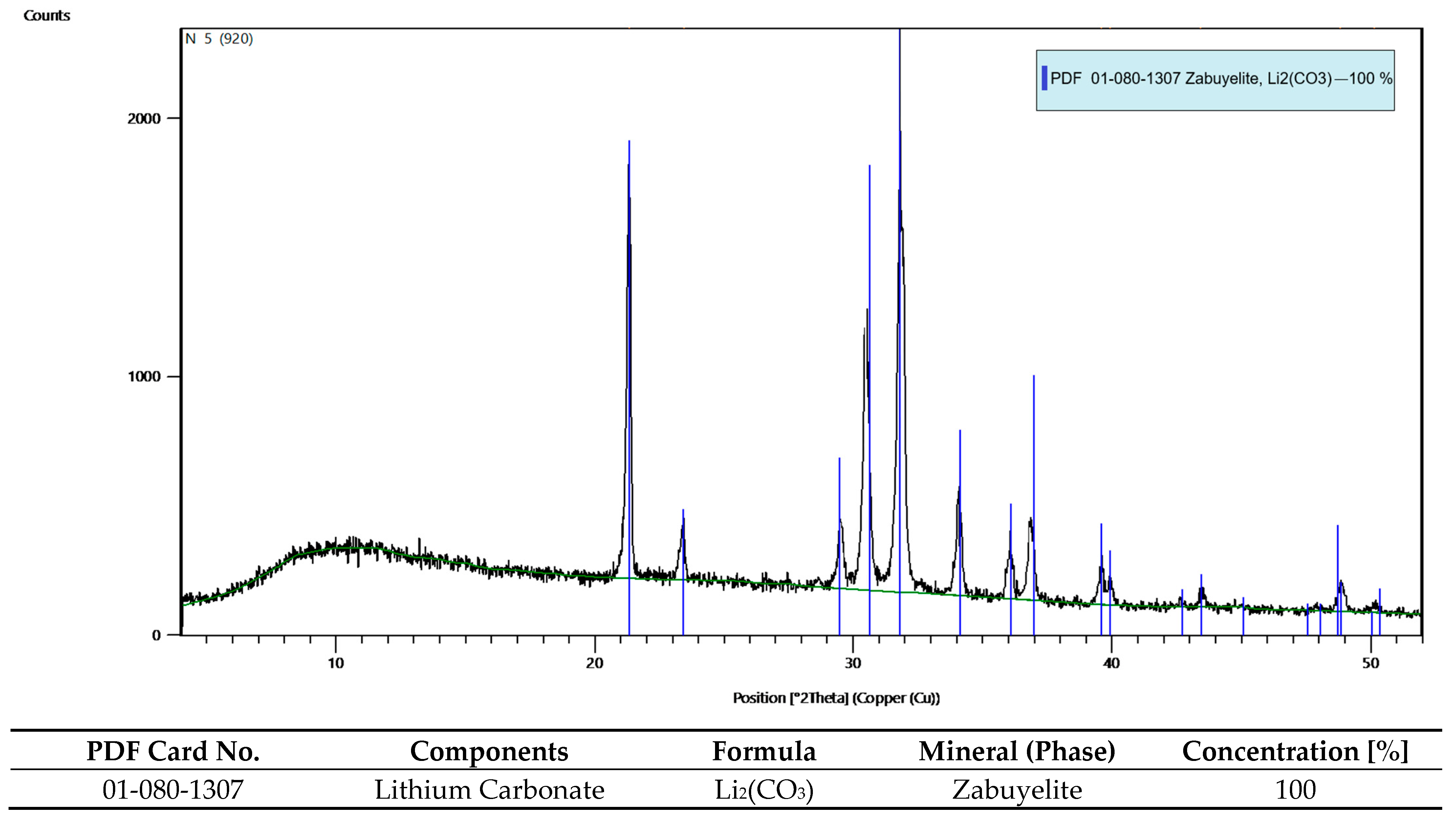
The obtained lithium carbonate precipitate was washed with hot water to remove soluble sulfate compounds and residual impurities. As a result, a lithium carbonate product containing not less than 98.8 wt.% Li2CO3 was obtained, with impurity levels not exceeding: Sr (wt.%)—0.004; Cd (wt.%)—0.002; As (wt.%)—0.002; Fe (wt.%)—0.011; 0.17 Mn (wt.%)—0.17; S (wt.%)—0.2; and Si (wt.%)—0.8. The lithium recovery into the carbonate product from solution reached 80.5%. The X-ray phase analysis of the obtained product is presented in Figure 11.
Figure 11.
X-ray diffraction analysis of the lithium carbonate.
The sodium sulfate-bearing mother liquor generated after lithium carbonate precipitation may be subjected to further crystallization for sodium sulfate recovery as a potential by-product.
4. Conclusions
Thus, the technological investigations of low-grade lithium-bearing ore (~0.26 wt.% Li2O) processing using the flowsheet of “dense media separation in a ferrosilicon suspension—decrepitation—sulfation roasting—leaching—lithium carbonate precipitation” demonstrated the feasibility of producing a low-grade spodumene concentrate containing 3.50–5.77 wt.% Li2O.
It was established that only approximately 53% of the lithium contained in the original ore was recovered into the dense media separation feed fraction, whereas the overall lithium recovery into the lithium carbonate product reached about 45% relative to the ore and approximately 70% relative to the concentrate.
At the same time, the temperature regimes and reagent consumption during the decrepitation and sulfation stages remained comparable to those used for the processing of high-grade lithium ores and spodumene concentrates. Under conditions of low lithium content, this results in increased specific consumption of energy, sulfuric acid, and water per unit of final product, indicating the limited efficiency of conventional processing routes for low-grade ores and substantiating the need for the development of new, more economically viable processing technologies.
Supplementary Materials
The following supporting information can be downloaded at: https://www.mdpi.com/article/10.3390/met16060672/s1, Figure S1: SEM-EDS images of the ore.
Author Contributions
Conceptualization, F.A.B.; methodology, N.Z. and M.A.M.; formal analysis, D.S.; writing—original draft preparation, F.A.B.; writing—review and editing, N.Z., M.A.M., D.S. and A.K.; visualization, D.S.; project administration, F.A.B. and A.K.; resources, A.K.; funding acquisition, F.A.B. All authors have read and agreed to the published version of the manuscript.
Funding
This research has been funded by the Science Committee of the Ministry of Science and Higher Education of the Republic of Kazakhstan (Grant No. AP 23485523 Development of technology for obtaining spodumene concentrate and lithium carbonate from ores of pegmatite lithium deposits).
Data Availability Statement
The original contributions presented in this study are included in the article. Further inquiries can be directed to the corresponding author.
Conflicts of Interest
The authors declare no conflicts of interest.
Abbreviations
The following abbreviations are used in this manuscript:
| DMS | Dense Media Separation |
| SEM | Scanning Electron Microscopy |
| EDS | Energy-Dispersive Spectroscopy |
| XRF | X-ray Fluorescence Spectroscopy |
| BSE | Backscattered Electron |
| SEI | Secondary Electron Imaging |
References
- Dessemond, C.; Lajoie-Leroux, F.; Soucy, G.; Laroche, N.; Magnan, J.-F. Spodumene: The lithium market, resources and processes. Minerals 2019, 9, 334. [Google Scholar] [CrossRef] [Scilit]
- Karshyga, Z.; Yersaiynova, A.; Yessengaziyev, A.; Orynbayev, B.; Kvyatkovskaya, M.; Silachyov, I. Synthesis of manganese oxide sorbent for the extraction of lithium from hydromineral raw materials. Materials 2023, 16, 7548. [Google Scholar] [CrossRef] [Scilit] [PubMed]
- Salakjani, N.K.; Singh, P.; Nikoloski, A.N. Mineralogical transformations of spodumene concentrate from Greenbushes, Western Australia. Part 1: Conventional heating. Miner. Eng. 2016, 98, 71–79. [Google Scholar] [CrossRef] [Scilit]
- Asif, A.H.; Li, C.; Lim, H.; Sun, H. Australia’s spodumene: Advances in lithium extraction technologies, decarbonization, and circular economy. Ind. Eng. Chem. Res. 2024, 63, 2073–2086. [Google Scholar] [CrossRef] [Scilit]
- Salakjani, N.K.; Singh, P.; Nikoloski, A.N. Production of lithium—A literature review. Part 2. Extraction from spodumene. Miner. Process. Extr. Metall. Rev. 2021, 42, 268–283. [Google Scholar]
- Kundu, T.; Parhi, P.K. Exploring the flotation performance of a novel low-grade Indian spodumene-bearing pegmatite deposit for sustainable development. J. Sustain. Metall. 2026, 12, 417–437. [Google Scholar]
- Batjargal, K.; Ganbat, M.; Lkhagvadorj, B.; Jargalsaikhan, E.; Ozdemir, O.; Enkhtur, O. Effect of innovative mixed collectors on the improvement of flotation recovery of lepidolite–spodumene ore. JOM 2026, 78, 1150–1163. [Google Scholar]
- Xia, L. Spodumene flotation: Challenges and reagent strategies. In Proceedings of the 63rd Conference of Metallurgists, COM 2024; Metallurgy and Materials Society of CIM, Ed.; Springer: Cham, Switzerland, 2025. [Google Scholar]
- Sagzhanov, D.; Ito, J.; Altansukh, B.; Godirilwe, L.L.; Haga, K.; Takasaki, Y.; Shibayama, A. Lithium ore beneficiation: Sustainable approaches for efficient recovery of lithium from a low-grade spodumene ore. J. Sustain. Metall. 2025, 11, 754–772. [Google Scholar] [CrossRef] [Scilit]
- Zimanovskaya, N.A.; Oitseva, T.A.; Khromykh, S.V.; Travin, A.V.; Bissatova, A.Y.; Annikova, I.Y.; Aitbayeva, S.S. Geology, Mineralogy, and Age of Li-Bearing Pegmatites: Case Study of Tochka Deposit (East Kazakhstan). Minerals 2022, 12, 1478. [Google Scholar] [CrossRef] [Scilit]
- Akbarov, E.E.; Baisalova, A.; Dolgopolova, A.; Zeltmann, R. Mineralogical and geochemical features of the rare metal deposit Akhmetkino (EKR). Min. J. Kazakhstan 2023, 10, 26–34. [Google Scholar]
- Abdullah, A.A.; Oskierski, H.C.; Altarawneh, M.; Senanayake, G.; Lumpkin, G.; Dlugogorski, B.Z. Phase Transformation Mechanism of Spodumene during Its Calcination. Miner. Eng. 2019, 140, 105883. [Google Scholar] [CrossRef] [Scilit]

Disclaimer/Publisher’s Note: The statements, opinions and data contained in all publications are solely those of the individual author(s) and contributor(s) and not of MDPI and/or the editor(s). MDPI and/or the editor(s) disclaim responsibility for any injury to people or property resulting from any ideas, methods, instructions or products referred to in the content. |
© 2026 by the authors. Licensee MDPI, Basel, Switzerland. This article is an open access article distributed under the terms and conditions of the Creative Commons Attribution (CC BY) license.