Tempering Behavior of 420 MPa Grade Steel with Cu Alloying


Abstract
1. Introduction
2. Experimental Procedure
3. Experimental Results
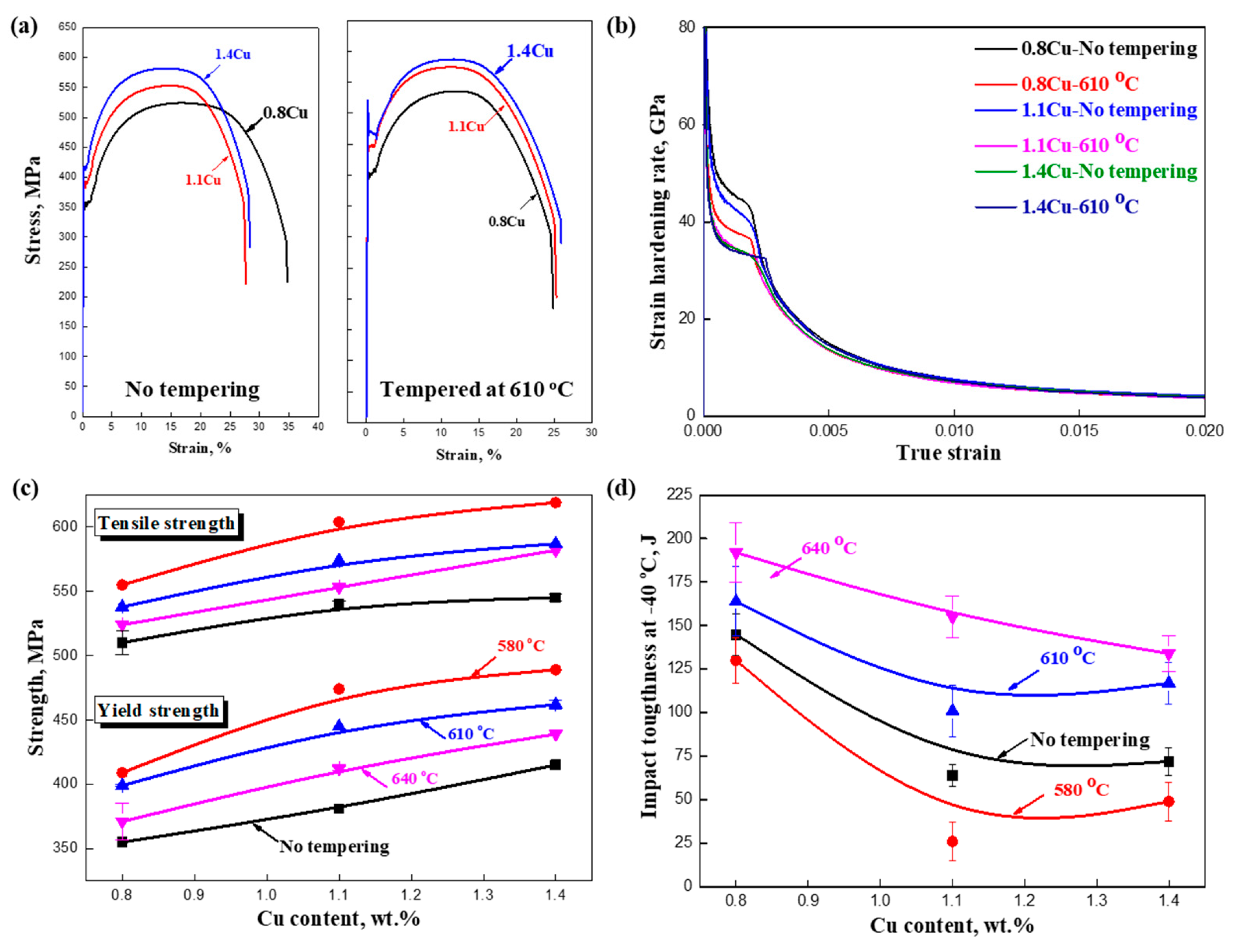
3.1. Mechanical Property
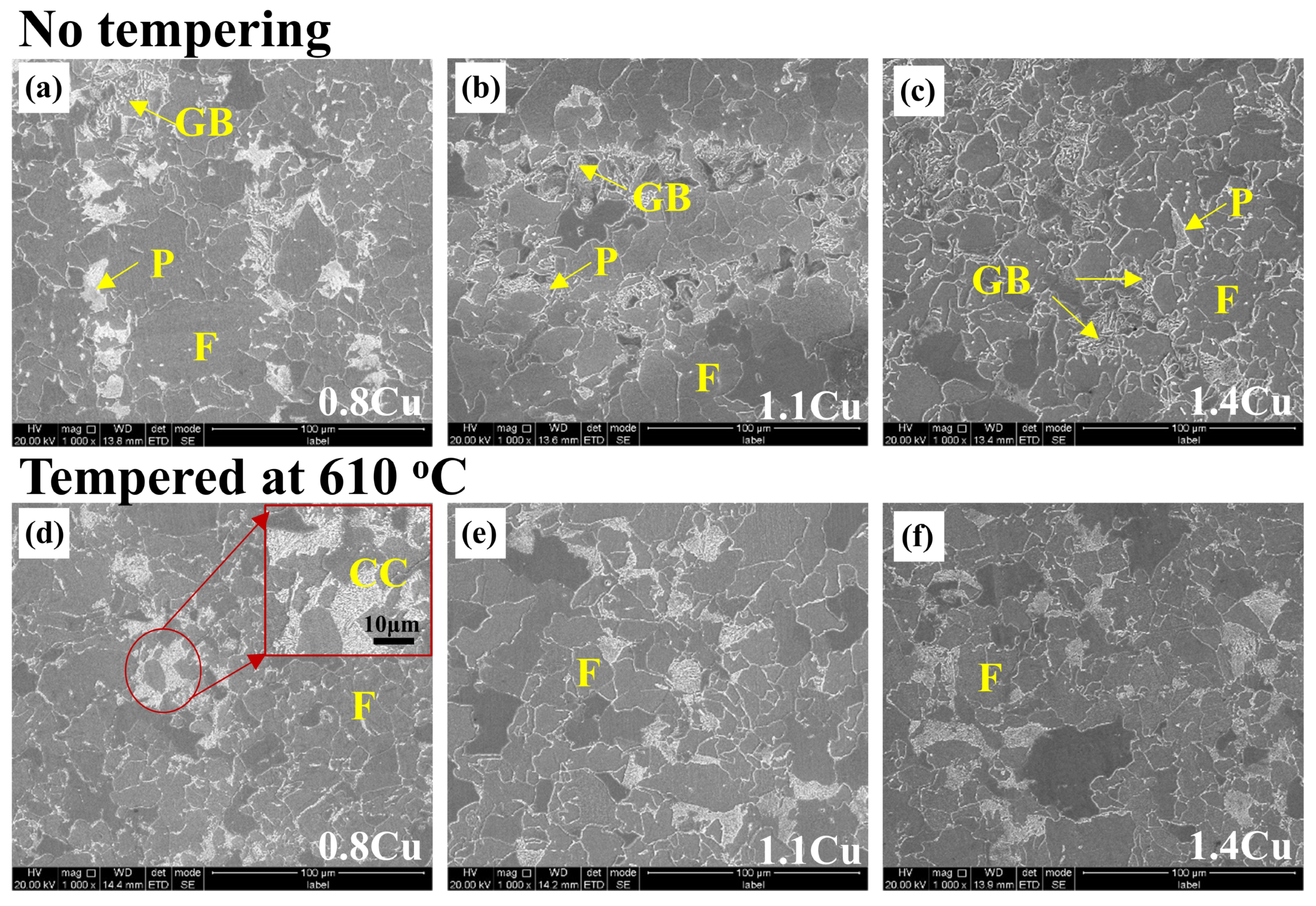
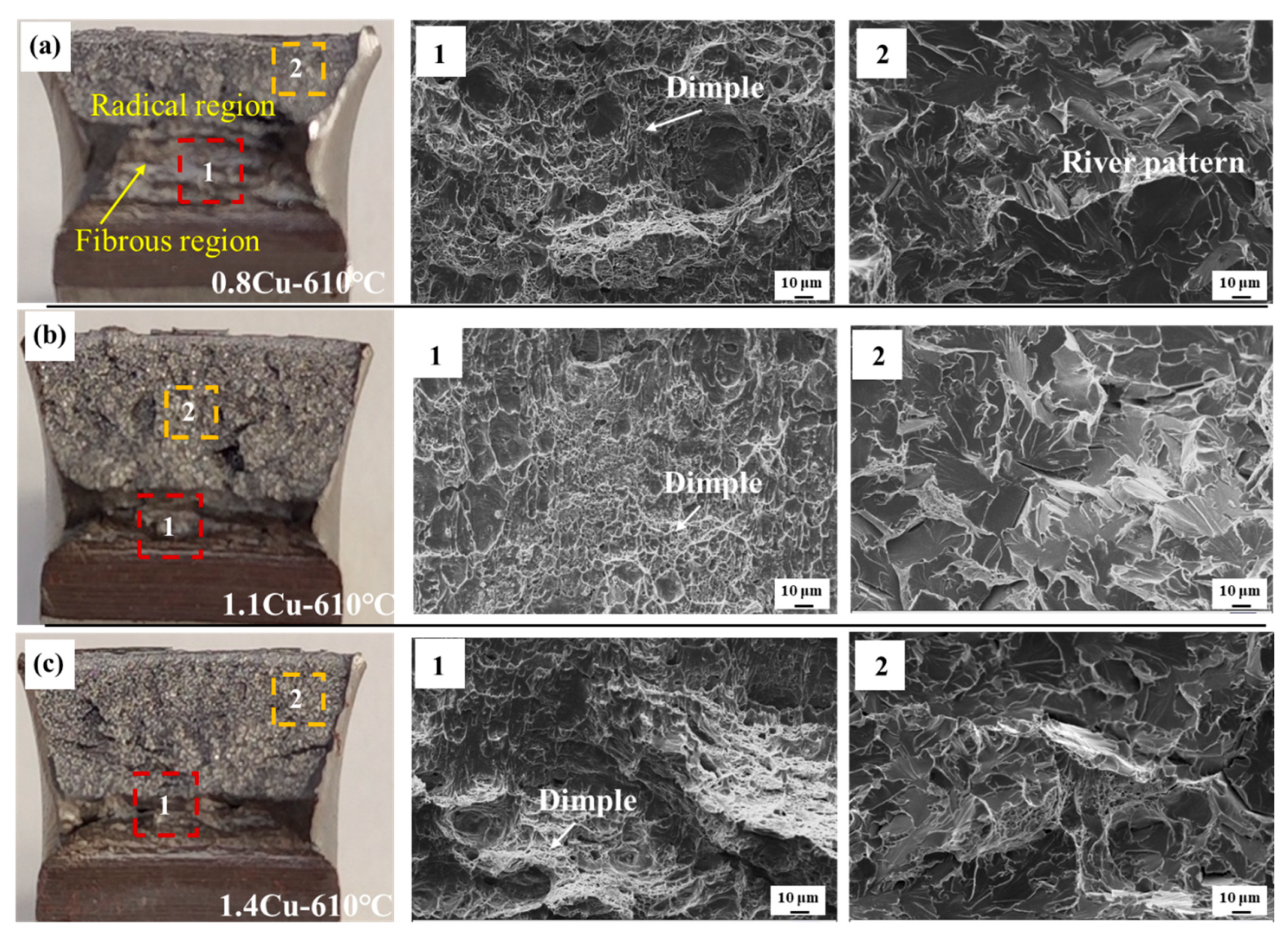
3.2. Microstructure and Fractography
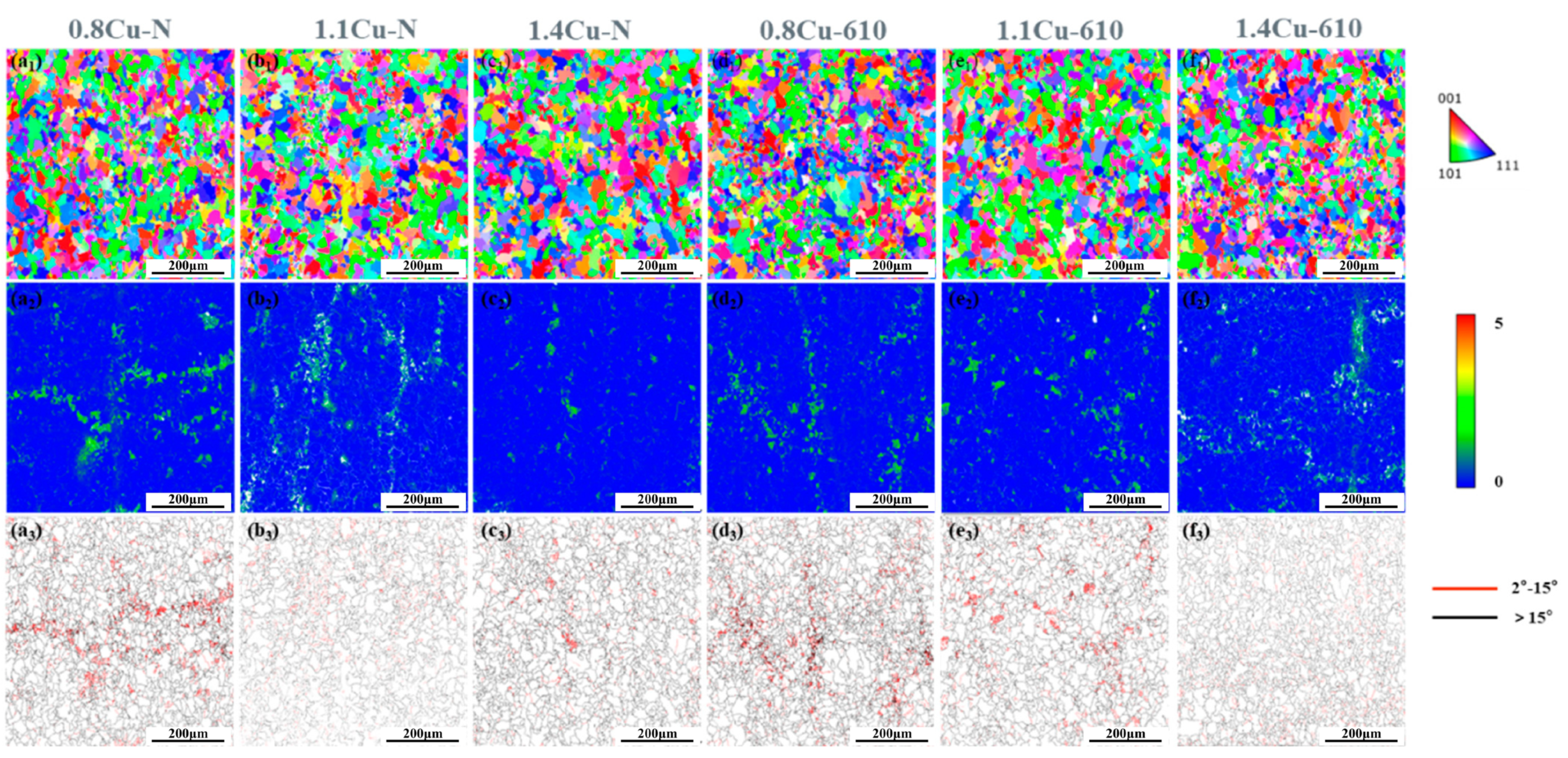
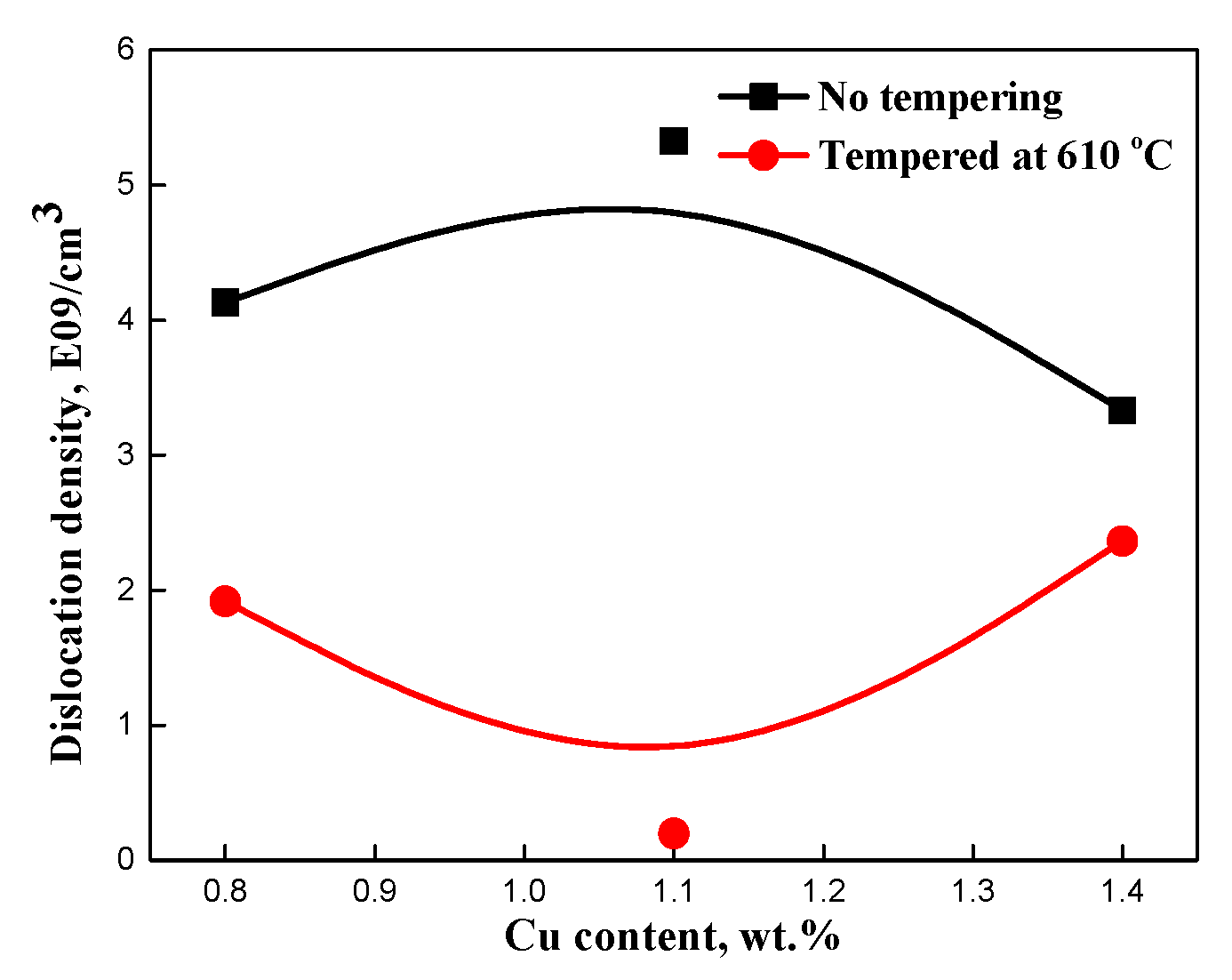
3.3. Dislocation Density
4. Discussion
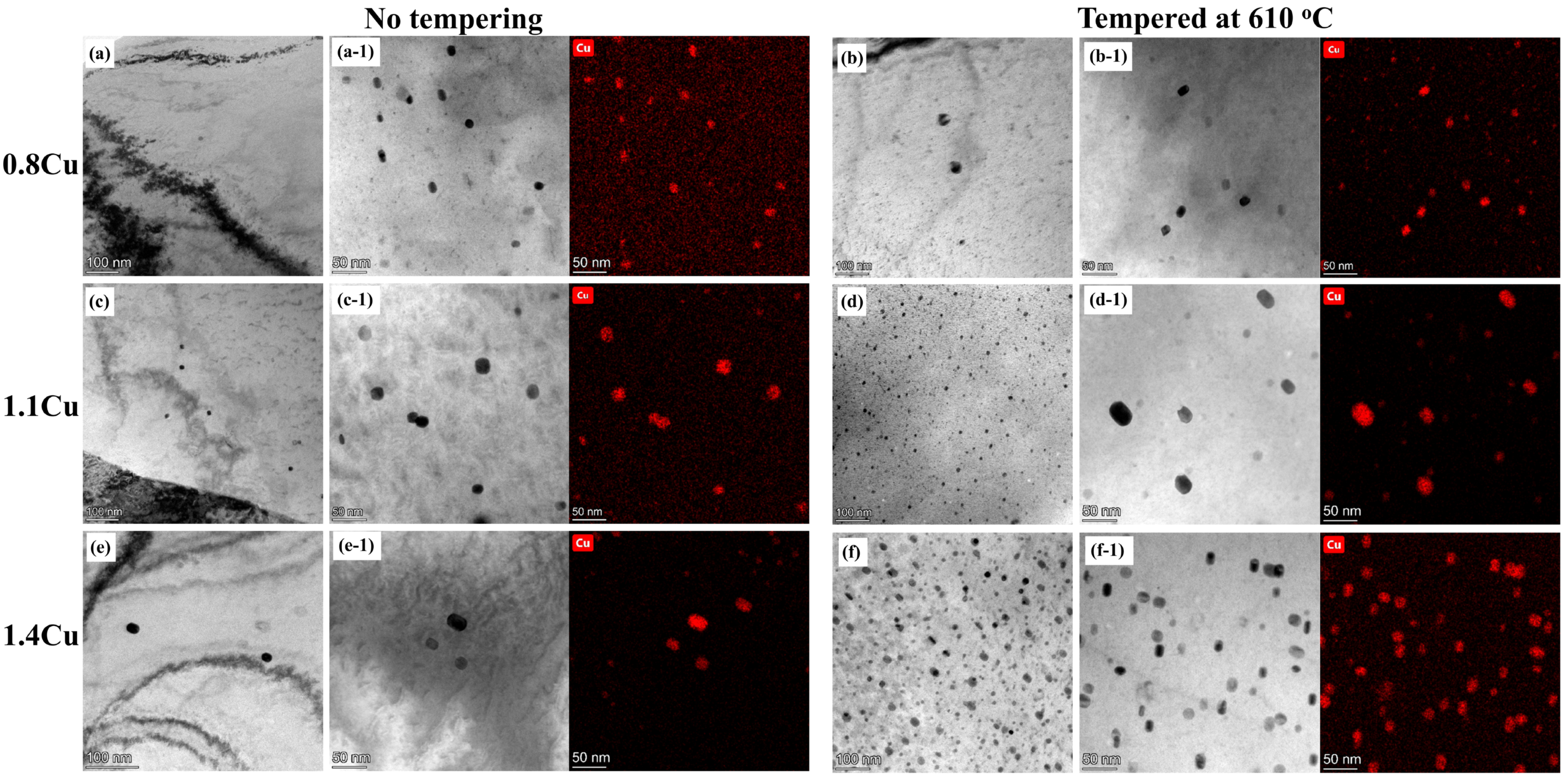
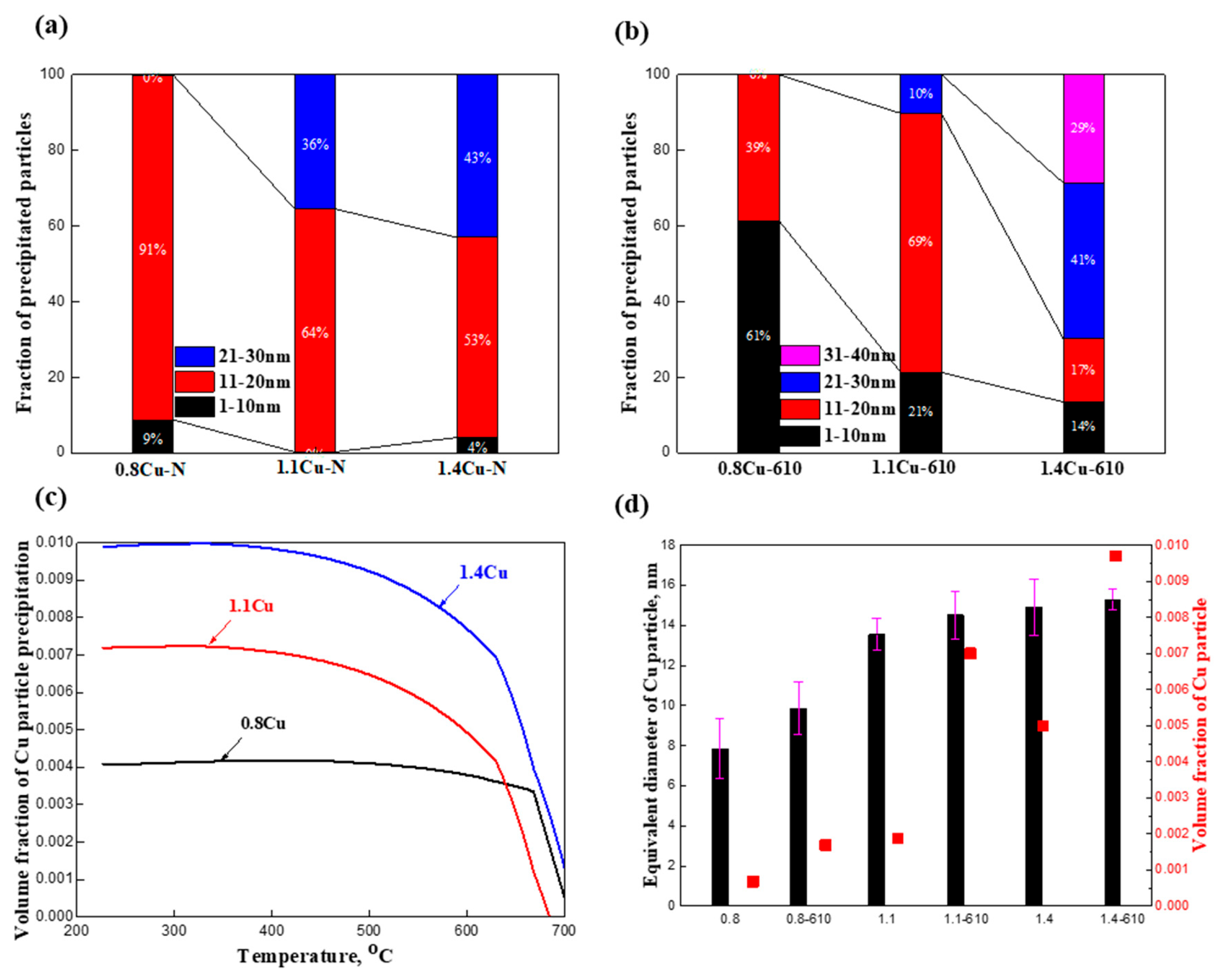
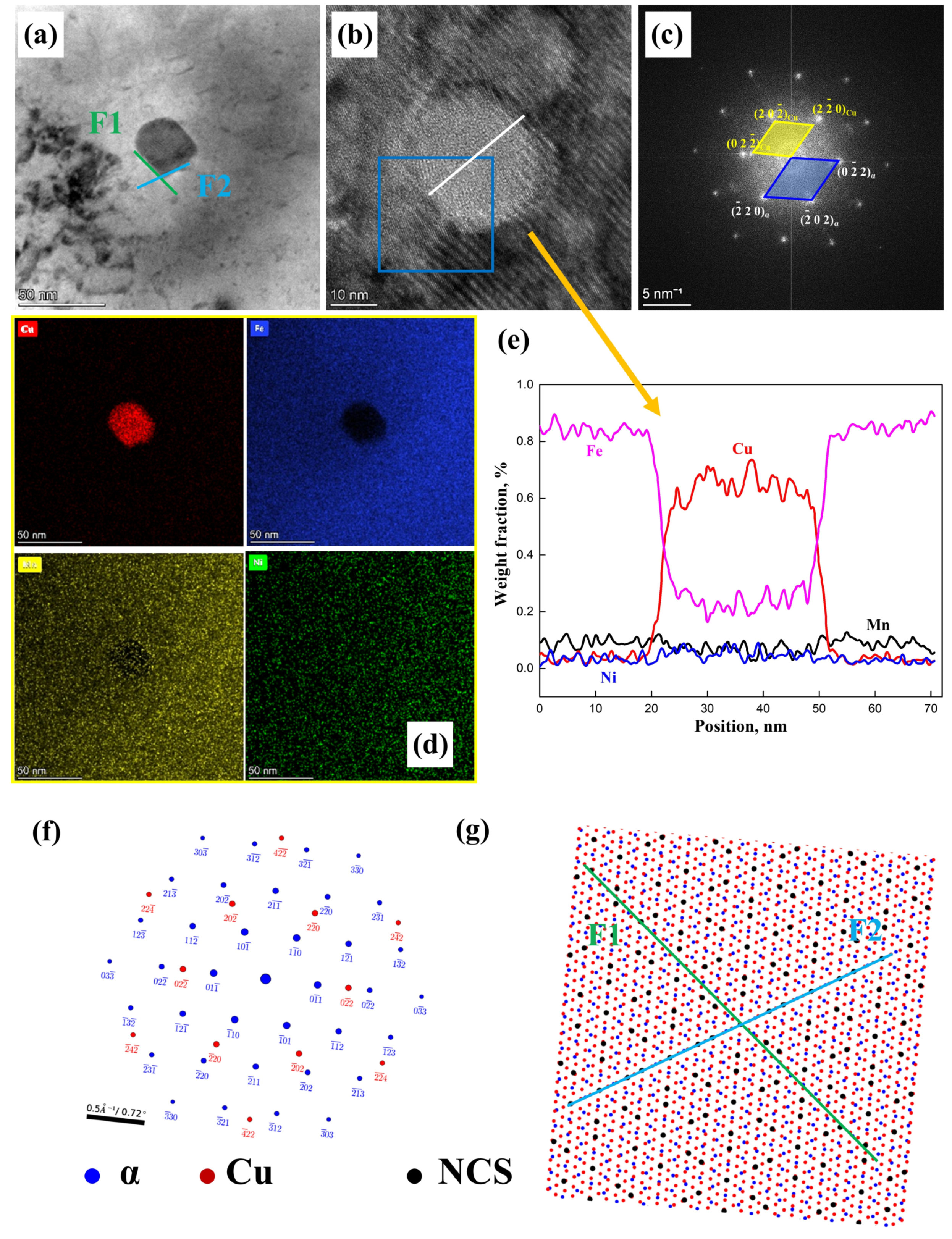
4.1. Cu Precipitation and Microstructure Evolution
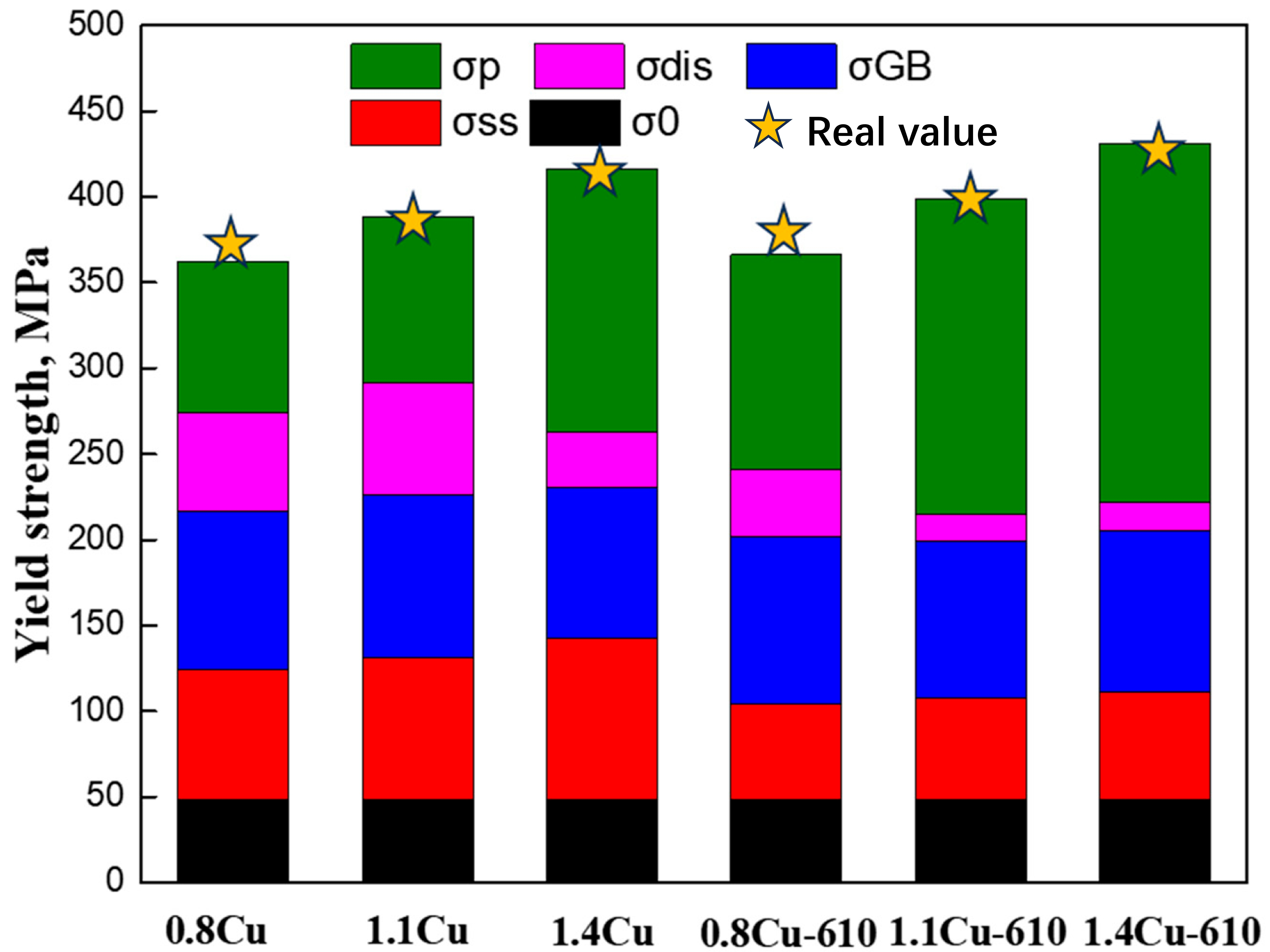
4.2. Strengthening Mechanism Analysis Cu-Alloyed Steel Influenced by Cu Content and Tempering
5. Conclusions
- (1)
- Experimental cast steel with a mostly ferritic matrix was prepared by normalizing and tempering. The strengthening method, mainly based on Cu precipitation, was proposed, which effectively promoted the cast steel to have good toughness reserve while meeting the strength requirements.
- (2)
- The precipitated phase in the experimental steel is mainly Cu particles, presenting spherical or ellipsoidal shapes. During the normalizing process, the precipitation amount of these precipitated phases increases with the increase in Cu element addition content in the alloy. During the subsequent tempering process, precipitation and growth are the main factors, which are manifested as a limited increase in strength.
- (3)
- The addition of Cu enhances the quenching toughness during normalizing, which is manifested by the appearance of granular bainite in the microstructure. As the content of Cu increases, the amount of granular bainite also increases. After 610 °C tempering, this structure decomposes, ensuring excellent strength and toughness matching.
Author Contributions
Funding
Data Availability Statement
Conflicts of Interest
References
- Wang, Y.; Zhang, H.; Wang, C.; Liang, F. Responses of offshore wind turbines with different power capacities on tetrapod jacket systems under dynamic loads in layered clay. Ocean Eng. 2010, 336, 21. [Google Scholar] [CrossRef]
- Jafari-Asl, J.; Dong, Y.; Li, Y. Advanced computational strategy for damage identification of offshore jacket platforms. Civ. Eng. Des. 2025, 7, 36–48. [Google Scholar] [CrossRef]
- Jiao, H.; Jin, H. Finite element and experimental analysis of residual stresses in G20Mn5 welded joints considering solid-state phase transformation. Int. J. Press. Vessel. Pip. 2025, 214, 105422. [Google Scholar] [CrossRef]
- Jin, J.; Junda, W.; Yun, G.; Hongwei, M. Strength and impact toughness of Q690CFD welded joints under varied heat input. J. Constr. Steel Res. 2026, 236, 109986. [Google Scholar] [CrossRef]
- Guo, J.; Qian, D.; Deng, J. Grain refinement limit during hot radial ring rolling of as-cast GCr15 steel. J. Mater. Process. Technol. 2016, 231, 151–161. [Google Scholar] [CrossRef]
- Zhang, J.; Guo, Y.; Zhang, W.; Liao, W. Fracture analysis of stainless steel universal joints in power grid equipment: A comparative study of cast and forged structures. Eng. Fail. Anal. 2023, 153, 15. [Google Scholar] [CrossRef]
- Song, Z.H.; Song, H.Y.; Liu, J.X.; Liu, H.T. Tuning heterogeneous microstructure and improving mechanical properties of twin-roll strip cast low carbon steels by on-line heat treatments. J. Mater. Res. Technol. 2024, 30, 5894–5904. [Google Scholar] [CrossRef]
- Zhu, S.; Chen, H.; Wang, F.; Hou, H.; Li, N.; Liang, X. Research on the heat treatment process and mechanism of strength and toughness of low alloy cast steel for high-speed railway brake discs. Mater. Today Commun. 2025, 49, 113894. [Google Scholar] [CrossRef]
- Liu, W.; Xu, X.; Wang, B.; Wang, B.; Xiao, N.; Yu, Q.; Tian, Y. Synergistic enhancement of strength and low-temperature toughness in hot-rolled micro-alloyed steel via molybdenum-induced microstructural changes. Mater. Sci. Eng. 2010, 947, 16. [Google Scholar] [CrossRef]
- Liu, W.; Zhang, Y.; Xu, X.; Wang, B.; Wang, B.; Tian, Y. Excellent Strength-Toughness Balance of Low-Carbon Low-Alloy Steel Manufactured by a Three-Stage Rolling Coupling Inter-Pass Reheating Process. Mater. Charact. 2024, 223, 114972. [Google Scholar] [CrossRef]
- Xu, X.; Kumar, P.; Cao, R.; Ye, Q.; Chu, Y.; Tian, Y.; Li, Y.; Ritchie, R.O. Exceptional cryogenic-to-ambient impact toughness of a low carbon micro-alloyed steel with a multi-heterogeneous structure. Acta Mater. 2024, 274, 120019. [Google Scholar] [CrossRef]
- Kumar, H.; Misra, A.; Shiva, S.; Pathak, S.; Kaufman, J.; Brajer, J. Microstructure and mechanical properties of micro alloyed high strength low carbon structural steels. Vacuum 2025, 242, 114707. [Google Scholar] [CrossRef]
- Zhao, J.; Lee, J.H.; Kim, Y.W.; Jiang, Z.; Lee, C.S. Enhancing mechanical properties of a low-carbon microalloyed cast steel by controlled heat treatment. Mater. Sci. Eng. A 2013, 559, 427–435. [Google Scholar] [CrossRef]
- Jana, B.D.; Chakrabarti, A.K.; Ray, K.K. Study of cast microalloyed steels. Met. Sci. J. 2013, 19, 80–86. [Google Scholar] [CrossRef]
- Najafi, H.; Rassizadehghani, J.; Halvaaee, A. Mechanical properties of as cast microalloyed steels containing V, Nb and Ti. Met. Sci. J. 2007, 23, 699–705. [Google Scholar] [CrossRef]
- Phaniraj, M.P.; Shin, Y.M.; Lee, J.; Goo, N.H.; Kim, D.I.; Suh, J.Y.; Jung, W.S.; Shim, J.H.; Choi, I.S. Development of high strength hot rolled low carbon copper-bearing steel containing nanometer sized carbides. Mater. Sci. Eng. A 2015, 633, 1–8. [Google Scholar] [CrossRef]
- Fu, W.; Li, C.; Di, X.; Fu, K.; Gao, H.; Fang, C.; Lou, S.; Wang, D. Improvement of Cu-rich precipitation strengthening for high-strength low carbon steel strengthened via Ti-microalloying. Mater. Lett. 2022, 316, 132031. [Google Scholar] [CrossRef]
- Kan, L.Y.; Ye, Q.B.; Wang, Q.H.; Tian, Y.; Wang, Z.D.; Wang, Y.M.; Hu, J. Refinement of Cu-M2C precipitates and improvement of strength and toughness by Ti microalloying in a Cu-bearing steel. Mater. Sci. Eng. A. Struct. Mater. Prop. Misrostructure Process. 2021, 802, 140678. [Google Scholar] [CrossRef]
- Sun, L.; Zhang, S.; Song, R.; Ren, S.; Zhang, Y.; Sun, X.; Dai, G.; Hao, Y.; Huo, W.; Zhao, S.; et al. Effect of V, Nb, and Ti microalloying on low–temperature impact fracture behavior of non-quenched and tempered forged steel. Mater. Sci. Eng. A. Struct. Mater. Prop. Misrostructure Process. 2023, 879, 145299. [Google Scholar] [CrossRef]
- Xiong, W.; Song, R.; Huo, W.; Yu, P.; Qin, S.; Liu, Z. Microstructure characteristics and impact fracture mechanisms of Nb and V–Ti micro-alloyed offshore platform steels. Vacuum 2022, 195, 110709. [Google Scholar] [CrossRef]
- Gao, X.; Wang, H.; Ma, C.; Lv, M.; Sha, G.; Li, Y.; Ren, H. Micromechanism involved in ultrafine grained ferrite/martensite dual phase steels strengthened by nanoscale Cu-rich precipitates. Mater. Sci. Eng. A. Struct. Mater. Prop. Misrostructure Process. 2021, 819, 141522. [Google Scholar] [CrossRef]
- Li, H.; Liu, Y.; Liu, B.; Zhao, W. Effects of Cu and Nb on martensite hardening and transformation-induced plastic deformation behavior of maraging TRIP-aided steel. J. Mater. Res. Technol. 2023, 24, 14. [Google Scholar] [CrossRef]
- Standard’s GB/T 229-2020; Metallic materials— Charpy pendulum impact test—Part 1: Test method. Standards Press of China, House: Beijing, China, 2020.
- Standard’s GB/T 228.1-2021; Metallic materials—Tensile testing—Part 1: Method of test at room temperature. Standards Press of China, House: Beijing, China, 2021.
- Van Dijk, N.H.; Butt, A.M.; Zhao, L.; Sietsma, J.; Offerman, S.E.; Wright, J.P.; Van Der Zwaag, S. Thermal stability of retained austenite in TRIP steels studied by synchrotron X-ray diffraction during cooling. Acta Mater. 2005, 53, 5439–5447. [Google Scholar] [CrossRef]
- Zorgani, M.; Garcia-Mateo, C.; Jahazi, M. Microstructural evolution during tempering of an ausformed carbide-free low temperature bainitic steel. Mater. Des. 2021, 210, 110082. [Google Scholar] [CrossRef]
- Macchi, J.; Gaudez, S.; Geandier, G.; Teixeira, J.; Denis, S.; Bonnet, F.; Allain, S.Y. Dislocation densities in a low-carbon steel during martensite transformation determined by in situ high energy X -Ray diffraction. Mater. Sci. Eng. 2021, 800, 140249. [Google Scholar] [CrossRef]
- Wang, K.; Gui, X.; Bai, B.; Gao, G. Effect of tempering on the stability of retained austenite in carbide-free bainitic steel. Mater. Sci. Eng. A 2022, 850, 143525. [Google Scholar] [CrossRef]
- Ungar, T.; Tichy, G. The effect of dislocation contrast on X-ray line profiles in untextured polycrystals. Phys. Status Solidi 1999, 171, 425–434. [Google Scholar] [CrossRef]
- Takaki, S.; Masumura, T.; Tsuchiyama, T. Proposal of simplified modified Williamson-Hall equation. ISIJ Int. 2018, 58, 2354–2356. [Google Scholar] [CrossRef]
- Shi, Z.M.; Gong, W.; Tomota, Y.; Harjo, S.; Li, J.; Chi, B.; Pu, J. Study of tempering behavior of lath martensite using in situ neutron diffraction. Mater. Char. 2015, 107, 29–32. [Google Scholar] [CrossRef]
- Zheng, Y.; Wang, Q.; Zhu, L.; Han, B.; Guo, Z.; Wang, B.; Feng, J.; Lu, S.; Shen, W.; Cao, R. Microstructure evolution and carbide precipitation behavior of microalloyed TS800TB steel during hot rolling and coiling processes. Mater. Sci. Eng. A 2022, 840, 142902. [Google Scholar] [CrossRef]
- Zheng, Y.; Wang, F.; Li, C.; Lin, Y.; Cao, R. Effect of martensite structure and carbide precipitates on mechanical properties of Cr-Mo alloy steel with different cooling rate. High Temp. Mater. Process. 2019, 38, 113–124. [Google Scholar] [CrossRef]
- De-Castro, D.; Eres-Castellanos, A.; Vivas, J.; Caballero, F.G.; San-Martin, D.; Capdevila, C. Morphological and crystallographic features of granular and lath-like bainite in a low carbon microalloyed steel. Mater. Charact. 2022, 184, 111703. [Google Scholar] [CrossRef]
- Duan, J.; Ju, Y.; Dastur, P.; Slater, C.; Strangwood, M.; Davis, C. Assessing the solute drag of scrap residual elements of Sn and Cu in austenite. J. Mater. Res. Technol. 2026, 40, 1275–1284. [Google Scholar] [CrossRef]
- Wang, M.J.; Zhang, G.W.; Xu, H.; Dong, Y.; Sun, F.E.; Fu, Y.Z. Density functional theory investigation on the stability, adhesion strength, tensile properties and fracture behavior of γ-Fe/Cu heterogeneous nucleation interface. Results Phys. 2021, 24, 104143. [Google Scholar] [CrossRef]
- Zhou, R.; Liu, Y.; Zhu, L. The precipitation and coarsening behaviors of Cu-rich particles and the effect on the hardness of S30432 tube after aging and creep at elevated temperatures. Int. J. Press. Vessel. Pip. 2026, 214, 105443. [Google Scholar] [CrossRef]
- Kamikawa, N.; Sato, K.; Miyamoto, G.; Murayama, M.; Sekido, N.; Tsuzaki, K.; Furuhara, T. Stress-strain behavior of ferrite and bainite with nano-precipitation in low carbon steels. Acta Mater. 2016, 83, 383–396. [Google Scholar] [CrossRef]
- Vuorinen, E.; Chen, X. In situ high temperature X-ray studies on bainitic transformation of austempered silicon alloyed steels. Mater. Sci. Forum 2010, 638, 3086–3092. [Google Scholar] [CrossRef]
- Cao, J.; Yong, Q.; Liu, Q.; Sun, X. Precipitation of MC phase and precipitation strengthening in hot rolled Nb–Mo and Nb–Ti steels. J. Mater. Sci. 2007, 42, 10080–10084. [Google Scholar] [CrossRef]
- Hasan, H.S.; Peet, M.J.; Avettand-Fénoël, M.N.; Bhadeshia, H.K.D.H. Effect of tempering upon the tensile properties of a nanostructured bainitic steel. Mater. Sci. Eng. A 2014, 615, 340–347. [Google Scholar] [CrossRef]
- Cai, M.; Chen, L.; Fang, K.; Huang, H.; Hodgson, P. The effects of a ferritic or martensitic matrix on the tensile behavior of a nano-precipitation strengthened ultra-low carbon Ti–Mo–Nb steel. Mater. Sci. Eng. A 2021, 801, 140410. [Google Scholar] [CrossRef]



| Sample | C | Mn | Si | Ni | Cu | Ti | P | S |
|---|---|---|---|---|---|---|---|---|
| 0.8Cu | 0.12 | 0.70 | 0.23 | 0.90 | 0.80 | 0.016 | 0.0058 | 0.0015 |
| 1.1Cu | 0.12 | 0.71 | 0.23 | 0.91 | 1.10 | 0.016 | 0.0058 | 0.0016 |
| 1.4Cu | 0.12 | 0.70 | 0.23 | 0.90 | 1.40 | 0.016 | 0.0057 | 0.0016 |
| Fraction, % | 0.8Cu, 610 °C | 1.1Cu, 610 °C | 1.4Cu, 610 °C |
|---|---|---|---|
| F | 81.9 | 79.9 | 77.9 |
| The remaining portion | 18.1 | 20.1 | 22.1 |
| σ0/MPa | σss/MPa | σgb/MPa | σd/MPa | σp/MPa | σy | Measured | |
|---|---|---|---|---|---|---|---|
| 0.8Cu | 48 | 76.0 | 92.5 | 57.5 | 87.9 | 361.9 | 355 |
| 1.1Cu | 48 | 83.6 | 94.8 | 65.3 | 96.9 | 388.6 | 381 |
| 1.4Cu | 48 | 94.2 | 88.2 | 32.7 | 153.1 | 416.2 | 415 |
| 0.8Cu-610 | 48 | 56.4 | 97.3 | 39.2 | 125.1 | 366.0 | 371 |
| 1.1Cu-610 | 48 | 59.6 | 91.9 | 15 | 184.4 | 398.9 | 412 |
| 1.4Cu-610 | 48 | 63.2 | 93.8 | 17 | 209.0 | 431.1 | 439 |
Disclaimer/Publisher’s Note: The statements, opinions and data contained in all publications are solely those of the individual author(s) and contributor(s) and not of MDPI and/or the editor(s). MDPI and/or the editor(s) disclaim responsibility for any injury to people or property resulting from any ideas, methods, instructions or products referred to in the content. |
© 2026 by the authors. Licensee MDPI, Basel, Switzerland. This article is an open access article distributed under the terms and conditions of the Creative Commons Attribution (CC BY) license.
Share and Cite
Pan, T.; Wang, Z.; Tan, Z.; Shi, Z.; Ma, Z.; Tian, Y. Tempering Behavior of 420 MPa Grade Steel with Cu Alloying. Metals 2026, 16, 661. https://doi.org/10.3390/met16060661
Pan T, Wang Z, Tan Z, Shi Z, Ma Z, Tian Y. Tempering Behavior of 420 MPa Grade Steel with Cu Alloying. Metals. 2026; 16(6):661. https://doi.org/10.3390/met16060661
Chicago/Turabian StylePan, Tao, Zezhong Wang, Zhunli Tan, Zhongran Shi, Zhihang Ma, and Yu Tian. 2026. "Tempering Behavior of 420 MPa Grade Steel with Cu Alloying" Metals 16, no. 6: 661. https://doi.org/10.3390/met16060661
APA StylePan, T., Wang, Z., Tan, Z., Shi, Z., Ma, Z., & Tian, Y. (2026). Tempering Behavior of 420 MPa Grade Steel with Cu Alloying. Metals, 16(6), 661. https://doi.org/10.3390/met16060661