Fracture Behavior of Twin Boundaries in Pure Titanium Under Biaxial Loading



Abstract
1. Introduction
2. Models and Methods
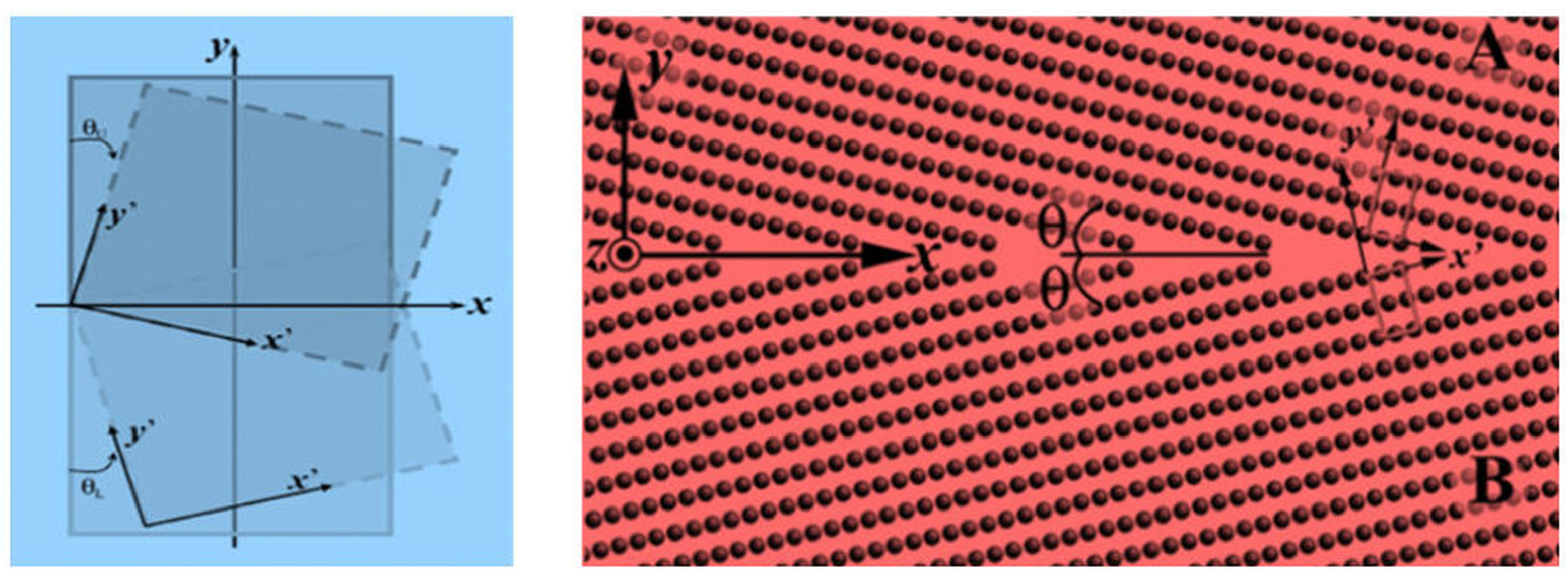
2.1. Crack Models of Different Twin Boundaries
2.2. Simulation Methods and Parameter Settings
3. Results
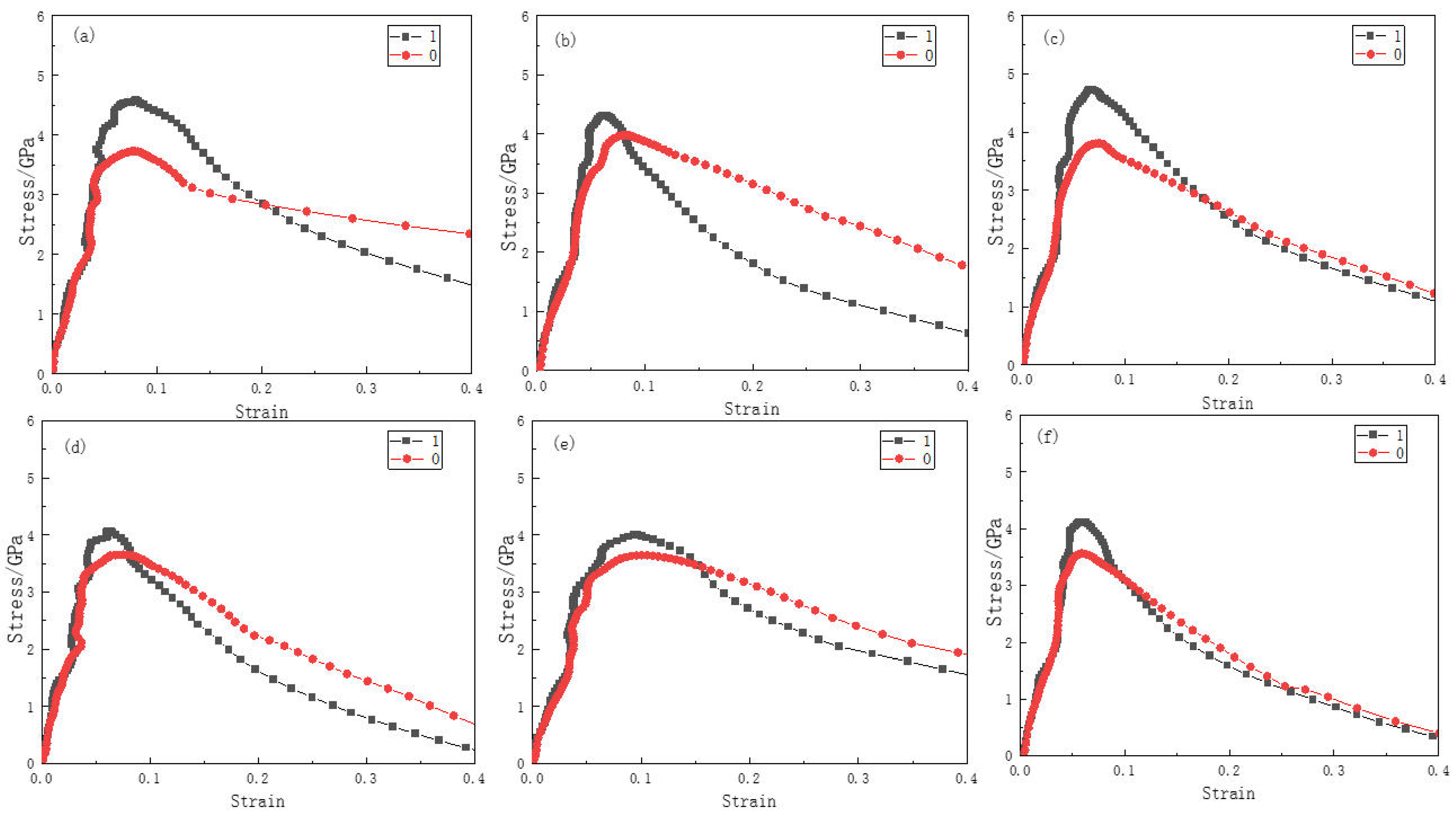
3.1. Stress–Strain Curves of Crack Models with Different Twin Boundaries
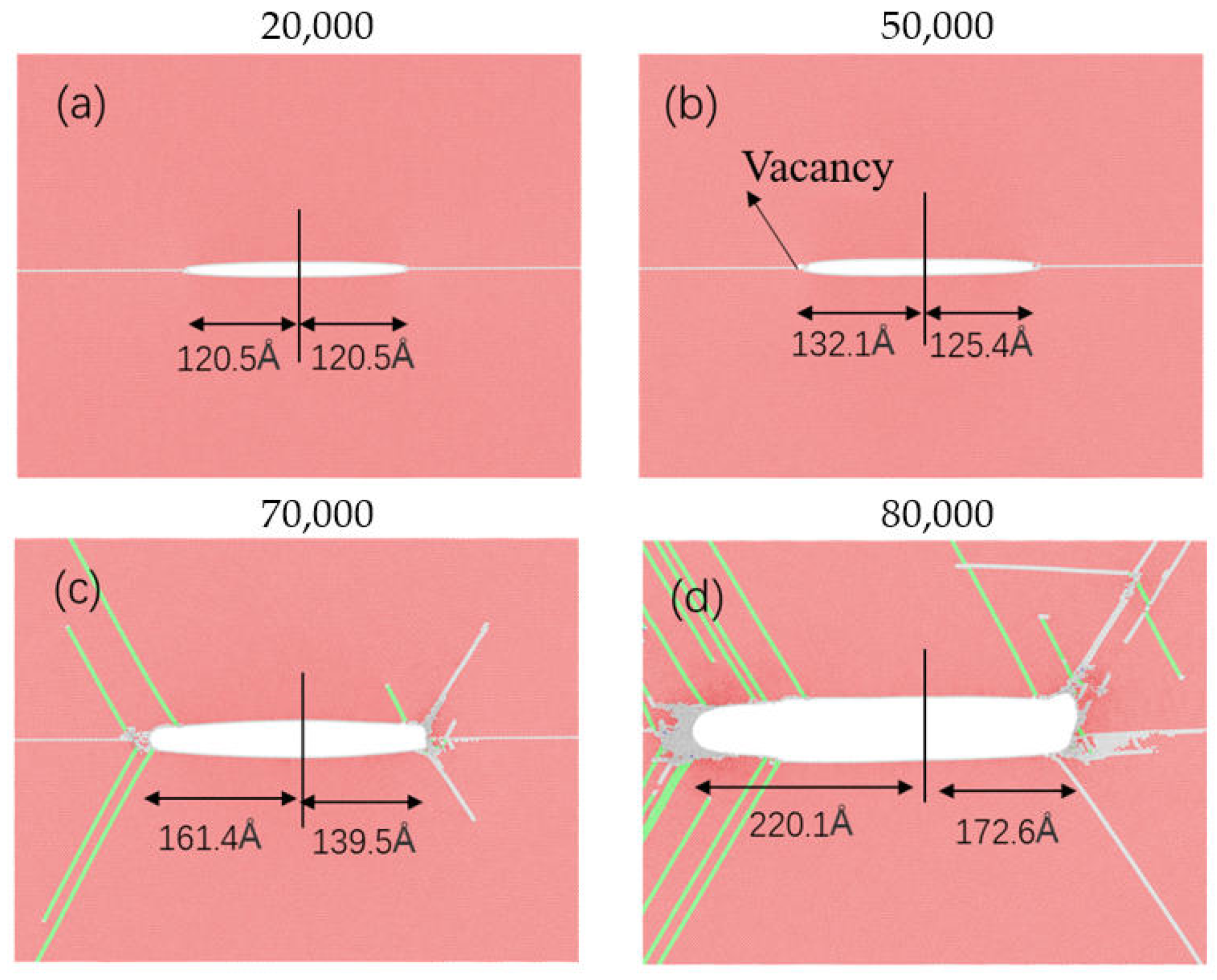
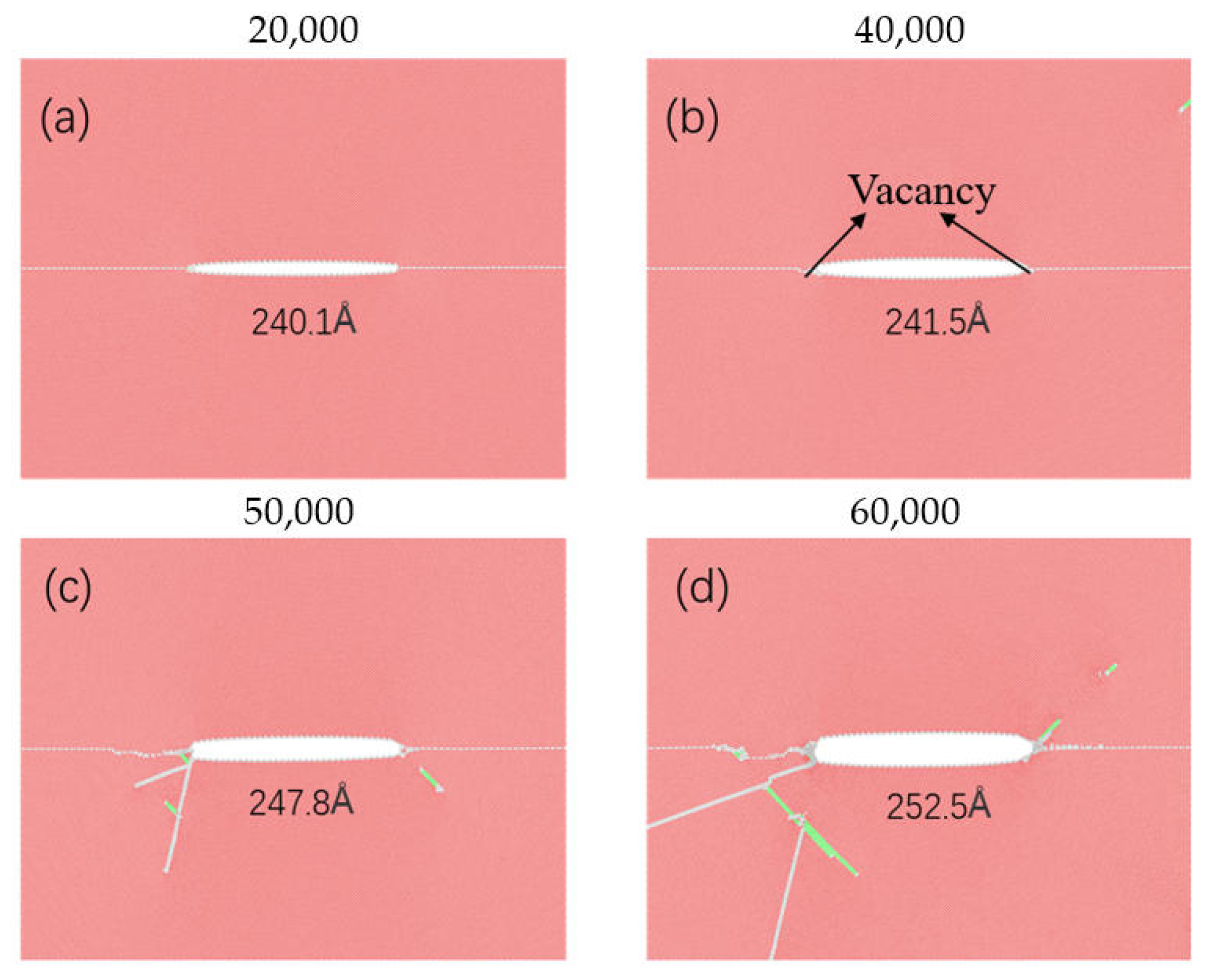
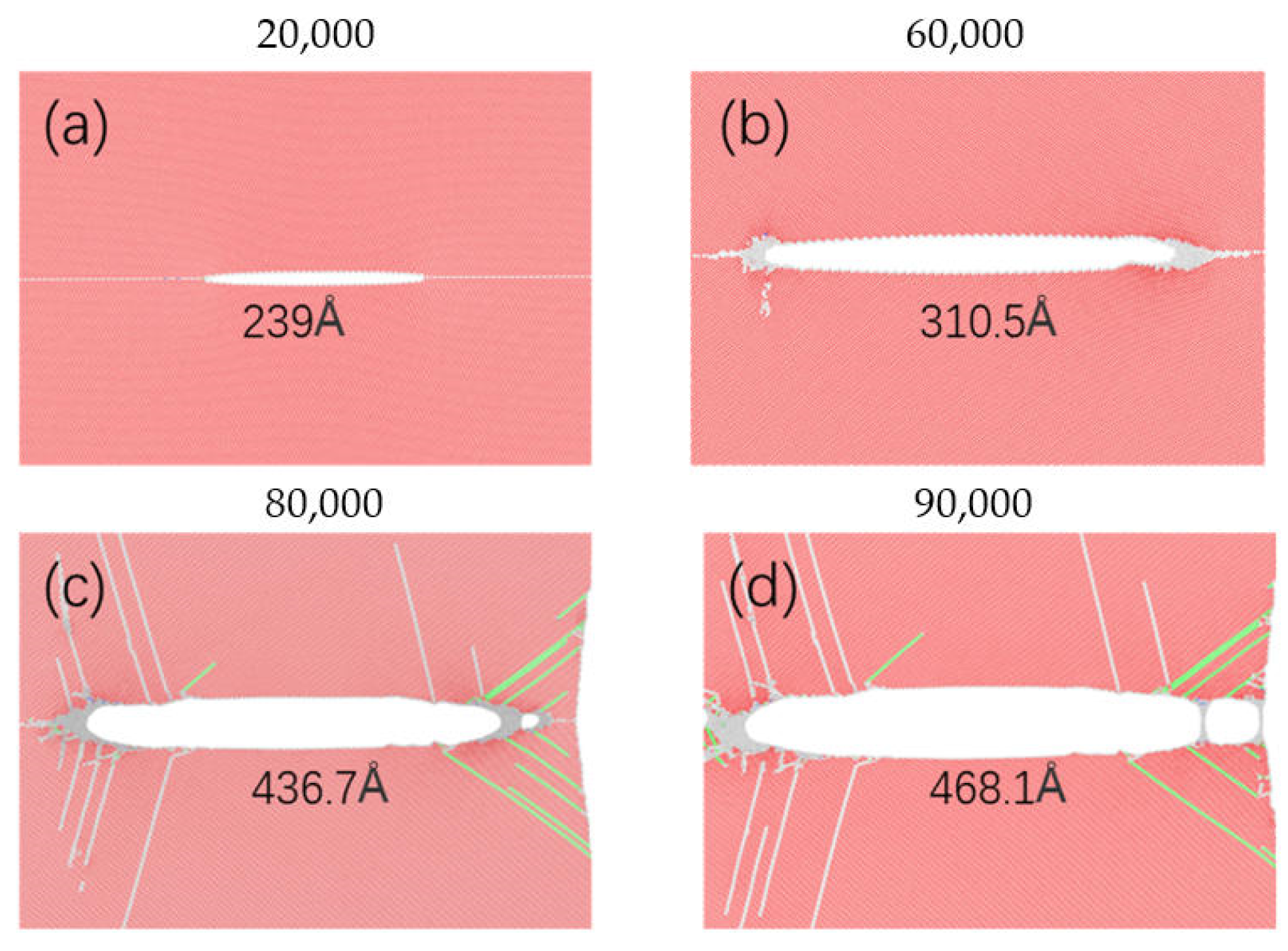
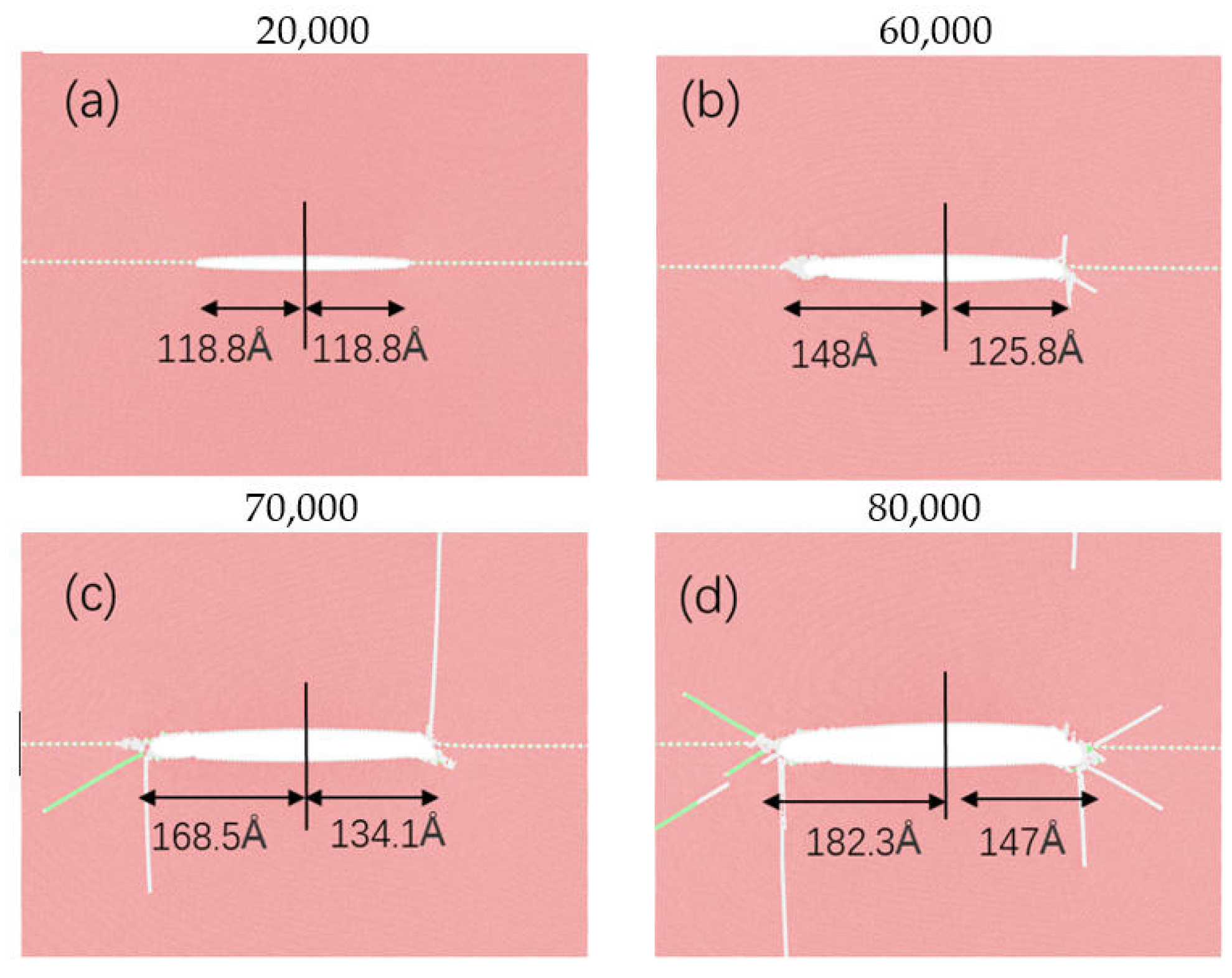
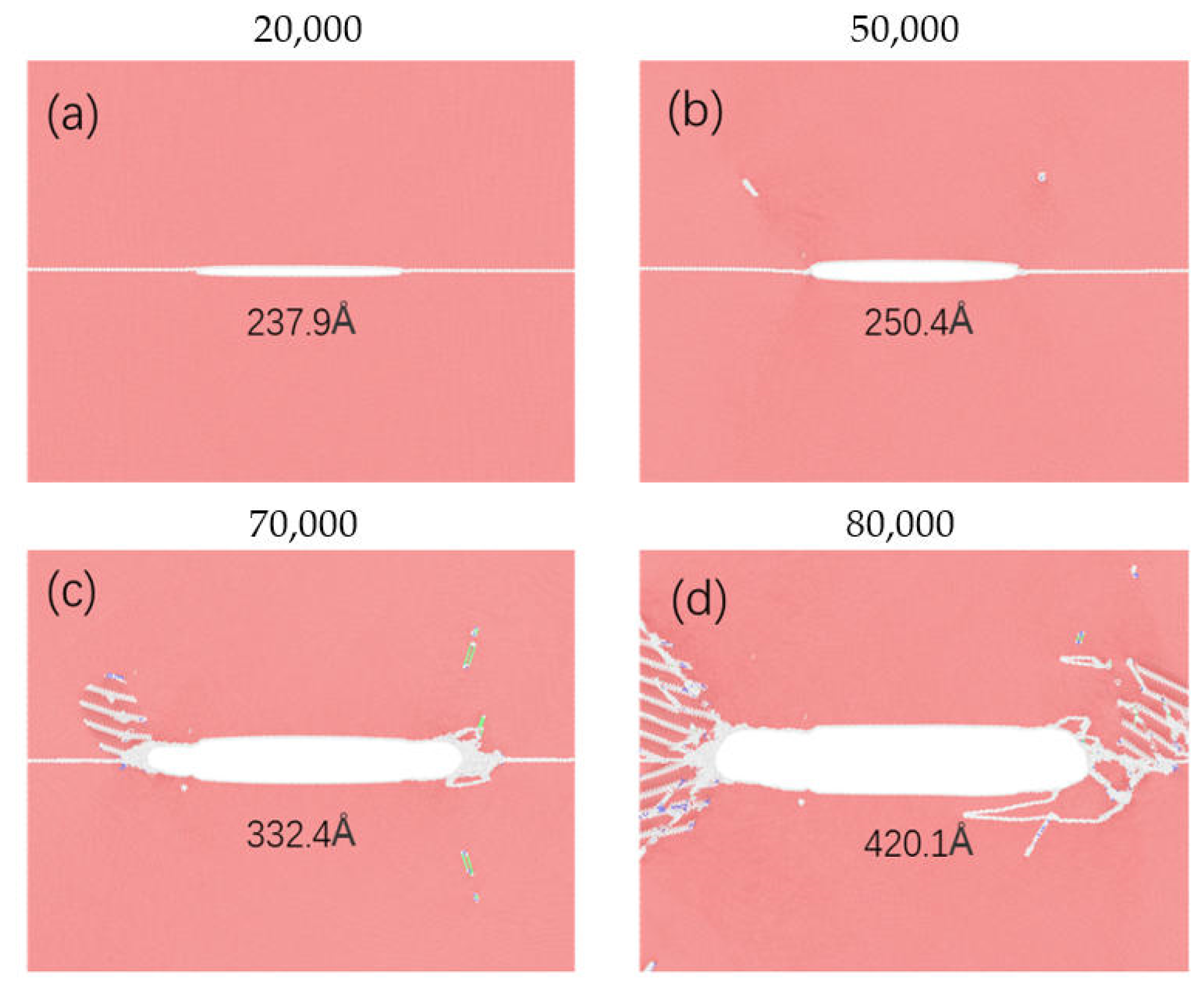
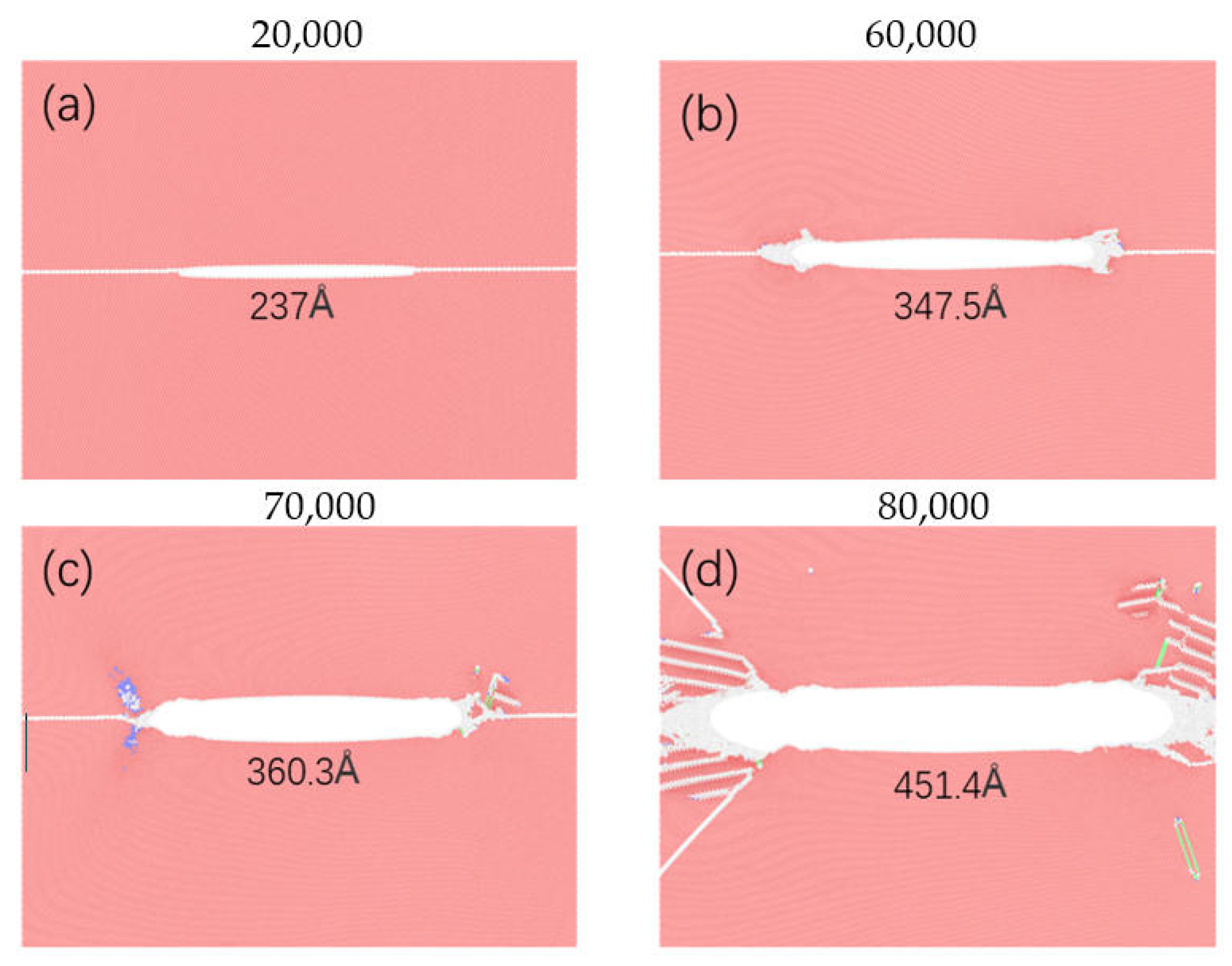
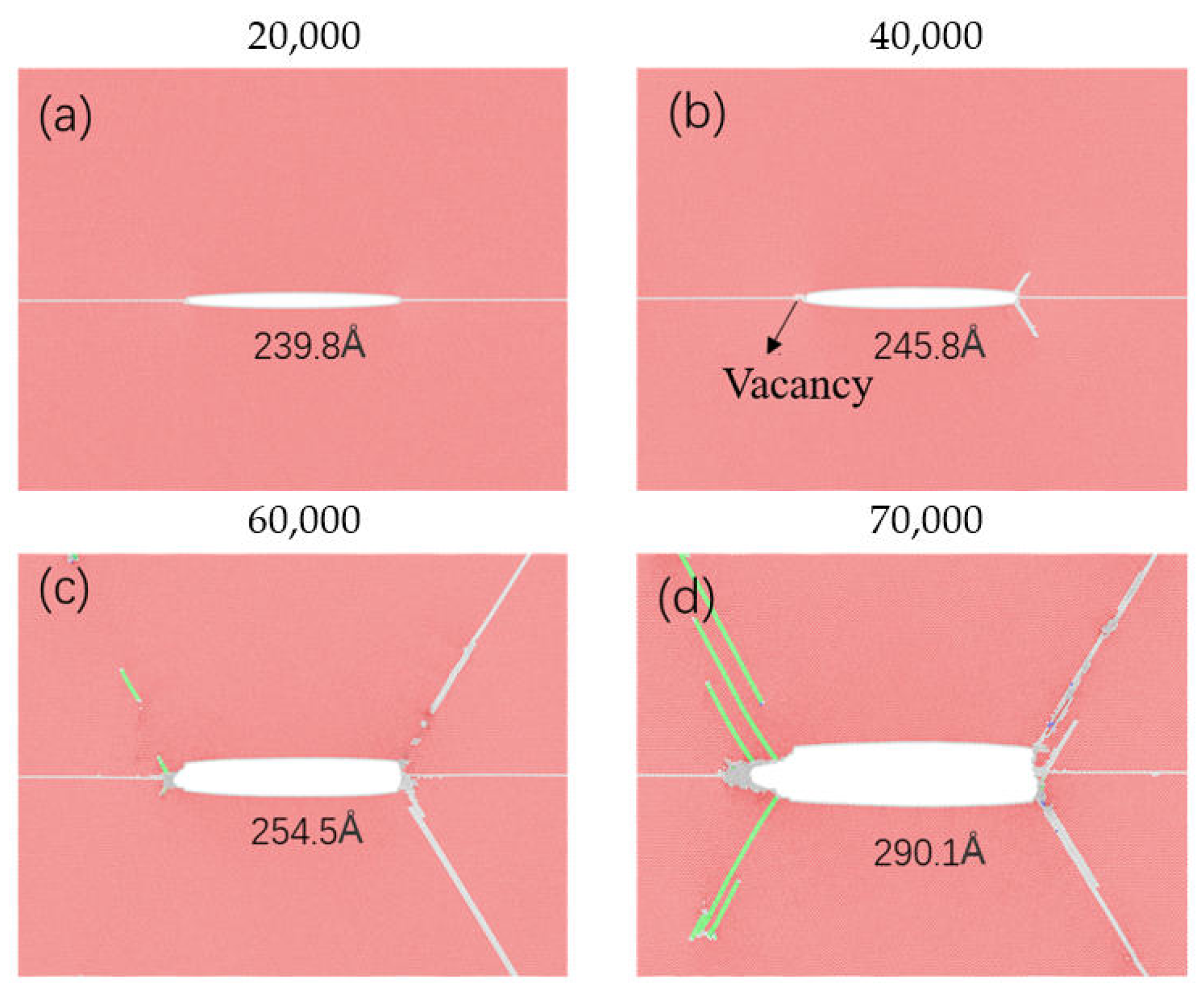
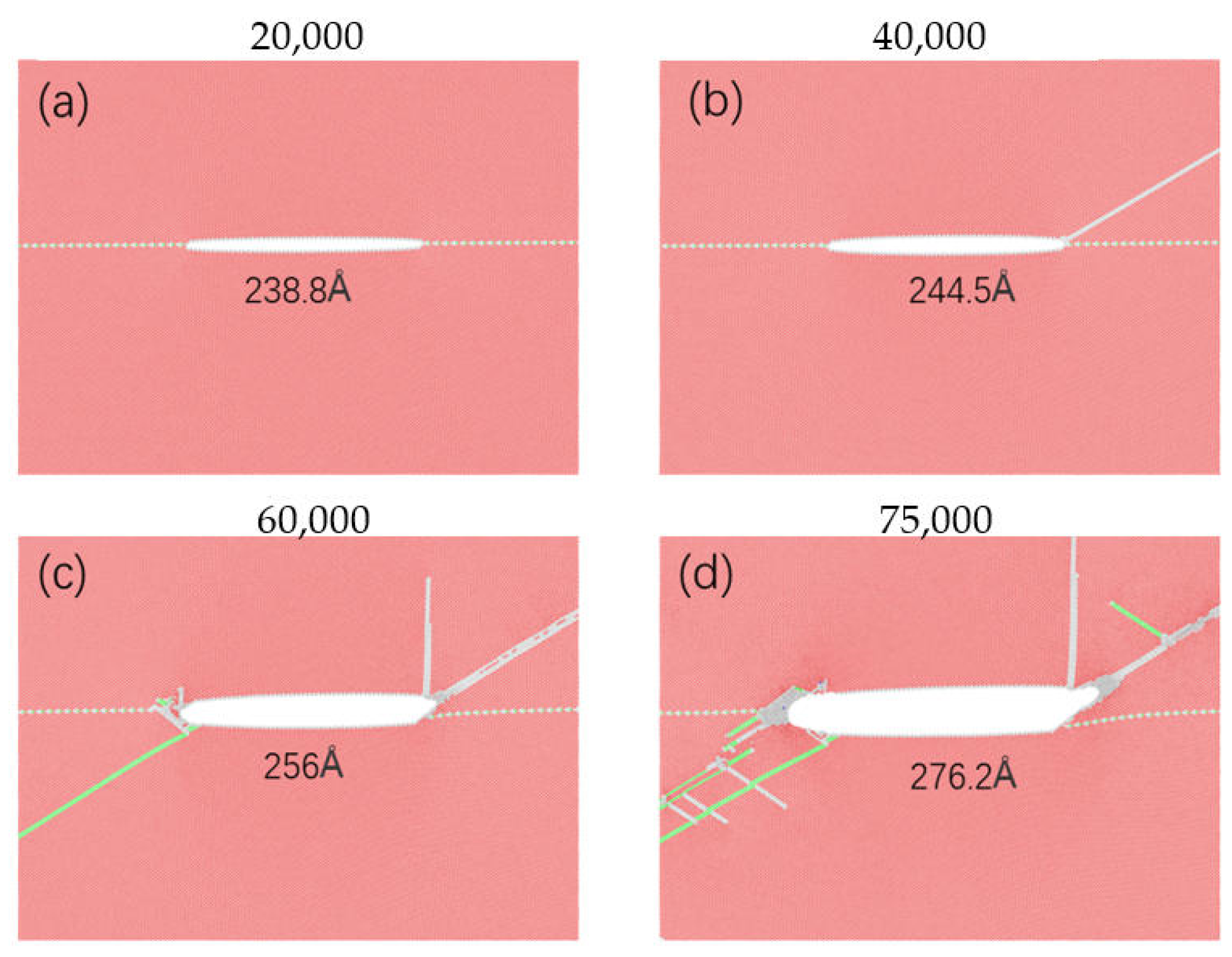
3.2. Microstructural Evolution During Twin Boundary Crack Propagation Under Biaxial Loading
3.2.1. In the (011) Twin Boundary Model
3.2.2. In the (012) Twin Boundary Model
3.2.3. In the (013) Twin Boundary Model
3.2.4. In the (111) Twin Boundary Model
3.2.5. In the (112) Twin Boundary Model
3.2.6. In the (114) Twin Boundary Model
3.2.7. Atomic-Scale Mechanisms of Gradual Strain Softening Under Force-Controlled Loading
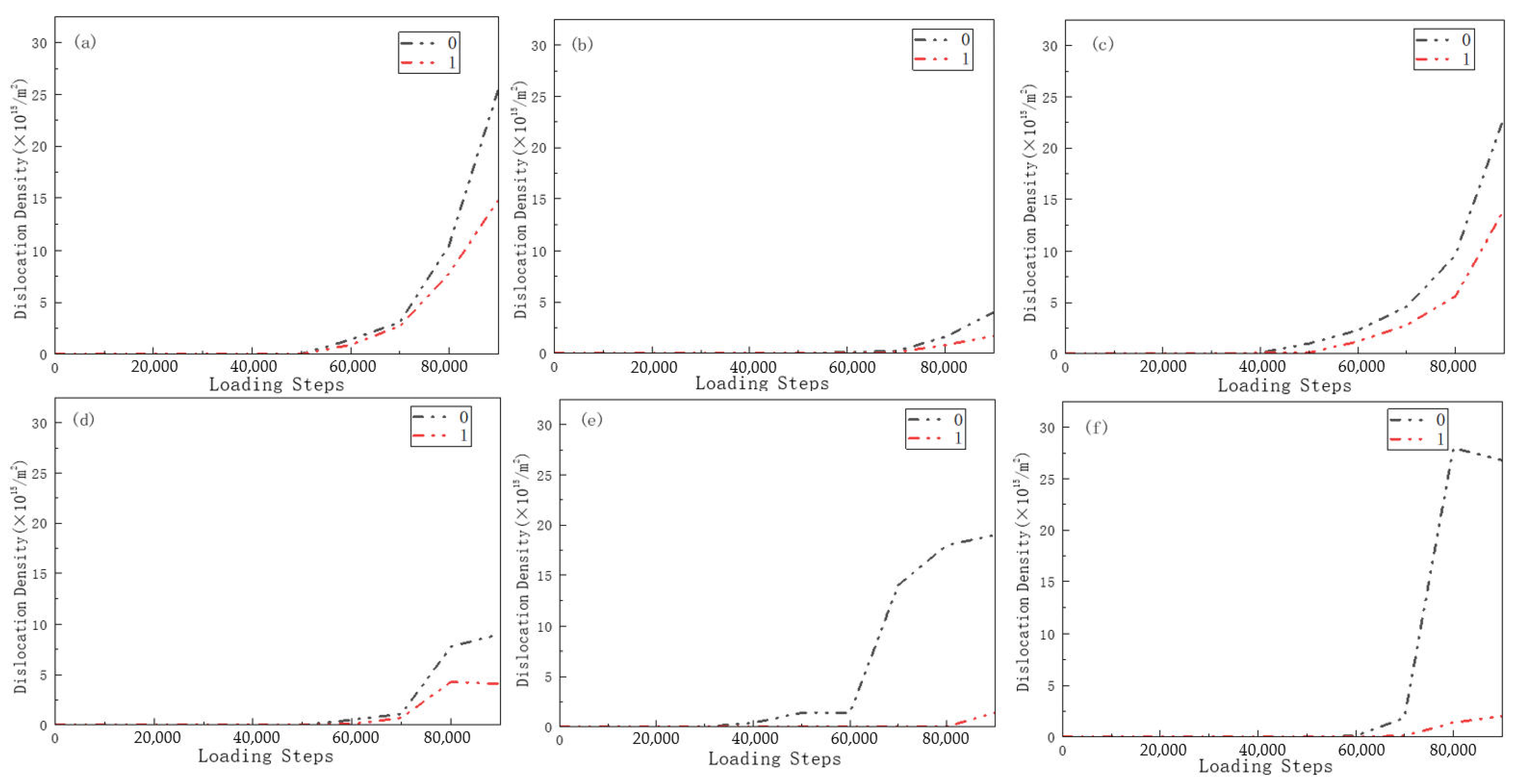
3.3. Quantitative Statistics of Deformation Defects in Different Twin Boundary Models
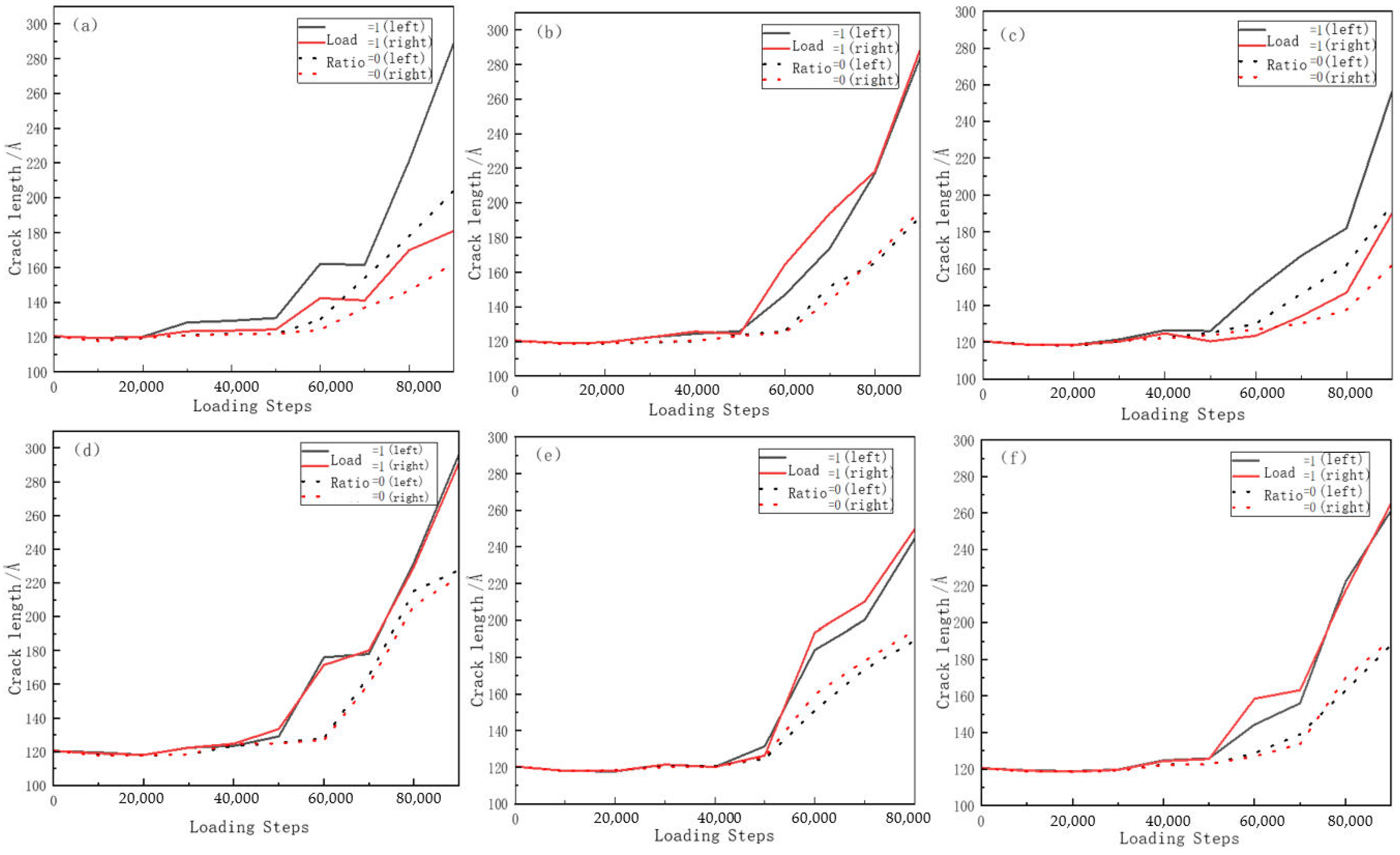
3.4. Crack Length Curves of Different Twin Boundary Models
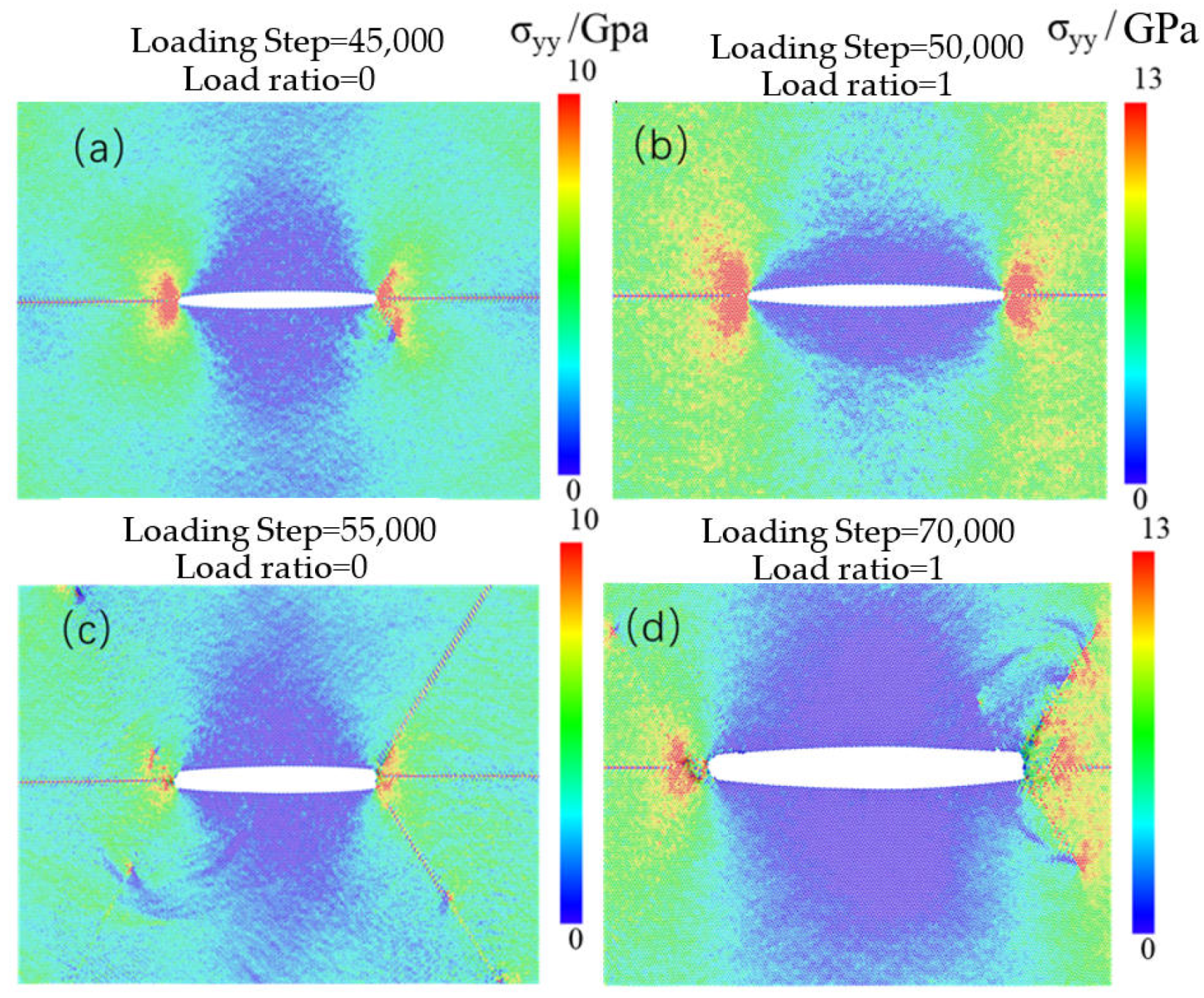
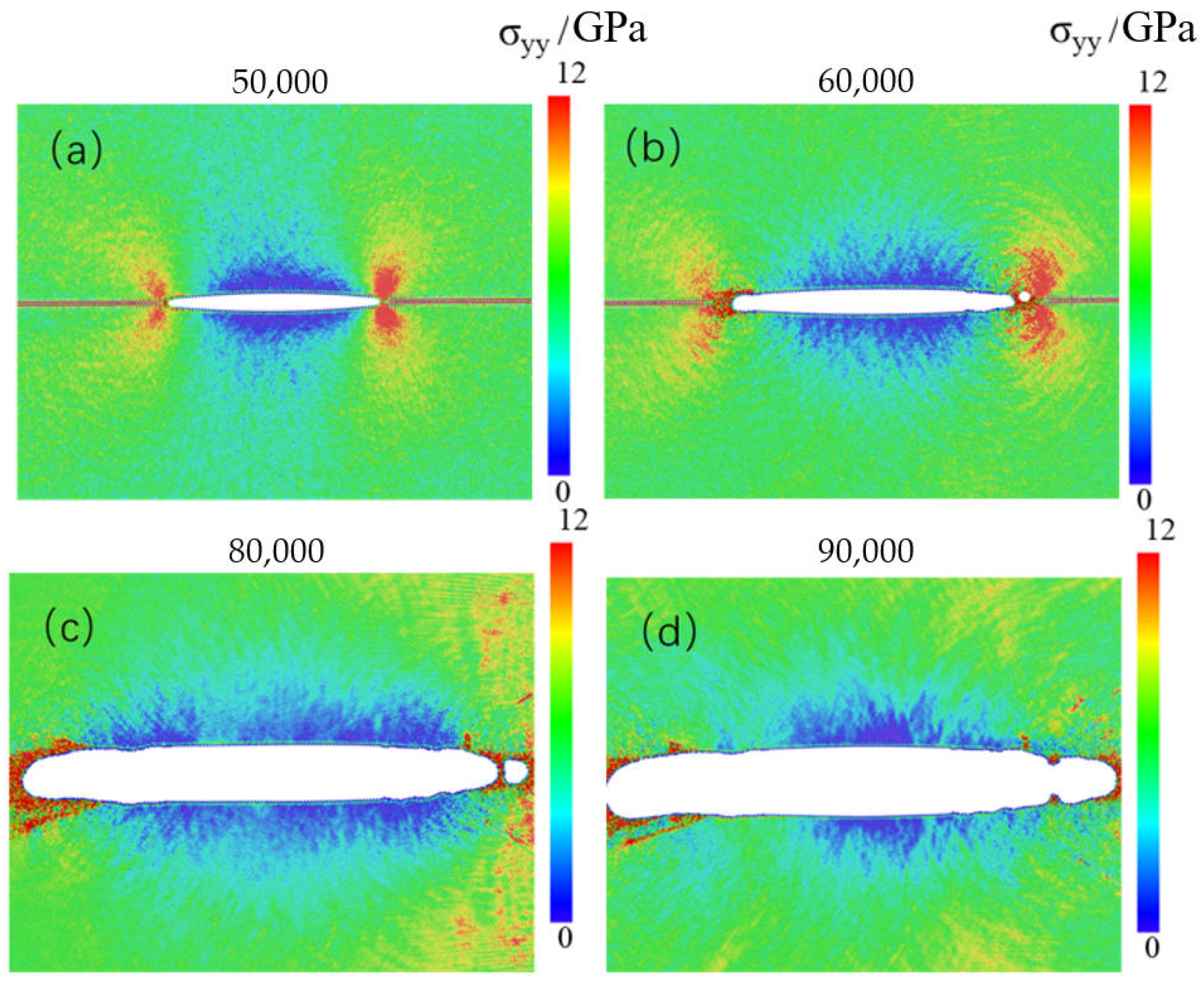
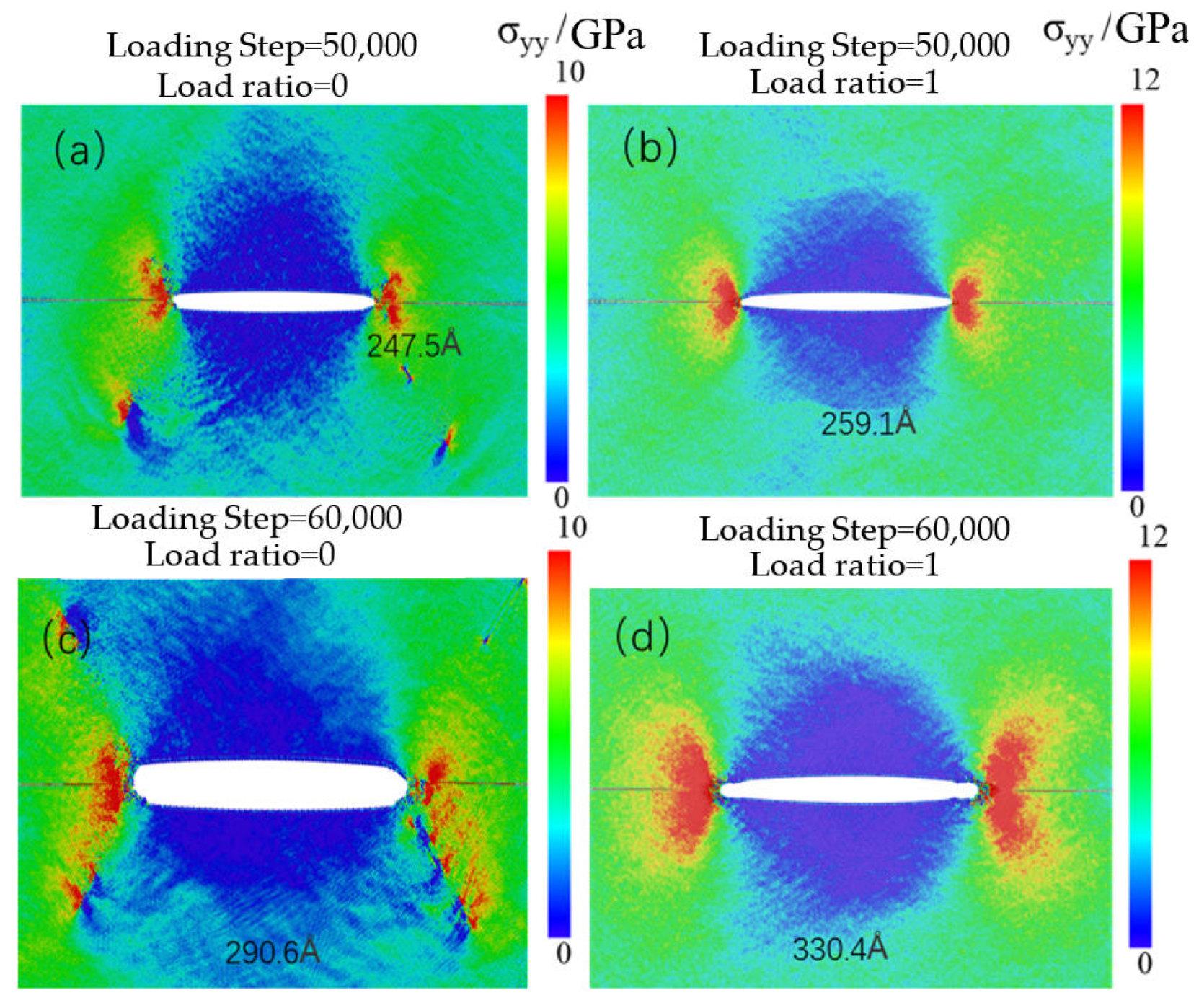
3.5. Stress Field Analysis at Crack Tips for Different Twin Boundary Models
4. Conclusions
Author Contributions
Funding
Data Availability Statement
Conflicts of Interest
References
- Li, L.L.; Zhang, Z.J.; Zhang, P. Controllable fatigue cracking mechanisms of copper bicrystals with a coherent twin boundary. Nat. Commun. 2014, 5, 3536. [Google Scholar] [CrossRef] [PubMed]
- Jang, D.C.; Li, X.Y.; Gao, H.J. Deformation mechanisms in nanotwinned metal nanopillars. Nat. Nanotechnol. 2012, 7, 594–601. [Google Scholar] [CrossRef] [PubMed]
- Thompson, N.; Wadsworth, N.; Louat, N.X. The origin of fatigue fracture in copper. Philos. Mag. 1956, 1, 113–126. [Google Scholar] [CrossRef]
- Sun, F.; Zhang, J.X.; Harada, H. Deformation twinning and twinning-related fracture in nickel-base single-crystal superalloys during thermomechanical fatigue cycling. Acta Mater. 2014, 67, 45–57. [Google Scholar] [CrossRef]
- Kou, Z.D.; Yang, Y.Q.; Yang, L.X. Deformation twinning in response to cracking in Al: An in situ TEM and molecular dynamics study. Scr. Mater. 2018, 145, 28–32. [Google Scholar] [CrossRef]
- Cheng, Y.; Jin, Z.H.; Zhang, Y.W. On intrinsic brittleness and ductility of intergranular fracture along symmetrical tilt grain boundaries in copper. Acta Mater. 2010, 58, 2293–2299. [Google Scholar] [CrossRef]
- Sinha, T.; Kulkarni, Y. Alternating brittle and ductile response of coherent twin boundaries in nanotwinned metals. J. Appl. Phys. 2014, 116, 349. [Google Scholar] [CrossRef]
- Wu, Z.; Curtin, W.A. Brittle and ductile crack-tip behavior in magnesium. Acta Mater. 2015, 88, 1–12. [Google Scholar] [CrossRef]
- Zu, Q.; Gong, H.; Liu, S. Atomistic study of 1210-oriented interfacial crack behaviors in Mg bicrystal. Mater. Lett. 2020, 266, 127493. [Google Scholar] [CrossRef]
- Wang, H.; Sun, Y.; Qiao, B.J. Crack propagation mechanism of titanium nano-bicrystal: A molecular dynamics study. Eur. Phys. J. B 2021, 94, 149. [Google Scholar] [CrossRef]
- Hirel, P. Atomsk: A tool for manipulating and converting atomic data files. Comput. Phys. Commun. 2015, 197, 212–219. [Google Scholar] [CrossRef]
- Zhang, B.W.; Zhou, L.C.; Sun, Y. Molecular dynamics simulation of crack growth in pure titanium under uniaxial tension. Mol. Simul. 2018, 44, 1252–1260. [Google Scholar] [CrossRef]
- Wu, W.P.; Yao, Z.Z. Molecular dynamics simulation of stress distribution and microstructure evolution ahead of a growing crack in single crystal nickel. Theor. Appl. Fract. Mech. 2012, 62, 67–75. [Google Scholar] [CrossRef]
- Vatne, I.R.; Stukowski, A.; Thaulow, C. Three-dimensional crack initiation mechanisms in bcc-Fe under loading modes I, II and III. Mater. Sci. Eng. A 2013, 560, 306–314. [Google Scholar] [CrossRef]
- Wu, B.X.; Jin, K.K.; Yao, Y. Molecular Dynamics Study on the Mechanical Behaviors of Nanotwinned Titanium. Metals 2024, 14, 918. [Google Scholar] [CrossRef]
- Qin, H.; Wang, J.; Shi, L. DXA-Based Discrimination of Basal and Pyramidal Dislocations in HCP α-Ti Molecular Dynamics Simulations. Metals 2025, 15, 563. [Google Scholar] [CrossRef]
- Zhao, Y.; Liu, P.; Zeng, Q. Twin-Dislocation Interaction in Single-Crystal α-Ti Under Uniaxial and Equal Biaxial Tension: A Molecular Dynamics Simulation. Metals 2025, 15, 1129. [Google Scholar] [CrossRef]

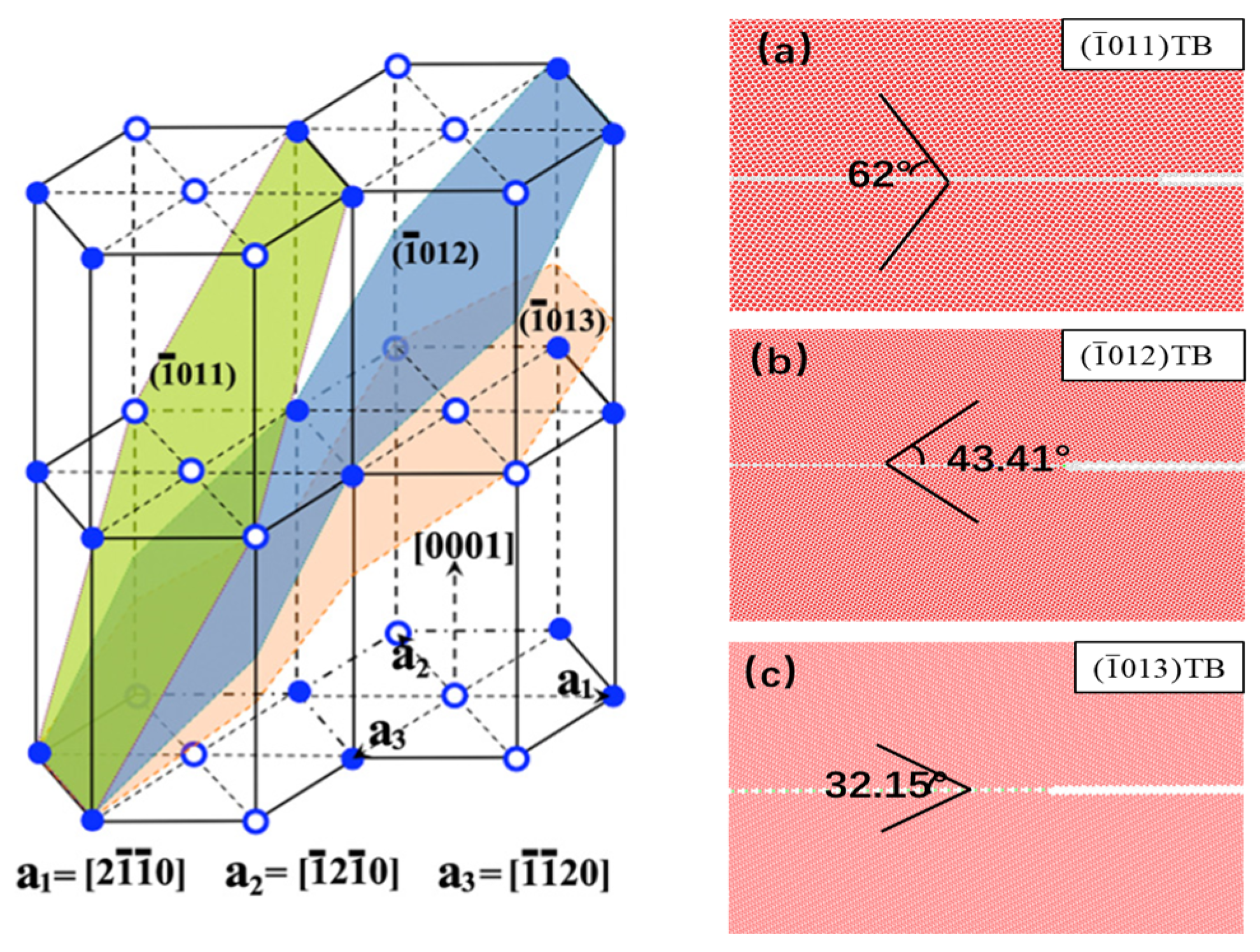
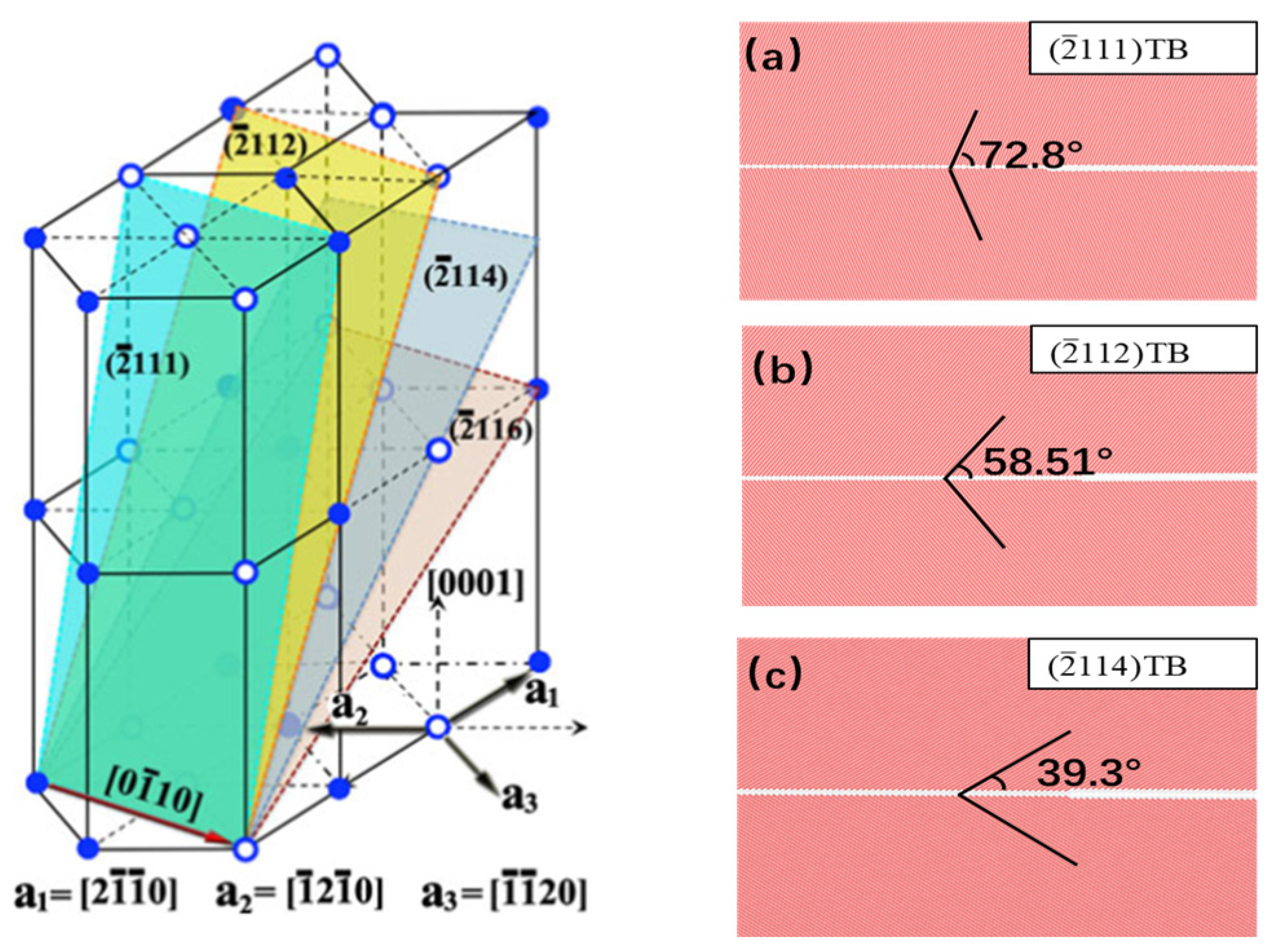






| TB Models | Crack Plane | Tilt Axis z | Tilt Angles θ | x′ | y′ | z′ = z |
|---|---|---|---|---|---|---|
| TB | 62° | |||||
| TB | 43.41° | |||||
| TB | 32.15° | |||||
| TB | 72.8° | |||||
| TB | 58.51° | |||||
| TB | 39.3° |
Disclaimer/Publisher’s Note: The statements, opinions and data contained in all publications are solely those of the individual author(s) and contributor(s) and not of MDPI and/or the editor(s). MDPI and/or the editor(s) disclaim responsibility for any injury to people or property resulting from any ideas, methods, instructions or products referred to in the content. |
© 2026 by the authors. Licensee MDPI, Basel, Switzerland. This article is an open access article distributed under the terms and conditions of the Creative Commons Attribution (CC BY) license.
Share and Cite
Zhou, B.; Zhou, L.; Dai, X.; Chang, L. Fracture Behavior of Twin Boundaries in Pure Titanium Under Biaxial Loading. Metals 2026, 16, 682. https://doi.org/10.3390/met16060682
Zhou B, Zhou L, Dai X, Chang L. Fracture Behavior of Twin Boundaries in Pure Titanium Under Biaxial Loading. Metals. 2026; 16(6):682. https://doi.org/10.3390/met16060682
Chicago/Turabian StyleZhou, Binbin, Liangfu Zhou, Xiang Dai, and Le Chang. 2026. "Fracture Behavior of Twin Boundaries in Pure Titanium Under Biaxial Loading" Metals 16, no. 6: 682. https://doi.org/10.3390/met16060682
APA StyleZhou, B., Zhou, L., Dai, X., & Chang, L. (2026). Fracture Behavior of Twin Boundaries in Pure Titanium Under Biaxial Loading. Metals, 16(6), 682. https://doi.org/10.3390/met16060682