Cavitation Erosion of the Biodegradable AM50 Alloy After Artificial Aging Heat Treatment
 , , , , ,
Abstract
1. Introduction
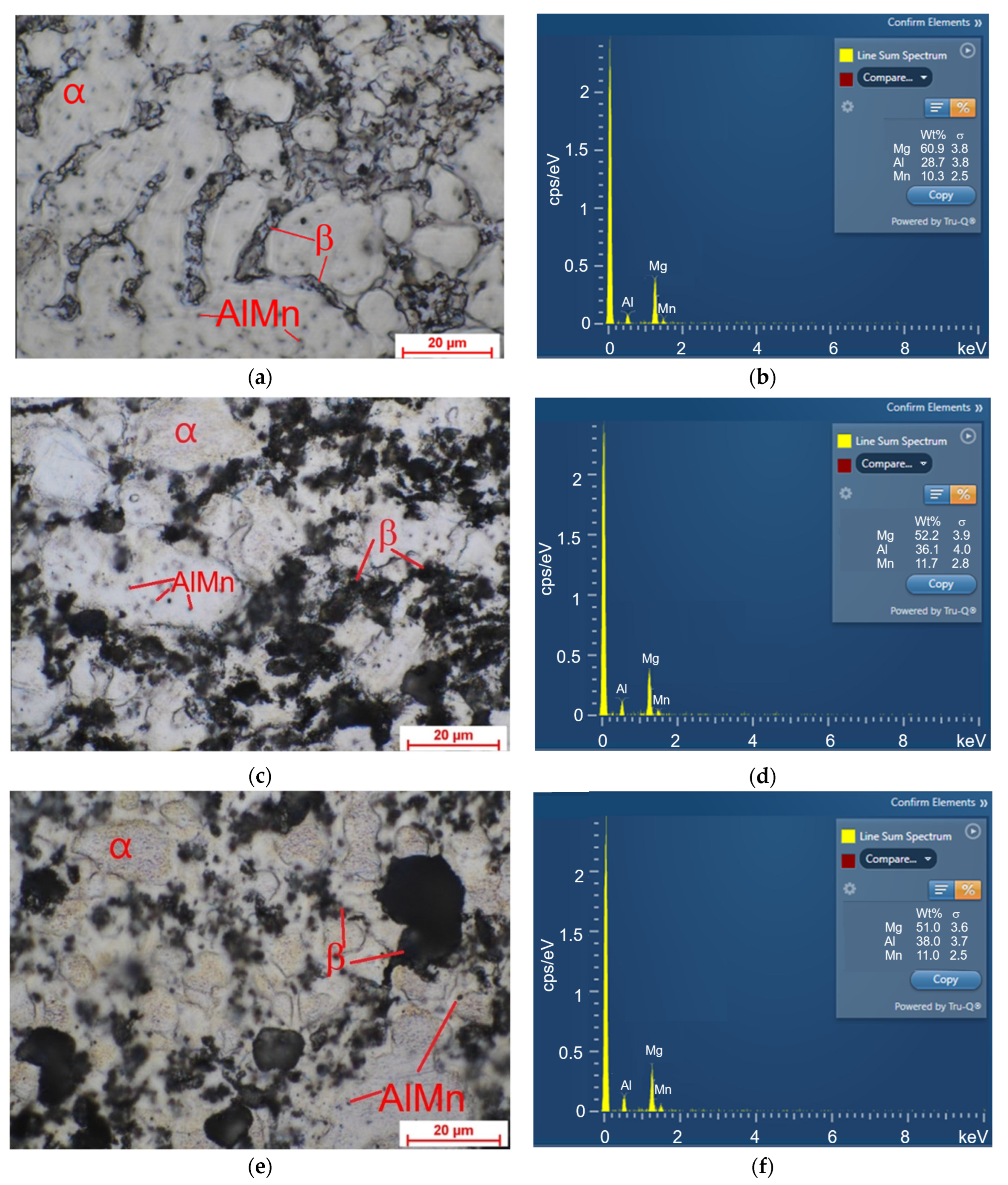
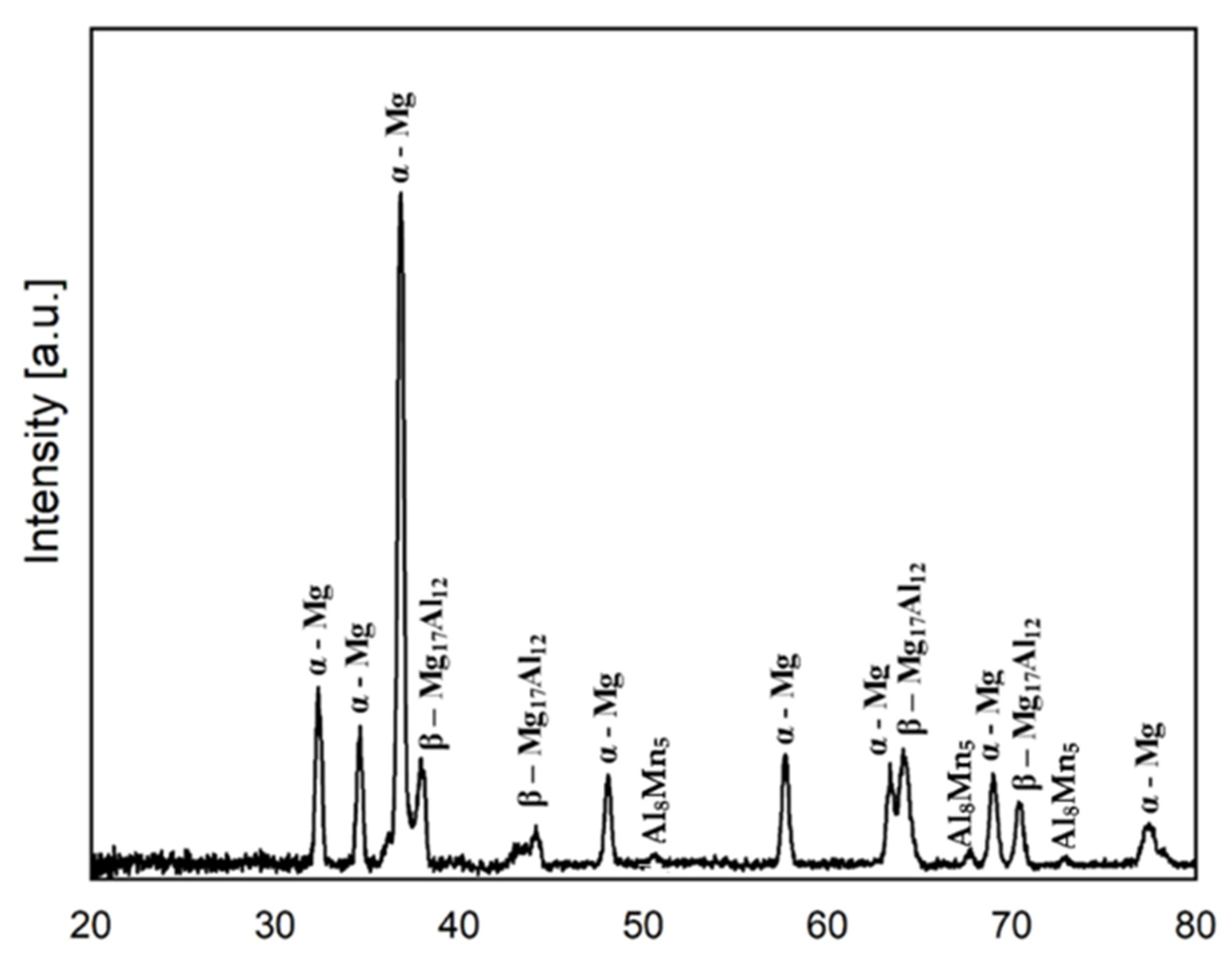
2. Researched Material (AM50 Alloy) and Applied Heat-Treatment Regimes
- SF—Semi-finished state;
- 200/12 h—Structural state obtained after artificial aging heat treatment at 200 °C with a holding time of 12 h;
- 200/24 h—Structural state obtained after artificial aging heat treatment at 200 °C with a holding time of 24 h.
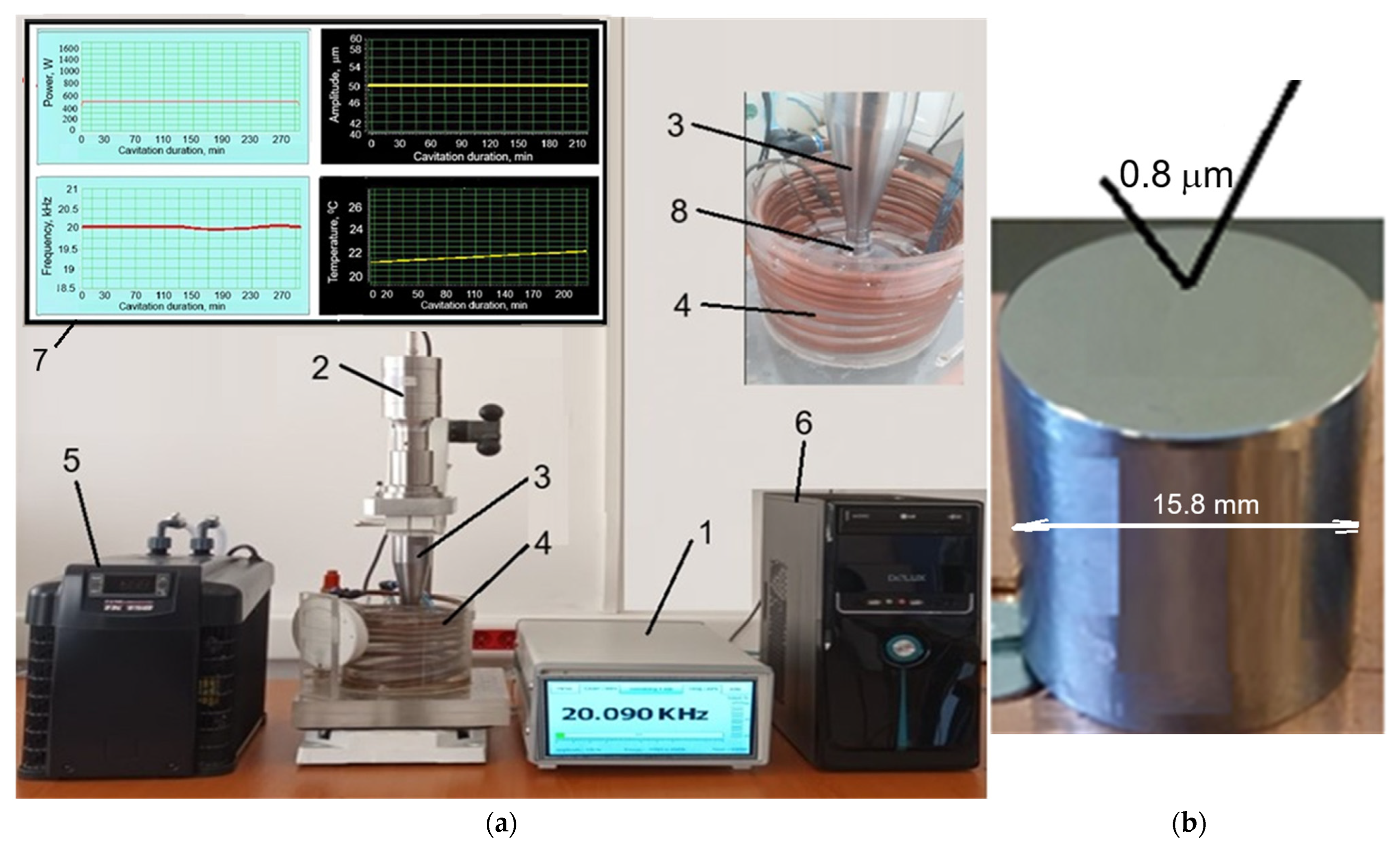
3. Experimental Setup and Experimental Results
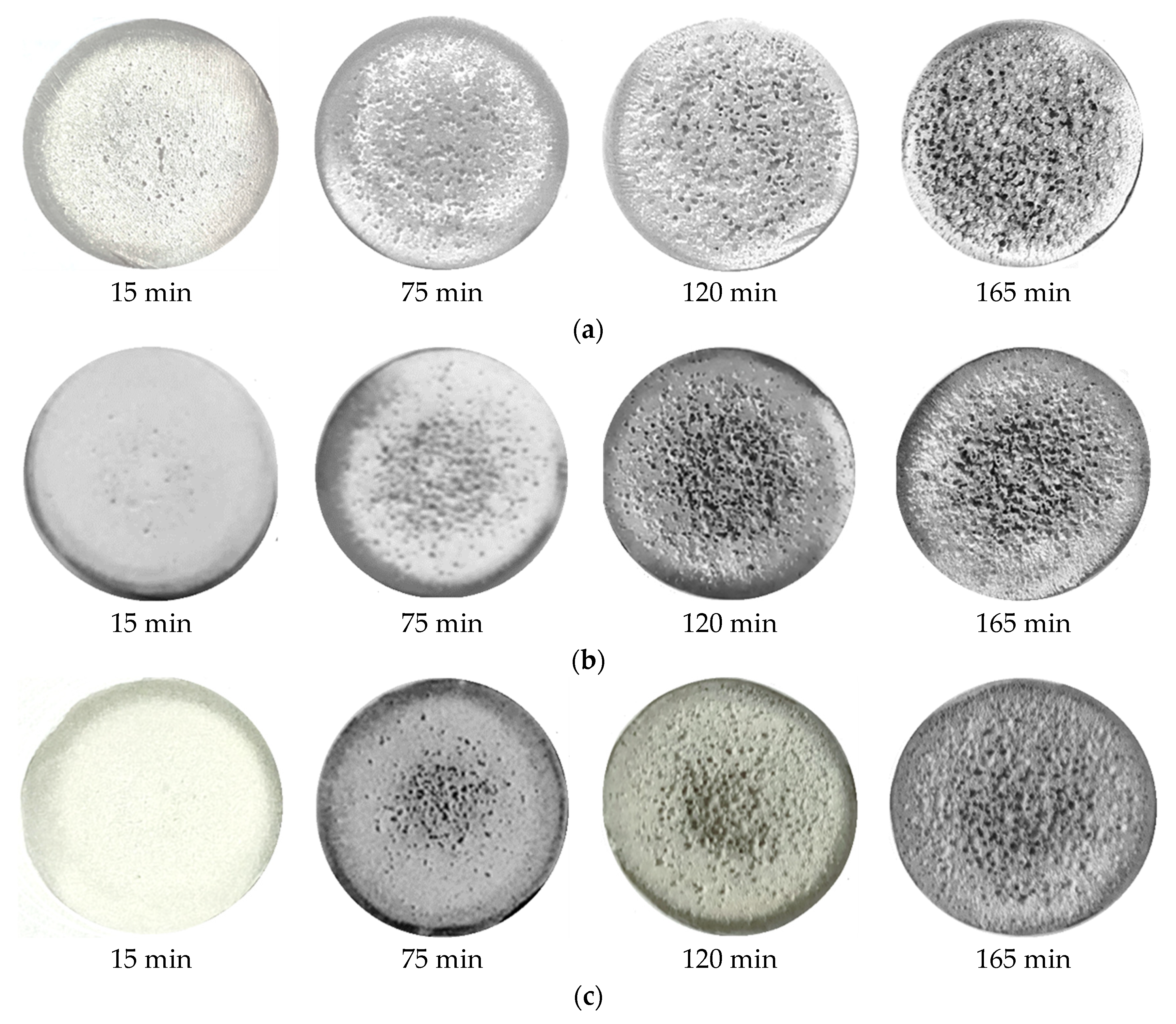
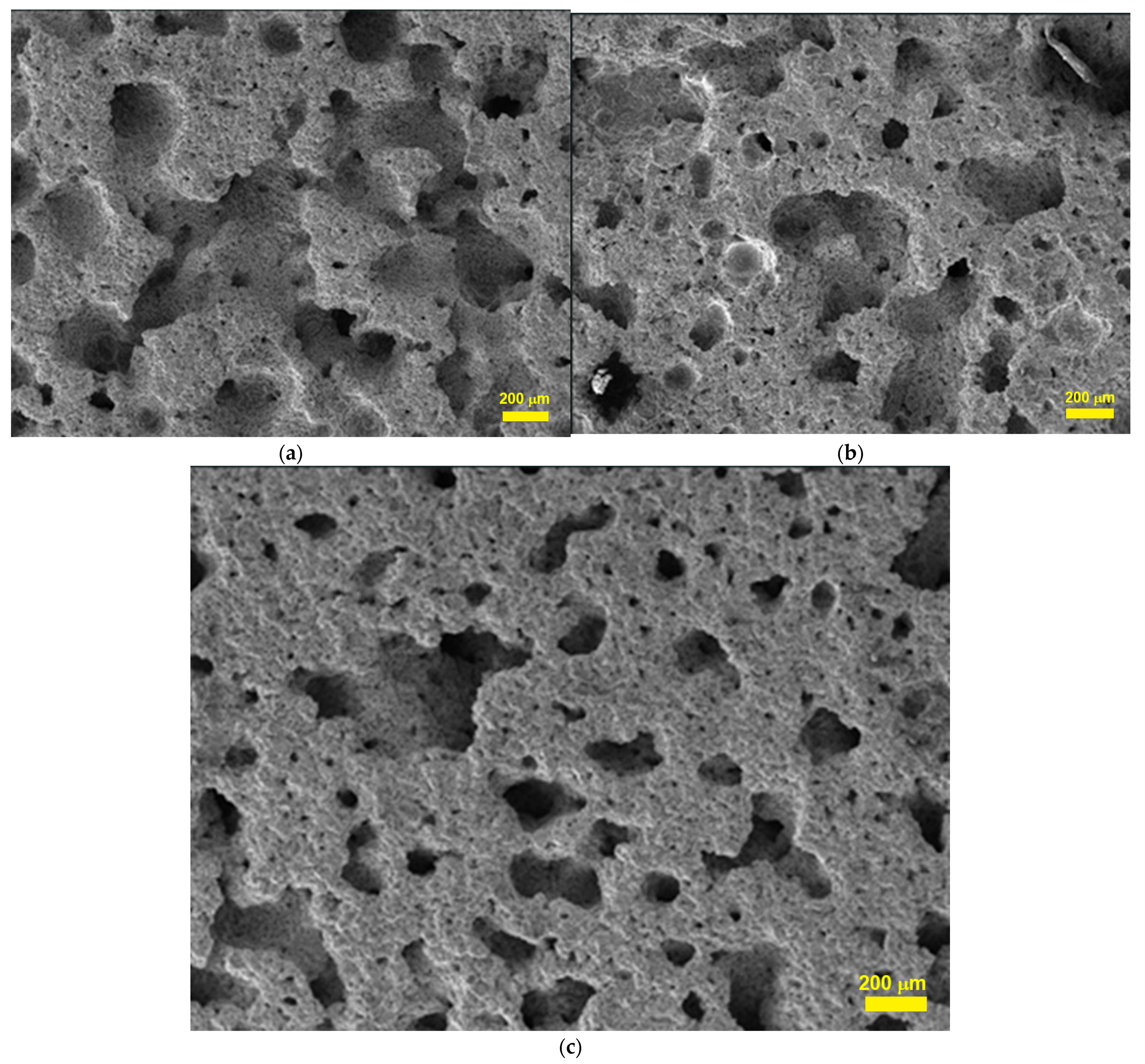
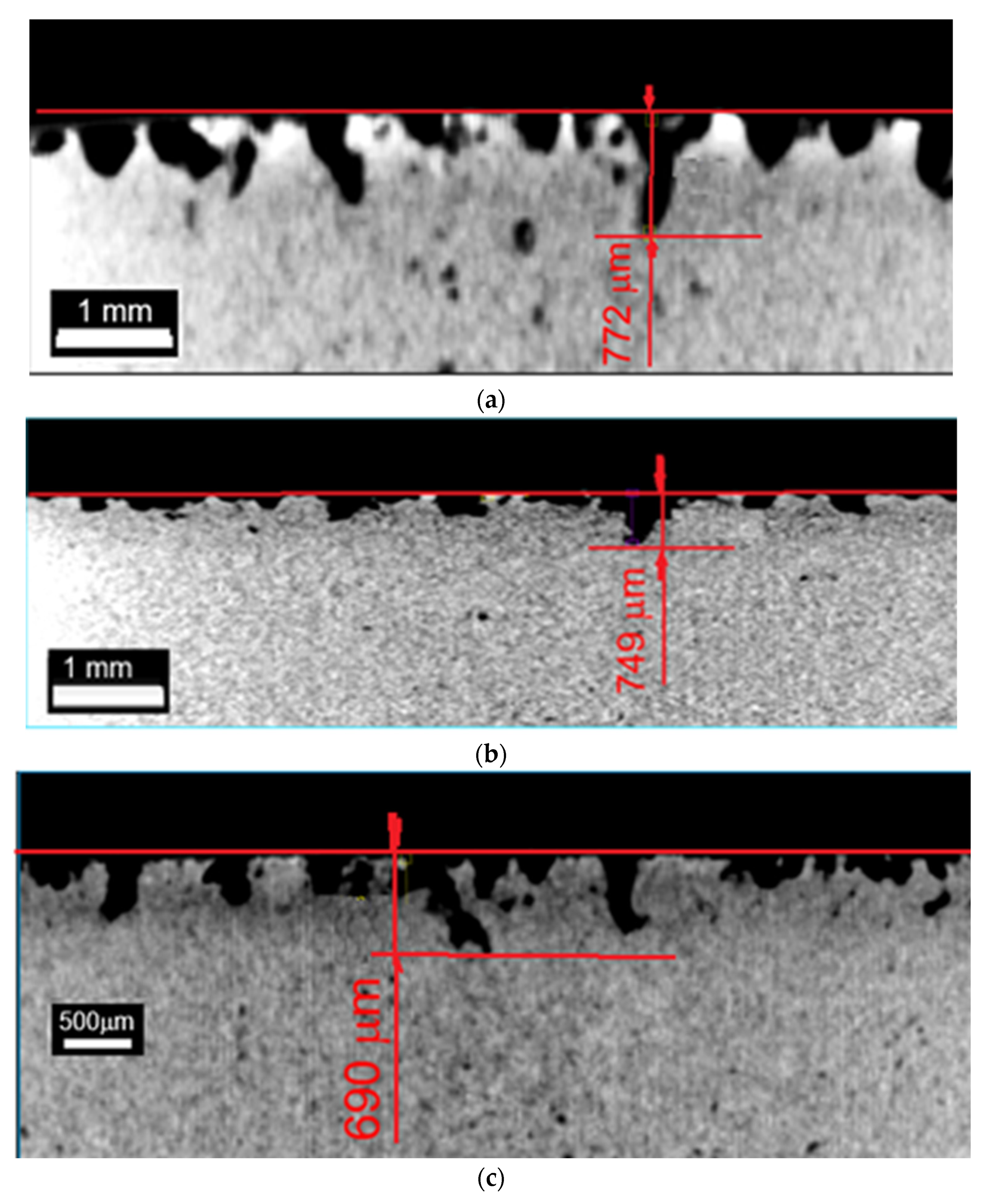
3.1. Morphology of Structural Degradation
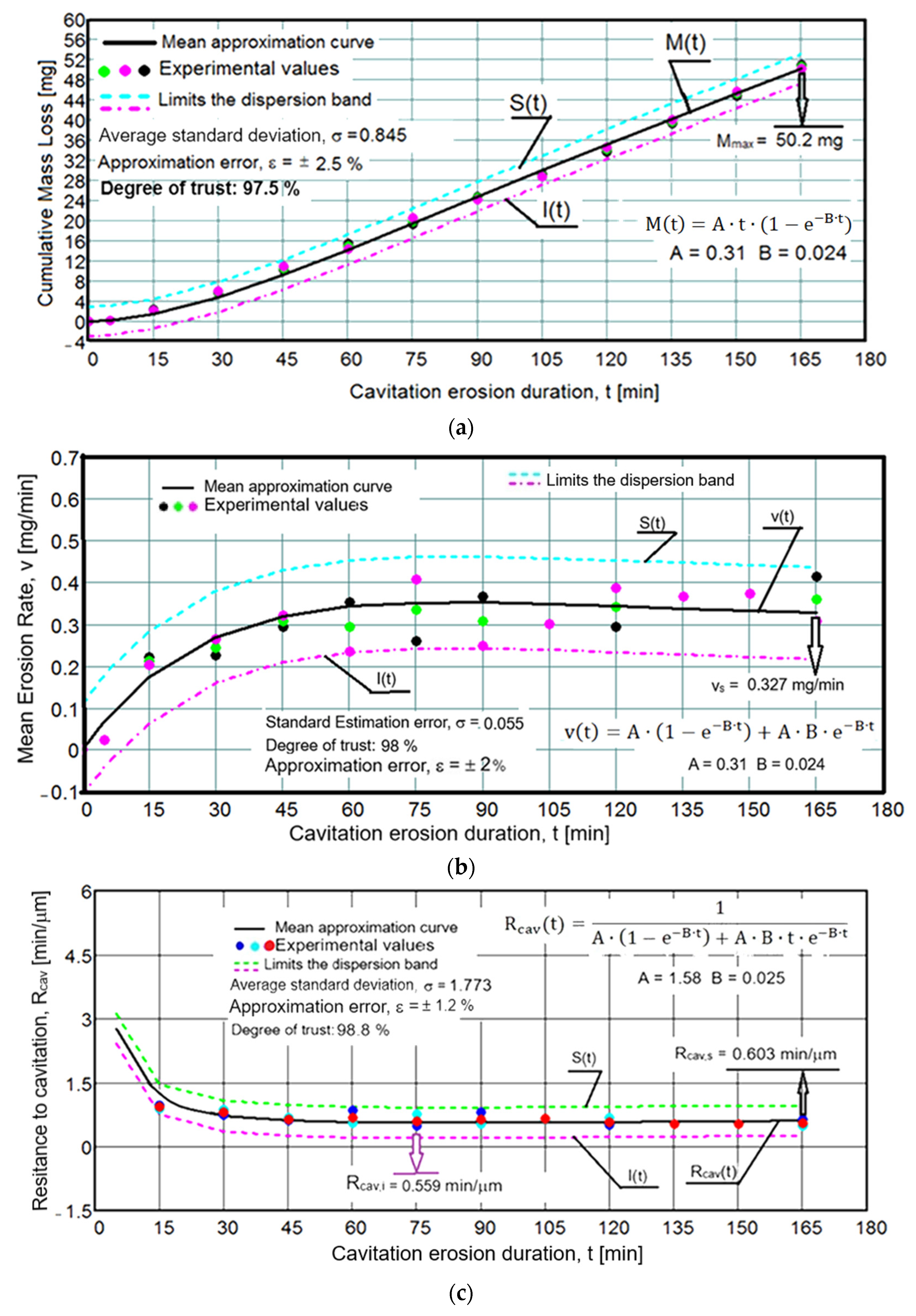
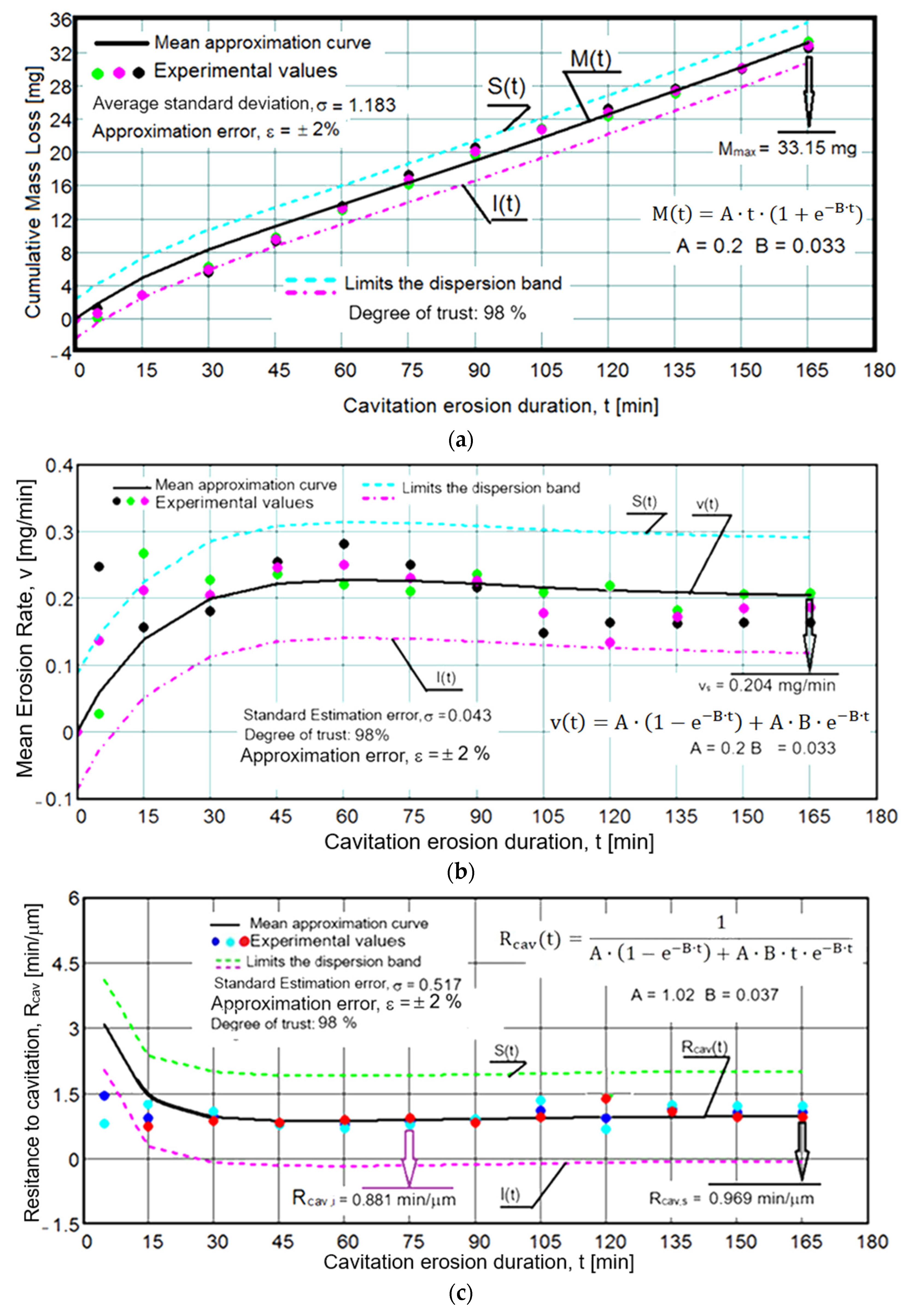
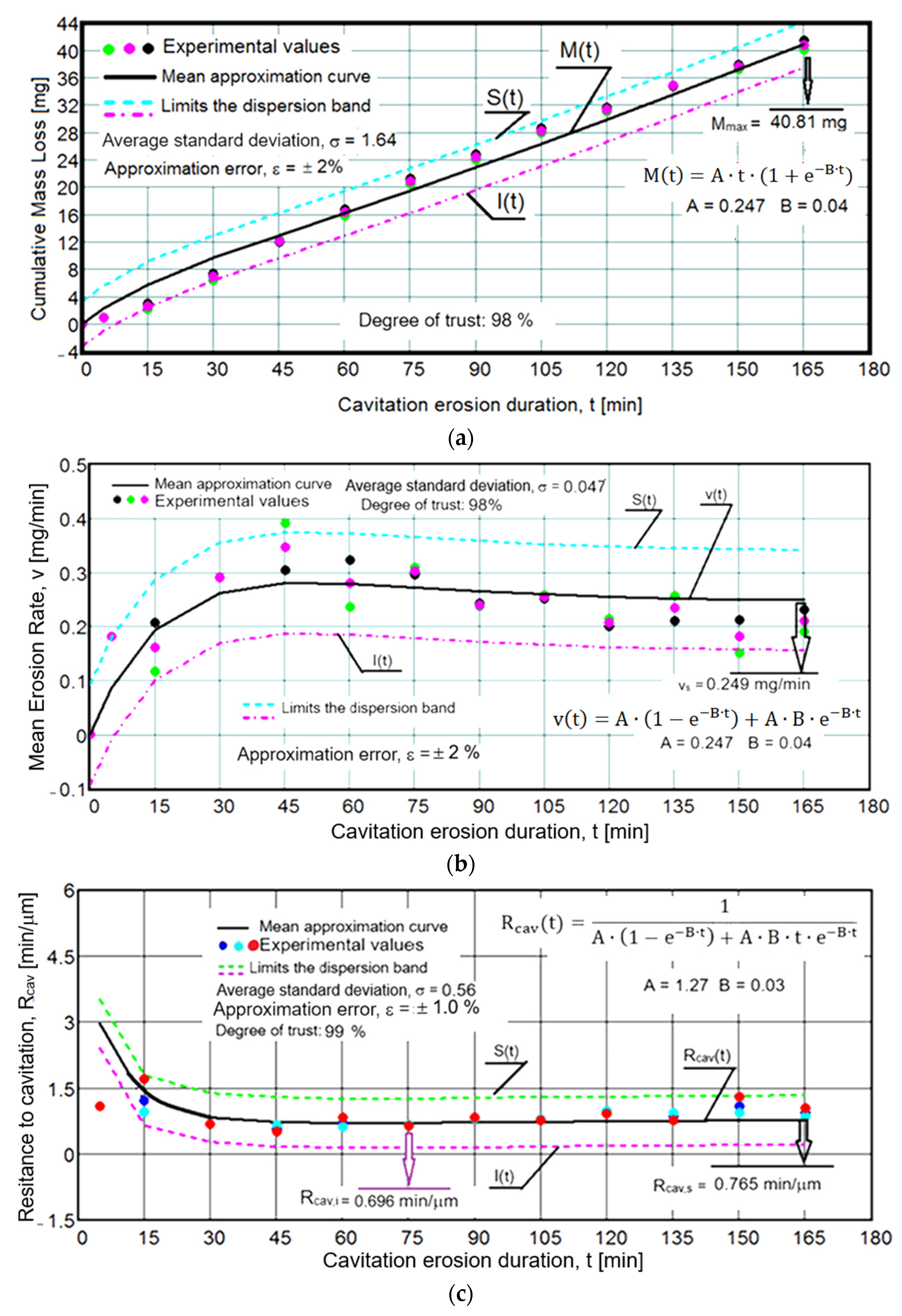
3.2. Characteristic Curves and Parameters Describing Cavitation Behavior and Resistance
- The overlap of the experimental values obtained for the three tested specimens, regardless of the structural state (SF or artificially aged state) or of the parameter (mass loss, erosion rate, or cavitation erosion resistance). This scattering of experimental values at different stages of cavitation attack, also observed in previous research [28,38,56], is attributed to the heterogeneous structure of the alloy (consisting of a solid-solution matrix containing brittle intermetallic inclusions);
- The evolution of the averaging curves, characterized by an approximately linear increase in cumulative mass loss M(t) after the incubation period of 0…45(60) min, by the asymptotic decrease in erosion rate v(t) after reaching a maximum value and by the gradual increase in cavitation resistance Rcav(t) after 75(90) min. According to both our previous investigations [14,15,38,39] and the literature [43,44,45,46,47,57], these trends result from the combined influence of mechanical properties (especially hardness) and microstructural characteristics;
- The exposure duration (t = 75 min) after which the cavitation resistance Rcav begins to increase.
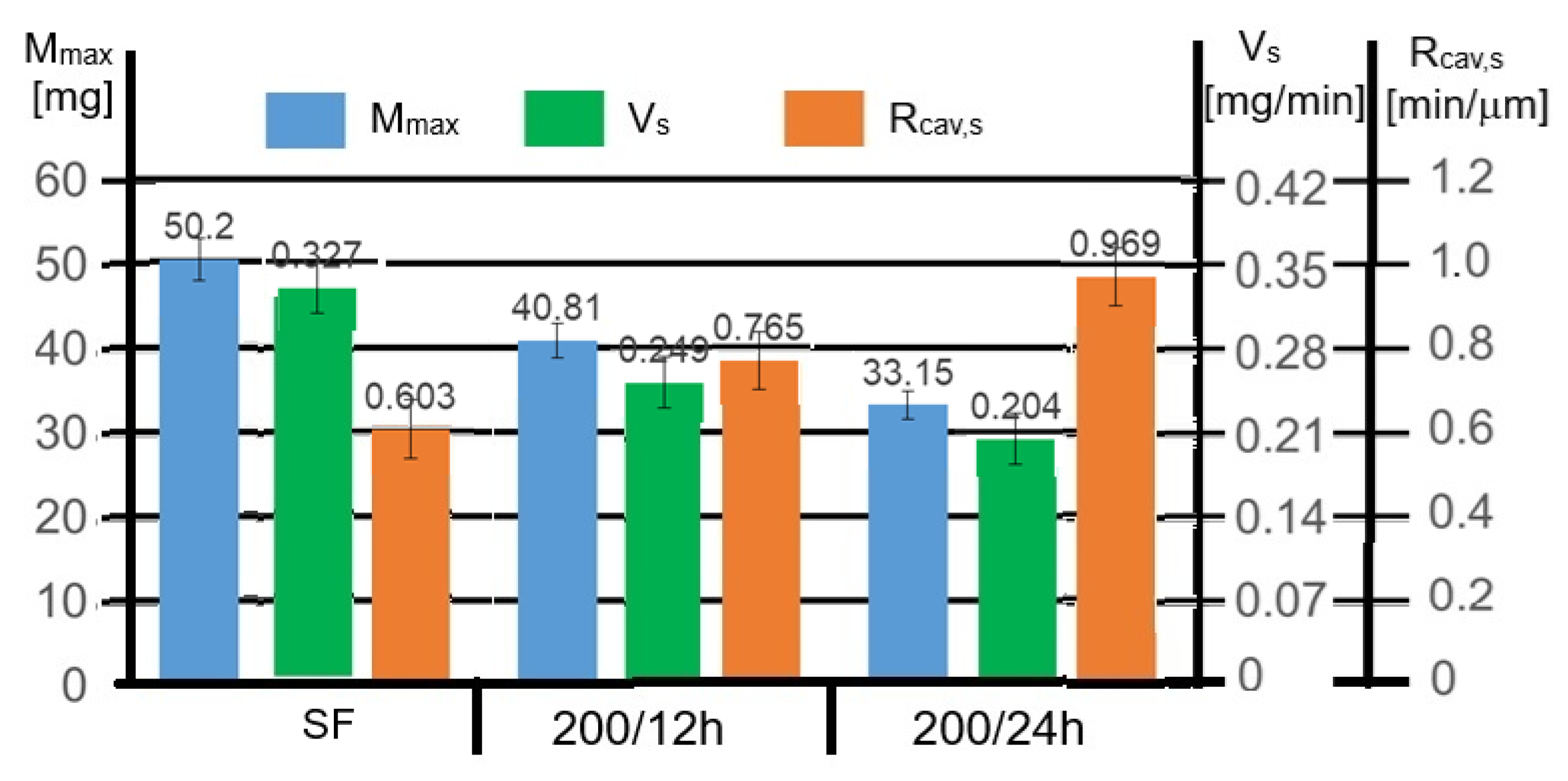
- The values of the characteristic parameters Mmax, vs, and Rcav,s. The highest cumulative mass loss was recorded for the SF state (Mmax = 50.3 mg), while the lowest value was obtained for the 200/24 h state (Mmax = 32.57 mg). Similarly, the highest stabilized erosion rate corresponded to the SF state (vs = 0.327 mg/min), whereas the lowest value was measured for the 200/24 h state (vs = 0.204 mg/min). In contrast, the highest cavitation resistance was obtained for the 200/24 h state (Rcav,s = 0.969 min/μm), while the lowest was associated with the SF state (Rcav,s = 0.603 min/μm). These differences clearly reflect the influence of the initial surface hardness before cavitation exposure, which was highest for the 200/24 h state (68 HV5) and lowest for the SF state (58 HV5).
- The cavitation exposure time at which the averaging curves v(t) reached their maximum values. The longest duration was observed for the SF state (t = 90 min), whereas the shortest corresponded to the 200/12 h state (t = 45 min). These differences provide clear evidence of the capability of the investigated structures to absorb energy through plastic deformation and impact-induced hardening in addition to the initial hardness state.
- The asymptotic evolution of the erosion-rate curves v(t) after reaching their maximum values, followed by a gradual decrease toward the stabilized erosion rate vs. These trends must be correlated with the increasing evolution of the cavitation resistance curves Rcav(t), since the times at which the curves change their evolution direction are identical (75 min). Experimental studies [28,38,47] demonstrated that these effects result from the following: (a) the mechanical hardening, to different extents, of the surface layer subjected to repeated impacts from cavitation microjets; and (b) the damping effect produced by the air and water trapped inside newly formed or previously existing cavities, which reduces the impact pressure during cavitation loading.
4. Evaluation of Cavitation Resistance
- 200/24 h state compared with the SF state: Mmax decreased by approximately 51%, and the stabilized erosion rate vs decreased by about 60%, while the stabilized cavitation resistance Rcav,s increased by approximately 61%;
- 200/12 h state compared with the SF state: Mmax decreased by approximately 23%, vs decreased by about 31%, and Rcav,s increased by approximately 27%;
- 200/24 h compared with 200/12 h: Mmax decreased by approximately 23%, and vs decreased by about 22%, while Rcav,s increased by approximately 27%.
5. Conclusions
Author Contributions
Funding
Data Availability Statement
Conflicts of Interest
References
- Istrate, D.; Sbârcea, B.G.; Demian, A.M.; Buzatu, A.D.; Salcianu, L.; Bordeasu, I.; Micu, L.M.; Ghera, C.; Florea, B.; Ghiban, B. Correlation between Mechanical Properties—Structural Characteristics and Cavitation Resistance of Cast Aluminum Alloy Type Al-Mg. Crystals 2022, 12, 1538. [Google Scholar]
- Istrate, D.; Bordeasu, I.; Ghiban, B.; Sbarcea, B.G.; Ghera, C.; Luca, A.N.; Odagiu, P.O.; Florea, B.; Gubencu, D. Correlation between Mechanical Properties structural Characteristics and Cavitation Resistance of Rolled Aluminum Alloy Type 5083. Metals 2023, 13, 1067. [Google Scholar] [CrossRef]
- Katarivas Levy, G.; Goldman, J.; Aghion, E. The prospects of zinc as a structural material for biodegradable implants—A Review Paper. Metals 2017, 7, 402. [Google Scholar] [CrossRef]
- Zheng, Y.F.; Gu, X.N.; Witte, F. Biodegradable metals. Mater. Sci. Eng. R 2014, 77, 1–34. [Google Scholar] [CrossRef]
- Stefan, T.; Codrean, C.; Sirbu, N.-A.; Dume, A.I.; Cosma, C.; Serban, V.-A. Compressive Behavior of Various BCC Lattice Structure. Nano Hybrids Compos. 2023, 41, 39–45. [Google Scholar] [CrossRef]
- Stan, D.; Serban, I.; Cioana, C.; Cosma, C. Study on the influence of the processing parameters in the ultrasonic activated injection and extrusion. In MODTECH 2012: New Face of TMCR; ModTech Publishing House: Sinaia, Romania, 2012; Volumes I and II, pp. 917–920. [Google Scholar]
- Kabir, H.; Munir, K.; Wen, C.; Li, Y. Recent research and progress of biodegradable zinc alloys and composites for biomedical applications: Biomechanical and biocorrosion perspectives. Mioactive Mater. 2021, 6, 836–879. [Google Scholar] [CrossRef] [PubMed]
- Savu, S.V.; Tarnita, D.; Stefan, I.; Benga, G.C.; Savu, I.D.; Sîrbu, N.A.; Dumitru, I.; Ciungu, M.A.; Ursu, M.; Cosma, C. Research on the Influence of the Defects of Materials on Thermal Runaway in Microwave Hybrid Heating for Sintering Processes. Appl. Sci. 2025, 15, 4115. [Google Scholar] [CrossRef]
- Wang, Y.; Hao, E.; Zhao, X.; Xue, Y.; An, Y.; Zhou, H. Effect of microstructure evolution of Ti6Al4V alloy on its cavitation erosion and corrosion resistance in artificial seawater. J. Mater. Sci. Technol. 2022, 100, 169–181. [Google Scholar]
- Caceres, C.H.; Silvett, S.P. Cavitation damage in the superplastic Zn-22% Al-0.5% Cu alloy. Acta Metall. 1987, 35, 897–906. [Google Scholar] [CrossRef]
- Iordache (Gheorghe), C.M. Correlation Between Structure—Mechanical Characteristics-Biodegradability—Cavitation of Some Biomedical Alloys Form the System ZnMg(Fe). Ph.D. Thesis, National University of Science and Technology Politehnica Bucharest, Bucharest, Romania, 2024. (In Romanian) [Google Scholar]
- Zhang, S.; Zhang, X.; Zhao, C.; Li, J.; Song, Y.; Xie, C.; Tao, H.; Zhang, Y.; He, Y.; Jiang, Y.; et al. Research on an Mg–Zn alloy as a degradable biomaterial. Acta Biomater. 2010, 6, 626–640. [Google Scholar] [CrossRef] [PubMed]
- Ciungu, G.; Micu, L.M.; Bordeasu, I.; Iordache, C.M.; Ghiban, B.; Ghera, C. Cavitation Behaviour of A Biodegradable ZnCu Alloy. UPB Sci. Bull. Ser. B 2024, 86. [Google Scholar]
- Ghiban, B.; Bordeasu, I.; Antoniac, A.; Antoniac, I.; Gheorghe, C.M.; Bordeasu, D.; Micu, L.M.; Ghera, C.; Salcianu, L.C.; Florea, B.; et al. Influence of Homogenization Heat Treatments on the Mechanical, Structural, Biodegradation, and Cavitation Behavior of Some Alloys in the ZnMg(Fe) System. Crystals 2025, 15, 458. [Google Scholar]
- Ghiban, B.; Antoniac, A.; Bordeasu, I.; Antoniac, I.; Petre, G.; Rau, V.J.; Bordeasu, D.; Micu, L.M. Biodegradability and Cavitation Erosion Behavior of Some Zinc Alloys from the System ZnCuMg. Metalls 2025, 15, 161. [Google Scholar] [CrossRef]
- Sleiman, N.; Pflieger, R.; Hallez, L.; Nikitenko, I.S.; Hihn, J.-Y. Magnesium and magnesium alloy dissolution by high intensity focused ultrasound: Erosion/cavitation vs. Wave propagation. Ultrason. Sonochem. 2024, 104, 106836. [Google Scholar] [CrossRef] [PubMed]
- Tomlinson, W.J.; Matthews, S.J. Cavitation erosion of aluminium alloys. J. Mater. Sci. 1994, 29, 1101–1108. [Google Scholar] [CrossRef]
- Krella, A.; Erbe, A.; Johanes, M.; Gupta, M. Magnesium Degradation Under Cavitation Erosion Conditions. JOM J. Miner. 2026, 78, 5297–5309. [Google Scholar] [CrossRef]
- Ye, L.; Zhu, X.; He, Y.; Song, T.; Hu, W. Surface strengthening and grain refinement of AZ31B magnesium alloy by ultrasonic cavitation modification. Chin. J. Aeronaut. 2021, 34, 508–551. [Google Scholar] [CrossRef]
- Krella, A.-K. Degradation of AlMg2 aluminium alloy caused by cavitation—An effect of cavitation intensity. Mater. Charact. 2017, 130, 219–229. [Google Scholar]
- Jasionowski, R.; Zasada, D.; Polkowski, W. The Evaluation of the Cavitational Damage in MgAl2Si Alloy Using Various Laboratory Stands. Solid State Phenom. 2016, 252, 61–70. [Google Scholar]
- Agarwal, S.; Curtin, J.; Duffy, B.; Jaiswal, S. Biodegradable magnesium alloys for orthopaedic applications: A review on corrosion, biocompatibility and surface modifications. Mater. Sci. Eng. C 2016, 68, 948–963. [Google Scholar] [CrossRef] [PubMed]
- Persaud-Sharma, D.; McGoron, A. Biodegradable magnesium alloys: A review of material development and applications. J. Biomim. Biomater. Tissue Eng. 2012, 12, 25–39. [Google Scholar] [CrossRef] [PubMed]
- Niinomi, M. Recent metallic materials for biomedical applications. Metall. Mater. Trans. A 2002, 33, 477–486. [Google Scholar] [CrossRef]
- Mitelea, I.; Bordeasu, I.; Salcianu, L.; Craciunescu, C.M. Cavitation Erosion Mechanisms of Solution Treated X5CrNi18-10 Stainless Steels. J. Tribol.-Trans. ASME 2016, 138, 031102. [Google Scholar]
- Meng, X.; Song, F.; Zhou, J.; Lu, J.; Chen, X.; Zhang, H.; Cheng, Z.; Cai, J.; Xue, W.; Lin, K. Enhancing cavitation erosion resistance of Ti6Al4V titanium alloy by dual-pulse laser shock peening. Surf. Coat. Technol. 2025, 503, 131993. [Google Scholar]
- Mostaed, E.; Sikora-Jasinska, M.; Mostaed, A.; Loffredo, S.; Demir, A.G.; Previtali, B.; Mantovani, D.; Beanland, R.; Vedani, M. Novel Zn-based alloys for biodegradable stent applications: Design, development and in vitro degradation. J. Mech. Behav. Biomed. Mater. 2016, 60, 581–602. [Google Scholar] [CrossRef] [PubMed]
- Ciungu, G. Experimental Studies on the Cavitation and Biodegradation Behaviour of Some Alloys of the System ZnCu(Mg) System. Ph.D. Thesis, University Politehnica Bucharest, Bucharest, Romanian, 2024. (In Romanian) [Google Scholar]
- Mostaed, E.; Sikora-Jasinska, M.; Drelich, J.; Vadeni, M. Zinc-based alloys for degradable vascular stent applications. Acta Biomater. 2018, 71, 1–23. [Google Scholar] [CrossRef] [PubMed]
- Venezuela, J.; Dargusch, M.S. The influence of alloying and fabrication techniques on the mechanical properties, biodegradability and biocompatibility of zinc: A comprehensive review. Acta Biomater. 2019, 87, 1–40. [Google Scholar] [CrossRef] [PubMed]
- Luca, A.-N.; Bordeasu, I.; Iordache, C.-M.; Ciungu, G.; Ghiban, B.; Miculescu, M.; Micu, L.M. Heat Treatment Influence on the Cavitational Erosion Zn-Mg Behavior Used for Biomedical Applications. Tribol. Ind. 2024, 46, 270–282. [Google Scholar] [CrossRef]
- Bowen, P.K.; Shearier, E.R.; Zhao, S.; Guillory, R.J.; Zhao, F.; Goldman, J.; Drelich, J.W. Biodegradable metals for cardiovascularstents: From clinical concerns to recent Zn-alloys. Adv. Healthc. Mater. 2016, 5, 1121–1140. [Google Scholar] [PubMed]
- Werkhoven, R.J.; Sillekens, W.H.; Van Lieshout, J.B.J.M. Processing aspects of magnesium alloy stent tube. In Magnesium Technology; John Wiley & Sons, Inc.: Hoboken, NJ, USA, 2011; pp. 419–424. [Google Scholar]
- Yue, R.; Huang, H.; Ke, G.; Zhang, H.; Pei, J.; Xue, G.; Yuan, G. Microstructure, mechanical properties and in vitro degradation behavior of novel Zn-Cu-Fe alloys. Mater. Charact. 2017, 134, 114–122. [Google Scholar]
- Kwona, Y.-N.; Kimb, S.-H.; Lee, Y.S. Cavitation behavior of fine grained AZ31 alloy sheet during hot blow forming. Procedia Eng. 2011, 10, 3471–3476. [Google Scholar] [CrossRef][Green Version]
- Aguirre, J.V.; Takigawa, Y.; Higash, K. Experimental Investigation of Cavitation Behavior in AZ61 Magnesium Alloy. Mater. Trans. 2005, 46, 626–630. [Google Scholar] [CrossRef][Green Version]
- ASTM Standard G32; Standard Method of Vibratory Cavitation Erosion Test. ASTM: West Conshohocken, PE, USA, 2016.
- Pirvulescu, L.-D.; Bordeasu, I.; Ghiban, B. Contributions to the Study of Mechanical and Cavitational behaviors of the Magnesium Alloy Type AM50. UPB. Sci. Bull. Ser. B 2026, 88, 301–3016. [Google Scholar]
- Demian, A.-M. Cercetarea Comportării la Eroziunea Cavitațională a Aliajului de Aluminiu Tip 6082 în Corelație cu Diferite Stări Structural. Ph.D. Thesis, Politehnica University of Bucharest, Bucharest, Romania, 2026. [Google Scholar]
- Gottardi, G.; Tocci, M.; Montesano, L.; Pola, A. Cavitation Erosion Behaviour of an Innovative Aluminium Alloy for Hybrid Aluminium Forging. Wear 2018, 394–395, 1–10. [Google Scholar] [CrossRef]
- Mitelea, I.; Bordeasu, I.; Frant, F.; Utu, I.-D. Effect of heat treatment on corrosion and ultrasonic cavitation erosion resistance of AlSi10MnMg alloy. Mater. Test. 2020, 62, 921–926. [Google Scholar]
- Li, H.F.; Shi, Z.Z.; Wang, L.N. Opportunities and challenges of biodegradable Zn-based alloys. J. Mater. Sci. Technol. 2020, 46, 136–138. [Google Scholar] [CrossRef]
- Hobbs, J.M. Experience with A 20–KC Cavitations Erosion Test Erosion by Cavitations or Impingement; Technical Report; ASTM STP 408; ASTM International: Atlantic City, NJ, USA, 1966; pp. 150–180. [Google Scholar]
- Garcia, R. Comprehensive Cavitation Damage Data for Water and Various Liquid Metals Including Correlation with Material and Fluid Properties; Technical Report 6; University of Michigan: Ann Arbor, MI, USA, 1966. [Google Scholar]
- Hammitt, F.G.; Bhatt, N.R. Cavitation Damage Resistance of Hardened Steels; Tehnical Report; University of Michigan: Ann Arbor, MI, USA, 1970; pp. 1–36. [Google Scholar]
- Vaidya, S.; Preece, C.M. Cavitation erosion of age-hardenable aluminum alloys. Metall. Trans. A 1978, 9, 299–307. [Google Scholar] [CrossRef]
- Frank, J.-P.; Jean-Louis, K.; Karimi, A.; Fruman, D.-H.; Fréchou, D.; Briançon-Marjollet, L.; Billard, J.-Y.; Belahadji, B.; Avellan, F.; Michel, J.M. Physical Mechanisms and Industrial Aspects; Presses Universitaires de Grenoble: Grenoble, France, 1995. [Google Scholar]
- Bordeasu, I. Monografia Laboratorului de Cercetare a Eroziunii prin Cavitație al Universității Politehnica Timișoara (1960–2020); Editura Politehnica Timisoara: Timişoara, Romania, 2020. [Google Scholar]
- Brujan, E.-A.; Matsumoto, Y. Collapse of micrometer-sized cavitation bubbles near a rigid boundary. Microfluid. Nanofluid. 2012, 13, 957–966. [Google Scholar] [CrossRef]
- Brujan, E.A.; Ikeda, T.; Matsumoto, Y. On the pressure of cavitation bubbles. Exp. Therm. Fluid Sci. 2008, 32, 1188–1191. [Google Scholar] [CrossRef]
- Dular, M.; Montalvo, G.E.B.; Hocevar, M.; Novak, L.; Ohl, C.D.; Petkovsek, M. Questioning the ASTM G32-16 (stationary specimen) standard cavitation erosion test. Ultrason. Sonochem. 2024, 107, 106930. [Google Scholar] [CrossRef] [PubMed]
- Merouani, S.; Hamdaoui, O.; Rezgui, Y.; Guemini, M. Theoretical Procedure for the Characterization of Acoustic Cavitation Bubbles. Acta Acust. United Acust. 2014, 100, 823–833. [Google Scholar] [CrossRef]
- Chen, H.; Li, Y.; Chen, D.; Wang, J. Experimental and numerical investigations on development of cavitation erosion pits on solid surface. Tribol. Lett. 2007, 26, 153–159. [Google Scholar] [CrossRef]
- Bordeasu, I.; Patrascoiu, C.; Badarau, R.; Sucitu, L.; Popoviciu, M.O.; Balasoiu, V. New contributions to cavitation erosion curves modeling. FME Trans. 2006, 34, 39–43. [Google Scholar]
- Micu, L.M.; Bordeasu, I.; Popoviciu, M.O. A New Model for the Equation Describing the Cavitation Mean Depth Erosion Rate Curve. Rev. Chim. 2017, 68, 894–898. [Google Scholar] [CrossRef]
- Bordeasu, I.; Ghera, C.; Salcianu, C.-L.; Luca, A.-N.; Parmanche, R.-S. On the Influence of Mechanical Properties of Aluminum Alloys on Their Resistance to Cavitation Erosion. In Journal of Physics: Conference Series 3153 (ICAS), Proceedings of the 13th International Conference on Applied Sciences, Hunedoara, Romania, 29–31 May 2025; IOP Publishing: Philadelphia, PA, USA, 2025; p. 012001. [Google Scholar]
- Steller, K.; Reymann, Z.; Krzysztoowicz, T. Evaluation of the resistance of materials to cavitational erosion. In Proceedings of the Fifth Conference on Fluid Machinery; Akademia Kiado: Budapest, Ungaria, 1975; Volume 2, pp. 1081–1095. [Google Scholar]







| Material | Al | Mn | Zn | Fe | Ni | Cu | Si | Be | Mg | Other |
|---|---|---|---|---|---|---|---|---|---|---|
| AM50 | 4.70 | 0.32 | 0.13 | 0.002 | 0.001 | 0.004 | 0.03 | 0.0014 | 94.77 | 0.005 |
| State | SF | 200/12 h | 200/24 h |
|---|---|---|---|
| HV5 Hardness | 58 ± 3 | 62 ± 2 | 68 ± 2 |
Disclaimer/Publisher’s Note: The statements, opinions and data contained in all publications are solely those of the individual author(s) and contributor(s) and not of MDPI and/or the editor(s). MDPI and/or the editor(s) disclaim responsibility for any injury to people or property resulting from any ideas, methods, instructions or products referred to in the content. |
© 2026 by the authors. Licensee MDPI, Basel, Switzerland. This article is an open access article distributed under the terms and conditions of the Creative Commons Attribution (CC BY) license.
Share and Cite
Bordeasu, I.; Bordeasu, D.; Micu, L.-M.; Tatu, F.-S.; Sirbu, N.-A.; Popescu, R.-N.; Ghera, C.; Pirvulescu, L.-D.; Luca, A.-N.; Ghiban, B.; et al. Cavitation Erosion of the Biodegradable AM50 Alloy After Artificial Aging Heat Treatment. Metals 2026, 16, 684. https://doi.org/10.3390/met16060684
Bordeasu I, Bordeasu D, Micu L-M, Tatu F-S, Sirbu N-A, Popescu R-N, Ghera C, Pirvulescu L-D, Luca A-N, Ghiban B, et al. Cavitation Erosion of the Biodegradable AM50 Alloy After Artificial Aging Heat Treatment. Metals. 2026; 16(6):684. https://doi.org/10.3390/met16060684
Chicago/Turabian StyleBordeasu, Ilare, Dorin Bordeasu, Lavinia-Madalina Micu, Filip-Sebastian Tatu, Nicusor-Alin Sirbu, Radu-Nicolae Popescu, Cristian Ghera, Liviu-Daniel Pirvulescu, Alexandru-Nicolae Luca, Brandusa Ghiban, and et al. 2026. "Cavitation Erosion of the Biodegradable AM50 Alloy After Artificial Aging Heat Treatment" Metals 16, no. 6: 684. https://doi.org/10.3390/met16060684
APA StyleBordeasu, I., Bordeasu, D., Micu, L.-M., Tatu, F.-S., Sirbu, N.-A., Popescu, R.-N., Ghera, C., Pirvulescu, L.-D., Luca, A.-N., Ghiban, B., & Faur, R. (2026). Cavitation Erosion of the Biodegradable AM50 Alloy After Artificial Aging Heat Treatment. Metals, 16(6), 684. https://doi.org/10.3390/met16060684