


Abstract
Copper smelting dust is a heterogeneous by-product of pyrometallurgical processing containing sulfate- and arsenic-bearing components, which accounts for its high chemical stability and environmental hazard. In this context, mechanochemical activation is considered a promising approach for initiating structural and phase transformations in such systems. The aim of this study was to investigate the effect of high-energy planetary milling in the “dust–Na2S” and “dust–Na2S–NaOH” systems on changes in the phase composition of arsenic-bearing dust. The samples were prepared by dry mechanochemical activation in a planetary mill for 15 and 30 min with varying reagent contents. According to X-ray diffraction analysis, PbSO4 and ZnSO4·H2O remain the major phases in the binary system, while the formation of elemental sulfur (S6) and the arsenic sulfide phase (As4S4) is observed against a decrease in the As2O3 content. In the presence of NaOH, a more pronounced redistribution of arsenic species is observed, accompanied by the appearance of a Na-containing As–O–S phase, preliminarily identified as Na3AsO2S2, and a further decrease in the proportion of As2O3. Thermodynamic analysis indicates the energetic favorability of arsenic sulfidation when the oxidative contribution of the air atmosphere during milling is taken into account. The obtained results refine the possible mechanochemical pathways of arsenic transformation and may be used to substantiate preliminary activation regimes prior to subsequent leaching.
1. Introduction
Arsenic-bearing copper smelting dust is one of the most problematic solid by-products of non-ferrous metallurgy [1,2,3,4]. It is generated in significant amounts in pyrometallurgical units and gas-cleaning systems and generally consists of a complex mixture of copper, lead, and zinc sulfates and oxides, with a noticeable proportion of arsenic in the form of oxides and arsenates, which accounts for its high toxicity upon leaching and its long-term environmental risks [3,4,5]. At the same time, this dust is regarded as a secondary source of non-ferrous metals, and its detoxification and rational utilization are increasingly considered an essential component of the sustainable operation of copper smelting plants and compliance with environmental requirements [1,2,5].
Conventional processing technologies for arsenic-bearing dusts include pyrometallurgical, hydrometallurgical, and combined pyro-hydrometallurgical routes [1,2,6,7,8,9]. Pyrometallurgical approaches aimed at arsenic removal or immobilization at elevated temperatures can reduce its mobility; however, they are associated with high energy consumption, stringent off-gas purification requirements, and the generation of secondary residues requiring controlled handling [6,7]. Hydrometallurgical methods, including acidic/bio-acid systems and alkaline solutions, are focused on the selective dissolution of arsenic and/or the recovery of valuable components, but are often limited by reaction kinetics, reagent consumption, and sensitivity to the mineralogy of the initial solid phase [8,9,10].
Sodium sulfide plays a key role in alkaline–sulfide-processing schemes as both a sulfidizing and complexing reagent [10,11,12,13,14]. In NaOH–Na2S systems, high efficiency of arsenic extraction from high-arsenic dusts has been demonstrated, provided that the process parameters are properly optimized [10,11]. At the same time, sulfide-based technologies are characterized by fluctuations in process performance and by a strong dependence of efficiency on the composition and structure of the solid phase, as well as on accompanying transformations, which complicates the prediction of arsenic distribution and the control of final product stability [12,13,14]. Certain intensification approaches, such as ultrasonic treatment in an alkaline–sulfide medium, confirm the potential for improving process selectivity and rate, but do not eliminate the fundamental problem of the mineralogical control over arsenic behavior [15,16].
Against this background, mechanochemical activation is regarded as a promising route either for intensifying subsequent hydrometallurgical operations or as an independent low-temperature tool for controlling phase transformations in hazardous wastes [17,18,19,20,21,22,23,24,25,26,27,28]. For copper smelting dusts, mechanochemical activation has been shown to improve the efficiency of selective arsenic leaching by altering the reactivity and phase composition of the solid phase [29]. Similar approaches have also been reported for arsenic-bearing concentrates [30,31]. In addition, mechanochemistry is being actively developed as a method for the direct detoxification of arsenic compounds: mechanochemical transformations of As2O3 with conversion into less hazardous and less mobile forms, as well as arsenic stabilization using reactive additives, including zero-valent iron, have been demonstrated [32,33,34,35].
Despite this progress, systematic information on how mechanochemical treatment in the presence of Na2S and in the Na2S/NaOH system affects the structural and phase state of complex copper smelting dust and, in particular, the redistribution of arsenic among different crystallochemical forms within a multicomponent sulfate–oxide matrix remains limited [10,11,12,13,14,29]. Most studies have focused on the selective leaching of arsenic in NaOH–Na2S systems and on the optimization of process parameters, whereas the mechanochemical pathways of solid-state arsenic transformation in copper smelting dust treated with Na2S and in the Na2S/NaOH system remain insufficiently elucidated [10,29,30,31,32,33,34,35]. For arsenic-rich dusts, the identification of such pathways is of fundamental importance for the development of more selective and controllable processing routes that minimize arsenic mobility while preserving the potential for the recovery of non-ferrous metals [1,2,4,21].
The aim of the present study was to establish the regularities of mechanochemical transformations of arsenic-bearing copper smelting dust during co-milling with Na2S and in the Na2S/NaOH system. Particular attention was paid to the transformation of arsenic-containing phases and to the comparative assessment of the influence of Na2S and Na2S/NaOH media on the redistribution of arsenic among the main types of compounds, as well as on the accompanying evolution of sulfate and oxide phases in the matrix. The obtained results are considered as a scientific basis for the subsequent development of selective mechano-hydrometallurgical approaches to arsenic removal and to improving the environmental safety of copper smelting dust utilization [10,11,12,,13,1429,33,34].
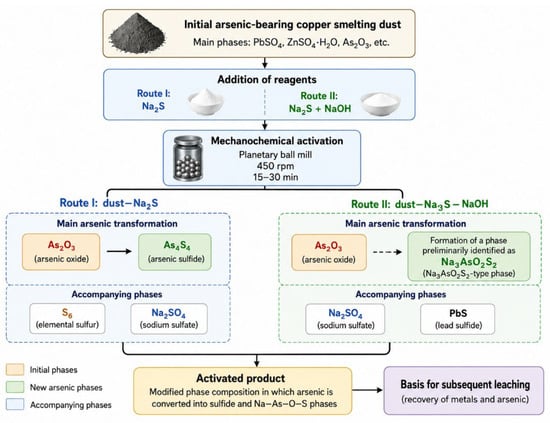
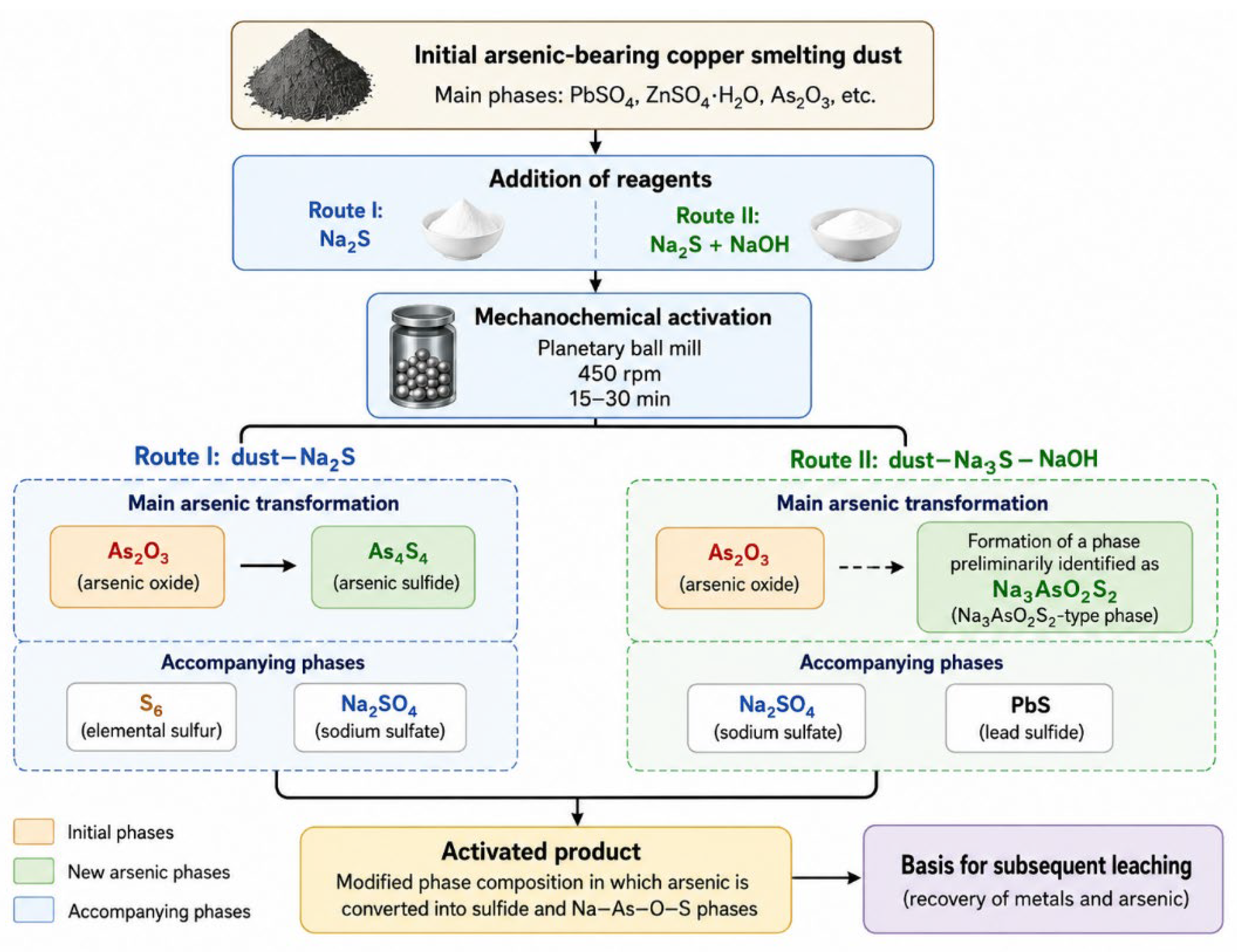
The general scheme of the mechanochemical activation approach used in this study is shown in Figure 1.
Figure 1.
Schematic representation of the mechanochemical activation of arsenic-bearing copper smelting dust in the “dust–Na2S” and “dust–Na2S–NaOH” systems.
2. Materials and Methods
2.1. Materials
The object of this study was industrial arsenic-bearing copper smelting dust generated in the gas-cleaning systems of the Balkhash Copper Smelter (Republic of Kazakhstan). This type of dust waste belongs to the category of fine-dispersed technogenic materials formed during the high-temperature processing of copper concentrates and is characterized by a complex multiphase and multicomponent composition.
Sodium sulfide (Na2S, purity ≥60%, industrial grade, Shandong Pulisi Chemical Co., Ltd., Zibo, China) and sodium hydroxide (NaOH, analytical grade, JSC Bashkir Soda Company, Sterlitamak, Russia) were used as mechanochemical additives. The reagents were used as received, without additional purification. The required amounts of Na2S and NaOH were weighed according to the selected dust–reagent ratios and jointly loaded into the milling jar with the copper smelting dust.
The dust material was sampled from the dry gas-cleaning system without preliminary fractionation or chemical treatment, thereby preserving its original phase and elemental state. This approach made it possible to evaluate the effect of subsequent technological treatments under conditions as close as possible to real industrial ones.
Before the experimental studies, the sample was subjected to thermal dehydration at 110 °C for 4 h in order to remove physically bound and hygroscopic moisture, as well as to stabilize the physicochemical characteristics of the material. This pretreatment was used to standardize the initial mass of the solid material and to minimize the uncontrolled effect of residual moisture on the dust-to-reagent ratio and agglomeration behavior during milling. The selected temperature regime excluded the possibility of phase transformations and chemical reactions that could distort the initial state of the dust.
The high content of toxic components, primarily arsenic compounds and heavy metals, as well as the fine-dispersed structure of the dust material, determine its increased reactivity and environmental hazard. In this regard, the studied material is of considerable practical interest from the standpoint of developing resource-efficient and environmentally oriented technologies for processing technogenic waste from copper smelting production.
2.2. Mechanochemical Activation
Mechanochemical activation of the copper smelting dust was carried out in a Tencan XQM-2A planetary ball mill (Tencan, Changsha, China). In this study, mechanochemical treatment refers to high-energy dry milling in a planetary ball mill, where repeated impact and friction generate fresh particle surfaces and structural defects. The milling jar and balls were made of hardened steel; the jar volume was 500 mL. In all experiments, steel balls with a diameter of 8 mm were used. The mass of the processed mixture was 10 g per cycle. The ball-to-powder mass ratio (BPR) was maintained at 10:1, which ensured sufficient impact energy and effective mechanochemical interaction between the dust particles and the added reagents.
The rotational speed of the planetary carrier was set at 450 rpm. The milling time was varied in the range of 15–30 min depending on the experimental series. These milling parameters were selected based on preliminary screening experiments and a systematic evaluation of process variables, which made it possible to determine reliable and reproducible activation conditions while avoiding excessive agglomeration of fine particles.
The compositions and mechanochemical activation conditions of the samples selected for detailed analysis are summarized in Table 1. The selected sample set was designed to compare two key factors controlling the phase transformations of arsenic-bearing compounds: reagent composition and activation time. In the binary “dust–Na2S” system, the ratios of 80:20 and 60:40 were selected as representative regimes corresponding to a moderate sulfide dosage and an excess sulfide dosage, respectively. This made it possible to evaluate whether increasing the Na2S content promotes further arsenic sulfidation or mainly enhances the formation of secondary sulfur- and sodium-containing phases.
Table 1.
Composition and mechanochemical activation conditions of the samples selected for detailed analysis.
The ternary “dust–Na2S–NaOH” system was included to assess the effect of an alkaline–sulfide medium on arsenic redistribution compared with the binary sulfide system. The activation times of 15 and 30 min were selected to compare the early and more developed stages of mechanochemical transformation. Thus, the selected samples provide a consistent basis for comparing the effects of Na2S dosage, NaOH addition, and treatment duration on the phase evolution of the dust.
The 15 and 30 min durations were selected as characteristic intervals corresponding to the early and more pronounced stages of mechanochemical treatment. This approach made it possible to compare the effect of milling duration on phase transformations without shifting to prolonged treatment regimes that may be accompanied by intensified agglomeration and overgrinding.
The compositions of the mixtures in both series were varied in accordance with the experimental design in order to comparatively assess the effect of sulfide and alkaline–sulfide media on the transformation of arsenic-bearing phases and the accompanying changes in the phase composition of the matrix.
2.3. Analytical Methods
X-ray diffraction analysis of the samples was carried out using a DW-XRD-27 mini diffractometer ( Chongqing Drawell Instrument Co., Ltd., Chongqing, China) with CuKα radiation. Data acquisition was performed under the following conditions: X-ray tube voltage, 35 kV; current, 15 mA; scanning step, 0.02° 2θ; and signal counting time, 3 s per point. Preliminary processing of the diffraction patterns, including the determination of the angular positions and intensities of the diffraction peaks, was performed using Jade 6.5 software with an integrated Search-Match module. Phase identification was carried out using PCPDFWIN (International Centre for Diffraction Data, Newtown Square, PA, USA), Search-Match (Materials Data Inc., Livermore, CA, USA), and Diffrac plus EVA (Bruker AXS, Karlsruhe, Germany) software based on the PDF-2 diffraction database of the International Centre for Diffraction Data (ICDD), which contains approximately 140,000 diffraction standard cards.
The morphology and microstructure of the initial and mechanochemically activated samples were examined using a Quanta 3D 200i scanning electron microscope (FEI Company, Hillsboro, OR, USA) at an accelerating voltage of 20 kV.
The elemental composition of the samples before and after mechanochemical activation was determined by X-ray fluorescence analysis using an Axios wavelength-dispersive spectrometer (PANalytical, Almelo, The Netherlands).
Thermodynamic evaluation was performed using HSC Chemistry 5.1 as a supporting tool to assess the energetic feasibility of possible arsenic phase transformations during mechanochemical activation. The calculations were based on the standard Gibbs free energy change (ΔG°) of selected model reactions and the corresponding equilibrium constants over the temperature range of 25–1000 °C. Since mechanochemical activation is a non-equilibrium solid-state process, these calculations were used only as qualitative support for the experimentally observed XRD trends.
3. Results and Discussion
3.1. Characterization of the Initial Dust
Industrial arsenic-bearing copper smelting dust sampled from the dry gas-cleaning system of the copper smelting plant in Balkhash, Republic of Kazakhstan, was used as the starting material. Before the analytical measurements, the sample was dehydrated at 110 °C for 4 h in order to remove hygroscopic moisture and stabilize the initial characteristics of the material. The elemental composition of the dust, according to X-ray fluorescence analysis, is presented in Table 2.
Table 2.
Chemical composition of the dust sample (wt. %).
According to the data in Table 2, the dust sample is characterized by high contents of Pb (32.15 wt.%), As (8.43 wt.%), Zn (8.01 wt.%), and S (7.20 wt.%), whereas the contents of Cu and Fe are 1.38 and 0.98 wt.%, respectively. The sample also contains impurity elements, including Cd (0.80 wt.%), Sb (0.61 wt.%), and Bi (0.65 wt.%), as well as Si, K, and Ca in lower total amounts. This component ratio is typical of dusts from dry gas-cleaning systems of copper smelting plants and indicates a multicomponent sulfate–oxide matrix with a significant contribution of arsenic-bearing compounds. In the following sections, particular attention is paid to the forms of arsenic occurrence in the initial dust and their transformation during mechanochemical treatment in the “dust–Na2S” and “dust–Na2S–NaOH” systems.
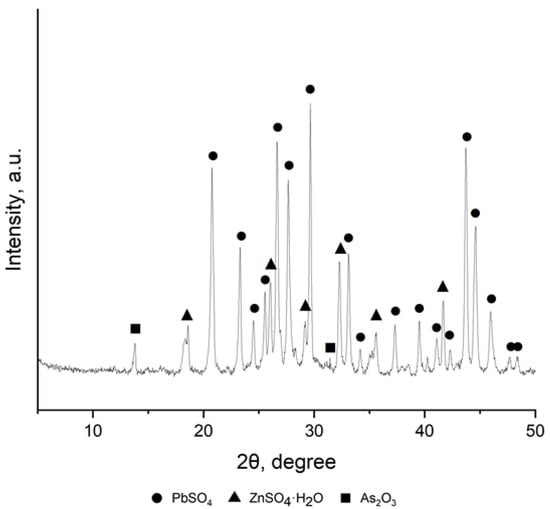
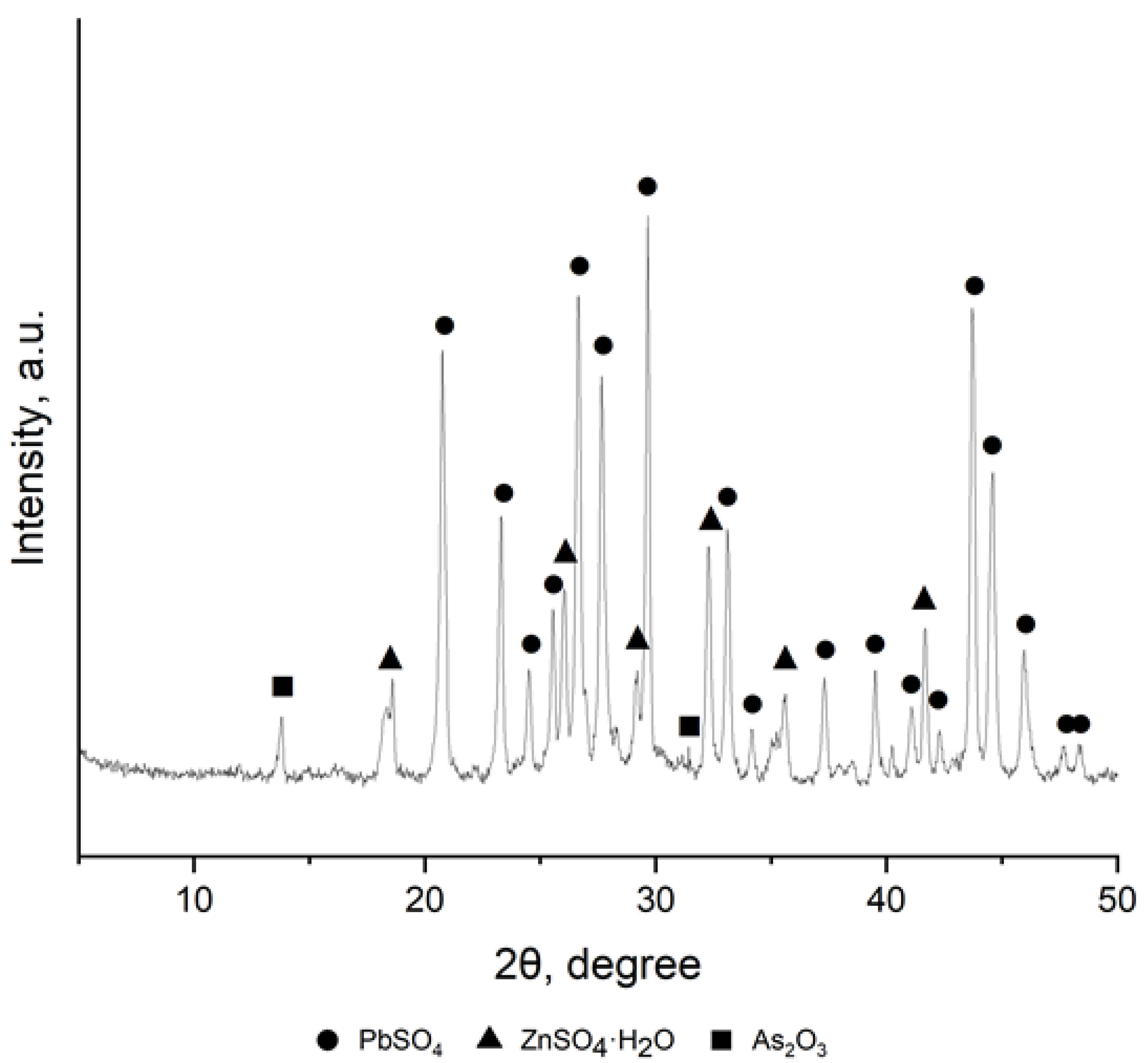
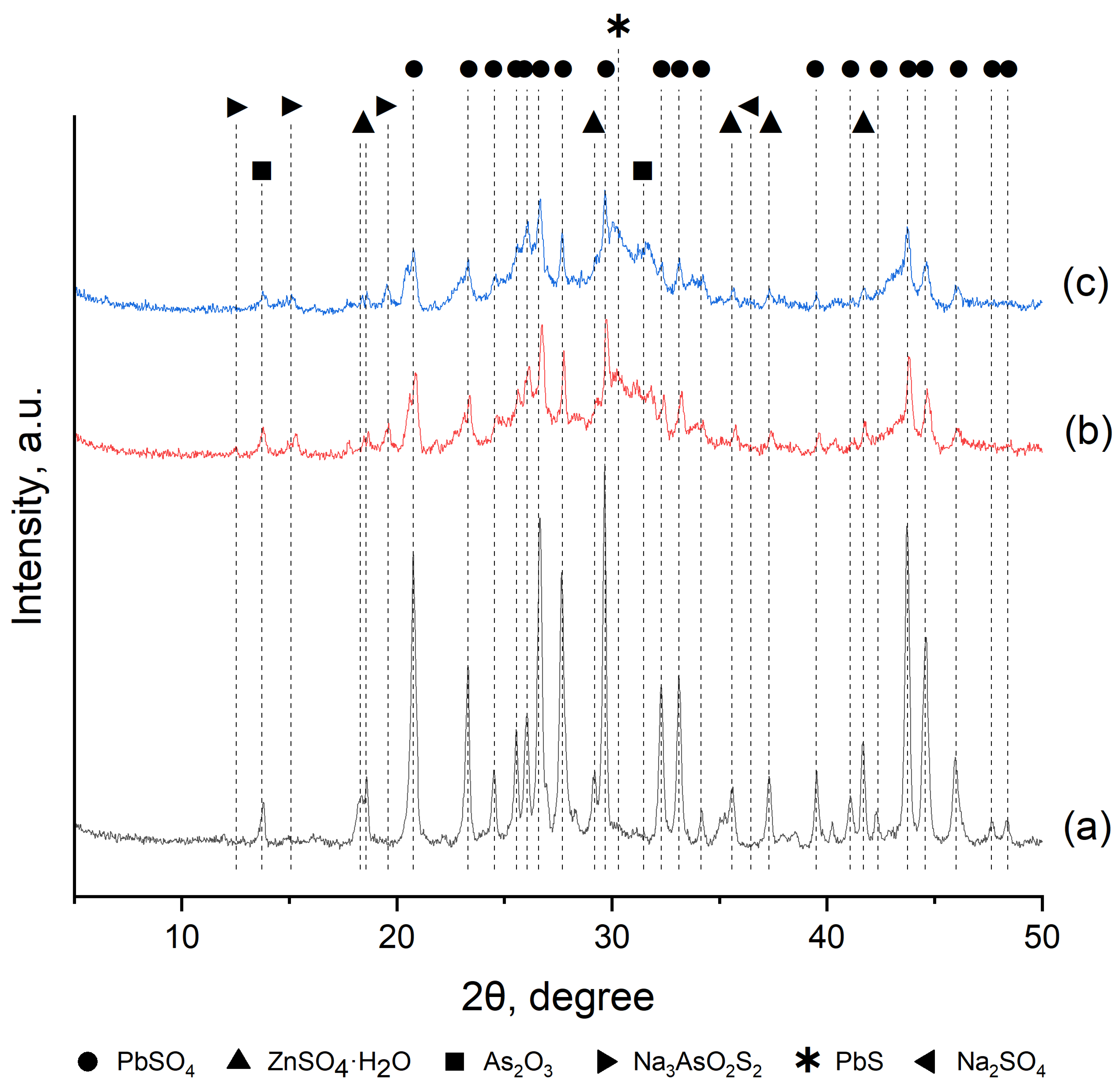
Figure 2 shows the X-ray diffraction pattern of the initial dust sample, in which the following major crystalline phases were identified: lead sulfate (PbSO4, 60.0%), hydrated zinc sulfate (ZnSO4·H2O, 34.0%), and arsenic(III) oxide (As2O3, 6.0%). Thus, the initial material is characterized by the predominance of a Pb–Zn sulfate matrix and the presence of arsenic in oxide form.
Figure 2.
X-ray diffraction pattern of the initial dust sample.
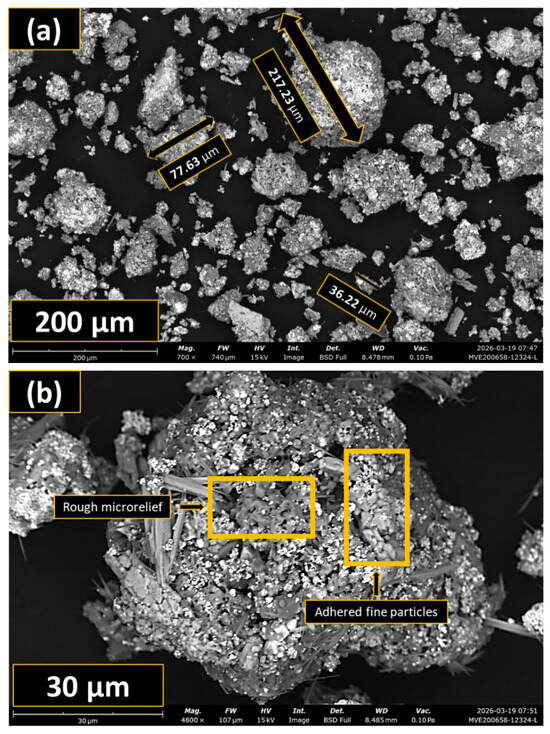
The scanning electron microscopy images of the initial dust sample (Figure 3) reveal a polydisperse and morphologically heterogeneous particle system. The material consists of individual fragments and irregularly shaped agglomerates differing in size and degree of compaction. The sample is characterized by pronounced agglomeration, in which fine particles are combined into larger loose conglomerates of complex structure.
Figure 3.
SEM images of the initial dust: (a) overview image showing the polydisperse structure of the sample with characteristic particle/agglomerate sizes; (b) detailed image of an agglomerate with a rough and morphologically heterogeneous surface.
The particles and aggregates are unevenly distributed in size, indicating the absence of a narrow particle size distribution. The surface of the agglomerates is predominantly rough, with a developed microrelief and adhered fragments of a finer dispersed fraction. In BSD mode, areas of different contrast are also observed, which indicates the chemical and structural heterogeneity of the material.
The observed morphology is generally characteristic of technogenic dusts of complex composition and reflects the multiphase organization of the initial material. The combination of a high degree of agglomeration, a developed surface, and the presence of fine particles creates favorable conditions for the intensification of structural and phase transformations during subsequent mechanochemical activation.
In addition to morphological observations, EDS microanalysis was performed for selected regions of the initial dust in order to clarify the local elemental distribution within individual agglomerates. The results are presented in Table 3.
Table 3.
Local elemental composition of a selected region of the initial dust according to EDS microanalysis.
The EDS data show that the analyzed region is enriched in As and Pb, with noticeable amounts of O and S. This confirms the heterogeneous distribution of arsenic- and lead-bearing components within the initial dust agglomerates. The simultaneous presence of O, S, As, Pb, and Zn is consistent with the multiphase sulfate–oxide nature of the initial material established by XRD and XRF analyses.
3.2. Characterization of Mechanochemically Activated Dust in the “Dust–Na2S” and “Dust–Na2S–NaOH” Systems
3.2.1. Changes in the Phase Composition of Dust During Mechanochemical Activation in the “Dust–Na2S” System
Mechanochemical activation of arsenic-bearing dust in the presence of sodium sulfide is considered a means of intensifying solid-state interactions and redistributing the phase composition due to local high-energy effects generated during intensive milling. To assess the influence of Na2S on the structure and phase composition of the material, data from X-ray diffraction analysis, scanning electron microscopy, and thermodynamic calculations were used.
To clarify the XRD-derived compound contents and avoid overloading the diffraction patterns with numerical values, the semi-quantitative phase composition of the initial dust and the products obtained in the “dust–Na2S” system is summarized in Table 4.
Table 4.
Semi-quantitative XRD phase composition of the initial dust and products obtained in the “dust–Na2S” system.
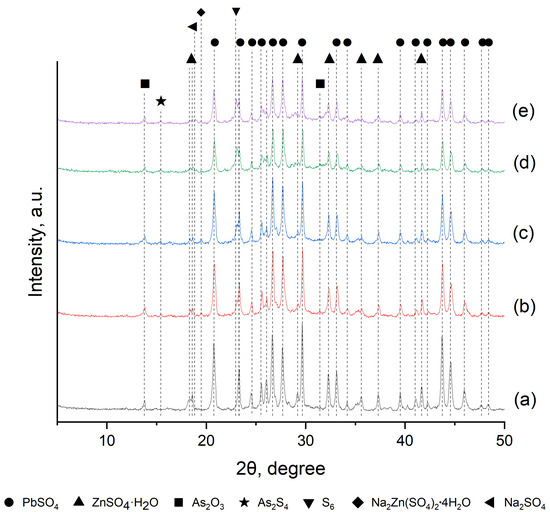
As shown in Figure 4 and Table 4, the initial dust is mainly represented by PbSO4 and ZnSO4·H2O, while As2O3 is identified as the main crystalline arsenic-bearing phase. After mechanochemical activation in the presence of Na2S, additional reflections corresponding to newly formed sulfur- and sodium-containing phases appear, indicating phase redistribution in the multicomponent sulfate matrix.
Figure 4.
XRD patterns of the initial dust and products obtained in the “dust–Na2S” system after mechanochemical activation: (a) initial dust; (b) dust–Na2S = 80:20, 15 min; (c) dust–Na2S = 80:20, 30 min; (d) dust–Na2S = 60:40, 15 min; (e) dust–Na2S = 60:40, 30 min. The patterns were normalized and vertically shifted for clarity. Only the main characteristic reflections used for phase identification are marked to avoid overloading the diffraction patterns.
At 20 wt.% Na2S, the formation of As4S4 is observed after 15 min of activation (Figure 4b), indicating the onset of solid-state sulfidation of crystalline As2O3. According to the semi-quantitative XRD data presented in Table 4, increasing the activation time to 30 min increases the relative content of As4S4 from 3.0 to 4.0%, while the content of crystalline As2O3 decreases from 6.0 to 5.0%. The content of elemental sulfur S6 remains approximately 10.0%, which indicates that this regime proceeds without intensive accumulation of excess sulfur-containing phases.
When the Na2S content is increased to 40 wt.% (Figure 4d,e), the phase evolution changes mainly through the accumulation of secondary sulfur- and sodium-containing phases. As shown in Table 4, the relative content of S6 increases to approximately 15.0%, and Na2SO4 is detected at 10.0–12.0%. At the same time, the As4S4 content remains within a narrow range of 4.0–5.0%, indicating that increasing the Na2S dosage does not lead to a proportional increase in crystalline arsenic sulfide. Therefore, excess Na2S mainly promotes secondary phase formation rather than further intensifying arsenic sulfidation.
3.2.2. Morphological and Microstructural Changes in the “Dust–Na2S” System According to SEM Data
To identify the morphological and microstructural changes accompanying mechanochemical activation, the samples were analyzed by scanning electron microscopy (SEM).
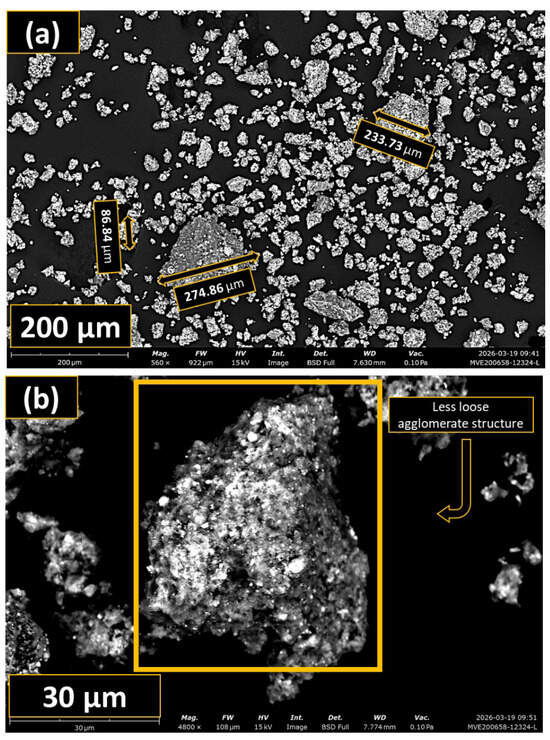
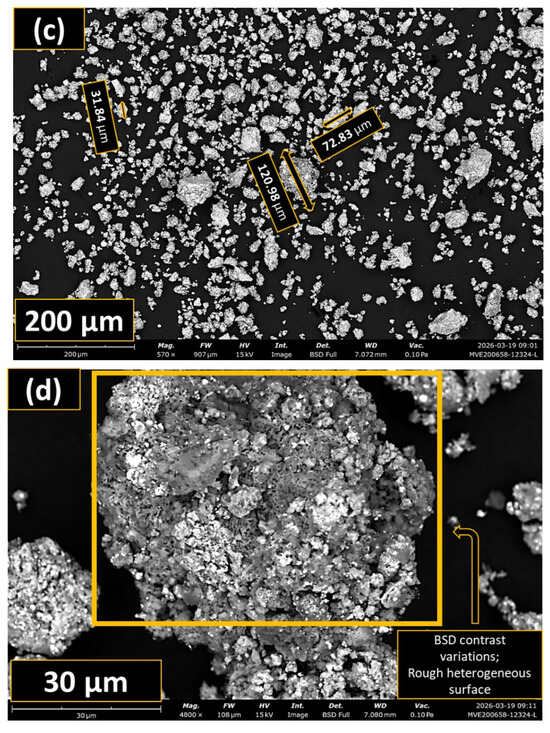
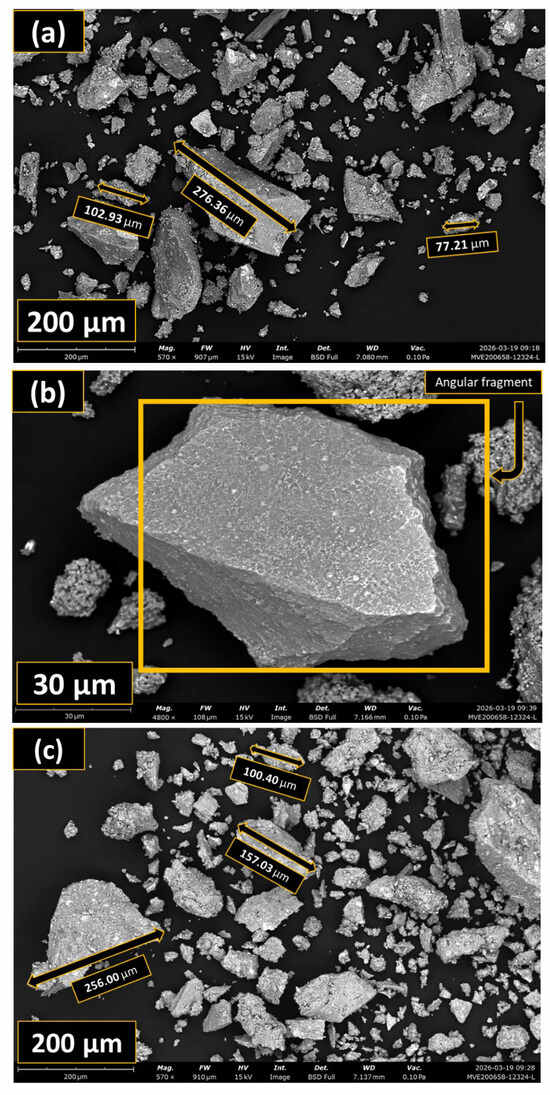
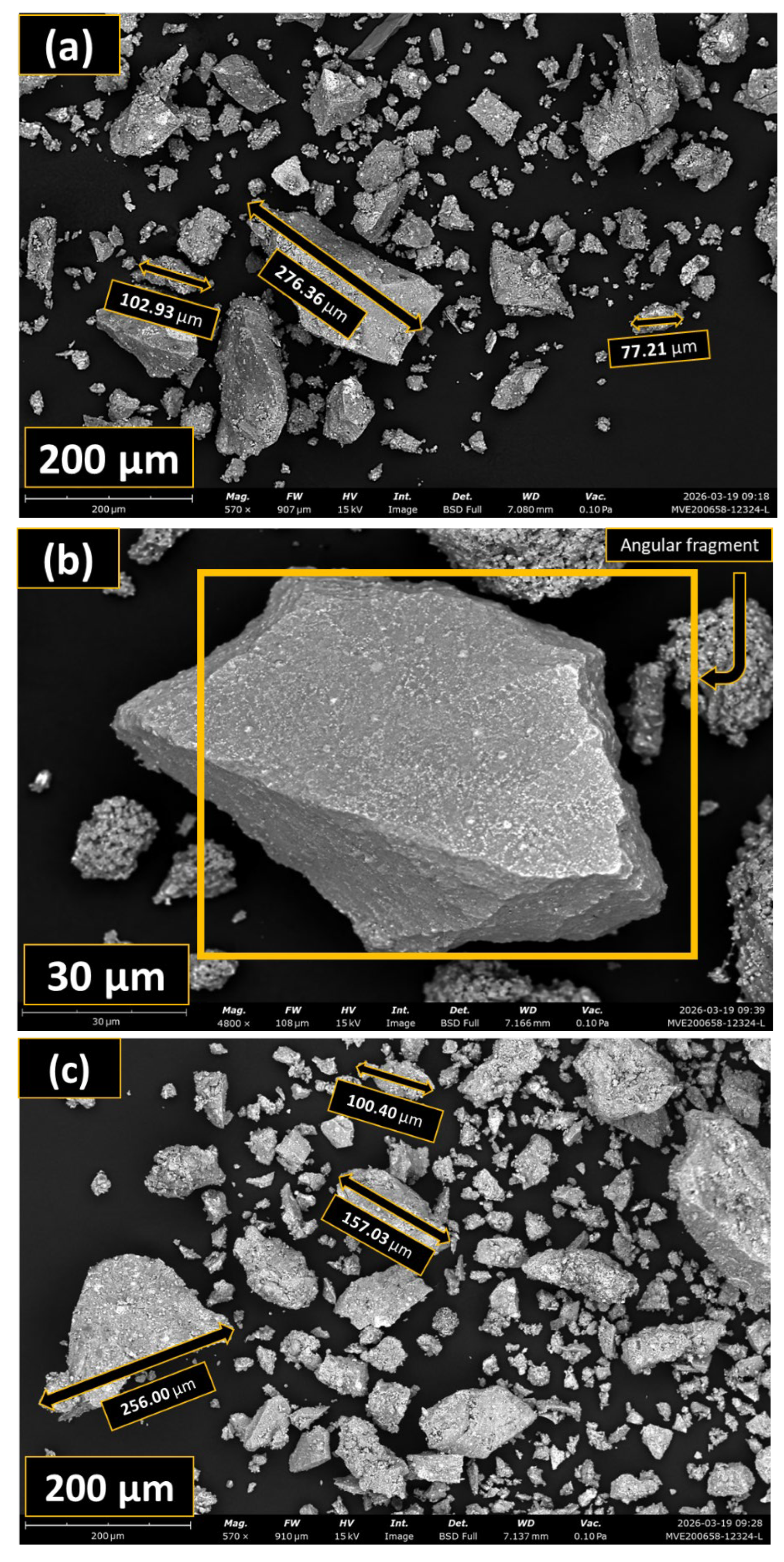
In the SEM images of samples from the “dust–Na2S” system after 15 and 30 min of mechanochemical activation (Figure 5), the polydisperse character of the material is preserved; however, the particle morphology differs noticeably depending on the treatment duration. After 15 min of mechanochemical activation, the sample contains both individual dispersed particles and irregularly shaped agglomerates whose surfaces remain rough and morphologically heterogeneous. At the same time, the overall structure of the material appears less loose than that of the initial dust, indicating the initial restructuring of the system under mechanical impact.
Figure 5.
SEM images of samples from the “dust–Na2S” system after mechanochemical activation for different durations: (a) overview image of the sample after 15 min of treatment; (b) magnified fragment of the same sample; (c) overview image of the sample after 30 min of treatment; (d) magnified fragment of the same sample.
An increase in the mechanochemical activation time to 30 min is accompanied by more pronounced compaction and coarsening of the agglomerates. The overview and detailed images reveal signs of closer intergrowth of fine fragments into larger aggregated formations with a developed and heterogeneous surface. Differences in contrast observed in BSD mode indicate a non-uniform distribution of components within the particles and agglomerates. Overall, increasing the mechanochemical activation time from 15 to 30 min promotes the formation of a denser and more structurally transformed morphology, which is consistent with the development of mechanically induced processes of fragmentation, matter redistribution, and secondary agglomeration in the “dust–Na2S” system.
The elemental composition of a representative agglomerate in the “dust–Na2S” system was evaluated by EDS; the results are given in Table 5.
Table 5.
EDS composition of a representative agglomerate in the “dust–Na2S” system, wt.%.
As shown in Table 5, the analyzed agglomerate contains high amounts of sulfur and sodium, indicating the incorporation of the added Na2S into the activated product. The simultaneous presence of arsenic and sulfur supports the XRD-based interpretation of arsenic redistribution toward sulfur-containing products during mechanochemical activation. The detection of Zn reflects the multicomponent nature of the original dust matrix.
3.2.3. Thermodynamic Substantiation of the Pathways of Mechanochemical Transformation of Arsenic in the Dust–Na2S System
The thermodynamic evaluation of the key transformations was performed based on calculations of the standard Gibbs free energy change of reaction (ΔG°) and the corresponding equilibrium constants (K) over the temperature range of 25–1000 °C. According to literature data, high-energy milling leads to the formation of short-lived local high-temperature zones (“hot spots”) in the contact region between particles and grinding bodies, for which estimates on the order of 103 K have been reported, whereas the average bulk temperature of the milling jar remains substantially lower [17,19,25,26]. The calculations were carried out using the HSC Chemistry 5.1 software package (Outotec Research Oy, Pori, Finland).
The thermodynamic calculation was performed for the following model reaction of arsenic sulfide formation:
2As2O3 + 6Na2S + 3O2(g) → As4S4 + 2Na2SO4 + 4Na2O
The calculated thermodynamic parameters for reaction (1) are summarized in Table 6.
Table 6.
Thermodynamic parameters calculated for reaction (1) using HSC Chemistry 5.1.
As shown in Table 4, throughout the considered temperature range of 25–1000 °C, the calculated ΔG° values for reaction (1) remain negative, indicating the thermodynamic feasibility of the process proceeding toward As4S4 formation under the selected model conditions. With increasing temperature, the absolute value of ΔG° decreases; however, the reaction remains energetically favorable over the entire range. The calculated equilibrium constants are extremely high, with log K values ranging from 14.248 to 159.144, which indicates a strong thermodynamic shift toward the reaction products. These results support the experimentally observed tendency toward arsenic redistribution from the oxide form to sulfur-containing phases during mechanochemical activation.
3.2.4. Changes in the Phase Composition of Dust During Mechanochemical Activation in the “Dust–Na2S–NaOH” System
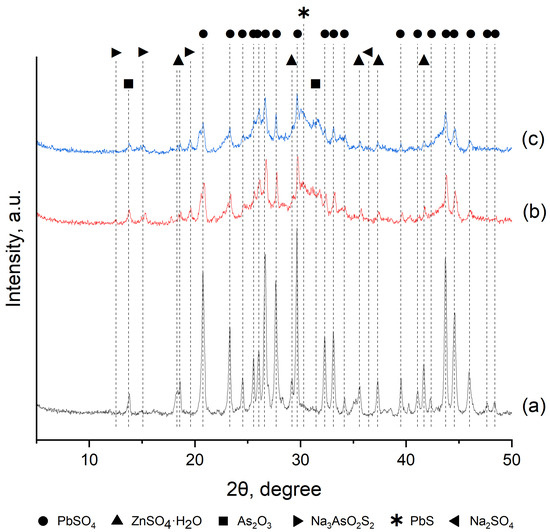
To analyze the effect of mechanochemical activation time on phase transformations in the ternary “dust–Na2S–NaOH” system, the composition 80:20:30 was examined at treatment durations of 15 and 30 min. The XRD patterns shown in Figure 6 make it possible to compare the initial dust with the activated products and to trace the retention of the main sulfate components together with the formation of new sodium-, sulfur-, and arsenic-containing phases. The corresponding semi-quantitative XRD phase composition is summarized in Table 7 to provide a clearer comparison of the phase redistribution during activation.
Figure 6.
XRD patterns of the initial dust and products obtained in the “dust–Na2S–NaOH” system after mechanochemical activation: (a) initial dust; (b) dust–Na2S–NaOH = 80:20:30, 15 min; (c) dust–Na2S–NaOH = 80:20:30, 30 min. The patterns were normalized and vertically shifted for clarity. Only the main characteristic reflections used for phase identification are marked to avoid overloading the diffraction patterns. The corresponding semi-quantitative XRD phase composition is summarized in Table 7.
Table 7.
Semi-quantitative XRD phase composition of the initial dust and products obtained in the “dust–Na2S–NaOH” system.
As shown in Figure 6 and Table 7, after 15 min of mechanochemical activation in the “dust–Na2S–NaOH” system, the product contains residual sulfate phases PbSO4 and ZnSO4·H2O with relative contents of 32.0 and 24.0%, respectively. At the same time, new crystalline phases that were not detected in the initial dust are formed, including Na2SO4, Na3AsO2S2, and PbS. According to the semi-quantitative XRD data presented in Table 7, their relative contents are 23.0, 10.0, and 5.0%, respectively. The content of crystalline As2O3 is 5.3%, and the simultaneous appearance of Na3AsO2S2 indicates the involvement of arsenic oxide in solid-state transformations during mechanochemical activation.
Increasing the activation time to 30 min leads to further phase redistribution. The relative content of Na2SO4 increases from 23.0 to 33.8%, while the contents of PbSO4 and ZnSO4·H2O decrease from 32.0 to 27.5% and from 24.0 to 21.0%, respectively. The Na3AsO2S2 phase remains at a comparable level of 8.9%, and the PbS content slightly increases from 5.0 to 6.0%. A notable feature is the decrease in crystalline As2O3 from 5.3 to 2.7%, which indicates redistribution of arsenic from the oxide phase toward sodium-containing arsenic oxysulfide products under the combined presence of Na2S and NaOH.
Therefore, compared with the binary “dust–Na2S” system, the “dust–Na2S–NaOH” system demonstrates a more pronounced redistribution of the sulfate matrix and arsenic-bearing phases. The formation of Na2SO4 and PbS reflects the interaction of sulfide and alkaline components with the sulfate matrix, while the formation of Na3AsO2S2 indicates a change in the arsenic transformation pathway in the presence of NaOH.
3.2.5. Morphological and Microstructural Changes in the “Dust–Na2S–NaOH” System According to SEM Data
To identify the morphological and microstructural changes accompanying mechanochemical activation in the “dust–Na2S–NaOH” system, the samples were analyzed by scanning electron microscopy (SEM). Of particular interest was the assessment of the effect of NaOH on the nature of particle agglomeration, the condition of their surface, and the degree of structural transformation of the material in comparison with the binary “dust–Na2S” system.
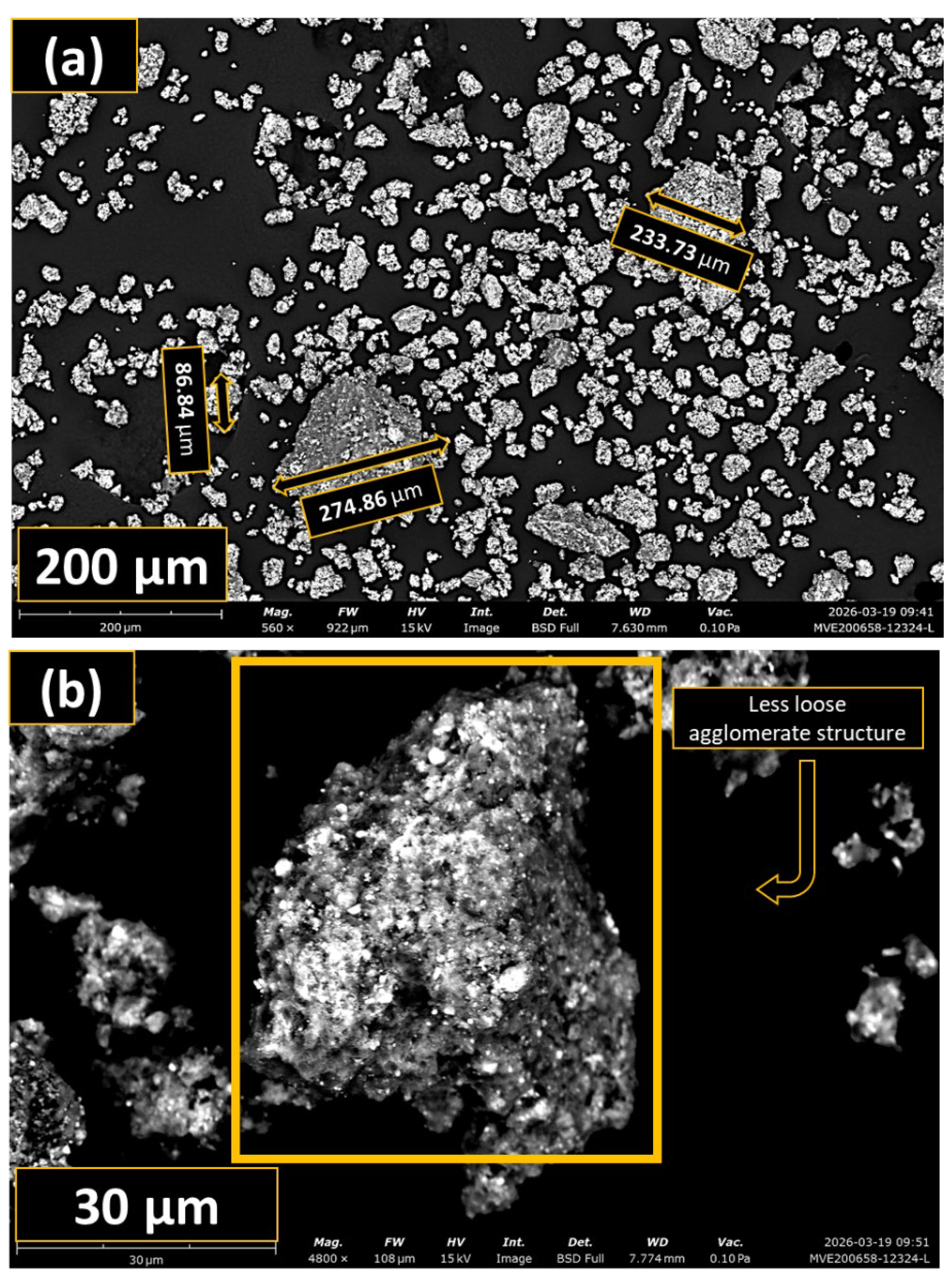
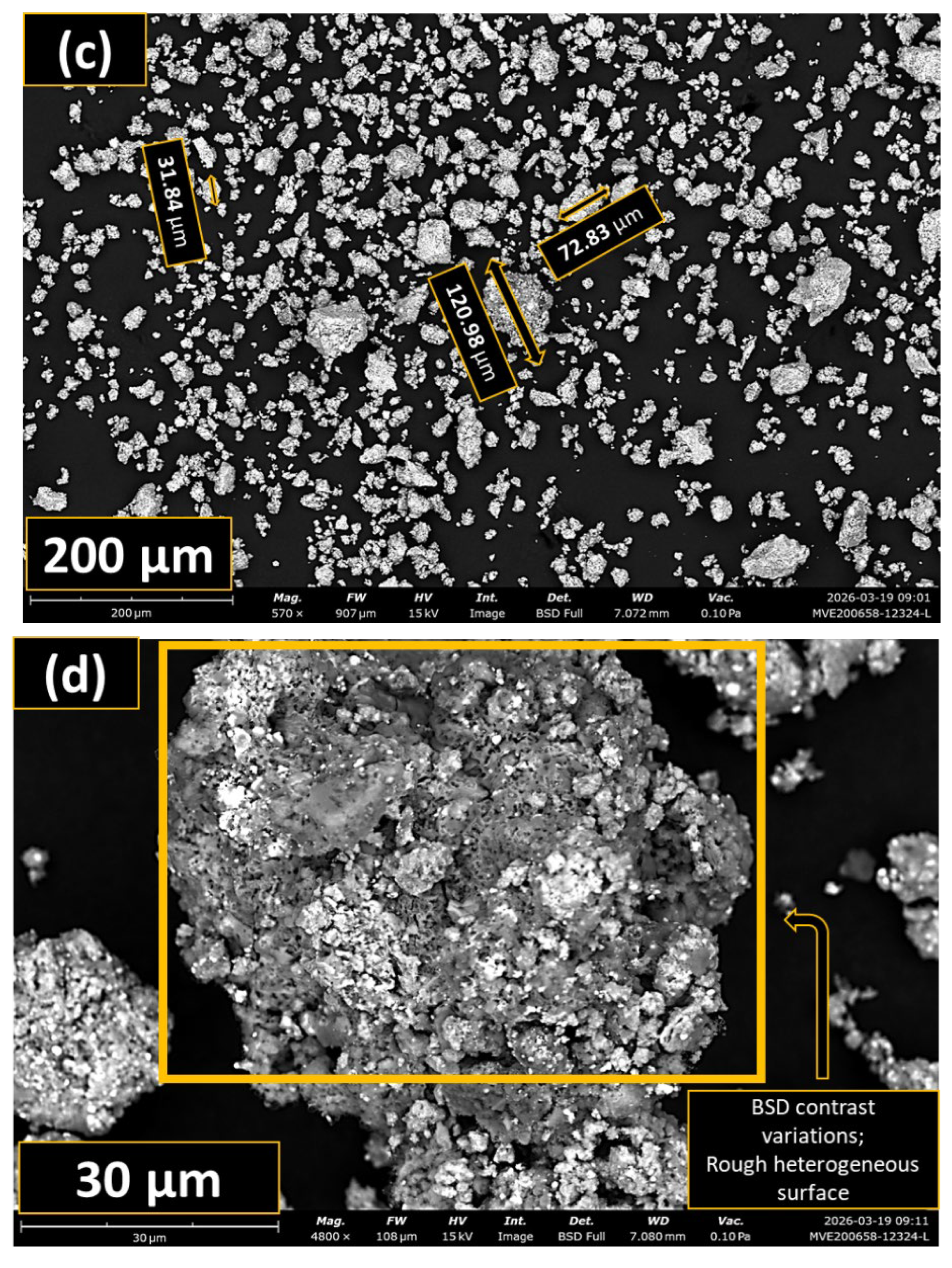
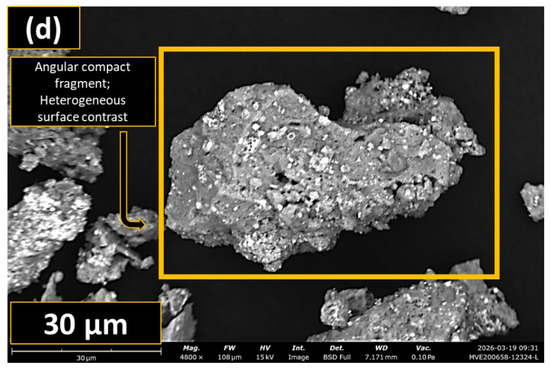
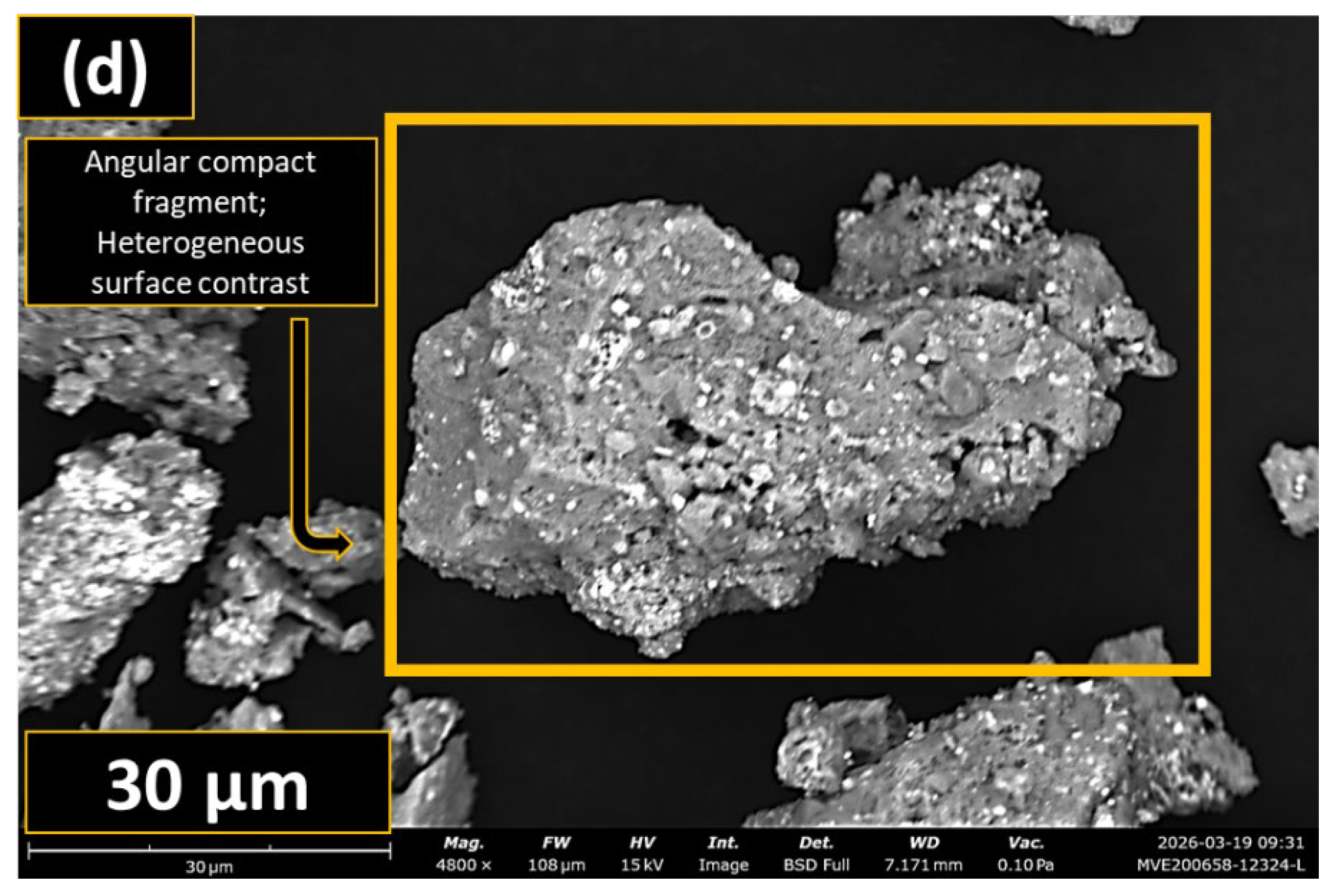
In the SEM images of samples from the “dust–Na2S–NaOH” system (80:20:30) after 15 and 30 min of mechanochemical activation (Figure 7), a pronounced morphological restructuring of the material is observed. Already after 15 min of treatment, a polydisperse system is formed, consisting of fine particles, angular fragments, and larger irregularly shaped aggregates. The particle surfaces are characterized by morphological heterogeneity and regions of different contrast in BSD mode, indicating a non-uniform distribution of components within the material.
Figure 7.
SEM images of samples from the “dust–Na2S–NaOH” system after mechanochemical activation for different durations: (a) overview image of the sample after 15 min of treatment; (b) magnified fragment of the same sample; (c) overview image of the sample after 30 min of treatment; (d) magnified fragment of the same sample.
After 30 min of mechanochemical activation, the signs of structural transformation become more pronounced. The overview and magnified images reveal denser aggregated formations formed due to the intergrowth of fine fragments and the compaction of the initial structure. The particle surfaces remain rough and heterogeneous; however, overall, the material appears more compact than the sample treated for 15 min. The observed changes indicate the intensification of mechanically induced fragmentation, matter redistribution, and secondary agglomeration processes in the presence of Na2S and NaOH.
In the “dust–Na2S–NaOH” system, EDS analysis of a selected agglomerated region showed the presence of Na, S, Zn, and As together with oxygen, which is consistent with the formation of sodium-, sulfur-, and arsenic-containing products identified by XRD. The corresponding EDS results for the selected agglomerated region of the “dust–Na2S–NaOH” system are presented in Table 8.
Table 8.
EDS elemental composition of the selected Na–S–As-containing agglomerated region in the “dust–Na2S–NaOH” system.
The EDS data indicate that the analyzed region is enriched in Na and S, while arsenic is also detected at a noticeable level. This composition supports the XRD-based interpretation that, in the presence of both Na2S and NaOH, the phase transformation proceeds with the formation of sodium- and sulfur-containing products and the redistribution of arsenic into newly formed arsenic-bearing phases. The simultaneous presence of Na, S, O, and As is consistent with the identification of Na3AsO2S2-type phases, while Zn remains associated with the residual sulfate-containing matrix.
3.2.6. Thermodynamic Substantiation of the Pathways of Mechanochemical Transformation of Arsenic in the Dust–Na2S–NaOH System
The XRD results show that, in the “dust–Na2S–NaOH” system, the phase transformations of arsenic proceed via a more complex mechanism than in the “dust–Na2S” system. Along with a decrease in the intensity of the As2O3 reflections in the mechanochemically activated products, the formation of a Na-containing As–O–S phase, preliminarily assigned to Na3AsO2S2, is observed. This indicates the probable formation of mixed oxo-thioarsenate compounds in the alkaline–sulfide medium.
A possible overall reaction for arsenic transformation can be written as follows:
The proposed reaction reflects one of the possible pathways of arsenic redistribution in the presence of sulfide and hydroxide ions and is used in the present study as a qualitative interpretative scheme. Since the compound Na3AsO2S2 is absent from the standard thermodynamic database of HSC Chemistry 5.1, its formation within the framework of this work cannot be confirmed by rigorous calculation of thermodynamic functions. Therefore, the interpretation of this phase is based primarily on experimental X-ray diffraction data and on the chemical plausibility of the formation of Na–As–O–S compounds under the combined presence of Na2S and NaOH.
The introduction of NaOH likely changes the direction of arsenic phase transformation and promotes the stabilization of sodium-containing mixed forms in which both As–O and As–S bonds are present simultaneously. Under these conditions, the redistribution of arsenic does not proceed through a single mechanism, but rather through a combination of parallel processes, including the partial retention of the oxide form, the formation of new Na–As–O–S phases, and the interaction of reagents with the components of the mineral matrix of the dust.
Thus, at this stage, the thermodynamic interpretation of arsenic behavior in the “dust–Na2S–NaOH” system should be regarded as qualitative. The overall set of data indicates that the alkaline–sulfide medium creates conditions for arsenic redistribution involving mixed sodium oxo-thio compounds, whereas the presence of residual As2O3 reflects the competitive and multistage nature of mechanochemical transformations in a multicomponent system.
3.2.7. Comparative Summary and Thermodynamic Interpretation of Phase Transformations and Possible Reaction Pathways
To provide a systematic comparison of the initial dust and the mechanochemically activated products, the main phase changes observed in the studied systems are summarized in Table 9. The table compares the binary “dust–Na2S” system and the ternary “dust–Na2S–NaOH” system at different treatment times, with particular attention to the redistribution of arsenic-bearing phases.
Table 9.
Comparative summary of phase transformations in the initial dust and mechanochemically activated products.
As shown in Table 9, mechanochemical activation in the binary “dust–Na2S” system mainly promotes partial sulfidation of As2O3 with the formation of As4S4. Increasing the Na2S content from 20 to 40 wt.% does not lead to a proportional increase in the arsenic sulfide phase, but intensifies the formation of secondary sulfur- and sodium-containing phases. In contrast, the presence of NaOH in the “dust–Na2S–NaOH” system changes the direction of arsenic redistribution and promotes the formation of a Na3AsO2S2-type phase, accompanied by a stronger decrease in As2O3.
To supplement the XRD phase analysis, the elemental composition of the initial dust and selected mechanochemically activated products was determined by XRF. The results are presented in Table 10.
Table 10.
Elemental composition of the initial dust and selected mechanochemically activated products according to XRF analysis (wt.%).
As shown in Table 10, mechanochemical activation in the presence of Na2S and NaOH leads to a marked increase in Na and S contents in the solid products compared with the initial dust. In the binary “dust–Na2S” system, increasing the Na2S dosage from 20 to 40 wt.% is accompanied by an increase in Na content from 4.82–5.52 to 7.40–7.99 wt.% and S content from 14.63–17.45 to 21.78–22.64 wt.%. This trend is consistent with the XRD detection of sulfur- and sodium-containing phases, including As4S4, S6, and Na2SO4.
In the ternary “dust–Na2S–NaOH” system, the products are characterized by substantially higher Na contents of 19.93–21.39 wt.%, which supports the XRD-based identification of sodium-containing phases, including Na2SO4 and a Na3AsO2S2-type phase. The relative contents of Pb, Zn, and As in the activated products should be considered in relation to the added reagent mass and phase redistribution during mechanochemical activation. The decrease in their relative contents in several samples mainly reflects dilution by the added Na- and S-containing reagents, compositional heterogeneity of the multicomponent dust, and redistribution of crystalline phases during mechanochemical activation. In this regard, the XRF data support the elemental changes accompanying the phase transformations identified by XRD, while the identification of specific crystalline phases is based on the XRD results.
Since the mechanochemically activated dust–reagent systems are multicomponent, the observed phase evolution cannot be described by a single reaction pathway. Therefore, in addition to the main thermodynamic calculation for As4S4 formation, possible accompanying reactions were considered to interpret the formation of secondary sulfate and sulfide phases detected by XRD. The corresponding model reactions and selected ΔG° values calculated using HSC Chemistry 5.1 are summarized in Table 11.
Table 11.
Possible model reactions considered for interpreting phase transformations during mechanochemical activation.
Reactions (1), (3), and (4) are characterized by negative ΔG° values at both 25 and 1000 °C, indicating that the formation of As4S4, Na2SO4, and PbS is thermodynamically favorable under the selected model conditions. Reaction (3) shows highly negative ΔG° values, confirming that partial oxidation of Na2S to Na2SO4 can be a significant competing process. Reaction (4) also remains favorable over the considered temperature range and may explain the formation of PbS detected in the activated products. Thus, the thermodynamic interpretation was expanded from a single arsenic sulfidation reaction to a set of possible competing and accompanying reactions in the multicomponent dust–reagent system.
The obtained results indicate that mechanochemical activation changes the phase state of arsenic in copper smelting dust and may therefore influence its behavior during subsequent hydrometallurgical treatment. In the “dust–Na2S” system, the transformation of As2O3 into As4S4 suggests the possibility of converting arsenic from an oxide form into a sulfur-containing form. In the “dust–Na2S–NaOH” system, the formation of a Na3AsO2S2-type phase indicates a different pathway of arsenic redistribution in an alkaline–sulfide medium. These phase changes can be considered favorable for the development of a subsequent selective leaching stage, since the chemical form of arsenic is one of the key factors controlling its dissolution behavior. Thus, the proposed processing concept may include mechanochemical activation as a pretreatment step followed by selective leaching of arsenic-containing phases under alkaline or alkaline–sulfide conditions.
4. Conclusions
The study investigated the effect of mechanochemical activation of arsenic-bearing copper smelting dust in the “dust–Na2S” and “dust–Na2S–NaOH” systems on the phase transformations of arsenic and the morphological changes in the material. It was established that the initial dust is a multicomponent sulfate–oxide system containing primarily PbSO4, ZnSO4·H2O, and As2O3, and is characterized by a polydisperse, agglomerated, and morphologically heterogeneous structure.
It was shown that, in the “dust–Na2S” system, mechanochemical activation leads to the sulfidation of arsenic with the formation of As4S4 and a decrease in the As2O3 content. The appearance of As4S4 is already observed at 20 wt.% Na2S after 15 min of treatment, whereas increasing the time to 30 min only moderately intensifies this process. Raising the Na2S content to 40 wt.% does not result in a substantial increase in the target arsenic sulfide phase, but is accompanied by the formation of secondary sodium- and sulfur-containing products.
It was established that, in the “dust–Na2S–NaOH” system, phase transformations proceed more deeply and are accompanied by the formation of a Na-containing As–O–S phase, preliminarily identified as Na3AsO2S2. In this case, the combined presence of Na2S and NaOH changes the direction of arsenic transformation compared with the binary system and promotes its conversion into more complex mixed compounds. SEM analysis showed that increasing the duration of mechanochemical activation in both systems is accompanied by structural compaction, agglomerate coarsening, and the development of secondary particle aggregation, with these changes being more pronounced in the ternary system.
Thus, mechanochemical activation in the presence of Na2S, and especially in the Na2S–NaOH system, is an effective tool for the directed modification of the phase state of arsenic in copper smelting dust. The obtained results indicate that mechanochemical activation may serve as a preliminary treatment stage for arsenic-bearing copper smelting dust prior to subsequent selective leaching of arsenic-containing phases, recovery of valuable components, and reduction in the environmental hazard associated with such technogenic wastes.
Author Contributions
Conceptualization, T.O.; methodology, T.O. and K.K., L.M. and A.B.; software, T.O.; validation, T.O. and K.K.; formal analysis, T.O. and K.K.; investigation, T.O., K.K., L.M. and A.B.; resources, T.O.; data curation, T.O.; writing—original draft preparation, T.O. and K.K.; writing—review and editing, T.O. and K.K.; visualization, T.O.; supervision, T.O.; project administration, T.O.; funding acquisition, T.O. All authors have read and agreed to the published version of the manuscript.
Funding
This research was funded by the Science Committee of the Ministry of Science and Higher Education of the Republic of Kazakhstan (Grant no. AP25795519).
Data Availability Statement
The data presented in this study are available on request from the corresponding author. The data are not publicly available due to confidentiality agreements with our industrial partner and pending intellectual property considerations.
Conflicts of Interest
The authors declare no conflicts of interest.
References
- Xu, B.; Ma, Y.; Yang, J.; Yang, Y.; Li, Q.; Jiang, T. A review of the comprehensive recovery of valuable elements from copper smelting open-circuit dust. J. Miner. 2020, 72, 1860–1875. [Google Scholar]
- Wang, X.; Wang, R.; Xu, W.; Yang, Y.; Zhu, T. Valuable metals recovery and hazardous waste elimination from copper smelting dusts: A review. Sep. Purif. Technol. 2026, 380, 135386. [Google Scholar]
- Okanigbe, D.O.; Popoola, A.P.I.; Adeleke, A.A. Characterization of copper smelter dust for sustainable utilization. Procedia Manuf. 2017, 7, 381–388. [Google Scholar]
- Clancy, T.M.; Hayes, K.F.; Raskin, L. Arsenic waste management: A critical review of testing and disposal of arsenic-bearing solid wastes generated during arsenic removal from drinking water. Environ. Sci. Technol. 2013, 47, 10799–10812. [Google Scholar]
- Dosmukhamedov, N.; Zholdasbay, E.; Argyn, A. Extraction of Pb, Cu, Zn and As from fine dust of copper smelters. Sustainability 2023, 15, 15881. [Google Scholar]
- Henao, H.; Paredes, I.; Diaz, R.; Ortiz, J. Pyrometallurgical removal of arsenic from electrostatic precipitator dusts of copper smelting. J. Miner. Mater. Charact. Eng. 2021, 9, 545–565. [Google Scholar]
- Dosmukhamedov, N.; Takishov, A.; Zholdasbay, E.; Argyn, A. Extraction of arsenic from fine dust of copper smelters by calcination. Sustain. Environ. Res. 2024, 34, 28. [Google Scholar]
- Ebrahimpour, S.; Abdollahi, H.; Gharabaghi, M.; Manafi, Z.; Tuovinen, O.H. Acid bioleaching of copper from smelter dust: Kinetics and mechanisms. Miner. Process. Extr. Metall. Rev. 2022, 43, 233–242. [Google Scholar]
- Yao, L.; Min, X.; Xu, H.; Ke, Y.; Liang, Y.; Yang, K. Hydrothermal treatment of arsenic sulfide residues from smelting processes. Int. J. Environ. Res. Public Health 2018, 15, 2696. [Google Scholar]
- Yu, Y.; Guo, X.; Shi, J.; Tian, Q. Leaching behavior of metals from high-arsenic dust by NaOH–Na2S alkaline leaching. Trans. Nonferrous Met. Soc. China 2016, 26, 575–585. [Google Scholar]
- Yi, Y.; Shi, J.; Tian, Q.; Guo, X. Arsenic removal from high-arsenic dust by NaOH–Na2S alkaline leaching. Chin. J. Nonferrous Met. 2015, 25, 806–814. [Google Scholar]
- Cisneros, G.; Juárez, J.C.; Reyes, I.A.; Reyes, M.; Urbano, G.; Martínez, J.I.; Teja, A.M.; Flores, M.U. Selective removal of arsenic and antimony by alkaline sodium sulfide leaching from a polymetallic copper concentrate. Processes 2025, 13, 3347. [Google Scholar]
- Liang, Q.; Jiang, L.; Duan, N.; Xu, F. Exploration of the arsenic removal performance fluctuation in sulfide-based processes. J. Clean. Prod. 2022, 366, 132880. [Google Scholar]
- Osserov, T.B.; Guseynova, G.D.; Chepushtanova, T.A.; Ketegenov, T.A. Synthesis of sodium polysulfide for copper ore processing. Non-Ferr. Met. 2017, 2, 3–8. [Google Scholar]
- Kenzhaliyev, B.; Ketegenov, T.; Mussapyrova, L.; Nadirov, R. Ultrasound-assisted selective leaching of arsenic from copper smelter flue dust in alkaline Na2S media. Minerals 2024, 14, 532. [Google Scholar]
- Shi, H.; Nie, K.; Dong, B.; Chao, L.; Gao, F.; Ma, M.; Long, M.; Liu, Z. Mixing enhancement via a serpentine micromixer for real-time activation of carboxyl. Chem. Eng. J. 2020, 392, 123642. [Google Scholar]
- Do, J.-L.; Friščić, T. Mechanochemistry: A Force of Synthesis. ACS Cent. Sci. 2017, 3, 13–19. [Google Scholar]
- Chetry, A.B. Mechanochemistry: A new frontier in chemical synthesis. J. R. Soc. Chem. 2025, 49. [Google Scholar]
- Rogachev, A.S. Mechanical activation of heterogeneous exothermic reactions in powder mixtures. Russ. Chem. Rev. 2019, 88, 875–900. [Google Scholar]
- Marchini, M.; Montanari, G.; Casali, L.; Martelli, M.; Raggetti, L.; Baláž, M.; Baláž, P.; Maini, L. “What makes every work perfect is cooking and grinding”: The ancient roots of mechanochemistry. Mater. Horiz. 2024, 11, 1570–1585. [Google Scholar]
- Shi, Y.; Zhang, W.-X. Mechanochemistry in hazardous wastes treatment: A review. J. Hazard. Mater. 2025, 13, 117223. [Google Scholar]
- Vasconcelos, A.A.; Gatti, L.C.P.; de Mescouto, V.A.; de Oliveira, A.d.N.; Melchiorre, M.; Noronha, R.C.R.; Luque, R.; Esposito, R.; Nascimento, L.A.S.d. Mechanochemistry in waste valorization: Advances in the catalytic field. Catalysts 2025, 15, 897. [Google Scholar]
- Cagnetta, G.; Huang, J.; Yu, G. A mini-review on mechanochemical treatment of persistent organic pollutants. Crit. Rev. Environ. Sci. Technol. 2018, 49, 723–766. [Google Scholar]
- Wang, M.; Liu, K.; Yu, J.; Zhang, C.-C.; Zhang, Z.; Tan, Q. Recycling Spent Lithium-Ion Batteries Using a Mechanochemical Approach. Circ. Econ. 2022, 1, 100012. [Google Scholar]
- Kwon, Y.-S.; Gerasimov, K.B.; Yoon, S.-K. Ball temperatures during mechanical alloying in planetary mills. J. Alloys Compd. 2002, 346, 276–281. [Google Scholar]
- Schmidt, R.; Burmeister, C.F.; Baláž, P.; Kwade, A.; Stolle, A. Temperature progression in a mixer ball mill. Int. J. Ind. Chem. 2016, 7, 181–186. [Google Scholar]
- Hasan, H.; Arshad, F.; Sk, M.P. Mechanochemical conversion of elemental sulfur into functional sulfur-rich polymers. Mater. Res. 2025, 2, 786–801. [Google Scholar]
- Pavelko, G.F. Mechanochemical reactions of elementary sulfur and iron sulfides with hydrogen, oxygen and water. Russ. J. Phys. Chem. A 2008, 82, 1157–1164. [Google Scholar]
- Guo, L.; Hu, Z.; Du, Y.; Zhang, T.C.; Du, D. Mechanochemical activation on selective leaching of arsenic from copper smelting flue dusts. J. Hazard. Mater. 2021, 416, 125898. [Google Scholar]
- Ishihara, S.; Shinoda, K.; Kano, J. Mechanochemical treatment to remove arsenic from copper ore concentrate. Minerals 2019, 9, 349. [Google Scholar]
- Baláž, P.; Zorkovská, A.; Baláž, M.; Kováč, J.; Tešinský, M.; Osserov, T.; Guseynova, G.; Ketegenov, T. Mechanochemical Reduction of Chalcopyrite CuFeS2: Changes in Composition and Magnetic Properties. Acta Physica Polonica A 2017, 131, 1165–1167. Available online: http://przyrbwn.icm.edu.pl/APP/PDF/131/a131z4p182.pdf (accessed on 30 March 2026).
- Noore, N.A.; Mohammad, S.Y.; Nazirjan, S. Mechanical activation of waste copper slag in the presence of reductants. Int. J. Appl. Eng. Res. 2022, 3, 560–572. [Google Scholar]
- Ouyang, L.; Zeng, L.; Cui, Y.; Wang, N.; Zhu, L. In situ mechanochemical activation of reduced iron powder for arsenic stabilization in high-content arsenic sulfide sludge. Chem. Eng. J. 2023, 454, 140330. [Google Scholar]
- Che, J.; Zhang, W.; Asselin, E.; Deen, K.M. Green route to arsenic detoxification: Mechanochemical transformation of As2O3 to As(0). ACS Sustain. Chem. Eng. 2024, 12, 2900–2912. [Google Scholar]
- Pedersen, S.V.; Muramutsa, F.; Greseth, C.; Wood, J.D.; Husko, C.; Eixenberger, J.; Estrada, D.; Jaques, B.J. Mechanochemistry of phosphorus and arsenic alloys for visible and infrared photonics. Adv. Photonics Res. 2022, 3, 2200038. [Google Scholar]

Disclaimer/Publisher’s Note: The statements, opinions and data contained in all publications are solely those of the individual author(s) and contributor(s) and not of MDPI and/or the editor(s). MDPI and/or the editor(s) disclaim responsibility for any injury to people or property resulting from any ideas, methods, instructions or products referred to in the content. |
© 2026 by the authors. Licensee MDPI, Basel, Switzerland. This article is an open access article distributed under the terms and conditions of the Creative Commons Attribution (CC BY) license.