

Skip Content
You are currently on the new version of our website. Access the old version .

Marine Drugs, Volume 21, Issue 1

2023 January - 54 articles

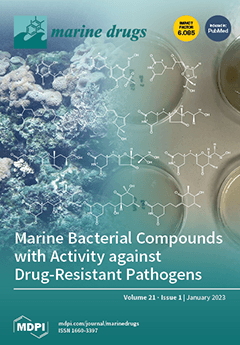
Cover Story: The literature published from January 2016 to December 2021 on marine-derived bacteria revealed that the Actinobacteria, especially Streptomyces, were the most predominant bacteria that produced novel compounds with anti-drug-resistant pathogens. The compounds in this review are categorized into four groups, based on their biosynthetic origins, as polyketides, amino acid derivatives, terpenoids, and of a mixed origin. These compounds were active against one or more drug-resistant pathogens such as methicillin-resistant Staphylococcus aureus, methicillin-resistant Staphylococcus epidermidis, vancomycin-resistant Enterococci, multidrug-resistant Mycobacterium tuberculosis, and amphotericin B-resistant Candida albicans. Some of the compounds also showed anti-biofilm activity against the test bacteria. View this paper
  • Issues are regarded as officially published after their release is announced to the table of contents alert mailing list .
  • You may sign up for email alerts to receive table of contents of newly released issues.
  • PDF is the official format for papers published in both, html and pdf forms. To view the papers in pdf format, click on the "PDF Full-text" link, and use the free Adobe Reader to open them.

Articles (54)

  • Article
  • Open Access
11 Citations
4,526 Views
11 Pages

New Marine Fungal Deoxy-14,15-Dehydroisoaustamide Resensitizes Prostate Cancer Cells to Enzalutamide

  • Sergey A. Dyshlovoy,
  • Olesya I. Zhuravleva,
  • Jessica Hauschild,
  • Tobias Busenbender,
  • Dmitry N. Pelageev,
  • Anton N. Yurchenko,
  • Yuliya V. Khudyakova,
  • Alexandr S. Antonov,
  • Markus Graefen and
  • Gunhild von Amsberg
  • + 1 author

14 January 2023

Marine fungi serve as a valuable source for new bioactive molecules bearing various biological activities. In this study, we report on the isolation of a new indole diketopiperazine alkaloid deoxy-14,15-dehydroisoaustamide (1) from the marine-derived...

  • Article
  • Open Access
10 Citations
5,599 Views
15 Pages

Limited Metabolomic Overlap between Commensal Bacteria and Marine Sponge Holobionts Revealed by Large Scale Culturing and Mass Spectrometry-Based Metabolomics: An Undergraduate Laboratory Pedagogical Effort at Georgia Tech

  • Jessica M. Deutsch,
  • Madison O. Green,
  • Priyanka Akavaram,
  • Ashleigh C. Davis,
  • Sarth S. Diskalkar,
  • Isabelle A. Du Plessis,
  • Hannah A. Fallon,
  • Emma M. Grason,
  • Emma G. Kauf and
  • Vinayak Agarwal
  • + 21 authors

14 January 2023

Sponges are the richest source of bioactive organic small molecules, referred to as natural products, in the marine environment. It is well established that laboratory culturing-resistant symbiotic bacteria residing within the eukaryotic sponge host...

  • Article
  • Open Access
20 Citations
5,058 Views
17 Pages

Echinochrome Prevents Sulfide Catabolism-Associated Chronic Heart Failure after Myocardial Infarction in Mice

  • Xiaokang Tang,
  • Akiyuki Nishimura,
  • Kohei Ariyoshi,
  • Kazuhiro Nishiyama,
  • Yuri Kato,
  • Elena A. Vasileva,
  • Natalia P. Mishchenko,
  • Sergey A. Fedoreyev,
  • Valentin A. Stonik and
  • Motohiro Nishida
  • + 6 authors

12 January 2023

Abnormal sulfide catabolism, especially the accumulation of hydrogen sulfide (H2S) during hypoxic or inflammatory stresses, is a major cause of redox imbalance-associated cardiac dysfunction. Polyhydroxynaphtoquinone echinochrome A (Ech-A), a natural...

  • Review
  • Open Access
35 Citations
8,498 Views
26 Pages

Secondary Metabolites from Marine-Derived Bacteria with Antibiotic and Antibiofilm Activities against Drug-Resistant Pathogens

  • Joko Tri Wibowo,
  • Asep Bayu,
  • Widya Dwi Aryati,
  • Carla Fernandes,
  • Arry Yanuar,
  • Anake Kijjoa and
  • Masteria Yunovilsa Putra

12 January 2023

The search for new antibiotics against drug-resistant microbes has been expanded to marine bacteria. Marine bacteria have been proven to be a prolific source of a myriad of novel compounds with potential biological activities. Therefore, this review...

  • Article
  • Open Access
7 Citations
3,765 Views
13 Pages

12 January 2023

Halocynthia roretzi, the edible ascidian, has been demonstrated to be an important source of bioactive natural metabolites. Here, we reported a novel terpenoid compound named Halorotetin A that was isolated from tunic ethanol extract of H. roretzi by...

  • Article
  • Open Access
32 Citations
3,887 Views
15 Pages

Characterisation of Bioactive Peptides from Red Alga Gracilariopsis chorda

  • Martin Alain Mune Mune,
  • Yoshikatsu Miyabe,
  • Takeshi Shimizu,
  • Wataru Matsui,
  • Yuya Kumagai and
  • Hideki Kishimura

11 January 2023

In this study, we studied the bioactive peptides produced by thermolysin hydrolysis of a water-soluble protein (WSP) from the red alga Gracilariopsis chorda, whose major components are phycobiliproteins and Ribulose-1,5-bisphosphate carboxylase-oxyge...

  • Article
  • Open Access
29 Citations
4,315 Views
18 Pages

Characterization and Cytotoxic Activity of Microwave-Assisted Extracted Crude Fucoidans from Different Brown Seaweeds

  • Ahmed Zayed,
  • Doris Finkelmeier,
  • Thomas Hahn,
  • Lisa Rebers,
  • Anusriha Shanmugam,
  • Anke Burger-Kentischer and
  • Roland Ulber

11 January 2023

Microwave-assisted extraction (MAE) is recognized as a green method for extraction of natural products. The current research aimed to explore the MAE for fucoidans extraction from different brown seaweeds, including Fucus vesiculosus, F. spiralis, an...

  • Article
  • Open Access
11 Citations
3,461 Views
14 Pages

Two-Step Enzymolysis of Antarctic Krill for Simultaneous Preparation of Value-Added Oil and Enzymolysate

  • Xin-Nan Teng,
  • Shu-Chang Wang,
  • Liaqat Zeb,
  • Yue-Sheng Dong and
  • Zhi-Long Xiu

11 January 2023

Antarctic krill is a crucial marine resource containing plenty of high-valued nutrients. However, krill oil as a single product has been developed by the current solvent extraction with high cost. From the perspective of comprehensive utilization of...

  • Article
  • Open Access
3 Citations
2,984 Views
13 Pages

Identification of Anhydrodebromoaplysiatoxin as a Dichotomic Autophagy Inhibitor

  • Limin Feng,
  • Chung-Kuang Lu,
  • Jiajun Wu,
  • Leo Lai Chan and
  • Jianbo Yue

10 January 2023

Dysfunctional autophagy is associated with various human diseases, e.g., cancer. The discovery of small molecules modulating autophagy with therapeutic potential could be significant. To this end, we screened the ability of a series of metabolites is...

  • Article
  • Open Access
14 Citations
4,008 Views
19 Pages

Probiotic Potential of the Marine Isolate Enterococcus faecium EA9 and In Vivo Evaluation of Its Antisepsis Action in Rats

  • Eman H. Zaghloul,
  • Hatem M. Abuohashish,
  • Amany S. El Sharkawy,
  • Eman M. Abbas,
  • Mohammed M. Ahmed and
  • Salim S. Al-Rejaie

7 January 2023

This study aims to obtain a novel probiotic strain adapted to marine habitats and to assess its antisepsis properties using a cecal ligation and puncture (CLP) model in rodents. The marine Enterococcus faecium EA9 was isolated from marine shrimp samp...

  • Article
  • Open Access
3 Citations
4,122 Views
21 Pages

Paralytic Shellfish Toxins in the Gastropod Concholepas concholepas: Variability, Toxin Profiles and Mechanisms for Toxicity Reduction

  • Miriam Seguel,
  • Carlos Molinet,
  • Manuel Díaz,
  • Gonzalo Álvarez,
  • Carlos García,
  • Andrés Marín,
  • María Olga Millanao and
  • Patricio A. Díaz

6 January 2023

Harmful algal blooms of toxin-producing microalgae are recurrent in southern Chile. Paralytic shellfish poisoning (PSP) outbreaks pose the main threat to public health and the fishing industry in the Patagonian fjords. This study aims to increase und...

  • Review
  • Open Access
29 Citations
8,176 Views
25 Pages

Application of Marine Natural Products against Alzheimer’s Disease: Past, Present and Future

  • Di Hu,
  • Yating Jin,
  • Xiangqi Hou,
  • Yinlong Zhu,
  • Danting Chen,
  • Jingjing Tai,
  • Qianqian Chen,
  • Cui Shi,
  • Jing Ye and
  • Yanbin Lu
  • + 2 authors

5 January 2023

Alzheimer’s disease (AD), a neurodegenerative disease, is one of the most intractable illnesses which affects the elderly. Clinically manifested as various impairments in memory, language, cognition, visuospatial skills, executive function, etc...

  • Article
  • Open Access
14 Citations
2,998 Views
14 Pages

The Polysaccharidic Nature of the Skeleton of Marennine as Determined by NMR Spectroscopy

  • Ilhem Zebiri,
  • Boris Jacquette,
  • Nellie Francezon,
  • Mickaël Herbaut,
  • Amina Latigui,
  • Sullivan Bricaud,
  • Réjean Tremblay,
  • Pamela Pasetto,
  • Jean-Luc Mouget and
  • Jens Dittmer

4 January 2023

The water-soluble blue–green pigment marennine, produced and partly excreted by the diatom Haslea ostrearia, and known for a long time for its role in the greening of oysters, was isolated from the culture medium, purified, and analyzed by Nucl...

  • Article
  • Open Access
5 Citations
3,487 Views
11 Pages

Type-I Hemins and Free Porphyrins from a Western Australian Sponge Isabela sp.

  • Samuele Sala,
  • Stephen A. Moggach,
  • Gareth L. Nealon,
  • Jane Fromont,
  • Oliver Gomez,
  • Daniel Vuong,
  • Ernest Lacey and
  • Gavin R. Flematti

3 January 2023

Two novel free porphyrins, isabellins A and B, as well as the known compounds corallistin D and deuteroporphyrin IX were isolated from a marine sponge Isabela sp. LC-MS analysis of the crude extract revealed that the natural products were present bot...

  • Review
  • Open Access
35 Citations
6,841 Views
15 Pages

A Concise Review on the Potential Applications of Rugulopteryx okamurae Macroalgae

  • Ligia Barcellos,
  • Christopher K. Pham,
  • Gui Menezes,
  • Raúl Bettencourt,
  • Nieta Rocha,
  • Miguel Carvalho and
  • Helena P. Felgueiras

3 January 2023

The brown macroalgae of the species Rugulopteryx okamurae has reached European waters and the Strait of Gibraltar as an invasive species. The proliferation and colonization of the species in subtidal and intertidal zones of these regions imposes sign...

  • Article
  • Open Access
13 Citations
3,628 Views
19 Pages

1 January 2023

It has been reported that dietary n-3 polyunsaturated fatty acids (n-3 PUFAs) exert therapeutic potential for the preservation of functional β-cell mass. However, the effect of dietary n-3 PUFA deficiency on pancreatic injury and whether the sup...

  • Review
  • Open Access
6 Citations
3,048 Views
14 Pages

Effect of the Marine Polyketide Plocabulin on Tumor Progression

  • Eleonora Turrini,
  • Francesca Maffei and
  • Carmela Fimognari

31 December 2022

Marine sponges represent one of the richest sources of natural marine compounds with anticancer potential. Plocabulin (PM060184), a polyketide originally isolated from the sponge Lithoplocamia lithistoides, elicits its main anticancer properties bind...

  • Review
  • Open Access
23 Citations
5,316 Views
23 Pages

31 December 2022

Coumarin and its derivatives have significantly attracted the attention of medicinal chemists and chemical biologists due to their huge range of biological, and in particular, pharmacological properties. Interesting families of coumarins have been fo...

  • Article
  • Open Access
21 Citations
5,973 Views
21 Pages

FTIR Characterization of Sulfated Polysaccharides Obtained from Macrocystis integrifolia Algae and Verification of Their Antiangiogenic and Immunomodulatory Potency In Vitro and In Vivo

  • Marilú Roxana Soto-Vásquez,
  • Paúl Alan Arkin Alvarado-García,
  • Fadia S. Youssef,
  • Mohamed L. Ashour,
  • Hanin A. Bogari and
  • Sameh S. Elhady

31 December 2022

The aim of this study was to evaluate the antiangiogenic and immunomodulatory potential of sulfated polysaccharides from the marine algae Macrocystis integrifolia characterized by FTIR. The cytotoxicity of sulfated polysaccharides was evaluated using...

  • Article
  • Open Access
7 Citations
3,014 Views
19 Pages

Bio-Guided Optimization of Cystoseira abies-marina Cosmeceuticals Extraction by Advanced Technologies

  • Gonçalo P. Rosa,
  • Andreia F. Peixoto,
  • Maria Carmo Barreto,
  • Ana M. L. Seca and
  • Diana C. G. A. Pinto

31 December 2022

Cystoseira abies-marina (reclassified as Gongolaria abies-marina) is a brown seaweed species rich in meroterpenoids, presenting interesting antioxidant, antitumor, and anti-inflammatory activities. However, there is still a lot to uncover regarding t...

  • Article
  • Open Access
17 Citations
7,528 Views
28 Pages

Marine Sponge and Octocoral-Associated Bacteria Show Versatile Secondary Metabolite Biosynthesis Potential and Antimicrobial Activities against Human Pathogens

  • João F. Almeida,
  • Matilde Marques,
  • Vanessa Oliveira,
  • Conceição Egas,
  • Dalila Mil-Homens,
  • Romeu Viana,
  • Daniel F. R. Cleary,
  • Yusheng M. Huang,
  • Arsénio M. Fialho and
  • Tina Keller-Costa
  • + 3 authors

30 December 2022

Marine microbiomes are prolific sources of bioactive natural products of potential pharmaceutical value. This study inspected two culture collections comprising 919 host-associated marine bacteria belonging to 55 genera and several thus-far unclassif...

  • Article
  • Open Access
8 Citations
2,644 Views
18 Pages

Effect of Phlorotannins from Brown Algae Costaria costata on α-N-Acetylgalactosaminidase Produced by Duodenal Adenocarcinoma and Melanoma Cells

  • Irina Bakunina,
  • Tatiana Imbs,
  • Galina Likhatskaya,
  • Valeria Grigorchuk,
  • Anastasya Zueva,
  • Olesya Malyarenko and
  • Svetlana Ermakova

30 December 2022

The inhibitor of human α-N-acetylgalactosaminidase (α-NaGalase) was isolated from a water–ethanol extract of the brown algae Costaria costata. Currently, tumor α-NaGalase is considered to be a therapeutic target in the treatme...

  • Article
  • Open Access
18 Citations
3,629 Views
11 Pages

New Chlorinated Metabolites and Antiproliferative Polyketone from the Mangrove Sediments-Derived Fungus Mollisia sp. SCSIO41409

  • Jian Cai,
  • Xueni Wang,
  • Xia Gan,
  • Qian Zhou,
  • Xiaowei Luo,
  • Bin Yang,
  • Yonghong Liu,
  • Disna Ratnasekera and
  • Xuefeng Zhou

30 December 2022

Two new chlorinated metabolites, 8-chlorine-5-hydroxy-2,3-dimethyl-7-methoxychromone (1) and 3,4-dichloro-1H-pyrrole-2,5-dione (3), and eight known compounds (2 and 49) were isolated from the mangrove sediments-derived fungus Mollisia sp. SCSI...

  • Article
  • Open Access
6 Citations
3,136 Views
14 Pages

29 December 2022

A novel strain, isolate 5K15T, which belongs to difficult-to-cultivate phylum Verrucomicrobiota, was recovered from kelp collected from Li Island, Rongcheng, China. The genome sequence of the strain (genome size 3.95 Mbp) showed the presence of four...

  • Review
  • Open Access
8 Citations
3,639 Views
19 Pages

29 December 2022

The soft coral Sarcophyton trocheliophorum, which was frequently encountered on Indo-Pacific and Red Sea coral reefs, furnished a wealth of secondary metabolites. Notably, terpenoids dominated the chemical profile of this species. In this review, we...

  • Article
  • Open Access
18 Citations
5,693 Views
18 Pages

Diversity of Bacterial Secondary Metabolite Biosynthetic Gene Clusters in Three Vietnamese Sponges

  • Ton That Huu Dat,
  • Georg Steinert,
  • Nguyen Thi Kim Cuc,
  • Pham Viet Cuong,
  • Hauke Smidt and
  • Detmer Sipkema

29 December 2022

Recent reviews have reinforced sponge-associated bacteria as a valuable source of structurally diverse secondary metabolites with potent biological properties, which makes these microbial communities promising sources of new drug candidates. However,...

  • Review
  • Open Access
32 Citations
7,832 Views
24 Pages

A Review on a Hidden Gem: Phycoerythrin from Blue-Green Algae

  • Hui Teng Tan,
  • Fatimah Md. Yusoff,
  • Yam Sim Khaw,
  • Nur Amirah Izyan Noor Mazli,
  • Muhammad Farhan Nazarudin,
  • Noor Azmi Shaharuddin,
  • Tomoyo Katayama and
  • Siti Aqlima Ahmad

29 December 2022

Phycoerythrin (PE) is a pink/red-colored pigment found in rhodophytes, cryptophytes, and blue-green algae (cyanobacteria). The interest in PE is emerging from its role in delivering health benefits. Unfortunately, the current cyanobacterial-PE (C-PE)...

  • Article
  • Open Access
15 Citations
3,522 Views
11 Pages

Two New Alkaloids and a New Butenolide Derivative from the Beibu Gulf Sponge-Derived Fungus Penicillium sp. SCSIO 41413

  • Yuxiu Ye,
  • Jiaqi Liang,
  • Jianglian She,
  • Xiuping Lin,
  • Junfeng Wang,
  • Yonghong Liu,
  • Dehua Yang,
  • Yanhui Tan,
  • Xiaowei Luo and
  • Xuefeng Zhou

29 December 2022

Marine sponge-derived fungi have been proven to be a prolific source of bioactive natural products. Two new alkaloids, polonimides E (1) and D (2), and a new butenolide derivative, eutypoid F (11), were isolated from the Beibu Gulf sponge-derived fun...

  • Article
  • Open Access
18 Citations
3,883 Views
14 Pages

Therapeutic Potency of Ovothiol A on Ethanol-Induced Gastric Ulcers in Wistar Rats

  • Amira Tarek Salaheldin,
  • Mohamed Refaat Shehata,
  • Hader I. Sakr,
  • Tarek Atia and
  • Ayman Saber Mohamed

28 December 2022

Peptic ulcer is a widespread disease, with a lifetime frequency of 5–10% among the general population and an annual incidence of 0.1–0.3%. Ovothiol A is naturally produced from sea urchin eggs with special antioxidant activity. Gastric ul...

  • Feature Paper
  • Review
  • Open Access
15 Citations
7,069 Views
26 Pages

28 December 2022

In recent years, the study of anticancer bioactive compounds from marine sources has received wide interest. Contextually, world regulatory authorities have approved several marine molecules, and new synthetic derivatives have also been synthesized a...

  • Review
  • Open Access
18 Citations
8,885 Views
26 Pages

Seaweed as a Natural Source against Phytopathogenic Bacteria

  • Tânia F. L. Vicente,
  • Carina Félix,
  • Rafael Félix,
  • Patrícia Valentão and
  • Marco F. L. Lemos

28 December 2022

Plant bacterial pathogens can be devastating and compromise entire crops of fruit and vegetables worldwide. The consequences of bacterial plant infections represent not only relevant economical losses, but also the reduction of food availability. Syn...

  • Article
  • Open Access
19 Citations
3,619 Views
12 Pages

Biological Secondary Metabolites from the Lumnitzera littorea-Derived Fungus Penicillium oxalicum HLLG-13

  • Yue Wang,
  • Wenhao Chen,
  • Zhefei Xu,
  • Qiqi Bai,
  • Xueming Zhou,
  • Caijuan Zheng,
  • Meng Bai and
  • Guangying Chen

27 December 2022

Five new compounds, including two cyclopiane diterpenes conidiogenones J and K (12), a steroid andrastin H (5), an alkaloid (Z)-4-(5-acetoxy-N-hydroxy-3-methylpent-2-enamido) butanoate (6), and an aliphatic acid (Z)-5-acetoxy-3-methylpent-2-en...

  • Review
  • Open Access
24 Citations
12,265 Views
36 Pages

27 December 2022

The phylum Echinodermata comprising the classes Asteroidea, Ophiuroidea, Echinoidea, Holothuroidea, and Crinodeia, is one of the important invertebrate groups. Members of this phylum live exclusively in marine habitats and are distributed in almost a...

  • Article
  • Open Access
13 Citations
3,689 Views
19 Pages

Gold Nanoparticles Synthesized by an Aqueous Extract of Codium tomentosum as Potential Antitumoral Enhancers of Gemcitabine

  • Noelia González-Ballesteros,
  • Immacolata Maietta,
  • Raquel Rey-Méndez,
  • M. Carmen Rodríguez-Argüelles,
  • Mariano Lastra-Valdor,
  • Antonella Cavazza,
  • Maria Grimaldi,
  • Franca Bigi and
  • Rosana Simón-Vázquez

27 December 2022

Cancer still poses a global threat, since a lot of tumors remain untreatable despite all the available chemotherapeutic drugs, whose side effects, it must also be noted, still raise concerns. The antitumoral properties of marine seaweeds make them a...

  • Review
  • Open Access
10 Citations
4,482 Views
27 Pages

27 December 2022

Marine microorganisms are an important source of natural polyketides, which have become a significant reservoir of lead structures for drug design due to their diverse biological activities. In this review, we provide a summary of the resources, stru...

  • Article
  • Open Access
24 Citations
5,191 Views
15 Pages

Chemical Characterization and Immunomodulatory Activity of Fucoidan from Sargassum hemiphyllum

  • Rui Li,
  • Qing-Ling Zhou,
  • Shu-Tong Chen,
  • Min-Rui Tai,
  • Hong-Ying Cai,
  • Rui Ding,
  • Xiao-Fei Liu,
  • Jian-Ping Chen,
  • Lian-Xiang Luo and
  • Sai-Yi Zhong

26 December 2022

Fucoidan is a sulfated algal polyanionic polysaccharide that possesses many biological activities. In this paper, a fucoidan (SHF) polysaccharide was extracted from Sargassum hemiphyllum collected in the South China Sea. The SHF, with a molecular wei...

  • Article
  • Open Access
21 Citations
3,461 Views
15 Pages

Construction of Glucose-6-Phosphate Dehydrogenase Overexpression Strain of Schizochytrium sp. H016 to Improve Docosahexaenoic Acid Production

  • Yumei Feng,
  • Yuanmin Zhu,
  • Zhendong Bao,
  • Bohan Wang,
  • Tingting Liu,
  • Huihui Wang,
  • Tianyi Yu,
  • Ying Yang and
  • Longjiang Yu

26 December 2022

Docosahexaenoic acid (DHA) is an important omega-3 polyunsaturated fatty acid (PUFA) that plays a critical physiological role in human health. Schizochytrium sp. is considered an excellent strain for DHA production, but the synthesis of DHA is limite...

  • Article
  • Open Access
26 Citations
4,205 Views
20 Pages

Fuc-S—A New Ultrasonic Degraded Sulfated α-l-Fucooligosaccharide—Alleviates DSS-Inflicted Colitis through Reshaping Gut Microbiota and Modulating Host–Microbe Tryptophan Metabolism

  • Haitao Xiao,
  • Jinxiu Feng,
  • Jiao Peng,
  • Peigen Wu,
  • Yaoyao Chang,
  • Xianqian Li,
  • Jinhui Wu,
  • Haifeng Huang,
  • Huan Deng and
  • Bin Du
  • + 2 authors

25 December 2022

Scope: The dysbiosis of intestinal microecology plays an important pathogenic role in the development of inflammatory bowel disease. Methods and Results: A polysaccharide named Fuc-S, with a molecular weight of 156 kDa, was prepared by the ultrasonic...

  • Article
  • Open Access
14 Citations
3,577 Views
18 Pages

Nitrogen Sources Affect the Long-Chain Polyunsaturated Fatty Acids Content in Thraustochytrium sp. RT2316-16

  • Diego Valdebenito,
  • Sebastián Urrutia,
  • Allison Leyton,
  • Yusuf Chisti,
  • Juan A. Asenjo and
  • Carolina Shene

25 December 2022

The psychrophilic marine microorganism Thraustochytrium sp. RT2316-16 can produce carotenoids as well as lipids containing the omega-3 polyunsaturated fatty acids (PUFA) eicosapentaenoic acid and docosahexaenoic acid. This work reports on the effects...

  • Review
  • Open Access
25 Citations
5,691 Views
15 Pages

24 December 2022

In this review, we aim to provide a summary of recent research advancements and applications of algin (i.e., alginic acid) and alginate-hybrid materials (AHMs) in medical fields. Algin/alginate are abundant natural products that are chemically inert...

  • Article
  • Open Access
10 Citations
2,871 Views
12 Pages

24 December 2022

The aim of this study is to investigate the differences in the accumulation capacity of chrysolaminarin among six Tribonema species and to isolate this polysaccharide for immunomodulatory activity evaluation. The results showed that T. aequale was th...

  • Article
  • Open Access
21 Citations
4,121 Views
18 Pages

Fine-Dust-Induced Skin Inflammation: Low-Molecular-Weight Fucoidan Protects Keratinocytes and Underlying Fibroblasts in an Integrated Culture Model

  • Kirinde Gedara Isuru Sandanuwan Kirindage,
  • Arachchige Maheshika Kumari Jayasinghe,
  • Namki Cho,
  • Seok Ho Cho,
  • Hee Min Yoo,
  • Ilekuttige Priyan Shanura Fernando and
  • Ginnae Ahn

23 December 2022

Prolonged exposure to fine dust (FD) increases the risk of skin inflammation. Stimulated epidermal cells release growth factors into their extracellular environment, which can induce inflammation in dermal cells. Algae are considered rich sources of...

  • Review
  • Open Access
42 Citations
6,384 Views
33 Pages

23 December 2022

Alginates (ALG) have been used in biomedical and pharmaceutical technologies for decades. ALG are natural polymers occurring in brown algae and feature multiple advantages, including biocompatibility, low toxicity and mucoadhesiveness. Moreover, ALG...

  • Communication
  • Open Access
1 Citations
2,122 Views
8 Pages

Spatial Structure of Lectin from the Mussel Mytilus trossulus: In-Sights from Molecular Modelling and Practical Proof

  • Alina P. Filshtein,
  • Irina V. Chikalovets,
  • Tatyana O. Mizgina,
  • Pavel A. Lukyanov,
  • Kuo-Feng Hua and
  • Oleg V. Chernikov

23 December 2022

Most proteins have the ability to self-associate into homooligomeric protein complexes, which consist of two or more identical subunits. Today, modern methods of molecular modeling are an integral part of the study of many biologically active molecul...

  • Review
  • Open Access
4 Citations
6,181 Views
31 Pages

Exploring Oceans for Curative Compounds: Potential New Antimicrobial and Anti-Virulence Molecules against Pseudomonas aeruginosa

  • Daniela Coppola,
  • Carmine Buonocore,
  • Morgan Palisse,
  • Pietro Tedesco and
  • Donatella de Pascale

23 December 2022

Although several antibiotics are already widely used against a large number of pathogens, the discovery of new antimicrobial compounds with new mechanisms of action is critical today in order to overcome the spreading of antimicrobial resistance amon...

  • Article
  • Open Access
13 Citations
3,289 Views
17 Pages

A Hotspot of TTX Contamination in the Adriatic Sea: Study on the Origin and Causative Factors

  • Simone Bacchiocchi,
  • Debora Campacci,
  • Melania Siracusa,
  • Alessandra Dubbini,
  • Stefano Accoroni,
  • Tiziana Romagnoli,
  • Alessandra Campanelli,
  • Francesco Griffoni,
  • Tamara Tavoloni and
  • Arianna Piersanti
  • + 2 authors

22 December 2022

Tetrodotoxins (TTXs), the pufferfish venom traditionally associated with Indo-Pacific area, has been reported during last decades in ever wider range of marine organisms and ever more geographical areas, including shellfish in Europe. Wild mussels (M...

  • Article
  • Open Access
7 Citations
2,550 Views
15 Pages

22 December 2022

Six new sesquiterpene aminoglycosides, trichaspside F (2) and cyclonerosides A–E (59), two new diterpene aminoglycosides, harzianosides A and B (10, 11), and three known sesquiterpenes, trichodermoside (1), cycloneran-3,7,10,11-tetraol (3), and cycl...

  • Article
  • Open Access
7 Citations
2,724 Views
10 Pages

22 December 2022

Alginate oligosaccharides (AOS) and their derivatives become popular due to their favorable biological activity, and the key to producing functional AOS is to find efficient alginate lyases. This study showed one alginate lyase TsAly7A found in Thala...

  • Article
  • Open Access
19 Citations
5,514 Views
26 Pages

Molecular Diversity and Biochemical Content in Two Invasive Alien Species: Looking for Chemical Similarities and Bioactivities

  • Julia Vega,
  • Teresa S. Catalá,
  • Jorge García-Márquez,
  • Linn G. Speidel,
  • Salvador Arijo,
  • Niklas Cornelius Kunz,
  • Christoph Geisler and
  • Félix L. Figueroa

22 December 2022

The biochemical composition, molecular diversity, and two different bioactivities of Asparagopsis armata and Rugulopteryx okamurae (two alien species with different invasive patterns in the southern Iberian Peninsula) were analyzed through spectropho...

of 2

Get Alerted

Add your email address to receive forthcoming issues of this journal.

XFacebookLinkedIn
Mar. Drugs - ISSN 1660-3397