
Topic Menu
► Topic MenuTopic Editors

2. Institute of Water Saving Agriculture in Arid Areas of China, Northwest A&F University, Yangling 712100, China



High-Efficiency Utilization of Water-Fertilizer Resources and Green Production of Crops
Topic Information
Dear Colleagues,
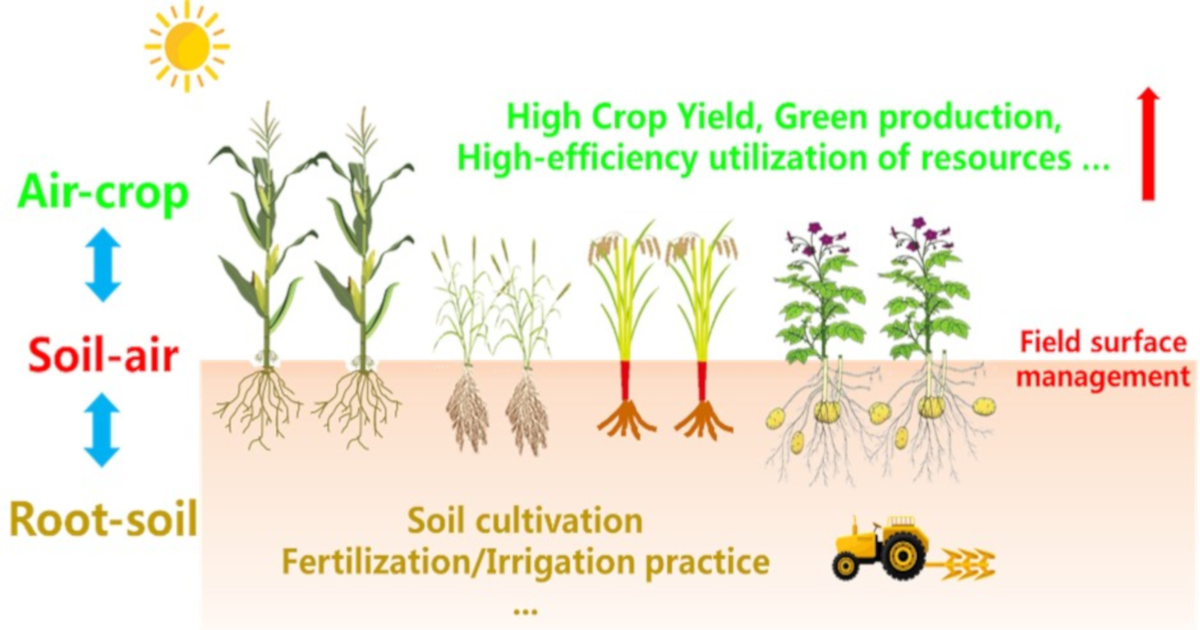
Arid and semi-arid areas account for about 36% of total global land area, hosting more than 80 countries and 40% of the global population. They compose the main food production regions and contain abundant soil and photothermal resources. However, agricultural production in these areas is limited by drought, infertility, soil erosion, etc. Additionally, traditional agronomic management approaches have greatly affected arid and semi-arid agroecosystems through soil degradation, soil nutrient loss, water pollution, etc. The imbalance between agricultural production and the environment seriously hinders the achievement of the Sustainable Development Goals related to agriculture in these regions. Recently, many agronomic management approaches have been proposed to promote crop production, increase resource efficiency, and improve farmland environments in arid and semi-arid regions, i.e., film mulching, organic matter application, fertilizer reduction, straw return, intercropping, water-efficient irrigation, and conservation tillage. Thus, we need to explore the mechanisms of these management approaches on crop production and the environment, as well as their synergistic effects on production and ecological functioning. For this reason, we welcome high-quality interdisciplinary studies on the high-efficiency utilization of water–fertilizer resources and green production of crops to address the contradiction between production and the environment in arid and semi-arid areas.
Dr. Peng Zhang
Prof. Dr. Xianqing Hou
Dr. Wenyi Dong
Dr. Peng Wu
Topic Editors
Keywords
- field crop
- high yield
- high-efficiency utilization
- soil water and fertilizer management
- soil health
- semi-arid area
- dryland farming
Participating Journals
| Journal Name | Impact Factor | CiteScore | Launched Year | First Decision (median) | APC |
|---|---|---|---|---|---|

Agriculture
|
4.5 | 7.8 | 2011 | 17.4 Days | CHF 2600 |

Agronomy
|
4.1 | 7.6 | 2011 | 17.7 Days | CHF 2600 |

Crops
|
2.1 | 2.9 | 2021 | 20.7 Days | CHF 1200 |

Nitrogen
|
2.8 | 3.4 | 2020 | 18.1 Days | CHF 1200 |

Plants
|
4.7 | 8.5 | 2012 | 14.8 Days | CHF 2700 |

Preprints.org is a multidisciplinary platform offering a preprint service designed to facilitate the early sharing of your research. It supports and empowers your research journey from the very beginning.
MDPI Topics is collaborating with Preprints.org and has established a direct connection between MDPI journals and the platform. Authors are encouraged to take advantage of this opportunity by posting their preprints at Preprints.org prior to publication:
- Share your research immediately: disseminate your ideas prior to publication and establish priority for your work.
- Safeguard your intellectual contribution: Protect your ideas with a time-stamped preprint that serves as proof of your research timeline.
- Boost visibility and impact: Increase the reach and influence of your research by making it accessible to a global audience.
- Gain early feedback: Receive valuable input and insights from peers before submitting to a journal.
- Ensure broad indexing: Web of Science (Preprint Citation Index), Google Scholar, Crossref, SHARE, PrePubMed, Scilit and Europe PMC.
