Article

Biochar and Chlorella Synergistically Enhance Grain Yield in Saline Soil

1
College of Agricultural Science and Engineering, Hohai University, Nanjing 211198, China
2
Jiangsu Hydraulic Research Institute, Nanjing 210098, China
*
Author to whom correspondence should be addressed.
Agronomy 2025, 15(11), 2508; https://doi.org/10.3390/agronomy15112508

Submission received: 30 September 2025 / Revised: 22 October 2025 / Accepted: 27 October 2025 / Published: 28 October 2025

Abstract

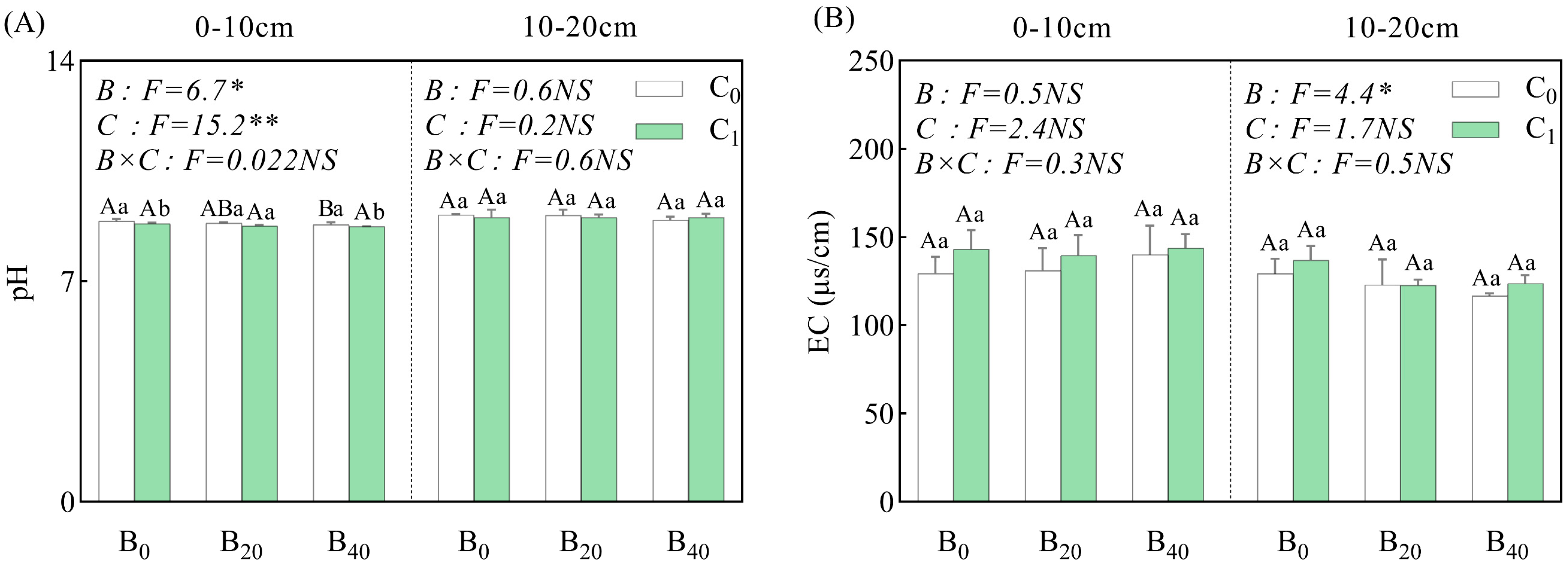
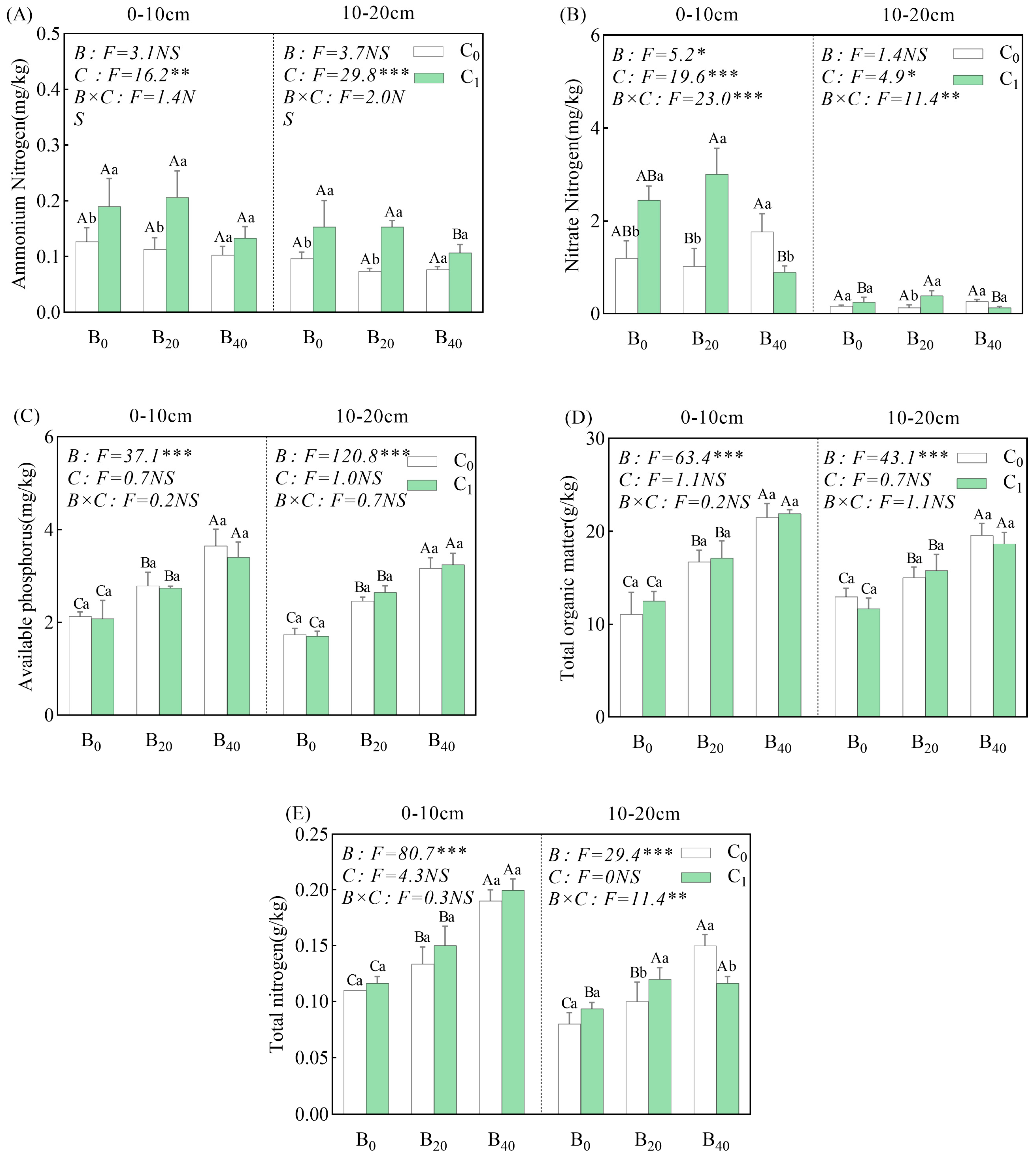
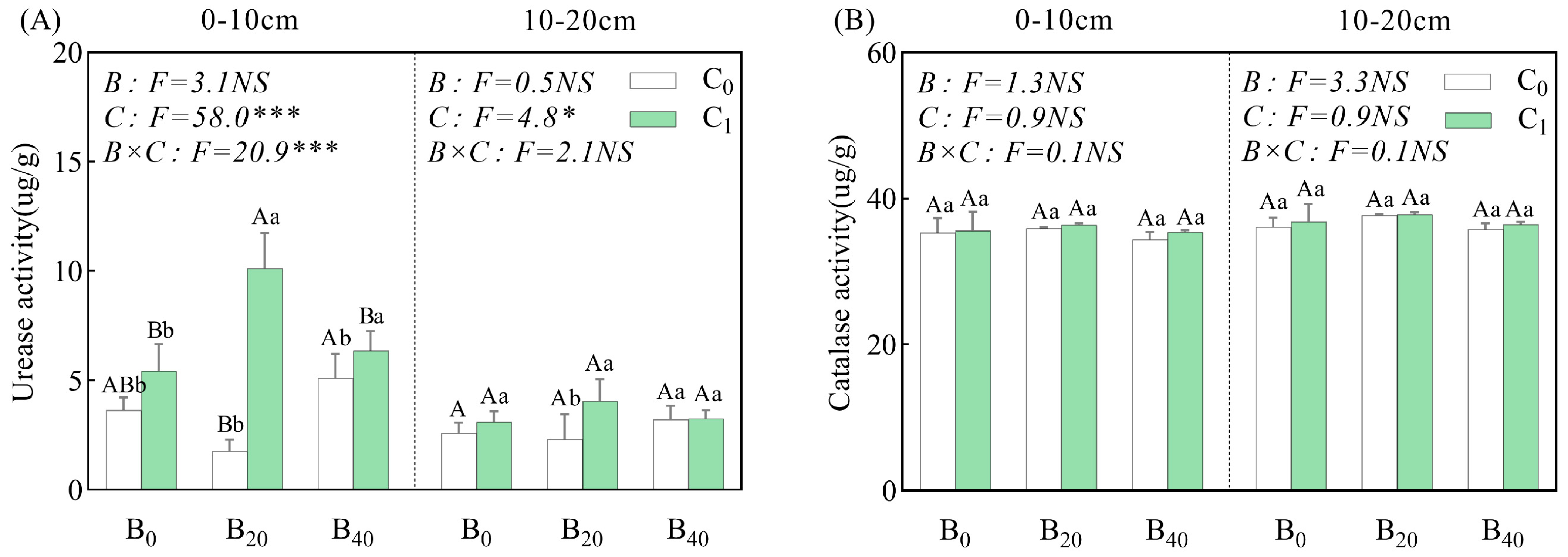
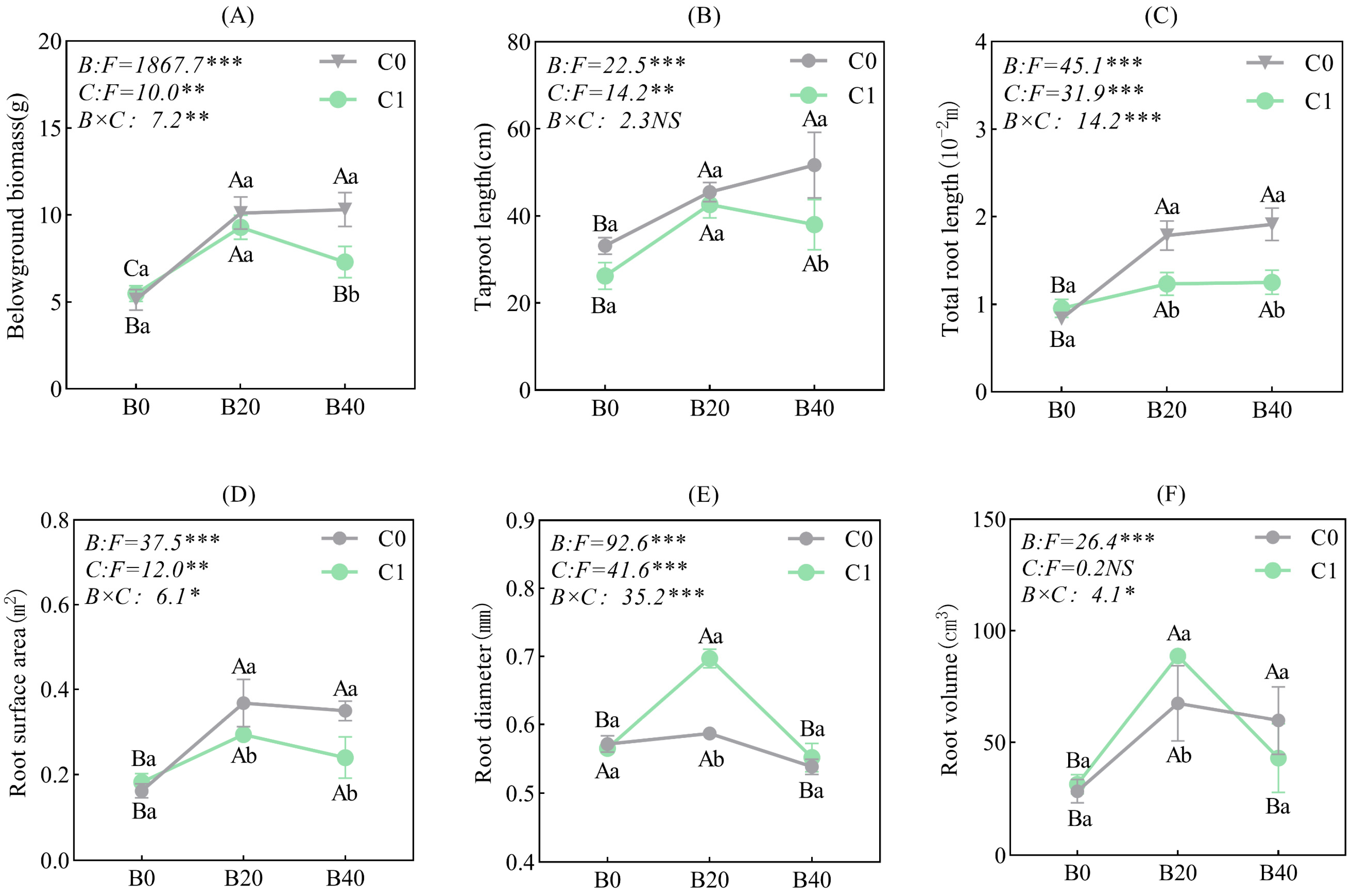
Saline soils severely constrain rice growth and reduce grain yield. While biochar and Chlorella have each been extensively investigated for their roles in improving plant growth, few studies have explored their combined application to support rice cultivation in saline soil environments. A controlled pot experiment tested three biochar rates (B0: 0 g/kg, B20: 0.98 g/kg, B40: 1.97 g/kg) and two Chlorella concentrations (C0: 0 cells/mL, C1: 1.3 × 10⁷ cells/mL) to evaluate their combined effects on soil properties, rice root development, and productivity. The study showed that compared with B0C0, B0C1 increased NH4+-N by 50.00–57.16%, NO3-N by 57.61–104.57%, effective panicle number by 55.00%, and grain yield by 46.06%. Meanwhile, B20C1 also significantly improved soil and plant indicators, with NH4+-N increased by 57.21–63.16%, NO3-N by 140.28–151.53%, urease activity by 57.18–178.81%, root traits by 28.58–213.10%, effective panicle number by 40.00%, and grain yield by 30.05%. Mechanistically, biochar promoted rice root growth by improving soil physicochemical properties, while Chlorella enhanced soil NH4+-N and NO3-N contents via the “capacitor effect”, boosted urease activity, and secreted plant hormones to directly stimulate rice tillering. Notably, Chlorella significantly increased yield under no biochar (B0C1) or low biochar (B20C1) conditions, but this effect nearly disappeared under high biochar application (B40C1). This study is the first to reveal the synergistic effect between biochar and Chlorella, as well as their application potential in rice cultivation on saline soils. It thereby provides novel insights for saline soil amendment and aquaculture tailwater reuse.
Keywords: saline soil; biochar; Chlorella; plant root; rice; grain yield saline soil; biochar; Chlorella; plant root; rice; grain yield