Dear Colleagues,
Actions aimed at shaping sustainable mobility are among the highest priorities in urban areas. Among the various approaches describing the way of achieving sustainable mobility, the solutions contributing to the increase in the share of trips made with the use of public transport are of particular importance. In this context, it is important to develop the assumptions of a transit-oriented development strategy and their consistent implementation. The public transport system in urban areas is complex and conditioned by many factors of a spatial, socioeconomic, economic, technical, and organizational nature. In order to encourage passengers to choose this mode of travel in their daily trips, it is necessary to ensure an appropriate level of service quality adapted to the mobility structure of passengers resulting from their daily needs, habits, and lifestyles. Therefore, in shaping a sustainable public transport system, it is necessary to take into account the diversity of needs for individual groups of people and different locations, which requires a separate approach and the formulation of appropriate goals and strategies both at planning and management stage.
There are many areas that make up the level of quality provided by the organizers of public transport. The most important transport postulates reported by passengers include punctuality of means of public transport, cost of travel, safety of passengers, and directness of travel. Furthermore, integration with other transport subsystems operating in the urban area, the use of innovative ICT technologies, modern infrastructure, and proper organization can effectively affect the behavior of users of the transport system. Facilities for disabled people and people with reduced mobility also play an important role.
We invite articles related to modern solutions used in the management and planning of the public transport system in urban areas. Ensuring the appropriate quality of its functioning is a big challenge facing smart cities. It requires a multicriteria approach, taking into account the principles of sustainable development. We hope that this Special Issue of Sustainability will be an opportunity to present the results of the research and exchange the experiences in the field of transit-oriented development and building the optimization models used in the functioning and in the management of this subsystem as decision support tools.
Both original research and review works are welcome for submission. Research topics of interest include but are not limited to, the following:
- Sustainable mobility shaping and planning;
- Methodologies, practices, and policies for achieving behavioral change;
- Public transport optimization;
- Public transport management;
- Public transport development;
- Travel behavior and transport demand modeling;
- The application of big data in public transport systems;
- Intelligent transportation systems supported public transport;
- The implementation of the MaaS integrating public transport systems;
- Information technologies in a public transport system;
- Transit-oriented development strategies in urban areas;
- Multicriteria optimization model-supported decision processes in public transport;
- Spatial analyses in designing of public transport systems;
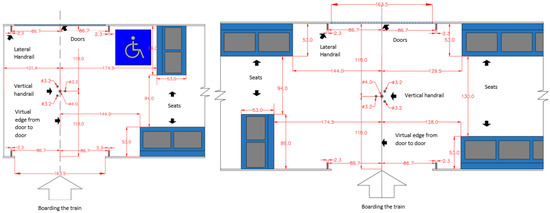
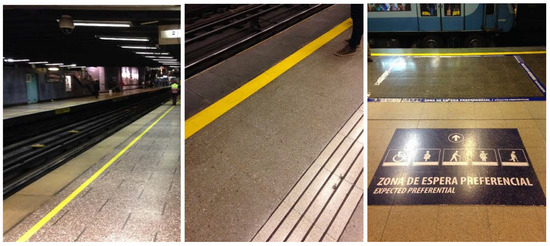
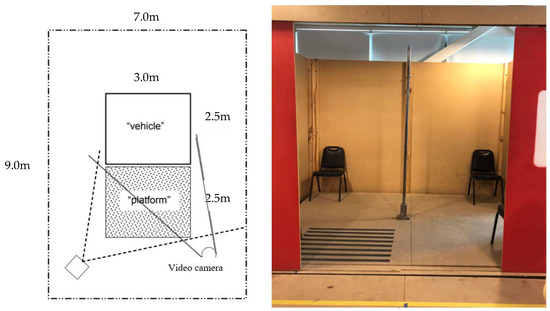
- Barrier-free design of public transport systems;
- Safety in public transport;
- Quality of public transport systems;
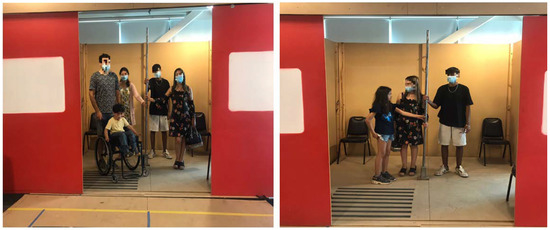
- Public transport and vulnerable passengers;
- The sharing economy and public transport.
Assoc. Prof. Dr. Renata Żochowska
Prof. Dr. Marianna Jacyna
Guest Editors
Manuscript Submission Information
Manuscripts should be submitted online at www.mdpi.com by registering and logging in to this website. Once you are registered, click here to go to the submission form. All submissions that pass pre-check are peer-reviewed. Accepted papers will be published continuously in the journal (as soon as accepted) and will be listed together on the collection website. Research articles, review articles as well as short communications are invited. For planned papers, a title and short abstract (about 250 words) can be sent to the Editorial Office for assessment.
Submitted manuscripts should not have been published previously, nor be under consideration for publication elsewhere (except conference proceedings papers). All manuscripts are thoroughly refereed through a single-anonymized peer-review process. A guide for authors and other relevant information for submission of manuscripts is available on the Instructions for Authors page. Sustainability is an international peer-reviewed open access semimonthly journal published by MDPI.
Please visit the Instructions for Authors page before submitting a manuscript.
The Article Processing Charge (APC) for publication in this open access journal is 2400 CHF (Swiss Francs).
Submitted papers should be well formatted and use good English. Authors may use MDPI's
English editing service prior to publication or during author revisions.