



Skip to Content

Metrology

Metrology is an international, peer-reviewed, open access journal on the science and technology of measurement and metrology, published quarterly online by MDPI.

Get Alerted

Add your email address to receive forthcoming issues of this journal.

All Articles (206)

Dissemination of unit of mass is one of the key processes in mass metrology and involves a large number of measurements to determine the mass of weights across a wide range (e.g., 1 mg–10 kg in the case of the Czech Metrology Institute, CMI). Evaluation of such measurements can be challenging, and to address this, the European Metrology Programme for Innovation and Research (EMPIR) project 19RPT02 “Improvements of the realisation of the mass scale” developed RealMass software solution (currently available in version 1.1) and a draft calibration procedure. However, standard procedures usually assume either identical densities of the weights or use the volume of the weights for buoyancy correction. In the latter case, if the volume is not known, the usual approach is to estimate it by dividing the nominal mass by the density. If the weights differ in either volume or density, these procedures lead to incorrect results. CMI developed a model and evaluation script to address these issues. The comparison data show that the developed model is consistent with the results obtained by RealMass software and other examples. The examples given in the text show how incorrect assumptions can lead to incorrect results and how they are evaluated by the approach presented in this paper.
7 March 2026

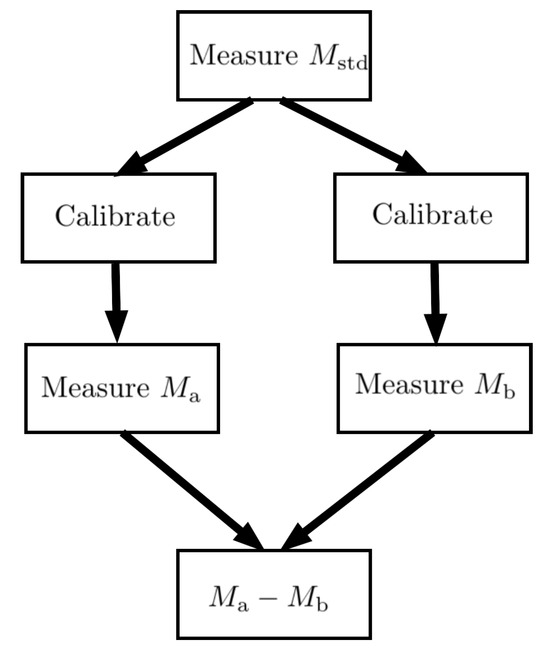
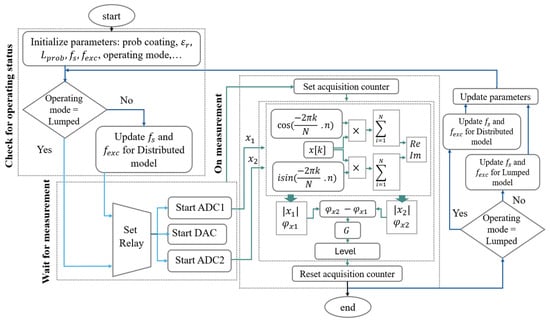
Flowchart of the evaluation process of the Monte Carlo simulations procedure.

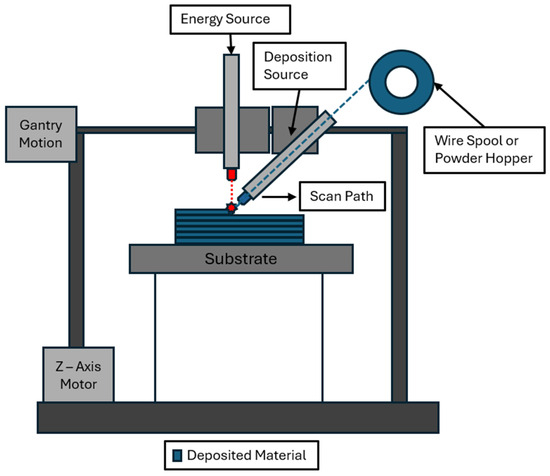
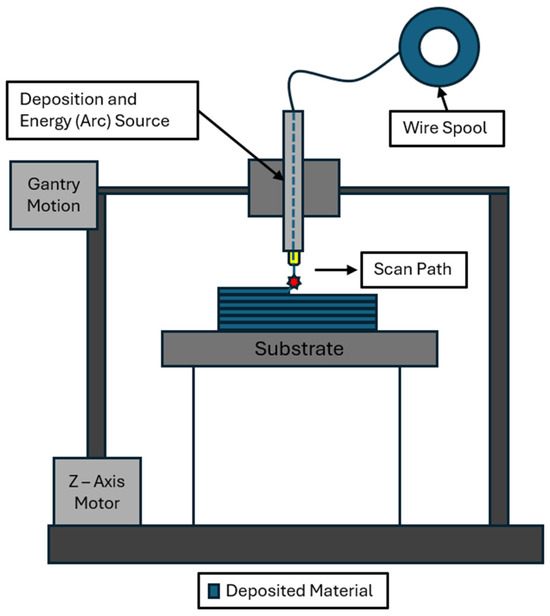
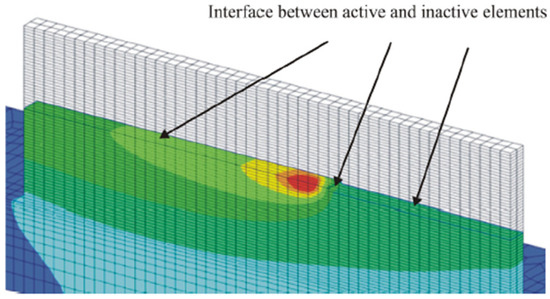
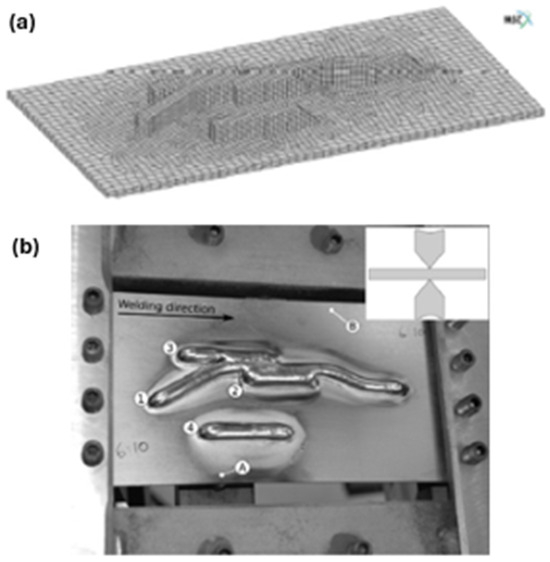
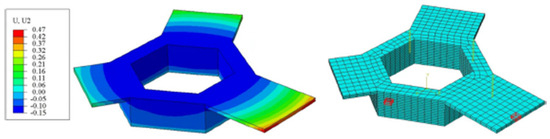
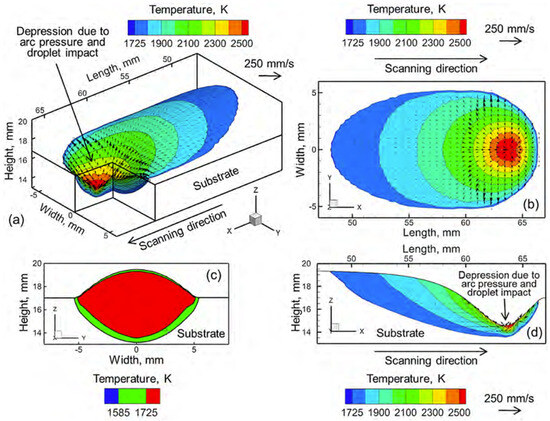
Wire and arc additive manufacturing is a promising technology for fabricating large and complex metallic components. Wire arc methods, like MIG and MAG, use an electric arc to melt and deposit metal wire layer-by-layer. The improvement of the surface depends on the multi-bead overlapping model. However, the high quality of multi-layer deposits is reduced by structural irregularities, such as geometric defects, poor fusion, and reduced mechanical properties of the weld bead. The analysis of a single weld bead that solidifies on a base material can be carried out to improve the geometry of the microstructure, to improve the mechanical properties, and to understand the relationship between welding parameters and the bead dimensions. In the present study, current metal welding technologies and strategies in wire-arc additive manufacturing were discussed, and different weld bead geometries using BÖHLER SG2 solid wire were realized, varying the robot’s trajectory length and welding speed. The computational models are proposed to create a dependence between the controllable welding input parameters and resulting geometrical weld bead outputs (width, height, length, and radius) for prediction and optimization. These models, using techniques such as support vector machines and artificial neural networks, can be a good tool for controlling quality by understanding these input–output relationships. However, the SVM has revealed a superior performance based on metrics for the nonlinear and intricate relationships between the geometrical weld beads and welding parameters.

6 March 2026

Quantum metrology uses the principles of quantum mechanics to improve the accuracy of parameter estimation so that it can surpass the classical limit. However, noise and the challenge of preparing multipartite entangled states hinder practical applications. In this work, we use the Lipkin-Meshkov-Glick model as the experimental platform and the quantum parameter estimation package QuanEstimation as a tool to improve the quantum parameter estimation in many-body systems by using Hamiltonian control optimization. We apply auto-GRAPE, PSO, and DE algorithm to optimize the time-dependent control field. Our results show that the optimal control strategy can significantly enhance the quantum Fisher information and reduce the quantum Cramér-Rao bound even under environmental noise. These findings provide a way to achieve the parameter estimation limit in a noisy environment and promote the development of practical quantum metrology applications.

5 March 2026

Measurement models that have a chemical composition as one of the arguments require special attention when used with the law of propagation of uncertainty from the Guide to the expression of uncertainty in measurement. The constraint that the amount fractions in a composition add exactly to unity not only affects the covariance matrix associated with the composition, but also impacts the differentiation of the measurement model to obtain the expressions and values of the sensitivity coefficients. Differentiating the measurement model with respect to each variable individually is not possible as it involves evaluating the model for infeasible inputs, leading to an undefined output. In this work, a numerical method for constrained partial differentiation is presented, enabling the use of the law of propagation of uncertainty for measurement models with compositions as one of their arguments. The numerical method enables treating the measurement model as a black box and using it with measurement models in the form of an algorithm. The numerical method is demonstrated by showing how the uncertainty associated with composition, temperature and pressure can be propagated through an equation of state, in this case, the GERG-2008 equation of state. It is shown that this differentiation can be completed in a few simple steps, requiring only a valid implementation of the measurement model that provides an output value for given input quantities. The numerical differentiation method applies in principle to all differentiable functions of a composition.

2 March 2026

News & Conferences

Issues

Open for Submission

Editor's Choice

XFacebookLinkedIn
Metrology - ISSN 2673-8244