



-
Investigation of Storage Conditions and Quality Control Markers for Metabolites and Lipids in Human Feces -
1H NMR-Based Metabolomics in Pediatric Acute Lymphoblastic Leukemia: A Pilot Study of Plasma and Cerebrospinal Fluid Profiles -
Sex-Specific Plasma Metabolomic Signatures in COPD Reveal Creatine, Purine/Urate, and Bile-Acid Axes -
Metabolomic Study of 7-Ethyl-9-(N-methyl)aminomethyl-10-hydroxycamptothecin Derivative (NMe)—The Chemotherapeutic Drug Candidate Versus Irinotecan (IR) on a Mouse Model -
Anthropometric Indices and Markers of Atherothrombotic Risk in Subjects with Primary Hyperparathyroidism
Journal Description
Metabolites
Metabolites
is an international, peer-reviewed, open access journal of metabolism and metabolomics, published monthly online by MDPI.
- Open Access— free for readers, with article processing charges (APC) paid by authors or their institutions.
- High Visibility: indexed within Scopus, SCIE (Web of Science), PubMed, PMC, Embase, CAPlus / SciFinder, and other databases.
- Journal Rank: JCR - Q2 (Biochemistry and Molecular Biology) / CiteScore - Q2 (Endocrinology, Diabetes and Metabolism)
- Rapid Publication: manuscripts are peer-reviewed and a first decision is provided to authors approximately 16.7 days after submission; acceptance to publication is undertaken in 3.6 days (median values for papers published in this journal in the second half of 2025).
- Recognition of Reviewers: reviewers who provide timely, thorough peer-review reports receive vouchers entitling them to a discount on the APC of their next publication in any MDPI journal, in appreciation of the work done.
Impact Factor:
3.7 (2024);
5-Year Impact Factor:
4.1 (2024)
Latest Articles
Detection of Nitazenes (2-Benzylbenzimidazoles)—Novel Synthetic Opioids in Coronial Casework in Victoria, Australia
Metabolites 2026, 16(6), 358; https://doi.org/10.3390/metabo16060358 - 26 May 2026
Abstract
Background: The 2-benzylbenzimidazoles or nitazenes are an evolving class of highly potent mu-opioid receptor agonists. Nitazenes were originally developed in the late 1950s for pharmaceutical use as analgesics; however, due to their extreme potency and the risk of adverse health outcomes, pharmaceutical
[...] Read more.
Background: The 2-benzylbenzimidazoles or nitazenes are an evolving class of highly potent mu-opioid receptor agonists. Nitazenes were originally developed in the late 1950s for pharmaceutical use as analgesics; however, due to their extreme potency and the risk of adverse health outcomes, pharmaceutical research was discontinued. Since 2019, nitazenes have emerged as illicit drugs of abuse, causing significant concern. From 2021, they have been detected in both coronial and clinical casework in Victoria, Australia. This study examined nitazene-related coronial casework in Victoria from 2021 to 2025 to explore the trends and characteristics of nitazene-related deaths. Methods: Relevant cases were identified from the Victorian Institute of Forensic Medicine’s (VIFM’s) case management system. Data were collated and analysed from all coronial cases where a nitazene was detected by a toxicological analysis between 1 January 2021 and 31 December 2025. Trend comparisons were made with nitazene detections reported in other countries. Results: Nitazenes were detected in 23 deaths from a total of approximately 33,108 coronial cases admitted to the VIFM for investigation over the time period. The age range was 17–45 years, with a median of 32 and with 87% of the deaths being male. The nitazenes detected were protonitazene (n = 14), metonitazene (n = 5), isotonitazene (n = 2), N-pyrrolidino etonitazene (n = 2), N-desethyl isotonitazene (n = 1), methylenedioxynitazene (n = 1) and etodesnitazene (n = 1). Two cases contained more than one nitazene; both involved protonitazene, one involved metonitazene, and the other involved N-desethyl isotonitazene and methylenedioxynitazene. The timeline of detection of these nitazenes displays similarities with emergence trends in other countries. The nitazene concentrations ranged from 0.1 to 33 ng/mL. Broad polydrug usage was evident in all cases, with other drugs co-detected in the blood including stimulants (particularly, methylamphetamine (48%) and cocaine (44%)) as well as pharmaceutical benzodiazepines (43%) and pharmaceutical opioids (22%), and 13% had 6-monoacetylmorphine detected in either blood or urine. Novel benzodiazepines (39%) were also common, including bromazolam, which was co-detected in 35% of cases. Nineteen deaths were attributed solely to nitazene-related mixed-drug toxicity, while the remaining four cases were attributed to cardiac- and pulmonary-related disease, with polydrug use deemed a contributing factor. Conclusions: This novel case series adds comprehensive toxicological information to the body of evidence reinforcing the high risk of harm associated with the use of nitazenes. It is imperative that toxicology services continue to monitor for nitazenes to promote community awareness against nitazene-related harm.
Full article
(This article belongs to the Special Issue Toxicodynamics and Toxicokinetics of New Psychoactive Substances: From In Vitro Insights to In Vivo Impact)
Open AccessArticle
Chemical Structure Representation Standardization Is Needed to Generalize Metabolite-Pathway Involvement Prediction Across KEGG, Reactome, and MetaCyc Knowledgebases
by
Erik D. Huckvale and Hunter N. B. Moseley
Metabolites 2026, 16(6), 357; https://doi.org/10.3390/metabo16060357 - 26 May 2026
Abstract
Background/Objectives: Due to the utility of knowing the pathway involvement of metabolites detected in biological experiments, knowledgebases such as the Kyoto Encyclopedia of Genes and Genomes (KEGG), Reactome, and MetaCyc have annotated compound entries to specific pathways defined by the knowledgebase. However,
[...] Read more.
Background/Objectives: Due to the utility of knowing the pathway involvement of metabolites detected in biological experiments, knowledgebases such as the Kyoto Encyclopedia of Genes and Genomes (KEGG), Reactome, and MetaCyc have annotated compound entries to specific pathways defined by the knowledgebase. However, these compound-pathway annotations are largely incomplete and are costly to obtain experimentally or curate from published scientific literature. This metabolite-pathway annotation incompleteness problem is amenable to machine learning (ML)-based solutions. But to date, no machine learning model has been trained on all three knowledgebases to maximize its performance and robustness. This may be due to inconsistencies in chemical structure representation that can confuse a model and greatly reduce generalizability. Methods: We constructed a new training dataset with roughly 50,000,000 entries using compound-pathway annotations derived from KEGG, Reactome, and MetaCyc. We trained and tested a multitask classification, graph convolutional neural network-like model that classifies compound involvement with 8056 pathways that have unique pathway representations, based on annotated compound chemical structures represented with chemical substructure features. While the initial dataset contained inconsistencies in chemical structure representations across knowledgebases, we alleviated this issue by standardizing chemical structure representation using InChI (IUPAC International Chemical Identifier) canonicalization. We compared the performance of the non-standardized versus the standardized dataset and quantified their generalizability by comparing training set compounds to their knowledgebase cross-references. Results: While the non-standardized dataset scored a mean Matthews correlation coefficient (MCC) of 0.8725 ± 0.0064, the standardized dataset scored an MCC of 0.9036 ± 0.0033. When comparing model generalizability, the non-standardized chemical structure representations had a huge 0.2687 drop in mean MCC, while the standardized chemical structure representations only had a 0.0384 drop in mean MCC. Conclusions: We constructed the largest ML-ready dataset for predicting compound-pathway involvement to date. Next, we constructed, trained, and evaluated the highest performing ML model capable of predicting the highest number of pathway annotations to date. We discovered that standardizing chemical structure representation is an essential step when predicting novel chemical structures.
Full article
(This article belongs to the Section Bioinformatics and Data Analysis)
►▼
Show Figures

Figure 1

Open AccessArticle
Mendelian Randomization Analysis of Systemic Iron Status and Risk of Metabolic Dysfunction-Associated Steatotic Liver Disease
by
Wuyang Yue, Yi Yang, Jinling Ma, Jiale Zhang, Xinhui Wang, Junxia Min and Fudi Wang
Metabolites 2026, 16(6), 356; https://doi.org/10.3390/metabo16060356 - 25 May 2026
Abstract
Objective: Metabolic dysfunction-associated steatotic liver disease (MASLD) is a global public health crisis, progressing to hepatic cirrhosis and hepatocellular carcinoma. This study investigated the causal role of systemic iron status in MASLD progression. Methods: A two-sample Mendelian randomization (MR) design was
[...] Read more.
Objective: Metabolic dysfunction-associated steatotic liver disease (MASLD) is a global public health crisis, progressing to hepatic cirrhosis and hepatocellular carcinoma. This study investigated the causal role of systemic iron status in MASLD progression. Methods: A two-sample Mendelian randomization (MR) design was implemented, with genetic variants serving as instrumental variables for four core systemic iron biomarkers. Outcome data for hepatic steatosis (8785 cases; 912,105 controls) and hepatic fibrosis/cirrhosis (3798 cases; 904,599 controls) were extracted from the FinnGen and UK Biobank databases. Multiple complementary MR methodologies and three instrumental variable selection strategies were applied to ensure robust causal inference. Results: Genetically predicted higher serum iron (odds ratio, OR: 1.42, 95% confidence interval, 95% CI: 1.34, 1.50), ferritin (OR: 1.84, 95% CI: 1.55, 2.18), and transferrin saturation (TfSat, OR: 1.24, 95% CI: 1.19, 1.30), together with lower total iron-binding capacity (TIBC, OR: 0.81, 95% CI: 0.77, 0.85), were significantly associated with increased hepatic steatosis risk (p < 0.00625). Similar associations were observed for hepatic fibrosis/cirrhosis: serum iron (OR: 1.66, 95% CI: 1.29, 2.14), ferritin (OR: 2.52, 95% CI: 1.52, 4.18), TfSat (OR: 1.40, 95% CI: 1.19, 1.63), and reduced TIBC (OR: 0.70, 95% CI: 0.60, 0.81). MR-Bayesian model averaging prioritized serum iron (MIP: 0.85, : 0.295; PP: 0.725; : 0.344) as the top-ranked factors for steatosis and TIBC (MIP: 0.604, : −0.240; PP: 0.476, : −0.358) for fibrosis/cirrhosis. Conclusions: Elevated systemic iron status causally drives MASLD onset and progression, highlighting iron homeostasis and ferroptosis as potential targets for prevention and clinical management.
Full article
(This article belongs to the Special Issue Nutritional and Metabolic Regulation for One Health Across the Lifespan)
►▼
Show Figures

Graphical abstract
Open AccessArticle
Mapping Spatiotemporal Metabolic Perturbations in Alloxan-Induced Diabetic Rat Kidneys Using Spatial Metabolomics and Proteomic Integration
by
Tianfang Lan, Caiying Liu, Xingyu Zhang, Xiaoyu Zhang, Yuchen Liu, Wenxuan Shao and Zhonghua Wang
Metabolites 2026, 16(6), 355; https://doi.org/10.3390/metabo16060355 - 25 May 2026
Abstract
Background: Diabetic nephropathy (DN) is characterized by complex and region-specific metabolic dysregulation that is not captured by conventional biomarkers. However, the spatiotemporal organization of metabolic alterations across renal compartments in type 1 diabetes remains poorly understood. Methods: In this study, spatial metabolomics based
[...] Read more.
Background: Diabetic nephropathy (DN) is characterized by complex and region-specific metabolic dysregulation that is not captured by conventional biomarkers. However, the spatiotemporal organization of metabolic alterations across renal compartments in type 1 diabetes remains poorly understood. Methods: In this study, spatial metabolomics based on air flow-assisted desorption electrospray ionization mass spectrometry imaging (AFADESI-MSI) was applied to investigate metabolic alterations in kidney tissues from alloxan-induced diabetic rats at 4 and 8 weeks post-induction. Complementary LC–MS/MS metabolite profiling and label-free proteomic analysis were performed to support pathway interpretation. Results: Spatial metabolomics revealed pronounced region- and time-dependent metabolic reprogramming in diabetic kidneys. Early-stage (DN-4w) changes were characterized by elevated glucose and activation of glucose-associated pathways, including the polyol pathway, accompanied by accumulation of acylcarnitines and lipid intermediates, indicating metabolic substrate overload. At later stages (DN-8w), glucose and related metabolites declined, reflecting impaired metabolic capacity and mitochondrial dysfunction. Broad remodeling of lipid metabolism, including glycerophospholipids, fatty acids, and hexosylceramide, was observed, along with dysregulation of amino acid metabolism and redox-related pathways. These alterations exhibited clear regional heterogeneity across renal cortex and medulla, highlighting compartment-specific metabolic vulnerability. Conclusions: This study provides a comprehensive spatial characterization of metabolic perturbations during DN progression, revealing coordinated alterations in glucose utilization, lipid metabolism, and mitochondrial function. The findings demonstrate the value of spatial metabolomics in uncovering region-specific metabolic mechanisms and provide new insights into the pathogenesis of diabetic nephropathy.
Full article
(This article belongs to the Special Issue Mass Spectrometry Imaging and Spatial Metabolomics—2nd Edition)
Open AccessArticle
Comparative Metabolomic Analysis of Different Organs of Understory-Transplanted and Wild Dendropanax dentiger
by
Jianshuang Shen, Yiyun Chen, Hang Zhang and Tianze Hu
Metabolites 2026, 16(6), 354; https://doi.org/10.3390/metabo16060354 - 25 May 2026
Abstract
Background: The artificial cultivation of Dendropanax dentiger under forest understory conditions offers a sustainable alternative to wild harvesting, yet the metabolic adaptations underlying transplantation stress and recovery remain poorly understood. Objectives: In this study, we performed a comparative metabolomics analysis of different
[...] Read more.
Background: The artificial cultivation of Dendropanax dentiger under forest understory conditions offers a sustainable alternative to wild harvesting, yet the metabolic adaptations underlying transplantation stress and recovery remain poorly understood. Objectives: In this study, we performed a comparative metabolomics analysis of different organs (leaves, current-year stems, three-year-old stems, and roots) from wild D. dentiger plants and those transplanted to the understory. Methods and Results: Metabolite annotation and classification revealed that over 60% of the metabolites fell into the categories of lipids and lipid-like molecules, organoheterocyclic compounds, phenylpropanoids, and polyketides. Further differential analysis of metabolites showed that understory transplantation significantly altered the metabolic profiles of all organs, exhibiting organ-specific response patterns. For the metabolite components in the organs of transplanted and wild D. dentiger, these metabolites were mainly classified into eight categories: alkaloids and derivatives; benzenoids; lignans, neolignans and related compounds; lipids and lipid-like molecules; organic acids and derivatives; organoheterocyclic compounds; phenylpropanoids and polyketides; and organic oxygen compounds. Notably, the contents of (-)-asarinin, (Z)-1-(methylthio)-5-phenyl-1-penten-3-yne, and stearidonic acid (SDA, 18:4n-3) were higher in transplanted plants than in wild plants, indicating the potential of understory cultivation for the targeted extraction of these bioactive compounds. Conclusion: These findings provide a metabolomics basis for optimizing the artificial cultivation and quality control of D. dentiger. This study highlights the value of metabolomics in understanding the metabolic composition of D. dentiger and offers a reference for its artificial cultivation.
Full article
(This article belongs to the Section Plant Metabolism)
►▼
Show Figures

Figure 1

Open AccessArticle
Geographic Variation and Quality Consistency of Toddaliae Asiaticae Radix: A Hybrid Framework Integrating Environmental Feature and Bioactivity-Weighted Modeling
by
Linjiang Wei, Hong Chen, Mengmeng Sun, Yuanle Song, Chen Zhang and Zhi Zhou
Metabolites 2026, 16(6), 353; https://doi.org/10.3390/metabo16060353 - 25 May 2026
Abstract
Background: Toddaliae Asiaticae Radix (TA) boasts a long history of medicinal application. However, origin traceability and quality assessment of the widely distributed original plant Toddalia asiatica have not been fully elucidated. Methods: A hybrid framework integrating targeted metabolomics, network pharmacology (NP),
[...] Read more.
Background: Toddaliae Asiaticae Radix (TA) boasts a long history of medicinal application. However, origin traceability and quality assessment of the widely distributed original plant Toddalia asiatica have not been fully elucidated. Methods: A hybrid framework integrating targeted metabolomics, network pharmacology (NP), and machine learning (ML) was established. By optimizing key parameters, a high-coverage and rapid method for multiple categories compounds was developed using ultra-high performance liquid chromatography-multiple reaction monitoring tandem mass spectrometry (UPLC-MRM MS/MS). Using samples collected across 16 geographical regions, redundancy analysis (RDA) and pattern recognition techniques were applied to explore environment-sensitive metabolites. Taking into account five types of diseases, NP analysis was employed to obtain the bioactive components and their contribution weight in disease treatment. Subsequently, core Quality Markers (Q-Markers) with dual functions of responsive to geographic variations and biologically relevant to therapeutic efficacy were figured out, and were used to establish origin scoring model and discrimination model. Results: The geographical metabolic characteristics of the TA from broad regions in China were thoroughly analyzed, and 60 geographically sensitive compounds were identified. Through NP analysis, 27 core Q-Markers were locked. The bioactivity-weighted scoring model based on Q-Markers revealed the consistency of regional rankings as well as minor fluctuations across five diseases. ML demonstrated that the Q-Markers preserved regional discrimination performance, and the introducing of practical-oriented weights enhanced overall discriminative confidence. Conclusions: This research decodes the Geographical metabolic characteristics of TA, and highlights the necessity of function-oriented prioritization of drug resources.
Full article
(This article belongs to the Section Plant Metabolism)
►▼
Show Figures

Graphical abstract
Open AccessArticle
Effects of Long-Term Administration of Ginsenosides on the Structure of Intestinal Microflora and the Absorption and Utilization of Saponins in Rats
by
Guoliang Dou, Xinyue Bi, Nuoyan Wang, Shuhang Li, Yu Huang, Shirui Lu, Zixin Wang, Wenxiu Ji, Ye Hong and Weiwei Dong
Metabolites 2026, 16(6), 352; https://doi.org/10.3390/metabo16060352 - 25 May 2026
Abstract
Background: Ginsenosides are active natural compounds with diverse effects, and their interaction with the gut microbiota can influence microbial composition and abundance, though the long-term effects remain unclear. Methods: This study examines the impact of long-term oral ginsenoside administration on gut microbiota composition
[...] Read more.
Background: Ginsenosides are active natural compounds with diverse effects, and their interaction with the gut microbiota can influence microbial composition and abundance, though the long-term effects remain unclear. Methods: This study examines the impact of long-term oral ginsenoside administration on gut microbiota composition and structure in rats, as well as its pharmacokinetics. Twenty healthy male Wistar rats were divided into a control group (CK, receiving distilled water) and a ginsenoside treatment group (PGE, 100 mg/kg) for 30 days. Fecal samples were analyzed using 16S rRNA high-throughput sequencing on the Illumina HiSeq platform to assess microbial diversity. Concurrently, liquid chromatography–tandem mass spectrometry (LC-MS/MS) was utilized to determine the concentrations of ginsenosides in the serum and to investigate their pharmacokinetic properties (p < 0.05). Results: The results indicated that the α-diversity indices of the gut microbiota in the PGE group were significantly higher than in the CK group, suggesting that ginsenosides enhance microbial richness and diversity (p < 0.05). At the phylum level, the relative abundance of Firmicutes in the PGE group increased by 10.6% ± 2.72%, while that of Bacteroidetes decreased by 11.5% ± 3.18%; at the genus level, the proportion of Lactobacillus genus rose by 17.78% ± 4.37% (p < 0.05). Pharmacokinetic analysis revealed that the area under the concentration–time curve (AUC) and maximum concentration (Cmax) of ginsenosides were significantly higher in the PGE group than in the CK group. Conclusions: Chronic oral administration of ginsenosides improves their absorption and utilization through gut microbiota modulation, offering experimental evidence for deeper insight into ginsenoside–microbe interactions.
Full article
(This article belongs to the Special Issue Drug Metabolism, Interactions and Toxicity: Advances in Metabolomics Approaches)
►▼
Show Figures

Figure 1
Open AccessArticle
GC-MS-Based Comparative Analysis of Compounds in Host Plants and Insect Gut Extracts
by
Rita Dill, Kimberly Smith, Shelia Okoth, Xavier Cheseto and Anne Osano
Metabolites 2026, 16(6), 351; https://doi.org/10.3390/metabo16060351 - 24 May 2026
Abstract
Background/Objectives: Herbivorous insects feed on plant tissues to obtain nutrients necessary for growth and development while simultaneously ingesting diverse plant secondary metabolites. Understanding the fate of these compounds during digestion is important for advancing knowledge of insect nutritional physiology and diet-associated biochemical
[...] Read more.
Background/Objectives: Herbivorous insects feed on plant tissues to obtain nutrients necessary for growth and development while simultaneously ingesting diverse plant secondary metabolites. Understanding the fate of these compounds during digestion is important for advancing knowledge of insect nutritional physiology and diet-associated biochemical processes. This study aimed to comparatively profile metabolites in host plants and corresponding insect gut extracts to generate insights into compound transfer and compositional changes within these systems. Methods: Gas Chromatography-Mass Spectrometry (GC-MS) metabolomics was combined with Ultraviolet-Visible (UV–Vis) quantification of total phenols and flavonoids to compare host plant tissues and insect gut extracts in three systems: fall armyworm (Spodoptera frugiperda) larvae on maize (Zea mays), desert locust (Schistocerca gregaria) on wheatgrass (Triticum aestivum), and silkworm (Bombyx mori) on mulberry (Morus alba). The analytical approach targeted semi-volatile and moderate polar compounds within the constraints of the extraction and detection workflow. Results: UV–Vis analysis revealed consistent enrichment of total phenols in insect guts relative to host plants (1.4- to 0.35-fold), while flavonoids were reduced (2- to 7-fold). GC-MS analyses showed clear separation of gut and plant metabolomes, with <35% shared metabolites and the majority unique to insect guts. Insect extracts were enriched in hydrocarbons, fatty acids, sterols, and terpenoid derivatives, reflecting extensive biochemical transformation. Sex-specific metabolite differences were observed in silkworm and desert locust guts despite identical diets. These findings show differences between plant and gut metabolite profiles, reflecting selective enrichment, depletion, and restructuring of dietary compounds during digestion. Overall, this study provides comparative metabolic data on insect–plant feeding systems and highlights the gut as a dynamic environment associated with changes in dietary metabolite composition. These findings contribute to understanding how plant-derived compounds are represented in insect gut extracts and establish a baseline framework for future studies investigating the biochemical processes underlying insect digestion and nutrient utilization.
Full article
(This article belongs to the Section Integrative Metabolomics)
►▼
Show Figures

Figure 1
Open AccessEditorial
Fish Nutrition and Metabolism: From Intestinal Microbiota to Metabolic Homeostasis
by
Lei Wang, Peng Tan and Rantao Zuo
Metabolites 2026, 16(6), 350; https://doi.org/10.3390/metabo16060350 - 23 May 2026
Abstract
Aquaculture continues to be a crucial sector for global food security [...]
Full article
(This article belongs to the Special Issue Metabolism and Nutrition in Fish)
Open AccessArticle
Brown Adipocyte Promotes HR+ Breast Cancer Invasiveness Through IRX3-Mediated Mitochondrial Dysfunction
by
Shihang Hu, Bin Hu, Shiqiong Su, Ying Zhou, Gang Liu, Yuzhe Gao, Qing Ni and Jing Hou
Metabolites 2026, 16(6), 349; https://doi.org/10.3390/metabo16060349 - 22 May 2026
Abstract
Background: Adipocytes play a critical role in the breast cancer tumorigenic microenvironment. However, their effects and underlying mechanisms remain unclear. This study aims to investigate the role of adipocytes in luminal A breast cancer invasiveness at the cellular and molecular levels. Methods: Various
[...] Read more.
Background: Adipocytes play a critical role in the breast cancer tumorigenic microenvironment. However, their effects and underlying mechanisms remain unclear. This study aims to investigate the role of adipocytes in luminal A breast cancer invasiveness at the cellular and molecular levels. Methods: Various adipocyte types were co-cultured with MCF7 breast cancer cells in direct and indirect manners. Invasiveness was assessed via proliferation, migration, and invasion, with alterations examined at morphological, cellular, and molecular levels. The role of adipocytes on MCF7 was further explored using an orthotopic breast cancer xenograft mouse model. Results: MCF7 co-cultured with adipocytes, especially brown adipocytes (BAC), showed increased invasiveness and tumorigenic potential. Morphologically, co-cultivation with BAC increased the proliferation, EMT, and stemness of MCF7. Mechanistically, co-culture of MCF7 with BAC exhibited disturbed expression of genes related to adipogenesis and mitochondrial dynamics; notably, IRX3 was the most prominently elevated one. Knockdown of IRX3 restored balanced mitochondrial function and reduced both the invasiveness of breast cancer cells in vitro and tumor growth in vivo. Conclusions: Brown adipocytes promote breast cancer invasiveness by upregulating adipogenesis-related IRX3, which acts via the mitochondrial functional regulation.
Full article
(This article belongs to the Section Cell Metabolism)
►▼
Show Figures

Figure 1

Open AccessArticle
Benchmarking Spatial Clustering Methods for Mass Spectrometry-Based Spatial Metabolomics
by
Yunning Lu, Zhanlong Mei, Haoke Deng, Yun Zhao, Chunlu Feng and Siqi Liu
Metabolites 2026, 16(5), 348; https://doi.org/10.3390/metabo16050348 - 21 May 2026
Abstract
Background: Mass spectrometry imaging (MSI) enables in situ mapping of metabolite distributions within tissues, and spatial clustering is a key step for delineating metabolically distinct regions. Nevertheless, spatial clustering methods have not been systematically benchmarked for spatial metabolomics data. Methods: Here, we
[...] Read more.
Background: Mass spectrometry imaging (MSI) enables in situ mapping of metabolite distributions within tissues, and spatial clustering is a key step for delineating metabolically distinct regions. Nevertheless, spatial clustering methods have not been systematically benchmarked for spatial metabolomics data. Methods: Here, we evaluated the effects of ion filtering and clustering method selection on clustering performance and established a dual-metric framework that jointly assesses the spatial continuity of cluster labels and inter-cluster metabolic heterogeneity. We benchmarked 30 clustering algorithms across 12 heterogeneous MSI datasets spanning three major ion sources, four mass analyzers, and multiple spatial resolutions, covering approaches from non-spatial methods to advanced spatially aware models. Results: Noise filtering markedly improved the spatial continuity of results generated by non-spatial methods (mean improvement, approximately 28%) but provided limited benefit for spatially aware methods. Across the 12 datasets, a median of only 11 methods satisfied both evaluation criteria simultaneously, whereas SSC and DRSC met the dual-metric thresholds in at least nine datasets. In the mbrain2_pos50 dataset, the top-ranked method based on the composite dual-metric score achieved 22% higher concordance between cluster assignments and cell-type annotations than the lowest-ranked method. Conclusions: Together, the proposed evaluation framework and the online platform SMcluster provide a standardized resource for benchmarking and selecting MSI clustering methods. Our results highlight the critical roles of preprocessing and method selection in determining spatial clustering performance and offer practical guidance for spatial metabolomics studies.
Full article
(This article belongs to the Special Issue Mass Spectrometry Imaging and Spatial Metabolomics—2nd Edition)
►▼
Show Figures

Figure 1
Open AccessReview
Obesity, Low-Grade Chronic Inflammation, and Clinical Outcomes in Spondyloarthritis: A Translational Synthesis
by
Andrej Belančić, Mislav Radić, Marija Rogoznica Pavlović, Marijana Vučković, Petra Šimac Prižmić, Elvira Meni Maria Gkrinia, Josipa Radić and Almir Fajkić
Metabolites 2026, 16(5), 347; https://doi.org/10.3390/metabo16050347 - 21 May 2026
Abstract
This translational synthesis highlights the potential role of obesity-induced low-grade chronic inflammation in modulating clinical outcomes among patients with spondyloarthritis (SpA). Obesity transforms adipose tissue into a pro-inflammatory endocrine organ, where hypertrophic adipocytes release adipokines such as leptin alongside cytokines including TNF-α and
[...] Read more.
This translational synthesis highlights the potential role of obesity-induced low-grade chronic inflammation in modulating clinical outcomes among patients with spondyloarthritis (SpA). Obesity transforms adipose tissue into a pro-inflammatory endocrine organ, where hypertrophic adipocytes release adipokines such as leptin alongside cytokines including TNF-α and IL-6, potentially contributing to macrophage polarization toward an M1 phenotype and activating NF-κB signaling pathways. This systemic immunometabolic priming may lower activation thresholds at the enthesis—the primary pathological site in SpA—potentially amplifying IL-23/IL-17 axis activity via Th17 bias, innate-like lymphocyte responses, and stromal–immune crosstalk under mechanical stress. Clinically, patients with SpA and obesity have been reported to demonstrate heightened disease activity (BASDAI, ASDAS), impaired function (BASFI), accelerated radiographic progression (syndesmophytes, enthesophytes), and diminished biologic response rates, potentially attributable to pharmacokinetic alterations (e.g., subtherapeutic TNF inhibitor levels) and pharmacodynamic resistance. Multisystem comorbidities, including non-alcoholic fatty liver disease, cardiovascular events, metabolic syndrome, sleep disturbances, and depression, further exacerbate morbidity and diminish quality of life. Therapeutic implications emphasize obesity as a modifiable disease modifier. Weight loss interventions, including hypocaloric diets, anti-inflammatory regimens (e.g., Mediterranean diet), multicomponent exercise, GLP-1 receptor agonists, and bariatric surgery, have been associated with reductions in inflammatory biomarkers, improved remission rates (MDA, DAPSA), and prolonged drug survival by restoring adipokine balance and disrupting mechano-inflammatory loops. Future randomized controlled trials should prioritize long-term evaluations of integrated multidisciplinary strategies that combine metabolic optimization with immunomodulatory therapies, addressing adherence challenges through psychological support and patient-tailored protocols, while elucidating dose–response relationships for GLP-1RAs and exercise in diverse SpA subtypes to establish precision management paradigms that mitigate cardiometabolic burden and improve holistic outcomes.
Full article
(This article belongs to the Section Cell Metabolism)
►▼
Show Figures

Figure 1
Open AccessArticle
Establishment of Three Different Glycation-Damage Cell Models and Analysis of Their Action Mechanism
by
Xinya Qian, Chencan Cao and Lei Liu
Metabolites 2026, 16(5), 346; https://doi.org/10.3390/metabo16050346 - 21 May 2026
Abstract
Background/Objective: With rising per capita sugar consumption, skin glycation-related issues including dullness, homeostasis disruption and accelerated wrinkling have gained widespread attention. However, globally standardized and rigorous evaluation criteria for anti-glycation efficacy remain lacking. This study aimed to establish stage-specific glycation injury cell models
[...] Read more.
Background/Objective: With rising per capita sugar consumption, skin glycation-related issues including dullness, homeostasis disruption and accelerated wrinkling have gained widespread attention. However, globally standardized and rigorous evaluation criteria for anti-glycation efficacy remain lacking. This study aimed to establish stage-specific glycation injury cell models and elucidate the stage-dependent molecular mechanisms of glycation-induced fibroblast damage, providing a standardized reference for anti-glycation efficacy assessment. Methods: Three glycation injury models were constructed in human foreskin fibroblasts (HFF-1): early-stage (glucose-induced), intermediate-stage (glyoxal-induced), and late-stage (advanced glycation end products (AGEs)-induced). Core biomarkers including Nε-(carboxymethyl)lysine (CML), collagen type I (Col I) and elastin (ELN) were used to optimize modeling conditions via Cell Counting Kit-8 (CCK-8) and enzyme-linked immunosorbent assay (ELISA). Untargeted metabolomics based on ultra-high-performance liquid chromatography (UHPLC)-Q Exactive Orbitrap was applied to identify differential metabolites and perturbed pathways, following Metabolomics Standards Initiative (MSI) Level 2 identification criteria. Results: Optimal conditions were determined as 50 mmol/L glucose for 48 h, 0.5 mmol/L glyoxal for 48 h, and 200 μg/mL AGEs for 24 h. A total of 319, 34 and 148 differential metabolites were identified in the three groups, respectively. Six key pathways were significantly perturbed. Early and intermediate models shared similar mechanisms (purine metabolism disturbance), while the late model showed distinct alterations in pyrimidine, nicotinate, arachidonic acid and steroid hormone metabolism. Conclusions: Three stable stage-specific glycation models were successfully established in HFF-1 cells. Significant differences in metabolic profiles and mechanisms exist across the three stages, providing a rational basis for model selection and theoretical support for anti-glycation efficacy evaluation.
Full article
(This article belongs to the Section Cell Metabolism)
►▼
Show Figures

Figure 1
Open AccessArticle
Iodoacetamine-Alkyne Derivatization-Based Liquid Chromatography–Mass Spectrometry Method for Quantification of Thiol Metabolites in Serum Samples of Hepatocellular Carcinoma Patients
by
Chun Mei, Xin-Ze Wu, Hua-Ming Xiao, Azamat Temerdashev, Na An, Quan-Fei Zhu and Yu-Qi Feng
Metabolites 2026, 16(5), 345; https://doi.org/10.3390/metabo16050345 - 20 May 2026
Abstract
Background/Objectives: The dysregulation of thiol metabolites is strongly linked to hepatocellular carcinoma (HCC) pathogenesis. However, quantifying these highly polar and oxidation-prone thiols in clinical serum samples via conventional liquid chromatography–mass spectrometry (LC-MS) remains challenging due to their poor sensitivity and reproducibility. Methods
[...] Read more.
Background/Objectives: The dysregulation of thiol metabolites is strongly linked to hepatocellular carcinoma (HCC) pathogenesis. However, quantifying these highly polar and oxidation-prone thiols in clinical serum samples via conventional liquid chromatography–mass spectrometry (LC-MS) remains challenging due to their poor sensitivity and reproducibility. Methods: We developed a sensitive and robust iodoacetamine-alkyne (IAM) derivatization–based LC-MS method for quantification of seven trans-sulfuration pathway thiols in human serum. Results: IAM derivatization markedly improved the method’s specificity due to enhanced chromatographic retention and diagnostic MS/MS fragments containing both the alkyne tag and analyte backbone. Sensitivity increased 33-to-160-fold versus underivatized analytes, with limits of detection of 0.02–0.1 nM. All analytes exhibited good linearity, acceptable precision with intra-day and inter-day relative standard deviations in the range of 1.2–13.8%, and high recovery from 88.6% to 102.9%. Conclusions: From the thiol quantification in human serum from 40 HCC patients and 40 healthy controls, it was found that levels of cysteine, homocysteine, glutathione, and cysteinylglycine were significantly lower in HCC patients (p < 0.05). A two-variable logistic regression model using cysteine and cysteinylglycine achieved 90.0% specificity and 80.0% sensitivity for robust HCC discrimination between HCC patients and healthy controls to some extent, with an area under the receiver operating characteristic curve of 0.88 (95% confidence interval: 0.792–0.968).
Full article
(This article belongs to the Special Issue Derivatization Techniques in Mass Spectrometry: Unlocking the Low-Abundance Metabolome)
►▼
Show Figures

Figure 1
Open AccessArticle
Integrated Redox Profiling: Simultaneous Determination of Ubiquinol-10, Ubiquinone-10, and Alpha-Lipoic Acid in Serum by LC-MS/MS
by
Domniki Gallou, Olga Begou, Georgios Theodoridis and Helen Gika
Metabolites 2026, 16(5), 344; https://doi.org/10.3390/metabo16050344 - 20 May 2026
Abstract
Background: Coenzyme Q10 and Alpha-lipoic acid are two essential antioxidants involved in numerous physiological processes, including cellular energy production and the mitigation of oxidative stress. Their accurate quantification is critical for understanding their biological roles and therapeutic potential. Herein, an RPLC-MS/MS
[...] Read more.
Background: Coenzyme Q10 and Alpha-lipoic acid are two essential antioxidants involved in numerous physiological processes, including cellular energy production and the mitigation of oxidative stress. Their accurate quantification is critical for understanding their biological roles and therapeutic potential. Herein, an RPLC-MS/MS method for the rapid and simultaneous determination of ubiquinone-10 (CoQ10), the reduced form ubiquinol-10 (CoQ10H2), and Alpha-lipoic acid (ALA) in human serum was developed and validated. Methods: Chromatographic separation was performed on a Waters ACQUITY UPLC HSS T3 column (2.1 mm × 150 mm, i.d. 1.7 μm). Detection was performed on a SCIEX Triple Quad 6500+ system, applying multiple reaction monitoring (MRM). Single-phase protein precipitation was selected as the sample preparation protocol, providing satisfactory recovery for the analytes. Results: The method was linear over the concentration of 53.8–613 ng/mL for CoQ10H2, 23.1–263 ng/mL for CoQ10 and 7.7–87.6 ng/mL for ALA. Intra- and inter-day accuracy was found to be between 81.8 and 109% and 84.4 to 106%, respectively, for all analytes, while intra- and inter-day precision was found to vary from 0.8% to 9.9% %RSD and 2.0% to 7.7% %RSD, respectively. A limit of quantitation (LOQ) of 4.2 ng/mL was found for CoQ10H2, 1.7 ng/mL for CoQ10 and 0.7 ng/mL for ALA. Conclusions: The developed LC-MS/MS method enables rapid, sensitive and simultaneous quantification of CoQ10H2, CoQ10, and ALA in human serum with satisfactory accuracy, precision and sensitivity. The method is suitable for bioanalytical applications and was successfully applied to the analysis of 10 real samples obtained from healthy volunteers.
Full article
(This article belongs to the Special Issue Mass Spectrometry-Based Metabolomics for Advancing Personalized Medicine)
►▼
Show Figures

Graphical abstract
Open AccessArticle
Metabolomic Signature of Visceral Adiposity: Insights from a Population-Based Cohort
by
Khaled Naja, Najeha Anwardeen, Shamma Almuraikhy, Mohamed A. Elrayess and Ahmed Malki
Metabolites 2026, 16(5), 343; https://doi.org/10.3390/metabo16050343 - 19 May 2026
Abstract
Background: Visceral adipose tissue (VAT) is a key determinant of cardiometabolic risk, yet its underlying molecular mechanisms remain incompletely characterized. Metabolomics offers an opportunity to identify circulating biomarkers that capture VAT-related biology beyond conventional clinical measures. Methods: We conducted a cross-sectional analysis
[...] Read more.
Background: Visceral adipose tissue (VAT) is a key determinant of cardiometabolic risk, yet its underlying molecular mechanisms remain incompletely characterized. Metabolomics offers an opportunity to identify circulating biomarkers that capture VAT-related biology beyond conventional clinical measures. Methods: We conducted a cross-sectional analysis of 2526 participants from the Qatar Biobank using untargeted serum metabolomics profiling. VAT was quantified using DXA-derived estimates and analyzed both as a continuous variable and by comparing individuals in the highest quartile to the remainder quartiles. Associations between metabolites and VAT were assessed using multivariate partial least squares discriminant analysis and adjusted linear regression models controlling for age, sex, and BMI, with Bonferroni correction for multiple testing. Results: Continuous VAT was associated with 106 metabolites, while the Q4 versus Q1–Q3 contrast identified 23 metabolites, with overlapping metabolites defining a robust core VAT signature. Higher VAT was characterized by coordinated elevation of branched-chain amino acids and their keto/hydroxy acid derivatives, glutamate, and central carbon intermediates, consistent with impaired mitochondrial oxidative decarboxylation. We further identified 4-hydroxyglutamate as a novel collagen-derived metabolite positively associated with VAT, suggesting a potential link between extracellular matrix remodeling and glutamate-centered metabolism. Additionally, greater VAT was associated with lower concentrations of glycine and glycine conjugates and reduced levels of unsaturated sphingomyelins and plasmalogens. Conclusions: These findings provide potential mechanistic insights into VAT-related metabolic dysfunction and identify candidate circulating biomarkers that may enable non-invasive assessment of visceral fat-associated cardiometabolic risk. Longitudinal and mechanistic studies are warranted to establish causality and clinical utility.
Full article
(This article belongs to the Special Issue Research on Biomarkers for Cardiometabolic Risk in Metabolic Syndrome—2nd Edition)
►▼
Show Figures

Figure 1
Open AccessReview
TCM-Derived Natural Compounds Targeting the Gut Microbiota in Metabolic Dysfunction-Associated Steatotic Liver Disease: Gut–Liver Axis Mechanisms, Safety Considerations, and Translational Challenges
by
Huailin Deng and Ruiqiu Zhang
Metabolites 2026, 16(5), 342; https://doi.org/10.3390/metabo16050342 - 19 May 2026
Abstract
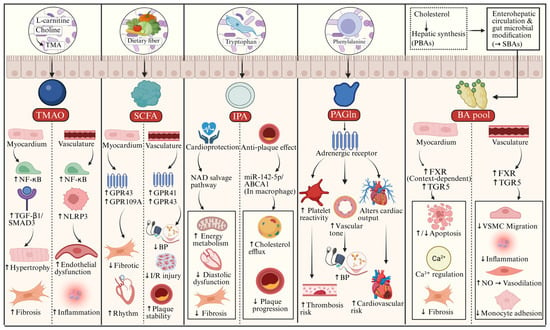
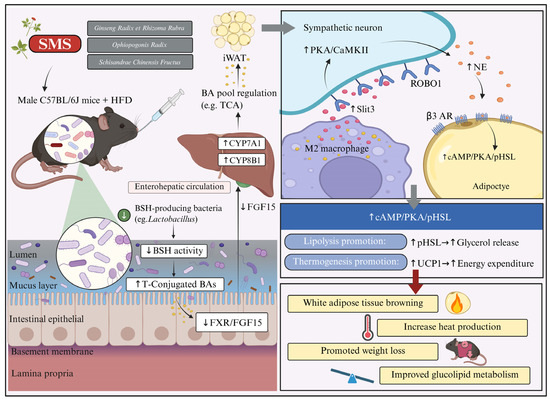
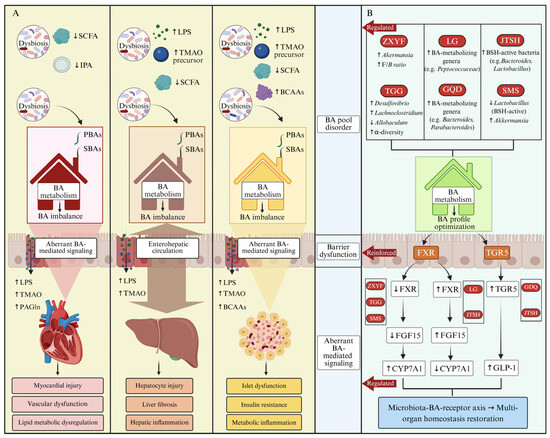
The occurrence and development of metabolic dysfunction-associated steatotic liver disease (MASLD) are closely related to intestinal flora imbalance, intestinal barrier damage, and gut-liver axis dysfunction. Due to their multi-target regulatory effects and advantages in intestinal microecological intervention, Chinese herbal monomers have shown promising
[...] Read more.
The occurrence and development of metabolic dysfunction-associated steatotic liver disease (MASLD) are closely related to intestinal flora imbalance, intestinal barrier damage, and gut-liver axis dysfunction. Due to their multi-target regulatory effects and advantages in intestinal microecological intervention, Chinese herbal monomers have shown promising application prospects in the prevention and treatment of MASLD. However, basic research on their toxicity still lags behind, and issues related to safety and clinical translation urgently need attention. This article systematically reviews the research progress on how flavonoids, triterpenoids, alkaloids, and polysaccharides improve hepatic steatosis, inflammatory responses, and metabolic disorders from a toxicological perspective by reshaping the intestinal microbiota, repairing the intestinal mucosal barrier, regulating short-chain fatty acid and bile acid metabolism, and synergistically acting on signaling pathways such as TLR4/NF-kB, FXR, TGR5, SIRT1, and the NLRP3 inflammasome. Furthermore, by combining methods such as 16S rRNA sequencing, metagenomics, metabolomics, and multi-omics integration, the article analyzes their application value and limitations in toxicological mechanism research, and discusses the translational bottlenecks faced by Chinese herbal monomers in pharmacokinetics, bioavailability, quality standardization, targeted delivery, and toxicological safety. Existing evidence indicates that Chinese herbal monomers have a three-in-one intervention advantage of microecological remodeling-metabolic regulation-inflammation inhibition, but their long-term medication safety, toxic target organs, dose-effect/toxicity relationships, and potential drug interactions still need further clarification. This article aims to provide a systematic reference for the safety evaluation and clinical translational research of Chinese herbal monomers in the prevention and treatment of MASLD.
Full article
(This article belongs to the Special Issue Adipose Thermogenesis and Crosstalk: Signaling Networks in Obesity, Metabolic Disease and Beyond)
►▼
Show Figures

Graphical abstract
Open AccessReview
The Impact of Maternal Obesity and Diabetes on the Development of Congenital Heart Defects (CHDs) in Offspring: A Narrative Review
by
Marek Zubrzycki, Mariusz Kuśmierczyk, Jan Fritz Gummert, Angelika Costard-Jäckle, Lech Paluszkiewicz, Tobias Hecht, Ingvild Birschmann, Anna Zubrzycka and Maria Zubrzycka
Metabolites 2026, 16(5), 341; https://doi.org/10.3390/metabo16050341 - 19 May 2026
Abstract
Congenital heart disease (CHD) is the most common anatomical malformation occurring in live-born infants and an increasing cause of morbidity and mortality all over the world. Population-based observations have described associations between maternal cardiometabolic disorders and the risk of CHD in offspring. The
[...] Read more.
Congenital heart disease (CHD) is the most common anatomical malformation occurring in live-born infants and an increasing cause of morbidity and mortality all over the world. Population-based observations have described associations between maternal cardiometabolic disorders and the risk of CHD in offspring. The present article is a narrative review. The aim of this study was to review the epidemiological evidence and clinical observations relating maternal obesity and diabetes mellitus to the risk of CHD in offspring, with particular attention paid to first trimester disturbances of fetal cardiac development and the influence of genetic, epigenetic and environmental factors. Studies have shown that maternal diabetes is a risk factor associated with nearly all subtypes of CHDs in offspring, while obesity and overweight are associated with increased risk for complex defects and outflow tract obstruction and decreased risk for ventricular septal defects. Diabetes and obesity share several phenotypes, which could be transmissible from mother to fetus via the placenta. This means that an increase in maternal glucose could be responsible for the prevalence of CHD in newborns of obese women. On the other hand, maternal diabetes may induce epigenetic modifications in the developing fetus. DNA methylation changes can impact gene expression patterns relevant to heart development. The abovementioned studies are heterogenous, express different opinions and are often difficult to compare. Therefore, the results from these meta-analyses must be interpreted with caution. Optimal diabetes control is responsible for the prevention of oxidative stress in diabetic pregnancies, and a deeper understanding of maternal risk factors holds the potential to improve both prenatal detection of CHDs by identifying at-risk pregnancies and primary prevention of diseases by improving preconception management.
Full article
(This article belongs to the Section Thematic Reviews)
►▼
Show Figures

Figure 1
Open AccessArticle
Pyrroloquinoline Quinone Mitigates Type 2 Diabetes-Induced Cardiac Injury Through Mitochondrial Quality Control and Inhibition of NLRP3-Dependent Pyroptosis
by
Xue Zhang, Wei Liu, Zhijing Fu, Zhuoling Chen, Qixin Chen, Yanan Shen, Yukai Jin, Dengfeng Xu, Yin Wang, Xuefeng Qu and Yangjunna Zhang
Metabolites 2026, 16(5), 340; https://doi.org/10.3390/metabo16050340 - 19 May 2026
Abstract
Background: Pyrroloquinoline quinone (PQQ), a naturally occurring redox cofactor with potent antioxidant and anti-inflammatory properties, has been shown to protect against cardiac injury. However, its therapeutic potential in diabetic cardiomyopathy (DCM) induced by Type 2 diabetes mellitus (T2DM) and the underlying mechanisms
[...] Read more.
Background: Pyrroloquinoline quinone (PQQ), a naturally occurring redox cofactor with potent antioxidant and anti-inflammatory properties, has been shown to protect against cardiac injury. However, its therapeutic potential in diabetic cardiomyopathy (DCM) induced by Type 2 diabetes mellitus (T2DM) and the underlying mechanisms remain poorly understood. Methods: A T2DM mouse model was established via a high-fat diet and low-dose STZ. We investigated the cardioprotective effects of 12-week oral PQQ administration, assessing fasting blood glucose, oral glucose tolerance, cardiac function, myocardial histopathology, blood biochemistry, mitophagy, and NLRP3 inflammasome activation. In vitro experiments using AC16 cardiomyocytes exposed to palmitic acid and high glucose were also conducted. Results: Results showed PQQ significantly improved cardiac function, attenuated remodeling, and reduced proinflammatory cytokines in mice with T2DM, regulated key mitophagy-related proteins (Parkin, Beclin-1, LC3B-II, p62), and downregulated NLRP3 inflammasome pathway components (Caspase-1, NLRP3, IL-1β, IL-18). In vitro experiments demonstrated that PQQ reduced reactive oxygen species (ROS) production, improved mitochondrial membrane potential, promoted mitophagy, and inhibited NLRP3 inflammasome-mediated pyroptosis. Conclusions: PQQ alleviates DCM in mice with T2DM by improving mitochondrial quality control, promoting mitophagy, and subsequently inhibiting NLRP3 inflammasome-mediated pyroptosis, highlighting its potential as a promising therapeutic agent for T2DM-associated cardiomyopathy.
Full article
(This article belongs to the Section Endocrinology and Clinical Metabolic Research)
►▼
Show Figures

Graphical abstract
Open AccessArticle
Polysaccharide from Gleditsia sinensis Seed Endosperm Ameliorates Type 2 Diabetes and Its Associated Cardiorenal Injuries by Modulating TLR4/MyD88/NF-κB Pathway and Gut Microbiota
by
Mei Liu, Wenping Liao, Hongyun Liu, Feng Xu, Yanyan Zhang, Xiangpei Wang and Hongmei Wu
Metabolites 2026, 16(5), 339; https://doi.org/10.3390/metabo16050339 - 18 May 2026
Abstract
Background: Type 2 diabetes mellitus (T2DM) represents a pressing global health challenge, underscoring the urgency of developing effective dietary interventions derived from natural resources. Zaojiaomi polysaccharide (ZJMP) from the endosperm of Gleditsia sinensis seeds (zaojiaomi), a traditional edible product, exhibits largely underexplored potential
[...] Read more.
Background: Type 2 diabetes mellitus (T2DM) represents a pressing global health challenge, underscoring the urgency of developing effective dietary interventions derived from natural resources. Zaojiaomi polysaccharide (ZJMP) from the endosperm of Gleditsia sinensis seeds (zaojiaomi), a traditional edible product, exhibits largely underexplored potential in T2DM management. Methods: In the present study, the antidiabetic effects and underlying mechanisms of ZJMP were investigated using a rat model of T2DM induced by a high-fat diet (HFD) combined with streptozotocin (STZ). Relevant biochemical indicators were detected, and histopathological examination was performed. The expression levels of key components of the TLR4/MyD88/NF-κB signaling pathway, as well as the inflammatory cytokines IL-6 and IL-1β in renal tissues, were further analyzed. Additionally, gut microbiota composition and the levels of short-chain fatty acids were determined. Results: ZJMP treatment significantly ameliorated hyperglycemia and dyslipidemia, elevated serum insulin levels, reduced intestinal mucosal permeability, and attenuated histopathological lesions in the heart, kidney, and pancreas of T2DM rats. Meanwhile, ZJMP notably alleviated renal inflammation by suppressing the production of IL-1β and IL-6, as well as inhibiting the TLR4/MyD88/NF-κB pathway. Furthermore, ZJMP administration effectively modulated gut microbiota composition and increased fecal concentrations of acetic acid and propionic acid. Conclusions: Collectively, these findings elucidate the novel bioactivity of ZJMP and highlight its potential as a promising functional food ingredient or dietary supplement for T2DM management.
Full article
(This article belongs to the Special Issue Gut Microbiota-Host Metabolic Axis: From Diet to Systemic Health)
►▼
Show Figures

Figure 1
Journal Menu
► ▼ Journal Menu-
- Metabolites Home
- Aims & Scope
- Editorial Board
- Reviewer Board
- Topical Advisory Panel
- Instructions for Authors
- Special Issues
- Topics
- Sections & Collections
- Article Processing Charge
- Indexing & Archiving
- Editor’s Choice Articles
- Most Cited & Viewed
- Journal Statistics
- Journal History
- Journal Awards
- Conferences
- Editorial Office
Journal Browser
► ▼ Journal BrowserHighly Accessed Articles
Latest Books
E-Mail Alert
News
Topics
Topic in
Biomedicines, Cancers, Diagnostics, JCM, Metabolites, Targets
Biomarkers of Disease: Discovery and Clinical Applications
Topic Editors: Andreas Tsakalof, Ioannis KanakisDeadline: 30 June 2026
Topic in
Dairy, Foods, Microorganisms, Nutrients, Metabolites
The Efficacy of Probiotics and Their Functional Metabolites in Fermented Foods
Topic Editors: Rina Wu, Wenjun Liu, Zhen Wu, Feiyu AnDeadline: 31 July 2026
Topic in
Nutrients, Metabolites, Healthcare, Children, Obesities, Life
Non-Communicable Diseases Silent Killer: Metabolic and Obesity Risks of Sedentary Behaviors
Topic Editors: Kotsedi Daniel Monyeki, Machoene Derrick SekgalaDeadline: 30 September 2026
Topic in
Animals, Antioxidants, Metabolites, Pets, Veterinary Sciences
Research on Companion Animal Nutrition
Topic Editors: Baichuan Deng, Lian Li, Yun JiDeadline: 26 October 2026
Conferences
Special Issues
Special Issue in
Metabolites
Mass Spectrometry-Based Metabolomics in Disease Biomarker Discovery
Guest Editors: Raobo Xu, Yingzhao Wang, Yunping QiuDeadline: 29 May 2026
Special Issue in
Metabolites
Role of Metabolic Factors and Their Interactions on Diabetes and Its Complications
Guest Editor: Yun ShenDeadline: 31 May 2026
Special Issue in
Metabolites
Metabolic Biomarkers and Nutrition in Degenerative Conditions and Gastrointestinal Cancer Surgery: 2nd Edition
Guest Editors: Irene Lidoriki, Dimitrios Schizas, Maximos FrountzasDeadline: 31 May 2026
Special Issue in
Metabolites
Old Challenges, New Tools: Modern Mass Spectrometry in Forensic Toxicology
Guest Editors: Karolina Nowak, Marcin ZawadzkiDeadline: 31 May 2026
Topical Collections
Topical Collection in
Metabolites
Feature Papers Related to "Environmental Metabolomics" Section
Collection Editor: David J. Beale
Topical Collection in
Metabolites
Advances in Metabolomics
Collection Editors: Leonardo Tenori, Edoardo Saccenti