

Physiotherapy and Neurorehabilitation: Emerging Trends and Therapies
This special issue belongs to the section "Sports Medicine and Sports Traumatology".
Special Issue Information
Dear Colleagues,
Neurological disorders are among the leading causes of long-term disability worldwide and represent a growing public health concern due to population aging and improved survival rates. Conditions such as stroke, cerebral palsy, traumatic brain injury, and neurodegenerative diseases often result in persistent motor, sensory, and cognitive impairments that significantly affect functional independence and quality of life. Physiotherapy and neurorehabilitation play a fundamental role in promoting recovery and maximizing participation in individuals with neurological conditions. Recent advances in neuroscience and motor learning have contributed to a better understanding of neuroplasticity mechanisms, fostering the development of innovative and evidence-based rehabilitation strategies.
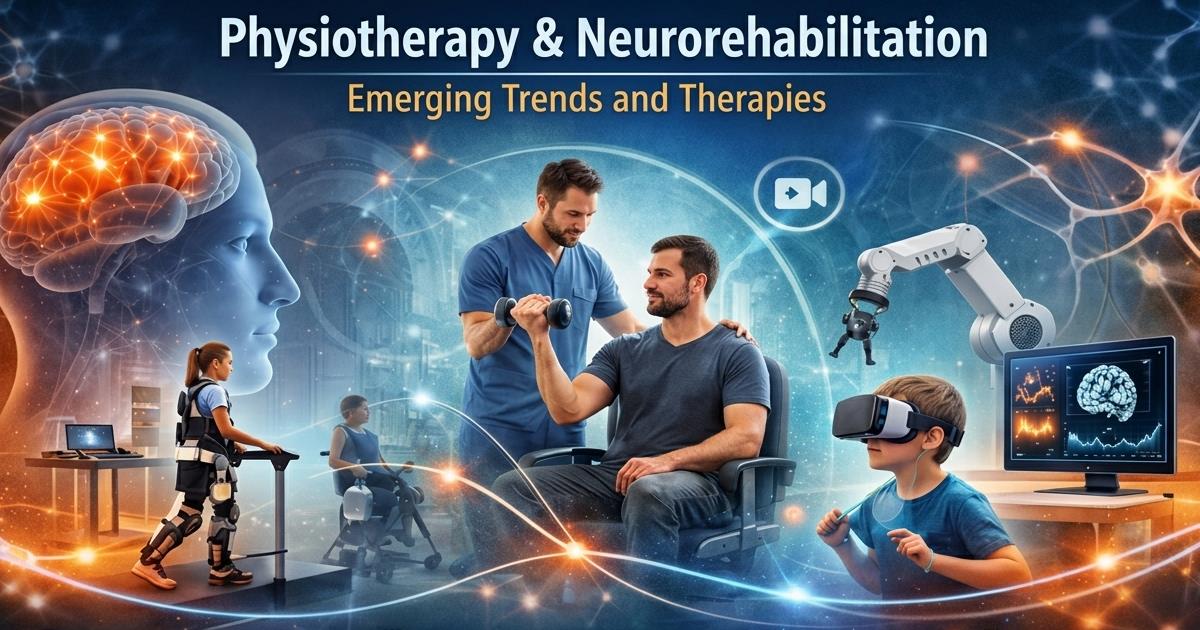
Emerging trends in neurorehabilitation emphasize intensive, task-specific, and patient-centered interventions designed to optimize functional outcomes. Novel therapeutic approaches such as motor imagery, action observation therapy, and external focus of attention have shown promising results in enhancing motor performance and facilitating neural reorganization. In parallel, technological innovations including virtual reality, robotics, wearable devices, and telerehabilitation platforms are expanding the possibilities for accessible and personalized rehabilitation. These advances provide new opportunities to improve treatment effectiveness and patient engagement; however, further high-quality research is required to establish their clinical efficacy and long-term impact across different neurological populations and age groups.
This Special Issue aims to present and disseminate the latest scientific advances and innovative therapeutic approaches in physiotherapy and neurorehabilitation. We welcome original research articles, systematic reviews, meta-analyses, and clinical studies that explore novel rehabilitation strategies and contribute to improving functional recovery, activity, and participation in individuals with neurological conditions across the lifespan.
Topics of interest for publication include, but are not limited to, the following:
- Innovative physiotherapy approaches in neurorehabilitation
- Parkinson´s disease and innovative physical therapies
- Motor imagery and action observation in neurological rehabilitation
- External focus of attention and motor learning
- Pediatric neurorehabilitation and neuropediatrics
- Stroke rehabilitation and recovery strategies
- Technology-assisted rehabilitation (virtual reality, robotics, wearables)
- Telerehabilitation and digital health in neurological physiotherapy
- Task-oriented and intensive rehabilitation programs
- Neuroplasticity and motor recovery
- Evidence-based physiotherapy interventions in neurological populations
Dr. Irimia Mollinedo-Cardalda
Dr. Esther Monge Pereira
Guest Editors
Manuscript Submission Information
Manuscripts should be submitted online at www.mdpi.com by registering and logging in to this website. Once you are registered, click here to go to the submission form. Manuscripts can be submitted until the deadline. All submissions that pass pre-check are peer-reviewed. Accepted papers will be published continuously in the journal (as soon as accepted) and will be listed together on the special issue website. Research articles, review articles as well as short communications are invited. For planned papers, a title and short abstract (about 250 words) can be sent to the Editorial Office for assessment.
Submitted manuscripts should not have been published previously, nor be under consideration for publication elsewhere (except conference proceedings papers). All manuscripts are thoroughly refereed through a single-anonymized peer-review process. A guide for authors and other relevant information for submission of manuscripts is available on the Instructions for Authors page. Medicina is an international peer-reviewed open access monthly journal published by MDPI.
Please visit the Instructions for Authors page before submitting a manuscript. The Article Processing Charge (APC) for publication in this open access journal is 2200 CHF (Swiss Francs). Submitted papers should be well formatted and use good English. Authors may use MDPI's English editing service prior to publication or during author revisions.
Keywords
- neurorehabilitation
- physiotherapy
- neuroplasticity
- motor imagery
- stroke
- motor learning
- pediatric neurology
- telerehabilitation
- virtual reality
- rehabilitation technologies
Benefits of Publishing in a Special Issue
- Ease of navigation: Grouping papers by topic helps scholars navigate broad scope journals more efficiently.
- Greater discoverability: Special Issues support the reach and impact of scientific research. Articles in Special Issues are more discoverable and cited more frequently.
- Expansion of research network: Special Issues facilitate connections among authors, fostering scientific collaborations.
- External promotion: Articles in Special Issues are often promoted through the journal's social media, increasing their visibility.
- Reprint: MDPI Books provides the opportunity to republish successful Special Issues in book format, both online and in print.
Published Papers


Medicina - ISSN 1648-9144