Macromol 2026, 6(1), 10; https://doi.org/10.3390/macromol6010010 - 6 Feb 2026
Abstract
►
Show Figures
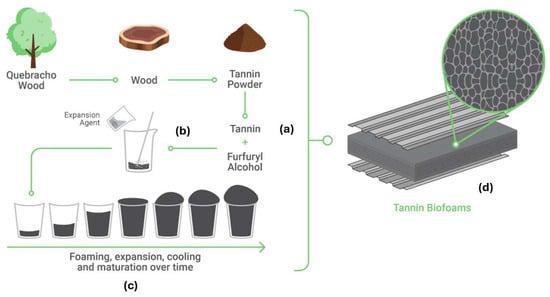
Research on tannin-based foams has shown promising results. However, all developments in this field have not been addressed from different perspectives, in a systematic way, and with an emphasis on sustainability. This work discusses different formulations, emphasizing their bio-based components and how modifications
[...] Read more.
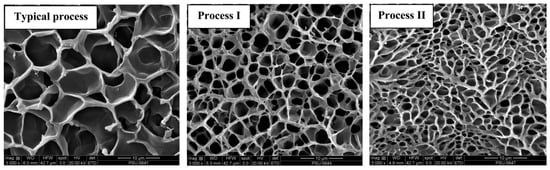
Research on tannin-based foams has shown promising results. However, all developments in this field have not been addressed from different perspectives, in a systematic way, and with an emphasis on sustainability. This work discusses different formulations, emphasizing their bio-based components and how modifications influence key properties. It examines life cycle assessment (LCA) studies through a sustainability lens and identifies major commercial phenolic products to highlight the practical use of tannin foams for thermal insulation. The type of tannins, as well as their sources, influences the key properties of these foams. The replacement of formaldehyde, a crosslinking agent known for its health risks, is possible, particularly through more sustainable alternatives that allow for foams with better properties than those obtained with formaldehyde. Substitution of diethyl ether with less hazardous alternatives results in foams with improved thermal and mechanical performance. The elimination of the blowing agent—the green alternative—also leads to foams with good performance. The presence of additives (surfactants, plasticizers, and fillers), some of which are sustainable, improves the mechanical properties of the foams. The performance in fire-related applications, already promising, is also enhanced by the presence of additives. An increase in understanding, combined with the sustainable nature of the various alternatives, makes tannin-based foams promising candidates for next-generation insulation and structural materials in construction.
Full article
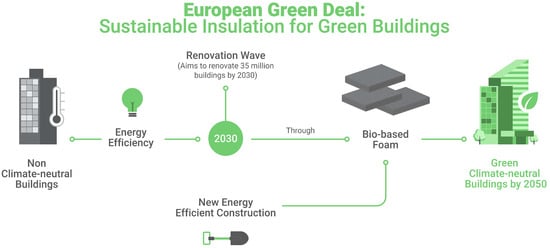
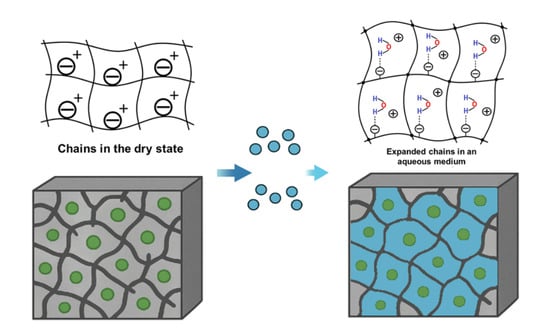
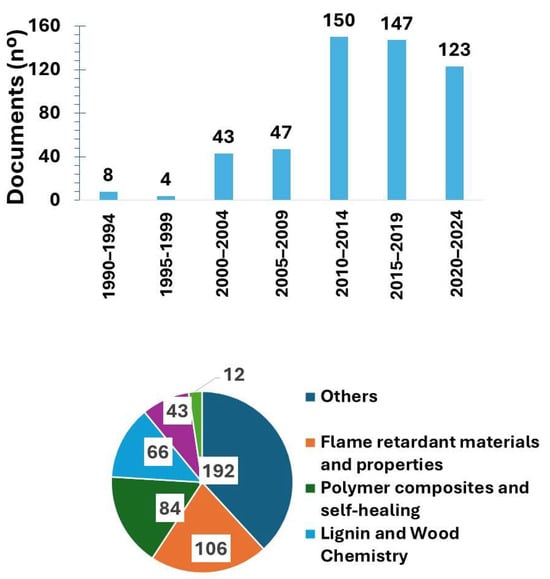
Figure 1