Article

Antioxidant, Photoprotective, and In Vitro Antiaging Assessment of Optimized Water/Oil Emulsions of Selenized Chickpea Glutelin with Rosehip Oil or Grapeseed Oil


by
Ada Keila Milán-Noris
1,2,†,
Ángel R. Rábago-Monzón
1,2,†,
Maritza G. Castro-Quintero
1,2,
Marilena Antunes-Ricardo
3,4,
Álvaro Montoya-Rodríguez
1,2,
Julio Montes-Ávila
2,
Cuauhtémoc Reyes-Moreno
1,2 and
Daniela Guardado-Félix
1,2,*
1
Laboratorio de Nutracéuticos (18), Facultad de Ciencias Químico Biológicas, Universidad Autónoma de Sinaloa, Ciudad Universitaria, Blv. de las Américas y Josefa Ortiz de Domínguez, S/N, Culiacán 80013, SI, Mexico
2
Programa de Posgrado Integral en Biotecnología, Universidad Autónoma de Sinaloa, Culiacán 80013, SI, Mexico
3
Tecnologico de Monterrey, Escuela de Ingeniería y Ciencias, Av. Eugenio Garza Sada 2501 Sur, Monterrey 64849, NL, Mexico
4
Tecnologico de Monterrey, Institute for Obesity Research, Av. Eugenio Garza Sada 2501 Sur, Monterrey 64849, NL, Mexico
*
Author to whom correspondence should be addressed.
These authors contributed equally to this work.
Macromol 2025, 5(4), 59; https://doi.org/10.3390/macromol5040059
Submission received: 22 August 2025 / Revised: 4 November 2025 / Accepted: 26 November 2025 / Published: 4 December 2025

Abstract

The selenized glutelin (Se-G) from Se-enriched chickpea sprouts has demonstrated high antioxidant potential. In this study, the response surface methodology was employed to optimize Se-G content (1–4%) and grape or rosehip oils (10–40%) for the preparation of W/O emulsions with strong antioxidant activity. In the optimal emulsions (Se-GG with grape oil and Se-GR with rosehip oil), antioxidant, photoprotective, and antiaging properties were evaluated. Non-Se glutelin was used in the control emulsions. The optimal conditions determined (4.0% Se-G/10.0% rosehip oil and 3.39% Se-G/12.50% grape oil) allowed for the preparation of emulsions with higher antioxidant capacity. The Se-GR with rosehip oil had greater antioxidant capacity than the Se-GG with grape oil. The optimal emulsions with Se, compared to their Se-free controls, had significantly higher antioxidant activity. The zeta potential value increased with the presence of Se. A positive effect on the inhibition of ROS production and lipid peroxidation was observed, as well as the inhibition of collagenase, elastase, and hyaluronidase activity, mainly due to the presence of selenium. Se-G represents a powerful tool for preventing damage to the skin caused by UV exposure.

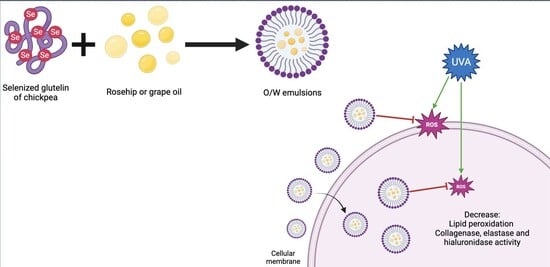
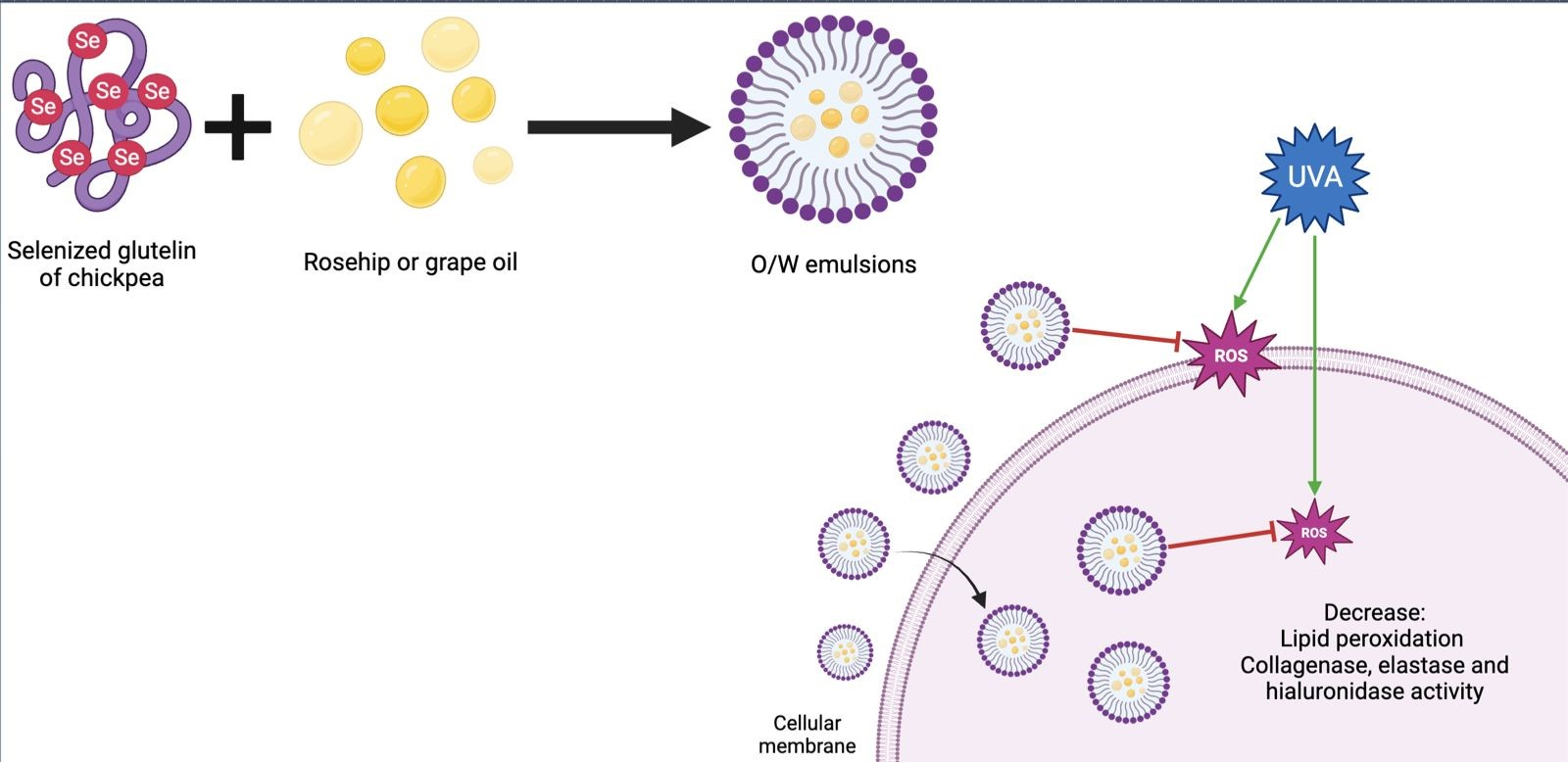
Graphical Abstract

1. Introduction

Excessive exposure to ultraviolet (UV) radiation is a major environmental factor contributing to photoaging, oxidative stress, and the development of skin disorders, including cancer [1,2]. To counteract these effects, sunscreens and antioxidant-based formulations have become essential components of dermatological and cosmetic strategies. Among the wide range of bioactive compounds under investigation, selenium-containing molecules have attracted increasing attention due to their dual role as essential micronutrients and potent redox modulators [3,4].
Organoselenium compounds and selenium nanoparticles have emerged as promising candidates in cosmetic science, given their ability to mimic glutathione peroxidase activity, neutralize reactive oxygen species (ROS), and protect against UV induced oxidative damage [5]. These properties position selenium-based compounds as multifunctional agents with potential applications in anti-aging, photoprotection, and skin regeneration [6].
In the development of cosmetic products, emulsions are widely employed as delivery systems for bioactive ingredients, as they enhance stability, improve skin penetration, and allow for the incorporation of both hydrophilic and lipophilic compounds. In this context, our previous studies demonstrated that selenium enrichment in chickpea seeds during germination with sodium selenite significantly enhances the emulsifying and antioxidant properties of chickpea proteins [7]. Notably, the glutelin fraction accumulates higher selenium content, and its antioxidant activity is dramatically increased in both hydrolyzed and whole forms [8]. Furthermore, selenium enrichment improved the stability of total proteins and protein hydrolysates > 10 kDa over time, while low-molecular-weight hydrolysates (<10 kDa) exhibited the strongest inhibition of collagen degradation, highlighting their potential as anti-aging agents [9].
In parallel, natural oils such as grape and rosehip oils are widely used in cosmeceutical formulations due to their potent antioxidant, anti-inflammatory, anti-aging, and antimicrobial properties [10]. These effects have been attributed to their rich composition in polyunsaturated fatty acids, terpenes, alkaloids, and phenolic compounds [11,12]. Beyond their intrinsic bioactivity, these oils also act as functional excipients in emulsions, improving skin hydration, barrier function, and the delivery of active ingredients [13,14]. Their synergistic combination with selenium-enriched proteins may therefore potentiate both antioxidant and photoprotective effects, while simultaneously enhancing the sensory and functional properties of the final formulation.
Taken together, these findings highlight the cosmeceutical potential of selenium-enriched chickpea glutelin (selenized glutelin) as a multifunctional ingredient with antioxidant, anti-aging, and photoprotective properties. Therefore, the objectives of this study were twofold: first, to optimize two water-in-oil (W/O) emulsions (1) selenized glutelin with rosehip oil (Se-GR) and (2) selenized glutelin with grape oil (Se-GG) maximizing antioxidant capacity using response surface methodology; and second, to evaluate the optimized emulsions for their antioxidant activity, modulation of ROS production in human dermal fibroblasts (HDFa) exposed to UV radiation, and their inhibitory effects on nitric oxide production, lipid peroxidation, and the activity of collagenase, elastase, and hyaluronidase. To specifically assess the contribution of selenium, selenium-free chickpea glutelin was used as a control.

2. Materials and Methods

2.1. Biological Material

Seeds of Kabuli chickpea (Cicer arietinum L.), cultivar Blanco Sinaloa, were collected in Angostura, Sinaloa, Mexico. Rosehip and grape essential oils were procured from Laboratories Galo, Monterrey, Mexico.

2.2. Chemical Reagents

Sodium selenite (Na2SeO3), sodium chloride (NaCl), 2,2′-Azobis(2-methylpropionamidine) dihydrochloride (AAPH), dichlorodihydrofluorescein diacetate (DCFH-DA), iron(II) sulfate (FeSO4), trichloroacetic acid (TCA), thiobarbituric acid (TBA), bovine serum albumin (BSA), lecithin, Tris-HCl, and lipopolysaccharides (LPS) from Salmonella enterica serotype Typhimurium L7261, as well as elastase from porcine pancreas, collagenase from Clostridium histolyticum, the MMP-2 substrate (MCA-Pro-Leu-Ala-Nva-DNP-Dap-Ala-Arg-NH2), N-succinyl-Ala-Ala-Ala-p-nitroanilide, and hyaluronidase from bovine testes, were obtained from Sigma-Aldrich (St. Louis, MO, USA). Dulbecco’s Modified Eagle’s Medium (DMEM), phosphate-buffered saline (PBS), penicillin (10,000 units/mL), streptomycin (10,000 µg/mL), and fetal bovine serum (FBS) were supplied by GIBCO®/Life Technologies (Grand Island, NY, USA). CellTiter 96® AQueous and Griess reagents were purchased from Promega (Madison, WI, USA). Milli-Q water was used in all experiments.

2.3. Germination Process

The germination was performed at Alimentos Lee™ (Apodaca, Nuevo León, Mexico) as described in previous works [15,16]. Kabuli-type chickpea (Cicer arietinum L.) seeds, cultivar Blanco Sinaloa, were obtained from Angostura, Sinaloa, Mexico (25°21′55″ N 108°09′44″ O). The crop was grown and harvested during the season from March to June 2023, and the seeds were stored at −20 °C. Chickpea seeds were manually cleaned to remove chaff, splits, broken, and damaged seeds. Then, the seeds were disinfected with a sodium hypochlorite solution and washed with distilled water. Subsequently, they were hydrated for 6 h with a 96 mg/L solution of sodium selenite (Na2SeO3) (Sigma-Aldrich, St. Louis, MO, USA) at a ratio of 1:3 weight/volume (w/v). The hydrated seeds were then germinated under controlled light/dark cycles for 48 h at 20 ± 2 °C and 80% relative humidity. Germinated grains were dried at 55 °C for 12 h in a forced-air convection oven 10 GN1/1 (Electrolux, STO, Stockholm, Sweden). Chickpea seeds were milled using a Perten 3100 grinder (Perten Instruments AB, Huddinge, Sweden) and sieved through a No. 60 mesh. Sprouted chickpea flours were defatted with hexane (1:4 w/v) under continuous stirring at 40 °C for 12 h, with solvent replacement every 6 h. The defatted flours were then stored in plastic bags at −20 °C.

2.4. Glutelin Purification

The glutelin (Glu) fraction was extracted sequentially according to the procedure previously reported [7]. Briefly, defatted sprouted chickpea flour was combined with distilled water (1:4, w/v) and stirred continuously at 3000 rpm for 2 h, after which the suspension was centrifuged at 10,000× g for 20 min. The pellet obtained was resuspended in a 5% NaCl solution (1:4, w/v) and mixed for 2 h, followed by a second centrifugation at 10,000× g for 20 min. The final residue was solubilized in 0.1 M NaOH and agitated for 2 h. Precipitation was induced by the addition of 1 M HCl to adjust the pH to 4.8, after which the mixture was centrifuged at 10,000× g for 20 min. The pellet obtained represented the Glu fraction, which was subsequently lyophilized and preserved at −20 °C until analysis.

2.5. Glutelin Characterization

2.5.1. Selenium Quantification

Selenium levels in Glu were determined according to a previously described method [15]. Briefly, samples were digested with 77% HNO3 in a microwave system (Mars 5 CEM, Matthews, NC, USA), and selenium was quantified using an X Series 2 ICP/MS (Thermo Scientific, Waltham, MA, USA). The results were reported as µg/g on a dry basis (db).

2.5.2. Protein Content

The protein content was determined according to AOAC standard [17] method 960.52 for protein (N × 6.25).

2.6. Total Fat and Fatty Acid Profile in Rosehip and Grape Seed Oils

The grape and rosehip oil samples were sent to DESU OPERADORA, S.A. DE C.V., a testing laboratory accredited by EMA, A.C., with accreditation No. A-0137-011/12, to evaluate total fat and the fatty acid profile, following the reference methods NOM-086-SSA1-1994 and NMX-F-490-1999-NORMEX, respectively.

2.7. Emulsion Preparation

The emulsions were prepared in accordance with Hernández-Grijalva et al. [7], where the formulation of emulsions with selenized glutelin (4%) from chickpea and olive oil (40%) was reported. The combinations were assayed as reported in Table 1. Rosehip or grape oil (10–40% w/v) was mixed with selenized glutelin (1–4% w/v). The mixtures were adjusted to pH 8 and homogenized for 10 min at 13,500 rpm using an Ultra-Turrax (IKA Werke, Ultra-Turrax T 25 basic, Wilmington, NC, USA), followed by sonication (QSonica, Sonicators Q500, Newtown, CT, USA) for 10 min with pulses of 30, 10, and 1 min at 40% amplitude, 20 kHz, and a maximum output power of 500 W.

2.8. Optimization Process

Optimization was performed through response surface methodology employing a desirability function to establish the optimal percentages of the components. The process variables included the concentration of rosehip or grape oil (X1 = oil %, 10–40%) and selenized glutelin (X2 = protein %, 1–4%). Antioxidant capacity, assessed by the ORAC-H and ABTS methods, was used as the response variable. Table 2 presents the experimental design along with the response data of the emulsions. The dataset was analyzed using stepwise regression, and the significant terms (p < 0.05) were incorporated into the predictive model for each response variable. Multiple response optimization was performed through the desirability function. For this purpose, the desirability of different experimental arrangements, including the process variables (oil and protein %) and the response variables (ORAC and ABTS), was maximized, and the corresponding desirability values were calculated. The combination of experimental factors that produced the highest desirability was identified as the optimal mixture of essential oil and selenized glutelin. The desirability approach [18] was applied to determine the best set of process variables leading to emulsions with optimal values for both dependent variables (ORAC and ABTS). The two fitted models can be evaluated at any point X = (X1, X2) within the experimental domain, yielding predicted values Ŷ1(X) and Ŷ2(X). Each Ŷi(X) is then transformed into a desirability value di(X), ranging from 0 to 1, which reflects the degree to which the response approaches the intended optimum. In this study, all response variables were targeted to reach the highest possible values. Thus, the transformation is:
d i ( x ) = 0 i f Y ^ ( x ) Y i * Y ^ i ( x ) Y i * Y i * Y i * i f Y i * Y ^ ( x ) Y i * 1 i f Y ^ ( x ) Y i *
where di(X) = desirability value of the ith response variable, Ŷi(X) = predicted response, Y i * = maximum acceptable value of the ith response, and Y i * = minimum acceptable value of the ith response. The two individual desirability values were first calculated, and then the overall desirability for both responses was obtained using the transformation function D = (d1d2)1/2. The ideal optimum corresponds to D = 1, while acceptable values range between 0.6 and 0.8 (0.6 < D < 0.8). These values were determined using Design Expert software, version 7.0.0. The ORAC and ABTS predictive models were applied to estimate individual desirability values, which were subsequently combined to calculate the global desirability (D). This allowed the identification of the optimal oil and protein percentages for producing emulsions with high antioxidant capacity (ORAC and ABTS).

2.9. Determination of Antioxidant Capacity

2.9.1. Hydrophilic ORAC (ORAC-H)

The antioxidant capacity of the emulsions was assayed using the hydrophilic ORAC-H (Oxygen Radical Absorbance Capacity Assay) method according to Ou et al. (2001) [19]. The emulsions were dissolved in sodium phosphate buffer (75 mM, pH 7.4). The analysis was performed at 37 °C using AAPH (2,2′-Azobis(2-methylpropionamidine)) as the peroxide radical producer, fluorescein as the substrate, and Trolox as the standard. Results were expressed as micromoles of Trolox equivalents per milliliter (μmol TE/mL).

2.9.2. ABTS

Antiradical activity using the ABTS assay (2,2′-azino-bis (3-ethylbenzothiazoline-6-sulfonic acid)) was determined according to a previously reported procedure [20]. A stock solution of the ABTS radical cation was prepared with 2.45 mM potassium persulfate and allowed to incubate overnight. The solution was subsequently diluted in ethanol until reaching an absorbance of 0.7 ± 0.02 at 734 nm. Samples were incubated with the ABTS solution for 10 min, and absorbance was recorded at 734 nm with a spectrophotometer (BioTek Synergy, Winooski, VT, USA). A standard curve was constructed using Trolox, and the results were expressed as micromoles of Trolox equivalents per milliliter (μmol TE/mL).

2.9.3. Lipophilic ORAC (ORAC-L)

The lipophilic ORAC (ORAC-L) was determined in the optimal emulsions (Se-GR: selenium-rich glutelin and rosehip oil; Se-GG: selenium-rich glutelin and grape oil), as previously reported [21]. In this method, the samples and Trolox were dissolved in a 7% solution of RMCD (methyl-β-cyclodextrin) in 50% aqueous acetone. In addition, fluorescein was used as the substrate, and AAPH (2,2′-Azobis(2-methylpropionamidine)) as the radical initiator. The results were expressed as micromoles of Trolox equivalents per milliliter of emulsion (µmol TE/mL).

2.10. Particle Size, Z Potential, and Polydispersity Index

The droplet size (Tn), polydispersity index (PDI), and zeta potential of the emulsions were determined with a Zetasizer (Nano ZS, Malvern, UK) at 25 ± 0.5 °C, using dynamic light scattering at a detection angle of 173°. Emulsions diluted in deionized water (1:20) were loaded into a DTS1070 cell (Malvern, UK) for measurement. The Z-average droplet size was derived from the intensity distribution, and zeta potential was estimated from the electrophoretic mobility of dispersed particles in an applied electric field.

2.11. Characterization of Cosmeceutical Properties of Optimized Emulsions

2.11.1. Cell Viability Assay

Human adult primary dermal fibroblast (HDFa) [PCS-201-012] were obtained from the American Type Culture Collection (ATCC, Manassas, VA, USA) [7,9]. Primary dermal fibroblasts (HDFa) were cultured in Dulbecco’s Modified Eagle Medium (DMEM) supplemented with 5% fetal bovine serum (FBS) and 1% penicillin–streptomycin [9]. Cells were maintained at 37 °C in a humidified atmosphere containing 5% CO2. They were seeded at a density of 5 × 10⁴ cells per well in 96-well plates and subsequently treated with optimized emulsions for 24 h at 37 °C. Following incubation, cells were rinsed with phosphate-buffered saline (PBS) to remove residual emulsion, after which CellTiter 96® AQueous One Solution was added and incubated for 60 min at 37 °C. Absorbance was then recorded at 490 nm using a Synergy MX microplate reader (BioTek Instruments, Winooski, VT, USA). Cell viability was assessed by comparing untreated controls, considered 100% viable. All experiments were performed in triplicate.

2.11.2. Cellular Antioxidant Activity

Antioxidant activity was evaluated following the procedure described by Serrano-Sandoval et al. (2023) [9]. HDFa cells were seeded at a density of 5 × 10⁴ cells/well in black 96-well plates containing 100 µL of DMEM supplemented with 5% FBS and incubated for 24 h at 37 °C in a humidified atmosphere with 5% CO2. After incubation, cells were rinsed with phosphate-buffered saline (PBS), exposed to 100 µL of the sample (1:5 v/v) and 100 µL of DMEM containing dichlorodihydrofluorescein diacetate (DCFH-DA, 60 µM), and incubated for 20 min. The medium was then removed, and cells were washed with 150 µL of PBS. Subsequently, 100 µL of PBS containing 500 µM 2,2′-Azobis(2-methylpropionamidine) dihydrochloride (AAPH) was added, and fluorescence (485/538 nm) was monitored every 2 min for 90 min using a microplate reader (BioTek Instruments Inc., Winooski, VT, USA). Cells treated with DCFH-DA but without emulsion and stimulated with AAPH were used as positive controls. Antioxidant activity was calculated using the following formula and expressed as a percentage.
Antioxidant activity (%) = 1 − ( SA − CA)
where SA is the integrated area of the emulsion’s fluorescence during the 90 min of the reading and CA is the integrated area of the positive control.

2.11.3. Nitric Oxide Inhibitory Activity

Mouse macrophages (RAW 264.7) [TIB-71] were obtained from the American Type Culture Collection (ATCC, Manassas, VA, USA) [9]. Nitric oxide (NO) inhibitory activity was evaluated as an indirect indicator of anti-inflammatory potential [9]. NO production was induced in RAW 264.7 mouse macrophages by stimulation with Salmonella typhimurium lipopolysaccharide (LPS). Cells were seeded in 96-well plates (100 µL, 5 × 10⁴ cells/well) with DMEM supplemented with 10% fetal bovine serum and 1% penicillin–streptomycin, and incubated at 37 °C in a 5% CO2 atmosphere. After 24 h, emulsions (50 µL/well) were added and incubated for 4 h. Cells were then washed with phosphate-buffered saline (PBS) to remove residual emulsion and subsequently stimulated with LPS (10 μg/mL) for 24 h. Nitrite levels were determined by transferring 100 µL of supernatant to a new plate and performing the assay with the Griess Reagent System Kit (Promega, Madison, WI, USA). Absorbance was measured at 550 nm, and nitrite concentration was quantified using a standard curve. Results were expressed as percentage NO production. Cell viability was assessed in the original plate using the Cell Titer 96® AQueous One Solution Cell Proliferation Assay, with absorbance measured at 490 nm on a BioTek Synergy MX microplate reader (Winooski, VT, USA). NO production was expressed relative to LPS-treated cells without emulsions, considered as 100%. All assays were conducted in triplicate.

2.11.4. Anti-Photoaging Activity: ROS Production

The in vitro assay for anti-photoaging activity in HDFa cells was conducted following the method of Nakyai et al. (2017) [22]. HDFa cells (2 × 10⁴ cells/well) were seeded in black 96-well plates with DMEM supplemented with 5% fetal bovine serum (FBS) and incubated for 24 h. Afterward, the medium was removed, cells were washed twice with PBS, and replaced with serum-free DMEM containing emulsions (4 µg/mL), followed by incubation for 6 h at 37 °C with 5% CO2. At the end of this treatment, the emulsion medium was discarded, cells were washed twice with PBS, and a thin PBS layer was left covering the wells. The plate was then positioned 5 cm below a UV lamp (UVGL-55, UVP Inc., Upland, CA, USA) and exposed to UVA radiation (365 nm, 10 J/cm2) for 30 min. Following irradiation, PBS was removed and cells were incubated with DMEM for 24 h. Reactive oxygen species (ROS) production was assessed by adding DCFH-DA to DMEM and incubating for 20 min prior to UVA exposure. Oxidative stress was quantified through intracellular ROS detection using DCFH-DA, as described in the antioxidant activity assay. Irradiated HDFa cells without treatment served as positive controls.

2.11.5. Lipid Peroxidation Inhibitory Activity

The inhibitory activity of the emulsions against lipid peroxidation was assessed using a phospholipid model system [5]. A lecithin solution (0.25% w/v, 0.5 mL) was combined with 0.2 mL of emulsion and 0.3 mL of water. Subsequently, 0.05 mL of FeSO4 (70 mM) was added, and the mixture was incubated at 37 °C for 30 min. Afterward, 0.25 mL of trichloroacetic acid (TCA, 10% w/v) and thiobarbituric acid (TBA, 1% w/v) were introduced. The reaction mixture was vortexed, heated at 100 °C for 1 h, and centrifuged at 3000× g for 10 min to obtain the supernatant. Absorbance of the supernatant was recorded at 532 nm, and results were calculated using the following equation.
Lipid peroxidation inhibitory activity (%) = [(Abs blank − Abs sample/Abs blank)] × 100
where Abs blank was the absorbance of water.

2.11.6. Collagenase Inhibitory Activity

Collagenase inhibitory activity of the samples was assessed using a spectrofluorimetric method [23] with slight modifications. In brief, 25 µL of Tris-HCl buffer (10 mM, pH 7.3), 25 µL of the emulsion (dissolved in Tris-HCl buffer), and 25 µL of collagenase from C. histolyticum (100 µg/mL in Tris-HCl buffer) were preincubated for 10 min at 37 °C in a 96-well plate. Subsequently, 25 µL of a 50 µM MMP-2 substrate solution (MCA-Pro-Leu-Ala-Nva-DNP-Dap-Ala-Arg-NH2) was added. After 30 min of incubation at 37 °C in the dark, fluorescence was recorded at 320 nm excitation and 405 nm emission. Inhibition was calculated using the following equation:
Collagenase Inhibition (%) = [(Fcontrol − Fcontrol’s blk) − (Fsample − Fsample’s blk)/(Fcontrol − Fcontrol’s blk)] × 100
where Fcontrol is the buffer, collagenase, and substrate; Fsample is the buffer, collagenase, emulsion, and substrate; Blank (blk) contains all the components except collagenase.

2.11.7. Elastase Inhibitory Activity

The inhibitory activity of emulsions against elastase was determined according to the method of Serrano-Sandoval et al. (2023) [9], with slight modifications. Elastase from porcine pancreas and its substrate (N-succinyl-tri-L-alanine-4-nitroanilide) were prepared in Tris buffer (pH 8.0). Then, 30 μL of emulsion was combined with 10 μL of elastase and 100 μL of Tris buffer in a 96-well plate and incubated at 25 °C for 20 min. Following incubation, 40 μL of the substrate was added, and absorbance was monitored at 410 nm for 20 min, with measurements taken every minute. Water served as the blank. Elastase inhibition was calculated using the following equation:
Elastase inhibition (%) = [(AUC blank − AUC sample)/AUC blank] × 100
where the AUC blank is the area under the curve of the blank in the first 10 min and the AUC sample is the area under the curve of the emulsion in the same period.

2.11.8. Hyaluronidase Inhibitory Activity

The inhibitory effect of the emulsions on hyaluronidase activity was determined using a spectrophotometric assay, following the procedure of Abhijit and Manjushre, (2010) [24]. A hyaluronidase solution (15 units/mL) was prepared by dissolving bovine hyaluronidase in 20 mM phosphate buffer (pH 5.35) containing 0.01% w/v bovine serum albumin (BSA) and 77 mM NaCl. Then, 100 µL of this solution was combined with 20 µL of emulsion in a 96-well flat-bottom microplate (Costar, Corning Ltd., Sunderland, UK) and incubated at 37 °C for 10 min. Subsequently, 100 µL of hyaluronic acid solution (0.03% w/v in phosphate buffer, pH 5.35) was added, and the mixture was incubated at 37 °C for 45 min. Absorbance was measured at 600 nm using a microplate reader, and hyaluronidase inhibition was calculated using the following equation:
Hyaluronidase inhibition (%) = [(A − B) (C − D)/(A − B)] × 100
“A” corresponds to the UV absorbance of a mixture containing 20 µL of deionized water, 100 µL of hyaluronidase solution, and 100 µL of hyaluronic acid solution. “B” denotes the UV absorbance of a mixture composed of 20 µL of deionized water and 200 µL of phosphate buffer (pH 5.35). “C” represents the UV absorbance of a mixture containing 20 µL of extract, 100 µL of hyaluronidase solution, and 100 µL of hyaluronic acid solution. “D” indicates the UV absorbance of a mixture consisting of 20 µL of emulsion and 200 µL of phosphate buffer (pH 5.35). Hyaluronic acid was used as the positive control. All assays were performed in triplicate across three independent experiments.

2.12. Experimental Design

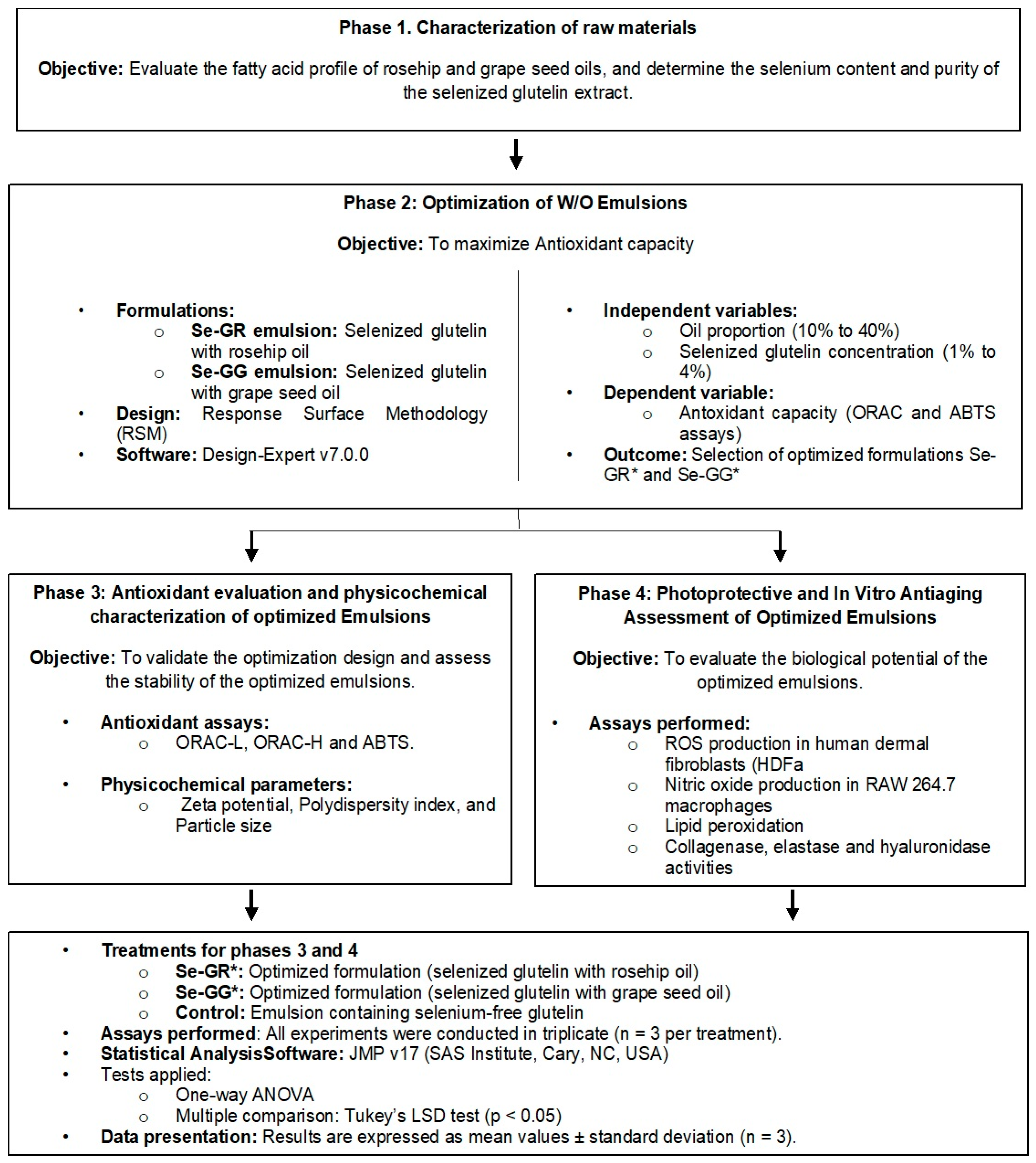
Figure 1 shows the experimental strategy followed in this study. Treatments included optimized emulsions (Se-GR, Se-GG) and a selenium-free control, tested in triplicate with statistical analysis by ANOVA and Tukey’s LSD (p < 0.05).

3. Results and Discussion

3.1. Glutelin Characterization

The enrichment of chickpea glutelin with selenium resulted in a dramatic increase in Se content (108.14 µg/g) compared to the non-enriched fraction (0.62 µg/g) (Table 1). This finding confirms the ability of legumes to accumulate selenium under biofortification conditions, in agreement with previous reports in soybean, lentil, and chickpea [16,25,26]. Such accumulation is particularly relevant because glutelin represents a major storage protein fraction, making it a suitable carrier for selenium in nutraceutical and cosmeceutical industries. Moreover, the protein content of the Se-enriched glutelin extract was slightly lower (90.24%) compared to the non-enriched fraction (95.80%), indicating that the protein fractionation process was effective.

3.2. Characterization of the Fatty Acid Profile in Grape and Rosehip Oil

Both oils present a high content of polyunsaturated fatty acids (PUFA), with linoleic acid being the most abundant (56.93 g/100 g in grapeseed oil and 53.04 g/100 g in rosehip oil) (Table 2). This confirms that both oils are rich sources of essential fatty acids, with relevance in cosmetics due to their role in skin barrier function and the modulation of inflammation [27]. Grapeseed oil contains more linolenic acid (2.39 g/100 g) than rosehip oil (0.86 g/100 g). However, previous studies highlight that rosehip oil is usually particularly rich in linolenic acid (up to 30–35%), which may vary depending on geographical origin, cultivation conditions, and extraction method [28]. This suggests that the analyzed batch may correspond to a variety with lower linolenic acid content. Oleic acid is the main monounsaturated fatty acid (MUFA) in both oils, with slightly higher values in rosehip (30.02 g/100 g) compared to grape (27.64 g/100 g). Oleic acid is known to improve skin permeability and the absorption of bioactive compounds, which justifies its use in cosmetic formulations [29]. Rosehip oil shows a higher content of saturated fatty acids (SFA) (11.32 g/100 g) than grapeseed oil (10.23 g/100 g), with palmitic acid being the most notable (11.90 g/100 g in rosehip vs. 6.48 g/100 g in grape). Although SFAs do not provide antioxidant benefits, they contribute to the oxidative stability of emulsions and to the texture of cosmetic products [30].
The predominance of linoleic acid in both oils is relevant, since this fatty acid is essential for ceramide synthesis and the integrity of the epidermal barrier. Its deficiency is associated with dryness, scaling, and inflammatory skin alterations [31]. The contribution of linolenic acid, although lower, helps resolve inflammatory processes and modulate lipid mediators in the skin [32]. Rosehip oil is widely recognized for its ability to stimulate skin regeneration and reduce scarring, attributed to its PUFA and phenolic antioxidant content [28]. Grapeseed oil, rich in linoleic acid and phenolic compounds, has shown antioxidant and antimicrobial effects, in addition to improving skin elasticity [33].
Oils rich in PUFA are more susceptible to oxidation, which may limit their shelf life in cosmetics. However, combining them with natural antioxidants (such as tocopherols or phenolic compounds) and with bioactive proteins such as selenized glutelin can improve their stability and enhance their photoprotective and anti-aging effects [34].
Table 2. Total fat and fatty acid profile of grape and rosehip oils (g/100 g of oil).
Fatty AcidGrape Oil (g/100 g)Rosehip Oil
(g/100 g)
Cis-8,11,14 eicosatrienoic acid0.160.12
Cis-11 eicosenoic acid0.390.26
Linolenic acid2.390.86
Arachidic acid0.280.41
Linoleic acid56.9353.04
Cis-11 vaccenic acid1.330.58
Oleic acid27.6430.02
Stearic acid3.421.81
Heptadecanoic acid<0.010.06
Palmitoleic acid0.150.13
Palmitic acid6.4811.90
Myristic acid0.050.03
Tridecanoic acid<0.010.11
Saturated fat10.2311.32
Monounsaturated fat29.5130.99
Polyunsaturated fat59.4853.99
Total fat99.2299.30

3.3. Optimization and Validation of Antioxidant Emulsions

The experimental design and the response values (ORAC-H and ABTS) achieved by the different emulsion formulations of oil (rosehip or grape) with Se-enriched chickpea glutelin are depicted in Table 3. The antioxidant capacity (ORAC-H) attained by the emulsion formulations with rosehip oil ranged from 1450.00 to 4683.33 μmol ET/mL, with the highest ORAC-H value found in treatment 2 (10% oil and 4% Se-G), whereas ABTS values ranged from 1014.80 to 3847.80 μmol ET/mL, with the highest ABTS value obtained in treatment 5 (3.5% oil and 2.5% Se-G). For the emulsions with grape oil, the ORAC-H and ABTS values ranged from 600.00 to 4816.67 μmol ET/mL and from 1603.24 to 3928.82 μmol ET/mL, respectively. The emulsion of treatment 2 (4% oil and 10% Se-G) showed the highest antioxidant capacity (ORAC-H and ABTS).
The regression model for the antioxidant capacity of the emulsion formulations showed a similar data pattern, indicating that the response variables are independent of the oil (rosehip or grape) used in the formulations. In both cases, the predictive model explained 92% of the total variation (p < 0.01) in ORAC-H values and 84.3% in ABTS values (p < 0.01). For both optimizations, the linear (p < 0.05), interaction (p < 0.01), and quadratic effects (p < 0.01) of the independent variables (% oil and % protein) were significant within the experimental area evaluated (Table 4). A suitable predictive model should have a coefficient of determination and adjusted coefficient of determination higher than 0.80, a p-value lower than 0.05, a coefficient of variation lower than 10%, a lack-of-fit test higher than 0.05, and adequate precision higher than 4 [35]. The predicted models are adequate and reproducible considering the statistical parameters (Table 4): determination coefficient ORAC-H (0.92) and ABTS (0.84), both higher than 0.8; adequate precision ORAC-H (12.43) and ABTS (6.65), both higher than 4; and the p-values of the models ORAC-H (0.0012) and ABTS (0.0087).
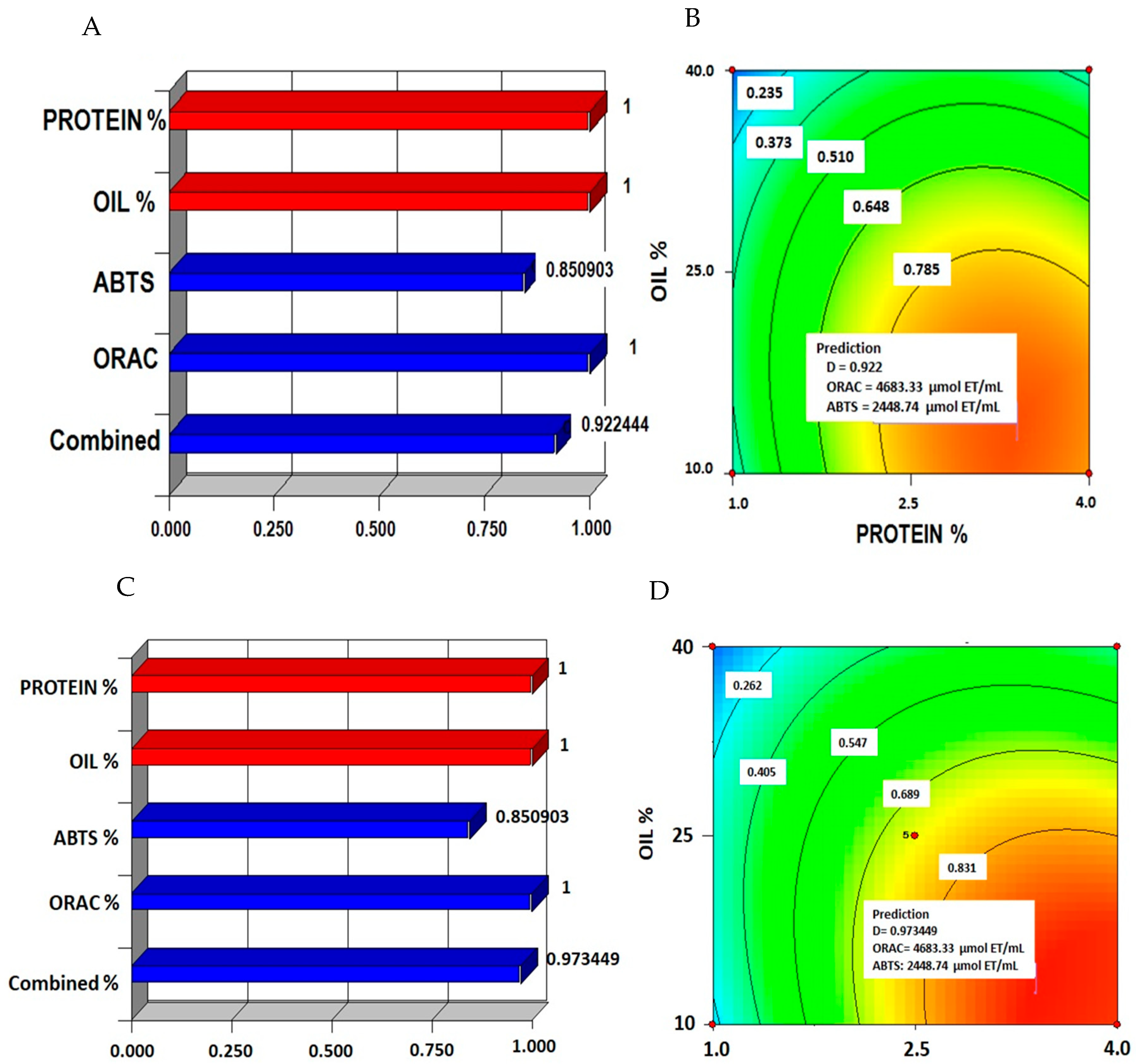
Figure 2 depicts the desirability function response surface to determine the optimum percentages of protein and oil to obtain emulsions with higher antioxidant capacity. The optimal percentages for emulsions with rosehip oil are Se-enriched glutelin = 4.0% and oil = 10.0%, with a global desirability value of Drosehip = 0.92. Similarly, the optimal antioxidant emulsion with grape oil can be achieved with 3.39% Se-enriched glutelin and 12.50% oil (Dgrape = 0.97).
The suitability of the established model was confirmed by comparing the estimated and experimental values. The following regression equation was used to estimate the effects of independent variables in ORAC-H using coded variables: YORAC = 3806.67 + 951.73(X1) − 596.12(X2) − 487.50(X1 × X2) − 505.42(X1)2 − 359.56(X2)2. The optimal conditions for each oil were experimentally tested to confirm the accuracy of the model equations. The predicted ORAC-H for both oils was 4683.33 μmol ET/mL, and the experimental results for rosehip and grape oil optimized emulsions were 4850.00 μmol ET/mL and 5100 μmol ET/mL, respectively. The percentage of relative error was 3.5% (rosehip emulsion) and 8.89% (grape oil emulsion), which denotes the correctness of the established quadratic models.

3.4. Antioxidant Capacity of Optimal Emulsions

Emulsions with selenized glutelin (Se-GR and Se-GG) consistently showed higher ABTS and ORAC values compared to their selenium-free counterparts (GR and GG) (Table 5). Se-GG (selenium + grape oil) stood out with the highest ABTS value (4397 μmol TE/mL), while Se-GR and Se-GG achieved the highest ORAC-H and ORAC-L values. This indicates that the addition of selenium enhances antioxidant capacity in both the hydrophilic and lipophilic fractions. Previous studies have shown that the incorporation of selenium into chickpea proteins improves their antioxidant capacity [7,9,16]. Moreover, the highest antioxidant capacity was observed in the oily phase. In vegetable oils, both grape and rosehip oil are rich in unsaturated fatty acids and phenolic compounds, which contribute to their antioxidant activity and cosmeceutical applications [14,36]. The combination of selenized proteins and oils rich in bioactive compounds represents a novel strategy compared to traditional emulsions, which tend to have lower antioxidant activity.

3.5. Physical Characterization of Optimized Emulsions

The droplet size obtained in the optimized emulsions ranged between 522 nm and 668 nm (Table 5). These sizes were similar to those reported by Hernández-Grijalva et al. (2022) [7], between 512 nm and 555 nm, where selenized glutelin (4%) and olive oil (40%) were used to formulate an emulsion. The particle size of the Se-GR emulsion was significantly higher than its selenium-free counterpart (GR). In contrast, the Se-GG emulsion had a smaller droplet size compared to its counterpart without selenium (GG). The zeta potential (ZP) is used to measure colloidal stability, as it reflects the total electrostatic repulsion. ZP values of ±0–10 mV, ±10–20 mV, ±20–30 mV, and >±30 mV correspond to colloidal systems classified as highly unstable, relatively stable, moderately stable, and highly stable, respectively [37]. The emulsions with selenium (Se-GR and Se-GG) had higher ZP values (−30 mV and −24.37 mV) compared to their respective controls without selenium (GR and GG: −20.67 mV and −22.93 mV). Selenium improved the ZP significantly, leading to more stable emulsions (Table 5). In another investigation, the mixture of selenized glutelin (4%) with olive oil (40%) resulted in ZP values of up to −16.27 [7]. Furthermore, the presence of selenium in the molecular structures of nanoparticles has been shown to increase ZP, enhance dispersion, and reduce particle aggregation [38,39]. Therefore, these results also demonstrate that grape (10%) and rosehip (12.5%) oils at lower concentrations can provide more stable emulsions compared to the olive oil (40%) emulsion. Moreover, the polydispersity index (PDI) was determined. This index ranges from 0 to 1 and indicates heterogeneity in particle size distribution. Values closer to 0 indicate greater monodispersity, while values close to 1 indicate greater variability in size. According to the PDI results, all values were below 0.5, indicating that the emulsions had a monomodal size distribution. GR and Se-GR had lower PDI values (0.25 and 0.30), suggesting that rosehip oil may promote greater monodispersity.

3.6. Anti-Inflammatory, Antioxidant, and Cosmeceutical Properties of Emulsions Optimized with and Without Selenium

All emulsions strongly inhibited nitric oxide (NO) production (82–90%), with no significant differences across formulations, indicating robust anti-inflammatory potential regardless of selenium enrichment or oil type (Table 6). The anti-inflammatory properties of the emulsions may be associated with the presence of phenolic compounds and terpenoids in rosehip and grape oils. Previously, Harbeoui et al. (2019) [40] reported 74% inhibition of nitric oxide (NO) production, attributed to the presence of sterols, tocopherols, and triterpene alcohols in grape oil. Rosehip oil contains flavonoids, proanthocyanidins, tannins, polyphenols, fatty acids, carotenoids, and tocopherols, which are associated with its anti-inflammatory properties [41,42].
Selenium-enriched emulsions outperformed their non-selenium counterparts. Se-GR showed the highest protection (47.8% vs. 32.0% in GR), and Se-GG was superior to GG (40.9% vs. 31.3%), indicating that selenium significantly enhances cell-level antioxidant defense (Table 6). These results agree with a previous study by Hernández-Grijalva et al. (2022) [7], who observed an increase in cellular antioxidant activity in Caco-2 cells when evaluating an emulsion formulated with olive oil and selenized chickpea glutelin, compared to its counterpart without selenium. It was also reported that selenized peptides > 10 kDa from chickpea protein exhibited higher antioxidant activity than the control protein hydrolysate [8].
All emulsions reduced ROS relative to the positive control, with selenium-enriched formulations showing greater suppression. Se-GR yielded the lowest ROS (15,307 RLU) < Se-GG (15,867) < GR (16,331) ≈ GG (16,210) < control + (17,361), supporting selenium’s role in attenuating oxidative stress (Table 6). Selenium is known for its capacity to mitigate ROS production, and [43] reported that it can exert a protective effect on human skin fibroblasts exposed to UV-A radiation by increasing glutathione peroxidase activity. Serrano-Sandoval et al. (2019) [8] demonstrated that selenomethionine and methyl selenocysteine at 25 μg/mL reduced ROS production in HDFa cells after UV-A radiation exposure by 51.63% and 53.46%, respectively. Furthermore, Chung et al. (2019) [44] reported that selenium nanoparticles coated with bovine serum albumin lowered ROS levels in HDFa cells under oxidative stress conditions.
The cosmeceutical properties were evaluated by measuring the activity of the enzymes collagenase, elastase, and hyaluronidase. Selenized emulsions exhibited higher collagenase inhibition compared to non-selenized emulsions (Table 6). The presence of selenium in the emulsions promoted an increase of 11.55–12.53% in collagenase inhibition. The Se-GR emulsion showed the highest collagenase inhibition, with a value of 94.86%. Previously, Serrano-Sandoval et al. [8] demonstrated that selenized chickpea protein hydrolysates have potential collagenase inhibitory activity and prevent collagen degradation in HDFa cells exposed to UV-A radiation.
The percentage of elastase inhibitory activity was 7.47% and 2.94% higher in emulsions containing selenium (Se-GR and Se-GG) compared to their counterparts (GR and GG) (Table 6). Serrano-Sandoval et al. (2023) [9] showed that selenized chickpea protein hydrolysates exerted strong elastase inhibition in HDFa cells. Furthermore, Kim et al. (2016) [45] reported that selenium-rich tuna extracts reduced elastase activity by 35% in Hs27 human skin fibroblasts compared to untreated cells.
Interestingly, it was also observed that the emulsion of rosehip oil and Se-enriched glutelin (Se-GR) had the highest hyaluronidase inhibitory activity (72.38%). Se-GR and Se-GG emulsions showed 23.02% and 9.89% higher hyaluronidase inhibition compared to GR and GG. Rosehip oil is known for its potential role in maintaining skin hydration. Its components, such as phenolic compounds, fatty acids, and terpenoids, have demonstrated potent hyaluronidase inhibitory effects [46]. Kayath et al. (2019) [47] reported the anti-hyaluronidase activity of rosehip oil with an IC50 value of 36.34 mg/mL. These results suggest a synergistic effect between selenium and rosehip oil in improving hyaluronidase inhibition activity.
Lipid peroxidation inhibition plays a crucial role in reducing the generation of free radicals and subsequent damage to cell membranes, which contributes to aging [48]. The Se-GR and Se-GG emulsions exhibited 9–10% higher lipid peroxidation inhibition compared to their counterparts without selenium (Table 6). This effect can be attributed to the capacity of selenium to mediate the reduction in lipid peroxides by attacking one oxygen atom of the peroxide bond, causing the rupture of these compounds and contributing to the decrease in lipid peroxidation [49]. Similar findings have been reported by Guo et al. (2020) [5], who demonstrated that selenized yeast peptide fractions exhibited higher lipid peroxidation inhibition compared to the control. Other authors have reported that selenized peptides from brown rice contained in an emulsion with linoleic acid have the capacity to inhibit lipid peroxidation [50].

4. Conclusions

The optimization of emulsions stabilized with selenized chickpea glutelin showed that protein concentration is the key factor in enhancing antioxidant capacity, while an excess of the oil phase decreases efficacy. Selenization of glutelin significantly improved its functional and bioactive properties, resulting in emulsions with smaller droplet sizes, more negative Z potential, and lower PDI, leading to greater colloidal stability. The type of oil influenced performance: grapeseed oil—which is rich in polyunsaturated fatty acids (PUFAs)—was more susceptible to oxidation and produced less homogeneous emulsions, while rosehip oil—with higher contents of oleic and palmitic acids—favored more stable and oxidation-resistant emulsions. In terms of bioactivity, emulsions with rosehip oil and selenized glutelin achieved the highest antioxidant capacity, greater cellular protection against oxidative stress, and stronger inhibition of dermal enzymes associated with skin aging. Overall, a synergy between selenized glutelin and rosehip oil was demonstrated, combining physicochemical stability and protective bioactivity, consolidating this combination as a promising strategy for applications in functional foods, nutraceuticals, and cosmeceuticals. Future perspectives include evaluating in vivo bioavailability and safety, analyzing long-term oxidative stability, exploring synergy with other plant oils and bioactive compounds, elucidating the molecular mechanisms of selenium–protein interactions, and conducting applied studies in real food and cosmetic matrices to validate efficacy and acceptance.

Author Contributions

Conceptualization, D.G.-F. and A.K.M.-N.; methodology, Á.R.R.-M. and A.K.M.-N.; formal analysis, Á.M.-R., M.A.-R. and J.M.-Á.; investigation, Á.R.R.-M. and M.G.C.-Q.; resources, C.R.-M. and M.A.-R.; writing—original draft preparation, D.G.-F., Á.R.R.-M., A.K.M.-N. and M.G.C.-Q.; writing—review and editing; C.R.-M., D.G.-F. and A.K.M.-N.; supervision, A.K.M.-N. and D.G.-F.; funding acquisition, D.G.-F. and C.R.-M. All authors have read and agreed to the published version of the manuscript.

Funding

This study was financed through nutraceutical laboratory funds from the Universidad Autónoma de Sinaloa, as well as by PROFAPI (PRO_A7_014) and SECIHTI (Secretaría de Ciencia, Humanidades, Tecnología e Innovación).

Institutional Review Board Statement

Not applicable.

Data Availability Statement

The original contributions presented in this study are included in the article. Further inquiries can be directed to the corresponding author.

Acknowledgments

The authors (Guardado-Félix, D.; Milán-Noris, A.K.; Montoya-Rodríguez, A.; Antunes-Ricardo, M.) are affiliated with the INNOPROT network (Innovation Network for the Processing of Endemic Iberoamerican Plant Proteins), supported by CYTED (Red 124RT0164). The authors express their gratitude to the Secretaría de Ciencia, Humanidades, Tecnología e Innovación (SECIHTI), the Universidad Autónoma de Sinaloa, and the FEMSA Biotechnology Center at Tecnológico de Monterrey for providing the facilities necessary to carry out this research.

Conflicts of Interest

The authors declare no conflicts of interest.

References

  1. Pfeifer, G.P. Mechanisms of UV-induced mutations and skin cancer. Genome Instab. Dis. 2020, 1, 99–113. [Google Scholar] [CrossRef]
  2. Salminen, A.; Kaarniranta, K.; Kauppinen, A. Photoaging: UV radiation-induced inflammation and immunosuppression accelerate the aging process in the skin. J. Inflamm. Res. 2022, 71, 817–831. [Google Scholar] [CrossRef]
  3. Sentkowska, A.; Pyrzyńska, K. The influence of synthesis conditions on the antioxidant activity of selenium nanoparticles. Molecules 2022, 27, 2486. [Google Scholar] [CrossRef] [PubMed]
  4. Bjørklund, G.; Shanaida, M.; Lysiuk, R.; Antonyak, H.; Klishch, I.; Shanaida, V.; Peana, M. Selenium: An antioxidant with a critical role in anti-aging. Molecules 2022, 27, 6613. [Google Scholar] [CrossRef] [PubMed]
  5. Guo, H.; Guo, S.; Liu, H. Antioxidant activity and inhibition of ultraviolet radiation-induced skin damage of selenium-rich peptide fraction from selenium-rich yeast protein hydrolysate. Bioorg. Chem. 2020, 105, 104431. [Google Scholar] [CrossRef] [PubMed]
  6. Cimmino, G.; De Nisco, M.; Alonso, C.; Gravina, C.; Piscopo, V.; Lemos, R.; Pedatella, S. Novel synthesized seleno-glycoconjugates as cosmeceutical ingredients: Antioxidant activity and in vitro skin permeation. Eur. J. Med. Chem. Rep. 2024, 12, 100240. [Google Scholar] [CrossRef]
  7. Hernández-Grijalva, M.I.; Serrano-Sandoval, S.N.; Gutiérrez-Uribe, J.A.; Serna-Saldivar, S.O.; Milán-Carrillo, J.; Antunes-Ricardo, M.; Guardado-Félix, D. Application of protein fractions from selenized sprouted chickpeas as emulsifying agents and evaluation of their antioxidant properties. Food Bioprod. Process. 2022, 136, 59–66. [Google Scholar] [CrossRef]
  8. Serrano-Sandoval, S.N.; Guardado-Félix, D.; Gutiérrez-Uribe, J.A. Changes in digestibility of proteins from chickpeas (Cicer arietinum L.) germinated in presence of selenium and antioxidant capacity of hydrolysates. Food Chem. 2019, 285, 290–295. [Google Scholar] [CrossRef]
  9. Serrano-Sandoval, S.N.; Jiménez-Rodríguez, A.; Hernández-Pérez, J.; Chavez-Santoscoy, R.A.; Guardado-Félix, D.; Antunes-Ricardo, M. Selenized chickpea sprouts hydrolysates as a potential anti-aging angredient. Molecules 2023, 28, 3402. [Google Scholar] [CrossRef]
  10. Ferreira, S.M.; Santos, L.A. Potential valorization strategy of wine industry by-products and their application in cosmetics-case study: Grape pomace and grapeseed. Molecules 2022, 27, 969. [Google Scholar] [CrossRef]
  11. Popović-Djordjević, J.; Špirović-Trifunović, B.; Pećinar, I.; de Oliveira, L.F.C.; Krstić, Đ.; Mihajlović, D.; Simal-Gandara, J. Fatty acids in seed oil of wild and cultivated rosehip (Rosa canina L.) from different locations in Serbia. Ind Crops Prod. 2023, 191, 115797. [Google Scholar] [CrossRef]
  12. Garavaglia, J.; Markoski, M.M.; Oliveira, A.; Marcadenti, A. Grape seed oil compounds: Biological and chemical actions for health. Nutr. Metab. Insights 2016, 9, NMI.S32910. [Google Scholar] [CrossRef]
  13. Nogueira, M.A.; Cardoso, C.O.; Albuquerque, L.F.; Cunha-Filho, M.; Gratieri, T.; Gelfuso, G.M. Grape seed oil microemulsion for improved skin delivery of resveratrol. AAPS PharmSciTech 2025, 26, 148. [Google Scholar] [CrossRef]
  14. Oargă (Porumb), D.P.; Cornea-Cipcigan, M.; Nemeș, S.A.; Cordea, M.I. The effectiveness of a topical rosehip oil treatment on facial skin characteristics: A pilot study on wrinkles, UV spots reduction, erythema mitigation, and age-related signs. Cosmetics 2023, 12, 125. [Google Scholar] [CrossRef]
  15. Guardado-Félix, D.; Serna-Saldivar, S.O.; Cuevas-Rodríguez, E.O.; Jacobo-Velázquez, D.A.; Gutiérrez-Uribe, J.A. Effect of sodium selenite on isoflavonoid contents and antioxidant capacity of chickpea (Cicer arietinum L.) sprouts. Food Chem. 2017, 226, 69–74. [Google Scholar] [CrossRef]
  16. Serrano-Sandoval, S.N.; Guardado-Félix, D.; Gutiérrez-Uribe, J.A. Deglycosylation of isoflavones in selenized germinated chickpea flours due to convection drying. LWT 2022, 153, 112417. [Google Scholar] [CrossRef]
  17. AOAC. AOAC Official Methods of Analysis; Association of Official Analytical Chemists; AOAC: Washington, DC, USA, 1992. [Google Scholar]
  18. De-la-Vara, S.R.; Domínguez, D.J. Métodos de superficie de respuesta; un estudio comparativo. Rev. Mat. Teor. Apl. 2002, 1, 47–65. [Google Scholar]
  19. Ou, B.; Hampsch-Woodill, M.; Prior, R.L. Development and Validation of an Improved Oxygen Radical Absorbance Capacity Assay Using Fluorescein as the Fluorescent Probe. J. Agric. Food Chem. 2001, 49, 4619–4626. [Google Scholar] [CrossRef] [PubMed]
  20. Re, R.; Pellegrini, N.; Proteggente, A.; Pannala, A.; Yang, M.; Rice-Evans, C. Antioxidant activity applying an improved ABTS radical cation decolorization assay. Free Radic. Biol. Med. 1999, 26, 1231–1237. [Google Scholar] [CrossRef]
  21. Huang, D.; Ou, B.; Hampsch-Woodill, M.; Flanagan, J.A.; Deemer, E.K. Development and Validation of Oxygen Radical Absorbance Capacity Assay for Lipophilic Antioxidants Using Randomly Methylated β-Cyclodextrin as the Solubility Enhancer. J. Agric. Food Chem. 2002, 50, 1815–1821. [Google Scholar] [CrossRef] [PubMed]
  22. Nakyai, W.; Saraphanchotiwitthaya, A.; Viennet, C.; Humbert, P.; Viyoch, J. An in vitro model for fibroblast photoaging comparing single and repeated UVA irradiations. J. Photochem. Photobiol. 2017, 93, 1462–1471. [Google Scholar] [CrossRef]
  23. Hubert, J.; Angelis, A.; Aligiannis, N.; Rosalia, M.; Abedini, A.; Bakiri, A.; Renault, J.H. In vitro dermo-cosmetic evaluation of bark extracts from common temperate trees. Planta Med. 2016, 82, 1351–1358. [Google Scholar] [CrossRef]
  24. Abhijit, S.; Manjushree, D. Anti-hyaluronidase, anti-elastase activity of Garcinia indica. Int. J. Bot. 2010, 6, 299–303. [Google Scholar] [CrossRef]
  25. Mrština, T.; Praus, L.; Száková, J.; Kaplan, L.; Tlustoš, P. Foliar selenium biofortification of soybean: The potential for transformation of mineral selenium into organic forms. Front. Plant Sci. 2024, 15, 1379877. [Google Scholar] [CrossRef] [PubMed]
  26. Sita, K.; Sehgal, A.; Bhardwaj, A.; Bhandari, K.; Jha, U.; Vara Prasad, P.V.; Nayyar, H. Selenium supplementation to lentil (Lens culinaris Medik.) under combined heat and drought stress improves photosynthetic ability, antioxidant systems, reproductive function and yield traits. Plant Soil 2023, 486, 7–23. [Google Scholar] [CrossRef]
  27. Zhang, W.R.; Zhang, Q.R.; Zhou, Z.Y.; Zhang, Y.F.; Li, X.W.; Shen, H.Y.; Xiang, Q. Oxidative-inflammatory modulation of skin lipid metabolism by squalane, oleic acid, and linoleic acid. Cosmetics 2025, 12, 130. [Google Scholar] [CrossRef]
  28. Pashaei, M.; Hassanpour, H. Phenolic, amino acids, and fatty acids profiles and the nutritional properties in the fresh and dried fruits of black rosehip (Rosa pimpinellifolia L.). Sci. Rep. 2024, 14, 19665. [Google Scholar] [CrossRef]
  29. Lin, T.K.; Zhong, L.; Santiago, J.L. Anti-inflammatory and skin barrier repair effects of topical application of some plant oils. Int. J. Mol. Sci. 2017, 19, 70. [Google Scholar] [CrossRef]
  30. Nzikou, J.M.; Matos, L.; Bouanga-Kalou, G.; Ndangui, C.B.; Pambou-Tobi, N.P.G.; Kimbonguila, A.; Desobry, S. Chemical composition on the seeds and oil of sesame (Sesamum indicum L.) grown in Congo-Brazzaville. Adv. J. Food Sci. Technol. 2010, 2, 22–27. [Google Scholar]
  31. Boelsma, E.; Hendriks, H.F.; Roza, L. Nutritional skin care: Health effects of micronutrients and fatty acids. Am. J. Clin. Nutr. 2021, 73, 853–864. [Google Scholar] [CrossRef]
  32. Wang, X.; Jia, Y.; He, H. The role of linoleic acid in skin and hair health: A review. Int. J. Mol. Sci. 2024, 26, 246. [Google Scholar] [CrossRef]
  33. Tsiapali, O.I.; Ayfantopoulou, E.; Tzourouni, A.; Ofrydopoulou, A.; Letsiou, S.; Tsoupras, A. Unveiling the utilization of grape and winery by-products in cosmetics with health promoting properties. Appl. Sci. 2025, 15, 1007. [Google Scholar] [CrossRef]
  34. Michalak, M.; Błońska-Sikora, E.; Dobros, N.; Spałek, O.; Zielińska, A.; Paradowska, K. Bioactive compounds, antioxidant properties, and cosmetic applications of selected cold-pressed plant oils from seeds. Cosmetics 2024, 11, 153. [Google Scholar] [CrossRef]
  35. Candioti, L.V.; De Zan, M.M.; Cámara, M.S.; Goicoechea, H.C. Experimental design and multiple response optimization. Using the desirability function in analytical methods development. Talanta 2014, 124, 123–138. [Google Scholar] [CrossRef] [PubMed]
  36. Serra, M.; Casas, A.; Teixeira, J.A.; Novo Barros, A. Revealing the beauty potential of grape stems: Harnessing phenolic compounds for cosmetics. Int. J. Mol. Sci. 2023, 24, 11751. [Google Scholar] [CrossRef] [PubMed]
  37. Patel, V.R.; Agrawal, Y.K. Nanosuspension: An approach to enhance solubility of drugs. J. Adv. Pharm. Technol. Res. 2011, 2, 81. [Google Scholar] [CrossRef]
  38. Shahabadi, N.; Zendehcheshm, S.; Khademi, F. Selenium nanoparticles: Synthesis, in-vitro cytotoxicity, antioxidant activity and interaction studies with ct-DNA and HSA, HHb and Cyt c serum proteins. Biotechnol. Rep. 2021, 30, e00615. [Google Scholar] [CrossRef]
  39. Abbas, H.S.; Abou Baker, D.H.; Ahmed, E.A. Cytotoxicity and antimicrobial efficiency of selenium nanoparticles biosynthesized by Spirulina platensis. Arch. Microbiol. 2021, 203, 523–532. [Google Scholar] [CrossRef]
  40. Harbeoui, H.; Dakhlaoui, S.; Wannes, W.A.; Bourgou, S.; Hammami, M.; Akhtar Khan, N.; Saidani Tounsi, M. Does unsaponifiable fraction of grape seed oil attenuate nitric oxide production, oxidant and cytotoxicity activities. J. Food Biochem. 2019, 43, e12940. [Google Scholar] [CrossRef]
  41. Saini, A.; Kaur, R.; Kumar, S.; Saini, R.K.; Kashyap, B.; Kumar, V. New horizon of rosehip seed oil: Extraction, characterization for its potential applications as a functional ingredient. Food Chem. 2023, 437, 137568. [Google Scholar] [CrossRef]
  42. Arora, P.; Shiveena, B.; Garg, M.; Kumari, S.; Goyal, A. Curative potency of medicinal plants in management of eczema: A conservative approach. Phytomed. Plus 2022, 2, 100256. [Google Scholar] [CrossRef]
  43. Emonet, N.; Leccia, M.T.; Favier, A.; Beani, J.C.; Richard, M.J. Thiols and selenium: Protective effect on human skin fibroblasts exposed to UVA radiation. J. Photochem. Photobiol. B 1997, 40, 84–90. [Google Scholar] [CrossRef]
  44. Chung, S.; Roy, A.K.; Webster, T.J. Selenium nanoparticle protection of fibroblast stress: Activation of ATF4 and Bcl-xL expression. Int. J. Nanomed. 2019, 2019, 9995–10007. [Google Scholar] [CrossRef]
  45. Kim, Y.M.; Jung, H.J.; Choi, J.S.; Nam, T.J. Anti-wrinkle effects of a tuna heart H2O fraction on Hs27 human fibroblasts. Int. J. Mol. Med. 2016, 37, 92–98. [Google Scholar] [CrossRef]
  46. Hetta, M. Hyaluronidase inhibitors as skin rejuvenating agents from natural source. Int. J. Phytocosmet. Nat. Ingred. 2020, 7, 4. [Google Scholar] [CrossRef]
  47. Kayath, H.; Dhawan, S.; Nanda, S. In-vitro estimation of photo-protective potential of rosehip seed oil and QbD based development of a nanoformulation. Curr. Nanomed. 2019, 9, 216–231. [Google Scholar] [CrossRef]
  48. Gabe, Y.; Takeda, K.; Tobiishi, M.; Kikuchi, S.; Tsuda, K.; Haryuu, Y.; Takahashi, Y. Evaluation of subclinical chronic sun damage in the skin via the detection of long-lasting ultraweak photon emission. Skin Res. Technol. 2021, 27, 1064–1071. [Google Scholar] [CrossRef] [PubMed]
  49. Orian, L.; Flohé, L. Selenium-catalyzed reduction of hydroperoxides in chemistry and biology. Antioxidants 2021, 10, 1560. [Google Scholar] [CrossRef]
  50. Liu, K.; Du, R.; Chen, F. Antioxidant activities of Se-MPS: A selenopeptide identified from selenized brown rice protein hydrolysates. LWT 2019, 111, 555–560. [Google Scholar] [CrossRef]
Figure 1. Workflow of the study: raw material characterization, optimization of W/O emulsions using RSM, antioxidant and physicochemical validation, and biological evaluation in HDFa and RAW 264.7 cells.
Macromol 05 00059 g001
Figure 2. (A,C) Individual desirability (di) for response variables (ORAC and ABTS), and (B,D) global desirability (Drosehip = 0.92/Dgrape = 0.97) for optimized emulsions prepared with selenium-enriched glutelin from germinated chickpeas combined with rosehip oil (A,B) or grape oil (C,D), to achieve a w/o antioxidant emulsion.
Macromol 05 00059 g002
Table 1. Total protein and selenium content in the glutelin extract of germinated chickpeas with or without selenium enrichment.
Se Content
(µg/g Sample)
Protein Content (%)
Non-Se-enriched glutelin0.62 ± 0.014 b95.80 ± 1.32 a
Se-enriched glutelin108.14 ± 4.80 a90.24 ± 1.16 b
Values are means ± standard deviations of three replicates. Values with different letters in every column indicate significant differences (p < 0.05).
Table 3. Experimental design and results of antioxidant emulsions formulated with different oil (%) and protein (%) combinations.
Process VariablesResponse Variables
Optimization Rosehip OilOptimization Grape Oil
Treatment 1Oil % 2Se-G
% 2
ORAC
(μmol ET/mL)
ABTS
(μmol
ET/mL)
ORAC
(μmol ET/mL)
ABTS
(μmol ET/mL)
11011916.671548.631566.673040.87
21044683.331997.894816.673928.82
34011450.001189.221866.671969.70
44042266.671601.481700.001603.24
53.72.54116.673847.784083.003259.34
646.22.52783.331014.802433.002406.62
7250.371733.331548.63600.001730.09
8254.624583.331871.044550.333407.33
9252.53866.672156.453375.002420.72
10252.53700.002293.873416.672145.88
11252.53866.672420.723166.672603.95
12252.53833.332399.583316.672350.25
13252.53766.672542.283375.002272.73
1 Number of experiments. 2 Quantity in the formulation. ORAC: Oxygen radical absorbance capacity, ABTS: 2,2′-azino-bis (3-ethylbenzothiazoline-6-sulfonic acid method. Se-G: selenium glutelin.
Table 4. Results of regression analysis of predicted quadratic polynomial models for each response variable in formulations containing rosehip and grape oil.
Regression Parameter CoefficientsResponse Variables
Optimization Rosehip OilOptimization Grape Oil
ParameterORAC
(μmol ET/mL)
Coded Values
ABTS
(μmol ET/mL)
Coded Values
ORAC
(μmol ET/mL)
Coded Values
ABTS
(μmol ET/mL)
Coded Values
Intercept
         β03806.672362.583806.672362.58
Linear
         β1, Protein% (X1)951.73 ****164.68 NS951.73 ****164.68 NS
         β2, Oil% (X2)−596.12 **−392.38 ****−596.12 **−392.38 ****
Quadratic
         β11, Protein% (X12)−505.42 **−376.20 ***−505.42 **−376.20 ***
         β22, Oil% (X22)−359.56 *−302.42 **−359.56 *−302.42 **
Interaction
         β12, Protein% × Oil% (X1 × X2)−487.50 *−9.25 NS−487.50 *−9.25 NS
p-value for the model
R2
R2 adjusted
p-value for lack of fit
CV (%)
Adequate precision (PRESS)
>0.0012
0.92
0.86
0.0005
12.76
12.43
>0.0087
0.84
0.74
0.047
13.95
6.65
>0.0012
0.92
0.86
0.0005
12.76
12.43
>0.0087
0.84
0.74
0.047
13.95
6.65
Mean ± standard deviations of three replicates. NS Non-significant; * Significant: p ≤ 0.1; ** Significant: p ≤ 0.05; *** Significant: p ≤ 0.01; **** Significant: p ≤ 0.005. ORAC: Oxygen radical absorbance capacity, ABTS: 2,2′-azino-bis (3-ethylbenzothiazoline-6-sulfonic acid method.
Table 5. Antioxidant capacity and physical characterization of emulsions optimized with selenium-enriched glutelin and rosehip or grape oil, compared to emulsions with non-selenium-enriched glutelin.
Emulsions
Se-GRGRSe-GGGG
Antioxidant capacity
(μmol ET/mL)
ABTS3810 ± 108 b2935 ± 93 c4397 ± 390 a2703 ± 219 c
ORAC-H4850 ± 274 a3825 ± 287 b5100 ± 216 a3800 ± 180 b
ORAC-L19,200 ± 871 a16,666 ± 816 b15,333 ± 305 b9466 ± 416 c
ORAC Total24,45018,15822,46613,266
Physical characterization
Size (nm)593.07 ± 18.75 b522.63 ± 3.55 c610.77 ± 9.20 b668.20 ± 6.96 a
Zeta Potential (MV)−30.73 ± 0.38 d−20.67 ± 0.50 a−24.37 ± 0.47 c−22.93 ± 0.68 b
PDI (μm)0.30 ± 0.07 b0.25 ± 0.11 c0.41 ± 0.03 a0.42 ± 0.06 a
Values are means ± standard deviations of three replicates. Values with different letters in every line indicate significant differences (p < 0.05). Se-GR: selenium-rich glutelin and rosehip oil, GR: selenium-free glutelin and rosehip oil, Se-GG: selenium-rich glutelin and grape oil, and GG: selenium-free glutelin and grape oil. ORAC: Oxygen radical absorbance capacity, ORAC-H: hydrophilic ORAC, ORAC-L: lipophilic ORAC. PDI: Polydispersity Index. ABTS: 2,2′-azino-bis (3-ethylbenzothiazoline-6-sulfonic acid method.
Table 6. Evaluation of anti-inflammatory, antioxidant, and cosmeceutical properties of emulsions optimized with selenium-enriched glutelin and rosehip or grape oil, compared to emulsions with non-selenium-enriched glutelin.
Se-GRGRSe-GGGG
Inhibition of nitric oxide production (%)82.32 ± 9.93 a89.42 ± 7.24 a89.85 ± 2.50 a82.49 ± 0.97 a
Antioxidant activity in HDFa cells (%)47.75 ± 2.89 a32.04 ± 2.54 c40.87 ± 2.16 b31.31 ± 0.66 c
Collagenase inhibitory activity (%)94.86 ± 2.62 a82.33 ± 5.37 b78.42 ± 7.31 b66.87 ± 4.96 c
Elastase inhibitory activity (%)25.30 ± 1.56 a17.83 ± 1.70 c24.37 ± 1.02 a21.43 ± 0.94 b
Hyaluronidase inhibitory activity (%)72.38 ± 2.61 a49.36 ± 2.37 b51.85 ± 1.12 b41.96 ± 0.89 c
Lipid peroxidation inhibition (%)45.13 ± 2.11 ab36.06 ± 2.51 c49.12 ± 3.44 a38.94 ± 1.56 bc
Se-GRGRSe-GGGGControl +
ROS Production (* RLU)15,307 ± 90.18 d16,331 ± 35.23 b15,867 ± 15.28 c16,210 ± 75.50 b17,361 ± 198.03 a
Se-GR: selenium-rich glutelin and rosehip oil, GR: selenium-free glutelin and rosehip oil, Se-GG: selenium-rich glutelin and grape oil, and GG: selenium-free glutelin and grape oil. Data are expressed as means ± standard deviations of three replicates from three independent assays. Different letters indicate significant differences according to the Tukey test with 95% confidence. * RLU: relative light units of fluorescence. Control +: untreated irradiated HDFa cells.
Disclaimer/Publisher’s Note: The statements, opinions and data contained in all publications are solely those of the individual author(s) and contributor(s) and not of MDPI and/or the editor(s). MDPI and/or the editor(s) disclaim responsibility for any injury to people or property resulting from any ideas, methods, instructions or products referred to in the content.