
Innovations in Tannin-Based Phenolic Foams: A Review of the Research

 , , ,
, , , 
Abstract
1. Introduction
2. Tannin-Composed Foams: The Workflow
2.1. Phenol–Formaldehyde (PF) Resin Formulation: Chemistry, Components, and Bio-Derived Innovations
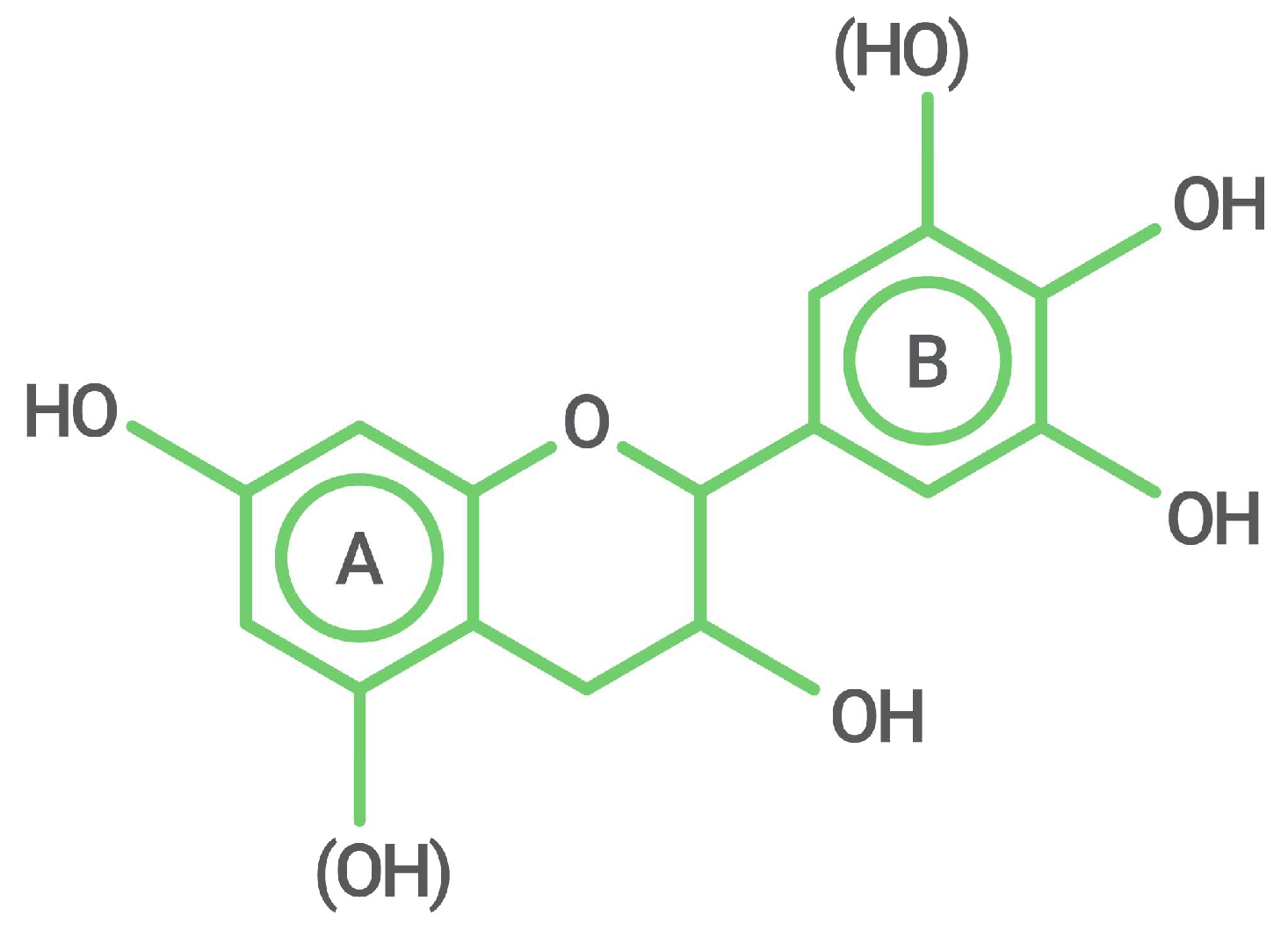
2.1.1. Phenol Substitutes—A Tannin-Based Approach

| Tannin Source | Type | Botanical Origin | Main Components | Reactivity | Industrial Use | Key References |
|---|---|---|---|---|---|---|
| Mimosa | Condensed | Acacia mearnsii | Profisetinidin/flavan-3-ols | High | Adhesives, foams; wood panels | [49,62] |
| Quebracho | Condensed | Schinopsis balansae | Profisetinidin derivatives | High | Leather tanning; adhesives | [49,63,64] |
| Pine bark | Condensed | Pinus radiata, others | Catechin/epicatechin units | Very High | Resin synthesis; composites | [56,65] |
| Larch | Condensed | Larix decidua | Taxifolin, flavonoids | Moderate | Less common in resin use | [66] |
| Chestnut | Hydrolysable | Castanea sativa | Gallic acid esters (ellagitannins) | Low | Leather, limited resin applications | [67,68,69] |
| Oak | Hydrolysable | Quercus sp. | Ellagitannins | Low | Aging of wine/spirits, not resin-use | [70,71] |
| Spruce | Condensed or mix | Industrial formulations | Mixed polyphenols | Tailored | Resin/foam applications | [72,73] |
2.1.2. Formaldehyde Substitutes
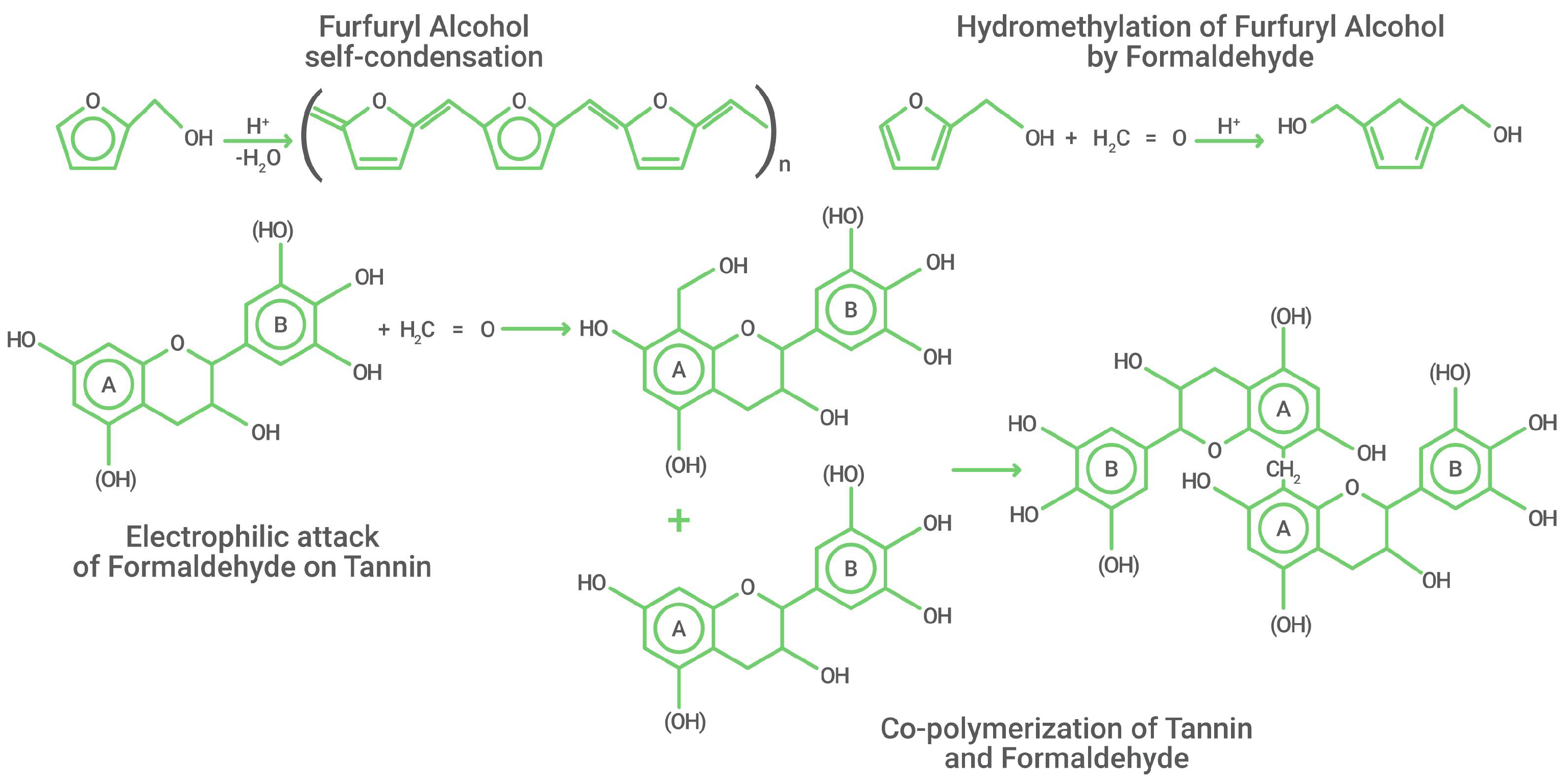
2.2. Furfuryl Alcohol
2.3. Blowing Agent
2.4. Catalyst
2.5. Additives: Surfactants
| Resin | Crosslinking Agent | Blowing Agent | Catalyst | Additives | End Use | Ref. |
|---|---|---|---|---|---|---|
| Quebracho-tannin-based (AF-Tannin) | Glutaraldehyde | Pentane | Phenol sulfonic acid | Ethylene glycol, sodium laureth sulfate, dolomite, vermiculite, Tween 80 | Hydroponics | [88] |
| Mimosa/quebracho/pine-tannin-based (AF-Tannin) | Formaldehyde | DE | p-toluenesulfonic acid | PUR adhesive, Triton X100e | Thermal insulation | [36] |
| Pine/mimosa-tannin-based (AF-Tannin) | With and without formaldehyde | DE and pentane | p-toluenesulfonic acid | Polyethylene glycol | Thermal insulation | [37] |
| Tannin-based (AF-Tannin) | Formaldehyde | p-toluenesulfonic acid | Tween 80 | Thermal insulation | [99] | |
| Prorobinetinidin/profisetinidin type tannins-based (AF-Tannin) | With and without formaldehyde | With and without DE | p-toluenesulfonic acid | Polyethylene glycol, 4,4-diphenylmethane diisocyanate (pMDI) | Thermal insulation | [78] |
| Mimosa/quebracho/chestnut-based | Not specified | Water | Sulfuric acid | Tween 80, diethylene glycol | Thermal insulation | [61] |
| Tannin- and lignin-based (AF-Tannin) | Hexamine, glyoxal | Mechanical foaming | Nitric acid | Tween 80 | Heavy metal adsorption | [90] |
| Mimosa-tannin-based (AF-Tannin) | - | DE, propanol | Sulfuric acid | Not specified | Lightweight panels | [103] |
| Mimosa/quebracho-tannin-based (AF-Tannin) | Formaldehyde and hexamine | DE, mechanical foaming | p-toluenesulfonic acid, Phenol sulfonic acid | Polyethylene glycol, SM2101-1, Tween 80, Pluronic PE 7400, Triton X-100, Cremophor ELP | Thermal insulators | [51] |
| Mimosa-tannin-based (AF-Tannin) | Formaldehyde | DE, pentane | p-toluenesulfonic acid | Not specified | [94] | |
| Pine-tannin-based (AF-Tannin) | Glyoxal, glutaraldehyde | DE | p-toluenesulfonic acid | Polyethylene glycol | Thermal insulation | [38] |
| Phenol- and chestnut-tannin-based | Formaldehyde | Pentane, 4,4′ diphenylmethane diisocyanate (pMDI) | 65% solution of phenol sulfonic acid in ethylene glycol, 65% solution of phenol sulfonic acid in water, 65% solution of phenol sulfonic/sulfuric acids [50/50] in ethylene glycol | Cremophor ELP, DC 193 | Not specified | [60] |
| Wood bark (AF-Tannin) | Formaldehyde | - | p-toluenesulfonic acid | Tween 80 | Thermal Insulation | [99] |
| Quebracho wood (AF-Tannin) | Formaldehyde | DE | p-toluenesulfonic acid | Tween 80, wood cellulosic fiber | Not specified | [104] |
| Mimosa (AF-Tannin) | - | DE | p-toluenesulfonic acid | Boric acid, phosphoric acid, montmorillonite, soybean protean isolate | Thermal Insulation | [105] |
| Larch-tannin-based phenolic resin | Formaldehyde | Petroleum ether | p-toluenesulfonic acid | Phosphoric acid, hydrochloric acid, Tween 80, cork powder | Not specified | [76] |
| Mimosa (AF-Tannin) | - | DE, pentane, and petroleum ether | Sulfuric acid and nitric acid | Tween 80 | Not specified | [96] |
3. Mechanical, Fire, and Thermal Performance
| Foam: Tannin Type | Density (kg/m3) | Compressive Strength (MPa) | Thermal Conductivity (W·m−1·K−1) | Compression Resistance (MPa) | Auto-Extinguish Time (s) | LOI (%) | Ref. |
|---|---|---|---|---|---|---|---|
| Mimosa | 30–80 | 0.21 | 0.037 | - | - | - | [94] |
| Pine | 35–70 | 0.028–0.058 | 0.076–0.037 | - | - | - | [37,38] |
| Pine | 50 | 0.08 | 0.0388 | - | - | - | [38] |
| Commercial tannin | 90–115 | 0.17–0.28 | 0.073–0.086 | - | - | - | [60] |
| Larch | 36–38 | 0.07–0.81 | 0.032–0.043 | - | - | 45 | [36,76] |
| Mimosa | 50–120 | - | - | 0.14–0.66 | 40–200 | - | [36] |
| Mimosa | 136–306 | - | - | 1.04–3.97 | 0–382 | [50] | |
| Mimosa | 140–200 | 0.044–0.055 | 0.15–0.5 | - | 45 | [76,108] | |
| Mimosa | 150–260 | - | - | 0.15–0.57 | - | - | [50,109] |
| Chestnut | 310–350 | - | - | 0.32–0.91 | 275–345 | - | [108,110] |
| Tannin acid | 50–290 | - | - | 0.1–0.55 | - | - | [109,111] |
| Quebracho | 90 | - | - | 0.24 | - | - | [77,110] |
| Wood bark | 78 | 0.183 | 0.0239 | 24.51 | [99] | ||
| Quebracho wood | 70–150 | 0.167–0.640 | 0.0366–0.0445 | 0.17–1.03 | 42.5 | [104] | |
| Commercial mimosa (Acacia mearnsii) | 48–70 | 0.046–0.049 | - | 32 | [107] | ||
| Commercial mimosa condensed tannin extract (Acacia mearnsii) | 82–122 | 0.2–0.35 | 0.026–0.064 | - | 37.33–49.05 | [105] | |
| Mimosa | 62.3–83.8 | 0.03–0.24 | 0.033–0.041 | [96] |
4. Phenolic Foam Market Applications
- Wall insulation:
- Roof insulation:
- Flooring systems:
5. Life Cycle Assessment of Tannin-Based Foams
6. Conclusions and Future Perspectives
Supplementary Materials
Author Contributions
Funding
Institutional Review Board Statement
Data Availability Statement
Acknowledgments
Conflicts of Interest
References
- European Commission. Communication from the Commission to the European Parliament, the European Council, the Council, the European Economic and Social Committee and the Committee of the Regions—European Green Deal; Publications Office of the European Union: Luxembourg, 2019.
- European Commission. What Is in the European Green Deal; Publications Office of the European Union: Luxembourg, 2019.
- European Commission. Renovation Wave—The European Green Deal; Publications Office of the European Union: Luxembourg, 2020.
- EU/2024/1275; Directive (EU) 2024/1275 of the European Parliament and of the Council. Publications Office of the European Union: Luxembourg, 2024.
- EU/2023/1791; Directive (EU) 2023/1791 of the European Parliament and of the Council. Publications Office of the European Union: Luxembourg, 2023.
- Sarika, P.R.; Nancarrow, P.; Ibrahim, I. Progress in Bio-Based Phenolic Foams: Synthesis, Properties, and Applications. Chembioeng Rev. 2021, 8, 612–632. [Google Scholar] [CrossRef] [Scilit]
- Kingspan Group. Panel PIR ALK; Kingspan: Singapore, 2023. [Google Scholar]
- ROCKWOOL. HardRock Multi-Fix; ROCKWOOL: Bridgend, UK, 2024. [Google Scholar]
- Verified Market Reports. Global Phenolic Foam Insulation Boards Market Size by End-Use Industry (Construction, HVAC (Heating, Ventilation, and Air Conditioning)), by Application Type (Wall Insulation, Roof Insulation), by Product Density, by Thickness, by Formulation Type (Standard Phenolic Foam, Fire Retardant Phenolic Foam), by Geographic Scope and Forecast. 2025. Available online: https://www.verifiedmarketreports.com/product/phenolic-foam-insulation-boards-market/ (accessed on 12 October 2025).
- Landrock, L.H. Handbook of Plastic Foams—Types, Properties, Manufacture and Applications; Elsevier: Amsterdam, The Netherlands, 1995. [Google Scholar]
- Sandhya, P.K.; Sreekala, M.S.; Thomas, S. (Eds.) Phenolic-Based Foams: State of the Art, New Challenges, and Opportunities. In Phenolic Based Foams: Preparation, Characterization, and Applications; Springer Nature: Singapore, 2022; pp. 1–14. [Google Scholar]
- Li, Q.; Chen, L.; Li, X.; Zhang, J.; Zhang, X.; Zheng, K.; Fang, F.; Zhou, H.; Tian, X. Effect of multi-walled carbon nanotubes on mechanical, thermal and electrical properties of phenolic foam via in-situ polymerization. Compos. Part A Appl. Sci. Manuf. 2016, 82, 214–225. [Google Scholar] [CrossRef] [Scilit]
- Li, Q.; Chen, L.; Li, X.; Zhang, J.; Zheng, K.; Zhang, X.; Tian, X. Effect of nano-titanium nitride on thermal insulating and flame-retardant performances of phenolic foam. J. Appl. Polym. Sci. 2016, 133, 43765. [Google Scholar] [CrossRef] [Scilit]
- Auad, M.L.; Zhao, L.; Shen, H.; Nutt, S.R.; Sorathia, U. Flammability properties and mechanical performance of epoxy modified phenolic foams. J. Appl. Polym. Sci. 2007, 104, 1399–1407. [Google Scholar] [CrossRef] [Scilit]
- Gao, M.; Yang, Y.L.; Xu, Z.Q. Mechanical and Flame Retardant Properties of Phenolic Foam Modified with Polyethyleneglycol as Toughening Agent. Adv. Mater. Res. 2013, 803, 21–25. [Google Scholar] [CrossRef] [Scilit]
- Shen, H.; Nutt, S. Mechanical characterization of short fiber reinforced phenolic foam. Compos. Part A Appl. Sci. Manuf. 2003, 34, 899–906. [Google Scholar] [CrossRef] [Scilit]
- Gao, M.; Wu, W.; Wang, Y.; Wang, Y.; Wang, H. Phenolic foam modified with dicyandiamide as toughening agent. J. Therm. Anal. Calorim. 2016, 124, 189–195. [Google Scholar] [CrossRef] [Scilit]
- Yang, H.; Wang, X.; Yuan, H.; Song, L.; Hu, Y.; Yuen, R.K.K. Fire performance and mechanical properties of phenolic foams modified by phosphorus-containing polyethers. J. Polym. Res. 2012, 19, 9831. [Google Scholar] [CrossRef] [Scilit]
- Li, X.; Wang, Z.; Wu, L.; Tsai, T. One-step in situ synthesis of a novel α-zirconium phosphate/graphene oxide hybrid and its application in phenolic foam with enhanced mechanical strength, flame retardancy and thermal stability. RSC Adv. 2016, 6, 74903–74912. [Google Scholar] [CrossRef] [Scilit]
- Jelle, B.P. Traditional, state-of-the-art and future thermal building insulation materials and solutions—Properties, requirements and possibilities. Energy Build. 2011, 43, 2549–2563. [Google Scholar] [CrossRef] [Scilit]
- Ji, W.; Yao, Y.; Guo, J.; Fei, B.; Gu, X.; Li, H.; Sun, J.; Zhang, S. Toward an understanding of how red phosphorus and expandable graphite enhance the fire resistance of expandable polystyrene foams. J. Appl. Polym. Sci. 2020, 137, 49045. [Google Scholar] [CrossRef] [Scilit]
- Zhang, S.; Ji, W.; Han, Y.; Gu, X.; Li, H.; Sun, J. Flame-retardant expandable polystyrene foams coated with ethanediol-modified melamine–formaldehyde resin and microencapsulated ammonium polyphosphate. J. Appl. Polym. Sci. 2018, 135, 46471. [Google Scholar] [CrossRef] [Scilit]
- Wang, L.; Wang, C.; Liu, P.; Jing, Z.; Ge, X.; Jiang, Y. The flame resistance properties of expandable polystyrene foams coated with a cheap and effective barrier layer. Constr. Build. Mater. 2018, 176, 403–414. [Google Scholar] [CrossRef] [Scilit]
- Li, M.-E.; Yan, Y.-W.; Zhao, H.-B.; Jian, R.-K.; Wang, Y.-Z. A facile and efficient flame-retardant and smoke-suppressant resin coating for expanded polystyrene foams. Compos. Part B Eng. 2020, 185, 107797. [Google Scholar] [CrossRef] [Scilit]
- Yang, R.; Hu, W.; Xu, L.; Song, Y.; Li, J. Synthesis, mechanical properties and fire behaviors of rigid polyurethane foam with a reactive flame retardant containing phosphazene and phosphate. Polym. Degrad. Stab. 2015, 122, 102–109. [Google Scholar] [CrossRef] [Scilit]
- Xing, W.; Yuan, H.; Zhang, P.; Yang, H.; Song, L.; Hu, Y. Functionalized lignin for halogen-free flame retardant rigid polyurethane foam: Preparation, thermal stability, fire performance and mechanical properties. J. Polym. Res. 2013, 20, 234. [Google Scholar] [CrossRef] [Scilit]
- Kairytė, A.; Kirpluks, M.; Ivdre, A.; Cabulis, U.; Vaitkus, S.; Pundienė, I. Cleaner production of polyurethane foam: Replacement of conventional raw materials, assessment of fire resistance and environmental impact. J. Clean. Prod. 2018, 183, 760–771. [Google Scholar] [CrossRef] [Scilit]
- Wang, Y.; Cui, K.; Fang, B.; Wang, F. Cost-Effective Fabrication of Modified Palygorskite-Reinforced Rigid Polyurethane Foam Nanocomposites. Nanomaterials 2022, 12, 609. [Google Scholar] [CrossRef] [Scilit]
- Hejna, A.; Kosmela, P.; Kirpluks, M.; Cabulis, U.; Klein, M.; Haponiuk, J.; Piszczyk, Ł. Structure, Mechanical, Thermal and Fire Behavior Assessments of Environmentally Friendly Crude Glycerol-Based Rigid Polyisocyanurate Foams. J. Polym. Environ. 2018, 26, 1854–1868. [Google Scholar] [CrossRef] [Scilit]
- Lazo, M.; Puga, I.; Macías, M.A.; Barragán, A.; Manzano, P.; Rivas, A.; Rigail-Cedeño, A. Mechanical and thermal properties of polyisocyanurate rigid foams reinforced with agricultural waste. Case Stud. Chem. Environ. Eng. 2023, 8, 100392. [Google Scholar] [CrossRef] [Scilit]
- Chen, M.-J.; Wang, X.; Tao, M.-C.; Liu, X.-Y.; Liu, Z.-G.; Zhang, Y.; Zhao, C.-S.; Wang, J.-S. Full substitution of petroleum-based polyols by phosphorus-containing soy-based polyols for fabricating highly flame-retardant polyisocyanurate foams. Polym. Degrad. Stab. 2018, 154, 312–322. [Google Scholar] [CrossRef] [Scilit]
- Cornick, M.F. Phenolic Resins: A Century of Progress; Pilato, L., Ed.; Springer: Berlin/Heidelberg, Germany, 2010; pp. 189–208. [Google Scholar]
- Duong, A.; Steinmaus, C.; McHale, C.M.; Vaughan, C.P.; Zhang, L. Reproductive and developmental toxicity of formaldehyde: A systematic review. Mutat. Res. 2011, 728, 118–138. [Google Scholar] [CrossRef] [Scilit] [PubMed]
- Salthammer, T. The formaldehyde dilemma. Int. J. Hyg. Environ. Health 2015, 218, 433–436. [Google Scholar] [CrossRef] [Scilit]
- Songur, A.; Ozen, O.A.; Sarsilmaz, M. The toxic effects of formaldehyde on the nervous system. Rev. Environ. Contam. Toxicol. 2010, 203, 105–118. [Google Scholar]
- Tondi, G.; Pizzi, A. Tannin-based rigid foams: Characterization and modification. Ind. Crops Prod. 2009, 29, 356–363. [Google Scholar] [CrossRef] [Scilit]
- Lacoste, C.; Basso, M.C.; Pizzi, A.; Laborie, M.-P.; Celzard, A.; Fierro, V. Pine tannin-based rigid foams: Mechanical and thermal properties. Ind. Crops Prod. 2013, 43, 245–250. [Google Scholar] [CrossRef] [Scilit]
- Lacoste, C.; Basso, M.C.; Pizzi, A.; Laborie, M.P.; Garcia, D.; Celzard, A. Bioresourced pine tannin/furanic foams with glyoxal and glutaraldehyde. Ind. Crops Prod. 2013, 45, 401–405. [Google Scholar] [CrossRef] [Scilit]
- Song, F.; Jia, P.; Bo, C.; Ren, X.; Hu, L.; Zhou, Y. The mechanical and flame retardant characteristics of lignin-based phenolic foams reinforced with MWCNTs by in-situ polymerization. J. Dispers. Sci. Technol. 2020, 42, 1042–1051. [Google Scholar] [CrossRef] [Scilit]
- Bo, C.; Yang, X.; Hu, L.; Zhang, M.; Jia, P.; Zhou, Y. Enhancement of flame-retardant and mechanical performance of phenolic foam with the incorporation of cardanol-based siloxane. Polym. Compos. 2019, 40, 2539–2547. [Google Scholar] [CrossRef] [Scilit]
- Li, B.; Yuan, Z.; Schmidt, J.; Xu, C. New foaming formulations for production of bio-phenol formaldehyde foams using raw kraft lignin. Eur. Polym. J. 2019, 111, 1–10. [Google Scholar] [CrossRef] [Scilit]
- Jing, S.; Li, T.; Li, X.; Xu, Q.; Hu, J.; Li, R. Phenolic foams modified by cardanol through bisphenol modification. J. Appl. Polym. Sci. 2013, 131, 39942. [Google Scholar] [CrossRef] [Scilit]
- Li, B.; Feng, S.H.; Niasar, H.S.; Zhang, Y.S.; Yuan, Z.S.; Schmidt, J.; Xu, C. Preparation and characterization of bark-derived phenol formaldehyde foams. RSC Adv. 2016, 6, 40975–40981. [Google Scholar] [CrossRef] [Scilit]
- Song, F.; Jia, P.; Bo, C.; Ren, X.; Hu, L.; Zhou, Y. Preparation and Characterization of Tung Oil Toughened Modified Phenolic Foams with Enhanced Mechanical Properties and Smoke Suppression. J. Renew. Mater. 2020, 8, 535–547. [Google Scholar] [CrossRef] [Scilit]
- Celzard, A.; Zhao, W.; Pizzi, A.; Fierro, V. Mechanical properties of tannin-based rigid foams undergoing compression. Mater. Sci. Eng. A 2010, 527, 4438–4446. [Google Scholar] [CrossRef] [Scilit]
- Celzard, A.; Fierro, V.; Amaral-Labat, G.; Pizzi, A.; Torero, J. Flammability assessment of tannin-based cellular materials. Polym. Degrad. Stab. 2011, 96, 477–482. [Google Scholar] [CrossRef] [Scilit]
- Pizzi, A. Tannin-based biofoams—A review. J. Renew. Mater. 2019, 7, 477–492. [Google Scholar] [CrossRef] [Scilit]
- Borrero-López, A.M.; Nicolas, V.; Marie, Z.; Celzard, A.; Fierro, V. A review of rigid polymeric cellular foams and their greener tannin-based alternatives. Polymers 2022, 14, 3974. [Google Scholar] [CrossRef] [Scilit]
- Pizzi, A. Tannins: Prospectives and actual industrial applications. Biomolecules 2019, 9, 344. [Google Scholar] [CrossRef] [Scilit]
- Tondi, G.; Zhao, W.; Pizzi, A.; Du, G.; Fierro, V.; Celzard, A. Tannin-based rigid foams: A survey of chemical and physical properties. Bioresour. Technol. 2009, 100, 5162–5169. [Google Scholar] [CrossRef] [Scilit]
- Delgado-Sánchez, C.; Sarazin, J.; Santiago-Medina, F.; Fierro, V.; Pizzi, A.; Bourbigot, S.; Celzard, A. Impact of the formulation of biosourced phenolic foams on their fire properties. Polym. Degrad. Stab. 2018, 153, 1–14. [Google Scholar] [CrossRef] [Scilit]
- Pizzi, A.; Ibeh, C.C. 2—Phenol–Formaldehydes. In Handbook of Thermoset Plastics, 3rd ed.; Dodiuk, H., Goodman, S.H., Eds.; William Andrew Publishing: Boston, MA, USA, 2014; pp. 13–44. [Google Scholar]
- Li, W.; Sun, H.; Wang, G.; Sui, W.; Dai, L.; Si, C. Lignin as a green and multifunctional alternative to phenol for resin synthesis. Green Chem. 2023, 25, 2241–2261. [Google Scholar] [CrossRef] [Scilit]
- Sarika, P.R.; Nancarrow, P.; Khansaheb, A.; Ibrahim, T. Bio-Based Alternatives to Phenol and Formaldehyde for the Production of Resins. Polymers 2020, 12, 2237. [Google Scholar] [CrossRef] [Scilit]
- Ghahri, S.; Yang, L.; Du, G.; Park, B.-D. Transition from Formaldehyde-Based Wood Adhesives to Bio-Based Alternatives. BioResources 2025, 20, 2476. [Google Scholar] [CrossRef] [Scilit]
- Lacoste, C.; Pizzi, A.; Basso, M.C.; Laborie, M.P.; Celzard, A. Pinus pinaster tannin/furanic foams: PART I. Formulation. Ind. Crops Prod. 2014, 52, 450–456. [Google Scholar] [CrossRef] [Scilit]
- Aristri, M.A.; Lubis, M.A.R.; Iswanto, A.H.; Fatriasari, W.; Sari, R.K.; Antov, P.; Gajtanska, M. Bio-Based Polyurethane Resins Derived from Tannin: Source, Synthesis, Characterisation, and Application. Forests 2021, 12, 1516. [Google Scholar] [CrossRef] [Scilit]
- Xiao, G.; Liang, J.; Li, D.; Tu, Y.; Zhang, B.; Gong, F.; Gu, W.; Tang, M.; Ding, X.; Wu, Z.; et al. Fully Bio-Based Adhesive from Tannin and Sucrose for Plywood Manufacturing with High Performances. Materials 2022, 15, 8725. [Google Scholar] [CrossRef] [Scilit] [PubMed]
- Sesia, R.; Spriano, S.; Sangermano, M.; Calovi, M.; Rossi, S.; Ferraris, S. Natural Tannin Layers for the Corrosion Protection of Steel in Contact with Water-Based Media. Coatings 2024, 14, 965. [Google Scholar] [CrossRef] [Scilit]
- Lagel, M.-C.; Pizzi, A.; Giovando, S.; Celzard, A. Development and characterisation of phenolic foams with phenol-formaldehyde-chestnut tannins resin. J. Renew. Mater. 2014, 2, 220–229. [Google Scholar] [CrossRef] [Scilit]
- Eckardt, J.; Sepperer, T.; Cesprini, E.; Šket, P.; Tondi, G. Comparing Condensed and Hydrolysable Tannins for Mechanical Foaming of Furanic Foams: Synthesis and Characterization. Molecules 2023, 28, 2799. [Google Scholar] [CrossRef] [Scilit]
- Kain, G.; Güttler, V.; Lienbacher, B.; Barbu, M.C.; Petutschnigg, A.; Richter, K.; Tondi, G. Effects of different flavanoid extracts in optimizing tannin-glued bark insulation boards. Wood Fiber Sci. 2015, 47, 258–269. [Google Scholar]
- Venter, P.B.; Sisa, M.; Van Der Merwe, M.J.; Bonnet, S.L.; Van Der Westhuizen, J.H. Analysis of commercial proanthocyanidins. Part 1: The chemical composition of quebracho (Schinopsis lorentzii and Schinopsis balansae) heartwood extract. Phytochemistry 2012, 73, 95–105. [Google Scholar] [CrossRef] [Scilit]
- Jorda, J.; Cesprini, E.; Barbu, M.C.; Tondi, G.; Zanetti, M.; Král, P. Quebracho Tannin Bio-Based Adhesives for Plywood. Polymers 2022, 14, 2257. [Google Scholar] [CrossRef] [Scilit] [PubMed]
- Grigsby, W.J.; Mcintosh, C.D.; Warnes, J.M.; Suckling, I.D.; Anderson, C.R. Pine Bark Tannin Resin Compositions, Hardener Compositions and Adhesives. Canada Patent CA2508613A1, 4 June 2013. [Google Scholar]
- Lu, Y.; Shi, Q. Larch tannin adhesive for particleboard. In Holz als Roh-und Werkstoff; Springer-Verlag: Berlin, Germany, 1995; pp. 17–19. [Google Scholar]
- Ciriminna, R.; Meneguzzo, F.; Petri, G.L.; Meneguzzo, C.; Angellotti, G.; Pagliaro, M. Chestnut tannin: New use, research and bioeconomy. J. Bioresour. Bioprod. 2024, 9, 246–252. [Google Scholar] [CrossRef] [Scilit]
- Vázquez, G.; González-Alvarez, J.; Santos, J.; Freire, M.S.; Antorrena, G. Evaluation of potential applications for chestnut (Castanea sativa) shell and eucalyptus (Eucalyptus globulus) bark extracts. Ind. Crops Prod. 2009, 29, 364–370. [Google Scholar] [CrossRef] [Scilit]
- Chiarini, A.; Micucci, M.; Malaguti, M.; Budriesi, R.; Ioan, P.; Lenzi, M.; Fimognari, C.; Gallina Toschi, T.; Comandini, P.; Hrelia, S. Sweet chestnut (Castanea sativa Mill.) bark extract: Cardiovascular activity and myocyte protection against oxidative damage. Oxidative Med. Cell. Longev. 2013, 2013, 471790. [Google Scholar] [CrossRef] [Scilit] [PubMed]
- Pizzi, A. Tannins medical/pharmacological and related applications: A critical review. Sustain. Chem. Pharm. 2021, 22, 100481. [Google Scholar] [CrossRef] [Scilit]
- Das, A.K.; Islam, M.N.; Faruk, M.O.; Ashaduzzaman, M.; Dungani, R. Review on tannins: Extraction processes, applications and possibilities. S. Afr. J. Bot. 2020, 135, 58–70. [Google Scholar] [CrossRef] [Scilit]
- Kemppainen, K.; Siika-aho, M.; Pattathil, S.; Giovando, S.; Kruus, K. Spruce bark as an industrial source of condensed tannins and non-cellulosic sugars. Ind. Crops Prod. 2014, 52, 158–168. [Google Scholar] [CrossRef] [Scilit]
- Čop, M.; Laborie, M.-P.; Pizzi, A.; Sernek, M. Curing characterisation of spruce tannin-based foams using the advanced isoconversional method. BioResources 2014, 9, 4643–4655. [Google Scholar] [CrossRef] [Scilit]
- Meikleham, N.E.; Pizzi, A. Acid- and alkali-catalyzed tannin-based rigid foams. J. Appl. Polym. Sci. 1994, 53, 1547–1556. [Google Scholar] [CrossRef] [Scilit]
- Pena, C.; Martin, M.; Tejado, A.; Labidi, J.; Echeverria, J.; Mondragon, I. Curing of phenolic resins modified with chestnut tannin extract. J. Appl. Polym. Sci. 2006, 101, 2034–2039. [Google Scholar] [CrossRef] [Scilit]
- Li, J.; Zhang, A.; Zhang, S.; Gao, Q.; Zhang, W.; Li, J. Larch tannin-based rigid phenolic foam with high compressive strength, low friability, and low thermal conductivity reinforced by cork powder. Compos. Part B Eng. 2019, 156, 368–377. [Google Scholar] [CrossRef] [Scilit]
- Martinez de Yuso, A.; Lagel, M.C.; Pizzi, A.; Fierro, V.; Celzard, A. Structure and properties of rigid foams derived from quebracho tannin. Mater. Des. 2014, 63, 208–212. [Google Scholar] [CrossRef] [Scilit]
- Basso, M.C.; Giovando, S.; Pizzi, A.; Celzard, A.; Fierro, V. Tannin/furanic foams without blowing agents and formaldehyde. Ind. Crops Prod. 2013, 49, 17–22. [Google Scholar] [CrossRef] [Scilit]
- Li, X.; Pizzi, A.; Zhou, X.; Fierro, V.; Celzard, A. Formaldehyde-Free Prorobitenidin/Profi setinidin Tannin/Furanic Foams Based on Alternative Aldehydes: Glyoxal and Glutaraldehyde. J. Renew. Mater. 2015, 3, 142–150. [Google Scholar] [CrossRef] [Scilit]
- Missio, A.L.; Otoni, C.G.; Zhao, B.; Beaumont, M.; Khakalo, A.; Kämäräinen, T.; Silva, S.H.; Mattos, B.D.; Rojas, O.J. Nanocellulose removes the need for chemical crosslinking in tannin-based rigid foams and enhances their strength and fire retardancy. ACS Sustain. Chem. Eng. 2022, 10, 10303–10310. [Google Scholar] [CrossRef] [Scilit] [PubMed]
- Chen, X.; Guigo, N.; Pizzi, A.; Sbirrazzuoli, N.; Li, B.; Fredon, E.; Gerardin, C. Ambient temperature self-blowing tannin-humins biofoams. Polymers 2020, 12, 2732. [Google Scholar] [CrossRef] [Scilit]
- Chen, X.; Li, J.; Pizzi, A.; Fredon, E.; Gerardin, C.; Zhou, X.; Du, G. Tannin-furanic foams modified by soybean protein isolate (SPI) and industrial lignin substituting formaldehyde addition. Ind. Crops Prod. 2021, 168, 113607. [Google Scholar] [CrossRef] [Scilit]
- Merle, J.; Birot, M.; Deleuze, H.; Mitterer, C.; Carré, H.; Bouhtoury, F.C.-E. New biobased foams from wood byproducts. Mater. Des. 2016, 91, 186–192. [Google Scholar] [CrossRef] [Scilit]
- Basso, M.C.; Lagel, M.-C.; Pizzi, A.; Celzard, A.; Abdalla, S. First tools for tannin-furanic foams design. BioResources 2015, 10, 5233–5241. [Google Scholar] [CrossRef] [Scilit]
- Lacoste, C.; Basso, M.-C.; Pizzi, A.; Celzard, A.; Ebang, E.E.; Gallon, N.; Charrier, B. Pine (P. pinaster) and quebracho (S. lorentzii) tannin-based foams as green acoustic absorbers. Ind. Crops Prod. 2015, 67, 70–73. [Google Scholar] [CrossRef] [Scilit]
- Yi, Z.; Wang, W.; Zhang, W.; Li, J. Preparation of tannin–formaldehyde–furfural resin with pretreatment of depolymerization of condensed tannin and ring opening of furfural. J. Adhes. Sci. Technol. 2016, 30, 947–959. [Google Scholar] [CrossRef] [Scilit]
- Li, J.; Li, S.; Zor, M.; Rodrigue, D.; Wang, X.A. Biobased foam composites of tannic acid-furfuryl alcohol-furfural or vanillin reinforced with wood fibers. Ind. Crops Prod. 2025, 226, 120726. [Google Scholar] [CrossRef] [Scilit]
- Basso, M.; Pizzi, A.; Al-Marzouki, F.; Abdalla, S. Horticultural/hydroponics and floral natural foams from tannins. Ind. Crops Prod. 2016, 87, 177–181. [Google Scholar] [CrossRef] [Scilit]
- Sepperer Betreuerin, T. Tannin-Furanic Foams: Synthesis, Application and Modification; University of Salzburg: Salzburg, Austria, 2022; p. 136. [Google Scholar]
- Issaoui, H.; Sallem, F.; Lafaille, J.; Grassl, B.; Charrier–El Bouhtoury, F. Biosorption of heavy metals from water onto phenolic foams based on tannins and lignin alkaline liquor. Int. J. Environ. Res. 2021, 15, 369–381. [Google Scholar] [CrossRef] [Scilit]
- Yuan, W.; Xi, X.; Zhang, J.; Pizzi, A.; Essawy, H.; Du, G.; Zhou, X.; Chen, X. A novel strategy inspired by steaming Chinese steamed bread for preparation of tannin-furanic rigid bio-foam. Constr. Build. Mater. 2023, 376, 131035. [Google Scholar] [CrossRef] [Scilit]
- Basso, M.C.; Li, X.; Fierro, V.; Pizzi, A.; Giovando, S.; Celzard, A. Green, formaldehyde-free, foams for thermal insulation. Adv. Mater. Lett. 2011, 2, 378–382. [Google Scholar] [CrossRef] [Scilit]
- Dsouza, G.C.; Dodangeh, F.; Venkata, G.B.; Ray, M.B.; Prakash, A.; Xu, C. A comprehensive review of biobased polyurethane and phenol formaldehyde hydrophilic foams for environmental remediation, floral, and hydroponics applications. Biomass Bioenergy 2025, 192, 107493. [Google Scholar] [CrossRef] [Scilit]
- Li, X.; Pizzi, A.; Lacoste, C.; Fierro, V.; Celzard, A. Physical Properties of Tannin/Furanic Resin Foamed with Different Blowing Agents. Bioresources 2013, 8, 743–752. [Google Scholar] [CrossRef] [Scilit]
- Mougel, C.; Garnier, T.; Cassagnau, P.; Sintes-Zydowicz, N. Phenolic foams: A review of mechanical properties, fire resistance and new trends in phenol substitution. Polymer 2019, 164, 86–117. [Google Scholar] [CrossRef] [Scilit]
- Eckardt, J.; Neubauer, J.; Sepperer, T.; Donato, S.; Zanetti, M.; Cefarin, N.; Vaccari, L.; Lippert, M.; Wind, M.; Schnabel, T.; et al. Synthesis and characterization of high-performing sulfur-free tannin foams. Polymers 2020, 12, 564. [Google Scholar] [CrossRef] [Scilit] [PubMed]
- Li, X.; Srivastava, V.; Pizzi, A.; Celzard, A.; Leban, J. Nanotube-reinforced tannin/furanic rigid foams. Ind. Crops Prod. 2013, 43, 636–639. [Google Scholar] [CrossRef] [Scilit]
- Szczurek, A.; Fierro, V.; Pizzi, A.; Stauber, M.; Celzard, A. A new method for preparing tannin-based foams. Ind. Crops Prod. 2014, 54, 40–53. [Google Scholar] [CrossRef] [Scilit]
- Li, J.; Liao, J.; Essawy, H.; Zhang, J.; Li, T.; Wu, Z.; Du, G.; Zhou, X. Preparation and characterization of novel cellular/nonporous foam structures derived from tannin furanic resin. Ind. Crops Prod. 2021, 162, 113264. [Google Scholar] [CrossRef] [Scilit]
- Weber, F. Process for Neutralization of the Residual Acidity Contained in the Phenolic Compounds. U.S. Patent US20070232785, January 2007. [Google Scholar]
- Sepperer, T.; Šket, P.; Petutschnigg, A.; Hüsing, N. Tannin-furanic foams formed by mechanical agitation: Influence of surfactant and ingredient ratios. Polymers 2021, 13, 3058. [Google Scholar] [CrossRef] [Scilit]
- Merle, J.; Trinsoutrot, P.; Charrier-El Bouhtoury, F. Optimization of the formulation for the synthesis of bio-based foams. Eur. Polym. J. 2016, 84, 577–588. [Google Scholar] [CrossRef] [Scilit]
- Link, M.; Kolbitsch, C.; Tondi, G.; Ebner, M.; Wieland, S.; Petutschnigg, A. Formaldehyde-free tannin based foams and their use as lightweight panels. BioResources 2011, 6, 4218–4228. [Google Scholar] [CrossRef] [Scilit]
- Wu, X.; Yan, W.; Zhou, Y.; Luo, L.; Yu, X.; Luo, L.; Fan, M.; Du, G.; Zhao, W. Thermal, morphological, and mechanical characteristics of sustainable tannin bio-based foams reinforced with wood cellulosic fibers. Ind. Crops Prod. 2020, 158, 113029. [Google Scholar] [CrossRef] [Scilit]
- Chen, X.; Li, J.; Essawy, H.; Pizzi, A.; Fredon, E.; Gerardin, C.; Du, G.; Zhou, X. Flame-retardant and thermally-insulating tannin and soybean protein isolate (SPI) based foams for potential applications in building materials. Constr. Build. Mater. 2022, 315, 125711. [Google Scholar] [CrossRef] [Scilit]
- Li, X.; Pizzi, A.; Cangemi, M.; Fierro, V.; Celzard, A. Flexible natural tannin-based and protein-based biosourced foams. Ind. Crops Prod. 2012, 37, 389–393. [Google Scholar] [CrossRef] [Scilit]
- Zhou, X.; Li, B.; Xu, Y.; Essawy, H.; Wu, Z.; Du, G. Tannin-furanic resin foam reinforced with cellulose nanofibers (CNF). Ind. Crops Prod. 2019, 134, 107–112. [Google Scholar] [CrossRef] [Scilit]
- Tondi, G.; Link, M.; Kolbitsch, C.; Lesacher, R.; Petutschnigg, A. Pilot plant up-scaling of tannin foams. Ind. Crops Prod. 2016, 79, 211–218. [Google Scholar] [CrossRef] [Scilit]
- Chen, X.; Xi, X.; Pizzi, A.; Fredon, E.; Zhou, X.; Li, J.; Gerardin, C.; Du, G. Preparation and characterization of condensed tannin non-isocyanate polyurethane (NIPU) rigid foams by ambient temperature blowing. Polymers 2020, 12, 750. [Google Scholar] [CrossRef] [Scilit]
- Azadeh, E.; Chen, X.; Pizzi, A.; Gérardin, C.; Gérardin, P.; Essawy, H. Self-Blowing Non-Isocyanate Polyurethane Foams Based on Hydrolysable Tannins. J. Renew. Mater. 2022, 10, 3217–3227. [Google Scholar] [CrossRef] [Scilit]
- Varila, T.; Romar, H.; Luukkonen, T.; Lassi, U. Physical activation and characterization of tannin-based foams enforced with boric acid and zinc chloride. AIMS Mater. Sci. 2019, 6, 301–314. [Google Scholar] [CrossRef] [Scilit]
- Ziarati, H.B.; Fasihi, M. Phenolic foams: Foaming processes and applications. In Handbook of Thermosetting Foams, Aerogels, and Hydrogels: From Fundamentals to Advanced Applications; Elsevier: Amsterdam, The Netherlands, 2024; pp. 421–441. [Google Scholar]
- Kingspan Group. Wall Insulation Boards. In Kingspan Technical Insulation; Kingspan: Singapore, 2025; Available online: https://www.kingspan.com/gb/en/products/insulation-boards/wall-insulation-boards/ (accessed on 10 October 2025).
- Kingspan Group. Kooltherm K5—External Wall Board; Kingspan: Singapore, 2025; Available online: https://www.kingspan.com/gb/en/products/insulation-boards/wall-insulation-boards/kooltherm-k5-external-wall-board/ (accessed on 10 October 2025).
- Asahi Kasei. Construction Materials, Phenolic Foam Insulation Boards. 2023. Available online: https://www.asahikasei-kenzai.com/english/products/phenolic.html (accessed on 10 October 2025).
- Xiamen UNT Duct Technology Co. Ltd. Fiber Reinforced Phenolic Foam Wall Panels. 2023. Available online: https://www.gfiduct.com/products/?gad_source=1&gad_campaignid=20966745281&gbraid=0AAAAAD0NEkTqh9aSq98T4_5Jqm6vTXkM4&gclid=Cj0KCQiAhOfLBhCCARIsAJPiopPQZO0QZdN_Yi2VXrZrGdhrGAxTDLjk_g8FMyNRcP1rXUj0GpkGbUUaAvoUEALw_wcB (accessed on 15 September 2025).
- Unilin Insulation. SAFE-R. 2025. Available online: https://unilininsulation.co.uk/products/safe-r/ (accessed on 16 September 2025).
- Kingspan Group. Kooltherm K107 Pitched Roof Board; Kingspan: Singapore, 2025. [Google Scholar]
- Unilin Insulation. SAFE R—Pitched Roofs. Available online: https://unilininsulation.co.uk/wp-content/uploads/sites/2/2022/10/UK_SRPR_October2024_v5-Reduced-size.pdf (accessed on 10 October 2025).
- Kingspan Group. Kooltherm K103 Phenolic Flooring; Kingspan: Singapore, 2025. [Google Scholar]
- Unilin Insulation Safe RUnderfloor Board, S.R./.U.F. 2025. Available online: https://unilininsulation.co.uk/products/safe-r/safe-r-sr-uf/ (accessed on 2 September 2025).
- EPFA Properties of Phenolic Foam. 2025. Available online: https://epfa.org.uk/properties-of-phenolic-foam/ (accessed on 10 September 2025).
- Hoque, M.B.; Ayman, U.; Sheikh, M.S.; Hannan, M.A.; Haque, P.; Baria, B.; Rahman, M.M.; Jalil, M.A.; Das, D. An in-depth review on tannin sources, extraction methods, and industrial applications. Discov. Food 2025, 5, 401. [Google Scholar] [CrossRef] [Scilit]
- Valentini, F.; Rigotti, D.; Saletti, M.; Beccaro, A.; Pasquardini, L.; Pegoretti, A.; Dorigato, A. Optimization of the Mechanical Recycling of Phenolic Resins for Household Appliances. Polymers 2024, 16, 3378. [Google Scholar] [CrossRef] [Scilit]
- Eldeeb, N.; Shaaban, M.; Afifi, M.A.; Fahim, I.S. Informed decision-making in material selection for sustainable construction through life cycle assessment and environmental product declaration. Discov. Civ. Eng. 2025, 2, 210. [Google Scholar] [CrossRef] [Scilit]
- Valentini, F.; Maracchini, G.; di Filippo, R.; Dorigato, A.; Bursi, O. A prospective life cycle assessment of insulation and window systems under evolving electricity and recycling scenarios for building energy retrofit in Italy. Energy Build. 2025, 347, 116245. [Google Scholar] [CrossRef] [Scilit]
- Sepperer, T.; Barbu, M.C.; Tudor, E.M.; Fürmann, S.; Petutschnigg, A. Recyclability of tannin-furanic foams. Mater. Lett. 2023, 345, 134483. [Google Scholar] [CrossRef] [Scilit]
- Zanetti, M.; Cesprini, E.; Marangon, M.; Szczurek, A.; Tondi, G. Thermal valorization and elemental composition of industrial tannin extracts. Fuel 2021, 289, 119907. [Google Scholar] [CrossRef] [Scilit]
- Eckardt, J.; Carletti, P.; Grzybek, J.; Renella, G.; Tondi, G. Investigating the Degradation of Tannin Furanic Foams in Soil Environments: Experimental Insights. J. Polym. Environ. 2025, 33, 2698–2707. [Google Scholar] [CrossRef] [Scilit]


| Foam | Density [kg m−3] | Thermal Conductivity [W m−1 K−1] | Compressive Strength [MPa] | LOI (%) | Friability (Mass Loss, %) | References |
|---|---|---|---|---|---|---|
| Phenolic foams | 43–54 | 0.036–0.039 | 0.05–0.25 | 28–51 | 6–32.2 | [12,13,14,15,16,17,18,19] |
| Polystyrene foam (XPS or EPS) | 24–63 | 0.031–0.038 | 0.06–0.29 | 17–18 | - | [20,21,22,23,24] |
| Polyurethane foam (PUR or PIR) | 35–60 | 0.025–0.038 | 0.15–0.46 | 19–20 | 8–11 | [13,14,16,20,25,26,27,28,29,30,31] |
| Resin Type | F/P Molar Ratio | Catalyst Type | Curing Behavior | Properties | Applications |
|---|---|---|---|---|---|
| Resole | F/P > 1 | Basic (e.g., NaOH) | Self-curing (heat or acid) | Fast curing, high crosslinking density, more brittle at high F content | Insulation foams, adhesives, laminates |
| Novolac | F/P < 1 | Acidic (e.g., HCl) | Needs hardener (e.g., hexamine) | Thermoplastic before curing, stable storage, flexible pre-cure | Molding compounds, coatings, abrasives |
Disclaimer/Publisher’s Note: The statements, opinions and data contained in all publications are solely those of the individual author(s) and contributor(s) and not of MDPI and/or the editor(s). MDPI and/or the editor(s) disclaim responsibility for any injury to people or property resulting from any ideas, methods, instructions or products referred to in the content. |
© 2026 by the authors. Licensee MDPI, Basel, Switzerland. This article is an open access article distributed under the terms and conditions of the Creative Commons Attribution (CC BY) license.
Share and Cite
Abreu, A.G.; Costa, J.J.; Santos, P.F.; Duarte, A.J.; Vieira, E.S.; Moreira, F.T.C. Innovations in Tannin-Based Phenolic Foams: A Review of the Research. Macromol 2026, 6, 10. https://doi.org/10.3390/macromol6010010
Abreu AG, Costa JJ, Santos PF, Duarte AJ, Vieira ES, Moreira FTC. Innovations in Tannin-Based Phenolic Foams: A Review of the Research. Macromol. 2026; 6(1):10. https://doi.org/10.3390/macromol6010010
Chicago/Turabian StyleAbreu, António G., Joana J. Costa, P. Filipe Santos, Abel J. Duarte, Elizabeth S. Vieira, and Felismina T. C. Moreira. 2026. "Innovations in Tannin-Based Phenolic Foams: A Review of the Research" Macromol 6, no. 1: 10. https://doi.org/10.3390/macromol6010010
APA StyleAbreu, A. G., Costa, J. J., Santos, P. F., Duarte, A. J., Vieira, E. S., & Moreira, F. T. C. (2026). Innovations in Tannin-Based Phenolic Foams: A Review of the Research. Macromol, 6(1), 10. https://doi.org/10.3390/macromol6010010