Article

Fibrous Polycaprolactone-Based Composite Materials with the Addition of Hardystonite: Haemostatic Potential, Antioxidant Activity, and Biocompatibility Assessment


by
Anna Kaczmarek
1,*,
Marcin H. Kudzin
1,
Michał Juszczak
2,
Katarzyna Woźniak
2,
Paulina Król
1,
César I. Hernández Vázquez
1,
Zdzisława Mrozińska
1 and
Jerzy J. Chruściel
1,*
1
Łukasiewicz Research Network—Lodz Institute of Technology, 19/27 Marii Sklodowskiej-Curie Str., 90-570 Lodz, Poland
2
Department of Molecular Genetics, Faculty of Biology and Environmental Protection, University of Lodz, 90-236 Lodz, Poland
*
Authors to whom correspondence should be addressed.
Macromol 2026, 6(1), 5; https://doi.org/10.3390/macromol6010005
Submission received: 5 August 2025 / Revised: 1 December 2025 / Accepted: 8 December 2025 / Published: 13 January 2026

Abstract

Fibrous polycaprolactone-based composite materials with the addition of hardystonite (1, 3, and 5 wt.%) were developed using the electrospinning method. The obtained PCL and PCL-HT nonwovens were evaluated in terms of their physiochemical properties (SEM, EDS, BET, and zeta potential). Furthermore, the antioxidant potential [measured by thiobarbituric acid reactive substance (TBARS) levels], blood plasma coagulation parameters, and cyto- and genotoxicity towards PBM and Hs68 cells were assessed to determine the biochemical activity of the composites. The conducted experiments confirmed that hardystonite was successfully incorporated into the PCL matrix. No substantial changes in the fibres’ surface morphology and the structure of the composites were observed. Similarly, the specific surface area, total pore volume, and average pore size did not change significantly. The addition of hardystonite to the polymer solution resulted in a shift in zeta potential toward less negative values. With regard to plasma coagulation parameters, no significant changes were observed in the aPTT, PT, or TT, likely due to the counterbalancing effect of Zn2+ and Ca2+ ions. Furthermore, the PCL-HT composites exhibited a lowered TBARS level, suggesting antioxidant properties, which could be attributed to the presence of zinc in hardystonite. The PCL and PCL-HT composites demonstrated no cytotoxic or genotoxic effects on the tested blood or skin cell types, suggesting their safety.

1. Introduction

In recent years, increasing attention has been devoted to tissue engineering, which aims to regenerate tissues and organs damaged by trauma, chronic diseases, or congenital defects [1,2,3]. This field presents a promising alternative to traditional methods, such as organ transplantation and the implantation of biomaterial-based grafts [1,3]. This is because tissue engineering addresses several critical issues, such as the shortage of organ donors, the necessity of using immunosuppressive drugs, and the unsatisfactory biocompatibility of artificial biomaterials [1].
Tissue engineering utilizes three-dimensional scaffolds that support cell growth [1,2,3,4,5]. These cells are harvested either from the patient, in a process known as autologous transplantation, or from a donor, in the case of allogeneic transplantation [1,3,6]. They are then seeded onto three-dimensional substrates and cultured in vitro [1,3,6]. The resulting material–cell composites are implanted into the site of damaged or missing tissue to support its regeneration [1,6]. Through proliferation and self-organization, the cells develop functional tissues with structural and functional properties similar to those of healthy tissues [1]. In the initial (in vitro) phase, scaffolds serve as artificial extracellular matrices that provide a substrate for the cells and stimulate their proliferation and differentiation [1,3]. Once new tissue has formed in vivo, the scaffolds should gradually degrade and resorb, thus avoiding the need for implant removal or reoperation [1,3,6].
Due to their intended function, scaffolds must meet several specific requirements [1,2,3,4,7]. First and foremost, scaffold materials must be biocompatible to ensure proper cell adhesion and proliferation [1,3,7]. Furthermore, they should be biodegradable [1,2,4], meaning that they must break down gradually into non-toxic products through metabolic processes, which are then excreted from the body. It is important that the degradation rate of the scaffold can be controlled and is matched to the regeneration rate of the replaced tissues [1,3,4,7]. Another important feature is suitable mechanical properties [1,2,4,7], including strength, to maintain the spatial arrangement of proliferating and differentiating cells and to support the newly formed tissue, both in vitro and in vivo. The mechanical properties should also be compatible with those of the surrounding tissues [3,4]. Moreover, the structure and spatial architecture of the scaffolds are crucial [1,4]. They must exhibit appropriate porosity and pore size to allow free cell migration and ensure proper transport of nutrients and metabolic waste [1,3,4,8].
Among the most promising materials for tissue engineering applications are nonwoven fabrics [2,3,5,9]. These are composed of thermally, mechanically, or chemically bonded fibres, typically forming a flat spatial structure [3]. Nonwovens are lightweight, have a high specific surface area, and exhibit good porosity and air permeability [9,10,11,12]. They are also versatile and easy to process, allowing customization for specific functions, making them well-suited for tissue regeneration [3]. Due to their three-dimensional fibrous structure, nonwovens effectively mimic the architecture of the extracellular matrix and natural tissues, thus providing an appropriate matrix for regeneration [3,5,8,9,10,13]. Their high porosity facilitates free cell migration into their structure and the flow of nutrients and metabolic products, enabling the growth of new tissue [3]. The literature reports numerous applications of nonwovens as scaffolds for the regeneration of bone, cartilage, epithelial tissue, nerves, and skin [3,8,14,15,16,17,18,19,20,21,22]. Additionally, nonwovens can be used as vascular prostheses and modern wound dressings for hard-to-heal wounds such as burns [13,23].
Tissue engineering primarily employs biodegradable polymers, both natural and synthetic [1,4,10,24]. Among natural polymers, the most commonly used are saccharide and protein compounds, such as chitosan, hyaluronic acid, and collagen [1,24]. Besides supporting cells, these also serve as a source of nutrients [1]. Unfortunately, natural polymers tend to have insufficient mechanical properties and are not resistant to high temperatures or pH changes [1]. This significantly limits the choice of fabrication methods and their subsequent application [1]. In contrast, synthetic polymers possess superior mechanical properties and better resistance to environmental conditions [1], making them widely used as cell scaffolds. The most commonly used synthetic polymers in tissue engineering include polylactic acid (PLA), polyglycolic acid (PGA), and polycaprolactone (PCL) [1,2,5,10]. PCL, in particular, has garnered attention for bone and cartilage tissue regeneration [2,4,6,7,8,25,26,27,28,29,30,31,32,33,34,35], as its mechanical properties closely resemble those of natural cartilage [3,30]. PCL is a non-polar aliphatic polyester characterized by good thermal stability, plasticity, and favourable mechanical properties, including strength [1,2,4,7,25,32,35]. It is also relatively inexpensive and easy to process [25,33], and it can be modified to tailor its properties to specific applications [7]. In the body, PCL undergoes biodegradation through hydrolysis to 6-hydroxycaproic acid, which is then metabolized in the citric acid cycle and excreted [1]. Compared to other biodegradable polymers, PCL has a longer degradation time (over 2 years), which contributes to prolonged mechanical strength [1,4,35]. This ensures sufficient time for tissue regeneration [4]. Furthermore, PCL is widely recognized as biocompatible and has been approved by the U.S. Food and Drug Administration (FDA) [2,6,27,30,35]. It does not trigger adverse immune responses or inflammation. PCL can be used for both load-bearing and non-load-bearing implants. However, its application in tissue engineering is limited by its hydrophobic nature and lack of bioactivity [2,4,6,30,32,36]. Therefore, increasing attention is being paid to composite materials made of polymers and organic/inorganic particles, which exhibit improved mechanical and biological properties [10,24,25,30,32,36]. With the right additives, it is possible to obtain hydrophilic materials with enhanced mechanical strength and bioactivity, as well as osteoconductivity [4,9,10,24,25,32,36]. One of the most promising polymer modifications is doping with bioceramics, including hydroxyapatite (HAp), tricalcium phosphate (TCP), bioactive glass, and silica (SiO2) [2,4,6,8,9,24,25,26,27,28,29,30,31,32,33,34,36,37,38,39,40].
Among these, calcium silicates—especially zinc-doped variants such as Ca2ZnSi2O7 (hardystonite, HT)—have attracted increasing interest [41,42,43,44,45,46,47,48,49,50,51,52,53,54,55]. Zinc is a vital trace element involved in bone homeostasis, promoting mineralization and regulating resorption processes [43,44,49,55,56,57]. It enhances alkaline phosphatase activity, collagen synthesis, and expression of osteogenic markers [58,59]. Consequently, Ca2ZnSi2O7 exhibits favourable bioactivity for bone tissue engineering, stimulating the proliferation and osteogenic differentiation of mesenchymal stem cells, and increasing the expression of markers such as alkaline phosphatase, osteocalcin, and type I collagen [43,45,47,52]. Additionally, it demonstrates superior chemical stability and a slower degradation rate than other calcium silicates [46], along with enhanced flexural strength and fracture resistance compared to hydroxyapatite [43,45,47]. The release of Zn2+ from HT also contributes antibacterial and anti-inflammatory effects [46,48,49,50].
Beyond bone regeneration, HT has been shown to aid wound healing. Zhang et al. [60] reported the fabrication of a Janus-type bilayer membrane incorporating hydrophilic HT particles within hydrophobic PLA fibres, designed for treating burn injuries in rats. The bilayer structure facilitated unidirectional fluid movement toward the ceramic layer, preventing direct ceramic–tissue contact and enabling exudate absorption. This configuration significantly accelerated wound healing, enhanced epithelial regeneration, and promoted dermal papilla cell activity. It also increased the expression of stem cell markers such as KGF, HGF, VEGF, and BMP-6, with therapeutic effects attributed to the synergistic ionic release of Zn2+ and SiO32−. In another study, HT was incorporated into electrospun fibres composed of PCL and tetrafluoroethylene (TPE) [61]. HT addition improved cell proliferation, migration, and differentiation, and influenced fibre morphology through changes in conductivity and viscosity. Another study developed an injectable hydrogel based on sodium alginate and hardystonite to evaluate its effect on HUVEC and HDF cell lines [62]. HT content up to 2 wt.% improved compressive strength and gelation rate. HT-containing hydrogels significantly promoted cell growth, viability, and migration, and exhibited potent antibacterial activity in vitro, with complete inhibition of bacterial growth in both extract and direct-contact assays.
According to a review of the literature, composites containing hardystonite have been primarily studied in the context of bone regeneration. Although the potential of HT-containing materials has also been explored with respect to wound healing, there is a lack of comprehensive studies addressing their haemostatic potential, including blood coagulation parameters, as well as antioxidant activity and biocompatibility with blood and skin cells. Therefore, in the present study, electrospinning was employed to create PCL nonwoven scaffolds incorporating hardystonite. The electrospinning parameters were selected based on the authors’ previous experience. The obtained composites were evaluated in terms of their physicochemical traits, antioxidant capacity, and effects on blood coagulation. Biocompatibility was assessed by measuring cell viability and DNA damage in peripheral blood mononuclear (PBM) cells and Hs68 skin fibroblasts, serving as models of healthy human cells. This approach enabled a comprehensive biological evaluation of the composites in relation to their potential use in wound treatment and blood-contacting applications.

2. Materials and Methods

2.1. Materials

Polycaprolactone (M.W. 80,000–85,000 g/mol; CAS: 24980-41-4) was purchased from Thermo Fisher Scientific Inc. (Waltham, MA, USA). Hardystonite (Ca2ZnSi2O7) in powder form (particle size: 0–80 μm) was obtained from Matexcel (Shirley, NY, USA). Solvents, i.e., dichloromethane (DCM) and N, N-dimethylformamide (DMF) were purchased from Chempur (Piekary Śląskie, Poland) and POCH S.A. (Gliwice, Poland), respectively. Human blood plasma lyophilizates (Dia-CONT I), along with the reagents Dia-PTT, Dia-PT, Dia-TT, and a 0.025 M calcium chloride solution (Dia-CaCl2), were purchased from Diagon Kft. (Budapest, Hungary). The human foreskin fibroblast cell line Hs68 (ATCC® CRL-1635™) was obtained from the American Type Culture Collection (ATCC™, Manassas, VA, USA).

2.2. Methods

2.2.1. Sample Fabrication

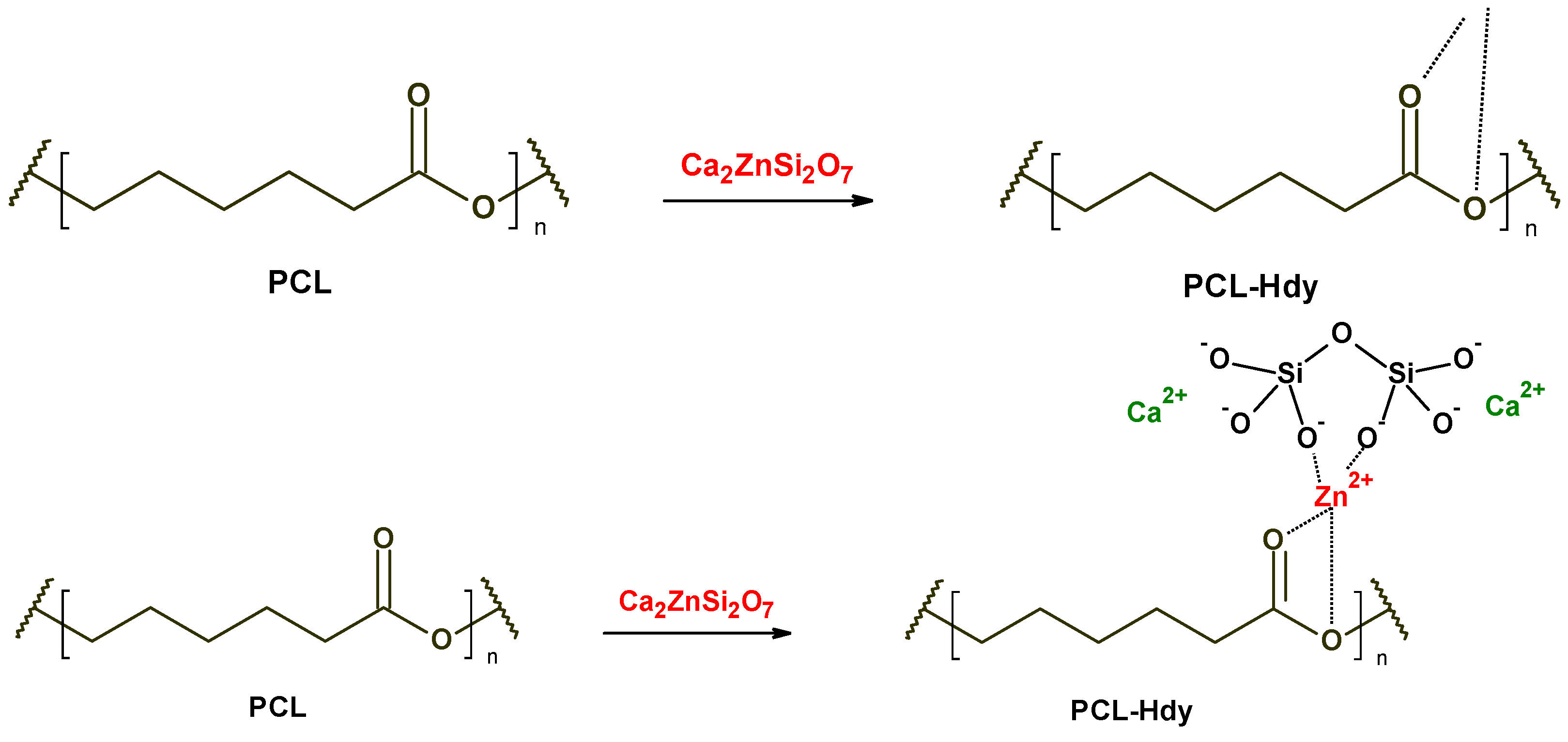
Polymer solutions with a constant PCL concentration of 10% w/w were prepared using a solvent mixture of DCM and DMF in a 1:1 mass ratio. Solutions enriched with hardystonite [Ca2ZnSi2O7] nanoparticles (HT) were prepared at three distinct concentrations: 1%, 3%, and 5% w/w, relative to the polymer mass (Figure 1).
For PCL solutions, the polymer was gradually added to the pre-mixed DCM and DMF solvent blend under slow stirring. After complete addition of the polymer, the solution was vigorously stirred using a mechanical stirrer for approximately 4 h until homogeneity was achieved.
For HT-modified solutions, an appropriate amount of hardystonite nanoparticles was first dispersed in the DCM and DMF solvent blend using ultrasonic homogenization for approximately 20 min. Following this step, PCL was gradually added to the dispersion under continuous slow stirring. The mixture was then subjected to vigorous stirring for approximately 4 h using a mechanical stirrer to ensure uniform dispersion and polymer dissolution.
All prepared polymer solutions were allowed to degas by standing undisturbed at room temperature for approximately 12 h prior to electrospinning.
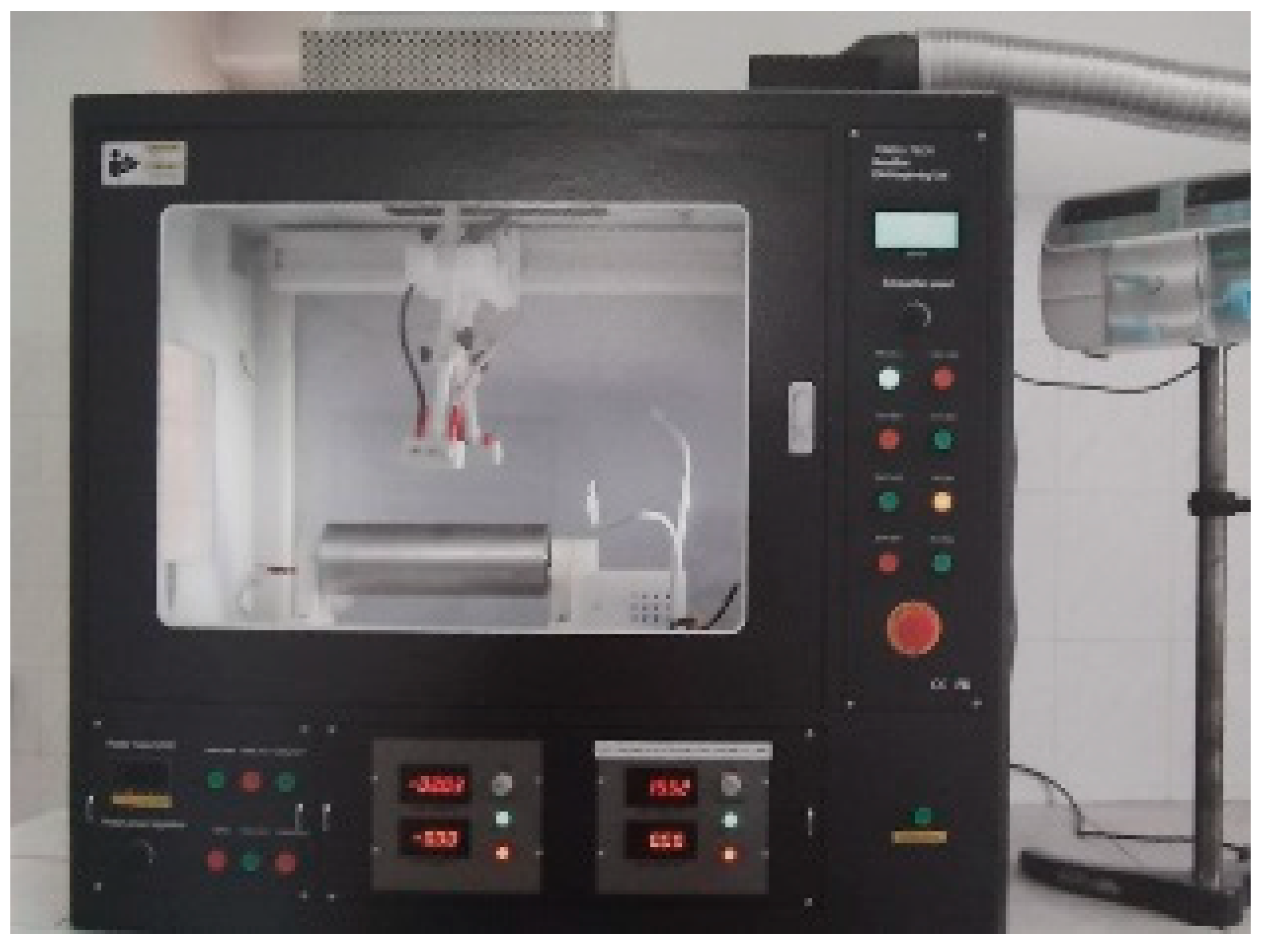
The electrospinning method was employed to fabricate ultrafine polymer fibres with nano- and microscale diameters. The setup used is shown in Figure 2. The fibres were deposited on a rotating metallic drum collector to produce randomly oriented fibrous mats. The electrospinning parameters were as follows: ambient temperature: 25.0–25.5 °C; needle-to-collector distance: 15 cm; needle gauge: 23 G (0.33 mm inner diameter); solution flow rate: 18.5 mL/h; voltage: 14–15 kV.
The electrospinning technique and parameters were selected based on the authors’ previous experience.
The resulting electrospun fibre mats were collected for subsequent morphological and physicochemical analyses.

2.2.2. Surface Morphology Using Scanning Electron Microscopy and Energy-Dispersive X-Ray Spectroscopy

The surface morphology of the samples was investigated using scanning electron microscopy (SEM). SEM analysis was conducted using a Phenom ProX G6 system (Thermo Fisher Scientific, Waltham, MA, USA) under low vacuum conditions (60 Pa) and with an accelerating voltage of 15 keV. Imaging was conducted with a back-scattered electron detector. In addition, qualitative elemental composition was determined via energy-dispersive X-ray spectroscopy (EDS) using a microanalyzer from Oxford Instruments (Abingdon, UK).

2.2.3. Specific Surface Area, Total Pore Volume, and Average Pore Size

The Brunauer–Emmett–Teller (BET) method was used to determine the specific surface area, total pore volume, and average pore size of the samples. Measurements were conducted with an Autosorb-1 analyser (Quantachrome Instruments, Boynton Beach, FL, USA), using nitrogen gas at 77 K as the adsorbate. Before analysis, the samples were dried at 105 °C for 24 h and subsequently degassed at room temperature. Approximately 0.4–0.9 g of material was used for each measurement. For each sample, both 5-point and 39-point BET isotherms were recorded. The presented mean value of the specific surface area is the average of the values obtained from the 5-point and 39-point isotherms, while the total pore volume and average pore size were calculated based on the 39-point isotherms.

2.2.4. Zeta Potential

Zeta potential measurements were performed using the SurPASS 3 streaming potential analyser (Anton Paar, Graz, Austria). The experiments were conducted at room temperature, with phosphate-buffered saline (PBS, pH ~7.4) serving as the electrolyte. The applied pressure ranged from 200 to 600 mbar, with the zeta potential calculated based on data collected up to 400 mbar. A cylindrical measuring cell was used. Measurements were performed on two independent samples of each type, with five repetitions per sample.

2.2.5. Blood Plasma Coagulation: Activated Partial Thromboplastin Time, Prothrombin Time, and Thrombin Time

The influence of the developed composites on blood plasma coagulation was assessed by measuring activated partial thromboplastin time (aPTT) and prothrombin time (PT). These parameters were evaluated using a Coag4D coagulometer (Diagon Kft., Budapest, Hungary). For each test, samples (~100 mg) were incubated at 37 °C for 1 h in 250 µL of plasma prepared from commercially available lyophilized human plasma (Dia-CONT I, Diagon Kft., Budapest, Hungary). The aPTT assays were performed using Dia-PTT reagent and a 0.025 M calcium chloride solution (Dia-CaCl2), both supplied by Diagon Kft., following the manufacturer’s instructions. PT testing was conducted using the Dia-PT reagent (Diagon Kft., Budapest, Hungary), while TT was assessed using Dia-TT reagent (Diagon Kft., Budapest, Hungary). All tests were conducted according to the manufacturer’s instructions. The aPTT measurements were performed in triplicate (using three independent samples), while the PT and TT tests were performed in duplicate (using two independent samples).

2.2.6. Thiobarbituric Acid Reactive Substances Assay

Lipid peroxidation in blood plasma was evaluated using the thiobarbituric acid reactive substances (TBARS) assay in the presence of 0.1 M hydrogen peroxide. This assay was employed to determine whether the developed composites promote oxidative stress via the Fenton reaction or exhibit antioxidant properties. Lipid peroxidation, which involves the oxidation of unsaturated fatty acids, results in the formation of byproducts such as peroxides and malondialdehyde (MDA). MDA reacts with thiobarbituric acid (TBA) to form a coloured complex, which is detected spectrophotometrically at 535 nm. In the experiment, 0.5 mL of plasma was incubated with 2.5 mg of the test material and 0.1 M H2O2 for 30 min. The TBARS reaction was then conducted using trichloroacetic acid (TCA) and TBA. Following heating and centrifugation, absorbance was recorded at 535 nm. TBARS concentrations were calculated in micromolar (µM) units using a molar extinction coefficient of ε = 156,000 M−1cm−1, with samples diluted threefold prior to measurement. The measurements were performed in duplicate (using two independent samples).

2.2.7. Preparation of Samples for the Assessment of Biological Properties

To analyse the influence of PCL and PCL-HT nonwoven composites incorporating hardystonite on cells, 1 cm2 samples of modified and unmodified PCL nonwovens were incubated in 3 mL of RPMI or DMEM medium, depending on the cell line, at 37 °C in 5% CO2 for 24 h. Subsequently, post-incubation mixtures were filtered using a 0.2 µm filter to maintain aseptic conditions. Then, post-incubation mixtures were added to cells in a ratio of 1:1 to assess the effect of the extracts on cell viability and DNA damage.

2.2.8. Cell Culture

Peripheral blood mononuclear cells (PBM cells) were isolated from a leucocyte buffy coat collected from the blood of healthy non-smoking donors from the Blood Bank in Lodz, Poland, as described previously [63]. The first step in PBM cell isolation involved mixing the buffy coat with PBS at a ratio of 1:1. In the next step, the mixture was centrifuged using a Lymphosep (Cytogen, Zgierz, Poland) density gradient at 2200 RPM for 20 min, with minimal acceleration and deceleration settings. PBM cells were subsequently washed three times via centrifugation in 1% PBS. After isolation, the cells were suspended in RPMI 1640 medium. The study was approved by the University of Lodz Research Ethics Committee (approval number: 12/KEBN-UŁ/I/2024-2025).
The human foreskin fibroblast cell line Hs68 (ATCC® CRL-1635™) was obtained from the American Type Culture Collection (ATCC™, Manassas, VA, USA). Hs68 cells were cultured in high-glucose DMEM supplemented with 100 units/mL of potassium penicillin, 100 μg/mL of streptomycin sulphate, and 10% (v/v) fetal bovine serum (FBS). Cultures were maintained at 37 °C in a humidified atmosphere with 5% CO2.

2.2.9. Cell Viability Resazurin Assay

The cell viability resazurin assay was performed according to the method described by O’Brien et al. [64]. Resazurin salt was dissolved in sterile PBS. Post-incubation mixtures were added to PBM cells at a density of 5 × 10⁴ cells and Hs68 cells at 1 × 10⁴ cells, followed by incubation for 24 and 48 h at 37 °C in 5% CO2 atmosphere. The control consisted of RPMI1640 (for PBM cells) and DMEM (for Hs68 cells), both prepared in the same manner as the post-incubation mixtures.
Subsequently, 10 µL of resazurin solution was added to each well, and the plates were incubated again for 2 h at 37 °C in 5% CO2. Fluorescence was then measured using a HT microplate reader (BioTek Synergy HT, Agilent Technologies Inc., Santa Clara, CA, USA) with excitation/emission wavelengths of λex  =  530/25 and an λem  =  590/35 nm. The effects of the post-incubation mixtures were expressed as a percentage relative to the control fluorescence. The experiment was performed in six replicates.

2.2.10. DNA Damage

PCL and PCL-HT post-incubation mixtures were added to PBM cells at a density of 1 × 10⁵ and to Hs68 cells at 5 × 10⁴, followed by incubation for 24 and 48 h at 37 °C in 5% CO2 atmosphere. The negative control consisted of RPMI1640 (for PBM cells) and DMEM (for Hs68 cells), both prepared in the same manner as the post-incubation mixtures. The experiment also included a positive control: a cell sample incubated with 25 μM hydrogen peroxide (H2O2) for 15 min on ice.
The comet assay was performed under alkaline conditions according to the procedure of Tokarz et al. [65]. A freshly prepared cell suspension in 0.75% low-melting-point (LMP) agarose dissolved in PBS was layered onto microscope slides, pre-coated with 0.5% normal-melting-point (NMP) agarose. The cells were lysed for 1 h at 4 °C in a buffer containing 2.5 M NaCl, 0.1 M EDTA, 10 mM Tris, 1% Triton X-100, at pH = 10. After lysis, the slides were placed in an electrophoresis unit, and DNA was allowed to unwind for 20 min in an alkaline solution (300 mM NaOH and 1 mM EDTA, pH > 13). Electrophoresis was carried out in a buffer containing 30 mM NaOH and 1 mM EDTA, pH > 13, at 4 °C (with the running buffer temperature not exceeding 12 °C) for 20 min at an electric field strength of 0.73 V/cm (28 mA). Subsequently, the slides were washed with distilled water, drained, stained with 2 µg/mL DAPI, and covered with coverslips. All steps were performed under limited light conditions to minimize additional DNA damage.
The comets were observed at 200× magnification using an Eclipse fluorescence microscope (Nikon, Tokyo, Japan) equipped with a COHU 4910 video camera (Cohu Inc., San Diego, CA, USA), a UV-1 A filter block, and the personal computer-based image analysis system Lucia-Comet v. 7.0 (Laboratory Imaging, Prague, Czech Republic). One hundred comets were randomly selected per sample, and the mean percentage of DNA in the comet tail was used as an indicator of DNA damage.

3. Results and Discussion

3.1. Surface Morphology Using Scanning Electron Microscopy and Energy-Dispersive X-Ray Spectroscopy

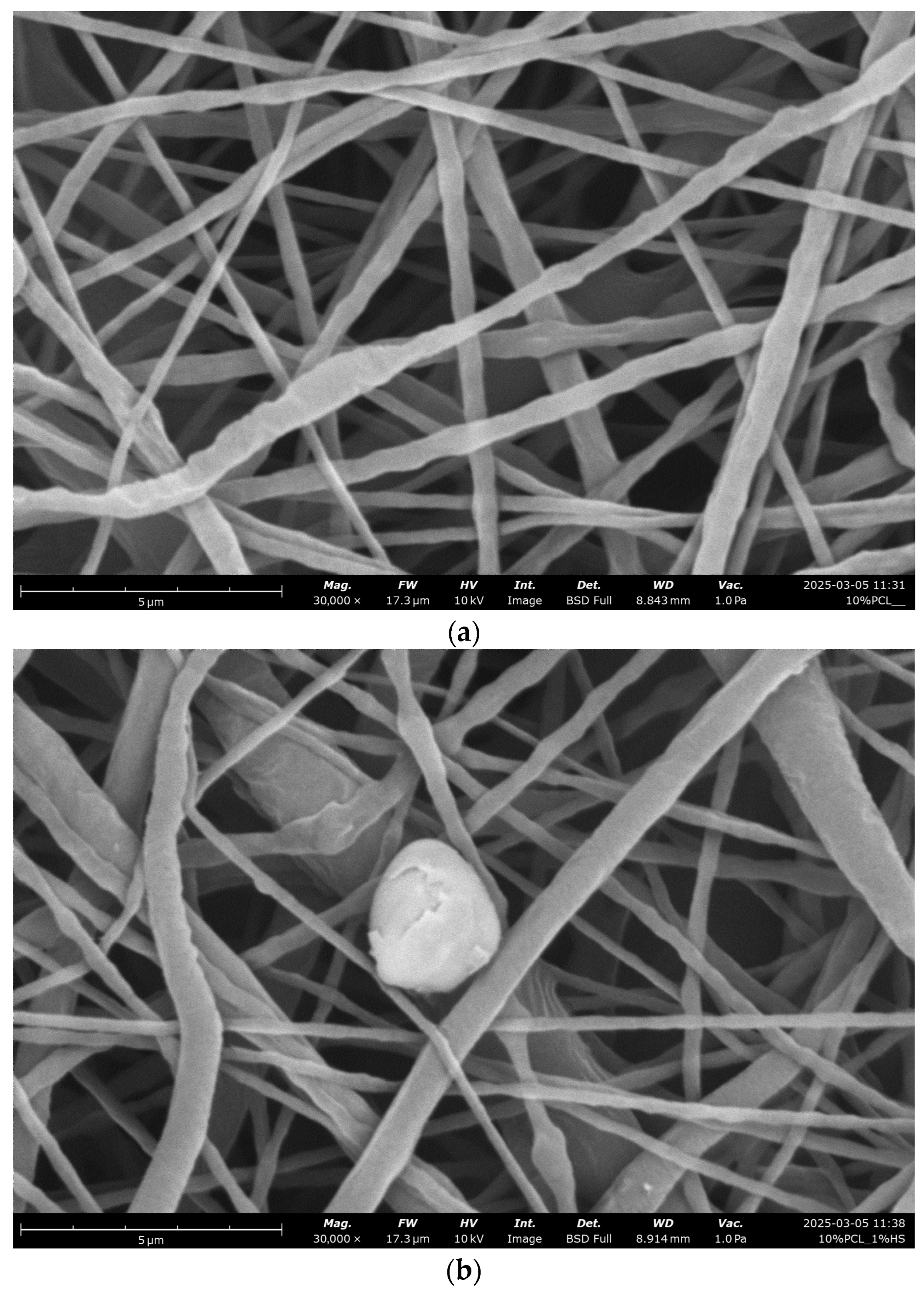
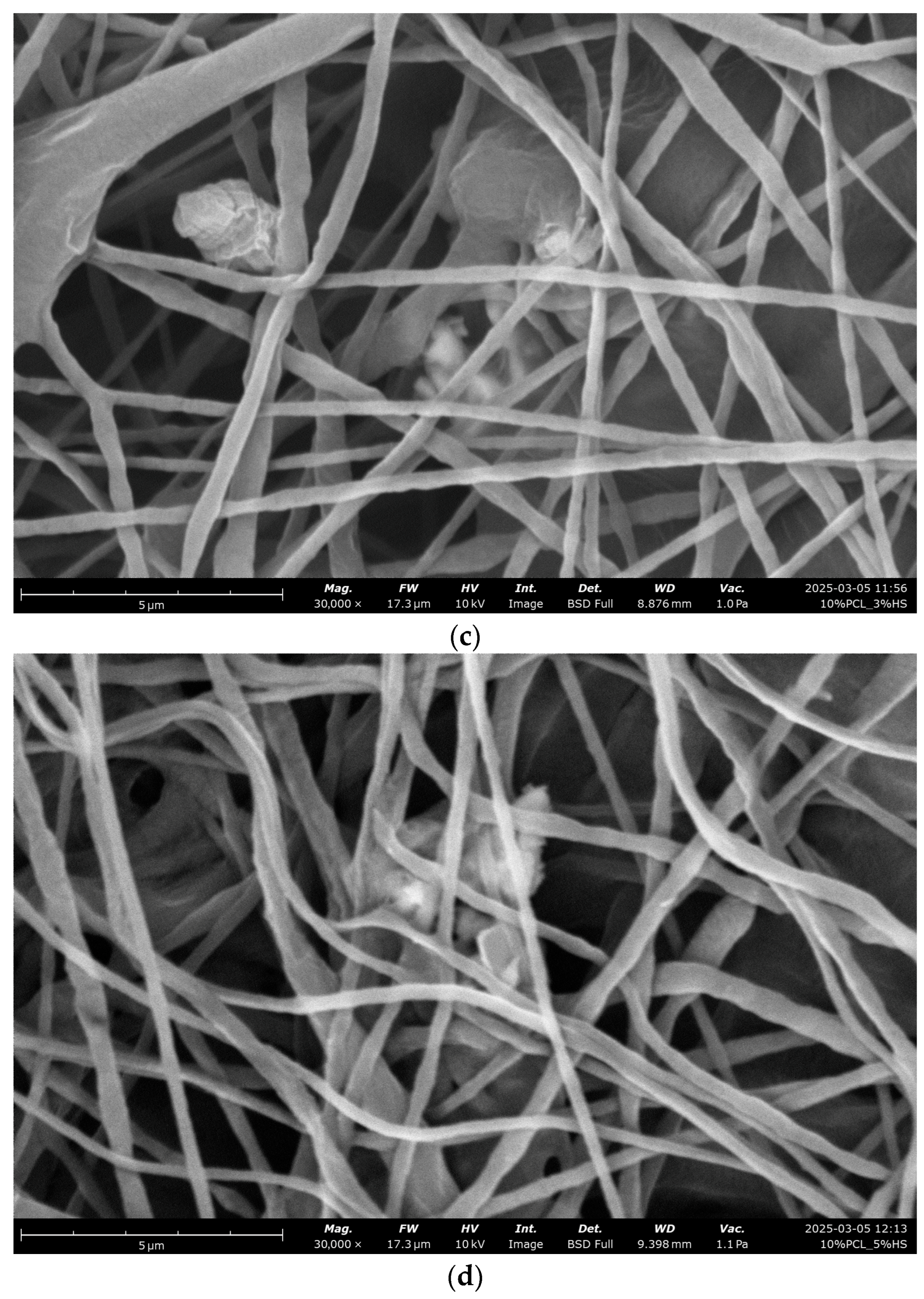
The surface morphology of the developed PCL and PCL-HT nonwovens was investigated using scanning electron microscopy. The SEM analysis revealed no significant alterations in fibre morphology or overall nonwoven structure after hardystonite incorporation. The results are presented in Figure 3. All samples exhibited a three-dimensional porous structure with interconnected pores. The fibres were randomly oriented, with most having diameters less than 1 µm. In PCL nonwovens modified with hardystonite, randomly distributed HT particles and agglomerates of various sizes were visible between the fibres, confirming the successful incorporation of hardystonite into the PCL matrix. However, the fibres themselves did not show any noticeable morphological changes resulting from the addition of hardystonite to the electrospinning solution. In both PCL and PCL-HT nonwovens, the fibres exhibited a smooth and uniform surface. Similar findings were reported by Jaiswal et al. [43], who observed no changes in fibre surface morphology upon embedding HT particles in the polymer matrix.
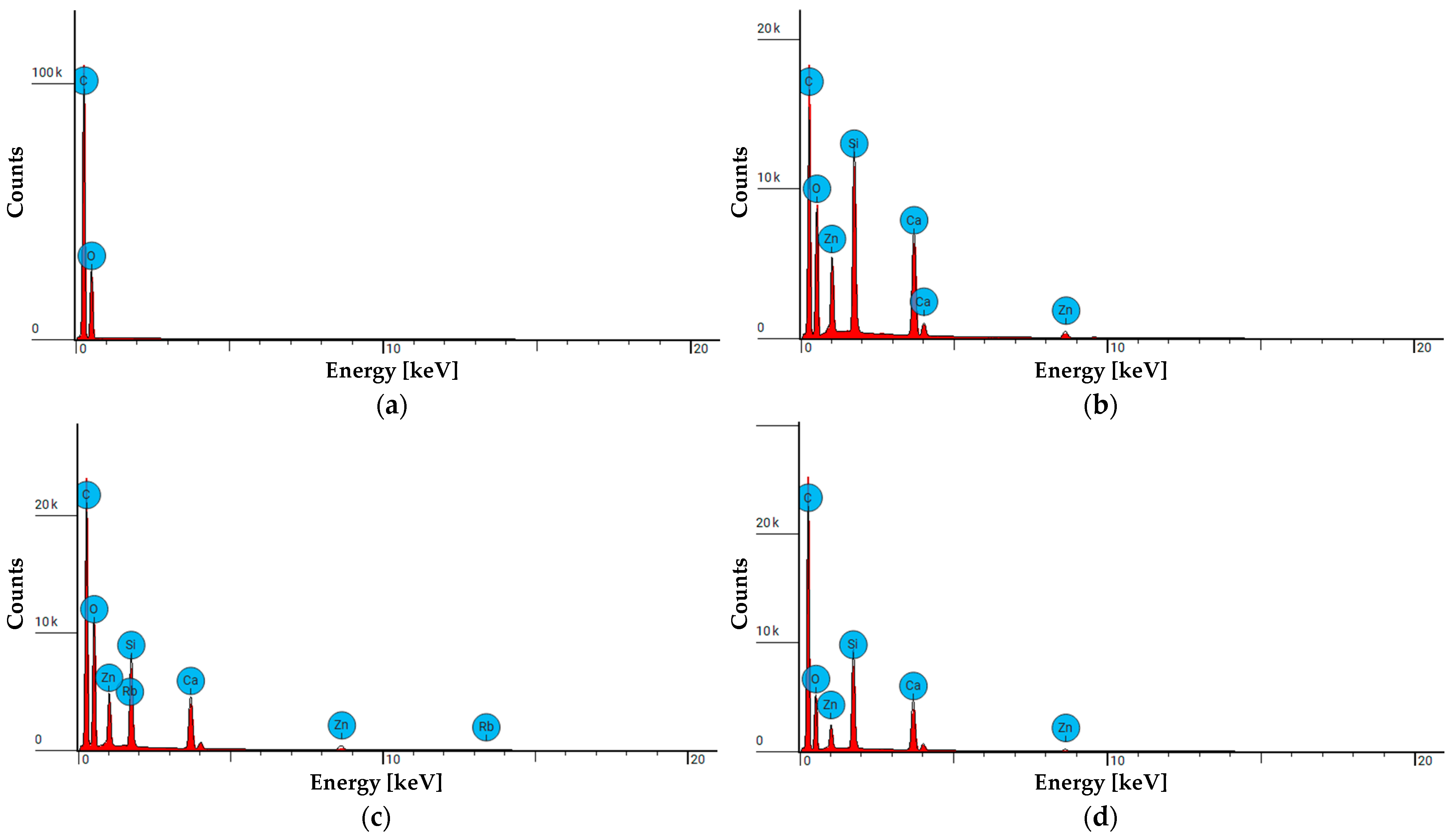
The qualitative composition of the fibrous composites was assessed by means of energy-dispersive X-ray spectroscopy. The recorded spectra of unmodified PCL and PCL-HT nonwovens are shown in Figure 4. In the case of the PCL sample, only peaks corresponding to carbon and oxygen were present in the EDS spectrum. This is consistent with the fact that polycaprolactone is composed of carbon, oxygen, and hydrogen. In the case of the PCL-HT composites, additional peaks attributed to calcium, zinc, and silicone were observed, confirming the presence of hardystonite within the polymer composites.

3.2. Specific Surface, Total Pore Volume, and Average Pore Size

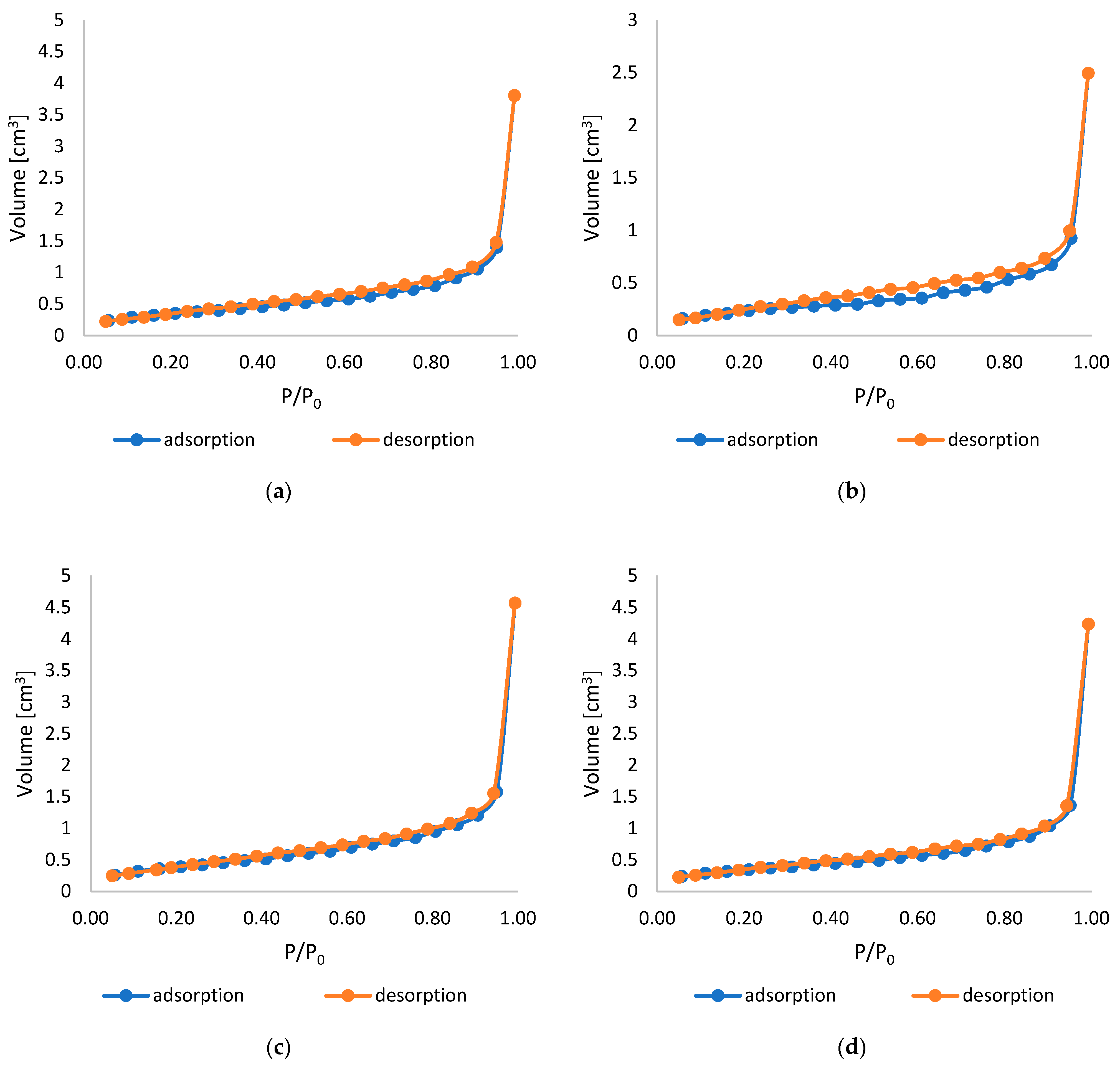
The specific surface area, total pore volume, and average pore size were investigated by means of BET analysis. The resulting values obtained for unmodified PCL nonwoven and PCL-HT composites with varying amounts of hardystonite are summarized in Table 1. The acquired N2 adsorption–desorption isotherms are displayed in Figure 5. BET analysis demonstrated no substantial differences in specific surface area, total pore volume, or average pore diameter between the modified and unmodified samples.
The data presented in Table 1 show that there was no direct correlation between the specific surface area, total pore volume, average pore size, and the amount of hardystonite added to the polymer solution. All the measured parameters were comparable. The high standard deviation obtained for the PCL-HT-1 sample in the measured specific surface area, as well as higher total pore volume and average pore size, may be related to the fact that the samples had to be removed from the substrate, i.e., aluminium foil, prior to analysis. In the case of the PCL-HT-1 sample, disruption of the fibrous structure of the composite was observed during mechanical removal, which could have affected the results. In summary, it may be concluded that the addition of hardystonite to the polymer solution used for electrospinning in the range of 1–5 wt.% had no significant impact on the specific surface area, total pore volume, or average pore size. This is in agreement with the results of the SEM analysis, which did not reveal any substantial changes in the surface morphology of PCL fibres and the structure of the nonwoven samples due to the addition of HT. According to the obtained results, the observed HT particles within the fibrous structure did not affect the porosity of the composites.
As illustrated in Figure 5, the recorded isotherm curves resemble an S-shape, which aligns with type II isotherms, according to the IUPAC classification. This type of isotherm is characteristic of monolayer adsorption followed by multilayer adsorption processes [66,67]. For all investigated samples, the transition point, known as Point B, where the curve shifts to a nearly linear middle section, was not clearly defined. This indicates the overlap between monolayer adsorption and the onset of multilayer formation [66,67]. The overall profile of the isotherms implies a predominance of mesoporous and macroporous structures, with micropores being less significant in the material [68]. The steep rise in nitrogen adsorption with increasing relative pressure supports this conclusion, suggesting that nitrogen first enters the micropores at low pressures, followed by monolayer adsorption, and then multilayer buildup as pressure increases [68].
All samples displayed a hysteresis loop in their isotherms. According to the literature, this is indicative of mesoporous structures and the occurrence of capillary condensation within mesopores [66,67]. The shape of the loops corresponds to type H3, typically linked to slit-shaped pores [68]. This type of hysteresis often arises in systems containing aggregates of plate-like particles or when larger pores, especially macropores, are not fully filled during adsorption [67]. The size of the hysteresis loops was similar for all samples.

3.3. Zeta Potential

Evaluating the zeta potential at physiological pH is essential, as it significantly affects interactions with proteins and blood components, thereby impacting both plasma coagulation and the material’s overall biological activity. The surface charge and potential play a critical role in regulating the quantity, type, and conformational changes in proteins that adsorb onto the material’s surface, which subsequently affect cell attachment, integrin interactions, and the development of focal adhesions [69,70].
Therefore, in this study, the zeta potential of the developed PCL and PCL-HT samples was examined at physiological pH (~7.4), and the results are presented in Table 2. For the unmodified PCL nonwoven, a negative zeta potential of −34.05 ± 0.95 mV was recorded. The addition of HT to the polymer solution resulted in a shift toward less negative values, i.e., −30.08 ± 0.27, −27.54 ± 0.48, and −23.50 ± 1.89 mV for PCL-HT-1, PCL-HT-3, and PCL-HT-5, respectively.
The negative zeta potential of PCL may be explained by the deprotonation of the carboxylic acid groups present on the surface [71]. The shift toward less negative zeta potential values of the modified PCL nonwovens with increasing concentration of hardystonite in the polymer solution may result from the presence of positively charged calcium [72] and zinc ions in hardystonite. This observation is also consistent with the less negative zeta potential for HT particles in the literature [43].

3.4. Blood Plasma Coagulation: Activated Partial Thromboplastin Time, Prothrombin Time, and Thrombin Time

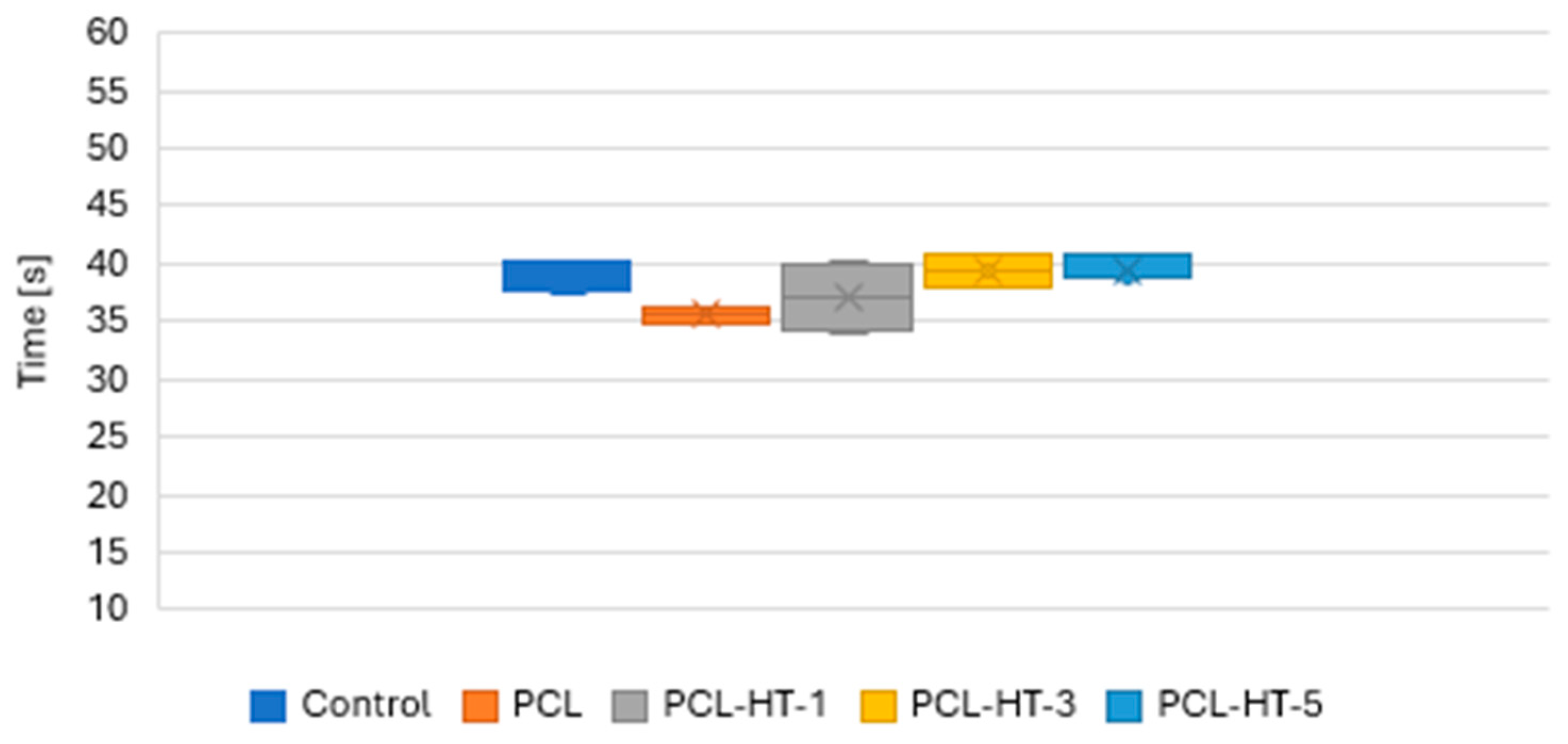
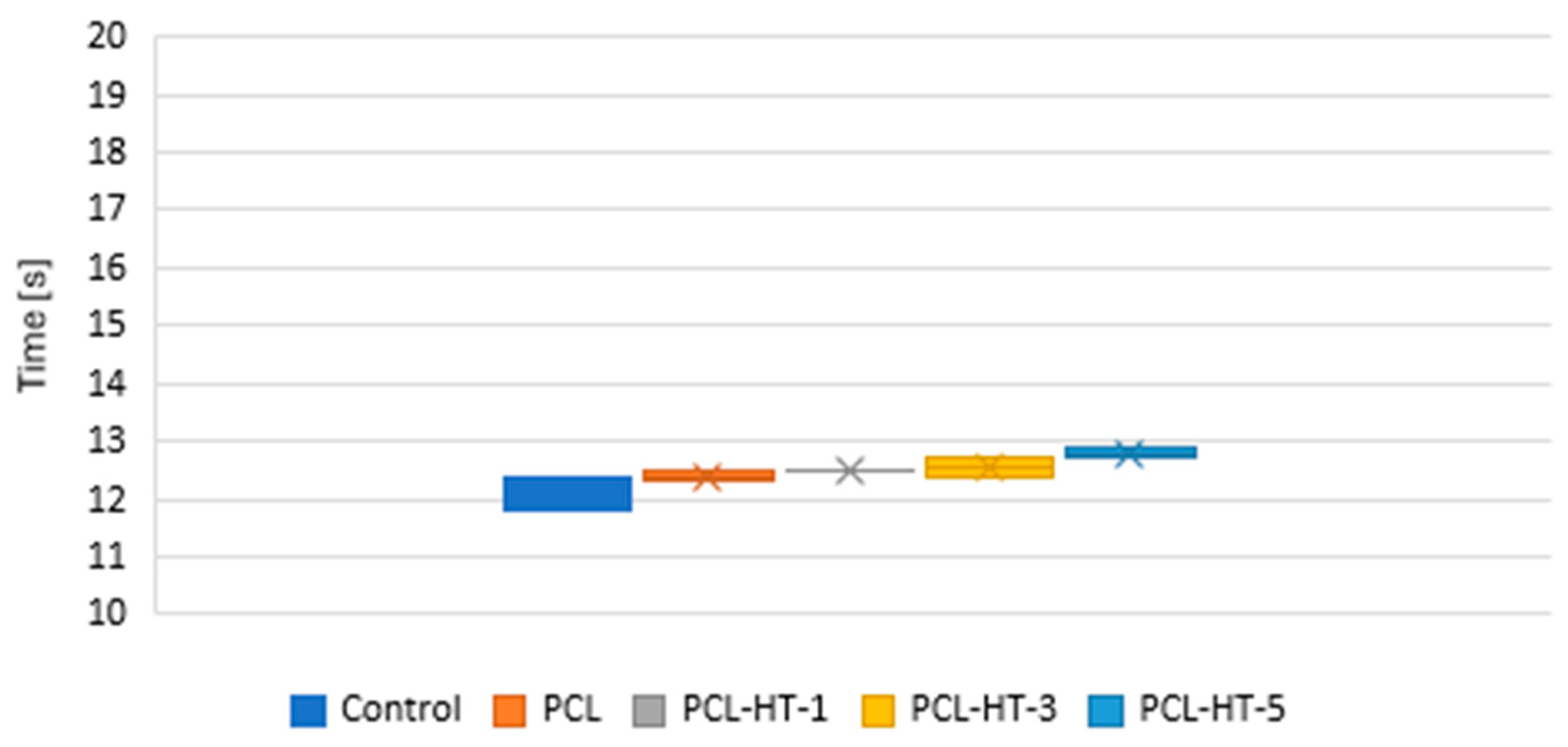
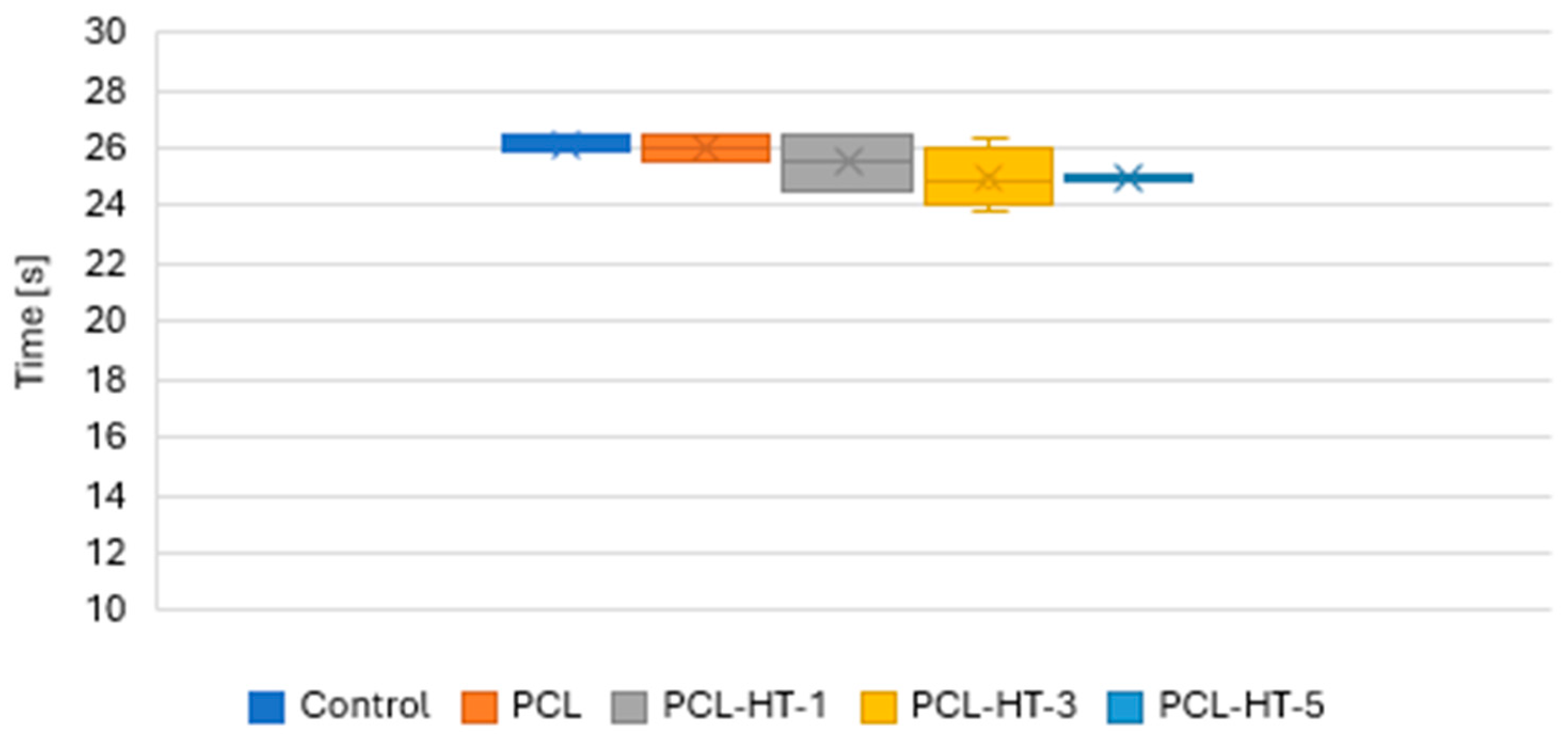
Activated partial thromboplastin time (aPTT), prothrombin time (PT), and thrombin time (TT) are commonly used screening tests that provide rapid but non-specific insights into haemostatic abnormalities [73]. aPTT assesses the intrinsic coagulation pathway, serving as a key indicator of coagulation efficiency [73]. PT evaluates the extrinsic pathway by measuring the time to clot formation following the addition of tissue factor and calcium, which triggers the conversion of prothrombin into thrombin [73]. TT reflects the final stage of coagulation, measuring how quickly a fibrin clot forms after the addition of exogenous thrombin [73]. Therefore, to assess the potential haemostatic effects of the developed PCL composites incorporating hardystonite, aPTT, PT, and TT were measured, with results shown in Figure 6, Figure 7 and Figure 8, respectively.
For aPTT, a slight shortening was observed for unmodified PCL, suggesting enhanced intrinsic pathway activation, which may be related to its relatively high negative zeta potential. This aligns with the existing literature, where negatively charged surfaces are known to initiate the intrinsic coagulation pathway [74]. Factor XII interacts with negatively charged surfaces via positively charged amino acid residues located in its heavy chain [75,76]. This interaction induces conformational changes in factor XII, promoting its conversion into the active form (XIIa) through autocavitation [75,76]. The activation of factor XIIa is a critical step in the coagulation cascade, leading to fibrin formation [75,76]. Consequently, negatively charged surfaces are considered important triggers for the initiation of the intrinsic coagulation pathway [75,76]. Nevertheless, it should be noted that the observed change in aPTT was minor, and the measured value remained within the reference range.
The addition of hardystonite to the polymer solution resulted in the normalization of the aPTT time, restoring it to the level of the control. At the same time, there was no significant difference in aPTT among the PCL-HT composites with varying HT concentrations between 1 and 5 wt.%. This normalization of coagulation time may be associated with the less negative zeta potential observed for the PCL-HT composites. Surfaces with a negative charge generally lead to reduced protein adsorption compared to positively charged ones, as most proteins carry a net negative charge at physiological pH, resulting in repulsive interaction [77]. In contrast, positively charged materials tend to enhance protein adsorption significantly and can also induce changes in protein conformation [77]. Consequently, materials with better blood compatibility usually have surfaces with low interfacial energy [77]. As previously mentioned, although negative surface charges can reduce protein adsorption, a high charge density may enhance activation of the contact system. Therefore, it is crucial to precisely control the surface charge density of biomaterials [77]. Based on these findings, it can be assumed that materials with a moderately negative surface charge exhibit optimal hemocompatibility, which may explain the lack of disruption in the coagulation cascade observed for the PCL-HT composites. Furthermore, this effect may also be explained by the presence of both Ca2+ and Zn2+ ions, which can have opposite effects. Calcium ions are widely recognized as essential cofactors in the blood coagulation process [78,79,80]. Therefore, their presence in hardystonite would theoretically enhance clot formation by activating the intrinsic coagulation pathway, leading to a shortened aPTT. In contrast, certain transition metals, including copper, cobalt, nickel, and zinc, have been shown to interact with contact factors XI, XII, and HK in human plasma, thereby interfering with the intrinsic pathway and leading to a prolonged activated partial thromboplastin time [81]. Hence, it may be assumed that in the case of the PCL-HT composites, the above-described phenomena counterbalanced each other, and as a result, no notable change in aPTT was observed.
Similarly, there was no evident effect of either unmodified PCL or hardystonite addition on PT and TT, as all measured times remained within the normal reference ranges. Therefore, it can be concluded that neither unmodified PCL nor PCL-HT composites affect PT or TT.
The absence of any disruption to the blood coagulation cascade is critically important for materials intended for blood-contacting applications. This is because suppression of the coagulation process may lead to prolonged clotting times, which, in the case of wound dressings, can result in excessive bleeding. In contrast, excessive activation of the coagulation cascade may elevate fibrinogen and platelet levels, increasing the risk of thrombus formation [82,83]. High concentrations of D-dimers, which are markers of fibrin degradation, may indicate ongoing thrombotic or inflammatory processes and are associated with severe complications, including disseminated intravascular coagulation (DIC) and deep vein thrombosis (DVT) [82,83].
In summary, the presented results indicate that the fibrous composites based on PCL and hardystonite do not affect blood plasma coagulation, which supports their potential safety for use in blood-contacting applications.

3.5. Thiobarbituric Acid Reactive Substances Assay

To assess the potential oxidative stress triggered by the manufactured PCL and PCL-HT composites, lipid peroxidation in blood plasma was measured using the TBARS assay. The collected data are summarized in Table 3.
It can be observed the TBARS levels measured for the control sample (i.e., blood plasma) and the unmodified PCL nonwoven are comparable. This confirms the biocompatibility and bioinertness of PCL, suggesting no induction of oxidative stress. At the same time, the TBARS levels obtained for the PCL-HT samples were lower in comparison to those of both the control and the unmodified PCL. However, no direct correlation between the amount of hardystonite added to the polymer solution and the TBARS level was observed. Nevertheless, the presented findings indicate that the PCL-HT composites may exhibit antioxidative properties.
In general, according to the literature, materials with a positive surface charge may promote ROS formation and oxidative stress [84]. Therefore, it can be assumed that surfaces with a negative surface charge, such as the investigated nonwovens, are less likely to induce oxidative stress. This assumption aligns with the obtained results.
The observed antioxidative effect of PCL-HT composites may be attributed to the presence of zinc in hardystonite, which is well known for its antioxidant potential [85]. According to the literature, zinc serves as a cofactor for key enzymes essential for the proper functioning of the cellular antioxidant defence mechanisms [85]. Furthermore, it contributes to cellular protection against oxidative damage by stabilizing cell membranes and inhibiting the activity of nicotinamide adenine dinucleotide phosphate oxidase [85]. Zinc also promotes the expression of metallothioneins, i.e., proteins that effectively neutralize hydroxyl radicals and bind reactive oxygen species (ROS) [85].
Studies have shown that the presence of antioxidant agents that regulate reactive oxygen species at safe levels in wound tissues can enhance the healing process [86,87]. As a result, the use of antioxidant agents in wound treatment is gaining attention, with numerous biomaterials being developed and tested for this purpose [86]. Therefore, the revealed antioxidant activity of the PCL-HT composites highlights their potential suitability for wound management, including use in wound dressing applications.

3.6. Effect on the Viability of PBM and Hs68 Cells

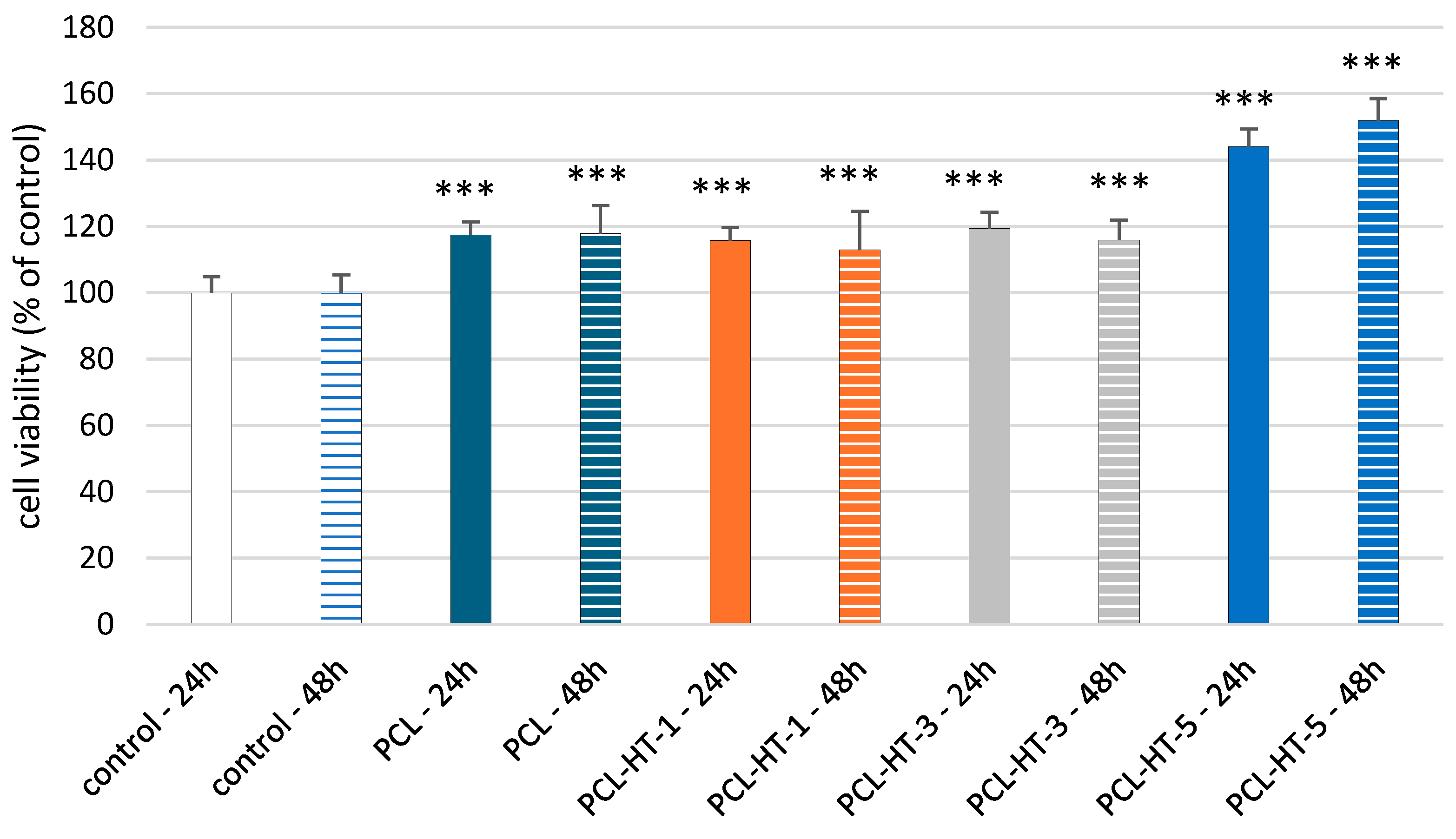
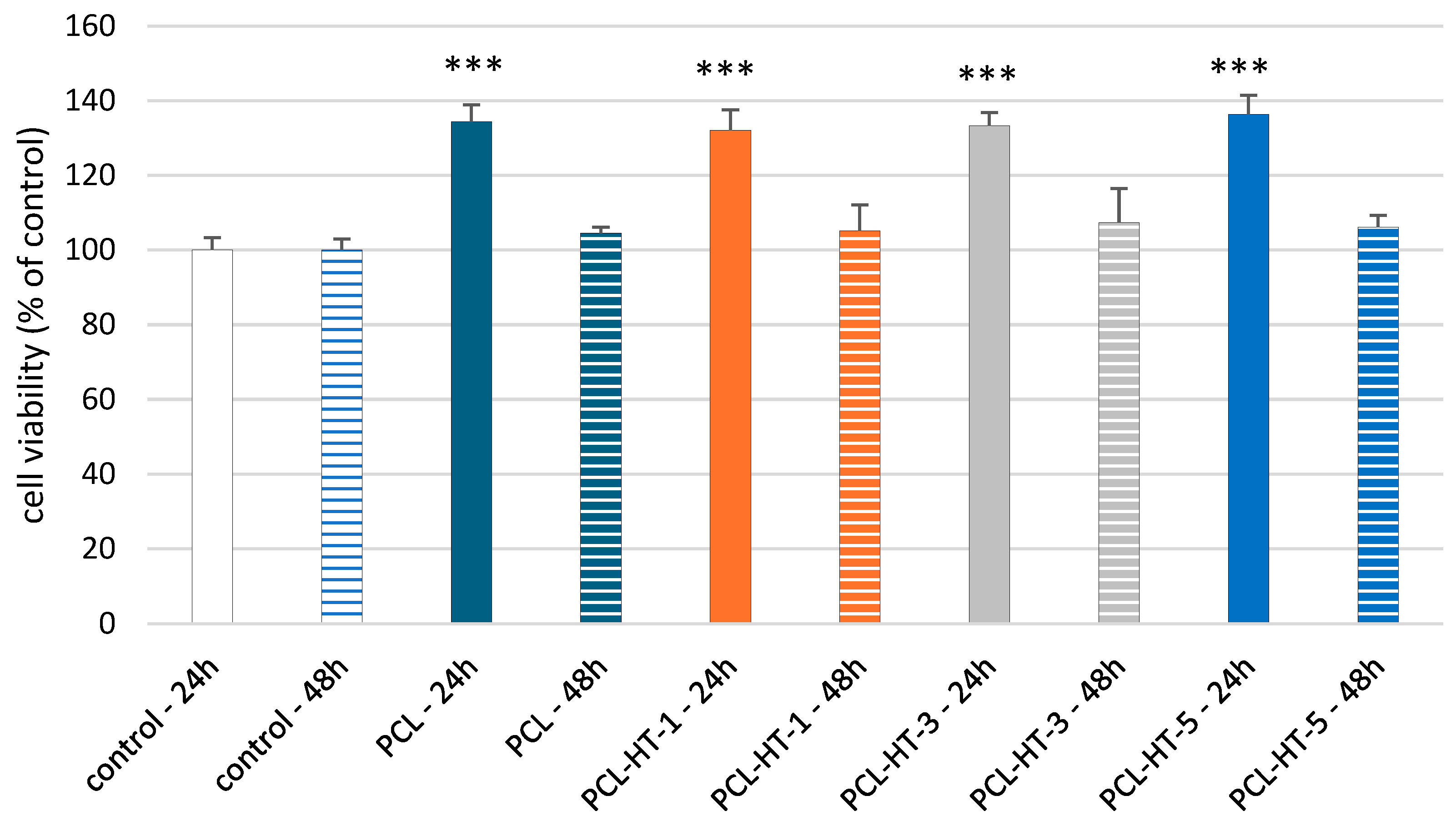
The resazurin reduction assay was employed to determine cell viability following incubation with post-incubation mixtures derived from unmodified PCL and PCL-HT composites. This assay relies on the use of an indicator dye to detect oxidation–reduction reactions, which predominantly occur in the mitochondria of metabolically active cells. The non-fluorescent, dark blue dye (resazurin) is reduced by viable cells to form resorufin, a fluorescent compound that exhibits pink fluorescence at 570 nm and red fluorescence at neutral pH. Our results demonstrate that incubation of PBM cells with PCL and PCL-HT post-incubation mixtures led to an increase in cell viability after 24 and 48 h of incubation (Figure 9). This suggests a stimulatory effect on PBM cell metabolism. In the case of Hs68 cells (Figure 10), we observed an increase in cell viability after 24 h and no evidence of cytotoxicity after 48 h.
Hardystonite has previously shown promise in bone regeneration, as evidenced by its stimulatory effects on MG-63 and MC3T3-E1 cell lines [88,89]. Furthermore, studies on silicate platelets supporting Ag and ZnO demonstrated low cytotoxicity toward mammalian cells [90]. The observed lack of cytotoxicity in PCL-HT composites may be attributed to their negative zeta potential. According to Shao et al. [91], polymeric nanoparticles with a negative surface charge exhibited lower cytotoxicity compared to those that were positively charged, and a less negative charge was associated with increased cell viability. The authors suggested that stronger interactions between positively charged surfaces and cell membranes contribute to higher cytotoxicity. In addition, the absence of cytotoxic effects may be linked to the antioxidant properties of PCL-HT composites. Materials with a negative surface charge have been reported to produce fewer ROS than neutral and positively charged materials [84], which could further contribute to their biocompatibility.
In summary, the obtained results indicate that both PCL and PCL-HT composites are non-cytotoxic to PBM and Hs68 cells, confirming their biocompatibility and supporting their potential for use in blood-contacting applications, such as wound dressings and wound healing therapies.

3.7. Effects on DNA Damage in PBM Cells and Hs68 Cells

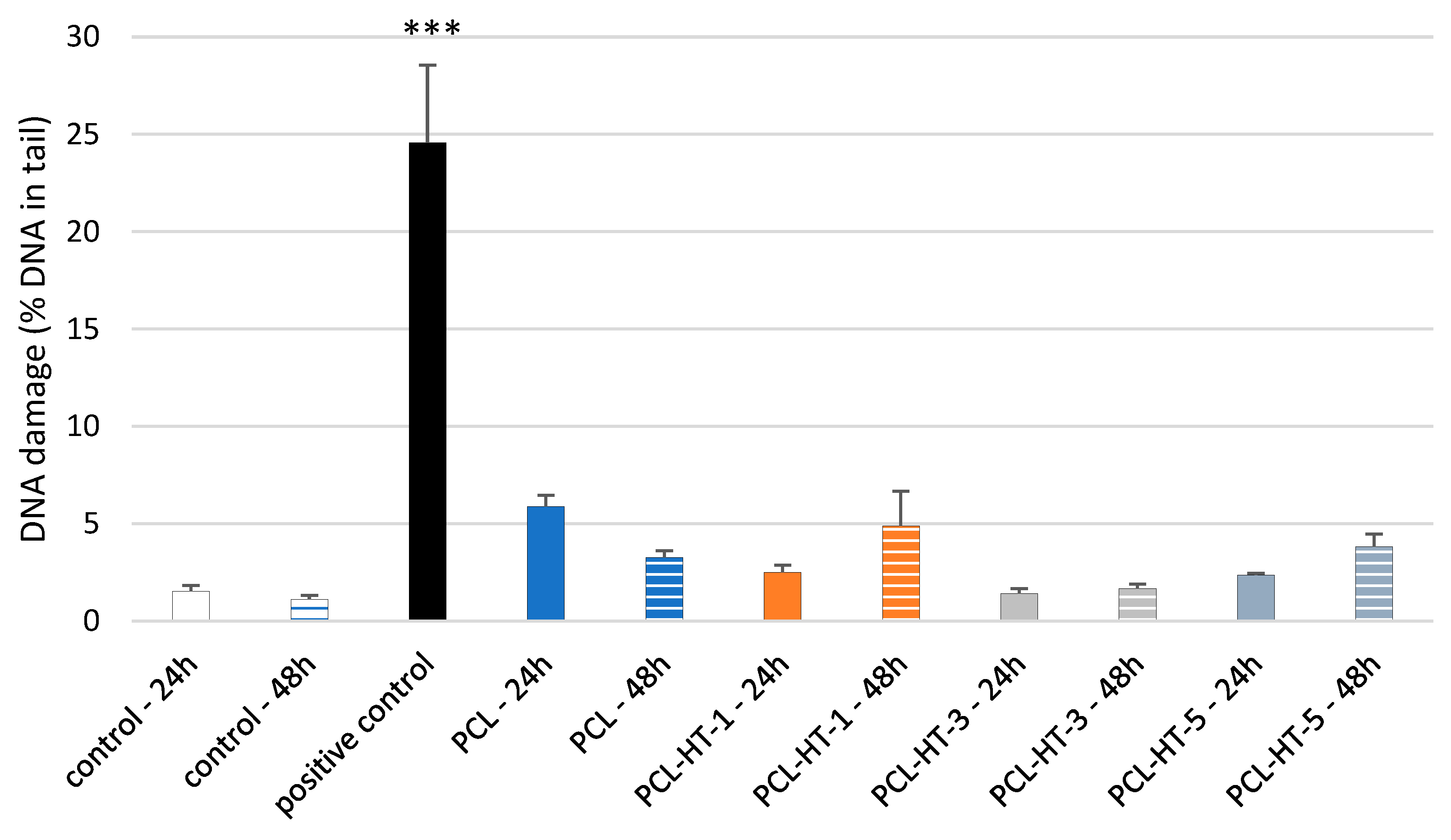
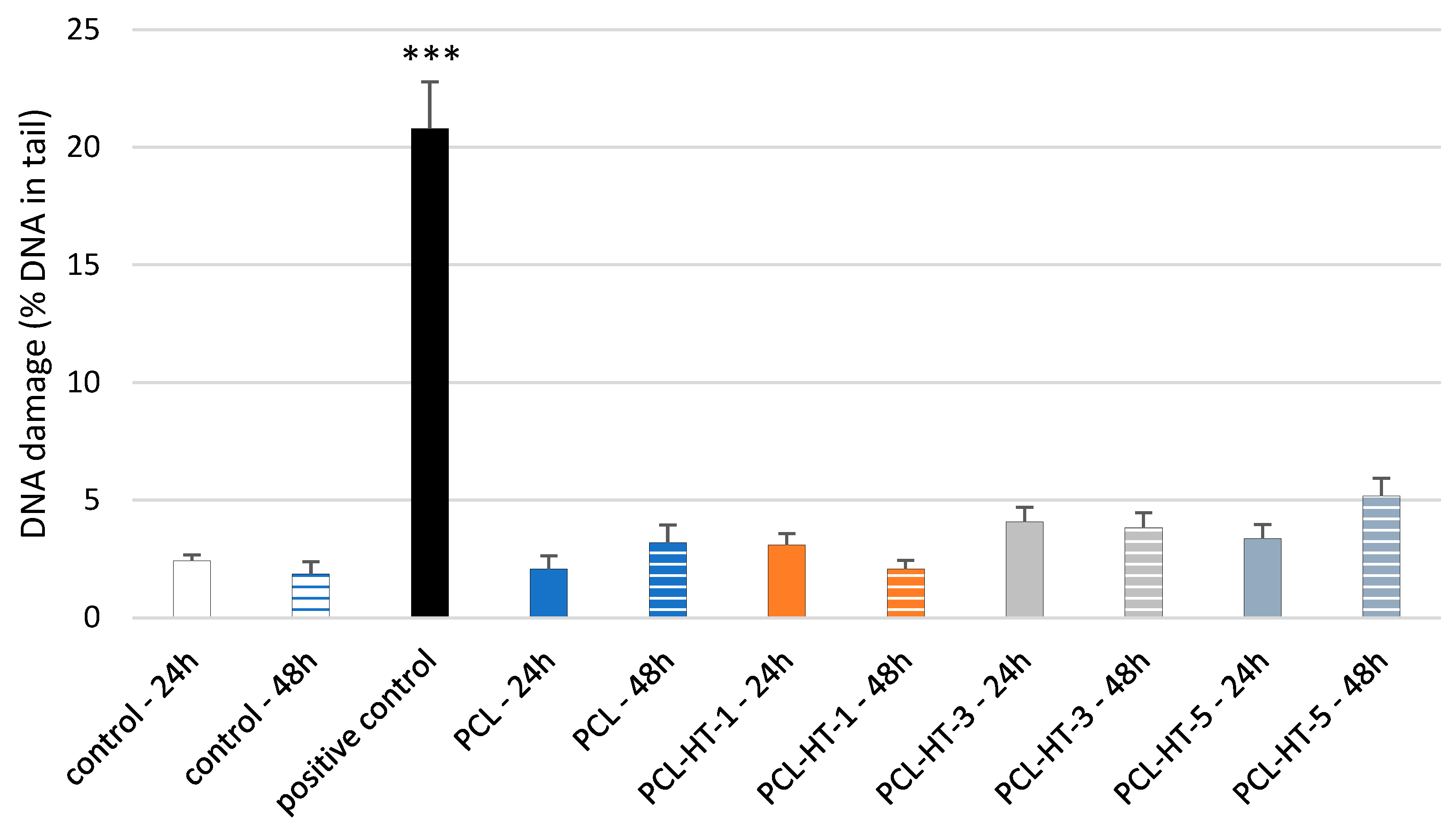
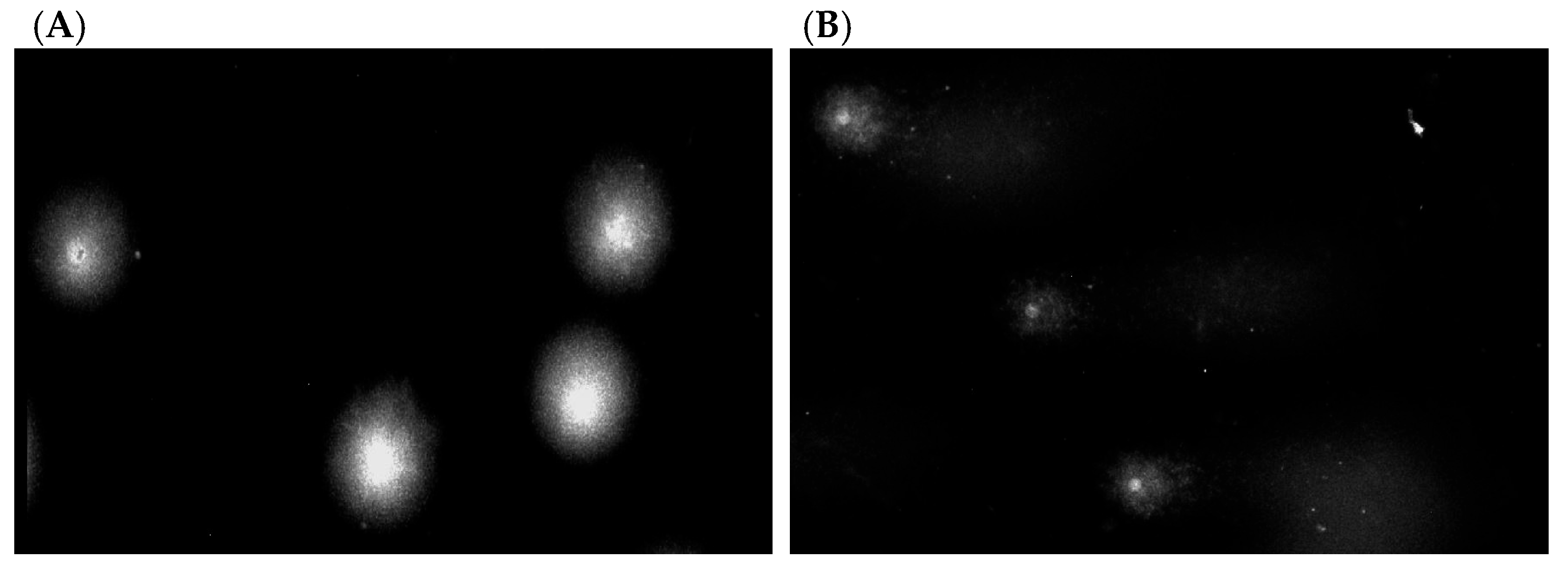
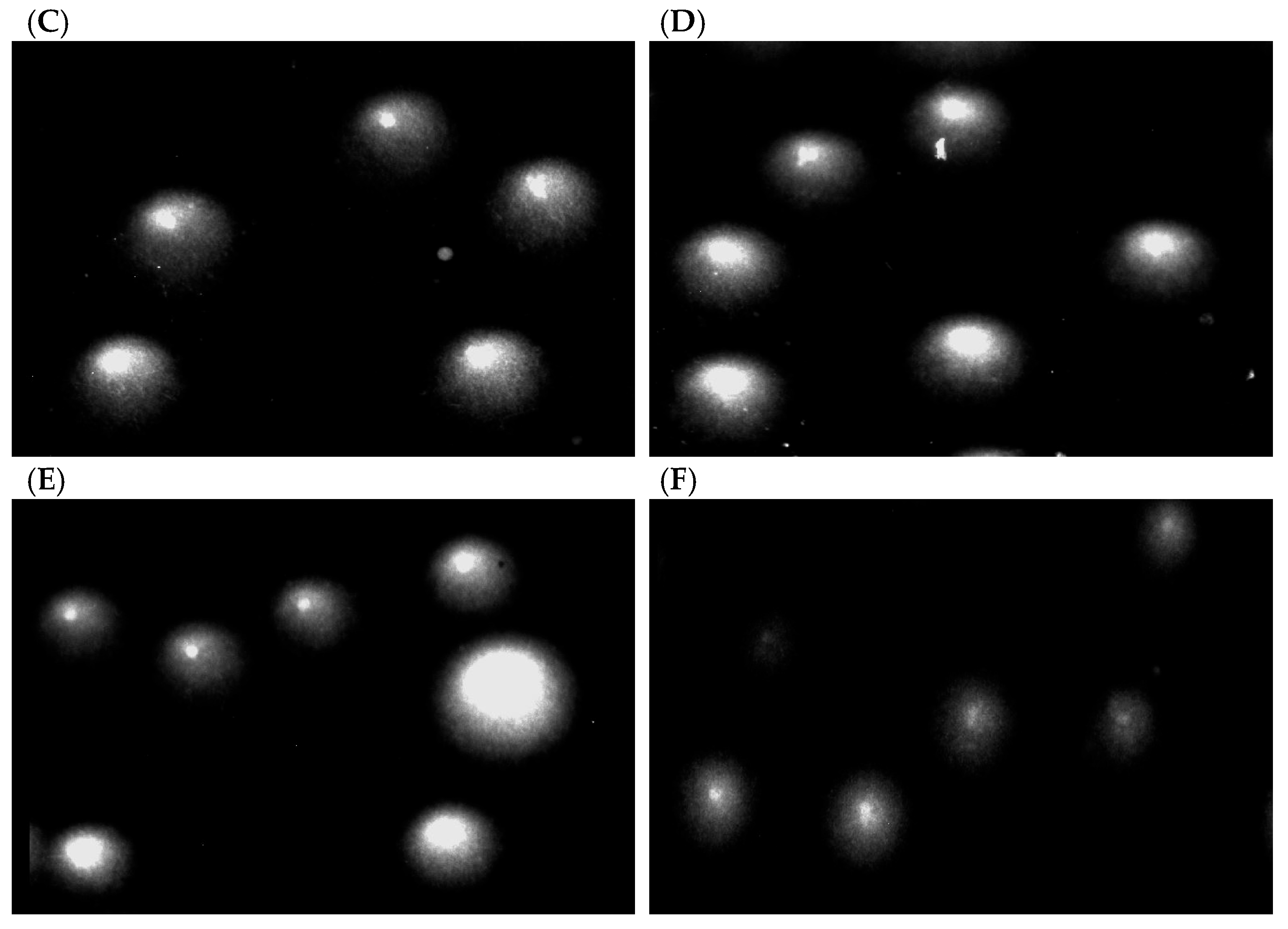
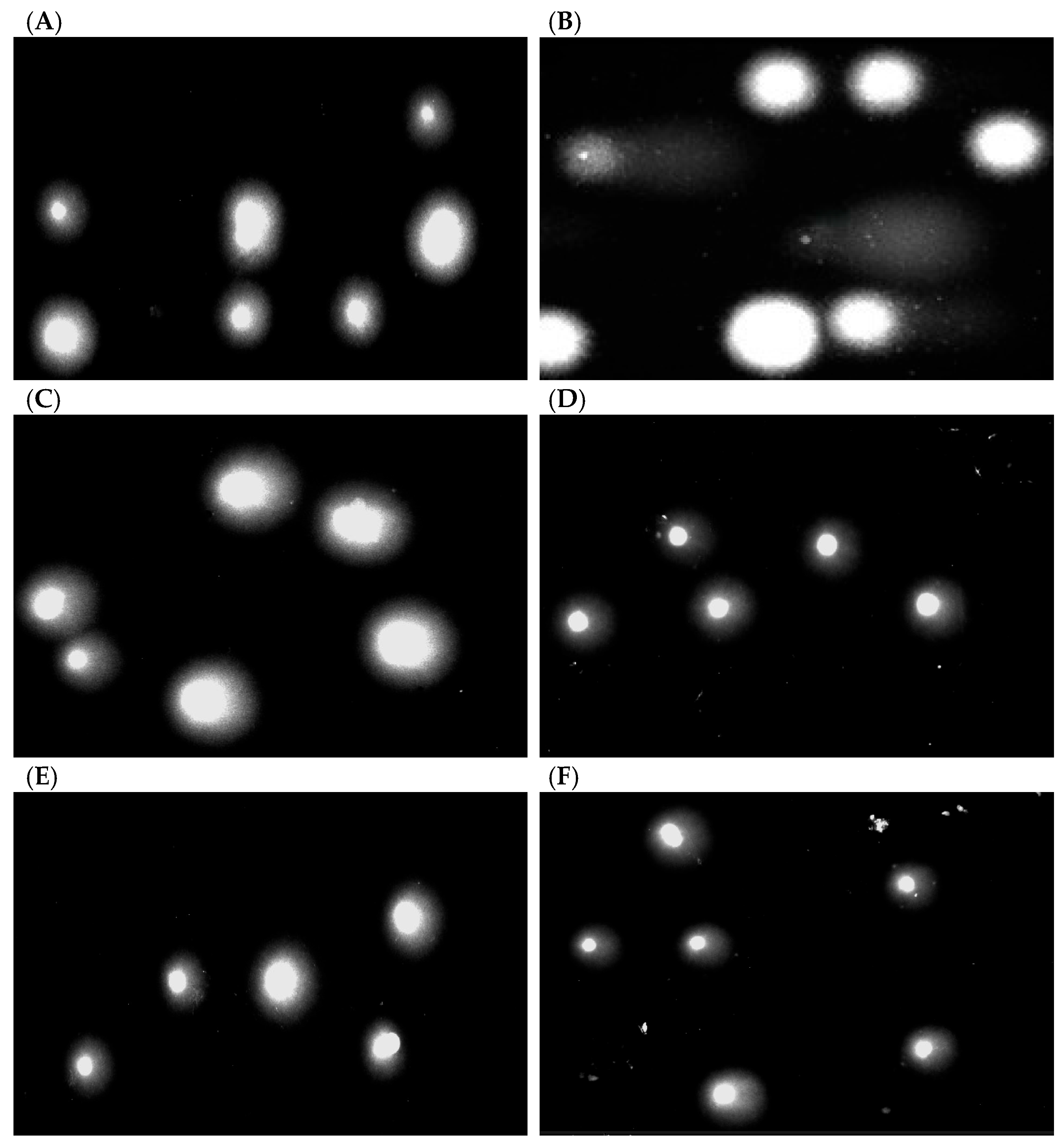
The comet assay performed under alkaline conditions is a sensitive and straightforward method for detecting DNA damage, including single- and double-strand breaks, as well as alkali-labile sites in living cells [92]. In our study, extensive DNA damage was observed in PBM and Hs68 cells incubated with 25 µM H2O2, which served as the positive control. In contrast, no increase in DNA damage was detected following 24 or 48 h of incubation with post-mixtures derived from either unmodified PCL or PCL-HT composites (Figure 11 and Figure 12). Additionally, representative comet images are shown in Figure 13 and Figure 14, confirming the absence of DNA damage in samples treated with post-incubation mixtures, while severe damage is clearly visible in the positive control.Previous research on mE-ASCs cells, which possess osteogenic differentiation potential, demonstrated that hardystonite does not exert cytotoxic or genotoxic effects [43]. Similarly, a review on calcium silicate-based dental sealers reported their genotoxicity to be lower than that of certain conventional sealers [93]. Our findings confirm that the tested PCL-HT composites do not induce DNA damage, supporting their safety in wound healing and blood-contacting biomedical devices. The absence of genotoxic effects may be associated with the negative zeta potential of the composites. As reported by Shah et al. [94], nanoparticle genotoxicity can be influenced by surface charge, with positively charged nanoparticles inducing greater genotoxicity, which is related to the formation of micronuclei.

4. Conclusions

Fibrous composites based on polycaprolactone (PCL) containing 1–5 wt.% hardystonite were successfully fabricated by electrospinning and comprehensively characterized. The incorporation of hardystonite did not significantly affect fibre morphology, porosity, or surface structure while inducing a shift in the zeta potential toward less negative values, which was attributed to the presence of Ca2+ and Zn2+ cations. Coagulation assays (aPTT, PT, and TT) showed no significant deviations from control values, most likely due to the counterbalancing effects of calcium and zinc ions on the intrinsic coagulation pathway. The PCL–hardystonite composites exhibited reduced TBARS levels, indicating moderate antioxidant activity, which could be associated with the zinc content of hardystonite. Extracts from both PCL and PCL–hardystonite materials showed no cytotoxic or genotoxic effects in PBM and Hs68 cell models, confirming good biocompatibility. Overall, the results indicate that PCL–hardystonite fibrous composites are biologically safe and demonstrate promising potential for blood-contacting and wound-healing applications, without disturbing the haemostatic balance. Further studies should focus on ion release kinetics and the evaluation of antimicrobial and mechanical properties to optimize the material for clinical use.

Author Contributions

A.K. developed the concept and designed the experiments, performed the experiments, analysed the data, and wrote the paper; M.H.K. developed the concept and analysed the data; M.J. performed the experiments and analysed the data; K.W. analysed the data and wrote the paper; P.K. performed the experiments; C.I.H.V. performed the experiments; Z.M. performed the experiments; J.J.C. analysed the data. All authors have read and agreed to the published version of the manuscript.

Funding

This research was partly conducted within the National Science Centre (Poland), project Miniatura-8, No. 2024/08/X/ST5/00404.

Institutional Review Board Statement

This study was conducted in accordance with the Declaration of Helsinki and approved by the University of Lodz Research Ethics Committee (12/KEBN-UŁ/I/2024-2025), approved on 17 December 2024.

Informed Consent Statement

Not applicable.

Data Availability Statement

The data are included within the text.

Conflicts of Interest

The authors declare no conflicts of interest.

References

  1. Kruk, A.; Gadomska-gajadhur, A. Rusztowania Komórkowe w Inżynierii Tkankowej. Wyr. Med. 2017, 4, 30–35. [Google Scholar]
  2. Xue, W.; Chen, P.; Wang, F.; Wang, L. Melt Spinning of Nano-Hydroxyapatite and Polycaprolactone Composite Fibers for Bone Scaffold Application. J. Mater. Sci. 2019, 54, 8602–8612. [Google Scholar] [CrossRef]
  3. Trevisol, T.C.; Langbehn, R.K.; Battiston, S.; Immich, A.P.S. Nonwoven Membranes for Tissue Engineering: An Overview of Cartilage, Epithelium, and Bone Regeneration. J. Biomater. Sci. Polym. Ed. 2019, 30, 1026–1049. [Google Scholar] [CrossRef] [PubMed]
  4. Hajiali, F.; Tajbakhsh, S.; Shojaei, A. Fabrication and Properties of Polycaprolactone Composites Containing Calcium Phosphate-Based Ceramics and Bioactive Glasses in Bone Tissue Engineering: A Review. Polym. Rev. 2018, 58, 164–207. [Google Scholar] [CrossRef]
  5. Mehrasa, M.; Asadollahi, M.A.; Nasri-Nasrabadi, B.; Ghaedi, K.; Salehi, H.; Dolatshahi-Pirouz, A.; Arpanaei, A. Incorporation of Mesoporous Silica Nanoparticles into Random Electrospun PLGA and PLGA/Gelatin Nanofibrous Scaffolds Enhances Mechanical and Cell Proliferation Properties. Mater. Sci. Eng. C 2016, 66, 25–32. [Google Scholar] [CrossRef]
  6. Pattanashetti, N.A.; Viana, T.; Alves, N.; Mitchell, G.R.; Kariduraganavar, M.Y. Development of Novel 3D Scaffolds Using BioExtruder by Varying the Content of Hydroxyapatite and Silica in PCL Matrix for Bone Tissue Engineering. J. Polym. Res. 2020, 27, 87. [Google Scholar] [CrossRef]
  7. Siddiqui, N.; Asawa, S.; Birru, B.; Baadhe, R.; Rao, S. PCL-Based Composite Scaffold Matrices for Tissue Engineering Applications. Mol. Biotechnol. 2018, 60, 506–532. [Google Scholar] [CrossRef]
  8. Rajzer, I. Fabrication of Bioactive Polycaprolactone/Hydroxyapatite Scaffolds with Final Bilayer Nano-/Micro-Fibrous Structures for Tissue Engineering Application. J. Mater. Sci. 2014, 49, 5799–5807. [Google Scholar] [CrossRef]
  9. Lee, E.J.; Teng, S.H.; Jang, T.S.; Wang, P.; Yook, S.W.; Kim, H.E.; Koh, Y.H. Nanostructured Poly(ε-Caprolactone)-Silica Xerogel Fibrous Membrane for Guided Bone Regeneration. Acta Biomater. 2010, 6, 3557–3565. [Google Scholar] [CrossRef]
  10. Ding, Y.; Roether, J.A.; Boccaccini, A.R.; Schubert, D.W. Fabrication of Electrospun Poly (3-Hydroxybutyrate)/Poly (ε-Caprolactone)/Silica Hybrid Fibermats with and without Calcium Addition. Eur. Polym. J. 2014, 55, 222–234. [Google Scholar] [CrossRef]
  11. Nikiforov, A.Y.; Deng, X.; Onyshchenko, I.; Vujosevic, D.; Vuksanovic, V.; Cvelbar, U.; De Geyter, N.; Morent, R.; Leys, C. Atmospheric Pressure Plasma Deposition of Antimicrobial Coatings on Non-Woven Textiles. Eur. Phys. J. Appl. Phys. 2016, 75, 24710. [Google Scholar] [CrossRef]
  12. Wei, Q.; Xiao, X.; Hou, D.; Ye, H.; Huang, F. Characterization of Nonwoven Material Functionalized by Sputter Coating of Copper. Surf. Coat. Technol. 2008, 202, 2535–2539. [Google Scholar] [CrossRef]
  13. Preem, L.; Kogermann, K. Electrospun Antimicrobial Wound Dressings: Novel Strategies to Fight Against Wound Infections. In Chronic Wounds, Wound Dressings and Wound Healing; Springer: Berlin/Heidelberg, Germany, 2018. [Google Scholar] [CrossRef]
  14. Maryin, P.V.; Bolbasov, E.N.; Tverdokhlebov, S.I. The Physico-Chemical Properties of Electrospun Vascular PLLA Scaffolds Modified by the DC Magnetron Sputtering of a Titanium Target. J. Phys. Conf. Ser. 2018, 1115, 032076. [Google Scholar] [CrossRef]
  15. Zhang, K.; Zheng, H.; Liang, S.; Gao, C. Aligned PLLA Nanofibrous Scaffolds Coated with Graphene Oxide for Promoting Neural Cell Growth. Acta Biomater. 2016, 37, 131–142. [Google Scholar] [CrossRef]
  16. Bolbasov, E.N.; Maryin, P.V.; Stankevich, K.S.; Kozelskaya, A.I.; Shesterikov, E.V.; Khodyrevskaya, Y.I.; Nasonova, M.V.; Shishkova, D.K.; Kudryavtseva, Y.A.; Anissimov, Y.G.; et al. Surface Modification of Electrospun Poly-(L-Lactic) Acid Scaffolds by Reactive Magnetron Sputtering. Colloids Surf. B Biointerfaces 2018, 162, 43–51. [Google Scholar] [CrossRef]
  17. Bolbasov, E.N.; Antonova, L.V.; Stankevich, K.S.; Ashrafov, A.; Matveeva, V.G.; Velikanova, E.A.; Khodyrevskaya, Y.I.; Kudryavtseva, Y.A.; Anissimov, Y.G.; Tverdokhlebov, S.I.; et al. The Use of Magnetron Sputtering for the Deposition of Thin Titanium Coatings on the Surface of Bioresorbable Electrospun Fibrous Scaffolds for Vascular Tissue Engineering: A Pilot Study. Appl. Surf. Sci. 2017, 398, 63–72. [Google Scholar] [CrossRef]
  18. Pantojas, V.M.; Velez, E.; Hernández, D.; Otaño, W. Initial Study on Fibers and Coatings for the Fabrication of Bioscaffolds. Puerto Rico Health Sci. J. 2009, 28, 258–265. [Google Scholar]
  19. Cai, S.; Pourdeyhimi, B.; Loboa, E.G. Industrial-Scale Fabrication of an Osteogenic and Antibacterial PLA/Silver-Loaded Calcium Phosphate Composite with Significantly Reduced Cytotoxicity. J. Biomed. Mater. Res. Part B Appl. Biomater. 2019, 107, 900–910. [Google Scholar] [CrossRef]
  20. Shim, I.K.; Jung, M.R.; Kim, K.H.; Seol, Y.J.; Park, Y.J.; Park, W.H.; Lee, S.J. Novel Three-Dimensional Scaffolds of Poly(L-Lactic Acid) Microfibers Using Electrospinning and Mechanical Expansion: Fabrication and Bone Regeneration. J. Biomed. Mater. Res. Part B Appl. Biomater. 2010, 95, 150–160. [Google Scholar] [CrossRef]
  21. Rajzer, I.; Grzybowska-Pietras, J.; Janicki, J. Fabrication of Bioactive Carbon Nonwovens for Bone Tissue Regeneration. Fibres Text. East. Eur. 2011, 84, 66–72. [Google Scholar]
  22. Ghosal, K.; Manakhov, A.; Zajíčková, L.; Thomas, S. Structural and Surface Compatibility Study of Modified Electrospun Poly(ε-Caprolactone) (PCL) Composites for Skin Tissue Engineering. AAPS PharmSciTech 2017, 18, 72–81. [Google Scholar] [CrossRef] [PubMed]
  23. Park, S.; Kim, J.; Lee, M.-K.; Park, C.; Jung, H.-D.; Kim, H.-E.; Jang, T.-S. Fabrication of Strong, Bioactive Vascular Grafts with PCL/Collagen and PCL/Silica Bilayers for Small-Diameter Vascular Applications. Mater. Des. 2019, 181, 108079. [Google Scholar] [CrossRef]
  24. Ródenas-Rochina, J.; Ribelles, J.L.G.; Lebourg, M. Comparative Study of PCL-HAp and PCL-Bioglass Composite Scaffolds for Bone Tissue Engineering. J. Mater. Sci. Mater. Med. 2013, 24, 1293–1308. [Google Scholar] [CrossRef] [PubMed]
  25. Plazas Bonilla, C.E.; Trujillo, S.; Demirdögen, B.; Perilla, J.E.; Murat Elcin, Y.; Gómez Ribelles, J.L. New Porous Polycaprolactone-Silica Composites for Bone Regeneration. Mater. Sci. Eng. C 2014, 40, 418–426. [Google Scholar] [CrossRef]
  26. Chen, B.; Sun, K. Poly (ε-Caprolactone)/Hydroxyapatite Composites: Effects of Particle Size, Molecular Weight Distribution and Irradiation on Interfacial Interaction and Properties. Polym. Test. 2005, 24, 64–70. [Google Scholar] [CrossRef]
  27. Surmenev, R.A.; Shkarina, S.; Syromotina, D.S.; Melnik, E.V.; Shkarin, R.; Selezneva, I.I.; Ermakov, A.M.; Ivlev, S.I.; Cecilia, A.; Weinhardt, V.; et al. Characterization of Biomimetic Silicate- and Strontium-Containing Hydroxyapatite Microparticles Embedded in Biodegradable Electrospun Polycaprolactone Scaffolds for Bone Regeneration. Eur. Polym. J. 2019, 113, 67–77. [Google Scholar] [CrossRef]
  28. Shor, L.; Güçeri, S.; Wen, X.; Gandhi, M.; Sun, W. Fabrication of Three-Dimensional Polycaprolactone/Hydroxyapatite Tissue Scaffolds and Osteoblast-Scaffold Interactions in Vitro. Biomaterials 2007, 28, 5291–5297. [Google Scholar] [CrossRef]
  29. Tian, G.; Zhu, G.; Xu, S.; Ren, T. A Novel Shape Memory Poly(ε-Caprolactone)/Hydroxyapatite Nanoparticle Networks for Potential Biomedical Applications. J. Solid State Chem. 2019, 272, 78–86. [Google Scholar] [CrossRef]
  30. Lin, Y.H.; Chiu, Y.C.; Shen, Y.F.; Wu, Y.H.A.; Shie, M.Y. Bioactive Calcium Silicate/Poly-ε-Caprolactone Composite Scaffolds 3D Printed under Mild Conditions for Bone Tissue Engineering. J. Mater. Sci. Mater. Med. 2018, 29, 11. [Google Scholar] [CrossRef]
  31. Wang, Y.; Dai, J.; Zhang, Q.; Xiao, Y.; Lang, M. Improved Mechanical Properties of Hydroxyapatite/Poly(ε-Caprolactone) Scaffolds by Surface Modification of Hydroxyapatite. Appl. Surf. Sci. 2010, 256, 6107–6112. [Google Scholar] [CrossRef]
  32. Shin, K.H.; Koh, Y.H.; Kim, H.E. Synthesis and Characterization of Drug-Loaded Poly(ε -Caprolactone)/Silica Hybrid Nanofibrous Scaffolds. J. Nanomater. 2013, 2013, 351810. [Google Scholar] [CrossRef]
  33. Ge, J.; Li, M.; Zhang, Q.; Yang, C.Z.; Wooley, P.H.; Chen, X.; Yang, S.Y. Silica Aerogel Improves the Biocompatibility in a Poly-ε-Caprolactone Composite Used as a Tissue Engineering Scaffold. Int. J. Polym. Sci. 2013, 2013, 402859. [Google Scholar] [CrossRef]
  34. Li, L.; Li, G.; Jiang, J.; Liu, X.; Luo, L.; Nan, K. Electrospun Fibrous Scaffold of Hydroxyapatite/Poly (∈-Caprolactone) for Bone Regeneration. J. Mater. Sci. Mater. Med. 2012, 23, 547–554. [Google Scholar] [CrossRef] [PubMed]
  35. Dwivedi, R.; Kumar, S.; Pandey, R.; Mahajan, A.; Nandana, D.; Katti, D.S.; Mehrotra, D. Polycaprolactone as Biomaterial for Bone Scaffolds: Review of Literature. J. Oral Biol. Craniofacial Res. 2020, 10, 381–388. [Google Scholar] [CrossRef]
  36. Castro, A.G.B.; Diba, M.; Kersten, M.; Jansen, J.A.; van den Beucken, J.J.J.P.; Yang, F. Development of a PCL-Silica Nanoparticles Composite Membrane for Guided Bone Regeneration. Mater. Sci. Eng. C 2018, 85, 154–161. [Google Scholar] [CrossRef]
  37. Liu, Y.; Liu, G.; Li, M.; He, C. Synthesis, Characterization, and Hydrolytic Degradation of Polylactide/Poly(ϵ-Caprolactone)/Nano-Silica Composites. J. Macromol. Sci. Part A Pure Appl. Chem. 2017, 54, 813–818. [Google Scholar] [CrossRef]
  38. Jeon, H.; Lee, M.; Yun, S.; Kang, D.; Park, K.-H.; Choi, S.; Choi, E.; Jin, S.; Shim, J.-H.; Yun, W.-S.; et al. Fabrication and Characterization of 3D-Printed Biocomposite Scaffolds Based on PCL and Silanated Silica Particles for Bone Tissue Regeneration. Chem. Eng. J. 2019, 360, 519–530. [Google Scholar] [CrossRef]
  39. Odent, J.; Habibi, Y.; Raquez, J.M.; Dubois, P. Ultra-Tough Polylactide-Based Materials Synergistically Designed in the Presence of Rubbery ε-Caprolactone-Based Copolyester and Silica Nanoparticles. Compos. Sci. Technol. 2013, 84, 86–91. [Google Scholar] [CrossRef]
  40. Hokmabad, V.R.; Davaran, S.; Aghazadeh, M.; Alizadeh, E.; Salehi, R.; Ramazani, A. A Comparison of the Effects of Silica and Hydroxyapatite Nanoparticles on Poly(ε-Caprolactone)-Poly(Ethylene Glycol)-Poly(ε-Caprolactone)/Chitosan Nanofibrous Scaffolds for Bone Tissue Engineering. Tissue Eng. Regen. Med. 2018, 15, 735–750. [Google Scholar] [CrossRef]
  41. Yu, J.; Xu, L.; Li, K.; Xie, N.; Xi, Y.; Wang, Y.; Zheng, X.; Chen, X.; Wang, M.; Ye, X. Zinc-Modified Calcium Silicate Coatings Promote Osteogenic Differentiation through TGF-β/Smad Pathway and Osseointegration. Sci. Rep. 2017, 7, 3440. [Google Scholar] [CrossRef]
  42. Hu, D.; Li, K.; Xie, Y.; Pan, H.; Zhao, J.; Huang, L.; Zheng, X. Different Response of Osteoblastic Cells to Mg2+, Zn2+ and Sr2+ Doped Calcium Silicate Coatings. J. Mater. Sci. Mater. Med. 2016, 27, 56. [Google Scholar] [CrossRef] [PubMed]
  43. Jaiswal, A.K.; Chhabra, H.; Kadam, S.S.; Londhe, K.; Soni, V.P.; Bellare, J.R. Hardystonite Improves Biocompatibility and Strength of Electrospun Polycaprolactone Nanofibers over Hydroxyapatite: A Comparative Study. Mater. Sci. Eng. C 2013, 33, 2926–2936. [Google Scholar] [CrossRef] [PubMed]
  44. Khanna, K.; Jaiswal, A.; Dhumal, R.V.; Selkar, N.; Chaudhari, P.; Soni, V.P.; Vanage, G.R.; Bellare, J. Comparative Bone Regeneration Study of Hardystonite and Hydroxyapatite as Filler in Critical-Sized Defect of Rat Calvaria. RSC Adv. 2017, 7, 37522–37533. [Google Scholar] [CrossRef]
  45. Ramirez Caballero, S.S.; Elsayed, H.; Tadier, S.; Montembault, A.; Maire, E.; David, L.; Delair, T.; Colombo, P.; Grémillard, L. Fabrication and Characterization of Hardystonite-Chitosan Biocomposite Scaffolds. Ceram. Int. 2019, 45, 8804–8814. [Google Scholar] [CrossRef]
  46. Sadeghzade, S.; Emadi, R.; Labbaf, S. Formation Mechanism of Nano-Hardystonite Powder Prepared by Mechanochemical Synthesis. Adv. Powder Technol. 2016, 27, 2238–2244. [Google Scholar] [CrossRef]
  47. Elsayed, H.; Zocca, A.; Franchin, G.; Bernardo, E.; Colombo, P. Hardystonite Bioceramics from Preceramic Polymers. J. Eur. Ceram. Soc. 2016, 36, 829–835. [Google Scholar] [CrossRef]
  48. Li, K.; Yu, J.; Xie, Y.; Huang, L.; Ye, X.; Zheng, X. Chemical Stability and Antimicrobial Activity of Plasma Sprayed Bioactive Ca2ZnSi2O7 Coating. J. Mater. Sci. Mater. Med. 2011, 22, 2781–2789. [Google Scholar] [CrossRef]
  49. Li, K.; Yu, J.; Xie, Y.; Huang, L.; Ye, X.; Zheng, X. Effects of Zn Content on Crystal Structure, Cytocompatibility, Antibacterial Activity, and Chemical Stability in Zn-Modified Calcium Silicate Coatings. J. Therm. Spray Technol. 2013, 22, 965–973. [Google Scholar] [CrossRef]
  50. Eltohamy, M.; Kundu, B.; Moon, J.; Lee, H.Y.; Kim, H.W. Anti-Bacterial Zinc-Doped Calcium Silicate Cements: Bone Filler. Ceram. Int. 2018, 44, 13031–13038. [Google Scholar] [CrossRef]
  51. Mohammadi, H.; Hafezi, M.; Nezafati, N.; Heasarki, S.; Nadernezhad, A.; Ghazanfari, S.M.H.; Sepantafar, M. Bioinorganics in Bioactive Calcium Silicate Ceramics for Bone Tissue Repair: Bioactivity and Biological Properties. J. Ceram. Sci. Technol. 2014, 5, 1–12. [Google Scholar] [CrossRef]
  52. Ma, J.; Huang, B.X.; Zhao, X.C.; Hao, X.H.; Wang, C.Z. Preparation and Characterization of Novel β-CaSiO3–Ca2ZnSi2O7 Bioceramics with Adjustable Degradability and Apatite-Formation Ability. Mater. Lett. 2019, 236, 566–569. [Google Scholar] [CrossRef]
  53. Aghajani, B.; Karamian, E.; Hosseini, B. Hydroxyapatite-Hardystonite Nanocomposite Scaffolds Prepared by the Replacing the Polyurethane Polymeric Sponge Technique for Tissue Engineering Applications. Nanomed. J. 2017, 4, 254–262. [Google Scholar] [CrossRef]
  54. Dehsheikh, H.G.; Karamian, E. Characterization and Synthesis of Hardystonite (HT) as a Novel Nanobioceramic Powder. Nanomed. J. 2016, 3, 143–146. [Google Scholar] [CrossRef]
  55. Mohammadi, H.; Hafezi, M.; Hesaraki, S.; Sepantafar, M.M. Preparation and Characterization of Sr-Ti-Hardystonite (Sr-Ti-HT) Nanocomposite for Bone Repair Application. Nanomed. J. 2015, 2, 203–210. [Google Scholar] [CrossRef]
  56. Yu, J.; Xu, L.; Xie, N.; Li, K.; Xi, Y.; Liu, X.; Zheng, X.; Chen, X.; Ye, X.; Wei, D. Optimal Zn-Modified Ca-Si-Based Ceramic Nanocoating with Zn Ion Release for Osteoblast Promotion and Osteoclast Inhibition in Bone Tissue Engineering. J. Nanomater. 2017, 2017, 7374510. [Google Scholar] [CrossRef]
  57. Wu, C.; Chang, J.; Zhai, W. A Novel Hardystonite Bioceramic: Preparation and Characteristics. Ceram. Int. 2005, 31, 27–31. [Google Scholar] [CrossRef]
  58. Jin, G.; Cao, H.; Qiao, Y.; Meng, F.; Zhu, H.; Liu, X. Osteogenic Activity and Antibacterial Effect of Zinc Ion Implanted Titanium. Colloids Surf. B Biointerfaces 2014, 117, 158–165. [Google Scholar] [CrossRef]
  59. Wang, X.; Ito, A.; Sogo, Y.; Li, X.; Oyane, A. Zinc-Containing Apatite Layers on External Fixation Rods Promoting Cell Activity. Acta Biomater. 2010, 6, 962–968. [Google Scholar] [CrossRef]
  60. Zhang, Z.; Li, W.; Liu, Y.; Yang, Z.; Ma, L.; Zhuang, H.; Wang, E.; Wu, C.; Huan, Z.; Guo, F.; et al. Design of a Biofluid-Absorbing Bioactive Sandwich-Structured Zn–Si Bioceramic Composite Wound Dressing for Hair Follicle Regeneration and Skin Burn Wound Healing. Bioact. Mater. 2021, 6, 1910–1920. [Google Scholar] [CrossRef]
  61. Yao, Q.; Wang, C.; Yu, B.; Wang, P.; Tang, X.; Shi, D.; Xia, Y.; Hu, Y.; Li, S.; Zhou, W. Well-Ordered and Visual Poly(ε-Caprolactone) Composite Fibrous Membranes for the Treatment of Skin Wounds. Colloids Surf. Physicochem. Eng. Asp. 2023, 674, 131940. [Google Scholar] [CrossRef]
  62. Li, Y.; Han, Y.; Wang, X.; Peng, J.; Xu, Y.; Chang, J. Multifunctional Hydrogels Prepared by Dual Ion Cross-Linking for Chronic Wound Healing. ACS Appl. Mater. Interfaces 2017, 9, 16054–16062. [Google Scholar] [CrossRef] [PubMed]
  63. Kluska, M.; Juszczak, M.; Wysokiński, D.; Żuchowski, J.; Stochmal, A.; Woźniak, K. Kaempferol Derivatives Isolated from Lens Culinaris Medik. Reduce DNA Damage Induced by Etoposide in Peripheral Blood Mononuclear Cells. Toxicol. Res. 2019, 8, 896–907. [Google Scholar] [CrossRef] [PubMed]
  64. O’Brien, J.; Wilson, I.; Orton, T.; Pognan, F. Investigation of the Alamar Blue (Resazurin) Fluorescent Dye for the Assessment of Mammalian Cell Cytotoxicity. Eur. J. Biochem. 2000, 267, 5421–5426. [Google Scholar] [CrossRef] [PubMed]
  65. Tokarz, P.; Piastowska-Ciesielska, A.W.; Kaarniranta, K.; Blasiak, J. All-Trans Retinoic Acid Modulates DNA Damage Response and the Expression of the VEGF-A and MKI67 Genes in ARPE-19 Cells Subjected to Oxidative Stress. Int. J. Mol. Sci. 2016, 17, 898. [Google Scholar] [CrossRef]
  66. Airaksinen, S. Role of Excipients in Moisture Sorption and Physical Stability of Solid Pharmaceutical Formulations. Ph.D. Thesis, University of Helsinki, Helsinki, Finland, 2005. [Google Scholar]
  67. Thommes, M.; Kaneko, K.; Neimark, A.V.; Olivier, J.P.; Rodriguez-Reinoso, F.; Rouquerol, J.; Sing, K.S.W. Physisorption of Gases, with Special Reference to the Evaluation of Surface Area and Pore Size Distribution (IUPAC Technical Report). Pure Appl. Chem. 2015, 87, 1051–1069. [Google Scholar] [CrossRef]
  68. Qi, L.; Tang, X.; Wang, Z.; Peng, X. Pore Characterization of Different Types of Coal from Coal and Gas Outburst Disaster Sites Using Low Temperature Nitrogen Adsorption Approach. Int. J. Min. Sci. Technol. 2017, 27, 371–377. [Google Scholar] [CrossRef]
  69. Metwally, S.; Ferraris, S.; Spriano, S.; Krysiak, Z.J.; Kaniuk, Ł.; Marzec, M.M.; Kim, S.K.; Szewczyk, P.K.; Gruszczyński, A.; Wytrwal-Sarna, M.; et al. Surface Potential and Roughness Controlled Cell Adhesion and Collagen Formation in Electrospun PCL Fibers for Bone Regeneration. Mater. Des. 2020, 194, 108915. [Google Scholar] [CrossRef]
  70. Marcotte, L.; Tabrizian, M. Sensing Surfaces: Challenges in Studying the Cell Adhesion Process and the Cell Adhesion Forces on Biomaterials. IRBM 2008, 29, 77–88. [Google Scholar] [CrossRef]
  71. Croisier, F.; Atanasova, G.; Poumay, Y.; Jérôme, C. Polysaccharide-Coated PCL Nanofibers for Wound Dressing Applications. Adv. Healthc. Mater. 2014, 3, 2032–2039. [Google Scholar] [CrossRef]
  72. Ms, M.; Venkatasubbu, G.D. Modulating Coagulation via Bioinspired Mesoporous Calcium-Decorated Silica Nanoparticles for Efficient Fibrin Clot Formation. ACS Appl. Bio Mater. 2024, 7, 6998–7008. [Google Scholar] [CrossRef]
  73. Zheng, Z.; Dai, X.; Li, X.; Du, C. PCL-Based and Hirudin-Containing Composite Nanofibers for Prolonged Anticoagulation Effect. Chem. Res. Chin. Univ. 2023, 39, 1023–1030. [Google Scholar] [CrossRef]
  74. Liu, J.; Zhou, X.; Zhang, Y.; Zhu, W.; Wang, A.; Xu, M.; Zhuang, S. Rapid Hemostasis and Excellent Antibacterial Cerium-Containing Mesoporous Bioactive Glass/Chitosan Composite Sponge for Hemostatic Material. Mater. Today Chem. 2022, 23, 100735. [Google Scholar] [CrossRef]
  75. Renné, T.; Schmaier, A.H.; Nickel, K.F.; Blombäck, M.; Maas, C. In Vivo Roles of Factor XII. Blood 2012, 120, 4296–4303. [Google Scholar] [CrossRef] [PubMed]
  76. Chen, X.; Wang, J.; Paszti, Z.; Wang, F.; Schrauben, J.N.; Tarabara, V.V.; Schmaier, A.H.; Chen, Z. Ordered Adsorption of Coagulation Factor XII on Negatively Charged Polymer Surfaces Probed by Sum Frequency Generation Vibrational Spectroscopy. Anal. Bioanal. Chem. 2007, 388, 65–72. [Google Scholar] [CrossRef] [PubMed]
  77. Kuchinka, J.; Willems, C.; Telyshev, D.V.; Groth, T. Control of Blood Coagulation by Hemocompatible Material Surfaces—A Review. Bioengineering 2021, 8, 215. [Google Scholar] [CrossRef]
  78. Ambrus, A.; Bányai, I.; Weiss, M.S.; Hilgenfeld, R.; Keresztessy, Z.; Muszbek, L.; Fésüs, L. Calcium Binding of Transglutaminases: A43Ca NMR Study Combined with Surface Polarity Analysis. J. Biomol. Struct. Dyn. 2001, 19, 59–74. [Google Scholar] [CrossRef]
  79. Varga-szabo, D.; Braun, A.; Nieswandt, B. Calcium Signaling in Platelets. J. Thromb. Haemost. 2009, 7, 1057–1066. [Google Scholar] [CrossRef]
  80. Singh, S.; Dodt, J.; Volkers, P.; Hethershaw, E.; Philippou, H.; Ivaskevicius, V.; Imhof, D.; Oldenburg, J.; Biswas, A. Structure Functional Insights into Calcium Binding during the Activation of Coagulation Factor XIII A. Sci. Rep. 2019, 9, 11324. [Google Scholar] [CrossRef]
  81. Mutch, N.J.; Waters, E.K.; Morrissey, J.H. Immobilized Transition Metals Stimulate Contact Activation and Drive Factor XII-Mediated Coagulation. J. Thromb. Haemost. JTH 2012, 10, 2108–2115. [Google Scholar] [CrossRef]
  82. Adamiak, Z.; Krystkiewicz, W.; Pomianowski, A.; Bukowiecka, D.; Zubrzycki, W.; Jałyński, M.; Holak, P.; Głodek, J.; Jastrzębski, P. The Effect of Hemostatic Dressing Prototypes for the Uniformed Services on Selected Blood Coagulation Parameters in Pigs. Acta Vet. Scand. 2017, 59, 29. [Google Scholar] [CrossRef]
  83. Chandler, W.L. Procoagulant Activity in Trauma Patients. Am. J. Clin. Pathol. 2010, 134, 90–96. [Google Scholar] [CrossRef] [PubMed]
  84. Bhattacharjee, S.; De Haan, L.H.; Evers, N.M.; Jiang, X.; Marcelis, A.T.; Zuilhof, H.; Rietjens, I.M.; Alink, G.M. Role of Surface Charge and Oxidative Stress in Cytotoxicity of Organic Monolayer-Coated Silicon Nanoparticles towards Macrophage NR8383 Cells. Part. Fibre Toxicol. 2010, 7, 25. [Google Scholar] [CrossRef]
  85. Marreiro, D.D.N.; Cruz, K.J.C.; Morais, J.B.S.; Beserra, J.B.; Severo, J.S.; De Oliveira, A.R.S. Zinc and Oxidative Stress: Current Mechanisms. Antioxidants 2017, 6, 24. [Google Scholar] [CrossRef]
  86. Comino-Sanz, I.M.; López-Franco, M.D.; Castro, B.; Pancorbo-Hidalgo, P.L. The Role of Antioxidants on Wound Healing: A Review of the Current Evidence. J. Clin. Med. 2021, 10, 3558. [Google Scholar] [CrossRef] [PubMed]
  87. Dunnill, C.; Patton, T.; Brennan, J.; Barrett, J.; Dryden, M.; Cooke, J.; Leaper, D.; Georgopoulos, N.T. Reactive Oxygen Species (ROS) and Wound Healing: The Functional Role of ROS and Emerging ROS-Modulating Technologies for Augmentation of the Healing Process. Int. Wound J. 2017, 14, 89–96. [Google Scholar] [CrossRef]
  88. Hamvar, M.; Bakhsheshi-Rad, H.R.; Omidi, M.; Ismail, A.F.; Aziz, M.; Berto, F.; Chen, X. Biocompatibility and Bioactivity of Hardystonite-Based Nanocomposite Scaffold for Tissue Engineering Applications. Biomed. Phys. Eng. Express 2020, 6, 035011. [Google Scholar] [CrossRef]
  89. Bagherpour, I.; Yaghtin, A.; Naghib, S.M.; Molaabasi, F. Synthesis and Investigation on Microstructural, Mechanical Features of Mesoporous Hardystonite/Reduced Graphene Oxide Nanocomposite for Medical Applications. Front. Bioeng. Biotechnol. 2023, 11, 1073435. [Google Scholar] [CrossRef]
  90. Chang, C.-H.; Tsai, L.-H.; Lee, Y.-C.; Yao, W.-C.; Lin, J.-J. Synergistic Effects of Silicate-Platelet Supporting Ag and ZnO, Offering High Antibacterial Activity and Low Cytotoxicity. Int. J. Mol. Sci. 2023, 24, 7024. [Google Scholar] [CrossRef]
  91. Shao, X.; Wei, X.; Song, X.; Hao, L.; Cai, X.; Zhang, Z.; Peng, Q.; Lin, Y. Independent Effect of Polymeric Nanoparticle Zeta Potential/Surface Charge, on Their Cytotoxicity and Affinity to Cells. Cell Prolif. 2015, 48, 465–474. [Google Scholar] [CrossRef]
  92. Singh, N.P.; McCoy, M.T.; Tice, R.R.; Schneider, E.L. A Simple Technique for Quantitation of Low Levels of DNA Damage in Individual Cells. Exp. Cell Res. 1988, 175, 184–191. [Google Scholar] [CrossRef]
  93. Jafari, F.; Jafari, S.; Etesamnia, P. Genotoxicity, Bioactivity and Clinical Properties of Calcium Silicate Based Sealers: A Literature Review. Iran. Endod. J. 2017, 12, 407–413. [Google Scholar] [CrossRef]
  94. Shah, V.; Taratula, O.; Garbuzenko, O.B.; Patil, M.L.; Savla, R.; Zhang, M.; Minko, T. Genotoxicity of Different Nanocarriers: Possible Modifications for the Delivery of Nucleic Acids. Curr. Drug Discov. Technol. 2013, 10, 8–15. [Google Scholar] [CrossRef][Green Version]
Figure 1. The sequence of steps in composite manufacturing.
Macromol 06 00005 g001
Figure 2. TL-Pro-BM_TONG LI TECH—PRC device.
Macromol 06 00005 g002
Figure 3. SEM images of unmodified and modified PCL nonwovens: (a) PCL; (b) PCL-HT-1; (c) PCL-HT-3; (d) PCL-HT-5 (magnification 30,000×; scale bar = 5 µm).
Macromol 06 00005 g003aMacromol 06 00005 g003b
Figure 4. EDS spectra for unmodified and modified PCL nonwovens: (a) PCL; (b) PCL-HT-1; (c) PCL-HT-3; (d) PCL-HT-5 (spot analysis).
Macromol 06 00005 g004
Figure 5. Adsorption and desorption isotherms of unmodified and modified PCL nonwovens: (a) PCL; (b) PCL-HT-1; (c) PCL-HT-3; (d) PCL-HT-5.
Macromol 06 00005 g005
Figure 6. Activated partial thromboplastin time measured for the unmodified and modified PCL nonwovens after 1 h of incubation at 37 °C.
Macromol 06 00005 g006
Figure 7. Prothrombin time measured for the unmodified and modified PCL nonwovens after 1 h of incubation at 37 °C.
Macromol 06 00005 g007
Figure 8. Thrombin time measured for the unmodified and modified PCL nonwovens after 1 h of incubation at 37 °C.
Macromol 06 00005 g008
Figure 9. Effects of unmodified PCL and PCL-HT post-incubation mixtures on PBM cell viability after 24 and 48 h of incubation. The results are presented as the mean of 6 repeats. The error bars denote SD; *** p < 0.001.
Macromol 06 00005 g009
Figure 10. Effects of unmodified PCL and PCL-HT post-incubation mixtures on Hs68 cell viability after 24 and 48 h of incubation. The results are presented as the mean of 6 repeats. The error bars denote SD; *** p < 0.001.
Macromol 06 00005 g010
Figure 11. Effects of unmodified PCL and PCL-HT post-incubation mixtures on DNA damage in PBM cells after 24 and 48 h of incubation. The results are presented as the mean of 100 comets. The error bars denote SEM; *** p < 0.001.
Macromol 06 00005 g011
Figure 12. Effects of unmodified PCL and PCL-HT post-incubation mixtures on DNA damage in Hs68 cells after 24 and 48 h of incubation. The results are presented as the mean of 100 comets. The error bars denote SEM; *** p < 0.001.
Macromol 06 00005 g012
Figure 13. Effects of medium (A), 25 µM hydrogen peroxide (B), PCL (C), PCL-HT-1 (D), PCL-HT-3 (E), and PCL-HT-5 (F) post-incubation mixtures on DNA damage in PBM cells after 24 h of incubation.
Macromol 06 00005 g013aMacromol 06 00005 g013b
Figure 14. Effects of medium (A), 25 µM hydrogen peroxide (B), PCL (C), PCL-HT-1 (D), PCL-HT-3 (E), and PCL-HT-5 (F) post-incubation mixtures on DNA damage in Hs68 cells after 24 h of incubation.
Macromol 06 00005 g014
Table 1. Specific surface area, total pore volume, and average pore size of the unmodified and modified PCL nonwovens.
Sample NameSpecific Surface Area [m2/g]Total Pore Volume [cm3/g]Average Pore Size [nm]
PCL1.586 ± 0.0387.357 × 10−319.01
PCL-HT-11.135 ± 0.9369.592 × 10−3193.1
PCL-HT-31.443 ± 0.0297.321 × 10−319.9
PCL-HT-51.600 ± 0.0718.390 × 10−321.95
Table 2. Zeta potential of unmodified and modified PCL nonwovens (pH ~7.4).
Sample NamePCLPCL-HT-1PCL-HT-3PCL-HT-5
Zeta potential [mV]−34.05 ± 0.95−30.08 ± 0.27−27.54 ± 0.48−23.50 ± 1.89
Table 3. Lipid peroxidation in blood plasma: TBARS concentrations in the investigated samples.
Sample NameControlPCLPCL-HT-1PCL-HT-3PCL-HT-5
TBARS [nM]1.30 ± 0.151.42 ± 0.140.96 ± 0.060.59 ± 0.121.17 ± 0.34
Disclaimer/Publisher’s Note: The statements, opinions and data contained in all publications are solely those of the individual author(s) and contributor(s) and not of MDPI and/or the editor(s). MDPI and/or the editor(s) disclaim responsibility for any injury to people or property resulting from any ideas, methods, instructions or products referred to in the content.