Article

Study on Mechanical Properties of Natural Rubber Composites Reinforced with Agave lechuguilla Fibers


by
J. A. Maldonado-Torres
1,
E. Rocha-Rangel
1,
C. A. Calles-Arriaga
1,
W. Pech-Rodriguez
1,
J. López-Hernández
1,
U. A. Macías-Castillo
2,
M. C. Kantún-Uicab
3,
A. Jiménez-Rosales
4,
L. F. Martínez-Mosso
1 and
J. A. Castillo-Robles
1,*
1
Research Department, Universidad Politécnica de Victoria, Victoria 87138, Mexico
2
TecNM, División de Ingeniería en Innovación Agrícola Sustentable, Instituto Tecnológico Superior de El Mante, Ciudad Mante 89600, Mexico
3
Research Department, Universidad Politécnica de Juventino Rosas, Juventino Rosas 38253, Mexico
4
Department of Nanotechnology, Technological University of Zinacantepec, Zinacantepec 51361, Mexico
*
Author to whom correspondence should be addressed.
Macromol 2026, 6(1), 4; https://doi.org/10.3390/macromol6010004
Submission received: 22 September 2025 / Revised: 17 October 2025 / Accepted: 7 January 2026 / Published: 12 January 2026
(This article belongs to the Special Issue Advances in Starch and Lignocellulosic-Based Materials)

Abstract

Agave lechuguilla fibers exhibit high tensile strength, low density and durability, but their use in natural rubber composites is underexplored. This study investigates alkaline-treated fibers (149–180 µm) as reinforcements for natural latex. Fibers were pretreated with a methanol–acetone mixture, followed by immersion in 10% NaOH at 70 °C for 1 h, removing lignin and hemicellulose as confirmed by FTIR and SEM. Thermogravimetric analysis showed three weight-loss stages: moisture/volatiles (9.4%), hemicellulose (peak at 341 °C), and cellulose/lignin (peak at 482 °C), with <3% residue above 500 °C. Treated composites exhibited enhanced tensile strength (4.68 ± 1.2 MPa vs. 1.3 ± 0.8 MPa for untreated) and elongation at break (530 ± 51% vs. 452 ± 32%). Hardness increased from 21.8 (neat latex) to 30.3, and compression resistance was improved. Optical microscopy revealed strong fiber–matrix adhesion with uniform dispersion. Alkaline treatment enhances interfacial bonding and mechanical performance, making A. lechuguilla fibers a sustainable reinforcement for eco-friendly composites in automotive, construction, and packaging sectors.

1. Introduction

Among Mexico’s native plant species with high ecological, economic, and cultural value, Agave lechuguilla (A. lechuguilla) stands out for its wide distribution in arid and semi-arid regions, particularly in central and northern states including Tamaulipas [1,2,3,4,5]. Historically, it has supported rural communities through ixtle fiber extraction for traditional goods via artisanal techniques [6,7,8]. However, synthetic polymers have reduced demand for ixtle products, threatening the industry’s sustainability.
Nevertheless, the structural characteristics and availability of A. lechuguilla fibers continue attracting interest, especially in the context of natural fiber composites (NFCs), which are emerging as eco-efficient alternatives to synthetic composites due to their biodegradability, low cost and renewable origin [9,10]. Compared to conventional reinforcements such as glass or carbon fibers, natural fibers offer lower density and energy demand during processing, with some estimates of energy savings of up to 80% [11]. Moreover, their abundance in marginal ecosystems such as the Mexican semi-desert adds a sustainable dimension to their use in polymer composites.
A critical challenge for the widespread application of natural fibers in polymer matrices lies in their hydrophilic nature, which limits compatibility with hydrophobic polymers and compromises the interfacial bonding within the composite [11,12,13,14]. Surface modification techniques—such as alkaline and silane treatments—have proven effective in mitigating these issues by removing lignin, waxes, and hemicellulose from the fiber surface, enhancing surface roughness and exposing reactive hydroxyl groups that favor chemical interactions [15,16,17]. In particular, alkaline treatment using NaOH has been widely reported as a practical method to improve both thermal stability and mechanical performance of natural fibers through structural reorganization and increased cellulose accessibility [17,18,19].
Although several species of agave, including Agave sisalana, Agave fourcroydes, and Agave tequilana Weber, have been studied in the context of reinforced composites [12,20,21,22], research focused on the conditioning of Agave lechuguilla fibers remains scarce [23,24,25,26,27]. Given their toughness and resistance to solvents [28,29], these fibers represent a viable reinforcement material, especially in combination with biopolymers such as natural rubber. Natural rubber, primarily sourced from Hevea brasiliensis, offers excellent elasticity, durability, and impermeability and is gaining attention as a bio-based matrix for green composites [3,4,9].
Natural fiber–natural rubber (NR) composites have shown remarkable progress in mechanical performance enhancement through fiber surface modification and optimized loading. Reported systems such as sisal-NR achieve tensile strengths of 5–15 MPa and moduli of 1–2 GPa at 20–30 wt% loading, while jute- and flax-reinforced NR composites reach 8–20 MPa and 12–20 MPa, respectively, with elongations of 500–600% after alkaline treatment [30,31,32,33,34]. In comparison, our Agave lechuguilla–NR composites exhibit a tensile strength of 4.68 ± 1.2 MPa and an elongation of 530 ± 51%, values that, although slightly lower in strength, remain competitive for low-load or flexible applications considering the fiber’s regional abundance and low cost. Additionally, the composites display a hardness of 30.33 ± 3.51 Shore A, consistent with hemp-NR systems (40–50 Shore A) [30,35,36]. These mechanical responses result from improved interfacial adhesion after alkaline treatment, reducing moisture sensitivity and facilitating energy-efficient processing with up to 80% savings compared to synthetic counterparts. Moreover, potential applications have been identified in automotive interiors (vibration-damping panels reducing noise by 20–30% relative to synthetics), construction insulation (thermal conductivity ≈ 0.04 W/m·K, similar to hemp-NR), and biodegradable packaging (impact resistance enhanced by 50–100% over neat NR), highlighting the sustainability and practical viability of these composites [30,31,32,33,34,36,37].
The present study addresses this knowledge gap by evaluating the physicochemical conditioning of Agave lechuguilla fibers via alkali-silane treatment, with the goal of enhancing their compatibility with natural rubber latex. Emphasis is placed on optimizing treatment parameters to maximize fiber functionalization and interfacial adhesion. The outcomes of this work aim to contribute to the design of high-performance, low-impact composite materials suitable for use in rural infrastructure, transportation and packaging applications, while simultaneously valorizing a native resource of ecological and cultural importance in northeastern Mexico.

2. Materials and Methods

The natural fibers employed in this study were derived from Agave lechuguilla. Raw fibers were obtained through a mechanical decortication process. Following separation, fibers were washed with water at room temperature to eliminate residual sap, organic matter and surface impurities. The fiber drying process was carried out in a Quality Lab oven, model 20, at 70 °C until the weight did not change. The material was subsequently ground using a Brabender rotary mill. The ground product was sieved through six mesh sizes (170, 120–170, 100–120, 80–100, 60–80, and 60), yielding particle size fractions of <90 µm, 90–125 µm, 125–149 µm, 149–180 µm, 180–250 µm, and >250 µm. For the purposes of this study, three representative fractions were selected: <90 µm, 149–180 µm, and >250 µm. Only the 149–180 µm fraction was used for mechanical testing. Fractions <90 µm exhibited persistent dispersion and homogeneity problems in the latex matrix and produced mechanical responses that were not distinguishable from the unreinforced control, while fractions > 250 µm yielded highly variable results due to heterogeneous fiber dimensions. To ensure reproducibility and meaningful mechanical characterization, only the 149–180 µm fraction is reported. For chemical treatment, methanol (Fermont, Monterrey, Mexico), acetone (Fermont, Monterrey, Mexico), and sodium hydroxide (NaOH, J.T. Baker, Phillipsburg, NJ, USA) were used, with distilled water employed in the rinsing steps. As the polymeric matrix, commercial natural latex (HE-CK-SA, Ecatepec, Mexico) containing 60% solid content was utilized.
Subsequently, a pretreatment was performed using a methanol–acetone solution in a 1:2 volumetric ratio, maintaining a solid-to-liquid ratio of 1:40 (g/mL). For a fiber mass of 2.5 g, 33.3 mL of methanol and 66.7 mL of acetone were used. The fibers were placed together with the solution in a glass beaker and stirred on a magnetic hotplate stirrer (WiseStir MSH-20D, Daihan Scientific, Wonju, South Korea) at 450 rpm and 70 °C for one hour. After this process, the fibers were rinsed with 250 mL of distilled water and dried again under the same conditions.
An alkaline treatment was then carried out by placing the pretreated fibers into 100 mL of solution composed of 90 mL of distilled water and 10 mL of NaOH. This mixture was stirred at 300 rpm and 70 °C for one hour. Afterward, the fibers were rinsed four times with 400 mL of distilled water until reaching a neutral pH, verified using pH indicator strips (Hydrion, Micro Essential Laboratory, Brooklyn, NY, USA). Finally, a last drying process was conducted using the same convection oven.
Treated fiber powders were mixed with natural latex at a 5:1 ratio (50 mL of latex per 10 mL of fiber) to fabricate the composite samples. The samples were left to cure at room temperature until fully solidified.
Thermal characterization of the fibers was performed using a thermogravimetric analyzer (DTG-60H, Shimadzu, Kyoto, Japan). Microstructural observation was conducted using an optical microscope (Nikon Eclipse MA200, Nikon Corp., Tokyo, Japan) and a stereomicroscope (VELAB VE-S3, VELAB Instruments, Mexico City, Mexico). High-resolution images were obtained using scanning electron microscopy (SEM) with a JEOL JSM-IT100 instrument (JEOL Ltd., Tokyo, Japan). Additionally, Fourier-transform infrared spectroscopy (FTIR) with an ATR module was carried out using a spectrometer (RAYLEIGH WQF-510A, Beijing Rayleigh Analytical Instrument Co., Beijing, China) equipped with a diamond crystal, suitable for powdered solid samples. Natural fibers obtained from agave were also studied by optical microscopy using a LEICA DM750 microscope (Leica Microsystems, Wetzlar, Germany).
Image analysis software was used to determine fiber dimensions using Tracker software (Tracker Video Analysis and Modeling Tool, Open Source Physics, USA; Windows version 6.1.3).
Uniaxial tensile tests were performed on individual fibers in accordance with ASTM D3822-14 using an Instron Universal Testing Machine at the Instron Application Laboratory (Instron, Norwood, MA, USA) under controlled conditions (72 °C, 50% RH) and a crosshead speed of 5.00 mm/min. Tensile properties of the composite samples were evaluated using an Instron Universal Testing Machine (Model 5566, Instron, Norwood, MA, USA) in accordance with ASTM D412. Dumbbell-shaped specimens (Type C die) with a thickness of 2 mm were prepared for testing. The crosshead speed was set to 500 mm/min under a maximum load capacity of 1 kN.
Compression set measurements followed ASTM D395, Method B, Type A, under constant deflection in air. Samples were compressed to 25% of their original thickness at 70 °C for 22 h and then released to decompress for 24 h before final thickness measurements were taken. Hardness testing (Shore A) of the SCG/NR composites was carried out using a Shore A durometer (Shenzhen Sundoo Instruments Co., Shenzhen, China), following ASTM D2240-91. Specimens with a minimum thickness of 5 mm were tested, and hardness values were averaged from six measurements taken at different points on each specimen.

3. Results and Discussion

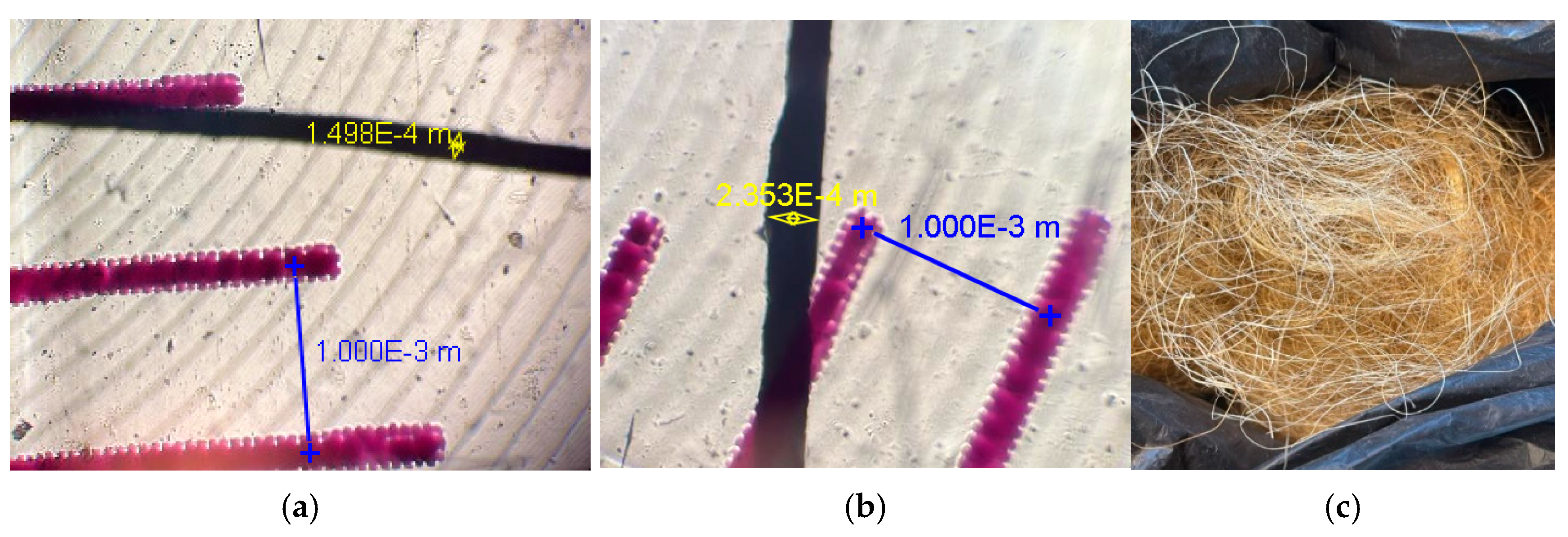
Fibers were classified as regular and irregular according to their physical characteristics. The shape and dimensions of two fiber samples are shown in Figure 1. The distance between pink stripes was taken as a length reference (1 mm) in all measurements. As can be seen from Figure 1a, the thickness from the regular fiber sample (in black) is 149.8 µm. On the other hand, Figure 1b shows an irregular profile with a maximum measured thickness of 235.3 µm. In Figure 1c, raw fibers were extracted from Agave lechuguilla through mechanical decortication.
Table 1 shows the total fiber measurements and their average thickness. As can be seen, irregular fibers have a larger average diameter compared to regular ones. Moreover, the standard deviation is also bigger for irregular fibers.
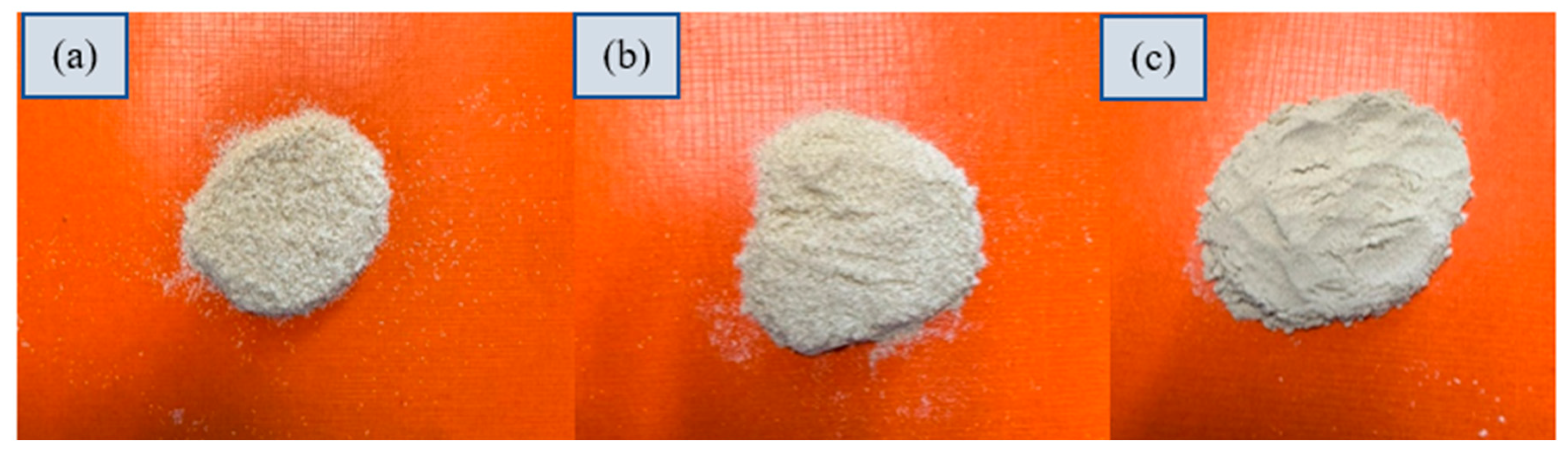
Following extraction and drying, the raw Agave lechuguilla fibers underwent mechanical milling using a Brabender knife mill to reduce particle size and obtain fractions with controlled granulometry, facilitating subsequent chemical treatments and mechanical testing. The process yielded three main size ranges: coarse fibers (>250 µm), intermediate fibers (149–180 µm), and fine particles (<90 µm). Size separation was achieved through sequential sieving, ensuring precise granulometric control for targeted applications. Figure 2 presents representative images of the coarse, intermediate and fine fractions obtained after milling.

3.1. Thermogravimetric Analysis (TGA)

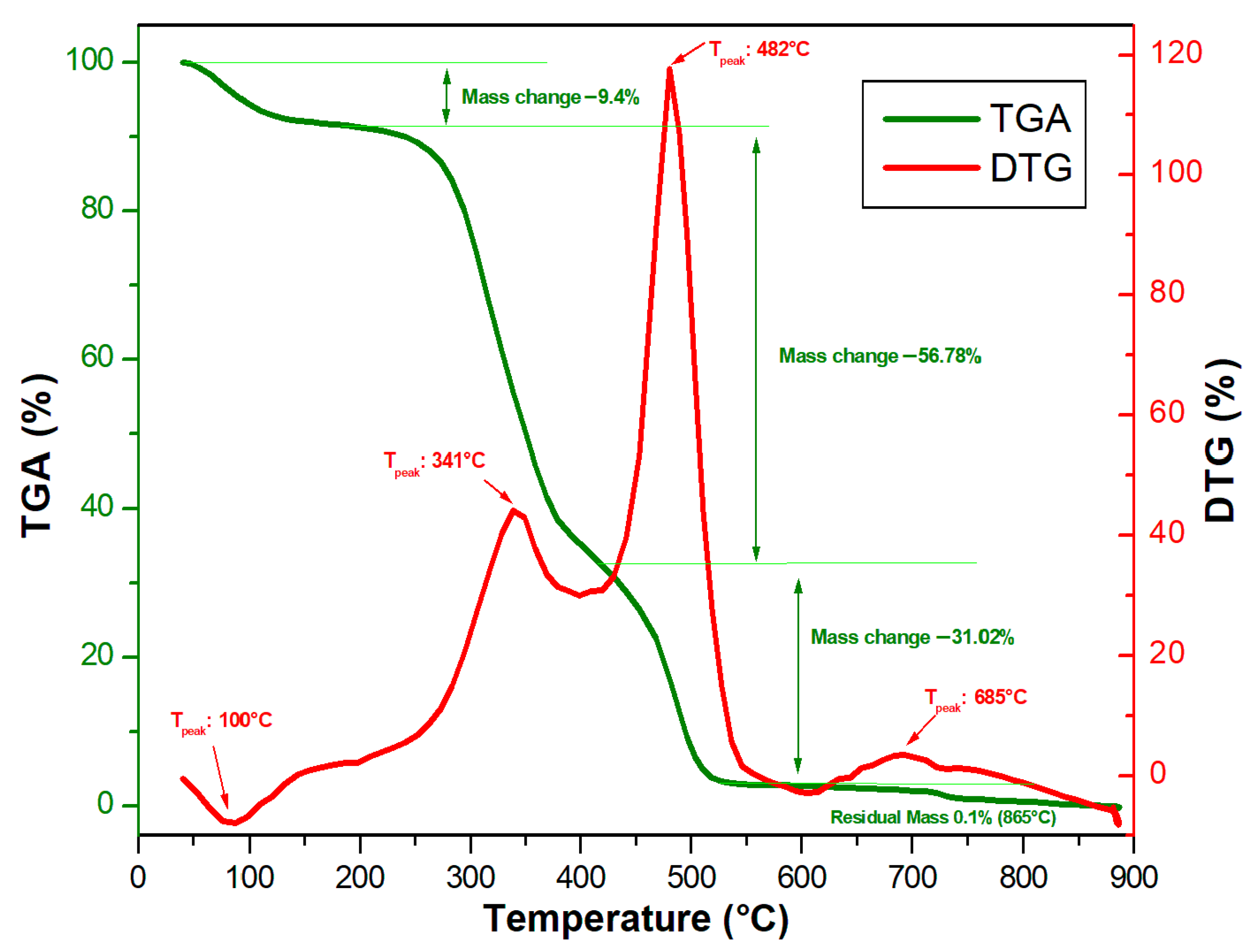
Thermogravimetric (TGA) and derivative thermogravimetric (DTG) analyses were performed to assess the thermal stability and decomposition behavior of Agave lechuguilla fibers (Figure 3). Three main weight-loss events were identified. The first, centered around 100 °C with a mass loss of 9.4%, corresponds to free water and volatile compound evaporation. The second, with a DTG peak at 341 °C, is attributed to hemicellulose degradation and is marked by a pronounced change in the TGA slope. The third and most significant event, peaking at 482 °C, involves the decomposition of cellulose and lignin, accounting for a 56.78% weight reduction. A residual mass less than 3% at 600 °C is consistent with mineral content (Ca, K, Si, Mg, Al, S, and Fe, among others) reported in the literature [28].
The degradation profile indicates that A. lechuguilla fibers can be processed with common thermoplastics such as linear low-density polyethylene (LLDPE), polypropylene (PP), polybutylene terephthalate (PBT), and polyamide 6 (PA6), all of which are shaped at 160–250 °C—well below the onset of major cellulose degradation. The reported composition of these fibers (46–48% cellulose, 17–20% hemicellulose, and 11–12% lignin) supports their suitability as reinforcement in polymer composites, where cellulose content contributes to mechanical strength, hemicellulose influences biodegradability, and lignin enhances thermal stability.

Comparison Between Agave lechuguilla Fiber and Guishe

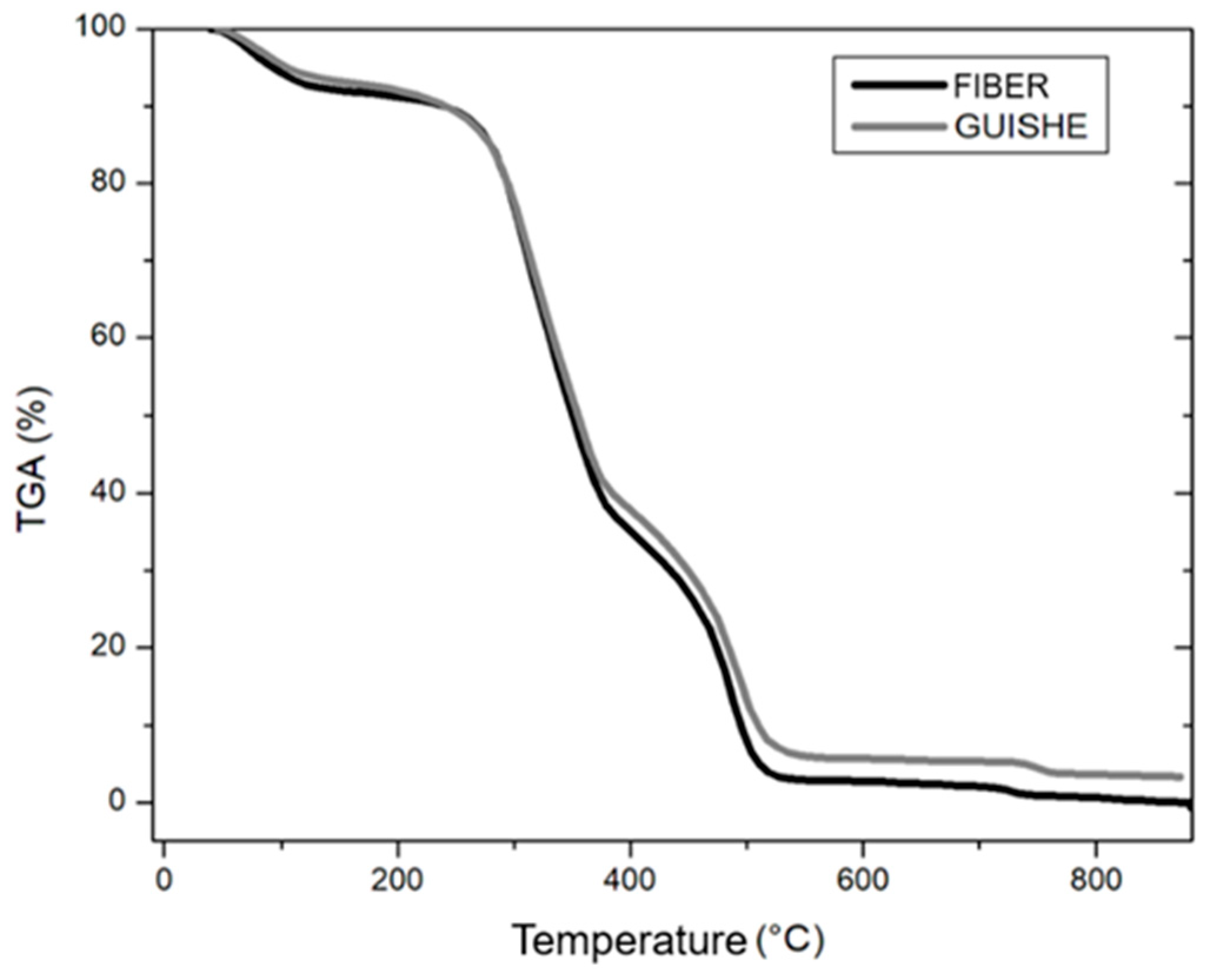
Figure 4 compares the thermal and moisture absorption behavior of Agave lechuguilla fiber and the byproduct of the defibration process called guishe. Derived mainly from external plant tissues such as the cuticle and spines, guishe exhibited lower moisture uptake than fiber. The cuticle acts as a thick protective barrier, while the spines contain more crystalline cellulose, contributing to greater rigidity and reduced water absorption.
In contrast, the internal fibers showed higher moisture absorption, confirming their hydrophilic nature, which may pose limitations in advanced engineering applications. Guishe also presented a higher residue content, likely due to the presence of waxes, lignin, and minerals associated with its protective functions. Overall, both materials displayed comparable behavior, suggesting that guishe could hold commercial potential due to its properties being similar to those of cleaned fiber.

3.2. FTIR-ATR of Ground Agave lechuguilla Fibers

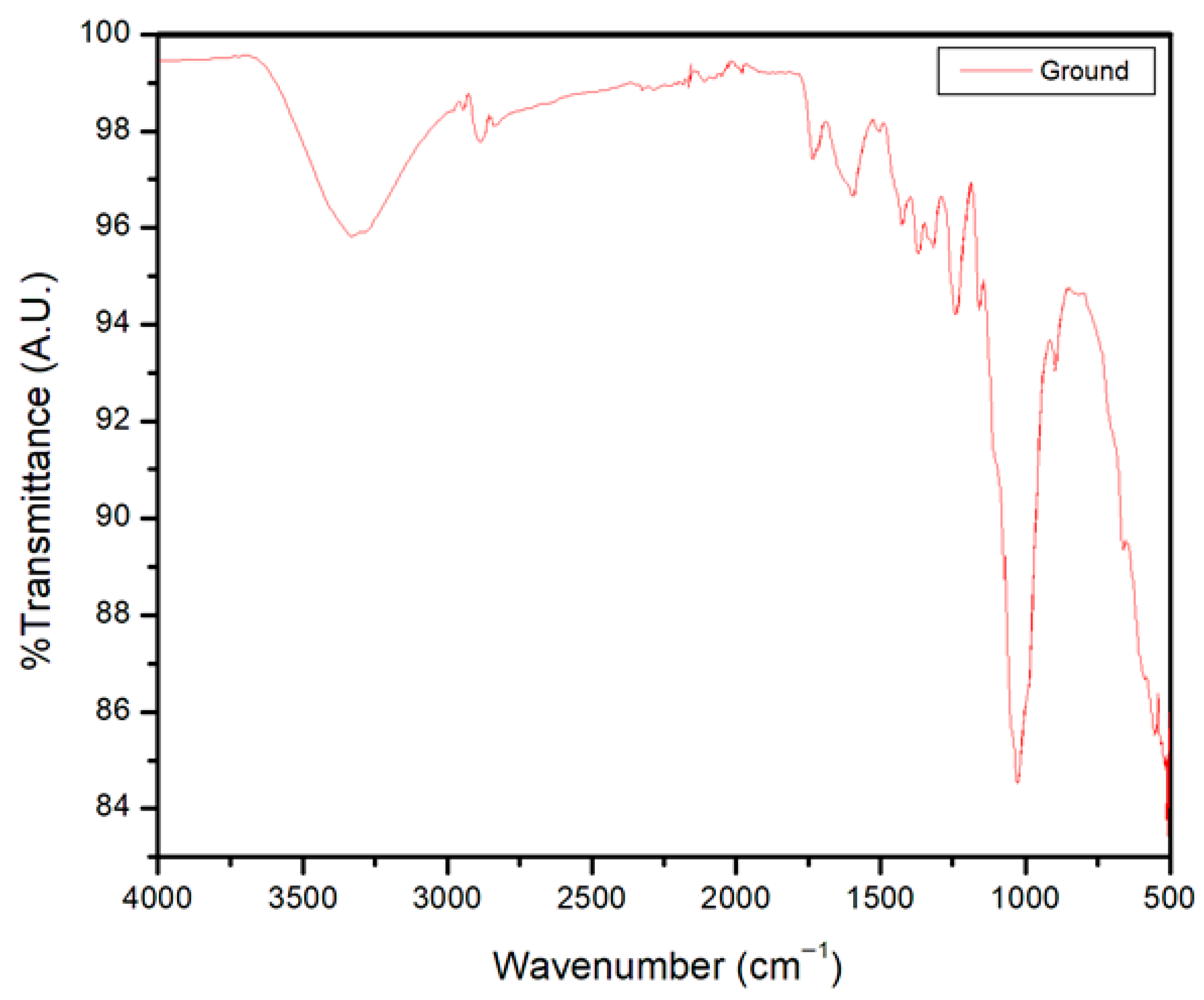
Fourier-transform infrared spectroscopy coupled with attenuated total reflectance (FTIR–ATR) was performed on ground Agave lechuguilla fibers (149–180 µm) to identify their main functional groups (Figure 5). The spectrum exhibits characteristic lignocellulosic bands, confirming the typical chemical structure of plant-based fibers. A broad absorption at 3300–3400 cm−1, assigned to O–H stretching vibrations in cellulose, hemicellulose, and lignin, indicates a high density of hydrogen bonds. A weaker band near 2900 cm−1 corresponds to aliphatic C–H stretching, while absorptions at 1730–1600 cm−1 are attributed to C=O groups from esters and aldehydes, likely associated with hemicellulose or uncondensed lignin. Signals between 1200 and 1000 cm−1 arise from C–O–C ether linkages and C–O bonds typical of polysaccharides, and intense peaks at 900–500 cm−1 correspond to out-of-plane aromatic ring deformations from lignin and phenolic structures. Overall, the spectrum confirms the lignocellulosic nature of the ground fraction and the presence of reactive functional groups suitable for surface modifications, such as alkaline treatment or silanization, to enhance fiber–matrix compatibility in composite applications.
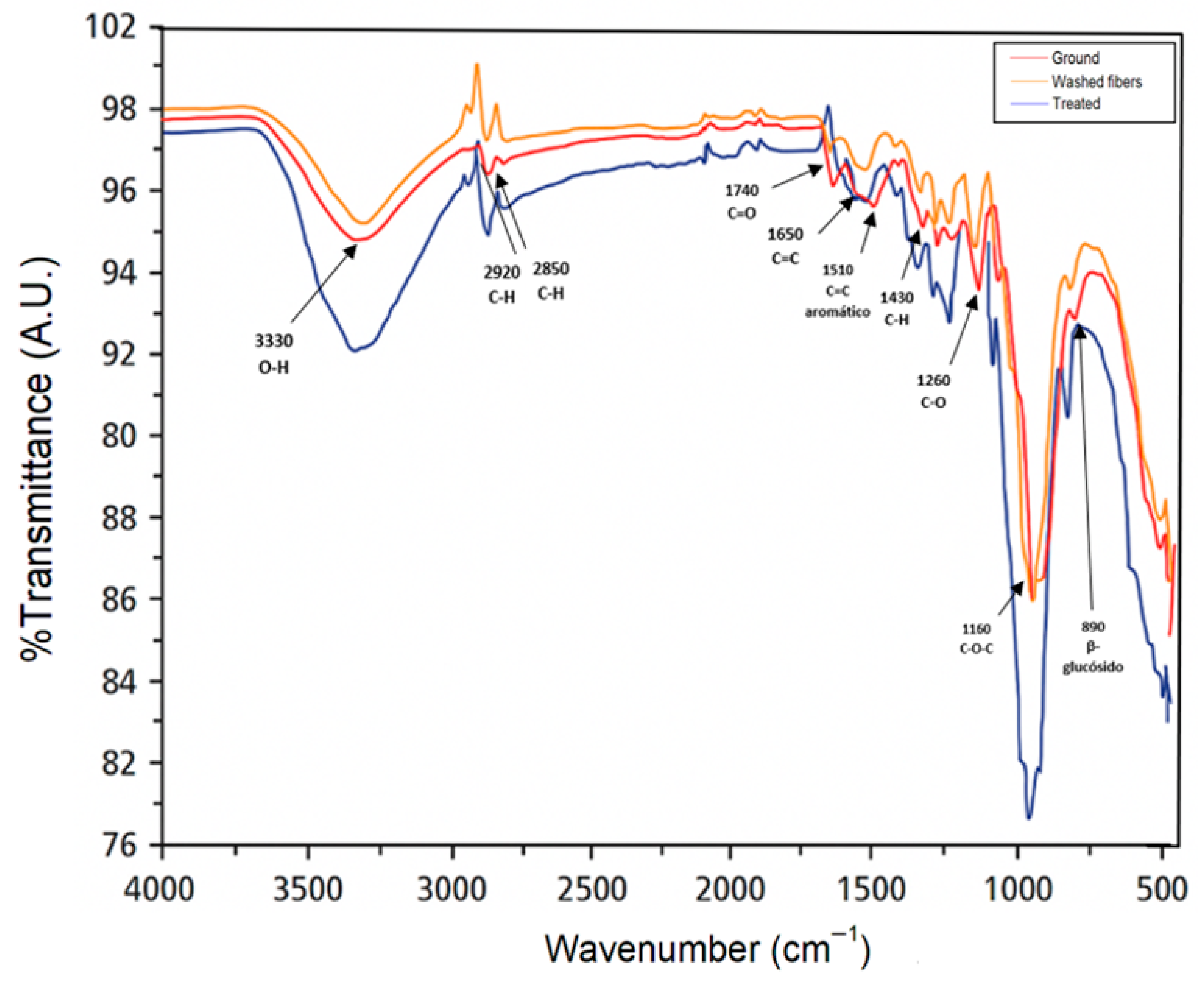
Figure 6 compares the FTIR–ATR spectra of ground, washed, and NaOH-treated Agave lechuguilla fibers, highlighting the progressive chemical modifications induced by each processing stage. All spectra exhibit a broad O–H stretching band at 3330–3390 cm−1 (cellulose, hemicellulose, lignin), which in washed fibers retains its position but shows slightly improved definition, reflecting the removal of superficial impurities such as sap, waxes, and guishe residues without altering the main lignocellulosic framework. After alkaline treatment, this band becomes sharper and more intense, consistent with the removal of amorphous components—principally hemicellulose and part of the lignin—and the increased exposure of free hydroxyl groups.
The aliphatic C–H stretching bands at ~2920 and 2850 cm−1 persist across all treatments, with only minor intensity reductions, confirming that the cellulose carbon backbone remains intact. In the 1740–1650 cm−1 region, associated with C=O stretching in esters, aldehydes, and carboxylic acids from hemicellulose, lignin, and waxes, the intensity decreases progressively from ground to washed to treated fibers; the pronounced reduction after NaOH treatment evidences cleavage of ester linkages and removal of carbonyl-containing non-cellulosic matter. Aromatic C=C stretching near 1510–1500 cm−1 and C–H bending at ~1430 cm−1 also diminish, especially in the treated fibers, confirming lignin removal.
In the fingerprint region (1250–1000 cm−1), corresponding to C–O and C–O–C vibrations of glucopyranose units in cellulose, bands become sharper and more defined after NaOH treatment, indicating increased exposure and ordering of the crystalline cellulose domains. Additional signals between 900 and 500 cm−1, related to aromatic ring deformations from lignin-derived phenolics, are present in ground and washed fibers but show reduced intensity in treated samples, further supporting lignin depletion. The ~890 cm−1 band, assigned to β-glycosidic linkages, remains constant across all samples, confirming the preservation of cellulose’s structural integrity. Overall, the comparative spectra demonstrate that while washing primarily cleans the fiber surface without altering its chemical framework, alkaline treatment achieves substantial removal of non-cellulosic components, enhancing surface reactivity for improved composite performance.

3.3. SEM Images of Ground Agave lechuguilla

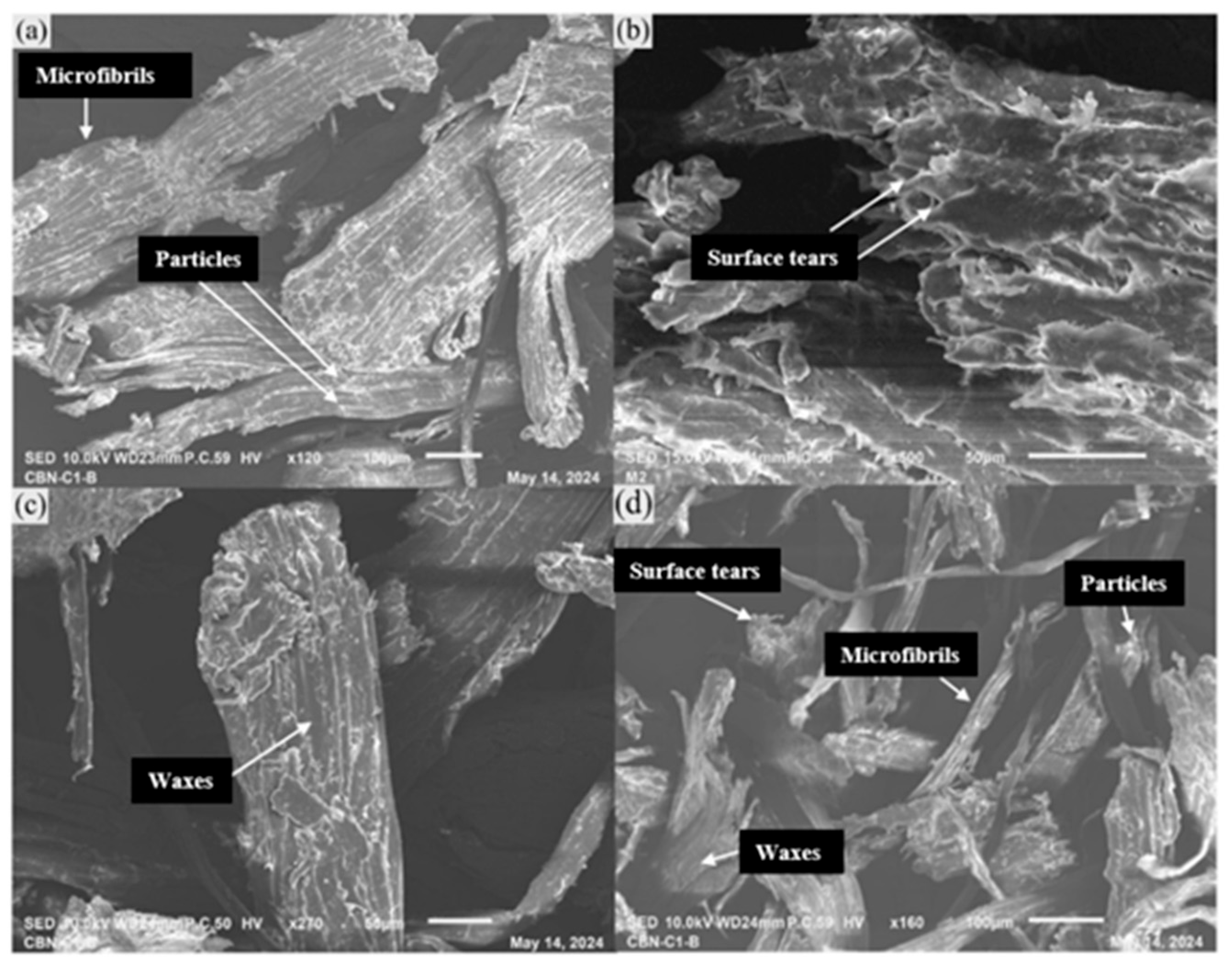
Figure 7 shows SEM micrographs of ground Agave lechuguilla fibers. Figure 7a,b correspond to fibers with particle sizes of 149–180 µm (mesh 80); a pronounced mechanical tearing caused by milling is evident in Figure 7b. Figure 7c, corresponding to fibers > 250 µm, reveals tubular structures formed by microfibril bundles, likely related to the plant’s vascular tissue (xylem and phloem) responsible for water and nutrient transport [38]. Figure 7d shows fibers < 90 µm, where residual particles, waxes, and surface damage from grinding are also visible.

Alkaline-Treated Ground Fibers from Agave lechuguilla

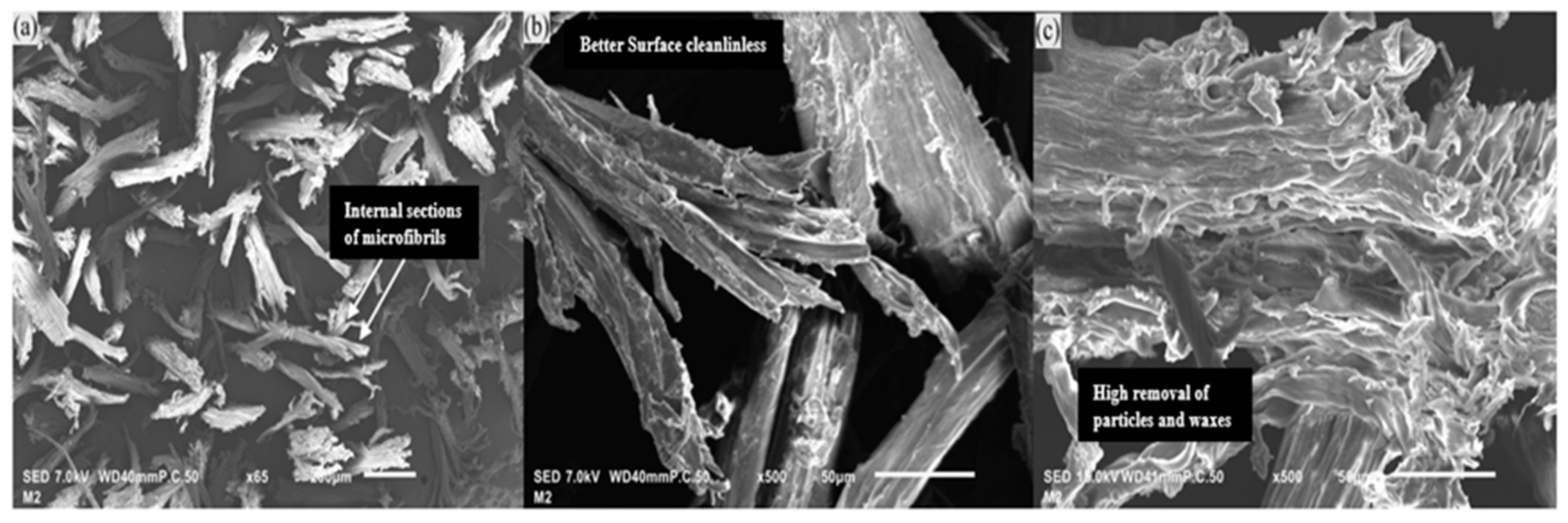
Figure 8 presents SEM images of chemically treated fibers (149–180 µm). The treatment markedly reduced surface impurities and increased fibrillation, exposing microfibrillar structures, likely due to partial lignin removal. This exposure increases surface area and may enhance mechanical interlocking with polymer matrices in composites.
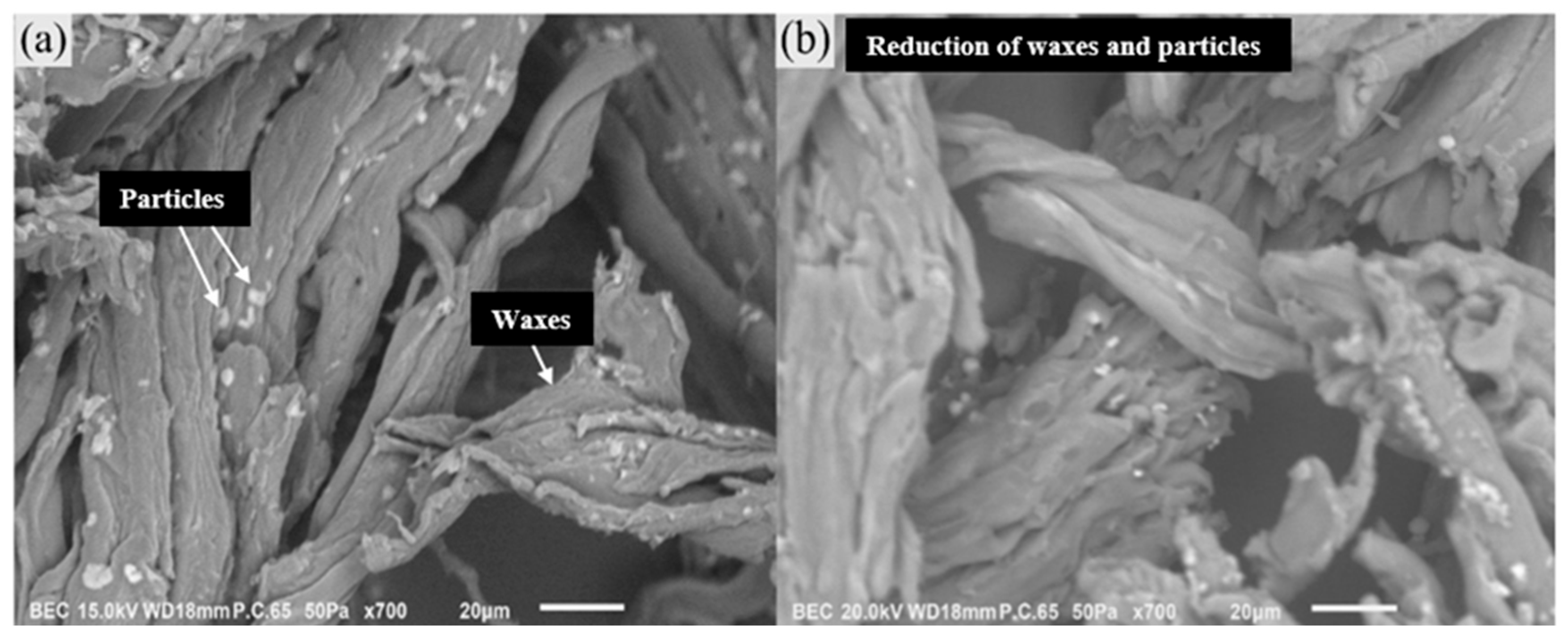
Figure 9 compares samples before (Figure 9a) and after (Figure 9b) alkaline treatment using backscattered electron imaging at ×700 magnification, confirming a significant reduction in surface impurities.

3.4. Optical Microscopy of the Matrix–Reinforcement Interface

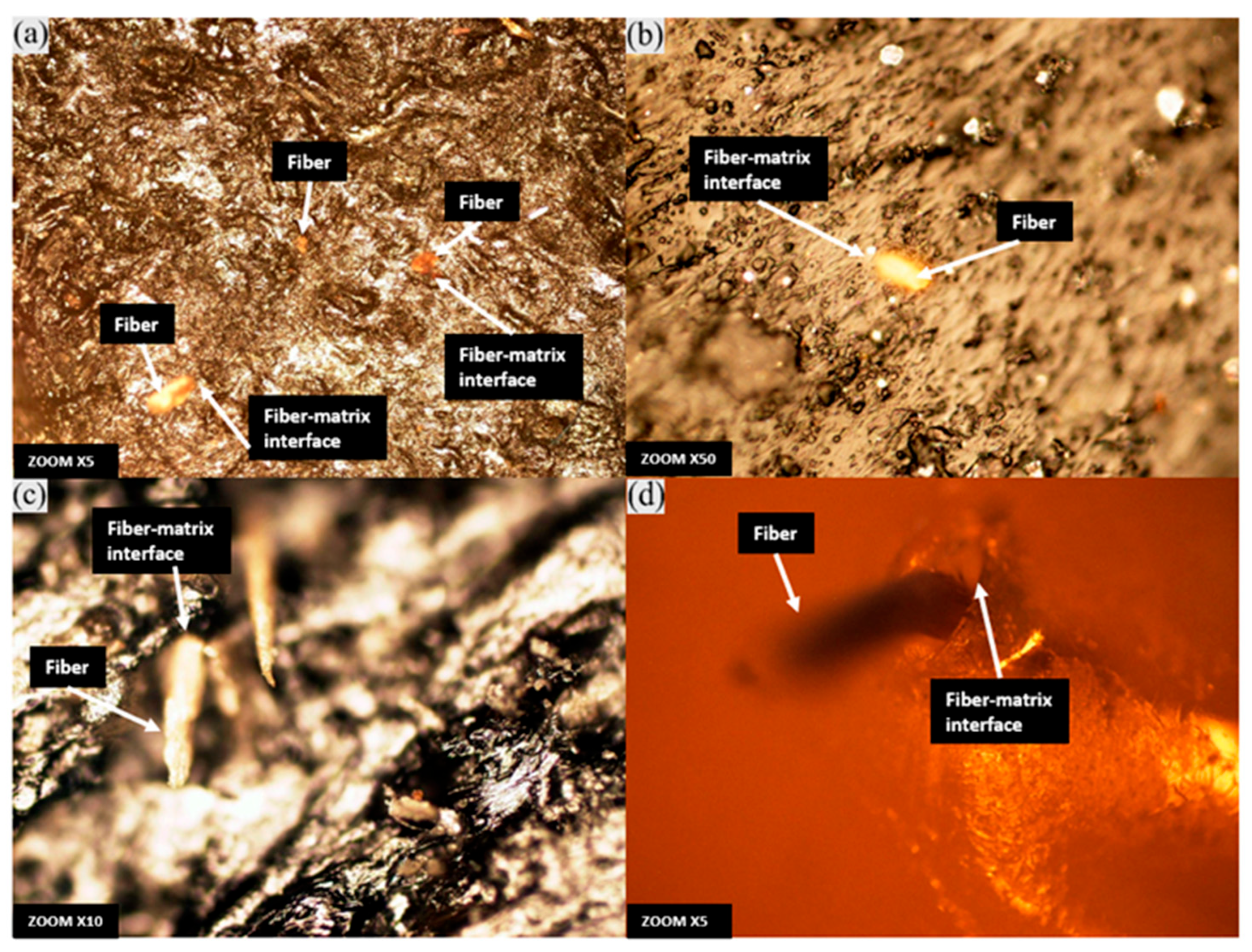
The interface between natural latex and Agave lechuguilla fibers (149–180 µm) was examined via optical microscopy to assess contact continuity and latex impregnation. Figure 10 illustrates representative micrographs:
(a)
×5 magnification—uniform fiber distribution with a well-defined interface and no significant pores, suggesting effective latex impregnation.
(b)
×50—continuous, well-bonded interface surrounding the fiber, indicating strong matrix–reinforcement compatibility and full embedding for efficient load transfer.
(c)
×10—fibers partially protruding but with firmly integrated bases, resulting in a compact interface.
(d)
×5—partially embedded fiber with a clearly identifiable interface and good adhesion despite limited penetration.
Overall, observations indicate that natural latex establishes a favorable interface with Agave lechuguilla fibers, ensuring strong reinforcement integration and effective stress transfer in the composite.

3.5. Tensile Tests

Table 2 presents results for 30 specimens, reporting tenacity at break (gf/den), apparent initial modulus (gf/den), and elongation at break (%). High variability was observed in all properties, inherent to the biological origin and structural heterogeneity of lignocellulosic materials. The average tenacity was 2.18 gf/den (max. 3.45, min. 1.10), and elongation at break averaged 16.34% (range: 1.13–30.90%). The apparent initial modulus exceeded 10 gf/den in most samples, although some values were reported as greater than instrument limits, likely due to variability in fiber cross-sectional area.
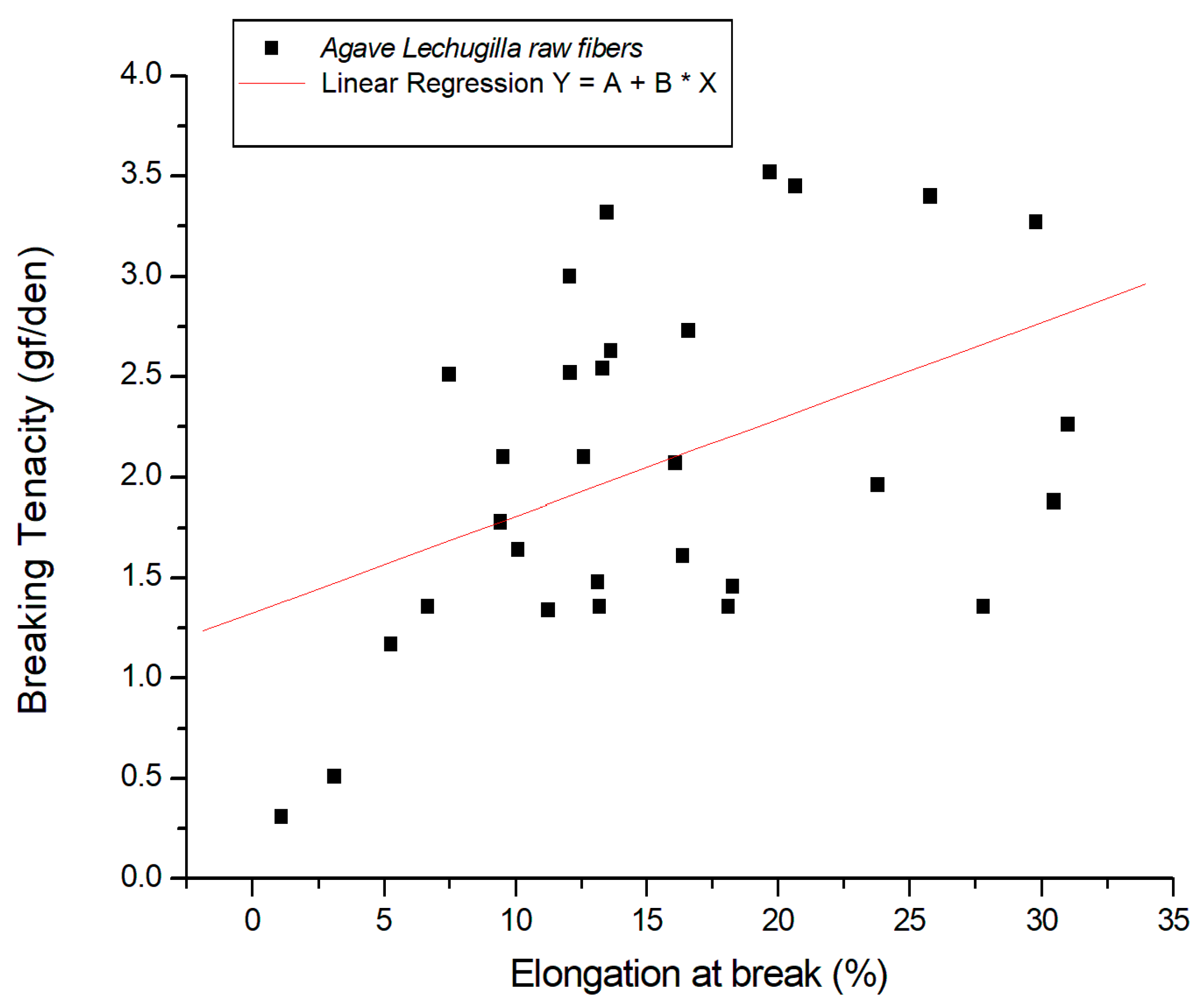
Untreated Agave lechuguilla single-fiber tensile test results conducted according to ASTM D3822-14 are shown in Figure 11. Linear regression analysis reveals a statistically significant positive correlation (β = 0.048, SE = 0.018, p = 0.013) between the fiber diameter and the recorded tensile strength. The regression model (Tensile Tenacity = 1.326 + 0.048 * Diameter) confirms that strength tends to increase with diameter, a phenomenon often associated with a higher probability of containing critical defects in finer natural fibers. High variability was observed in all properties (residual SD = 0.778, R = 0.448), which is inherent to the biological origin and structural heterogeneity of lignocellulosic materials. This significant scatter underscores the intrinsic unpredictability of the raw fibers and highlights the critical need for interfacial treatments, such as the alkaline treatment applied in this study, to improve the stress transfer efficiency and ensure consistent mechanical performance when embedded in the natural latex matrix.
The tensile performance of Agave lechuguilla single fibers (Table 3) was estimated by converting the measured fineness (gf/den) into tensile strength (MPa) using the relation: Tensile strength (MPa) = (gf/den × 9.81 × density)/10, assuming an average fiber density of 1.35 g cm−3. This conversion yielded an approximate tensile strength of 280 MPa from a fineness of 2.18 gf/den, which is comparable to that reported for sisal (300–600 MPa) and jute (400–800 MPa) fibers [1,2,3,4,5,39,40,41,42,43]. When incorporated into natural rubber (NR) matrices, the Agave lechuguilla–NR composites exhibited a tensile strength of 4.68 MPa and elongation of 530%, values consistent with those of untreated NR–flax (3–6 MPa) and treated sisal–NR (5–12 MPa) systems. Notably, the elongation of our composites surpasses many reported values (400–500%), suggesting improved stress transfer and flexibility despite the moderate tensile strength. These findings reinforce the potential of Agave lechuguilla fibers as a sustainable reinforcement alternative with balanced mechanical and elastic behavior for flexible engineering applications [39,40,41,42,43].
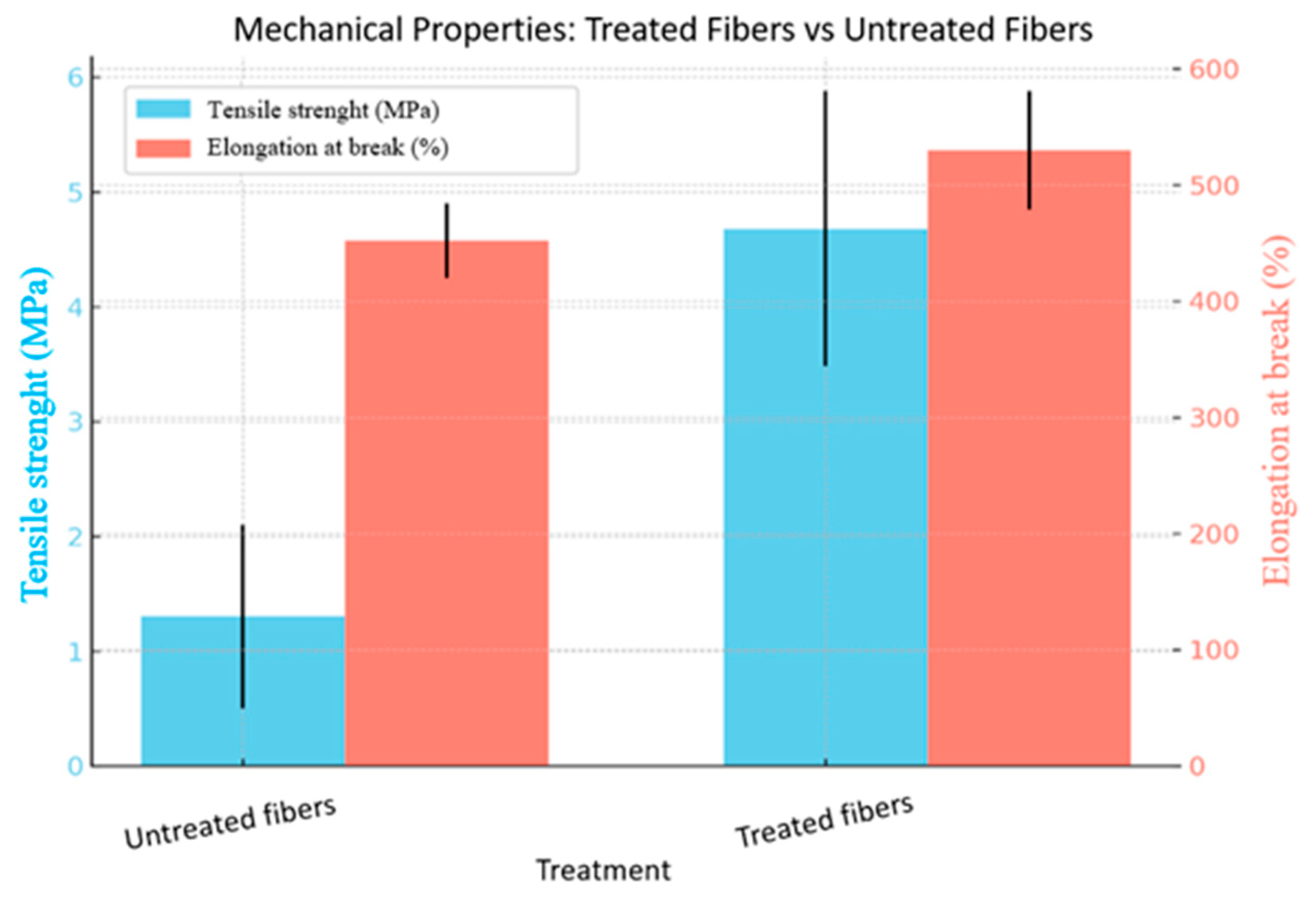
Comparative tests between untreated and chemically treated fibers (Figure 12) showed a marked improvement after alkaline treatment. Tensile strength increased from 1.3 ± 0.8 MPa (untreated) to 4.68 ± 1.2 MPa (treated), attributed to the removal of amorphous components such as lignin and hemicellulose. Elongation at break also improved from 452 ± 32% to 530 ± 51%, suggesting enhanced microfibril cohesion and structural flexibility due to favorable polymer chain reorganization. These enhancements are critical for fiber–matrix load transfer in composite applications.

3.6. Compression and Hardness Tests

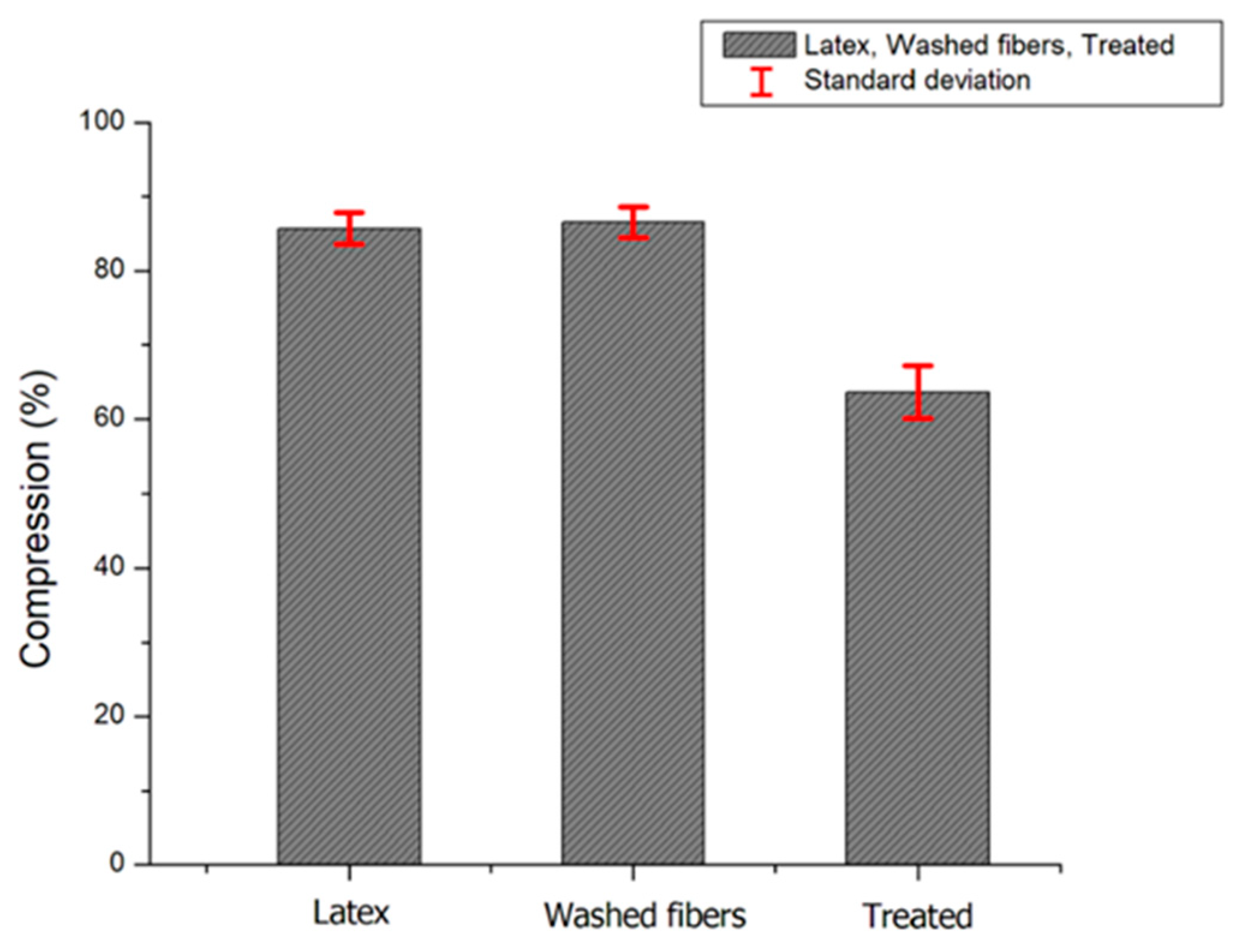
Compression results (Figure 13) show reduced elastic recovery in composites with treated fibers, indicating increased stiffness. Natural latex compressed from 6.6 mm to 4.2 mm (36.36 ± 6.51%), reflecting high flexibility without reinforcement. Latex with washed fibers compressed from 6.7 mm to 5.8 mm (13.43 ± 3.08%), while latex with treated fibers decreased from 6.3 mm to 5.4 mm (27.67 ± 2.08%). The intermediate behavior of treated fibers may result from alkali-induced removal of hemicellulose and partial lignin degradation, which improves chemical compatibility but can reduce internal structural rigidity, as reported in similar studies [29].
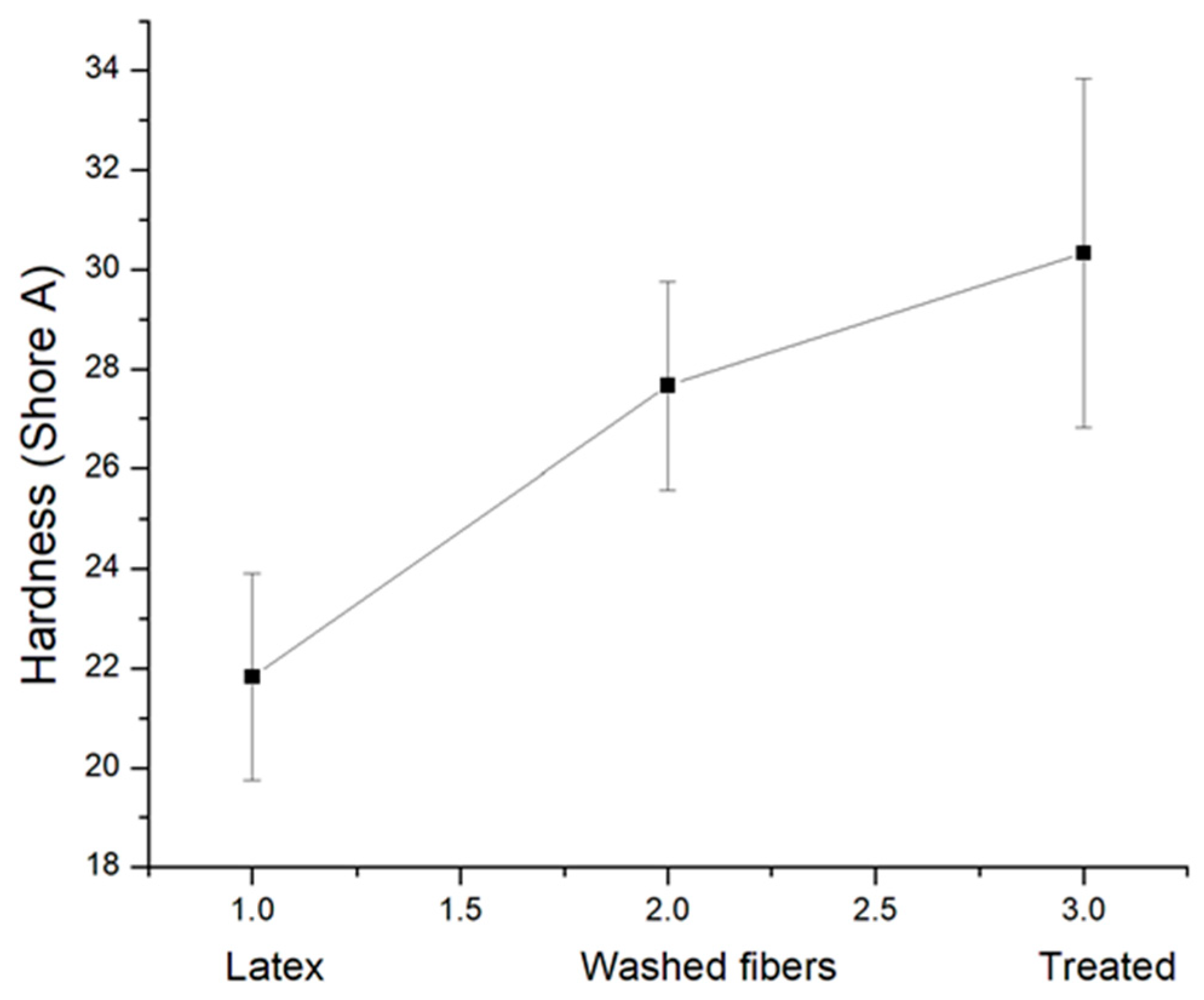
Hardness Shore A values (Figure 14) increased progressively with fiber treatment: 21.83 ± 2.08 Ha (latex), 27.67 ± 2.08 Ha (washed fibers), and 30.33 ± 3.51 Ha (treated fibers). The increase is attributed to improved hydroxyl group exposure and fiber–matrix adhesion after alkali treatment, enhancing load transfer and resistance to surface indentation. Previous studies [28,29] confirm that alkali treatment (and subsequent silanization) improves fiber surface activity and affinity with polymer matrices, resulting in harder and more wear-resistant composites.

4. Conclusions

This study demonstrates that sequential solvent pretreatment and alkaline modification markedly improve the physicochemical properties and reinforcing capacity of Agave lechuguilla fibers in natural rubber composites. Thermogravimetric analysis confirmed their thermal stability above conventional molding temperatures, while FTIR–ATR and SEM evidenced effective hemicellulose removal, partial lignin reduction, and cleaner surfaces favoring interfacial adhesion.
Mechanically, treated composites exhibited more than a threefold increase in tensile strength, enhanced elongation at break, higher hardness, and improved compression resistance, supported by microscopic evidence of uniform fiber dispersion and strong fiber–matrix interlocking.
Overall, alkaline-treated Agave lechuguilla fibers significantly enhance the performance and compatibility of natural rubber composites, highlighting their potential as sustainable reinforcements for applications in automotive, construction, and packaging. These results provide a foundation for further optimization of treatments and formulations toward high-performance, renewable biocomposites.

Author Contributions

Conceptualization, J.A.M.-T. and J.A.C.-R.; Data curation, L.F.M.-M.; Formal analysis, W.P.-R.; Investigation, C.A.C.-A.; Methodology, A.J.-R.; Resources, U.A.M.-C.; Validation, M.C.K.-U.; software, J.L.-H.; Writing—original draft, J.A.M.-T.; Writing—review and editing, E.R.-R. and U.A.M.-C. All authors have read and agreed to the published version of the manuscript.

Funding

This research received no external funding.

Institutional Review Board Statement

Not applicable.

Informed Consent Statement

Not applicable.

Data Availability Statement

The raw data supporting the conclusions of this article will be made available by the authors on request.

Acknowledgments

The authors thank the Universidad Politécnica de Victoria, Universidad Politecnica de Juventino Rosas and the Universidad Tecnológica de Zinacantepec for providing the facilities and support to conduct this research in their laboratories.

Conflicts of Interest

The authors declare no conflicts of interest.

References

  1. Soriano-Corral, F.; Calva-Nava, L.A.; Hernández-Gámez, J.F.; Hernández-Hernández, E.; González-Morones, P.; Ávila-Orta, C.A.; Soria-Arguello, G.; Fonseca-Florido, H.A.; Covarrubias-Gordillo, C.A.; Díaz de León-Gómez, R.E. Influence of Ethylene Plasma Treatment of Agave Fiber on the Cellular Morphology and Compressive Properties of Low-Density Polyethylene/Ethylene Vinyl Acetate Copolymer/Agave Fiber Composite Foams. Int. J. Polym. Sci. 2021, 2021, 9150310. [Google Scholar] [CrossRef]
  2. Sánchez-Robles, J.H.; Reyes, A.G.; Ríos-González, L.J.; Laredo-Alcalá, E.I.; Cruz-Requena, M.; Arredondo-Valdés, R.; Morales-Martínez, T.K.; Medina-Morales, M.A. Bioprocessed Guishe Juice (Agave lechuguilla Residue) as a Dual-Action Bioagent for Weed and Fungal Control in Sustainable Agriculture. Processes 2025, 13, 2064. [Google Scholar] [CrossRef]
  3. Frollini, E.; Bartolucci, N.; Sisti, L.; Celli, A. Poly(butylene succinate) reinforced with different lignocellulosic fibers. Ind. Crops Prod. 2013, 45, 160–169. [Google Scholar] [CrossRef]
  4. Valea, A.; Corcuera, M.A.; Eceiza, A.; Gonzalez, M.L. Modificación superficial de fibras de sisal para su utilización como refuerzo en materiales composites de matriz polipropileno. Mater. Compuestos 2019, 32, 69–75. [Google Scholar]
  5. Yan, Y.; Xiao, L.; Teng, Q.; Jiang, Y.; Deng, Q.; Li, X.; Huang, Y. Strong, Tough, and Adhesive Polyampholyte/Natural Fiber Composite Hydrogels. Polymers 2022, 14, 4984. [Google Scholar] [CrossRef]
  6. Annandarajah, C.; Li, P.; Michel, M.; Chen, Y.; Jamshidi, R.; Kiziltas, A.; Hoch, R.; Grewell, D.; Montazami, R. Study of Agave Fiber-Reinforced Biocomposite Films. Materials 2018, 12, 99. [Google Scholar] [CrossRef]
  7. Castillo-Quiroz, D.; Berlanga-Reyes, C.; Pineda, A. Recolección, Extracción y Uso de la Fibra de Lechuguilla (Agave lechuguilla Torr.) en el Estado de Coahuila; INIFAP-CIRNE: Río Bravo, Mexico, 2005; pp. 1–13. [Google Scholar]
  8. Reyes-Agüero, J.; Aguirre-Rivera, J.; Peña-Valdivia, C. Biology and use of Agave lechuguilla Torrey. Bot. Sci. 2000, 67, 75–88. [Google Scholar] [CrossRef][Green Version]
  9. Peças, P.; Carvalho, H.; Salman, H.; Leite, M. Natural Fibre Composites and Their Applications: A Review. J. Compos. Sci. 2018, 2, 66. [Google Scholar] [CrossRef]
  10. Karimah, A.; Ridho, M.R.; Munawar, S.S.; Adi, D.S.; Ismadi; Damayanti, R.; Subiyanto, B.; Fatriasari, W.; Fudholi, A. A Review on Natural Fibers for Development of Eco-Friendly Bio-Composite: Characteristics, and Utilizations. J. Mater. Res. Technol. 2021, 13, 2442–2458. [Google Scholar] [CrossRef]
  11. Thapliyal, D.; Verma, S.; Sen, P.; Kumar, R.; Thakur, A.; Tiwari, A.K.; Singh, D.; Verros, G.D.; Arya, R.K. Natural Fibers Composites: Origin, Importance, Consumption Pattern, and Challenges. J. Compos. Sci. 2023, 7, 506. [Google Scholar] [CrossRef]
  12. Madhu, P.; Sanjay, M.R.; Jawaid, M.; Siengchin, S.; Khan, A.; Pruncu, C.I. A new study on effect of various chemical treatments on Agave americana fiber for composite reinforcement: Physico-chemical, thermal, mechanical and morphological properties. Polym. Test. 2020, 85, 106437. [Google Scholar] [CrossRef]
  13. Jamilah, U.L.; Sujito, S. The improvement of ramie fiber properties as composite materials using alkalization treatment: NaOH concentration. Indones. J. Mater. Sci. 2021, 22, 62. [Google Scholar] [CrossRef]
  14. Sathish Kumar, R.; Muralidharan, N.; Sathyamurthy, R. Optimization of Alkali Treatment Process Parameters for Kenaf Fiber: Experiments Design. J. Nat. Fibers 2020, 19, 4276–4285. [Google Scholar] [CrossRef]
  15. Mochane, M.J.; Magagula, S.I.; Sefadi, J.S.; Mokhena, T.C. A Review on Green Composites Based on Natural Fiber-Reinforced Polybutylene Succinate (PBS). Polymers 2021, 13, 1200. [Google Scholar] [CrossRef] [PubMed]
  16. Wang, X.; Chang, L.; Shi, X.; Wang, L. Effect of Hot-Alkali Treatment on the Structure Composition of Jute Fabrics and Mechanical Properties of Laminated Composites. Materials 2019, 12, 1386. [Google Scholar] [CrossRef]
  17. Imon, I.H. Sustainable Natural Fiber Based Composites Materials: A Review. ChemRxiv 2024. [Google Scholar] [CrossRef]
  18. Caldera-Briseño, C.A.; Miramontes de León, D.; Hernández-Guerrero, A.; Trujillo-Barragán, M. Caracterización de materiales compuestos de matriz polimérica con fibra de ixtle. In Proceedings of the XVIII Congreso Internacional Anual de la SOMIM, Salamanca, Mexico, 19–21 September 2012; pp. 673–682. [Google Scholar]
  19. Torres-Arellano, M.; Renteria-Rodríguez, V.; Franco-Urquiza, E. Mechanical Properties of Natural-Fiber-Reinforced Biobased Epoxy Resins Manufactured by Resin Infusion Process. Polymers 2020, 12, 2841. [Google Scholar] [CrossRef] [PubMed]
  20. Franco-Urquiza, E.A.; Saleme-Osornio, R.S.; Ramírez-Aguilar, R. Mechanical Properties of Hybrid Carbonized Plant Fibers Reinforced Bio-Based Epoxy Laminates. Polymers 2021, 13, 3435. [Google Scholar] [CrossRef]
  21. Abhilash, S.S.; Singaravelu, D.L. Effect of Fiber Content on Mechanical, Morphological, and Vibration Damping Characteristics of Natural Fiber-reinforced Composite Fuel Tanks. J. Nat. Fibers 2022, 19, 14994–15007. [Google Scholar] [CrossRef]
  22. Narendiranath Babu, T.; Rajkumar, E.; George, G.; Jobai, J.; Rama Prabha, D. Tensile and flexural properties of Tampico fibres and E-glass fibre composites reinforced with epoxy resin. Proc. Inst. Mech. Eng. Part L J. Mater. Des. Appl. 2021, 235, 2783–2796. [Google Scholar] [CrossRef]
  23. García Hernández, Z.; Miranda Teran, Z.N.; González-Morones, P.; Yañez-Macías, R.; Rosales, S.G.S.; Yolotzin-Romero, G.; Sifuentes-Nieves, I.; Hernández-Hernández, E. Performance of nylon 6 composites reinforced with modified agave fiber: Structural, morphological, and mechanical features. J. Appl. Polym. Sci. 2021, 138, 50857. [Google Scholar] [CrossRef]
  24. Moscoso-Sánchez, F.J.; Alvarad, A.; Martínez-Chávez, L.; Hernández-Montelongo, R.; Escamilla, V.V.F.; Escamilla, G.C. The effects of henequen cellulose treated with polyethylene glycol on properties of polylactic acid composites. BioResources 2019, 14, 2707–2726. [Google Scholar] [CrossRef]
  25. Hidalgo-Reyes, M.; Caballero-Caballero, M.; Hernández-Gómez, L.H.; Urriolagoitia-Calderón, G. Chemical and morphological characterization of Agave angustifolia bagasse fibers. Bot. Sci. 2015, 93, 807–817. [Google Scholar] [CrossRef]
  26. Li, Z.; Li, J.; Lu, W.; Zhang, Y. Research progress and application prospects of plant fibers in geopolymer concrete: A review. Materials 2025, 18, 2342. [Google Scholar] [CrossRef]
  27. El Oudiani, A.; Ben Sghaier, R.; Chaabouni, Y.; Msahli, S.; Sakli, F. Physico-chemical and mechanical characterization of alkali-treated Agave americana L. fiber. J. Text. Inst. 2012, 103, 349–355. [Google Scholar] [CrossRef]
  28. Quiceno-Jaramillo, N. Efecto del Proceso de Mercerización en el Comportamiento de la Fibra de Hoja de Piña (FHP) como Refuerzo en Una Matriz de Polipropileno. Master’s Thesis, Universidad Nacional de Colombia, Bogotá, Colombia, 2016. [Google Scholar]
  29. Jardón-Maximino, N.; Gómez, M.D.; Moreno, R.V.; Baeza-Alvarado, M.D.; Uribe, L.E.L. Optimization of the Alkali-Silane Treatment of Agave lechuguilla Fibers (Ixtle) for Potential Reinforcement in Polymeric Composites. Fibers 2023, 11, 86. [Google Scholar] [CrossRef]
  30. Mitsaichon, V.; Ruaesrijan, K.; Phinyocheep, P.; Amornsakchai, T.; Junkong, P.; Thanawan, S. Preparation of spent coffee grounds-rubber composites using natural rubber latex as binder. J. Met. Mater. Miner. 2022, 32, 161–166. [Google Scholar] [CrossRef]
  31. Mehdikhani, M.; Gorbatikh, L.; Verpoest, I.; Lomov, S.V. Voids in fiber-reinforced polymer composites: A review on their formation, characteristics, and effects on mechanical properties. J. Compos. Mater. 2024, 58, 1217–1237. [Google Scholar] [CrossRef]
  32. Thomason, J.L.; Rudeiros-Fernández, J.L. A review of the impact performance of natural fiber thermoplastic composites. Front. Mater. 2022, 9, 947450. [Google Scholar] [CrossRef]
  33. Divya, G.S.; Suresha, B. Recent Developments of Natural Fiber Reinforced Thermoset Polymer Composites and their Mechanical Properties. Indian J. Adv. Chem. Sci. 2016, 4, 267–274. [Google Scholar]
  34. Vinod, A.; Sanjay, M.R.; Siengchin, S.; Parameswaranpillai, J. Renewable and sustainable biobased materials: An assessment on biofibers, biofilms, biopolymers and biocomposites. J. Clean. Prod. 2020, 258, 120978. [Google Scholar] [CrossRef]
  35. Islam, T.; Chaion, M.H.; Jalil, M.A.; Rafi, A.S.; Mushtari, F.; Dhar, A.K.; Hossain, S. Advancements and challenges in natural fiber-reinforced hybrid composites: A comprehensive review. SPE Polym. 2024, 5, 481–506. [Google Scholar] [CrossRef]
  36. Sanjay, M.R.; Madhu, P.; Jawaid, M.; Senthamaraikannan, P.; Senthil, S.; Pradeep, S. Characterization and properties of natural fiber polymer composites: A comprehensive review. J. Clean. Prod. 2018, 172, 566–581. [Google Scholar] [CrossRef]
  37. Lotfi, A.; Li, H.; Dao, D.V.; Prusty, G. Natural fiber–reinforced composites: A review on material, manufacturing, and machinability. J. Thermoplast. Compos. Mater. 2021, 34, 238–284. [Google Scholar] [CrossRef]
  38. Basrani, J.; Kumar, M.; Kumar, P. A study of parameters affecting mechanical characteristics of hybrid composite. Mater. Today Proc. 2022, 56, 3086–3093. [Google Scholar] [CrossRef]
  39. Asim, M.; Saba, N.; Jawaid, M.; Nasir, M. Potential of natural fiber/biomass filler-reinforced polymer composites in aerospace applications. In Sustainable Composites for Aerospace Applications; Jawaid, M., Thariq, M., Eds.; Woodhead Publishing: Sawston, UK, 2018; pp. 253–268. [Google Scholar] [CrossRef]
  40. Sanjay, M.R.; Siengchin, S.; Parameswaranpillai, J.; Jawaid, M.; Pruncu, C.I.; Khan, A. A comprehensive review of techniques for natural fibers as reinforcement in composites: Preparation, processing and characterization. Carbohydr. Polym. 2019, 207, 108–121. [Google Scholar] [CrossRef] [PubMed]
  41. Pickering, K.L.; Aruan Efendy, M.G.; Le, T.M. A review of recent developments in natural fibre composites and their mechanical performance. Compos. Part A Appl. Sci. Manuf. 2016, 83, 98–112. [Google Scholar] [CrossRef]
  42. Eleutério, T.; Trota, M.J.; Meirelles, M.G.; Vasconcelos, H.C. A Review of Natural Fibers: Classification, Composition, Extraction, Treatments, and Applications. Fibers 2025, 13, 119. [Google Scholar] [CrossRef]
  43. Madueke, C.I.; Mbah, O.M.; Umunakwe, R. A review on the limitations of natural fibres and natural fibre composites with emphasis on tensile strength using coir as a case study. Polym. Bull. 2023, 80, 3489–3506. [Google Scholar] [CrossRef]
Figure 1. Fiber images from optical microscope: (a) regular fiber, (b) irregular fiber and (c) raw fibers extracted from Agave lechuguilla through mechanical decortication.
Macromol 06 00004 g001
Figure 2. Particle size classification of Agave lechuguilla fibers after the milling process: (a) coarse, (b) intermediate and (c) fine.
Macromol 06 00004 g002
Figure 3. Thermogravimetric analysis of raw Agave lechuguilla fiber.
Macromol 06 00004 g003
Figure 4. Thermal behavior comparison of Agave lechuguilla fiber and guishe by TGA.
Macromol 06 00004 g004
Figure 5. FTIR-ATR spectrum of ground Agave lechuguilla fibers (149–180 µm).
Macromol 06 00004 g005
Figure 6. Comparison of FTIR-ATR spectra of Agave lechuguilla fibers at different treatment stages.
Macromol 06 00004 g006
Figure 7. SEM micrographs of ground Agave lechuguilla fibers at different particle sizes: (a,b) 149–180 µm, showing milling-induced mechanical tearing; (c) >250 µm, exhibiting tubular microfibril bundle structures; (d) <90 µm, with residual particles and surface damage.
Macromol 06 00004 g007
Figure 8. SEM micrographs of NaOH-treated Agave lechuguilla fibers (149–180 µm): (a) internal cross-section at low magnification; (b) cleaned fiber surface at higher magnification; (c) absence of waxes and residual particles, with exposed microfibrillar structures.
Macromol 06 00004 g008
Figure 9. Backscattered SEM images (×700) of Agave lechuguilla fibers (a) before and (b) after alkaline treatment, showing a marked reduction in surface impurities.
Macromol 06 00004 g009
Figure 10. Optical micrographs of the fiber–matrix interface in Agave lechuguilla fiber–reinforced natural latex composites (149–180 µm): (a) uniform fiber distribution and well-defined interface; (b) continuous, well-bonded interface; (c) partially protruding fibers with firmly embedded bases; (d) partially embedded fiber with clear interfacial adhesion.
Macromol 06 00004 g010
Figure 11. Relationship between elongation at break and toughness in individual Agave lechuguilla fibers.
Macromol 06 00004 g011
Figure 12. Comparison of Mechanical Properties in Treated and Untreated Agave lechuguilla Fibers.
Macromol 06 00004 g012
Figure 13. Compression Behavior of Composite Samples with Different Agave lechuguilla Fiber Treatments.
Macromol 06 00004 g013
Figure 14. Shore A Hardness of Latex-Based Composites Reinforced with Agave lechuguilla Fibers under Different Treatments.
Macromol 06 00004 g014
Table 1. Fiber physical dimensions.
Fiber (Type/Number)Thickness (µm)Standard Deviation (µm)Average (µm)
Regular 1176.719.687175.425
Regular 2197.8
Regular 3177.4
Regular 4149.8
Irregular 1185.623.562207.400
Irregular 2235.3
Irregular 3190.1
Irregular 4218.6
Table 2. Uniaxial tensile test results of individual Agave lechuguilla fibers.
SampleBreaking Tenacity (gf/den)Initial Modulus (gf/den)Elongation at Break (%)
13.45>23.3120.66
22.73>21.7916.58
32.52>26.8812.08
41.78>18.409.43
52.1>21.789.52
61.64>18.0610.1
71.17>19.665.26
81.61>10.0516.36
90.51>12.693.12
100.31-1.13
113.32>25.1113.48
122.51>30.627.48
133.52>21.3119.68
143.0>25.4512.06
152.1>19.2112.59
161.46>11.2218.28
173.27>17.6229.77
181.36>11.1727.81
193.4>21.1425.79
201.34>15.7211.24
212.54>22.3613.31
222.63>25.1513.63
231.36>20.476.66
241.36>11.5418.1
251.888.6330.46
262.07>18.5516.08
271.96>14.3523.78
281.48>15.1913.13
292.26>12.3930.99
301.36>13.2513.2
Mean2.1818.5816.34
SD0.755.647.35
Minimum1.178.635.26
Maximum3.5230.6230.99
Range2.3521.9925.74
Table 3. Comparison of tensile properties of Agave lechuguilla fibers with other natural fibers used in natural rubber–based fiber-reinforced composites.
Material/SystemFiber Tensile Strength (MPa)Composite Tensile Strength (MPa)Elongation (%)References
Agave lechuguilla fiber~2804.68 ± 1.2530 ± 51This work
Sisal fiber300–6005–12 (treated)400–500[39,40,42]
Jute fiber400–8008–20350–450[40,41]
Flax fiber500–9003–6 (untreated NR-flax)400–500[41,43]
Hemp fiber550–9006–15450–550[42,43]
Disclaimer/Publisher’s Note: The statements, opinions and data contained in all publications are solely those of the individual author(s) and contributor(s) and not of MDPI and/or the editor(s). MDPI and/or the editor(s) disclaim responsibility for any injury to people or property resulting from any ideas, methods, instructions or products referred to in the content.