Article

Effect of Low-Temperature Storage of Kefir Grains and Trehalose Addition on the Production of the Exopolysaccharide Kefiran

by
Lydia Arsou
1,
Stylianos Exarhopoulos
2,
Athanasios Goulas
1 and
Georgia Dimitreli
1,*
1
Department of Food Science and Technology, International Hellenic University, 57400 Thessaloniki, Greece
2
Department of Hygiene and Technology of Food of Animal Origin, School of Veterinary Medicine, Aristotle University of Thessaloniki, 54124 Thessaloniki, Greece
*
Author to whom correspondence should be addressed.
Macromol 2026, 6(1), 3; https://doi.org/10.3390/macromol6010003
Submission received: 30 June 2025 / Revised: 9 November 2025 / Accepted: 4 January 2026 / Published: 8 January 2026

Abstract

Kefiran, the extracellular polysaccharide produced by Generally Recognized as Safe (GRAS) bacteria found in kefir grains, is a promising biopolymer with multiple applications in agri-food and biomedical fields. Besides its characteristics and potential applications, the factors that affect its production remain a prime subject of interest. Lactic acid bacteria synthesize polysaccharides to protect their cells from adverse conditions. Therefore, low-temperature storage (4 °C) of kefir grains inoculated into Ultra-High-Temperature (UHT) milk at two different concentrations (5% and 30%) was studied as a factor for increasing kefiran production in the medium. The cryoprotectant disaccharide trehalose, which comprises a carbon and energy source for many microorganisms, was also evaluated for its effectiveness in enhancing kefiran production. The pH, the increase in kefir grain mass, the amount of kefiran produced, and the rheological properties of the acidified milk were determined during two distinct storage periods, depending on kefir grain concentration. For comparison, kefir grains were also fermented at 25 °C and 30 °C. Low-temperature storage at a kefir grain concentration of 30% resulted in an increase in the amount of polysaccharide produced beyond that obtained through fermentation. Fermentation of a 5% grain inoculum at 30 °C resulted in the lowest kefiran production. In the presence of trehalose, prolonged low-temperature storage favored an increase in the biosynthesis of kefiran, especially at a 30% kefir grain inoculum. Trehalose, however, was not a significant factor in the fermentation experiments. Proper selection of low-temperature storage time is required to avoid a reduction in kefiran concentration due to the metabolic activity of the microorganisms in kefir grains. The acidified milk (low-temperature storage) and kefir (fermentation) samples both exhibited increased elasticity and apparent viscosity with increasing kefir grain concentration. However, the rheological behavior of acidified milk was greatly affected by protein degradation during low-temperature storage. As shown by the findings of the present study, low-temperature storage (4 °C) of a 30% kefir grain inoculum in the presence of trehalose (3% w/w) until a final pH of 4.2 proves to favor kefiran production in the medium the most.

1. Introduction

Polysaccharides produced by Generally Recognized as Safe (GRAS) bacteria have attracted attention due to their “safe nature” and potential applications [1]. Among them, kefiran is one of the most interesting polysaccharides due to its functional-therapeutic properties and technological applications in food and biomedical industries [2,3,4,5]. In particular, it possesses antioxidant, antibacterial, antifungal, anti-inflammatory, and antitumor properties [5,6,7,8]. Moreover, as a prebiotic carbohydrate, it has been reported to modulate the gut immune system, reduce hypertension-induced high blood pressure, and protect epithelial cells against microbial toxins and hypotensive events [6]. Kefiran has numerous potential applications in the food industry as an emulsifier, stabilizer, gelling agent (cryogel formation), food additive (food preservative, texture modifier), and film-forming agent (biodegradable food packaging material, antimicrobial coating agent to extend food shelf life) [6,7,8]. Kefiran also has many possible pharmaceutical applications [6], since it can be developed into an encapsulation material for the delivery of drugs or probiotics to enhance their bioavailability [7] or for producing scaffolds for tissue engineering in the form of gels (three-dimensional porous matrices), nanofibrous mesh, or hollow microspheres for cell growth and proliferation [7,8]. Kefiran-based scaffolds incorporated into tissue grafts or other bioactive materials can aid in tissue regeneration [7]. These unique features of kefiran support increased production, making it important to study the factors that affect it.
Kefiran can be found in kefir and in kefir grains, the traditional starter culture of kefir, which consists of a variety of microorganisms (lactic acid and acetic acid bacteria along with yeasts) entrapped in a protein–polysaccharide matrix [9,10,11,12]. Kefir grains are whitish, gelatinous, water-insoluble, and irregularly shaped cauliflower-like structures, with sizes ranging from 0.1 to 4.0 cm in diameter [7,8,10]. The extracellular polysaccharide kefiran is produced by the complex microbiota of kefir grains and is one of the main components of their structural matrix. Significant quantities of the polysaccharide are also released into the milk during fermentation, contributing to kefir’s viscoelastic and textural properties [8]. The microorganisms responsible for its production are reported to include several Lactobacillus species, including L. kefiranofaciens, L. kefirgranum, L. parakefir, L. kefir, and L. delbrueckii subsp. bulgaricus [6].
Kefiran can be biosynthesized and extracted from kefir grains grown in milk [12] or whey [11,13], which serve as the nutritional culture medium. Pure cultures of L. kefiranofaciens, which has been identified as the dominant microbial species for kefiran production, have also been used for this purpose among other strains [6]. Co-cultures of L. kefiranofaciens with yeast strains, such as S. cerevisiae [6,14], have been widely employed for the same purpose, since they have been shown to enhance kefiran production due to the inherent ability of yeasts to consume the lactic acid generated, which has been reported to negatively impact the growth of Lactobacillus [7,8,15]. S. cerevisiae is also reported to provide nitrogen, thereby promoting the growth of lactobacilli [14]. In general, factors that affect kefiran production include fermentation temperature, duration, pH, agitation rate, and availability of nutrient sources (carbon, nitrogen, and minerals) [5,6,8,16,17,18]. Other factors, such as alternative growth media (containing wine, alcohol, or sago starch) [19], the addition of whey supplements [16,19], metabolite production, and dissolved oxygen regulation, have also been investigated for their efficiency [7,8]. However, the impact of different culture conditions on extracellular polysaccharide production has been reported to be strain-dependent [20].
Lactic acid bacteria produce extracellular polysaccharides to protect against adverse environmental conditions. The extracellular polysaccharides form a surrounding protective layer for bacterial cells against adverse environmental conditions, such as extreme temperatures [21], and consequently, exposure to very low or high temperatures increases their production. Although the effect of fermentation temperature in the range of 18 °C to 43 °C on increases in kefir grain mass [9,11] and the synthesis of polysaccharides by the microflora of kefir grains have been reported in the literature [11,22,23], the effect of low-temperature storage (4 °C) of kefir grains inoculated into milk as a means of increasing kefiran production has, to the best of our knowledge, not yet been studied. Given that lactic acid bacteria can alter their cell surface by producing more extracellular polysaccharides as a mechanism of adaptation to environmental stresses [21], storage of kefir grains at refrigerated temperatures is anticipated to increase the amount of kefiran released into the milk by the microorganisms in kefir grains. Since kefir grains consist of a variety of microorganisms characterized by a strong symbiotic relationship [24], kefir grains were chosen, instead of pure cultures, as the starter culture for studying the effect of low-temperature storage on kefiran production. Considering the difficulties involved in monitoring increases in kefir grain mass, this research work aimed at studying the amount of kefiran released into the medium rather than the amount of the polysaccharide found in the grains.
In addition to low-temperature storage, the effect of the disaccharide trehalose on kefiran production was also investigated. Trehalose, which is a GRAS-approved sugar, has many applications in the food industry [25] as a stress protectant assisting a wide range of organisms to survive adverse processing conditions [26], as well as an energy source [27] for growth. Trehalose can be used as a food additive to enhance flavor by suppressing bitterness and enhancing sourness, or as a sweetener, exhibiting lower but prolonged sweetness retention compared to sucrose. In addition, trehalose has been reported to inhibit lipid oxidation, suppress bad odors caused by fatty acid degradation, stabilize proteins during freezing or dehydration, increase moisture retention in baked products, and preserve volatile aromas in a number of food products [25]. Due to the aforementioned characteristics of trehalose, its presence in the fermentation environment of kefir grains is anticipated to affect microorganism metabolism and hence the biosynthesis of kefiran.
The present work aimed to investigate the effect of low-temperature storage of kefir grains and trehalose addition on kefiran production. Kefir grains were added at two different concentrations (5% and 30%), and the increase in their mass at the end of the storage time was determined. For comparison, kefir grains were also fermented at 25 °C and 30 °C. The rheological behavior of the acidified milk (kefir) after kefir grain removal was evaluated. This work adopts a different approach to understanding and increasing kefiran production during fermentation by subjecting the traditional starter culture of kefir (kefir grains) to low-temperature storage conditions.

2. Materials and Methods

2.1. Materials

Kefir grains obtained from a household culture, homogenized UHT (Ultra-High-Temperature) milk with 1.5% fat content (Royal, Artima S.A., Thessaloniki, Greece), trehalose (TREHA, HAYASHIBARA Co., Ltd., Okayama, Japan), distilled water (DESA 0081, POBEL, Madrid, Spain), absolute ethanol (chilled) (Merck Chemicals KGaA, Darmstadt, Germany), trichloroacetic acid (Merck KGaA, Darmstadt, Germany), and buffer solutions [pH = 4, colored, Citrate-NaCl-NaOH (red); pH = 7, colored, Phosphate (green)] (Chem-Lab NV, Zedelgem, Belgium) were used in the present study.

2.2. Kefir Grain Activation

Kefir grains that were stored under refrigeration in UHT milk (1.5% fat) were washed with sterile water and drained using a sterile stainless-steel sieve (1 mm) to avoid contamination. They were then used for the inoculation of UHT bovine milk at a kefir grain-to-milk ratio of 1:3 and fermented at 25 °C for approximately 24 h. Following fermentation, the grains were retrieved by sieving, re-inoculated into UHT milk, and incubated again. The activation process was performed daily for one week before conducting any of the low-temperature storage or fermentation experiments. The same activation process of kefir grains was also performed at the end of each low-temperature storage experiment and prior to the subsequent one. The aforementioned procedure was a mandatory step in the experimental process, as it ensured a similar starting point for all experiments, allowed the grains to multiply and increase in size, and maintained microorganism viability.

2.3. Experimental Design

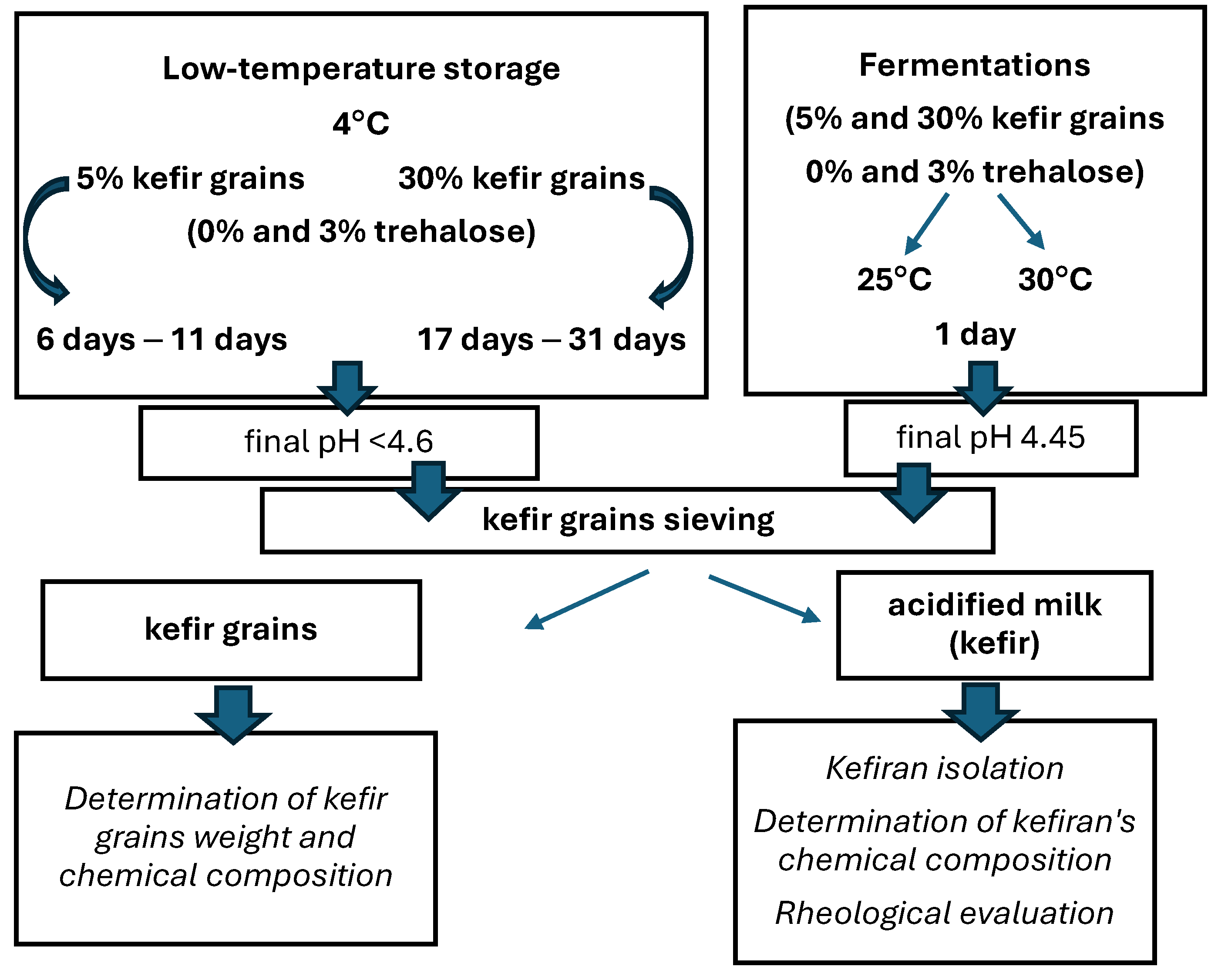
The experimental design consisted of two distinct parts, as shown in Table 1. In the first part, kefir grains were inoculated into UHT milk and stored at a low temperature (4 °C) for two distinct periods according to the grain concentration (a longer storage time was used for the lower kefir grain inoculum), while in the second part, for comparison, kefir grains were inoculated into UHT milk and allowed to ferment at two different temperatures (25 °C and 30 °C). Figure 1 shows the experimental workflow, which is discussed in Section 2.3.1 and Section 2.3.2

2.3.1. Effect of Low-Temperature Storage of Kefir Grains on Kefiran Production

For the preparation of the samples, the activated kefir grains were added to UHT milk with or without the addition of 3% w/w trehalose at two different grain concentrations (5% and 30% w/w) in a total volume of 300 mL of substrate (UHT milk) and stored in sterile glass containers at 4 °C for two different periods of time. Samples with 5% kefir grain inoculum were stored for 17 and 31 days, while samples with 30% kefir grain inoculum remained under low-temperature storage for 6 and 11 days. The storage time of the samples was determined by the grain concentration. Initially, during the first storage period, the samples remained under low-temperature conditions until their pH was reduced below 4.6 and their substrate (acidified milk (kefir)) became viscous (indicating the formation of an acidified milk gel) and exhibited ropiness (indicating the presence of kefiran). For each kefir grain concentration, the second storage period lasted approximately twice as long as the first one (t and 2t). A total of 8 samples were prepared, that is, 4 samples differing in kefir grains concentration (5% and 30%) and in the presence of trehalose (0% and 3%), which were stored for 2 different periods of time (t and 2t). At the end of the storage time, the kefir grains were retrieved, weighed, and used for further experiments, while the acidified milk sample (kefir) was collected for further analysis (pH measurement, kefiran determination, and rheological evaluation). The acidified milk (kefir) samples were analyzed immediately for their pH and kefiran concentrations, while for rheological evaluation, they remained under refrigerated storage for a maximum of 4 h. Sample production was performed in duplicate.

2.3.2. Effect of Fermentation Temperature on Kefiran Production

In addition to low-temperature storage, after kefir grain inoculation, the 4 samples differing in kefir grain concentration (5% and 30%) and in the presence of trehalose (0% and 3%) were allowed to ferment until a final pH of 4.45. Two different fermentation temperatures were used, that is, 25 °C and 30 °C, with the former being the typical temperature for kefir preparation when grains are used as the starter culture, and the latter representing a higher temperature commonly used for commercial cultures. Following fermentation, the grains were retrieved and strained out, and the kefir samples were analyzed for their kefiran concentration and rheological behavior. All fermentation experiments were performed in duplicate.

2.4. Determination of Increase in Kefir Grain Mass

Following low-temperature storage or fermentation, the kefir grains were separated using a sterile stainless-steel sieve and transferred into sterile glass dishes in which sterilized paper towels were placed to remove excess water. After removing the paper towels, the kefir grains were weighed using an analytical balance. The increase in kefir grain mass is expressed as percentage values based on the difference between the initial and final weights of the kefir grains, using the following equation:
Kefir grain increment (%) = (Wf − Win)/Win × 100
where Win refers to the initial weight of the kefir grains after inoculation and Wf refers to the final weight of the kefir grains at the end of low-temperature storage or fermentation.

2.5. Kefiran Isolation and Purification

Kefiran was isolated from the acidified milk (kefir) samples according to the purification methodology reported by [28]. Specifically, the polysaccharide was detached from the bacterial cells, and the enzymes that could hydrolyze it were inactivated by heating at 80 °C for 1 h in distilled water under constant agitation. Following heat treatment, trichloroacetic acid at a final concentration of 12% w/v was added to the crude kefiran solution to precipitate proteins, and the solution was stored at 4 °C for 24 h. The bacterial cells and proteins were removed via centrifugation at 9000 rpm at 4 °C for 40 min. The supernatant was then collected and dispensed into centrifuge vials for another centrifugation step (9000 rpm at 4 °C for 30 min) to ensure removal of bacterial cells and proteins. Subsequently, the supernatant was collected, and twice the amount of chilled ethanol (from the freezer) was added to it. The solution was stored at 4 °C for 24 h and centrifuged at 9000 rpm at 4 °C for 30 min. The supernatant was removed, and the precipitate was collected and dissolved in distilled water. At least three consecutive ethanol precipitation steps, separated by intermediate dissolutions in distilled water, were applied to the supernatant liquid that contained the polysaccharide to purify it from low-molecular-weight contaminants. Following final centrifugation, the supernatant was removed, and the vials with the precipitate were transferred to a dryer to remove moisture and collect the kefiran in dry form. The samples remained in the dryer for 2 days at 45 °C, and then the vials with the dried kefiran were weighed using an analytical balance. The weight of each vial was subtracted from the total value recorded (weight of the vial plus the dried kefiran), and the weight of the dried kefiran is expressed as mg/100 g of acidified milk (kefir).
The procedure followed for the isolation of kefiran was carried out in duplicate in UHT milk with or without the addition of trehalose at 3% w/w. The values obtained from non-fermented samples (5 mg/100 g for UHT milk with 3% w/w trehalose and 1 mg/100 g for UHT milk) were subtracted from the values of the fermentation samples with or without trehalose addition, respectively, subjected to low-temperature storage or fermentation.

2.6. Physicochemical Analyses

2.6.1. Determination of pH Value

The pH of the samples was measured using a laboratory pH meter (GP353 ATC-pH-METER, EDT Instruments, Dover, UK). The pH meter was initially adjusted using buffers at pH 4 and 7. After being washed with distilled water, the electrodes were immersed in the samples, and the pH value was recorded. The pH determination was performed in duplicate.

2.6.2. Chemical Composition of Kefir Grains

Kefir grains were analyzed for their chemical composition. Moisture content was determined by drying at 102 ± 1 °C to constant weight, protein content using the Kjeldahl method (the nitrogen content multiplied by the factor 6.38 gave the protein content), and total sugar content using the phenol-sulphuric acid method [29]. Chemical analyses were performed in triplicate.

2.6.3. Chemical Composition of Kefiran

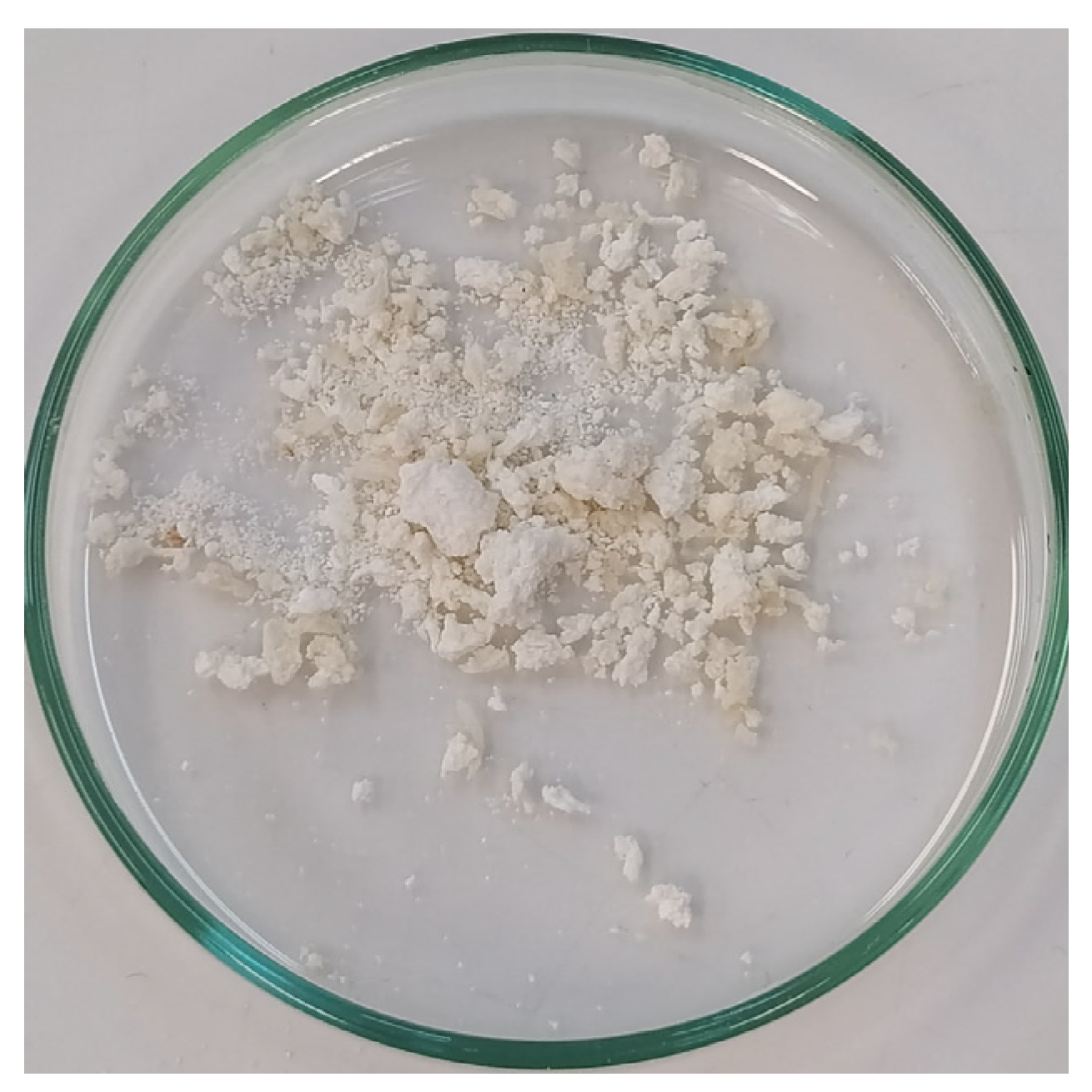
Following drying, the isolated dry kefiran (Figure 2) was evaluated for its purity by determining its protein (Kjeldahl method) and total carbohydrate (phenol-sulphuric acid method) content [29]. The analyses were performed in triplicate. The identity of the isolated polysaccharide was determined in our previously published research [30] using an NMR spectrometer (Agilent 500 DD2, Agilent Technologies, Inc., Santa Clara, CA, USA). The H-NMR spectrum of the purified carbohydrate preparation in D2O was recorded at 60 °C on a 500 MHz instrument.

2.7. Rheological Properties

The Discovery HR-20 rheometer (TA Instruments, New Castle, DE, USA) was used for the rheological evaluation of the samples. Specifically, dynamic analysis and viscosity measurements were performed at 4 °C in duplicate.
The frequency sweep was performed within the linear viscoelastic region (determined by preliminary tests) using a plate–plate serrated geometry to avoid slip effects. The frequency ranged from 0.1 to 10 Hz, and the strain rate was set to 0.1%. The elastic (G′) and viscous (G″) moduli were recorded as functions of frequency. The results are expressed as values of the elastic modulus and tan δ (G″/G′) at a frequency of 1 Hz.
For the viscosity measurements, a cone-and-plate geometry, where the cone had a gradient of 2°, was used, and the apparent viscosity was recorded as a function of shear rate ranging from 0.01 to 100 s−1. The results are shown as the apparent viscosity at 30 s−1, taking into account that in-mouth thickness correlates well with the apparent viscosity measured at shear rates around 30 s−1 [31].

2.8. Statistical Analysis

Three-way Analysis of Variance (ANOVA) was applied to the experimental data to evaluate the effects of the studied factors on the production of the polysaccharide kefiran. Specifically, for low-temperature storage, three-way ANOVA was used to study the effects of kefir grain concentration, the addition of trehalose, and storage time on pH, increase in kefir grain mass, kefiran production, and rheological properties. In the case of fermentation experiments, the three factors studied were fermentation temperature, kefir grain concentration, and the addition of trehalose. The properties evaluated were the increase in kefir grain mass, kefiran production, and rheological properties. The results are presented as the mean values of measurements with 95% confidence intervals based on the pooled standard deviation of the Analysis of Variance. Statistical analysis was performed using Minitab 18 statistical software.

3. Results and Discussion

3.1. Chemical Composition of Kefir Grains and Isolated Kefiran

The chemical composition of the kefir grains used did not exhibit significant differences among samples during low-temperature storage or fermentation experiments. Rimada and Abraham [22] reported that the chemical composition of kefir grains after 20 subcultures in deproteinized whey remained stable, while Londero et al. [11] stated that at 20 °C, kefir grains could remain in whey for prolonged periods without alterations in their chemical composition.
The moisture content of the kefir grains exhibited an average value of 85.06 ± 0.11% w/w, the protein concentration was 5.54 ± 0.01% w/w, and the total sugar content was 7.52 ± 0.09% w/w. The values obtained were within the ranges reported in the literature for kefir grains. In particular, Rimada and Abraham [22] reported 50 ± 6 g protein/kg, 82 ± 16 g polysaccharide/kg, and 807 ± 13 g water/kg. Londero et al. [11] reported 83.8 g/100 g moisture and a protein-to-polysaccharide ratio of 0.56 (g/Kg), while Schoevers and Britz [9] reported moisture ranging from 82.6 to 83.5 g/100 g, protein concentrations ranging from 4.61 to 5.43 g/100 g, and total sugars ranging from 6.34 to 7.76 g/100 g. In a study by Bengoa et al. [12], the concentrations of proteins and polysaccharides within the kefir grain matrix ranged from 4 to 6% and 8 to 10%, respectively.
Regarding the chemical composition of the kefiran isolated in the present study, its protein content was less than 0.1% w/w (dry basis), and the total carbohydrate content was 99.8% w/w (dry basis), indicating that the method employed for kefiran isolation yielded a high-purity polysaccharide.

3.2. Low-Temperature Storage of Kefir Grains With or Without the Presence of Trehalose

Table 2 shows the F- and p-values of the three-way Analysis of Variance for the studied variables under low-temperature storage. As can be seen, all the factors studied affected the evaluated variables, except kefir grain growth, which was affected only by the kefir grain concentration.

3.2.1. Evaluation of pH Values

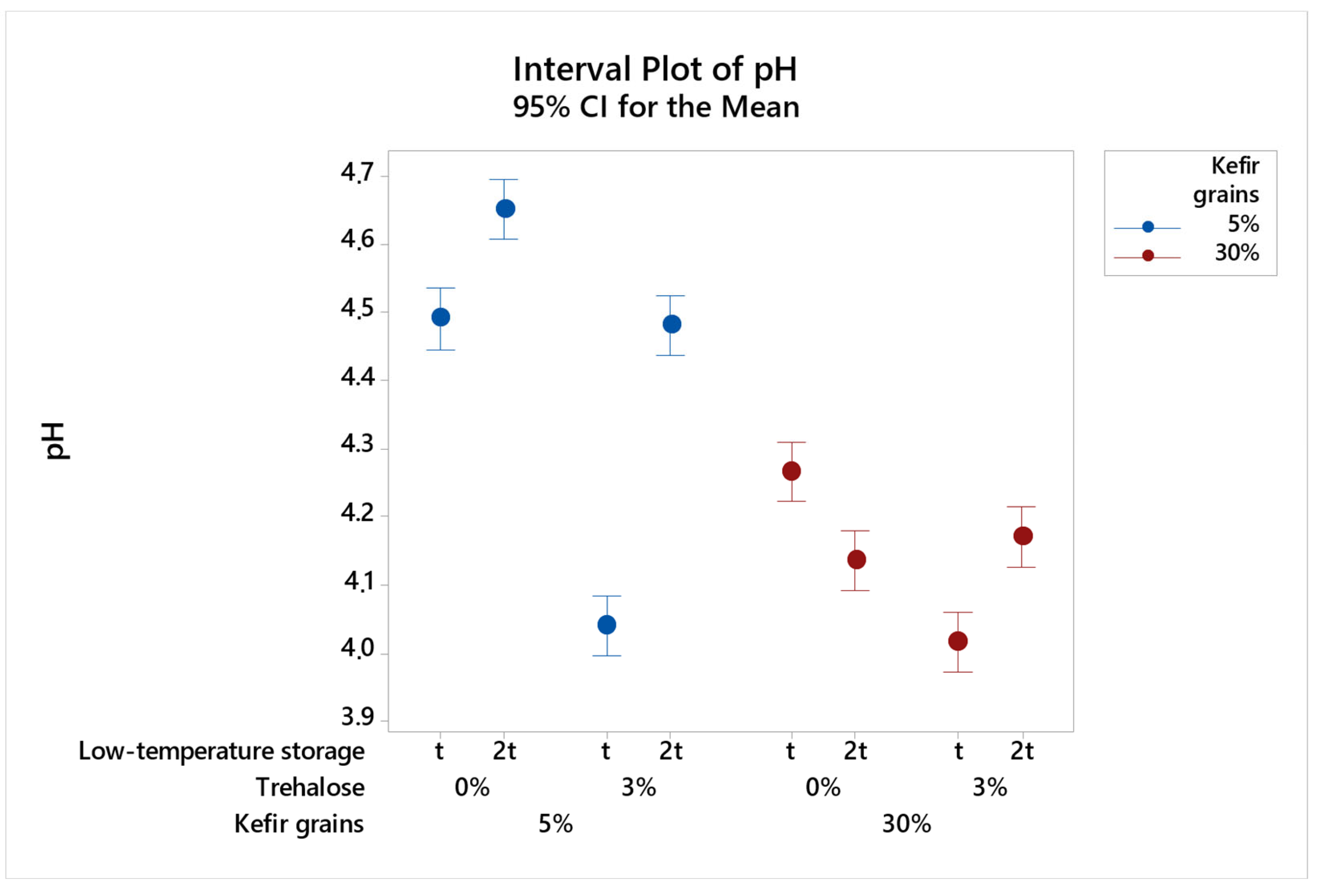
According to the ANOVA, the pH of the acidified milk samples was significantly affected (p < 0.05) by low-temperature storage, the addition of trehalose, and the concentration of kefir grains (Table 2). As seen in Figure 3, in the presence of trehalose, a greater decrease in pH was observed during low-temperature storage of the kefir samples produced with kefir grains at 5% w/w inoculum (from 4.44 to 4.04), compared to the corresponding samples where trehalose was not added (from 4.65 to 4.48). In the presence of trehalose, microorganisms find more available substrate to metabolize, leading to a greater pH decrease. Several bacteria can use exogenous trehalose as a source of carbon and energy [27]. Additionally, when their number is low, they find more available nutrient substrate to consume, resulting in an extended logarithmic growth phase, thus causing an even greater decrease in pH. At prolonged storage times and in the presence of trehalose, an increase in pH was observed (after its initial decrease) at both 5 and 30% grain inoculum levels (from 4.04 to 4.48 and from 4.02 to 4.17, respectively). It is possible that at prolonged storage times and due to increased metabolic activity in the presence of trehalose, as mentioned above, the production of proteolytic enzymes by bacteria was favored, resulting in protein breakdown, production of alkaline substances, and therefore an increase in pH. Starter culture bacteria have the ability to produce proteolytic enzymes, resulting in casein degradation [32]. However, in the absence of trehalose, the pH increased during storage (after its initial decrease) in samples with a grain inoculum of 5% (from 4.49 to 4.65), but it was further reduced in samples with a grain inoculum of 30% (from 4.27 to 4.14). As mentioned, the increased metabolic activity (due to the longer duration of the logarithmic growth phase) of microorganisms at low concentrations of kefir grains causes increased proteolytic activity and increased pH values at prolonged storage. The reduction in pH values during cold storage is due to the capacity of the microorganisms to produce organic acids at low temperatures [33]. Fermented milks undergo post-fermentation acidification during cold storage, resulting in decreased pH values [33,34].

3.2.2. Increase in Kefir Grain Mass

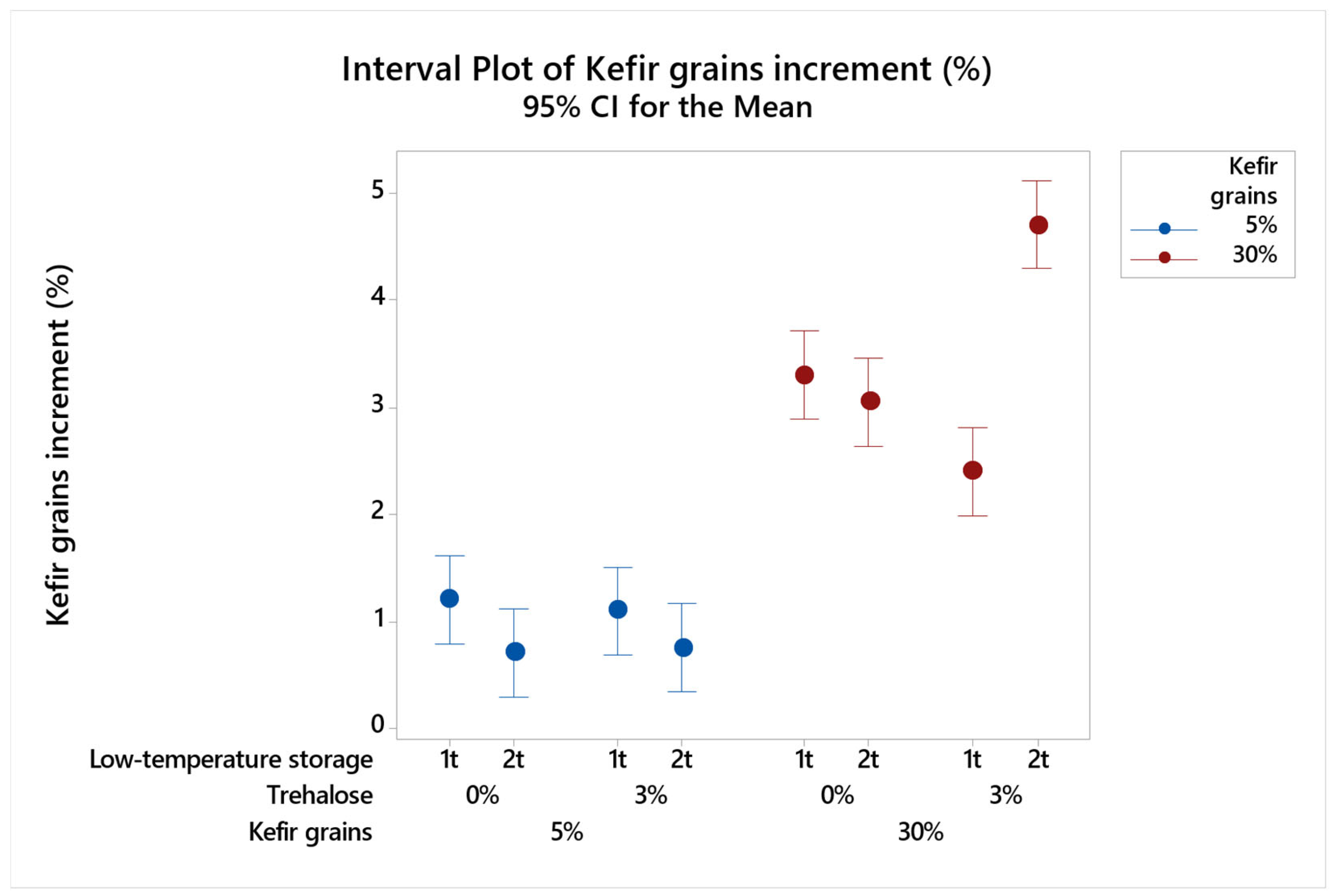
Generally, the increase in kefir grain mass (Figure 4) was limited during the low-temperature storage of the samples (0.6% to 1.3% w/w increase). Only in the case of the 30% kefir grain inoculum and in the presence of trehalose was a statistically significant increase observed in kefir grain mass (2.3% to 4.9% w/w), which was more pronounced with increased storage time (Table 2). The increase in kefir grain mass is due to the deposition of microorganisms and proteins, as well as the kefiran produced on the surface of the kefir grains [24]. This constant increase in the size of kefir grains, which depends on fermentation conditions [9,11,23], eventually leads to their division and the formation of new grains with a similar composition. However, since the samples were subjected to low-temperature storage rather than typical fermentation temperatures (25 to 30 °C), their mass was not expected to increase significantly. Nevertheless, the higher kefir grain concentration and the presence of trehalose seem to have favored an increase in their mass. Both factors are related to increased kefiran production and the increased metabolic activity of kefir’s microorganisms, which is discussed later.

3.2.3. Kefiran Production

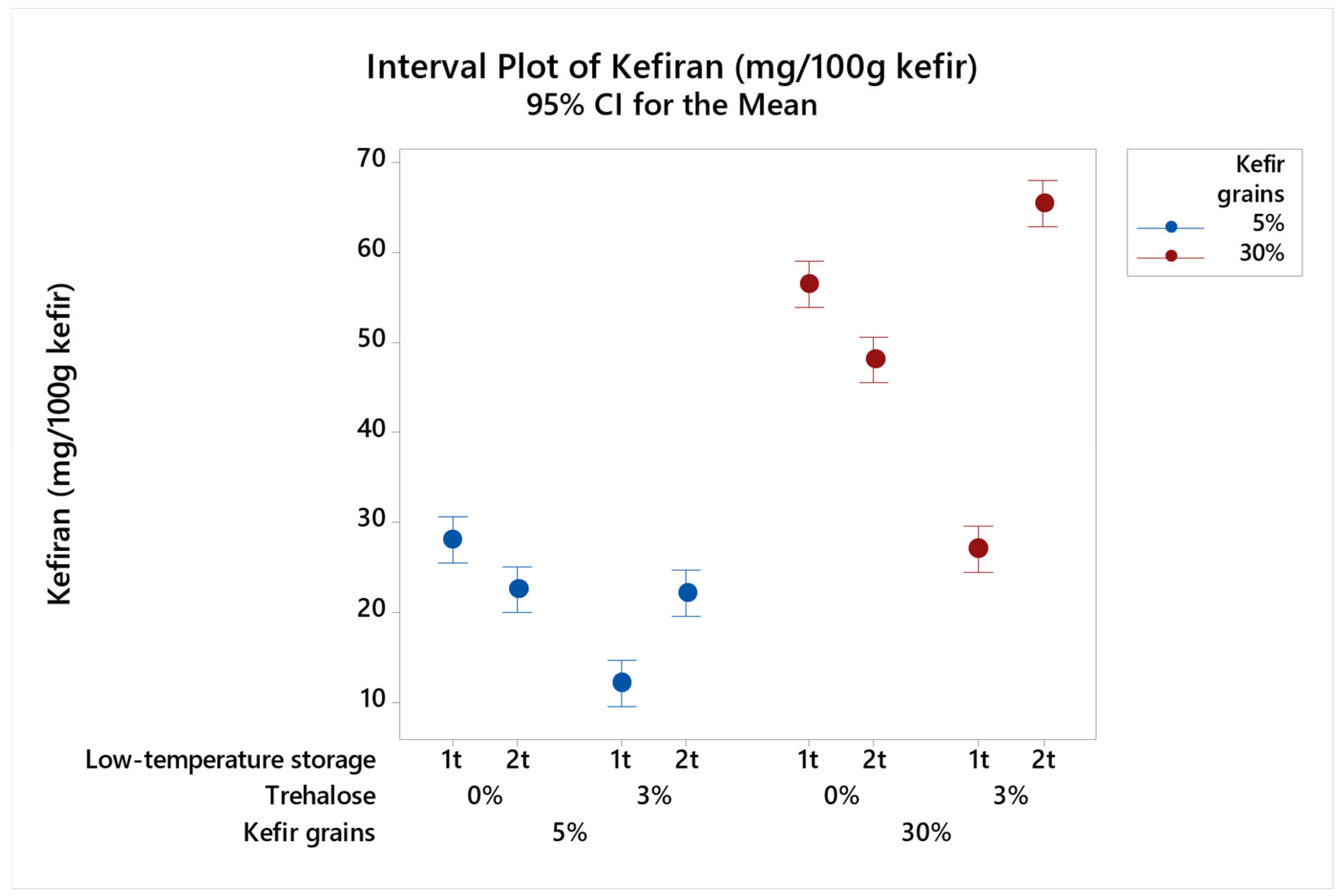
Regarding the production of kefiran, it was significantly affected (p < 0.05) by the percentage of kefir grains, the addition of trehalose, and the low-temperature storage time (Table 2). According to Figure 5, in the absence of trehalose, at both storage periods, the amount of kefiran obtained in samples with a 30% kefir grain inoculum was almost double (56.5 and 48.0 mg/100 g of acidified milk, respectively) compared to samples with a 5% kefir grain inoculum (28.0 and 22.5 mg/100 g of acidified milk, respectively). The higher the percentage of kefir grains, the higher the number of microorganisms present and the greater the amount of kefiran produced. Regarding low-temperature storage time, in the absence of trehalose, the amount of kefiran produced showed a small decrease with increasing storage time at both kefir grain concentrations (from 28.0 to 22.5 mg/100 g of acidified milk at a 5% grain inoculum and from 56.5 to 48.0 mg/100 g of acidified milk at a 30% grain inoculum), probably due to its breakdown by enzymes produced by microorganisms. However, in the presence of trehalose, kefiran production was favored by increasing low-temperature storage time, independent of kefir grain concentration. However, at higher grain inoculum levels, the amount of polysaccharide produced was the highest (65.5 mg/100 g of acidified milk). This can be attributed to the fact that the microorganisms utilized trehalose as a substrate; therefore, they continued to metabolize and produce kefiran. In contrast, the amount of kefiran produced decreased when the samples were stored at low temperature in the absence of trehalose. This is due to the fact that after a certain period of time, the microorganisms exhausted the carbon source (the sugars naturally present in the samples) used to proliferate and produce kefiran. Therefore, after this time, there was a gradual decrease in the amount of kefiran produced. The kefiran produced with a higher kefir grain inoculum level (30%) reached 56.5 mg/100 g of acidified milk and, in the presence of trehalose at prolonged storage time, reached 65.5 mg/100 g of acidified milk; both values were higher than those reported in the literature (10 to 30 mg/100 mL kefir [12], 7.9 mg/100 g substrate in deproteinized whey fermented at 43 °C with a 10% kefir grain inoculum [22], or 46 mg/100 g substrate produced from lactic acid bacteria isolated from kefir grains [35]). Since lactic acid bacteria produce extracellular polysaccharides such as kefiran as a protective mechanism against adverse environmental conditions [21], the low-temperature storage of kefir grains forces the bacteria entrapped in the grain matrix to form a protective layer for the cells. As long as there is a carbon source available to the surrounding medium to be used by the bacteria to synthesize the polysaccharide, an increase in the production of kefiran occurs. Therefore, low-temperature storage can be utilized to increase kefiran production in UHT milk in the presence of kefir grains. However, further work is required with regard to microbial counting, lactose and trehalose consumption, and enzyme activity measurements to fully understand the growth rate of kefir microorganisms, the role of the disaccharide trehalose, the proteolytic activity of the enzymes produced by the microorganisms, and the enzyme activity on kefiran during the low-temperature storage of kefir grains.

3.2.4. Evaluation of Rheological Behavior

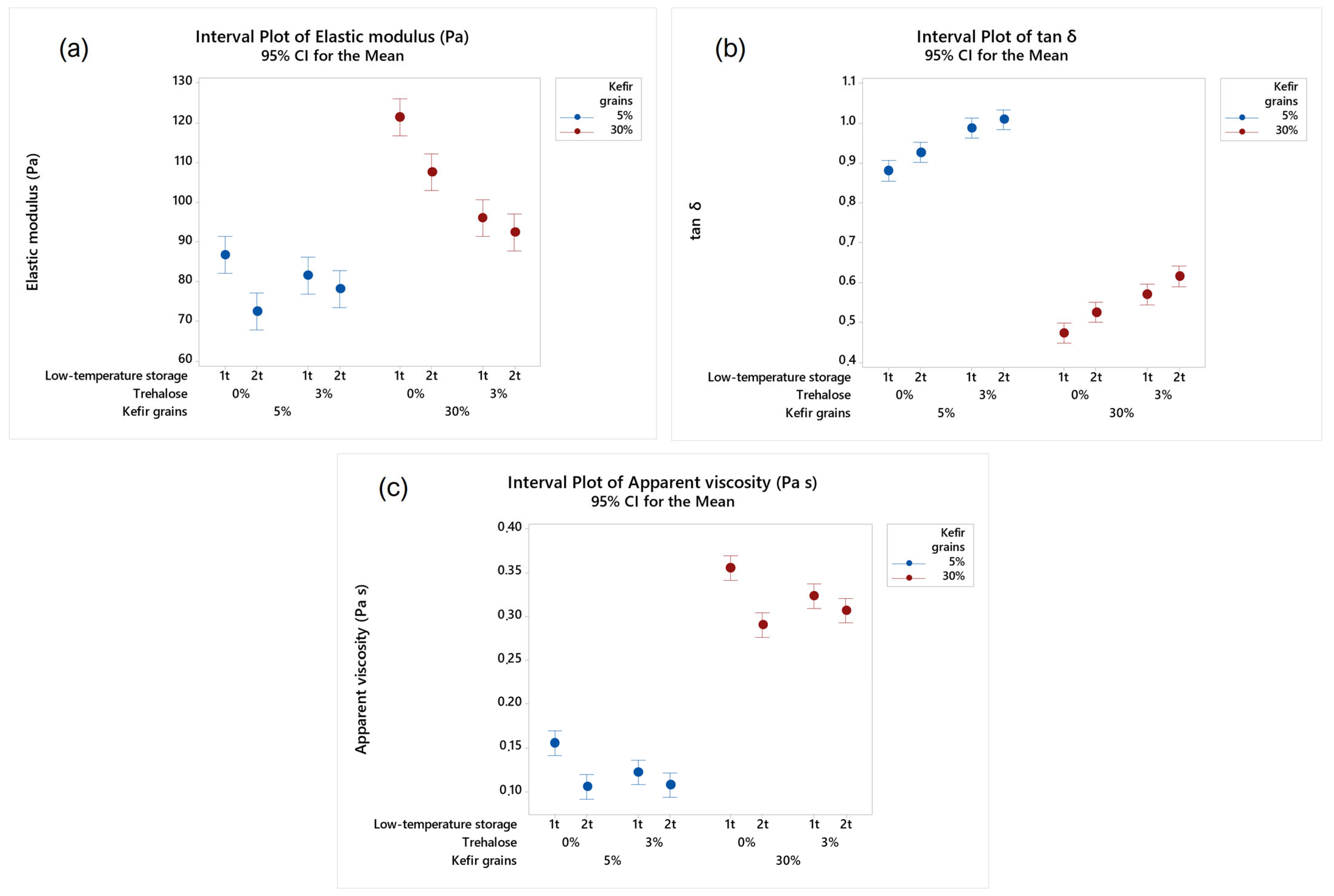
According to statistical analysis, the rheological properties of the acidified milk samples were significantly affected by all the studied factors (p < 0.05) (Table 2). As can be seen in Figure 4 and Figure 6, the rheological properties of the samples were affected by increasing kefiran concentration only during the first storage period. Specifically, samples with increased kefiran content exhibited increased elasticity and apparent viscosity and reduced values of tan δ. The increased elasticity and reduced liquid-like behaviour are due to the interactions of kefiran with milk proteins, while the improved apparent viscosity can be attributed to the increased number of kefiran molecules, which results in increased resistance to the application of stress. It is worth mentioning that the samples with low kefiran concentration exhibited tan δ values close to 1 (Figure 6b), indicating that viscous behavior predominates over elastic behavior [36]. Rimada and Abraham [37] also reported an increase in the viscosity and elasticity of glucono-δ-lactone-induced skim milk gels with kefiran addition. The increase in the rheological behavior of the gels can be attributed to the interactions between kefiran and milk proteins.
However, when storage time increased, the elasticity and apparent viscosity decreased, while tan δ values increased, indicating a more liquid-like behaviour, regardless of kefiran concentration. The decline in the rheological properties of the samples with increasing storage time can be attributed to the weakening of the protein matrix due to the breakdown of proteins by the action of proteolytic enzymes, as mentioned above. The proteolytic enzymes degrade caseins [32], thus resulting in reduced molecule size and, therefore, reduced resistance to the application of force (reduced apparent viscosity). In addition, the reduction in protein size causes the weakening of the protein–protein interactions formed during the acidification process (casein destabilization due to pH reduction close to their isoelectric point) [32], resulting in reduced elasticity and increased liquid-like behavior. The decrease in the apparent viscosity during prolonged storage time is in agreement with the results reported by Irigoyen et al. [38] for kefir samples prepared with kefir grains as the starter culture.

3.3. Fermentation of Kefir Grains With or Without the Presence of Trehalose

Fermentation experiments were performed in order to compare their results with those obtained from low-temperature storage. The F- and p-values of the three-way Analysis of Variance for the studied variables are shown in Table 3.
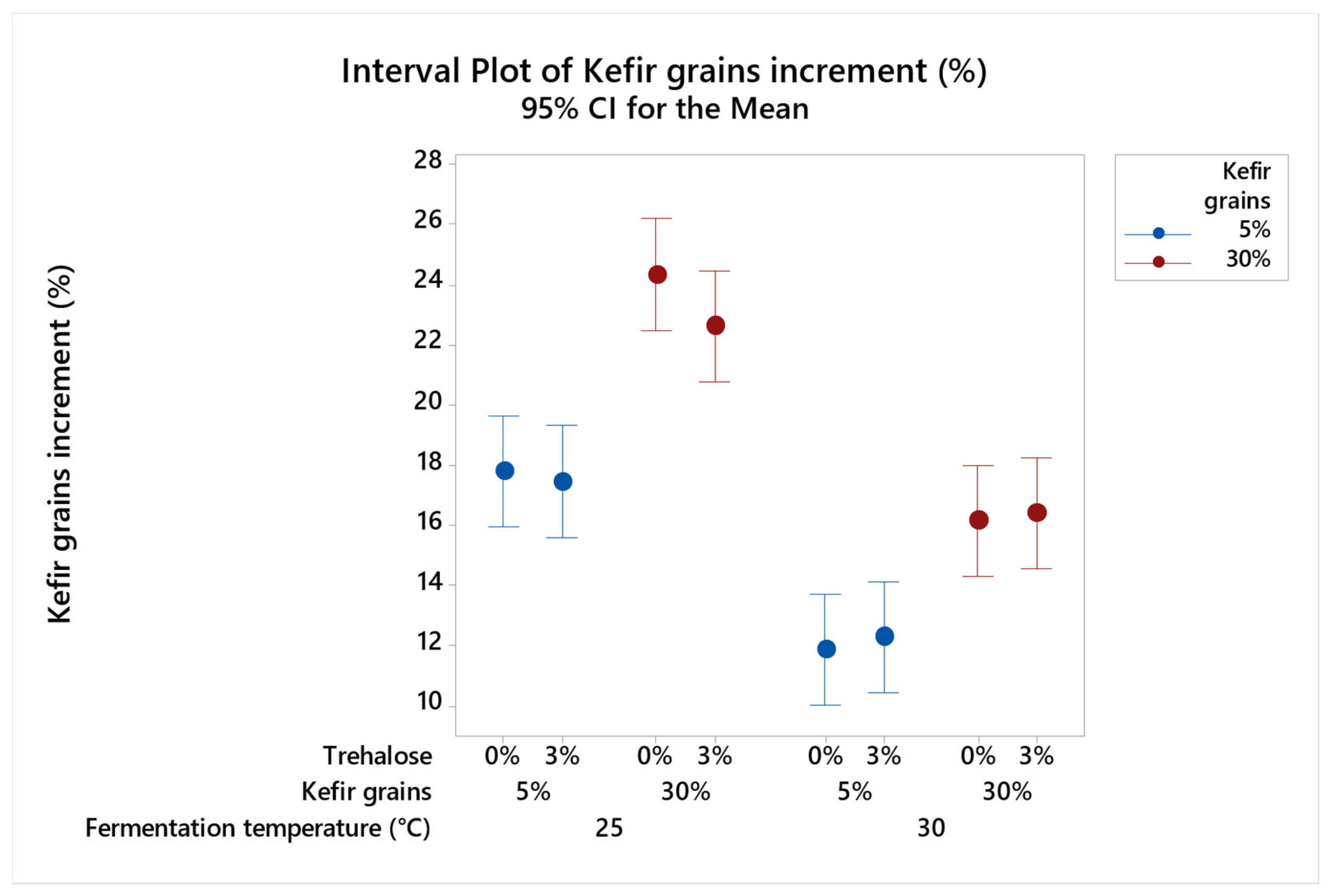
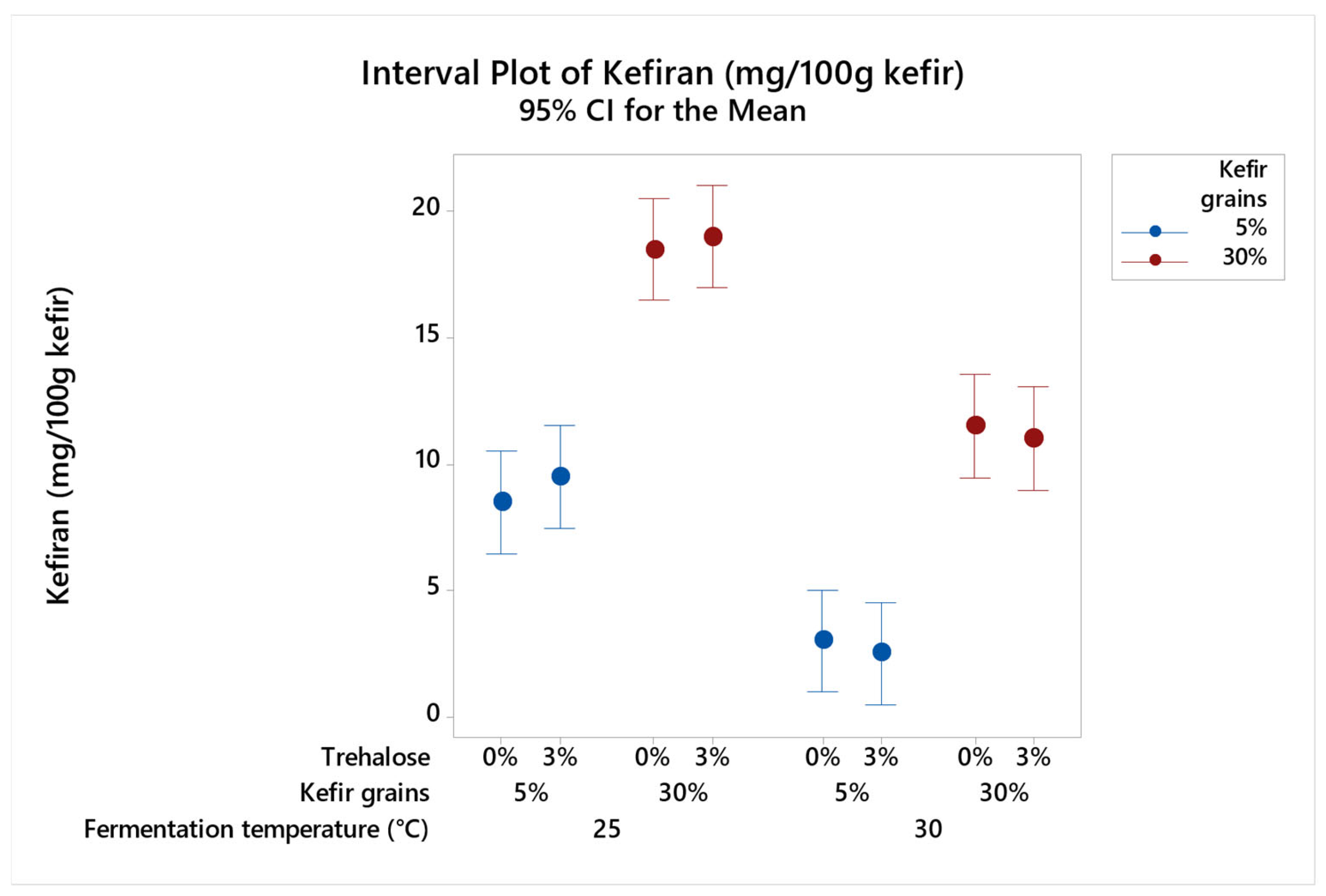
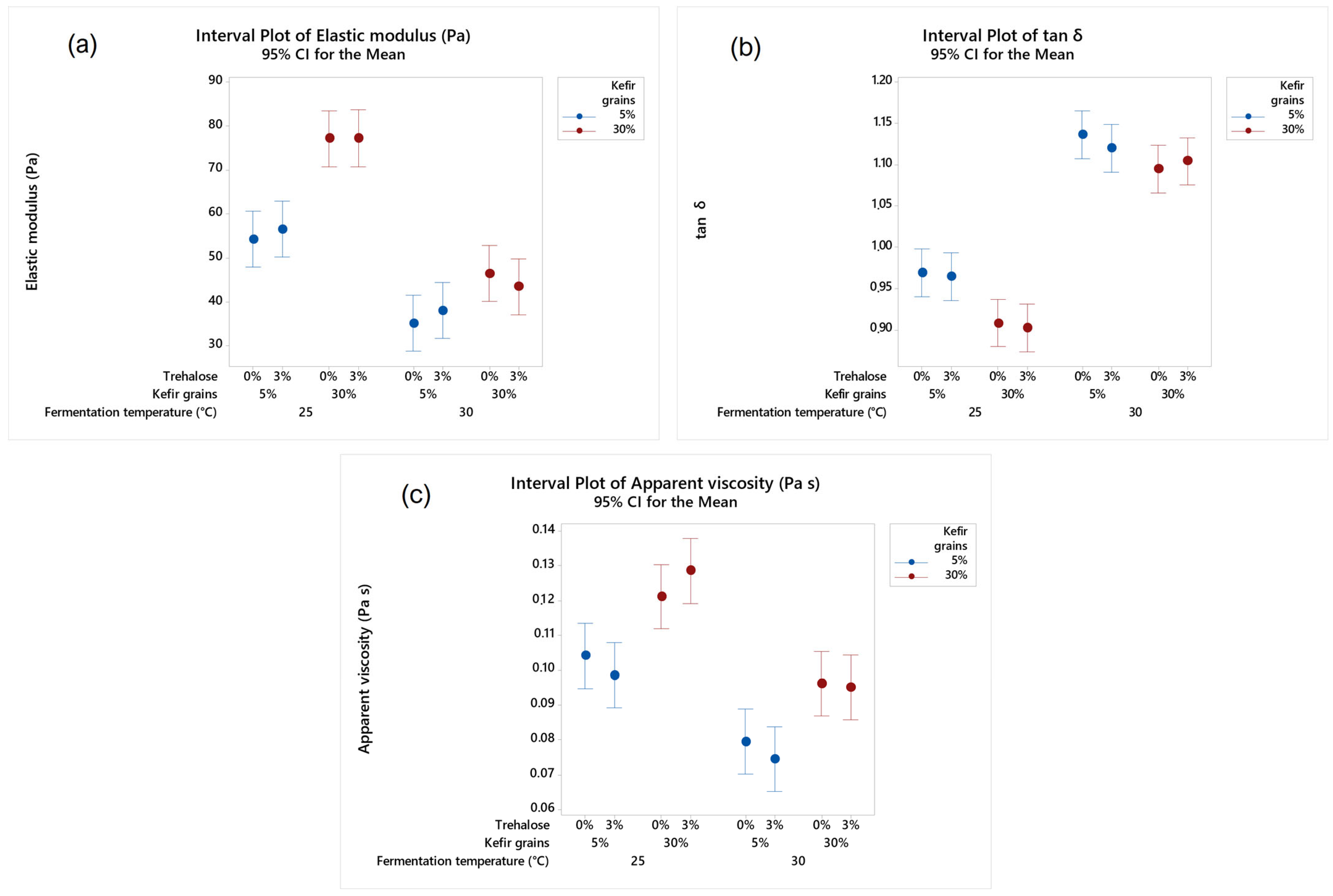
As seen in Figure 7, Figure 8 and Figure 9, the increase in kefir grain mass, the kefiran production, and the rheological properties of the kefir samples were significantly affected (p < 0.05) by the fermentation temperature and grain concentration (Table 3), while the addition of trehalose was not a significant factor. Under typical fermentation conditions, the bacteria did not differentiate their metabolism in response to the presence of trehalose, and no difference in kefiran production was observed. The optimum conditions for an increase in kefir grain mass and kefiran production were fermentation at 25 °C and a kefir grain inoculum of 30%. However, although the kefir grains increased their mass during fermentation, the amount of kefiran produced in the medium was lower compared to that in the low-temperature storage experiments. This can be attributed to the fact that part of the produced polysaccharide contributed to the increase in the mass of the kefir grains.
As can be seen in Figure 9, the rheological behaviour of kefir was affected by kefiran concentration, exhibiting increased elasticity and viscosity values at high kefiran concentrations. However, it is worth mentioning that these values were significantly lower than those in the low-temperature storage experiments.

4. Conclusions

Although low-temperature storage of kefir grains resulted in a reduced increase in kefir grain mass, it favored the production of the polysaccharide kefiran. In particular, at increased kefir grain concentrations (30%) and in the presence of trehalose (3% w/w), prolonged low-temperature storage until a final pH of 4.2 resulted in the highest kefiran production. The amount of polysaccharide produced under the above-mentioned conditions was higher than that in the fermentation experiments at typical temperatures ranging from 25 to 30 °C. At lower concentrations of kefir grains and regardless of the presence of trehalose, the production of kefiran was lower. The presence of trehalose prevented the reduction in kefiran concentration that occurred during prolonged low-temperature storage. However, trehalose did not affect the amount of kefiran produced during the fermentation experiments, in which a kefir grain concentration of 30% and a fermentation temperature of 25 °C were the optimal conditions for increasing the biosynthesis of the polysaccharide. Kefiran production affected the rheological behavior of the acidified milk by improving its elasticity and apparent viscosity. The increase in the period of low-temperature storage, reduced elasticity and viscosity, regardless of kefiran concentration, due to protein breakdown caused by increased proteolytic activity, as evidenced by the increased pH values. The increased kefir grain concentration resulted in samples with improved rheological behavior in both low-temperature storage and fermentation experiments.

Author Contributions

Conceptualization, A.G. and G.D.; methodology, L.A., S.E., A.G. and G.D.; software, L.A., S.E. and G.D.; validation, L.A., S.E., A.G. and G.D.; formal analysis, L.A., A.G. and G.D.; investigation, L.A., S.E. and G.D.; resources, A.G. and G.D.; data curation, L.A. and G.D.; writing—original draft preparation, L.A., S.E., A.G. and G.D.; writing—review and editing, L.A., S.E., A.G. and G.D.; visualization, L.A. and G.D.; supervision, A.G. and G.D.; project administration, A.G. and G.D. All authors have read and agreed to the published version of the manuscript.

Funding

This research received no external funding.

Data Availability Statement

The raw data supporting the conclusions of this article will be made available by the authors on request.

Conflicts of Interest

The authors declare no conflicts of interest.

References

  1. Abid, Y.; Azabou, S. Exopolysaccharides from Lactic Acid Bacteria. In Polysaccharides of Microbial Origin; Springer: Cham, Switzerland, 2022; pp. 415–437. ISBN 978-3-030-42215-8. [Google Scholar]
  2. Maeda, H.; Zhu, X.; Omura, K.; Suzuki, S.; Kitamura, S. Effects of an Exopolysaccharide (Kefiran) on Lipids, Blood Pressure, Blood Glucose, and Constipation. BioFactors 2004, 22, 197–200. [Google Scholar] [CrossRef] [PubMed]
  3. Rodrigues, K.L.; Caputo, L.R.G.; Carvalho, J.C.T.; Evangelista, J.; Schneedorf, J.M. Antimicrobial and Healing Activity of Kefir and Kefiran Extract. Int. J. Antimicrob. Agents 2005, 25, 404–408. [Google Scholar] [CrossRef] [PubMed]
  4. Salari, A.; Hashemi, M.; Afshari, A. Functional Properties of Kefiran in the Medical Field and Food Industry. Curr. Pharm. Biotechnol. 2022, 23, 388–395. [Google Scholar] [CrossRef] [PubMed]
  5. Gentry, B.; Cazón, P.; O’Brien, K. A Comprehensive Review of the Production, Beneficial Properties, and Applications of Kefiran, the Kefir Grain Exopolysaccharide. Int. Dairy J. 2023, 144, 105691. [Google Scholar] [CrossRef]
  6. Moradi, Z.; Kalanpour, N. Kefiran, a Branched Polysaccharide: Preparation, Properties and Applications: A Review. Carbohydr. Polym. 2019, 223, 115100. [Google Scholar] [CrossRef]
  7. Tan, K.-X.; Chamundeswari, V.N.; Loo, S.C.J. Prospects of Kefiran as a Food-Derived Biopolymer for Agri-Food and Biomedical Applications. RSC Adv. 2020, 10, 25339–25351. [Google Scholar] [CrossRef]
  8. Simonelli, N.; Gagliarini, N.; Medrano, M.; Piermaria, J.A.; Abraham, A.G. Kefiran. In Polysaccharides of Microbial Origin; Springer: Cham, Switzerland, 2022; pp. 99–116. ISBN 978-3-030-42215-8. [Google Scholar]
  9. Schoevers, A.; Britz, T.J. Influence of Different Culturing Conditions on Kefir Grain Increase. Int. J. Dairy Technol. 2003, 56, 183–187. [Google Scholar] [CrossRef]
  10. Farnworth, E. Kefir—A Complex Probiotic. Food Sci. Technol. Bull. Funct. Foods 2005, 2, 1–17. [Google Scholar] [CrossRef]
  11. Londero, A.; Hamet, M.F.; Antoni, G.L.D.; Garrote, G.L.; Abraham, A.G. Kefir Grains as a Starter for Whey Fermentation at Different Temperatures: Chemical and Microbiological Characterisation. J. Dairy Res. 2012, 79, 262–271. [Google Scholar] [CrossRef]
  12. Bengoa, A.A.; Iraporda, C.; Garrote, G.L.; Abraham, A.G. Kefir Micro-organisms: Their Role in Grain Assembly and Health Properties of Fermented Milk. J. Appl. Microbiol. 2019, 126, 686–700. [Google Scholar] [CrossRef]
  13. Ghasemlou, M.; Khodaiyan, F.; Jahanbin, K.; Gharibzahedi, S.M.T.; Taheri, S. Structural Investigation and Response Surface Optimisation for Improvement of Kefiran Production Yield from a Low-Cost Culture Medium. Food Chem. 2012, 133, 383–389. [Google Scholar] [CrossRef] [PubMed]
  14. Cheirsilp, B.; Shimizu, H.; Shioya, S. Enhanced Kefiran Production by Mixed Culture of Lactobacillus kefiranofaciens and Saccharomyces cerevisiae. J. Biotechnol. 2003, 100, 43–53. [Google Scholar] [CrossRef] [PubMed]
  15. Cheirsilp, B.; Suksawang, S.; Yeesang, J.; Boonsawang, P. Co-Production of Functional Exopolysaccharides and Lactic Acid by Lactobacillus kefiranofaciens Originated from Fermented Milk, Kefir. J. Food Sci. Technol. 2018, 55, 331–340. [Google Scholar] [CrossRef] [PubMed]
  16. Guzel-Seydim, Z.; Kok-Tas, T.; Ertekin-Filiz, B.; Seydim, A.C. Effect of Different Growth Conditions on Biomass Increase in Kefir Grains. J. Dairy Sci. 2011, 94, 1239–1242. [Google Scholar] [CrossRef]
  17. Zajšek, K.; Goršek, A.; Kolar, M. Cultivating Conditions Effects on Kefiran Production by the Mixed Culture of Lactic Acid Bacteria Imbedded within Kefir Grains. Food Chem. 2013, 139, 970–977. [Google Scholar] [CrossRef]
  18. Blandón, L.M.; Noseda, M.D.; Islan, G.A.; Castro, G.R.; de Melo Pereira, G.V.; Thomaz-Soccol, V.; Soccol, C.R. Optimization of Culture Conditions for Kefiran Production in Whey: The Structural and Biocidal Properties of the Resulting Polysaccharide. Bioact. Carbohydr. Diet. Fibre 2018, 16, 14–21. [Google Scholar] [CrossRef]
  19. Yokoi, H.; Watanabe, T.; Fuji, Y.; Toba, T.; Adachi, S. Isolation and Characterization of Polysaccharide-Producing Bacteria from Kefir Grains. J. Dairy Sci. 1990, 73, 1684–1689. [Google Scholar] [CrossRef]
  20. Mıdık, F.; Tokatlı, M.; Bağder Elmacı, S.; Özçelik, F. Influence of Different Culture Conditions on Exopolysaccharide Production by Indigenous Lactic Acid Bacteria Isolated from Pickles. Arch. Microbiol. 2020, 202, 875–885. [Google Scholar] [CrossRef]
  21. Nguyen, P.-T.; Nguyen, T.-T.; Bui, D.-C.; Hong, P.-T.; Hoang, Q.-K.; Nguyen, H.-T. Exopolysaccharide Production by Lactic Acid Bacteria: The Manipulation of Environmental Stresses for Industrial Applications. AIMS Microbiol. 2020, 6, 451–469. [Google Scholar] [CrossRef]
  22. Rimada, P.S.; Abraham, A.G. Polysaccharide Production by Kefir Grains during Whey Fermentation. J. Dairy Res. 2001, 68, 653–661. [Google Scholar] [CrossRef]
  23. Pop, C.; Apostu, S.; Salanţă, L.; Rotar, A.M.; Sindic, M.; Mabon, N.; Socaciu, C. Influence of Different Growth Conditions on the Kefir Grains Production, used in the Kefiran Synthesis. Bull. UASVM Food Sci. Technol. 2014, 71, 147–153. [Google Scholar] [CrossRef]
  24. Gao, X.; Li, B. Chemical and Microbiological Characteristics of Kefir Grains and Their Fermented Dairy Products: A Review. Cogent Food Agric. 2016, 2, 1272152. [Google Scholar] [CrossRef]
  25. Chen, A.; Tapia, H.; Goddard, J.M.; Gibney, P.A. Trehalose and Its Applications in the Food Industry. Compr. Rev. Food Sci. Food Saf. 2022, 21, 5004–5037. [Google Scholar] [CrossRef] [PubMed]
  26. Zayed, G.; Roos, Y.H. Influence of Trehalose and Moisture Content on Survival of Lactobacillus salivarius Subjected to Freeze-Drying and Storage. Process Biochem. 2004, 39, 1081–1086. [Google Scholar] [CrossRef]
  27. Argüelles, J.C. Physiological Roles of Trehalose in Bacteria and Yeasts: A Comparative Analysis. Arch. Microbiol. 2000, 174, 217–224. [Google Scholar] [CrossRef]
  28. Exarhopoulos, S.; Raphaelides, S.N.; Kontominas, M.G. Conformational Studies and Molecular Characterization of the Polysaccharide Kefiran. Food Hydrocoll. 2018, 77, 347–356. [Google Scholar] [CrossRef]
  29. AOAC. Official Methods of Analysis of the Association of Official Analytical Chemists: Official Methods of Analysis of AOAC International, 21st ed.; AOAC: Washington, DC, USA, 2019. [Google Scholar]
  30. Exarhopoulos, S.; Goulas, A.; Dimitreli, G. Biodegradable Films from Kefiran-Based Cryogel Systems. Macromol 2022, 2, 324–345. [Google Scholar] [CrossRef]
  31. Ben Omar, Z.; Raphaelides, S.; Kesteloot, R. Texture Evaluation of French Acid-Type Fresh Cheeses. J. Texture Stud. 1995, 26, 325–338. [Google Scholar] [CrossRef]
  32. Walstra, P.; Wouters, J.T.M.; Geurts, T.J. Dairy Science and Technology, 2nd ed.; CRC Press: Boca Raton, FL, USA, 2005; ISBN 978-0-429-11614-8. [Google Scholar]
  33. Damin, M.R.; Minowa, E.; Alcântara, M.R.; Oliveira, M.N. Effect of Cold Storage on Culture Viability and Some Rheological Properties of Fermented Milk Prepared with Yogurt and Probiotic Bacteria. J. Texture Stud. 2008, 39, 40–55. [Google Scholar] [CrossRef]
  34. Oliveira, M.; Damin, M.R.; Minowa, E.; Alcantara, M. Chemical and Viability Changes During Fermentation and Cold Storage of Fermented Milk Manufactured Using Yogurt and Probiotic Bacteria. IUFoST 2006, 635, 1271–1281. [Google Scholar] [CrossRef]
  35. Frengova, G.I.; Simova, E.D.; Beshkova, D.M.; Simov, Z.I. Exopolysaccharides Produced by Lactic Acid Bacteria of Kefir Grains. Z. Naturforsch. C 2002, 57, 805–810. [Google Scholar] [CrossRef]
  36. Bourne, M.C. Chapter 1—Texture, Viscosity, and Food. In Food Texture and Viscosity, 2nd ed.; Bourne, M.C., Ed.; Food Science and Technology; Academic Press: London, UK, 2002; pp. 1–32. ISBN 978-0-12-119062-0. [Google Scholar]
  37. Rimada, P.S.; Analía Graciela Abraham, A.G. Kefiran improves rheological properties of glucono-δ-lactone induced skim milk gels. Int. Dairy J. 2006, 16, 33–39. [Google Scholar] [CrossRef]
  38. Irigoyen, A.; Arana, I.; Castiella, M.; Torre, P.; Ibáñez, F.C. Microbiological, Physicochemical, and Sensory Characteristics of Kefir During Storage. Food Chem. 2005, 90, 613–620. [Google Scholar] [CrossRef]
Figure 1. Experimental workflow.
Macromol 06 00003 g001
Figure 2. Isolated kefiran.
Macromol 06 00003 g002
Figure 3. Effect of low-temperature storage, trehalose addition, and kefir grain inoculum on pH values of acidified milk (kefir) samples. Vertical bars with no overlap differ significantly.
Macromol 06 00003 g003
Figure 4. Effect of low-temperature storage, trehalose addition, and kefir grain inoculum level on the increase in kefir grain mass. Vertical bars with no overlap differ significantly.
Macromol 06 00003 g004
Figure 5. Effect of low-temperature storage, trehalose addition, and kefir grain inoculum level on the amount of kefiran in acidified milk (kefir) samples. Vertical bars with no overlap differ significantly.
Macromol 06 00003 g005
Figure 6. Effect of low-temperature storage, trehalose addition, and kefir grain inoculum level on the rheological properties of acidified milk (kefir) samples: (a) elastic modulus; (b) tan δ; (c) apparent viscosity. Vertical bars with no overlap differ significantly.
Macromol 06 00003 g006
Figure 7. Effect of trehalose addition, kefir grain inoculum level, and fermentation temperature on the increase in kefir grain mass. Vertical bars with no overlap differ significantly.
Macromol 06 00003 g007
Figure 8. Effect of trehalose addition, kefir grain inoculum level, and fermentation temperature on the amount of kefiran in kefir samples. Vertical bars with no overlap differ significantly.
Macromol 06 00003 g008
Figure 9. Effect of trehalose addition, kefir grain inoculum level, and fermentation temperature on the rheological properties of acidified milk (kefir) samples: (a) elastic modulus; (b) tan δ; (c) apparent viscosity. Vertical bars with no overlap differ significantly.
Macromol 06 00003 g009
Table 1. Experimental design.
Low-Temperature StorageFermentation
Temperature (°C)42530
Kefir grains (%)530530530
Trehalose (%)030303030303
Storage time (days)611611173117311
Table 2. The F- and p-values of the three-way Analysis of Variance for the variables in the low-temperature storage experiments.
Factors
VariablesLow-Temperature StorageTrehaloseKefir Grains
F-Valuesp-ValuesF-Valuesp-ValuesF-Valuesp-Values
pH5.600.0369.990.00816.550.002
Increase in kefir grain mass (%)0.720.4140.240.63146.770.000
Kefiran (mg/100 g kefir)10.010.0116.830.028106.430.000
Elastic modulus6.260.0288.170.01449.330.000
Tan δ32.220.000169.700.000312.150.000
Apparent viscosity (Pa s)75.890.0007.540.023259.360.000
Table 3. The F- and p-values of the three-way Analysis of Variance for the variables in the fermentation experiments.
Factors
VariablesTrehaloseKefir GrainsFermentation Temperature
F-Valuesp-ValuesF-Valuesp-ValuesF-Valuesp-Values
Increase in kefir grain mass (%)0.340.57075.970.000122.150.000
Kefiran (mg/100 g kefir)0.050.831253.760.000144.050.000
Elastic modulus0.050.82834.010.00097.230.000
Tan δ0.220.64724.970.000387.450.000
Apparent viscosity (Pa s)0.120.73353.790.00087.290.000
Disclaimer/Publisher’s Note: The statements, opinions and data contained in all publications are solely those of the individual author(s) and contributor(s) and not of MDPI and/or the editor(s). MDPI and/or the editor(s) disclaim responsibility for any injury to people or property resulting from any ideas, methods, instructions or products referred to in the content.