Article

Design of Experiments Methodology for Fused Filament Fabrication of Silicon-Carbide-Particulate-Reinforced Polylactic Acid Composites

by
Andrew P. Gyekenyesi
1,
Meelad Ranaiefar
2,
Michael C. Halbig
2,* and
Mrityunjay Singh
3
1
OSGC Summer Intern, Cleveland State University, Cleveland, OH 44115, USA
2
NASA Glenn Research Center, Cleveland, OH 44135, USA
3
Ohio Aerospace Institute, Cleveland, OH 44142, USA
*
Author to whom correspondence should be addressed.
Macromol 2025, 5(4), 60; https://doi.org/10.3390/macromol5040060

Submission received: 14 August 2025 / Revised: 15 September 2025 / Accepted: 26 November 2025 / Published: 8 December 2025

Abstract

Fused Filament Fabrication (FFF) is an additive manufacturing technique that constructs parts by extruding material layer by layer. It offers advantages such as rapid prototyping, cost-effectiveness, and the ability to produce complex geometries. This study investigates the mechanical behavior of a composite filament composed of silicon carbide (SiC) ceramic particulates embedded in a polylactic acid (PLA) matrix, fabricated via FFF. Pure PLA specimens were also printed and tested to serve as a baseline. A Design of Experiments (DOE) methodology was employed to evaluate the influence of key printing parameters on mechanical properties, including Young’s modulus, yield strength, and ultimate strength. Microstructural analysis was performed on printed specimens using scanning electron microscopy (SEM). For compression testing, the parameters studied were infill percentage, number of shells, and print orientation. For tensile testing, the parameters included layer height, number of shells, and infill angle. Results indicated that infill percentage had the most significant impact on compressive properties, while layer height was the dominant factor in tensile performance. These findings provide insights into optimizing FFF process parameters for ceramic-particulate-reinforced polymer composites.

1. Introduction

Additive manufacturing (AM), commonly known as 3D printing, enables the fabrication of complex geometries by building parts, layer by layer, from digital models. Among the various AM techniques, Fused Filament Fabrication (FFF) is one of the most accessible and widely used due to its low cost, ease of use, and compatibility with a broad range of thermoplastic materials. In FFF, a computer-aided design (CAD) model is exported as an STL file, sliced into layers using specialized software, and converted into G-code instructions for the printer. The printer then extrudes heated filament through a nozzle, depositing material in successive layers to form the final part [1,2].
FFF offers a high degree of customization through numerous adjustable parameters, including extruder temperature, print speed, infill percentage, layer height, and shell count. These parameters significantly influence the mechanical properties, dimensional accuracy, and material efficiency of printed parts. Moreover, interactions between parameters can produce non-linear and sometimes unexpected effects, making systematic experimentation essential for process optimization.
Polylactic acid (PLA) is a popular thermoplastic used in FFF due to its biodegradability, low toxicity, and ease of processing [3]. To enhance the mechanical and functional properties of PLA, researchers have explored the incorporation of various particulates—such as wood, metal, and ceramics—into the polymer matrix. These composites have shown promise in applications across aerospace, automotive, electronics, and biomedical industries [1,4,5,6,7,8,9,10,11,12,13,14,15]. Print parameter optimization of PLA-based materials has been pursued through the design of experiments and machine learning [15,16,17]. For example, a Taguchi method was used to perform a design of experiments which was followed by a process optimization technique using grey relation analysis (GRA) to obtain the optimal set of processing parameters for achieving a comprehensive set of mechanical properties [17]. Composites which include additions of carbon fiber reinforcement (CRF) such as short fibers, long fibers, carbon nanotubes, and graphene nanoplatelets have been widely studied [18,19,20,21]. In a demonstration of how additions can enhance material properties, the addition of CRF to polyamide resulted in a 240% increase in tensile strength versus non-reinforced polyamide [20]. Artificial intelligence (AI) has been used to optimize the process parameters of CFR-ABS, in which an AI-based model was developed to predict mechanical behavior [21]. However, limited research exists on the use of high concentrations of ceramic particulates, particularly silicon carbide (SiC), in PLA-based composites.
Silicon carbide is a ceramic material known for its exceptional hardness, thermal conductivity, chemical stability, resistance to high temperatures, wide bandgap, and high electric field strength. These properties make it suitable for demanding applications such as abrasives, wear-resistant coatings, heat exchangers, high-temperature power electronics, and components in aerospace and nuclear systems. Research has shown that adding silicon carbide particulates or fibers to a PLA matrix, at low weight percentages ranging from 0.5 to 2%, enhances the impact strength, flexural strength, and flexural modulus compared to pure PLA [22,23]. Additionally, studies have demonstrated that incorporating silicon carbide nanowire brushing layers between 3D-printed PLA layers significantly increases the compressive modulus [14]. Overall, when combined with PLA, SiC can enhance the composite’s mechanical strength and thermal performance while maintaining the lightweight and processable nature of the polymer.
This study investigates the mechanical behavior of PLA–SiC composites fabricated via FFF. A Design of Experiments (DOE) approach is employed to evaluate the influence of key printing parameters on the mechanical properties of both compression and tensile specimens. The results aim to inform the development of high-performance, ceramic-reinforced polymer composites for advanced engineering applications.

2. Materials and Methods

This study utilized two types of filaments: Raise3D premium PLA filament (Irvine, CA, USA) with a density of 1.2 g/cm3, and The Virtual Foundry’s Silicon Carbide Filamet™ (Stoughton, WI, USA), which consists of 69.4% silicon carbide (SiC) and 30.6% PLA by weight (listed on filament). The Virtual Foundry website lists a range of 63–68% SiC with a density of 1.9 g/cm3. Both filaments had a diameter of 1.75 mm. While the SiC Filamet™ can be debinded and sintered into a fully ceramic part, it was evaluated in this study as a ceramic-particulate-reinforced composite to determine if this easily available composite is useful in the plastic form.
Compression specimens were designed according to ASTM D695 standards, with dimensions of 12.7 × 12.7 × 25.4 mm (0.5 × 0.5 × 1.0 in). Models were created in SolidWorks 2024 (Dassault Systèemes, Vélizy-Villacoublay, France), exported as STL files, and sliced using Raise3D’s ideaMaker software (Phenom ProSuite V2.9.0). Printing was performed on a Raise3D Pro3 printer. Table 1 summarizes the consistent printing parameters used for both PLA and SiC–PLA specimens.
A Design of Experiments (DOE) approach, as shown in Table 2, was used to investigate the effects of three parameters on compressive mechanical properties: infill percentage (50% or 100%), number of shells (outer walls) (1 or 3) and print orientation (0° or 90°). Eight batches were printed, each consisting of eight specimens: five for compression testing, two for microscopy, and one for digital image correlation (DIC). Of those two specimens for microscopy, one was cut parallel and one perpendicular to the print layers and prepared for microstructural analysis using scanning electron microscopy (SEM). The Phenom ProX Desktop SEM (Eindhoven, Netherlands) was used. The specimen designated for DIC were spray-painted white and speckled with black dots to create a high-contrast pattern suitable for DIC. After allowing sufficient drying time, the specimens were tested using the Aramis Professional system, which captured surface strain data through a virtual extensometer.
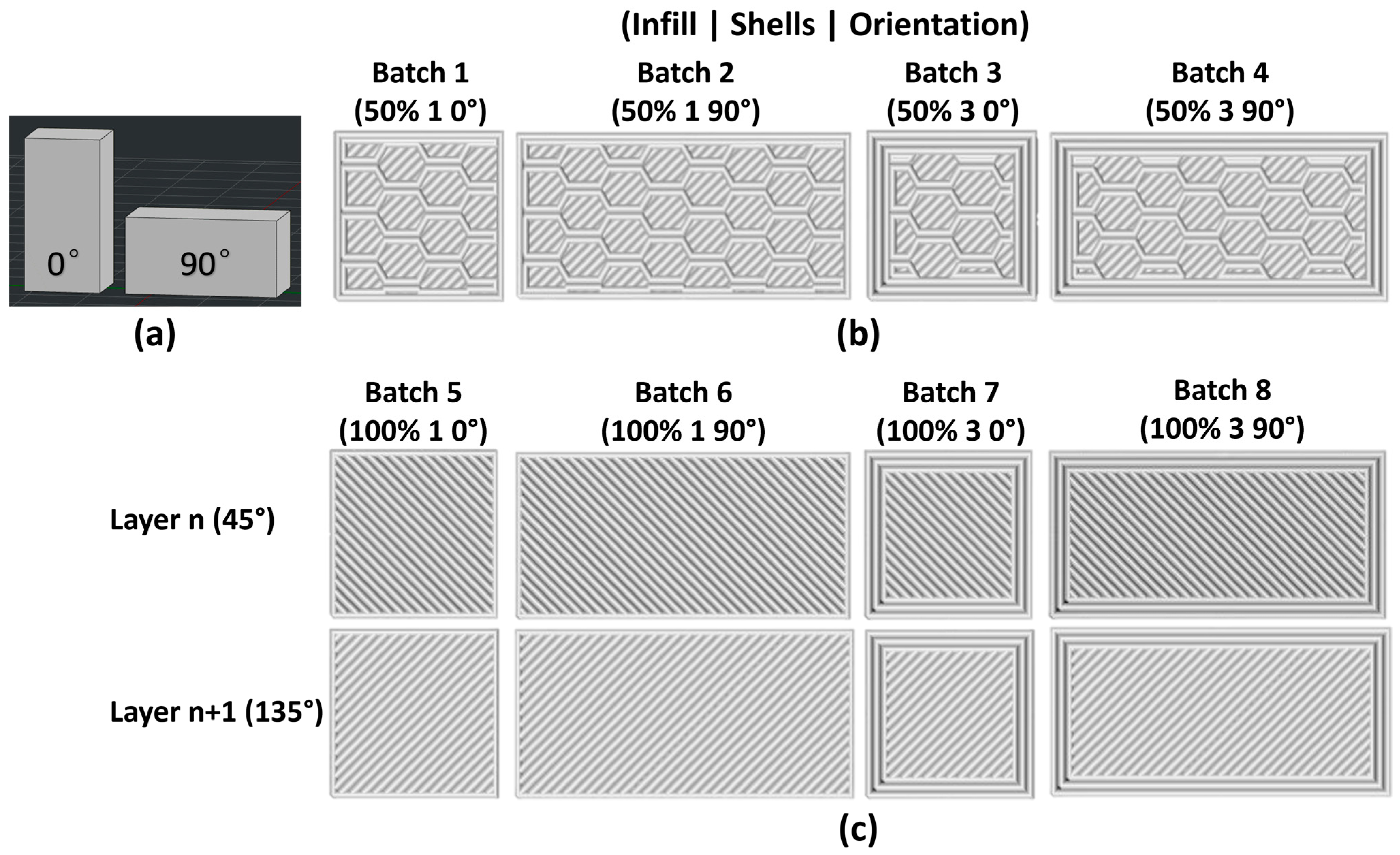
For 100% infill batches, a rectilinear pattern with alternating 45° and 135° infill angles was used. For 50% infill batches, five solid top and bottom layers were included. Illustrations of the print orientations and of the infill patterns are shown in Figure 1.
Prior to testing, all specimens were randomly numbered (1–40), sanded on the top and bottom surfaces using fine-grit sandpaper, and measured using a Mitutoyo digital caliper. Each dimension (length, width, height) was measured three times and averaged. Specimen mass was recorded using a digital scale.
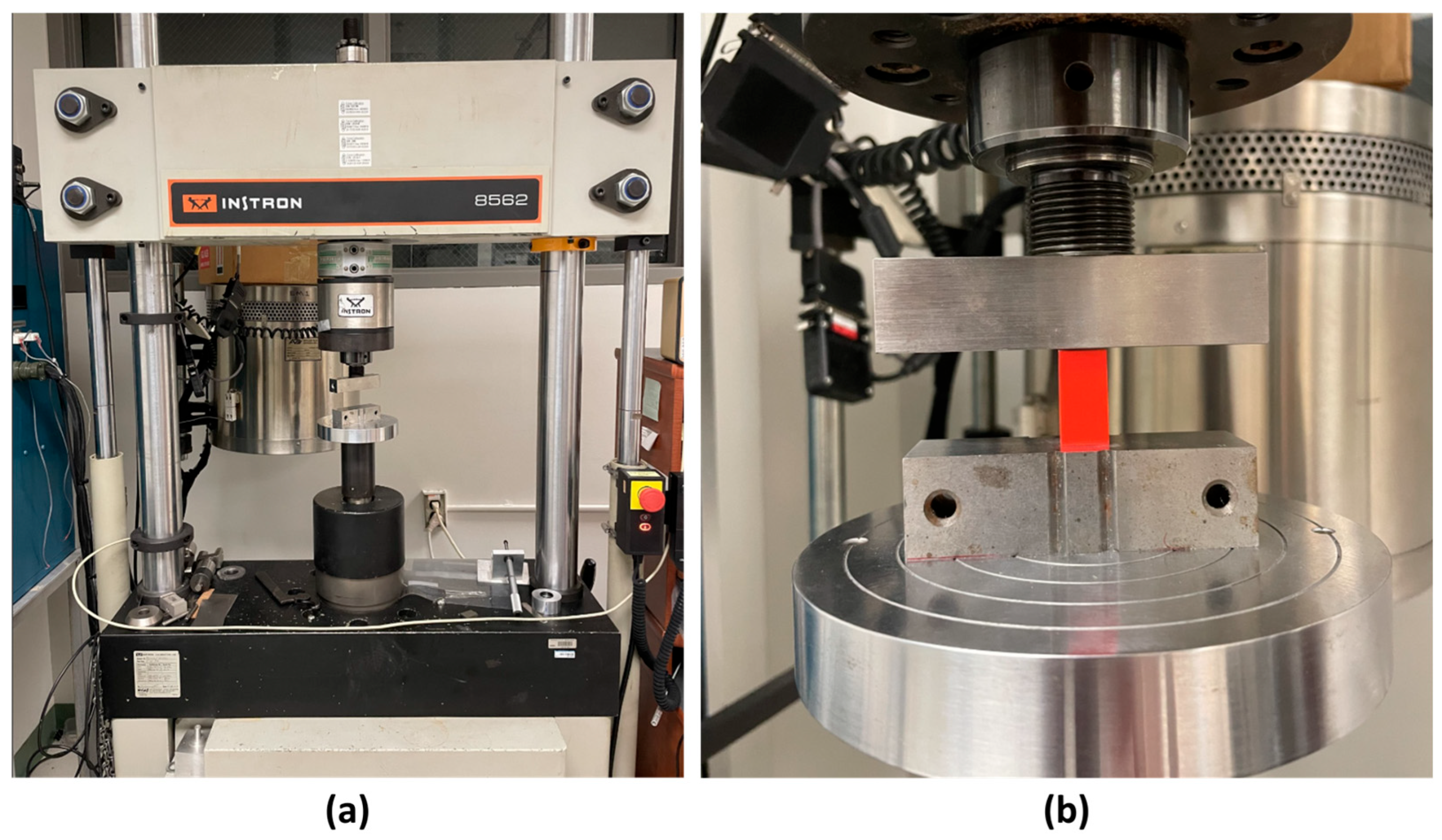
Compression testing was conducted using an Instron 8562 machine (Instron, Norwood, Massachusetts) with two steel platens. Load (kN), displacement (mm), and cycle data were recorded at 10 Hz. The compression test setup is shown in Figure 2. The crosshead speed was set to 1.3 mm/min in accordance with ASTM D638. For SiC–PLA specimens, after achieving an apparent ultimate load, the compression continued until load capacity was 50% of that ultimate. While PLA specimens were compressed to 50% of their original height (12.7 mm), they did not exhibit catastrophic failure.
Cross-sectional areas for stress calculations were determined using two methods. For 50% infill specimens (Batches 1–4), samples were cut perpendicular to the loading direction and measured using a Keyence VR-3200 (Osaka, Japan) optical profiler. For 100% infill specimens (Batches 5–8), cross-sectional area was calculated by multiplying the average measured width and length.
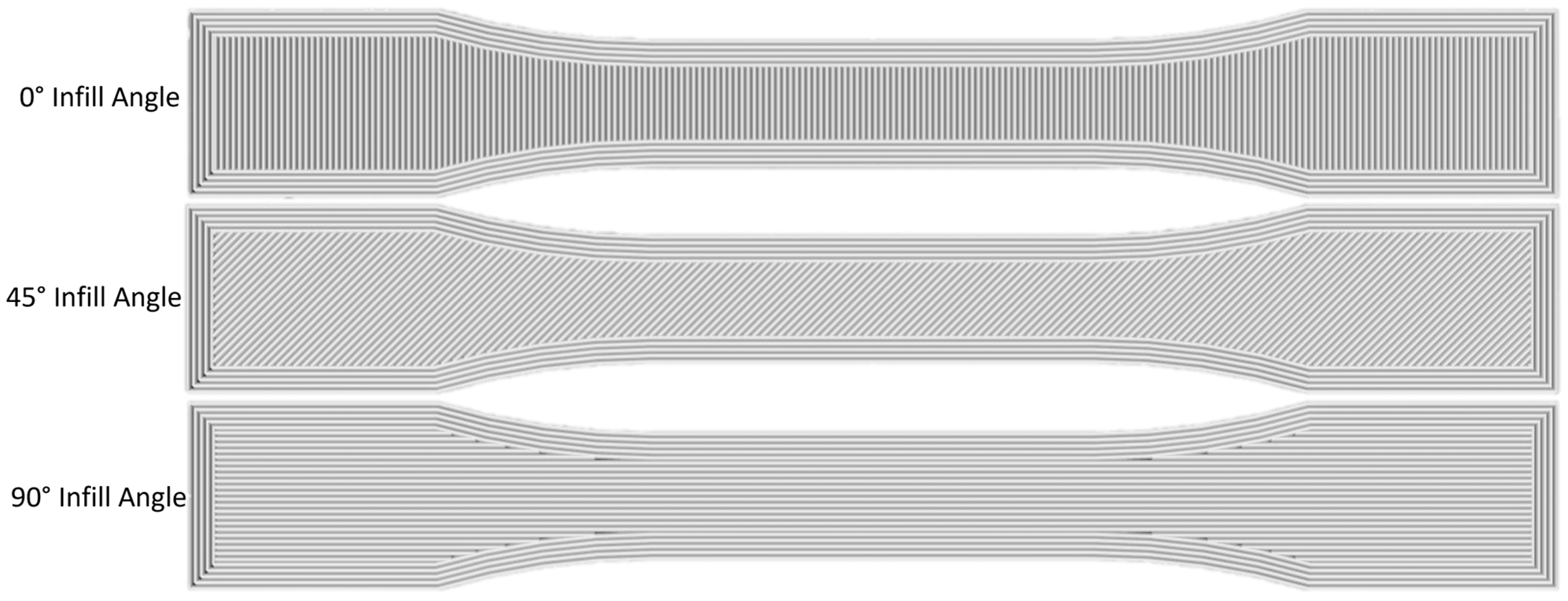
Tensile specimens were also designed in accordance with ASTM D638 with an overall length of 136 mm, gauge length of 50 mm, total width of 19 mm, gauge width of 13 mm, and a thickness of 4.2 mm. Specimens were printed using the same equipment (Raise3D Pro3) and slicing software (Raise3D’s ideaMaker) as compression specimens. A second DOE, shown in Table 3, was implemented to evaluate the effects of infill angle (0°, 45°, 90°), number of shells (1, 3, 5), and print layer height (0.1, 0.2, 0.3 mm). A midpoint group was included for statistical balance. The three infill angles of 0°, 45°, and 90° are illustrated in Figure 3.
Each batch was intended to include three specimens, one of which was designated for DIC. However, due to printing and testing challenges, some batches had only two valid specimens. Additionally, several tensile specimens failed outside the gauge length, limiting the reliability of the data for detailed analysis.

3. Results and Discussion

3.1. Printability

The Virtual Foundry’s Silicon Carbide Filament™ (Virtual Foundry, Stoughton, WI, USA) presented several challenges during the FFF process. The high abrasiveness of the jagged SiC particulates caused significant wear on both the WS2-coated steel nozzles and the extruder gears. Nozzles required frequent replacement due to diameter widening and length reduction, while the extruder gears experienced erosion at the filament contact points. In contrast, the Raise3D PLA filament printed smoothly with minimal issues, requiring only a single brass nozzle throughout the process.

3.2. Microstructural Analysis

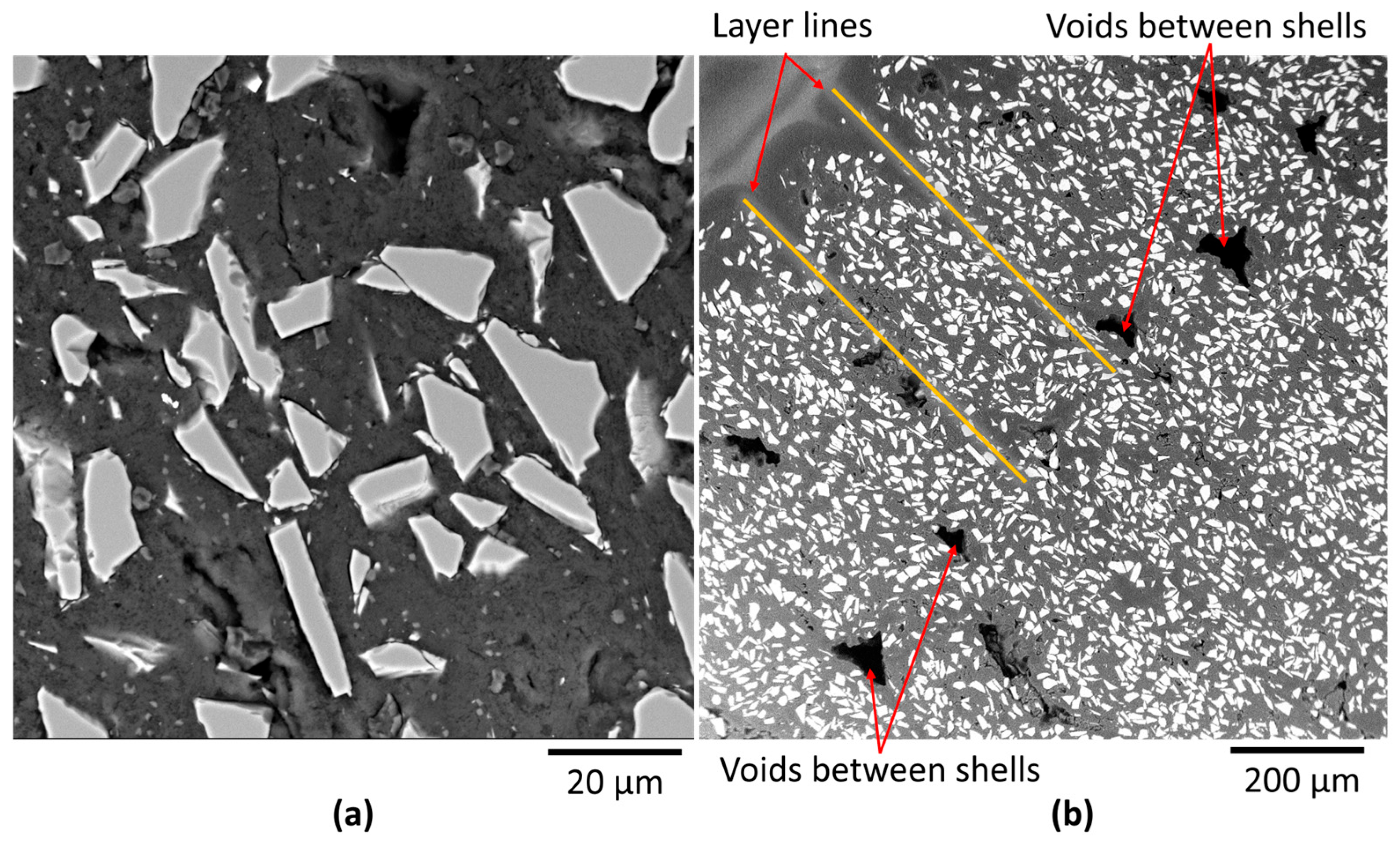
SEM images revealed a wide distribution of SiC particle sizes and shapes, with many particulates exhibiting sharp, angular geometries. While the overall distribution was relatively uniform, localized regions of particle clustering and voids were observed, particularly at the interfaces between shells and infill or between print layers (Figure 4). These voids likely contributed to mechanical weaknesses, as delamination between layers and shell separation were frequently observed during mechanical testing.

3.3. Compression Data and Analysis

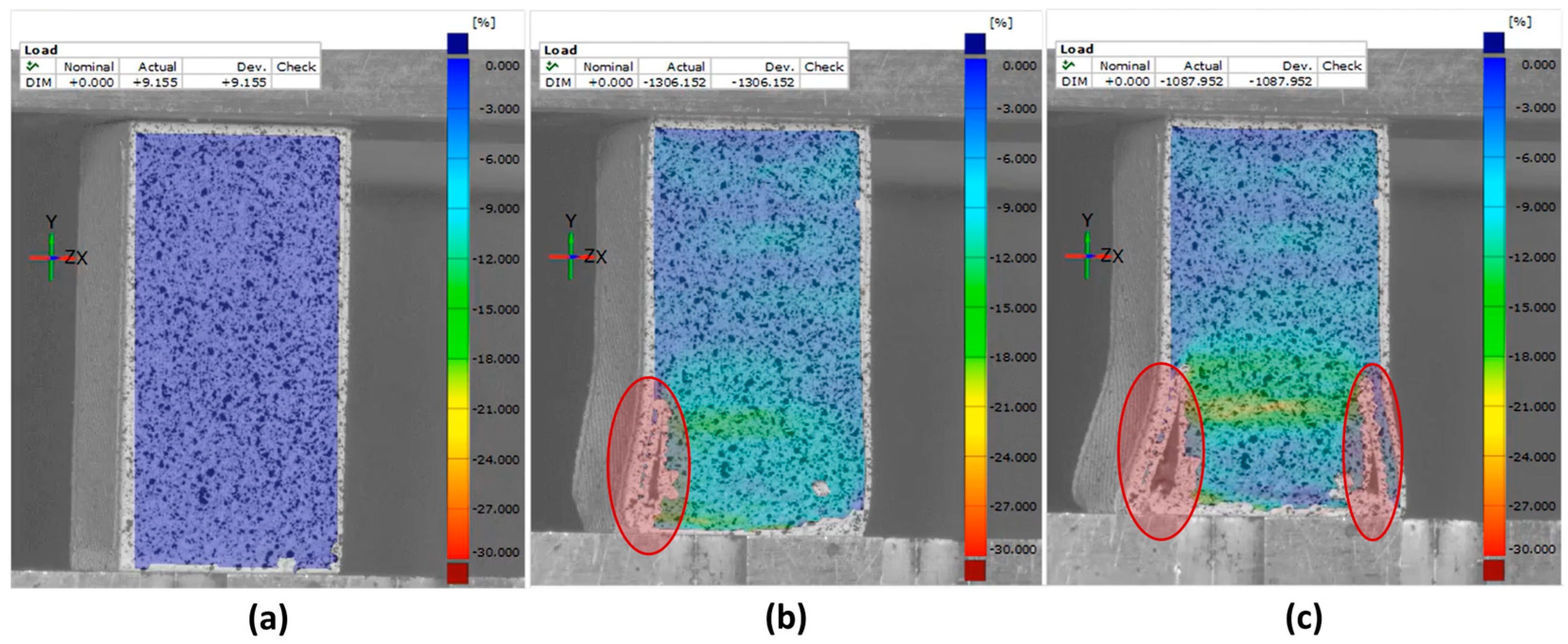
DIC analysis revealed that in 50% infill specimens, failure often initiated at the interface between the infill and the outer shells or top/bottom layers. This was especially evident in Batch 4, where delamination occurred mid-test An example of DIC imaging is shown in Figure 5. Regions are circled where delamination occurred.
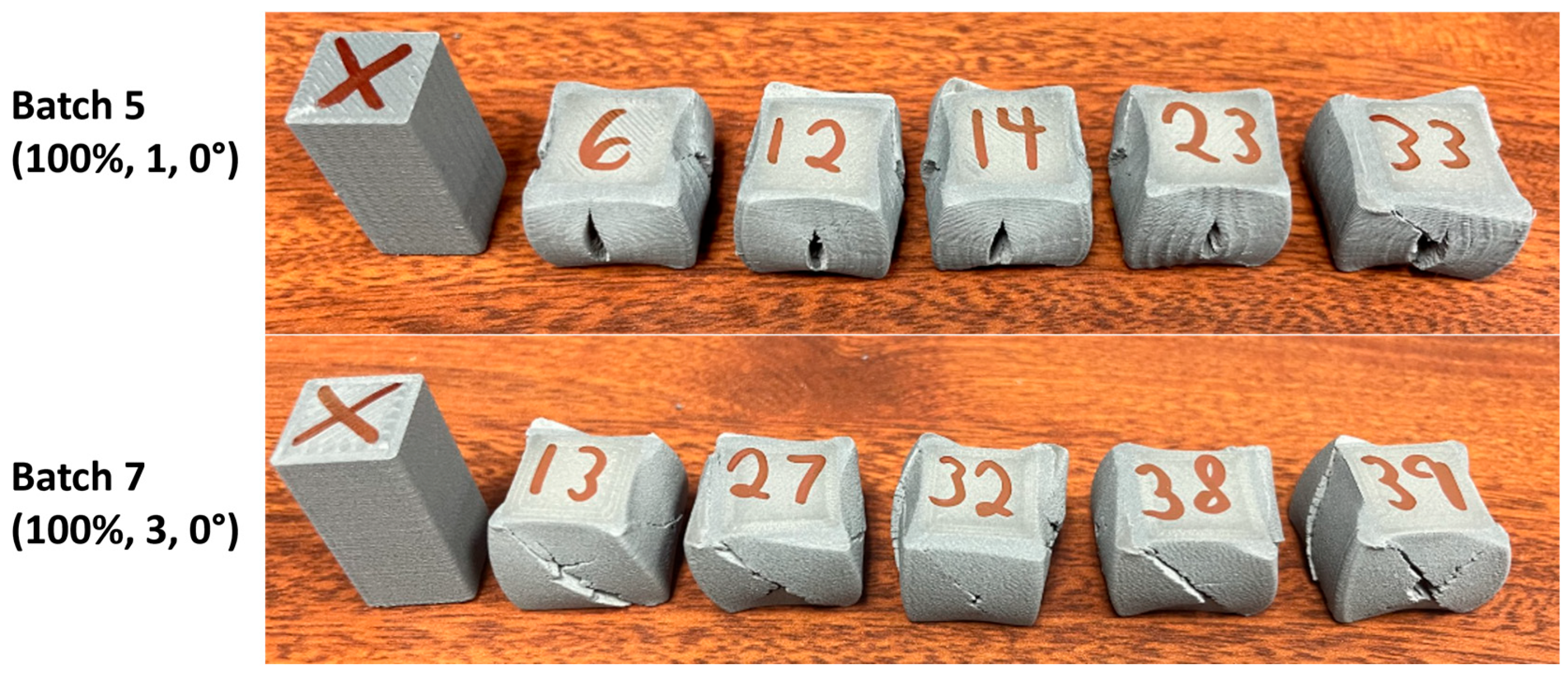
Failure modes varied with print configuration, as shown in Figure 6. For example, Batch 5 (100% infill, 1 shell, 0° orientation) exhibited vertical cracks indicative of axial failure, while Batch 7 (100% infill, 3 shells, 0° orientation) showed diagonal cracks consistent with shear failure. The increased shell count in Batch 7 appeared to restrict radial expansion, redirecting stress and altering the failure mode.
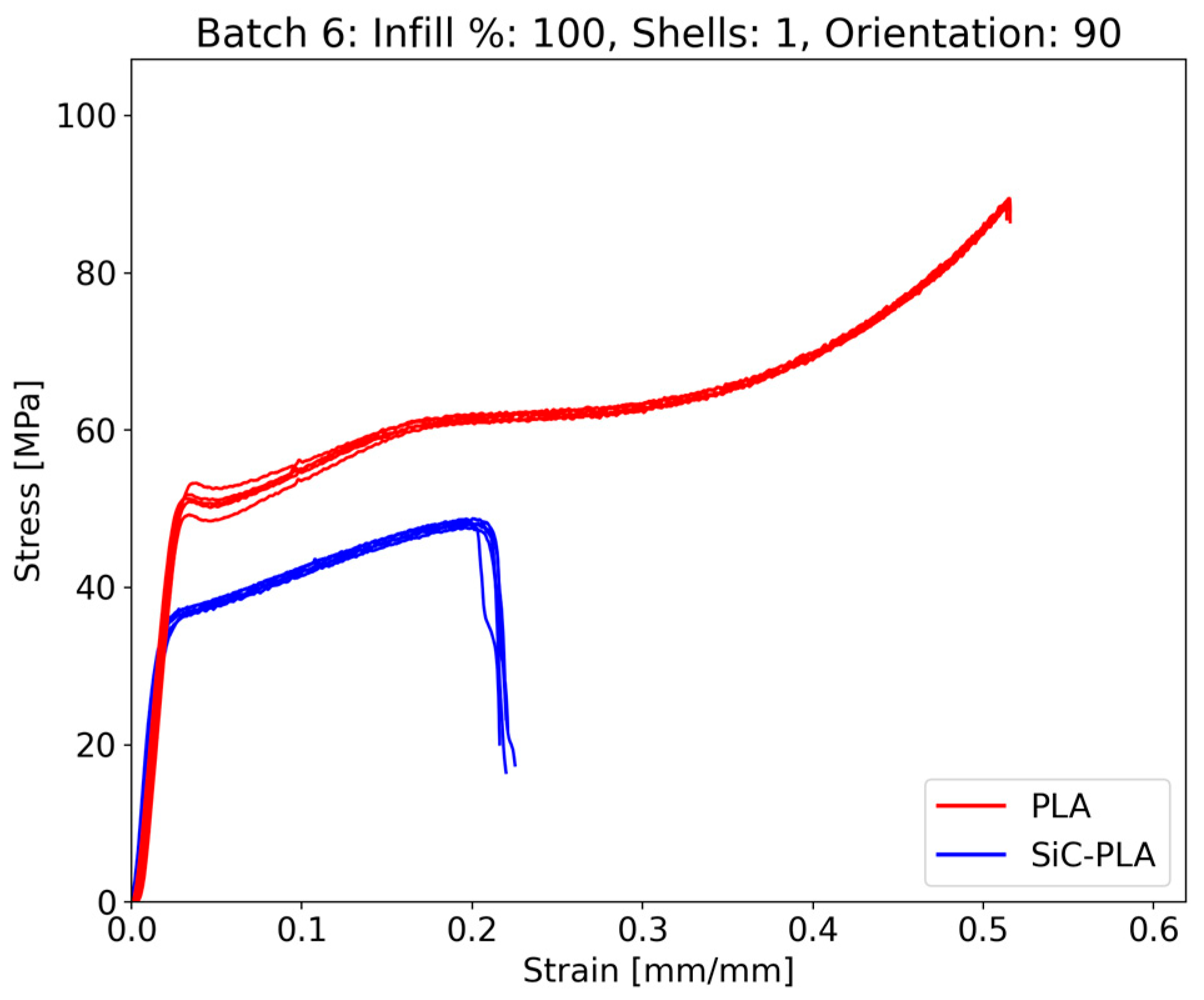
Table 4 and Table 5 present the DOE results. PLA does not have an ultimate strength because it does not rupture under stress, which is the criterion for measuring ultimate strength. As illustrated in Figure 7, the stress experienced by PLA continues to increase even when the strain exceeds 0.5 mm/mm. This behavior indicates that PLA maintains its structural integrity and does fail in the same manner as materials that have a defined ultimate strength such as the SiC–PLA composite. The DOE results showed that infill percentage had the most significant effect on mechanical properties. Increasing infill from 50% to 100% led to a 155–304% increase in Young’s modulus and a 157–379% increase in yield strength, depending on the batch. Print orientation also influenced performance: switching from 0° to 90° increased Young’s modulus by up to 64% and yield strength by up to 78%. The number of shells had the least impact, with some configurations even showing a decrease in mechanical properties when shell count increased from one to three.
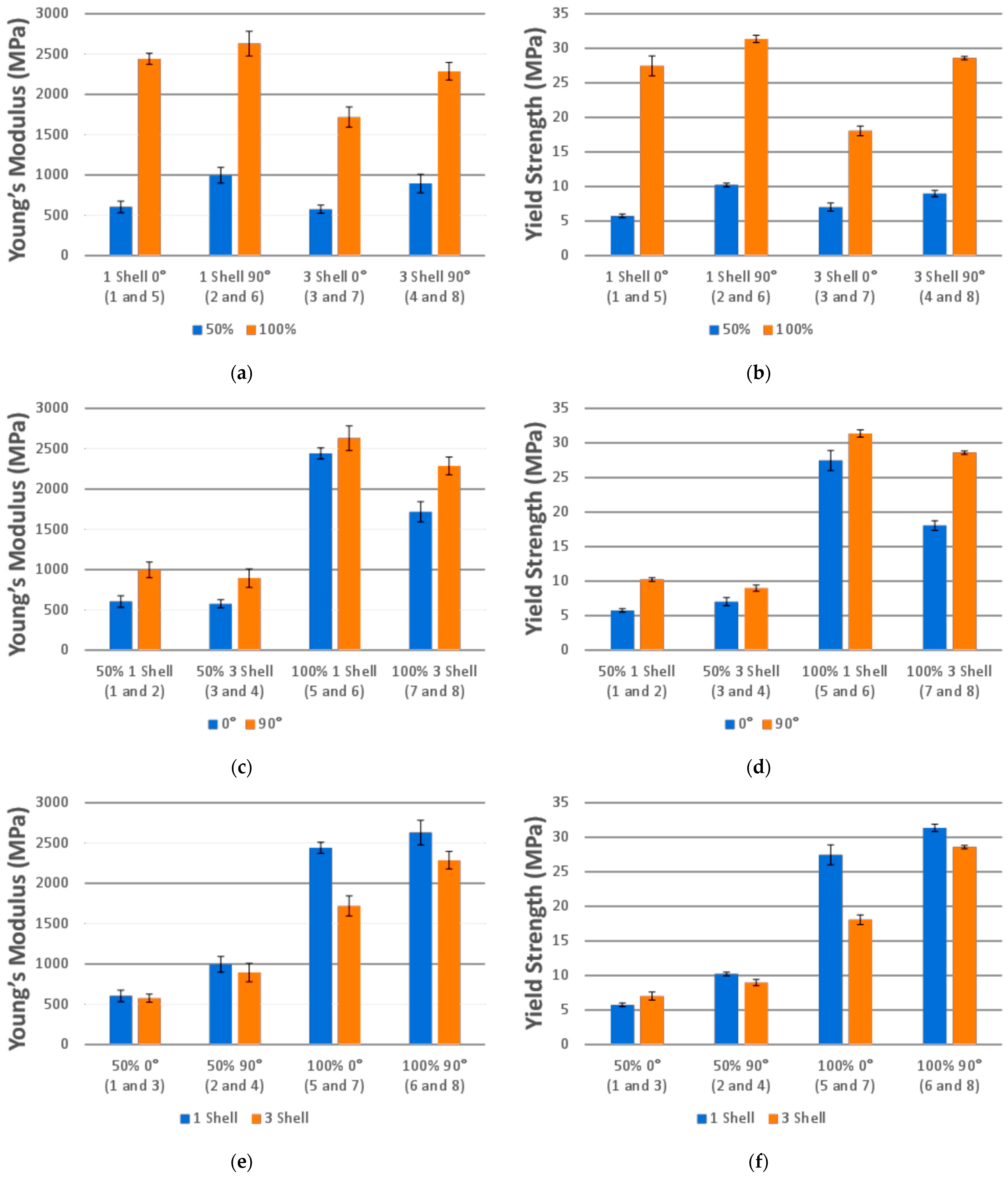
Figure 8 illustrates these process–property relationships and depicts the strong influence infill percentage has on mechanical performance in SiC–PLA composites. When increasing infill from 50% to 100%, while keeping the number of shells and print orientation constant, Young’s modulus increased by a minimum of 155% (Batch 4 to Batch 8) and a maximum of 304% (Batch 1 to Batch 5), as shown in Figure 8a. Similarly, yield strength increased by at least 157% (Batch 3 to Batch 7) and up to 379% (Batch 1 to Batch 5), as shown in Figure 8b. The most significant improvements in both Young’s modulus and yield strength occurred in the one shell, 0° orientation configuration (Batches 1 and 5), where both properties increased by over 300%. However, this enhancement came with an average mass increase of approximately 88%.
Print orientation was the second-most influential parameter. Changing the orientation from 0° to 90°, while holding infill and shell count constant, resulted in a minimum increase of 7% in Young’s modulus (Batch 5 to Batch 6) and a maximum of 64% (Batch 1 to Batch 2), as shown in Figure 8c. Yield strength increased by 14% to 78% across the same comparisons, as shown in Figure 8d. The most pronounced improvements were again observed in the 50% infill, one shell configuration (Batches 1 and 2), where both properties increased by more than 60%. These results confirm that aligning the layer lines parallel to the loading direction (90° orientation) enhances stiffness and strength with minimal additional material usage.
The number of shells had the least impact on mechanical properties. Increasing shell count from one to three, while keeping infill and orientation constant, led to a decrease in Young’s modulus ranging from 4% (Batch 1 to Batch 3) to 29% (Batch 5 to Batch 7), as shown in Figure 8e. Yield strength decreased by 8% to 34% across similar comparisons (e.g., Batch 6 to Batch 8 and Batch 5 to Batch 7), as shown in Figure 8f. The most significant reductions occurred in the 100% infill, 0° orientation configuration (Batches 5 and 7), where both properties dropped by over 25% with negligible change in mass. An exception was observed in the 50% infill, 0° orientation configuration (Batches 1 and 3), where yield strength increased by 22%. This anomaly may be attributed to variability in the printing or testing process rather than a consistent trend.
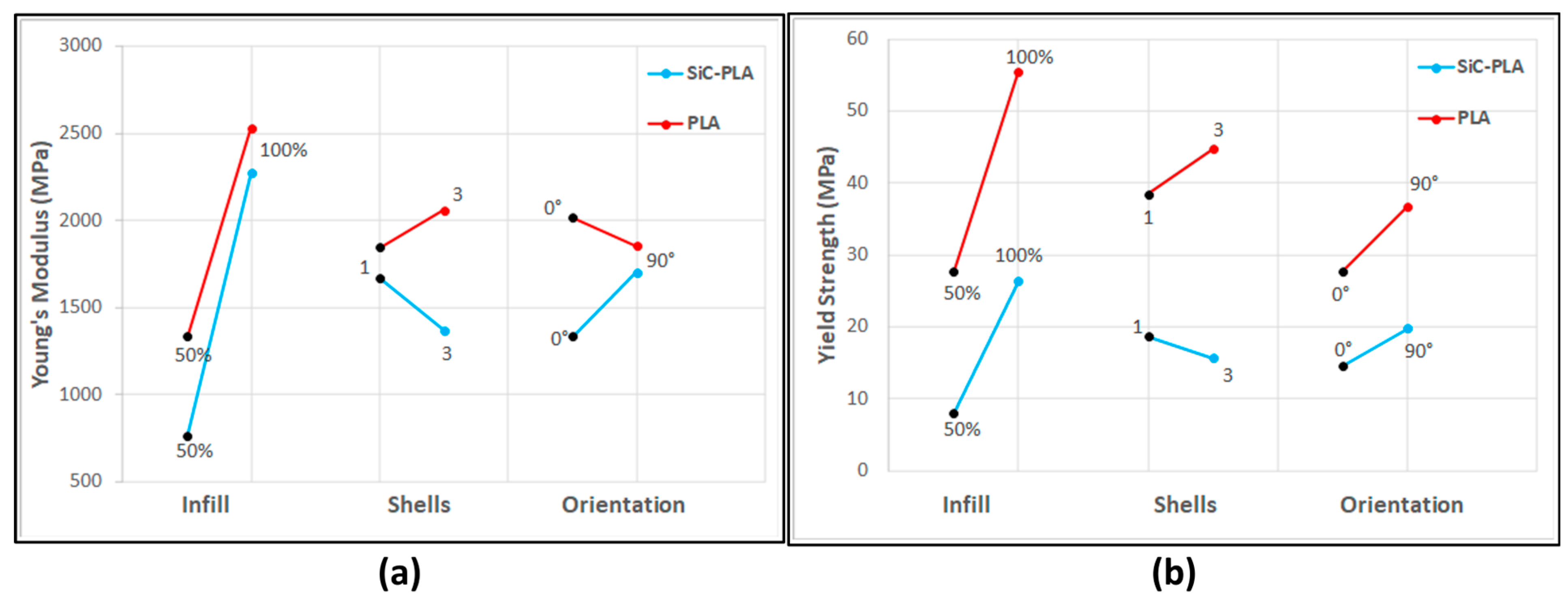
Pure PLA exhibited trends similar to SiC–PLA in response to certain parameters, but also demonstrated notable differences, as illustrated in Figure 9a,b. For both materials, increasing the infill percentage from 50% to 100% led to significant improvements in Young’s modulus and yield strength. However, PLA consistently outperformed SiC–PLA in yield strength across all batches. As shown in Figure 9b, even the 50% infill PLA specimens exhibited higher yield strength than the 100% infill SiC–PLA counterparts.
A key distinction between the two materials emerged when evaluating the effect of shell count. While increasing the number of shells from one to three resulted in a decrease in both Young’s modulus and yield strength for SiC–PLA, the opposite trend was observed for pure PLA, which showed improvements in both properties. This discrepancy is likely due to differences in interlayer bonding. SiC–PLA specimens frequently exhibited delamination between the infill and shell or top/bottom layers during compression testing, suggesting weaker adhesion. In contrast, pure PLA demonstrated strong interlayer bonding, with no observed separation between structural regions.
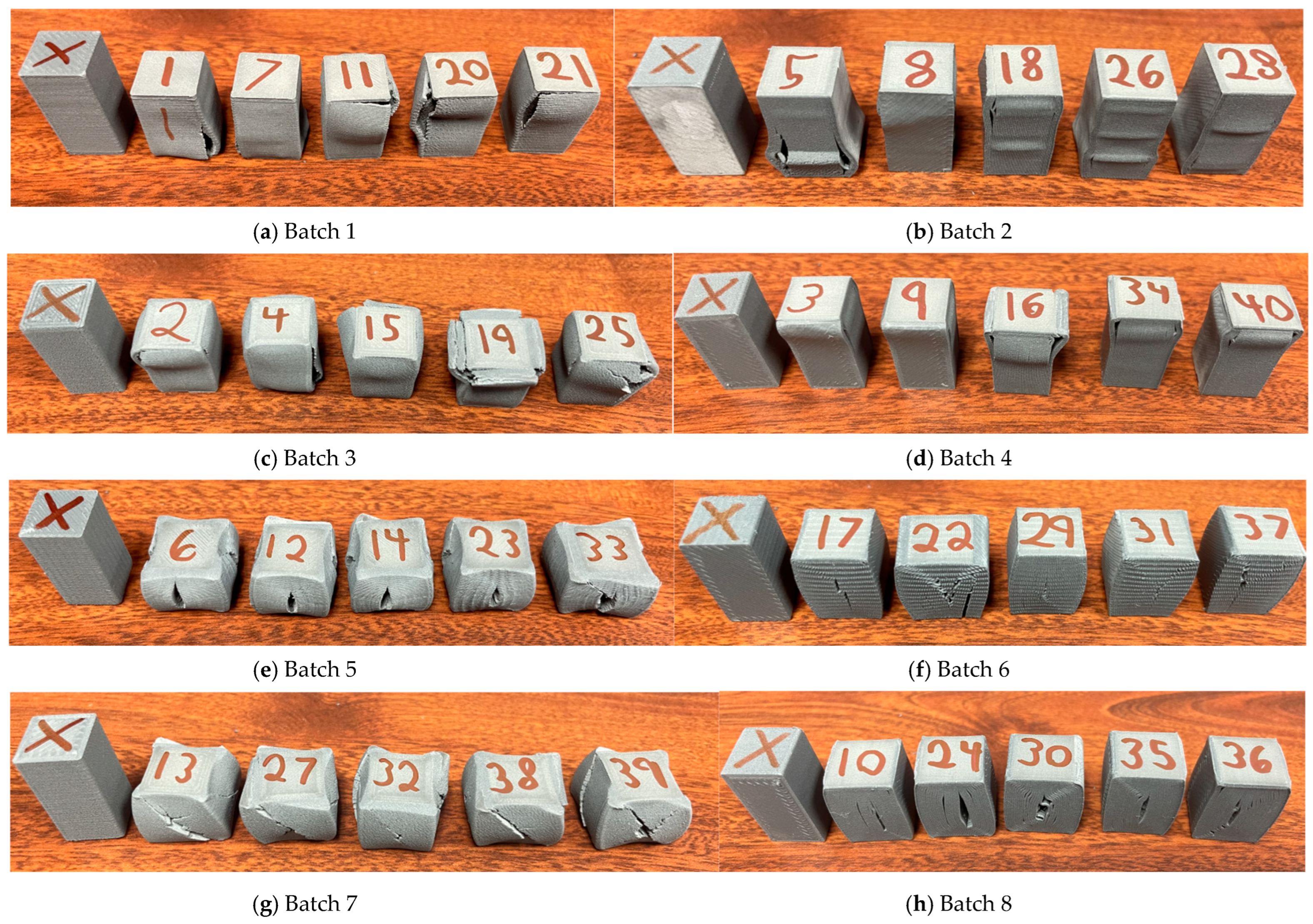
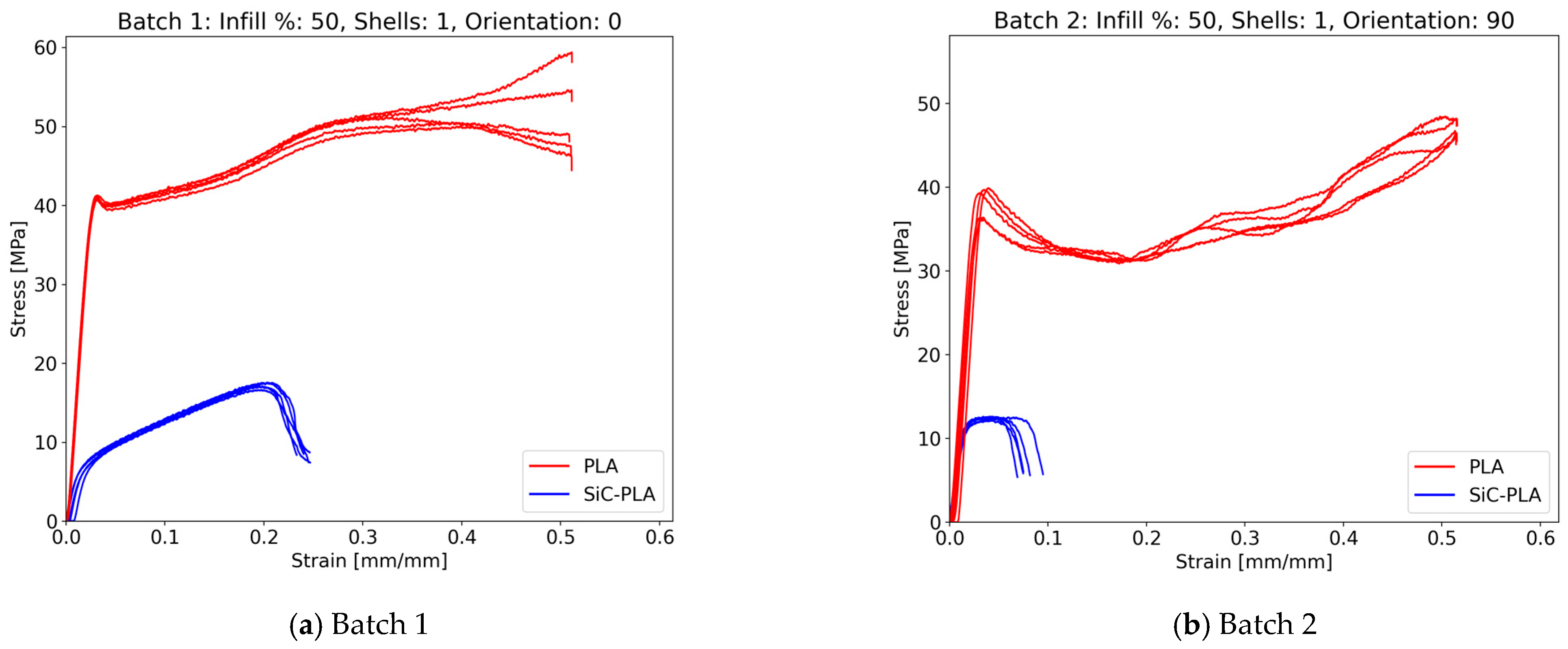
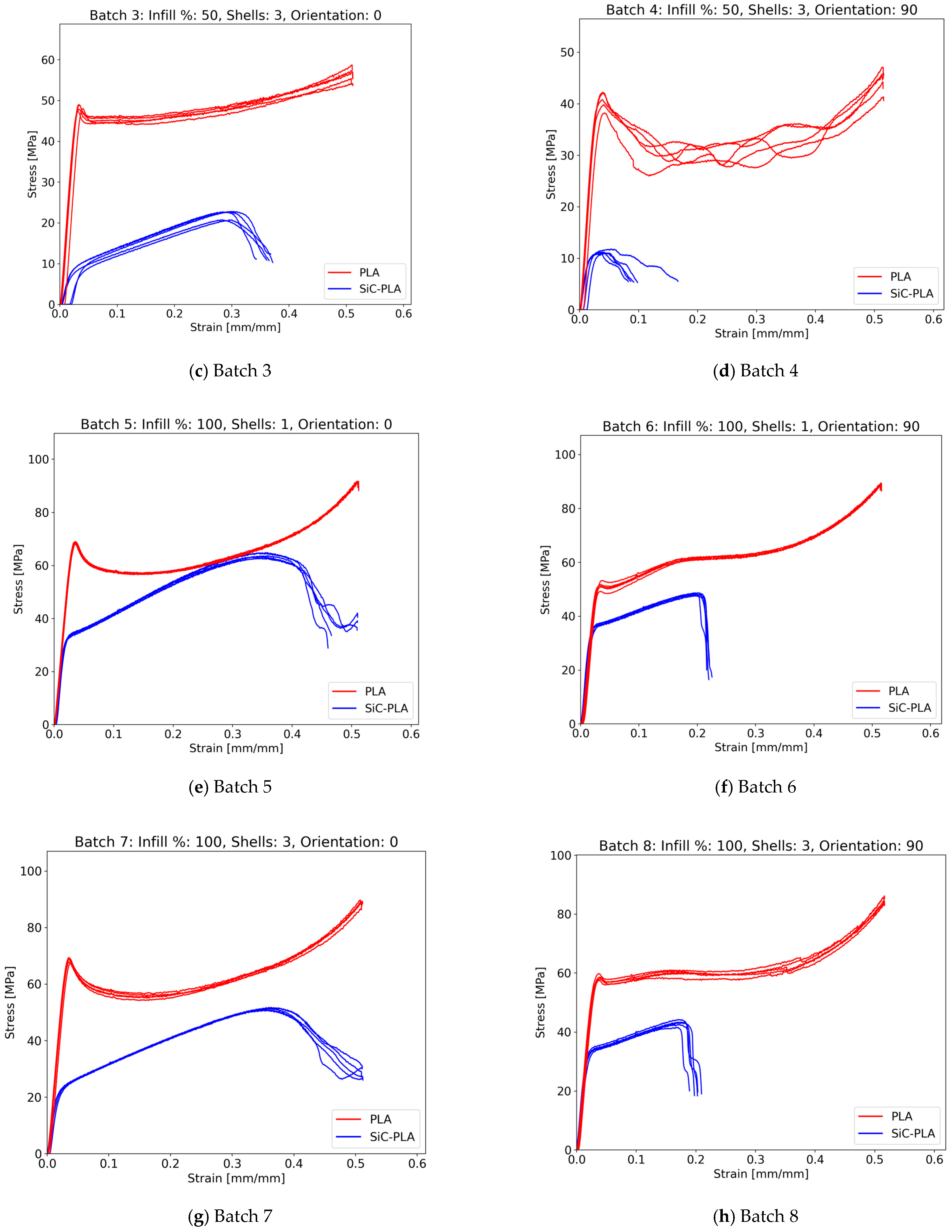
For PLA, increasing the number of shells in 50% infill configurations enhanced mechanical strength by adding more material to the structure. However, in 100% infill configurations, the effect of additional shells was negligible, as the part was already densely packed. These trends are consistent with the batch-level data presented in Table 5. A more inclusive data set can be found in Appendix A which includes images of all the compression specimens pre- and post-test and stress-strain curves for all of the specimens in the 8 batches.

3.4. Tensile Data and Analysis

The results of the tensile testing of SiC–PLA composites are shown in Table 6. Tensile testing revealed that the optimal configuration for SiC–PLA was a 90° infill angle, one shell, and 0.1 mm layer height (Batch 9), which achieved a Young’s modulus of 3200 MPa, a yield strength of 15.56 MPa, and an ultimate strength of 18.06 MPa. The weakest configuration (Batch 1) used a 0° infill angle, five shells, and a 0.3 mm layer height, resulting in significantly lower mechanical properties.
Among the parameters studied, layer height had the greatest influence on tensile performance. Increasing the layer height from 0.1 mm to 0.3 mm reduced Young’s modulus, yield strength, and ultimate strength by 17.83%, 12.39%, and 15.20%, respectively. Infill angle and shell count had smaller but still measurable effects.
The results of the tensile testing of pure PLA composites are shown in Table 7. Compared to pure PLA, SiC–PLA composites exhibited higher stiffness (Young’s modulus) but lower strength. The Young’s modulus of SiC–PLA exceeded that of PLA by 194–1034 MPa across batches. However, PLA consistently outperformed SiC–PLA in both yield and ultimate strength, with differences ranging from 11.6 MPa to 39.8 MPa. Sahay et al. [11] investigated pure SiC–ABS composites with SiC concentrations of 0%, 2%, and 4% by weight. Their findings revealed a significant enhancement in ultimate tensile strength, an increase of 34.89% at 2% SiC and 53.9% at 4% SiC. Similarly, Jin et al. [23] examined PLA/SiC nanocomposites across a range of 0–2% SiC (in 0.5% increments), observing peak impact and flexural strength at 1% SiC by weight. These results support the general trend that incorporating SiC particulates into polymer matrices improves mechanical properties up to an optimal concentration, beyond which performance may decline. In the current study, both yield strength and ultimate tensile strength follow this pattern, with SiC–PLA composites exhibiting lower values than pure PLA. Interestingly, despite the reduction in strength, the SiC–PLA composites consistently demonstrate a higher Young’s modulus across all tested parameters, indicating increased stiffness. This suggests that while SiC reinforcement may compromise certain mechanical properties at higher concentrations, it can still enhance the material’s rigidity.

4. Conclusions

This study investigated the mechanical behavior of SiC–PLA composites fabricated via FFF, with a focus on how key printing parameters influence performance under compression and tension. Pure PLA specimens were used as a baseline for comparison.
In compression testing, SiC–PLA exhibited significantly lower yield strength and Young’s modulus compared to PLA, particularly in specimens with 50% infill. However, at 100% infill, the SiC–PLA composite demonstrated comparable or slightly improved stiffness in some configurations. Among the parameters studied, infill percentage had the most substantial impact on mechanical properties, followed by print orientation and number of shells. The optimal configuration for maximizing Young’s modulus and yield strength was 100% infill, one shell, and 90° orientation. For ultimate strength, the best performance was achieved with 100% infill, one shell, and 0° orientation.
In tensile testing, SiC–PLA consistently showed higher stiffness than PLA but lower yield and ultimate strengths. The most influential parameter was layer height, followed by infill angle and number of shells. The optimal tensile configuration for SiC–PLA was 90° infill angle, one shell, and a 0.1 mm layer height.
Overall, the results highlight the trade-offs between stiffness and strength in SiC–PLA composites and underscore the importance of parameter optimization in FFF. While SiC–PLA offers enhanced stiffness due to ceramic reinforcement, its interlayer bonding and strength characteristics remain inferior to pure PLA, particularly under tensile loading. These findings provide valuable insights for tailoring FFF process parameters to achieve the desired mechanical performance in ceramic-reinforced polymer composites.

Author Contributions

Methodology, A.P.G. and M.R.; software, A.P.G.; validation, A.P.G.; formal analysis, A.P.G.; investigation, A.P.G., M.C.H. and M.S.; resources, M.C.H., M.S. and M.R.; data curation, A.P.G.; writing—original draft preparation, A.P.G., M.C.H., M.S. and M.R.; writing—review and editing, A.P.G., M.C.H., M.R. and M.S.; visualization, A.P.G.; supervision, M.R., M.S. and M.C.H.; project administration, M.S. and M.C.H.; funding acquisition, M.S. and M.C.H. All authors have read and agreed to the published version of the manuscript.

Funding

This research was funded by the NASA Ohio Space Grant Consortium (OSGC) managed by Ohio Aerospace Institute.

Institutional Review Board Statement

Not applicable.

Data Availability Statement

The raw data supporting the conclusions of this article will be made available by the authors on request.

Acknowledgments

Thanks to Jonathan Salem, Zachary Tuchfeld, Dan Gorican, Amjad Almansour, Dan Schieman, and Andrew Ring for supporting this work.

Conflicts of Interest

The authors declare no conflicts of interest.

Abbreviations

The following abbreviations are used in this manuscript:
AMAdditive manufacturing
FFFFused Filament Fabrication
PLAPolylactic acid
DICDigital image correlation
SEMScanning electron microscope
SiCSilicon Carbide

Appendix A

Figure A1. Pre-compression specimen next to post-compression specimens for each batch.
Macromol 05 00060 g0a1
Figure A2. Stress–strain curves for all five test specimens of specific batch of both PLA and SiC–PLA.
Macromol 05 00060 g0a2aMacromol 05 00060 g0a2b

References

  1. Singh, N.; Siddiqui, H.; Koyalada, B.S.R.; Mandal, A.; Chauhan, V.; Natarajan, S.; Kumar, S.; Goswami, M.; Kumar, S. Recent Advancements in Additive Manufacturing (AM) Techniques: A Forward-Looking Review. Met. Mater. Int. 2023, 29, 2119–2136. [Google Scholar] [CrossRef]
  2. Fico, D.; Rizzo, D.; Casciaro, R.; Esposito Corcione, C. A Review of Polymer-Based Materials for Fused Filament Fabrication (FFF): Focus on Sustainability and Recycled Materials. Polymers 2022, 14, 465. [Google Scholar] [CrossRef]
  3. Khouri, N.G.; Bahú, J.O.; Blanco-Llamero, C.; Severino, P.; Concha, V.O.C.; Souto, E.B. Polylactic Acid (PLA): Properties, Synthesis, and Biomedical Applications—A Review of the Literature. J. Mol. Struct. 2024, 1309, 138243. [Google Scholar] [CrossRef]
  4. Liu, Z.; Lei, Q.; Xing, S. Mechanical Characteristics of Wood, Ceramic, Metal and Carbon Fiber-Based PLA Composites Fabricated by FDM. J. Mater. Res. Technol. 2019, 8, 3741–3751. [Google Scholar] [CrossRef]
  5. Gupta, S.; Halbig, M.C.; Singh, M. Particulate Reinforced Polymer Matrix Composites: Tribological Behavior and 3D Printing by Fused Filament Fabrication. AMP Tech. Artic. 2020, 178, 12–18. [Google Scholar] [CrossRef]
  6. Vakharia, V.S.; Kuentz, L.; Salem, A.; Halbig, M.C.; Salem, J.A.; Singh, M. Additive Manufacturing and Characterization of Metal Particulate Reinforced Polylactic Acid (PLA) Polymer Composites. Polymers 2021, 13, 3545. [Google Scholar] [CrossRef]
  7. Ranaiefar, M.; Singh, M.; Salem, J.A.; Halbig, M.C. Compressive Properties of Additively Manufactured Metal-Reinforced PLA and ABS Composites. Polymers 2024, 16, 2008. [Google Scholar] [CrossRef]
  8. John, L.K.; Ramu, M.; Singamneni, S.; Binudas, N. Strength Evaluation of Polymer Ceramic Composites: A Comparative Study between Injection Molding and Fused Filament Fabrication Techniques. Prog. Addit. Manuf. 2025, 10, 339–347. [Google Scholar] [CrossRef]
  9. Ahmed, W.; Siraj, S.; Al-Marzouqi, A.H. 3D Printing PLA Waste to Produce Ceramic Based Particulate Reinforced Composite Using Abundant Silica-Sand: Mechanical Properties Characterization. Polymers 2020, 12, 2579. [Google Scholar] [CrossRef]
  10. Hedjazi, L.; Guessasma, S.; Belhabib, S.; Stephant, N. On the Mechanical Performance of Polylactic Material Reinforced by Ceramic in Fused Filament Fabrication. Polymers 2022, 14, 2924. [Google Scholar] [CrossRef]
  11. Sahay, R.; Nayak, R.; Naik, N.; Tambrallimath, V. Influence of Silicon Carbide Reinforcement on Mechanical Behavior of 3D Printed Polymer Composites. Mater. Today Proc. 2021, 46, 5991–5996. [Google Scholar] [CrossRef]
  12. Mishra, D.K.; Giri, J.; Sathish, T.; Kanan, M.; Prajapati, D. Influence of 3D Printing Process Parameters on Mechanical Properties of PLA Based Ceramic Composite Parts. Results Eng. 2025, 25, 104488. [Google Scholar] [CrossRef]
  13. Meng, Q.K.; Hetzer, M.; De Kee, D. PLA/Clay/Wood Nanocomposites: Nanoclay Effects on Mechanical and Thermal Properties. J. Compos. Mater. 2011, 45, 1145–1158. [Google Scholar] [CrossRef]
  14. Mei, H.; Yin, X.; Zhang, J.; Zhao, W. Compressive Properties of 3D Printed Polylactic Acid Matrix Composites Reinforced by Short Fibers and SiC Nanowires. Adv. Eng. Mater. 2019, 21, 1800539. [Google Scholar] [CrossRef]
  15. Kartal, F. Mechanical Performance Optimization in FFF 3D Printing Using Taguchi Design and Machine Learning Approach with PLA /Walnut Shell Composites Filaments. Vinyl Addit. Technol. 2025, 31, 622–638. [Google Scholar] [CrossRef]
  16. Maalihan, R.D.; Aggari, J.C.V.; Alon, A.S.; Latayan, R.B.; Montalbo, F.J.P.; Javier, A.D. On the Optimized Fused Filament Fabrication of Polylactic Acid Using Multiresponse Central Composite Design and Desirability Function Algorithm. Proc. Inst. Mech. Eng. Part E J. Process Mech. Eng. 2024, 09544089241247454. [Google Scholar] [CrossRef]
  17. Kumar, K.; Singh, H. Multi-objective optimization of fused deposition modeling for mechanical properties of biopolymer parts using the Grey-Taguchi method. Chin. J. Mech. Eng. 2023, 36, 30. [Google Scholar] [CrossRef]
  18. Zotti, A.; Paduano, T.; Napolitano, F.; Zuppolini, S.; Zarrelli, M.; Borriello, A. Fused deposition modeling of polymer composites: Development, properties and applications. Polymers 2025, 17, 1054. [Google Scholar] [CrossRef]
  19. Ismail, K.I.; Yap, T.C.; Ahmed, R. 3D-printed fiber-reinforced polymer composites by fused deposition modelling (FDM): Fiber length and fiber implementation techniques. Polymers 2022, 14, 4659. [Google Scholar] [CrossRef]
  20. Kepenekci, M.; Gharehpapagh, B.; Yaman, U.; Özerinç, S. Mechanical performance of carbon fiber-reinforced polymer cellular structures manufactured via fused filament fabrication. Polym. Compos. 2023, 44, 4654–4668. [Google Scholar] [CrossRef]
  21. Tripathy, C.R.; Katyayn, A., Sharma; Chaudhary, N.K. Optimization of Mechanical Properties in Carbon Fiber-Reinforced ABS Composites Fabricated via Fused Filament Fabrication: An Experimental and AI-Based Predictive Approach. J. Mater. Eng. Perform. 2025, 34, 28518–28531. [Google Scholar] [CrossRef]
  22. Skorda, S.; Bardakas, A.; Segkos, A.; Chouchoumi, N.; Hourdakis, E.; Vekinis, G.; Tsamis, C. Influence of SiC Doping on the Mechanical, Electrical, and Optical Properties of 3D-Printed PLA. J. Compos. Sci. 2024, 8, 79. [Google Scholar] [CrossRef]
  23. Jin, F.-L.; Zhang, H.; Yao, S.-S.; Park, S.-J. Effect of Surface Modification on Impact Strength and Flexural Strength of Poly(Lactic Acid)/Silicon Carbide Nanocomposites. Macromol. Res. 2018, 26, 211–214. [Google Scholar] [CrossRef]
Figure 1. (a) 0° and 90° printing orientation, (b) batches 1–4 cross-section of infill geometry with 5 solid-fill bottom/top layers (same print pattern as batches 5–8), current layer shown is the 6th layer (5 bottom layers + 1st infill layer), (c) batches 5–8 print pattern of layers (45° and 135°).
Macromol 05 00060 g001
Figure 2. (a) Instron 8562 compression setup; (b) T\two steel blocks to provide a flat contact surface for specimen compression (PLA specimen shown).
Macromol 05 00060 g002
Figure 3. Different infill angles (0°, 45°, 90°) for tensile specimens with five shells.
Macromol 05 00060 g003
Figure 4. Batch 7 (100%, 3, 0°) SEM image of (a) silicon carbide particulates in PLA matrix and (b) voids between shells and layer lines.
Macromol 05 00060 g004
Figure 5. DIC image of specimen at (a) the start of compression testing, (b) intermediate stress where delamination was initiated, and (c) the failure toward the end of testing.
Macromol 05 00060 g005
Figure 6. Post-compression test specimens of batch 5 and batch 7 as well as an untested specimen for comparison.
Macromol 05 00060 g006
Figure 7. Batch 6: stress–strain curve for five specimens each of PLA and SiC–PLA.
Macromol 05 00060 g007
Figure 8. Effect of infill % on (a) Young’s modulus and (b) yield strength. Orientation angle effect on (c) Young’s modulus and (d) yield strength. Number of shells’ effect on (e) Young’s modulus and (f) yield strength. Includes error bars based on ±1 standard deviation.
Macromol 05 00060 g008
Figure 9. Change in (a) Young’s modulus and (b) yield strength (averages of all specimens with that specific parameter) of SiC–PLA and PLA when changing the value of a specific parameter (infill, shells, orientation).
Macromol 05 00060 g009
Table 1. Consistent printing parameters for SiC–PLA and PLA.
ParameterSiC–PLAPLA
Extruder Temperature, °C220210
Bed Temperature, °C5555
Print Speed, mm/s7070
Layer Height, mm0.20.2
Nozzle Diameter, mm0.60.6
Nozzle MaterialWS2 Coated SteelBrass
Geometry (50% infill)HexagonalHexagonal
Table 2. Compression parameters including infill percentage, number of shells, and print orientation.
BatchInfill %ShellsPrint Orientation
150%1
250%190°
350%3
450%390°
5100%1
6100%190°
7100%3
8100%390°
Table 3. Tensile parameters including infill angle, number of shells, and layer height.
BatchInfill Angle [°]ShellsLayer Height [mm]
1050.3
2010.3
39050.3
49010.3
54530.2
6050.1
7010.1
89050.1
99010.1
Table 4. SiC–PLA averages and standard deviation of five compression specimens.
BatchParameters
(I, S, O) 1
Mass (g)Young’s Modulus (MPa)Yield Strength (MPa)Ult. Strength (MPa)
150%, 1, 0°3.51 ± 0.01604 ± 735.73 ± 0.2617.21 ± 0.39
250%, 1, 90°3.71 ± 0.05995 ± 9810.21 ± 0.2512.49 ± 0.19
350%, 3, 0°4.52 ± 0.02576 ± 507.01 ± 0.5821.97 ± 1.08
450%, 3, 90°4.42 ± 0.01894 ± 1148.97 ± 0.4611.20 ± 0.37
5100%, 1, 0°7.95 ± 0.032443 ± 6927.48 ± 1.4463.90 ± 0.94
6100%, 1, 90°7.96 ± 0.022629 ± 15231.35 ± 0.5448.24 ± 0.43
7100%, 3, 0°6.99 ± 0.011719 ± 12418.04 ± 0.7051.27 ± 0.41
8100%, 3, 90°7.50 ± 0.012287 ± 11028.54 ± 0.2642.90 ± 0.70
1 I: Infill, S: Shells, and O: Orientation..
Table 5. Pure PLA averages and standard deviation of five compression specimens.
BatchParameters
(I, S, O) 1
Mass (g)Young’s Modulus (MPa)Yield Strength (MPa)Ult. Strength (MPa)
150%, 1, 0°2.78 ± 0.001150 ± 5523.16 ± 0.67N/A
250%, 1, 90°2.80 ± 0.051031 ± 4020.99 ± 1.34N/A
350%, 3, 0°3.57 ± 0.001715 ± 4937.53 ± 1.16N/A
450%, 3, 90°3.37 ± 0.001447 ± 3429.09 ± 0.52N/A
5100%, 1, 0°4.77 ± 0.002612 ± 12862.19 ± 2.90N/A
6100%, 1, 90°4.70 ± 0.002446 ± 6947.55 ± 0.96N/A
7100%, 3, 0°4.72 ± 0.012582 ± 7963.05 ± 1.78N/A
8100%, 3, 90°4.70 ± 0.002483 ± 4049.28 ± 0.38N/A
1 I: Infill, S: Shells, and O: Orientation.
Table 6. SiC–PLA averages and standard deviation of three tensile specimens.
BatchParameters
(IA, S, LH) 1
Mass (g)Young’s Modulus (MPa)Yield Strength (MPa)Ult. Strength (MPa)
10°, 5, 0.316.12 ± 0.042285 ± 13511.87 ± 0.2112.54 ± 0.39
20°, 1, 0.316.66 ± 0.062415 ± 31512.96 ± 0.1313.72 ± 0.33
390°, 5, 0.316.68 ± 0.802541 ± 22012.06 ± 0.7412.86 ± 0.73
490°, 1, 0.316.92 ± 0.102480 ± 15712.83 ± 0.7913.48 ± 0.87
545°, 3, 0.216.96 ± 0.033000 ± 42813.35 ± 1.0214.48 ± 1.07
60°, 5, 0.116.29 ± 0.392763 ± 23613.11 ± 0.6414.33 ± 0.46
70°, 1, 0.116.50 ± 0.482668 ± 31213.51 ± 0.8414.64 ± 0.14
890°, 5, 0.115.67 ± 0.052817 ± 12913.70 ± 0.7415.43 ± 0.71
990°, 1, 0.116.66 ± 0.023200 ± 10115.56 ± 0.4718.06 ± 0.49
1 IA: Infill Angle, S: Shells. and LH: Layer Height.
Table 7. Pure PLA averages and standard deviation of three tensile specimens.
BatchParameters
(IA, S, LH) 1
Mass (g)Young’s Modulus (MPa)Yield Strength (MPa)Ult. Strength (MPa)
10°, 5, 0.310.13 ± 0.012091 ± 25330.88 ± 8.5545.42 ± 0.08
20°, 1, 0.310.12 ± 0.012091 ± 1329.38 ± 0.5434.92 ± 0.42
390°, 5, 0.310.37 ± 0.011998 ± 19243.80 ± 0.5752.63 ± 0.47
490°, 1, 0.310.42 ± 0.012114 ± 8730.90 ± 6.2951.78 ± 0.70
545°, 3, 0.210.14 ± 0.001966 ± 932.33 ± 3.2343.62 ± 0.32
60°, 5, 0.110.51 ± 0.012162 ± 4131.11 ± 3.7045.23 ± 0.44
70°, 1, 0.110.60 ± 0.041821 ± 3725.09 ± 1.3327.03 ± 4.04
890°, 5, 0.110.44 ± 0.011960 ± 9744.42 ± 0.6154.43 ± 0.45
990°, 1, 0.110.46 ± 0.012251 ± 22036.42 ± 8.7253.40 ± 0.70
1 IA: Infill Angle, S: Shells, and LH: Layer Height.
Disclaimer/Publisher’s Note: The statements, opinions and data contained in all publications are solely those of the individual author(s) and contributor(s) and not of MDPI and/or the editor(s). MDPI and/or the editor(s) disclaim responsibility for any injury to people or property resulting from any ideas, methods, instructions or products referred to in the content.