


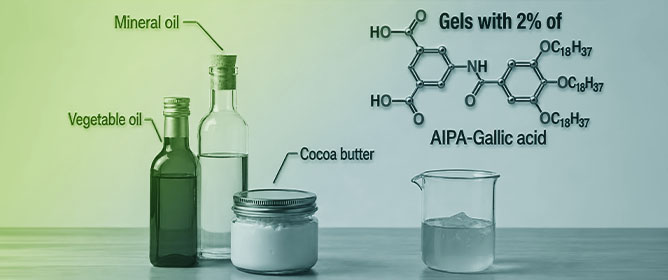
Journal Description
Gels
Gels
is an international, peer-reviewed, open access journal on physical and chemical gels, published monthly online by MDPI.
- Open Access— free for readers, with article processing charges (APC) paid by authors or their institutions.
- High visibility: indexed within Scopus, SCIE (Web of Science), PubMed, PMC, CAPlus / SciFinder, and other databases.
- Journal Rank: JCR - Q1 (Polymer Science) / CiteScore - Q1 (Organic Chemistry)
- Rapid Publication: manuscripts are peer-reviewed and a first decision is provided to authors approximately 13 days after submission; acceptance to publication is undertaken in 2.8 days (median values for papers published in this journal in the first half of 2026).
- Recognition of Reviewers: reviewers who provide timely, thorough peer-review reports receive vouchers entitling them to a discount on the APC of their next publication in any MDPI journal, in appreciation of the work done.
- Journal Cluster of Polymer and Macromolecular Science: Polymers, Membranes, Gels, Polysaccharides, Textiles, Macromol, Microplastics and Adhesives.
Impact Factor:
6.4 (2025);
5-Year Impact Factor:
6.5 (2025)
Latest Articles
Sustainable Polymer Aerogels: Multiscale Design from Biomass and Thermoset Networks to AI-Guided Materials Discovery
Gels 2026, 12(9), 824; https://doi.org/10.3390/gels12090824 (registering DOI) - 8 Sep 2026
Abstract
Polymer aerogels have attracted increasing attention as lightweight porous materials for thermal insulation, separation, adsorption, remediation, and other environmental applications. Their low density and tunable surface chemistry also make them suitable for converting renewable, recycled, and waste-derived feedstocks into value-added materials. However, their
[...] Read more.
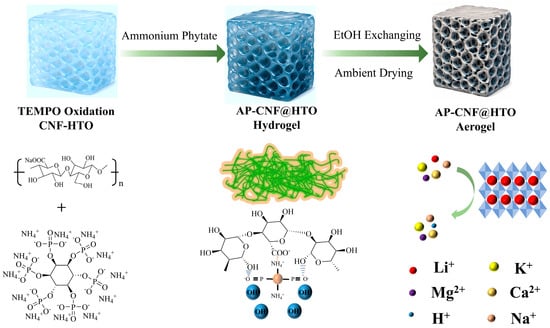
Polymer aerogels have attracted increasing attention as lightweight porous materials for thermal insulation, separation, adsorption, remediation, and other environmental applications. Their low density and tunable surface chemistry also make them suitable for converting renewable, recycled, and waste-derived feedstocks into value-added materials. However, their overall sustainability remains difficult to assess because most studies focus on material properties, whereas solvent use, drying energy, processing yield, durability, regeneration, and end-of-life pathways are reported less consistently. This review examines sustainable polymer aerogels from the perspectives of cleaner production and waste valorization and focuses on two main features. First, a unified multiscale framework of structure, formation, and performance links network formation mechanisms, pore architecture, and macroscopic behavior across biomass-derived, thermoset, dynamic covalent, hybrid, and recycled polymer aerogels, which are compared in terms of feedstock origin, processing intensity, functional performance, durability, and circularity. Second, structure–property mapping is combined with sustainability-constrained, AI-guided design, with environmental descriptors treated as optimization objectives from the outset rather than as post hoc justifications. Particular attention is given to waste and secondary resources, including agricultural residues, textile waste, paper waste, recycled poly(ethylene terephthalate), and end-of-life tire fibers. The review also discusses how life-cycle assessment, service-based functional units, and minimum reporting standards can help assess whether sustainability claims are supported by measurable environmental benefits. Several recurring limitations emerge from the literature: sustainability is often discussed only qualitatively, processing data are insufficient to support robust life-cycle assessments, solvent exchange and drying remain major environmental hotspots, and circularity claims frequently conflate bio-based content, biodegradability, recyclability, and reusability. Finally, the review discusses how data-driven tools, including literature mining, machine learning, and multi-objective optimization, can support polymer-aerogel design when environmental descriptors are included from the beginning of materials development. The review also proposes a reporting and design roadmap for future work toward polymer aerogels that combine useful performance with lower resource intensity and credible end-of-life value retention.
Full article
(This article belongs to the Special Issue Sustainable Advanced Materials in Aerogels and Hydrogels)
►
Show Figures
Open AccessArticle
pH-Responsive Mixed Polymeric Micelles as Gel-Related Nanocarriers for Drug Delivery: A DPD Study on Block Ratio Modulation
by
Wensheng Wu, Zhiwei Li, Xiang Li, Wenyuan Zeng, Zhimao Lin and Shasha Liu
Gels 2026, 12(9), 823; https://doi.org/10.3390/gels12090823 - 8 Sep 2026
Abstract
Polymeric micelles represent a fundamental self-assembled architecture of gel-based soft materials and have emerged as promising nanocarriers for anticancer drug delivery. Their performance is largely governed by the block composition of constituent copolymers, and understanding their self-assembly behavior provides critical insights into the
[...] Read more.
Polymeric micelles represent a fundamental self-assembled architecture of gel-based soft materials and have emerged as promising nanocarriers for anticancer drug delivery. Their performance is largely governed by the block composition of constituent copolymers, and understanding their self-assembly behavior provides critical insights into the rational design of gel-related drug delivery systems. In this work, dissipative particle dynamics (DPD) simulations were performed to systematically investigate two types of mixed drug-loaded micellar systems self-assembled from a triblock copolymer mPEG-b-poly(2-(diethylamino)ethyl methacrylate)-b-PMMA (PDEAEMA, hereafter referred to as the DMA block for brevity) with either a diblock copolymer PDEAEMA-b-PMMA (polymer B) or PPEGMA-b-PDEAEMA (polymer C). By tailoring the ratios of hydrophobic (MMA, the constituent block of PMMA) and pH-sensitive (DMA) blocks, the protonation-responsive behavior, structural stability, drug loading capacity, and release kinetics of the micelles were comprehensively examined. The simulation results demonstrate that: (1) increasing the hydrophobic block ratio accelerates the protonation-triggered micellar swelling and drug release because the increased hydrophobic content enhances the core compactness which, upon protonation, generates a stronger driving force for chain extension, yet an optimal ratio (+16 MMA units) exists beyond which excessive hydrophobic blocks suppress release due to core densification; (2) increasing the pH-sensitive block ratio significantly enhances the maximum drug loading capacity (from 9.83% to 12.22% for the A/C system), but exerts only limited influence on the release rate; (3) the A/C mixed micelles with higher PEG content exhibit superior structural stability and drug loading capacity, while the A/B system with higher MMA content displays more sensitive pH-responsiveness. These findings reveal a competing mechanism between “protonation-driven force” and “structural resistance,” providing mesoscopic theoretical guidance for the rational design of pH-responsive polymeric nanocarriers and self-assembled soft materials via block ratio modulation.
Full article
(This article belongs to the Section Gel Analysis and Characterization)
►▼
Show Figures

Figure 1
Open AccessReview
Strain-Insensitive Conductive Hydrogel Materials for Motion-Artifact-Free Flexible Bioelectronics
by
Yarong Ding, Yitong Dou, Lei Bai, Zhenyu Li, Jiayi Qi, Yufeng Li, Shaozhe Tan, Xuesi Zhang, Jiachun Sun, Yahui Song, Jingxuan Wu, Fei Han and Yingchun Li
Gels 2026, 12(9), 822; https://doi.org/10.3390/gels12090822 - 7 Sep 2026
Abstract
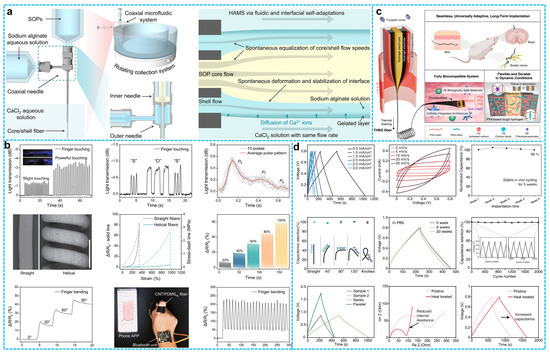
Flexible and stretchable electronics inevitably undergo stretching, compression, bending and torsion when conformally attached to skin, soft tissues and dynamic organs. While deformation-induced electrical variations act as target signals for motion sensors, they cause resistance/impedance drift, baseline shift and sensitivity degradation in physiological
[...] Read more.
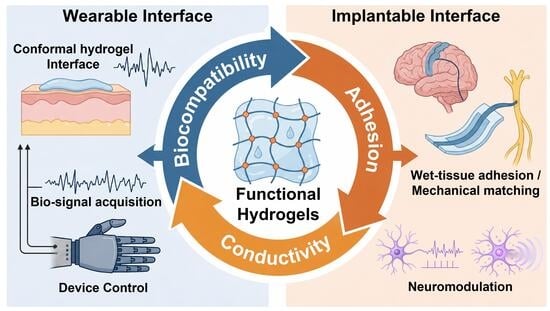
Flexible and stretchable electronics inevitably undergo stretching, compression, bending and torsion when conformally attached to skin, soft tissues and dynamic organs. While deformation-induced electrical variations act as target signals for motion sensors, they cause resistance/impedance drift, baseline shift and sensitivity degradation in physiological electrodes, temperature/chemical sensors, interconnects and stimulation devices, leading to motion artifacts and reduced long-term reliability. Hydrogels are pivotal materials for soft bioelectronic interfaces owing to their high water content, low modulus, tissue compatibility and ionic conductivity. However, their conductive networks are susceptible to structural reconstruction under deformation, dehydration, swelling and cyclic fatigue, meaning that stretchability is by no means equivalent to strain insensitivity. This review focuses on stable resistance/impedance and functional output within a specified strain window, this paper reviews three representative material systems, liquid metal (LM)-based composite hydrogels, conductive polymer/elastic network composite hydrogels, and hydrogen-bonded isotropic architectures. It further summarizes three design strategies—geometric and functional compensation, mechanical decoupling and strain isolation, and interfacial engineering for conductive network stabilization—and discusses their applications in wearable epidermal and implantable bioelectronics. Finally, unified evaluation metrics for strain insensitivity are proposed, with future directions covering high-conductivity–low-modulus synergy, long-term water/ionic stability, robust soft-hard interfaces, multiaxial deformation tolerance and scalable manufacturability.
Full article
(This article belongs to the Special Issue Hydrogels with Appropriate/Tunable Properties for Biomedical Applications (3rd Edition))
►▼
Show Figures

Figure 1
Open AccessEditorial
Editorial for the Special Issue “Advances and Applications of Polymer Gels for Subsurface Energy and Storage”
by
Baojun Bai and Jingyang Pu
Gels 2026, 12(9), 821; https://doi.org/10.3390/gels12090821 - 7 Sep 2026
Abstract
Polymer gels are essential functional materials for subsurface energy operations, playing a critical role in conformance control, fluid diversion, hydraulic fracturing, and leakage mitigation. As reservoirs become increasingly complex and the demand for sustainable energy grows, continued innovation in gel technologies is crucial.
[...] Read more.
Polymer gels are essential functional materials for subsurface energy operations, playing a critical role in conformance control, fluid diversion, hydraulic fracturing, and leakage mitigation. As reservoirs become increasingly complex and the demand for sustainable energy grows, continued innovation in gel technologies is crucial. This editorial introduces a Special Issue titled “Advances and Applications of Polymer Gels for Subsurface Energy and Storage,” which compiles seven original research articles exploring recent developments in gel synthesis, characterization, and applications. The featured studies highlight the versatility of polymer gels, including nanoparticle-reinforced composites, foam–gel hybrids, recrosslinkable preformed particle gels, and advanced fracturing fluids. The contributions address key challenges across CO2-enhanced oil recovery, heavy oil production, low-permeability reservoir fracturing, and combined enhanced oil recovery strategies. The findings demonstrate ongoing efforts to tailor gel systems for harsh reservoir conditions, improve sweep efficiency, and reduce formation damage, fostering more efficient and sustainable subsurface engineering practices. This Special Issue serves as a valuable resource for researchers and practitioners advancing polymer gel technologies for energy and storage applications.
Full article
(This article belongs to the Special Issue Advances and Application of Polymer Gels for Subsurface Energy and Storage)
►▼
Show Figures

Figure 1
Open AccessArticle
Feedstock-Dependent Water Sorption and Retention of Citric-Acid-Modified Lignocellulosic Biogels Under Simulated Climatic Conditions
by
Tomáš Holeček, Michaela Filipi, Ivana Tomášková, Karolina Resnerová, Jan Macků and Kateřina Hájková
Gels 2026, 12(9), 820; https://doi.org/10.3390/gels12090820 - 7 Sep 2026
Abstract
Increasing drought frequency and irregular precipitation patterns highlight the need for sustainable soil water management. In this study, lignocellulosic biogels were prepared from Norway spruce and silver birch sawdust and from rapeseed and poppy straw using a 10 wt.% citric acid solution, with
[...] Read more.
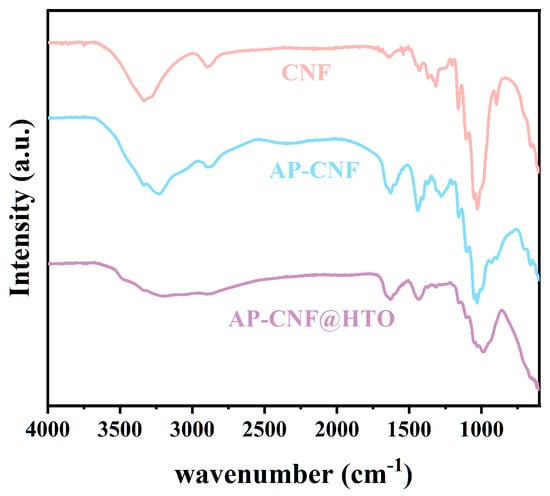
Increasing drought frequency and irregular precipitation patterns highlight the need for sustainable soil water management. In this study, lignocellulosic biogels were prepared from Norway spruce and silver birch sawdust and from rapeseed and poppy straw using a 10 wt.% citric acid solution, with a fixed addition of 5 mL of 80% lactic acid as a processing modifier. Two formulations differing in the volume of citric acid solution (180 or 250 mL per 12 g of dry feedstock), and consequently in both the liquid-to-solid ratio and absolute citric acid dose, were evaluated. Biomass chemical composition and density were determined, the amount of water absorbed by soil–biogel mixtures containing approximately 3.1% dry biogel relative to dry soil mass was measured gravimetrically after saturation and free drainage and water-loss kinetics of the separately saturated biogels were monitored under cyclic climatic conditions ranging from 12 to 35 °C and 25 to 75% relative humidity. FTIR spectroscopy was used to compare cellulose isolated from each feedstock with the corresponding biogels prepared using both the 180 and 250 mL formulations. Biogel performance depended on feedstock composition and physical characteristics. Among the tested formulations, the poppy-derived 180 mL biogel produced the highest water absorption in the soil–biogel system, whereas spruce-derived biogels exhibited more stable residual water content during prolonged desorption. The poppy-derived 180 mL formulation increased water absorption in the soil–biogel system from 88.46 g in untreated soil to 122.86 g, corresponding to an increase of 38.9%. FTIR analysis indicated an increased contribution of carbonyl-containing structures consistent with incorporation of the acid modifiers and possible ester formation; however, the spectra did not provide direct evidence of crosslinking density. Increasing the citric acid solution volume did not consistently improve water absorption by the soil–biogel system or water-loss behavior of the isolated biogels. These laboratory results demonstrate a feedstock-dependent interaction with formulation and provide a basis for further evaluation of lignocellulosic residues as renewable water-retaining soil amendments under soil–plant and field conditions.
Full article
(This article belongs to the Section Gel Chemistry and Physics)
►▼
Show Figures

Figure 1
Open AccessArticle
Preparation and Performance Evaluation of Temperature-Resistant and Salt-Resistant Zwitterionic Polymer Gel
by
Meilong Fu, Shoufei Lu, Yangjie Fan and Yuxin Bai
Gels 2026, 12(9), 819; https://doi.org/10.3390/gels12090819 - 6 Sep 2026
Abstract
To address the susceptibility of polymer gels to syneresis and failure under high-temperature, high-salinity (HTHS) reservoir conditions, a zwitterionic terpolymer was synthesized from acrylamide (AM), 2-acrylamido-2-methylpropanesulfonic acid (AMPS), and dimethyldiallylammonium chloride (DMDAAC), and subsequently crosslinked with a phenolic system to produce an intramolecular
[...] Read more.
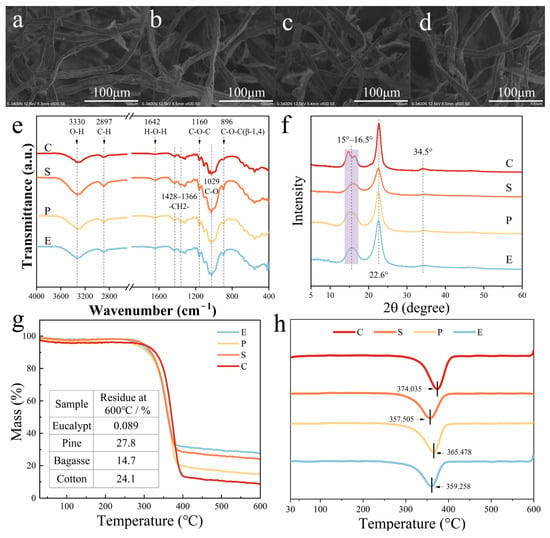
To address the susceptibility of polymer gels to syneresis and failure under high-temperature, high-salinity (HTHS) reservoir conditions, a zwitterionic terpolymer was synthesized from acrylamide (AM), 2-acrylamido-2-methylpropanesulfonic acid (AMPS), and dimethyldiallylammonium chloride (DMDAAC), and subsequently crosslinked with a phenolic system to produce an intramolecular salt-structured polymer gel with exceptional thermal and saline tolerance. Through systematic formulation optimization, the optimal composition was established as 0.3 wt% zwitterionic polymer, 0.03 wt% resorcinol, 0.3 wt% hexamethylenetetramine, and 0.1 wt% thiourea. X-ray photoelectron spectroscopy and zeta potential measurements confirmed that quaternary ammonium cations and sulfonate anions on the polymer chains associate via electrostatic attraction to form intramolecular salt bridges, which induce an anti-polyelectrolyte effect and thereby confer superior salt tolerance and thermal stability. Following aging for 140 days at 115 °C in formation water, the gel exhibited a syneresis rate below 30%, demonstrating favorable long-term stability under the tested high-temperature and high-salinity conditions. Thermogravimetric analysis and differential scanning calorimetry further characterized the thermal-transition behavior of the gel under programmed heating conditions. Scanning electron microscopy revealed a homogeneous honeycomb-like porous crosslinked network. Rheological testing demonstrated a storage modulus (G′) of 1.115 Pa and a loss modulus (G″) of 0.205 Pa, indicating an elasticity-dominated viscoelastic response and strong resistance to shear deformation. Single-core plugging experiments showed that at an injection volume of 0.2 PV, the gel achieved a plugging efficiency of 85.15% and a breakthrough pressure gradient of 18.6 MPa/m, with significant secondary plugging capability. In a heterogeneous dual-core model with a permeability contrast of approximately 10, the diversion rate into the low-permeability layer increased to 73.6%, effectively improving the water injection profile. This intramolecular salt-structured molecular design demonstrates potential for deep-profile control under high-temperature and high-salinity reservoir conditions.
Full article
(This article belongs to the Topic Advanced Technology for Oil and Nature Gas Exploration)
►▼
Show Figures

Figure 1
Open AccessReview
Mechanical, Redox, and Bioelectrical Coupling in Hydrogels for Cutaneous Regeneration: Network Design and Structure–Property Relationships
by
Luisbel González, Antonio Pérez-Torres, Yenisleidys Fernández-Guerrero, Daylenis Pérez, Brenda López and Reinier Fernández-López
Gels 2026, 12(9), 818; https://doi.org/10.3390/gels12090818 - 6 Sep 2026
Abstract
Cutaneous wound healing is governed by dynamically interacting mechanical, redox, and bioelectrical signals that regulate cell migration, inflammation, angiogenesis, extracellular-matrix remodeling, and tissue regeneration. Hydrogels are increasingly engineered to modulate these cues; however, most systems are still described through independently measured properties such
[...] Read more.
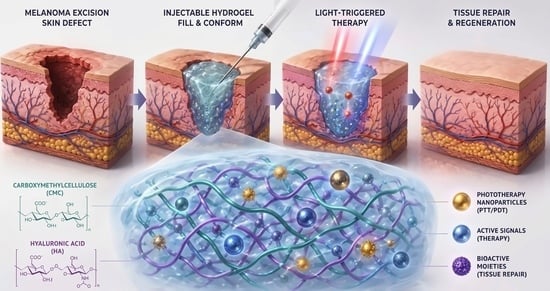
Cutaneous wound healing is governed by dynamically interacting mechanical, redox, and bioelectrical signals that regulate cell migration, inflammation, angiogenesis, extracellular-matrix remodeling, and tissue regeneration. Hydrogels are increasingly engineered to modulate these cues; however, most systems are still described through independently measured properties such as stiffness, antioxidant activity, and conductivity, without demonstrating functional coupling among them. This review examines regenerative hydrogels from a cross-domain perspective, integrating the biological basis of mechanotransduction, redox signaling, endogenous bioelectricity, and their molecular convergence with the network-level mechanisms that control hydrogel behavior. Particular emphasis is placed on dynamic crosslinking, viscoelastic relaxation, hydration, redox-active chemistry, ionic and electronic transport, conductive and piezoelectric phases, and degradation-dependent evolution of material function. A conceptual hierarchy is proposed to distinguish property coexistence, structural integration, directional transduction, and adaptive feedback, together with experimental criteria and quantitative approaches for evaluating coupling. Current evidence indicates that mechanoelectrical coupling is the most mature, whereas mechanoredox and redox–electrical interactions remain less systematically quantified. Moving beyond descriptive multifunctionality toward controllable cross-domain transduction may enable hydrogels to function as adaptive soft interfaces capable of responding to the evolving physicochemical conditions of cutaneous regeneration.
Full article
(This article belongs to the Special Issue Biomedical Hydrogels: From Synthesis to Therapy)
►▼
Show Figures

Figure 1
Open AccessArticle
Albumin Hydrogels Loading Bacteriophage PA57 as a Promising Platform for Pseudomonas aeruginosa Infection Management
by
Inna Zharkova, Tatiana Ushakova, Yulia Tupikova, Oksana Gulyaeva, Vera Morozova, Yulia Kozlova, Nina Tikunova and Elena Dmitrienko
Gels 2026, 12(9), 817; https://doi.org/10.3390/gels12090817 - 6 Sep 2026
Abstract
The global proliferation of multidrug-resistant Pseudomonas aeruginosa stimulates the search for alternatives to conventional therapy. This study developed human serum albumin (HSA)-based hydrogels for the delivery of bacteriophage PA57. Matrices were fabricated via combined thermal- and ethanol-induced gelation. The release kinetic was dependent
[...] Read more.
The global proliferation of multidrug-resistant Pseudomonas aeruginosa stimulates the search for alternatives to conventional therapy. This study developed human serum albumin (HSA)-based hydrogels for the delivery of bacteriophage PA57. Matrices were fabricated via combined thermal- and ethanol-induced gelation. The release kinetic was dependent on protein concentration: 20% (w/v) HSA provided sustained release over 48 h, whereas 10–15% (w/v) HSA exhibited burst release effects. Combined systems effectively suppressed P. aeruginosa growth in vitro during the early and middle stages of incubation, maintaining low culture optical density for up to 28 h. Although late-stage bacterial regrowth was observed, the final bacterial load remained significantly lower than in the control. Furthermore, cytocompatibility assays with HaCaT keratinocytes and MRC-5 fibroblasts demonstrated high cell viability, confirming the safety of the hydrogel matrix for wound healing applications. These results demonstrate the promise of HSA-based hydrogels as a platform for localized phage therapy of infected wounds.
Full article
(This article belongs to the Special Issue Advanced Antibacterial Hydrogels: From Tissue Engineering to Environmental Applications)
►▼
Show Figures

Figure 1
Open AccessArticle
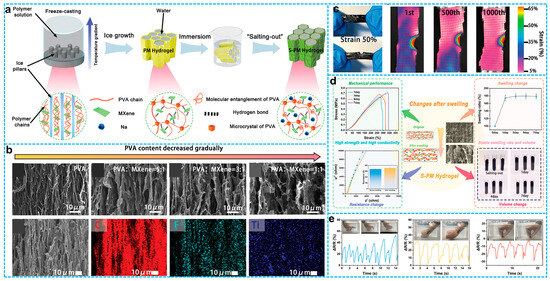
Glycerol/NaCl-Regulated Poly(vinyl alcohol)/Sodium Alginate/Graphene Oxide Composite Gels with Low-Temperature Flexibility and a Strain-Dependent Resistance Response
by
Jiajun Liu, Fuqiang Chu, Haikuo Zhang and Jilei Chao
Gels 2026, 12(9), 816; https://doi.org/10.3390/gels12090816 - 6 Sep 2026
Abstract
Flexible gel sensors can lose mechanical compliance and electrical stability at low temperature or during solvent loss. A poly(vinyl alcohol) (PVA)/sodium alginate (SA)/graphene oxide (GO) composite gel was prepared by freeze–thaw cycling and post-treated in either aqueous NaCl or a NaCl-containing water/glycerol mixture
[...] Read more.
Flexible gel sensors can lose mechanical compliance and electrical stability at low temperature or during solvent loss. A poly(vinyl alcohol) (PVA)/sodium alginate (SA)/graphene oxide (GO) composite gel was prepared by freeze–thaw cycling and post-treated in either aqueous NaCl or a NaCl-containing water/glycerol mixture (1:2, v/v). The water/glycerol–NaCl-treated gel (F-G/S/P/G) exhibited a maximum tensile stress of 428 ± 27 kPa and an elongation at break of 432 ± 27% at room temperature (n = 3), and remained visibly deformable after 24 h at −20 °C. During ambient storage, it retained approximately 89% of its initial mass after 35 days. The cycle-averaged peak ΔR/R0 increased from 0.135 at 20% strain to 1.142 at 250% strain, and the 20–60% linear region gave a gauge factor of 1.01 (R2 = 0.9988). Three independently prepared sensing elements gave a peak ΔR/R0 of 0.710 ± 0.019 at 100% strain, with response and recovery times of 1.22 ± 0.07 and 1.04 ± 0.06 s, respectively. After 500 cycles at 100% strain, the normalized peak response retained 95.1% of its initial value. Overall, F-G/S/P/G combined low-temperature deformability, ambient-storage mass retention, and repeatable resistance sensing.
Full article
(This article belongs to the Section Gel Chemistry and Physics)
►▼
Show Figures

Figure 1
Open AccessArticle
One-Step Sol–Gel-Fabricated CuZn Alloy Aerogel Enabled by Cu–Zn Bimetallic Synergy for Efficient Antibacterial and Anti-Biofilm Therapy
by
Lin Teng, Zhiqiang Zhou, Changyuan Feng, Guoyuan Li, Weihao Men, Yun Cui, Shuo Liu and Libing Zhang
Gels 2026, 12(9), 815; https://doi.org/10.3390/gels12090815 - 6 Sep 2026
Abstract
Copper nanoparticles possess broad-spectrum antibacterial activity, and aerogels with 3D interconnected porous networks can trap bacteria and sustain metal ion release to boost bactericidal effects. Zinc is another low-toxicity antibacterial metal, and the Cu–Zn combination is predicted to generate synergistic inhibition. Herein, monometallic
[...] Read more.
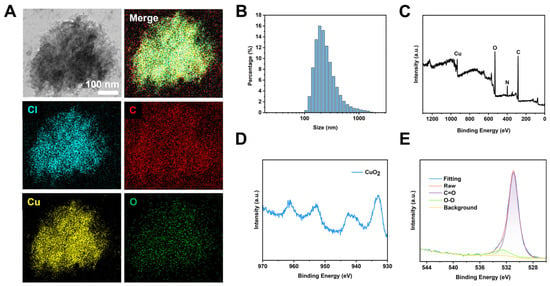
Copper nanoparticles possess broad-spectrum antibacterial activity, and aerogels with 3D interconnected porous networks can trap bacteria and sustain metal ion release to boost bactericidal effects. Zinc is another low-toxicity antibacterial metal, and the Cu–Zn combination is predicted to generate synergistic inhibition. Herein, monometallic Cu aerogel and CuZn alloy aerogel were fabricated by a one-step method, and comparative experiments were performed to verify whether Zn alloying improves the antibacterial performance of Cu aerogel. TEM and XRD suggest the probable formation of Cu–Zn substitutional solid solution; Zn addition refined nanoparticles and relieved particle aggregation. Quantitative viability tests, agar diffusion and biofilm inhibition assays proved that CuZn alloy aerogel exhibited superior bactericidal and anti-biofilm activity against E. coli and S. aureus. Mechanistic investigations revealed that the bimetallic alloy induced strain-dependent intracellular ROS accumulation and disrupted bacterial membrane potential to cause irreversible bacterial death. DC2.4 cell tests validated its good cytocompatibility, with cell viability over 70% at 100 ppm, the concentration delivering excellent antibacterial capacity. This work explores the combined antibacterial advantages of Cu-Zn bimetallic alloy aerogel and offers a facile strategy to fabricate biocompatible metal aerogels for biomedical antibacterial applications.
Full article
(This article belongs to the Special Issue Synthesis and Emerging Applications of Novel Aerogel Materials)
►▼
Show Figures

Graphical abstract
Open AccessArticle
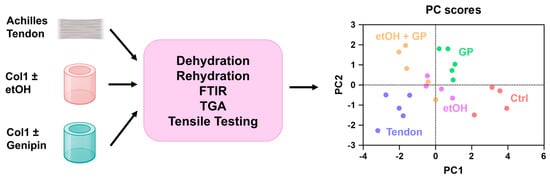
Anisotropic Cotton-Stalk-Derived Hydrothermally Treated Cellulose–Chitosan Aerogels Toward Anionic Dye Adsorption and Water-in-Oil Emulsion Separation
by
Shixue He, Chengbo Zhang, Daning Lang and Ronglan Wu
Gels 2026, 12(9), 814; https://doi.org/10.3390/gels12090814 - 5 Sep 2026
Abstract
Transforming agricultural residues into functional porous materials provides a sustainable strategy for wastewater remediation. Herein, cellulose was separated from cotton stalks via formic acid-assisted hemicellulose extraction and sodium chlorite delignification, and then sulfuric acid hydrolysis. Chitosan-assisted hydrothermally treated cellulose (CC) was prepared via
[...] Read more.
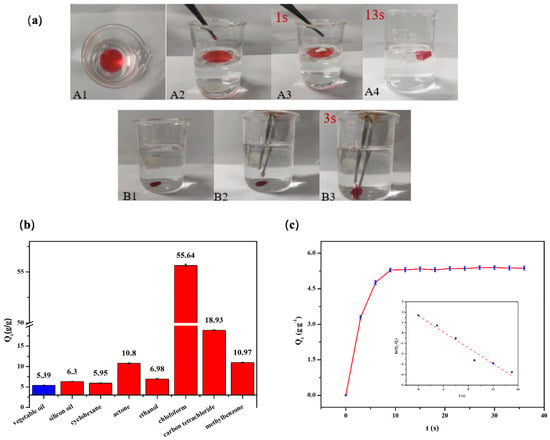
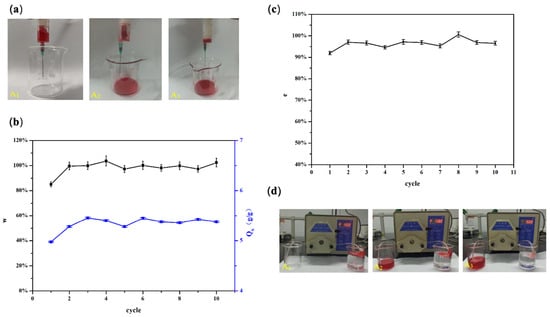
Transforming agricultural residues into functional porous materials provides a sustainable strategy for wastewater remediation. Herein, cellulose was separated from cotton stalks via formic acid-assisted hemicellulose extraction and sodium chlorite delignification, and then sulfuric acid hydrolysis. Chitosan-assisted hydrothermally treated cellulose (CC) was prepared via hydrothermal treatment in the presence of chitosan. Anisotropic CC/chitosan composite aerogels were prepared via glutaraldehyde crosslinking and unidirectional freeze-drying. The hydrophilic CC/CS aerogel exhibited an oriented porous structure, a low density of 0.03 g cm−3, and a porosity of 85.33%. For Congo red (CR) adsorption, the equilibrium data were described well by the pseudo-second-order kinetic and Langmuir isotherm models, with a calculated maximum adsorption capacity of 483.09 mg g−1. Electrostatic attraction, hydrogen bonding, and pore-mediated retention jointly contributed to CR uptake. To realize oil–water separation, methyltrimethoxysilane (MTMS) vapor modification was applied to prepare hydrophobic aerogel (M-CC/CS). M-CC/CS presented an initial water contact angle (WCA) of around 134°, and the WCA remained above 115° after 600 s of water droplet exposure. The aerogel showed absorption capacities of 16.22–40.13 g g−1 toward various oils and organic solvents. Under gravity, M-CC/CS separated immiscible oil/water mixtures at a flux of 565.47 L m−2 h−1 and several water-in-oil (W/O) emulsions with efficiencies above 99.9% while maintaining high separation efficiency over 10 cycles. This work demonstrates a cotton-stalk-derived aerogel platform whose hydrophilic and hydrophobically modified forms can be used for dye adsorption and oily water treatment, respectively.
Full article
(This article belongs to the Section Gel Applications)
►▼
Show Figures

Figure 1
Open AccessArticle
Nanomaterial-Modified Thermally Expandable Thixotropic Gel for Enhanced Plugging Performance in High-Temperature Fractured Formations
by
Dong Liu, Xian Zhu, Xiangwei Cai, Gang Chen, Xu Luo and Wenjun Shan
Gels 2026, 12(9), 813; https://doi.org/10.3390/gels12090813 - 5 Sep 2026
Abstract
Lost circulation in fractured formations remains a critical challenge in petroleum engineering, significantly hindering drilling efficiency and increasing operational risks. To overcome the limitations of conventional plugging materials under high-temperature and complex fracture conditions, a nanomaterial L-modified thermally expandable thixotropic gel system was
[...] Read more.
Lost circulation in fractured formations remains a critical challenge in petroleum engineering, significantly hindering drilling efficiency and increasing operational risks. To overcome the limitations of conventional plugging materials under high-temperature and complex fracture conditions, a nanomaterial L-modified thermally expandable thixotropic gel system was developed. By incorporating a nanomaterial with strong thixotropic characteristics and multifunctional monomers, multiscale network regulation and interfacial enhancement were achieved. Systematic rheological and performance evaluations were conducted to optimize the formulation, enabling a balanced combination of flowability, structural recovery, and plugging performance. Experimental results demonstrate that the gel exhibits pronounced shear-thinning behavior and excellent thixotropic recovery, ensuring superior injectability under high shear and strong structural integrity under low-shear conditions. The system also maintains good thermal stability below 150 °C and achieves effective plugging across varying fracture scales. In addition, moderate salinity enhances network strength, whereas excessive salt concentration weakens structural stability and recovery capability. This study provides a novel design strategy for nanomaterial-regulated thermally expandable gels and offers a promising solution for lost circulation control in complex fractured formations.
Full article
(This article belongs to the Section Gel Analysis and Characterization)
►▼
Show Figures

Figure 1
Open AccessReview
From Infection Control to Tissue Regeneration: Mechanisms, Design Strategies, and Smart Advances in Antibacterial Hydrogels
by
Peng Liu, Lin Chen, Jinju Tian, Dan Wang, Yiping Deng, Xiangdi Jia, Zanxia Cao and Mingqiong Tong
Gels 2026, 12(9), 812; https://doi.org/10.3390/gels12090812 - 4 Sep 2026
Abstract
Bacterial infection, biofilm formation, and the associated oxidative stress and persistent inflammation represent major obstacles to wound healing, tissue engineering, and implantable medical devices. Owing to their highly hydrated three-dimensional networks, favorable tissue compatibility, and versatile capacity for functional loading, hydrogels have been
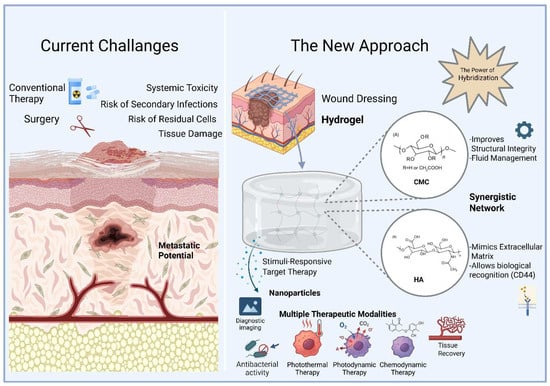
[...] Read more.
Bacterial infection, biofilm formation, and the associated oxidative stress and persistent inflammation represent major obstacles to wound healing, tissue engineering, and implantable medical devices. Owing to their highly hydrated three-dimensional networks, favorable tissue compatibility, and versatile capacity for functional loading, hydrogels have been widely investigated for the treatment of infected wounds. This review systematically summarizes the major antibacterial mechanisms of hydrogels, including cationic contact-killing, chemical antibacterial activity mediated by metal ions and reactive halogen species, nanozyme-catalyzed reactions and bidirectional regulation of reactive oxygen species, as well as photothermal synergistic antibacterial therapy. Key design strategies are also discussed, including natural polymer-based matrices, multiple dynamic crosslinking, stimuli-responsive controlled release, three-dimensional printing, and spatial compartmentalization. In addition, recent advances in infection-microenvironment regulation, wet-interface adaptation, temporally coordinated tissue repair, and integrated diagnosis and therapy are highlighted. The field is currently shifting from single-mode bacterial eradication toward multistage tissue repair and intelligent theranostics. However, major challenges remain, including balancing antibacterial efficacy with biosafety, achieving reproducible manufacturing and sterilization-compatible formulations, maintaining functional stability during storage, and improving the clinical relevance and standardization of preclinical evaluation. In addition, most smart systems still lack quantitative coupling among pathological signals, therapeutic dosage, and treatment outcomes. Future studies should therefore integrate mechanistic design with manufacturing reproducibility, clinically relevant validation, and quantitative feedback regulation, thereby advancing antibacterial hydrogels from multifunctional proof-of-concept systems toward precise, controllable, and clinically translatable therapeutic platforms.
Full article
(This article belongs to the Special Issue Recent Advances in Smart and Tough Hydrogels)
Open AccessReview
Engineering Hydrogels for Intrauterine Adhesion Therapy and Endometrial Regeneration
by
Hanlin Li, Jiacheng Wang, Yan Zhong, Weiai Liu, Boheng Zheng, Yingzhe Liu, Shicong Niu, Weijun Li and Yu Liu
Gels 2026, 12(9), 811; https://doi.org/10.3390/gels12090811 - 4 Sep 2026
Abstract
Intrauterine adhesion (IUA) is a fibrotic disorder resulting from aberrant repair following injury to the endometrial basal layer, leading to menstrual abnormalities, infertility, recurrent miscarriage, and pregnancy complications. Although hysteroscopic adhesiolysis remains the primary clinical treatment, the rate of postoperative re–adhesion is still
[...] Read more.
Intrauterine adhesion (IUA) is a fibrotic disorder resulting from aberrant repair following injury to the endometrial basal layer, leading to menstrual abnormalities, infertility, recurrent miscarriage, and pregnancy complications. Although hysteroscopic adhesiolysis remains the primary clinical treatment, the rate of postoperative re–adhesion is still high, especially in patients with moderate–to–severe IUA. Moreover, mechanical separation alone is often insufficient to restore intact endometrial architecture and reproductive function. Hydrogels, with their hydrated three–dimensional networks, extracellular matrix (ECM)–mimicking properties, injectability, biodegradability, tissue adhesion, and tunable delivery capacity, have evolved from passive barrier materials into multifunctional therapeutic platforms capable of regulating the pathological microenvironment and promoting tissue regeneration. Recent advances in responsive, self–healing, adhesive, antioxidant, and bioactive cargo–loaded hydrogels have expanded their applications from preventing adhesion formation toward functional endometrial reconstruction. In this review, we summarize recent progress in hydrogel–based IUA therapy, focusing on material composition, structural design, functional modification, therapeutic mechanisms, and translational considerations. Particular emphasis is placed on disease–informed hydrogel engineering strategies that integrate the unique anatomical characteristics of the uterine cavity, injury–associated microenvironment, and dynamic stages of endometrial repair. This perspective provides insights into the development of next–generation hydrogel systems for preventing re–adhesion and restoring reproductive function.
Full article
(This article belongs to the Special Issue Advanced Hydrogels for Tissue Engineering and Drug Delivery (3rd Edition))
►▼
Show Figures

Figure 1
Open AccessArticle
Fabrication of Beeswax–Soapwort Root Powder–Gelatin Bigel-Based Foamed Emulsions for Use as a Fat Replacer in Mousse
by
Alican Akcicek
Gels 2026, 12(9), 810; https://doi.org/10.3390/gels12090810 - 3 Sep 2026
Abstract
In this study, beeswax (BW) and gelatin, soapwort root powder (SRP) were employed to create oleogel and hydrogel for bigel development, respectively. The study aimed to determine the potential utilization of SRP in the bigel system to create a novel fat replacer (bigel-based
[...] Read more.
In this study, beeswax (BW) and gelatin, soapwort root powder (SRP) were employed to create oleogel and hydrogel for bigel development, respectively. The study aimed to determine the potential utilization of SRP in the bigel system to create a novel fat replacer (bigel-based foamed emulsion) for mousse production. Bigels with 2% SRP showed a bicontinuous emulsion structure. The FTIR spectra of all the bigels exhibited no new peaks. Bigels had solid-like properties, given that no crossover point was present and G′ values were uniformly greater than G″ values. Hardness, gumminess, and chewiness were improved by increasing the bigel’s gelatin and SRP concentrations. A rise in the SRP ratio and gelatin content resulted in a higher overrun of bigel-based foamed emulsions. An increment in the SRP ratio resulted in enhanced thermal stability, with the exception of 9% G-2. The G′ values surpassed the G″ values, indicating that the mousse samples exhibited solid-like characteristics. From the prepared samples, 6% G-2 M was determined to be the closest to the control mousse in terms of hardness, springiness, cohesiveness, and gumminess values when comparing the bigel mousse samples with the control mousse sample (p > 0.05). The 6% G-2 M sample showed the lowest ΔE* value and was the closest sample to CM.
Full article
(This article belongs to the Section Gel Chemistry and Physics)
►▼
Show Figures

Figure 1
Open AccessReview
Silk-Derived Antibacterial Hydrogels: Material Identity, Mechanistic Evidence, and Translation
by
Hongmei Wang, Bingbing Xia, Yanlin Zhang and Xiaojuan Mi
Gels 2026, 12(9), 809; https://doi.org/10.3390/gels12090809 - 3 Sep 2026
Abstract
Silk fibroin (SF)- and silk sericin (SS)-based antibacterial hydrogels are increasingly engineered as local antimicrobial platforms, yet cross-study interpretation is limited by inconsistent material reporting and by conflation of bacterial inhibition with tissue repair. We performed a structured evidence-mapping and critical synthesis of
[...] Read more.
Silk fibroin (SF)- and silk sericin (SS)-based antibacterial hydrogels are increasingly engineered as local antimicrobial platforms, yet cross-study interpretation is limited by inconsistent material reporting and by conflation of bacterial inhibition with tissue repair. We performed a structured evidence-mapping and critical synthesis of a frozen 2020–July 2026 corpus of 94 references. The original 46-record core map was re-audited at the original-article level: 43 full-text-verified, non-retracted primary studies were retained for detailed evidence grading, 2 records available only at abstract/database level were retained descriptively but not graded, and 1 subsequently retracted study was excluded from quantitative synthesis. Among the 43 graded studies, metal-ion/nanozyme/catalytic systems were most common (12/43, 27.9%), followed by release-mediated (11/43, 25.6%), multimodal (9/43, 20.9%), contact-active/anti-adhesive (6/43, 14.0%), and light-responsive systems (5/43, 11.6%). Sixteen studies (37.2%) used deliberately infected animal models, whereas only 4 (9.3%) reached a biofilm or adherent-bacteria-level endpoint in the graded map. Biological claim ceilings (C0–C5) are assessed independently from translation gates spanning material identity, reproducibility, mechanism, host safety, sterilization/storage, resistance, long-term fate, and deployment. Across mechanisms, SF and SS most often function as structural, interfacial, or transport-regulating matrices; direct silk-dependent bactericidal causality remains uncommon. The central translational deficit is failure to quantitatively link silk molecular identity and network architecture to antimicrobial exposure, bacterial killing, host selectivity, and long-term material fate.
Full article
(This article belongs to the Special Issue Advanced Antibacterial Hydrogels: From Tissue Engineering to Environmental Applications)
►▼
Show Figures

Graphical abstract
Open AccessArticle
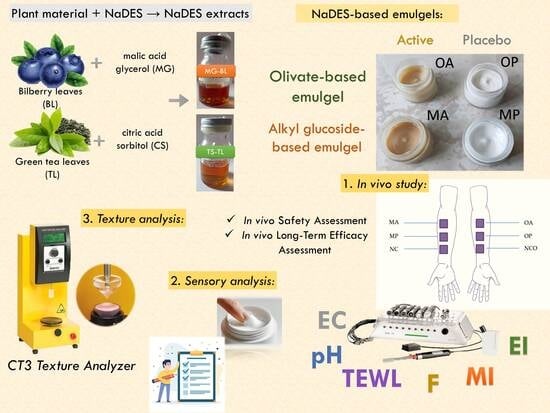
Rheological and Thermal Characterization of Kırkağaç Melon Seed Beverage Puddings Structured with Hydrocolloids
by
Şelale Öncü Glaue
Gels 2026, 12(9), 808; https://doi.org/10.3390/gels12090808 - 3 Sep 2026
Abstract
Seeds from Kırkağaç melons (Cucumis melo L.), marketed locally as Kırkağaç Kavunu, are an underused co-product. This study evaluated whether a beverage obtained from these seeds could be structured into a plant-based pudding using xanthan gum, locust bean gum (LBG), κ-carrageenan or
[...] Read more.
Seeds from Kırkağaç melons (Cucumis melo L.), marketed locally as Kırkağaç Kavunu, are an underused co-product. This study evaluated whether a beverage obtained from these seeds could be structured into a plant-based pudding using xanthan gum, locust bean gum (LBG), κ-carrageenan or guar gum at 0.5 and 1.0% (w/w), without added starch. Starch-structured melon seed beverage and cow-milk puddings served as controls, and the formulations were characterized by rheology, differential scanning calorimetry (DSC) and attenuated total reflectance Fourier-transform infrared (ATR-FTIR) spectroscopy. Gum identity, concentration and their interaction significantly affected every rheological endpoint (interaction p ≤ 0.031), so equal mass fractions of different gums were not interchangeable structuring doses. Doubling the LBG concentration increased the loss modulus without increasing the storage modulus, reversing the balance between them, whereas doubling xanthan or guar strengthened their networks approximately threefold and ninefold, respectively. At 1 rad s−1 the storage modulus ranged from 3.68 ± 0.39 Pa for 0.5% guar to 475.40 ± 116.53 Pa for 1.0% κ-carrageenan, and four formulations showed a crossover between the storage (G′) and loss (G″) moduli within the measured frequency window. DSC resolved a reproducible transition at 68.2 ± 3.3 °C in the 0.5% κ-carrageenan pudding. Under the conditions tested, 0.5% κ-carrageenan provided the most balanced rheological response among the formulations examined, whereas the 1.0% gel was progressively expelled from the measuring gap under shear.
Full article
(This article belongs to the Section Gel Analysis and Characterization)
►▼
Show Figures

Graphical abstract
Open AccessArticle
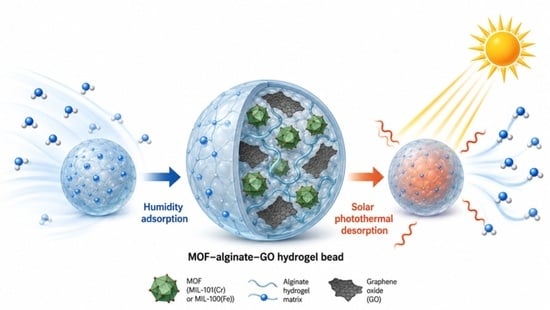
Poloxamer/HPMC/Carbopol-Based Thermosensitive Hydrogel Loaded with Ibuprofen for Potential Vaginal Drug Release
by
Gladys Arline Politrón Zepeda, Ernesto Tinajero-Díaz, Antxon Martínez de Ilarduya, Rogelio Rodríguez Rodríguez, Gregorio Guadalupe Carbajal Arízaga, Aldo Corona Escalera, Nathaly Vasquez Martínez, Moisés Martínez Velázquez and Zaira Yunuen García Carvajal
Gels 2026, 12(9), 807; https://doi.org/10.3390/gels12090807 - 3 Sep 2026
Abstract
Vaginal drug delivery offers a critical route for local treatments but is limited by short formulation residence times. This study describes a thermosensitive in situ gel prepared by the cold-dissolution method from a ternary blend of Pluronic F127, Carbopol 940, and HPMC for
[...] Read more.
Vaginal drug delivery offers a critical route for local treatments but is limited by short formulation residence times. This study describes a thermosensitive in situ gel prepared by the cold-dissolution method from a ternary blend of Pluronic F127, Carbopol 940, and HPMC for localized vaginal therapy. We used ibuprofen as a model drug selected for its reported anti-inflammatory and antiproliferative activity. The hydrogels exhibited a constant gelation temperature of 28 °C and high viscosity under simulated physiological conditions; ibuprofen incorporation further reduced susceptibility to gravitational leakage. FTIR, XRD, and DSC analyses confirmed stable physical cross-linking of the polymer network and amorphous molecular dispersion of ibuprofen. Peppas–Sahlin modelling revealed a controlled, sustained release profile (>50% over 24 h) predominantly governed by Fickian diffusion (69%). The blank hydrogel exhibited high biocompatibility (>75% viability). In contrast, the ibuprofen-loaded matrix exhibited a concentration-dependent cytotoxic effect on HeLa cervical cancer cells, reducing cell viability to ~12% at the full extract concentration. Overall, this ternary hydrogel platform represents a stable, promising vehicle for sustained local administration of ibuprofen in the vaginal microenvironment.
Full article
(This article belongs to the Special Issue Selected Papers from the 1st International Online Conference on Gels)
►▼
Show Figures

Graphical abstract
Open AccessReview
Compressible and Stretchable Aerogels: Construction Strategies and Applications in Personal Thermal Management and Wearable Electronics
by
Caixia Ren, Yuping Li, Yongtao Wang, Gangyue Li, Xuepeng Ni, Liyin Hou and Shanshan Guo
Gels 2026, 12(9), 806; https://doi.org/10.3390/gels12090806 - 3 Sep 2026
Abstract
Mechanically compliant aerogels are increasingly important for wearable systems that require lightweight porous materials to retain function under repeated deformation. However, compressibility and stretchability impose different structural demands and should not be treated as equivalent manifestations of flexibility. This review provides a loading-mode-specific
[...] Read more.
Mechanically compliant aerogels are increasingly important for wearable systems that require lightweight porous materials to retain function under repeated deformation. However, compressibility and stretchability impose different structural demands and should not be treated as equivalent manifestations of flexibility. This review provides a loading-mode-specific framework of compressible and stretchable aerogels. It summarizes how network chemistry, interfacial interactions, and multiscale architectures govern deformation, recovery, strength, and fatigue resistance under compression and tension. The relationships between these mechanical characteristics and thermal, spectral, and electrical functions are subsequently discussed in the context of wearable personal thermal management sensors, biosensors, and flexible energy-storage devices. Finally, current challenges are summarized in terms of mechanical–functional balancing, long-term durability, and scalable fabrication, providing guidance for the future development of mechanically reliable aerogel-based wearable materials.
Full article
(This article belongs to the Special Issue Advances in Hydrogels for Flexible Electronics)
►▼
Show Figures

Figure 1
Open AccessReview
Programming Hydrogel Release Kinetics to Tissue Healing Phases: From Network Design to Therapeutic Synchronization
by
Qiao Chen, Tong Wang, Lusi Zou and Qi Dong
Gels 2026, 12(9), 805; https://doi.org/10.3390/gels12090805 - 3 Sep 2026
Abstract
The sequential phases of tissue healing—inflammation, proliferation, and remodeling—demand distinct pharmacokinetic profiles that conventional drug delivery systems fail to provide, creating a “chronotherapy gap” that contributes to chronic wound pathologies. Hydrogels, with their highly tunable network structures, offer a unique platform to program
[...] Read more.
The sequential phases of tissue healing—inflammation, proliferation, and remodeling—demand distinct pharmacokinetic profiles that conventional drug delivery systems fail to provide, creating a “chronotherapy gap” that contributes to chronic wound pathologies. Hydrogels, with their highly tunable network structures, offer a unique platform to program release kinetics in synchrony with these healing timelines. This review systematically examines design strategies for phase-synchronized hydrogel systems, categorized into three hierarchical paradigms: intrinsic network control (crosslinking density, degradation kinetics, and architectural engineering) that pre-programs release profiles; extrinsic/responsive control (endogenous pH/ROS/MMP/glucose and exogenous NIR/ultrasound/electro/magnetic triggers) that enables on-demand phase-shifting; and integrated systems that combine passive spatial compartmentalization with active responsiveness. We survey representative applications across cutaneous wounds, bone defects, cartilage, tendon, myocardial, and neural tissues, highlighting both common design principles and tissue-specific adaptations. Key translational bottlenecks—including in vivo–in vitro discrepancies, cargo stability, sterilization challenges, and regulatory complexity—are critically examined, alongside emerging frontiers such as closed-loop biosensing, artificial intelligence-driven design, and four-dimensional printing. We conclude that the field is evolving from passive drug depots toward active therapeutic synchronizers, where material programming is set to the body’s biological clock, offering a transformative paradigm for regenerative medicine.
Full article
(This article belongs to the Special Issue Novel Hydrogels for Drug Delivery and Regenerative Medicine)
►▼
Show Figures

Graphical abstract
Journal Menu
► ▼ Journal Menu-
- Gels Home
- Aims & Scope
- Editorial Board
- Reviewer Board
- Topical Advisory Panel
- Early Career Editorial Board
- Instructions for Authors
- Special Issues
- Topics
- Sections & Collections
- Article Processing Charge
- Indexing & Archiving
- Editor’s Choice Articles
- Most Cited & Viewed
- Journal Statistics
- Journal History
- Journal Awards
- Conferences
- Editorial Office
Journal Browser
► ▼ Journal BrowserHighly Accessed Articles
Latest Books
E-Mail Alert
News
19 August 2026
The 2nd International Conference on Bioengineering: Bioengineering in an Era of AI (BIOENG 2026) Announces Distinguished Speakers Lineup and Late-Breaking Poster Submission Opportunity
1 September 2026
MDPI INSIGHTS: The CEO’s Letter #38 – 2 Million Published Articles, Outstanding Reviewers, Michele Parrinello Award, AIS 2026 & WSF-12
Topics
Topic in
Applied Nano, Catalysts, Molecules, Nanomaterials, Water, Gels, Polymers
Water Purification and Catalytic Disintegration at the Nanoscale
Topic Editors: Michael Arkas, Ioannis Pashalidis, Dimitrios A. Giannakoudakis, Ioannis P. AnastopoulosDeadline: 30 September 2026
Topic in
Applied Sciences, Chemistry, Gels, Nanomaterials, Polymers, Environments, Materials
Functionalized Materials for Environmental Applications
Topic Editors: Luca Burratti, Iole Venditti, Paolo ProspositoDeadline: 30 October 2026
Topic in
Applied Sciences, Energies, Fluids, Gels, Processes
Enhanced Oil Recovery Technologies, 4th Edition
Topic Editors: Jan Vinogradov, Xiang ZhouDeadline: 30 November 2026
Topic in
Actuators, Gels, JFB, Polymers, MCA, Materials
Recent Advances in Smart Soft Materials: From Theory to Practice
Topic Editors: Lorenzo Bonetti, Giulia Scalet, Silvia Farè, Nicola FerroDeadline: 31 December 2026
Conferences
Special Issues
Special Issue in
Gels
Gel-Based Materials for Energy Storage
Guest Editors: Pritam J. Morankar, Chanwook JeonDeadline: 10 September 2026
Special Issue in
Gels
Xerogels: Preparation, Properties and Applications
Guest Editors: Guillermo Cruz-Quesada, Natalia Rey-RaapDeadline: 10 September 2026
Special Issue in
Gels
Hydrogels: Properties and Applications in Medicine
Guest Editors: Wanessa C.M.A. Melo, Arunas StirkeDeadline: 10 September 2026
Special Issue in
Gels
Food Gel-Based Systems for Efficient Delivery of Bioactive Ingredients: Design to Application
Guest Editors: Yongshuai Ma, Linyan ZhouDeadline: 15 September 2026
Topical Collections
Topical Collection in
Gels
Hydrogel in Tissue Engineering and Regenerative Medicine
Collection Editor: Esmaiel Jabbari
Topical Collection in
Gels
Recent Advances and Future Perspectives in Organogels and Organogelators Research
Collection Editor: Jean-Michel Guenet