


Abstract
Here, we report, for the first time, on a new class of sulfur-containing double hydrophopbic conetworks, poly(methyl acrylate)-l-poly(3,6-dioxa-1,8-octane-dithiol-co-poly(ethylene glycol) diacrylate) (PMA-l-P(DODT-co-PEGDA). Direct one-pot synthesis of acrylate-telechelic P(DODT-co-PEGDA) macromonomer in a gram-scale for the preparation of the conetworks was obtained by copolymerization of DODT with PEGDA via simultaneous oxidative disulfide formation and thiol–ene Michael addition click reactions. Conetworks with a broad composition range of 20–70 wt% sulfur-rich P(DODT-co-PEGDA) macrocrosslinker contents were obtained by radical copolymerization. High gel fractions and composition near to that of the feed ratios verified successful conetwork synthesis. DSC analysis indicates forced blending of the immiscible PMA and P(DODT-co-PEGDA) in the conetworks by one single Tg, which deviates from both the additive rule and the Fox equation for miscible blends. These novel conetworks exhibit high thermal stability up to ~300 °C and independent decomposition patterns of the components in two separate steps. The PMA-l-P(DODT-co-PEGDA) conetworks behave as organogels by swelling in organic solvents, such as THF, acetone, toluene, with composition dependent swelling degrees up to ~900%. Degradation by breaking the disulfide bonds with thiols followed by hydrolysis with NaOH led to complete disintegration of the PMA-l-P(DODT-co-PEGDA) conetworks. These findings enable establishing a new platform for the rational design of a variety of novel sulfur-containing functional and degradable macromolecular assemblies.
1. Introduction
Polymer conetworks and their gels have attracted significant interest in recent years (see e.g., Refs. [1,2,3,4,5,6,7,8,9,10,11,12,13,14,15,16,17,18,19,20,21,22,23,24,25,26,27,28,29,30,31,32,33] and references therein). These macromolecular assemblies are composed of at least two different polymer chains interconnected with covalent or supramolecular bonds in a single network structure. Among such materials, intensive research has been focused on amphiphilic conetworks [1,2,3,4,5,6,7,8,9,10,11,12,13,14,15,16,17,18,19,20,21,22,23,24], consisting of immiscible hydrophilic and hydrophobic polymer chains, due to their unique nanophase separated morphologies [23,24], properties and advanced application possibilities, ranging from organic solar cells [5] to polymer electrolytes in Li-ion batteries [10], various biomaterials [6,7,9,11], antibiofouling [8,13,14,16] and antimicrobial [22] surfaces, conetwork materials and gels with enhanced physical properties [9,17,20], responsive gels [11,18], amphiphilic microcapsules [19], etc., while much less effort has been devoted to exploring double-hydrophobic co-networks with immiscible components [25,26,27,28] on the one hand. On the other hand, although recent advances in sulfur-containing polymers and networks, especially with degradable disulfide or β-thioester linkages, have led to a large variety of macromolecules and polymer networks by various polymerization techniques, such as thiol–ene reactions by radical or Michael addition processes, polymerization of dithiolanes, chain and step growth polymerizations of functional monomers with sulfur content, etc. (see e.g., Refs. [34,35,36,37,38,39,40,41,42,43,44,45,46,47,48,49,50,51,52,53,54,55,56] and references therein), only sporadic reports can be found in the literature on conetworks with structural units with sulfur-containing moieties [30,31,32,33]. Kong et al. used a disulfide-containing initiator to prepare azide-telechelic poly(ε-caprolactone) (PCL), which was used to crosslink alkyne-ended tetrafunctional poly(ethylene glycol) (PEG) by an azide-alkyne click reaction to obtain amphiphilic conetworks with a disulfide linkage in the PCL chains [30]. Treatment of these conetworks with excess dithiol (dithiothreitol, DTT) led to scission by the reduction of the disulfide units in the conetwork. Wu and coworkers reported on hybrid conetworks between a polydisulfide of thioctic acid and Fe3+ ions via complexation [31]. Kyu et al. prepared a conetwork of thiol-ended triarm star polydisulfide with acrylate-terminated triarm star PEG by radical thiol–ene reaction, and investigated this amphiphilic conetwork as polyelectrolyte in Li-ion batteries [32,33].
In this study, we report on the synthesis of novel sulfur-containing conetworks and their organogels composed of poly(methyl acrylate) (PMA) crosslinked with acrylate-telechelic poly(3,6-dioxa-1,8-octane-dithiol-co-poly(ethylene glycol) diacrylate) (P(DODT-co-PEGDA)) copolymer via radical copolymerization, that is, by the so called macromonomer method of conetwork synthesis. The P(DODT-co-PEGDA) copolymer was obtained by simultaneous oxidative disulfide formation and thiol–ene Michael addition reaction by reacting DODT with PEGDA, leading to a macromolecule with both disulfide and β-thioester linkages and acrylate termini [55]. The gel fractions, composition, swelling behavior as organogels and thermal characteristics of the resulting double hydrophobic PMA-l-P(DODT-co-PEGDA) conetworks were determined (-l- stands for “linked by”). Due to the presence of the degradable disulfide and β-thioester units in the macrocrosslinker in these conetworks, degradation by reduction and hydrolysis, respectively, is demonstrated to break the crosslinked structure. These novel sulfur-containing conetworks with targeted composition, swelling properties and degradation behavior enable a broad range of application possibilities, such as additives or membranes in Li-sulfur batteries, coatings with dynamic disulfide linkages, drug release matrices, heavy metal extraction materials for environmental protection purposes, nanohybrids with inorganic nanoparticles, etc., and these materials may also offer the basis for various other sulfur-containing macromolecular assemblies and gels which have not existed before.
2. Results and Discussion
2.1. Synthesis of the PMA-l-P(DODT-co-PEGDA) Conetworks
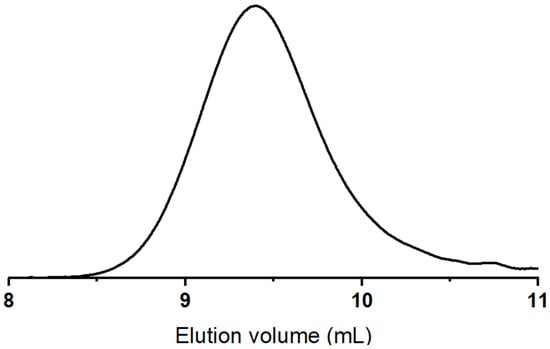
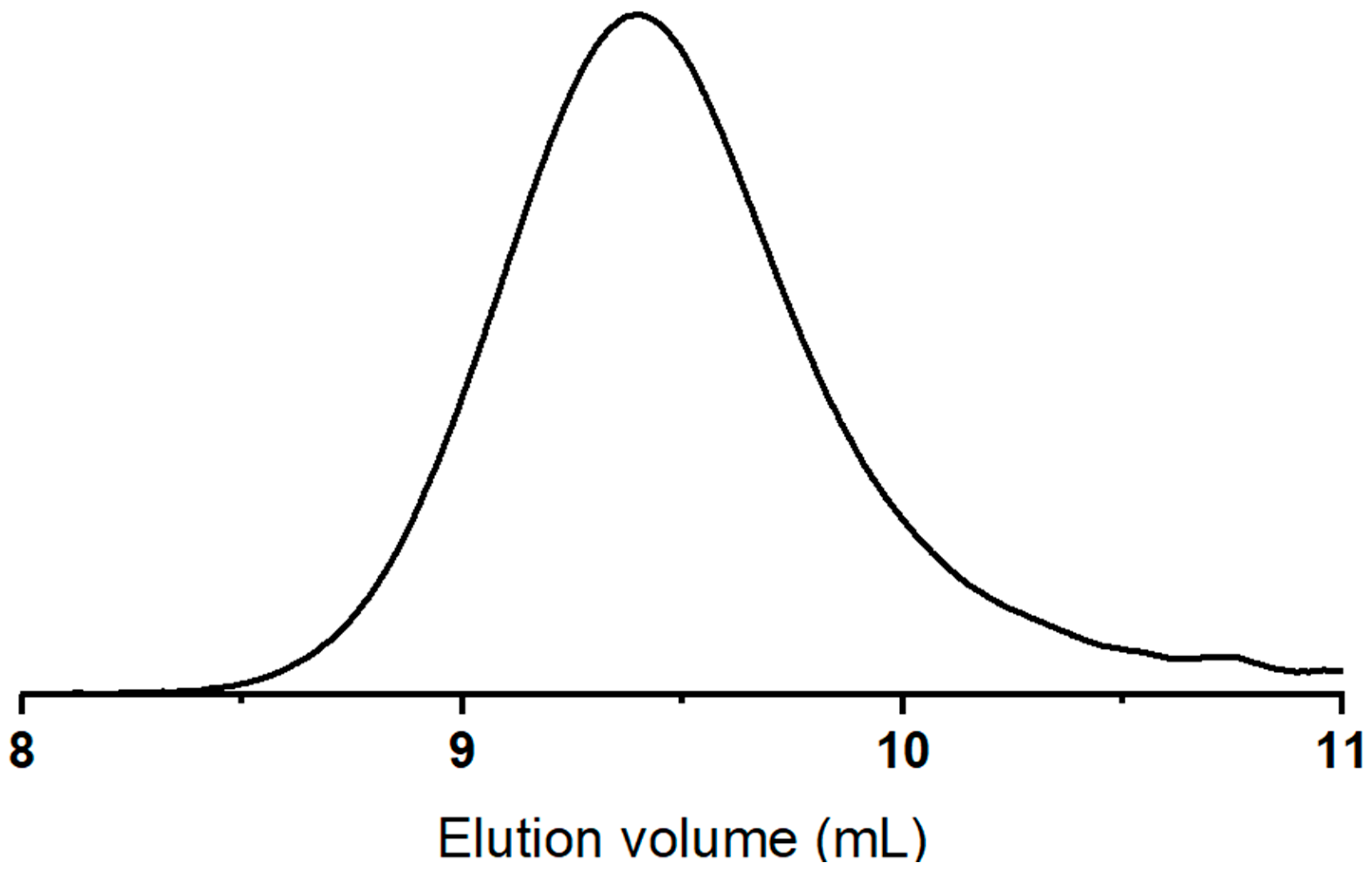
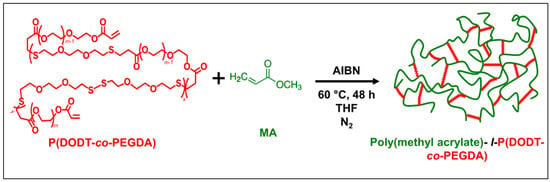
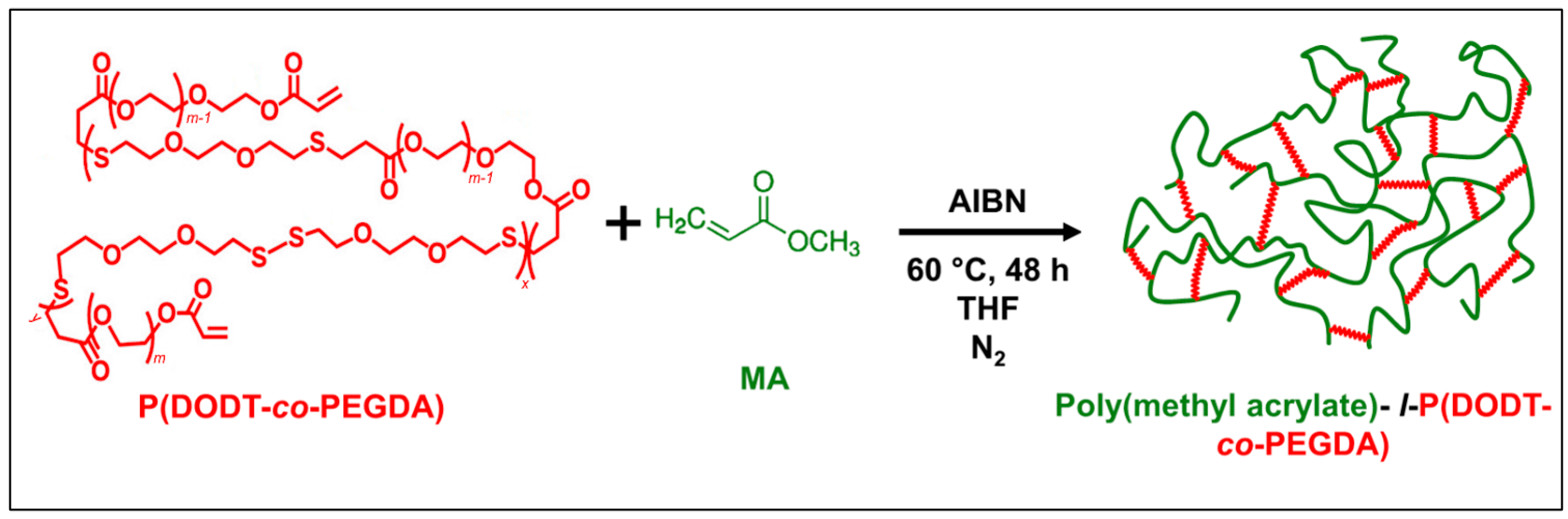
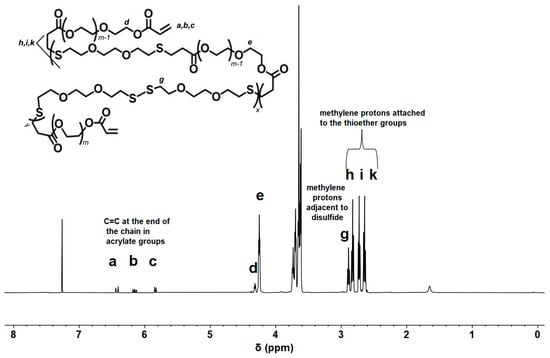
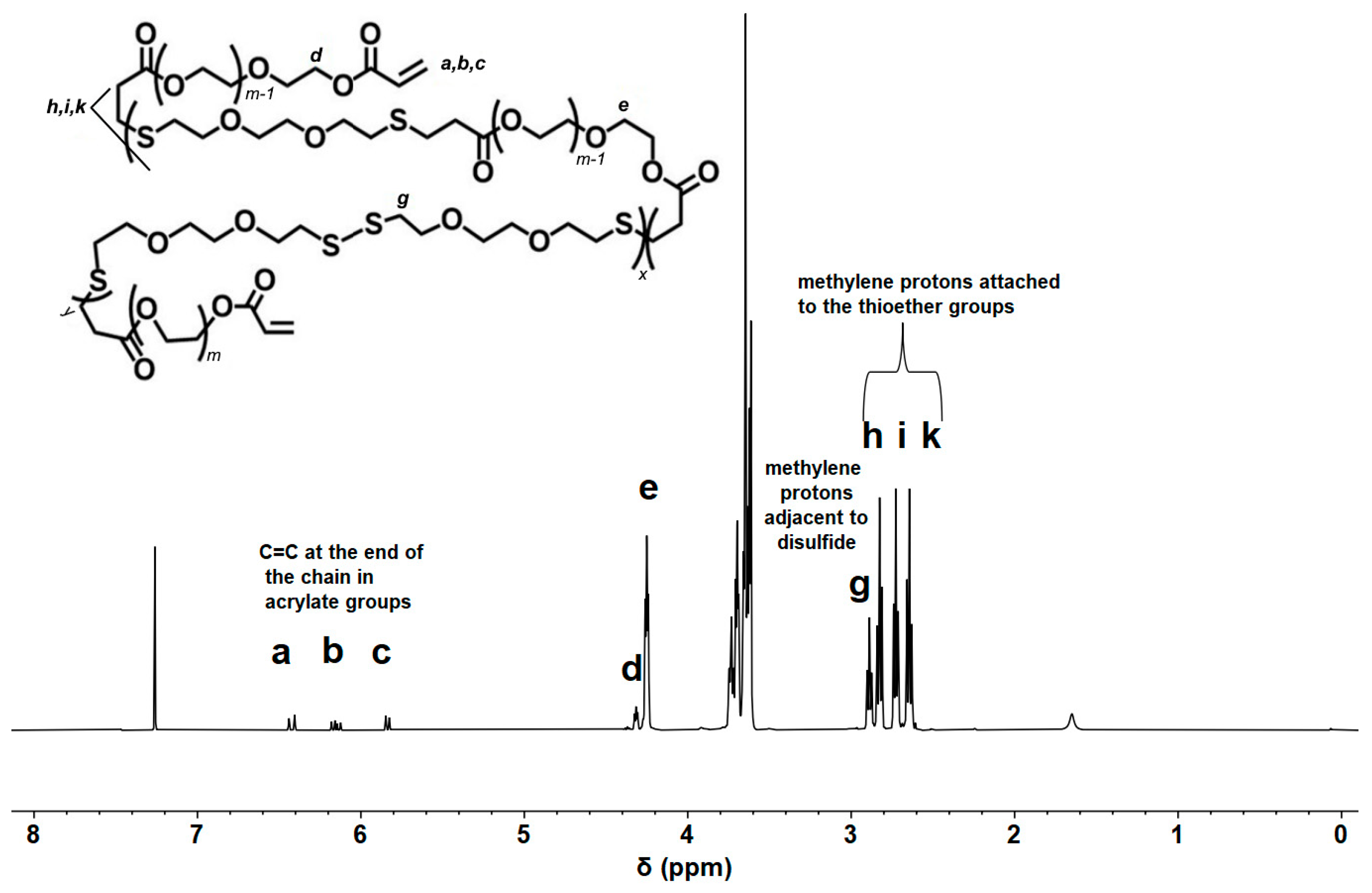
Scheme 1 shows the synthetic route and conditions for the preparation of PMA-l-P(DODT-co-PEGDA) conetworks. This was preceded by the synthesis of the acrylate-telechelic P(DODT-co-PEGDA) macromonomer. As preliminary results in our laboratories indicated, reacting a stoichiometric amount of DODT and PEGDA in the presence of H2O2 as oxidant and PMDETA as a base catalyst in THF at room temperature leads to the acrylate-ended P(DODT-co-PEGDA) macrocrosslinker with disulfide and β-thioester linkages in the chain by simultaneous oxidative disulfide formation via thiol–thiol coupling of DODT and thiol–ene Michael addition reaction between DODT and the acrylate groups of PEGDA [55]. Scaling up this process to gram-scale for obtaining sufficient amount of macrocrosslinker proved to also be successful, as GPC and 1H NMR analyses of the resulting copolymer indicate. As shown by the GPC chromatogram in Figure 1, a P(DODT-co-PEGDA) copolymer with monomodal and relatively narrow molecular weight distribution is formed. The evaluation of the chromatogram resulted in Đ = 1.27 and Mn of 3200 g/mol, which can be considered as an approximate value due to the differences in the hydrodynamic volumes of the calibration standards and the investigated copolymer. The 1H NMR spectrum in Figure 2 corroborates the structure of this copolymer as displayed in this Figure and Scheme 1. On the basis of the absence of the thiol (-SH) signal in the NMR spectrum at 1.58 ppm [48,55], it can be concluded that all the chain ends are terminated with acrylate groups of the PEGDA comonomer as well presented by the chemical shifts of the acrylate double bond protons at 5.84, 6.15 and 6.40 ppm. Thus, the number average molecular weight (Mn) of the P(DODT-co-PEGDA) copolymer can be estimated from the corresponding integral values of the NMR signals compared to the integral values of the chain end olefinic protons. This led to Mn of 5400 g/mol for the prepared P(DODT-co-PEGDA) telechelic macromonomer.
Scheme 1.
The synthesis route for the preparation of PMA-l-P(DODT-co-PEGDA) conetworks by radical copolymerization of methyl acrylate (MA) with the acrylate-telechelic P(DODT-co-PEGDA).
Figure 1.
The GPC chromatogram of the acrylate-telechelic P(DODT-co-PEGDA) copolymer.
Figure 2.
The 1H NMR spectrum of the acrylate-telechelic P(DODT-co-PEGDA) copolymer.
For the synthesis of the conetworks, various compositions were applied in the range of 30–70 wt% P(DODT-co-PEGDA) macrocrosslinkers compared to the MA content in the feed as listed in Table 1. The concentration of the AIBN initiator was adjusted to a constant [M]/[I]0.5 ratio in order to obtain approximately the same average degree of polymerization of the monomer, which is sufficient to form a network in each case. Under these conditions, all the conetwork samples are formed with high gel fractions in the range of 66–83% (Table 1), confirming efficient crosslinking and successful conetwork syntheses. Decreasing gel fraction with increasing macrocrosslinker content is observed, which may be attributed to reduced mobility and diffusion limitations at higher copolymer concentrations. To estimate conetwork composition, the extracted materials were collected and analyzed by 1H NMR, as proposed by Petróczy et al. recently [25]. The conetwork composition was determined from the extracted material by 1H NMR spectroscopy. The weight fractions of PMA and P(DODT-co-PEGDA) in the extracted fractions were determined from the integral values of the corresponding NMR signals, and these were used to calculate the composition of the insoluble conetworks. These data, shown in Table 1, clearly indicate that PMA-l-P(DODT-co-PEGDA) conetworks with compositions close to the feed ratios are obtained.
Table 1.
The applied amounts of the reactants in the synthesis of PMA-l-P(DODT-co-PEGDA) conetworks, and the gel fractions and copolymer contents in the resulting co-networks (THF solvent, total volume: 2 mL, 60 °C, 48 h).
2.2. Thermal Analysis of the PMA-l-P(DODT-co-PEGDA) Conetworks
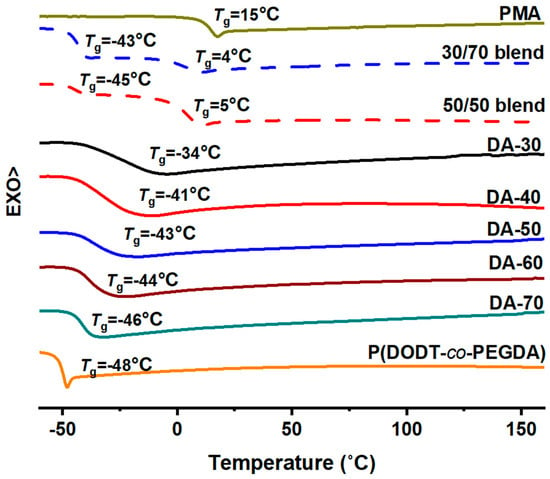
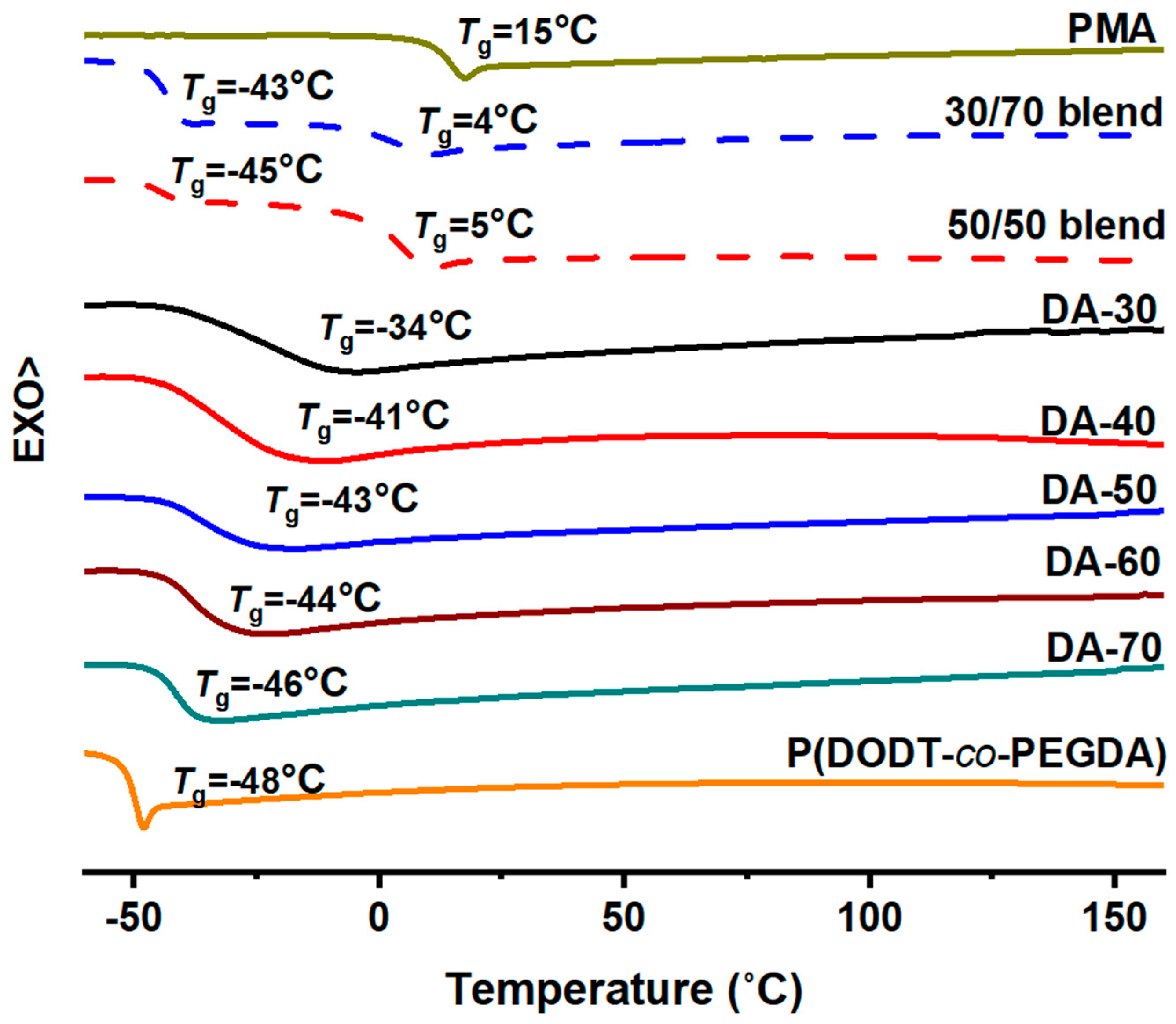
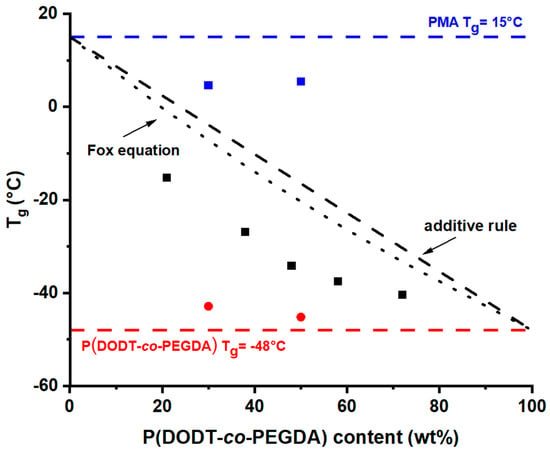
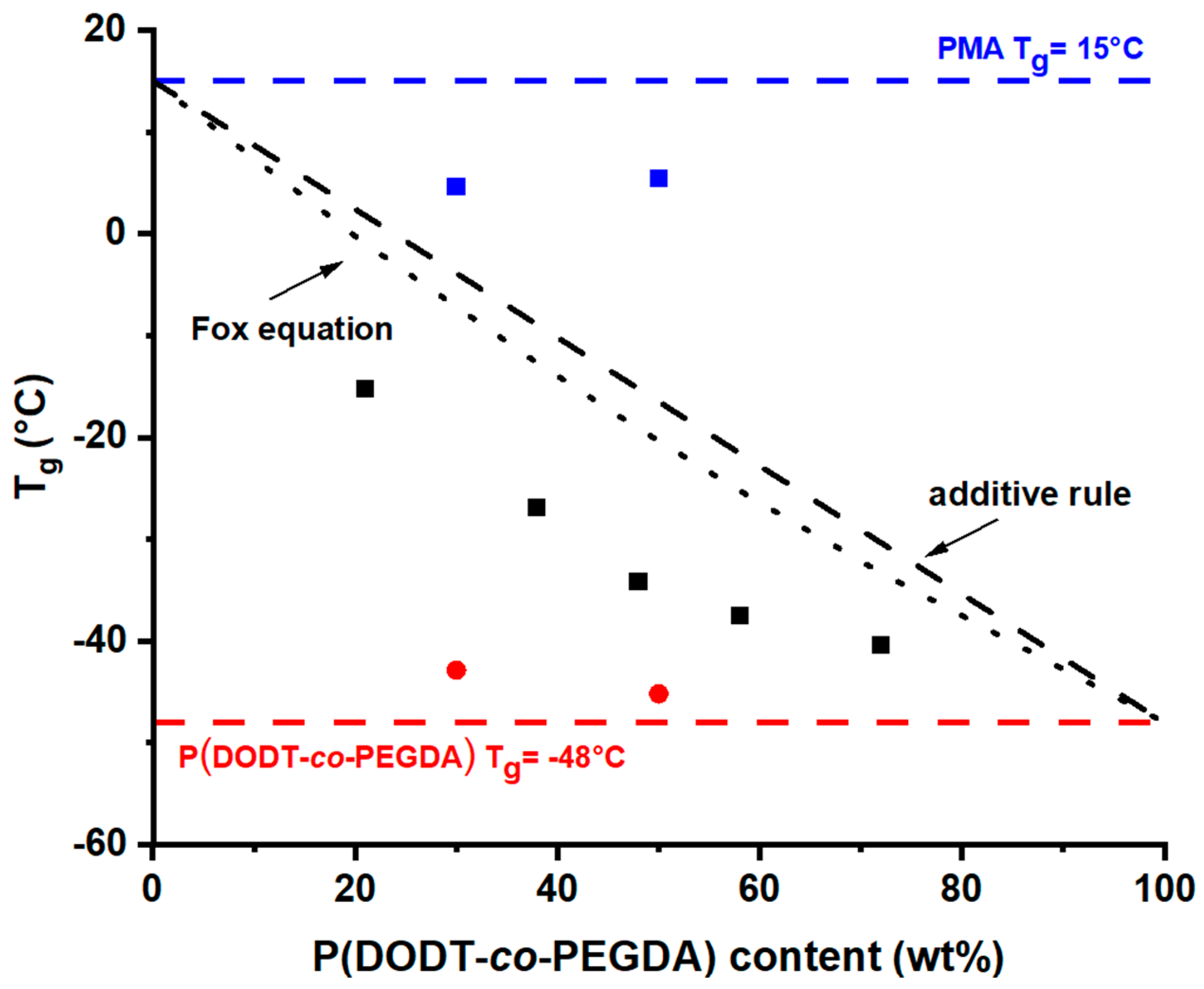
The thermal behavior of the PMA-l-P(DODT-co-PEGDA) conetworks was examined by DSC and TGA to assess their phase transition and thermal stability, respectively. As shown in Figure 3 and Table 2, the P(DODT-co-PEGDA) copolymer exhibits glass transition temperature (Tg) at −48 °C, while the other component, the PMA homopolymer has Tg at 15 °C. All the conetworks have one Tg, which fall between the Tgs of the components and depends on composition, i.e., the Tgs decrease with increasing copolymer content, as shown in Figure 4. As also shown in this Figure, the physical blends of the components, i.e., the P(DODT-co-PEGDA) copolymer and the PMA homopolymer, possess two distinct Tgs, one near to the Tg of PMA and another close to that of the copolymer, indicating minimal interfacial interaction, that is, immiscibility of these two polymers reflects macrophase separation due to the lack of covalent connectivity. In contrast, the single Tgs of the conetworks indicate forced blending, i.e., miscibility of the components as a consequence of the covalent linkages in the conetworks. However, the Tgs of the conetworks show negative deviations from both the linear additive rule and the Fox equation. This implies that attaching the P(DODT-co-PEGDA) segments to the PMA chains by covalent bonds introduces additional free volume and disrupts the self-association of the PMA chains, leading to a forced plasticizing effect. These observations demonstrate that covalent incorporation of the P(DODT-co-PEGDA) copolymers in the conetworks with PMA actively modifies segmental dynamics, allowing the thermal properties of the conetworks to be tuned by composition of such conetworks. In this context, it has to be mentioned that only one other similar case can be found in the literature for conetworks, i.e., for the poly(N-vinylimidazole)-l-poly(propylene glycol) conetworks, possessing forced blending [57].
Figure 3.
The DSC curves of the PMA-l-P(DODT-co-PEGDA) conetworks, the P(DODT-co-PEGDA)/PMA blends with 30 and 50 wt% P(DODT-co-PEGDA) content, the P(DODT-co-PEGDA) copolymer and the PMA homopolymer.
Table 2.
The glass transition temperatures (Tg) and the characteristic thermal decomposition temperatures (T5, T10 and Tmax) of the PMA-l-P(DODT-co-PEGDA) conetworks, the P(DODT-co-PEGDA)/PMA blends, the P(DODT-co-PEGDA) copolymer and the PMA homopolymer (T5, T10 and Tmax stand for the temperatures at 5%, 10% weight loss and the maximal rate of decomposition, respectively).
Figure 4.
The glass transition temperatures (Tg) of poly(methyl acrylate)-l-P(DODT-co-PEGDA) conetworks (black dots) as a function of the P(DODT-co-PEGDA) content. The dotted black curve represents the Tg values calculated using the Fox equation, and the dashed line indicates the Tg according to the linear additive rule of the components. The horizontal lines denote the Tg of the PMA (blue dashed line; 15 °C) and the P(DODT-co-PEGDA) (red dashed line; −48 °C). The red and blue dots represent the Tg values obtained for P(DODT-co-PEGDA) and PMA in physical blends.
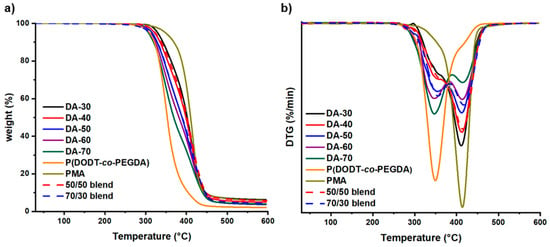
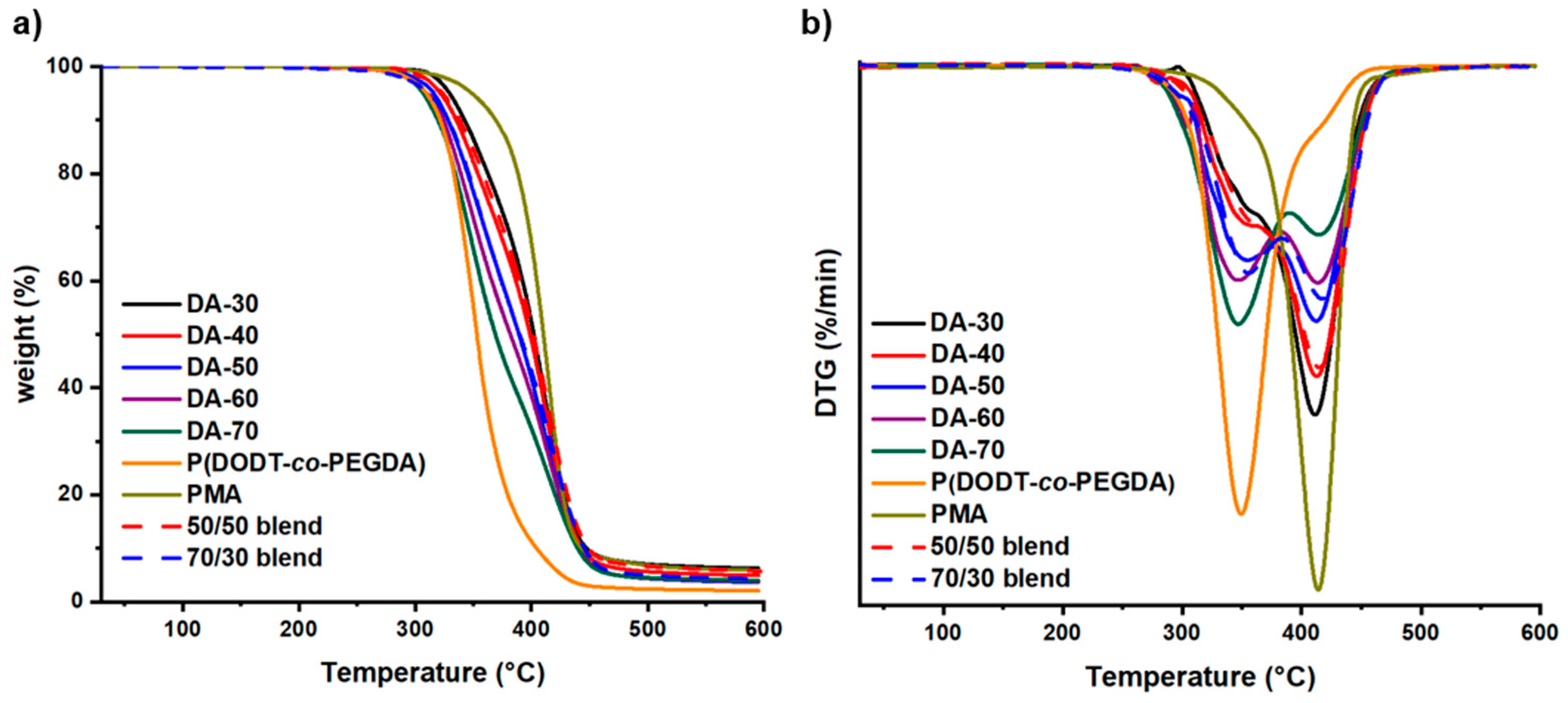
The thermal stability and decomposition PMA-l-P(DODT-co-PEGDA) conetworks and their physical blends in comparison to that of the PMA homopolymer and P(DODT-co-PEGDA) copolymer were analyzed by thermogravimetric (TG) measurements. As shown in Figure 5 and Table 2, the thermal decomposition of all the samples begins around 300 °C and proceeds up to approximately 450 °C, following a two-step degradation pattern in the case of the blends and the conetworks as well. The initial, lower-temperature step is associated with the breakdown of the P(DODT-co-PEGDA) component, while the higher temperature step corresponds to the decomposition of the poly(methyl acrylate) fraction, as well evidenced by the coinciding maximal rate of decomposition with that of the corresponding components in the DTG curves (Figure 5b). This sequential degradation highlights the distinct thermal stability of each polymer segment in the conetworks. These observations suggest that the conetworks undergo a stepwise breakdown of the components by heating, which may have implications for their processing and potential high-temperature applications.
Figure 5.
Thermal decomposition (a) and derivative thermogravimetric (DTG) curves (b) of the PMA-l-P(DODT-co-PEGDA) conetworks, the PMA homopolymer and the P(DODT-co-PEGDA) copolymer, and the PMA/P(DODT-co-PEGDA) blends with 30 and 50 wt% P(DODT-co-PEGDA) content (dotted lines) as a function of temperature (nitrogen atmosphere, 10 °C/min heating rate).
2.3. Swelling Behavior
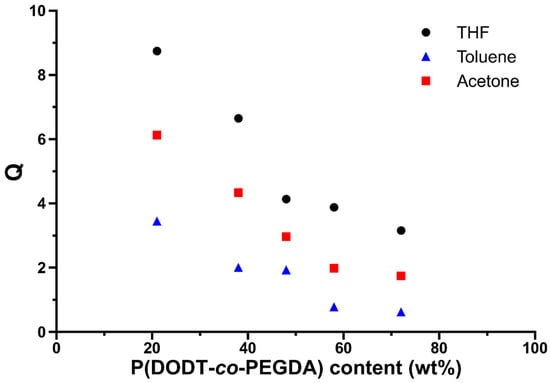
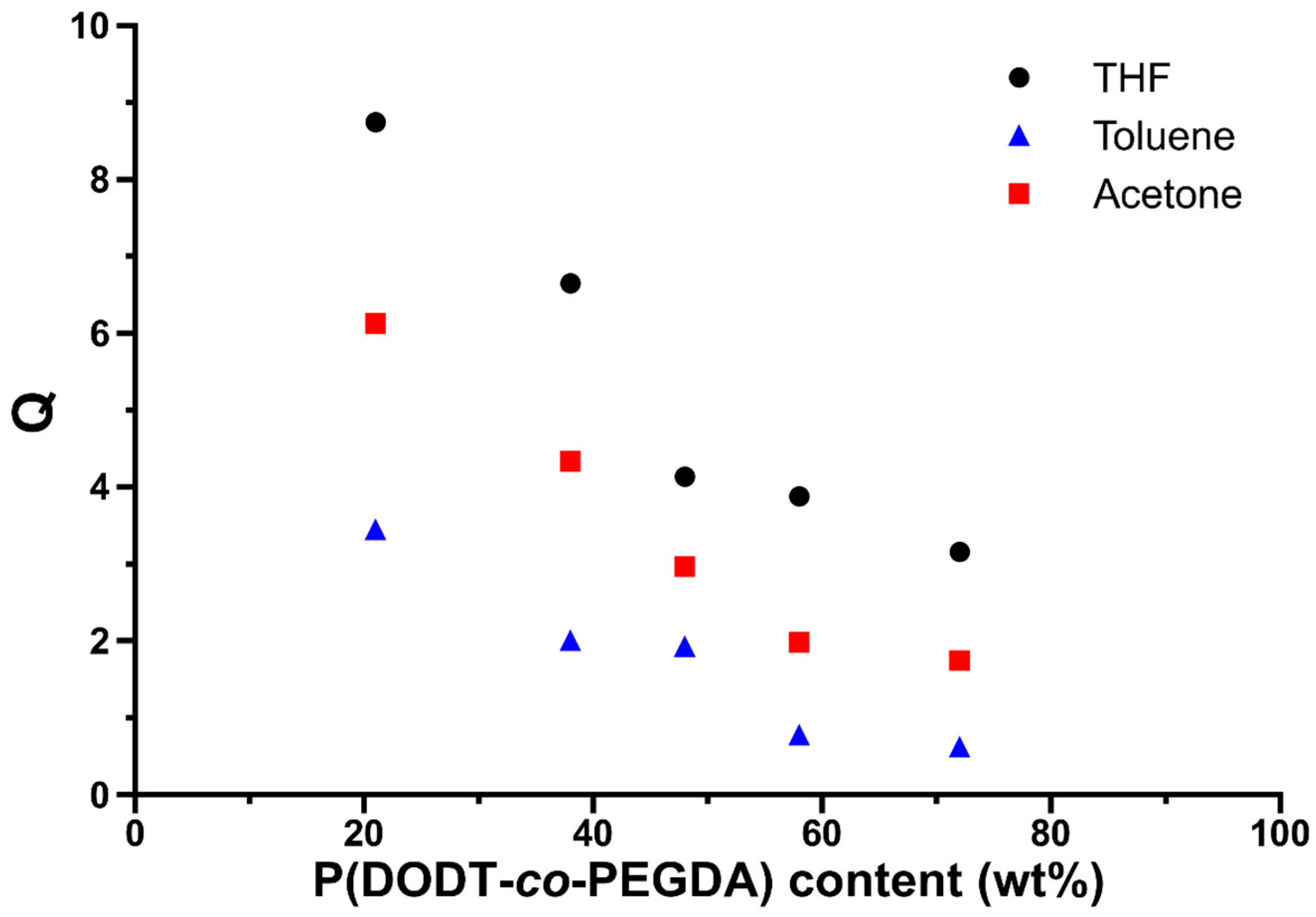
Swelling experiments with hydrophilic solvents, such as water, methanol and ethanol, led to negligible swelling degrees in spite of the fact that both components, i.e., DODT and PEGDA, of the P(DODT-co-PEGDA) macrocrosslinker, contain two and three ethylene glycol (EG) units, respectively. This can be attributed to the disulfide and β-thioester linkages in addition to the low number of the moieties in the components of the copolymer. However, swelling in organic solvents, like THF, acetone and toluene, resulted in organogels with remarkable swelling degrees, as displayed in Figure 6. As shown in this Figure, the equilibrium swelling degree (Q) strongly depends on composition, which is closely related to the crosslinking density. As expected, Q decreases with increasing crosslinking density, i.e., increasing P(DODT-co-PEGDA) macrocrosslinker content in each investigated solvent. The data in Figure 6 also indicate that the equilibrium swelling degree can be regulated in these organogels by selecting the proper composition and swelling medium in a broad range by one order of magnitude. This means that Q is 0.6 in the case of the DA-70 sample (72 wt% copolymer content), while it is 8.7 in THF for the DA-30 conetwork sample (with 21 wt% copolymer).
Figure 6.
The equilibrium swelling degree (Q) of the PMA-l-P(DODT-co-PEGDA) conetworks as a function of the P(DODT-co-PEGDA) content in THF (closed black symbol), acetone (closed red symbols) and toluene (closed blue symbols).
The higher equilibrium swelling degree in THF can be attributed to the favorable solubility of both the macrocrosslinker and PMA in this solvent, on the one hand. On the other hand, the interaction of this solvent with the EG units in the P(DODT-co-PEGDA) macrocrosslinker promotes also stronger polymer–solvent interaction, resulting in enhanced swellability. In addition, THF also efficiently solvates disulfide and thioether groups as well. By contrast, the use of less polar toluene results in limited swelling and thus a more compact organogel.
2.4. Chemical Degradation of the Conetworks by Disulfide Reduction with Thiols and Hydrolysis of the β-Thioester Linkages by a Strong Base
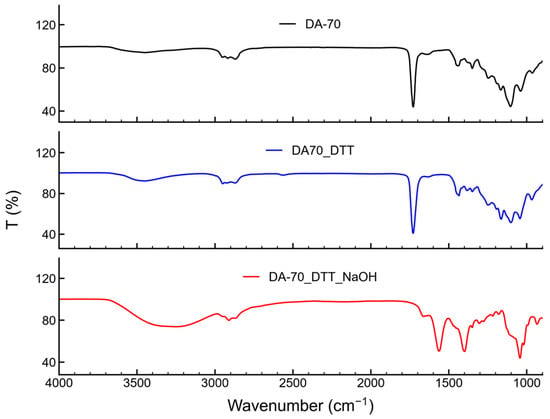
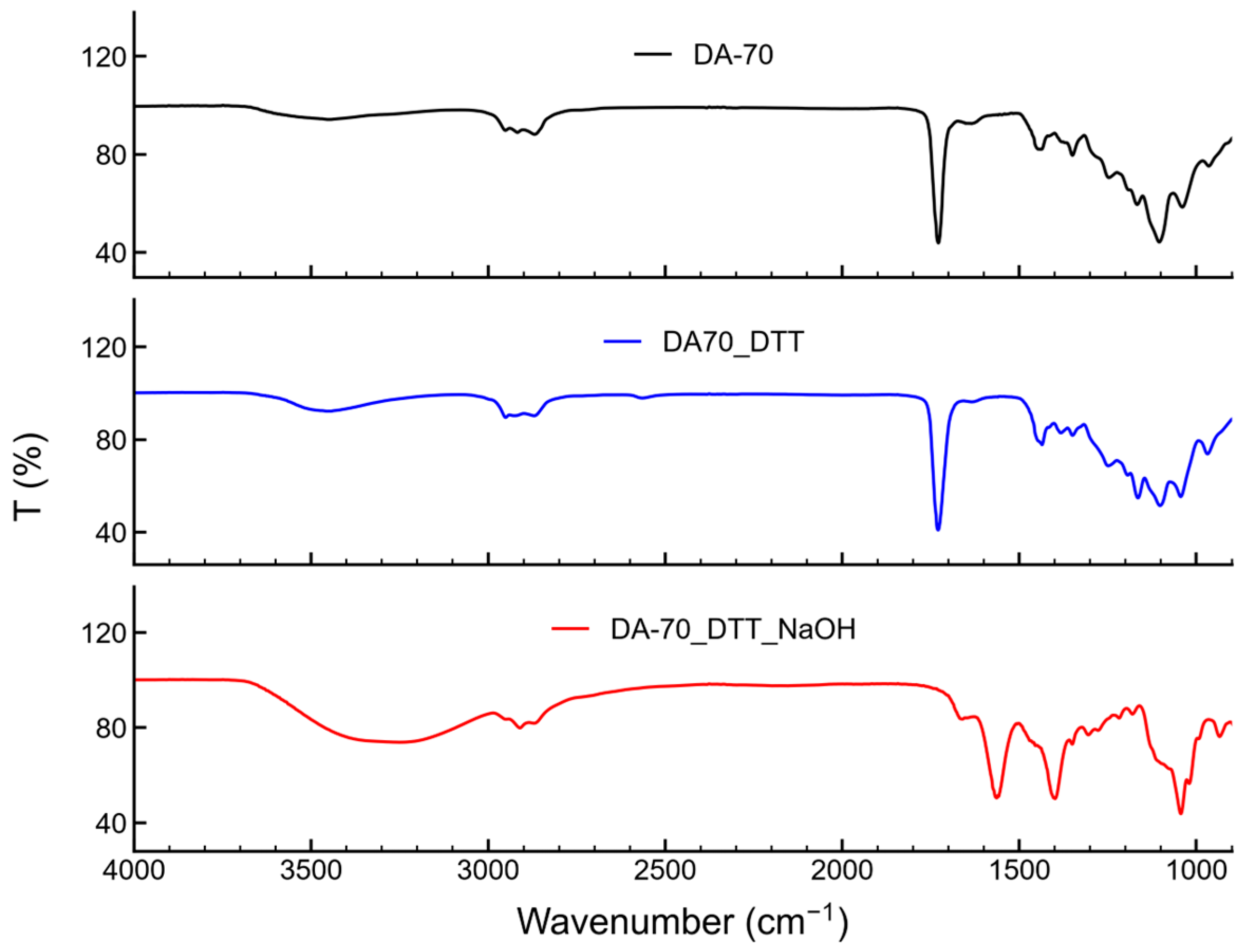
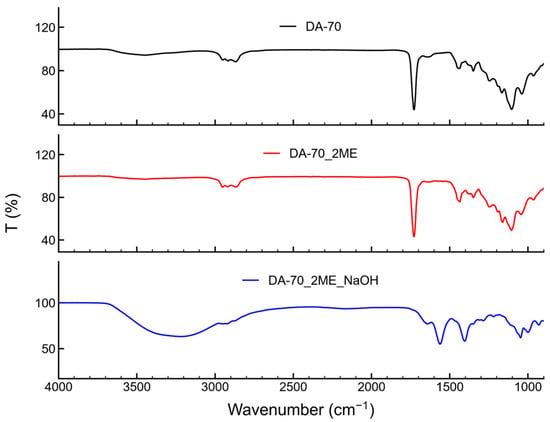
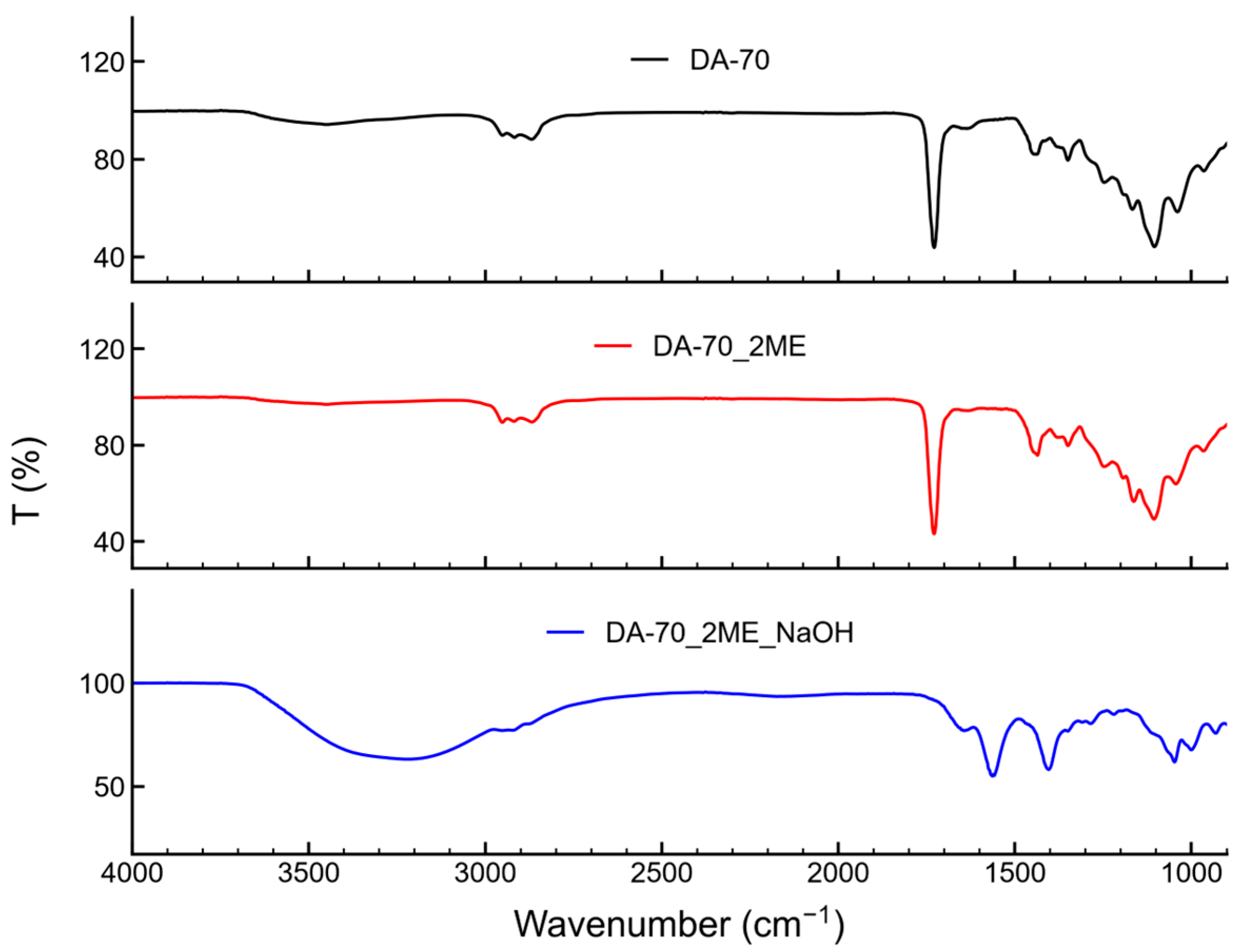
Due to the presence of degradable units, that is, disulfide and β-thioester groups in the P(DODT-co-PEGDA) macrocrosslinker, the targeted degradability of the PMA-l-P(DODT-co-PEGDA) conetworks by treatment with excess thiol and sodium hydroxide solution was also explored. Treating the conetworks with thiols, like dithiothreitol (DTT) and 2-mercaptoethanol (2ME), in acetonitrile led to swelling and rapid disintegration of the conetwork gels into small swollen pieces. This indicates the break-up of the disulfide linkages in the P(DODT-co-PEGDA) macrocrosslinker in the conetworks by a disulfide–thiol redox exchange reaction. The incomplete disintegration of the conetworks is presumably due to the presence of some macrocrosslinkers without disulfide units, which may be the result of random distribution of disulfide units between the P(DODT-co-PEGDA) chains and/or to some extent of radical mediated disulfide fragmentation [58] during the conetwork formation by radical copolymerization. However, as the FTIR spectra in Figure 7 and Figure 8 proves, neither DTT nor 2ME have impact on the ester bonds in the conetworks, as the unchanged ester carbonyl stretching band at 1724 cm−1 upon treatment with these thiols clearly indicates. Adding NaOH solution to the conetwork treated with DTT and 2ME leads to complete break-up and dissolution of the gelled material. The FTIR spectra of the resulting product obtained after extraction with chloroform show the complete disappearance of the ester band, and the appearance of the asymmetric carboxylate stretch doublet at 1561 and 1643 cm−1, as displayed in Figure 7 and Figure 8, indicating complete hydrolysis of the ester groups in the conetwork. Comparing the IR spectra with that of the untreated conetwork, the treated samples exhibit also a broad signal at 3000–3600 cm−1, which is assigned to the stretching vibrations of -OH groups formed during the hydrolysis step.
Figure 7.
The FTIR spectra of the DA-70 PMA-l-P(DODT-co-PEGDA) conetwork sample (top), the conetwork treated with DTT (middle) and subsequently with NaOH solution (bottom).
Figure 8.
The FTIR spectra of the DA-70 PMA-l-P(DODT-co-PEGDA) conetwork sample (top), the conetwork treated with 2ME (middle) and subsequently with NaOH solution (bottom).
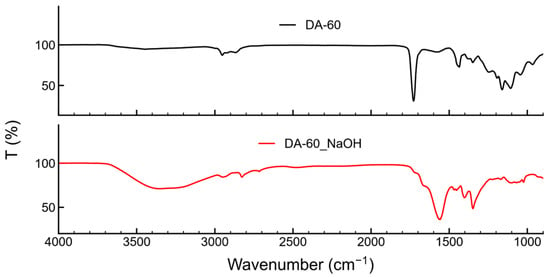
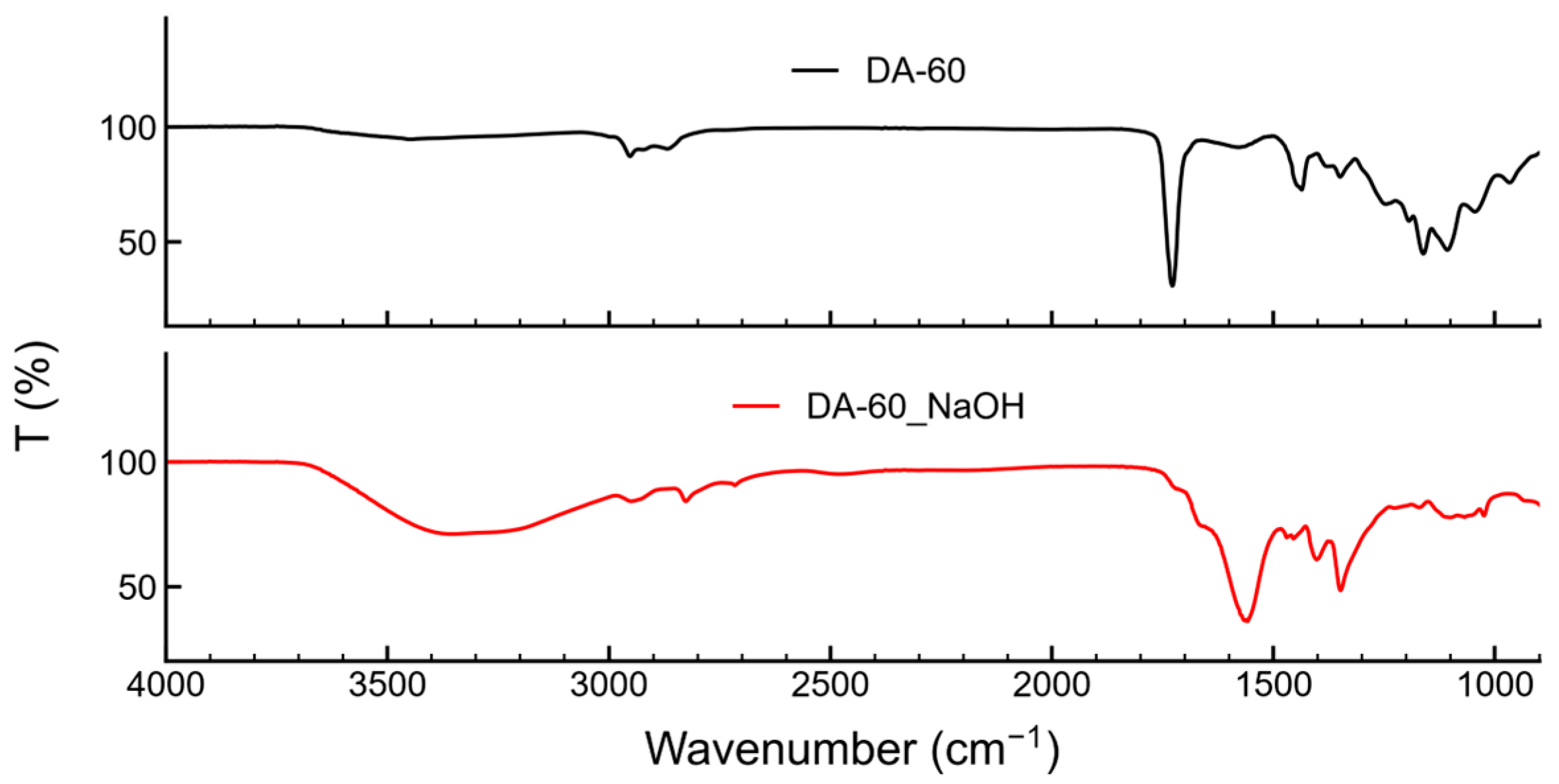
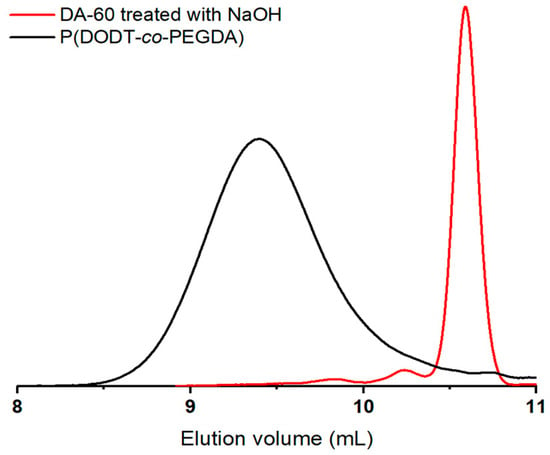
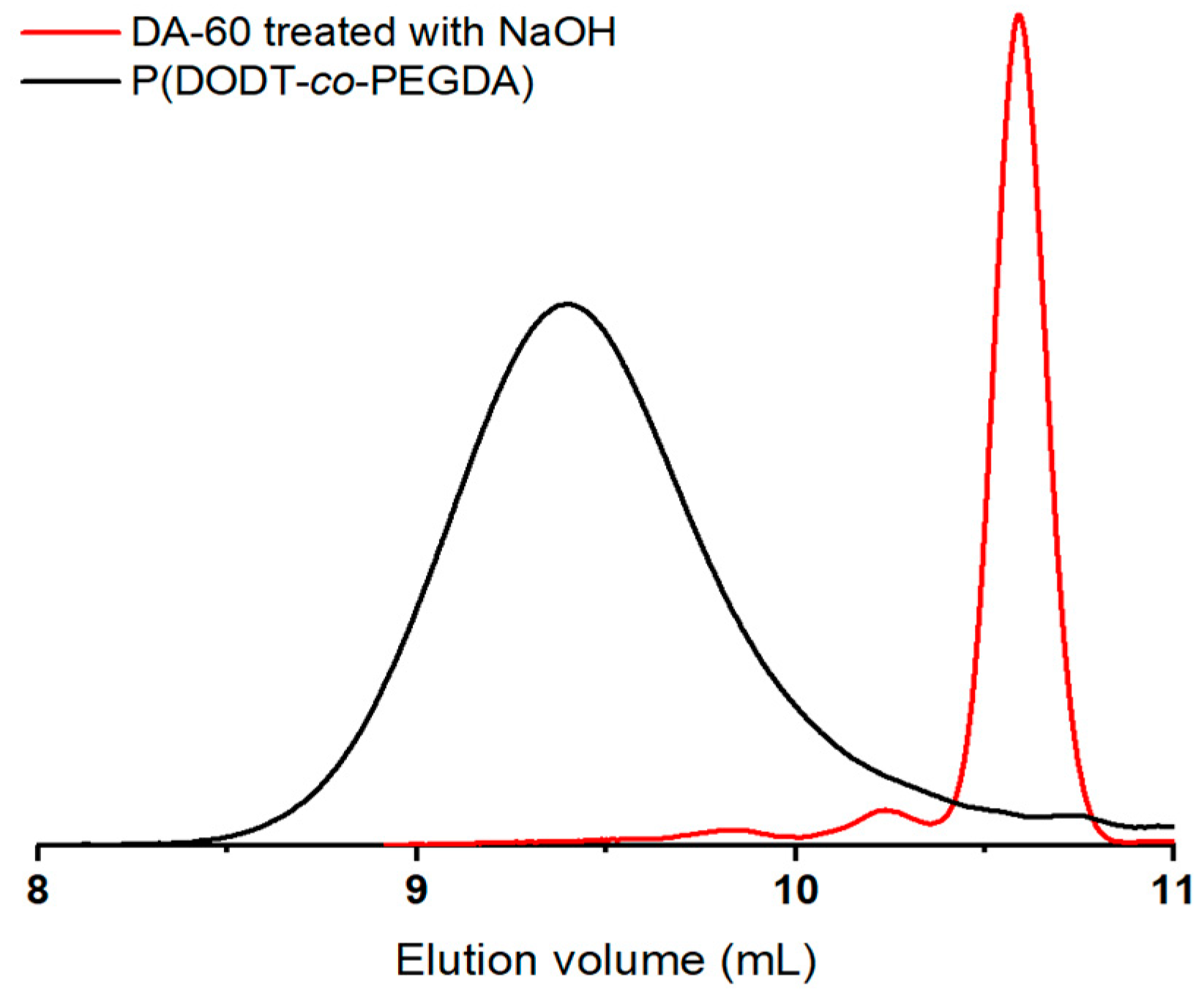
Encouraged by the successful degradation of the PMA-l-P(DODT-co-PEGDA) conetworks after reacting with thiols followed by treatment with NaOH solution, adding only NaOH solution to the conetwork swollen in acetonitrile was also tested. This process led to complete disintegration of the conetwork. As shown in Figure 9, the carbonyl band of the ester group at 1724 cm−1 disappeared and the carboxylate bands together with the broad -OH band became present in the FTIR spectrum obtained after hydrolysis with NaOH. As displayed in Figure 10, the GPC curve of the chloroform-extracted material has a relatively large low-molecular-weight peak connected with two small higher-molecular-weight shoulders. Comparing the GPC curve of the product of the alkaline hydrolysis of the conetwork to that of the P(DODT-co-PEGDA) evidently indicates the successful hydrolysis and breaking of the macrocrosslinker by NaOH. The two smaller peaks in the GPC chromatogram of the degraded sample can be attributed to hydrolyzed chain segments with disulfide linkages.
Figure 9.
The FTIR spectra of the DA-60 PMA-l-P(DODT-co-PEGDA) conetwork sample before (top) and after treatment with NaOH solution (bottom).
Figure 10.
The GPC chromatogram of the P(DODT-co-PEGDA) macrocrosslinker and the product of the PMA-l-P(DODT-co-PEGDA) conetwork (sample DA-60) after treatment with NaOH solution.
3. Conclusions
The results presented in this study indicate that a novel, unique class of conetworks and their organogels with a broad range of composition were obtained by the radical copolymerization of methyl acrylate with sulfur-containing acrylate-telechelic P(DODT-co-PEGDA) macrocrosslinker. For this synthesis, first the scale-up of the preparation of the acrylate-telechelic P(DODT-co-PEGDA) macromonomer was successfully accomplished on the basis of a recent study by us [55] via copolymerization of DODT with PEGDA by simultaneous oxidative disulfide formation by DODT-DODT coupling, using H2O2 as oxidant and a thiol–ene Michael addition click reaction in the presence of PMDETA as a base catalyst for both reactions, that is, in a robust process (open air, room temperature) without any sophisticated preliminary synthetic steps. 1H NMR analysis proved the formation of the desired acrylate-telechelic P(DODT-co-PEGDA) copolymer with disulfide and β-thioester linkages. Using this copolymer as a macrocrosslinker successfully resulted in a series of PMA-l-P(DODT-co-PEGDA) conetworks with high gel fractions in a broad composition range of 20–70 wt% P(DODT-co-PEGDA) contents close to that of the feed ratios of the components.
Thermal analysis by DSC surprisingly resulted in one glass transition temperature for the conetworks composed of the otherwise immiscible PMA and P(DODT-co-PEGDA). This forced blending led to Tgs with significant deviation from both the additive rule and the Fox equation for copolymers and miscible blends, indicating the remarkable effect of the chemical linking by the P(DODT-co-PEGDA) macrocrosslinker on the interaction and segment mobility of the polymer components in the conetworks. TGA measurements showed that both the components and the conetworks possess relatively high thermal stability up to ~300 °C, on the one hand. On the other hand, interestingly the DTG curves indicate that the P(DODT-co-PEGDA) and PMA components in the conetworks decompose separately at the same temperature range as the corresponding free constituents,; that is, the decomposition reactions of these two polymers do not interfere with each other.
Swelling studies demonstrated that the PMA-l-P(DODT-co-PEGDA) conetworks do not swell in polar protic solvents like water, methanol and ethanol, but swellable to high swelling degrees in organic solvents like THF, acetone and toluene. The swelling capacity of these novel organogels can be well controlled by composition, that is, by crosslinking density, in a broad range of ~60–900%.
Degradation of the PMA-l-P(DODT-co-PEGDA) conetworks was successfully achieved by treating the conetworks with thiols, such as dithiothreitol and 2-mercaptoethanol. However, these compounds led only to partial disintegration of the conetworks, presumably due to the relatively low disulfide content of the macrocrosslinker. Additional attempts of hydrolysis with NaOH led to complete disintegration of the conetworks, indicating the break-up of the β-thioester units in the macrocrosslinker as proved by FTIR measurements. Using only NaOH hydrolysis resulted in full disintegration of the conetworks via hydrolysis, leading to low-molecular-weight chloroform-extracted products.
As widely deemed, degradable polymers and polymer networks are viewed as one of the classes of high value-added and sustainable macromolecular materials (see e.g., Refs. [30,58,59,60,61,62,63,64,65,66,67,68,69,70,71,72,73,74,75,76,77,78] and references therein). The results of our study indicate that a broad range of degradable macromolecular materials can be obtained by applying the acrylate-telechelic P(DODT-co-PEGDA) copolymers as macrocrosslinkers or chain extenders, and thus to extend the family of degradable polymers and networks. Our findings also underline the distinctive features of the novel PMA-l-P(DODT-co-PEGDA) conetworks and their organogels, which enable to utilize these conetworks and the sulfur-rich P(DODT-co-PEGDA) and similar copolymers in a variety of advanced polymeric systems.
4. Materials and Methods
4.1. Materials
Methyl acrylate (MA) (≥99%), azobisisobutyronitrile (AIBN), poly(ethylene glycol) diacrylate (PEGDA) (Mn = 250 g/mol), tetrahydrofuran (THF), and 30 wt% aqueous hydrogen peroxide solution were obtained from Sigma Aldrich (Steinheim, Germany); 3,6-Dioxa-1,8-octane-dithiol (DODT) and N,N,N′,N″,N″-pentamethyldiethylenetriamine (PMDETA) were purchased from TCI (Zwijndrecht, Belgium). Tetrahydrofuran (THF) was distilled before use. PEGDA, methyl acrylate and DODT were purified by passing through basic alumina. AIBN was recrystallized from methanol before use. All other reagents were used as received.
4.2. Synthesis of the P(DODT-co-PEGDA) Copolymer
The copolymerization reaction between DODT and PEGDA for obtaining acrylate-telechelic poly(3,6-dioxa-1,8-octane-dithiol-co-poly(ethylene glycol) diacrylate) (P(DODT-co-PEGDA)) copolymer was carried out by a method reported recently by us [55]. Briefly, 14 mL PMDETA (0.067 mol) and 10 mL hydrogen peroxide aqueous solution (6.5 wt%) was added to a mixture of THF (200 mL), 16.6 mL DODT (0.1 mol) and 23.3 mL PEGDA (0.1 mol) at room temperature in open air. After 10 min of reaction time, the formed copolymer was precipitated in a large excess of methanol. Then, the solvent was decanted, and the copolymer was dried under vacuum at 40 °C until constant weight.
4.3. Synthesis of Poly(methyl acrylate)-l-P(DODT-co-PEGDA) Conetworks
For the synthesis of poly(methyl acrylate)-l-P(DODT-co-PEGDA) (PMA-l-P(DODT-co-PEGDA)) conetworks, predetermined amounts of methyl acrylate, P(DODT-co-PEGDA) copolymer and AIBN (from stock solution in THF), listed in Table 1, and additional THF to obtain 2 mL total volume were thoroughly mixed. The AIBN initiator was used in an amount to ensure a constant [monomer]/[initiator]0.5 concentration ratio in all cases. The resulting mixtures were heated in closed reaction vessels under nitrogen atmosphere in a glove box at 60 °C for 48 h. Subsequently, the solvent was allowed to evaporate in a hood for two days. This was followed by extraction with acetone and repeatedly exchanged for three days. Then, the conetworks were first air-dried, followed by drying in a vacuum oven by gradually decreasing the pressure until constant weight at room temperature.
4.4. Preparation of Blends of the P(DODT-co-PEGDA) Copolymer and Poly(methyl acrylate)
Physical blends of P(DODT-co-PEGDA) and PMA were prepared with P(DODT-co-PEGDA)/PMA weight ratios of 30/70 and 50/50. For the 30/70 blend, 0.06 g of P(DODT-co-PEGDA) and 0.14 g of PMA were used, while for the 50/50 blend, 0.10 g of P(DODT-co-PEGDA) and 0.10 g of PMA were measured and dissolved in 2 mL of THF, a common solvent for both components, to facilitate homogeneous mixing. The resulting mixtures were spread in glass Petri dishes and left for evaporation of THF under a fume hood. After solvent evaporation, the samples were further dried until constant weight in a vacuum oven at room temperature.
4.5. Swelling Measurements
The swelling behavior of the conetworks was evaluated by immersing dry polymer conetwork samples separately in THF, acetone, toluene and distilled water at room temperature. The swollen samples were removed several times and weighed until constant weights were achieved. In every case, swelling for ~2–3 h was sufficient to reach equilibrium swelling in the investigated solvents. The equilibrium swelling degree (Q) was determined according to the following equation:
where ms and md stand for the weights of the swollen and dry conetwork samples, respectively.
Q = (ms − md)/md
4.6. Degradation by Reduction of the Disulfide Units and Hydrolysis of the β-Thioester Linkages
The treatment of the conetwork samples with thiols was carried out similarly to that of the P(DODT-co-PEGDA) copolymer, as reported earlier by us [55]. In these cases, 0.1 g of conetwork samples was suspended in acetonitrile, and either DTT or 2-mercaptoethanol (2-ME) was added. The mixtures were stirred at room temperature for 48 h. Subsequently, 2 mL of 1 M aqueous NaOH solution was added under continuous nitrogen bubbling, and the mixtures were stirred to achieve hydrolytic cleavage at room temperature overnight. Then, chloroform was added, the phases were allowed to separate, and the organic phase was dried over anhydrous MgSO4. Finally, the solvent was removed under reduced pressure, and the residues were dried until constant weight. The disintegration of the conetwork was also attempted by using only hydrolysis with NaOH solution. In such reactions, 0.1 g conetwork was added to 5 mL acetonitrile followed by the addition of 3 mL NaOH solution of 1 M and allowed to react overnight. The sample work-up was the same as described above.
4.7. Characterizations
The nuclear magnetic resonance (1H NMR) spectra was obtained using a Varian 500 MHz spectrometer (Varian Inc., Palo Alto, CA, USA) in deuterated chloroform at 30 °C.
Gel permeation chromatography (GPC) was performed using a system equipped with a Waters 515 HPLC pump, a guard column, a series of Waters Styragel HR1, HR3, and HR4 columns, a Jetstream II Plus column thermostat (Waters, Milford, MA, USA), and an Agilent 1260 Infinity differential refractive index detector (Agilent Technologies, Santa Clara, CA, USA). THF was used as the eluent at a flow rate of 0.3 mL/min, and the measurements were carried out at 35 °C.
DSC measurements were conducted using a Mettler Toledo DSC821e instrument across a temperature range of −80 °C to 200 °C. A heating rate of 10 °C/min was used under nitrogen atmosphere. Glass transition temperatures (Tg) were determined from the inflection points of the second heating curves.
Thermogravimetric analysis was performed on a TG-DSC system (Setaram LabsysEvo, Lyon, France). Samples were heated from 30 °C to 600 °C at a heating rate of 10 °C/min under a nitrogen flow of 90 mL/min.
The ATR FTIR spectra were recorded using a Bruker Tensor 27 FTIR spectrometer (Bruker Optics, Ettlingen, Germany) equipped with a Bruker Platinum ATR accessory. The dried samples were analyzed directly using the attenuated total reflectance (ATR) technique without further sample preparation. Each spectrum was collected by averaging 32 scans at a spectral resolution of 2 cm−1 over the wavenumber range of 4000–400 cm−1.
Author Contributions
Conceptualization, A.A., Á.S. and B.I.; methodology, A.A., Á.S., L.T., K.V., D.F., A.P. and B.I.; investigation, A.A., Á.S., L.T., K.V., D.F., A.P. and B.I.; data curation, A.A., Á.S., L.T., K.V., D.F., A.P. and B.I.; writing—original draft preparation A.A., Á.S. and B.I.; writing—review and editing, A.A., Á.S., L.T., K.V., D.F., A.P. and B.I.; visualization, A.A., Á.S., L.T., K.V., D.F., A.P. and B.I.; supervision Á.S. and B.I.; funding acquisition, B.I. All authors have read and agreed to the published version of the manuscript.
Funding
This research was funded by the National Research, Development and Innovation Office, Hungary (grant number K135946).
Institutional Review Board Statement
Not applicable.
Informed Consent Statement
Not applicable.
Data Availability Statement
The original contributions presented in this study are included in the article. Further inquiries can be directed to the corresponding author.
Acknowledgments
The authors gratefully acknowledge the support by National Research, Development and Innovation Office, Hungary (K135946). Assistance with the FTIR measurements by B. Imre is kindly acknowledged. A.A. is thankful for the support by the Stipendium Hungaricum Scholarship Program. Á.Sz. is grateful for the Bolyai János Research Scholarship of the Hungarian Academy of Sciences (BO/175/25/7).
Conflicts of Interest
The authors declare no conflicts of interest.
References
- Patrickios, C.S. (Ed.) Amphiphilic Polymer Co-Networks: Synthesis, Properties, Modelling and Applications; Royal Society of Chemistry: Cambridge, UK, 2020. [Google Scholar] [CrossRef] [Scilit]
- Seitel, S.; Beyer, D.; Böhme, F.; Bunk, C.; El-Faramawi, Y.; Grün, J.J.; Hagmann, K.; Holm, C.; Lang, M.; Saalwächter, K.; et al. Toward model amphiphilic polymer co-networks: Linking architecture to structure and properties. Macromol. Chem. Phys. 2026, 227, e202500497. [Google Scholar] [CrossRef] [Scilit]
- Velasquez, S.T.R.; Jang, D.; Jenkins, P.; Liu, P.; Yang, L.; Korley, L.T.J.; Bruns, N. Peptide-Reinforced Amphiphilic Polymer Conetworks. Adv. Funct. Mater. 2022, 32, 2207317. [Google Scholar] [CrossRef] [Scilit]
- Seitel, S.; Fribiczer, N.; Seiffert, S. Establishing structure–property relationships in model amphiphilic polymer co-networks. Macromol. Chem. Phys. 2026, 227, e70303. [Google Scholar] [CrossRef] [Scilit]
- Huang, C.-S.; Kim, D.; Yang, W.; Lu, Y.; Westbrook, R.J.E.; Lai, H.; Wei, Z.; Lee, C.; Fu, F.; Greenham, N.C.; et al. Amphiphilic polymer conetworks for non-fullerene organic solar cells: Regulated molecular stacking enables efficient downconversion. Adv. Energy Mater. 2026, 16, e04273. [Google Scholar] [CrossRef] [Scilit]
- Hernandez, J.N.; Beach, K.; Chavarria, P.; Grunlan, M.A. Biodegradable poly(ε-caprolactone)/poly(silyl fumarate) shape memory scaffolds. Polymer 2026, 348, 129694. [Google Scholar] [CrossRef] [Scilit] [PubMed]
- El-Faramawi, Y.; Hagmann, K.; Ihmann, S.; Bunk, C.; Cosimi, A.; Schneider, C.; Böhme, F.; von Klitzing, R.; Weinhart, M. Development of functional coatings from PCL–PEG tetra-arm amphiphilic polymer co-networks with enhanced cell adhesion. Macromol. Chem. Phys. 2026, 227, e00495. [Google Scholar] [CrossRef] [Scilit]
- Biswas, A.; Jewrajka, S.K. PEGylated Cross-Linked Amphiphilic Micellar Network for Fouling Release and Antibiofouling Ultrafiltration Membranes. Langmuir 2026, 42, 5754–5768. [Google Scholar] [CrossRef] [Scilit] [PubMed]
- Russell, S.; Jang, D.; Thomas, J.; Grysan, P.; Sprandl, L.; Biesalski, M.; Korley, L.T.J.; Bruns, N. Peptide-reinforced photocrosslinkable PEG-based hydrogels. RSC Appl. Polym. 2026, 4, 704–715. [Google Scholar] [CrossRef] [Scilit] [PubMed]
- Apostolides, D.E.; Patrickios, C.S.; Zhang, Y.; Yan, S.; Notredame, B.; Gohy, J.-F. A gel polymer electrolyte housed in a Tetronic-based model amphiphilic polymer co-network matrix. Macromol. Chem. Phys. 2026, 227, e202500363. [Google Scholar] [CrossRef] [Scilit]
- Li, Y.; Wang, J.; Liu, S. Synthesis of Temperature/pH Dual-Responsive Double-Crosslinked Hydrogel on Medical Titanium Alloy Surface. Gels 2025, 11, 443. [Google Scholar] [CrossRef] [Scilit] [PubMed]
- Apostolides, D.E.; Michael, G.; Patrickios, C.S.; Sakai, T.; Kyroglou, I.; Kasimatis, M.; Iatrou, H.; Prévost, S.; Gradzielski, M. The First Example of a Model Amphiphilic Polymer Conetwork Containing a Hydrophobic Oligopeptide: The Case of End-Linked Tetra[Poly(ethylene glycol)-b-oligo(L-alanine)]. Gels 2025, 11, 331. [Google Scholar] [CrossRef] [Scilit] [PubMed]
- Chiang, M.C.; Clarke, B.R.; Tew, G.N.; Schiffman, J.D. Antifouling Activity of Bottlebrush Network Hydrogels. ACS Appl. Bio Mater. 2025, 8, 4200–4208. [Google Scholar] [CrossRef] [Scilit] [PubMed]
- Wei, C.Y.; Zhang, C.G.; Zhang, X.H.; Deng, Y.J.; Wu, J.H. Effectiveness of novel amphiphilic conetwork coatings in marine antifouling applications and the dynamic succession of early microbial communities on surfaces. Prog. Org. Coat. 2025, 204, 109184. [Google Scholar] [CrossRef] [Scilit]
- Apostolides, D.E.; Michael, G.; Andronikou, K.; Patrickios, C.S.; Pásztor, S.; Szarka, G.; Petróczy, A.; Iván, B.; Sakai, T.; Prévost, S.; et al. Synthesis of highly ordered amphiphilic polymer co-network hydrogels via the topologically precise interconnection of two highly incompatible polymers. Chem. Mater. 2025, 37, 5515–5528. [Google Scholar] [CrossRef] [Scilit] [PubMed]
- Wei, C.; Zhang, Y.; Tang, Z.; Zhang, C.; Wu, J.; Wu, B. Surface Reconstruction of Silicone-Based Amphiphilic Polymers for Mitigating Marine Biofouling. Polymers 2024, 16, 1570. [Google Scholar] [CrossRef] [Scilit] [PubMed]
- Velasquez, S.T.; Jang, D.; Thomas, J.A.; Grysan, P.; Korley, L.; Bruns, N. Advanced mechanical properties of amphiphilic polymer conetworks through hierarchical reinforcement with peptides and cellulose nanocrystals. Polym. Chem. 2025, 16, 2618–2628. [Google Scholar] [CrossRef] [Scilit] [PubMed]
- Yang, W.; Wang, J.; Jia, L.; Li, J.; Liu, S. Stereo-Complex and Click-Chemical Bicrosslinked Amphiphilic Network Gels with Temperature/pH Response. Gels 2023, 9, 647. [Google Scholar] [CrossRef] [Scilit] [PubMed]
- Velasquez, S.T.R.; Belluati, A.; Tervoort, E.; Mattich, I.; Hertel, B.; Russell, S.; Gouveia, M.G.; Grysan, P.; Mugemana, C.; Studart, A.R.; et al. Microfluidically produced microcapsules with amphiphilic polymer conetwork shells. Adv. Mater. Technol. 2024, 9, 2400109. [Google Scholar] [CrossRef] [Scilit]
- Fribiczer, N.; Hagmann, K.; Bunk, C.; Böhme, F.; von Klitzing, R.; Seiffert, S. Impact of swelling on macroscopic and nanoscopic mechanical properties of amphiphilic polymer co-networks in non-selective and selective solvents. Macromol. Chem. Phys. 2024, 225, 2300389. [Google Scholar] [CrossRef] [Scilit]
- Hagmann, K.; Bunk, C.; Böhme, F.; von Klitzing, R. Amphiphilic Polymer Conetwork Gel Films Based on Tetra-Poly(ethylene Glycol) and Tetra-Poly(ε-Caprolactone). Polymers 2022, 14, 2555. [Google Scholar] [CrossRef] [Scilit] [PubMed]
- Biswas, A.; Chandel, A.K.S.; Anuradha; Vadadoriya, N.; Mamtani, V.; Jewrajka, S.K. Structurally Heterogeneous Amphiphilic Conetworks of Poly(vinyl imidazole) Derivatives with Potent Antimicrobial Properties and Cytocompatibility. ACS Appl. Mater. Interfaces 2023, 15, 46333–46346. [Google Scholar] [CrossRef] [Scilit] [PubMed]
- Iván, B.; Haraszti, M.; Erdődi, G.; Scherble, J.; Thomann, R.; Mülhaupt, R. New nanophase separated intelligent amphiphilic conetworks and gels. Macromol. Symp. 2005, 227, 265–274. [Google Scholar] [CrossRef] [Scilit]
- Fodor, C.; Kali, G.; Thomann, R.; Thomann, Y.; Iván, B.; Mülhaupt, R. Nanophasic morphologies as a function of the composition and molecular weight of the macromolecular cross-linker in poly(N-vinylimidazole)-l-poly(tetrahydrofuran) amphiphilic conetworks: Bicontinuous domain structure in broad composition ranges. RSC Adv. 2017, 7, 6827–6834. [Google Scholar] [CrossRef] [Scilit]
- Petróczy, A.; Szanka, I.; Wacha, A.; Varga, Z.; Thomann, Y.; Thomann, R.; Mülhaupt, R.; Bereczki, L.; Hegyesi, N.; Iván, B. Bicontinuous Nanophasic Conetworks of Polystyrene with Poly(dimethylsiloxane) and Divinylbenzene: From Macrocrosslinked to Hypercrosslinked DoubleHydrophobic Conetworks and Their Organogels with Solvent-Selective Swelling. Gels 2025, 11, 318. [Google Scholar] [CrossRef] [Scilit] [PubMed]
- Getya, D.; Gitsov, I. Stronger Together. Poly(Styrene) Gels Reinforced by Soft Gellan Gum. Gels 2022, 8, 607. [Google Scholar] [CrossRef] [Scilit] [PubMed]
- Petróczy, A.; Szanka, I.; Bereczki, L.; Hegyesi, N.; Madarász, J.; Iván, B. The Scissors Effect of the Macromolecular Crosslinker on the Glass Transition of Polystyrene in Its Conetworks with Poly(dimethylsiloxane). Polymers 2025, 17, 1656. [Google Scholar] [CrossRef] [Scilit] [PubMed]
- Pásztor, S.; Becsei, B.; Szarka, G.; Thomann, Y.; Thomann, R.; Mühlhaupt, R.; Iván, B. The scissors effect in action: The Fox-Flory relationship between the glass transition temperature of crosslinked poly(methyl methacrylate) and Mc in nanophase separated poly(methyl methacrylate)-l-polyisobutylene conetworks. Materials 2020, 13, 4822. [Google Scholar] [CrossRef] [Scilit] [PubMed]
- Fodor, C.; Domján, A.; Iván, B. Unprecedented Scissor Effect of Macromolecular Cross-linkers on the Glass Transition Temperature of Poly(N-vinylimidazole), Crystallinity Suppression of Poly(tetrahydrofuran) and Molecular Mobility by Solid State NMR in Poly(N-vinylimidazole)-l-poly(tetrahydrofuran) Conetworks. Polym. Chem. 2013, 4, 3714–3724. [Google Scholar] [CrossRef] [Scilit]
- Zhang, S.; Chen, H.; Kong, J. Disulfide bonds-containing amphiphilic conetworks with tunable reductive-cleavage. RSC Adv. 2016, 6, 36568–36575. [Google Scholar] [CrossRef] [Scilit]
- Li, A.; Li, J.L.; Zhang, J.M.; Ma, J.Y.; Wu, Y.X. In Situ Synthesis of Chemically Stable Hybrid Co-Networks of Poly(thioctic Acid) with Fe3+ via Controlled/Living Cationic Ring-Opening Polymerization. Macromol. Rapid Commun. 2025, 46, 2401115. [Google Scholar] [CrossRef] [Scilit] [PubMed]
- Lee, H.; Choi, J.-W.; Kyu, T. A Comparative Study on Electrochemical Performance of Single Versus Dual Networks in Lithium Metal/Polysulfide-Polyoxide Co-Network/Lithium Titanium Oxide Cathode. Batteries 2024, 10, 163. [Google Scholar] [CrossRef] [Scilit]
- Lee, H.; Jeong, J.; Parrondo, J.; Zamani, S.; Atienza, D.; Kyu, T. Enhanced Energy Storage in Lithium-Metal Batteries via Polymer Electrolyte Polysulfide–Polyoxide Conetworks. ACS Appl. Mater. Interfaces 2023, 15, 27173–27182. [Google Scholar] [CrossRef] [Scilit] [PubMed]
- Mutlu, H.; Ceper, E.B.; Li, X.; Yang, J.; Dong, W.; Ozmen, M.M.; Théato, P. Sulfur chemistry in polymer and materials science. Macromol. Rapid Commun. 2019, 40, 1800650. [Google Scholar] [CrossRef] [Scilit] [PubMed]
- Chao, J.-Y.; Yue, T.-J.; Lu, X.-B.; Ren, W.-M. Elemental sulfur utilization: Construction of a reprocessable covalent crosslinked polydisulfide with enhanced mechanical properties. Polym. Chem. 2025, 16, 3701–3708. [Google Scholar] [CrossRef] [Scilit]
- Qin, J.; Wang, D.; Li, W.; Liang, L.; Yang, C. Preparation of self-healing and degradable high-performance epoxy thermosets containing disulfide bonds and hindered urea bonds. Polym. Degrad. Stab. 2025, 239, 111410. [Google Scholar] [CrossRef] [Scilit]
- Yang, W.; Luo, X.; Liu, J.; Chen, J.; Wu, X.; Fink, Z.; Shi, C.; Zhong, W.; Wang, C.; Ying, L. Dynamic disulfide bond networks enable self-healable and mechanically resilient intrinsically stretchable organic solar cells. Energy Environ. Sci. 2025, 18, 6597–6607. [Google Scholar] [CrossRef] [Scilit]
- Sarkar, A.; Dúzs, B.; Walther, A. Fuel-Driven Enzymatic Reaction Networks to Program Autonomous Thiol/Disulfide Redox Systems. J. Am. Chem. Soc. 2024, 146, 10281–10285. [Google Scholar] [CrossRef] [Scilit] [PubMed]
- Jin, S.; Oh, D.X.; Park, J. Dynamic Disulfide Chemistry for Functional Polymers: Self-Healing, Vitrimer Behavior, and Biochemical/Electronic Applications. ChemSusChem 2026, 19, e202501023. [Google Scholar] [CrossRef] [Scilit] [PubMed]
- Ding, X.; Yang, B.; Si, X.; Ni, L.; Fang, C.; Hou, Z. Robust Polyurethane Hydrogels Based on Dynamic Disulfide Bonds and Pendant Tertiary Amines with Room-Temperature Self-Healing and pH Responsiveness. Gels 2026, 12, 555. [Google Scholar] [CrossRef] [Scilit] [PubMed]
- Spessa, A.; Castiglione, F.; Maggioni, A.R.; Bongiovanni, R.; Vacche, S.D.; Vitale, A. Photocurable coatings with self-initiating and self-healing properties via dynamic disulfide bonds. Polymer 2026, 358, 130200. [Google Scholar] [CrossRef] [Scilit]
- Zhang, Q.; Feringa, B.L.; Qu, D.H.; Tian, H. Sustainable Design of Dynamic Poly(disulfide)s. Acc. Chem. Res. 2026, 59, 151–164. [Google Scholar] [CrossRef] [Scilit] [PubMed]
- Albanese, K.R.; Morris, P.T.; Read de Alaniz, J.; Bates, C.M.; Hawker, C.J. Controlled-radical polymerization of α-lipoic acid: A general route to degradable vinyl copolymers. J. Am. Chem. Soc. 2023, 145, 22728–22734. [Google Scholar] [CrossRef] [Scilit] [PubMed]
- Pieta, M.; Purohit, V.B.; Pietrasik, J.; Plummer, C.M. Disulfide-containing monomers in chain-growth polymerization. Polym. Chem. 2023, 14, 7–31. [Google Scholar] [CrossRef] [Scilit]
- Zhang, Y.; Zhao, X. Disulfide-Crosslinked Polyurethane-Modified Asphalt: Balancing Fatigue Resistance and Healing Through Dynamic Covalent Networks. Polymers 2026, 18, 582. [Google Scholar] [CrossRef] [Scilit] [PubMed]
- Gyarmati, B.; Mammadova, A.; Barczikai, D.; Stankovits, G.; Misra, A.; Alavijeh, M.S.; Varga, Z.; László, K.; Szilágyi, A. Side group ratio as a novel means to tune the hydrolytic degradation of thiolated and disulfide cross-linked polyaspartamides. Polym. Degrad. Stab. 2021, 188, 109577. [Google Scholar] [CrossRef] [Scilit]
- Rosenthal-Kim, E.Q.; Puskas, J.E. Green Polymer Chemistry: Living oxidative polymerization of dithiols. Pure Appl. Chem. 2012, 84, 2121–2133. [Google Scholar] [CrossRef] [Scilit]
- Rosenthal, E.Q.; Puskas, J.E.; Wesdemiotis, C. Green polymer chemistry: Living dithiol polymerization via cyclic intermediates. Biomacromolecules 2012, 13, 154–164. [Google Scholar] [CrossRef] [Scilit] [PubMed]
- Schmidleitner, C.; Kriehuber, M.U.; Korotkov, R.; Schlögl, S.; Rossegger, E. Frontal polymerization of thiol–acrylate covalent adaptable networks. Polym. Chem. 2025, 16, 963–971. [Google Scholar] [CrossRef] [Scilit]
- Vandenbergh, J.; Peeters, M.; Kretschmer, T.; Wagner, P.; Junkers, T. Cross-linked degradable poly(β-thioester) networks via amine-catalyzed thiol-ene click polymerization. Polymer 2014, 55, 3525–3532. [Google Scholar] [CrossRef] [Scilit]
- Zaquen, N.; Wenn, B.; Ranieri, K.; Vandenbergh, J.; Junkers, T. Facile design of degradable poly(β-thioester)s with tunable structure and functionality. J. Polym. Sci. Part A Polym. Chem. 2014, 52, 178–187. [Google Scholar] [CrossRef] [Scilit]
- Sanaa, R.; Portinha, D.; Medimagh, R.; Fleury, E. Synthesis of linear and crosslinked isosorbide-containing poly(β-thioether ester) via amine-catalyzed thiol-Michael addition. Eur. Polym. J. 2024, 220, 113498. [Google Scholar] [CrossRef] [Scilit]
- Aerts, A.; Vovchenko, M.; Elahi, S.A.; Vinuelas, R.C.; De Maeseneer, T.; Purino, M.; Hoogenboom, R.; Van Oosterwyck, H.; Jonkers, I.; Cardinaels, R.; et al. A Spontaneous In Situ Thiol-Ene Crosslinking Hydrogel with Thermo-Responsive Mechanical Properties. Polymers 2024, 16, 1264. [Google Scholar] [CrossRef] [Scilit] [PubMed]
- Sojdeh, S.; Panjipour, A.; Yaghmour, A.; Arabpour, Z.; Djalilian, A.R. Click chemistry-based hydrogels for tissue engineering. Gels 2025, 11, 724. [Google Scholar] [CrossRef] [Scilit] [PubMed]
- Szabó, Á.; Aitkazina, A.; Szarka, G.; Fecske, D.; Petróczy, A.; Iván, B. Degradable Acrylate-Telechelic Copolymers with Disulfide and β-Thioester Linkages by Simultaneous Thiol Oxidation and Thiol-Ene Michael Addition Click Reactions with the Same Base Catalyst. Polymers 2026, 18, 2211. [Google Scholar] [CrossRef] [Scilit]
- Ovc-Okene, D.; Shankar, L.S.; Nagy, P.; Szabados, M.; Ugi, D.; Szabó, Á.; Iván, B.; Kun, R. Stabilizing Lithium–Sulfur Batteries in Carbonate Electrolytes via DODT–PEG Interphase Engineering and Ultramicroporous Carbon Confinement. ACS Omega 2026, 11, 53278–53290. [Google Scholar] [CrossRef] [Scilit] [PubMed]
- Fodor, C.; Stumphauser, T.; Thomann, R.; Thomann, Y.; Iván, B. Poly(N-vinylimidazole)-l-poly(propylene glycol) amphiphilic conetworks and gels: Molecularly forced blends of incompatible polymers with single glass transition temperatures of unusual dependence on the composition. Polym. Chem. 2016, 7, 5375–5385. [Google Scholar] [CrossRef] [Scilit]
- Fairbanks, B.D.; Singh, S.P.; Bowman, C.N.; Anseth, K.S. Photodegradable, Photoadaptable Hydrogels via Radical-Mediated Disulfide Fragmentation Reaction. Macromolecules 2011, 44, 2444–2450. [Google Scholar] [CrossRef] [Scilit] [PubMed]
- Liu, J.; Yi, S.; Cheng, J.; Liu, S. Catalytic reductive conversion of polyethylene terephthalate (PET) plastic waste into fuels, valuable chemicals and degradable polymers. Green Chem. 2025, 27, 11312–11342. [Google Scholar] [CrossRef] [Scilit]
- Li, Y.; Wang, S.; Li, P.; Zhao, Y.; Chen, J.; Lin, Z.; Xu, X.; Ge, Y. Simulation-Guided Design and Synthesis of Functionalized Lactose-Crosslinked Degradable Molecularly Imprinted Polymer Nanoparticles for Sialic Acid Recognition. Polymers 2026, 18, 2068. [Google Scholar] [CrossRef] [Scilit] [PubMed]
- Delplace, V.; Nicolas, J. Degradable vinyl polymers for biomedical applications. Nat. Chem. 2015, 7, 771–784. [Google Scholar] [CrossRef] [Scilit] [PubMed]
- Keyser, S.P.; Fairbanks, B.D.; Kamps, J.T.; Bowman, C.N. Preparation of Degradable Polymers Containing Tunable Ratios of Dithioacetals and Disulfides via Mixed Mode Polymerization. Angew. Chem. Int. Ed. 2025, 64, e202515269. [Google Scholar] [CrossRef] [Scilit] [PubMed]
- Seo, J.J.; Nam, I.-W.; Kim, H.; Kim, H.; Im, J.N.; Oh, H.J.; Kim, J.; Lee, B.-S.; Choi, Y.O. Process-Compatible Immobilization of Thermolabile Enzymes for Self-Degradable Polyesters via Industrial Melt Compounding Conditions. Polymers 2026, 18, 1830. [Google Scholar] [CrossRef] [Scilit] [PubMed]
- Fukushima, K. Degradation technologies for condensation polymers mediated by organic catalysts. Polym. J. 2025, 57, 1083–1094. [Google Scholar] [CrossRef] [Scilit]
- Zhang, L.; Xiao, R.; Jin, T.; Pan, X.; Fransen, K.A.; Alsaiari, S.K.; Lau, A.; He, R.; Han, J.; Pedretti, B.J.; et al. Degradable poly(β-amino ester) microparticles for cleansing products and food fortification. Nat. Chem. Eng. 2024, 2, 77–89. [Google Scholar] [CrossRef] [Scilit] [PubMed]
- Li, K.; Wang, Z. Degradable Semi-Cycloaliphatic Epoxy Resin for Recyclable Carbon Fiber-Reinforced Composite Materials. Polymers 2025, 17, 293. [Google Scholar] [CrossRef] [Scilit] [PubMed]
- Lim, K.H.; Jeong, S.J.; Joo, J.W.; Lee, C.S.; Yoo, M.J.; Kang, K.; Lee, Y.; Lim, H.S. Sustainable, degradable and malleable low-dielectric-constant thermosets derived from biomass for recyclable green electronics. Polym. Degrad. Stab. 2025, 239, 111379. [Google Scholar] [CrossRef] [Scilit]
- Wang, H.S.; Agrachev, M.; Kim, H.; Truong, N.P.; Choi, T.-L.; Jeschke, G.; Anastasaki, A. Visible light–triggered depolymerization of commercial polymethacrylates. Science 2025, 387, 874–880. [Google Scholar] [CrossRef] [Scilit] [PubMed]
- Cichoń, K.; Basko, M.; Kubisa, P.; Odelius, K.; Hakkarainen, M.; Kost, B. Polyethylene-like materials containing hydrolysable main-chain linkages: Design, degradation and chemical recycling. Eur. Polym. J. 2026, 255, 114929. [Google Scholar] [CrossRef] [Scilit]
- Themistou, E.; Patrickios, C.S. Degradable polymer networks and star polymers based on mixtures of two cleavable dimethacrylate crosslinkers: Synthesis, characterization, and degradation. J. Polym. Sci. Part A Polym. Chem. 2009, 47, 5853–5870. [Google Scholar] [CrossRef] [Scilit]
- Shi, Y.; Schmalz, H.; Agarwal, S. Designed enzymatically degradable amphiphilic conetworks by radical ring-opening polymerization. Polym. Chem. 2015, 6, 6409–6415. [Google Scholar] [CrossRef] [Scilit]
- Rikkou, M.D.; Loizou, E.; Porcar, L.; Butler, P.; Patrickios, C.S. Degradable Amphiphilic End-Linked Conetworks with Aqueous Degradation Rates Determined by Polymer Topology. Macromolecules 2009, 42, 9412–9421. [Google Scholar] [CrossRef] [Scilit]
- Rikkou-Kalourkoti, M.; Loizou, E.; Porcar, L.; Matyjaszewski, K.; Patrickios, C.S. End-linked, amphiphilic, degradable polymer conetworks: Synthesis by sequential atom transfer radical polymerization using a bifunctional, cleavable initiator. Polym. Chem. 2011, 3, 105–116. [Google Scholar] [CrossRef] [Scilit]
- Kuang, J.; Wang, W.; Shang, S.; Yan, Z.; Zhang, L.; Xu, K.; Xie, L.; Wang, H.; Liu, T. Wood/Dynamic Covalent Polymer Network Composites. Polymers 2026, 18, 1324. [Google Scholar] [CrossRef] [Scilit] [PubMed]
- Gao, Y.; Hsu, Y.-I.; Uyama, H. Dynamic imine network-enabled thermal processable and degradable cellulose-based bioplastics. Polym. Degrad. Stab. 2026, 250, 112136. [Google Scholar] [CrossRef] [Scilit]
- Dawson, F.; Irvine, G.; Kopeć, M. Lipoic acid/ethyl lipoate as cleavable comonomers for synthesis of degradable polymer networks. Polym. Chem. 2025, 16, 2659–2669. [Google Scholar] [CrossRef] [Scilit]
- Coloma, G.B.; Anderson, C.E.; Vargas, P.A.; Coyle, K.; Kristufek, T.S.; Mul, K.L.; Nguyen, T.H.B.; Siebecker, M.G.; Kristufek, S.L. Influence of Cross-Link Density on the Photopolymerization of Degradable Methacrylated Sugar Networks via Thiol-ene Chemistry. ACS Appl. Polym. Mater. 2025, 7, 16250–16261. [Google Scholar] [CrossRef] [Scilit]
- Desai, S.; Khare, G.V.; Anseth, K.S.; Schultz, K.M. Design and Characterization of Thioester Networks with Adaptable and Enzymatically Degradable Cross-Links. Macromolecules 2025, 58, 3872–3885. [Google Scholar] [CrossRef] [Scilit] [PubMed]

Disclaimer/Publisher’s Note: The statements, opinions and data contained in all publications are solely those of the individual author(s) and contributor(s) and not of MDPI and/or the editor(s). MDPI and/or the editor(s) disclaim responsibility for any injury to people or property resulting from any ideas, methods, instructions or products referred to in the content. |
© 2026 by the authors. Licensee MDPI, Basel, Switzerland. This article is an open access article distributed under the terms and conditions of the Creative Commons Attribution (CC BY) license.