

Journal Description
Entropy
Entropy
is an international and interdisciplinary peer-reviewed open access journal of entropy and information studies, published monthly online by MDPI. The International Society for the Study of Information (IS4SI) and Spanish Society of Biomedical Engineering (SEIB) are affiliated with Entropy and their members receive a discount on the article processing charge.
- Open Access— free for readers, with article processing charges (APC) paid by authors or their institutions.
- High Visibility: indexed within Scopus, SCIE (Web of Science), Inspec, PubMed, PMC, Astrophysics Data System, and other databases.
- Journal Rank: JCR - Q2 (Physics, Multidisciplinary) / CiteScore - Q1 (Mathematical Physics)
- Rapid Publication: manuscripts are peer-reviewed and a first decision is provided to authors approximately 20.9 days after submission; acceptance to publication is undertaken in 3.4 days (median values for papers published in this journal in the first half of 2026).
- Recognition of Reviewers: reviewers who provide timely, thorough peer-review reports receive vouchers entitling them to a discount on the APC of their next publication in any MDPI journal, in appreciation of the work done.
- Testimonials: See what our editors and authors say about Entropy.
- Companion journals for Entropy include: Foundations, Thermo and Complexities.
- Journal Cluster of Atomic, Molecular, and Optical (AMO) Physics: Entropy, Photonics, Atoms, Lights, Optics, Plasma, Physics, Quantum Beam Science and Lasers.
Impact Factor:
2.1 (2025);
5-Year Impact Factor:
2.3 (2025)
Latest Articles
Complexity-Entropy Characterization of Storage Dynamics in Semiarid Reservoirs: Linking Ordinal Patterns with Elevation-Storage Curve Shifts in Paraíba, Brazil
Entropy 2026, 28(7), 779; https://doi.org/10.3390/e28070779 (registering DOI) - 8 Jul 2026
Abstract
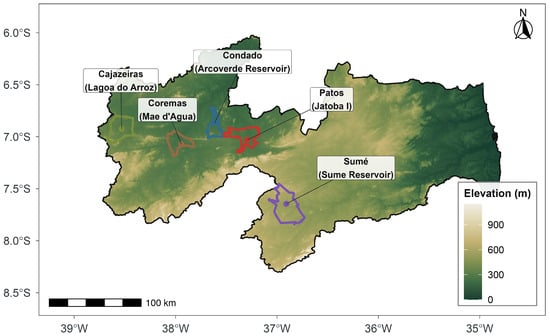
Hydrological reservoirs are complex systems in which storage variations integrate climate forcing, catchment response, releases, withdrawals, evaporation, and monitoring procedures. This study presents an information-theoretic characterization of storage dynamics in five semiarid reservoirs in Paraíba, Brazil. The main analytical layer is the complexity–entropy
[...] Read more.
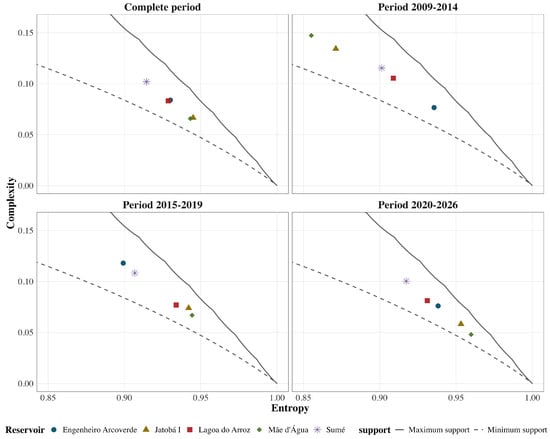
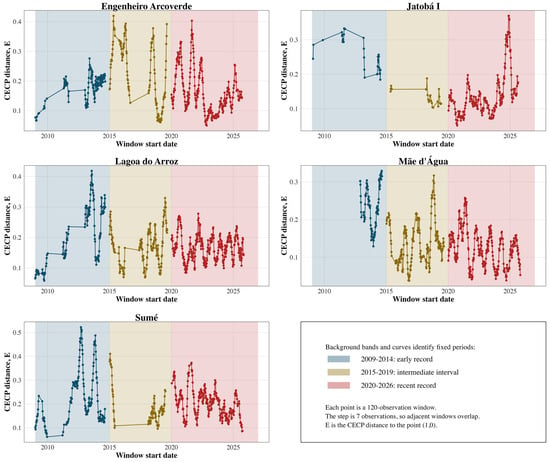
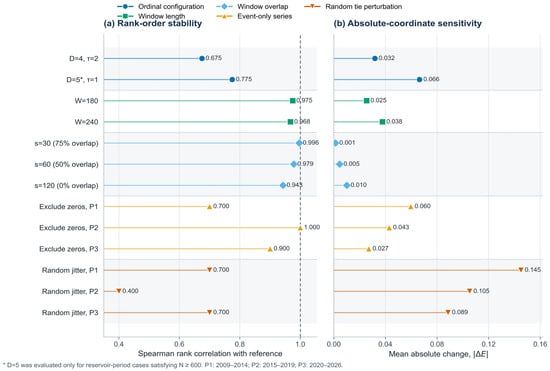
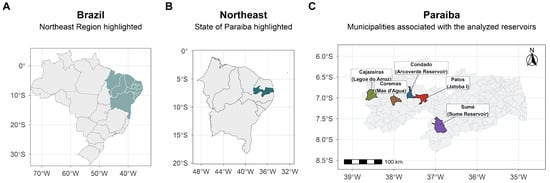
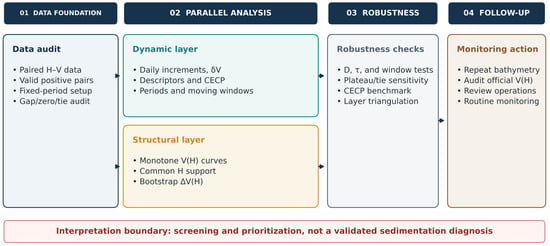
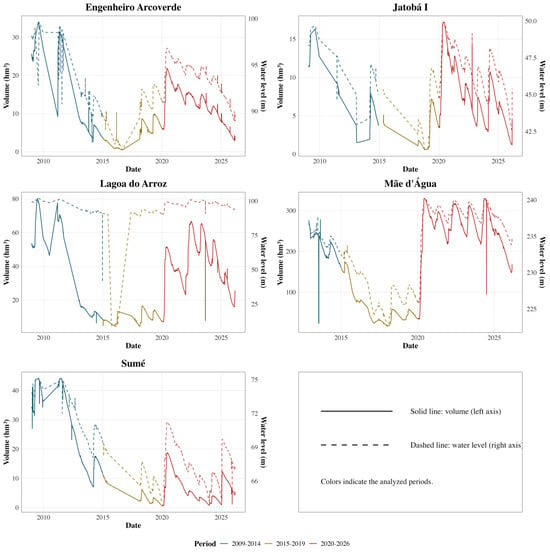
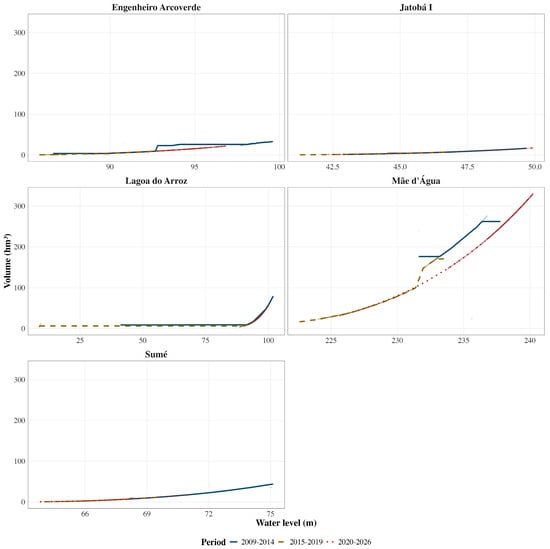
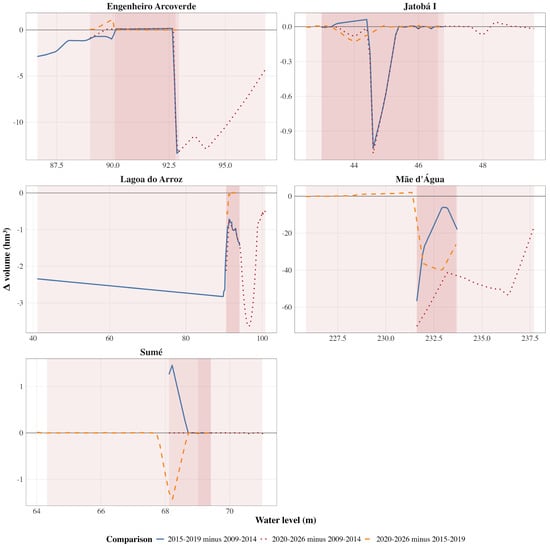
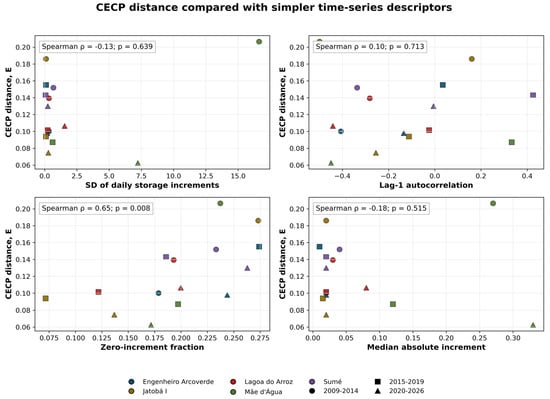
Hydrological reservoirs are complex systems in which storage variations integrate climate forcing, catchment response, releases, withdrawals, evaporation, and monitoring procedures. This study presents an information-theoretic characterization of storage dynamics in five semiarid reservoirs in Paraíba, Brazil. The main analytical layer is the complexity–entropy causality plane (CECP), computed from daily storage increments by permutation entropy and Martín-Plastino-Rosso statistical complexity. CECP was estimated for fixed periods and for sliding windows of 120 observations, with sensitivity tests for embedding dimension, delay, and window length. The workflow also benchmarks CECP distance against conventional descriptors, quantifies ties and zero increments, and tests window overlap. As physical context, monotonic elevation-storage curves were reconstructed for 2009–2014, 2015–2019, and 2020–2026, and storage differences at equivalent water levels were quantified by bootstrap confidence intervals. The reservoirs occupied a high-entropy, low-to-moderate-complexity region of the CECP, but their distances from the maximum-entropy/minimum-complexity vertex differed across reservoirs and periods. Sliding windows revealed temporal mobility that was hidden by fixed-period summaries, especially in Engenheiro Arcoverde, Jatobá I, and Mãe d’Água. Rankings remained strongly concordant when window overlap decreased from 94.2% to 0% (Spearman ), although absolute coordinates were sensitive to the treatment of reported plateaus. Elevation-storage shifts provided an independent structural context: negative shifts were compatible with possible useful-capacity reduction, although not uniquely attributable to sedimentation. The results show that CECP descriptors can reveal ordinal organization and regime mobility in reservoir storage increments, while curves supply the physically interpretable storage-capacity context. The combined evidence prioritizes Engenheiro Arcoverde and Mãe d’Água for bathymetric, curve history, and operational verification. The proposed workflow is therefore an exploratory information-theoretic screening tool for data-limited reservoir monitoring, not a substitute for bathymetric validation.
Full article
(This article belongs to the Section Multidisciplinary Applications)
►
Show Figures
Open AccessArticle
Probabilistic Error-Corrected Controlled Dense Coding Under Bit-Flip Channels via Auxiliary Particles and Partially Entangled States
by
Zitong Diao, Jie Tang, Zhaoqi Lei, Huicun Yu, Jiahao Li, Lei Shi and Jiahua Wei
Entropy 2026, 28(7), 778; https://doi.org/10.3390/e28070778 (registering DOI) - 8 Jul 2026
Abstract
Quantum dense coding could be used to transmit two classical bits with one qubit when a maximally entangled state is shared. In realistic channels, entanglement degradation reduces the channel capacity, while bit-flip noise increases decoding errors. To address these issues, we propose a
[...] Read more.
Quantum dense coding could be used to transmit two classical bits with one qubit when a maximally entangled state is shared. In realistic channels, entanglement degradation reduces the channel capacity, while bit-flip noise increases decoding errors. To address these issues, we propose a novel probabilistic controlled dense coding protocol that employs the three-qubit repetition code for error correction and an auxiliary qubit for probabilistic decoding. Moreover, this proposed scheme includes a third party to supervise the communication based on a three-qubit entanglement state. The implementation steps of our protocol are presented in detail, and numerical simulations show that it achieves higher average information than dense coding without error correction. The scheme provides a robust solution for quantum communication under noisy conditions and non-maximally entangled state.
Full article
(This article belongs to the Special Issue Quantum Information and Quantum Computation)
Open AccessArticle
The Physics Behind Symmetrization
by
Ruth E. Kastner
Entropy 2026, 28(7), 777; https://doi.org/10.3390/e28070777 (registering DOI) - 8 Jul 2026
Abstract
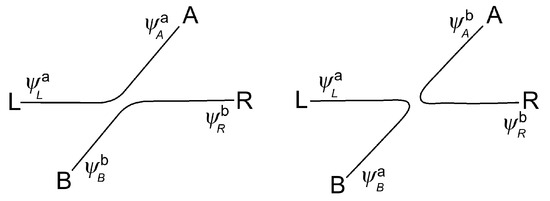
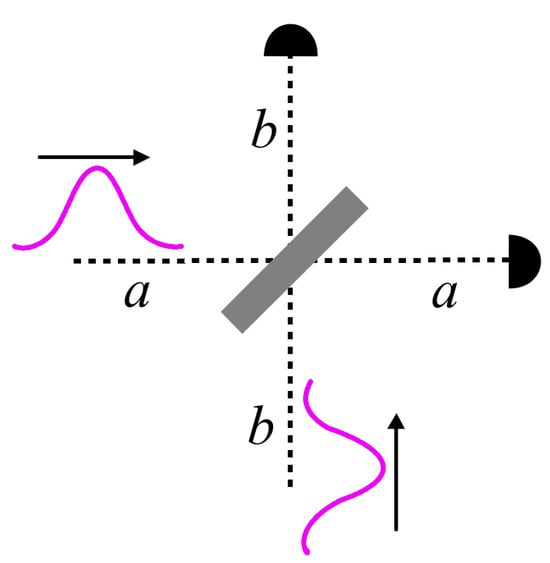
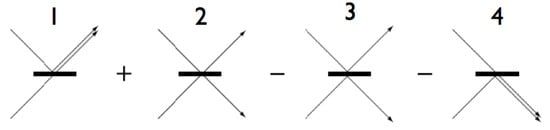
It is often asserted that quantum states for same-type particles must be symmetrized due to “label redundancy,” i.e., the assumption that the permutations of labels in direct-product states do not reflect any real physical distinction and thus their permutations constitute an “exchange degeneracy”.
[...] Read more.
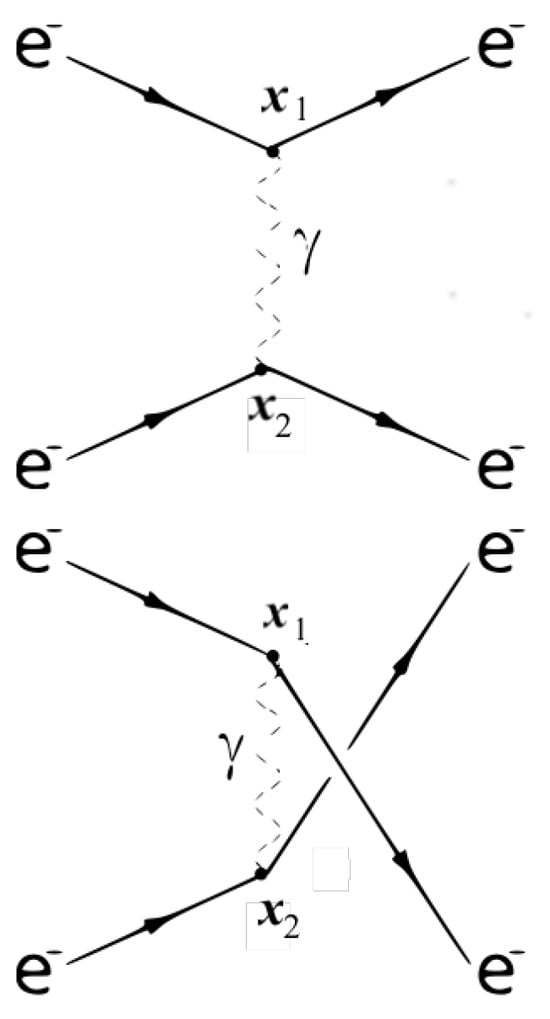
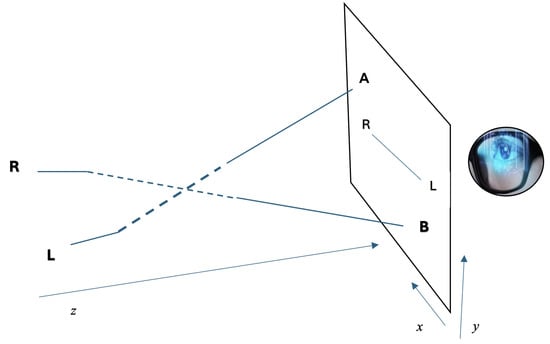
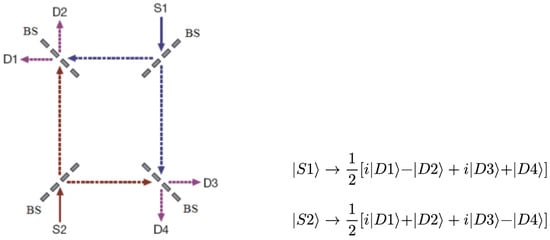
It is often asserted that quantum states for same-type particles must be symmetrized due to “label redundancy,” i.e., the assumption that the permutations of labels in direct-product states do not reflect any real physical distinction and thus their permutations constitute an “exchange degeneracy”. This assumption is directly challenged by the case of scattering of same-type particles such as electrons, which involves two physically distinct scattering channels effectively corresponding to permutation of the labels. I discuss this counterexample with critical attention to an extant portrayal in the literature that omits pertinent physical content. I further note ways in which the assumption that symmetrization must be universally imposed is not supported by actual calculations of particle interactions, nor by seemingly viable particle states based on preparations and outcomes.
Full article
(This article belongs to the Special Issue Quantum Mereologies and Quantum Inspired Set Theories and Logics)
►▼
Show Figures

Figure 1

Open AccessArticle
Mean Consistency of Estimators in a Partially Linear Model with AANA Errors
by
Yu Zhang and Zhiqi Chen
Entropy 2026, 28(7), 776; https://doi.org/10.3390/e28070776 (registering DOI) - 8 Jul 2026
Abstract
This paper focuses on a heteroscedastic partially linear regression model in which the errors are asymptotically almost negatively associated (AANA) random variables with a stochastically dominated and zero mean. Under some suitable conditions, the -th mean consistency of least
[...] Read more.
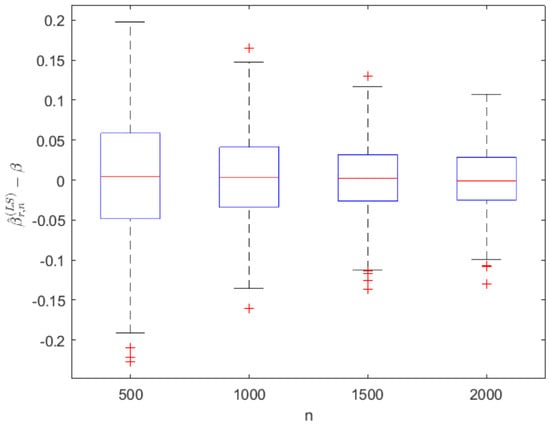
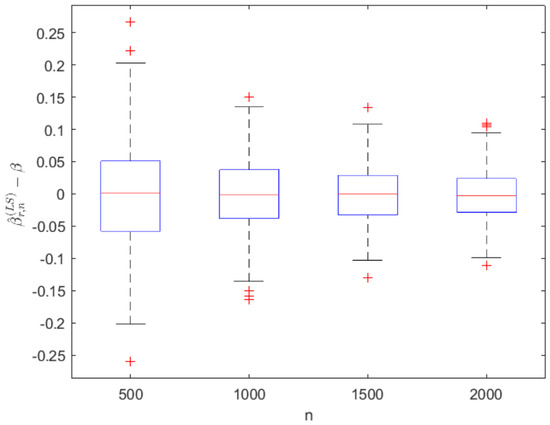
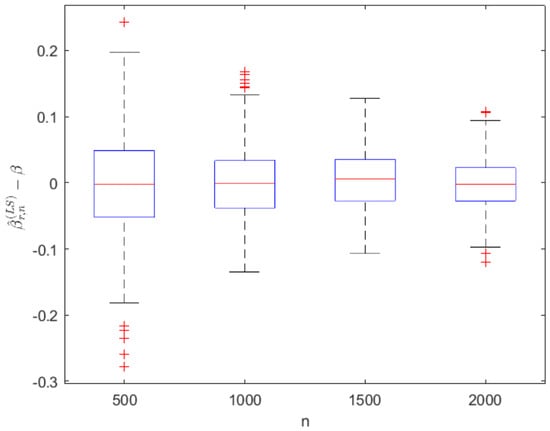
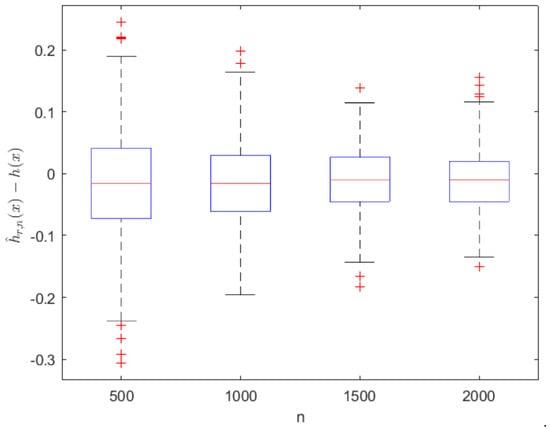
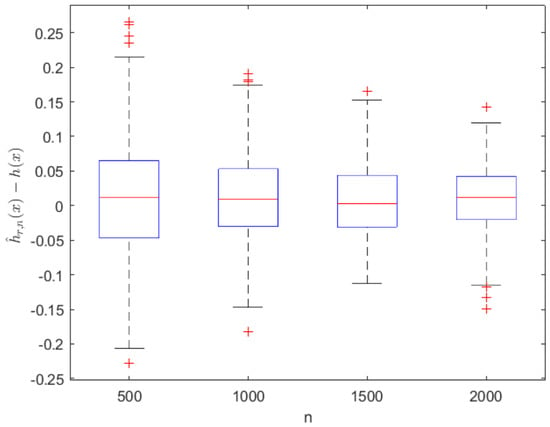
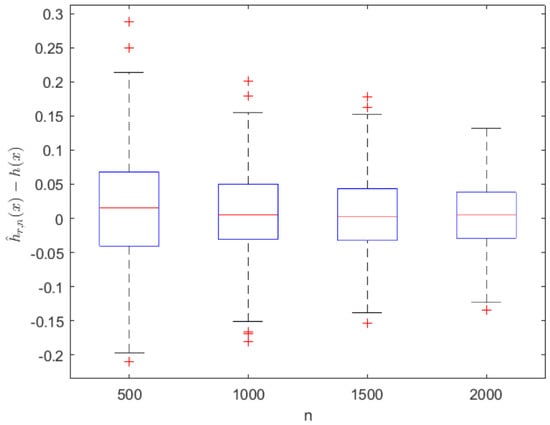
This paper focuses on a heteroscedastic partially linear regression model in which the errors are asymptotically almost negatively associated (AANA) random variables with a stochastically dominated and zero mean. Under some suitable conditions, the -th mean consistency of least squares estimators and weighted least squares estimators for the unknown parameter is established, and the -th mean consistency of the estimators for non-parametric components is also obtained. In addition, the moment convergence rate of the estimators is also investigated. Some results derived in this paper extend and improve the corresponding ones of negatively associated (NA) random errors and independent random errors. Finally, a simulation is carried out to study the numerical performance of the results that we have established.
Full article
(This article belongs to the Section Information Theory, Probability and Statistics)
►▼
Show Figures

Figure 1
Open AccessArticle
Entropy-Regularized Hierarchical MARL for Resilient Moving Target Defense in Cyber–Physical Systems
by
Atef Gharbi, Ahmad Alshammari and Nadhir Ben Halima
Entropy 2026, 28(7), 775; https://doi.org/10.3390/e28070775 (registering DOI) - 8 Jul 2026
Abstract
Cyber–Physical Systems (CPS), including smart grids and industrial control networks, must maintain secure and stable operations despite increasingly adaptive cyber threats. Existing moving target defense (MTD) approaches often rely on fixed reconfiguration strategies or flat learning architectures that fail to scale and do
[...] Read more.
Cyber–Physical Systems (CPS), including smart grids and industrial control networks, must maintain secure and stable operations despite increasingly adaptive cyber threats. Existing moving target defense (MTD) approaches often rely on fixed reconfiguration strategies or flat learning architectures that fail to scale and do not explicitly ensure operational resilience under real-time constraints. This study proposes a resilience-oriented hierarchical multi-agent reinforcement learning (MARL) framework for adaptive MTD in CPS environments. The attacker–defender interaction is modeled as a partially observable stochastic game, enabling defenders to learn adaptive strategies with incomplete information. The proposed architecture consists of three layers: a strategic MARL layer that optimizes high-level defense parameters, a distributed k-winner-take-all coordination layer for low-latency defender selection, and a robust execution layer based on sliding-mode control to preserve physical system stability during reconfiguration. By decoupling strategic adaptation from real-time control, the framework improves scalability and supports resource-aware defense through selective agent activation. Extensive simulations with up to 50 defender agents demonstrate that the proposed approach achieves a defense success rate of 92.4%, reduces the response time by 15% compared with the random MTD, and lowers the energy consumption by 34% on average (up to 52% at N = 50) relative to the flat MARL. These results indicate that hierarchical MARL can significantly enhance CPS resilience by enabling adaptive, efficient, and operationally safe defenses against dynamic cyber-attacks. The proposed framework is particularly suitable for edge-enabled CPS environments with strict, real-time, and safety constraints.
Full article
(This article belongs to the Special Issue Information-Theoretic Approaches for Machine Learning and AI)
Open AccessArticle
Contour-Based Chain-Code Serialization for Lossless Compression of Voxelized 3D Objects
by
Esteban-Alejandro Durán-Yáñez, Mario-Alberto Rodríguez-Díaz, Ricardo Mendoza-González, Francisco-Javier Luna-Rosas and Julio-César Martínez-Romo
Entropy 2026, 28(7), 774; https://doi.org/10.3390/e28070774 (registering DOI) - 8 Jul 2026
Abstract
Voxel representations provide a simple way to represent three-dimensional objects as binary occupancy signals, but dense voxel grids and direct sparse encodings remain costly at medium and high resolutions. This paper addresses the gap between conventional dense-grid, octree, and point-cloud-codec representations and deterministic
[...] Read more.
Voxel representations provide a simple way to represent three-dimensional objects as binary occupancy signals, but dense voxel grids and direct sparse encodings remain costly at medium and high resolutions. This paper addresses the gap between conventional dense-grid, octree, and point-cloud-codec representations and deterministic contour-first source serialization for exact binary voxel occupancy. We propose a contour-based chain-code serialization that decomposes a voxel grid into two-dimensional slices, extracts foreground components and holes, encodes their contours using F4, 3OT, and F8 variants, and separates contour symbols from positional metadata before applying general-purpose lossless compression. The method is evaluated on 3983 ModelNet40-derived voxelized objects across 40 classes and resolutions N = 8, 16, 32, 64, 128, 256, and 512, using the X-axis for the main evaluation. It is compared against OCC1, BINVOX, breadth-first octree masks, and geometry-only G-PCC. The proposed streams are not competitive at N = 8, where zstd-compressed octree masks achieve the best mean bpv. From N = 16 onward, however, the best proposed stream outperforms the strongest evaluated baseline, with gains increasing from 20.93% at N = 16 to 84.37% at N = 512. The best proposed configuration is zstd + 3OT at N = 8 and N = 16, while zstd + F8 dominates from N = 32 through N = 512. Entropy, ablation, timing, memory, and validation analyses further show that the advantage comes from the interaction between contour-aware source serialization and backend compression, rather than from the backend compressor alone.
Full article
(This article belongs to the Special Issue Information Theory and Data Compression)
Open AccessArticle
Time Modulation-Based Multi-User Covert Communication
by
Lanxiang Jiang, Xuanya Zhang, Qun Chen, Xin Wan, Fei Yang and Gang Yang
Entropy 2026, 28(7), 773; https://doi.org/10.3390/e28070773 (registering DOI) - 8 Jul 2026
Abstract
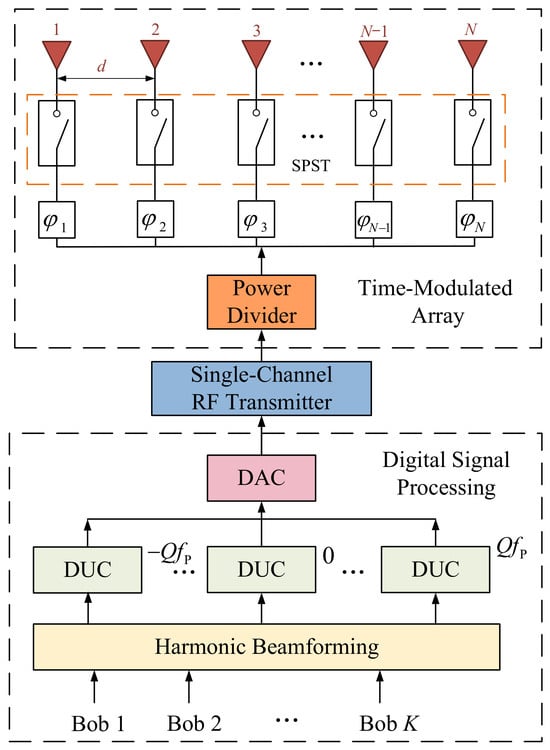
Multi-antenna-based covert communication techniques exploit spatial degrees of freedom to improve transmission efficiency under covertness constraints, but this generally comes at the cost of increased hardware complexity and power consumption. To this end, time-modulated arrays (TMA) enable multi-user covert communication with a single
[...] Read more.
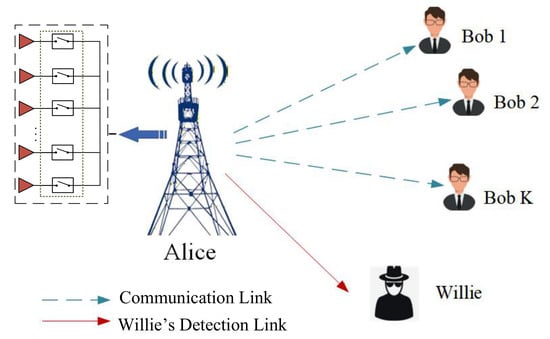
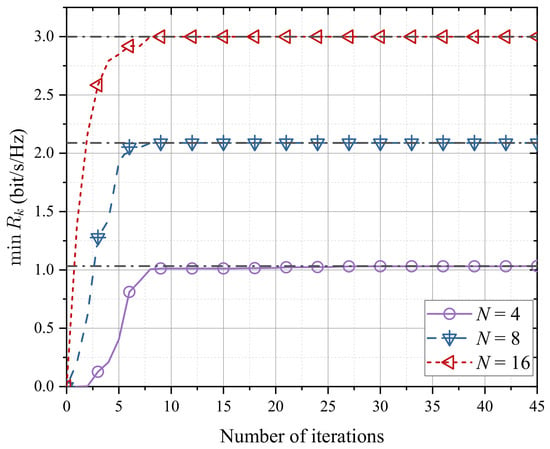
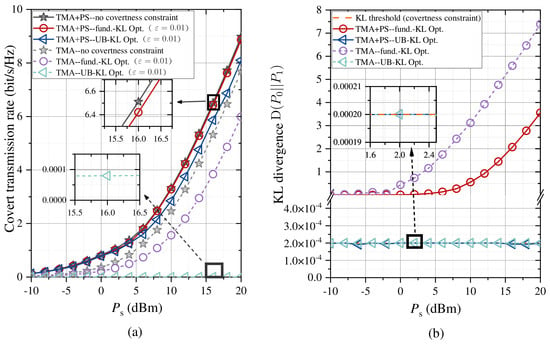
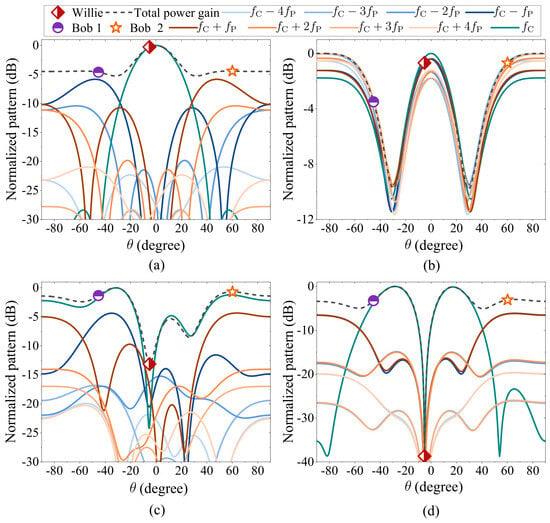
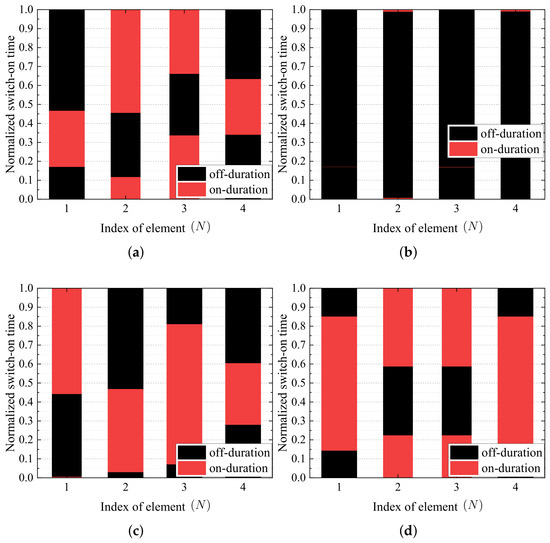
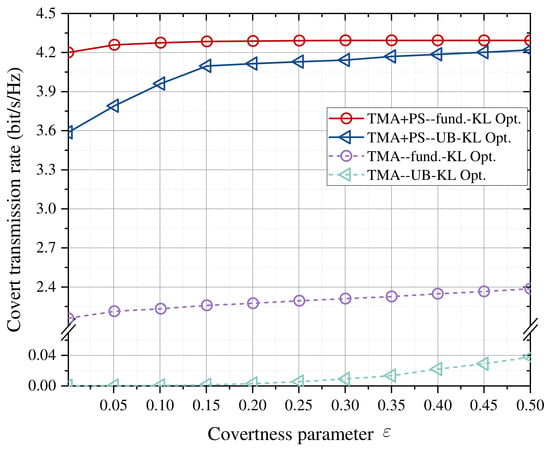
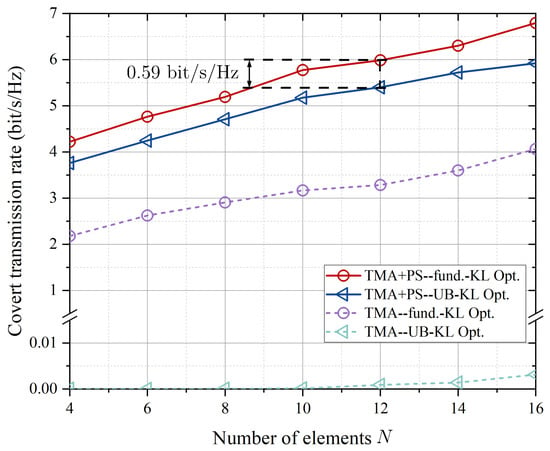
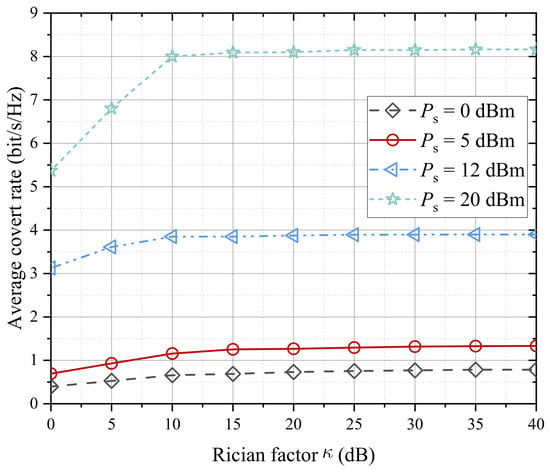
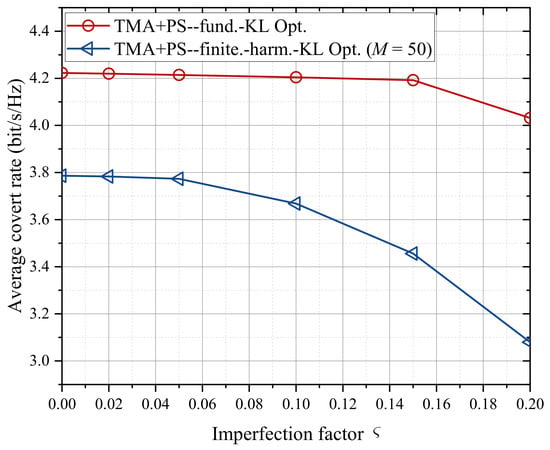
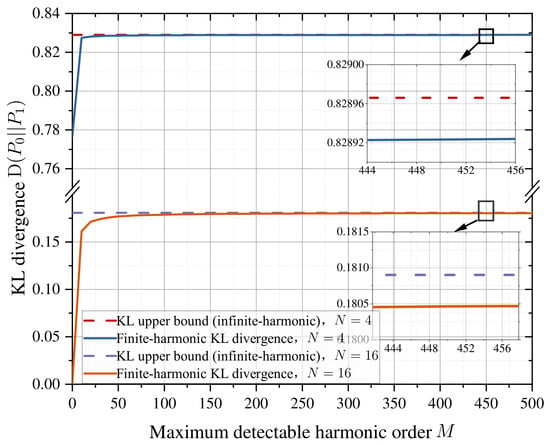
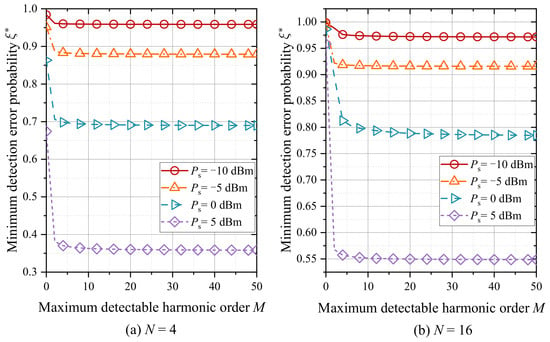
Multi-antenna-based covert communication techniques exploit spatial degrees of freedom to improve transmission efficiency under covertness constraints, but this generally comes at the cost of increased hardware complexity and power consumption. To this end, time-modulated arrays (TMA) enable multi-user covert communication with a single radio-frequency (RF) chain, providing a promising solution for low-complexity and energy-efficient covert communication. However, the infinite-order harmonics generated by time modulation spread signal energy over the entire spectrum, allowing the warden to enhance detection capability via cross-band observations, which aggravates signal leakage toward unintended directions. This paper develops a binary hypothesis testing model from the perspective of the warden based on infinite-order harmonic characteristics, to characterize the statistical properties and power distribution of harmonic-induced leakage. Furthermore, since the Kullback–Leibler (KL) divergence is intractable under infinite-order harmonic conditions, a computable upper bound is derived to enable covert constraint analysis. Considering the strong coupling among system parameters, an optimization problem is formulated to maximize the minimum covert transmission rate, and a genetic algorithm (GA) is employed for the joint design of time modulation, power allocation, and spatial phase. Simulation results demonstrate that the proposed scheme effectively suppresses signal leakage and improves covert transmission performance.
Full article
(This article belongs to the Special Issue Physical Layer Security for Next-Generation Wireless Networks: Theory, Technologies, and Applications)
►▼
Show Figures

Figure 1
Open AccessArticle
Evolution of Hypoequilibrium States in Steepest Entropy Ascent Models for Nonequilibrium Quantum Thermodynamics
by
Gian Paolo Beretta, Rohit Kishan Ray and Michael R. von Spakovsky
Entropy 2026, 28(7), 772; https://doi.org/10.3390/e28070772 (registering DOI) - 7 Jul 2026
Abstract
A formal development of the HypoEquilibrium (HE) state concept within the Steepest-Entropy-Ascent Quantum Thermodynamics (SEAQT) framework is presented, emphasizing its rigorous mathematical formulation. Using a general decomposition of the Hilbert space, HE states are defined in operator language and the reduced evolution of
[...] Read more.
A formal development of the HypoEquilibrium (HE) state concept within the Steepest-Entropy-Ascent Quantum Thermodynamics (SEAQT) framework is presented, emphasizing its rigorous mathematical formulation. Using a general decomposition of the Hilbert space, HE states are defined in operator language and the reduced evolution of the associated intensive parameters for the regime where the dissipative dynamics commutes with the Hamiltonian is derived. It is proved that the M-th-order HE family (where M is the number of spectral sectors) constitutes an invariant manifold under the SEAQT equation of motion, ensuring that states initially representing a “mixture of canonicals” maintain this structure throughout their evolution. Furthermore, a formal connection is established between the HE ansatz and the rate-controlled constrained equilibrium (RCCE) method, identifying HE variables as constraint potentials. Finally, the model is extended to Non-Hamiltonian SEAQT (NH-SEAQT) interactions to describe thermodynamically consistent energy and entropy exchanges between subsystems and heat baths. This work provides the formal foundation for reduced-order modeling of far-from-equilibrium relaxation and transport processes, and supports a methodology previously applied across various physical and chemical systems.
Full article
(This article belongs to the Section Non-equilibrium Phenomena)
Open AccessArticle
Exact Solution of the Glauber–Ising Model on the Finite-Length Semi-Open Chain
by
Malte Henkel
Entropy 2026, 28(7), 771; https://doi.org/10.3390/e28070771 (registering DOI) - 7 Jul 2026
Abstract
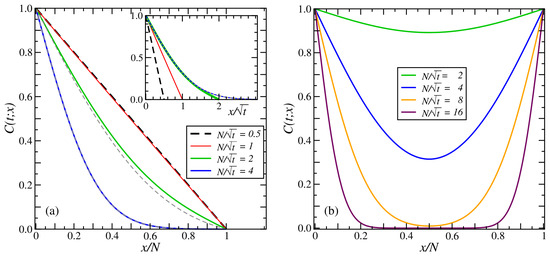
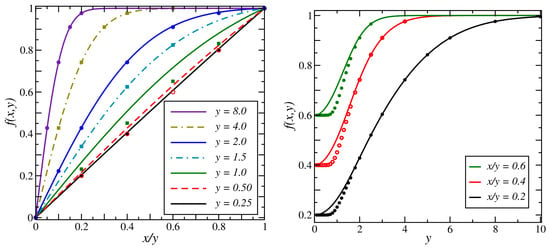
The exact time–space correlation function of the Glauber–Ising model, quenched to temperature and on a semi-open lattice of finite size N, is obtained. This also enables deducing the exact empty-interval probability of the dual coagulation–diffusion
[...] Read more.
The exact time–space correlation function of the Glauber–Ising model, quenched to temperature and on a semi-open lattice of finite size N, is obtained. This also enables deducing the exact empty-interval probability of the dual coagulation–diffusion process on a periodic finite ring and reproducing the long-time decay of the particle concentration. These results are consistent with the generic expectations of dynamical finite-size scaling theory.
Full article
(This article belongs to the Special Issue Ising Model—100 Years Old and Still Attractive)
►▼
Show Figures

Figure 1
Open AccessArticle
Security as a Natural Law: A Quantum-Inspired Hypothesis for Information Persistence
by
Pete Herzog, Michael Sletten, Šarūnas Grigaliūnas and Rasa Brūzgienė
Entropy 2026, 28(7), 770; https://doi.org/10.3390/e28070770 - 7 Jul 2026
Abstract
This paper proposes a quantum-inspired hypothesis that cybersecurity can be modeled as information persistence: the maintenance of separation between protected and adverse system states under entropy, latency, and control cost. The objective is to provide a time- and energy-aware framework for comparing security
[...] Read more.
This paper proposes a quantum-inspired hypothesis that cybersecurity can be modeled as information persistence: the maintenance of separation between protected and adverse system states under entropy, latency, and control cost. The objective is to provide a time- and energy-aware framework for comparing security architectures without claiming that cybersecurity is literally quantum or that a universal law has been proven. We define a dimensionless Security Persistence Index, , and map controls across three temporal phases—Intent, React, and Resolve—within a Control Lattice. The resulting Principle of Energetic Asymmetry predicts that React-dominated architectures should require greater energy, latency, and residual-entropy cost than architectures that shift control weight toward Intent and Resolve. We evaluate this prediction through a simulation of four architectures—Intent-heavy, Balanced, Misaligned, and React-heavy—using 1000 trials per condition. The expected pattern was observed: Intent-heavy achieved the highest simulated persistence, , vs. for React-heavy, and lower normalized energy cost, CPU load, false positives, latency, and residual entropy. These results provide simulation-based internal-consistency evidence only; the framework remains a hypothesis requiring hardware-level measurement, independent replication, and field validation.
Full article
(This article belongs to the Special Issue Quantum Information Security)
Open AccessArticle
Correlation-Induced Accessibility Bridges in Biomedical Networks: A Proof-of-Concept Relational Graph Model
by
Roxana Irina Iancu, Călin Gheorghe Buzea, Florin Nedeff, Diana Mirilă, Valentin Nedeff, Mirela Panainte-Lehaduș, Claudia Manuela Tomozei, Maricel Agop, Alina Ștefania Doboș, Dragoş Petru Teodor Iancu, Lăcrămioara Ochiuz and Decebal Vasincu
Entropy 2026, 28(7), 769; https://doi.org/10.3390/e28070769 - 7 Jul 2026
Abstract
Complex diseases often involve distributed interactions among biological regions, physiological systems, imaging phenotypes, and clinical variables that are not fully captured by anatomical proximity, isolated biomarkers, or conventional feature-based representations. In oncology, neuroimaging, critical care, and systems medicine, distant or apparently separate biomedical
[...] Read more.
Complex diseases often involve distributed interactions among biological regions, physiological systems, imaging phenotypes, and clinical variables that are not fully captured by anatomical proximity, isolated biomarkers, or conventional feature-based representations. In oncology, neuroimaging, critical care, and systems medicine, distant or apparently separate biomedical sectors may show strong statistical or functional coupling associated with multimodal imaging signatures, inflammatory responses, metabolic constraints, treatment-induced changes, or shared disease-state organization. In this work, we introduce a proof-of-concept relational graph framework for representing such candidate hidden connectivity in terms of correlation-induced accessibility bridges. The novelty of the framework is that it does not treat biomedical correlation, graph distance, and network connectivity as separate descriptors but explicitly couples non-factorizable inter-sector correlation to localized accessibility compression in an emergent disease-state geometry. The proposed framework represents a biomedical system as a weighted relational graph in which nodes correspond to clinically relevant entities, such as tissue regions, imaging-derived features, biomarker modules, physiological variables, or disease states, while weighted edges encode constraints on functional, statistical, or pathological accessibility. Within this structure, coarse-grained biomedical sectors are defined as organized subsystems, and non-factorizable coupling between sectors is quantified using mutual-information-type measures. Candidate biomedical bridges are then defined operationally as localized, high-gain reductions in effective inter-sector accessibility distance. We introduce explicit coupling rules linking sector-level correlation to bridge-specific accessibility compression, including an effective distance-compression model and an ensemble-based formulation. Numerical proof-of-concept simulations on randomized modular graph ensembles show that increasing correlation strength systematically reduces effective inter-sector distance and increases bridge gain. The strongest compression occurs when correlation modulates a designated bridge architecture, exceeding the effects observed under random non-bridge or generic inter-sector modulation. These simulations are not intended to validate a disease-specific biological mechanism but to test whether the proposed correlation–compression rule produces bridge-specific effects distinguishable from null graph perturbations. The resulting structures should not be interpreted as physical anatomical tunnels or direct causal pathways unless supported by additional biological evidence. Rather, they represent correlation-induced accessibility bridges: localized, high-gain routes in a patient- or disease-specific relational geometry. The framework may therefore provide a theoretical and computational basis for prioritizing candidate hidden connectivity patterns in radiomics, multimodal prognosis, physiological deterioration, recurrence modeling, and systems-level disease networks.
Full article
(This article belongs to the Section Complexity)
Open AccessArticle
Platonic Projection Structures: Operator-Induced Observability in Representation Learning
by
Kazuo Ishii, Bishnu Prasad Gautam, Jieling Wu and Javaid Saher
Entropy 2026, 28(7), 768; https://doi.org/10.3390/e28070768 - 5 Jul 2026
Abstract
We characterize observability in representation learning through Platonic Projection Structures (PPS), an operator-theoretic framework for analyzing representation accessibility under partial observation. Rather than treating observable outputs as direct reflections of latent representations, PPS models observation as a geometry induced by a self-adjoint positive
[...] Read more.
We characterize observability in representation learning through Platonic Projection Structures (PPS), an operator-theoretic framework for analyzing representation accessibility under partial observation. Rather than treating observable outputs as direct reflections of latent representations, PPS models observation as a geometry induced by a self-adjoint positive semidefinite operator acting on a latent Hilbert space. A system is represented as a triple where denotes a latent representation space, is an observation operator, and defines an induced scalar observable. The framework characterizes observability through the quotient geometry which represents equivalence classes of latent states that are indistinguishable under observation. From this perspective, observable behavior is governed not by latent representations themselves, but by the geometry induced through the observation operator. We show that both quantum measurement and representation inference under linear observation models can be formulated within this common operator-theoretic structure while differing in the algebraic properties of their observation operators. Within this perspective, quantum measurement serves primarily as a mathematically canonical example of projection-mediated observability. The correspondence developed in PPS is therefore structural rather than physical. Within the same framework, representation transfer and knowledge distillation can be interpreted as approximate preservation of observable geometry through the intertwining condition PPS further reveals a structural limitation of output-based interpretability: latent components contained in are fundamentally inaccessible from observables generated through the induced observation process. Accordingly, attribution and explanation methods inherit intrinsic constraints imposed by the observation geometry itself. We provide controlled empirical validations demonstrating kernel-invariant observability, projection-induced attribution gaps, and rank-controlled observable geometry in latent representation spaces. Overall, PPS provides a mathematically explicit characterization of observability through operator-induced quotient geometry, offering a unified perspective on representation accessibility, interpretability, and representation transfer.
Full article
(This article belongs to the Section Information Theory, Probability and Statistics)
Open AccessArticle
Saccade Amplitude and Pupil Diameter Information Channels: Extending the Gaze Information Channel Framework and Assessing Cross-Channel Association in Eye Tracking of Van Gogh Paintings
by
Marius Vila, Qiaohong Hao, Miquel Feixas, Micaela Y. Martin and Mateu Sbert
Entropy 2026, 28(7), 767; https://doi.org/10.3390/e28070767 - 4 Jul 2026
Abstract
The gaze information channel paradigm models fixation sequences as a first-order Markov chain and quantifies gaze behaviour through Shannon entropy and mutual information (MI), where measures the reduction in uncertainty about the next fixation state given the
[...] Read more.
The gaze information channel paradigm models fixation sequences as a first-order Markov chain and quantifies gaze behaviour through Shannon entropy and mutual information (MI), where measures the reduction in uncertainty about the next fixation state given the current one. This paper extends the framework by introducing two new channels: the saccade amplitude channel, which discretises saccade angular distance into three categories (short, medium, long) with a four-category variant also analysed, and the pupil diameter channel, which discretises fixation-period pupil size into three categories. Both are applied to 10 observers viewing 12 Van Gogh paintings. The amplitude channel shows that observer-driven variation exceeds stimulus-driven variation. The pupil channel yields the highest among the two new channels ( bits per participant), consistent with the slow dynamics of pupil responses. Goodness-of-fit tests confirm significantly non-random sequential structure in both channels ( ) for all pooled matrices. A simultaneous cross-channel association analysis across all five channels finds that 19 of 20 pairwise Spearman correlations are non-significant; the single nominally significant result (pupil–duration, , ) does not survive Bonferroni correction and is not robust to outlier removal. Two theoretical observations are presented: an upper bound on conditional entropy in terms of transition persistence (Proposition 1), and a refinement monotonicity result showing that finer discretisation cannot decrease channel MI (Remark 2). An exploratory comparison with five computational aesthetics measures finds a nominally significant negative correlation between pupil and Bense’s palette redundancy ( , , uncorrected), suggesting that diverse colour palettes are associated with stronger sequential pupil dynamics; permutation entropy and statistical complexity show no association with any channel.
Full article
(This article belongs to the Section Multidisciplinary Applications)
Open AccessArticle
Analytical Solutions for a Charged Particle with White, Thermal, and Active Noises in the Presence of a Uniform Magnetic Field
by
Yun Jeong Kang, Sung Kyu Seo and Kyungsik Kim
Entropy 2026, 28(7), 766; https://doi.org/10.3390/e28070766 - 4 Jul 2026
Abstract
In this paper, we apply the double Fourier transform method to the two-dimensional Vlasov equations for a charged particle subjected to white noise, exponentially correlated Gaussian forces, trap forces and thermal and active noises in a magnetic field. By deriving the corresponding Fokker–Planck
[...] Read more.
In this paper, we apply the double Fourier transform method to the two-dimensional Vlasov equations for a charged particle subjected to white noise, exponentially correlated Gaussian forces, trap forces and thermal and active noises in a magnetic field. By deriving the corresponding Fokker–Planck equation, analytical solutions for the joint probability density are obtained in different time domains. The mean squared displacement and velocity of a charged particle driven by white noise exhibits a super-diffusive behavior, scaling as ∼t2 in the short-time regime, while it grows linearly with time (~t) in the long-time regime, in agreement with numerical simulations of the mean squared displacement. When thermal noise is included together with harmonic trap and viscous forces, the characteristic time scale increases as ~t2h+1 in the corresponding time domains, whereas the mean squared velocity scales as ~t2h+3. The moments of the joint probability density under thermal noise scale as ~t2h+5. Furthermore, when the persistent Hurst exponent h→1/2, the entropy of the joint probability density associated with thermal noise coincides with that obtained for active noise in both the short-time (t ≪ τ) and long-time (t ≫ τ) limits.
Full article
Open AccessArticle
HeteroEdge: Latency-Aware Adaptive Protocol Parsing with Digital Twin Intelligence for Heterogeneous 5G IoT Edge Networks
by
Xiangping Huang, Thi-Kien Dao and Trong-The Nguyen
Entropy 2026, 28(7), 765; https://doi.org/10.3390/e28070765 - 3 Jul 2026
Abstract
The rapid growth of heterogeneous IoT devices in 5G environments has created stringent requirements for low-latency edge-based protocol processing. Existing static parsing frameworks lack adaptability to dynamic multi-protocol traffic, resulting in increased processing delays and quality-of-service (QoS) violations under bursty workloads. This paper
[...] Read more.
The rapid growth of heterogeneous IoT devices in 5G environments has created stringent requirements for low-latency edge-based protocol processing. Existing static parsing frameworks lack adaptability to dynamic multi-protocol traffic, resulting in increased processing delays and quality-of-service (QoS) violations under bursty workloads. This paper presents HeteroEdge, a latency-aware adaptive protocol parsing framework for 5G Multi-access Edge Computing (MEC) environments. HeteroEdge integrates four tightly coupled components: (i) a lightweight machine-learning-based Heterogeneous Protocol Parsing Layer (HPPL) built on gradient-boosted decision trees (XGBoost); (ii) a Network Digital Twin (NDT) that maintains a compressed and continuously updated representation of IoT endpoint states; (iii) a Real-Time Inference Engine (RTIE) that dynamically reallocates parsing resources at 50 ms intervals; and (iv) a What-If Simulation (WIS) module that proactively evaluates resource-allocation strategies under hypothetical traffic scenarios. Experimental evaluation on a physical 5G MEC testbed comprising four Intel Xeon Silver 4316 edge nodes and 2000 emulated IoT endpoints spanning twelve protocol classes demonstrates the effectiveness of the proposed framework. HeteroEdge reduces median edge parsing latency (including parsing, classification, and queuing delays, but excluding the 5G radio component) by up to 44.7% compared with static MEC baselines, achieves a macro-averaged protocol classification accuracy of 97.8%, and sustains sub-7 ms edge parsing latency at a line-rate NIC injection throughput of 18 Gbps. Furthermore, latency spikes under bursty traffic are reduced by 39% at the 95th percentile, while SLA violation rates decrease by a factor of 3.9 relative to static resource allocation. These results demonstrate that HeteroEdge provides an effective and scalable solution for latency-critical IoT applications, including smart manufacturing, connected vehicles, and urban sensing.
Full article
Open AccessArticle
A Mathematical Theory of Phase-Consistent Information Bottleneck for Cross-Domain Generalization
by
Feng Liu and Zheng Wang
Entropy 2026, 28(7), 764; https://doi.org/10.3390/e28070764 - 3 Jul 2026
Abstract
We propose a mathematical framework for domain generalization in medical image segmentation built on dual-tree complex wavelet transform (DTCWT) and variational information theory. The core premise is that, under adequate spatial normalization and acquisition-style shifts, DTCWT phase components are more closely associated with
[...] Read more.
We propose a mathematical framework for domain generalization in medical image segmentation built on dual-tree complex wavelet transform (DTCWT) and variational information theory. The core premise is that, under adequate spatial normalization and acquisition-style shifts, DTCWT phase components are more closely associated with anatomical structure, whereas amplitude components are more sensitive to domain-specific intensity and style variations. We formulate this as a local phase–magnitude complementarity premise and construct an information bottleneck that operates on structured subband representations. The framework provides several key theoretical results under explicit structural assumptions: an information bound showing when DTCWT amplitude subbands better isolate domain-related information than global Fourier representations; a variational information bottleneck encoder that compresses domain-specific amplitude information into low-dimensional latent codes; a triple constraint mechanism (domain supervision, KL compression, and orthogonality) that controls domain–task information leakage; and a predictive feature modulation scheme with spatial complexity. We further analyze test-time adaptation via calibrated uncertainty, deriving a sufficient condition under which a two-pass inference strategy reduces the expected generalization gap. Finally, we include illustrative public-dataset checks on FeTS 2022 and BraTS 2023 to test the central phase–amplitude premise and the feasibility of DTCWT-front-end segmentation. All theorems are stated with their assumptions and verifiable conditions, offering a physically motivated approach to domain generalization in medical imaging.
Full article
Open AccessArticle
Deep Graph Clustering Framework Based on Confidence-Guided Graph Enhancement and Dual-Negative Sample Contrastive Learning
by
Qiuming Wang, Sheng Zhang, Bing Wu, Jiangnan Zhou, Chennan Wu, Yirong Zeng, Ka Sun and Chang Liu
Entropy 2026, 28(7), 763; https://doi.org/10.3390/e28070763 - 3 Jul 2026
Abstract
Attributed graph clustering partitions nodes in an unsupervised manner by leveraging graph topology and node attributes. Existing deep methods face challenges including local structural bias, high noise in unsupervised graph editing, and insufficient discriminative ability for hard samples. To address these issues, we
[...] Read more.
Attributed graph clustering partitions nodes in an unsupervised manner by leveraging graph topology and node attributes. Existing deep methods face challenges including local structural bias, high noise in unsupervised graph editing, and insufficient discriminative ability for hard samples. To address these issues, we propose a deep graph clustering framework based on confidence-guided graph enhancement and dual-negative sample contrastive learning (CGEN). CGEN constructs a local–global dual-view representation learning module to fuse local neighborhood attributes with high-order global topological information. It then utilizes a confidence-guided conservative graph editing mechanism that integrates multiple constraints, specifically feature similarity, intra-cluster consistency, multi-view consistency, and pairwise node confidence, using a progressive update strategy for stable structural optimization. Furthermore, a dual-negative sample contrastive learning strategy dynamically adjusts the weights of attribute-confused and inter-cluster-confused negative samples to enhance discriminative ability near adjacent cluster boundaries. Extensive experiments on four benchmark datasets demonstrate that CGEN achieves highly competitive performance, outperforming the majority of state-of-the-art methods across core clustering metrics, thereby validating its effectiveness in addressing local structural bias, graph editing noise, and hard sample discriminative limitations.
Full article
(This article belongs to the Special Issue Advances in Complex Networks and Their Applications, from COMPLEX NETWORKS 2025)
Open AccessArticle
Economic Entropy and Sectoral Dynamics: A Thermodynamic Approach to Market Analysis
by
Wilson Alexander Rojas Castillo, Alexander Zamora Velandia, Luis Fernando Quijano Wilchez and Yaneth Beltrán Peña
Entropy 2026, 28(7), 762; https://doi.org/10.3390/e28070762 (registering DOI) - 3 Jul 2026
Abstract
We develop a geometric thermodynamic framework for the analysis of sectoral economic dynamics grounded in statistical physics principles. By constructing a Legendre-invariant thermodynamic metric within the formalism of geometrothermodynamics (GTD), we establish a minimal effective structure consistent with extensivity and entropy-based representations of
[...] Read more.
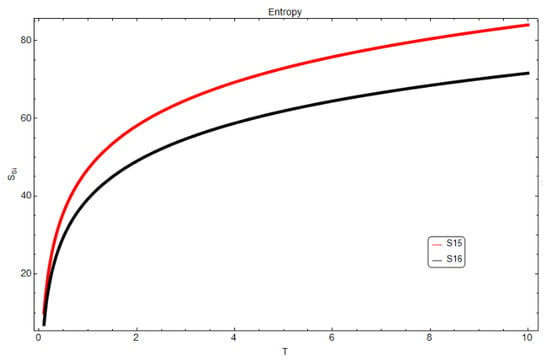
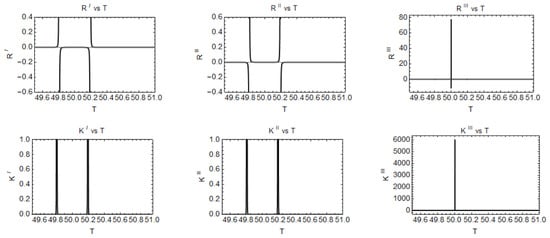
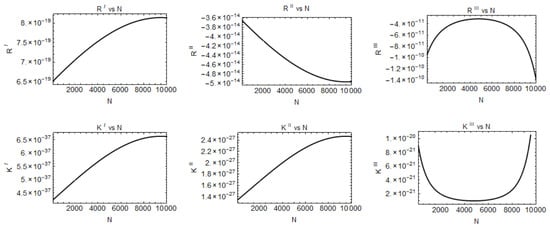
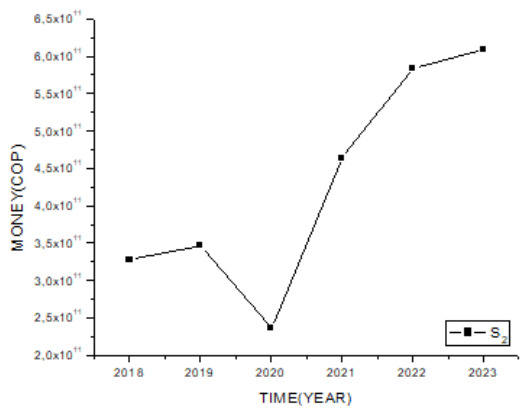
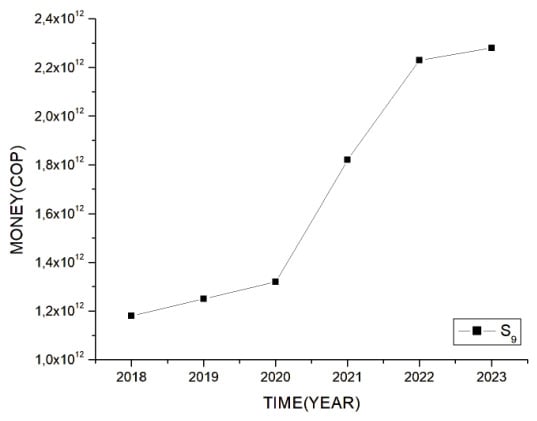
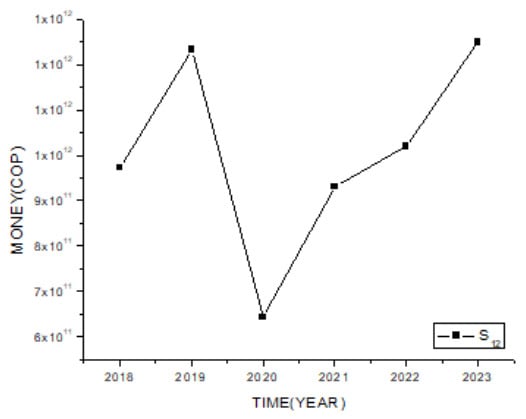
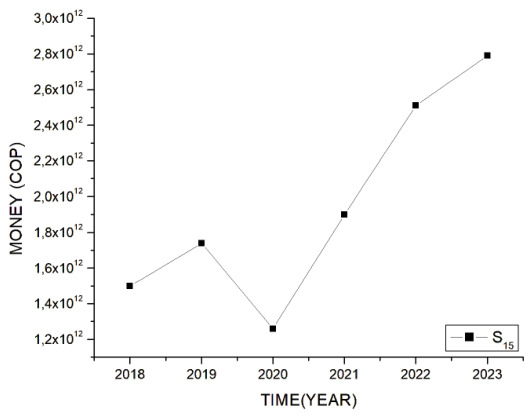
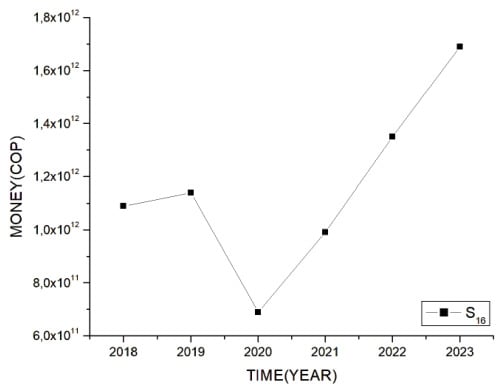
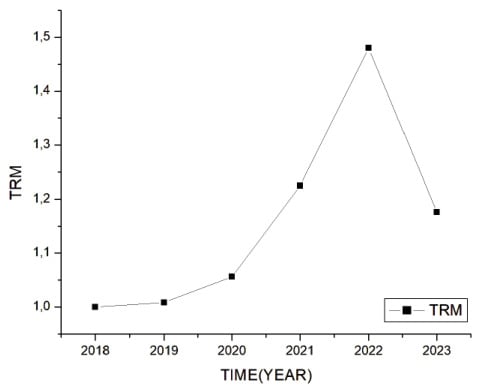
We develop a geometric thermodynamic framework for the analysis of sectoral economic dynamics grounded in statistical physics principles. By constructing a Legendre-invariant thermodynamic metric within the formalism of geometrothermodynamics (GTD), we establish a minimal effective structure consistent with extensivity and entropy-based representations of macroscopic economic systems. The resulting thermodynamic curvature provides a coordinate-independent measure of structural interactions and equilibrium stability across economic sectors. Applying this framework to satellite account data, we find that the thermodynamic curvature of the equilibrium manifold remains finite and regular across the empirically relevant range, with no curvature singularity in the period studied. In particular, the 2020 contraction—the most pronounced macroeconomic disruption in the sample—is not reflected as a curvature singularity in the equilibrium geometry. We read this regularity as a diagnostic of structural stability: the sectoral system absorbs such disruptions without an abrupt reorganisation of its equilibrium geometry. The geometric invariants thus capture stability properties not directly accessible through standard entropic indicators alone, offering a complementary statistical description of economic dynamics. Our results demonstrate that thermodynamic geometry furnishes a consistent bridge between entropy-based macroeconomic modelling and coordinate-invariant measures of equilibrium stability, extending the applicability of geometric methods in statistical physics to complex economic systems.
Full article
(This article belongs to the Special Issue Entropy-Based Applications in Economics, Finance, and Management, 4th Edition)
►▼
Show Figures

Figure 1
Open AccessReview
Cognitive Processing and EEG Complexity
by
Antonio J. Ibáñez-Molina, Sergio Iglesias-Parro, M. Carmen Gálvez-Garzón and María Felipa Soriano
Entropy 2026, 28(7), 761; https://doi.org/10.3390/e28070761 - 3 Jul 2026
Abstract
Cognitive neuroscience has addressed the understanding of human brain processes through numerous techniques and psychological paradigms. In general, different types of tasks have been used depending on the specific cognitive operation under study. Since these tasks are usually designed to register responses at
[...] Read more.
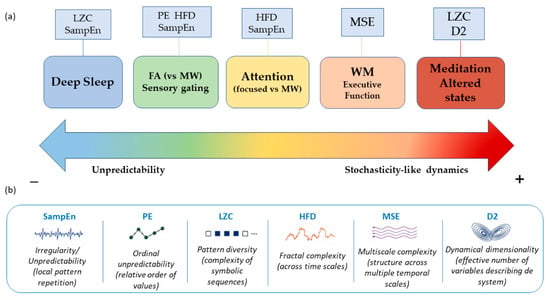
Cognitive neuroscience has addressed the understanding of human brain processes through numerous techniques and psychological paradigms. In general, different types of tasks have been used depending on the specific cognitive operation under study. Since these tasks are usually designed to register responses at the single-trial level, the most common methodological approach to electroencephalography (EEG) is to obtain event-related potentials (ERPs). Crucially, the linear analysis methods associated with ERPs often overlook the intrinsic non-linear and multiscale dynamics of brain activity. Hence, to better characterize brain activity, there is increasing interest in the study of the non-linearity and complexity of EEGs. Given that experiments relating cognitive processing and EEG complexity are still scarce, this work is a narrative review of studies in which non-clinical cognitive processing, such as memory, perception, or attention, is addressed using complexity measures. Here, we focus on EEG metrics derived from the concepts of fractality, information, and randomness across different temporal and spatial scales. We discuss how these measures complement more classical analyses, try to integrate the findings using a predictability–regularity framework, and finally, we point out possible future directions with which to advance current knowledge about the relationship between cognition and EEG complexity.
Full article
(This article belongs to the Special Issue Entropy Analysis of Electrophysiological Signals)
►▼
Show Figures

Figure 1
Open AccessArticle
Entropic Analysis of Geographical Subzones for the Maule Mw8.8 (2010) Earthquake
by
Javiera Olave, Eugenio E. Vogel, Pablo Díaz, Denisse Pastén and Gonzalo Saravia
Entropy 2026, 28(7), 760; https://doi.org/10.3390/e28070760 - 2 Jul 2026
Abstract
Three entropic functions are used to characterize the seismic activity prior and after the major 8.8 earthquake of Maule (Chile) dated on 27 February 2010. Shannon entropy, mutability, and Tsallis entropy are calculated globally on the seisms extracted from the catalog
[...] Read more.
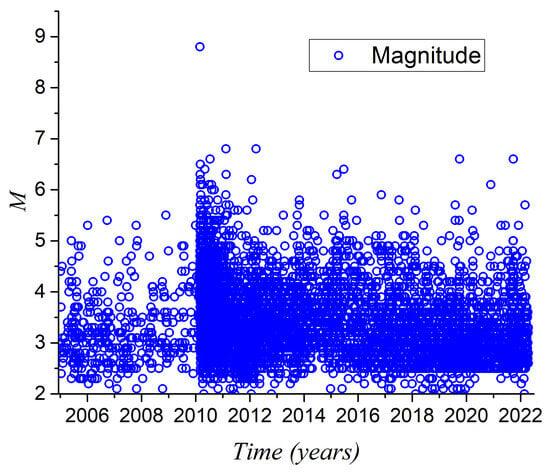
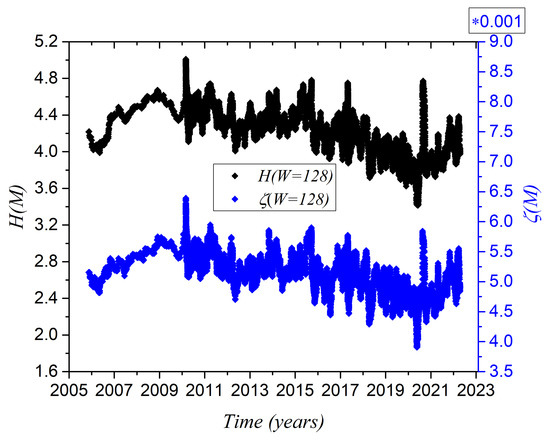
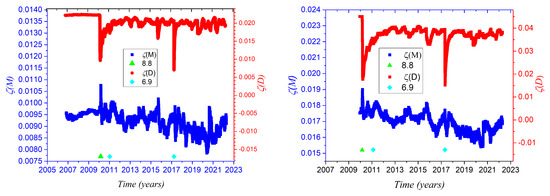
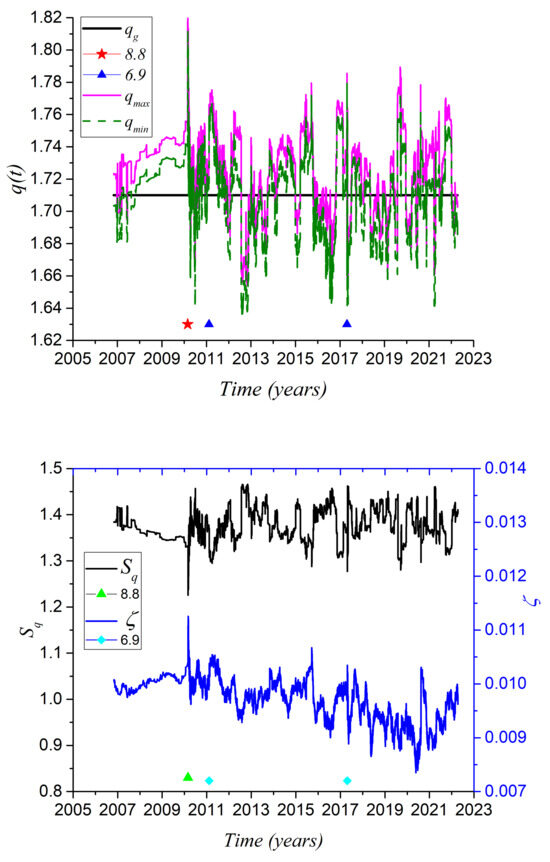
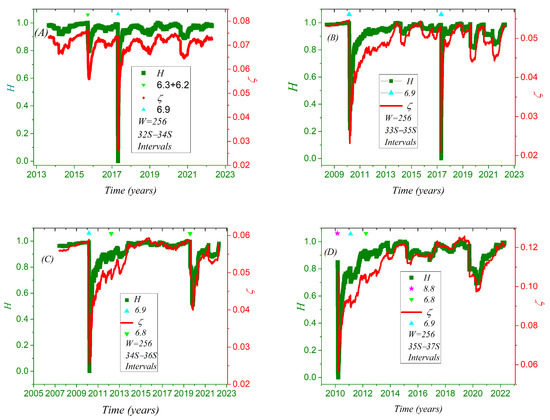
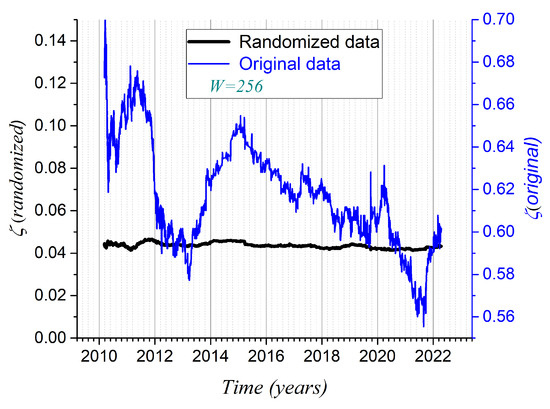
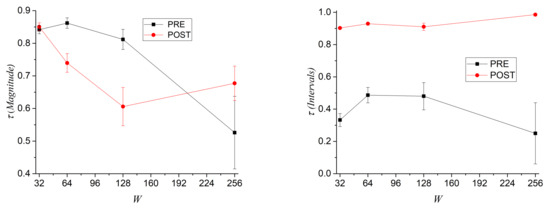
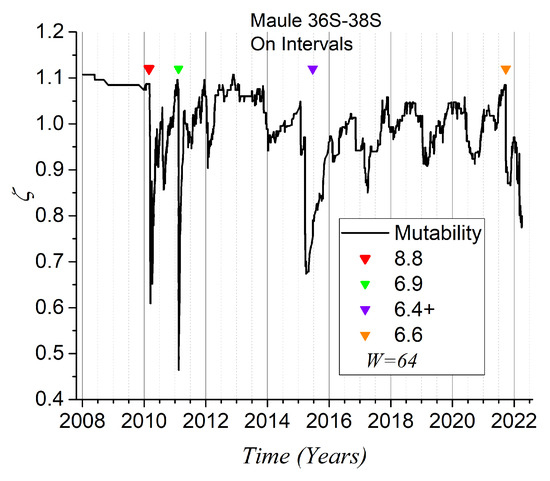
Three entropic functions are used to characterize the seismic activity prior and after the major 8.8 earthquake of Maule (Chile) dated on 27 February 2010. Shannon entropy, mutability, and Tsallis entropy are calculated globally on the seisms extracted from the catalog of the National Center of Seismology (Chile). Calculations are done both globally on the whole data and also dynamically on windows of different number of seisms after filtering data with a Gutenberg–Richter analysis. The data are time series based on two observables: seism magnitudes and inter-event intervals. It is found that the two entropies and mutability give similar descriptions on the different regimes present between 2005 and 2022. However, mutability can be calculated in a direct and straightforward way. It is also found that the results for inter-event intervals produce more contrast between periods than the corresponding ones for magnitudes. The region spanning six degrees in latitude is split in five overlapping subzones of two degrees each. This allows us to find the way the rupture takes place: from south to north, for about 400 km.
Full article
(This article belongs to the Section Information Theory, Probability and Statistics)
►▼
Show Figures

Figure 1
Journal Menu
► ▼ Journal Menu-
- Entropy Home
- Aims & Scope
- Editorial Board
- Reviewer Board
- Topical Advisory Panel
- Video Exhibition
- Instructions for Authors
- Special Issues
- Topics
- Sections & Collections
- Article Processing Charge
- Indexing & Archiving
- Editor’s Choice Articles
- Most Cited & Viewed
- Journal Statistics
- Journal History
- Journal Awards
- Society Collaborations
- Conferences
- Editorial Office
Journal Browser
► ▼ Journal Browser-
arrow_forward_ios
Forthcoming issue
arrow_forward_ios Current issue - Vol. 28 (2026)
- Vol. 27 (2025)
- Vol. 26 (2024)
- Vol. 25 (2023)
- Vol. 24 (2022)
- Vol. 23 (2021)
- Vol. 22 (2020)
- Vol. 21 (2019)
- Vol. 20 (2018)
- Vol. 19 (2017)
- Vol. 18 (2016)
- Vol. 17 (2015)
- Vol. 16 (2014)
- Vol. 15 (2013)
- Vol. 14 (2012)
- Vol. 13 (2011)
- Vol. 12 (2010)
- Vol. 11 (2009)
- Vol. 10 (2008)
- Vol. 9 (2007)
- Vol. 8 (2006)
- Vol. 7 (2005)
- Vol. 6 (2004)
- Vol. 5 (2003)
- Vol. 4 (2002)
- Vol. 3 (2001)
- Vol. 2 (2000)
- Vol. 1 (1999)
Highly Accessed Articles
Latest Books
E-Mail Alert
News
Topics
Topic in
Atmosphere, Earth, Encyclopedia, Entropy, Fractal Fract, MAKE, Meteorology
Revisiting Butterfly Effect, Multiscale Dynamics, and Predictability Using Ai-Enhanced Modeling Framework (AEMF) and Chaos Theory
Topic Editors: Bo-Wen Shen, Roger A. Pielke Sr., Xubin ZengDeadline: 31 July 2026
Topic in
Applied Sciences, Computers, Energies, Entropy, Mathematics
Numerical Methods and Computer Simulations in Energy Analysis, 3rd Edition
Topic Editors: Marcin Kamiński, Mateus MendesDeadline: 31 August 2026
Topic in
AI, Applied Sciences, Computers, Electronics, Entropy, Future Internet, Information, IoT, Sensors, Telecom
Advances in Sixth Generation and Beyond (6G&B)
Topic Editors: Luis Javier García Villalba, Ana Lucila Sandoval OrozcoDeadline: 31 October 2026
Topic in
Entropy, IJMS, International Journal of Topology, MAKE, Mathematics, Quantum Reports, Symmetry
Topological, Quantum, and Molecular Information Approaches to Computation and Intelligence
Topic Editors: Michel Planat, Edward A. RietmanDeadline: 31 December 2026
Conferences
30 October–3 November 2026
The 1st International Conference on Modern Mathematical Physics (ICMMP 2026)

Special Issues
Special Issue in
Entropy
Opportunities and Challenges of Network Science in the Age of AI
Guest Editors: Linyuan Lü, Qingchun MengDeadline: 15 July 2026
Special Issue in
Entropy
Quantum Error Correction and Fault-Tolerance
Guest Editors: Jianxin Chen, Ke Liu, Linghang KongDeadline: 15 July 2026
Special Issue in
Entropy
Microscale and Nanoscale Heat Transfer
Guest Editor: Xin XiaoDeadline: 15 July 2026
Special Issue in
Entropy
Opinion Dynamics: Applications and Fundamentals
Guest Editors: Carmela Bernardo, Piotr BródkaDeadline: 20 July 2026
Topical Collections
Topical Collection in
Entropy
Foundations of Statistical Mechanics
Collection Editor: Antonio M. Scarfone
Topical Collection in
Entropy
Feature Papers in Information Theory
Collection Editors: Raúl Alcaraz, Luca Faes, Leandro Pardo, Boris Ryabko