
- Article

12 Pages
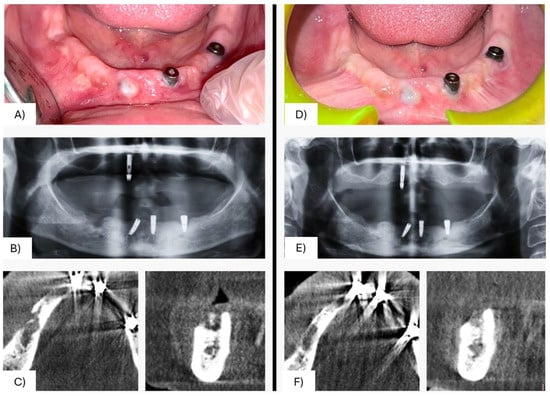
Purpose: Medication-Related Osteonecrosis of the Jaw (MRONJ) is the most severe and debilitating side effect experienced in the jaws of patients taking anti-resorptive and anti-angiogenic drugs for oncologic disease or osteoporosis. In the literature, the management of low-stage MRONJ is reported to be focused on infection control, pain reduction and preventing the progression and recurrence of necrotic bone formation, generally followed by surgical debridement. Low-Level Laser Therapy (LLLT) is a possible adjuvant procedure that also promotes the healing of hard and soft tissues in the oral cavity; its use is well-documented in MRONJ treatment mainly as an adjunctive treatment to surgery. The authors propose a therapeutic approach to early-stage MRONJ management in the preoperative workup during the drug suspension period, generally lasting at least 3 months, while waiting for the surgical procedure. Methods: The authors report three cases of MRONJ, classified according to the American Association of Oral and Maxillofacial Surgeons (AAOMS) staging system and managed accordingly with a scheduled drug-free period of at least 3 months depending on the drug type before re-evaluation and surgery, during which a non-surgical treatment consisting of medical therapy (ceftriaxone 1 g daily via i.m. for 7 days and metronidazole 250 mg twice a day per os, for 10 days, repeated after a drug-free period of 15 days for at least three cycles) and LLLT (continuous emission, 1 Watt, one session every 7 days—wavelength 980 nm—Lasotronix, Poland) was performed. Clinical follow-ups were closely performed, along with a radiographic evaluation of bone healing. Results: Three female patients underwent the same therapeutic protocol during the drug-free period while waiting for surgery; in all cases, complete healing occurred, and no surgery was performed. The first case is an osteoporotic patient in therapy with Alendronate and affected by a mandibular stage I lesion, in whom complete mucosal and bone healing was observed at the 6-month follow-up (the drug-free period was elongated as the clinical condition showed a progressive improvement in the lesion and symptoms). In the second case, a mandibular stage II lesion occurred with swelling and pus discharge as well; medical history was positive for rheumatoid arthritis, managed with subcutaneous Adalimumab therapy, which had been ongoing for several months prior to her referral. This patient developed an unexpected full resolution at 6-month follow-up. In the third case (stage I), the patient was edentulous, and her medical history revealed the recurrence of a stage III multiple myeloma treated with Daratumumab, Bortezomib and Zoledronate, complaints of a gingival lesion of the right maxilla characterized by pain, trouble swallowing and pus discharge lasting a 1-month duration. This patient also experienced spontaneous sequestration and expulsion of necrotic bone during therapy. No case underwent surgery. Conclusions: The evidence herein reported suggests that the combination of medical therapy along with LLLT during the drug-free period prior to surgery (usually lasting not less than 3 months) in MRONJ patients may reach an improvement in clinical condition and possibly a complete resolution at least in the early stage, thus avoiding the subsequent surgical procedure. Generally, in clinical practice, the variable and multifactorial etiology of MRONJ and the different clinical conditions and patient co-morbidities make each MRONJ case a unique clinical situation, regardless of disease stage. Thus, patients can benefit at least partially, but hopefully totally, from this non-invasive therapeutic approach during the pre-surgical wait-and-see period.
Lasers
23 October 2026