Skip Content
You are currently on the new version of our website. Access the old version .

Current Oncology

Current Oncology is an international, peer-reviewed, open access journal that since 1994 represents a multidisciplinary medium for clinical oncologists to report and review progress in the management of this disease, and published monthly online by MDPI (from Volume 28, Issue 1 - 2021). 
The Canadian Association of Medical Oncologists (CAMO), Canadian Association of Psychosocial Oncology (CAPO), Canadian Association of General Practitioners in Oncology (CAGPO), Cell Therapy Transplant Canada (CTTC) and others are affiliated with Current Oncology and their members receive discounts on the article processing charges.
Indexed in PubMed | Quartile Ranking JCR - Q2 (Oncology)

All Articles (5,247)

  • Case Report
  • Open Access

Primary Renal Neuroendocrine Tumor: Diagnostic Challenges in a Rare Entity—A Case Report

  • Raphaela D. Lewetag,
  • Katharina Kluthe and
  • Martina Hinterleitner
  • + 7 authors

Neuroendocrine neoplasms (NENs) represent a rare, heterogeneous group of malignancies. Within this tumor entity, primary renal neuroendocrine tumors (PRNETs) are exceedingly rare, with only 160 cases reported worldwide. Due to the absence of native neuroendocrine cells in the renal parenchyma, their cellular origin remains unclear. Clinical and diagnostic challenges are reflected by the low incidence, non-specific clinical presentation, resemblance to common renal neoplasms, and the need for specialized histopathological diagnostic examination. Here, we present the case of a 61-year-old female with an incidentally diagnosed left-sided PRNET in September 2024. This case highlights the diagnostic complexity of PRNET and, importantly, underscores its genomic heterogeneity. It demonstrates a lack of typical renal cell carcinoma (RCC) or common NEN-associated gene alterations, emphasizing their unique molecular landscape.

6 February 2026
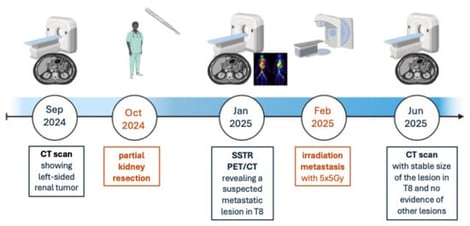
Medical course. Timeline of diagnosis and treatment of the patient with PRNET. Abbreviations: CT = Computed Tomography, Gy = Gray, SSTR PET/CT = Somatostatin Receptor Positron Emission Tomography/Computed Tomography, T8 = Thoracic Vertebra 8. This figure was created using BioRender.com.

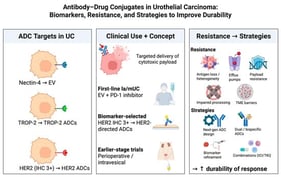
Antibody–drug conjugates (ADCs) have reshaped the treatment landscape of urothelial carcinoma (UC) by enabling selective delivery of highly potent cytotoxic agents to tumor cells. Enfortumab vedotin, sacituzumab govitecan, and HER2-directed ADCs have demonstrated meaningful clinical activity across metastatic and earlier disease settings, with enfortumab vedotin plus pembrolizumab now established as a first-line standard of care. Despite these advances, therapeutic responses remain heterogeneous, and resistance frequently limits durability. This review summarizes current knowledge on predictors of response and mechanisms of resistance to ADCs in UC, highlighting the roles of target antigen expression and heterogeneity, genomic alterations, payload sensitivity, drug efflux transporters, and tumor microenvironmental factors. We discuss emerging biomarkers beyond antigen abundance, patterns of cross-resistance and treatment sequencing, and evolving strategies to overcome resistance, including next-generation ADC design and rational combination therapies. Advancing biomarker-driven patient selection and addressing mechanisms of resistance will be critical to maximizing the durability and clinical impact of ADCs in urothelial carcinoma.

5 February 2026

Mechanism of action of antibody–drug conjugates (ADCs). Created in BioRender. Huang, J. (2026) https://BioRender.com/3r97xz4.

People Living with HIV Eligibility in Canadian Cancer Clinical Trials

  • Maria F. Comelles,
  • Santiago Perez-Patrigeon and
  • Annette E. Hay
  • + 5 authors

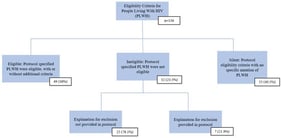
Background: People living with HIV (PLWH) have historically been excluded from cancer clinical trials, prompting the 2017 ASCO–Friends of Cancer Research recommendations to limit unjustified exclusions and promote equitable access. This study evaluated how Canadian Cancer Trials Group (CCTG) protocols align with these recommendations. Methods: We conducted a cross-sectional review of CCTG active trial protocols, abstracting HIV eligibility language and trial characteristics, and assessing associations using Chi-square tests. Results: Of 136 trials activated between 1999 and 2025, 81.6% involved solid tumors, 63.2% systemic therapy interventions, and 61.5% phase III designs. PLWH were included, not mentioned or excluded in 49/136 (36%), 55/136 (40.4%) and 32/136 (23.5%) respectively, with justification in 7/32 (21.9%). In multivariable analyses, exclusion was more likely in trials of immune checkpoint blockade therapy (p = 0.039) and those with industry support (p = 0.014). Adjusted models showed that both industry sponsorship and immune checkpoint blockade independently reduced HIV trial inclusion. Conclusions: Most CCTG-associated trials were inclusive or neutral toward PLWH; however, a proportion still excluded them, often without justification. This first national assessment evaluating adoption of ASCO Friends of Cancer Research–HIV guidance establishes a Canadian benchmark for equitable trial design and future research as both cancer and HIV therapies continue to evolve.

5 February 2026

People living with HIV eligibility in Canadian Cancer Trials Group protocols.

According to the WHO classification of tumors, neuroendocrine neoplasms (NENs) of the esophagus are esophageal “epithelial neoplasms with neuroendocrine differentiation, including well-differentiated neuroendocrine tumours (NETs), poorly differentiated neuroendocrine carcinomas (NECs), and mixed neuroendocrine–non-neuroendocrine neoplasms (MiNENs)—an umbrella category including mixed adenoneuroendocrine carcinoma (MANEC)” [...]

4 February 2026

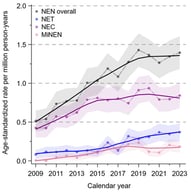
Incidence time trend of neuroendocrine neoplasms of the esophagus and esophagogastric junction in Germany, 2009–2023. Analyses include all German cancer registries; smooth solid trend lines by LOESS, color bands display 95% confidence intervals of the annual rates; dashed lines: unsmoothed trends; NEN: neuroendocrine neoplasm, NET: neuroendocrine tumor, NEC: neuroendocrine carcinoma, MiNEN: mixed neuroendocrine-non-neuroendocrine neoplasm, previously termed as mixed adenoneuroendocrine carcinoma (MANEC); the joinpoint regression analysis revealed a joinpoint for NEN overall and for NECs in 2016 (95%CI 2012–2020) and 2015 (95%CI 2013–2018) respectively.

News & Conferences

Issues

Open for Submission

Editor's Choice

Reprints of Collections

Evolution of Treatments of Prostate Cancer
Reprint

Evolution of Treatments of Prostate Cancer

From Biology to Current Advanced Technologies
Editors: Fernando Munoz
Recent Advances in Anticancer Strategies
Reprint

Recent Advances in Anticancer Strategies

Editors: Hassan Bousbaa, Zhiwei Hu

Get Alerted

Add your email address to receive forthcoming issues of this journal.

XFacebookLinkedIn
Curr. Oncol. - ISSN 1718-7729