

Journal Menu
► ▼ Journal Menu-
- Biomedicines Home
- Aims & Scope
- Editorial Board
- Reviewer Board
- Early Career Editorial Board
- Instructions for Authors
- Special Issues
- Topics
- Sections & Collections
- Article Processing Charge
- Indexing & Archiving
- Editor’s Choice Articles
- Most Cited & Viewed
- Journal Statistics
- Journal History
- Journal Awards
- Conferences
- Editorial Office
Journal Browser
► ▼ Journal BrowserNeed Help?
Announcements
15 May 2026
Nutrients 2026—Clinical Nutrition: From Research to Practice—Submission Deadline Extended

Conference: Nutrients 2026—Clinical Nutrition: From Research to Practice
Date: 22–24 October 2026, CEST, Barcelona, Spain
Website: https://sciforum.net/event/Nutrients2026
We cordially invite you to attend and submit an abstract to this event, organized by MDPI’s Nutrients (ISSN 2072-6643, Impact Factor: 5.8, CiteScore: 10.2). It will take place from 22 to 24 October 2026, CEST, at UAB Casa Convalescencia, Barcelona, Spain.
Conference Chairs:
- Prof. Dr. Maria Luz Fernandez, University of Connecticut, USA;
- Prof. Dr. Lluis Serra Majem, University of Las Palmas de Gran Canaria, Spain;
- Dr. Francisco Jose Perez Cano, University of Barcelona, Spain.
Topics of Interest:
S1. Personalized nutrition based on diet–gene interactions;
S2. Innovations in clinical nutrition;
S3. Novel dietary recommendations for specific chronic diseases;
S4. Understanding the role of microbiota in clinical practice;
S5. The potential role of AI in clinical practice;
S6. Lifestyle and prevention of chronic diseases.
Plenary Speaker Announcement:
We are honored to have Dr. Carlo La Vechia, from the University of Milan ("La Statale"), Italy, as Nutrients 2026 Plenary Speaker for Session 6: Lifestyle and prevention of chronic diseases.
Other renowned researchers from internationally prestigious universities and institutes, including Yale School of Public Health, University of Connecticut, Qatar University, Icahn Medical School of Mount Sinai, and many more, are contributing with us as keynote speakers and scientific committee members.
To view all contributing researchers, please click the following link:
https://sciforum.net/event/Nutrients2026?section=#event_chairs.
Academic Supporters:
Nutrients 2026 is currently supported by and partnered with esteemed universities, institutes, and societies.
To view all supporting organizations and partners, please click on the following link:
https://sciforum.net/event/Nutrients2026?section=#sup_org.
Important Dates:
Deadline for abstract submissions: 24 July 2026;
Notification of acceptance: 14 August 2026;
Deadline for early bird registration: 28 August 2026;
Deadline for covering author registration: 28 August 2026.
Guide for Authors
To submit your abstract, please click on the following link: https://sciforum.net/user/submission/create/1496.
To register for the event, please click on the following link: https://sciforum.net/event/Nutrients2026?section=#registration.
For details regarding abstract submission, poster and slide submission, and publication opportunities, you may refer to the “Instructions for Authors” section below: https://sciforum.net/event/Nutrients2026?section=#instructions.
For any enquiries regarding the event, please contact nutrients2026@mdpi.com.
We look forward to seeing you at Nutrients 2026.
23 July 2025
Nutrients 2026—Clinical Nutrition: From Research to Practice—Open for Submissions

Conference: Nutrients 2026—Clinical Nutrition: From Research to Practice
Date: 22–24 October 2026, CEST, Barcelona, Spain
Website: https://sciforum.net/event/Nutrients2026
We cordially invite you to attend this event organized by MDPI’s Nutrients (ISSN: 2072-6643, impact factor: 5.0, CiteScore: 9.1). It will take place on 22 to 24 October 2026, CEST, in Barcelona, Spain.
Conference Chairs:
- Prof. Dr. Maria Luz Fernandez, University of Connecticut, USA;
- Prof. Dr. Lluis Serra Majem, University of Las Palmas de Gran Canaria, Spain.
The Topics of Interest:
S1. Personalized nutrition based on diet–gene interactions;
S2. Innovations in clinical nutrition;
S3. Novel dietary recommendations for specific chronic diseases;
S4. Understanding the role of microbiota in clinical practice;
S5. The potential role of AI in clinical practice;
S6. Lifestyle and prevention of chronic diseases.
Important Dates
Deadline for abstract submissions: 24 June 2026;
Notification of acceptance: 20 July 2026;
Deadline for early bird registration: 24 July 2026;
Deadline for covering author registration: 24 July 2026.
Guide for Authors
To submit your abstract, please click on the following link: https://sciforum.net/user/submission/create/1496.
To register for the event, please click on the following link: https://sciforum.net/event/Nutrients2026?section=#registration.
For details regarding abstract submission, poster and slide submission, and publication opportunities, you may refer to the “Instructions for Authors” section below: https://sciforum.net/event/Nutrients2026?section=#instructions.
For any enquiries regarding the event, please contact nutrients2026@mdpi.com.
We look forward to seeing you at Nutrients 2026.
6 July 2026
Meet Us at the ESC Congress 2026, 28–31 August 2026, Munich, Germany
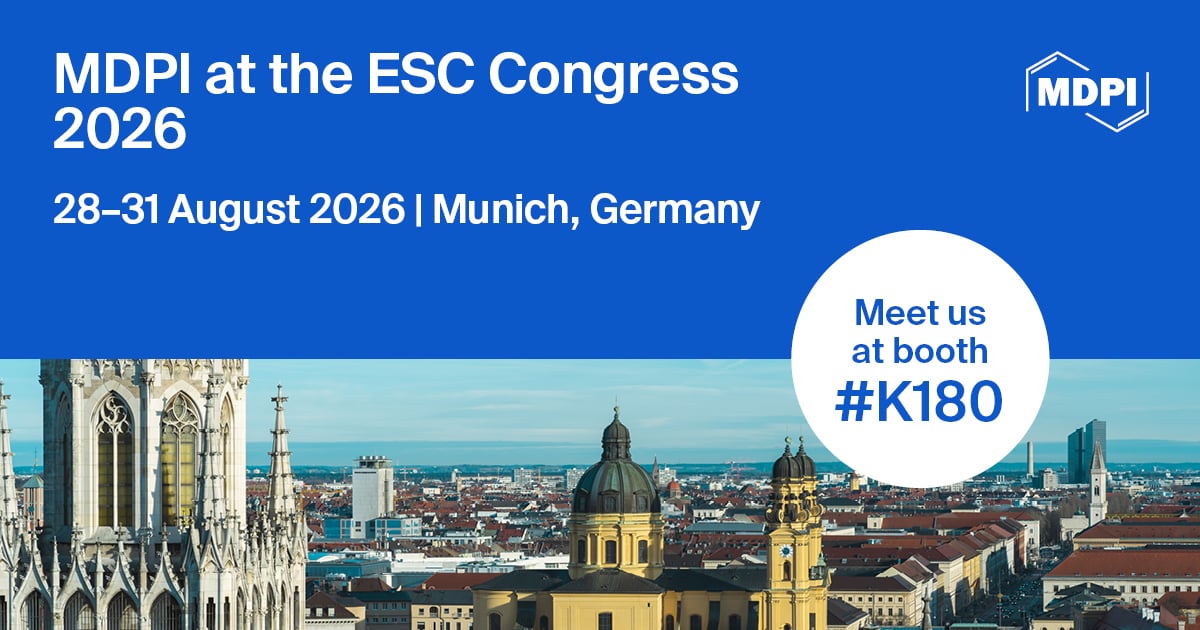
A range of MDPI journals will be attending International Congress Center Messe München in Munich, Germany from 28 to 31 August 2026.
Furthermore, 2026 marks MDPI’s third year of partnering with ESC Congress. Centered on the theme “Spotlight on Artificial Intelligence”, the conference explores AI as an auxiliary clinical tool that improves accuracy, workflow speed and patient safety. More than 32,000 delegates joined last year’s event, and MDPI secured 122 valuable contacts on-site.
The following open access journals will be represented at the ESC Congress 2026:
- JCDD;
- JCM;
- Antioxidants;
- Cardiogenetics;
- Cardiovascular Medicine;
- Hearts;
- IJERPH;
- Medicina;
- AI;
- Biomedicines;
- Clinics and Practice;
- EJIHPE;
- JPM;
- JVD;
- Tomography.
If you are planning to attend the above conference, please do not hesitate to drop by our booth and start a conversation with us; we look forward to meeting you in person and answering any questions that you may have. For more information about the conference, please visit https://www.escardio.org/Congresses-Events/ESC-Congress# or contact the Journal of Cardiovascular Development and Disease Editorial Office at jcdd@mdpi.com.
2 July 2026
MDPI INSIGHTS: The CEO’s Letter #36 – Basel Anniversary Summit, 2025 Impact Factors & CiteScores, CSAL Partnership & ncRNA2026

Welcome to the MDPI Insights: The CEO's Letter.
In these monthly letters, I will showcase two key aspects of our work at MDPI: our commitment to empowering researchers and our determination to facilitating open scientific exchange.
Opening Thoughts

Reflections from the MDPI 30th Anniversary Summit in Basel
On 4 June, we welcomed 30 Editors-in-Chief (EiCs) from across Europe, North America, and Asia-Pacific to A 66, MDPI’s former headquarters in Basel, for our 30th Anniversary Summit.
In the middle of the year that we celebrate 30 years since MDPI’s founding in 1996, the Summit provided an opportunity to reflect on our journey and recognize the academic community that has helped shape MDPI over the past three decades.
Designed as a small invitation-only event, the Summit brought together long-standing editorial leaders whose experience and perspectives continue to shape our journals. Throughout the day, one message emerged consistently: strong journals are built together, through partnership between publishers, editors, reviewers, and researchers.
MDPI at 30
During my opening presentation, I reflected on MDPI’s evolution from a single journal (Molecules) to a global Open Access (OA) publisher supporting more than 500 peer-reviewed journals, thousands of editors, and millions of researchers worldwide.
While our growth has been significant, our purpose remains unchanged: to help researchers communicate their work openly, efficiently, and responsibly.

I also took the opportunity to recognize that MDPI’s success has never been achieved alone. It has been built alongside our EiCs, Editorial Board Members, reviewers, authors, institutional partners, and colleagues around the world.
Agenda
The agenda combined moments for reflection, discussion, and direct engagement with our guests. The event was moderated by Damaris Critchlow (Editorial Engagement Manager, MDPI) and the program focused on dialogue rather than presentations alone, combining expert talks, panel discussions, and open forums covering:
- MDPI at 30: reflections and the road ahead
- Research integrity and editorial responsibility
- Partnerships and collaboration in publishing
- Editorial leadership and journal development
- Artificial intelligence and the future of scholarly publishing
|
|
|
|


|
|
|
|
|
|


Research Integrity and Editorial Responsibility
A key theme throughout the summit was the continued importance of research integrity and editorial independence. Tim Tait-Jamieson provided an overview of MDPI’s approach to publication ethics, emerging industry challenges, and ongoing investments in prevention, detection, and post-publication oversight. This was a key topic, as it created discussions on the evolving role of publishers, editors, and institutions in safeguarding the scientific record while maintaining transparency and trust.

Editors Panel: Building Journals and Communities
The EiC panel focused on the role of editorial leadership in developing journals and academic communities. Discussions highlighted the importance of active editorial boards, constructive peer review, community engagement, and maintaining quality as scholarly publishing continues to evolve. Thank you to our panelists: Dr. Ester Ballana (Viruses), Dr. Dilantha Fernando (Plants), and Dr. Ting Chi (Journal of Theoretical and Applied Electronic Commerce Research).

MDPI Panel: The Future of Scholarly Publishing
We also had a roundtable discussion on the future of scholarly publishing. Topics included:
- Artificial intelligence and its role in publishing workflows
- Technology and innovation in scholarly communication
- Research integrity and quality assurance
- The future of peer review
- Open Access and Open Science
- The evolving expectations of researchers, institutions, and funders
|
|
|
|


Recognizing Editorial Leadership
A highlight of the Summit was recognizing EiCs whose long-term leadership has helped strengthen both their journals and their research communities.
Through the Decade of Editorial Leadership Award and the Outstanding Editorial Impact Award, we celebrated individuals whose dedication has made a lasting contribution to scientific publishing.
|
|
|
|


As we look ahead to MDPI’s next chapter, partnerships with our editors and the wider academic community will remain central to everything we do.
Thank You
My sincere thanks to everyone who participated, and to the many colleagues whose planning and commitment made the Summit such a memorable event.
|
|
|
|
|


Impactful Research

2025 Impact Factors Released
June marked another important milestone, with the release of the 2025 Journal Citation Reports (JCR).
Learn more: https://www.mdpi.com/about/announcements/17055
This year:
- 330 MDPI journals received a Journal Impact Factor
- 254 journals increased their Impact Factor
- 29 journals received their first Journal Impact Factor
- 71% of ranked journals are now positioned in Q1 or Q2
- MDPI publications have now accumulated 25 million citations
While journal metrics should never be viewed as the sole measure of research quality, they remain an important indicator of journal visibility, community engagement, and scientific influence.
These achievements reflect the collective work of our Editors-in-Chief, Editorial Board Members, reviewers, authors, Publishing teams, and everyone involved in developing our journals.
Congratulations to every journal team that contributed to these results.
Inside MDPI

MDPI Journals Receive 2025 CiteScores
In June, Scopus published the 2025 CiteScores, providing another positive indication of the continued development of MDPI journals.
You can find more details about the 2025 CiteScore release here: Open Access, Broadly Recognized: 363 MDPI Journals Receive CiteScores for 2025
This year’s highlights include:
- 363 journals received a CiteScore
- 41 journals received a CiteScore for the first time
- 314 journals (86%) rank in Q1 or Q2
- 42 journals are now within the top 10% of their subject categories
Although no single metric defines journal quality, these results demonstrate the continued recognition and visibility of our journals across many research disciplines.
Particularly encouraging is the growing number of journals receiving their first CiteScore, reflecting years of sustained editorial development, successful indexing, and close collaboration between our Publishing teams, Indexing team, editors, and academic communities.
Thank you to everyone across MDPI whose daily work contributes to these achievements.
Coming Together for Science

Supporting Open Access in Switzerland: MDPI Renews Agreement with CSAL
I am pleased to share that MDPI has renewed its Open Access (OA) publishing agreement with the Consortium of Swiss Academic Libraries (CSAL), extending support for researchers across 24 Swiss institutions through our Institutional Open Access Program (IOAP).
As a Swiss-founded publisher, we are particularly proud to continue supporting Switzerland’s research community through long-term institutional partnerships that improve accessibility to Open Access publishing.
The renewal also coincides with the release of our 2025 Switzerland Country Report, highlighting continued national leadership in Open Science. Between 2021 and 2025, Switzerland maintained an OA publication rate of approximately 65–70%, while more than 14,000 Switzerland-affiliated papers have been published with MDPI since 2021.
“We are particularly proud to continue supporting Switzerland’s research community”
The announcement also received coverage across several leading international publishing and research news platforms, including STM, Research Information, EurekAlert!, Bytes Europe, and EdTech Innovation Hub, helping increase visibility for both the partnership and the broader discussion around OA.
My thanks to our IOAP, External Affairs, Communications, and Publishing teams, whose work continues to strengthen relationships with institutions around the world.
Closing Thoughts

Highlights from MDPI Conference ncRNA2026 in Leuven, Belgium (24–26 June)
From 24–26 June, MDPI hosted the ncRNA2026: From Molecular Mechanisms to Clinical Impact Conference in Leuven, Belgium.
The conference welcomed 125 participants from 22 countries and territories, providing an international forum for exchange across molecular biology, medicine, biotechnology, artificial intelligence, and translational research.

Bringing the Global Research Community Together
Over three days, participants exchanged ideas through:
- 4 Chair Talks
- 8 Invited Lectures
- 29 Selected Oral Presentations
- 51 Poster Presentations
Sessions covered topics including molecular biology, clinical applications, artificial intelligence, and emerging non-coding RNA research, creating a dynamic forum for scientific exchange.
|
|
|


Beyond the scientific program, the conference created opportunities for researchers, journal teams, sponsors, and academic partners to exchange ideas, build existing relationships, and create new collaborations across the global research community.
|
|
|


Our thanks to Conference Chairs Professors George Calin, Manuela Ferracin, Eleonora Leucci, and Isidore Rigoutsos, together with the invited speakers, for delivering an outstanding scientific program.
|
|
|


“By creating opportunities for researchers to exchange ideas, we continue to support the advancement of research worldwide”
Recognizing the Team
The conference also took place during an exceptional heatwave in Belgium, with temperatures reaching 38°C. Thanks to the excellent planning by the Conference team and collaboration with the venue, additional cooling measures and attendee support ensured that the event ran safely and successfully despite challenging conditions.
|
|
|
|


It is often these behind-the-scenes efforts that make the greatest difference to the participant experience. Thank you to everyone involved for your professionalism, flexibility, and commitment throughout the event.
Thank You
My sincere thanks to the Conference Chairs, invited speakers, sponsors, Editorial Office, Conference team, Marketing colleagues, volunteers, and everyone who contributed to making ncRNA2026 such a success.

As MDPI celebrates its 30th anniversary, events such as ncRNA2026 remind us that our contribution extends well beyond publishing journals. By creating opportunities for researchers to exchange ideas, establish collaborations, and build scientific communities, we continue to support the advancement of research worldwide.
Thank you for your continued dedication throughout another busy month, and I wish you all an enjoyable July!
Chief Executive Officer
MDPI AG
29 June 2026
Prof. Dr. Ming Ma Appointed Section Editor-in-Chief of “Biomedical Engineering and Materials” Section in Biomedicines

We are pleased to announce that Prof. Dr. Ming Ma has been appointed Section Editor-in-Chief of the “Biomedical Engineering and Materials” Section in Biomedicines (ISSN 2227-9059).
Name: Prof. Dr. Ming Ma
Homepage: https://www.sic.cas.cn/sourcedb_sic_cas/zw/rck/202312/t20231211_6911679.html
Affiliation: Shanghai Institute of Ceramics, Chinese Academy of Sciences, Shanghai 200050, China
Research interests: microfluidic synthesis; nanomedicine; high-throughput experimentation technologies; drug delivery; stem cell therapy
Prof. Dr. Ming Ma received his PhD degree from the University of Chinese Academy of Sciences in 2013. He is currently a full professor at the Shanghai Institute of Ceramics, CAS. His research interests include micro-/nano-scale functional particles for biomedical applications, as well as microfluidic synthesis and high-throughput experimental techniques. He has published approximately 80 peer-reviewed papers in prominent international journals. Additionally, as an Editorial Board Member of Biomedicines, he has been actively involved in the manuscript review process for over three years. Recently, he has also participated in the construction of the Biomedical Materials Data Resource Hub of China.
The following is a short Q&A with Prof. Dr. Ming Ma, who shared his vision for the journal with us as well as his views on the current state of the field:
1. What about the journal made you want to take on the role of Section Editor-in-Chief?
Biomedicines is a highly international platform that brings together research achievements of scientists from around the world. The publishers and editors have a clear vision to significantly improve the academic quality of manuscripts and rapidly disseminate the latest high-quality research through Biomedicines in the future. I am delighted to work with them to enhance the journal's quality and visibility.
2. What is your vision for the journal?
In the future, the Editorial Board of the “Biomedical Engineering and Materials” Section of Biomedicines will place particular emphasis on data authenticity, result completeness, reproducibility, and the innovation and scientific value of research findings when evaluating submissions. By raising the manuscript selection standards, I believe that within one to two years, Biomedicines will become a highly reputable and internationally recognized academic journal that researchers can trust.
3. What do you think of the development of open access in the publishing field?
Open access promotes rapid global sharing of scientific knowledge and enhances research accessibility for all scholars. However, article processing charges should be reasonable to minimize the financial burden on authors.
4. What does the future of this field of research look like?
Biomedical engineering and materials is an important scientific field that is closely related to human health and survival. In the future, this field will continue to produce numerous major theoretical and technological breakthroughs, thereby benefiting all of humanity.
5. Do you have any suggestions for young researchers in this field?
We encourage early-career scientists to pursue creative, challenging research that promotes the healthy development of the field. Even if the performance of the developed biomedical materials at the time of publication does not fully meet all the high-level expectations originally set, such work is still welcome in our journal as long as it offers significant reference value and inspiration from a new perspective.
29 June 2026
Biomedicines Receives an Updated Impact Factor of 4.5 and an Increased CiteScore of 7.8

We are pleased to share that Biomedicines (ISSN 2227-9059) was awarded an increased Impact Factor of 4.5 in the 2025 Journal Citation Reports™ released by Clarivate™ in June 2026.
Additionally, according to data released by Scopus (Elsevier), Biomedicines received an increased CiteScore of 7.8, an increase of 14.7% compared with the 2024 metric.
Biomedicines’ CiteScore ranks as follows:
- Q1 (57 out of 466) in the “Medicine (miscellaneous)” category;
- Q1 (39 out of 223) in the “General Biochemistry, Genetics and Molecular Biology” category.
 |
|

The support and dedication of all the editors, reviewers, authors, and readers are an integral part of the journal’s performance. We would like to take this opportunity to thank all of you who have contributed to the journal.
Biomedicines Editorial Office
25 June 2026
Interview with Dr. Brian Reed—Biomedicines Exceptional Reviewer

We are pleased to announce that Dr. Brian Reed has been recognized as one of the Exceptional Reviewers of Biomedicines (ISSN 2227-9059).
This program was established to recognize and honor scholars who have consistently provided outstanding review reports for our journal. Dedicated to advancing rigorous research and encouraging the exchange of knowledge, Biomedicines acknowledges the vital contributions of our reviewers in upholding the quality, credibility, and integrity of the articles we publish.
Dr. Brian Reed is a tenure-track assistant professor of chemistry and biology at the Department of Biology, Chemistry, Earth & Environmental Sciences at Molloy University on Long Island, NY. Prior to this, he spent over two decades at Rockefeller University in the Laboratory of the Biology of Addictive Diseases, led by the late Dr. Mary Jeanne Kreek. He initially joined her lab as a postdoctoral fellow from 2001 to 2006—holding a co-appointment in Dr. Brian Chait’s Laboratory of Mass Spectrometry and Gaseous Ion Chemistry—and subsequently continued his work there as a senior scientist, focusing on the role of the endogenous opioid system in substance use disorders.
Read our interview with Dr. Reed below:
1. Can you share your current research direction and latest progress?
My current research at Molloy University investigates the endogenous opioid system using diverse cell culture disease models. One of my primary projects focuses on elucidating the mechanisms behind kappa opioid receptor agonist-induced remyelination. Additionally, in an exciting new collaboration with my Molloy colleague, Dr. Jodi Evans, we are investigating the co-regulation of the melanocortin and opioid systems in cartilage preservation using cell culture models of osteoarthritis.
2. Could you please share your feelings about winning the award? What does this award mean for your academic career?
As I approach the tenure application process, having this award for my portfolio is fantastic. Peer review is a vital cornerstone of the scientific community, yet it is traditionally an anonymous and thankless task. Simply logging a review doesn't capture whether the feedback was thorough or constructive. Because this work is hidden, it can be difficult to properly document for tenure evaluation. This award validates my rigorous approach to peer review and provides tangible, high-profile evidence of my service to the field.
3. What role do you think reviewers play in the process of paper publication?
Reviewers are critical not just for vetting manuscripts, but for elevating them. While scientific rigor occasionally requires us to recommend rejection, I believe our most valuable contribution is helping authors refine their work. The iterative review process—where exciting findings are shaped into an even clearer, more impactful communication for the scientific community—is easily the most rewarding aspect of peer review.
4. How do you balance the comprehensiveness and efficiency of the review process? Can you share some specific methods or principles for reviewing?
I split my review into two distinct phases to balance depth and speed. First, I print the manuscript and read it in a single sitting—often during my morning train commute—marking up the margins and circling references that require a closer look. Second, back at my computer with reference databases open, I systematically address my margin notes, verify literature data, and draft my formal comments. Going through the paper twice in this manner ensures I don’t miss macro-level narrative flaws or micro-level technical issues.
5. In your opinion, what key qualities should an excellent manuscript have? From what perspectives will you help authors improve the quality of their papers?
An excellent manuscript must be well-written and clearly contextualize its findings within the current state of the field. Technically, it requires robust, highly detailed methodology and meticulously organized figures that allow readers to easily discern relevant details. Finally, the literature cited must be up-to-date and relevant. When reviewing, I actively provide feedback across all of these dimensions to help authors maximize their paper’s clarity and impact.
6. How do you hope that journals and publishers can further support the work of reviewers?
I was pleasantly surprised by this recognition. I think more publishers should adopt reviewer awards to honor this critical service. Beyond recognition, publishers should continue to balance rapid publication timelines with a realistic appreciation for reviewers' busy schedules. Lastly, offering article processing charge (APC) waivers or discounts to active reviewers is a highly practical and appreciated way to reciprocate our time and effort.
7. Please briefly describe your experience with our services and journals so far?
I have had an excellent experience with MDPI as both an author and a reviewer. The editorial process is highly efficient, turnaround times are swift, and communication with the editorial staff is always professional and pleasant.
25 June 2026
Interview with Prof. Dr. Martin Christian Michel—Biomedicines Exceptional Reviewer

We are pleased to announce that Prof. Dr. Martin Christian Michel has been recognized as one of the Exceptional Reviewers of Biomedicines (ISSN 2227-9059).
This program was established to recognize and honor scholars who have consistently provided outstanding review reports for our journal. Dedicated to advancing rigorous research and encouraging the exchange of knowledge, Biomedicines acknowledges the vital contributions of our reviewers in upholding the quality, credibility, and integrity of the articles we publish.
Prof. Dr. Martin Christian Michel is a physician-scientist focusing on the experimental and clinical pharmacology of the urogenital and cardiovascular systems.
Read our interview with Prof. Dr. Michel below:
1. Can you share your current research direction and latest progress?
I’m studying the effects of diabetes and anti-diabetic treatments on the urinary bladder and heart.
2. What role do you think reviewers play in the process of paper publication?
Reviewers are key to the quality and integrity of scientific publishing. This is particularly important as we unfortunately see an increasing number of fake papers generated by large language models. I’m happy to see that some publishers reward reviewer activity, e.g., with credits toward publishing charges.
3. How do you balance the comprehensiveness and efficiency of review? Can you share some specific methods or principles for reviewing?
I view the role of a reviewer as someone who advises the journal editor on the suitability of a manuscript based on its quality. However, it is equally important to assist authors in generating the best possible manuscript based on their data. This can lead to a large number of comments (20 or more) in some cases. Importantly, reviewer comments should always be constructive and not impose a personal opinion on others.
4. In your opinion, what key qualities should an excellent manuscript have? From what perspectives will you help authors improve the quality of their papers?
Evidence from the past 15 years shows that at least half of all reported research findings in the experimental life sciences cannot be reproduced. A good manuscript should address a relevant question by providing robust data related to a clearly defined research question. Robust data are based on pre-specified (preferably even pre-registered) study protocols involving randomization and blinding as far as feasible.
5. How do you hope that journals and publishers can further support reviewers’ work?
I consider checklists for authors a useful tool to facilitate the work of reviewers. This should not be based on boxes to tick (“did you”) but rather on asking specifically on which page of a manuscript certain things were addressed. Good examples of this are the checklists from the ARRIVE 2.0 guidelines and journals such as Diabetologia.
6. Please briefly describe your experience with our services and journals so far.
A major strength of Biomedicines and other MDPI journals from the authors' point of view is a fast turnaround. However, this can impose tight deadlines for reviewers. This is fine when this is clearly communicated at the time of primary submission. It can create problems for reviewers for revisions as they arrive at unpredictable moments when a reviewer may have a very full agenda.
18 June 2026
Biomedicines | “Drug Discovery, Development and Delivery” Section Information Update
To further develop Biomedicines (ISSN 2227-9059), under the guidance of our Section Editor-in-Chief, Prof. Dr. Jun Lu, the journal has updated and revised the scope of its Section “Drug Discovery, Development and Delivery”. The original Section Information and the updated version are listed below.
Section Information (new version):
"This Section publishes original and innovative scientific papers, as well as review papers. It is organized into topics mainly covering drug discovery, drug design, basic and clinical pharmacology, formulation and delivery, toxicology, and natural products research. Studies on substances obtained from natural sources, as well as their synthetic derivatives, are fully within the Section’s scope, provided that the compounds are chemically well defined. For research involving complex natural product mixtures, a suitable level of analytical characterization—such as through HPLC, MS, LC–MS, HPLC–MS, or NMR—is expected. In addition to the identification, chemistry, or analytical studies, manuscripts should also include in vitro and/or in vivo testing. Moreover, authors are encouraged to explore and discuss the cellular or molecular mechanisms of the natural compounds or characterized extracts."
Section Information (old version):
"This Section publishes original and innovative scientific papers, as well as comprehensive review papers. It is organized into topics mainly covering drug discovery, drug design, basic and clinical pharmacology, formulation and delivery, and toxicology."
For more detailed information, please visit the following link: https://www.mdpi.com/journal/biomedicines/sections/Drug_Discovery.
Biomedicines Editorial Office
17 June 2026
Media Partnership Between Biomedicines and 19th Annual Meeting of the Korean Society of Medical Oncology (KSMO 2026), 2–4 September 2026, Seoul, Republic of Korea

Biomedicines (ISSN 2227-9059, IF 3.9) is proud to announce its role as a media partner of the multi-event KSMO 2026. This sponsorship highlights the journal’s commitment to supporting the academic community and engaging in critical industry discussions with the public.
Date: 2–4 September 2026
Location: Seoul, Republic of Korea
Website: https://www.ksmoconference.org
The Korean Society of Medical Oncology (KSMO) has been committed to advancing clinical oncology and improving patient care through multidisciplinary collaboration. As one of the leading academic societies in Asia, the KSMO continues to foster excellence in cancer research, education, and professional development. KSMO 2026 will provide a stimulating forum to share scientific breakthroughs and practical clinical insights. Under the theme “Advancing Cancer Care, Restoring Hope and Lives”, the program is designed to highlight the latest evidence and innovations, helping bridge research and practice to improve patient outcomes.
About the media partner: Biomedicines
Biomedicines is an open access journal devoted to all aspects of research on human health and disease, the discovery and characterization of new therapeutic targets, therapeutic strategies, and research on naturally derived biomedicines. Topics include pathogenesis mechanisms of diseases; translational medical research; clinical studies and applications; and novel targets in various therapeutic areas, such as oncology, cardiovascular, vascular, hematology, neurology, etc. As the media partner of KSMO 2026, Biomedicines will feature conference highlights, research spotlights, and author opportunities for attendees and the oncology research community within the broader field of biomedicines.
We look forward to seeing you at KSMO 2026!
