



Next Issue
Volume 12, August
Previous Issue
Volume 12, June


Fermentation, Volume 12, Issue 7 (July 2026) – 42 articles
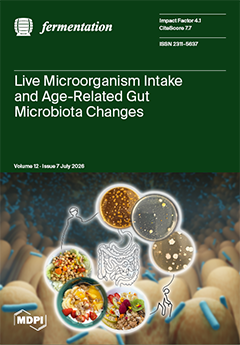
Cover Story (view full-size image): Live microorganisms represent a relevant component of the human diet, with potential implications for host physiology. In this study, the intake of live microorganisms was assessed across different stages of adulthood and associated with microbiota composition and activity, as well as biochemical health markers. Fermented dairy products, particularly yogurt, were identified as the principal food source of bacterial live microorganisms, accounting for the higher intake observed in older adults. The associations between dietary live microorganisms, specific gut microbial taxa, short-chain fatty acid production, and biochemical markers exhibited clear age-dependent patterns, supporting the hypothesis that the habitual consumption of live microorganisms may contribute to the modulation of gut microbiota functionality and host health during aging. View this paper
  • Issues are regarded as officially published after their release is announced to the table of contents alert mailing list.
  • You may sign up for e-mail alerts to receive table of contents of newly released issues.
  • PDF is the official format for papers published in both, html and pdf forms. To view the papers in pdf format, click on the "PDF Full-text" link, and use the free Adobe Reader to open them.
Order results
Result details
Section
Select all
Export citation of selected articles as:
21 pages, 4086 KB  
Article
Effects of Germinated Glutinous Rice Malt Substitution on the Properties of Non-Alcoholic Beer Fermented with Saccharomyces boulardii
by Jetsada Khamfu, Jeeranan Situtha, Phimphisa Thammawong, Shankar Neupane, Anh Dao Trinh and Nattaya Konsue
Fermentation 2026, 12(7), 340; https://doi.org/10.3390/fermentation12070340 - 20 Jul 2026
Viewed by 479
Abstract
The rising consumer demand for functional, low-alcohol beverages necessitates innovative brewing strategies. This study evaluated germinated Thai glutinous rice (Oryza sativa var. glutinosa, cv. Kheiw Ngu 8974) as a novel malt adjunct for non-alcoholic beer fermented with the probiotic yeast Saccharomyces [...] Read more.
The rising consumer demand for functional, low-alcohol beverages necessitates innovative brewing strategies. This study evaluated germinated Thai glutinous rice (Oryza sativa var. glutinosa, cv. Kheiw Ngu 8974) as a novel malt adjunct for non-alcoholic beer fermented with the probiotic yeast Saccharomyces boulardii. Formulations with germinated glutinous rice to barley malt ratios of 0:100, 40:60, 60:40 and 80:20, designated as R0, R40, R60, and R80, respectively, were systematically analyzed for their fermentation properties, physicochemical properties, bioactive enrichment, volatile compounds, and sensory attributes. Results showed that the high substitution levels in glutinous rice restricted enzymatic saccharification, successfully limiting ethanol accumulation in R60 and R80 to below the 0.5% v/v regulatory threshold. The final ethanol values for R0, R40, R60, and R80 were 1.34 ± 0.04%, 0.65 ± 0.04%, 0.4 ± 0.04%, and 0.13 ± 0.04% v/v, respectively. Although the control formulation (R0) exhibited the highest initial total phenolic content (TPC), antioxidant capacity, and gamma-aminobutyric acid (GABA) levels, S. boulardii fermentation significantly enriched these functional compounds across all adjunct-substituted formulations. Furthermore, gas chromatography–mass spectrometry (HS-SPME-GC/MS) analysis revealed a distinct shift in the volatile profile, with increasing levels of rice substitution resulting in a reduction in fermentation-derived aliphatic esters and a greater relative abundance of hop-derived terpenes and terpenoids. Sensory evaluations indicated that while extreme substitution (R80) negatively impacted color and aroma balance, the 40% and 60% formulations maintained highly acceptable organoleptic profiles. The overall liking scores for R0, R40, R60, R80, and the commercial product were 6.71 ± 1.66, 5.42 ± 1.65, 5.68 ± 1.80, 5.03 ± 1.92, and 6.45 ± 1.65, respectively. In conclusion, integrating a 60% substitution of germinated Thai glutinous rice provides the most balanced formulation among those tested, producing compliant, sensory-acceptable non-alcoholic beer with enhanced bioactive functionality. Full article
Show Figures

Graphical abstract

23 pages, 23786 KB  
Article
Fermentation with Aspergillus cristatus Changed the Volatile Compounds and Metabolites of Fu-Brick Tea: Insights from Aroma Profiling and Widely Targeted Metabolomics
by Shuzhen Li, Qi Wang, Xiaoping Du, Bo He and Jun Zhang
Fermentation 2026, 12(7), 339; https://doi.org/10.3390/fermentation12070339 - 16 Jul 2026
Viewed by 462
Abstract
To investigate the influence of single fungi fermentation on dark tea, Aspergillus chevalieri and Aspergillus cristatus were isolated from Fu-brick tea in this study. Both strains were used for solid-state fermentation of Fu-brick tea to analyze volatile compounds, while A. cristatus was used [...] Read more.
To investigate the influence of single fungi fermentation on dark tea, Aspergillus chevalieri and Aspergillus cristatus were isolated from Fu-brick tea in this study. Both strains were used for solid-state fermentation of Fu-brick tea to analyze volatile compounds, while A. cristatus was used for liquid-state fermentation to analyze metabolite changes. Solid-state fermentation with Aspergillus chevalieri and Aspergillus cristatus yielded 56 and 63 volatile compounds, respectively, with alcohols, aldehydes, and ketones as the predominant classes. Notably, A. cristatus biotransformation resulted in the highest total volatile content, primarily characterized by trans-linalool oxide, cis-linalool oxide, and dihydroactinidiolide. Conversely, Aspergillus chevalieri fermentation produced fewer aroma compounds, mainly trans-linalool oxide and dihydroactinidiolide. Widely targeted metabolomics further revealed that flavonoids, amino acids and derivatives, phenolic acids, lipids, and tannins were significantly reduced in the liquid-state-fermented tea leaves, whereas most differential metabolites accumulated in the tea infusions. Flavonoid biosynthesis and amino acid metabolism were identified as the most significantly enriched pathways. These findings elucidate strain-dependent divergence in aroma composition and non-volatile metabolite transformation, offering a scientific basis for targeted strain selection and process optimization in the development of industrial fermented tea products. Full article
(This article belongs to the Section Fermentation for Food and Beverages)
Show Figures

Graphical abstract

9 pages, 648 KB  
Communication
Artificial Botrytization Improves Fermentation Performance of Persimmon Wine
by Jun-Su Choi, Su-Hyun Lee and Sae-Byuk Lee
Fermentation 2026, 12(7), 338; https://doi.org/10.3390/fermentation12070338 - 15 Jul 2026
Viewed by 388
Abstract
While sucrose chaptalization is commonly used in persimmon wine production to achieve adequate fermentable sugar levels, the fermentation suitability of a persimmon substrate modified by artificial botrytization has not been adequately investigated. In this study, persimmon must obtained from Botrytis cinerea-treated fruit [...] Read more.
While sucrose chaptalization is commonly used in persimmon wine production to achieve adequate fermentable sugar levels, the fermentation suitability of a persimmon substrate modified by artificial botrytization has not been adequately investigated. In this study, persimmon must obtained from Botrytis cinerea-treated fruit and a sucrose-chaptalized control were fermented using the same yeast (Saccharomyces cerevisiae Fermivin) and temperature (20 °C) conditions. The noble rot-treated group displayed gradual changes in appearance during storage and faster alcohol production and reducing sugar depletion during fermentation compared with the control. Despite lower initial soluble solids (21.50 °Brix) compared with the control (23.00 °Brix), the noble rot-treated group achieved a higher final alcohol content (11.60% vs. 8.80%) within a shorter fermentation period (9 vs. 16 days). These findings suggest that artificial botrytization may serve as a distinct pre-fermentation treatment in persimmon wine production compared with simple sucrose chaptalization. However, further studies are needed to elucidate the compositional and metabolic factors underlying these differences. Full article
Show Figures

Figure 1

14 pages, 265 KB  
Article
In Vitro Evaluation of Cardoon as a Replacement for Soybean and Sunflower Seeds in Ruminant Diets: Effects on Ruminal Fermentation and Methane Production
by José María Arroyo, Manel Riahi, Javier González and María Dolores Carro
Fermentation 2026, 12(7), 337; https://doi.org/10.3390/fermentation12070337 - 15 Jul 2026
Viewed by 292
Abstract
Including oilseeds in the diet is a widely studied strategy to reduce CH4 emissions in ruminants, but the effects on ruminal fermentation depend on oilseed composition. This study compared the effects of including three oilseeds (soybean, sunflower and cardoon) differing in fiber [...] Read more.
Including oilseeds in the diet is a widely studied strategy to reduce CH4 emissions in ruminants, but the effects on ruminal fermentation depend on oilseed composition. This study compared the effects of including three oilseeds (soybean, sunflower and cardoon) differing in fiber content and lignification on in vitro ruminal fermentation and CH4 production of dairy and fattening diets. Oilseeds were included to achieve two dietary lipid levels: low (3.5–4.0%) and high (5.5–6.0%). Diets were incubated in vitro with buffered ruminal fluid from sheep for 17 h. The high lipid level reduced microbial activity only in the fattening diet, particularly after 6 h of incubation, although this effect largely disappeared by 17 h. The most consistent differences among oilseeds were observed in NH3-N concentrations, with soybean yielding lower values than sunflower and cardoon, suggesting reduced protein degradation due to soybean processing. In the fattening diet, cardoon at the low lipid level reduced CH4 production compared with soybean and sunflower (44.9, 50.5 and 52.3 mL/g incubated dry matter) but also reduced total volatile fatty acid production and fermented organic matter, whereas no differences were detected for dairy diets. At equal lipid supply, sunflower and cardoon can replace soybean in dairy diets without negatively affecting ruminal fermentation, whereas cardoon may reduce CH4 production and fermentation in fattening diets at low lipid levels. Full article
(This article belongs to the Section Animal and Feed Fermentation)
33 pages, 3131 KB  
Review
Bacterial Cellulose Production: Decoupling Yield and Structural Quality in Refined and Waste-Derived Carbon Sources
by Mariama Alidu and Symone L. M. Alexander
Fermentation 2026, 12(7), 336; https://doi.org/10.3390/fermentation12070336 - 15 Jul 2026
Viewed by 569
Abstract
Bacterial cellulose (BC) is a high-purity biopolymer with significant potential for sustainable material applications. However, its production remains limited by the metabolic behavior and compositional complexity of available carbon substrates. Simple sugars such as fructose, glucose, and sucrose support BC synthesis but differ [...] Read more.
Bacterial cellulose (BC) is a high-purity biopolymer with significant potential for sustainable material applications. However, its production remains limited by the metabolic behavior and compositional complexity of available carbon substrates. Simple sugars such as fructose, glucose, and sucrose support BC synthesis but differ in their metabolic pathways and associated byproduct formation, which can influence medium pH and cellulose biosynthesis. Across refined substrates, fructose generally outperforms glucose, producing the most favorable balance between productivity and structure. Reported fructose-based yields range from 1.55 to 6.29 g/L depending on the composition. In media containing hexoses, such as fructose, and three-carbon compounds, such as glycerol and pyruvate, biosynthesis proceeds via the pentose phosphate pathway. Additionally, pyruvate can be further metabolized via gluconeogenesis coupled with the tricarboxylic acid cycle, producing more BC precursors. In contrast, glucose-based yields are limited primarily by oxidation to gluconic acid, and sucrose often shows slower or lower initial production due to delayed metabolism, depending on the medium’s composition. Interestingly, structural trends showed that yield and structural quality are not always coupled. Fructose-based BC can reach around 90% to 92% crystallinity index (CrI) and is associated with lower porosity and larger nanoribbon networks, while sucrose-based BC can reach up to a 95.2% CrI despite slower initial production. Dual sugar systems further reveal differences in metabolism. Glucose-containing carbon sources are often suppressive because glucose dominates metabolism and acidification, whereas fructose-containing systems more often show synergistic behavior and support higher yields. Structural outcomes in these systems depend more on biosynthesis rates and strain-specific behavior than on carbon sources only. Additionally, low-cost substrates derived from agro-industrial residues and lignocellulosic biomass offer economically viable feedstock but introduce variability due to inhibitory compounds such as organic acids and phenolics. This review examines how sugar type and substrate complexity affect BC production and its structural properties in acetic acid bacteria, particularly the genera Acetobacter, Gluconacetobacter, and Komagataeibacter, with emphasis on the relationship between BC yield and CrI. Our analysis of the reported fermentation and characterization data in this review reveals a recurring paradox between yield and structural quality, in which substrates that promote higher BC yields do not always produce materials with superior structural properties such as crystallinity or degree of polymerization. Comparative examination of the literature revealed that inhibitory compounds such as phenolic compounds may act as structural modulators rather than simple yield suppressors. Phenolic compounds are predicted to bind to BC through non-covalent interactions facilitated by the large surface area and porous structure of BC. These interactions may influence the self-assembly of BC nanofibers. These findings indicate that fructose often offers the best balance of yield and structure. While sucrose tends to favor structural order, glucose is susceptible to yield loss from acidification, and waste-derived substrates can provide economic, high-yield, and structural properties only when their inhibitory compounds are well controlled. Full article
(This article belongs to the Special Issue Valorization of Food Waste Using Solid-State Fermentation Technology)
Show Figures

Figure 1

22 pages, 8610 KB  
Article
Development of a Prototype of a Fermented Peanut Beverage Using Plant-Derived Lactobacilli
by Melisa Puntillo, Guillermo H. Peralta, Josefina del Rio, Dina L. Hernández Torres, Soraya Bellini, Juan Martín Oteiza, Gabriel Vinderola and María Florencia Zacarías
Fermentation 2026, 12(7), 335; https://doi.org/10.3390/fermentation12070335 - 15 Jul 2026
Viewed by 490
Abstract
The growing demand for plant-based functional foods has encouraged the development of non-dairy fermented beverages able to deliver viable microorganisms and improve the technological and nutritional value of plant matrices. This study aimed to develop a prototype fermented peanut beverage using Lactiplantibacillus plantarum [...] Read more.
The growing demand for plant-based functional foods has encouraged the development of non-dairy fermented beverages able to deliver viable microorganisms and improve the technological and nutritional value of plant matrices. This study aimed to develop a prototype fermented peanut beverage using Lactiplantibacillus plantarum strains and to evaluate their technological performance, stability, and functional potential. Two plant derived strains, L. plantarum F1B and LpAv, and the commercial probiotic L. plantarum 299v were assessed in animal-free culture media and used to ferment peanut extract supplemented with sucrose and yeast extract. Fermented beverages were characterized through microbiological, physicochemical, rheological, peptide profile, refrigerated storage, and simulated gastrointestinal digestion. The selected formulation allowed all strains to reach pH ≤ 4.5 after 6.5 h, with LAB counts of 8.6–9.0 log CFU/mL. Lactic acid was the main fermentation product, and oxalic acid levels were significantly reduced. Fermentation increased peptide signals and improved rheological behavior, generating pseudoplastic beverages with higher viscosity than the control. LAB counts remained ≥8 log CFU/mL after 28 days at 4 °C, although gastrointestinal resistance after storage was strain-dependent. Taken together, L. plantarum strains showed promising technological and functional properties for developing fermented peanut-based beverages. The nutritional properties of peanut, together with the fact that it supports the growth and survival of LAB in a fermented beverage, positions peanuts as a candidate which deserves further studies in the space of fermented functional foods. Full article
Show Figures

Figure 1

16 pages, 4995 KB  
Article
Mixed Fermentation of Non-Saccharomyces Yeast and Lactic Acid Bacteria Enhances Aroma Complexity and Sensory Quality of Kyoho Wine
by Chien-Hao Chen, Sheng-Qi Cai, Saeid Jafari, Katarzyna Świąder, Christelle Bou-Mitri, Liviu Gaceu, Chang-Wei Hsieh and Kuan-Chen Cheng
Fermentation 2026, 12(7), 334; https://doi.org/10.3390/fermentation12070334 - 14 Jul 2026
Viewed by 392
Abstract
Background: Premium table grapes are often underutilized for winemaking due to suboptimal sugar–acid balance and limited aroma complexity. This study evaluated the chemical and sensory characteristics of wine produced through mixed fermentation of yeasts and lactic acid bacteria (LAB) to valorize Kyoho [...] Read more.
Background: Premium table grapes are often underutilized for winemaking due to suboptimal sugar–acid balance and limited aroma complexity. This study evaluated the chemical and sensory characteristics of wine produced through mixed fermentation of yeasts and lactic acid bacteria (LAB) to valorize Kyoho grapes. Methods: Kyoho grapes were fermented using a sequential yeast inoculation (Hanseniaspora opuntiae followed by Saccharomyces cerevisiae, HO+SC), combined with either simultaneous (SIM-MLF) or sequential (SEQ-MLF) malolactic fermentation using Lactoplantibacillus plantarum. Volatile compounds were quantified via Gas Chromatography with Flame Ionization Detection (GC-FID), and consumer sensory evaluation was conducted. Results: The HO +SC fermentation increased total ester content 4.21-fold compared to the S. cerevisiae control (p < 0.05). SIM-MLF yielded significantly higher levels of ethyl lactate, diethyl succinate, and diacetyl than SEQ-MLF (p < 0.05), with total esters reaching 267.38 ± 17.71 mg/L. Both MLF treatments reduced titratable acidity and increased pH. Conclusions: Sensory evaluation confirmed that SIM-MLF achieved the highest overall acceptance (7.63/9), strongly associated with “floral,” “blackberry,” and “creamy” descriptors. Thus, SIM-MLF effectively enhances the sensory attributes of Kyoho wine, providing a practical valorization strategy for non-traditional grape varieties. Full article
(This article belongs to the Section Fermentation for Food and Beverages)
Show Figures

Graphical abstract

22 pages, 8631 KB  
Article
Application of High-Solid Anaerobic Digestion Biogas Residue to Initiate Aerobic Composting of Food Waste: Performance and Mechanisms
by Bin Chi, Penghui Huang, Shenghua Zhang, Heyong Zhang, Jian Wu and Ang Li
Fermentation 2026, 12(7), 333; https://doi.org/10.3390/fermentation12070333 - 14 Jul 2026
Viewed by 342
Abstract
Aerobic composting of food waste (FW) is constrained by delayed temperature increase initially. This study evaluated the use of high-solid anaerobic digestion (HSAD) biogas residue as a composting initiator. In the co-composting treatment containing biogas residue and FW (C3), the temperature peaked at [...] Read more.
Aerobic composting of food waste (FW) is constrained by delayed temperature increase initially. This study evaluated the use of high-solid anaerobic digestion (HSAD) biogas residue as a composting initiator. In the co-composting treatment containing biogas residue and FW (C3), the temperature peaked at 69.8 °C on day 5. In comparison, the FW composting alone (C1) reached a lower peak temperature of 67.1 °C on day 8. Similarly, C3 sustained the thermophilic phase (>55 °C) for 10 days, comparable to the 11 days observed in C1. The incorporation of biogas residue adjusted the pH of FW toward neutrality, helping to reduce nitrogen loss. C3 also demonstrated a distinctive phytohormone profile, with salicylic acid (SA) content reaching 42.62 ng g−1, significantly exceeding that of C1 (31.54 ng g−1), suggesting enhanced bio-stimulatory potential. Compared with C1, N2O emissions in C3 were both reduced and delayed, while cumulative CH4 emissions were lower than those in the biogas-residue-alone composting (C2). Biogas residue addition introduced thermotolerant microbes, reduced acidification by suppressing acidophiles, and enhanced humification via cooperative networks. Metagenomics revealed that C3 developed a denitrification gene profile favoring net N2O consumption under high pH. These results demonstrate that HSAD biogas residue can serve as an effective initiator for FW composting. Full article
(This article belongs to the Section Fermentation Process Design)
Show Figures

Figure 1

16 pages, 2328 KB  
Article
Deleting Mig1 Combined with Introducing MetK1 Improved S-Adenosyl-L-Methionine Production in Saccharomyces cerevisiae
by Hailong Chen, Wanlu Xu, Fenbian Sun, Xinxing Gao, Wangshui Cai, Long Xu, Haiyun Rui and Guanxing Zhu
Fermentation 2026, 12(7), 332; https://doi.org/10.3390/fermentation12070332 - 13 Jul 2026
Viewed by 395
Abstract
Saccharomyces cerevisiae, widely used in industrial fermentation, still suffers from inherent problems in the efficient utilization of carbon sources. Here, a strategy for alleviating glucose effect and improving S-adenosyl-L-methionine (SAM) production by deleting Mig1 combined with introducing MetK1 from Leishmania infantum was [...] Read more.
Saccharomyces cerevisiae, widely used in industrial fermentation, still suffers from inherent problems in the efficient utilization of carbon sources. Here, a strategy for alleviating glucose effect and improving S-adenosyl-L-methionine (SAM) production by deleting Mig1 combined with introducing MetK1 from Leishmania infantum was applied in S. cerevisiae. The deletion of Mig1 improved glucose utilization by increasing the expression levels of genes related to glucose transport and glycolysis, thereby increasing the levels of glycolytic intermediates and increasing both the transcriptional levels of ACS1 and ALD6 and the activity of ADH2, which promotes the conversion of ethanol into acetyl-CoA. The deletion of Mig1 also upregulated the transcripts of genes involved in the metabolism of precursor amino acids of SAM and ultimately responsible for the improvement in SAM synthesis. Finally, MetK1 was introduced into yeast to redirect carbon flux toward SAM biosynthesis. As expected, the SAM production of the mutant YMig1ΔPMetK1 reached 8.91 g/L in a 10 L fermenter, which was 72.3% higher than that of the parent strain S. cerevisiae CGMCC 2842 (5.17 g/L) reported in our previous studies. This study revealed that the strategy of alleviating glucose effect and redirecting carbon flux to nonethanol products by Mig1 deletion combined with heterologous MetK1 introduction possesses great potential for improving SAM synthesis in yeast cells. Full article
(This article belongs to the Section Yeast)
Show Figures

Figure 1

16 pages, 1221 KB  
Review
Efficient Conversion of Urea-Based Non-Protein Nitrogen to Microbial Protein: Mechanisms, Regulation and Industrial Prospects
by Bing Wang, Jingyan Gao, Furan Zhang and Jian Luan
Fermentation 2026, 12(7), 331; https://doi.org/10.3390/fermentation12070331 - 13 Jul 2026
Viewed by 420
Abstract
Possessing a high nitrogen content, low cost and stable supply, urea serves as a critical non-protein nitrogen (NPN) source that represents a promising alternative to conventional protein feedstocks for reducing production costs in microbial protein (MP) synthesis. This article systematically discusses the application [...] Read more.
Possessing a high nitrogen content, low cost and stable supply, urea serves as a critical non-protein nitrogen (NPN) source that represents a promising alternative to conventional protein feedstocks for reducing production costs in microbial protein (MP) synthesis. This article systematically discusses the application potential of urea in MP production, the metabolic pathways governing microbial urea utilization, and the key factors influencing the conversion efficiency of urea to microbial protein. Herein, we summarize recent progress in urea modification technologies covering slow-release urea, extruded urea, and urea-based composite preparations and elucidate the complete metabolic mechanisms of urea assimilation in both rumen fermentation and in vitro cultivation, including transmembrane transport, urease-catalyzed hydrolysis, ammonia assimilation, and MP synthesis. Furthermore, we analyze the regulatory effects of dietary energy level, carbohydrate structure, protein concentration, forage quality, urea formulation type, and functional additives on nitrogen utilization efficiency. Current evidence indicates substantial knowledge gaps regarding urea transporter functionality, the coordinated regulation of UC and nitrogen assimilation pathways, microbial community interactions, and the stability control of industrial-scale production. The development of high-efficiency utilization technologies, feed safety evaluation systems, and precision feeding models for industrial applications remains incomplete. This article seeks to provide a thorough theoretical reference for the efficient utilization, mechanistic elucidation, and industrial promotion of urea-based nitrogen sources within MP production systems. Full article
(This article belongs to the Section Animal and Feed Fermentation)
Show Figures

Figure 1

26 pages, 1076 KB  
Article
Pumpkin Seed Protein-Encapsulated Beetroot Pomace Bioactives as Functional Ingredients for Yogurt Fortification
by Jelena Vulić, Sladjana Stajčić, Olja Šovljanski, Dragoljub Cvetković, Sara Brunet and Vesna Tumbas Šaponjac
Fermentation 2026, 12(7), 330; https://doi.org/10.3390/fermentation12070330 - 11 Jul 2026
Viewed by 304
Abstract
Beetroot pomace is a valuable food-processing by-product that is rich in betalains and phenolic compounds, but the instability of these bioactives limits their direct use in functional foods. This study aimed to develop a pumpkin seed protein-based encapsulated ingredient from beetroot pomace extract [...] Read more.
Beetroot pomace is a valuable food-processing by-product that is rich in betalains and phenolic compounds, but the instability of these bioactives limits their direct use in functional foods. This study aimed to develop a pumpkin seed protein-based encapsulated ingredient from beetroot pomace extract and evaluate its preliminary application in yogurt fortification. Beetroot pomace contained 193.75 ± 3.83 mg GAE/100 g DW of total phenolics and 95.78 ± 1.27 mg/100 g DW of total betalains. Encapsulation was optimized using the response surface methodology, with the wall-to-core ratio, extract dilution, and mixing time as independent variables. The optimal encapsulate showed experimentally confirmed encapsulation efficiencies of 75.37% for phenolics and 84.02% for betalains, containing 196.62 ± 4.37 mg GAE/100 g total phenolics and 53.19 ± 0.90 mg/100 g total betalains. After simulated gastrointestinal digestion, betalains remained detectable at 43.15 ± 1.46 mg/100 g, while total phenolics increased to 726.56 ± 30.59 mg GAE/100 g and DPPH antioxidant activity reached 1472.76 ± 7.58 mg TE/100 g, indicating the improved extractability of phenolics from the protein matrix. The encapsulate showed low water activity and moisture content but high hygroscopicity and very poor flowability, indicating the need for further powder-handling optimization. Yogurt fortification with 3% encapsulate, selected as a preliminary technologically feasible level, improved the bioactive profile during storage at 4 °C for 7 days and −18 °C for 21 days. These results support pumpkin seed protein-encapsulated beetroot pomace bioactives as sustainable multifunctional ingredients for yogurt fortification, while further sensory validation and comparison with free extracts are required. Full article
(This article belongs to the Special Issue Next-Generation Biotics in Fermented and Functional Foods)
Show Figures

Figure 1

19 pages, 2328 KB  
Article
Microbial Diversity and Chemical Dynamics in Karanda Juice Kefir During Fermentation
by Ramon Akkharapreechanont, Pipat Macharoen, Wanilada Rungrassamee and Awanwee Petchkongkaew
Fermentation 2026, 12(7), 329; https://doi.org/10.3390/fermentation12070329 - 10 Jul 2026
Viewed by 435
Abstract
Water kefir is a non-dairy fermented beverage widely recognised for its health benefits. The supplementation of fruits can further diversify product offerings while enhancing nutritional and functional value. In this study, karanda juice, derived from a fruit native to Thailand and known for [...] Read more.
Water kefir is a non-dairy fermented beverage widely recognised for its health benefits. The supplementation of fruits can further diversify product offerings while enhancing nutritional and functional value. In this study, karanda juice, derived from a fruit native to Thailand and known for its beneficial health properties, was used as a substrate for water kefir production, with the aim of increasing both product diversity and the value of this raw material. The study aimed to investigate changes in microbial diversity and chemical characteristics during fermentation using this specific substrate. The results demonstrated that the fermentation process is driven by a consortium of microorganisms, with Lactobacillus spp. and Saccharomyces spp. identified as the dominant genera. Formic acid was the predominant organic acid produced, while propionic, isobutyric, and butyric acids were detected in trace amounts. Notably, valeric acid, an organic acid associated with potential health benefits, was identified in karanda juice kefir (KJK). Overall, the findings highlight dynamic changes in both microbial diversity and chemical composition throughout fermentation. These results demonstrate that karanda juice is a promising substrate for water kefir production, with the resulting beverage containing diverse beneficial microorganisms and bioactive organic acids with potential functional properties. Full article
Show Figures

Graphical abstract

19 pages, 2967 KB  
Article
Comprehensive Changes in Phytochemical and Biological Activities Through the Fermentation Periods of Mul-Kimchi with Bitter Melon (Momordica charantia L.)
by Do-Yun Bang, Du-Yong Cho, Min-Ju Ahn, Hee-Yul Lee, Jong-Bin Jeong, Mu-Yeon Jang, Da-Hyun Kim, Hye-Rim Kim, Ye-Rim Jeong, Dea-Cheol Son and Kye-Man Cho
Fermentation 2026, 12(7), 328; https://doi.org/10.3390/fermentation12070328 - 8 Jul 2026
Viewed by 395
Abstract
Bitter melon (BM; Momordica charantia L.) is rich in phytochemicals and has been widely studied for its pharmacological effects. However, BM is mainly consumed as a tea, and its application in fermented foods remains limited. This study investigated changes in phenolic compounds, bioactive [...] Read more.
Bitter melon (BM; Momordica charantia L.) is rich in phytochemicals and has been widely studied for its pharmacological effects. However, BM is mainly consumed as a tea, and its application in fermented foods remains limited. This study investigated changes in phenolic compounds, bioactive metabolites, antioxidant and enzyme inhibitory activities, and DNA-protective effects in mul-kimchi with bitter melon (MKBM). MKBM was prepared with different BM concentrations (0%, 10%, and 20%) and fermented for 0–12 days. The phenolic profile changed according to BM concentration and fermentation periods. Epicatechin and epigallocatechin gallate were detected from day 3 only in BM-treated groups (MKBM-10 and MKBM-20). On day 12, catechin was detected only in MKBM-20, reaching 64.42 μg/mL, whereas it was not detected in MKBM-0. MKBM-20 also showed the highest total phenolic and flavonoid contents on day 12. Antioxidant and digestive enzyme inhibitory activities increased during fermentation, and DNA protection against oxidative damage was enhanced by day 9. These results suggest that mul-kimchi fermentation can improve the functional potential of BM as a fermented food ingredient. Full article
(This article belongs to the Special Issue Bioactive Compounds and Functional Properties of Fermented Foods)
Show Figures

Figure 1

23 pages, 11820 KB  
Article
Lactic Acid Fermentation of Human Feces: A Process-Oriented Evaluation of Key Operational Parameters for Practical Implementation as a Treatment Technology
by Tobias Hübner and Lucie Moeller
Fermentation 2026, 12(7), 327; https://doi.org/10.3390/fermentation12070327 - 8 Jul 2026
Viewed by 408
Abstract
Lactic acid fermentation (LAF) is a promising low-tech approach for the stabilization and hygienization of human feces from dry toilets. However, practical implementation remains limited due to a lack of application-relevant knowledge. This study systematically evaluated the influence of a series of practical [...] Read more.
Lactic acid fermentation (LAF) is a promising low-tech approach for the stabilization and hygienization of human feces from dry toilets. However, practical implementation remains limited due to a lack of application-relevant knowledge. This study systematically evaluated the influence of a series of practical process parameters on the performance of LAF under standardized laboratory conditions. Feces obtained from different types of dry toilets were physicochemically characterized and subsequently fermented under varying process conditions, using pH and lactic acid production as key indicators of fermentation performance. The results indicate that LAF is feasible across a broad range of process conditions, including temperatures between 8 and 30 °C, and is largely independent of carbon source type, air intrusion, and extended storage periods (>1 year), provided that a sufficient carbon supply is ensured. The investigated parameters exhibited varying degrees of influence on process performance, with carbon source dosage (≥10 w/w-% sugar beet molasses equivalent) and feces type emerging as the most influential factors. While ferrous iron addition (≤5 w/w-%) enhanced pH reduction, biochar, bentonite, and rock flour (≤10 w/w-%) showed negligible effects. Maximum lactic acid production was limited to ≤4.5 w/w-%, irrespective of carbon source dosage, resulting in minimum pH values ranging from 4.1 to 5.2. These values varied primarily with fecal type, suggesting a strong influence of intrinsic buffering capacity. Under conditions supporting stable LAF, i.e., rapid acidification followed by sustained low pH, E. coli was consistently reduced below the detection limit in the investigated samples. Overall, the findings suggest that LAF is a comparatively robust treatment approach and highlight operational parameters that are likely to be important for its practical implementation as a sanitation technology. Full article
(This article belongs to the Section Fermentation Process Design)
Show Figures

Graphical abstract

26 pages, 1754 KB  
Review
Research Progress on the Application and Biosynthesis of Amino Alcohols
by Zhi Li, Qingjing Huang, Liangju Li, Bangmeng Zhou, Xiao Zou, Lixiu Yan, Jiamin Zhang and Jie Cheng
Fermentation 2026, 12(7), 326; https://doi.org/10.3390/fermentation12070326 - 6 Jul 2026
Viewed by 562
Abstract
Amino alcohols are a class of compounds bearing both amino and hydroxyl groups, ubiquitous in natural products and extensively utilized as key structural motifs in pharmaceuticals and functional materials. Owing to their structural diversity, inherent chirality, and high reactivity, they exhibit significant application [...] Read more.
Amino alcohols are a class of compounds bearing both amino and hydroxyl groups, ubiquitous in natural products and extensively utilized as key structural motifs in pharmaceuticals and functional materials. Owing to their structural diversity, inherent chirality, and high reactivity, they exhibit significant application value in the pharmaceutical field, materials industry, and organic synthesis. Compared with chemical synthesis, which suffers from limitations such as insufficient enantioselectivity, dependence on precious metal catalysts, and environmental concerns, biosynthesis offers core advantages of high stereoselectivity, mild reaction conditions, and environmental sustainability. This review systematically delineates the diverse applications of amino alcohols in the pharmaceutical field (e.g., anti-HIV, antimalarial, and antitumor drugs), materials industry (e.g., polymer modification and metal corrosion protection), and organic synthesis (e.g., chiral ligands and catalysts). Particular emphasis is placed on the biosynthetic strategies and pathways of representative amino alcohols, including ethanolamine, (2S,3R)-2-amino-1,3,4-butanetriol, (R)-3-amino-1-butanol, sphingosine, and metaraminol, as well as the metabolic engineering design principles and downstream processing technologies for amino alcohol biosynthesis. Although current biosynthetic approaches still face bottlenecks in enzyme catalytic efficiency, substrate tolerance, cofactor regeneration, product toxicity, and thermodynamic equilibrium, substantial improvements in synthetic efficiency and stereoselectivity have been achieved through protein engineering, metabolic engineering, in situ product removal, and multi-enzyme cascade optimization. This review aims to provide systematic theoretical references and technical insights for the green and efficient biomanufacturing of amino alcohols. Full article
(This article belongs to the Section Microbial Metabolism, Physiology & Genetics)
Show Figures

Figure 1

15 pages, 2922 KB  
Article
Rapid Screening Method for High-Melanin Yielding Auricularia heimuer Strains, Melanin Structural Characterization, and In Vitro Antioxidant Activities
by Yinpeng Ma, Xiaoyu Sun, Jinbo Gao, Liguo Wang, Jianzhao Qi, Likun Chen and Yihong Bao
Fermentation 2026, 12(7), 325; https://doi.org/10.3390/fermentation12070325 - 6 Jul 2026
Viewed by 294
Abstract
Traditional methods for screening high-melanin-yielding Auricularia heimuer strains are time-consuming and environmentally unfriendly. To address this issue, fifteen A. heimuer strains were used to determine the mycelial biomass, absorbance at 500 nm, CIE L*a*b* colorimetric values, and melanin yield of the fermentation broth. [...] Read more.
Traditional methods for screening high-melanin-yielding Auricularia heimuer strains are time-consuming and environmentally unfriendly. To address this issue, fifteen A. heimuer strains were used to determine the mycelial biomass, absorbance at 500 nm, CIE L*a*b* colorimetric values, and melanin yield of the fermentation broth. Pearson correlation analysis was performed to clarify the correlations among these indicators, and a regression equation was fitted to establish a rapid screening method. A total of 84 A. heimuer strains were used to verify this method, of which one high-melanin-yielding strain was obtained. The structural characterization and in vitro antioxidant activities of A. heimuer melanin (AHM) were determined. The results showed that the melanin yields of fifteen A. heimuer strains were extremely significantly positively correlated with absorbance at 500 nm (r = 0.880, p < 0.01). The fitted linear regression equation was Y = 0.0246X + 0.00094 (R2 = 0.8756, p < 0.01). When 84 tested strains were investigated with this method, 8 strains (53.33%) exhibited relative differences below 10%, which is consistent with the satisfactory accuracy of the absorbance-based screening method. Finally, a high-melanin-yielding strain HMCC50028 was obtained, with a melanin yield of 0.0540 g/100 mL. The results of UV-Vis spectroscopy, Fourier-transform infrared (FTIR) spectroscopy, and scanning electron microscopy (SEM) of AHM indicated that the melanin exhibited structural characteristics consistent with fungal melanins, belonging to the natural melanin family. In vitro assays demonstrated that AHM possessed excellent superoxide anion radical scavenging activity and ferric reducing power. Full article
(This article belongs to the Section Fermentation Process Design)
Show Figures

Figure 1

17 pages, 2078 KB  
Article
Comparative Kinetics of Single- and Multiple-Strain Buckwheat Fermentation: Microbial Growth, Sucrose Hydrolysis and pH Dynamics
by Daina Eglite-Antona, Kristine Majore and Inga Ciprovica
Fermentation 2026, 12(7), 324; https://doi.org/10.3390/fermentation12070324 - 6 Jul 2026
Viewed by 262
Abstract
This study investigated lactic fermentation of green buckwheat beverages formulated at 8% (A, AA) and 10% (B, BB) solids using single- and multiple-strain cultures of Lactiplantibacillus plantarum, Lactobacillus acidophilus, Lacticaseibacillus paracasei and Lacticaseibacillus rhamnosus. Fermentation at 37 °C rapidly reduced [...] Read more.
This study investigated lactic fermentation of green buckwheat beverages formulated at 8% (A, AA) and 10% (B, BB) solids using single- and multiple-strain cultures of Lactiplantibacillus plantarum, Lactobacillus acidophilus, Lacticaseibacillus paracasei and Lacticaseibacillus rhamnosus. Fermentation at 37 °C rapidly reduced pH from slightly alkaline values (7.44–7.57) to approximately 4.2–4.5 within 3–8 h, while viable counts increased from near-zero to 8–9 log10CFU mL−1, confirming efficient lactic acid bacteria (LAB) proliferation in all substrates. A general trend was observed in the sugar consumption strategy of studied LAB: sucrose (after hydrolysis) and glucose were almost completely depleted within 6–8 h, fructose was consumed more slowly, and raffinose remained largely unchanged, with the 10% substrate mainly accelerating early sugar turnover without altering final cell densities or the qualitative utilisation pattern. Dry matter changed little during fermentation, whereas total phenolic content (TPC) and total tannin content (TTC) were strongly affected in a matrix- and strain-dependent manner. At 8% solids, fermentation promoted substantial TTC reduction and, for several cultures, a net decrease in extractable phenolics. In contrast, 10% formulations, particularly those inoculated with L. acidophilus and L. paracasei (alone or in combination), partially preserved or increased TPC while achieving more moderate tannin losses. Overall, green buckwheat proved to be a promising substrate for developing fermented beverages in which solids level and starter composition can be tuned to combine rapid acidification and high LAB viability with tailored sugar depletion and favourable modulation of phenolic and tannin fractions. Full article
(This article belongs to the Special Issue The Roles of Lactic Acid Bacteria in Food Fermentation)
Show Figures

Figure 1

19 pages, 6150 KB  
Article
Comparative Kinetic Modeling of Ayran Fermentation with Functional Additives
by Mariam Alimardanova, Zhanagul Doumchariyeva, Nurzhan Zhumakhan, Kulzhan Togzhanova and Dinara Tlevlessova
Fermentation 2026, 12(7), 323; https://doi.org/10.3390/fermentation12070323 - 6 Jul 2026
Viewed by 447
Abstract
The present study aimed to develop and evaluate a predictive approach for modeling pH dynamics during ayran fermentation using kinetic analysis, multivariate statistics, and IoT-based monitoring. Ayran is a low-viscosity fermented dairy beverage characterized by rapid acidification and high sensitivity to formulation and [...] Read more.
The present study aimed to develop and evaluate a predictive approach for modeling pH dynamics during ayran fermentation using kinetic analysis, multivariate statistics, and IoT-based monitoring. Ayran is a low-viscosity fermented dairy beverage characterized by rapid acidification and high sensitivity to formulation and processing parameters, which limits the effectiveness of conventional endpoint pH control. The effects of two types of functional additives were investigated at empirically selected concentration ranges: a multifunctional dry fortifier (1–3%, w/w) and a vitamin–mineral syrup (2–4%, w/w). The data were analyed within a grouped comparative exploratory framework; the primary objective was comparative kinetic modeling of the fermentation process and prediction of the technological pH endpoint rather than evaluation of strict dose–response relationships. Fermentation was conducted at 41.0 ± 0.5 °C until the target pH range of 4.30 ± 0.05 was reached. An IoT monitoring architecture was used to generate a structured time-series dataset consisting of 909 sequential time-series measurements obtained during nine fermentation experiments. The formulation-associated kinetic behavior was evaluated using ANOVA, Tukey’s test, correlation analysis, and principal component analysis (PCA). The additives significantly affected the final pH and fermentation duration (p < 0.05; η2 > 0.90). The application of additives reduced fermentation time by 1.6–1.8 h compared with the control. The first principal component explained 96.4% of the total variance, confirming that pH can serve as a sufficient proxy indicator for monitoring the overall fermentation system. A comparative analysis of four kinetic models (Gompertz, logistic, logarithmic, and linear) was performed over the full fermentation range (t = 0–10 h). The Gompertz model demonstrated the highest predictive accuracy (R2 = 0.994–0.996; MAE = 0.027–0.033 pH units), whereas the logarithmic model was inadequate for describing the sigmoidal acidification profile of ayran (R2 = 0.685–0.703). Numerical solution of the inverse problem enabled prediction of the time required to reach pH ≤ 4.35 in experimental groups with an accuracy of 0.90–1.93 h, providing a preliminary early warning signal suitable for operator decision support. For the control group, the asymptotic behavior of the Gompertz model during the stabilization stage limited the applicability of numerical prediction, indicating the necessity of direct pH sensor monitoring for this formulation. The proposed approach may serve as an exploratory basis for further development of predictive monitoring frameworks for fermented dairy production. Full article
(This article belongs to the Section Fermentation Process Design)
Show Figures

Figure 1

17 pages, 3284 KB  
Article
Controlled Lactic Fermentation of Sidr (Ziziphus spina-christi L.) Fruit: Effects of Brine Formulation on Bioactive Retention, Microbial Dynamics, and Quality Attributes
by Alaa S. Alharbi, Nahed M. Rashed and Amal A. Matar
Fermentation 2026, 12(7), 322; https://doi.org/10.3390/fermentation12070322 - 4 Jul 2026
Viewed by 389
Abstract
Sidr (Ziziphus spina-christi L.) is an underutilized fruit native to arid and semi-arid regions that possesses considerable nutritional and phytochemical value. However, its potential for controlled lactic fermentation and development into value-added fermented products has received limited scientific attention. This study investigated [...] Read more.
Sidr (Ziziphus spina-christi L.) is an underutilized fruit native to arid and semi-arid regions that possesses considerable nutritional and phytochemical value. However, its potential for controlled lactic fermentation and development into value-added fermented products has received limited scientific attention. This study investigated the effects of five brine formulations on the controlled fermentation of Sidr fruit pickles and monitored changes in physicochemical properties, bioactive compounds, microbial dynamics, texture, color, and sensory attributes during 90 days of storage at ambient temperature. The treatments consisted of 10% NaCl (control), NaCl supplemented with sodium sorbate, NaCl with sucrose and vinegar, NaCl with sucrose and Lactobacillus plantarum starter culture, and NaCl with sucrose, vinegar, and garlic. Brine formulation significantly influenced fermentation kinetics, microbial succession, and product quality throughout storage. The inoculated treatment containing L. plantarum exhibited the most rapid acidification, reaching a pH of 4.02 and titratable acidity of 0.24%, while maintaining the highest lactic acid bacteria population (>9 log CFU g−1) and enhanced microbiological stability. This treatment also showed superior retention of ascorbic acid, total phenolic compounds, antioxidant activity, and texture compared with the non-inoculated treatments. Pearson correlation analysis and principal component analysis (PCA) further demonstrated strong associations between starter-culture fermentation, bioactive compound preservation, and overall product quality. Sensory evaluation indicated that all treatments remained acceptable throughout storage; however, the inoculated samples consistently received the highest scores for taste, texture, and overall acceptability. Overall, the results indicate that controlled lactic fermentation using L. plantarum represents an effective approach for enhancing the quality, stability, and bioactive retention of fermented Sidr fruit products, supporting the valorization of this underexploited fruit resource for sustainable food applications. Full article
Show Figures

Graphical abstract

25 pages, 9899 KB  
Article
Production of Bioactive Metabolites in Streptomyces coelicolor Cultivated in the Presence of Citrus Seeds
by Loredana Abbate, Sara Amata, Teresa Faddetta, Carla Rizzo, Francesco Mercati, Giuseppe Gallo and Antonio Palumbo Piccionello
Fermentation 2026, 12(7), 321; https://doi.org/10.3390/fermentation12070321 - 4 Jul 2026
Viewed by 497
Abstract
Plant–microbe interactions can modulate the production of bioactive compounds involved in plant growth-promoting activity. This study investigates the metabolic reprogramming of the actinomycete model strain Streptomyces coelicolor M145 during co-cultivation with Citrus aurantium and Citrus limon seeds, used as defined plant-derived chemical inputs, [...] Read more.
Plant–microbe interactions can modulate the production of bioactive compounds involved in plant growth-promoting activity. This study investigates the metabolic reprogramming of the actinomycete model strain Streptomyces coelicolor M145 during co-cultivation with Citrus aurantium and Citrus limon seeds, used as defined plant-derived chemical inputs, under contrasting nutritional conditions with or without L-tryptophan (Trp) supplementation. Untargeted metabolome profiling revealed medium- and Citrus seed-dependent metabolic shifts in co-cultures compared with corresponding Citrus seed and S. coelicolor single cultures used as controls. Under R2YE production conditions, co-cultivation with C. limon resulted in 27 extracellular metabolites, compared with 11 detected in the TSB vegetative medium; similar trends were observed for C. aurantium. Multivariate analyses confirmed that growth medium, Citrus species, and Trp significantly shaped S. coelicolor extracellular metabolic profiles, mainly in quantitative terms. Production conditions, particularly with Trp supplementation, promoted metabolites associated with antimicrobial activity and iron acquisition, whereas vegetative conditions promoted primary metabolism and biotransformation of Citrus-derived compounds. Spent medium bioassays on Solanum lycopersicum showed that these metabolic differences were correlated with distinct biological responses. Overall, these findings demonstrate that defined plant-derived inputs modulate S. coelicolor specialized metabolism in a context-dependent manner, generating metabolomic signatures associated with differential plant growth responses compared to single cultures. Full article
Show Figures

Figure 1

36 pages, 4152 KB  
Review
Precision Fermentation of Low- and Non-Alcoholic Beer Using Non-Saccharomyces Yeast: A Framework for Process and Sensory Control
by Nora Haring, Milan Chňapek and Blažena Drábová
Fermentation 2026, 12(7), 320; https://doi.org/10.3390/fermentation12070320 - 4 Jul 2026
Viewed by 530
Abstract
The production of low- and non-alcoholic beer remains a major technological challenge due to the need to restrict ethanol formation while maintaining acceptable sensory quality and fermentation-derived complexity. Conventional approaches, including physical dealcoholization and arrested fermentation, often result in flavor imbalance, reduced aroma [...] Read more.
The production of low- and non-alcoholic beer remains a major technological challenge due to the need to restrict ethanol formation while maintaining acceptable sensory quality and fermentation-derived complexity. Conventional approaches, including physical dealcoholization and arrested fermentation, often result in flavor imbalance, reduced aroma intensity, diminished mouthfeel, and persistent wort-like off-flavors. In this context, non-Saccharomyces yeasts have emerged as promising biological tools due to their species- and strain-dependent carbohydrate utilization, aroma production potential, and intrinsic metabolic constraints. This review provides a structured and mechanistically informed synthesis of current knowledge regarding the application of non-Saccharomyces yeasts in low- and non-alcoholic beer production, with emphasis on metabolic regulation, fermentation process control, and sensory implications. Particular attention is given to sugar transport limitations, glycolytic regulation, carbon redistribution, redox balance, and the role of controllable process variables, including wort fermentability, pitching rate, oxygen availability, and temperature. The available evidence indicates that fermentation outcomes depend strongly on interactions between strain-specific metabolic traits and process design. Collectively, this review proposes a brewery-oriented precision fermentation framework in which strain-specific physiological constraints are deliberately aligned with controllable process variables to support rational strain selection, more predictable ethanol control, and targeted sensory optimization in low- and non-alcoholic beer production. Full article
Show Figures

Figure 1

18 pages, 623 KB  
Article
Development of Yogurt Products Containing Plant-Derived Ingredients and Saccharomyces cerevisiae Biomass Enriched with Curcumin and Ergosterol
by Natalya Naumenko, Irina Kalinina, Rinat Fatkullin, Anastasia Antonova, Saveliy Grachev, Vladislav Leonov and Aleksandr Demidkin
Fermentation 2026, 12(7), 319; https://doi.org/10.3390/fermentation12070319 - 3 Jul 2026
Viewed by 317
Abstract
The development of functional yogurt products enriched with plant-derived ingredients and biologically active compounds represents a promising strategy to improve the nutritional, probiotic, and antioxidant properties of fermented dairy foods. The aim of this study was to evaluate how plant-derived ingredients (whole-meal flour [...] Read more.
The development of functional yogurt products enriched with plant-derived ingredients and biologically active compounds represents a promising strategy to improve the nutritional, probiotic, and antioxidant properties of fermented dairy foods. The aim of this study was to evaluate how plant-derived ingredients (whole-meal flour from sprouted wheat grain and a protein-rich functional ingredient derived from hemp press cake), used individually or in combination with curcumin- or ergosterol-enriched Saccharomyces cerevisiae biomass, influence the physicochemical, structural-mechanical, probiotic, antioxidant, and sensory characteristics of yogurt products. Two forms of yeast biomass were used as enrichment agents: one containing encapsulated curcumin and the other with a high ergosterol content. Milk mixtures were supplemented with yeast biomass containing 34.0 mg/g encapsulated curcumin or 10.55 mg/g ergosterol. Additionally, whole-meal flour from sprouted wheat grain or the hemp-derived protein ingredient was incorporated into the yogurt products at concentrations of 2–3%. These ingredients were tested both individually and in combination to identify optimal formulations that would confer novel properties to the final products. Based on the conducted studies, it was found that the addition of enriched yeast biomass and the protein ingredient resulted in a denser and more uniform structure in the yogurt products compared to those of the control. The titratable acidity of the experimental formulations ranged from 80.2 to 91.8 °T, while pH values ranged from 3.79 to 4.04. Compared with the control sample, these changes indicate enhanced lactic acid fermentation activity. The number of probiotic microorganisms in the experimental samples reached 1.6 × 10⁷–6.4 × 10⁷ MPN/g, exceeding those of the control by an order of magnitude. The type of plant ingredient used significantly determined the technological properties of the finished product. Compared with the control sample, yogurt products supplemented with the hemp press cake-derived protein ingredient exhibited higher protein content (33–34% on a dry matter basis), increased viscosity (2.5–2.6 Pa·s), and reduced syneresis (values of 16.1 mL). The whole-meal flour from sprouted wheat grain exhibited a more pronounced stimulating effect on the growth of probiotic microflora. Enrichment of yogurt products with yeast biomass also increased antioxidant activity: the AOA (DPPH) value increased to 69–84% compared to ~62% in the control. Biotesting using Paramecium caudatum, a sensitive protozoan model widely used for rapid assessment of biological compatibility, toxicity, and the relative biological value of food systems, demonstrated a statistically significant increase (p < 0.05) in protozoan growth to 104–106% compared with the control sample, suggesting the absence of toxic effects and the potential bioavailability of yogurt matrix components. This data confirm the potential of using enriched yeast biomass in combination with plant ingredients for creating probiotic yogurt products with improved structural and functional properties. Full article
(This article belongs to the Section Fermentation for Food and Beverages)
Show Figures

Figure 1

28 pages, 15168 KB  
Article
Enhanced Antifungal Activity of Bacillus velezensis R22 Against Botrytis cinerea Through Medium and Process Optimization
by Nadya Armenova, Lidia Tsigoriyna, Penka Petrova, Maria Gerginova, Ekaterina Krumova, Alexander Arsov, Lyudmila Velkova, Pavlina Dolashka and Kaloyan Petrov
Fermentation 2026, 12(7), 318; https://doi.org/10.3390/fermentation12070318 - 2 Jul 2026
Viewed by 553
Abstract
Botrytis cinerea, the causal agent of gray mold disease, is a major phytopathogen responsible for substantial losses in horticultural crops. In this study, cultivation conditions for Bacillus velezensis R22 were optimized to maximize overall antifungal activity against B. cinerea. A Plackett–Burman [...] Read more.
Botrytis cinerea, the causal agent of gray mold disease, is a major phytopathogen responsible for substantial losses in horticultural crops. In this study, cultivation conditions for Bacillus velezensis R22 were optimized to maximize overall antifungal activity against B. cinerea. A Plackett–Burman design was used to identify medium components affecting antifungal activity in flask cultures, followed by response surface methodology based on a central composite design (CCD) to optimize sucrose concentration, temperature, and agitation speed in a stirred bioreactor. Maximum antifungal activity was obtained at 17.45 g/L initial sucrose, 31.8 °C, and 293 rpm. The biological relevance of the optimized culture was confirmed in a tomato infection model, in which gray mold severity was reduced by 85.3% relative to the untreated control and by 59.9% relative to the non-optimized R22 culture. The same CCD approach was subsequently applied to determine cultivation conditions that maximize the concentration of R22 viable cells. The optimal parameters for 24-h growth (35.46 g/L sucrose, 36.5 °C, and 454 rpm) differed markedly from those identified for maximal antifungal activity. When evaluated on uninfected tomato plants, cultures produced under conditions favoring higher cell density showed enhanced plant growth-promoting activity compared to the non-optimized culture. Mass spectrometric analysis of lipopeptide extracts revealed that the enhanced antifungal activity was accompanied by an increased abundance of long-chain homologs across all major lipopeptide families, particularly surfactins. Thus, our results indicate that maximizing overall antifungal activity may be of greater practical significance than optimization of the individual fungicidal agent. Full article
Show Figures

Figure 1

20 pages, 2841 KB  
Article
Enhancing the GABA Content and Sleep-Promoting Potential of the Baihe Dihuang Decoction Through Lactic Acid Bacteria Fermentation
by Yining Zhou, Jinqiu Luo, Xianping Li, Junying Zhao, Baoyu Yang, Quansheng Zhu, Weicang Qiao, Lu Liu and Lijun Chen
Fermentation 2026, 12(7), 317; https://doi.org/10.3390/fermentation12070317 - 1 Jul 2026
Viewed by 452
Abstract
γ-aminobutyric acid (GABA) is crucial in neural inhibition and sleep regulation. This study screened lactic acid bacteria isolated from breast milk and infant fecal samples for their GABA-producing ability; their acid tolerance, bile salt resistance, and growth performance were evaluated. Based on TLC-HPLC [...] Read more.
γ-aminobutyric acid (GABA) is crucial in neural inhibition and sleep regulation. This study screened lactic acid bacteria isolated from breast milk and infant fecal samples for their GABA-producing ability; their acid tolerance, bile salt resistance, and growth performance were evaluated. Based on TLC-HPLC analysis, Lactobacillus gasseri F002, Lactiplantibacillus plantarum R7, and Lacticaseibacillus rhamnosus B2-1 were identified as promising GABA-producing strains. L. gasseri F002 was selected for liquid-state fermentation of the Baihe Dihuang decoction. During fermentation, L. gasseri F002 utilized carbohydrates in the decoction matrix, increased GABA accumulation, with a peak of 0.063 mg/mL at 24 h, and reduced total saponin content, suggesting that lactic acid bacterial fermentation induced compositional shifts of major functional constituents in the Baihe Dihuang decoction. The sleep-promoting effect of the fermented decoction was assessed using a caffeine-induced zebrafish insomnia model. The fermented Baihe Dihuang decoction significantly prolonged sleep bout duration, while reducing wakefulness and total locomotor activity. Moreover, correlative changes altered sleep-related molecular and biochemical indicators in the zebrafish model. Correlative changes in the expression of gabra1, htr1aa, drd2a, dbh, and th, as well as in GABA, melatonin (MT), and monoamine oxidase (MAO) levels, suggest a potential association with the observed sleep-improving phenotypes. Therefore, fermentation with GABA-producing lactic acid bacteria may enhance the sleep-promoting potential of the Baihe Dihuang decoction and provide preliminary experimental support for the development of fermented medicinal–food homologous products aimed at improving sleep. Full article
(This article belongs to the Special Issue The Roles of Lactic Acid Bacteria in Food Fermentation)
Show Figures

Figure 1

15 pages, 808 KB  
Article
Analytical Solutions for Fungal Growth and Penicillin Production Dynamics with Simultaneous Product Hydrolysis in Batch Bioprocesses
by Samuel C. Oliveira and Helenice O. Florentino
Fermentation 2026, 12(7), 316; https://doi.org/10.3390/fermentation12070316 - 1 Jul 2026
Viewed by 359
Abstract
Few mathematical models describing the dynamics of cell growth, production formation and substrate consumption in batch and fed-batch bioprocesses have analytical solutions. In this study, analytical solutions for a mathematical model of a batch bioprocess of penicillin production based on the Logistic law [...] Read more.
Few mathematical models describing the dynamics of cell growth, production formation and substrate consumption in batch and fed-batch bioprocesses have analytical solutions. In this study, analytical solutions for a mathematical model of a batch bioprocess of penicillin production based on the Logistic law for cell growth and on the Luedeking–Piret equation for antibiotic formation are obtained using classical methods of solving ordinary differential equations. The analytical solutions were validated by substitution into the differential equations themselves, as well as by comparison with numerical solutions obtained through the fourth-order Runge–Kutta–Gill integration method, using typical fungus inoculum concentrations (X0 = 0.25; 0.75% DW) and kinetic parameters (μm = 0.5 h−1, Xm = 3.7% DW, β = 0.02 U/(mL·h·% DW) and kh = 0.027 h−1). The novelty in relation to the few studies published on the subject, which deal with the production of different metabolites, including other antibiotics, is that in the present study, the hydrolysis of penicillin is considered simultaneously with its production in the description of the dynamics of product formation. The main finding demonstrates that the hydrolysis reaction acts as a stabilizing factor, resulting in a system with two equilibrium points: an unstable point with no penicillin production, and a stable point in which a certain amount of antibiotic is produced. Full article
Show Figures

Figure 1

14 pages, 1511 KB  
Article
Nitrogen Availability Influences Biomass Composition in Yarrowia lipolytica Grown on Acetate
by Renfeng He, Wei Liu, Xiaotong Shao, Zejiang Zhu, Keke Sun, Yuwan Liu, Huifeng Jiang and Dingyu Liu
Fermentation 2026, 12(7), 315; https://doi.org/10.3390/fermentation12070315 - 30 Jun 2026
Viewed by 414
Abstract
Microbial protein production from acetate represents a promising route for sustainable protein supply, yet its efficiency is constrained by limited understanding of carbon–nitrogen metabolic coordination. In this study, nitrogen availability was systematically varied to investigate its role in regulating biomass composition and protein [...] Read more.
Microbial protein production from acetate represents a promising route for sustainable protein supply, yet its efficiency is constrained by limited understanding of carbon–nitrogen metabolic coordination. In this study, nitrogen availability was systematically varied to investigate its role in regulating biomass composition and protein biosynthesis in Yarrowia lipolytica. Nitrogen limitation markedly reduced cell growth and protein accumulation (19.56% of dry cell weight) while increasing lipid content (up to 34.16%), indicating a altered protein and lipid accumulation under different nitrogen conditions. Transcriptomic analysis revealed a global downregulation of anabolic pathways under nitrogen limitation, accompanied by a shift in nitrogen assimilation from the glutamate dehydrogenase (GDH) pathway to the glutamine synthetase/glutamate synthase (GS–GOGAT) pathway, as well as significant upregulation of genes related to ammonium and amino acid transport. Guided by these findings, metabolic engineering of key nitrogen assimilation pathways was performed. Strains harboring additional copies of GDH and GS expression cassettes showed increased protein content from 48.52% to 55.77% and improved amino acid composition, whereas strains with an additional copy of the GOGAT gene exhibited reduced growth and protein accumulation. These results demonstrate that nitrogen availability regulates biomass composition through coordinated control of nitrogen transport and assimilation, and that balanced upregulation of GDH and GS genes is an effective strategy to improve microbial protein production from acetate, supporting the development of efficient fermentation processes using low-cost carbon sources. Full article
(This article belongs to the Section Microbial Metabolism, Physiology & Genetics)
Show Figures

Figure 1

21 pages, 893 KB  
Article
Antimicrobial Activity and Probiotic Potential of Lactic Acid Bacteria Isolated from São Jorge Cheese
by Susana C. Ribeiro, Sofia P. M. Silva, Vanessa Corvelo Pires and Célia C. G. Silva
Fermentation 2026, 12(7), 314; https://doi.org/10.3390/fermentation12070314 - 30 Jun 2026
Viewed by 531
Abstract
Six lactic acid bacteria isolated from São Jorge PDO cheese were characterised for technological, safety, antimicrobial, and probiotic properties. All isolates fermented a broad range of carbohydrates and lacked lipolytic activity, while SJC115 and SJC119 showed proteolysis. Safety profiling (γ-haemolysis, no DNase or [...] Read more.
Six lactic acid bacteria isolated from São Jorge PDO cheese were characterised for technological, safety, antimicrobial, and probiotic properties. All isolates fermented a broad range of carbohydrates and lacked lipolytic activity, while SJC115 and SJC119 showed proteolysis. Safety profiling (γ-haemolysis, no DNase or gelatinase activity, and generally favourable antibiotic susceptibility) is promising, but tetracycline resistance warrants caution and genomic confirmation. L. paracasei and L. brevis isolates inhibited a wide range of foodborne pathogens (Listeria monocytogenes, Escherichia coli, Pseudomonas aeruginosa, Salmonella enterica, Bacillus spp.) and spoilage fungi (Penicillium and Aspergillus spp.). Notably, two isolates (SJC117 and SJC120) exhibited antibacterial activity in neutralized cell-free supernatants, indicating putative bacteriocin-like inhibitory substances (BLIS). The isolates survived intestinal conditions above the probiotic threshold, yet only SJC117 and SJC120 tolerated gastric acidity (pH 2.5, 1 h) with >5 log CFU/mL. Despite low hydrophobicity, strains showed good autoaggregation and pathogen coaggregation. All isolates produced exopolysaccharides (EPS) and angiotensin-converting enzyme (ACE) inhibitory peptides, whereas some exhibited moderate conjugated linoleic acid (CLA) production and glutamate decarboxylase (GAD) activity. L. paracasei SJC117 stood out by combining BLIS/antifungal activity, superior gastric tolerance, and an exceptional bioactive profile, making it a promising candidate for biopreservation and functional food applications that warrants further in vivo validation to confirm its efficacy and safety. Full article
Show Figures

Figure 1

20 pages, 1299 KB  
Article
Harnessing the Microbial Terroir of High-Altitude Wine Valleys: Autochthonous Yeast Co-Inoculation for Base Wine Production of Torrontés Sanjuanino
by Diego Bernardo Petrignani, Yolanda Paola Maturano, Valeria Benegas, Leandro Ruiz, Simon Tornello, María José Valera, Francisco Carrau and Maria Victoria Mestre Furlani
Fermentation 2026, 12(7), 313; https://doi.org/10.3390/fermentation12070313 - 30 Jun 2026
Viewed by 425
Abstract
Sparkling wines are produced through a second fermentation of a base wine, whose composition strongly determines the final product quality. Yeast selection for primary fermentation is therefore crucial, as it influences both fermentation performance and sensory attributes. In this study, 156 yeasts were [...] Read more.
Sparkling wines are produced through a second fermentation of a base wine, whose composition strongly determines the final product quality. Yeast selection for primary fermentation is therefore crucial, as it influences both fermentation performance and sensory attributes. In this study, 156 yeasts were isolated from spontaneous fermentations of Vitis vinifera cv. Torrontés sanjuanino from Paraje de Hilario (1550 m.a.s.l., San Juan, Argentina), aiming to select autochthonous strains with oenological potential for sparkling base wine production. Isolates were phenotypically characterized and molecularly identified by sequencing the D1/D2 domain of the 26S rDNA. A total of 44 Saccharomyces cerevisiae and 60 non-conventional yeasts, mainly Hanseniaspora uvarum, were identified. Based on relevant oenological traits, two S. cerevisiae (M138M, F172M) and two H. uvarum (Mi14M, C135MJ) strains were selected. Laboratory and pilot-scale co-inoculation trials showed that the Mi14M/M138M (50:50) combination exhibited stable fermentation kinetics, low acetic acid production (0.44 g/L), high glycerol levels (7.1 g/L), and suitable pH (3.08) and ethanol content (11.2% v/v). Despite higher residual sugars than the control, no technological issues were observed. These findings support co-inoculation of autochthonous strains of S. cerevisiae and H. uvarum as a promising strategy to enhance wine quality and reinforce regional identity in sparkling base wines. Full article
(This article belongs to the Special Issue Biotechnology in Winemaking, 2nd Edition)
Show Figures

Figure 1

20 pages, 2527 KB  
Article
Comparative Evaluation of RSM and ANN Models on Prediction of Cellulase Production by Bacillus paralicheniformis Using Plumeria alba in Submerged Fermentation
by Javaria Bakhtawar, Muhammad Zubair Ali, Tri Handanyani Kurniati, Iram Hafiz, Muhammad Irfan and Emmanuel Atta-Obeng
Fermentation 2026, 12(7), 312; https://doi.org/10.3390/fermentation12070312 - 30 Jun 2026
Viewed by 515
Abstract
This study reports cellulase production by Bacillus paralicheniformis using Plumeria alba leaf powder under submerged fermentation with a focus on systematic bioprocess optimization. Physical parameters were first optimized using a one-factor-at-a-time (OFAT) approach, followed by optimization of yeast extract, MgSO4 and (NH [...] Read more.
This study reports cellulase production by Bacillus paralicheniformis using Plumeria alba leaf powder under submerged fermentation with a focus on systematic bioprocess optimization. Physical parameters were first optimized using a one-factor-at-a-time (OFAT) approach, followed by optimization of yeast extract, MgSO4 and (NH4)2SO4 via a central composite design (CCD) and response surface methodology (RSM). An artificial neural network (ANN) with a 5:3:1 network trained by the Levenberg–Marquardt algorithm further improved prediction of carboxylmethylcellulase (CMCase) and filter paper cellulase (FPase) activities. This study is the first to exploit Plumeria alba leaf powder as an untapped, low-cost lignocellulosic substrate for cellulase production by B. paralicheniformis and uniquely benchmarks RSM against ANN-based modeling to identify superior predictive frameworks for bioprocess optimization. Under optimized conditions (24 h, 4% w/v substrate, 1% v/v inoculum), the maximum FPase and CMCase activities reached 60.53 IU/mL/min and 332.10 IU/mL/min respectively. Partial characterization showed optimum FPase and CMCase activities at 50 °C and 70 °C, respectively, at pH 7.5. Enzymes also showed activation by NaCl and some select solvents while tolerating a broad range of metal ions. The enzymatic hydrolysis of P. alba biomass released 59.42 mg/mL total reducing sugars after 8hr, confirming efficient saccharification from a low-cost feedstock. The ANN model (R2 = 97.59% for CMCase; 85.95% for FPase) outperformed RSM (R2 = 85.95% and 78.25%, respectively), while radial basis function optimization reached 99.99%. These findings highlight B. paralicheniforms cellulase as a promising biocatalyst for biorefinery applications and demonstrate the value of integrating RSM and ANN for process optimization. Full article
Show Figures

Figure 1

23 pages, 863 KB  
Review
Untargeted Metabolomics in Fermented Food Systems
by Clarisse M. Lopes and Luis F. Guido
Fermentation 2026, 12(7), 311; https://doi.org/10.3390/fermentation12070311 - 30 Jun 2026
Viewed by 735
Abstract
Fermented foods are chemically complex systems in which substrate composition, microbial community dynamics, and physicochemical conditions interact to generate thousands of metabolites across diverse chemical classes. Conventional targeted analytical approaches quantify predefined compounds with high precision but operate within a restricted chemical space, [...] Read more.
Fermented foods are chemically complex systems in which substrate composition, microbial community dynamics, and physicochemical conditions interact to generate thousands of metabolites across diverse chemical classes. Conventional targeted analytical approaches quantify predefined compounds with high precision but operate within a restricted chemical space, systematically excluding emergent features central to product identity, safety, and sensory character. Untargeted metabolomics addresses this limitation by capturing global chemical fingerprints of fermented matrices, enabling discovery-driven investigation across a broad fraction of the metabolome. This review examines the application of untargeted metabolomics across key research areas in fermented food science, including fermentation monitoring, microbial interactions, flavour development, process optimisation, post-fermentation stability, and safety assessment. Across these domains, untargeted approaches reveal system-level metabolic relationships beyond the reach of targeted analyses, while also presenting interpretive challenges. A central limitation is the annotation bottleneck: despite high feature detection rates, only a small fraction of signals are structurally identified, constraining mechanistic interpretation and cross-study comparability. Additional challenges in data processing, statistical validation, and interlaboratory reproducibility further limit data interpretation. Addressing these constraints through improved spectral libraries, standardised workflows, and integration with complementary omics is essential for advancing untargeted metabolomics towards robust knowledge generation in fermented food systems. Full article
Show Figures

Graphical abstract

Previous Issue
Next Issue
Back to TopTop
