


Abstract
The rising consumer demand for functional, low-alcohol beverages necessitates innovative brewing strategies. This study evaluated germinated Thai glutinous rice (Oryza sativa var. glutinosa, cv. Kheiw Ngu 8974) as a novel malt adjunct for non-alcoholic beer fermented with the probiotic yeast Saccharomyces boulardii. Formulations with germinated glutinous rice to barley malt ratios of 0:100, 40:60, 60:40 and 80:20, designated as R0, R40, R60, and R80, respectively, were systematically analyzed for their fermentation properties, physicochemical properties, bioactive enrichment, volatile compounds, and sensory attributes. Results showed that the high substitution levels in glutinous rice restricted enzymatic saccharification, successfully limiting ethanol accumulation in R60 and R80 to below the 0.5% v/v regulatory threshold. The final ethanol values for R0, R40, R60, and R80 were 1.34 ± 0.04%, 0.65 ± 0.04%, 0.4 ± 0.04%, and 0.13 ± 0.04% v/v, respectively. Although the control formulation (R0) exhibited the highest initial total phenolic content (TPC), antioxidant capacity, and gamma-aminobutyric acid (GABA) levels, S. boulardii fermentation significantly enriched these functional compounds across all adjunct-substituted formulations. Furthermore, gas chromatography–mass spectrometry (HS-SPME-GC/MS) analysis revealed a distinct shift in the volatile profile, with increasing levels of rice substitution resulting in a reduction in fermentation-derived aliphatic esters and a greater relative abundance of hop-derived terpenes and terpenoids. Sensory evaluations indicated that while extreme substitution (R80) negatively impacted color and aroma balance, the 40% and 60% formulations maintained highly acceptable organoleptic profiles. The overall liking scores for R0, R40, R60, R80, and the commercial product were 6.71 ± 1.66, 5.42 ± 1.65, 5.68 ± 1.80, 5.03 ± 1.92, and 6.45 ± 1.65, respectively. In conclusion, integrating a 60% substitution of germinated Thai glutinous rice provides the most balanced formulation among those tested, producing compliant, sensory-acceptable non-alcoholic beer with enhanced bioactive functionality.
1. Introduction
The global beer industry is currently witnessing a significant shift in consumer preference towards health-promoting products, leading to a rapid expansion of the non-alcoholic beer market [1]. Non-alcoholic beer, defined as beer containing less than 0.5% alcohol by volume (according to the Thai regulation, Ministry of Public Health) [2], offers a viable alternative for consumers seeking to avoid alcohol while maintaining the social aspects of beer consumption. However, the production of non-alcoholic beer remains technologically challenging because the removal of ethanol frequently impairs sensory attributes, resulting in diminished aromatic complexity, the development of wort-like off-flavors, and a less satisfying mouthfeel characterized by reduced body and a watery texture [3]. Consequently, biological methods, specifically the use of non-conventional yeasts with limited maltose fermentation ability, have gained prominence over physical dealcoholizing methods due to their cost-effectiveness and ability to preserve volatile aroma compounds [4].
Among the candidate yeast strains for non-alcoholic beer production, Saccharomyces cerevisiae var. boulardii (commonly referred to as Saccharomyces boulardii) has emerged as a promising contender. Though taxonomically conspecific with standard brewing yeast (S. cerevisiae), this specific strain was widely recognized for its probiotic potential, capable of surviving the gastrointestinal tract and conferring health benefits, such as immune modulation and gut health improvement [5]. Crucially, recent studies have demonstrated that S. boulardii exhibits limited fermentation capacity on wort sugars, naturally resulting in low ethanol production while enhancing the antioxidant activity and functional profile of the final beverage [6]. The application of this probiotic yeast thus offers a dual advantage: producing a low-alcohol beverage and developing a novel functional food product.
To further improve the sensory quality and physicochemical stability of non-alcoholic beer, the selection of brewing adjuncts is critical. While rice (Oryza sativa) is a widely used adjunct in brewing, Thai glutinous rice (Oryza sativa var. glutinosa), specifically the premium cultivar “Kheiw Ngu 8974,” presents unique characteristics. This specific cultivar is a registered Geographical Indication (GI) rice endemic to Chiang Rai province, Thailand. Compared to RD6, another popular glutinous cultivar, Kheiw Ngu 8974 contains higher fiber and protein content by 10.6 and 0.4%, respectively [7]. In addition, glutinous rice is characterized by its opaque endosperm and high amylopectin content (waxy starch) [8], which is expected to significantly influence the viscosity, foam stability, and mouthfeel of the beer. Utilizing this regional GI cultivar not only valorizes local agricultural heritage and adds economic value to regional crops but also directly addresses the sensory monotony of the current non-alcoholic beer market by introducing a distinct flavor and mouthfeel profile.
Despite growing interest in the application of S. boulardii as an alternative brewing yeast for non-alcoholic beer production, its fermentation performance in wort formulations containing adjunct cereals remains largely unexplored. In particular, the use of Thai glutinous rice (Oryza sativa var. glutinosa) as a substitution to barley malt may influence differences in yeast metabolism and the resulting unique characteristics of the beer. Specifically, substituting barley malt with germinated Kheiw Ngu 8974 is expected to limit simple fermentable sugar release during mashing due to the lower enzymatic hydrolysis of its waxy starch-protein matrix. This restricted saccharification naturally curtails ethanol formation by S. boulardii [9], ensuring the final beverage strictly adheres to non-alcoholic regulatory thresholds (<0.5% ABV). Therefore, this study investigated the effects of incorporating Thai glutinous rice cultivar Kheiw Ngu 8974 as a partial substitute for malt on the fermentation behavior of S. boulardii, as well as the physicochemical, volatile, and sensory characteristics of non-alcoholic beer. Consequently, we hypothesized that increasing germinated glutinous rice substitution would reduce fermentable sugar availability, lower ethanol formation, alter volatile composition, and affect sensory acceptance.
2. Materials and Methods
2.1. Materials
All chemicals and analytical standards were of analytical grade and used as received without further purification unless otherwise noted. Hydrochloric acid (37%), methanol, and sucrose were purchased from QReC Chemical Co., Ltd. (Auckland, New Zealand). Sodium hydroxide, 3,5-dinitrosalicylic acid (DNSA), Folin–Ciocalteu reagent, and iron (III) chloride were purchased from Loba Chemie Pvt. Ltd. (Mumbai, India). 2,4,6-Tris(2-pyridyl)-s-triazine (TPTZ), 2,2-diphenyl-1-picrylhydrazyl (DPPH), acetonitrile (HPLC grade), ferrous sulfate, and γ-aminobutyric acid (GABA) were obtained from Sigma-Aldrich (St. Louis, MO, USA). Gallic acid and Trolox were purchased from HiMedia Laboratories Pvt. Ltd. (Mumbai, India).
2.2. Methods
2.2.1. Raw Material and Rice Malt Preparation
Thai glutinous rice (Oryza sativa var. glutinosa cv. ‘Kheiw Ngu 8974’) was sourced directly from farmers in Mae Chan District, Chiang Rai, Thailand. Barley malt (pale ale malt) was purchased from Mich. Weyermann® GmbH & Co. KG (Bamberg, Germany). Cascade hop (Humulus lupulus L.) pellets were purchased from Yakima Chief Hops (Yakima, WA, USA).
The germination method was adapted and modified from Noonim et al. [10]. Briefly, the paddy rice was washed and cleaned of debris and foreign objects before steeping in deionized water for 24 h. The steeping water was renewed every 12 h throughout the steeping period. Thereafter, the rice was spread over a stainless-steel tray, covered with white cheesecloth, and sprayed with water every 12 h, then germinated for 72 h. The germinated rice was dried at 50–55 °C for 12 h to prepare rice malt. Rice malt was coarsely ground and vacuum-sealed for further use.
2.2.2. Wort Preparation and Fermentation
Four experimental treatments were prepared varying ratios of germinated glutinous rice to barley malt: 0:100, 40:60, 60:40 and 80:20 designated as R0, R40, R60, and R80, respectively. The starter culture utilized was a commercial, food-grade strain of Saccharomyces boulardii, supplied as a freeze-dried powder with a minimum viable cell count of 2.0 × 10¹⁰ CFU/g (Chanjao Longevity Co., Ltd., Bangkok, Thailand). S. boulardii typically functions as a limited-attenuation yeast in brewing contexts; it assimilates simple monosaccharides and disaccharides but lacks the enzymatic capacity to break down complex dextrins or starches, which naturally curtails ethanol production. Mixed malt (2 kg) was prepared and incorporated with 20 L of distilled water. The mashing temperature was 65 °C, and the mash was maintained at this temperature for 1 h. Subsequently, the wort was boiled for 1 h for pasteurization purposes. After that, 10 L of the pasteurized wort was cooled to 80 °C and 10 g of hops was added. The wort was further cooled to 30 °C before filtering out the hops. The fermentation condition was adapted from previous analytical methods with minor modifications [6,11]. Dried powder of Saccharomyces boulardii was added to a concentration of 6 Log CFU/mL. The fermentation process was conducted in a 10 L fermentation vessel attached with an airlock at 25 °C for 48 h. Each formulation (R0, R40, R60, and R80) was fermented as a single, individual production batch, and samples were analyzed in biological triplicates.
2.2.3. Fermentation Monitoring
pH, Acidity, TSS, and reducing sugar were analyzed at 0 h, 24 h and 48 h of fermentation. The pH of the samples was measured using a calibrated digital pH meter (FiveEasy FE28, Mettler Toledo, Greifensee, Switzerland). Approximately 10 mL of each sample was transferred into a sterile beaker, and the electrode was immersed until a stable reading was obtained. Total soluble solids (TSS) were determined using a digital refractometer (PAL-1, ATAGO, Tokyo, Japan). Alcohol content (% v/v) was indirectly estimated from specific gravity measurements recorded using a hydrometer (range 1.000–1.060, Carl Roth, Karlsruhe, Germany). The original gravity (OG) was determined before fermentation, whereas the final gravity (FG) was measured at defined sampling intervals.
Alcohol content (% v/v) = (OG − FG) × 131.25
Reducing sugar concentration was quantified following a modified DNSA procedure [12], incorporating sucrose hydrolysis before color development. Five sucrose standards were prepared at concentrations of 200, 400, 600, 800, and 1000 µg/mL. For analysis, 2 mL of standard or sample was transferred into test tubes, while 2 mL of distilled water was used as the blank. Hydrolysis was initiated by adding 2 mL of 6 M HCl and placing the tubes in a boiling water bath for 10 min. Subsequently, hydroxyl groups were neutralized and stabilized by adding 8 mL of 2.5 M NaOH, followed by 2 mL of 0.05 M DNSA reagent. The tubes were sealed and mixed thoroughly, then heated in a boiling water bath for 5 min, followed by rapid cooling in ice water for 10 min. Absorbance was measured at 580 nm using a UV–Vis spectrophotometer (GENESYS 180, Thermo Scientific, Waltham, MA, USA). A calibration curve generated from sucrose standards was used to calculate reducing sugar concentrations in the samples, which were reported as mg/mL sugar equivalents.
2.2.4. Probiotic Yeast Population Determination
The number of probiotic yeast S. boulardii was determined according to the FDA [13]. Potato dextrose agar (PDA) was prepared and sterilized by autoclaving at 121 °C for 15 min. After sterilization, the PDA medium was acidified by 10% w/v tartaric acid, poured into sterile Petri dishes, and allowed to solidify at room temperature. Beer samples at different fermentation times were serially diluted and inoculated onto the PDA plates in triplicate. The samples were spread evenly on the agar surface using the spread plate technique prior to incubation at 25 °C for 72 h.
2.2.5. Total Phenolic Content Determination
Total phenolic content (TPC) was determined spectrophotometrically according to ISO 14502-1:2005 [14], using gallic acid as a standard. The beer samples before (0 h) and after fermentation (48 h) at the volume of 1.0 mL were mixed with 5.0 mL of 10% (v/v) Folin–Ciocalteu reagent and 4.0 mL of 7.5% (w/v) sodium carbonate solution. The reaction mixture was incubated at room temperature for 60 min. The absorbance was measured at 765 nm using a spectrophotometer. Results were expressed as milligrams of gallic acid equivalents per liter of beer (mg GAE/L).
2.2.6. Antioxidant Capacity Analysis
Determination of DPPH Radical Scavenging Activity
The antioxidant activity was assessed according to the method described previously [15]. Samples were diluted 10-fold with distilled water. Then, a 50 μL aliquot of each diluted sample was mixed with 2000 μL of 60 μM DPPH methanolic solution. The mixture was vortexed and incubated in the dark at 25 °C for 60 min. Absorbance was recorded at 517 nm against a methanol blank. Trolox was used as a standard, and results were reported as µg of Trolox equivalents per mL (µg Trolox/mL).
Determination of Ferric Reducing Antioxidant Power (FRAP)
The ferric reducing antioxidant power was analyzed as described by Nammatra et al. [16]. Firstly, 10 mM 2,4,6-Tris(2-pyridyl)-s-triazine (TPTZ) solution was prepared by dissolving in 40 mM HCl. The FRAP working reagent was prepared freshly by mixing 300 mM acetate buffer (pH 3.6), 10 mM TPTZ solution, and 20 mM FeCl3 solution in a 10:1:1 (by volume) ratio. Beer samples were diluted with distilled water and 20 μL of the sample was mixed with 180 μL of the FRAP reagent in a 96-well plate. After incubation for 15 min, the absorbance was measured at 593 nm. Ferrous sulphate (FeSO4) was used as a standard, and results were expressed as µg of FeSO4 equivalent per mL (µg FeSO4/mL).
2.2.7. Gamma-Aminobutyric Acid Content (GABA) Determination
GABA content was measured in raw materials and beer samples before and after fermentation. The extraction procedure for GABA was adapted from previous analytical methods with minor modifications [17]. For solid samples, 1 g of sample was mixed with 15 mL of deionized water, vortexed, and subjected to heat-assisted extraction in a 90 °C water bath for 5 min. The mixtures were then cooled to room temperature, allowed to degas until no surface foam remained, and centrifuged at 8000 rpm for 15 min to separate the supernatant from the residue. Liquid samples were collected after fermentation and alcohol removal and stored under refrigeration. One mL aliquot of each sample was diluted 10-fold with 50% (v/v) acetonitrile to enhance compatibility with the chromatographic system and then filtered through 0.45 μm nylon syringe filters. All samples were prepared in triplicate (n = 3) and analyzed for GABA using a Triple Quadrupole system (Nexera X2/LCMS 8060, Shimadzu, Kyoto, Japan) with Infinity Lab Poroshell 120 HILIC-Z column (2.1 × 100 mm, 2.7 μm). An injection volume of 1 μL was used, with a flow rate of 400 μL/min and a column temperature maintained at 30 °C. LC–MS analysis of standards and samples was performed using a linear gradient elution system consisting of mobile phase A (0.1% formic acid in deionized water) and mobile phase B (10 mM ammonium formate in acetonitrile). The gradient program was as follows: 6% B for 3 min, increased to 27% B over 4 min and held for 1 min, then increased to 37% B over 1 min, followed by a return to the initial condition (0% B) over 1.5 min. The column was subsequently re-equilibrated at 0% B for 8.5 min prior to the next injection.
2.2.8. Volatile Compounds
The analysis of volatile compounds of non-alcoholic beer samples was carried out as per Noonim et al. [10] with slight modifications. Five mL of the sample was placed in a 20 mL vial and heated at 50 °C for 26 min. SPME fiber (divinylbenzene/carbon wide range/polydimethylsiloxane (DVB/carbon-WR/PDMS)) was inserted into the sample vial and extracted at 60 °C for 10 min with agitation at 250 rpm. After extraction, the fiber was transferred to the inlet and desorbed for 5 min. The GC analysis was performed using helium as the carrier gas at a constant flow of 1.5 mL/min. The front inlet was operated in split mode with a split ratio of 6.7:1, an inlet temperature of 240 °C, and a septum purge flow of 3 mL/min. Chromatographic separation was achieved on a DB-WAX capillary column (30 m × 0.25 mm × 0.25 µm). The oven program began at 60 °C (1 min hold), followed by heating at 5 °C/min to 250 °C, with a final hold of 10 min. The MSD transfer line was maintained at 280 °C, while the ion source and quadrupole were set to 230 °C and 150 °C, respectively. Mass spectrometric detection was performed in scan mode with a mass range of m/z 29–330, using 70 eV electron ionization. The EM gain factor was set to 1.0, and no timed MS events were used during acquisition. The data was analyzed using Agilent MassHunter Software (version 10.2.530.3), the mass spectra were acquired in scan mode with a mass range of 29 to 330 m/z and the results are reported as a percentage of relative abundance.
2.2.9. Sensory Evaluation Method
A preliminary consumer screening was conducted with 30 untrained panelists aged 20–50 years, recruited without restrictions regarding sex or beer consumption habits. Prior to sensory evaluation, four experimental beer variants (R0, R40, R60, and R80) and a commercially available non-alcoholic beer, included as a reference benchmark, were prepared for assessment. The experimental beer samples were carbonated in a keg by continuous shaking for 15 min and subsequently stored at 4 °C overnight to ensure adequate carbonation and serving temperature. A consumer preference test was conducted as a blind test under uniform lighting conditions. Panelists were served a serving volume of 2.5 oz per sample at a controlled temperature of 4 °C. Panelists evaluated the beers using a nine-point hedonic scale, where 1 = “dislike extremely”, 5 = “neither like nor dislike”, and 9 = “like extremely”. Nine sensory attributes were assessed, namely clarity, color, rice aroma, hop aroma, taste, bitterness, fizziness, aftertaste, and overall acceptability. Samples were coded with random numbers and presented in randomized order, with reverse osmosis (RO) water provided as a palate cleanser between samples.
2.2.10. Statistical Analysis
All measurements were carried out in triplicate, and the results were expressed as mean ± SD. JASP 0.95.4 was used for statistical analysis. The effect of germinated rice proportion and fermentation on the quality parameters of non-alcoholic beer was examined using multivariate analysis of variance (Tukey’s HSD test, Holm-Bonferroni test for the sensory evaluation) at a significance level of α = 0.05.
3. Results and Discussion
3.1. Fermentation Profile
3.1.1. pH
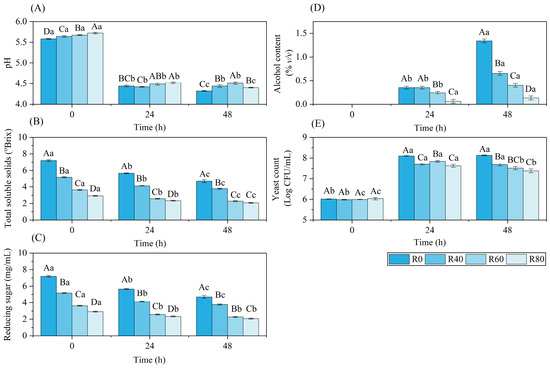
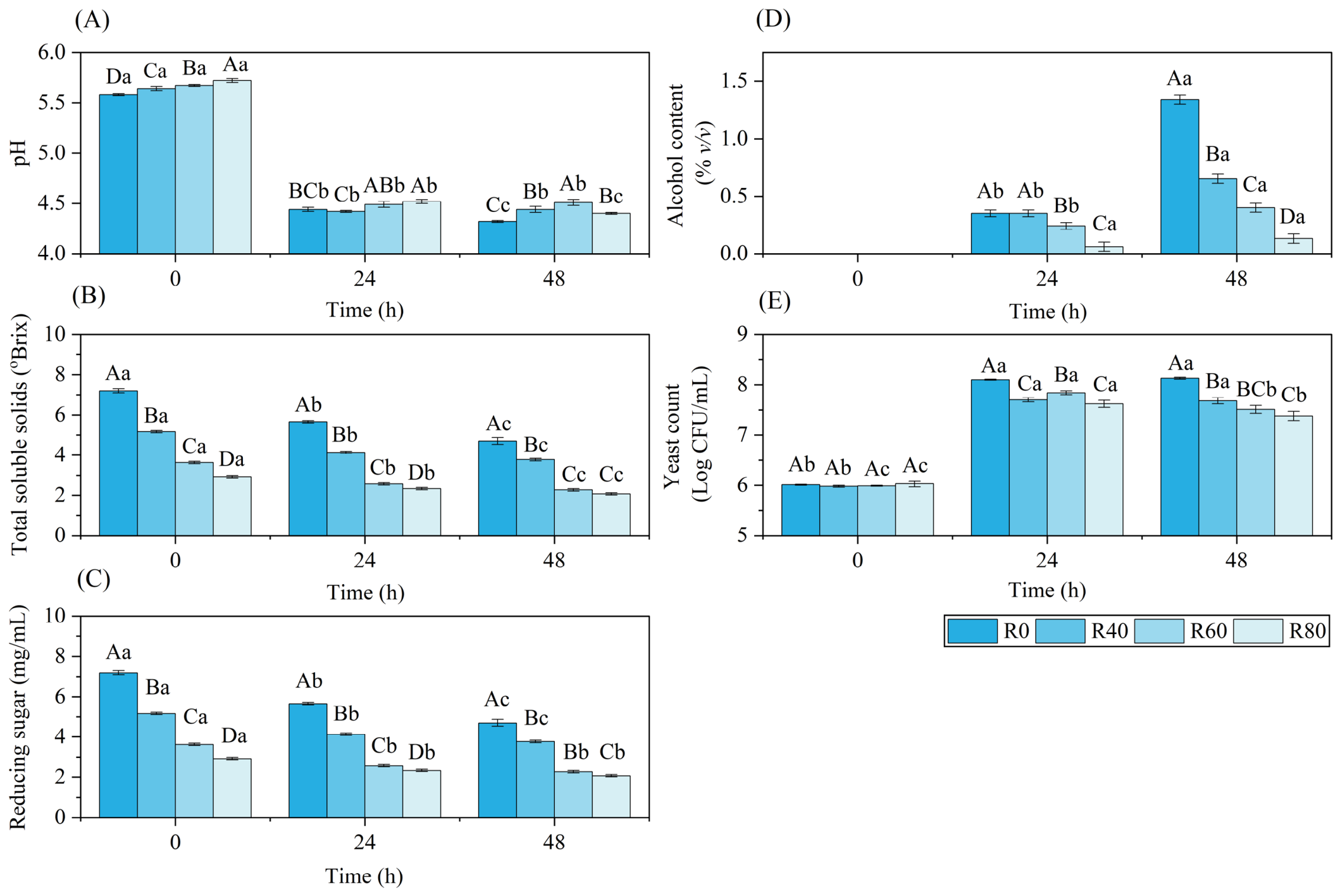
Quality changes during fermentation were monitored and are presented in Figure 1A. Prior to fermentation, the non-substituted control sample (R0) exhibited the lowest pH value (5.58 ± 0.01). The initial pH increased significantly (p < 0.05) with increasing levels of rice substitution, reaching 5.64 ± 0.02, 5.67 ± 0.01, and 5.72 ± 0.02 for R40, R60, and R80, respectively. This showed that the ratio of germinated rice to barley malt had an impact on the pH value. In cereal-based systems, the pH value is influenced by the balance of buffering constituents, including phosphate compounds (such as phytic acid), proteins, minerals, and weak organic acids present in the raw materials [18]. The observed increase in initial pH was primarily affected by the compositional differences between germinated rice and barley malt. Phytic acid content of barley malt ranged from 3.85–9.85 mg/g [19], while that in germinated rough rice was reported to contain 0.92 mg/g [20]. Zhao et al., 2023 [21] demonstrated that the increase in germinated brown rice substitution level in pilsner malt (barley) significantly decreased the total nitrogen content in wort and beer, suggesting the reduction in protein content in the matrix. Decreasing the proportion of barley malt in favor of germinated rice diluted the matrix’s buffering constituents, specifically phytic acid and proteins, leading to an increase in the initial pH values.
Figure 1.
Fermentation profile of malt produced from different ratios of germinated rice to malt. R0 = 0%, R40 = 40%, R60 = 60%, R80 = 80%. (A) pH, (B) total soluble solid (°Brix), (C) reducing sugar (mg/mL), (D) alcohol content (% v/v), (E) yeast count (Log CFU/mL). Different uppercase letters indicate significant differences (p < 0.05) among treatments within the same fermentation time. Different lowercase letters indicate significant differences (p < 0.05) among fermentation times for that treatment.
Following fermentation, the pH of all formulations decreased significantly (Figure 1A). The greatest reduction was observed in R0, where the pH declined from 5.58 ± 0.01 at 0 h to 4.32 ± 0.01 after 48 h of fermentation. In contrast, the rice-substituted formulations (R40, R60, and R80) exhibited less pronounced decreases in pH. This trend is consistent with the higher concentrations of total soluble solids and reducing sugars in R0, which provided more fermentable substrates to support yeast metabolism. The greater availability of fermentable sugars likely promoted more intensive microbial activity, as reflected by the higher yeast population and ethanol production observed in R0. During fermentation, S. boulardii metabolizes sugars into ethanol, carbon dioxide, and various acidic metabolites, contributing to the progressive acidification of the medium. Similar relationships between fermentative activity and pH reduction have been reported previously in yeast-fermented beverages [22].
3.1.2. Total Soluble Solids (TSS)
The total soluble solids (TSS) of the unfermented wort (0 h) were strongly influenced by the level of germinated glutinous rice substitution (Figure 1B). The wort produced from 100% barley malt (R0) exhibited the highest TSS (7.20 ± 0.10 °Brix), followed by R40 (5.17 ± 0.06 °Brix), R60 (3.63 ± 0.06 °Brix), and R80 (2.93 ± 0.06 °Brix). The progressive decline in TSS with increasing rice substitution suggests a reduced saccharification efficiency during mashing. This effect is likely attributable to differences in the amylolytic potential of the raw materials, as barley malt generally possesses greater diastatic power and higher α- and β-amylase activities than rice malt. Consequently, barley malt promotes more extensive starch hydrolysis and fermentable sugar release, resulting in higher soluble solid concentrations in the wort. In contrast, the lower amylolytic activity of germinated glutinous rice may have limited starch conversion, thereby reducing the number of soluble sugars available in the wort. Similar observations have been reported by Usansa et al. [9], who demonstrated that barley malt exhibits superior saccharification capacity compared with rice malt during brewing.
Over the course of fermentation, TSS decreased significantly (p < 0.05) in all samples, but the magnitude of the decline depended on the proportion of germinated rice. The largest decline was observed in R0, where TSS decreased from 7.20 ± 0.10 to 4.70 ± 0.17 °Brix, whereas R80 showed the smallest reduction, from 2.93 ± 0.06 to 2.33 ± 0.06 °Brix. This pattern likely reflects differences in the composition of the soluble solids in the worts. Formulation with higher barley malt content had higher amylolytic enzyme activity, thus containing more readily fermentable sugars, predominantly maltose, glucose, and maltotriose, which could be metabolized efficiently by yeast, leading to greater reductions in TSS [23]. In contrast, the soluble solids present in rice-substituted worts may include a higher proportion of non-fermentable or less readily hydrolyzed carbohydrates, resulting in smaller decreases in TSS during fermentation [24].
3.1.3. Reducing Sugar (RS)
The concentration of reducing sugar in this study includes free reducing monosaccharides and those liberated via the acid hydrolysis of sucrose and soluble dextrin. Similar to TSS, reducing sugar values were also strongly influenced by rice substitution (Figure 1C). R0 and R40 both displayed high initial RS concentrations (7.17 ± 0.18 and 6.15 ± 0.15 mg/mL, respectively), while RS values sharply decreased to 5.55 ± 0.15 and 3.40 ± 0.08 mg/mL, respectively, after 48 h. In contrast, R60 and R80 exhibited much lower initial RS (4.02 ± 0.08 and 3.29 ± 0.05 mg/mL, respectively), and both declined modestly during fermentation to 3.60 ± 0.03 and 2.90 ± 0.08 mg/mL, respectively. The trend in RS mirrored that of TSS, in which the RS content was progressively reduced as the substitution level increased. In all treatments, the majority of RS reductions occurred within the first 24 h of the fermentation, after which changes were minimal and not significantly different (p > 0.05), corresponding to rapid sugar assimilation during the yeast’s exponential growth phase [25]. After 24 h of fermentation, R60 and R80 values were stable because of their less initial RS content. In contrast, the barley-dominant groups (R0 and R40) continued to exhibit a significant reduction in RS values throughout the fermentation (p < 0.05). This difference in fermentation behaviour suggested an interaction between the wort composition and the yeast. In the barley-dominant worts (R0 and R40), high mashing enzymatic activity yielded a vast pool of simple, highly fermentable monosaccharides and disaccharides (such as glucose and maltose), which served as readily accessible nutrients for S. boulardii, resulting in a rapid and substantial drop in RS. However, the rice-dominant formulation (R60 and R80), a lower diastatic power and less enzymatic activity of the substituted glutinous rice restricted the enzymatic release of simple sugar during the mashing process. Under our analytical testing conditions, the moderate starting total hydrolyzable reducing sugar values observed for R60 and R80 do not represent easily fermentable sugars; rather, they represent complex soluble dextrin and starch residues that were chemically hydrolyzed into reducing sugars by the strong acid (HCl) step of the DNSA assay. Because these complex carbohydrates remained unhydrolyzed in the actual fermentation vessel, the yeast was unable to utilize them. S. boulardii lacks the extracellular enzymes required to break down complex starch fractions [26] and has a very low affinity for maltose compared to simple hexoses [6]. Consequently, because the yeast was unable to consume this acid-hydrolyzable carbohydrate matrix, the RS values remained unchanged after 24 h in R60 and R80.
3.1.4. Alcohol Content
Alcohol concentrations were significantly affected by the level of germinated glutinous rice substitution (Figure 1D). After 48 h of fermentation, R0 produced the highest alcohol content (1.34 ± 0.04% v/v), followed by R40 (0.65 ± 0.04% v/v), R60 (0.40 ± 0.04% v/v), and R80 (0.13 ± 0.04% v/v). The progressive decline in ethanol production mirrored the reduction in reducing sugar availability, indicating that fermentable substrate concentration was a key determinant of fermentation performance. The greater alcohol accumulation in R0 was attributed to more efficient starch saccharification and sugar release, whereas increasing levels of germinated glutinous rice likely limited sugar availability and fermentability. A similar trend was observed for yeast growth, suggesting a close relationship between substrate availability, microbial proliferation, and ethanol formation. Despite exhibiting viable cell counts comparable to R60, R80 produced substantially less ethanol, highlighting that fermentable sugar availability rather than cell viability was the primary factor limiting alcohol production. These findings are consistent with previous reports demonstrating that ethanol synthesis ceases when fermentable substrates become depleted, even in metabolically active yeast populations [24].
According to Thai regulations, non-alcoholic beer must contain less than 0.5% (v/v) ethanol [2]. Among the formulations tested, only R60 and R80 met this criterion, producing 0.40 ± 0.04% and 0.13 ± 0.04% (v/v) ethanol, respectively. These findings suggest that replacing barley malt with germinated glutinous rice can effectively suppress alcohol formation by limiting fermentable sugar availability during fermentation. Importantly, this approach enables the production of non-alcoholic beer through process and formulation design rather than post-fermentation ethanol removal. Conventional dealcoholizing methods, including thermal evaporation and membrane-based separation, are often associated with high capital costs, increased energy consumption, and potential losses of desirable aroma compounds [27]. Consequently, the incorporation of germinated glutinous rice represents a promising and economically attractive strategy for developing non-alcoholic beer while minimizing processing complexity.
3.1.5. Probiotic Yeast Population
The viable population of S. boulardii increased significantly in all treatments throughout fermentation, indicating active yeast proliferation (Figure 1E). At the beginning of fermentation (0 h), yeast counts were comparable among treatments, ranging from 5.98 ± 0.02 to 6.03 ± 0.06 log CFU/mL. After 24 h, cell populations increased rapidly, reaching 7.70–8.10 log CFU/mL, reflecting the exponential growth phase supported by the availability of fermentable substrates. Among the treatments, R0 exhibited the highest yeast population, whereas glutinous rice-substituted formulations showed progressively lower cell counts as the substitution level increased.
The superior growth observed in R0 was consistent with its higher TSS and reducing sugar concentrations, which provided readily assimilable carbon sources for yeast metabolism and biomass production. In contrast, partial replacement of barley malt with germinated glutinous rice likely reduced fermentable sugar availability due to the lower saccharification efficiency of the mash, thereby limiting yeast proliferation. Similar relationships between sugar availability and yeast growth have been widely reported in brewing fermentations, where carbohydrates serve as the primary substrates for cellular energy generation and biomass synthesis.
At 48 h, yeast populations entered the stationary phase, with significant decreases observed in R60 and R80 (p < 0.05). This decline coincided with the depletion of reducing sugars and the progressive reduction in pH, suggesting that nutrient limitation and environmental stress constrained further yeast growth. Previous studies have reported that substrate depletion, acidic conditions, and the accumulation of fermentation by-products can adversely affect yeast viability during the later stages of fermentation [28]. The lower cell counts observed in R60 and R80 are therefore likely associated with the reduced availability of fermentable sugars in these formulations. Despite these declines, all treatments maintained viable S. boulardii populations above 7 log CFU/mL at the end of fermentation, indicating a good survival and persistence of the probiotic yeast throughout the brewing process. Although post-fermentation storage and digestion trials were not included in this study, the literature using simulated models demonstrates that S. boulardii maintains high viability during beverage cold storage and exhibits robust survival through gastrointestinal transit [11,25].
3.2. Total Phenolic Content and Antioxidant Capacity
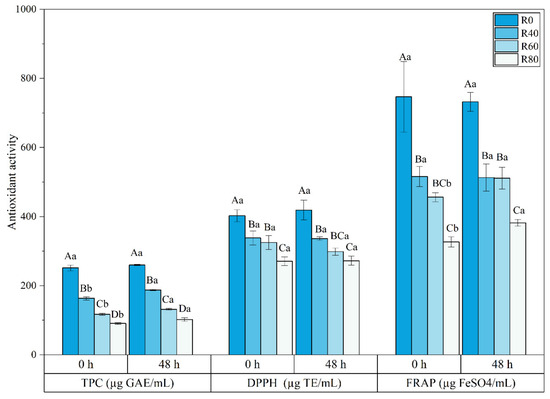
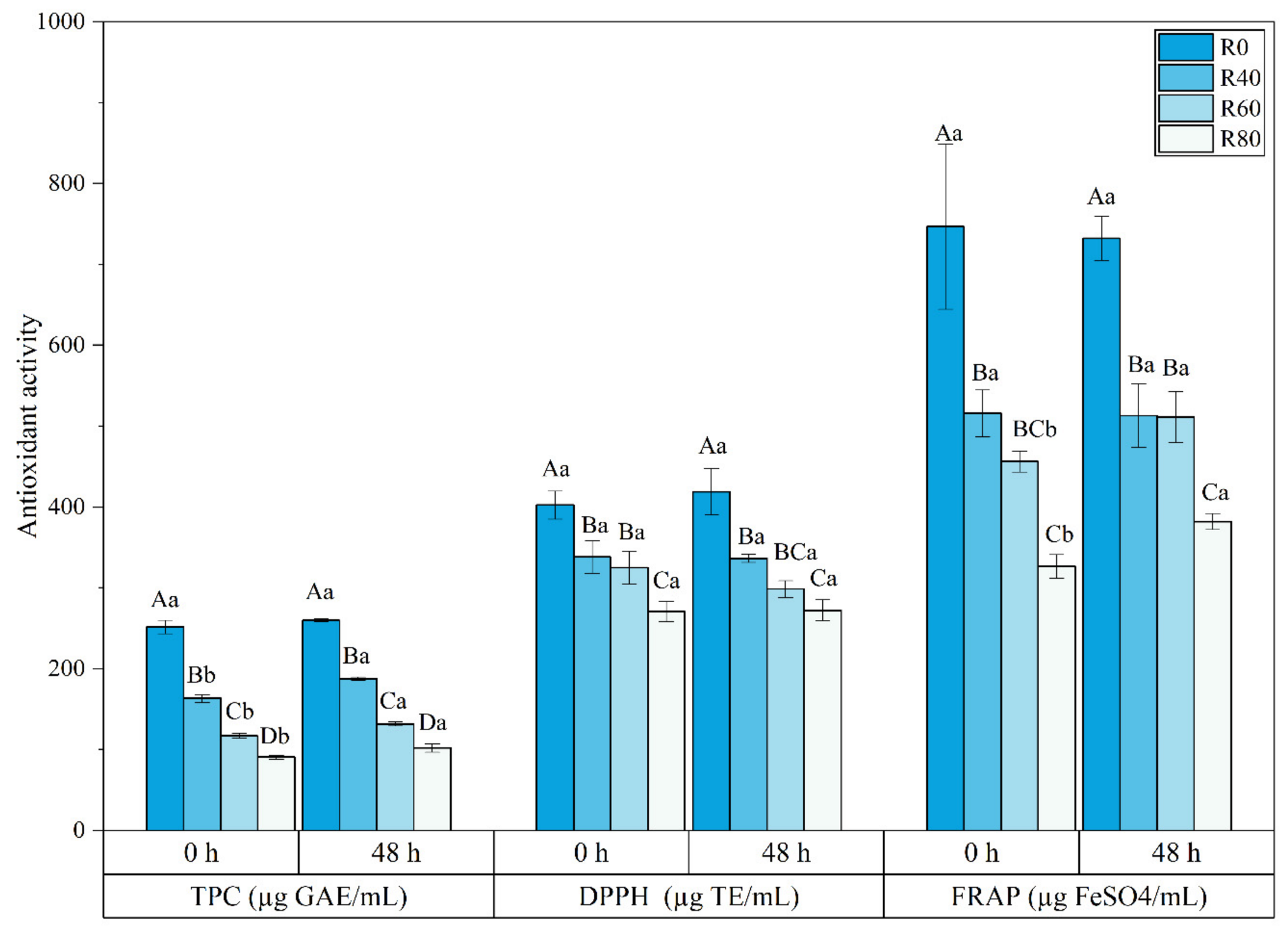
Across all formulations, the pale ale malt (R0) showed the highest initial TPC (251.69 ± 8.34 μg GE/mL) and antioxidant capacity as determined by DPPH and FRAP (402.41 ± 17.35 µg TE/mL and 746.79 ± 102.21 µg FeSO4/mL, respectively). These values decreased progressively with increasing substitution levels of germinated rice (Figure 2), whereas R80 formulation exhibited the lowest TPC being 90.75 ± 2.33 μg GE/mL, and DPPH and FRAP values of 270.63 ± 12.44 µg TE/mL and 326.46 ± 14.64 µg FeSO4/mL, respectively.
Figure 2.
Total phenolic content and antioxidant activity of malt produced with different ratios of germinated rice to total malt, comparing before (0 h) and after the fermentation (48 h). Different uppercase letters indicate significant differences among treatments within the same fermentation time (p < 0.05). Different lowercase letters refer to significant differences between before and after fermentation within the same sample (p < 0.05).
The observed reduction in TPC and antioxidant capacity with increasing levels of germinated glutinous rice substitution may be attributed to the lower phenolic contribution of the rice component. Maisont et al. [29] reported total phenolic content ranging from 0.48 to 0.64 mg GE/g dry matter in germinated Thai waxy paddy rice (RD6). Although germination can enhance phenolic content through the release of bound phenolic compounds from the cell wall matrix, the total phenolic levels in waxy rice remain relatively low. Therefore, increasing the proportion of germinated glutinous rice while reducing barley malt likely decreased the overall phenolic content of the formulation, resulting in lower antioxidant activity as reflected by the DPPH and FRAP assays.
Phenolic acids, such as gallic acid and ferulic acid are weak organic acids (pKa ≈ 4.2), as they contain carboxylic acid groups (-COOH) and phenolic hydroxyl groups (-OH) that contribute to their acidity. The higher TPC in the R0 formulation may partly explain the slightly lower initial pH observed in this formulation. Regarding antioxidant capacity, the DPPH assay measures the ability of a substance to donate a hydrogen atom to neutralize a free radical, while FRAP measures the ability of a substance to reduce iron. Phenolic acids presented in the matrix may contribute to the antioxidant capacity through hydrogen donation and iron-reducing hydroxyl groups. Furthermore, Chethan et al. [30] reported that phenolic acids were more stable under acidic conditions and tend to be labile under alkaline conditions due to oxidation or chelating with metal ions. The lower pH in R0 may stabilize phenolic acid, thus preserving more of the antioxidant capacity during mashing than those substituted groups (R40 to R80).
Following 48 h of fermentation, TPC of the R40–R80 formulations increased significantly compared with their initial values. Likewise, FRAP values increased significantly in the R60 and R80 formulations. However, no significant changes (p > 0.05) were observed in DPPH radical scavenging activity among the treatments, indicating that fermentation enhanced reducing capacity and phenolic content without substantially affecting free radical scavenging activity. The increase in phenolic content following fermentation may be attributed to the combined effects of microbial metabolism and acidification of the fermentation medium. Although specific enzymatic activities and individual phenolic profiles were not directly characterized in this study, fermentation with the probiotic yeast S. boulardii potentially facilitated the release of bound phenolic compounds through enzymatic degradation of the cereal cell wall matrix. In addition, the progressively lower pH attained during fermentation may promote acid hydrolysis of ester and glycosidic linkages, thereby enhancing the liberation of phenolic acids and other bioactive compounds previously bound to cell wall polysaccharides. While this mechanism remains a tentative explanation for our specific matrix, Coghe et al. [31] demonstrated that Saccharomyces cerevisiae exhibits enzymatic activities capable of liberating ferulic acid during mashing and fermentation, thus increasing the measurable TPC. The greater enhancement observed in FRAP compared to DPPH in the rice-dominant group (R60 and R80) after fermentation suggests that fermentation may have favored the formation of compounds with strong reducing power rather than exclusively hydrogen-donating capacity. Similarly, Đorđević et al. [32] reported that Saccharomyces cerevisiae promoted the release of bound phenolic compounds and improved the radical scavenging activity of the fermented barley system. The reported result showed that there was a statistically significant favor toward increasing reducing power (measured by FRAP) rather than radical-scavenging or hydrogen-donating capacity (measured by DPPH). The absence of significant changes in all observed parameters in the R0 formulation may be attributed to the high enzymatic activity during malting and mashing, which may have resulted in extensive release of bound phenolic compounds prior to fermentation, leading to less enhanced extraction.
3.3. Gamma-Aminobutyric Acid Content
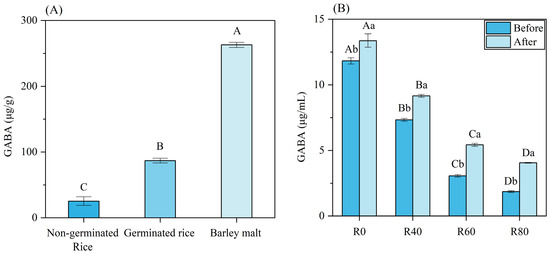
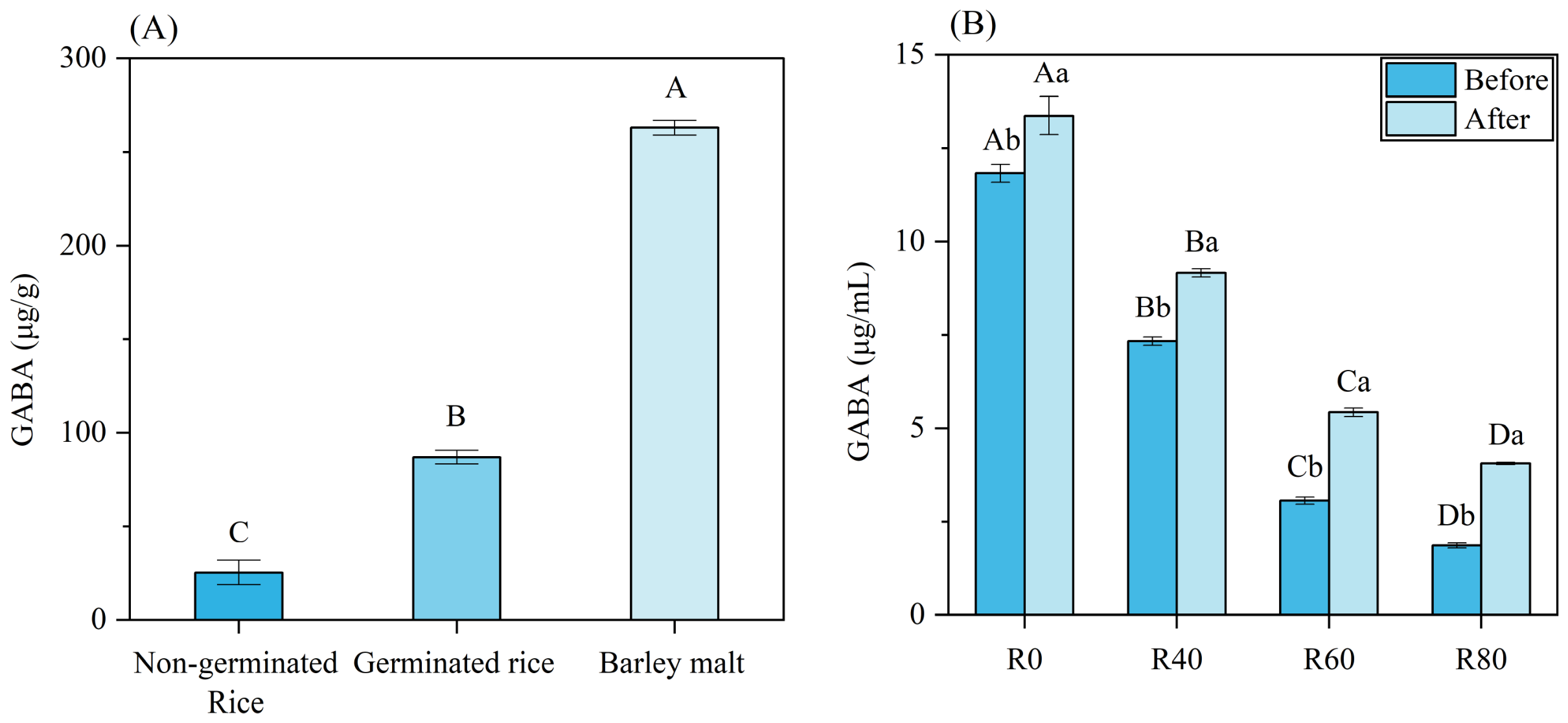
The raw materials, i.e., non-germinated glutinous rice, germinated glutinous rice, and barley malt were analyzed for gamma-aminobutyric acid (GABA) content (Figure 3A). Germination significantly increased the GABA content of glutinous rice from 23.98 ± 6.17 to 82.40 ± 3.44 mg/100 g (p < 0.05). This increase is attributed to the enzymatic decarboxylation of L-glutamic acid by glutamate decarboxylase (GAD), which is activated during the germination process. Similar increases in GABA content during rice germination have been widely reported in previous studies. Maisont et al. [29] observed that GABA content in germinated Thai waxy rice increased continuously with germination time, reaching approximately 220 mg/100 g embryo fresh weight after 60 h of germination. Likewise, Komatsuzaki et al. [33] reported enhanced GABA accumulation in germinated brown rice because of soaking and germination treatments. Among the raw materials evaluated in the present study, barley malt exhibited the highest GABA content (249.64 ± 3.67 mg/100 g), exceeding both non-germinated and germinated glutinous rice.
Figure 3.
Gamma-Aminobutyric Acid (GABA) content identified using LC-MS. (A) Raw material, accounted for on a dry weight basis; (B) Before and after fermentation. Different uppercase letters indicate significant differences among treatments within the same determination time (p < 0.05). Different lowercase letters refer to significant differences between before and after the fermentation within the same sample (p < 0.05).
The results in this study were consistent with previous studies showing that barley malt generally contains higher GABA levels than germinated glutinous rice. Makoto et al. [34] reported GABA contents of approximately 65 and 35 mg/100 g in the Japanese malting barley cultivars Amagi Nijo and Haruna Nijo, respectively. In contrast, Karladee et al. [35] found that Thai modern glutinous and landrace purple glutinous rice varieties reached maximum GABA contents after 24 h of germination, with values of 19.07 and 18.54 mg/100 g, respectively. Nonetheless, the higher GABA concentrations observed in the present study may be attributed to differences in raw material genotype, germination or malting conditions, and analytical methodology. Previous studies commonly quantified GABA using derivatization-based HPLC methods. For example, Maisont et al. [29] determined GABA in germinated Thai waxy rice using pre-column derivatization with AccQ-Fluor reagent followed by HPLC analysis, while Karladee et al. [35] also employed an HPLC-based method. In contrast, GABA in the present study was quantified using Triple Quadrupole LC-MS/MS. Compared with conventional derivatization-based HPLC approaches, LC-MS/MS provides highly selective detection based on specific precursor-to-product ion transitions and may reduce analytical variability associated with derivatization efficiency [36]. Therefore, methodological differences, together with biological and processing factors, may have contributed to the variation in GABA concentrations reported among studies.
The greater GABA concentration detected in barley malt relative to germinated glutinous rice may be associated with inherent differences in grain composition and metabolic responses during malting. Kheiw Ngu 8974 glutinous rice has been reported to contain approximately 7.52% protein [37], whereas several barley malt cultivars possess substantially higher protein contents, ranging from 12.4% to 14.8% [38]. Given that glutamic acid is the immediate precursor of GABA and is converted by glutamate decarboxylase (GAD), the higher protein reserve in barley may increase the availability of amino acid substrates for GABA biosynthesis. Furthermore, differences in malting physiology and enzyme activity between barley and rice may further contribute to the enhanced accumulation of GABA in barley malt. In addition, malting promotes extensive endosperm modification through the action of proteolytic enzymes, resulting in the degradation of storage proteins and the release of peptides and free amino acids. Hough et al. [39] reported that proteolysis during malting is a key biochemical process that increases the concentration of soluble nitrogen compounds and free amino acids in malt. These amino acids subsequently become available for metabolic reactions during germination and fermentation. Therefore, the combined effects of higher protein content and intensive proteolysis during malting may contribute to the substantially higher GABA concentration observed in barley malt than in germinated glutinous rice.
Furthermore, GABA concentration in wort (0 h, before fermentation) was significantly reduced when the substitution level increased in each formulation. A similar reduction trend was observed in the post-fermentation group, where the non-substituted formulation exhibited the highest GABA content of 11.83 ± 0.25 μg/mL, and the R80 formulation showed the lowest value of 4.05 ± 0.03 μg/mL. The decrease in GABA concentration with increasing germinated rice substitution can be attributed to the lower GABA content of germinated rice compared with barley malt. Nevertheless, the fermentation significantly improved the GABA content in all formulations. A similar increase in GABA concentration during fermentation has been reported in fermented rice products. For example, Jannoey et al. [40] reported that steamed polished rice fermented with spores of Monascus purpureus CMU 001 exhibited increased GABA levels. This suggests that microbial fermentation may contribute to GABA accumulation through metabolic activities associated with amino acid conversion. Therefore, the increase in GABA observed after beer fermentation in the present study may also be associated with microbial metabolism during fermentation.
3.4. Volatile Compound
A total of 30 volatile compounds were identified and classified into four major chemical groups: esters (12 compounds), alcohols (7 compounds), fatty acids (3 compounds), and terpenes/terpenoids (8 compounds) (Table 1). The non-substituted formulation (R0) exhibited the greatest diversity of volatile compounds, with 27 compounds detected, whereas the germinated glutinous rice-dominant formulation (R80) contained the fewest (23 compounds).
Table 1.
Volatile compound profile of beers produced with different ratios of germinated rice in total malt determined by GC–MS.
Esters represented the predominant class of volatile compounds across all formulations, with ethyl octanoate and ethyl decanoate being the most abundant. The R0 formulation exhibited the highest relative abundances of ethyl octanoate (37.57 ± 2.77%) and ethyl decanoate (21.95 ± 0.35%), both of which decreased significantly as the level of germinated glutinous rice substitution increased. These esters are well-known fermentation-derived aroma compounds that contribute fruity and floral notes to beer.
In contrast, the plant-derived phenolic ester methyl salicylate showed a significant dose-dependent increase with increasing levels of germinated glutinous rice substitution. This compound is derived from salicylic acid, a phytohormone involved in plant defense and stress-response mechanisms, and its accumulation has been reported to increase during the germination process [41].
Several types of alcohol were detected across all formulations, with the R0 exhibiting the highest relative abundance in all identified compounds. In contrast, several aliphatic and fusel alcohols, including 1-decanol, 1-dodecanol, and isoamyl alcohol, were absent in the substituted groups. As widely documented in standard fermentation models, such as wine production [42], these alcohols (including 2-Phenylethanol) are primarily synthesized as secondary metabolites during vigorous yeast fermentation, either via the degradation of amino acids (the Ehrlich pathway) or through lipid metabolism. The absence of these volatile alcohols in the substituted formulations is supported by the physicochemical data presented earlier, which demonstrated lower total alcohol content and reduced microbial activity. This aligns with findings in other rice-based fermentation beverages [10], where heavier aliphatic alcohols and 2-phenylethanol are frequently absent or present in low amounts. However, the terpene alcohols, including citronellol, geraniol, and linalool, exhibited a positive correlation with the level of substitution. These compounds were not synthesized by yeast, but primarily botanical markers extracted from the essential oil of hop utilized during the mashing process [43].
A group of medium-chain fatty acids (MCFA), namely decanoic acid, hexanoic acid, and octanoic acid, was identified and presented the highest level in R0. These MCFA are synthesized as intermediate metabolites during yeast lipid biosynthesis [44]. The presence of higher levels of MCFA esters (e.g., ethyl octanoate) as well as higher levels of MCFA as precursor in the R0, and a significant reduction with an increase in rice proportion. Consequently, tracking these specific MCFAs provides further biochemical evidence of the metabolic shift induced by the adjunct substitution, directly impacting the balance between volatile organic acids and their corresponding esters.
The substituted group (R40 to R80) exhibited a higher relative abundance of terpene or terpenoid class, including terpenoid esters such as geranyl acetate and methyl geranate. The dominant sesquiterpene was α-humulene, which reached a relative abundance of 17.87 ± 0.30% in the R80, significantly higher than the value of the R0 (4.64 ± 0.51%). This pronounced increase is likely driven by a combination of analytical and physical matrix effects [45]. Analytically, the suppression of dominant fermentation volatiles (e.g., fusel alcohols and aliphatic esters) in the substituted groups reduced competitive displacement during headspace extraction, unmasking the botanical hop markers [46]. Furthermore, the substitution significantly impacted the oxidative stability of these hop volatiles. The relative abundance of oxidized terpenoids, specifically caryophyllene oxide and humulene epoxide II, was notably elevated in the germinated rice formulations. These volatile compounds are direct degradation products formed via the oxidation of their corresponding parent alkenes (β-caryophyllene and α-humulene). The suppressed formation of these epoxides in the R0 control strongly correlates with the higher antioxidant capacity of the 100% barley malt formulation, which likely scavenged reactive oxygen species and protected the volatile double bonds from oxidation.
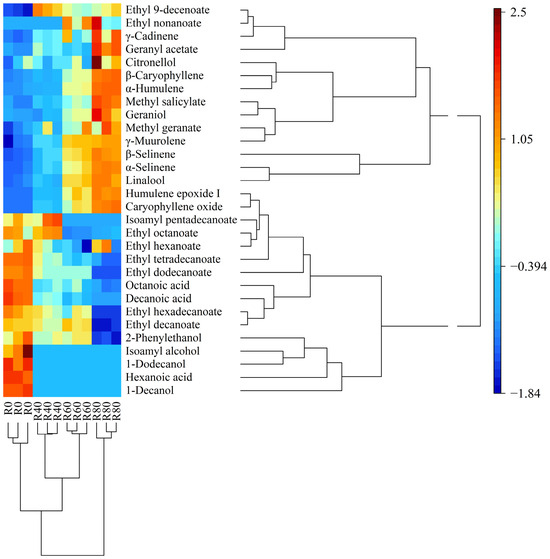
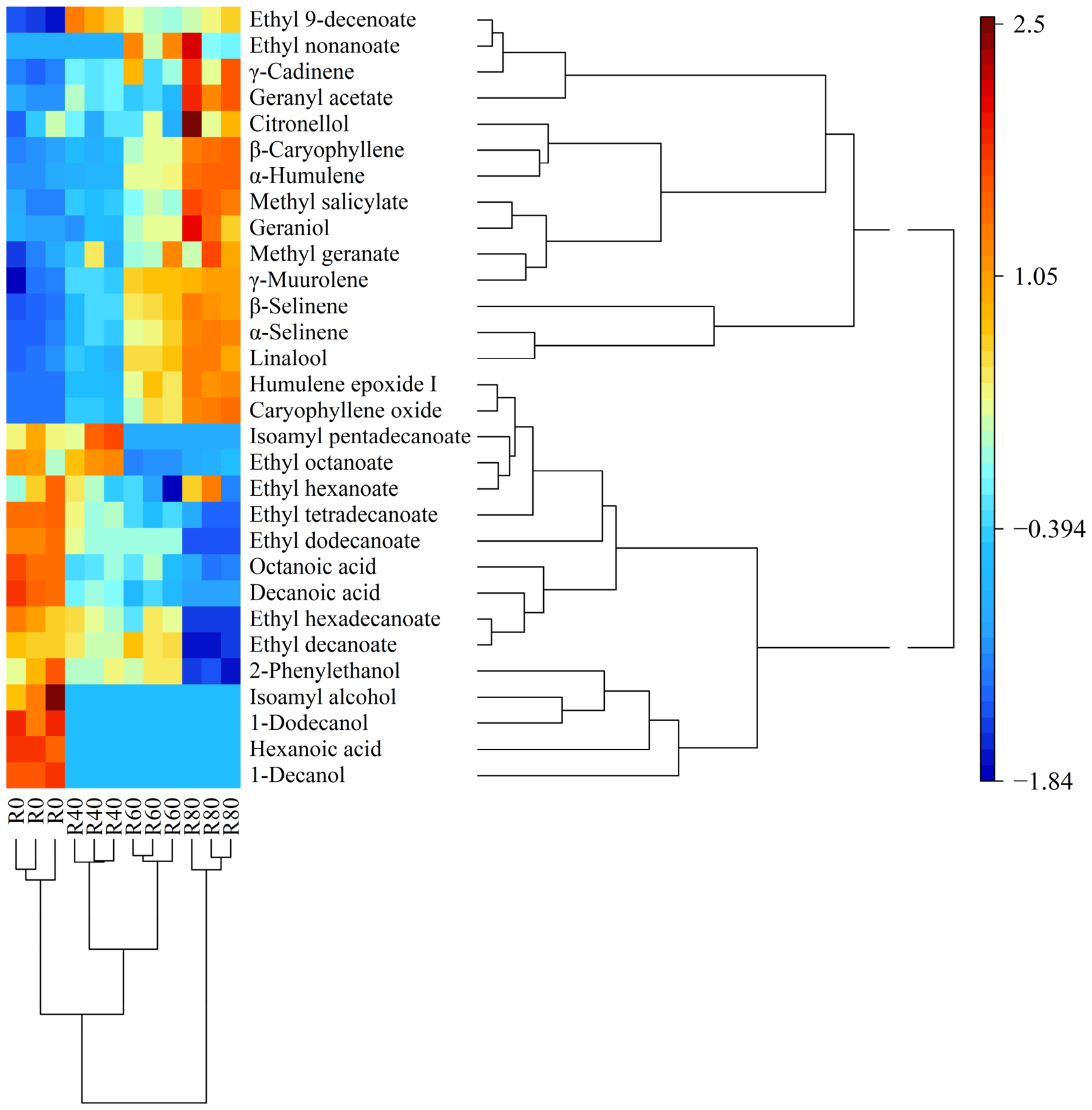
The hierarchical clustering of the volatile profile (Figure 4) provides clear visual evidence of metabolic and analytical shifts described above. The vertical dendrogram at the base of the heat map revealed that the R80 formulation is primarily clustered away from a second group containing R0, R40, and R60. Within this cluster, the non-substituted formulation (R0) was isolated, while the R40 and R60 remain closely grouped. The segregation of R0 formulation was significantly dominated by ethyl decanoate, ethyl octanoate, isoamyl alcohol, and 2-phenylethanol. These fermentation-derived compounds show a much lower influence on the substituted categories. In contrast, the R80 group is characterized by the high relative impact of α-humulene, α-selinene, and β-caryophyllene. Finally, the R40 and R60 groups, in their mid-level segregation, are partially affected by methyl salicylate and geranyl acetate, representing a transitional volatile state between the ester-dominant barley matrix and the terpene-dominant rice matrix. This volatile distribution leads to the hypothesis that the suppression of fruity esters, paired with a higher relative abundance of hop-derived terpenes, might shift the R80 variant toward a more hop-dominant aroma profile. However, further verification via trained-panel descriptive sensory analysis is required to definitively confirm this sensory transition.
Figure 4.
Two-way dendrogram and heat-map obtained from the cluster analysis (by the Ward’s method) performed on the volatile compounds GC-MS after their autoscaling pretreatment.
3.5. Sensory Evaluation
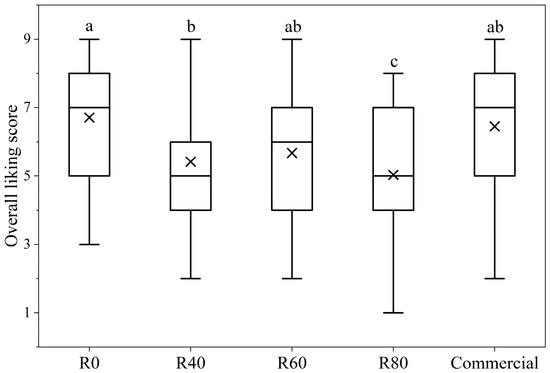
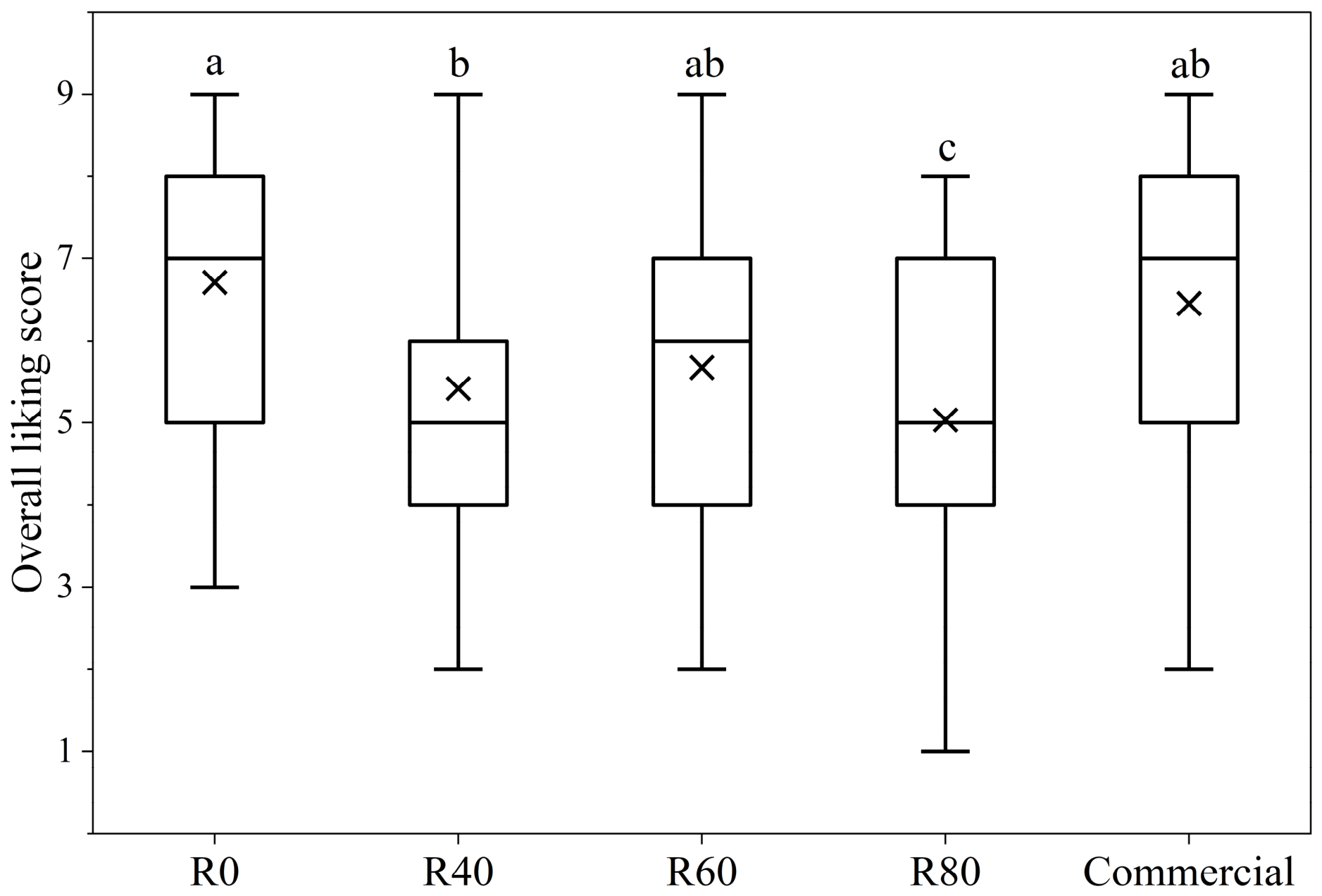
Consumer acceptance was significantly influenced by the level of germinated glutinous rice substitution. The R0 formulation received the highest overall liking score (6.71 ± 1.66), surpassing that of the commercial reference beer (6.45 ± 1.65) (Table 2). While rice aroma, hop aroma, bitterness, fizziness, and aftertaste did not differ significantly among treatments (p > 0.05), color and taste emerged as the primary drivers of consumer preference. Formulations containing higher levels of germinated glutinous rice, particularly R80, received significantly lower scores for color and taste, resulting in the lowest overall liking score (5.03 ± 1.92). These findings suggest that extensive replacement of barley malt alters key sensory characteristics associated with beer quality. The lower color preference observed in the rice-substituted formulations is likely attributable to a reduced formation of malt-derived melanoidins and other Maillard reaction products, which are key contributors to beer color, flavor complexity, and overall sensory perception [39]. Barley malt provides substantial amounts of amino nitrogen that participate in Maillard reactions during malting and wort production, whereas rice contains considerably lower levels of protein and nitrogenous compounds [36]. As Maillard reactions require interactions between reducing sugars and amino groups, the replacement of barley malt with germinated glutinous rice may have limited the generation of colored melanoidin compounds [47]. This reduction in Maillard-derived pigments likely contributed to the lighter appearance and lower consumer preference for color in beers containing high proportions of germinated glutinous rice. Despite these changes, R40 and R60 maintained acceptable sensory ratings and overall liking scores above the midpoint of the hedonic scale, indicating that moderate substitution with germinated glutinous rice can preserve consumer acceptance while enabling the development of low-alcohol beer formulations.
Table 2.
Sensory evaluation of non-alcoholic beer produced by different ratios of germinated rice in total malt.
Furthermore, volatile analysis revealed a progressive decrease in fermentation-derived esters together with an increase in hop-derived terpenes and terpenoids in R80 compared with R0. Esters such as ethyl octanoate and ethyl decanoate are recognized as key contributors to fruity, sweet, and pleasant beer aromas and are generally associated with positive consumer perception of beer flavor [48]. In contrast, hop-derived terpenes and terpenoids, including linalool, geraniol, α-humulene, and β-caryophyllene, contribute floral, citrus, herbal, woody, and resinous aroma characteristics [49,50]. While these compounds are important contributors to hop aroma, consumer acceptance is often influenced by the balance between fruity fermentation notes and hop-derived aromas rather than the concentration of a single volatile class. Therefore, the reduction in fruity esters accompanied by the increased relative abundance of terpenes and terpenoids may have altered the aroma balance of R80 toward a more hop-dominant profile. This shift could have produced a sensory profile that was less familiar to consumers and may have contributed to the lower overall liking score observed for R80.
The box plot of overall liking further supported these observations (Figure 5). R0 showed the highest median score and a relatively compact distribution, indicating consistent consumer acceptance. In contrast, R40 and R60 exhibited wider score distributions, suggesting greater variation in individual preferences. The R80 formulation displayed the lowest median overall liking, confirming that high levels of germinated glutinous rice substitution reduced consumer acceptance despite maintaining acceptable scores for several individual sensory attributes.
Figure 5.
Overall liking scores from the sensory evaluation (preference test, 9-point hedonic scale) of non-alcoholic beer produced by different ratios of germinated rice in total malt compared with a commercial benchmark. R0 = 0%, R40 = 40%, R60 = 60%, R80 = 80%. Box boundaries represent the interquartile range (25th and 75th percentiles), the horizontal line inside the box represents the median, the “X” symbol indicates the mean value, and the whiskers represent the minimum and maximum scores. Different letters indicate significant differences among formulations (p < 0.05).
4. Conclusions
The present study highlights the potential of germinated Thai glutinous rice (Oryza sativa var. glutinosa cv. Kheiw Ngu 8974) as a brewing adjunct for developing potential probiotic non-alcoholic beer fermented with S. boulardii. Partial replacement of barley malt with germinated glutinous rice effectively reduced ethanol formation, enabling formulations containing 60% and 80% rice to comply with the Thai regulatory limit for non-alcoholic beer. In addition, fermentation promoted GABA accumulation and maintained viable probiotic yeast populations, thereby suggesting potential functional attributes that warrant further in vivo validation. Rice substitution also modified the volatile composition and sensory characteristics of beer, with moderate substitution levels preserving consumer acceptance more effectively than extensive replacement. Overall, the 60% substitution formulation represented the most promising approach among the four discreate ratios tested (including the control formulation, R0), achieving a favorable balance between low alcohol content, provisional functional enhancement (through the fermentation process with S. boulardii), and sensory quality. However, this formulation has not yet been optimized across a continuous formation range. These findings provide a preliminary foundation for the development of novel cereal-based probiotic non-alcoholic beers, but translating these results into commercial brewing applications will require extensive future research, including long-term shelf-life stability trials, ethanol confirmation by direct analytical methods, tracking probiotic survival during storage, assessing gastrointestinal tolerance, and establishing pilot scale reproducibility.
Author Contributions
Conceptualization, N.K.; methodology, N.K. and J.K.; formal analysis, J.K., J.S., P.T. and A.D.T.; investigation, J.K., J.S., P.T., S.N. and A.D.T.; resources, N.K.; writing—original draft preparation, J.K.; writing—review and editing, S.N. and N.K.; visualization, J.K.; supervision, N.K.; project administration, J.K.; funding acquisition, N.K. All authors have read and agreed to the published version of the manuscript.
Funding
This research was funded by Mae Fah Luang University through the final-year project research fund.
Institutional Review Board Statement
Ethical review and approval were waived for this study by the Mae Fah Luang University Ethics Committee on Human Research (Protocol code: EC 25154-14, COE No.: 156/2025, date of exemption: 31 July 2025) due to the study involving only standard sensory evaluation of non-alcoholic food product without risk to participants.
Informed Consent Statement
Informed consent was obtained from all participants involved in the study.
Data Availability Statement
The original contributions presented in this study are included in the article. Further inquiries can be directed to the corresponding author.
Conflicts of Interest
The authors declare no conflicts of interest.
Abbreviations
The following abbreviations are used in this manuscript:
| DPPH | 2,2-diphenyl-1-picrylhydrazyl |
| FRAP solution (TPTZ) | 2,4,6-tripyridyl-s-triazine |
| GABA | Gamma-aminobutyric acid |
References
- Brányik, T.; Silva, D.P.; Baszczyňski, M.; Lehnert, R.; Almeida e Silva, J.B. A Review of Methods of Low Alcohol and Alcohol-Free Beer Production. J. Food Eng. 2012, 108, 493–506. [Google Scholar] [CrossRef] [Scilit]
- Ministry of Public Health (Thailand). Notification of the Ministry of Public Health (No. 356) B.E. 2556 Re: Beverages in Sealed Containers; Royal Thai Government Gazette, Special Part 87 Ng; MOPH: Doha, Qatar, 2013; Volume 130.
- Sohrabvandi, S.; Mousavi, S.M.; Razavi, S.H.; Mortazavian, A.M.; Rezaei, K. Alcohol-Free Beer: Methods of Production, Sensorial Defects, and Healthful Effects. Food Rev. Int. 2010, 26, 335–352. [Google Scholar] [CrossRef] [Scilit]
- Bellut, K.; Arendt, E.K. Chance and Challenge: Non-Saccharomyces Yeasts in Nonalcoholic and Low Alcohol Beer Brewing—A Review. J. Am. Soc. Brew. Chem. 2019, 77, 77–91. [Google Scholar] [CrossRef] [Scilit]
- Moonsamy, G.; Singh, S.; Roets-Dlamini, Y.; Baikgaki, K.K.; Ramchuran, S.O. Development of a High-Cell-Density Production Process for a Biotherapeutic Yeast, Saccharomyces Cerevisiae Var. Boulardii, for Use as a Human Probiotic. Fermentation 2025, 11, 186. [Google Scholar] [CrossRef] [Scilit]
- Senkarcinova, B.; Graça Dias, I.A.; Nespor, J.; Branyik, T. Probiotic Alcohol-Free Beer Made with Saccharomyces Cerevisiae Var. Boulardii. LWT 2019, 100, 362–367. [Google Scholar] [CrossRef] [Scilit]
- Janta, K.; Pokyada, S.; Buayen, N. Effects of Bio-Extract on the Germination of Rice Seed (Kiaw Ngu Glutinous Rice). Prog. Appl. Sci. Technol. 2018, 8, 152–264. [Google Scholar]
- Tester, R.F.; Karkalas, J.; Qi, X. Starch—Composition, Fine Structure and Architecture. J. Cereal Sci. 2004, 39, 151–165. [Google Scholar] [CrossRef] [Scilit]
- Usansa, U.; Burberg, F.; Geiger, E.; Back, W.; Wanapu, C.; Arendt, E.K.; Kreisz, S.; Boonkerd, N.; Teaumroong, N.; Zarnkow, M. Optimization of Malting Conditions for Two Black Rice Varieties, Black Non-Waxy Rice and Black Waxy Rice (Oryza Sativa L. Indica). J. Inst. Brew. 2011, 117, 39–46. [Google Scholar] [CrossRef] [Scilit]
- Noonim, P.; Venkatachalam, K. Impact of Germination on the Chemical Profile of HomChaiya Rice Wort and Beer. RSC Adv. 2021, 11, 34160–34169. [Google Scholar] [CrossRef] [Scilit] [PubMed]
- Gutiérrez-Nava, M.A.; Jaén-Echeverría, E.; Acevedo-Sandoval, O.-A.; Román-Gutiérrez, A.-D. Fermentation of Barley Wort with Saccharomyces Boulardii to Generate a Beverage with Probiotic Potential. Future Foods 2024, 9, 100373. [Google Scholar] [CrossRef] [Scilit]
- Sri, K.B.; Fatima, S.; Nandhini, M.; Sumakanth, M. UV-Visible Spectrophotometry and Titrimetric Method for Determining Reducing Sugars in Different Brands of Honey and Soft Drinks. Magna Sci. Adv. Res. Rev. 2023, 7, 062–067. [Google Scholar] [CrossRef] [Scilit]
- Center for Food Safety and Applied Nutrition. BAM Chapter 18: Yeasts, Molds and Mycotoxins; FDA: Silver Spring, MD, USA, 2020.
- ISO 14502-1:2005; Determination of Substances Characteristic of Green and Black Tea—Part 1: Content of Total Polyphenols in Tea—Colorimetric Method Using Folin–Ciocalteu Reagent. ISO: Geneva, Switzerland, 2005.
- Yen, G.C.; Duh, P.D. Scavenging Effect of Methanolic Extracts of Peanut Hulls on Free-Radical and Active-Oxygen Species. J. Agric. Food Chem. 1994, 42, 629–632. [Google Scholar] [CrossRef] [Scilit]
- Nammatra, R.; Chaloemram, C. Influence of Innovative Processing on γ-Aminobutyric Acid (GABA) Contents, Phytochemicals, and Antioxidant Activity in Flavoured Germinated Rice Powder Products. Trop. J. Nat. Prod. Res. 2025, 7, 3111–3117. [Google Scholar] [CrossRef] [Scilit]
- Nacha, J.; Soodpakdee, K.; Chamyuang, S. Nutritional Improvement of Germinated Riceberry Rice (Oryza Sativa) Cultivated with Pleurotus Ostreatus Mycelium. Trends Sci. 2023, 20, 5574. [Google Scholar] [CrossRef] [Scilit]
- Mennah-Govela, Y.A.; Bornhorst, G.M. Food Buffering Capacity: Quantification Methods and Its Importance in Digestion and Health. Food Funct. 2021, 12, 543–563. [Google Scholar] [CrossRef] [Scilit] [PubMed]
- Dai, F.; Wang, J.; Zhang, S.; Xu, Z.; Zhang, G. Genotypic and Environmental Variation in Phytic Acid Content and Its Relation to Protein Content and Malt Quality in Barley. Food Chem. 2007, 105, 606–611. [Google Scholar] [CrossRef] [Scilit]
- Moongngarm, A.; Saetung, N. Comparison of Chemical Compositions and Bioactive Compounds of Germinated Rough Rice and Brown Rice. Food Chem. 2010, 122, 782–788. [Google Scholar] [CrossRef] [Scilit]
- Zhao, X.; Yin, Y.; Fang, W.; Yang, Z. Potential of Germinated Brown Rice in Beer Brewing. J. Cereal Sci. 2023, 114, 103792. [Google Scholar] [CrossRef] [Scilit]
- Romero-Espinoza, A.M.; Serna-Saldivar, S.O.; Vintimilla-Alvarez, M.C.; Briones-García, M.; Lazo-Vélez, M.A. Effects of Fermentation with Probiotics on Anti-Nutritional Factors and Proximate Composition of Lupin (Lupinus mutabilis Sweet). LWT 2020, 130, 109658. [Google Scholar] [CrossRef] [Scilit]
- Langenaeken, N.A.; De Schepper, C.F.; De Schutter, D.P.; Courtin, C.M. Carbohydrate Content and Structure during Malting and Brewing: A Mass Balance Study. J. Inst. Brew. 2020, 126, 253–262. [Google Scholar] [CrossRef] [Scilit]
- Mayer, H.; Ceccaroni, D.; Marconi, O.; Sileoni, V.; Perretti, G.; Fantozzi, P. Development of an All Rice Malt Beer: A Gluten Free Alternative. LWT—Food Sci. Technol. 2016, 67, 67–73. [Google Scholar] [CrossRef] [Scilit]
- de Paula, B.P.; Chávez, D.W.H.; Lemos Junior, W.J.F.; Guerra, A.F.; Corrêa, M.F.D.; Pereira, K.S.; Coelho, M.A.Z. Growth Parameters and Survivability of Saccharomyces Boulardii for Probiotic Alcoholic Beverages Development. Front. Microbiol. 2019, 10, 2092. [Google Scholar] [CrossRef] [Scilit] [PubMed]
- da Cruz, L.N.; Costa, B.V.; Lopes, C.; Henriques, C.M.H.; de Castro, R.J.S. Effects of Fermentation on the Bioactive, Functional, and Technological Characteristics of Babassu and Brazil Nut Flours. J. Food Sci. 2025, 90, e70554. [Google Scholar] [CrossRef] [Scilit] [PubMed]
- Salanță, L.C.; Coldea, T.E.; Ignat, M.V.; Pop, C.R.; Tofană, M.; Mudura, E.; Borșa, A.; Pasqualone, A.; Zhao, H. Non-Alcoholic and Craft Beer Production and Challenges. Processes 2020, 8, 1382. [Google Scholar] [CrossRef] [Scilit]
- Fleet, G.H. Yeast Interactions and Wine Flavour. Int. J. Food Microbiol. 2003, 86, 11–22. [Google Scholar] [CrossRef] [Scilit] [PubMed]
- Maisont, S.; Narkrugsa, W. The Effect of Germination on GABA Content, Chemical Composition, Total Phenolics Content and Antioxidant Capacity of Thai Waxy Paddy Rice. Agric. Nat. Resour. 2010, 44, 912923. [Google Scholar]
- Chetgan, S.; Malleshi, N. Finger Millet Polyphenols: Optimization of Extraction and the Effect of pH on Their Stability. Food Chem. 2007, 105, 862–870. [Google Scholar] [CrossRef] [Scilit]
- Coghe, S.; Benoot, K.; Delvaux, F.; Vanderhaegen, B.; Delvaux, F.R. Ferulic Acid Release and 4-Vinylguaiacol Formation during Brewing and Fermentation: Indications for Feruloyl Esterase Activity in Saccharomyces Cerevisiae. J. Agric. Food Chem. 2004, 52, 602–608. [Google Scholar] [CrossRef] [Scilit] [PubMed]
- Đorđević, T.M.; Šiler-Marinković, S.S.; Dimitrijević-Branković, S.I. Effect of Fermentation on Antioxidant Properties of Some Cereals and Pseudo Cereals. Food Chem. 2010, 119, 957–963. [Google Scholar] [CrossRef] [Scilit]
- Komatsuzaki, N.; Tsukahara, K.; Toyoshima, H.; Suzuki, T.; Shimizu, N.; Kimura, T. Effect of Soaking and Gaseous Treatment on GABA Content in Germinated Brown Rice. J. Food Eng. 2007, 78, 556–560. [Google Scholar] [CrossRef] [Scilit]
- Makoto, K.; Okada, Y.; Iimure, T.; Ito, K. Accumulation and Degradation of Two Functional Constituents, GABA and β-Glucan, and Their Varietal Differences in Germinated Barley Grains. Breed. Sci. 2007, 57, 85–89. [Google Scholar] [CrossRef] [Scilit]
- Karladee, D.; Suriyong, S. γ-Aminobutyric Acid (GABA) Content in Different Varieties of Brown Rice during Germination. Sci. Asia 2012, 38, 13. [Google Scholar] [CrossRef]
- Zhao, R.; Huang, B.; Lü, G.; Fu, S.; Ying, J.; Zhao, Y. A Practical Method for Amino Acid Analysis by LC-MS Using Precolumn Derivatization with Urea. Int. J. Mol. Sci. 2023, 24, 7332. [Google Scholar] [CrossRef] [Scilit] [PubMed]
- Makkul, P.; Srikhum, P.; Jantakad, D.; Luelert, J.; Nanglae, M.; Piboon, K.; Yajai, P.; Cheaupan, K.; Wongpiyachon, S.; Sukviwat, W.; et al. Khiaw Ngoo 8974, a Glutinous Rice Variety. Thai Rice Res. J. 2016, 7, 45–59. [Google Scholar]
- Ulmer, R.L.; Zytniak, R.; Hoskins, P.H. Influence of Malt Protein Content on Malting Quality Characteristics of Four Barley Varieties. J. Am. Soc. Brew. Chem. 1985, 43, 10–17. [Google Scholar] [CrossRef]
- Hough, J.S.; Briggs, D.E.; Stevens, R.; Young, T.W. Malting and Brewing Science: Volume II Hopped Wort and Beer; Springer: New York, NY, USA, 1982; pp. 389–421. [Google Scholar]
- Jannoey, P.; Niamsup, H.; Lumyong, S.; Suzuki, T.; Katayama, T.; Chairote, G. Comparison of Gamma-Aminobutyric Acid Production in Thai Rice Grains. World J. Microbiol. Biotechnol. 2009, 26, 257–263. [Google Scholar] [CrossRef] [Scilit]
- Wu, N.-N.; Li, R.; Li, Z.-J.; Tan, B. Effect of Germination in the Form of Paddy Rice and Brown Rice on Their Phytic Acid, GABA, γ-Oryzanol, Phenolics, Flavonoids and Antioxidant Capacity. Food Res. Int. 2022, 159, 111603. [Google Scholar] [CrossRef] [Scilit] [PubMed]
- Bianchi, A.; Santini, G.; Piombino, P.; Pittari, E.; Sanmartin, C.; Moio, L.; Modesti, M.; Bellincontro, A.; Mencarelli, F. Nitrogen Maceration of Wine Grape: An Alternative and Sustainable Technique to Carbonic Maceration. Food Chem. 2023, 404, 134138. [Google Scholar] [CrossRef] [Scilit] [PubMed]
- Su, X.; Yin, Y. Aroma Characterization of Regional Cascade and Chinook Hops (Humulus lupulus L.). Food Chem. 2021, 364, 130410. [Google Scholar] [CrossRef] [Scilit] [PubMed]
- Hu, K.; Jin, G.-J.; Mei, W.-C.; Li, T.; Tao, Y.-S. Increase of Medium-Chain Fatty Acid Ethyl Ester Content in Mixed H. Uvarum/S. Cerevisiae Fermentation Leads to Wine Fruity Aroma Enhancement. Food Chem. 2018, 239, 495–501. [Google Scholar] [CrossRef] [Scilit] [PubMed]
- Higashikawa, F.S.; Cayuela, M.L.; Roig, A.; Silva, C.A.; Sánchez-Monedero, M.A. Matrix Effect on the Performance of Headspace Solid Phase Microextraction Method for the Analysis of Target Volatile Organic Compounds (VOCs) in Environmental Samples. Chemosphere 2013, 93, 2311–2318. [Google Scholar] [CrossRef] [Scilit] [PubMed]
- Augusto, F.; Pedroso, M.P.; Pereira, L.F.; Cunha, I.C.M. Solid Phase Microextraction (SPME) Applied to the Characterization of Beer, Hop and Related Samples. In Evolution of Solid Phase Microextraction Technology; Royal Society of Chemistry: Cambridge, UK, 2023; pp. 536–549. [Google Scholar] [CrossRef] [Scilit]
- dos Santos, J.P.; Acunha, T.d.S.; Prestes, D.N.; Rombaldi, C.V.; El Halal, S.L.M.; Vanier, N.L. From Brown, Red, and Black Rice to Beer: Changes in Phenolics, Γ-aminobutyric Acid, and Physicochemical Attributes. Cereal Chem. 2020, 97, 1148–1157. [Google Scholar] [CrossRef] [Scilit]
- Pires, E.J.; Teixeira, J.A.; Brányik, T.; Vicente, A.A. Yeast: The Soul of Beer’s Aroma—A Review of Flavour-Active Esters and Higher Alcohols Produced by the Brewing Yeast. Appl. Microbiol. Biotechnol. 2014, 98, 1937–1949. [Google Scholar] [CrossRef] [Scilit] [PubMed]
- Steenackers, B.; De Cooman, L.; De Vos, D. Chemical Transformations of Characteristic Hop Secondary Metabolites in Relation to Beer Properties and the Brewing Process: A Review. Food Chem. 2015, 172, 742–756. [Google Scholar] [CrossRef] [Scilit] [PubMed]
- Lafontaine, S.R.; Shellhammer, T.H. Investigating the Factors Impacting Aroma, Flavor, and Stability in Dry-Hopped Beers. Tech. Q. 2019, 56, 13–23. [Google Scholar] [CrossRef] [Scilit]

Disclaimer/Publisher’s Note: The statements, opinions and data contained in all publications are solely those of the individual author(s) and contributor(s) and not of MDPI and/or the editor(s). MDPI and/or the editor(s) disclaim responsibility for any injury to people or property resulting from any ideas, methods, instructions or products referred to in the content. |
© 2026 by the authors. Licensee MDPI, Basel, Switzerland. This article is an open access article distributed under the terms and conditions of the Creative Commons Attribution (CC BY) license.