1. Introduction
Fungal phytopathogens are among the major constraints on global agricultural productivity, leading to significant economic losses and threatening food security.
Botrytis cinerea is one of the most destructive necrotrophic pathogens, responsible for gray mold disease, which affects a wide range of economically important crops. This pathogen infects more than 1400 plant species, including fruits, vegetables, ornamentals, and field crops, causing severe pre- and postharvest losses worldwide [
1]. Its high ecological adaptability, broad host range, and ability to rapidly colonize plant tissues make
B. cinerea particularly difficult to control [
2]. Moreover, it can infect multiple plant organs—including leaves, stems, flowers, and fruits—at different stages of development, further complicating disease management [
3,
4]. Environmental concerns, pathogen resistance, and increasingly stringent regulations are driving a shift from conventional chemical fungicides toward sustainable alternatives for gray mold management [
3]. In this context, microbial biocontrol agents have emerged as promising tools for sustainable crop protection, offering environmentally compatible solutions to suppress plant pathogens. Dwivedi et al. [
5] highlight sustainable biocontrol strategies for managing
B. cinerea using plant growth-promoting rhizobacteria (PGPR). Among beneficial microorganisms, species of the genus
Bacillus have attracted considerable attention for their strong antagonistic activity against phytopathogens, their ability to colonize plant surfaces and the rhizosphere, and their high environmental resilience associated with endospore formation [
6]. In particular,
Bacillus velezensis has emerged as one of the most promising species for agricultural biocontrol [
7,
8,
9]. This Gram-positive bacterium is widely distributed in soil and plant-associated environments and is recognized for its capacity to promote plant growth and suppress plant diseases through multiple biological mechanisms [
10,
11,
12,
13]. The biocontrol potential of
B. velezensis is largely attributed to its ability to produce a broad spectrum of antimicrobial secondary metabolites. Genome analyses have revealed a number of biosynthetic gene clusters encoding bioactive compounds, including lipopeptides, polyketides, and other antimicrobial molecules [
14,
15]. In particular, the lipopeptide families of surfactin, iturin, and fengycin are key contributors to the strong antifungal activity of many
B. velezensis strains [
16,
17,
18,
19,
20,
21]. These metabolites inhibit fungal growth by disrupting cell membranes, interfering with spore germination, and altering hyphal morphology. In addition to direct antibiosis,
B. velezensis contributes to plant protection through nutrient and niche competition, secretion of volatile organic compounds, and induction of systemic resistance in plants [
22,
23,
24,
25,
26].
Recent genomic studies have further highlighted the high diversity within the species. Comparative analyses have shown that
B. velezensis possesses an open pangenome with a metabolite-rich accessory genome containing numerous strain-specific biosynthetic clusters [
14,
27,
28,
29]. This genetic versatility contributes to differences in antimicrobial activity among strains and highlights the importance of selecting and optimizing individual strains for specific biocontrol applications [
30]. In addition, many
B. velezensis strains exhibit plant growth-promoting traits, including nutrient solubilization, phytohormone production, and modulation of metabolic pathways, thereby further enhancing crop productivity [
10,
31].
Despite the promising potential of
B. velezensis as a biological control agent, its practical application in agriculture depends on the development of efficient production process that ensures maximum cell density and consistent production of antifungal metabolites [
32]. The composition of the cultivation medium and the fermentation conditions are critical to determining both bacterial growth and secondary metabolite synthesis. Therefore, optimizing these parameters is essential to improving the efficacy and economic feasibility of microbial biocontrol formulations. Statistical approaches such as Plackett–Burman design [
33] and response surface methodology [
23] are widely applied to identify key factors influencing microbial metabolite production and to optimize fermentation processes.
In our previous work, several rhizobacterial strains were isolated and screened for antifungal activity. Among them,
B. velezensis R22 was the most potent inhibitor of phytopathogenic fungi, including
B. cinerea [
34]. This activity was linked to the production of cyclic lipopeptides. Genome analysis of strain R22 identified nonribosomal peptide synthetases (NRPS) and polyketide synthases (PKS), and LC-MS analysis revealed multiple fengycin and surfactin homologs [
35]. These results highlighted the potential of strain R22 as a biocontrol agent and defined the objectives of the present study, which were: (i) to identify the medium components that influence the antifungal activity of
B. velezensis R22 against
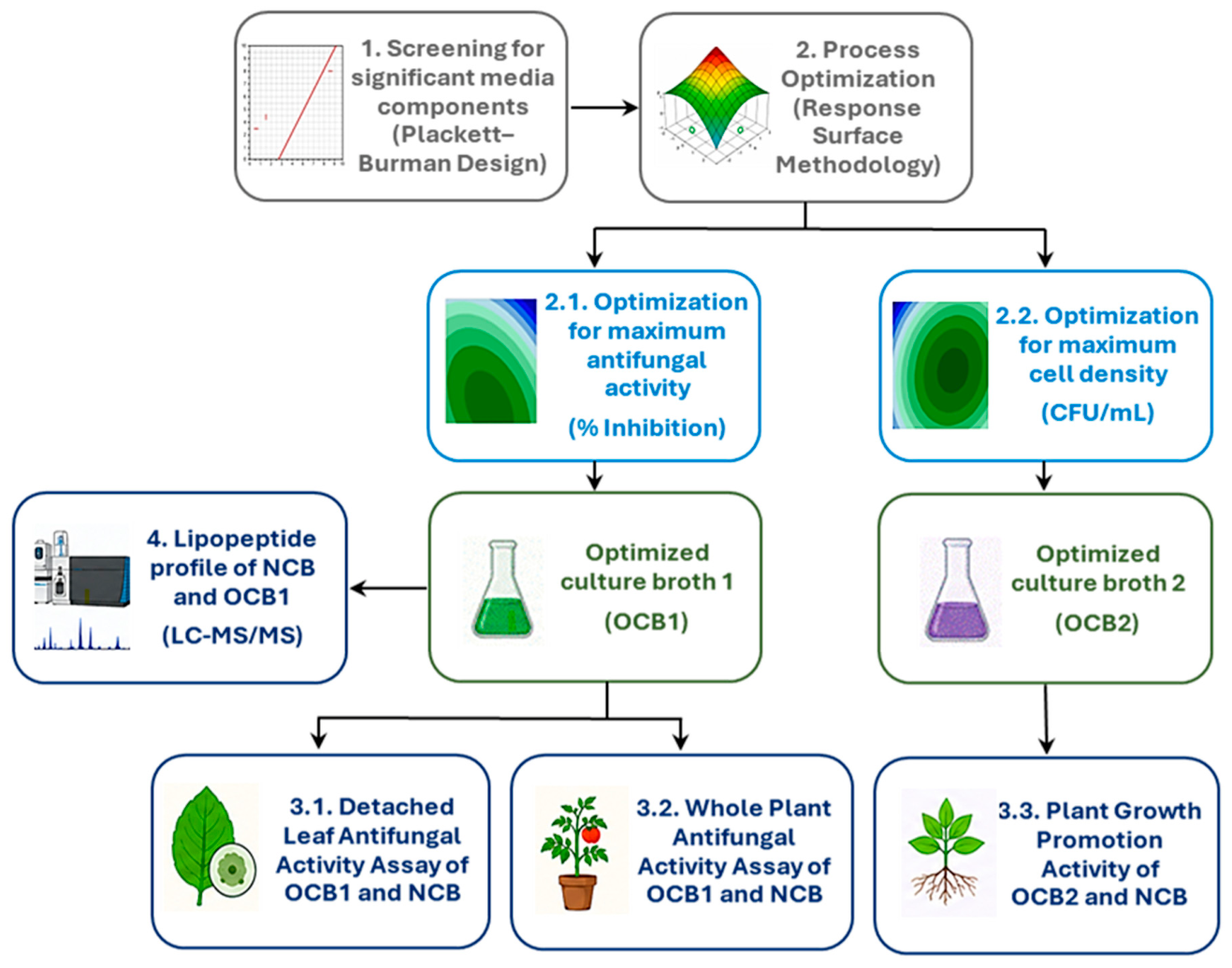
B. cinerea using a Plackett–Burman design; (ii) to optimize culture conditions for maximum antifungal activity and maximum cell density using response surface methodology; (iii) to validate the optimized cultures in tomato bioassays; and (iv) to investigate whether the enhanced antifungal activity is associated with changes in the lipopeptide profile. The main stages of the study and their relationships are summarized in the workflow presented in
Figure 1.
2. Materials and Methods
2.1. Microbial Strains, Media, and Cultivation Conditions
B. velezensis R22 was previously isolated and deposited in the National Bank for Industrial Microorganisms and Cell Cultures (NBIMCC) under registration number 9096. The fungal pathogen
B. cinerea (ATCC
®28985, NBIMCC 120) served as the target organism in antifungal assays. Both microorganisms were stored at −70 °C, as previously described [
34].
All cultivations of B. velezensis R22 were carried out with inoculum prepared in 500-mL flasks with 100 mL LB medium (glucose, 10 g/L; yeast extract, 5 g/L; tryptone, 10 g/L; NaCl, 10 g/L), incubated on a rotary shaker at 37 °C and 200 rpm to an OD600 = 2.0.
Plackett–Burman design experiments were conducted in 500-mL Erlenmeyer flasks containing 100 mL of medium with the following composition (g/L): sucrose, 10–30; soybean meal (SNCB 46 standard, Cargill Inc., Buenos Aires, Argentina), 20–60; MgSO4, 1–5; CaCl2, 1–3; MnSO4, 0–0.2; FeSO4, 0–0.2; K2HPO4, 0–1 (Merck KGaA, Darmstadt, Germany). After 1% (v/v) inoculation, batch cultures were maintained on a rotary shaker (New Brunswick, San Diego, CA, USA) at 37 °C and 200 rpm for 72 h.
Central composite design experiments were carried out in a 1 L stirred bioreactor (Biostat® A plus, Sartorius Stedim Biotech, Göttingen, Germany) using a medium with the following composition (g/L): sucrose, 3.18–36.82; soybean meal, 40; MgSO4, 3; CaCl2, 3; and a 10% inoculum. Batch fermentations were conducted at pH 7.0, with aeration of 1 vvm sterile air, and at varying temperatures and agitation speeds. Although all cultivations were performed for 72 h, optimization was based on data collected after 24 h to reduce process time and improve industrial applicability.
The dissolved oxygen in the culture liquid was measured with a pO2 electrode, OxyFerm FDA 160 (Hamilton, Bonaduz, Switzerland), and the pH of the medium was controlled by the addition of 6 M NaOH or 5 M HCl and measured with an EASYFERM PLUS K8 160 electrode (Hamilton, Bonaduz, Switzerland). After each inoculation, 3 drops of Antifoam SAG 220 (Momentive Inc., Niskayuna, NY, USA) were added.
2.2. Plackett–Burman Design
A Plackett–Burman experimental design was used to identify the medium components that affect the antifungal activity of
B. velezensis R22. Seven components were selected for variation based on published data and preliminary experiments: sucrose (
X1), soybean meal (
X2), MgSO
4 (
X3), CaCl
2 (
X4), MnSO
4 (
X5), FeSO
4 (
X6), and K
2HPO
4 (
X7). Each factor was evaluated at two levels, with a central point, and a total of 13 experimental runs (each triplicated) were performed (
Table 1).
Experimental data were analyzed using a first-order polynomial equation to assess the significance of individual variables with respect to antifungal activity against
B. cinerea:
where
Y represents the antifungal activity against
B. cinerea, β
0 is the intercept, β
i are the regression coefficients, and
Xi are the coded independent variables.
The antifungal activity was evaluated as the percentage inhibition of B. cinerea growth after 24-, 48-, and 72-h treatments using 72-h cell-free supernatants of R22.
2.3. Response Surface Methodology
Response surface methodology via central composite design (CCD) matrix was applied to determine the optimal values of the significant media components and key process parameters for (i) maximal antifungal activity of R22 supernatant against
B. cinerea and (ii) maximum viable cell concentration of R22. Three independent parameters were selected for variation at five levels (−1.682, −1, 0, +1, +1.682): sucrose concentration (
X1), temperature (
X2), and agitation speed (
X3) (
Table 2). A total of 20 cultivations were performed according to the CCD matrix, each of them duplicated.
The relationship between the responses and the variables was predicted using the following second-order polynomial regression equation:
where
Yi represents the predicted response (
Y1—antifungal activity;
Y2—maximum viable cell concentration), β
0 is the intercept, β
i are linear coefficients, β
ii are quadratic coefficients, β
ij are interaction coefficients, and
Xi and
Xj are the coded independent variables. After the regression analysis, two optimization procedures were performed: (i) to maximize antifungal activity (
Y1max), and (ii) to maximize viable cell concentration (
Y2max).
Regression analysis and optimization procedures were performed using Minitab 17 software (Minitab Inc., State College, PA, USA).
2.4. Determination of Responses
2.4.1. Determination of Antifungal Activity Against B. cinerea
B. cinerea was cultivated on potato dextrose agar (PDA) plates at 25 °C for 7 days. Conidial suspensions were prepared by washing the colony surface with sterile distilled water and filtering the suspension to remove mycelial fragments. Spore concentration was determined using a hemocytometer (Thermo Fisher Scientific Inc., Bremen, Germany) and adjusted to 1 × 10⁶ spores/mL for antifungal assays.
Antifungal activity was evaluated as the percentage inhibition of
B. cinerea growth by cell-free supernatants of
B. velezensis R22 using the Resazurin Microtiter Assay (RMA). Resazurin is a redox-sensitive dye that changes color from blue (oxidized form) to pink (reduced form, resorufin). During active fungal growth, germinating spores and developing hyphae exhibit metabolic activity associated with dehydrogenase enzymes, which reduce resazurin to resorufin, resulting in a color shift from blue to pink. In the presence of antifungal compounds and growth inhibition, resazurin remains oxidized, and the medium retains its blue color. The color change can be quantified by measuring absorbance at 600 nm using an ELISA microplate reader. A decrease in absorbance at 600 nm indicates active fungal growth, whereas higher absorbance indicates growth inhibition. Assays were performed in 96-well microplates. Each well contained 50 µL of
B. cinerea growth medium, 10 µL of spore suspension, 30 µL of 0.02% resazurin solution, and 50 µL of test or control solution, resulting in a final volume of 140 µL per well. The tested conditions included: (i) cell-free culture supernatant of strain R22 (test sample), (ii) sterile water (positive growth control, no inhibition), and (iii) nystatin (complete inhibition, negative control). Plates were incubated for 72 h, and absorbance at 600 nm was measured every 24 h. The percentage inhibition of fungal growth was calculated using the following equation:
where OD sample is the absorbance of wells containing R22 supernatant, fungal spores, medium, and resazurin; OD positive control is the absorbance of wells containing water, fungal spores, medium, and resazurin (no inhibition); and OD negative control is the absorbance of wells containing nystatin, fungal spores, medium, and resazurin (complete inhibition).
2.4.2. Determination of Cell Growth of B. velezensis R22
Cell growth of B. velezensis R22 was quantified by counting viable cells, reported as colony-forming units per milliliter (CFU/mL). CFU values served as a measure of viable cell concentration and did not distinguish between vegetative cells and spores. Serial tenfold dilutions of culture samples were prepared, plated on solid LB agar, and incubated at 37 °C for 24 h. Viable cell counts were calculated using the dilution factor and reported as CFU/mL of the original sample.
2.5. In Vivo Validation by Plant Experiments with Solanum lycopersicum cv. “Ideal”
In vivo experiments were conducted to assess resistance to B. cinerea infection and plant growth-promoting activity. Tomato plants were treated with three types of B. velezensis R22 culture broths (whole fermentation broths): (i) non-optimized culture broth (NCB), obtained by cultivation in medium No. 12 from the Plackett–Burman design; (ii) optimized culture broth 1 (OCB1), produced under conditions designed for maximal antifungal activity (Y1max); and (iii) optimized culture broth 2 (OCB2), produced under conditions designed for maximum viable cell concentration (Y2max). In all cases, culture broths were harvested after 24 h of cultivation and used in subsequent biological assays and lipopeptide analyses.
Tomato seedlings of the determinate cultivar ‘Ideal’ were used in planta experiments. Tomato seeds were sown in trays (10 × 10 cm) with five seeds per cell and germinated under a 12 h light/12 h dark photoperiod under artificial illumination. After emergence, plants were assigned to control or experimental groups (n = 8 each).
2.5.1. Detached Leaf B. cinerea Resistance Assay
To evaluate tomato resistance to phytopathogenic fungi, a detached-leaf bioassay was conducted at the six-leaf stage [
36]. Fully expanded tomato leaves from the third and fourth nodes were collected, washed three times with sterile water, and dried with sterile paper towels. Four experimental groups were included: (i) a healthy negative control consisting of untreated, non-inoculated leaves used to confirm leaf viability during the assay; (ii) an infected control in which leaves were treated with sterile water prior to infection, serving as a positive control for disease development; and (iii–iv) two treatment groups in which leaves were immersed for 10 s in ten-fold diluted whole fermentation broths NCB or OCB1 (optimized for maximal antifungal activity). The leaves were air-dried and inoculated with 5 μL of a
B. cinerea spore suspension (10
6 spores/mL). All groups except the healthy control were inoculated with the pathogen. Leaves were then placed in Petri dishes (20 cm diameter) containing moistened filter paper, wrapped with water-soaked cotton to maintain hydration. Samples were incubated at 25 °C, and disease progression was assessed on days 5 and 7 post-infection. All experiments were performed in triplicate.
2.5.2. Whole Tomato Plant B. cinerea Resistance Assay
The antifungal activity of
B. velezensis R22 against
B. cinerea was evaluated on whole tomato plants. Three experimental groups were included: control (plants treated with water, positive control for disease development); treated with NCB; and treated with OCB1. Four hours after treatment, plants were infected with a
B. cinerea spore suspension (10
6 spores/mL). Disease development was monitored for 14 days after infection. Disease assessment was performed using a five-point rating scale in accordance with established methodologies [
37]. Disease prevalence (P) was calculated using the following formula:
where n represents the number of diseased plants and N the total number of plants. The disease severity index (I) was calculated as
where (ai × bi) represents the sum of the number of affected plants (ai) and their corresponding disease severity score (bi), assessed on a scale from 0 to 5 (0 = no symptoms; 1 = 0.1–10%; 2 = 11–25%; 3 = 26–50%; 4 = 51–89%; 5 = 90–100% of plant surface affected), and N is the total number of plants. Based on disease severity values, in vivo resistance was classified as resistant (R, ≤5% infection), moderately resistant (MR, 5–15%), moderately susceptible (MS, 16–25%), susceptible (S, 26–50%), or highly susceptible (HS, >50%).
2.5.3. Plant Growth-Promoting Assay
A plant-promoting assay of B. velezensis R22 on tomato was conducted under soil-application conditions. Plants were divided into two treated groups and one control group. The treated groups received soil drench applications near the root of 1 mL either NCB or OCB2, the latter developed to maximize viable cell concentration. Control plants (C) were irrigated with sterile water. Applications were performed at defined intervals during early plant development, and growth performance was monitored to assess the plant-stimulating effect.
2.6. Preparation of Cell-Free Lipopeptide Extract
The cell-free extract was obtained by centrifuging the crude bacterial broth at 12,000× g for 15 min. The supernatant was collected, passed through a 0.45 μm syringe filter, acidified to pH 2 with 6 M HCl, and incubated at 4 °C overnight to promote lipopeptide precipitation. After centrifugation at 8000× g for 15 min, lipopeptides were extracted from the resulting pellet with high-purity methanol (≥99.9%) after 20 min of vortexing. Insoluble residues were removed by centrifugation. Methanol was then evaporated under vacuum at 37 °C. Before the next analysis, the resulting lipopeptides were dissolved in methanol and filtered through a 0.22 μm membrane syringe filter.
2.7. Mass Spectrometric Studies of Lipopeptides Produced by B. velezensis R22
Mass spectrometric experiments on lipopeptide mixtures extracted from
B. velezensis R22 (cultivated under different conditions) were performed using reversed-phase ultra-performance liquid chromatography coupled with electrospray ionization and time-of-flight mass spectrometry (UHPLC/QqTOF, Bruker compact mass spectrometer (Bruker Daltonics, Bremen, Germany)). The chromatographic method of RP-UHPLC with DAD in the range of 200–400 nm was carried out with a Bruker Intensity Solo C18 reverse-phase column (2.0 × 100 mm, 2.0 μm particle size) with a gradient of water and acetonitrile containing 0.1% formic acid over 30 min. The gradient was set as follows: 0–2.5 min at 60% acetonitrile; 2.5–12 min from 60% to 73.5%; 12–22 min from 73.5% to 100%; 22–25 min at 100%; and 25.5–27 min from 100% to 60%; and 27–30 min at 60%. Lipopeptides were eluted at a flow rate of 0.1 mL/min and detected at 226 nm. ESI-MS analyses were acquired in positive ion mode and recorded within the mass range 150 to 2500
m/
z, with the following conditions: capillary voltage 4500 V, dry gas flow 8.0 L/min, nebulizer: 1.9 Bar, collision energy: 10.0 eV, collision RF: 2500.0 Vpp, transfer time: 90.0 µs. Fragmentation of the intense precursor ions was obtained in automated MS/MS mode using the CID (collision-induced dissociation) fragmentation method. ESI-MS data were processed using data analysis software version 4.0 (Bruker Daltonics, Bremen, Germany). The relative abundance of lipopeptides was calculated by summing the area of the main peak across all homologs and then expressed as a percentage for each lipopeptide family, as described by Barale et al. [
38].
3. Results
3.1. Plackett–Burman Design
To identify key medium components affecting the antifungal activity of
B. velezensis R22, the strain was cultured in 13 different media with varying components using a Plackett–Burman design. After 72 h of cultivation, cell-free supernatants from the culture broth were analyzed for activity against
B. cinerea using the Resazurin Microtiter Assay (RMA). The pathogen was treated with 13 different supernatants for 72 h, and absorbance at 600 nm was measured every 24 h. Results showed that after 24 h of treatment, the 72-h supernatant of R22 inhibited
B. cinerea by 45.5% to 96.5%, depending on the media used. When treatment was prolonged to 48 h, inhibition ranged from 27.0% to 76.9%; with 72-h treatment, it ranged from 27.5% to 57.0% (
Table 3). Thus, inhibition decreased over the course of treatment, and the rate of decline depended significantly on the composition of the media previously used for the growth of R22.
The experimental data were analyzed and fitted to three first-degree polynomial equations, representing the results obtained after 24 h (
Y1), 48 h (
Y2), and 72 h (
Y3) of pathogen treatment. Analysis of variance revealed that, regardless of treatment time, sucrose (
X1) and soybean meal (
X2) have a significant negative effect on antifungal activity (coded coefficients,
p < 0.05). CaCl
2 (
X4) has a significant positive effect only after 72 h of treatment, whereas all other components (MgSO
4, MnSO
4, FeSO
4, and K
2HPO
4) showed no significant influence (
Table 4).
The regression models could thereby be simplified to include only the significant factors:
The regression models for Y1, Y2, and Y3 fit the experimental data well, with coefficients of determination (R2) of 0.9108, 0.9260, and 0.9252, respectively. In addition, the regression equations for Y2 and Y3 are statistically significant (p < 0.05). Conversely, the regression equation for Y1 does not appear to be statistically significant (p = 0.066 > 0.05). However, all three equations show nearly equal dependence of the response on the varied parameters. This indicates the adequacy of the models and the suitability of antifungal activity determined with the RMA for statistical optimization.
Because MnSO4, FeSO4, and K2HPO4 had no effect on antifungal activity across the experimental range starting at 0 g/L, they were omitted from the media in subsequent experiments. Thus, the medium composition for the next optimization step was as follows (g/L): soybean meal, 40; MgSO4, 3; CaCl2 × 2H2O, 3, with sucrose concentration as the variable.
3.2. Response Surface Methodology
Following the screening step, response surface methodology with a central composite design matrix (CCD) was applied. The same CCD was used to determine the optimal cultivation conditions for B. velezensis R22 to achieve: (i) maximum antifungal activity against B. cinerea and (ii) maximum cell density.
Three independent variables were selected for optimization—sucrose concentration (X1), temperature (X2), and agitation rate (X3). All cultivations were carried out in a 1 L bioreactor under controlled conditions for 24 h. Twice-diluted cell-free supernatants of the culture broth collected at the 24th hour were analyzed for activity against B. cinerea using the Resazurin Microtiter Assay (RMA) after 72 h of pathogen incubation.
Additional 24-h samples were tested for viable cell concentration (CFU/mL).
The results showed that, depending on the cultivation conditions, the 24-h supernatants inhibited the pathogen’s growth by a wide range, from 14.2% to 65.5%. Similarly, after 24-h cultivation of
B. velezensis R22, viable cell counts ranged from 1.5 × 10
9 to 5.2 × 10
9 CFU/mL, indicating a strong dependence on process parameters as well (
Table 5).
The experimental data were analyzed using response surface regression to establish relationships between the factors and the two response variables. As a result, two response surface equations were obtained:
Y1, expressing the influence of the factors on the antifungal activity of
B. velezensis R22 against
B. cinerea, and
Y2, expressing their influence on the viable cell concentration of
B. velezensis R22. Analysis of variance showed that all tested factors—sucrose concentration (
X1), temperature (
X2), and agitation rate (
X3)—have a statistically significant influence (
p < 0.05) on both responses. Nevertheless, the regression coefficients indicate opposing effects on antifungal activity and cell growth within the tested ranges (
Table 6).
3.2.1. Optimization of Antifungal Activity
When the response was antifungal activity, significant (
p < 0.05) linear coefficients were observed for the factors
X1,
X2, and
X3; significant quadratic coefficients were observed for sucrose concentration (
X12) and temperature (
X22); and a significant interaction coefficient was observed between temperature and agitation (
X2X3). The quadratic coefficient of agitation
X32 and the interactions
X1X2 and
X1X3 have no significant influence on antifungal activity (
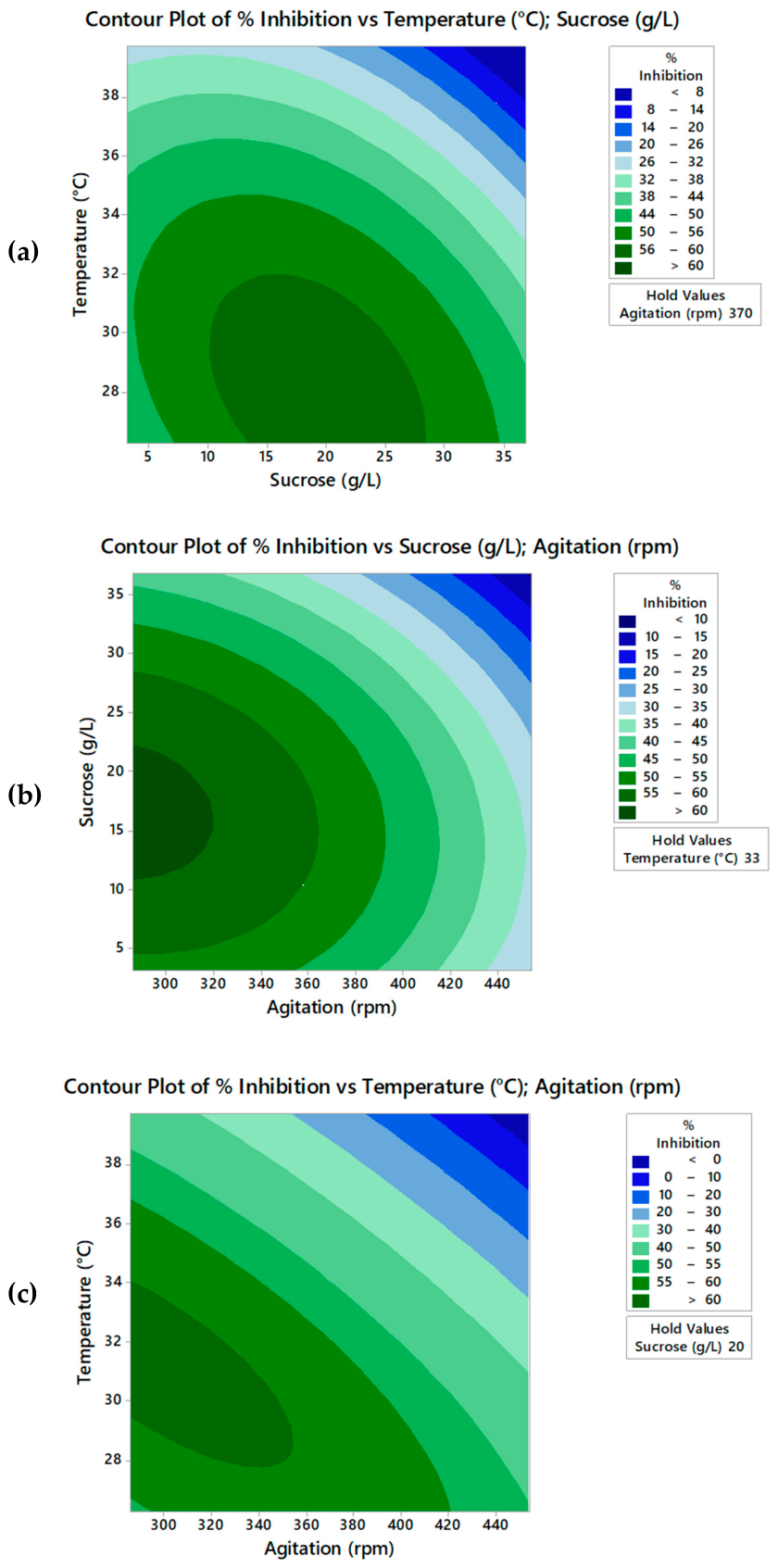
p > 0.05). Contour plots representing the interaction between two factors clearly illustrate their influence on the response (
Figure 2). The non-significant interactions
X1X2 (
Figure 2a) and
X1X3 (
Figure 2b) have more circular contour plots, whereas the statistically significant interaction between temperature and agitation (
X2X3) is reflected in a more elliptical profile (
Figure 2c).
Since terms without significant influence can be excluded from the model, the response surface Equation (2) for antifungal activity takes the following form:
The regression equation was statistically significant (p < 0.001) and explained 92.71% of the variation in the response (R2 = 0.9271, R2 (adj) = 0.8614). Thus, the model adequately describes the relationships between the factors and the response and can be used to predict the maximum value.
The optimization procedure predicted a maximum antifungal activity of 61.61% inhibition at a sucrose concentration of 17.45 g/L, a temperature of 31.8 °C, and an agitation rate of 293 rpm. This predicted maximum was lower than the one obtained in the CCD experiment (run 17: 65.49% inhibition). One explanation for this discrepancy is the higher error in the analysis of run No. 17—the model predicted only 60.95% (
Table 5). In addition, the factor values at run 17 and at the predicted maximum are nearly identical.
The experimental validation of the model was conducted in triplicate (three biological experiments) at the predicted optimal values of the factors. The average response was 62.72 ± 4.21% inhibition of
B. cinerea, slightly above the predicted value and within the predicted 95% confidence interval. Thus, the regression model
Y1 was successfully validated, and the predicted optima for sucrose concentration, temperature, and agitation speed were confirmed. Additional information for the process, such as substrate consumption, DO availability, and cell accumulation, is presented in
Figure S1.
3.2.2. Optimization of Viable Cell Concentration
When maximum cell density was used as the response, the second-degree polynomial equation was as follows:
In this model, the terms
X32 and
X1X2 were excluded because their coefficients were statistically insignificant (
p > 0.05). The model was statistically significant (
p < 0.001) and explained 96.71% of the variation in the response (
R2 = 0.9671,
R2 (adj) = 0.9374). As in the previous model, all three factors were statistically significant. The lack of statistical significance of the quadratic coefficient for agitation rate, combined with a significant positive linear coefficient, indicates that viable cell concentration (
Y2) varies directly and linearly with increasing agitation rate (
X3).
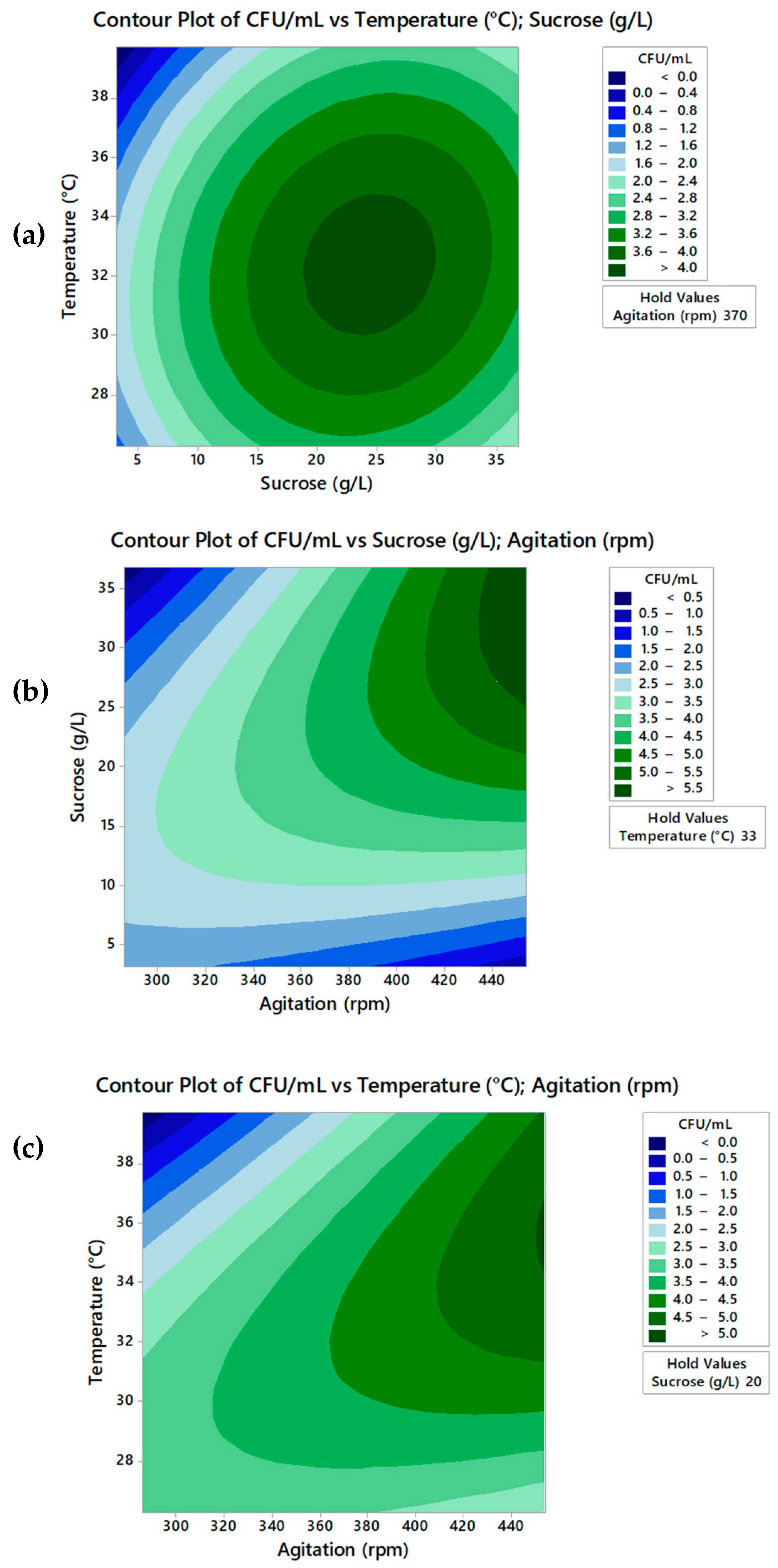
Figure 3 shows how factor interactions create variation in the response.
Only the interaction between the amount of sucrose and temperature (
X1X2) is not statistically significant, and the contour plot for this interaction is shown as concentric circles around the maximum of the response (
Figure 3a). In this case, the optimization procedure predicts a maximum viable cell concentration of 6.33 × 10
9 CFU/mL at a sucrose concentration of 35.46 g/L, a temperature of 36.5 °C, and an agitation speed of 454 rpm. Unfortunately, the predicted optimum for agitation coincides with its axial point. The model was experimentally validated under the predicted optimal conditions. After 24 h, the cell density reached 1.6 ± 0.4 × 10
10 CFU/mL (mean of three independent experiments), exceeding the predicted maximum of 6.33 × 10
9 CFU/mL and all responses observed in the CCD experiment. The experimentally observed maximum was also above the predicted 95% confidence interval, most likely due to the relatively high error in the valuation method. Additional information for the process, such as substrate consumption, DO availability, and cell accumulation, is presented in
Figure S2.
In conclusion, the two experimentally validated models showed markedly different optimal conditions for maximum antifungal activity and maximum cell density. To obtain a culture of
B. velezensis R22 with maximum antifungal activity, lower temperature, less carbon source, and less aeration are required than for maximum viable cell yield (
Table 7).
3.3. Evaluation of Antifungal Efficacy Using Detached Tomato Leaf and Whole Plant Bioassays
To further evaluate the biocontrol potential of the optimized culture broth (OCB1) against
B. cinerea, two complementary experimental approaches were used: a detached-leaf bioassay (
Figure 4) and a whole-plant resistance assay (
Figure 5). These experiments were designed to assess the treatment’s efficacy under localized and systemic infection pressures.
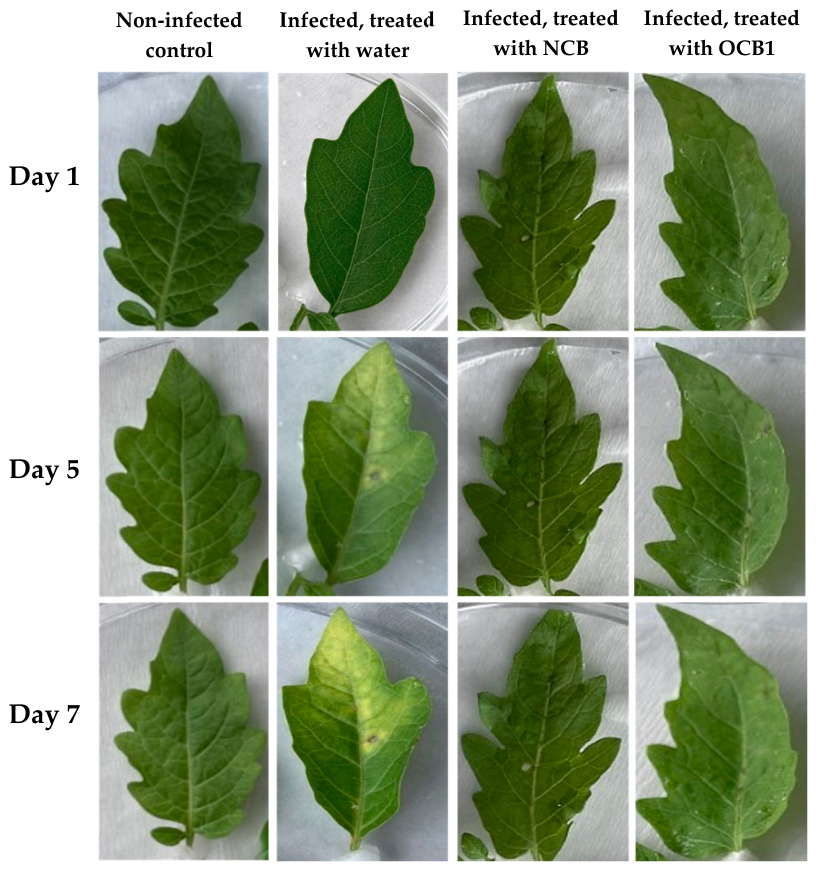
The detached-leaf bioassay was conducted to track the timeline of pathogen-induced necrosis and tissue degradation. Leaves were treated with tenfold-diluted NCB and OCB1 (containing approximately 2.7 ± 0.3 × 10
8 and 4.4 ± 0.6 × 10
8 CFU/mL of viable cells after dilution, respectively). OCB1 showed higher antifungal activity, achieved through optimization (
Figure 4). Standardized controls, including water-washed and non-infected leaves, were maintained to ensure the validity of the observed antifungal responses.
A critical observation in the detached leaf assay is the rapid progression of pathogen-induced necrosis in the water-treated control. In the absence of a protective agent, B. cinerea compromised tissue integrity, resulting in extensive yellowing and necrotic collapse of the leaf lamina by Day 7. In contrast, leaves treated with NCB and OCB1 remained predominantly green, indicating significant inhibition of the fungus. While the NCB treatment effectively prevented widespread infection, it did not fully restrict lesion expansion. The OCB1 treatment, however, prevented necrosis, indicating that the optimized formulation provides better defense against the enzymatic degradation typically caused by B. cinerea. This confirms that optimizing antifungal activity has significant practical value.
The whole-plant assay revealed the overall disease prevalence and severity index over a 10-day period to simulate high-pressure field conditions (
Figure 5).
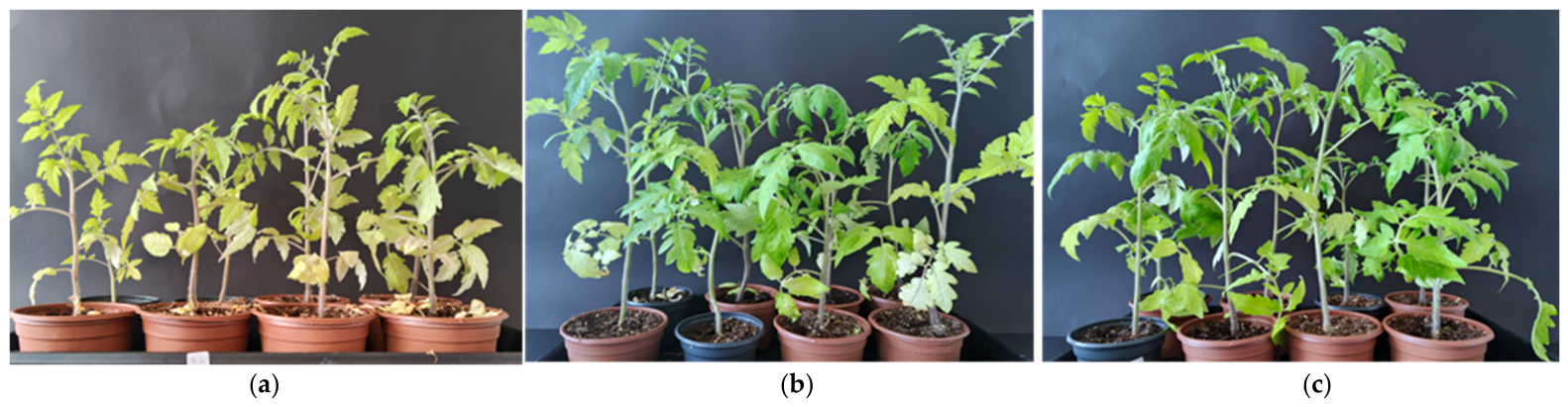
Table 8 summarizes disease prevalence, severity index, and resistance classification for the three experimental groups, using the five-point rating scale (0–5) and established resistance criteria. Control plants were highly susceptible (S), exhibiting advanced symptoms of
B. cinerea infection, with significant wilting of the foliage.
Widespread leaf chlorosis and necrosis were observed, particularly on primary and secondary leaves. The high Disease Severity Index (~45.7%) indicates significant pathogen colonization, resulting in loss of turgor in several specimens. NCB-treated tomatoes showed improved vitality compared to the control, with symptoms primarily restricted to the lower leaves. This was classified as Moderately Susceptible (MS). Symptoms were present but less aggressive. Chlorotic areas were largely confined to the oldest leaves, while the upper canopy remained relatively functional. This suggests a delay in disease progression compared to the control. Notably, plants treated with the OCB1 culture broth exhibited good health and vigor. With a low severity index of approximately 6.67%, this group is classified as Moderately Resistant (MR), showing a clear positive response to the optimized formulation compared to the other groups. The lowest prevalence (50%) and severity (~6.7%) suggest that OCB1 effectively inhibited B. cinerea spore germination. The foliage remained dense and deep green, with only minor localized spots. The reduction in the Severity Index (I) for the OCB1-treated group highlights the efficacy of the optimized culture broth in providing in vivo protection against gray mold. The transition from “Susceptible” to “Moderately Resistant” status confirms the bioprotective potential of the OCB1. A comparative analysis indicates a 63.5% reduction in disease severity after NCB treatment compared with the control. However, the application of OCB1 provided a highly significant protective effect, reducing severity by 85.3% relative to the control. Most importantly, the 59.9% further reduction achieved by OCB1 over the NCB group provides quantitative evidence of the success of the optimization strategy, elevating the plant’s status from ‘Susceptible’ to ‘Moderately Resistant’.
It is important to note that the experimental conditions in this study were significantly more severe than those typically encountered in field trials of fungicides. While standard field reports often show moderate levels of natural infection, frequently peaking at 20–30% disease severity, our bioassay used massive direct inoculation (106 spores/mL), resulting in 100% disease prevalence in the control group by Day 10. Under such extreme conditions, which far exceed natural pathogenic pressure, the OCB1 remained highly effective.
3.4. Plant Growth-Promoting Activity of B. velezensis R22 Under In Vivo Conditions
The plant-promoting effects of
B. velezensis R22 were evaluated using OCB2 (containing 1.6 ± 0.4 × 10
10 CFU/mL) and NCB (2.7 ± 0.3 × 10
9 CFU/mL) on uninfected tomato plants (
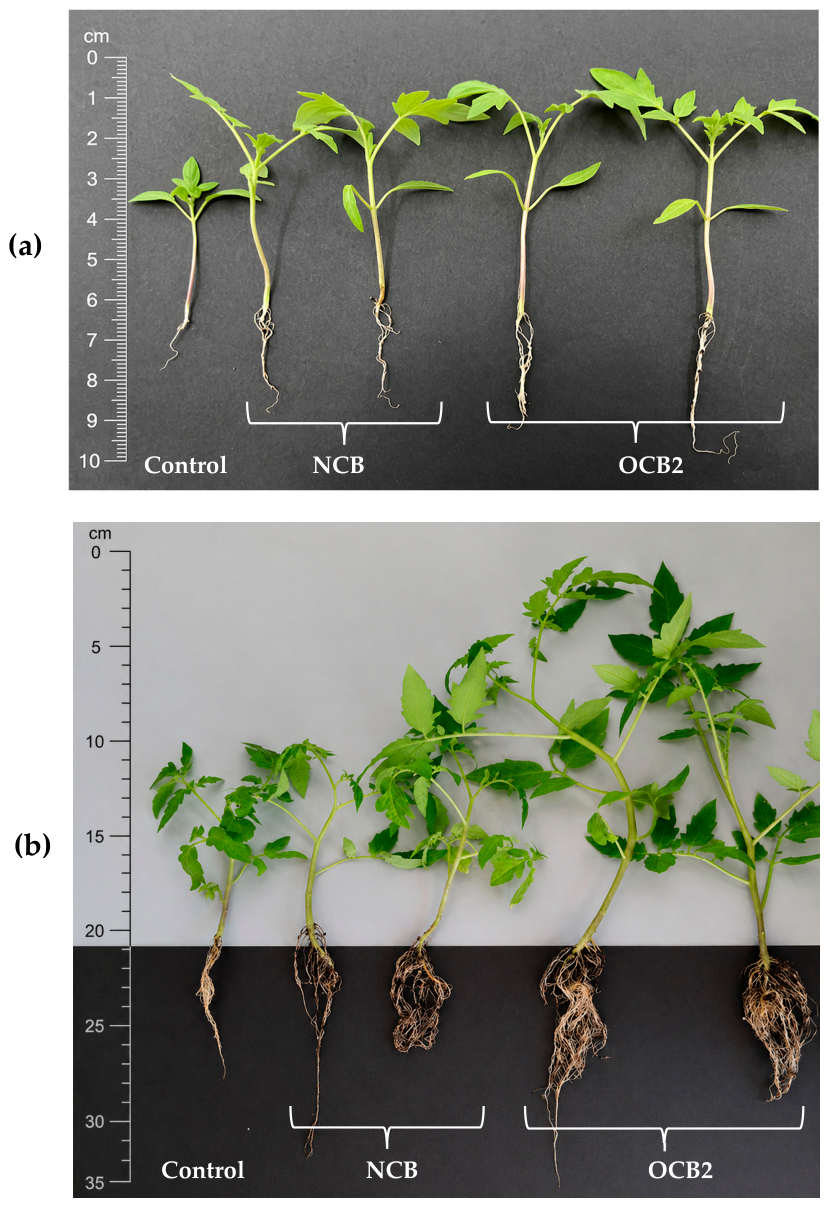
Table 9). Undiluted culture broths were poured near the plant root at 1 mL on the 1st, 7th, 14th, and 21st days of germination. An assessment of the root system was conducted on days 14 and 30 because plant growth-promoting activity is primarily reflected in modifications of root system architecture rather than in simple primary root elongation. The stimulatory effect was demonstrated by the formation of a more extensive, highly branched root system, accompanied by increased root biomass relative to the untreated control (
Figure 6). This enhanced root development is likely to improve nutrient and water acquisition, thereby enhancing plant vigor and shoot development. Because root length measurements alone do not fully capture these effects, photographic evidence was included to illustrate the biostimulatory phenotype at different developmental stages.
Figure 6a shows plants at day 14, with early stimulation of root expansion and branching already evident, while
Figure 6b (day 30) shows the sustained effect on root mass accumulation and whole-plant development. Importantly, the effect was markedly more pronounced when plants were treated with OCB2 than with NCB, confirming the importance of higher cell density.
On day 45, overall plant development, including leaf area, stem thickness, and height, was evaluated. Both rhizobacteria-based culture broths produced statistically significant increases in all measured morphometric parameters compared with the water-treated control group. Leaf length increased from 88.75 mm in control plants to 122.75 mm under NCB treatment and 138.38 mm under OCB2 treatment (
Table 9). A similar trend was observed for leaf width, which increased from 71.88 mm (control) to 105.25 mm (NCB) and 113.75 mm (OCB2). Consequently, leaf area showed a strong stimulatory response, increasing from 4919.24 mm
2 in control plants to 10,155.66 mm
2 under NCB and reaching 12,387.51 mm
2 under OCB2. Bacterial treatments also positively affected stem growth parameters. Stem length increased from an average of 18.33 mm in control plants to 25.29 mm under NCB treatment and 30.41 mm under OCB2 treatment. Similarly, stem diameter increased from 4.51 mm (control) to 5.41 mm (NCB) and 5.84 mm (OCB2). Overall, OCB2 consistently showed stronger growth-promoting effects than NCB. These results indicate the importance of optimizing cell density to enhance the plant-stimulating activity of
B. velezensis R22.
3.5. Lipopeptide Profile of the Cell-Free Extract of B. velezensis R22 in NCB and OCB1
The extracellular metabolites present in culture supernatants of
B. velezensis R22 in NCB and OCB1 were analyzed by reversed-phase ultra-performance liquid chromatography coupled with mass spectrometry. Lipopeptides produced by
B. velezensis R22 were identified on the basis of their mass-to-charge ratios (
m/
z) in LC–ESI–MS spectra and comparison with previously reported molecular ion data [
37,
38,
39,
40,
41]. Most ions were further confirmed by characteristic fragment ions observed in their MS/MS spectra. Analysis of the cell-free extract in positive ionization mode revealed a complex metabolic profile comprising homologs from the bacillomycin D, fengycin, and surfactin families.
3.5.1. Iturin Production
The group of protonated molecular ions [M+H]
+ observed at
m/
z 1031.5487, 1045.5644, and 1059.5792, eluted between 3.2 and 5.7 min, corresponded to bacillomycin D homologs carrying β-amino fatty acid chains of C14–C16 and belonging to the iturin family. Since the peptide sequence of bacillomycin D is conserved, differences in molecular mass arise exclusively from variations in the fatty acid chain length. The observed 14 Da mass differences indicate that the homologs differ by one CH
2 unit. Potassium adducts [M+K]
+ at
m/
z 1069.5051 and 1083.5194 further supported the assignment of C14 and C15 bacillomycin D (
Figure S3a,b). These observations are consistent with previous reports describing bacillomycin D homologs in
Bacillus spp. [
42,
43]. Tandem MS analysis of precursor ions at
m/
z 1031.55, 1045.56, and 1059.58 showed the presence of C14–C16 bacillomycin D homologs. The MS/MS spectrum of C14 bacillomycin D is presented in
Figure S4. Opening the peptide ring between glutamate and proline generated diagnostic b- and y-type fragments. The most intense fragment ion at
m/
z 754.39, corresponding to [M+H−Asn−Tyr]
+, was characteristic of C14 bacillomycin D. Comparative analysis revealed that OCB1 cultivation favored the accumulation of C15 bacillomycin D, whereas NCB supernatant contained a relatively higher proportion of C14 homologs.
3.5.2. Fengycin Production
The second group of lipopeptides, eluted between 6 and 11 min, corresponded to fengycin A and fengycin B homologs carrying
β-hydroxy fatty acid chains ranging from C15 to C18. These compounds were mainly detected as doubly charged ions [M+2H]
2+ in the
m/
z 724–761 range and confirmed by corresponding protonated ions between
m/
z 1447–1520. The ESI–MS spectra (
Figure S5a,b) showed that fengycin A homologs predominated in both extracts. In NCB cultures, C16 and C17 fengycin A were the major peaks, whereas in the OCB1 supernatant C18 fengycin A was observed at significantly higher levels. Overall, both conditions promoted fengycin production, with fengycin A homologs substantially more abundant than fengycin B.
Two fengycin isoforms were confirmed by MS/MS analysis (
Figure S6a,b). Three homologs of fengycin A were identified: C16 fengycin A (
m/
z 732.4 [M+2H]
2+, 1463.8 [M+H]
+), C17 fengycin A (
m/
z 739.4 [M+2H]
2+, 1477.8 [M+H]
+), and C18 fengycin A (
m/
z 746.4 [M+2H]
2+, 1491.8 [M+H]
+). Similarly, three homologs of fengycin B were also detected: C15 (
m/
z 724.4), C17 (
m/
z 753.4), and C18 (
m/
z 760.4). Diagnostic fragment ions served as molecular fingerprints, allowing reliable distinction among individual homologs.
Interpretation of the MS/MS spectrum of the precursor ion at
m/
z 732.36 (
Figure S4) revealed diagnostic ions at
m/
z 966.46 (y8) and 1080.54 (y9), along with the doubly charged fragment at
m/
z 540.77, confirming C16 fengycin A. In contrast, for fengycin B homologs, characteristic ions at
m/
z 994.50 (y8) and 1108.58 (y9) were detected, along with [M+2H]
2+ at
m/
z 554.79 (
Figure S4), confirming a structural difference due to substitution of Ala at position 6 with Val.
3.5.3. Surfactin Production
Lipopeptides from the surfactin family eluted between 20 and 25 min and were observed predominantly as protonated ions [M+H]
+ at
m/
z 1008.67, 1022.60, 1036.63, and 1050.64, corresponding to homologs with β-hydroxy fatty acid chains ranging from C12 to C16. Sodium adducts [M+Na]
+ were also detected. The ESI–MS spectra (
Figure S7a,b) showed that C15 surfactin predominated in NCB supernatants, followed by C14 surfactin. In contrast, cultivation under OCB1 conditions shifted the profile toward C16 surfactin, which became the dominant homolog, followed by C15 surfactin.
The structures of the surfactin homologs were further confirmed by tandem mass spectrometry (ESI–MS/MS analysis). The MS/MS spectrum of the most abundant protonated molecular ion, [M+H]
+ at
m/
z 1036.63, corresponding to C15 surfactin A, is shown in
Figure S8. The combined analysis of chromatographic behavior and MS/MS fragmentation profiles enabled reliable discrimination among homologous lipopeptides and confirmation of their structural diversity. The identified members of the bacillomycin D (iturins), fengycins, and surfactins, together with their retention times, molecular ions, and diagnostic fragment ions, are summarized in
Table 10.
The observed series of b-fragment ions at m/z 923.54 (b7), 810.46 (b6), 695.44 (b5), 677.43 (b5–H2O), 596.37 (b4), 578.36 (b4–H2O), and 352.20 (b3–H2O) corresponds to loss of the Leu–Leu–Asp–Val residues from the C-terminus. In addition, the characteristic y-ion series at m/z 685.65 (y6+H2O), 554.30 (y5), and 441.22 (y4) further confirms the Leu–Leu–Asp–Val sequence of the peptide moiety. The intense fragment ion at m/z 685.65, representing the peptide fragment remaining after loss of the fatty acid chain and the N-terminal residue, is a diagnostic ion for surfactin A and distinguishes it from surfactin B, which typically exhibits a corresponding ion at m/z 671.6. Based on the ESI–MS/MS fragmentation patterns and the detected diagnostic ions, all identified surfactin molecules were assigned to the surfactin A homologs.
3.5.4. Comparison in Lipopeptide Production of NCB and OCB1
Mass spectrometric analyses showed that B. velezensis R22 produces three major classes of cyclic lipopeptides: bacillomycins (iturin family), fengycins, and surfactins. Among these, surfactins and fengycins were the dominant lipopeptide groups across both cultivation conditions.
Differences in lipopeptide profiles between NCB and OCB1 supernatants are summarized in
Table 11. Relative abundance values were calculated by summing the peak areas of all detected homologs within each lipopeptide family and expressing them as percentages of the total detected lipopeptide signal intensity. The results indicate that surfactins were the predominant lipopeptide family in both extracts, accounting for 85.1% and 81.5% of the total detected lipopeptide signal in NCB and OCB1 extracts, respectively. However, substantial differences in homolog distribution were observed across cultivation conditions. In the NCB extract, C15 surfactin A was the dominant homolog, representing 55.86% of total surfactins, followed by C14 surfactin A (33.56%).
In contrast, under OCB1 conditions, C16 surfactin A was the predominant homolog (42.58%), followed by C15 surfactin A (35.48%). Additionally, C17 surfactin A was detected exclusively in OCB1 supernatants, whereas C12 and C13 surfactin homologs were found only in NCB extracts.
Fengycins were the second most abundant lipopeptide family and showed a relative increase optimised culture broth, rising from 10.0% in NCB to 13.4% in OCB1. Across both cultivation conditions, fengycin A homologs were more abundant than fengycin B homologs. In NCB extracts, C16 fengycin A (41.72%) and C17 fengycin A (33.38%) predominated. However, under OCB1 conditions, although C16 fengycin A remained the most abundant homolog (44.96%), C18 fengycin A increased substantially and became the second most abundant homolog (30.86%). This shift suggests that optimized cultivation conditions influenced not only total lipopeptide production but also the distribution of individual fengycin variants.
Three bacillomycin D homologs belonging to the iturin family were detected in both extracts. While the overall contribution of bacillomycins remained relatively stable (4.9% in NCB and 5.1% in OCB1), changes in homolog distribution were observed. C14 bacillomycin D predominated in NCB supernatants, whereas C15 bacillomycin D became the dominant homolog under OCB1 conditions.
Overall, the optimized cultivation conditions altered the lipopeptide profile and shifted the distribution of individual homologs, particularly within the surfactin and bacillomycin families. A notable increase in longer-chain surfactin and bacillomycin variants was observed in the OCB1 supernatant. Because fatty acid chain length may influence membrane interactions and biological activity, these compositional changes could contribute to the enhanced antifungal performance observed under optimized conditions.
4. Discussion
B. cinerea remains one of the most economically important phytopathogens, the cause of severe losses in horticultural crops because of its broad host range, remarkable adaptive capacity, and increasing resistance to conventional fungicides [
2,
44,
45]. The growing limitations of chemical control strategies have stimulated intensive efforts to develop sustainable alternatives, including microbial biocontrol agents [
46,
47,
48]. Among these,
B. velezensis has attracted considerable attention for its ability to colonize efficiently plant-associated environments and to produce a diverse array of bioactive secondary metabolites with both antimicrobial and plant-beneficial properties [
10,
17,
49,
50,
51,
52,
53].
Previous optimization studies involving
Bacillus-based systems have primarily focused on maximizing the production of specific metabolites, such as surfactins, fengycins, iturins, enzymes, or bacterial biomass [
23,
24,
33,
54,
55,
56,
57]. To achieve these goals, researchers have applied a variety of approaches, including medium engineering, supplementation with solid carriers, utilization of alternative carbon sources, strain improvement, and bioreactor optimization [
52,
53,
54,
55,
56,
57]. For example, surfactin production has been enhanced through medium supplementation strategies [
52], economical biosurfactant production has been achieved using agricultural substrates [
53], and several optimization procedures have successfully increased iturin synthesis and overall lipopeptide productivity [
54,
55,
56]. While these studies have significantly advanced industrial fermentation processes, they generally target predefined products rather than the biological performance of the final culture.
The principal novelty of the present study is the use of overall antifungal activity as the target of optimization. Instead of maximizing the production of a particular metabolite, cultivation conditions were selected to maximize inhibition of B. cinerea. This strategy was based on the assumption that biological activity reflects the combined action of multiple metabolites and their potential interactions. Consequently, optimization was directed toward improving the overall biocontrol efficacy of the fermentation broth rather than individual physiological or biochemical parameters. Such an activity-driven approach recognizes that disease suppression often results from complex metabolite networks and that changes in the production of individual compounds do not necessarily translate into improved biological performance.
Although the developed response surface models were associated with relatively high experimental variability, the predicted relationships were consistent and were successfully validated experimentally. The screening design identified sucrose and soybean meal as the most influential variables affecting antifungal activity. In addition, CaCl
2 exhibited a positive regression coefficient at all cultivation times and became statistically significant at 72 h of cultivation (
p < 0.05), indicating a beneficial contribution during prolonged fermentation. These findings are consistent with previous reports showing that carbon and nitrogen availability strongly regulate secondary metabolite biosynthesis in
Bacillus spp., particularly the production of antifungal lipopeptides such as surfactin, iturin, and fengycin [
19,
39,
50,
53]. Numerous studies have demonstrated that medium composition profoundly influences metabolite production, whereas elevated sucrose concentrations do not necessarily confer maximal antifungal activity due to regulatory mechanisms such as carbon catabolite repression [
54,
55,
56,
57,
58,
59,
60]. Regarding the time profile of antifungal activity, the data for the optimized process for antifungal activity at the 24th (OCB1), 48th, and 72nd hours show 62.72%, 52.65%, and 60.88% inhibition of
B. cinerea, respectively (
Figure S1). A slight decrease in activity at the 48th hour was also observed across all CCD experiments, with peak activity occurring at either the 24th or the 72nd hour. This trend aligns with the findings of Hu et al. (2024) [
61], whose transcriptomic analysis revealed that
B. velezensis undergoes a metabolic (diauxic) switch around the 48-h mark. Specifically, carbon depletion triggers the repression of antifungal genes, leading to a temporary decline in antifungal activity before a subsequent increase by the 72nd hour.
The present investigation further demonstrated that conditions favoring biomass accumulation differ substantially from those promoting antifungal metabolite biosynthesis. The optimal conditions for maximizing antifungal activity were markedly different from those that supported the maximum viable cell concentration. Increased nutrient availability, higher temperatures, and enhanced aeration favored growth, whereas maximal antifungal activity was achieved under more moderate cultivation conditions. These observations indicate that viable cell concentration alone is not a reliable predictor of antagonistic potential and emphasize the importance of metabolite composition in determining biological efficiency.
The practical significance of these findings was confirmed in tomato experiments. Whereas many optimization studies remain limited to in vitro evaluations [
17,
41,
42], the enhanced antifungal activity achieved under optimized cultivation conditions translated into improved disease suppression in planta. The optimized culture broth for antifungal activity (OCB1) significantly reduced gray mold symptoms compared with the non-optimized broth (NCB), demonstrating that cultivation-driven changes at the metabolite levels resulted in measurable functional benefits.
To elucidate the basis of this enhanced biological activity, the lipopeptide composition of the culture broths was analyzed by mass spectrometry. Three major groups of cyclic lipopeptides were identified: bacillomycins, fengycins, and surfactins. These compounds are among the most important antimicrobial metabolites produced by
Bacillus species and are key determinants of antifungal activity [
21,
46,
47,
48]. Fengycins, first described by Vanittanakom et al. [
50], exhibit strong activity against filamentous fungi through disruption of membrane integrity. Bacillomycins, members of the iturin family, are likewise recognized for their potent antifungal effects and membrane-disrupting properties [
48,
53]. Surfactins, originally isolated by Arima et al. [
49], contribute not only to antimicrobial activity but also to biofilm formation, motility, microbial competition, and induction of plant defense responses [
62].
Although surfactins represented the dominant lipopeptide family under both cultivation conditions, accounting for more than 80% of the detected signal intensity, optimization substantially altered the distribution of individual homologs. In NCB, C15 surfactin A predominated together with shorter-chain homologs (C12–C14), whereas optimized cultivation shifted the profile toward longer-chain variants, particularly C16 and C17 surfactins. Notably, C17 surfactin A was detected exclusively in OCB1. Comparable changes were observed within the bacillomycin D family, where C15 bacillomycin D became dominant under optimized conditions, replacing the C14 homologs prevalent in NCB. Fengycins exhibited a similar trend. Although fengycin A homologs remained dominant under both cultivation regimes, OCB1 showed a pronounced increase in C18 fengycin A relative abundance compared with NCB.
These results demonstrate that optimization influenced not only the total abundance of lipopeptides but also their composition profile. Such qualitative shifts may have important biological consequences because variations in fatty acid chain length affect hydrophobicity, membrane interactions, and amphiphilic properties of cyclic lipopeptides [
48]. Longer fatty acid chains have been suggested to facilitate membrane insertion and may alter the efficiency of membrane destabilization [
42,
43]. Consequently, the enhanced antifungal activity observed under optimized conditions may be attributed not only to quantitative differences in metabolite production but also to qualitative changes in the lipopeptide profile.
An additional factor probably instrumental in the observed biological response is the synergistic interaction among lipopeptide classes. Fengycins are highly active against filamentous fungi, whereas surfactins can increase membrane permeability and facilitate the action of other metabolites. Bacillomycins provide additional direct antifungal effects. Therefore, the antagonistic activity observed in this study most likely resulted from the coordinated action of multiple metabolite groups rather than from a single dominant compound. This may explain why optimization based on overall antifungal performance proved more effective than targeting the production of individual metabolites.
The present findings demonstrate that optimization of the biological function rather than the production of a single metabolite can substantially improve the performance of B. velezensis-based biocontrol systems. The clear divergence between conditions that maximize antifungal activity and those that favor a high concentration of viable cells suggests that distinct physiological mechanisms govern secondary metabolite production and cell growth. Furthermore, the close correspondence between metabolomic alterations and improved disease suppression in tomato plants indicates that enhanced biocontrol efficacy was achieved through a coordinated reshaping of the entire lipopeptide profile. Overall, the activity-driven optimization strategy presented here appears to be a promising framework for the development of microbial biocontrol products in the future.




 ,
,