


Abstract
Background: Premium table grapes are often underutilized for winemaking due to suboptimal sugar–acid balance and limited aroma complexity. This study evaluated the chemical and sensory characteristics of wine produced through mixed fermentation of yeasts and lactic acid bacteria (LAB) to valorize Kyoho grapes. Methods: Kyoho grapes were fermented using a sequential yeast inoculation (Hanseniaspora opuntiae followed by Saccharomyces cerevisiae, HO+SC), combined with either simultaneous (SIM-MLF) or sequential (SEQ-MLF) malolactic fermentation using Lactoplantibacillus plantarum. Volatile compounds were quantified via Gas Chromatography with Flame Ionization Detection (GC-FID), and consumer sensory evaluation was conducted. Results: The HO +SC fermentation increased total ester content 4.21-fold compared to the S. cerevisiae control (p < 0.05). SIM-MLF yielded significantly higher levels of ethyl lactate, diethyl succinate, and diacetyl than SEQ-MLF (p < 0.05), with total esters reaching 267.38 ± 17.71 mg/L. Both MLF treatments reduced titratable acidity and increased pH. Conclusions: Sensory evaluation confirmed that SIM-MLF achieved the highest overall acceptance (7.63/9), strongly associated with “floral,” “blackberry,” and “creamy” descriptors. Thus, SIM-MLF effectively enhances the sensory attributes of Kyoho wine, providing a practical valorization strategy for non-traditional grape varieties.
1. Introduction
Grapes are among the most widely cultivated fruit crops worldwide, yet a substantial proportion of production—particularly table grape varieties—is underutilized for winemaking due to suboptimal sugar–acid balance and limited aroma complexity compared with traditional wine grapes [1,2]. While traditional wine grapes (e.g., Cabernet Sauvignon, Merlot) are bred for phenolic maturity and fermentation suitability, table grapes are primarily selected for fresh consumption characteristics such as berry size, sweetness, and texture [3]. This creates an industry-relevant gap in regions where traditional wine grape cultivation is less viable due to climatic constraints, yet premium table grape varieties are abundant. Consequently, the development of fermentation strategies that enhance aroma complexity and sensory quality is essential for the valorization of table grapes into value-added fermented products.
Kyoho grape (Vitis vinifera × Vitis labrusca), a premium table grape widely cultivated in East Asia, represents a particularly relevant case for this valorization. Although Kyoho grapes are prized for their distinctive fruity aroma and consumer acceptance as fresh fruit, they are generally considered suboptimal for winemaking because of moderate acidity, limited phenolic maturity, and an aroma profile that is less complex than that of classical wine grape cultivars [4,5]. Literature on the native microbiota of Kyoho grapes is sparse; unlike traditional wine regions where spontaneous fermentation ecosystems are well-characterized, Kyoho musts often lack the diverse indigenous yeast populations necessary for complex aroma development, necessitating the use of defined starter cultures [4,6]. Nevertheless, under cooler climatic conditions, winter-harvested Kyoho grapes retain higher malic acid levels, offering a suitable biochemical basis for controlled malolactic fermentation (MLF) and providing an opportunity to improve wine balance and aroma expression [3]. Utilizing these winter-harvested table grapes for wine production offers a potential economic avenue for growers to mitigate market saturation of fresh fruit.
In recent years, mixed microbial fermentation has emerged as an effective approach to modulate wine aroma and mouthfeel beyond the capabilities of Saccharomyces cerevisiae alone. Non-Saccharomyces yeasts—particularly species of Hanseniaspora—have been widely reported to enhance ester synthesis and contribute floral and fruity notes during alcoholic fermentation through yeast–yeast interactions [5,6]. Sequential inoculation strategies are commonly adopted to harness the aroma-producing potential of Hanseniaspora spp. while ensuring fermentation completeness by S. cerevisiae [5,7]. In this study, Hanseniaspora opuntiae NYUAFM-GM03 was selected as the non-Saccharomyces starter due to its previously demonstrated high β-glucosidase activity and superior capacity to produce acetate esters in grape musts, alongside its proven compatibility with S. cerevisiae in sequential co-cultures [6,7]. However, most studies have focused on traditional wine grapes, and the performance of these yeasts in table-grape matrices remains less explored.
Lactic acid bacteria (LAB) play a central role in secondary wine fermentation, where MLF contributes not only to acidity reduction but also to aroma development through compounds such as ethyl lactate, diethyl succinate, and diacetyl [8,9,10]. Both sequential (SEQ-MLF) and simultaneous (SIM-MLF) inoculation strategies have been extensively studied in traditional enology [11,12,13]. The recent literature suggests that SIM-MLF can lead to enhanced ester formation due to the concurrent presence of ethanol (produced by yeast) and bacterial esterases, whereas SEQ-MLF may result in different kinetic profiles of aroma release [12,13]. While the comparative kinetics of SIM-MLF and SEQ-MLF are well-documented in Vitis vinifera wines, their impact on the sensory profile of hybrid table grape wines—where aroma masking and acidity balance are critical challenges—requires specific investigation. Notably, SIM-MLF is often associated with shorter fermentation times and modified aroma profiles, whereas SEQ-MLF is traditionally considered safer in terms of microbial control [11,14].
Moreover, many fermentation studies emphasize chemical composition without integrating consumer-oriented sensory analysis, limiting their relevance for product development and market acceptance [15,16,17,18]. Linking volatile aroma markers with consumer perception is especially important for wines produced from table grapes, where sensory enhancement is critical to competitiveness against traditional wines. While comprehensive metabolomic or phenolic profiling provides mechanistic depth, targeted volatile analysis coupled with consumer acceptance testing offers immediate practical insights for industry application.
Accordingly, the novelty of the present study lies not in redefining the general advantages of SIM-MLF over SEQ-MLF, but in (i) validating a defined Hanseniaspora opuntiae–Saccharomyces cerevisiae–Lactoplantibacillus plantarum (L. plantarum) strain combination specifically for winter-harvested Kyoho table grapes, and (ii) integrating volatile compound profiling with consumer sensory evaluation to establish a practical framework for table-grape wine valorization. By combining physicochemical analysis, Gas Chromatography with Flame Ionization Detection (GC-FID) aroma characterization, and consumer-based sensory assessment, this study aimed to provide applied insights into improving the sensory quality and acceptance of wines produced from non-traditional grape varieties.
2. Materials and Methods
2.1. Chemicals and Reagents
Analytical-grade standards for organic acids (malic, lactic, acetic, citric), sugars (glucose, fructose), and ethanol were purchased for HPLC analysis. Volatile compound standards, including esters (ethyl acetate, ethyl hexanoate, ethyl octanoate, ethyl decanoate, isoamyl acetate, ethyl lactate, diethyl succinate, phenylethyl acetate), higher alcohols (1-propanol, 1-butanol, 1-hexanol, isoamyl alcohol, 2-phenylethyl alcohol), and terpenes (linalool, α-terpineol), were obtained for GC-FID quantification. 1-pentanol was used as the internal standard for volatile analysis. All chemicals were of high-performance liquid chromatography (HPLC) or gas chromatography (GC) grade.
2.2. Kyoho Grapes and Strains
The raw material for winemaking consisted of winter Kyoho grapes harvested in December 2025 from the Zhuolan Grape Vineyard, Taipei City, Taiwan (25.0° N, 121.5° E). The total soluble solids (TSS) content of the grape juice was 16.10 °Brix, with a pH of 3.22 and titratable acidity of 5.80 g/L. A commercial Kyoho wine, also produced from winter grapes, was purchased from Songfu Trading Co./Yingde Marketing Co., Ltd. (Taoyuan City, Taiwan) for comparison; this wine had an alcohol content of 8.5% (v/v) and a pH of 3.24. This commercial sample served solely as a market-oriented reference for sensory contextualization and was not used as a biochemical fermentation control.
Two yeast species were employed for fermentation: the non-Saccharomyces yeast Hanseniaspora opuntiae NYUAFM-GM03 (isolated from Golden Muscat grape skins in a previous study) and the Saccharomyces cerevisiae NYUAFM-Gr112 strain, selected for its superior fermentation capacity and environmental stress resistance. The LAB strain used was L. plantarum NYUAFM-LHX, which was previously verified for its compatibility [6]. Yeast strains were maintained on YPD agar (20 g/L glucose, 20 g/L peptone, 10 g/L yeast extract, 20 g/L agar), and LAB were stored on MRS agar (55 g/L MRS powder, 4 g/L malic acid, 5 g/L fructose, 100 mg/L chloramphenicol) at 4 °C until activation.
2.3. Bench-Top Scale Fermentation of Kyoho Grapes
Defect-free grapes (3 kg) were selected, de-stemmed, washed, and crushed in sterilized glass vessels. A small portion of the juice was filtered (0.45 μm) for initial composition and aroma analysis. The must was standardized by adjusting the sugar content to 24 °Brix, and 200 mg/kg of pectinase was added to improve juice extraction. The grape must underwent cold maceration at 4 °C for 48 h to facilitate enzymatic activity and pigment extraction. Subsequently, the juice and skins were equally divided into five experimental batches and one raw must control for inoculation. Fermentations were conducted in 5-L glass demijohns with a working volume of 4 L (80% fill rate) to allow for CO2 release while limiting excessive oxygen exposure. No sulfur dioxide (SO2) was added to facilitate the growth of non-Saccharomyces yeasts and LAB; microbial stability was managed through strict hygiene practices and the competitive dominance of the inoculated starter cultures. Vessels were fitted with one-way airlocks.
Concurrently, strains stored on media were activated. Yeast strains were inoculated into Yeast Extract Peptone Dextrose (YPD) broth and cultured at 25 °C and 120 rpm for 48 h, while LAB were inoculated into MRS broth and cultured at 28 °C for 48 h. Prior to inoculation, cultures were centrifuged (8000 rpm, 8 min) to remove the medium, and the pellets were resuspended in sterile water to prepare a 5% (w/v) inoculum, achieving cell densities of 107 CFU/mL for yeast and 108 CFU/mL for LAB.
The fermentation treatments consisted of five groups: (1) SC: Single inoculation with S. cerevisiae NYUAFM-Gr112; (2) HO: Single inoculation with H. opuntiae NYUAFM-GM03 (included to assess fermentation capacity); (3) HO+SC: Sequential yeast fermentation involving inoculation with H. opuntiae NYUAFM-GM03 followed by S. cerevisiae NYUAFM-Gr112 after 48 h; (4) SIM-MLF: Simultaneous malolactic fermentation, where L. plantarum NYUAFM-LHX was inoculated concurrently with S. cerevisiae into the HO+SC system to initiate simultaneous alcoholic and malolactic fermentation; and (5) SEQ-MLF: Sequential malolactic fermentation, where L. plantarum NYUAFM-LHX was inoculated into the HO+SC system after alcoholic fermentation was completed (residual sugar < 4 g/L) at 20 °C. Fermentation was considered complete when malic acid levels dropped below 0.2 g/L. All fermentations were performed in triplicate. Upon completion, the wines were filtered through sterile gauze, bottled, and stored at 16 °C pending further analysis. Although the HO-only group was analyzed for physicochemical parameters, it was excluded from sensory evaluation and volatile analysis due to incomplete fermentation (stuck fermentation with high residual sugar), which resulted in a matrix unsuitable for direct comparison with finished dry wines.
Daily biomass monitoring was conducted via serial dilution and plate counting. One-milliliter samples were diluted tenfold in sterile 0.85% NaCl. Appropriate dilutions were spread-plated onto YPD agar for yeast enumeration and MRS agar supplemented with 100 mg/L cycloheximide (to inhibit yeast) for LAB enumeration. Plates were incubated at 25 °C (yeast) and 28 °C (LAB) for 48–72 h. Colony counts were recorded and expressed as colony-forming units per milliliter (CFU/mL).
2.4. Quantification of Organic Acids, Sugars, and Alcohols by HPLC
The sugar, organic acid, and ethanol contents of the fermentation samples and juice were determined using high-performance liquid chromatography (HPLC; Shodex RI-71, Showa Denko, Tokyo, Japan) equipped with a 9 μm Repro-Gel Ca2+ column (300 × 8 mm; Dr. Maisch GmbH, Ammerbuch, Germany). Sugars and ethanol were detected using a refractive index detector (RI-71, Shodex), while organic acids were monitored using a UV detector at 210 nm. Samples were filtered through a 0.22 μm nylon membrane and diluted appropriately based on estimated residual sugar content. The analytical conditions were as follows: mobile phase, 1.5 mM sulfuric acid (H2SO4); flow rate, 0.6 mL/min; pressure, 35 bar; and column temperature, 65 °C. Concentrations (g/L) were calculated using external calibration curves established from corresponding standards.
2.5. Analysis of Volatile and Fermentative Compounds
Volatile aroma compounds were analyzed via gas chromatography with flame ionization detection (GC-FID) following the method described by Sun et al. [19], with modifications. Calibration curves for all 18 target compounds were established using standard solutions at six concentration levels. All calibration curves exhibited linearity with determination coefficients (R2) greater than 0.99. The Limits of Detection (LOD) and Quantification (LOQ) were determined based on signal-to-noise ratios of 3:1 and 10:1, respectively. Method accuracy was assessed via recovery tests, yielding recovery rates between 85% and 110%. Intra-day repeatability, expressed as relative standard deviation (RSD), was below 5% for all compounds. The internal standard solution was prepared by diluting 61.4 µL of 1-pentanol to 100 mL to achieve a concentration of 500 ppm. Fermentation samples (40 mL) were centrifuged at 6000× g for 8 min at 4 °C. A 20 mL aliquot of the supernatant was mixed with the internal standard (50 mg/L final concentration) and 20 mL of diethyl ether, then vortexed for 60 s. The mixture was centrifuged at 8000× g for 8 min at 4 °C. The ether layer was collected, dehydrated with anhydrous sodium sulfate, filtered through a 0.22 μm membrane, and stored at −20 °C.
Analysis was performed using a GC-FID system (GC-System 7890B, Agilent Technologies, Santa Clara, CA, USA) equipped with a DB-WAX column (30 m × 0.25 mm × 0.25 μm; Agilent, USA). The temperatures for the injector, transfer line, and ion source were set to 180 °C, 250 °C, and 250 °C, respectively. The injection volume was 1 μL with a split ratio of 30:1, and helium was used as the carrier gas at a flow rate of 1.2 mL/min. The solvent delay was 2.2 min. The oven temperature program was as follows: initial temperature 70 °C held for 1 min; increased to 95 °C at 5 °C/min (6 min total); increased to 175 °C at 40 °C/min (8 min total); increased to 190 °C at 5 °C/min (11 min total); and finally increased to 250 °C at 30 °C/min and held for 5 min (18 min total). The ionization voltage was 70 eV, and data were collected over a scan range of 35–500 amu. Volatile compound concentrations were quantified by calculating the ratio of the peak area of the analyte to the internal standard (1-pentanol) and substituting into calibration curves established using standards.
2.6. Sensory Evaluation
Forty untrained consumer panelists (aged 18–65 years) were recruited from the National Taiwan University (NTU) community to participate in this study. This research involving human subjects was reviewed and approved by the Research Ethics Committee for Behavioral and Social Sciences at National Taiwan University (Approval Case No. 202502HM022; approved on 19 May 2025). Prior to participation, all panelists were fully informed of the study’s objectives, procedures, and their unconditional right to withdraw at any time without penalty. Written informed consent was obtained from every participant, and all personal data and consent forms were securely stored in strict compliance with Institutional Review Board (IRB) regulations (see Supplementary Files S1 and S2 for the blank consent form and evaluation questionnaire).
The sensory evaluation was conducted in a designated, controlled testing area at the Graduate Institute of Food Science and Technology, NTU. The room was maintained at a constant temperature of 24 ± 1 °C with neutral white lighting and white walls to minimize visual bias. Four red wine samples (approximately 10 mL each) were served at 10 °C in clear, standardized glass cups. To prevent order bias, samples were presented sequentially and identified only by randomized three-digit codes.
The evaluation protocol comprised two distinct sections. First, a 9-point hedonic scale (1 = dislike extremely, 9 = like extremely) was used to assess consumer acceptance across seven attributes: appearance, flavor, aroma, acidity, texture, aftertaste, and overall liking. Given that intense “fruity” and “floral” notes are primary drivers of consumer preference in table grape wines [20,21,22,23,24,25,26], these attributes were specifically monitored. Second, a Check-All-That-Apply (CATA) methodology, adapted from Alencar et al. [27], was employed for sensory attribute profiling. The list of 20 sensory descriptors was refined through a pilot session with 10 panelists to ensure clarity, relevance to Kyoho wine characteristics, and absence of ambiguous terms. Panelists were instructed to select all descriptors from the provided list that accurately reflected their perception of each sample (using a binary “yes/no” format), without assigning intensity scores.
It is important to note that this study utilized a consumer-based panel rather than a trained descriptive panel. As untrained volunteers evaluating the wines based on personal preference, the resulting data are intended to reflect relative consumer perception trends and market acceptance, rather than absolute sensory intensities or expert-level chemical profiling.
2.7. Statistical Analysis
All experiments were conducted in triplicate. Data were processed using Microsoft Excel 2024 (Microsoft, Redmond, WA, USA) and expressed as mean ± standard deviation. Statistical analysis was performed using IBM SPSS Statistics 23.0 (IBM, New York, NY, USA). Data normality was assessed using the Shapiro–Wilk test, and homogeneity of variances was evaluated using Levene’s test. Duncan’s multiple range tests were used to evaluate significant differences between means (p < 0.05). For the sensory evaluation, CATA data were analyzed using Cochran’s Q test via NCSS software (Version 26.0.5; NCSS, Kaysville, UT, USA). Correspondence Analysis (CA) was conducted and plotted using R software (Version 4.5.0; Vienna, Austria). The variance explained by the first two dimensions of the CA is reported in the figure caption. Given the exploratory nature of the sensory study, no correction for multiple comparisons was applied. Given the exploratory nature of the sensory study, no correction for multiple comparisons was applied; instead, results were interpreted conservatively, focusing on consistent directional trends across sensory methods (hedonic scoring and CATA) rather than isolated significant outcomes.
2.8. Generative AI Statement
No generative artificial intelligence tools were used in the preparation of this manuscript.
3. Results
3.1. Physicochemical Parameters
The physicochemical parameters were determined after the complete fermentation of Kyoho grapes using various combinations of yeast and LAB (Table 1). According to Concord grape industry standards, a total soluble solids (TSS) content between 16 and 17 °Brix represents ideal levels of flavor, acidity, and color for grape berries. Furthermore, the ideal sugar–acid ratio for must is between 20 and 30; exceeding this range may result in wine that is perceived as overly sweet or lacking in acidity. The Kyoho grape juice used in this study had a sugar content of approximately 16 °Brix and a sugar–acid ratio of 27.76. Notably, the winter-harvested fruit retained a significant concentration of malic acid (p < 0.05; 2.50 ± 0.27 g/L). Jackson et al. [28] indicated that cooler environments inhibit malic acid consumption. High malic acid levels provide a good acidity backbone for the wine body and allow for acidity adjustment through MLF, thereby optimizing the overall flavor profile [27,28,29,30,31]. These data suggest that winter-harvested Kyoho grape juice is a suitable substrate for winemaking.
Table 1.
Physiochemical composition of must and Kyoho wine produced under different fermentation methods.
Regarding fermentation kinetics, biomass was monitored daily. In pure S. cerevisiae cultures peaked (108 CFU/mL) within two days of fermentation, followed by a gradual decline in yeast population. In the absence of LAB, Alcoholic Fermentation (AF) was completed by the 8th day. In terms of alcohol performance, the pure S. cerevisiae group (SC) exhibited the highest ethanol content (p < 0.05; 13.87 ± 0.29%13.87 ± 0.29% v/v). Other groups containing S. cerevisiae showed no significant differences (p > 0.05), all reaching at least 12% v/v. The non-Saccharomyces group (HO) failed to produce ethanol levels comparable to S. cerevisiae due to insufficient fermentation capacity, likely attributable to low environmental tolerance, limited sugar utilization capability, and high nutritional requirements, particularly for yeast assimilable nitrogen (YAN) and specific trace elements.
Samples subjected to MLF (SIM-MLF and SEQ-MLF) showed a significant increase (p < 0.05) in pH compared to the non-MLF groups (SC and HO+SC). This is an inevitable chemical consequence of the MLF conversion process, attributable to the difference in acid strength between malic acid and lactic acid, resulting in a reduction in total TA and a significant rise in pH, achieving a more rounded and palatable acidity balance.
Although the sequential MLF (SEQ-MLF) group showed a slightly higher average lactic acid content (2.39 ± 0.12 g/L) compared to the simultaneous MLF (SIM-MLF) group (2.12 ± 0.18 g/L), there was no statistically significant difference (p > 0.05) between the two. This minor difference may be attributed to the lack of yeast competition in SEQ-MLF, allowing LAB to more fully utilize residual organic acids or yeast autolysis products for secondary metabolism [32,33,34]. However, regarding the primary conversion efficiency of MLF, there was no substantial distinction between the two inoculation strategies. Fu et al. [17] indicated in a review paper that SIM- (co-inoculation) and SEQ-MLF often show no significant differences in basic physicochemical parameters like lactic acid, ethanol, and total acidity. The primary advantage of co-inoculation was a markedly shorter total fermentation time. This approach also modifies the wine’s volatile profile, increasing esters such as ethyl lactate and diethyl succinate, which contribute to fruity and creamy notes and minor variations in by-products, consistent with the findings of this study [35].
3.2. Volatile Compounds in GC-FID Analysis
The volatile profiles of the four finished wine sample groups—Commercial (C), pure S. cerevisiae (SC), yeast co-fermentation (HO+SC), and the two MLF groups (SEQ-MLF/SIM-MLF)—were analyzed via GC-FID. Over 18 volatile compounds were quantified, including esters, higher alcohols, fatty acids, and terpenes (Table 2). The HO-only fermentation exhibited limited ethanol production and incomplete sugar utilization; consequently, its volatile profile was not included in Table 2 as the high residual sugar matrix prevents valid comparison with dry wines. The commercial Kyoho wine was included as a market-oriented reference.
Table 2.
Evolution of volatile compounds (mg/L) through the different winemaking and inoculation strategies.
Esters: Esters are primarily synthesized from short- and medium-chain fatty acids and alcohols by acyl transferases during alcoholic fermentation and are major contributors to the fruity and floral notes of wine. In the ester analysis, yeast co-fermentation (HO+SC) effectively enhanced ester aroma profiles. Notably, ethyl acetate, ethyl decanoate, and phenylethyl acetate showed significant (p < 0.05) increases, with total ester content rising 4.21-fold compared to the pure SC group. This phenomenon aligns with literature on Hanseniaspora spp., where sequential inoculation has been shown to significantly increase acetate esters in wine and citrus wines, enhancing fruity and floral characteristics [6,20].
Furthermore, following MLF, ethyl lactate and diethyl succinate represented the most significant relative increases among esters, with the SIM-MLF group showing higher levels. Lai et al. [20] similarly noted that SIM-MLF strategies result in higher total ethyl ester concentrations and more prominent fruit aromas compared to SEQ-MLF. Ethanol acts as the primary reactant for ethyl ester formation; in SIM-MLF, the continuous production of ethanol by yeast in the presence of bacteria favors esterification reactions by L. plantarum LMG. In contrast, in SEQ-MLF, LAB is inoculated after AF completion, where high alcohol pressure may inhibit the activity of esterases such as lp_2631.
Higher Alcohols: Higher alcohol concentrations exceeding 500 mg/L are generally considered an olfactory defect; however, total levels in this study remained within acceptable limits. Five higher alcohols were identified: 1-propanol, 1-butanol, 1-hexanol, isoamyl alcohol, and 2-phenylethyl alcohol. Like esters, the participation of H. opuntiae GM03 contributed to the enhancement of higher alcohol aromas. Isoamyl alcohol (banana aroma) was relatively high even in pure S. cerevisiae fermentation (26–39 mg/L), likely because it is the dominant higher alcohol in Kyoho grape must. MLF resulted in negligible changes to higher alcohol content, consistent with findings that MLF metabolic mechanisms regarding higher alcohols remain undefined or variable depending on the malic acid starter used. Conversely, 2-phenylethanol (rose aroma), synthesized via the Ehrlich pathway from L-phenylalanine, reached 15.45 ± 2.58 mg/L in the S. cerevisiae Gr112 group, confirming the strain’s potential for natural 2-phenylethanol biosynthesis.
Terpenes: Terpenes are critical varietal volatile compounds influencing floral and citrus aromas. This study identified linalool and α-terpineol. Linalool, a key substance for “hoppy flavor” with a very low threshold (0.015 ppm), is easily perceived. It exists as R- and S-isomers; during fermentation and storage, particularly under acidic conditions, linalool undergoes cyclization to α-terpineol or racemization from the intense R-Linalool to the weaker S-Linalool, leading to diminished floral notes over time. Higher terpene levels were observed in MLF wines (Table 2). This increase may be associated with putative β-glucosidase activity of L. plantarum, which has been reported in previous studies [32].
Acids and Others: Fatty acid analysis detected only hexanoic acid (C6). While hexanoic acid contributes to overall aroma, short-chain fatty acids (SCFAs) exceeding 20 mg/L can introduce rancid butter or cheesy off-flavors; levels in all experimental groups remained within appropriate ranges. Notably, compared to standard AF, the MLF groups exhibited significantly increased levels of ethyl lactate, diethyl succinate, and diacetyl. Acetic acid levels were also monitored; while the HO +SC group showed slightly elevated acetic acid (0.65 ± 0.08 g/L) compared to SC (0.31 ± 0.03 g/L), likely due to non-Saccharomyces metabolism, all values remained below the sensory threshold for vinegar off-flavors (1.2 g/L). The MLF treatments did not significantly (p > 0.05) exacerbate volatile acidity, indicating microbial stability. These compounds contribute fruity and creamy notes, and their increase serves as a chemical indicator of successful MLF occurrence.
3.3. Sensory Evolution
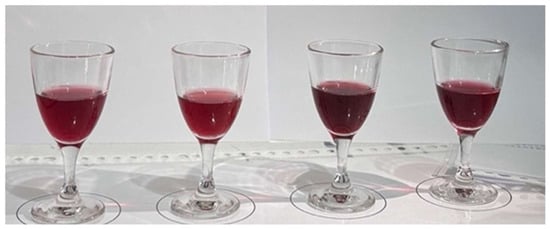
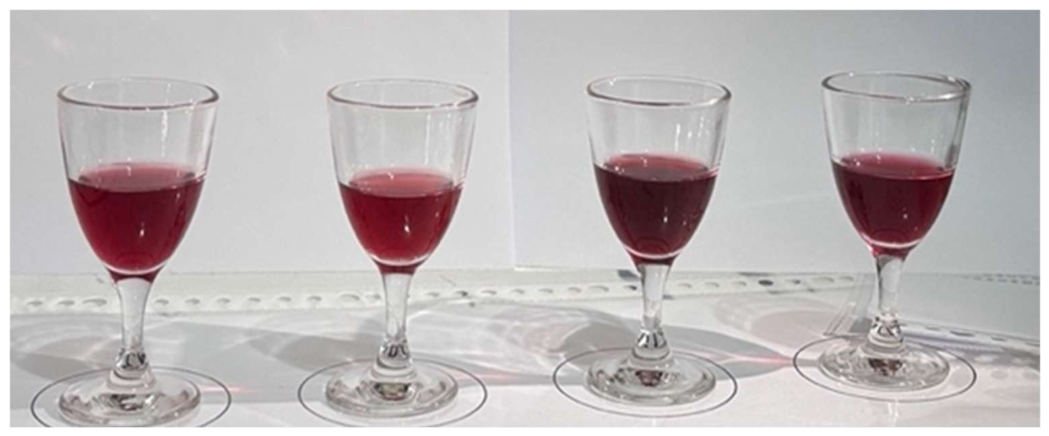
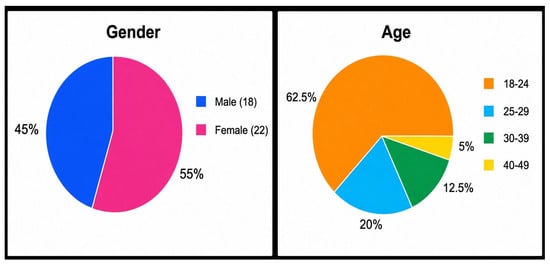
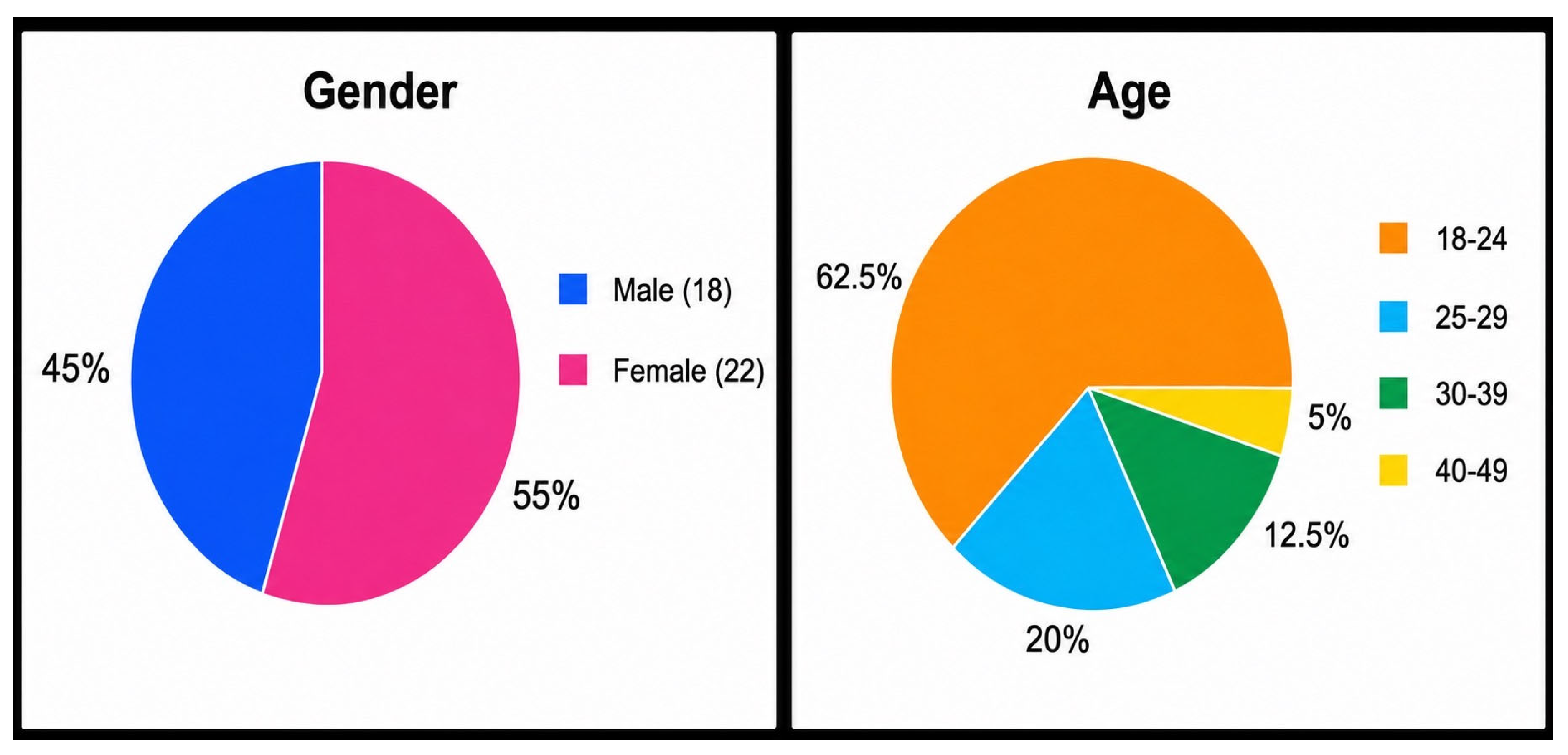
The present study evaluated four groups of red wine samples using sensory evaluation: a commercial product (Commercial), a yeast co-fermentation treatment (HO+SC), a sequential malolactic fermentation treatment (SEQ-MLF), and a simultaneous malolactic fermentation treatment (SIM-MLF). The wine samples subjected to sensory evaluation are illustrated in Figure 1, and the demographic characteristics of the panelists are presented in Figure 2. It should be noted that the commercial wine was not intended to represent an optimized or standardized fermentation benchmark. Instead, it served to contextualize consumer perception of experimental wines relative to an existing product familiar to the local market. Consequently, interpretation of differences between commercial and experimental wines was restricted to sensory positioning rather than microbial or biochemical causation [36,37,38]. Although the sensory evaluation was carefully designed, certain limitations should be acknowledged. The panel size (n = 40) is suitable for consumer acceptance testing but is relatively small for multivariate analyses such as Correspondence Analysis (CA) and CATA. In addition, panelists were primarily university-affiliated, which may introduce demographic and experiential bias and limit the generalizability of the findings to broader consumer populations [25,26]. As such, the sensory results should be interpreted as indicative of relative differences among fermentation treatments within this cohort rather than as definitive predictors of market-wide consumer preference.
Figure 1.
The appearance of Kyoho wine sensory evaluation samples. From left to right: HO+SC, SEQ-MLF, Commercial, SIM-MLF.
Figure 2.
Demographic profile of sensory panelists (n = 40): (left) gender distribution, (right) age group distribution.
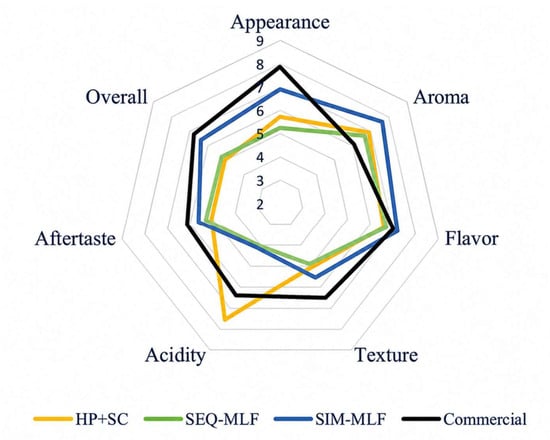
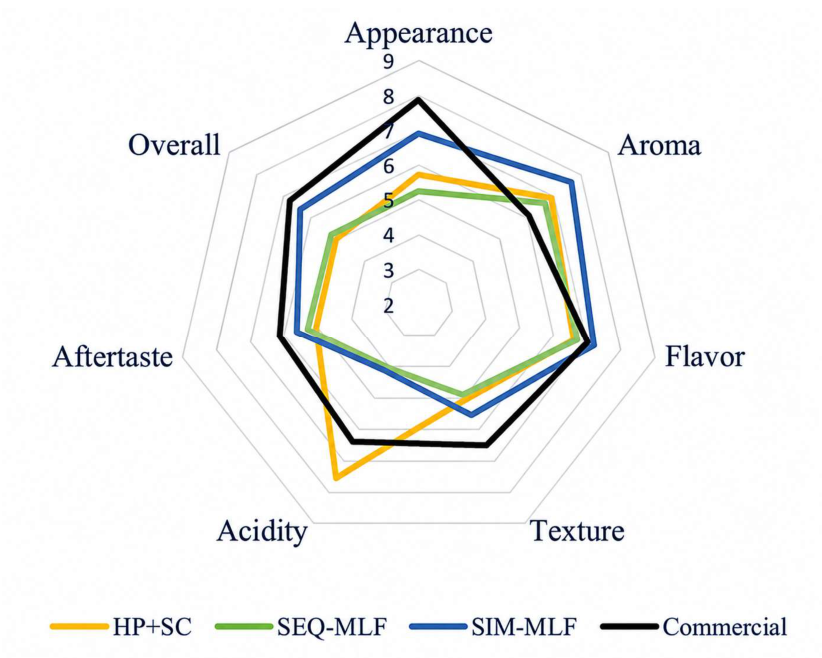
Hedonic Analysis: Forty consumer panelists (18 male, 22 female), primarily students aged 18–49, evaluated the wines. The 9-point hedonic scale assessment (visualized via radar plot, Figure 3) revealed a preference for darker red wines (garnet/brick red), with the Commercial (7.87) and SIM-MLF (6.89) groups scoring highest in appearance. The HO+SC and Commercial groups were perceived as significantly acidic compared to non-LAB groups. However, H. opuntiae GM03 inoculation positively influenced aroma (HO+SC score 6.90). The integration of secondary fermentation by LAB resulted in higher overall scores for SEQ-MLF (6.67) and SIM-MLF (7.63).
Figure 3.
Radar plot of consumer acceptance of Kyoho wine samples.
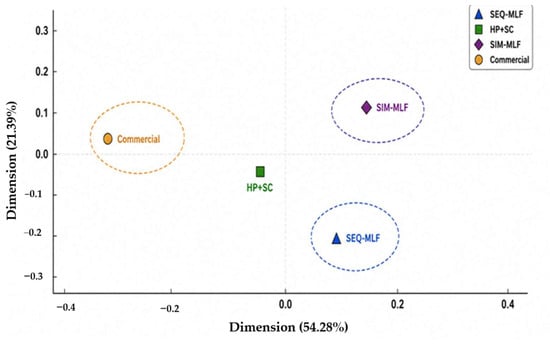
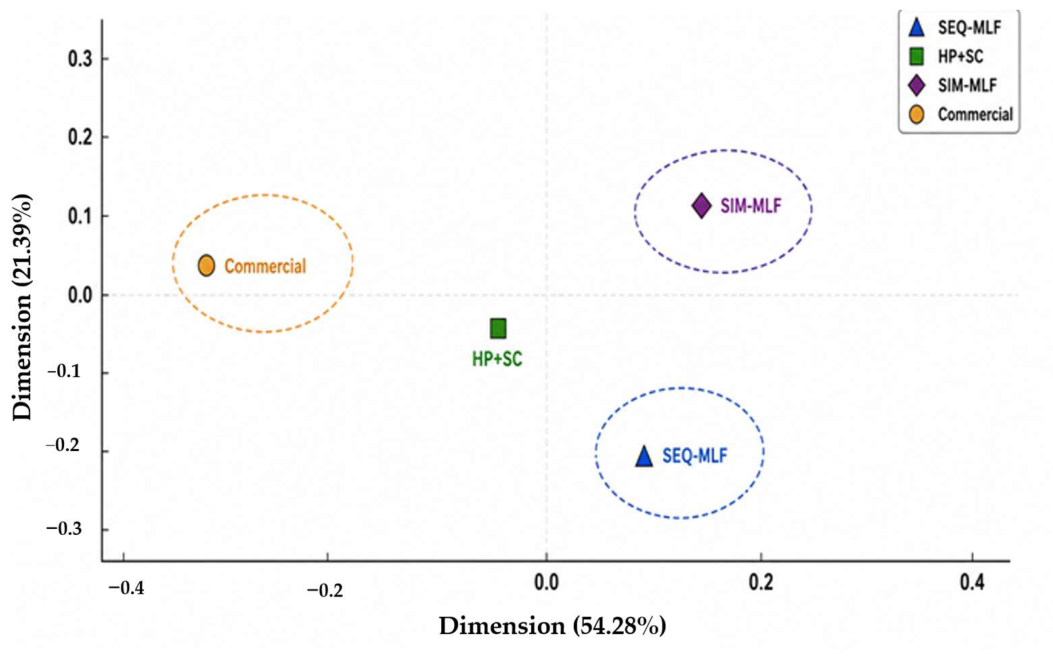
Correspondence Analysis (CA): CATA analysis demonstrated distinct sensory profiles (Figure 4). The CA biplot, which explains 78.0% of the total variance (Dim 1: 45.2%, Dim 2: 32.8%), clearly differentiated the sensory attributes associated with each treatment. The Commercial group was associated with “Sweet,” “High acidity,” and “Medium alcohol.” The perception of a high score despite low aroma complexity in the commercial sample is likely due to sweetness acting as a masking agent against alcohol bitterness or off-flavors. The HO+SC group was characterized by “Low sweetness,” “Layered,” and “Fruity aroma.” The SEQ-MLF group was associated with “High astringency,” “Harsh,” and “Unpleasant.” This increased astringency compared to SIM-MLF may be because SEQ-MLF missed the optimal window during peak AF for tannin-polysaccharide complex formation, leading to a higher ratio of free, astringent tannins. Additionally, rapid acetaldehyde reduction in SEQ-MLF may hinder tannin polymerization, reducing the softening effect on wine structure. Conversely, the SIM-MLF group was distinctly associated with “Floral,” “Blackberry,” and “Creamy” descriptors. This indicates that simultaneous MLF successfully reduced acidity while retaining floral and fruity notes, making it a superior strategy for enhancing the sensory characteristics of Kyoho wine compared to sequential MLF. Overall, while the Commercial group scored highest in overall liking (6.77) due to a sugar–acid–alcohol balance, the SIM-MLF group achieved the second-highest score (6.41), demonstrating that co-culture fermentation enhanced sensory preference within the evaluated consumer panel through enhanced aroma and texture integration.
Figure 4.
Correspondence analysis biplot of Check-All-That-Apply (CATA) sensory attributes for Kyoho wine samples from different fermentation treatments (Commercial, HO +SC, SEQ-MLF, and SIM-MLF). Samples are represented by points, and sensory descriptors by vectors; proximity indicates association.
4. Discussion
4.1. Impact of Mixed Yeast Fermentation on Aroma Profile
The sequential inoculation of HO+SC resulted in a 4.21-fold increase in total ester content compared to the S. cerevisiae control (SC). This finding aligns with recent studies demonstrating that Hanseniaspora species possess high alcohol acetyl transferase activity, leading to enhanced synthesis of acetate esters such as ethyl acetate and phenylethyl acetate [6,29,30]. The elevated levels of isoamyl alcohol and 2-phenylethyl alcohol in the HO+SC group further suggest that H. opuntiae contributes to the Ehrlich pathway metabolism, enhancing fruity and floral notes. These results confirm that H. opuntiae NYUAFM-GM03 is an effective aroma-enhancing starter for Kyoho must, compensating for the variety’s inherent lack of aromatic complexity.
4.2. Mechanisms of Aroma Enhancement in Simultaneous vs. Sequential MLF
Both SIM-MLF and SEQ-MLF treatments successfully converted malic acid to lactic acid, reducing titratable acidity and increasing pH. However, the SIM-MLF treatment yielded significantly higher concentrations of ethyl lactate (135.93 mg/L) and diacetyl (4.32 mg/L) compared to SEQ-MLF. This difference can be attributed to the metabolic interaction between yeast and bacteria. In SIM-MLF, L. plantarum is active during the peak of ethanol production by S. cerevisiae. The continuous availability of ethanol favors the esterification of lactic acid to ethyl lactate by bacterial esterases [12,33]. In contrast, in SEQ-MLF, the bacteria are introduced after ethanol levels have stabilized, and the high ethanol concentration may inhibit certain bacterial enzymatic activities, resulting in lower ethyl lactate formation. Furthermore, the higher diacetyl levels in SIM-MLF contribute to the “creamy” sensory descriptor, a trait highly valued in white and light red wines but often reduced in sequential fermentations due to further reduction of diacetyl to acetoin by LAB over extended periods [14].
4.3. Sensory Implications and Consumer Acceptance
The sensory evaluation results closely mirrored the chemical profiles. The SIM-MLF wine, characterized by high levels of ethyl lactate, diethyl succinate, and terpenes, received the highest scores for “floral,” “blackberry,” and “creamy” attributes. This suggests that the synergistic effect of H. opuntiae (providing terpene precursors and esters) and simultaneous L. plantarum activity (producing ethyl lactate and diacetyl) creates a more complex and balanced aroma profile. In contrast, the SEQ-MLF wine was perceived as “harsh” and “astringent.” This may be due to the timing of MLF; sequential MLF occurring after yeast autolysis may miss the window for optimal polysaccharide-tannin interactions that soften mouthfeel, or the rapid reduction of acetaldehyde in the absence of yeast protection may lead to oxidative browning and astringency [31].
The commercial wine, while receiving high overall liking scores, was associated with “sweet” and “high acidity” descriptors. Its volatile profile showed lower total esters and higher acetic acid compared to the experimental wines. This suggests that consumer preference for the commercial product may be driven by residual sweetness masking aroma deficits, whereas the SIM-MLF wine offers a superior, dry wine profile with enhanced aromatic complexity. Compared to the limited existing literature on Kyoho wines, which often report simple fruity profiles [4,5], this study demonstrates that mixed-culture fermentation can elevate Kyoho wine to a complexity level comparable to traditional Vitis vinifera wines.
4.4. Limitations of the Study and Future Mechanistic Validation
While this study demonstrates clear differences in aroma composition and sensory perception among fermentation strategies, several limitations should be acknowledged. First, specific enzymatic activities—such as β-glucosidase, esterase, or acetaldehyde-related metabolism—were not directly measured, limiting mechanistic attribution of observed aroma changes. Second, interactions involving tannins, polysaccharides, and volatile-binding dynamics were inferred from sensory outcomes rather than quantified using targeted chemical or spectroscopic methods. A limitation of the present study is the absence of a control group involving S. cerevisiae co-fermented with L. plantarum without H. opuntiae, which constrains mechanistic attribution of specific aroma compounds to the non-Saccharomyces yeast within the LAB context. Future studies should include this comparison to isolate the specific contribution of H. opuntiae in the presence of LAB, alongside metabolomic and phenolic analyses to validate the proposed mechanisms. Such work would strengthen causal links between microbial metabolism and sensory expression and further optimize co-culture fermentation strategies for table-grape wine systems.
5. Conclusions
This study demonstrates that co-culture fermentation using H. opuntiae, S. cerevisiae, and L. plantarum effectively enhances aroma complexity and sensory quality in wine produced from winter-harvested Kyoho grapes at the bench scale. Initial inoculation with H. opuntiae significantly increased ester and higher-alcohol formation, intensifying fruity and floral attributes, while the activity of L. plantarum promoted the accumulation of MLF-associated compounds such as ethyl lactate, diethyl succinate, and diacetyl. Although both SIM-MLF and SEQ-MLF achieved effective malic acid conversion, SIM-MLF produced a more balanced sensory profile, characterized by “floral,” “blackberry,” and “creamy” notes, and resulted in higher consumer acceptance. These findings suggest that simultaneous yeast–LAB co-fermentation is a promising strategy for the valorization of table grapes. However, as this study was conducted using a single grape variety and specific strain combinations under controlled laboratory conditions, further validation at pilot and industrial scales is required to confirm the robustness and generalizability of these results for commercial winemaking applications.
Supplementary Materials
The following supporting information can be downloaded at https://www.mdpi.com/article/10.3390/fermentation12070334/s1. Supplementary Files S1: Ethical review approval Institutional Review Board, Supplementary Files S2: Questionnaire of the sensory evaluation test.
Author Contributions
Conceptualization, C.-H.C., C.-W.H. and K.-C.C.; methodology, C.-H.C., S.-Q.C. and C.B.-M.; validation, K.Ś. and C.B.-M.; formal analysis, S.-Q.C.; investigation, C.-H.C. and S.-Q.C.; resources, K.Ś. and L.G.; data curation, S.-Q.C.; writing—original draft preparation, C.-H.C. and S.-Q.C.; writing—review and editing, S.J., K.Ś., C.B.-M., L.G., C.-W.H. and K.-C.C.; supervision, L.G., C.-W.H. and K.-C.C.; project administration, C.-W.H. and K.-C.C.; funding acquisition, C.-W.H. and K.-C.C. All authors have read and agreed to the published version of the manuscript.
Funding
This research was funded by the Ministry of Science and Technology, Taiwan (Grant Nos. 112-2320-B-002-013-MY3, 112-2221-E-002-040-MY3), and the Council of Agriculture, Taiwan (Grant Nos. 106-AS-3.3.1-T-T1, 107-AS-3.3.1-T-T1, 108-AS-3.3.1-T-T1, and 109-AS-3.3.1-T-T1).
Institutional Review Board Statement
The study was conducted in accordance with the Declaration of Helsinki and approved by the Research Ethics Committee for Behavioral and Social Sciences at National Taiwan University (Case No. 202502HM022, approved on [Date: 19 May 2025]).
Informed Consent Statement
Informed consent was obtained from all subjects involved in the study.
Data Availability Statement
The data presented in this study are available in the Supplementary Material. Raw GC-FID chromatograms, statistical analysis outputs, and anonymized sensory evaluation responses are deposited under DOI: [10.6084/m9.figshare.32943221].
Acknowledgments
The authors thank the panelists who participated in the sensory evaluation.
Conflicts of Interest
The authors declare no conflicts of interest.
Abbreviations
The following abbreviations are used in this manuscript:
| AF | Alcoholic Fermentation |
| CA | Correspondence Analysis |
| CATA | Check-All-That-Apply |
| CFU | Colony-Forming Unit |
| GC-FID | Gas Chromatography with Flame Ionization Detection |
| HO | Hanseniaspora opuntiae |
| HPLC | High-Performance Liquid Chromatography |
| LAB | Lactic Acid Bacteria |
| MLF | Malolactic Fermentation |
| MRS | de Man, Rogosa, Sharpe medium |
| N.D. | Not Detected |
| PCA | Principal Component Analysis |
| RS | Residual Sugar |
| SC | Saccharomyces cerevisiae |
| SCFAs | Short-Chain Fatty Acids |
| SEQ-MLF | Sequential Malolactic Fermentation |
| SIM-MLF | Simultaneous Malolactic Fermentation |
| TA | Titratable Acidity |
| TSS | Total Soluble Solids |
| YAN | Yeast Assimilable Nitrogen |
| YPD | Yeast Extract Peptone Dextrose |
References
- Restani, P.; Fradera, U.; Ruf, J.C.; Stockley, C.; Teissedre, P.L.; Biella, S.; Colombo, F.; Di Lorenzo, C. Grapes and their derivatives in modulation of cognitive decline: A critical review of epidemiological and randomized-controlled trials in humans. Crit. Rev. Food Sci. Nutr. 2021, 61, 566–576. [Google Scholar] [CrossRef] [Scilit] [PubMed]
- OIV. State of the World Vine and Wine Sector in 2022; International Organization of Vine and Wine (OIV): Paris, France, 2023; Available online: https://www.oiv.int/sites/default/files/documents/2023_SWVWS_report_EN.pdf (accessed on 11 July 2025).
- Kaur, P.; Kocher, G.S.; Keshani. Development of a yeast co-culture inoculum for improved red wine metabolome from Punjab MACS purple variety of grapes. LWT 2025, 232, 118446. [Google Scholar] [CrossRef] [Scilit]
- Romano, P.; Caruso, M.; Capece, A.; Lipani, G.; Paraggio, M.; Fiore, C. Metabolic diversity of Saccharomyces cerevisiae strains from spontaneously fermented grape musts. World J. Microbiol. Biotechnol. 2003, 19, 311–315. [Google Scholar] [CrossRef] [Scilit]
- Bordet, F.; Joran, A.; Klein, G.; Roullier-Gall, C.; Alexandre, H. Yeast–yeast interactions: Mechanisms, methodologies and impact on composition. Microorganisms 2020, 8, 600. [Google Scholar] [CrossRef] [Scilit] [PubMed]
- Hu, K.; Jin, G.-J.; Xu, Y.-H.; Tao, Y.-S. Wine aroma response to different participation of selected Hanseniaspora uvarum in mixed fermentation with Saccharomyces cerevisiae. Food Res. Int. 2018, 108, 119–127. [Google Scholar] [CrossRef] [Scilit] [PubMed]
- Izquierdo Cañas, P.M.; García-Romero, E.; Heras Manso, J.M.; Fernández-González, M. Influence of sequential inoculation of Wickerhamomyces anomalus and Saccharomyces cerevisiae in the quality of red wines. Eur. Food Res. Technol. 2014, 239, 279–286. [Google Scholar] [CrossRef] [Scilit]
- Benito, S.; Ruiz, J.; Belda, I.; Kiene, F.; Beisert, B.; Navascués, E.; Rauhut, D. Application of non-Saccharomyces yeasts in wine production. In Non-Conventional Yeasts: From Basic Research to Application; Springer International Publishing: Cham, Switzerland, 2019; pp. 75–89. [Google Scholar] [CrossRef] [Scilit]
- Li, S.; Tao, Y.; Li, D.; Wen, G.; Zhou, J.; Manickam, S.; Chai, W.-S. Fermentation of blueberry juices using autochthonous lactic acid bacteria isolated from fruit environment: Fermentation characteristics and evolution of phenolic profiles. Chemosphere 2021, 276, 130090. [Google Scholar] [CrossRef] [Scilit] [PubMed]
- Khubber, S.; Marti-Quijal, F.J.; Tomasevic, I.; Remize, F.; Barba, F.J. Lactic acid fermentation as a useful strategy to recover antimicrobial and antioxidant compounds from food and by-products. Curr. Opin. Food Sci. 2022, 43, 189–198. [Google Scholar] [CrossRef] [Scilit]
- Sun, X.; Li, F.; Zhang, Y.; Zhao, J.; Ge, J.; Li, Q. Research progress on fermentation strategies, biological activities and quality improvements of fermented fruit and vegetable juices. Sci. Technol. Food Ind. 2023, 44, 471–480. [Google Scholar] [CrossRef]
- Chen, Y.; Hu, Y.; Xie, Y.; Cui, M.; Jiang, J.; Li, Y.; Gao, F. A comprehensive review of lactic acid bacteria-fermented plant-based beverages: Substrate types, nutritional quality, probiotic characteristics, metabolic pathways and future development trends. Crit. Rev. Food Sci. Nutr. 2026, 66, 2993–3021. [Google Scholar] [CrossRef] [Scilit] [PubMed]
- Carpena, M.; Fraga-Corral, M.; Otero, P.; Nogueira, R.A.; Garcia-Oliveira, P.; Prieto, M.A.; Simal-Gandara, J. Secondary aroma: Influence of wine microorganisms in their aroma profile. Foods 2021, 10, 51. [Google Scholar] [CrossRef] [Scilit] [PubMed]
- Brizuela, N.; Tymczyszyn, E.E.; Semorile, L.C.; La Hens, D.V.; Delfederico, L.; Hollmann, A.; Bravo-Ferrada, B. Lactobacillus plantarum as a malolactic starter culture in winemaking: A new (old) player? Electron. J. Biotechnol. 2019, 38, 10–18. [Google Scholar] [CrossRef] [Scilit]
- Massera, A.; Soria, A.; Catania, C.; Krieger, S.; Combina, M. Simultaneous inoculation of Malbec (Vitis vinifera) musts with yeast and bacteria: Effects on fermentation performance, sensory and sanitary attributes of wines. Food Technol. Biotechnol. 2009, 47, 192–201. Available online: https://hrcak.srce.hr/38113 (accessed on 11 July 2025).
- Carreté, R.; Valdes, M.; Bordons, A.; Constantí, M. Inhibitory effect of sulfur dioxide and other stress compounds in wine on the ATPase activity of Oenococcus oeni. FEMS Microbiol. Lett. 2002, 211, 155–159. [Google Scholar] [CrossRef] [Scilit] [PubMed]
- Fu, J.; Wang, L.; Sun, J.; Ju, N.; Jin, G. Malolactic fermentation: New approaches to old problems. Microorganisms 2022, 10, 2363. [Google Scholar] [CrossRef] [Scilit] [PubMed]
- Paramithiotis, S.; Stasinou, V.; Tzamourani, A.; Kotseridis, Y.; Dimopoulou, M. Malolactic fermentation—Theoretical advances and practical considerations. Fermentation 2022, 8, 521. [Google Scholar] [CrossRef] [Scilit]
- Sun, W.; Yan, W.; Cai, R.; Zhang, Z.; Bi, P.; Han, J.; Guo, J. Effect of non-Saccharomyces yeast combinations and lactic acid bacteria inoculation timing on fermentation performance and aroma quality of kiwifruit wine. Food Biosci. 2025, 71, 107389. [Google Scholar] [CrossRef] [Scilit]
- Lai, S.; Li, L.; Li, Q.; Zhu, S.; Wang, G. Discrimination of internal browning in pineapple during storage based on changes in volatile compounds. Food Chem. 2024, 433, 137358. [Google Scholar] [CrossRef] [Scilit] [PubMed]
- Azzolini, M.; Tosi, E.; Vagnoli, P.; Krieger, S.; Zapparoli, G. Evaluation of technological effects of yeast-bacterial co-inoculation in red table wine production. Ital. J. Food Sci. 2010, 22, 257–263. [Google Scholar]
- Bianchi, I.; Branchini, E.; Torquati, S.; Fermani, A.; Capitani, E.; Barnaba, V.; Burro, R. Non experts’ understanding of terms frequently used by experts to describe the sensory properties of wine: An investigation based on opposites. Food Qual. Prefer. 2021, 92, 104215. [Google Scholar] [CrossRef] [Scilit]
- Heymann, H.; Ebeler, S.E. Sensory and Instrumental Evaluation of Alcoholic Beverages; Academic Press: London, UK, 2016. [Google Scholar]
- Malfeito-Ferreira, M. Fine wine recognition and appreciation: It is time to change the paradigm of wine tasting. Food Res. Int. 2023, 174, 113668. [Google Scholar] [CrossRef] [Scilit] [PubMed]
- Darıcı, M.; Özonur, A.; Cabaroğlu, T. Öküzgözü şaraplarının CATA (check-all-that-apply) yöntemi ile tüketici duyusal karakterizasyonu ve tüketici beğenisinin belirlenmesi [Check-all-that-apply (CATA) method for determining consumer sensory characterization and preference in Öküzgözü wines]. Bahçe 2023, 52, 286–299. Available online: https://dergipark.org.tr/en/pub/bahce/issue/75123/1257824 (accessed on 12 June 2026).
- Lin, L.; Gu, Y.-C. Aesthetic appetites: Exploring consumer preferences through conjoint analysis. Food Qual. Prefer. 2025, 122, 105281. [Google Scholar] [CrossRef] [Scilit]
- Alencar, N.M.M.; Ribeiro, T.G.; Barone, B.; Barros, A.P.A.; Marques, A.T.B.; Behrens, J.H. Sensory profile and check-all-that-apply (CATA) as tools for evaluating and characterizing syrah wines aged with oak chips. Food Res. Int. 2019, 124, 156–164. [Google Scholar] [CrossRef] [Scilit] [PubMed]
- Jackson, D.I.; Lombard, P.B. Environmental and management practices affecting grape composition and wine quality: A review. Am. J. Enol. Vitic. 1993, 44, 409–430. [Google Scholar] [CrossRef] [Scilit]
- Albertin, W.; Setati, M.E.; Miot-Sertier, C.; Mostert, T.T.; Colonna-Ceccaldi, B.; Coulon, J.; Girard, P.; Moine, V.; Pillet, M.; Salin, F.; et al. Hanseniaspora uvarum from winemaking environments show spatial and temporal genetic clustering. Front. Microbiol. 2016, 6, 1569. [Google Scholar] [CrossRef] [Scilit] [PubMed]
- Xu, A.; Xie, L.; Ouyang, Y.; Liu, P.; Xiao, Y.; Wang, Y.; Liu, J.; Liu, B.; Gao, B.; Zhu, D. Synergistic co-fermentation of non-Saccharomyces yeasts enhanced fermentation performance and aroma characteristics of citrus wine. LWT 2025, 229, 118191. [Google Scholar] [CrossRef] [Scilit]
- Devi, A.; Anu-Appaiah, K.A. Mixed malolactic co-culture (Lactobacillus plantarum and Oenococcus oeni) with compatible Saccharomyces influences the polyphenolic, volatile and sensory profile of Shiraz wine. LWT 2021, 135, 110246. [Google Scholar] [CrossRef] [Scilit]
- D’Incecco, N.; Bartowsky, E.; Kassara, S.; Lante, A.; Spettoli, P.; Henschke, P. Release of glycosidically bound flavour compounds of Chardonnay by Oenococcus oeni during malolactic fermentation. Food Microbiol. 2004, 21, 257–265. [Google Scholar] [CrossRef] [Scilit]
- Diez-Ozaeta, I.; Lavilla, M.; Amárita, F. Effect of inoculation strategy with autochthonous Oenococcus oeni strains on aroma development in Rioja Alavesa Tempranillo wines. LWT 2022, 162, 113399. [Google Scholar] [CrossRef] [Scilit]
- Yu, H.; Xie, T.; Xie, J.; Ai, L.; Tian, H. Characterization of key aroma compounds in Chinese rice wine using gas chromatography-mass spectrometry and gas chromatography-olfactometry. Food Chem. 2019, 293, 8–14. [Google Scholar] [CrossRef] [Scilit] [PubMed]
- Yu, H.; Zheng, S.; Chen, L.; Wang, J.; Liu, H.; Zhang, J.; Li, J. Characterization of key odorants in Jimo Huangjiu using a characteristic aroma-directed screening strategy. Foods 2026, 15, 1111. [Google Scholar] [CrossRef] [Scilit] [PubMed]
- Alegre, Y.; Sáenz-Navajas, M.P.; Hernández-Orte, P.; Ferreira, V. Sensory, olfactometric and chemical characterization of the aroma potential of Garnacha and Tempranillo winemaking grapes. Food Chem. 2020, 331, 127207. [Google Scholar] [CrossRef] [Scilit] [PubMed]
- Pereira, V.; Pereira, A.C.; Marques, J.C. Emerging trends in fortified wines: A scientific perspective. In Alcoholic Beverages; Grumezescu, A.M., Holban, A.M., Eds.; Woodhead Publishing: Cambridge, UK, 2019; pp. 419–470. [Google Scholar]
- Dravnieks, A. Atlas of Odor Character Profiles; ASTM Data Series DS61; American Society for Testing and Materials: Philadelphia, PA, USA, 1985. [Google Scholar]

Disclaimer/Publisher’s Note: The statements, opinions and data contained in all publications are solely those of the individual author(s) and contributor(s) and not of MDPI and/or the editor(s). MDPI and/or the editor(s) disclaim responsibility for any injury to people or property resulting from any ideas, methods, instructions or products referred to in the content. |
© 2026 by the authors. Licensee MDPI, Basel, Switzerland. This article is an open access article distributed under the terms and conditions of the Creative Commons Attribution (CC BY) license.