


Abstract
The development of functional yogurt products enriched with plant-derived ingredients and biologically active compounds represents a promising strategy to improve the nutritional, probiotic, and antioxidant properties of fermented dairy foods. The aim of this study was to evaluate how plant-derived ingredients (whole-meal flour from sprouted wheat grain and a protein-rich functional ingredient derived from hemp press cake), used individually or in combination with curcumin- or ergosterol-enriched Saccharomyces cerevisiae biomass, influence the physicochemical, structural-mechanical, probiotic, antioxidant, and sensory characteristics of yogurt products. Two forms of yeast biomass were used as enrichment agents: one containing encapsulated curcumin and the other with a high ergosterol content. Milk mixtures were supplemented with yeast biomass containing 34.0 mg/g encapsulated curcumin or 10.55 mg/g ergosterol. Additionally, whole-meal flour from sprouted wheat grain or the hemp-derived protein ingredient was incorporated into the yogurt products at concentrations of 2–3%. These ingredients were tested both individually and in combination to identify optimal formulations that would confer novel properties to the final products. Based on the conducted studies, it was found that the addition of enriched yeast biomass and the protein ingredient resulted in a denser and more uniform structure in the yogurt products compared to those of the control. The titratable acidity of the experimental formulations ranged from 80.2 to 91.8 °T, while pH values ranged from 3.79 to 4.04. Compared with the control sample, these changes indicate enhanced lactic acid fermentation activity. The number of probiotic microorganisms in the experimental samples reached 1.6 × 10⁷–6.4 × 10⁷ MPN/g, exceeding those of the control by an order of magnitude. The type of plant ingredient used significantly determined the technological properties of the finished product. Compared with the control sample, yogurt products supplemented with the hemp press cake-derived protein ingredient exhibited higher protein content (33–34% on a dry matter basis), increased viscosity (2.5–2.6 Pa·s), and reduced syneresis (values of 16.1 mL). The whole-meal flour from sprouted wheat grain exhibited a more pronounced stimulating effect on the growth of probiotic microflora. Enrichment of yogurt products with yeast biomass also increased antioxidant activity: the AOA (DPPH) value increased to 69–84% compared to ~62% in the control. Biotesting using Paramecium caudatum, a sensitive protozoan model widely used for rapid assessment of biological compatibility, toxicity, and the relative biological value of food systems, demonstrated a statistically significant increase (p < 0.05) in protozoan growth to 104–106% compared with the control sample, suggesting the absence of toxic effects and the potential bioavailability of yogurt matrix components. This data confirm the potential of using enriched yeast biomass in combination with plant ingredients for creating probiotic yogurt products with improved structural and functional properties.
1. Introduction
Probiotic dairy products rank among the most commercially successful categories of functional foods due to their established nutritional value and health-promoting properties [1,2,3,4]. Globally, yogurt remains one of the most consumed functional dairy products, and recent research highlights growing consumer demand for formulations enriched with probiotics, prebiotics, and plant-derived ingredients to further boost their nutritional profile and physiological benefits [5,6]. Furthermore, incorporation of plant materials into yogurt systems represents a major trend in functional food development owing to their capacity to improve antioxidant potential, microbiological stability, and overall functionality of fermented dairy products [7]. Current advances in fermented dairy products are concerned not only with preserving their traditional nutritional value and organoleptic properties but also with imparting new functional characteristics. These properties can be achieved by incorporating plant-based ingredients and biologically active compounds into yogurt products, thereby conferring antioxidant, antidiabetic, anti-inflammatory, and additional properties [8,9,10,11,12].
In recent years, researchers have focused considerable attention on the combination of dairy and plant-based food ingredients in the development of probiotic products [13,14,15]. The use of plant-derived ingredients can increase the content of protein, dietary fiber, phenolic compounds, and other nutrients, while simultaneously modifying the flavor profile and texture [16,17,18,19,20]. Several studies have shown that the addition of wheat bran to yogurt products increases probiotic counts, which is likely attributed to the presence of starch and polysaccharides with prebiotic properties [21,22]. Furthermore, whole-ground grain ingredients are rich in phenolic compounds that can enhance the antioxidant activity of yogurt and mitigate the cytotoxic effects of dairy products [23,24].
Germination is one approach to improving the carbohydrate and protein profiles, as well as the accumulation of functionally significant metabolites. Previous studies [25] have shown that a combination of ultrasound treatment, soaking and germination processes, and/or fermentation of grain raw materials helps to increase antioxidant activity and the content of γ-aminobutyric acid, confirming the possibility of using such ingredients in functional food systems [16,26,27,28,29].
Plant-derived protein ingredients are of particular interest because they can fulfil both nutritional and structure-forming functions in fermented dairy systems. Xu et al. reported that the addition of hemp protein to yogurt formulations resulted in lower pH values, higher titratable acidity, and changes in physicochemical characteristics associated with the development of lactic acid bacteria and the formation of the protein gel matrix [30]. These observations suggest that hemp processing by-products could serve as promising ingredients for improving the quality and functionality of yogurt products.
Another promising approach involves the development of dairy products with enhanced antioxidant properties using enriched yeast biomasses. Saccharomyces cerevisiae represents a promising carrier of biologically active substances and can be used to encapsulate compounds with limited solubility and stability. Kalinina et al. showed that preliminary nanostructuring of curcumin increases the efficiency of its encapsulation into yeast cells, and bioavailability analysis confirmed the preservation of the bioactive substance after simulated digestion [31]. This approach is particularly relevant for dairy food systems since curcumin exhibits antioxidant activity, but its direct application in food matrices is limited by low solubility and instability. Recent studies have highlighted growing interest in yeast-derived ingredients as functional components of fermented foods, including dairy systems, due to their ability to improve antioxidant properties, enhance microbial stability, and act as carriers of bioactive compounds [32]. Furthermore, Saccharomyces cerevisiae biomass is widely recognized as a promising delivery platform for biologically active substances because of its biocompatibility, protective cell-wall structure, and potential to improve the stability and gastrointestinal availability of encapsulated compounds [33].
Another approach to producing functionally enriched yeast biomasses involves the use of ergosterol synthesized by Saccharomyces cerevisiae cells. Ergosterol is the main sterol component of cell membranes and is considered a precursor of vitamin D2, which has driven interest in biotechnological methods for its accumulation in yeast biomass [34,35]. While ergosterol is widely recognized as a precursor of vitamin D2 following ultraviolet irradiation, no UV activation was applied during yogurt production in the present study. Therefore, ergosterol-enriched yeast biomass was considered primarily as a source of biologically active sterols and yeast-derived cellular components that may influence the functional, probiotic, and technological properties of the yogurt matrix rather than as a source of vitamin D2 itself.
At the same time, the development of new functional types of dairy products aimed at conferring additional properties (e.g., natural antioxidant content) may affect the probiotic activity of such systems, sometimes unpredictably. The key technological challenge in developing such products is to ensure the viability of probiotic microorganisms throughout the declared shelf life of fermented dairy products.
To our knowledge, the combined use of curcumin- or ergosterol-enriched yeast biomass with plant-derived ingredients from sprouted wheat grain and hemp press cake in yogurt systems has not been previously investigated. In particular, limited information is available on the interaction of these ingredients and their combined influence on the rheological and textural characteristics, probiotic viability, and antioxidant properties of fermented dairy products.
We hypothesized that the incorporation of enriched Saccharomyces cerevisiae biomass together with plant-derived ingredients would exert complementary effects within the yogurt matrix, leading to improved structural stability, enhanced growth of probiotic microorganisms, and increased antioxidant activity compared with conventional yogurt formulations.
This study aimed to evaluate the effects of plant-derived ingredients (whole-meal flour from sprouted wheat grain and a protein-rich functional ingredient derived from hemp press cake), used individually or in combination with Saccharomyces cerevisiae biomass enriched with curcumin or ergosterol, on the physicochemical, rheological, probiotic, antioxidant, and sensory characteristics of yogurt products.
2. Materials and Methods
2.1. Materials
The following types of plant and dairy raw materials were used in this study.
Pasteurized standardized cow’s milk (3.8% fat) produced by Chebarkulskoe Moloko LLC. (Chelyabinsk, Russia) was used as the base for the yogurt products.
As a starter culture, the commercial starter “Vivo Probio Yogurt” (CS) was used, which contains Streptococcus thermophilus, Lactobacillus delbrueckii ssp. bulgaricus, Lactobacillus acidophilus (2 strains), Bifidobacterium lactis (2 strains), Lactobacillus casei, Lactobacillus rhamnosus, Lactobacillus paracasei, Bifidobacterium infantis, produced by Vivo Industry LLC., purchased in Chelyabinsk (Russia).
The following plant ingredients were added before the fermentation process of the yogurt products:
- ▪
- Whole-meal flour from sprouted wheat grain (WG) containing 12.5% protein was produced according to a technology previously developed at the Department of Food and Biotechnology, South Ural State University, and described in detail elsewhere [20,30]. Briefly, wheat grain was cleaned and washed five times with running water at 20 ± 2 °C to remove surface impurities. Prior to germination, the grain was subjected to ultrasonic treatment using an ultrasonic processing unit Volna-M UZTA-0.63/22-OM (Biysk, Russia) operating at a frequency of 22 ± 1.25 kHz. Ultrasound treatment was carried out in a 1 L water medium at a power density of 245 W/L for 5 min under continuous stirring of the grain suspension.
Following ultrasonic treatment, the grain was soaked in drinking water at a grain-to-water ratio of 1:1 for 6 h at 22 ± 2 °C. Germination was performed in a controlled-environment germination chamber (SHPZ Seed Germination Cabinet, Saratov, Russia) at 22 ± 2 °C and a relative humidity of 95 ± 3%. The process was continued until more than 90% of the grains reached a sprout length of 1.5–2.0 mm, which required approximately 16 h under the specified conditions.
The germinated grain was subsequently dried in a laboratory drying oven (Binder M720, Binder GmbH, Baddeckenstedt, Germany) at 35–40 °C to a final moisture content of 8–14%. Dried sprouted grain was milled using a laboratory mill (Perten 3100, Perten Instruments AB, Stockholm, Sweden) operating at 20,000 rpm for 180 s. The resulting flour was additionally sieved to obtain a homogeneous whole-meal ingredient with a uniform particle size distribution and was subsequently used for yogurt production.
- ▪
- Protein ingredient (PI) with a protein content of 57.2% was obtained from hemp press cake via enzymatic hydrolysis using the multienzyme preparation Cellolux (Sibbiofarm PA, Berdsk, Russia), followed by extraction with a eutectic solvent (choline chloride:glycerol in a 1:2 molar ratio, obtained at 80 °C). Choline chloride, CAS 67-48-1, CDH, India. Glycerol CAS 56-8-5, analytical grade, Ekos-1 JSC, Moscow, Russia. Industrial hemp press cake was used as raw material. Enzymatic modification was carried out using Cellolux-A (activity ≥ 2000 U/g).
The production method is briefly described below.
Enzymatic hydrolysis of the press cake was carried out under the following conditions: hydromodulus 1:10, pH = 4.4–4.7, amount of enzyme complex added—500 mg/100 g of press cake. Hydrolysis was performed for 2 h at a temperature of 50 °C with constant stirring (150 rpm) in a thermostatically controlled shaker BioSan ES 20/60 (Riga, Latvia). The supernatant containing the soluble protein fraction was decanted, and the protein was extracted from the remaining press cake using a eutectic solvent. Protein extraction was performed using a deep eutectic solvent based on choline chloride and glycerol (1:2), followed by centrifugation and drying. The DES was prepared by mixing choline chloride and glycerol at a molar ratio of 1:2 at 80 °C until a homogeneous transparent liquid was obtained. Extraction with the eutectic solvent was carried out at a press cake:eutectic solvent ratio of 1:5 for 1 h at a temperature of 50 °C with stirring in a thermostatically controlled shaker at 150 rpm. The suspension was then centrifuged. The solubilizate was mixed with the post-fermentation liquid and freeze-dried. Protein ingredient yield was 15.6%.
2.2. Preparation of Enriched Yeast Biomass
The following enriched yeast biomasses were used as enriching additives:
- Curcumin-enriched yeast biomass (BC) was used for experimental sample 1. The production technology is described in more detail in the publication [31]. The process was carried out by encapsulating pre-nanostructured curcumin into Saccharomyces cerevisiae cells (strain W-68). The key parameters were temperature (25–45 °C) and incubation duration (up to 24 h), which have a significant effect on the efficiency of substance incorporation into the cellular structure. The resulting enriched biomass was stabilized (lyophilization/inactivation) for subsequent use in probiotic dairy products.
- Ergosterol-enriched yeast biomass (BE) was used for experimental sample 2. The production technology is described in more detail in the publication [34,35]. Ergosterol-enriched biomass was produced using Saccharomyces cerevisiae Y-1676 subjected to ultrasound treatment (22 ± 1.65 kHz, 128 W, 2 min) followed by cultivation in YPD medium (yeast extract 5 g/L, peptone 10 g/L, dextrose 20 g/L) under strictly aerobic conditions at a temperature of 33 °C, a stirring speed of 1000 rpm for 8 h, with inoculum added in an amount of 1 vol% of the medium volume.
Curcumin-enriched biomass was produced using Saccharomyces cerevisiae W-68. Curcumin was sonochemically nanostructured at 630 W for 10 min and subsequently encapsulated into yeast cells at 45 °C for 24 h.
To obtain the enriched yeast mass in the two above cases, the yeast strain Saccharomyces cerevisiae, which is commercially available and was purchased from the collection of microorganisms of the National Bioresource Center of the All-Russian Collection of Industrial Microorganisms of the National Research Center «Kurchatov Institute» (Moscow, Russia).
The enriching additives were added based on the recommended daily intake (RDI) of curcumin (10 mg) and ergosterol (50 mg), as well as the content of bioactive compounds in the yeast cells and the encapsulation efficiency [35]. Milk mixtures were supplemented with yeast biomass containing 34.0 mg/g encapsulated curcumin or 10.55 mg/g ergosterol. The amount of biomass was calculated to provide approximately 20% of the recommended daily intake of the corresponding bioactive compound. Accordingly, 0.06 g of curcumin-enriched yeast biomass (0.06%, w/w) or 0.95 g of ergosterol-enriched yeast biomass (0.95%, w/w) was added per 100 mL of milk mixture. The content of the enriching additive in the finished yogurt product was planned to be 15–20% of the daily norm per 100 mL of product. Prior to incorporation into milk mixtures, yeast biomass was thermally inactivated at 70 ± 2 °C for 15 min. The absence of viable cells was verified by plating on YPD agar followed by incubation at 30 °C for 72 h. Yeast biomass was added together with the starter culture during the mixing stage, prior to the addition of plant ingredients.
2.3. Preparation of Yogurt Products Using Plant Raw Materials
The yogurt products were prepared using the thermostatic method as described in [25,36]. Briefly, 100 g portions of milk mixture were preheated to 40 ± 2 °C, and the starter culture was added at 0.083% (w/w). The inoculum level (0.083%) was applied strictly according to the manufacturer’s instructions and was not modified during the study. Fermentation was carried out at 42 ± 3 °C for 8 h until a stable coagulum was formed.
At the fermentation stage, after 1.5 h of fermentation, 2 or 3% of the plant ingredient (WG or PI) was added to the respective samples, followed by stirring, which ensured their uniform distribution in the system and the formation of structured bonds during the fermentation process. Previous reconnaissance studies established that the addition of 1% WG or PI did not have a significant effect on the properties of the yogurt products, while concentrations above 3% led to excessively dense consistency (for PI) or system stratification with whey separation (for WG). Therefore, the amount of WG added was determined as 2% [37].
After fermentation was completed, the products were cooled and ripened at 4 ± 2 °C for 8 h to allow for stabilization of the structure, completion of post-fermentation processes, and formation of the required rheological characteristics.
2.4. Experimental Design
The study included one control formulation and ten experimental yogurt formulations. The experimental design was based on three factors: (i) the addition of enriched yeast biomass (curcumin-enriched biomass, BC, or ergosterol-enriched biomass, BE); (ii) the addition of whole-meal flour from sprouted wheat grain (WG); and (iii) the addition of a protein ingredient derived from hemp press cake (PI). Plant ingredients were used either individually or in combination with enriched yeast biomass to evaluate their separate and interactive effects on the physicochemical, probiotic, antioxidant, and rheological properties of yogurt products. The control sample contained only milk and starter culture, whereas all experimental formulations differed by the type and combination of the functional ingredients introduced into the yogurt matrix. A schematic summary of the formulation of the experimental samples is presented in Table 1.
Table 1.
Summary formulation scheme of experimental samples of yogurt products.
All samples were produced using the same fermentation conditions. The starter culture was added at a level of 0.083%, and fermentation was carried out for 8 h. Plant-derived ingredients were introduced 1.5 h after the start of fermentation, while the composition and concentration of ingredients for each formulation are presented in Table 1.
Thus, the experimental scheme enabled the separate evaluation of (i) the effects of plant-derived ingredients without enriched yeast biomass (samples S 1.2, S 1.4 and S 1.5), (ii) the effects of curcumin-enriched yeast biomass alone and in combination with plant ingredients (samples S 1.1, S 1.3 and S 1.6), and (iii) the effects of ergosterol-enriched yeast biomass alone and in combination with plant ingredients (samples S 2.1–S 2.4). This design allowed assessment of both individual and combined contributions of the tested functional ingredients to yogurt product quality.
2.5. Sensory Evaluation
Organoleptic evaluation of the yogurt products was performed in accordance with GOST 31981-2013 [38] by a trained sensory panel consisting of 15 experts. The assessment was carried out under standardized conditions (product temperature 10–12 °C, neutral lighting, and absence of extraneous odors). The samples were evaluated using descriptive sensory analysis based on the qualitative characterization of appearance and consistency, color, taste, and odor. Particular attention was paid to structural homogeneity, the presence or absence of syneresis, the intensity of the fermented milk flavor, and the occurrence of any off-flavors. Since the objective of the sensory assessment was a comparative characterization of product quality attributes rather than the quantitative profiling of sensory descriptors, graphical sensory profiles (radar charts) and scoring scales were not applied. The final sensory conclusions were based on expert consensus and comparative evaluation of the tested samples. All panelists had prior experience in the sensory evaluation of fermented dairy products and were familiar with the requirements of GOST 31981-2013 [38].
Organoleptic assessment and syneresis determination were conducted after complete formation of the yogurt gel, 8 h after production. Prior to analysis, the samples were stored under refrigeration at 4 ± 2 °C to allow stabilization of the fermented dairy matrix.
2.6. Determination of Physicochemical Properties
2.6.1. Titratable Acidity
Determination of titratable acidity of the yogurt products was carried out in accordance with the requirements of GOST 3624-92 [39] using the alkaline titration method. For analysis, a sample of the product (10.0 g) was weighed and transferred into a conical flask, 20–30 cm3 of distilled water were added to obtain a homogeneous suspension, and 2–3 drops of phenolphthalein indicator were added. Titration was carried out with sodium hydroxide solution at a concentration of 0.1 mol/dm3 until a faint pink color appeared that persisted for 30 s. Titratable acidity was expressed in degrees Turner (°T), where 1 °T corresponds to 1 cm3 of NaOH solution used to neutralize 100 g of product; the results were calculated considering the sample weight and titrant volume.
2.6.2. pH Measurement
Determination of active acidity (pH) of the yogurt products was carried out in accordance with the requirements of GOST 32892-2014 [40] using the potentiometric method with a laboratory pH meter Expert-001-3pH (manufacturer Econix-Expert LLC., Moscow, Russia). Before measurements, the instrument was calibrated using standard buffer solutions with known pH values (4.00 and 6.86) at a temperature of (20 ± 2) °C. For analysis, a product sample was taken, brought to a homogeneous state, and the measurement was carried out on an aqueous suspension of the sample (1:1) at a temperature of (20 ± 2) °C until stable instrument readings were established.
2.6.3. Viscosity Measurement
Viscosity of the yogurt products was measured using an SV-A vibrational viscometer (A&D Company Limited, Tokyo, Japan) at 20.0 ± 0.1 °C. Prior to measurement, the samples were equilibrated to the target temperature. No deliberate homogenization or mechanical stirring was performed before viscosity determination. Samples were transferred carefully to the measuring vessel to avoid excessive disruption of the yogurt gel structure and to ensure consistent measurement conditions. Approximately 45 mL of each sample was placed in the measuring vessel to ensure complete immersion of the sensor plates. The measurement was performed after stabilization of the instrument readings, and the dynamic viscosity value was subsequently recorded. Results were expressed in mPa·s. Each sample was analyzed in at least five replicates, followed by statistical evaluation of the data.
2.6.4. Protein Content Determination
Protein content was determined according to ISO 8968-1:2014 [41] (Kjeldahl method). The total nitrogen content was converted to protein using a conversion factor of 6.38. The obtained values were recalculated and expressed on a dry matter basis (% d.b.) using the dry matter content determined for each yogurt sample, thereby eliminating the effect of moisture content variability on the protein results.
2.6.5. Syneresis Determination
Syneresis was evaluated by spontaneous whey separation under static conditions. For each determination, 100 cm3 of yogurt product was transferred into a graduated laboratory cylinder and placed in an air thermostat with cooling (TLO-100, Tagler, Russia) maintained at 20.0 ± 0.1 °C. The samples were held for 60 min without agitation, vibration, or any other mechanical disturbance. After the holding period, the volume of whey separated from the yogurt gel was measured directly using the graduated scale of the cylinder. The degree of syneresis was expressed as the percentage of separated whey relative to the initial sample volume.
2.7. Microbiological and Microscopic Analysis
2.7.1. Enumeration of Probiotic Microorganisms
The content of probiotic microorganisms in the yogurt products was determined according to GOST R 56139-2014 [42] using the Most Probable Number (MPN) method. Sterile skimmed milk was used as the liquid cultivation medium for enumeration in accordance with the standard protocol. A series of ten-fold dilutions (10−3 to 10−9) were prepared, and the inoculated tubes were incubated at 37 ± 1 °C for 72 h. Microbial counts were then estimated using the corresponding MPN tables. Therefore, the obtained values should be interpreted as estimates of viable microbial abundance suitable for comparative evaluation among the studied samples.
2.7.2. Microscopic Examination
For microscopic examination, fixed smears of the yogurt products were prepared and stained with methylene blue. Microscopic observations were performed using a Biomed-6 light microscope (Biomed, Russia). Samples were examined using a ×90 oil-immersion objective and a ×18 eyepiece, providing a total magnification of ×1620.
2.8. Functional Property Assessment
2.8.1. Biotesting Using Paramecium caudatum
Bioavailability (Increase in the protozoan Paramecium caudatum, %) of the obtained yogurt products was assessed using a biotest on protozoa Paramecium caudatum with an initial concentration of at least 500 ± 100 cells/mL in Petri dishes. Counting of Paramecium cells was performed using the «BioLaT-3.2» device coupled with the Auto Ciliata XP software (Moscow, Russia) [43,44]. The tests were conducted in accordance with GOST 31674-2012 [45].
2.8.2. Antioxidant Activity (DPPH Assay)
The antioxidant activity of the yogurt product samples was evaluated using the DPPH (2,2-diphenyl-1-picrylhydrazyl) free radical scavenging assay [46]. Prior to analysis, yogurt extracts were prepared by mixing the samples with 80% (v/v) ethanol at a sample-to-solvent ratio of 1:10 (w/v). The resulting suspensions were centrifuged at 10,000 rpm for 15 min, and the supernatants were collected for further analysis. Subsequently, 0.5 mL of the extract was mixed with 3.6 mL of ethanolic DPPH solution (0.025 g/100 mL), incubated in the dark at room temperature for 30 min, and the absorbance was measured at 515 nm using a Jenway 6405 UV/Vis spectrophotometer (Jenway, Bibby Scientific Ltd., Stone, UK). Calibration was performed using Trolox standard solutions in the concentration range of 10–100 mg/L (R2 = 0.988), and the results were expressed as mg Trolox equivalents per unit volume of sample.
2.9. Statistical Processing of Results
Data analysis was performed using Microsoft Excel for Microsoft 365 (Microsoft Corporation, Redmond, WA, USA) and Statistica 10.0 software (StatSoft Inc., Tulsa, OK, USA). For each studied indicator, the arithmetic mean (M) and the standard error of the mean (m) were calculated. The significance of differences between samples was assessed using Student’s t-test. Differences were considered statistically significant at p < 0.05. All experiments were performed in at least three independent replicates, and measurements of each indicator were carried out in at least five replicate measurements.
3. Results
3.1. Sensory Profile of Yogurt Products
Sensory evaluation was performed as a preliminary stage of formulation screening since the incorporation of plant-derived ingredients may substantially affect the appearance, texture, flavor, and overall acceptability of yogurt products. This approach helped identify formulations with the most balanced sensory characteristics and provided an additional basis for interpreting subsequent physicochemical and rheological results, particularly when comparing samples containing 2% and 3% plant ingredients.
The control sample (C) of the yogurt product had a slightly loose, liquid curd with slight whey separation. The odor was distinctly fermented milk, creamy. Yogurt products containing whole-meal flour had a pronounced sour taste and partial thinning of the consistency, whereas the addition of the protein ingredient (2 and 3%), resulted in a denser curd and a stable consistency. The samples with curcumin-enriched yeast (experimental samples S 1.1, S 1.3, and S 1.6) had a dense, thick curd without whey separation. Upon stirring, their homogeneity was preserved. The odor was distinctly fermented milk. A slight yeasty odor was noted. Yogurt products with ergosterol-enriched yeast (experimental samples S 2.1–S 2.4) had a denser, viscous curd. Upon stirring, homogeneity was preserved. The odor was distinctly fermented milk. A slight yeasty odor was noted.
Organoleptic evaluation revealed that the addition of the protein ingredient during the fermentation process promoted a denser and more viscous consistency. The best taste characteristics were observed in yogurt samples containing 2% of the ingredients. Increasing the dosage above 2% led to a deterioration of the taste profile, which was characterized by the presence of astringent notes and an excessively dense consistency.
3.2. Results of Determination of Physicochemical and Microbiological Parameters of Yogurt Products
3.2.1. Physicochemical Characteristics and Probiotic of Yogurt Products Enriched
A comprehensive assessment of the physicochemical parameters was performed for all yogurt samples. For a more visual presentation of the results and a more complete evaluation of the obtained results, the samples were divided into 2 groups: those enriched with curcumin-enriched yeast biomass (Table 2) and those enriched with ergosterol-enriched yeast biomass (Table 3). The samples had different combinations of additional ingredients added: whole-meal flour from sprouted wheat grain alone, the protein ingredient from hemp press cake alone, as well as their combination with enriched yeast biomass.
Table 2.
Results of determination of physicochemical parameters of yogurt products enriched with curcumin-enriched yeast biomass (samples S 1.1–S 1.6) *.
Table 3.
Results of determination of physicochemical parameters of yogurt products enriched with ergosterol-enriched yeast biomass (samples S 2.1–S 2.4) *.
Analysis of the physicochemical results (Table 2) showed that the addition of curcumin-enriched yeast biomass combined with plant-derived ingredients markedly influenced acidity, syneresis, and the development of probiotic microbiota in yogurt products (samples S 1.1, S 1.3, and S 1.6). The titratable acidity of the experimental samples ranged from 80.2 to 91.8 °T, with the maximum values recorded for samples containing wholemeal flour from sprouted wheat grain (S 1.2 and S 1.3). The pH values of the experimental samples ranged from 3.79 to 4.04, compared to 4.14 in the control sample. In general, the observed changes in pH and titratable acidity indicate active fermentation processes in the yogurt systems. However, the relationship between these parameters was not strictly linear across all formulations, which may be associated with differences in the buffering capacity of the multicomponent matrices containing plant-derived ingredients and enriched yeast biomass. Notably, sample S1.6 exhibited the lowest pH value (3.79) despite lower titratable acidity (80.2 °T) compared to several other experimental samples. This observation further supports the hypothesis that the composition of the yogurt matrix may influence the relationship between active and titratable acidity.
These findings agree with previous studies [47,48], which reported that the incorporation of plant-derived ingredients into yogurt systems is often associated with enhanced growth of lactic acid bacteria and higher acidity values. This effect has been attributed to the presence of additional fermentable substrates and biologically active compounds; however, the specific contribution of individual plant components may vary depending on their composition and interactions within the yogurt matrix.
Analysis of syneresis showed varying dynamics depending on the type of plant ingredient. For samples with the addition of WG (S 1.2 and S 1.3), an increase in the volume of separated whey to 21.1–27.6 mL was observed, which exceeds the control (20.2 mL) and indicates a less stable gel structure. At the same time, the addition of the protein ingredient PI both alone and together with enriched yeast biomass (S 1.4–S 1.6) led to a decrease in syneresis to 15.1–17.1 mL, indicating an increase in the water-holding capacity of the system.
This effect is corroborated by previous reports [3,4], which have shown that content of protein components and dry matter enhances water-binding capacity and reduces whey separation in yogurt systems.
Particularly noteworthy are the results for probiotic microorganism counts. In all experimental samples, a significant increase in microbiota was observed compared to the control (4.6 × 10⁶ MPN/g), with maximum values reaching 6.4 × 10⁷ MPN/g (S 1.3). The most pronounced growth was observed in samples with the addition of WG, which may be associated with the prebiotic effect of dietary fiber and starch hydrolysis products of sprouted wheat grain.
These results are consistent with the publications of Montemurro et al., Grujović et al., Navarro et al., where the authors note that the use of plant components, including dietary fiber, contributes to increased survival and metabolic activity of probiotic microorganisms in fermented dairy products [5,48,49].
Similar dynamics were observed in the samples of yogurt products enriched with ergosterol-enriched yeast biomass (Table 3).
The titratable acidity of experimental samples S 2.1–S 2.4 ranged from 80.4 to 85.2 °T, while the pH values ranged from 3.98 to 4.04, compared with 4.14 in the control sample. Together with the observed changes in titratable acidity, these results indicate active fermentation processes in the yogurt systems. However, the relationship between pH and titratable acidity was not strictly linear for all formulations, which may be related to differences in the buffering properties of the multicomponent matrices containing plant-derived ingredients and enriched yeast biomass. For example, sample S 2.4 exhibited a lower pH value (3.98) despite a relatively moderate titratable acidity (80.4 °T), suggesting that the composition of the yogurt matrix may influence active and titratable acidity to different extents.
The lowest syneresis value was recorded for sample S 2.4 (16.1 mL), while sample S 2.3 also demonstrated reduced whey separation (18.6 mL) compared with the control (20.2 mL). These results indicate that the incorporation of the hemp press cake-derived protein ingredient contributed to improved water retention and stabilization of the yogurt matrix. This may be attributed to an increase in the content of dry substances and enhanced water-binding capacity of the protein-polysaccharide matrix; a similar technological effect for yogurts with a β-glucan hydrocolloid complex was shown by Sahan et al.—the addition of a structure-forming component influenced the physicochemical properties and quality of non-fat yogurt during storage [50].
The number of probiotic microorganisms in all experimental samples exceeded the level of the control yogurt product sample and reached 4.6 × 10⁷–6.0 × 10⁷ MPN/g. The highest values were found for samples S 2.3 and S 2.4 with the protein ingredient, which is consistent with the data of Ranadheera et al., according to which the presence of proteins with different amino acid compositions and free sugars significantly affects the viability and development efficiency of probiotics [51].
Overall, the use of yeast biomass enriched with both curcumin and ergosterol in combination with plant ingredients leads to intensification of fermentation processes, increased acidity, and a significant increase in the number of probiotic microorganisms, which allows them to be classified as probiotic products. The probiotic microorganism counts recorded in the experimental samples comply with the requirements of GOST R 55577-2013 [52]. The choice of the plant component type is a critical factor: the protein ingredient contributes to structure stabilization and reduction in syneresis, whereas wholemeal flour from sprouted wheat grain enhances the biochemical activity of the system but may reduce its structural stability.
3.2.2. Protein Content and Viscosity of Yogurt Products
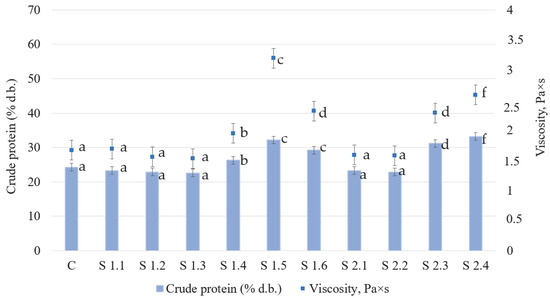
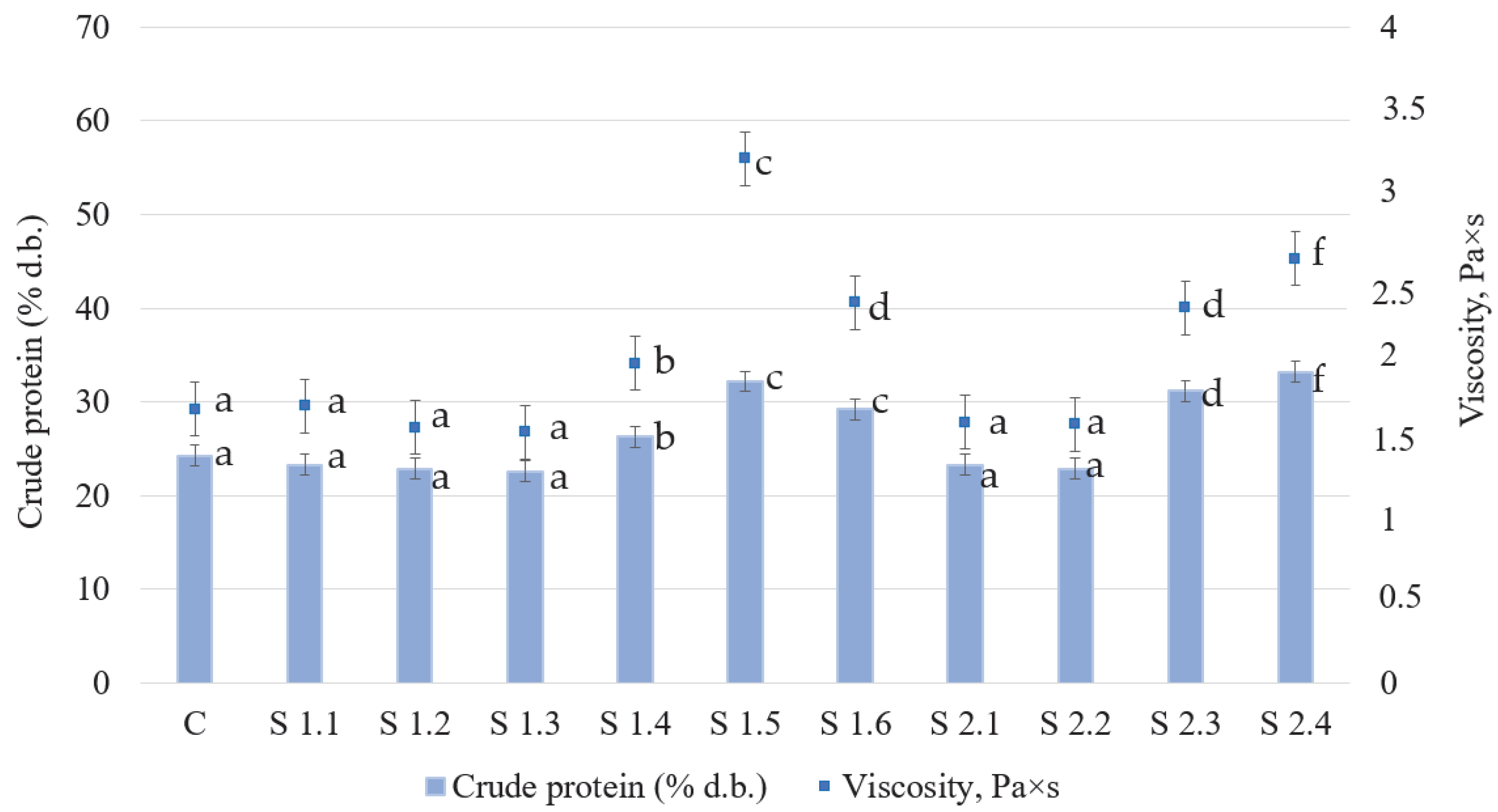
The research results showed that in all studied samples, the probiotic content meets the requirements for functional food products according to GOST R 55577-2013 [52]. According to GOST R 55577-2013 [52], probiotic products should contain at least 1 × 10⁶ viable probiotic microorganisms per gram throughout shelf life. At the same time, prebiotic properties of the additives used with respect to the starter microbial cultures were noted. In the enriched yogurt products, the probiotic content was an order of magnitude higher than in the control. This fact is also confirmed by the results of determining the protein content and viscosity of the obtained yogurt products (Figure 1).
Figure 1.
Results of determining the protein content and viscosity of the obtained yogurt products. Different lowercase letters indicate statistically significant differences between samples within the same parameter (p < 0.05).
The results of determining the protein content and viscosity indicate that the addition of plant ingredients and enriched yeast biomass has a pronounced effect on the formation of the nutritional value and structural-mechanical properties of yogurt products, with a direct relationship being noted between them. The control sample was characterized by a protein content averaging 24% on a dry matter basis and a viscosity of 1.7 Pa·s, whereas the experimental samples showed differentiated dynamics depending on the type of enriching yeast biomass and plant component.
In the sample containing curcumin-enriched yeast biomass and whole-meal flour from sprouted wheat grain (S 1.3), the protein content remained close to the control or decreased slightly, which is likely due to the relatively low protein content (12.5%) of the WG composition. At the same time, the viscosity of the sample was also below the control value, which may be attributed to the influence of sprouted grain particles (husk particles) on the formation of the yogurt curd and the redistribution of moisture in the food system. For samples with the protein ingredient from hemp press cake (S 1.4–S 1.6), a consistent increase in protein content to 32–33% and viscosity to 2.5–2.6 Pa·s was observed, confirming the structure-forming role of plant proteins in the fermented dairy matrix. A similar trend was previously shown by Xu et al. [30], where the addition of hemp protein to a fermented yogurt food system contributed to improved curd quality, reduced whey separation, and enhanced rheological characteristics of the product.
A similar pattern was also established for samples containing ergosterol-enriched yeast biomass (S 2.2–S 2.4). The addition of WG was not accompanied by a pronounced increase in protein content, whereas the use of PI ensured an increase in this indicator from 26–27% to 33–34% with a simultaneous increase in the viscosity of the food system to 2.5 Pa·s. These data are consistent with published results on the use of dietary fibers derived from cereal grains in yogurt products: AlKaisy et al. [53] reported that the addition of 1–4% wheat dietary fiber increases water-holding capacity, reduces syneresis, and increases viscosity compared to the control; this effect was attributed to an increase in dry matter content and the participation of dietary fiber in the formation of the curd.
Thus, the most pronounced technological effect was established for samples S 1.4–S 1.6 and S 2.3–S 2.4, containing 2–3% of the protein ingredient PI. The increase in protein content and viscosity in these samples indicates the formation of a denser product structure, in which plant proteins and yeast biomass components may additionally participate in stabilizing the fermented dairy system. This effect is consistent with current understanding of the role of plant proteins and grain components themselves in yogurt products [54,55,56,57,58]: their addition can increase the dry matter content, enhance interactions with the casein matrix, and improve the structural properties of the product.
3.2.3. Antioxidant Activity and Biotesting of Yogurt Products
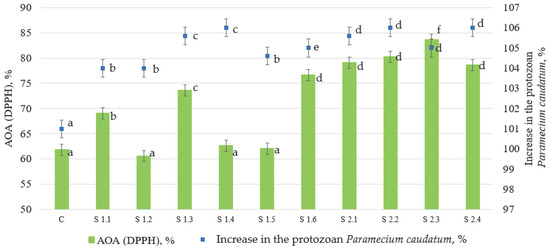
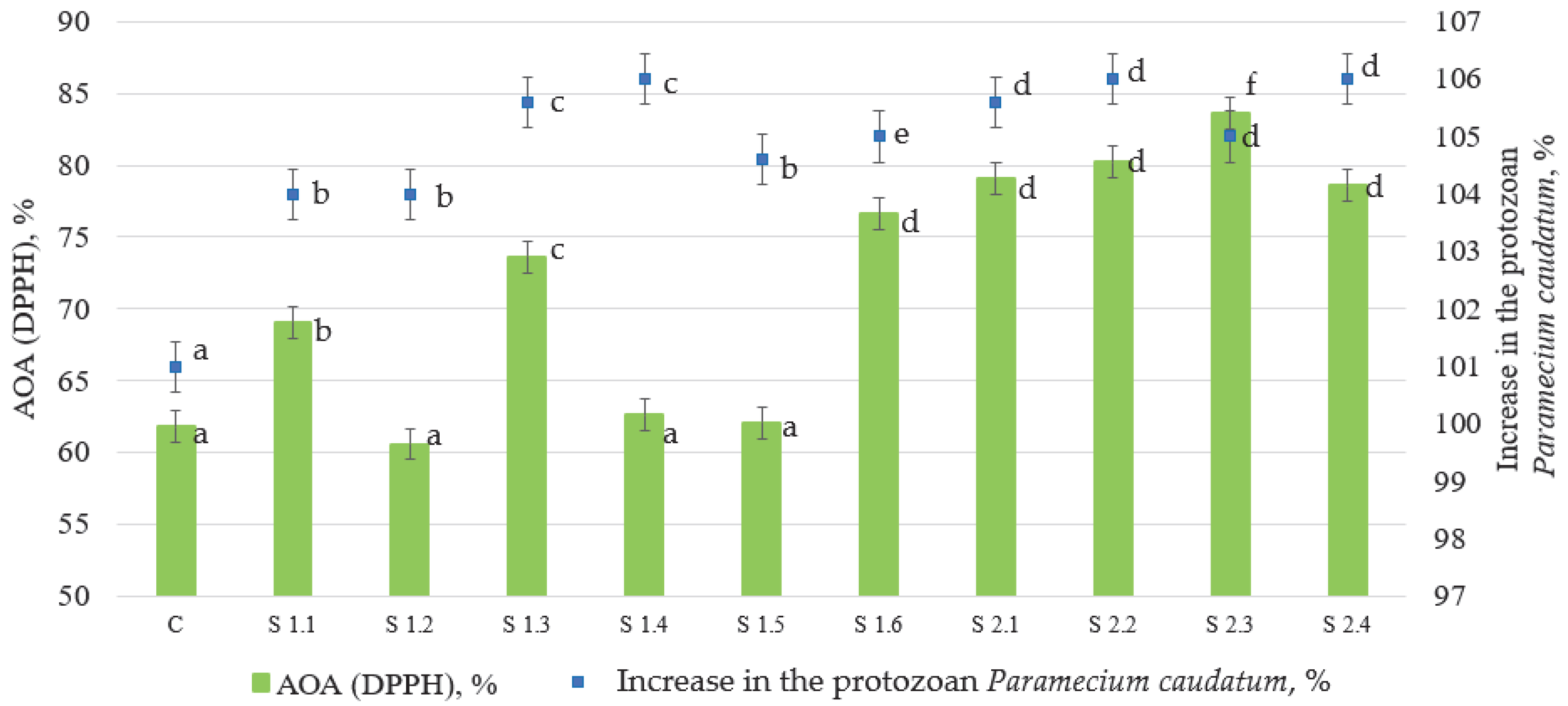
Meanwhile, the addition of enriched yeast biomass contributes to an increase in antioxidant activity and the growth of Paramecium caudatum protozoa in the obtained yogurt products (Figure 2).
Figure 2.
Results of determination of antioxidant activity and growth of Paramecium caudatum protozoa of the obtained yogurt products. Different lowercase letters indicate statistically significant differences between samples within the same parameter (p < 0.05).
The results in Figure 2 show that all experimental samples containing enriched yeast biomass exhibited higher antioxidant activity than the control: the AOA (DPPH) value increased from ~62% in the control sample to 69–84% in the yogurt products. The most pronounced effect was observed for sample S 2.3, which may be attributed to the combined contribution of ergosterol-enriched yeast biomass and plant ingredients, which also contain a number of substances with antioxidant activity [25,36].
The Paramecium caudatum biotest also revealed positive trends: protozoan growth in the experimental samples reached 104–106%, compared with approximately 101% in the control. These results indicate the absence of detectable toxic effects and suggest favorable biological compatibility of the yogurt matrix components. Although the observed response may be related to the presence of biologically active compounds in the enriched samples, further studies are needed to directly confirm their bioavailability. This is consistent with the findings of Kalinina et al. [31,34], who reported that the encapsulation of nanostructured curcumin into Saccharomyces cerevisiae cells preserves antioxidant activity and enables sustained release of the bioactive substance.
It can also be noted that our previous studies, presented in the open literature [37], have proven that a combination of ultrasound treatment, germination, and fermentation of grain raw materials is accompanied by an increase in antioxidant activity and the accumulation of functionally significant metabolites. Furthermore, the observed increase in the biological response of the test culture is consistent with the conclusions of Ranadheera et al. that the food matrix and the presence of bioactive components can significantly influence the functional effectiveness of probiotic products [51,59,60].
3.2.4. Microscopic Characteristics of Yogurt Products
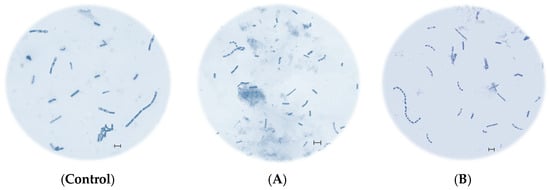
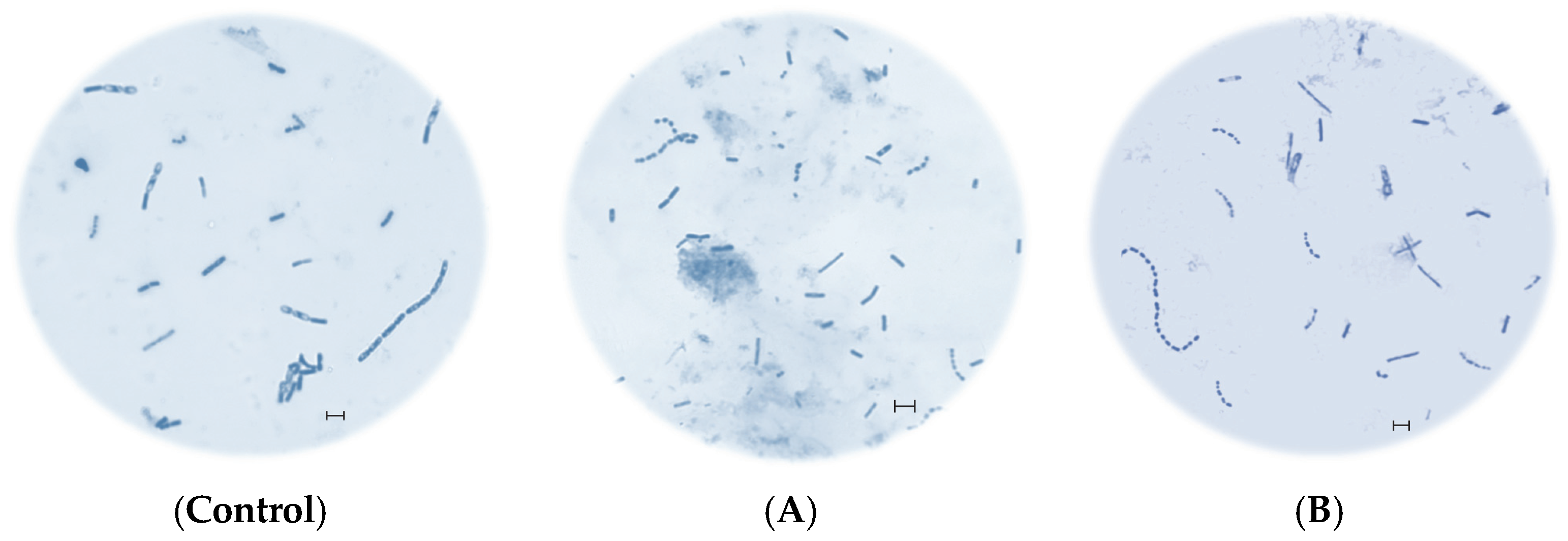
The obtained data are also confirmed by the results of microscopic studies of yogurt products, presented in Figure 3, which shows the characteristic appearance of microbiota for yogurt products enriched with curcumin-enriched yeast biomass and yogurt products enriched with ergosterol-enriched yeast biomass.
Figure 3.
Results of microscopy of yogurt products: (Control)—yogurt product without the addition of enriched yeast biomass and plant ingredients; (A)—characteristic appearance of the microbiota of yogurt products enriched with curcumin-enriched yeast biomass (samples S 1.1, S 1.3, and S 1.6); (B)—characteristic appearance of the microbiota of yogurt products enriched with ergosterol-enriched yeast biomass (samples S 2.1–S 2.4), scale bar: 10 µm.
Representative micrographs of the characteristic microflora of the studied yogurt products are presented in Figure 3. Microscopic analysis was performed to visualize the morphological features of starter culture microorganisms and to confirm the formation of a typical fermented dairy microflora. Studies presented in scientific publications [59] indicate that various additives that are unconventional for fermented dairy products can have different effects on the development of lactic acid bacteria. Our research shows [34,35] that enriched yeast biomass has a stimulating effect on the development of microorganisms of the starter culture used. These data are also consistent with the pH values of the products.
Microscopic examination demonstrated that the characteristic morphological profile of the starter microbiota was preserved in all yogurt samples. Long-chain streptococcal forms typical of Streptococcus thermophilus predominated in the field of view, while only a limited number of rod-shaped microorganisms were observed. Although the microscopy performed in this study was qualitative in nature, the visual observations were consistent with the microbiological results, which showed higher counts of probiotic microorganisms in the experimental samples than in the control. In samples supplemented with curcumin- or ergosterol-enriched yeast biomass, microbial cells appeared more abundant and uniformly distributed throughout the yogurt matrix, indicating that the enriching ingredients did not adversely affect the development of the starter culture. A limited presence of rod-shaped microorganisms was noted, visualized in some areas of view. In the experimental samples containing yeast biomass with curcumin and ergosterol, the microbiota was more pronounced compared to the control, which is consistent with the previously obtained data on the increased number of probiotic microorganisms in these groups of yogurt products.
Upon observation of the microscopic examination of the experimental samples characteristic of this type of starter microbiota, no foreign microorganisms were detected.
4. Conclusions
The results of this study confirm that combining curcumin- or ergosterol-enriched yeast biomass with plant-derived ingredients is effective for developing yogurt products with improved functional and technological properties. All experimental samples exhibited a denser and more homogeneous structure than the control; however, the most promising results were obtained for formulations containing the hemp press cake-derived protein ingredient in combination with enriched yeast biomass (samples S 1.6, S 2.3, and S 2.4). These samples demonstrated the most favorable combination of structural stability, reduced syneresis, increased protein content, enhanced viscosity, high probiotic microorganism counts, and elevated antioxidant activity. In addition, formulations containing 2% plant ingredient showed the most balanced sensory characteristics, indicating their suitability for the development of functional probiotic yogurt products.
The incorporation of plant-derived ingredients and enriched yeast biomass resulted in measurable changes in the acidity characteristics of the yogurt products, with titratable acidity ranging from 80.2 to 91.8 °T and pH values ranging from 3.79 to 4.04. These results confirm the successful fermentation of the developed formulations and demonstrate the influence of formulation composition on the acidification behavior of the yogurt matrix.
The experimental samples contained 1.6 × 10⁷–6.4 × 10⁷ MPN/g of probiotic microorganisms, which was substantially higher than in the control sample and met the criteria for functional probiotic products. Yogurt formulations containing whole-meal flour from sprouted wheat grain exhibited the highest counts of probiotic microorganisms, suggesting a favorable effect of this ingredient on starter culture development. Among the tested formulations, samples combining enriched yeast biomass with the hemp press cake-derived protein ingredient demonstrated the most advantageous technological characteristics, including improved gel stability, increased viscosity, elevated protein content, and reduced syneresis (up to 16.1 mL), making them the most promising formulations for the production of functional yogurt products.
The results of protein content and viscosity measurements demonstrated a pronounced effect of the hemp press cake-derived protein ingredient on the formation of the structural and mechanical properties of the yogurt products. The highest protein content (up to 33–34% on a dry matter basis) and viscosity (up to 2.5–2.6 Pa·s) were recorded for samples S 1.5–S 1.6 and S 2.3–S 2.4, indicating the contribution of plant proteins to the stabilization of the protein–polysaccharide network within the fermented dairy matrix. From a technological perspective, these characteristics are particularly important, as increased protein content and viscosity contribute to improved texture, enhanced gel stability, and reduced whey separation during storage, thereby increasing the consumer appeal and industrial applicability of yogurt products.
Enrichment of yogurt products with yeast biomass increased the antioxidant activity of the samples: the AOA (DPPH) value increased to 69–84%. The results of biotesting on Paramecium caudatum and microscopy data confirmed the absence of a negative effect of the enriching components on the development of probiotic microbiota and the preservation of the characteristic morphological profile of the starter cultures in the finished product.
The results confirm the potential of enriched yeast biomass as a functional ingredient in yogurt production. Further evaluation of the stability of the observed effects during storage is recommended.
Author Contributions
Conceptualization, N.N. and R.F.; Methodology, N.N., R.F. and I.K.; Investigation, N.N., V.L. and R.F.; Data curation and analysis, R.F.; Supervision, N.N.; Writing—original draft R.F., A.A., S.G., V.L., A.D. and I.K.; Visualization, V.L.; Data curation, V.L., A.D.; Writing—article and editing R.F., I.K. and N.N. All authors have read and agreed to the published version of the manuscript.
Funding
The research was carried out with the financial support of the Russian Science Foundation grant No. 25-26-00278. Authors Anastasia Antonova, Saveliy Grachev, Vladislav Leonov, and Alexander Demidkin participated in the study on their own initiative and did not receive financial support.
Institutional Review Board Statement
Ethical review and approval were waived for this study because the sensory evaluation involved only voluntary tasting of food products by adult participants, without any medical intervention or potential health risks. All participants provided informed consent prior to participation, and the study was conducted in accordance with the principles of the Declaration of Helsinki.
Informed Consent Statement
Informed consent was obtained from all subjects involved in the study.
Data Availability Statement
Data will be made available on request to the corresponding author.
Conflicts of Interest
The authors declare no conflicts of interest. The funders had no role in the design of the study; in the collection, analyses, or interpretation of data; in the writing of the manuscript, or in the decision to publish the results.
References
- Chakma, S.; Acharjee, M.R.; Tonni, I.J.; Tabassum, F.; Das, E.; Islam, S.; Faruk, M.S.A. Probiotic Potential of Yogurt: Exploring Lactic Acid Bacteria for Health-Enhancing Benefits. Appl. Food Res. 2025, 5, 101383. [Google Scholar] [CrossRef] [Scilit]
- Solanki, A. Survival of Free and Encapsulated Probiotic Bacteria and Their Effect on the Sensory Properties of Yoghurt. LWT-Food Sci. Technol. 2006, 39, 1221–1227. [Google Scholar] [CrossRef] [Scilit]
- Granato, D.; Branco, G.F.; Cruz, A.G.; Faria, J.A.F.; Shah, N.P. Probiotic Dairy Products as Functional Foods. Compr. Rev. Food Sci. Food Saf. 2010, 9, 455–470. [Google Scholar] [CrossRef] [Scilit] [PubMed]
- Homayouni, A.; Alizadeh, M.; Alikhah, H.; Zijah, V. Functional Dairy Probiotic Food Development: Trends, Concepts, and Products. In Probiotics; Rigobelo, E.C., Ed.; IntechOpen: London, UK, 2012; Chapter 9. [Google Scholar] [CrossRef] [Scilit] [PubMed]
- Montemurro, M.; Pontonio, E.; Coda, R.; Rizzello, C.G. Plant-Based Alternatives to Yogurt: State-of-the-Art and Perspectives of New Biotechnological Challenges. Foods 2021, 10, 316. [Google Scholar] [CrossRef] [Scilit] [PubMed]
- Wajs, J.; Brodziak, A.; Król, J. Shaping the Physicochemical, Functional, Microbiological and Sensory Properties of Yoghurts Using Plant Additives. Foods 2023, 12, 1275. [Google Scholar] [CrossRef] [Scilit] [PubMed]
- Sarıtaş, S.; Mondragon Portocarrero, A.d.C.; Miranda, J.M.; Witkowska, A.M.; Karav, S. Functional Yogurt: Types and Health Benefits. Appl. Sci. 2024, 14, 11798. [Google Scholar] [CrossRef] [Scilit]
- Ban, Q.F.; Sun, X.M.; Jiang, Y.Q.; Cheng, J.J.; Guo, M.R. Effect of synbiotic yogurt fortified with monk fruit extract on hepatic lipid biomarkers and metabolism in rats with type 2 diabetes. J. Dairy Sci. 2022, 105, 3758–3769. [Google Scholar] [CrossRef] [Scilit] [PubMed]
- Seregelj, V.; Pezo, L.; Sovljanski, O.; Levic, S.; Nedovic, V.; Markov, S.; Tomic, A.; Canadanovic-Brunet, J.; Vulic, J.; Saponjac, V.T.; et al. New concept of fortified yogurt formulation with encapsulated carrot waste extract. LWT-Food Sci. Technol. 2021, 138, 110732. [Google Scholar] [CrossRef] [Scilit]
- Feinisa Khairani, A.; Islami, U.; Rizky Anggun Syamsunarno, M.; Ary Lantika, U. Synbiotic Purple Sweet Potato Yogurt Ameliorate Lipid Metabolism in High Fat Diet Mice Model. Biomed. Pharmacol. J. 2020, 13, 175–184. [Google Scholar] [CrossRef] [Scilit]
- Liqing, Q.; Min, Z.; Arun, S.M.; Lu, C. Effect of edible rose (Rosa rugosa cv. Plena) flower extract addition on the physicochemical, rheological, functional and sensory properties of set-type yogurt. Food Biosci. 2021, 43, 101249. [Google Scholar] [CrossRef] [Scilit]
- Merenkova, S.P.; Zinina, O.V.; Stuart, M.; Okuskhanova, E.; Androsova, N. Effects of dietary fiber on human health: A review. Hum. Sport Med. 2020, 20, 106–113. [Google Scholar] [CrossRef] [Scilit]
- Aleman, R.S.; Cedillos, R.; Page, R.; Olson, D.; Aryana, K. Physico-chemical, microbiological, and sensory characteristics of yogurt as affected by various ingredients. J. Dairy Sci. 2023, 106, 3868–3883. [Google Scholar] [CrossRef] [Scilit] [PubMed]
- Kaur Sidhu, M.; Lyu, F.; Sharkie, T.P.; Ajlouni, S.; Ranadheera, C.S. Probiotic Yogurt Fortified with Chickpea Flour: Physico-Chemical Properties and Probiotic Survival during Storage and Simulated Gastrointestinal Transit. Foods 2020, 9, 1144. [Google Scholar] [CrossRef] [Scilit] [PubMed]
- Abdeldaiem, A.M.; Ali, A.H.; Shah, N.; Ayyash, M.; Mousa, A.H. Physicochemical analysis, rheological properties, and sensory evaluation of yogurt drink supplemented with roasted barley powder. LWT 2023, 173, 114319. [Google Scholar] [CrossRef] [Scilit]
- Mousavi, M.; Heshmati, A.; Garmakhany, A.D.; Vahidinia, A.; Taheri, M. Optimization of the viability of Lactobacillus acidophilus and physico-chemical, textural and sensorial characteristics of flaxseed-enriched stirred probiotic yogurt by using response surface methodology. LWT 2019, 102, 80–88. [Google Scholar] [CrossRef] [Scilit]
- Jaster, H.; Arend, G.D.; Rezzadori, K.; Chaves, V.C.; Reginatto, F.H.; Petrus, J.C.C. Enhancement of antioxidant activity and physicochemical properties of yogurt enriched with concentrated strawberry pulp obtained by block freeze concentration. Food Res. Int. 2018, 104, 119–125. [Google Scholar] [CrossRef] [Scilit] [PubMed]
- Marchiani, R.; Bertolino, M.; Belviso, S.; Giordano, M.; Ghirardello, D.; Torri, L.; Piochi, M.; Zeppa, G. Yogurt enrichment with grape pomace: Effect of grape cultivar on physicochemical, microbiological and sensory properties. J. Food Qual. 2016, 39, 77–89. [Google Scholar] [CrossRef] [Scilit]
- Rose Mary, P.; Sarma, M.; Mukesh, K. Non-enzymatically hydrolyzed guar gum and orange peel fibre together stabilize the low-fat, set-type yogurt: A techno-functional study. Food Hydrocoll. 2022, 122, 107100. [Google Scholar] [CrossRef] [Scilit]
- Sun, X.H.; Sarteshnizi, R.A.; Udenigwe, C.C. Recent advances in protein-polyphenol interactions focusing on structural properties related to antioxidant activities. Curr. Opin. Food Sci. 2022, 45, 100840. [Google Scholar] [CrossRef] [Scilit]
- Saber, H.; Sari, A.A.; Ali, H.; Khodaiyan, F. Physicochemical and Sensory Attributes Assessment of Functional Low-Fat Yogurt Produced by Incorporation of Barley Bran and Lactobacillus acidophilus. Food Sci. Nutr. 2017, 5, 875–880. [Google Scholar] [CrossRef] [Scilit] [PubMed]
- Gunenc, A.; Alswiti, C.; Hosseinian, F. Wheat Bran Dietary Fiber: Promising Source of Prebiotics with Antioxidant Potential. J. Food Res. 2017, 6, 1–10. [Google Scholar] [CrossRef] [Scilit]
- Qu, X.Q.; Nazarenko, Y.; Yang, W.; Nie, Y.Y.; Zhang, Y.S.; Li, B. Effect of Oat β-Glucan on the Rheological Characteristics and Microstructure of Set-Type Yogurt. Molecules 2021, 26, 4752. [Google Scholar] [CrossRef] [Scilit] [PubMed]
- Ye, Y.; Li, P.; Zhou, J.; He, J.; Cai, J. The Improvement of Sensory and Bioactive Properties of Yogurt with the Introduction of Tartary Buckwheat. Foods 2022, 11, 1774. [Google Scholar] [CrossRef] [Scilit] [PubMed]
- Naumenko, N.; Potoroko, I.; Kalinina, I. Stimulation of antioxidant activity and γ-aminobutyric acid synthesis in germinated wheat grain Triticum aestivum L. by ultrasound: Increasing the nutritional value of the product. Ultrason. Sonochem. 2022, 86, 106000. [Google Scholar] [CrossRef] [Scilit] [PubMed]
- Tian, B.; Xie, B.; Shi, J.; Wu, J.; Cai, Y.; Xu, T.; Xue, S.; Deng, Q. Physicochemical changes of oat seeds during germination. Food Chem. 2010, 119, 1195–1200. [Google Scholar] [CrossRef] [Scilit]
- Ding, J.; Yang, T.; Feng, H.; Dong, M.; Slavin, M.; Xiong, S.; Zhao, S. Enhancing contents of γ-aminobutyric acid (GABA) and other micronutrients in dehulled rice during germination under normoxic and hypoxic conditions. J. Agric. Food Chem. 2016, 64, 1094–1102. [Google Scholar] [CrossRef] [Scilit] [PubMed]
- Hung, P.V.; Hatcher, D.W.; Barker, W. Phenolic acid composition of sprouted wheats by ultra-performance liquid chromatography (UPLC) and their antioxidant activities. Food Chem. 2011, 126, 1896–1901. [Google Scholar] [CrossRef] [Scilit] [PubMed]
- Wu, Z.; Song, L.; Huang, D. Food grade fungal stress on germinating peanut seeds induced phytoalexins and enhanced polyphenolic antioxidants. J. Agric. Food Chem. 2011, 59, 5993–6003. [Google Scholar] [CrossRef] [Scilit] [PubMed]
- Xu, J.; Xu, X.; Yuan, Z.; Hua, D.; Yan, Y.; Bai, M.; Song, H.; Yang, L.; Zhu, D.; Liu, J.; et al. Effect of Hemp Protein on the Physicochemical Properties and Flavor Components of Plant-Based Yogurt. LWT 2022, 172, 114145. [Google Scholar] [CrossRef] [Scilit]
- Kalinina, I.; Fatkullin, R.; Naumenko, N.; Popova, N.; Stepanova, D. Using Spent Brewer’s Yeast to Encapsulate and Enhance the Bioavailability of Sonochemically Nanostructured Curcumin. Int. J. Food Sci. 2024, 2024, 7593352. [Google Scholar] [CrossRef] [Scilit] [PubMed]
- Parapouli, M.; Vasileiadis, A.; Afendra, A.-S.; Hatziloukas, E. Saccharomyces cerevisiae and its industrial applications. AIMS Microbiol. 2020, 6, 1–31. [Google Scholar] [CrossRef] [Scilit] [PubMed]
- D’Aquila, P.; Sena, G.; Crudo, M.; Passarino, G.; Bellizzi, D. Effect of Essential Oils of Apiaceae, Lamiaceae, Lauraceae, Myrtaceae, and Rutaceae Family Plants on Growth, Biofilm Formation, and Quorum Sensing in Chromobacterium violaceum, Pseudomonas aeruginosa, and Enterococcus faecalis. Microorganisms 2023, 11, 1150. [Google Scholar] [CrossRef] [Scilit] [PubMed]
- Fatkullin, R.I.; Kalinina, I.V.; Bryzgalova, A.D. Use of Encapsulated Rutin to Create Probiotic Beverages with Antioxidant Properties. Bull. South Ural State Univ. Ser. Food Biotechnol. 2024, 12, 43–52. (In Russian) [Google Scholar] [CrossRef] [Scilit]
- Fatkullin, R.I.; Kalinina, I.V.; Popova, N.V.; Stepanova, D.S. Sonochemical approach to obtain biomass of yeast Saccharomyces Cerevisiae with high ergosterol content. Bull. South Ural State Univ. Ser. Food Biotechnol. 2025, 13, 44–51. (In Russian) [Google Scholar] [CrossRef] [Scilit]
- Naumenko, N.; Fatkullin, R.; Popova, N.; Ruskina, A.; Kalinina, I.; Morozov, R.; Avdin, V.V.; Antonova, A.; Vasileva, E. Effect of a Combination of Ultrasonic Germination and Fermentation Processes on the Antioxidant Activity and γ-Aminobutyric Acid Content of Food Ingredients. Fermentation 2023, 9, 246. [Google Scholar] [CrossRef] [Scilit]
- Naumenko, N.V.; Radkevich, A.V.; Fatkullin, R.; Kalinina, I.V. Use of plant raw materials in the production of dairy products. IOP Conf. Ser. Earth Environ. Sci. 2024, 1405, 012035. [Google Scholar] [CrossRef] [Scilit]
- GOST 31981-2013; Yogurts. General Specifications; Standartinform: Moscow, Russia, 2014.
- GOST 3624-92; Milk and Milk Products. Titrimetric Methods for Determination of Acidity. Standartinform: Moscow, Russia, 2009.
- GOST 32892-2014; Milk and Dairy Products. Method of pH Determination. Standartinform: Moscow, Russia, 2015.
- ISO 8968-1:2014; Milk and Milk Products—Determination of Nitrogen Content—Part 1: Kjeldahl Principle and Crude Protein Calculation. International Organization for Standardization (ISO): Geneva, Switzerland, 2014.
- GOST R 56139-2014; Milk and Milk Products. Methods for Enumeration of Pro-biotic Microorganisms. Standartinform: Moscow, Russia, 2015.
- Zharkova, I.M.; Safonova, Y.A.; Grebenshchikov, A.V.; Trufanova, Y.N.; Kazimirova, Y.; Slepokurova, Y.I. Application of Paramecium caudatum for the Assessment of Energy Costs for Food Raw Materials and Products Digestibility. IOP Conf. Ser. Earth Environ. Sci. 2021, 640, 062006. [Google Scholar] [CrossRef] [Scilit]
- Zhirkova, E.V.; Leonova, I.B.; Kryachko, T.I.; Malkina, V.D.; Martirosyan, V.V. Investigation of the Bioavailability of Nutrients in Wheat Bread Enriched with Vegetable Powders. Khleboprodukty 2019, 7, 42–45. (In Russian) [Google Scholar] [CrossRef] [Scilit]
- GOST 31674-2012; Feeds, Compound Feeds, Feed Materials. Methods for the De-termination of General Toxicity. Standartinform: Moscow, Russia, 2013.
- Sánchez-Moreno, C.; Larrauri, A.; Saura-Calixto, F. A procedure to measure the antioxidant efficiency of polyphenols. J. Sci. Food Agric. 1998, 76, 270–276. [Google Scholar] [CrossRef]
- Amatayakul, T.; Sherkat, F.; Shah, N.P. Syneresis in Set Yogurt as Affected by EPS Starter Cultures and Levels of Solids. Int. J. Dairy Technol. 2006, 59, 216–221. [Google Scholar] [CrossRef] [Scilit]
- Grujović, M.Ž.; Semedo-Lemsaddek, T.; Marković, K.G. Application of Probiotics in Foods: A Comprehensive Review of Benefits, Challenges, and Future Perspectives. Foods 2025, 14, 3088. [Google Scholar] [CrossRef] [Scilit] [PubMed]
- Navarro, J.L.; López, M.S.; Salvucci, E.; León, A.E.; Steffolani, M.E. Chemical and Nutritional Characterization of Sourdoughs Made with Sprouted and Unsprouted Whole-Wheat Flour and Their Effects on the Technological Quality of Bread. Foods 2025, 14, 2805. [Google Scholar] [CrossRef] [Scilit] [PubMed]
- Ben Moussa, O.; Mzoughi, M.; Chouaibi, M.; Boulares, M.; Hassouna, M. The Combined Effect of Phytosterols and Lactulose Supplementation on Yoghurt Quality. J. Food Nutr. Res. 2019, 7, 261–269. [Google Scholar] [CrossRef]
- Ranadheera, R.D.C.S.; Baines, S.K.; Adams, M.C. Importance of Food in Probiotic Efficacy. Food Res. Int. 2010, 43, 1–7. [Google Scholar] [CrossRef] [Scilit]
- GOST R 55577-2013; Functional Foodstuffs. Information About the Distinctive Signs and Efficiency Claims. Standartinform: Moscow, Russia, 2014.
- ALKaisy, Q.H.; Rahi, A.K.; Al-Saadi, J.M.S. Effect of Adding Grain Flour Fibers on the Physical, Rheological, and Sensorial Properties of Yogurt. Food Res. 2024, 8, 319–326. [Google Scholar] [CrossRef] [Scilit] [PubMed]
- Córdova-Ramos, J.S.; Gonzales-Barron, U.; Cerrón-Mallqui, L.M. Physicochemical and Sensory Properties of Yogurt as Affected by the Incorporation of Jumbo Squid (Dosidicus gigas) Powder. LWT 2018, 93, 506–510. [Google Scholar] [CrossRef] [Scilit]
- Le Ba, T.; Dam, M.S.; Nguyen, L.L.P.; Baranyai, L.; Kaszab, T. A Review of Processing Techniques and Rheological Properties of Yogurts. J. Texture Stud. 2025, 56, e70006. [Google Scholar] [CrossRef] [Scilit] [PubMed]
- Morris, A.; Boeneke, C.; King, J.M. Comparison of Storage Stability and In Vitro Digestion of Rice Flour-Based Yogurt Alternatives Made with Lactobacillus rhamnosus LGG to Milk-Based Yogurt. Foods 2025, 14, 1129. [Google Scholar] [CrossRef] [Scilit] [PubMed]
- Sim, S.Y.J.; Hua, X.Y.; Henry, C.J. A Novel Approach to Structure Plant-Based Yogurts Using High Pressure Processing. Foods 2020, 9, 1126. [Google Scholar] [CrossRef] [Scilit] [PubMed]
- Wang, H.; Zhang, Y.; Han, Y.; Hou, J.; Zuo, Y.; Li, Y.; Wu, H. The Physicochemical, Sensory, and Functional Properties of Yogurt Containing Millet and Milk. Foods 2025, 14, 3491. [Google Scholar] [CrossRef] [Scilit] [PubMed]
- Liu, Y.; Fei, Y.; Li, C.; Cheng, J.; Xue, F. Impact of Probiotic Fermentation on the Physicochemical Properties of Hemp Seed Protein Gels. Polymers 2024, 16, 3032. [Google Scholar] [CrossRef] [Scilit] [PubMed]
- Varedesara, M.S.; Ariaii, P.; Hesari, J. The Effect of Grape Seed Protein Hydrolysate on the Properties of Stirred Yogurt and Viability of Lactobacillus casei in It. Food Sci. Nutr. 2021, 9, 2180–2190. [Google Scholar] [CrossRef] [Scilit] [PubMed]

Disclaimer/Publisher’s Note: The statements, opinions and data contained in all publications are solely those of the individual author(s) and contributor(s) and not of MDPI and/or the editor(s). MDPI and/or the editor(s) disclaim responsibility for any injury to people or property resulting from any ideas, methods, instructions or products referred to in the content. |
© 2026 by the authors. Licensee MDPI, Basel, Switzerland. This article is an open access article distributed under the terms and conditions of the Creative Commons Attribution (CC BY) license.