


Skip to Content
You are currently on the new version of our website. Access the old version .

Cancers, Volume 12, Issue 12

2020 December - 385 articles

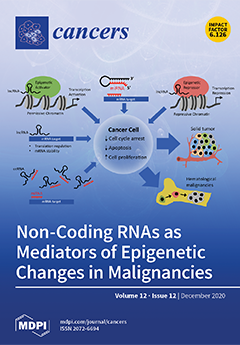
Cover Story: Cancer initiation, growth, and invasion are promoted by multiple mechanisms, including non-coding RNA (ncRNA)-dependent regulatory pathways. Deregulated expression of ncRNAs including long-non-coding RNAs (lncRNAs), competing endogenous RNAS (ceRNAs), and microRNAs (miRNAs) can promote malignancies by altering the cell cycle and apoptotic pathways to facilitate cellular proliferation. LncRNAs can alter gene expression through direct targeting of messenger RNAs (mRNAs), recruitment of epigenetic regulators to repress or activate transcription, or by functioning as ceRNAs to quench tumor suppressive miRNAs. Consequently, abnormal levels of ncRNAs and their ability to alter the epigenome can stimulate tumorigenesis and hematological malignancies. Therefore, targeting ncRNAs could be the foundation for developing new cancer therapies. View this paper.
  • Issues are regarded as officially published after their release is announced to the table of contents alert mailing list .
  • You may sign up for email alerts to receive table of contents of newly released issues.
  • PDF is the official format for papers published in both, html and pdf forms. To view the papers in pdf format, click on the "PDF Full-text" link, and use the free Adobe Reader to open them.

Articles (385)

  • Article
  • Open Access
37 Citations
5,149 Views
15 Pages

High Expression of NRF2 Is Associated with Increased Tumor-Infiltrating Lymphocytes and Cancer Immunity in ER-Positive/HER2-Negative Breast Cancer

  • Masanori Oshi,
  • Fernando A. Angarita,
  • Yoshihisa Tokumaru,
  • Li Yan,
  • Ryusei Matsuyama,
  • Itaru Endo and
  • Kazuaki Takabe

21 December 2020

Nuclear factor erythroid 2-related factor 2 (NRF2) is a key modifier in breast cancer. It is unclear whether NRF2 suppresses or promotes breast cancer progression. We studied the clinical relevance of NRF2 expression by conducting in silico analyses...

  • Article
  • Open Access
12 Citations
4,140 Views
14 Pages

Proteomic Resistance Biomarkers for PI3K Inhibitor in Triple Negative Breast Cancer Patient-Derived Xenograft Models

  • Zhanfang Guo,
  • Tina Primeau,
  • Jingqin Luo,
  • Cynthia Zhang,
  • Hua Sun,
  • Jeremy Hoog,
  • Feng Gao,
  • Shixia Huang,
  • Dean P. Edwards and
  • Cynthia X. Ma
  • + 5 authors

21 December 2020

PI3K pathway activation is frequently observed in triple negative breast cancer (TNBC). However, single agent PI3K inhibitors have shown limited anti-tumor activity. To investigate biomarkers of response and resistance mechanisms, we tested 17 TNBC p...

  • Article
  • Open Access
29 Citations
5,137 Views
19 Pages

Rapalink-1 Targets Glioblastoma Stem Cells and Acts Synergistically with Tumor Treating Fields to Reduce Resistance against Temozolomide

  • Andres Vargas-Toscano,
  • Ann-Christin Nickel,
  • Guanzhang Li,
  • Marcel Alexander Kamp,
  • Sajjad Muhammad,
  • Gabriel Leprivier,
  • Ellen Fritsche,
  • Roger A. Barker,
  • Michael Sabel and
  • Ulf Dietrich Kahlert
  • + 3 authors

21 December 2020

Glioblastoma (GBM) is a lethal disease with limited clinical treatment options available. Recently, a new inhibitor targeting the prominent cancer signaling pathway mTOR was discovered (Rapalink-1), but its therapeutic potential on stem cell populati...

  • Commentary
  • Open Access
18 Citations
4,364 Views
11 Pages

Obesity Epidemic—The Underestimated Risk of Endometrial Cancer

  • Ludwig Kiesel,
  • Christine Eichbaum,
  • Ariane Baumeier and
  • Michael Eichbaum

21 December 2020

Endometrial cancer (EC) is the most frequently observed malignant gynecologic disease in developed countries. There is a strong association between the established risk factor obesity and the incidence of EC. Furthermore, the rate of women with a bod...

  • Article
  • Open Access
8 Citations
4,093 Views
14 Pages

A Confidence Habitats Methodology in MR Quantitative Diffusion for the Classification of Neuroblastic Tumors

  • Leonor Cerdá Alberich,
  • Cinta Sangüesa Nebot,
  • Angel Alberich-Bayarri,
  • José Miguel Carot Sierra,
  • Blanca Martínez de las Heras,
  • Diana Veiga Canuto,
  • Adela Cañete and
  • Luis Martí-Bonmatí

21 December 2020

Background/Aim: In recent years, the apparent diffusion coefficient (ADC) has been used in many oncology applications as a surrogate marker of tumor cellularity and aggressiveness, although several factors may introduce bias when calculating this coe...

  • Review
  • Open Access
12 Citations
6,237 Views
25 Pages

TMEFF2: A Transmembrane Proteoglycan with Multifaceted Actions in Cancer and Disease

  • Motasim Masood,
  • Stefan Grimm,
  • Mona El-Bahrawy and
  • Ernesto Yagüe

21 December 2020

Transmembrane protein with an EGF-like and two Follistatin-like domains 2 (TMEFF2) is a 374-residue long type-I transmembrane proteoglycan which is proteolytically shed from the cell surface. The protein is involved in a range of functions including...

  • Review
  • Open Access
26 Citations
5,514 Views
28 Pages

21 December 2020

Tumor progression involves the co-evolution of transformed cells and the milieu in which they live and expand. Breast cancer stem cells (BCSCs) are a specialized subset of cells that sustain tumor growth and drive metastatic colonization. However, th...

  • Review
  • Open Access
41 Citations
11,628 Views
14 Pages

Etiology of Breast Implant-Associated Anaplastic Large Cell Lymphoma (BIA-ALCL): Current Directions in Research

  • Anand K. Deva,
  • Suzanne D. Turner,
  • Marshall E. Kadin,
  • Mark R. Magnusson,
  • H. Miles Prince,
  • Roberto N. Miranda,
  • Giorgio G. Inghirami and
  • William P. Adams

21 December 2020

Breast implant-associated anaplastic large cell lymphoma (BIA-ALCL) is a CD30-positive, anaplastic lymphoma kinase-negative T-cell lymphoma. Where implant history is known, all confirmed cases to date have occurred in patients with exposure to textur...

  • Article
  • Open Access
22 Citations
4,522 Views
25 Pages

Adipocyte-Derived Leptin Promotes PAI-1-Mediated Breast Cancer Metastasis in a STAT3/miR-34a Dependent Manner

  • Si-Jing Li,
  • Xiao-Hui Wei,
  • Xiao-Man Zhan,
  • Jin-Yong He,
  • Yu-Qi Zeng,
  • Xue-Mei Tian,
  • Sheng-Tao Yuan and
  • Li Sun

21 December 2020

The crosstalk between cancer cells and adipocytes is critical for breast cancer progression. However, the molecular mechanisms underlying these interactions have not been fully characterized. In the present study, plasminogen activator inhibitor-1 (P...

  • Article
  • Open Access
37 Citations
3,937 Views
23 Pages

LncRNA LINC00518 Acts as an Oncogene in Uveal Melanoma by Regulating an RNA-Based Network

  • Cristina Barbagallo,
  • Rosario Caltabiano,
  • Giuseppe Broggi,
  • Andrea Russo,
  • Lidia Puzzo,
  • Teresio Avitabile,
  • Antonio Longo,
  • Michele Reibaldi,
  • Davide Barbagallo and
  • Marco Ragusa
  • + 2 authors

21 December 2020

Uveal melanoma (UM) is the most common primary intraocular malignant tumor in adults; little is known about the contribution of non-coding RNAs (ncRNAs) to UM pathogenesis. Competitive endogenous RNA (ceRNA) networks based on RNA–RNA interactio...

  • Article
  • Open Access
21 Citations
4,740 Views
25 Pages

Chaperonin-Containing TCP-1 Promotes Cancer Chemoresistance and Metastasis through the AKT-GSK3β-β-Catenin and XIAP-Survivin Pathways

  • Yun-Xun Chang,
  • Yuan-Feng Lin,
  • Chi-Long Chen,
  • Ming-Shyan Huang,
  • Michael Hsiao and
  • Po-Huang Liang

21 December 2020

Chaperonin-containing TCP-1 (CCT) is a chaperonin composed of eight subunits that participates in intracellular protein folding. Here, we showed that increased levels of subunits of CCT, particularly CCT-β, were significantly correlated with low...

  • Article
  • Open Access
68 Citations
10,817 Views
18 Pages

Breast Cancer Organoids Model Patient-Specific Response to Drug Treatment

  • Elena Campaner,
  • Alessandro Zannini,
  • Mariangela Santorsola,
  • Deborah Bonazza,
  • Cristina Bottin,
  • Valeria Cancila,
  • Claudio Tripodo,
  • Marina Bortul,
  • Fabrizio Zanconati and
  • Giannino Del Sal
  • + 1 author

21 December 2020

Tumor organoids are tridimensional cell culture systems that are generated in vitro from surgically resected patients’ tumors. They can be propagated in culture maintaining several features of the tumor of origin, including cellular and genetic...

  • Article
  • Open Access
29 Citations
5,623 Views
14 Pages

Performance of Comprehensive Complication Index and Clavien-Dindo Complication Scoring System in Liver Surgery for Hepatocellular Carcinoma

  • Alessandro Giani,
  • Federica Cipriani,
  • Simone Famularo,
  • Matteo Donadon,
  • Davide Paolo Bernasconi,
  • Francesco Ardito,
  • Federico Fazio,
  • Daniele Nicolini,
  • Pasquale Perri and
  • Luca Gianotti
  • + 64 authors

21 December 2020

Background: We aimed to assess the ability of comprehensive complication index (CCI) and Clavien-Dindo complication (CDC) scale to predict excessive length of hospital stay (e-LOS) in patients undergoing liver resection for hepatocellular carcinoma....

  • Review
  • Open Access
33 Citations
5,908 Views
22 Pages

21 December 2020

Natural killer (NK) cells are innate immune effectors capable of broad cytotoxicity via germline-encoded receptors and can have conferred cytotoxic potential via the addition of chimeric antigen receptors. Combined with their reduced risk of graft-ve...

  • Review
  • Open Access
24 Citations
5,031 Views
22 Pages

Adjuvant Pancreatic Cancer Management: Towards New Perspectives in 2021

  • Anthony Turpin,
  • Mehdi el Amrani,
  • Jean-Baptiste Bachet,
  • Daniel Pietrasz,
  • Lilian Schwarz and
  • Pascal Hammel

21 December 2020

Adjuvant chemotherapy is currently used in all patients with resected pancreatic cancer who are able to begin treatment within 3 months after surgery. Since the recent publication of the PRODIGE 24 trial results, modified FOLFIRINOX has become the st...

  • Review
  • Open Access
18 Citations
7,209 Views
26 Pages

Targeting Glycans and Heavily Glycosylated Proteins for Tumor Imaging

  • Ruben D. Houvast,
  • Mireille Vankemmelbeke,
  • Lindy G. Durrant,
  • Manfred Wuhrer,
  • Victor M. Baart,
  • Peter J. K. Kuppen,
  • Lioe-Fee de Geus-Oei,
  • Alexander L. Vahrmeijer and
  • Cornelis F. M. Sier

21 December 2020

Real-time tumor imaging techniques are increasingly used in oncological surgery, but still need to be supplemented with novel targeted tracers, providing specific tumor tissue detection based on intra-tumoral processes or protein expression. To maxim...

  • Article
  • Open Access
8 Citations
4,955 Views
24 Pages

Suppression of Metastatic Melanoma Growth in Lung by Modulated Electro-Hyperthermia Monitored by a Minimally Invasive Heat Stress Testing Approach in Mice

  • Mbuotidem Jeremiah Thomas,
  • Enikő Major,
  • Anett Benedek,
  • Ildikó Horváth,
  • Domokos Máthé,
  • Ralf Bergmann,
  • Attila Marcell Szász,
  • Tibor Krenács and
  • Zoltán Benyó

21 December 2020

Modulated electro-hyperthermia (mEHT) is a novel complementary therapy in oncology which is based on the higher conductivity and permittivity of cancerous tissues due to their enhanced glycolytic activity and ionic content compared to healthy normal...

  • Article
  • Open Access
16 Citations
4,511 Views
12 Pages

Social Jetlag and Prostate Cancer Incidence in Alberta’s Tomorrow Project: A Prospective Cohort Study

  • Liang Hu,
  • Andrew Harper,
  • Emily Heer,
  • Jessica McNeil,
  • Chao Cao,
  • Yikyung Park,
  • Kevin Martell,
  • Geoffrey Gotto,
  • Grace Shen-Tu and
  • Lin Yang
  • + 2 authors

21 December 2020

We investigated the association of social jetlag (misalignment between the internal clock and socially required timing of activities) and prostate cancer incidence in a prospective cohort in Alberta, Canada. Data were collected from 7455 cancer-free...

  • Article
  • Open Access
38 Citations
5,713 Views
16 Pages

The YAP/TEAD Axis as a New Therapeutic Target in Osteosarcoma: Effect of Verteporfin and CA3 on Primary Tumor Growth

  • Sarah Morice,
  • Mathilde Mullard,
  • Regis Brion,
  • Maryne Dupuy,
  • Sarah Renault,
  • Robel Tesfaye,
  • Bénédicte Brounais-Le Royer,
  • Benjamin Ory,
  • Françoise Redini and
  • Franck Verrecchia

20 December 2020

Although some studies suggested that disruption of the Hippo signaling pathway is associated with osteosarcoma progression, the molecular mechanisms by which YAP regulates primary tumor growth is not fully clarified. In addition, the validation of YA...

  • Article
  • Open Access
29 Citations
4,676 Views
17 Pages

20 December 2020

Antimicrobial properties of silver (I) ion and its complexes are well recognized. However, recent studies suggest that both silver (I) ion and its complexes possess anticancer activity associated with oxidative stress-induced apoptosis of various can...

  • Article
  • Open Access
6 Citations
2,959 Views
14 Pages

Delayed Postoperative Hyponatremia Following Endoscopic Transsphenoidal Surgery for Non-Adenomatous Parasellar Tumors

  • Hirotaka Hasegawa,
  • Masahiro Shin,
  • Noriko Makita,
  • Yuki Shinya,
  • Kenji Kondo and
  • Nobuhito Saito

20 December 2020

Little is known about delayed postoperative hyponatremia (DPH) accompanied with transsphenoidal surgery for non-adenomatous skull base tumors (NASBTs). Consecutive data on 30 patients with parasellar NASBT was retrospectively reviewed with detailed a...

  • Review
  • Open Access
53 Citations
6,977 Views
24 Pages

Mechanisms of Immunosuppression in Colorectal Cancer

  • Yang Zhang,
  • Ashwani Rajput,
  • Ning Jin and
  • Jing Wang

20 December 2020

CRC is the third most diagnosed cancer in the US with the second-highest mortality rate. A multi-modality approach with surgery/chemotherapy is used in patients with early stages of colon cancer. Radiation therapy is added to the armamentarium in pat...

  • Review
  • Open Access
37 Citations
6,296 Views
13 Pages

Acquired Resistance to PD-1/PD-L1 Blockade in Lung Cancer: Mechanisms and Patterns of Failure

  • Ranjan Pathak,
  • Rebecca R. Pharaon,
  • Atish Mohanty,
  • Victoria M. Villaflor,
  • Ravi Salgia and
  • Erminia Massarelli

20 December 2020

Immunotherapy is now the preferred treatment for most lung cancer patients. It is used to treat unresectable stage III non-small-cell lung cancer and is the first-line therapy for non-oncogene-driven advanced/metastatic non-small-cell lung cancer pat...

  • Article
  • Open Access
6 Citations
2,726 Views
13 Pages

Prospective Study of Intensity-Modulated Radiation Therapy for Locally Advanced Breast Cancer

  • Benoît Bataille,
  • Bennadji Raoudha,
  • Florence Le Tinier,
  • Laurent Basson,
  • Alexandre Escande,
  • Hélène Langin,
  • Emmanuelle Tresch,
  • Frederik Crop,
  • Franck Darloy and
  • David Pasquier
  • + 2 authors

20 December 2020

The objective of this study was to evaluate the acute and medium-term toxicities, the quality of life, and aesthetic results of patients with breast cancer (BC) treated with tomotherapy. This was a prospective study, including patients with BC treate...

  • Review
  • Open Access
14 Citations
5,635 Views
32 Pages

20 December 2020

Ionizing radiation has been used in the treatment of cancer for more than 100 years. While often very effective, there is still a great effort in place to improve the efficacy of radiation therapy for controlling the progression and recurrence of tum...

  • Review
  • Open Access
25 Citations
6,449 Views
30 Pages

20 December 2020

RNA molecules are a source of phenotypic diversity and an operating system that connects multiple genetic and metabolic processes in the cell. A dysregulated RNA network is a common feature of cancer. Aberrant expression of long non-coding RNA (lncRN...

  • Article
  • Open Access
6 Citations
2,951 Views
13 Pages

Establishment and Characterization of Patient-Derived Xenografts (PDXs) of Different Histology from Malignant Pleural Mesothelioma Patients

  • Roberta Affatato,
  • Paolo Mendogni,
  • Alessandro Del Gobbo,
  • Stefano Ferrero,
  • Francesca Ricci,
  • Massimo Broggini and
  • Lorenzo Rosso

20 December 2020

Background: Malignant pleural mesothelioma (MPM) is a very aggressive tumor originating from mesothelial cells. Although several etiological factors were reported to contribute to MPM onset, environmental exposure to asbestos is certainly a major ris...

  • Article
  • Open Access
23 Citations
4,571 Views
22 Pages

NAMPT Over-Expression Recapitulates the BRAF Inhibitor Resistant Phenotype Plasticity in Melanoma

  • Valentina Audrito,
  • Vincenzo Gianluca Messana,
  • Enrico Moiso,
  • Nicoletta Vitale,
  • Francesca Arruga,
  • Lorenzo Brandimarte,
  • Federica Gaudino,
  • Elisa Pellegrino,
  • Tiziana Vaisitti and
  • Silvia Deaglio
  • + 2 authors

20 December 2020

Serine–threonine protein kinase B-RAF (BRAF)-mutated metastatic melanoma (MM) is a highly aggressive type of skin cancer. Treatment of MM patients using BRAF/MEK inhibitors (BRAFi/MEKi) eventually leads to drug resistance, limiting any clinical...

  • Article
  • Open Access
2,948 Views
16 Pages

Prognostic Value of the Diversity of Nuclear Chromatin Compartments in Gynaecological Carcinomas

  • Andreas Kleppe,
  • Fritz Albregtsen,
  • Jone Trovik,
  • Gunnar B. Kristensen and
  • Håvard E. Danielsen

19 December 2020

Statistical texture analysis of cancer cell nuclei stained for DNA has recently been used to develop a pan-cancer prognostic marker of chromatin heterogeneity. In this study, we instead analysed chromatin organisation by automatically quantifying the...

  • Article
  • Open Access
13 Citations
4,714 Views
12 Pages

3′RNA Sequencing Accurately Classifies Formalin-Fixed Paraffin-Embedded Uterine Leiomyomas

  • Miika Mehine,
  • Sara Khamaiseh,
  • Terhi Ahvenainen,
  • Tuomas Heikkinen,
  • Anna Äyräväinen,
  • Päivi Pakarinen,
  • Päivi Härkki,
  • Annukka Pasanen,
  • Ralf Bützow and
  • Pia Vahteristo

19 December 2020

Uterine leiomyomas are benign smooth muscle tumors occurring in 70% of women of reproductive age. The majority of leiomyomas harbor one of three well-established genetic changes: a hotspot mutation in MED12, overexpression of HMGA2, or biallelic loss...

  • Article
  • Open Access
9 Citations
3,493 Views
16 Pages

Melphalan, Etoposide, and Carboplatin Megatherapy with Autologous Stem Cell Transplantation in Children with Relapsing or Therapy-Resistant Extracranial Germ-Cell Tumors—A Retrospective Analysis

  • Marek Ussowicz,
  • Monika Mielcarek-Siedziuk,
  • Jakub Musiał,
  • Mateusz Stachowiak,
  • Jadwiga Węcławek-Tompol,
  • Dorota Sęga-Pondel,
  • Jowita Frączkiewicz,
  • Joanna Trelińska and
  • Anna Raciborska

19 December 2020

Pediatric germ cell tumors (GCTs) are a group of chemosensitive malignancies with a 90% curability rate. We report a series of children with relapsing or therapy-resistant GCT treated with melphalan–etoposide–carboplatin high-dose chemoth...

  • Article
  • Open Access
21 Citations
3,991 Views
26 Pages

Ouabain and Digoxin Activate the Proteasome and the Degradation of the ERα in Cells Modeling Primary and Metastatic Breast Cancer

  • Claudia Busonero,
  • Stefano Leone,
  • Fabrizio Bianchi,
  • Elena Maspero,
  • Marco Fiocchetti,
  • Orazio Palumbo,
  • Manuela Cipolletti,
  • Stefania Bartoloni and
  • Filippo Acconcia

19 December 2020

Estrogen receptor α expressing breast cancers (BC) are classically treated with endocrine therapy. Prolonged endocrine therapy often results in a metastatic disease (MBC), for which a standardized effective therapy is still lacking. Thus, new d...

  • Review
  • Open Access
49 Citations
6,146 Views
22 Pages

Emerging Role and Therapeutic Potential of lncRNAs in Colorectal Cancer

  • Laura Schwarzmueller,
  • Oscar Bril,
  • Louis Vermeulen and
  • Nicolas Léveillé

19 December 2020

Maintenance of the intestinal epithelium is dependent on the control of stem cell (SC) proliferation and differentiation. The fine regulation of these cellular processes requires a complex dynamic interplay between several signaling pathways, includi...

  • Review
  • Open Access
48 Citations
6,849 Views
25 Pages

Cancer Chemotherapy Related Cognitive Impairment and the Impact of the Alzheimer’s Disease Risk Factor APOE

  • Harvey R. Fernandez,
  • Ashima Varma,
  • Sarah A. Flowers and
  • George William Rebeck

19 December 2020

Cancer related cognitive impairment (CRCI) is a serious impairment to maintaining quality of life in cancer survivors. Cancer chemotherapy contributes to this condition through several potential mechanisms, including damage to the blood brain barrier...

  • Article
  • Open Access
13 Citations
3,671 Views
22 Pages

19 December 2020

In vitro antitumor activity of the CDK7 inhibitor BS-181 against human T-ALL Jurkat cells was determined. Treatment of Jurkat clones (JT/Neo) with BS-181 caused cytotoxicity and several apoptotic events, including TRAIL/DR4/DR5 upregulation, c-FLIP d...

  • Article
  • Open Access
15 Citations
4,912 Views
11 Pages

Deep Learning Prediction of Cancer Prevalence from Satellite Imagery

  • Jean-Emmanuel Bibault,
  • Maxime Bassenne,
  • Hongyi Ren and
  • Lei Xing

19 December 2020

The worldwide growth of cancer incidence can be explained in part by changes in the prevalence and distribution of risk factors. There are geographical gaps in the estimates of cancer prevalence, which could be filled with innovative methods. We used...

  • Communication
  • Open Access
12 Citations
2,601 Views
7 Pages

Circulating IL-13 Is Associated with De Novo Development of HCC in HCV-Infected Patients Responding to Direct-Acting Antivirals

  • Zuzana Macek Jílková,
  • Arnaud Seigneurin,
  • Celine Coppard,
  • Laurissa Ouaguia,
  • Caroline Aspord,
  • Patrice N. Marche,
  • Vincent Leroy and
  • Thomas Decaens

18 December 2020

Direct-acting antivirals (DAAs) are highly effective in targeting hepatitis C virus (HCV) infections, but the incidence of HCV-related hepatocellular carcinoma (HCC) remains still high. In this study, we investigated a cohort of HCV-infected patients...

  • Article
  • Open Access
17 Citations
4,168 Views
13 Pages

Interaction between GRP78 and IGFBP-3 Affects Tumourigenesis and Prognosis in Breast Cancer Patients

  • Hanna A. Zielinska,
  • Carl S. Daly,
  • Ahmad Alghamdi,
  • Amit Bahl,
  • Muhammed Sohail,
  • Paul White,
  • Sarah R. Dean,
  • Jeff M. P. Holly and
  • Claire M. Perks

18 December 2020

Insulin-like growth factor binding protein 3 (IGFBP-3) plays a key role in breast cancer progression and was recently shown to bind to the chaperone protein glucose-regulated protein 78 (GRP78); however, the clinical significance of this association...

  • Review
  • Open Access
37 Citations
10,849 Views
17 Pages

Effect of COVID-19 on Lungs: Focusing on Prospective Malignant Phenotypes

  • Pritam Sadhukhan,
  • M. Talha Ugurlu and
  • Mohammad O. Hoque

18 December 2020

Currently, the healthcare management systems are shattered throughout the world, even in the developed nations due to the COVID-19 viral outbreak. A substantial number of patients infected with SARS-CoV2 develop acute respiratory distress syndrome (A...

  • Review
  • Open Access
24 Citations
5,111 Views
19 Pages

18 December 2020

Treatment for early stage and localized prostate cancer (PCa) is highly effective. Patient survival, however, drops dramatically upon metastasis due to drug resistance and cancer recurrence. The molecular mechanisms underlying PCa metastasis are comp...

  • Review
  • Open Access
15 Citations
5,661 Views
22 Pages

18 December 2020

Signalling through pattern recognition receptors (PRRs) leads to strong proinflammatory responses, enhancing the activity of antigen presenting cells and shaping adaptive immune responses against tumour associated antigens. Unfortunately, toxicities...

  • Article
  • Open Access
15 Citations
3,130 Views
14 Pages

Impact of Angiogenesis- and Hypoxia-Associated Polymorphisms on Tumor Recurrence in Patients with Hepatocellular Carcinoma Undergoing Surgical Resection

  • Hannah Miller,
  • Zoltan Czigany,
  • Isabella Lurje,
  • Sophie Reichelt,
  • Jan Bednarsch,
  • Pavel Strnad,
  • Christian Trautwein,
  • Christoph Roderburg,
  • Frank Tacke and
  • Georg Lurje
  • + 3 authors

18 December 2020

Tumor angiogenesis plays a pivotal role in hepatocellular carcinoma (HCC) biology. Identifying molecular prognostic markers is critical to further improve treatment selection in these patients. The present study analyzed a subset of 10 germline polym...

  • Review
  • Open Access
17 Citations
4,817 Views
27 Pages

18 December 2020

The natural killer group 2 member D (NKG2D) receptor and its family of NKG2D ligands (NKG2DLs) are key components in the innate immune system, triggering NK, γδ and CD8+ T cell-mediated immune responses. While surface NKG2DL are rarely fo...

  • Review
  • Open Access
48 Citations
10,347 Views
22 Pages

Role of Fibroblast Growth Factors Receptors (FGFRs) in Brain Tumors, Focus on Astrocytoma and Glioblastoma

  • Alessio Ardizzone,
  • Sarah A. Scuderi,
  • Dario Giuffrida,
  • Cristina Colarossi,
  • Caterina Puglisi,
  • Michela Campolo,
  • Salvatore Cuzzocrea,
  • Emanuela Esposito and
  • Irene Paterniti

18 December 2020

Despite pharmacological treatments and surgical practice options, the mortality rate of astrocytomas and glioblastomas remains high, thus representing a medical emergency for which it is necessary to find new therapeutic strategies. Fibroblast growth...

  • Article
  • Open Access
19 Citations
3,631 Views
14 Pages

Circulating Exosomal MicroRNA-1307-5p as a Predictor for Metastasis in Patients with Hepatocellular Carcinoma

  • Jung Woo Eun,
  • Chul Won Seo,
  • Geum Ok Baek,
  • Moon Gyeong Yoon,
  • Hye Ri Ahn,
  • Ju A. Son,
  • Suna Sung,
  • Do Wan Kim,
  • Soon Sun Kim and
  • Jae Youn Cheong
  • + 1 author

18 December 2020

Exosomal microRNAs (exo-miRs) contribute to cancer metastasis. To identify pro-metastatic circulating exo-miRs in hepatocellular carcinoma (HCC), next-generation sequencing-based plasma exo-miR profiles of 14 patients with HCC (eight non-metastatic a...

  • Article
  • Open Access
31 Citations
4,739 Views
19 Pages

Changes in the Tumor Immune Microenvironment during Disease Progression in Patients with Ovarian Cancer

  • Marie Christine Wulff Westergaard,
  • Katy Milne,
  • Magnus Pedersen,
  • Thomas Hasselager,
  • Lars Rønn Olsen,
  • Michael S. Anglesio,
  • Troels Holz Borch,
  • Mia Kennedy,
  • Gillian Briggs and
  • Inge Marie Svane
  • + 6 authors

18 December 2020

Anti-PD1/PDL1 therapy has proven efficacious against many cancers but only reached modest objective response rates against recurrent ovarian cancer. A deeper understanding of the tumor microenvironment (TME) may reveal other immunosuppressive mechani...

  • Article
  • Open Access
22 Citations
7,490 Views
13 Pages

APC Mutations Are Not Confined to Hotspot Regions in Early-Onset Colorectal Cancer

  • Alan Aitchison,
  • Christopher Hakkaart,
  • Robert C. Day,
  • Helen R. Morrin,
  • Frank A. Frizelle and
  • Jacqueline I. Keenan

18 December 2020

While overall colorectal cancer (CRC) cases have been declining worldwide there has been an increase in the incidence of the disease among patients under 50 years of age. Mutation of the APC gene is a common early event in CRC but is reported at lowe...

  • Article
  • Open Access
17 Citations
3,060 Views
11 Pages

Endoscopic Surveillance for Metachronous Esophageal Squamous Cell Neoplasms among Head and Neck Cancer Patients

  • Yi-Hsun Chen,
  • Yao-Kuang Wang,
  • Yun-Shiuan Chuang,
  • Wen-Hung Hsu,
  • Chao-Hung Kuo,
  • Che-Wei Wu,
  • Leong-Perng Chan,
  • Ming-Tsang Wu and
  • I-Chen Wu

18 December 2020

Esophageal squamous cell neoplasms (ESCNs) are the most common second primary neoplasm in patients with head and neck squamous cell carcinoma (HNSCC), and few studies have focused on metachronous ESCNs. We aimed to evaluate the incidence of and risk...

  • Article
  • Open Access
25 Citations
5,310 Views
21 Pages

Molecular Network Profiling in Intestinal- and Diffuse-Type Gastric Cancer

  • Shihori Tanabe,
  • Sabina Quader,
  • Ryuichi Ono,
  • Horacio Cabral,
  • Kazuhiko Aoyagi,
  • Akihiko Hirose,
  • Hiroshi Yokozaki and
  • Hiroki Sasaki

18 December 2020

Epithelial-mesenchymal transition (EMT) plays an important role in the acquisition of cancer stem cell (CSC) feature and drug resistance, which are the main hallmarks of cancer malignancy. Although previous findings have shown that several signaling...

  • Article
  • Open Access
60 Citations
4,558 Views
17 Pages

Clinical and Genetic Tumor Characteristics of Responding and Non-Responding Patients to PD-1 Inhibition in Hepatocellular Carcinoma

  • Stephan Spahn,
  • Daniel Roessler,
  • Radu Pompilia,
  • Gisela Gabernet,
  • Beryl Primrose Gladstone,
  • Marius Horger,
  • Saskia Biskup,
  • Magdalena Feldhahn,
  • Sven Nahnsen and
  • Michael Bitzer
  • + 6 authors

18 December 2020

Immune checkpoint inhibitors (ICIs) belong to the therapeutic armamentarium in advanced hepatocellular carcinoma (HCC). However, only a minority of patients benefit from immunotherapy. Therefore, we aimed to identify indicators of therapy response. T...

of 8

Get Alerted

Add your email address to receive forthcoming issues of this journal.

XFacebookLinkedIn
Cancers - ISSN 2072-6694