

Skip to Content

Marine Drugs, Volume 15, Issue 4

2017 April - 40 articles

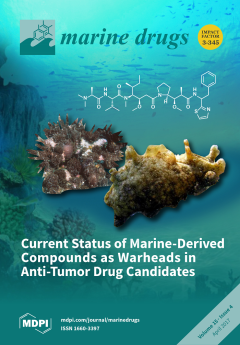
Cover Story: In this review, we have attempted to describe all of the antibody–drug conjugates using a marine-derived compound as the “warhead”, that are currently in clinical trials as listed in the current version of the NIH clinical trials database (clinicaltrials.gov). In searching this database, we used the beta-test version currently available, as it permitted more specific search parameters, since the regular version did not always find trials that had been completed in the past with some agents. We also added small discussion sections on candidates that are still at the preclinical stage, including a derivative of diazonamide that has an unusual interaction with tubulin (DZ-23840), which may also be a potential warhead in the future. View the paper
  • Issues are regarded as officially published after their release is announced to the table of contents alert mailing list .
  • You may sign up for email alerts to receive table of contents of newly released issues.
  • PDF is the official format for papers published in both, html and pdf forms. To view the papers in pdf format, click on the "PDF Full-text" link, and use the free Adobe Reader to open them.

Articles (40)

  • Article
  • Open Access
125 Citations
16,337 Views
37 Pages

22 April 2017

Nature provides a variety of peptides that are expressed in most living species. Evolutionary pressure and natural selection have created and optimized these peptides to bind to receptors with high affinity. Hence, natural resources provide an abunda...

  • Article
  • Open Access
7 Citations
5,918 Views
26 Pages

21 April 2017

Natural products from marine origin constitute a very promising and underexplored source of interesting compounds for modern biotechnological and pharmaceutical industries. However, their evaluation is quite challenging and requires specifically desi...

  • Article
  • Open Access
127 Citations
13,191 Views
12 Pages

21 April 2017

Background: Low-molecular-weight fucoidan (LMF) is widely used as a food supplement for cancer patients. However, all of the studies are in vitro or were conducted using mice. Therefore, powerful clinical evidence for LMF use is relatively weak. This...

  • Feature Paper
  • Article
  • Open Access
21 Citations
6,682 Views
11 Pages

14 April 2017

A bioactivity guided study of a cf. Caldora penicillata species, collected during a 2013 expedition to the Pacific island of Saipan, Northern Mariana Islands (a commonwealth of the USA), led to the isolation of a new thiazoline-containing alkaloid, l...

  • Article
  • Open Access
10 Citations
5,006 Views
10 Pages

New Cytotoxic Secondary Metabolites from Marine Bryozoan Cryptosula pallasiana

  • Xiang-Rong Tian,
  • Yan-Qing Gao,
  • Xiao-Lin Tian,
  • Jiao Li,
  • Hai-Feng Tang,
  • Yu-Shan Li,
  • Hou-Wen Lin and
  • Zhi-Qing Ma

13 April 2017

A new sterol, (23R)-methoxycholest-5,24-dien-3β-ol (1), two new ceramides, (2S,3R,4E,8E)-2-(tetradecanoylamino)-4,8-octadecadien-l,3-diol (6) and (2S,3R,2′R,4E,8E)-2-(tetradecanoylamino)-4,8-octadecadien-l,3,2′-triol (7), together with three known st...

  • Article
  • Open Access
57 Citations
7,522 Views
10 Pages

Indole Derivatives Isolated from Brown Alga Sargassum thunbergii Inhibit Adipogenesis through AMPK Activation in 3T3-L1 Preadipocytes

  • Min-Cheol Kang,
  • Yuling Ding,
  • Eun-A Kim,
  • Youn Kyung Choi,
  • Thiago De Araujo,
  • Soo-Jin Heo and
  • Seung-Hong Lee

12 April 2017

Seaweed, a popular and abundant food ingredient mainly consumed in Asian countries, is a good source of bioactive compounds with anti-obesity effects. However, the anti-obesity effects of Sargassum thunbergii have not yet been established. In this st...

  • Review
  • Open Access
174 Citations
16,556 Views
21 Pages

Marine Microbial-Derived Molecules and Their Potential Use in Cosmeceutical and Cosmetic Products

  • Cinzia Corinaldesi,
  • Giulio Barone,
  • Francesca Marcellini,
  • Antonio Dell’Anno and
  • Roberto Danovaro

12 April 2017

The oceans encompass a wide range of habitats and environmental conditions, which host a huge microbial biodiversity. The unique characteristics of several marine systems have driven a variety of biological adaptations, leading to the production of a...

  • Article
  • Open Access
75 Citations
7,701 Views
14 Pages

Preparation, Characterization and Properties of Alginate/Poly(γ-glutamic acid) Composite Microparticles

  • Zongrui Tong,
  • Yu Chen,
  • Yang Liu,
  • Li Tong,
  • Jiamian Chu,
  • Kecen Xiao,
  • Zhiyu Zhou,
  • Wenbo Dong and
  • Xingwu Chu

11 April 2017

Alginate (Alg) is a renewable polymer with excellent hemostatic properties and biocapability and is widely used for hemostatic wound dressing. However, the swelling properties of alginate-based wound dressings need to be promoted to meet the requirem...

  • Communication
  • Open Access
15 Citations
7,260 Views
10 Pages

Cloning and Functional Characterization of a Lycopene β-Cyclase from Macrophytic Red Alga Bangia fuscopurpurea

  • Tian-Jun Cao,
  • Xing-Qi Huang,
  • Yuan-Yuan Qu,
  • Zhong Zhuang,
  • Yin-Yin Deng and
  • Shan Lu

11 April 2017

Lycopene cyclases cyclize the open ends of acyclic lycopene (ψ,ψ-carotene) into β- or ε-ionone rings in the crucial bifurcation step of carotenoid biosynthesis. Among all carotenoid constituents, β-carotene (β,β-carotene) is found in all photosynthet...

  • Feature Paper
  • Article
  • Open Access
12 Citations
5,972 Views
10 Pages

Four Aromatic Sulfates with an Inhibitory Effect against HCV NS3 Helicase from the Crinoid Alloeocomatella polycladia

  • Idam Hermawan,
  • Atsushi Furuta,
  • Masahiro Higashi,
  • Yoshihisa Fujita,
  • Nobuyoshi Akimitsu,
  • Atsuya Yamashita,
  • Kohji Moriishi,
  • Satoshi Tsuneda,
  • Hidenori Tani and
  • Junichi Tanaka
  • + 4 authors

11 April 2017

Bioassay-guided separation of a lipophilic extract of the crinoid Alloeocomatella polycladia, inhibiting the activity of HCV NS3 helicase, yielded two groups of molecules: cholesterol sulfate and four new aromatic sulfates 14. The structures of the...

  • Article
  • Open Access
42 Citations
6,059 Views
13 Pages

10 April 2017

Schizochytrium protein hydrolysate (SPH) was prepared through stepwise enzymatic hydrolysis by alcalase and flavourzyme sequentially. The proportion of hydrophobic amino acids of SPH was 34.71%. The molecular weight (MW) of SPH was principally concen...

  • Article
  • Open Access
14 Citations
7,105 Views
19 Pages

Prospecting Biotechnologically-Relevant Monooxygenases from Cold Sediment Metagenomes: An In Silico Approach

  • Matías A. Musumeci,
  • Mariana Lozada,
  • Daniela V. Rial,
  • Walter P. Mac Cormack,
  • Janet K. Jansson,
  • Sara Sjöling,
  • JoLynn Carroll and
  • Hebe M. Dionisi

9 April 2017

The goal of this work was to identify sequences encoding monooxygenase biocatalysts with novel features by in silico mining an assembled metagenomic dataset of polar and subpolar marine sediments. The targeted enzyme sequences were Baeyer–Villiger an...

  • Article
  • Open Access
97 Citations
9,928 Views
15 Pages

Promoting Wound Healing Using Low Molecular Weight Fucoidan in a Full-Thickness Dermal Excision Rat Model

  • Jun-Hyeong Park,
  • Seong-Hun Choi,
  • Soo-Jin Park,
  • Young Joon Lee,
  • Jong Hyun Park,
  • Phil Hyun Song,
  • Chang-Mo Cho,
  • Sae-Kwang Ku and
  • Chang-Hyun Song

7 April 2017

Low molecular weight fucoidan (LMF) has been reported to possess anti-inflammatory and antioxidant activities. Thus, we examined the effects of LMF extracted from Undaria pinnatifida on dermal wounds. Five round dermal wounds were created on the dors...

  • Article
  • Open Access
19 Citations
5,324 Views
10 Pages

Bioactive Metabolites from the Deep Subseafloor Fungus Oidiodendron griseum UBOCC-A-114129

  • Marion Navarri,
  • Camille Jégou,
  • Arnaud Bondon,
  • Sandrine Pottier,
  • Stéphane Bach,
  • Blandine Baratte,
  • Sandrine Ruchaud,
  • Georges Barbier,
  • Gaëtan Burgaud and
  • Yannick Fleury

7 April 2017

Four bioactive compounds have been isolated from the fungus Oidiodendron griseum UBOCC-A-114129 cultivated from deep subsurface sediment. They were structurally characterized using a combination of LC–MS/MS and NMR analyses as fuscin and its derivati...

  • Article
  • Open Access
106 Citations
9,427 Views
14 Pages

7 April 2017

The combined effects of low-molecular-weight fucoidan (LMF) and fucoxanthin (Fx) in terms of antihyperglycemic, antihyperlipidemic, and hepatoprotective activities were investigated in a mouse model of type II diabetes. The intake of LMF, Fx, and LMF...

  • Article
  • Open Access
21 Citations
5,917 Views
11 Pages

An Unusual Diterpene—Enhygromic Acid and Deoxyenhygrolides from a Marine Myxobacterium, Enhygromyxa sp.

  • Tomohiko Tomura,
  • Shiori Nagashima,
  • Satoshi Yamazaki,
  • Takashi Iizuka,
  • Ryosuke Fudou and
  • Makoto Ojika

6 April 2017

Three new compounds, enhygromic acid (1) and deoxyenhygrolides A (2) and B (3), were isolated from a marine myxobacterium, Enhygromyxa sp. Compound 1 was found to be an acrylic acid derivative with a rare polycyclic carbon skeleton, decahydroacenapht...

  • Article
  • Open Access
36 Citations
6,557 Views
16 Pages

Sulfated Hetero-Polysaccharides Protect SH-SY5Y Cells from H2O2-Induced Apoptosis by Affecting the PI3K/Akt Signaling Pathway

  • Jing Wang,
  • Huaide Liu,
  • Xuan Zhang,
  • Xinpeng Li,
  • Lihua Geng,
  • Hong Zhang and
  • Quanbin Zhang

6 April 2017

Parkinson’s disease (PD) is one of the most common neurodegenerative diseases. Recent studies suggest that sulfated hetero-polysaccharides (UF) protect against developing PD. However, the detailed mechanisms of how UF suppress neuronal death have not...

  • Article
  • Open Access
23 Citations
7,047 Views
15 Pages

Lindane Bioremediation Capability of Bacteria Associated with the Demosponge Hymeniacidon perlevis

  • Stabili Loredana,
  • Pizzolante Graziano,
  • Morgante Antonio,
  • Nonnis Marzano Carlotta,
  • Longo Caterina,
  • Aresta Antonella Maria,
  • Zambonin Carlo,
  • Corriero Giuseppe and
  • Alifano Pietro

6 April 2017

Lindane is an organochlorine pesticide belonging to persistent organic pollutants (POPs) that has been widely used to treat agricultural pests. It is of particular concern because of its toxicity, persistence and tendency to bioaccumulate in terrestr...

  • Article
  • Open Access
10 Citations
6,308 Views
8 Pages

Pharmacophore-Based Virtual Screening of Novel Inhibitors and Docking Analysis for CYP51A from Penicillium italicum

  • Yongze Yuan,
  • Rui Han,
  • Qianwen Cao,
  • Jinhui Yu,
  • Jiali Mao,
  • Tingfu Zhang,
  • Shengqiang Wang,
  • Yuhui Niu and
  • Deli Liu

5 April 2017

Sterol 14α-demethylases from Cytochrome P450 family (CYP51s) are essential enzymes in sterol biosynthesis and well-known as the target of antifungal drugs. The 3D structure of CYP51A from Penicillium italicum (PiCYP51A) was constructed through homolo...

  • Article
  • Open Access
46 Citations
7,271 Views
10 Pages

5 April 2017

Phloroglucinol is a phenolic compound that is one of the major compounds in Ecklonia cava (brown alga). It has many pharmacological activities, but its anti-diabetic effect is not yet fully explored. In this study, we investigated the effect of phlor...

  • Article
  • Open Access
44 Citations
8,410 Views
8 Pages

4 April 2017

An aqueous solution was successfully prepared using a low-molecular-weight chitosan oligomer and FITC, and its structural and fluorescent properties were observed by using 1H NMR, 13C NMR, FT-IR, XRD, UV-Vis, and PL spectrometry. Its application as a...

  • Article
  • Open Access
46 Citations
7,203 Views
14 Pages

31 March 2017

The stone fish is an under-utilized sea cucumber with many nutritional and ethno-medicinal values. This study aimed to establish the conditions for its optimum hydrolysis with bromelain to generate angiotensin I-converting enzyme (ACE)-inhibitory hyd...

  • Article
  • Open Access
215 Citations
21,131 Views
11 Pages

30 March 2017

Burns can cause tremendous economic problems associated with irreparable harm to patients and their families. To characterize marine collagen peptides (MCPs) from the skin of Nile tilapia (Oreochromis niloticus), molecular weight distribution and ami...

  • Review
  • Open Access
32 Citations
7,291 Views
10 Pages

30 March 2017

The potential of marine natural products to become new drugs is vast; however, research is still in its infancy. The chemical and biological diversity of marine toxins is immeasurable and as such an extraordinary resource for the discovery of new dru...

  • Article
  • Open Access
4 Citations
4,603 Views
12 Pages

The Influence of Tetrodotoxin (TTX) on the Distribution and Chemical Coding of Caudal Mesenteric Ganglion (CaMG) Neurons Supplying the Porcine Urinary Bladder

  • Ewa Lepiarczyk,
  • Agnieszka Bossowska,
  • Jerzy Kaleczyc,
  • Marta Majewska,
  • Sławomir Gonkowski and
  • Mariusz Majewski

30 March 2017

The treatment of micturition disorders creates a serious problem for urologists. Recently, new therapeutic agents, such as neurotoxins, are being considered for the therapy of urological patients. The present study investigated the chemical coding of...

  • Article
  • Open Access
94 Citations
7,134 Views
14 Pages

Characterization and Potential Antitumor Activity of Polysaccharide from Gracilariopsis lemaneiformis

  • Yani Kang,
  • Zhi-Jiang Wang,
  • Dongsheng Xie,
  • Xue Sun,
  • Wenge Yang,
  • Xiaodong Zhao and
  • Nianjun Xu

29 March 2017

Substances with valuable antitumor properties have been identified in many marine algae, including an edible polysaccharide from the marine alga Gracilariopsis lemaneiformis (PGL). We previously reported transcriptome profiling data showing that PGL...

  • Feature Paper
  • Article
  • Open Access
23 Citations
6,493 Views
18 Pages

Another Look at Pyrroloiminoquinone Alkaloids—Perspectives on Their Therapeutic Potential from Known Structures and Semisynthetic Analogues

  • Sheng Lin,
  • Erin P. McCauley,
  • Nicholas Lorig-Roach,
  • Karen Tenney,
  • Cassandra N. Naphen,
  • Ai-Mei Yang,
  • Tyler A. Johnson,
  • Thalia Hernadez,
  • Ramandeep Rattan and
  • Phillip Crews
  • + 1 author

29 March 2017

This study began with the goal of identifying constituents from Zyzzya fuliginosa extracts that showed selectivity in our primary cytotoxicity screen against the PANC-1 tumor cell line. During the course of this project, which focused on six Z. fulig...

  • Feature Paper
  • Review
  • Open Access
67 Citations
10,527 Views
19 Pages

29 March 2017

In this review, we have attempted to describe all of the antibody–drug conjugates using a marine-derived compound as the “warhead”, that are currently in clinical trials as listed in the current version of the NIH clinical trials database (clinicaltr...

  • Article
  • Open Access
23 Citations
6,263 Views
11 Pages

28 March 2017

Different biological sources of n-3 polyunsaturated fatty acids (n-3 PUFA) in mainstream commercial products include algae and fish. Lipid oxidation in n-3 PUFA-rich oil is the most important cause of its deterioration. We investigated the kinetic pa...

  • Review
  • Open Access
135 Citations
11,608 Views
19 Pages

27 March 2017

Chitosan is a versatile polysaccharide of biological origin. Due to the biocompatible and biodegradable nature of chitosan, it is intensively utilized in biomedical applications in scaffold engineering as an absorption enhancer, and for bioactive and...

  • Article
  • Open Access
61 Citations
10,299 Views
12 Pages

Outdoor Cultivation of Marine Diatoms for Year-Round Production of Biofuels

  • Mitsufumi Matsumoto,
  • Daisuke Nojima,
  • Tomomi Nonoyama,
  • Kiichi Ikeda,
  • Yoshiaki Maeda,
  • Tomoko Yoshino and
  • Tsuyoshi Tanaka

25 March 2017

Biofuel production using microalgae is believed to have the advantage of continuous year-round production over crop plants, which have strong seasonality. However, actual year-round production of microalgal lipids using outdoor mass cultivation has r...

  • Feature Paper
  • Article
  • Open Access
14 Citations
6,174 Views
14 Pages

A Place to Call Home: An Analysis of the Bacterial Communities in Two Tethya rubra Samaai and Gibbons 2005 Populations in Algoa Bay, South Africa

  • Samantha C. Waterworth,
  • Meesbah Jiwaji,
  • Jarmo-Charles J. Kalinski,
  • Shirley Parker-Nance and
  • Rosemary A. Dorrington

25 March 2017

Sponges are important sources of bioactive secondary metabolites. These compounds are frequently synthesized by bacterial symbionts, which may be recruited from the surrounding seawater or transferred to the sponge progeny by the parent. In this stud...

  • Article
  • Open Access
86 Citations
8,905 Views
12 Pages

24 March 2017

Carrageenan, agarose, and alginate are algae-derived undigested polysaccharides that have been used as food additives for hundreds of years. Fermentation of dietary carbohydrates of our food in the lower gut of humans is a critical process for the fu...

  • Review
  • Open Access
76 Citations
6,940 Views
15 Pages

23 March 2017

Chitin is the second most abundant biopolymer on Earth and is mainly comprised of a marine invertebrate, consisting of repeating β-1,4 linked N-acetylated glucosamine units, whereas its N-deacetylated product, chitosan, has broad medical applications...

  • Communication
  • Open Access
29 Citations
5,857 Views
10 Pages

Marine Cyclic Guanidine Alkaloids Monanchomycalin B and Urupocidin A Act as Inhibitors of TRPV1, TRPV2 and TRPV3, but not TRPA1 Receptors

  • Yuliya Korolkova,
  • Tatyana Makarieva,
  • Kseniya Tabakmakher,
  • Larisa Shubina,
  • Ekaterina Kudryashova,
  • Yaroslav Andreev,
  • Irina Mosharova,
  • Hyi-Seung Lee,
  • Yeon-Ju Lee and
  • Sergey Kozlov

23 March 2017

Marine sponges contain a variety of low-molecular-weight compounds including guanidine alkaloids possessing different biological activities. Monanchomycalin B and urupocidin A were isolated from the marine sponge Monanchora pulchra. We found that the...

  • Article
  • Open Access
30 Citations
7,867 Views
20 Pages

Establishing the Secondary Metabolite Profile of the Marine Fungus: Tolypocladium geodes sp. MF458 and Subsequent Optimisation of Bioactive Secondary Metabolite Production

  • Bethlehem Kebede,
  • Stephen K. Wrigley,
  • Anjali Prashar,
  • Janina Rahlff,
  • Markus Wolf,
  • Jeanette Reinshagen,
  • Philip Gribbon,
  • Johannes F. Imhoff,
  • Johanna Silber and
  • Bernhard Ellinger
  • + 1 author

23 March 2017

As part of an international research project, the marine fungal strain collection of the Helmholtz Centre for Ocean Research (GEOMAR) research centre was analysed for secondary metabolite profiles associated with anticancer activity. Strain MF458 was...

  • Article
  • Open Access
18 Citations
5,549 Views
14 Pages

Biscembranoids and Cembranoids from the Soft Coral Sarcophyton elegans

  • Wei Li,
  • Yi-Hong Zou,
  • Man-Xi Ge,
  • Lan-Lan Lou,
  • Yun-Shao Xu,
  • Abrar Ahmed,
  • Yun-Yun Chen,
  • Jun-Sheng Zhang,
  • Gui-Hua Tang and
  • Sheng Yin

23 March 2017

Two novel biscembranoids, sarelengans A and B (1 and 2), five new cembranoids, sarelengans C–G (37), along with two known cembranoids (8 and 9) were isolated from the South China Sea soft coral Sarcophyton elegans. Their structures were determined b...

  • Review
  • Open Access
63 Citations
7,969 Views
16 Pages

Marine Peptides as Potential Agents for the Management of Type 2 Diabetes Mellitus—A Prospect

  • En-Qin Xia,
  • Shan-Shan Zhu,
  • Min-Jing He,
  • Fei Luo,
  • Cheng-Zhan Fu and
  • Tang-Bin Zou

23 March 2017

An increasing prevalence of diabetes is known as a main risk for human health in the last future worldwide. There is limited evidence on the potential management of type 2 diabetes mellitus using bioactive peptides from marine organisms, besides from...

  • Article
  • Open Access
103 Citations
8,751 Views
12 Pages

Anti-Obesity and Anti-Diabetic Effect of Neoagarooligosaccharides on High-Fat Diet-Induced Obesity in Mice

  • Sun Joo Hong,
  • Je-Hyeon Lee,
  • Eun Joo Kim,
  • Hea Jung Yang,
  • Jae-Seon Park and
  • Soon-Kwang Hong

23 March 2017

Neoagarooligosaccharides (NAOs), mainly comprising neoagarotetraose and neoagarohexaose, were prepared by hydrolyzing agar with β-agarase DagA from Streptomyces coelicolor, and the anti-obesity and anti-diabetic effects of NAOs on high-fat diet (HFD)...

Get Alerted

Add your email address to receive forthcoming issues of this journal.

XFacebookLinkedIn
Mar. Drugs - ISSN 1660-3397