


Skip to Content

Symmetry

Symmetry is an international, peer-reviewed, open access journal covering research on symmetry/asymmetry phenomena wherever they occur in all aspects of natural sciences, and is published monthly online by MDPI.  

Get Alerted

Add your email address to receive forthcoming issues of this journal.

All Articles (18,039)
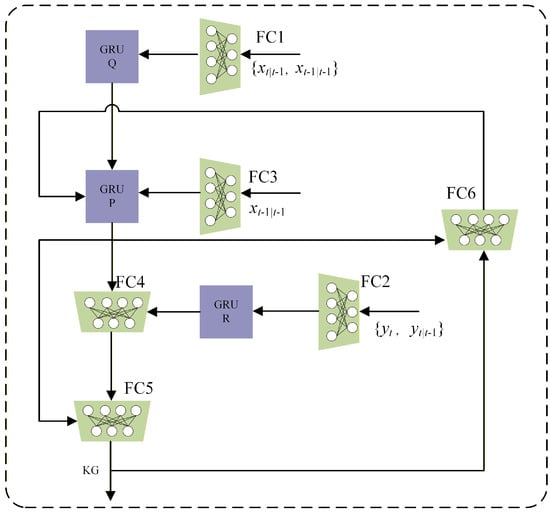
Digital murals face degradation issues like fading and cracking, requiring objective and interpretable evaluation methods. To overcome the subjectivity and low efficiency of manual assessment, the study proposes an improved deep neural network that maps extracted features into four criteria: color quality, texture details, structural integrity, and degradation degree. Using the fuzzy analytic hierarchy process (FAHP) with triangular fuzzy numbers, the study computes global weights and obtains a comprehensive score via weighted linear aggregation. Experimental results show the network reduces root mean square error to 0.102 and mean absolute error to 0.089. Inter-class distance increases by 33.8%, and t-SNE visualization shows four quality clusters in four-corner separation. The comprehensive score monotonically decreases from 0.924 to 0.376 as degradation worsens, with texture details showing the most significant drop. The model effectively captures mural quality deterioration, aligning with real-world conservation cognition. This work provides an objective, quantitative, and automated tool to assist experts in quality screening and restoration prioritization for large-scale murals.
Symmetry

15 September 2026

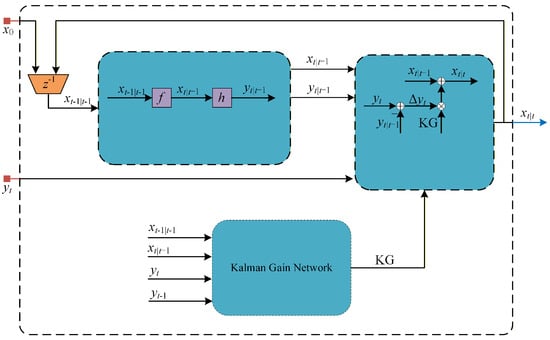
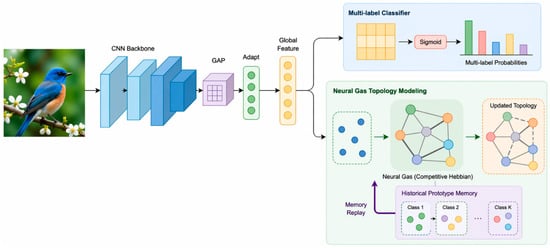
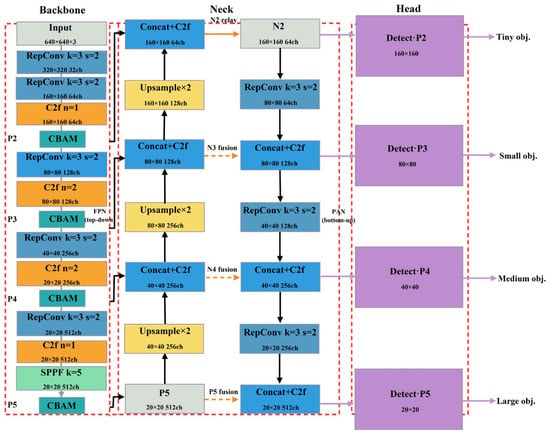
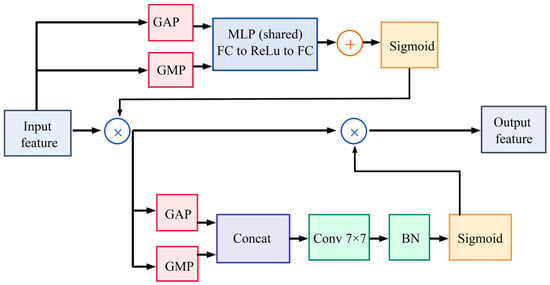
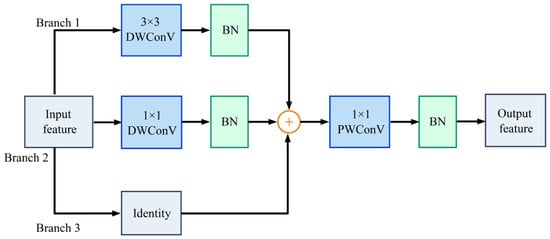
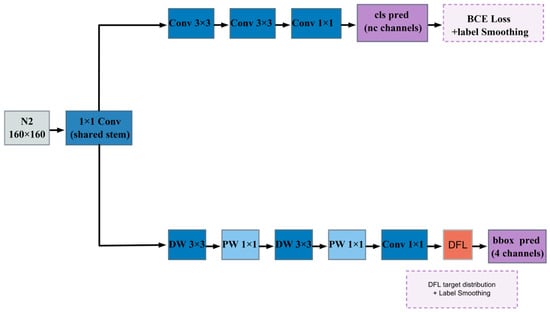
The overall architecture diagram of the improved DNN.

Problematic soils pose a risk to structures due to excessive or uneven settlement, swelling, and limited bearing capacity. To address some of these issues, mechanical reinforcement using geosynthetic products such as geocells can be employed, given their ease and speed of implementation. The purpose of this study was to assess the impact of geocells on the behavior of soft clay soil in Port Said, Egypt, using a three-dimensional finite element model, namely, the PLAXIS 3D software. The results show that replacing the top 1.5 m of the soft clay with sand significantly reduced settlement. This improvement was further enhanced by the addition of geocells available in the local market, where settlement was additionally reduced by approximately 51% to 63%, along with an appreciable increase in the bearing capacity. The effect of geocell material parameters was also investigated, including cell height, pocket dimensions, embedment depth, and reinforcement width. The results indicate that the best performance among the tested cases was achieved with a cell height of 300 mm, pocket dimensions of 210 × 245 mm, an embedment depth of 0.1 B, and a reinforcement width of 2 B, where B represents the foundation width. Furthermore, using gravel as both the replacement material and the geocell infill further improved performance, particularly in the presence of groundwater, by reducing settlement and increasing bearing capacity. The results indicate that combining gravel replacement with geocell reinforcement represents the most effective solution for improving the stability of soft clay soils in the study area.

Symmetry

15 September 2026

Geocells made from HDPE according to LSF GEOCELL EGYPT Co.

Anatomical Asymmetry in Adipose Tissue Thickness Alters Heat Transfer During Superficial Thermotherapy: A Computational and Experimental Study

  • Rafael Bayareh-Mancilla,
  • Texar Javier Ramírez-Guzmán and
  • Citlalli Jessica Trujillo-Romero
  • + 3 authors

Computer models and protocols commonly used for superficial thermotherapy assume anatomically symmetric tissue geometries. However, anatomical variability, particularly the variability of the adipose tissue thickness, may have a significant impact on heat transfer and cause non-uniform thermal doses in the patient population. This paper studies the influence of anatomical asymmetry due to adipose tissue thickness on heat propagation during superficial thermotherapy based on combined computational and experimental analyses. A Finite Element Model of the lower limb was designed with anatomically representative layers and tissue thermal properties. Parametric simulations were conducted for medium (M) and extra-large (XL) models at hot-pack temperatures (38–44 °C) for 15 min. The simulation results were compared with experimental measurements on ex vivo porcine tissue. The results showed that the thickness of adipose tissue significantly affected deep-tissue heating. When the same heating condition was applied, the boundary temperature of the muscle was increased by ~1.38 °C for the 44 °C hot-pack in the M-size model and was restricted to 0.21 °C for the XL-size model. The experimental muscle temperature increased from 22.26 °C to approximately 23.3 °C after 15 min. Under the same initial temperature and nominal 38 °C heating condition, the perfused and zero-perfusion M-size simulations reached approximately 26.8 °C and 30.5 °C, respectively; these endpoint differences support a qualitative comparison rather than quantitative validation. These results show that anatomical asymmetry has a strong effect on heat transfer during superficial thermotherapy and challenge the precept that standard heating protocols provide similar thermal doses in different body morphologies.

Symmetry

14 September 2026

Two-dimensional cross-sectional geometry of the lower limb used for finite element modeling. The model preserves the anatomical arrangement of the main tissue layers, including skin (outer boundary), adipose tissue, muscle, and bone. Internal structures were manually delineated to reflect the irregular morphology of the limb, while maintaining a layered organization suitable for computational analysis.

The Least Square Projection Twin Support Vector Machine (LSPTSVM) is an effective machine learning tool for solving classification problems. However, LSPTSVM does not account for the contribution of each sample during training, making it susceptible to outliers and noise. This susceptibility diminishes its generalization capability. To remedy this shortcoming, this paper introduces an Intuitionistic Fuzzy LSPTSVM (IFLSPTSVM). This model combines the LSPTSVM with the concept of Intuitionistic Fuzzy Numbers (IFN). In the training process of IFLSPTSVM, the importance of each training sample is gauged using an IFN-based score function that considers its geometric position and surrounding environment. Moreover, the weighted class mean, as opposed to the standard mean used in LSPTSVM, is employed in the calculation of intra-class scatter based on the intuitionistic fuzzy score of the sample. This approach effectively mitigates the impact of noise and outliers and more accurately captures the global information of the class samples. Experimental results on several real-world UCI benchmark datasets and the Case Western Reserve University rolling bearing datasets exhibit the efficacy of the proposed method.

Symmetry

13 September 2026

Discriminative samples.

Featured Articles

Energy of positive- and negative-parity states in the 
  
    Ca


    40
  
 nucleus as a function of J. The states identified with small green circles correspond to well-established spin–parity assignments, while the small red circles indicate states with uncertain spin–parity assignments. The brown lines connecting the circles represent electromagnetic transitions. All the states shown in the figure are taken from the compilation [59,60]. The black lines indicate rotational bands. In (a), the bands built on the 0+, 8+, and 3+ states, as well as the SD band, were previously proposed [9,59,60]. In (b), the 0− band was previously suggested [11,59,60]. The arranged bands are labeled according to the spin–parity (
  
    J
    π
  
) of their band head, with subscripts used to distinguish between bands with the same bandhead spin–parity.
(a) Isometric view of the tundish–stopper system computational domain. (b) Meshing of the tundish drain system composed of the nozzle and the stopper rod. (c) Stopper mesh. (d) Upper view of the tundish with dimensions. (e) Lateral view of the tundish. (f) Frontal view of the tundish, including a representation of the stopper rod.

Highly Accessed Articles

News & Conferences

Latest Issues

Open for Submission

Journal Sections

XFacebookLinkedIn
Symmetry - ISSN 2073-8994