


Abstract
Solar energy has become one of the most promising renewable energy sources owing to its wide availability and relatively low initial cost for energy conversion. Among the various technologies, photovoltaic (PV) systems represent one of the most effective approaches for harnessing solar energy through the photovoltaic effect. Nevertheless, a key limitation affecting the large-scale deployment of PV systems is their sensitivity to operating temperature. Heat accumulation can reduce electrical performance, accelerate degradation, and create spatial temperature non-uniformity across the module surface. In this context, thermal symmetry refers to a balanced and spatially uniform temperature distribution across comparable regions of a PV module; improved thermal symmetry can reduce local hot spots and thermal gradients that adversely affect reliability. Existing literature on PV cooling places insufficient emphasis on the standardization of critical parameters required to evaluate and compare different cooling techniques under consistent operating conditions. Therefore, this study reviews recent advancements in passive, active, and hybrid PV cooling and proposes a common comparison framework covering temperature reduction, electrical performance, auxiliary energy consumption, net energy benefit, economic considerations, environmental requirements, climate suitability, maintenance, scalability, and technology maturity. Particular attention is given to the distinction between gross performance improvement and net benefit in active cooling systems, for which pumps and fans may consume part of the additional generated energy. The analysis indicates that PV cooling technologies still face critical challenges, including high costs, maintenance demands, incomplete reporting of parasitic energy use, and reduced or variable performance under extreme environmental conditions. The review concludes with recommendations for standardized testing, climate-adaptive design, improved thermal uniformity, and transparent reporting of net system performance.
1. Introduction
The escalating global demand for energy necessitates a transition away from fossil fuel dependence, motivated by their finite availability and adverse environmental impacts.
Projections indicate a substantial rise in global primary energy consumption, estimated at 48% by 2040. Fossil fuels, namely oil, gas, and coal, are increasingly insufficient to meet this demand. Their combustion releases significant quantities of CO2 (carbon dioxide) and other greenhouse gases, exacerbating environmental degradation. The depletion of these conventional resources, coupled with associated energy constraints, has adversely impacted economic growth, social development, environmental sustainability, and human welfare. Consequently, there is a pressing imperative to adopt alternative energy sources to address escalating demand and mitigate the environmental consequences of fossil fuel dependence [1].
Elevated atmospheric CO2 levels intensify climate change, manifesting in critical outcomes such as polar ice melt and rising sea levels. The energy crises of the 1970s underscored the strategic importance of renewable resources. Given the finite and non-renewable nature of fossil fuel reserves, alongside their volatile and rising costs, a transition toward clean, sustainable energy is urgently required. Implementing short, medium, and long-term strategies for sustainable development is therefore essential to concurrently address contemporary economic, social, and environmental challenges. Within this framework, renewable energy resources represent one of the most efficient and viable means of achieving clean and sustainable energy production [2,3,4,5].
Among renewable energy sources, solar energy is considered one of the most abundant and versatile resources capable of meeting global energy requirement [6,7,8]. The two primary technological pathways for harnessing this resource are concentrated solar power (CSP) plants [9] and photovoltaic (PV) systems [10]. PV technology has consequently emerged as a principal renewable energy source over the past decade, positioned as a viable alternative to address future energy requirements [11]. This potential is evidenced by a marked exponential growth in the PV sector, characterized by the deployment of utility-scale plants with capacities extending into the gigawatt range [12,13,14]. Over the past decade, solar PV has achieved both technological and commercial maturity, positioning it as a leading solution for achieving energy and climate targets [15]. This growth is quantified by IRENA data, which reports a dramatic expansion in global installed PV capacity from 23 GW in 2009 to 627 GW in 2019. The annual increase in PV capacity by country is illustrated in Figure 1 [5,16].
Figure 1.
Country-wise capacity augmentation of the PV technology [16].
Despite its considerable potential, PV technology is constrained by several factors that compromise its efficiency and reliability. These include energy losses due to dust accumulation, reflection, shading, and temperature effects [17,18,19,20]. Among these, temperature is particularly critical, as PV cells convert only the visible spectrum of light into electricity; the remaining energy, predominantly in the infrared spectrum, is dissipated as heat. This thermal accumulation can be detrimental, reducing both the electrical conversion efficiency and the operational lifespan of the panels, potentially leading to diminished power output and permanent degradation. Consequently, the development of effective and reliable cooling methods for PV systems has become a key research and engineering priority [21,22].
The primary objectives of this review paper are to provide a comprehensive review of recent advancements in PV cooling technologies, including passive, active, and hybrid cooling approaches; to clarify the current lack of standardized testing methods and unified assessment criteria; and to establish a consistent framework for comparing cooling technologies under comparable operating conditions. The review also examines major barriers associated with existing PV cooling systems, including cost, maintenance requirements, auxiliary energy consumption, water demand, climate dependence, and long-term engineering feasibility. Particular emphasis is placed on distinguishing gross electrical improvement from net performance benefit and on identifying future research directions that support more efficient, reliable, climate-adaptive, and standardized PV cooling technologies.
Thermal symmetry and temperature uniformity are also relevant to PV cooling performance. In the context of this review, thermal symmetry describes the extent to which comparable regions of a PV module exhibit a balanced temperature distribution under similar boundary conditions. Cooling configurations that reduce localized hot spots and temperature gradients can improve spatial thermal uniformity, thereby supporting more stable electrical behavior and reducing thermally induced stress. Accordingly, thermal uniformity is considered alongside average temperature reduction when discussing the effectiveness of cooling configurations.
2. Review Methodology
This section outlines the methodology adopted for the systematic literature review, covering the background context, review protocol, formulation of research questions, data sources, systematic search strategies, quality appraisal, and data abstraction analysis. In addition, this part presents a consistent comparative framework for evaluating various PV cooling technologies.
2.1. Background of Review Selection
A systematic review is a methodological process involving the collection, compilation, and synthesis of reliable sources to support the analysis of a research topic [23,24]. It is characterized by comprehensive evaluation and minimal bias, achieved through rigorous, transparent, and replicable procedures. Originally introduced in the medical field during the 1990s to facilitate complex analyses—particularly the integration of quantitative evidence from randomized controlled trials—systematic review methodology has since expanded into diverse disciplines, including the social sciences, finance, and engineering [25,26]. Various guidelines and protocols have been developed to suit different systematic review approaches. Among the most widely adopted are PRISMA (Preferred Reporting Items for Systematic Reviews and Meta-Analyses), RAMESES (Reporting Standards for Realist Synthesis and Meta-narrative Reviews), and ROSES (Reporting Standards for Systematic Evidence Syntheses).
2.2. Resource
Scopus was the sole bibliographic database employed as the primary source for this review. It was selected because of its broad coverage of peer-reviewed literature across science and engineering and its established use for bibliographic searching and citation analysis. The database includes journal articles, reviews, books, and conference proceedings and provides tools for discovering, filtering, and analyzing research output. The use of a single database is acknowledged as a methodological limitation of the present review and is discussed in Section 8.
2.3. Systematic Searching Method
2.3.1. Identification
The identification phase involved identifying synonyms, related terms, and variations of the primary keywords derived from the research questions [27]. The Scopus search combined terms related to PV cooling, Photovoltaic-Thermal (PV/T) cooling, thermal management, active cooling, passive cooling, water cooling, air cooling, nanofluid cooling, heat-pipe cooling, phase change materials (PCM), and combined or hybrid cooling, as summarized in Table 1. The core search focused on articles published from 2020 to 2026.
Table 1.
Search chain for the literature review.
2.3.2. Eligibility and Screening Procedure
Studies were considered eligible if they were peer-reviewed, published within the defined review period, and directly addressed PV or PV/T cooling, thermal management, cooling classification, or performance assessment. Records were excluded if they were outside the scope of PV cooling, lacked sufficient relevance to the research questions, were not peer-reviewed, or fell outside the specified publication period. Titles and abstracts were screened first, followed by full-text assessment of potentially relevant records.
2.3.3. Data Extraction and Thematic Synthesis
For each relevant study, information was extracted, where available, on the cooling category and configuration, coolant or thermal-management material, climatic or operating conditions, PV temperature reduction, electrical-efficiency or power improvement, auxiliary energy demand, water consumption, cost, maintenance requirements, and practical limitations. The extracted evidence was then organized thematically to support comparison among passive, active, and hybrid cooling approaches.
2.3.4. Search Outcome and Review Themes
The core systematic-review dataset comprised 62 review articles published between 2020 and 2026 and identified through the Scopus search. These review articles provided the basis for comparing the scope and coverage of the present review with existing review articles and for identifying the research gaps addressed by the current study. In addition to this core dataset, relevant primary experimental and numerical studies, including earlier studies, were consulted to provide quantitative performance data, describe representative cooling configurations, and support detailed technical comparisons.
2.4. Unified Comparative Evaluation Framework
To address the lack of a unified basis for comparison, this review applies a common evaluation framework across passive, active, and hybrid cooling technologies. The framework considers: (i) thermal performance, including PV temperature reduction and temperature uniformity; (ii) electrical performance, including power and efficiency improvement; (iii) energetic performance, with explicit separation of gross and net gains; (iv) resource and environmental requirements, including water use and material-related considerations; (v) economic performance, including reported cooling-system cost and simple payback period where available; and (vi) practical deployment factors, including maintenance, climate suitability, scalability, and technology maturity.
For thermal comparison, temperature reduction is interpreted as ΔT = Tref − Tcool, where Tref is the operating temperature of the uncooled reference PV module and Tcool is that of the cooled module under comparable conditions. Gross electrical gain is the increase in PV power or energy before accounting for cooling-system consumption. For active systems, the net power gain is defined conceptually as ΔPnet = (Pcool − Pref) − Paux, where Paux denotes the power consumed by pumps, fans, controllers, or other auxiliary devices. Similarly, net energy gain over a test period is the gross additional PV energy minus auxiliary energy consumption over the same period. When auxiliary consumption is not reported, only gross performance is presented and no net-gain claim is made. This distinction prevents an apparent efficiency improvement from being interpreted automatically as a net energetic benefit.
Comparisons are interpreted with caution because PV technology, irradiance, ambient temperature, wind speed, module area, test duration, and climate vary among studies. Quantitative rankings are therefore used only when the reported conditions and indicators are sufficiently comparable; otherwise, the review emphasizes ranges, trade-offs, and qualitative suitability. The comparative synthesis and the economic analysis use this framework to assess the relative strengths and limitations of the different cooling categories.
3. PV Technology
From a design and typological perspective, solar PV systems are diversified based on power requirements, ranging from basic configurations that directly power DC (Direct Current) loads to more complex systems designed for simultaneous load supply and energy storage [28,29]. These systems can be categorized into six principal types, as illustrated in Figure 2: (1) PV direct systems, which operate without energy storage; (2) battery-based systems, which store electricity for use during periods of low solar irradiance; (3) off-grid systems, designed for locations without utility grid access; (4) grid-connected systems, which interface with the local electrical grid and can export surplus power; (5) grid-connected interactive systems, which incorporate backup components such as battery banks or generators; and (6) hybrid systems, which integrate PV with complementary energy sources such as wind, hydro, or thermal power [5,30].
Figure 2.
Classification of solar PV systems [5].
PV systems can also be classified according to the underlying technology, which determines the corresponding cell and module efficiencies [31]. Figure 3 summarizes these PV technology types and their respective efficiencies, derived from tabular data [32]. Crystalline silicon technology, the most prevalent module type, represents approximately 90% of the global installed PV capacity. The remaining market share is contested among thin-film PV (TF PV) technologies, including cadmium telluride (CdTe) and copper indium selenide (CIS). The predominance of crystalline silicon is largely attributable to the accelerated development of high-purity silicon for transistor applications [33].
Figure 3.
Classification of PV technologies and their associated conversion efficiencies [5].
Both monocrystalline (m-Si) and polycrystalline (p-Si) solar cells utilize crystalline silicon technology. Monocrystalline silicon consists of a single, high-purity crystal structure, which facilitates electron mobility and yields higher conversion efficiencies, typically ranging from 17% to 20%. This high efficiency is particularly advantageous where installation area is limited. However, the complex manufacturing process contributes to the elevated cost of m-Si modules [34]. In contrast, polycrystalline silicon is composed of multiple silicon crystals, which impede electron movement and result in lower efficiencies, generally between 13% and 16%. The simpler production process makes p-Si modules more cost-effective [5,33].
PV technology is a highly attractive energy solution due to its direct generation of high-grade electrical power. As one of the most commercially mature solar energy conversion technologies, it achieved a leading market position with approximately 107 GW of installed capacity in 2020 [35]. The technology operates on the principle of the photoelectric effect within semiconductor materials, utilizing solar cells for energy conversion. However, the inherent limitations of these semiconductors restrict the conversion efficiency, meaning only a fraction of incident solar radiation is transformed into electricity. As illustrated in Figure 4, even under optimal laboratory conditions, the maximum recorded efficiency for silicon-based solar cells under non-concentrated sunlight remains below 30%, indicating that a substantial portion of the incoming solar energy is dissipated as waste heat. Elevated operating temperatures exacerbate this inefficiency and introduce significant detrimental effects: (a) they cause a reduction in key performance parameters, including the fill factor, maximum output power, and open-circuit voltage of the solar cells [36]; and (b) prolonged exposure to high temperatures induces irreversible thermal-stress damage, degrading the cells and shortening their operational lifespan [37,38].
Figure 4.
Best conversion efficiencies for solar cells under laboratory conditions, as documented by the National Renewable Energy Laboratory [39].
Since the discovery of the PV effect by physicist Becquerel nearly two centuries ago, PV power generation technology has undergone substantial development. Despite the proposal, design, and fabrication of various cell types—such as CdTe, GaAs, monocrystalline silicon, and polycrystalline silicon—to enhance solar energy conversion efficiency, silicon-based solar cells continue to be the most commercially successful and widely adopted technology, as illustrated in Figure 5. A representative structure of this cell type is shown in Figure 6a. The operational principle involves incident sunlight photons exciting electrons within the semiconductor’s covalent bonds, thereby generating electron-hole pairs. Driven by the internal electric field, these charge carriers separate and migrate to opposite terminals of the material, producing an electrical current [38,40,41].
Figure 5.
The share distribution of various solar cell types [41].
Figure 6.
Typical structure of (a) silicon-based solar cell, (b) PV module, and (c) PV/T module [38].
The power output of an individual solar cell is insufficient for practical applications. Therefore, it is standard practice to connect multiple cells in series or parallel configurations to achieve a usable voltage and current, thereby increasing the total power output. Furthermore, solar cells are inherently fragile and require protection from prolonged environmental exposure. To this end, a multi-layered encapsulation structure is employed. Solar cells are embedded between an ethylene-vinyl acetate (EVA) encapsulant layer, which secures them to a tempered glass front sheet and a Tedlar–Polyester–Tedlar (TPT) polymer back sheet. This assembly provides essential sealing, insulation, and waterproofing. The laminated structure is then mounted within an aluminium frame for mechanical support and durability [42]. The detailed construction of a commercial PV module is illustrated in Figure 6. A complete solar PV generation system is subsequently formed by integrating the module with auxiliary components, including a charge controller, battery storage, and an inverter [38].
The PV industry serves as a cornerstone in the global transition from non-renewable, fossil fuel-based energy systems to renewable alternatives. This shift is fundamentally aimed at mitigating the severe, life-degrading impacts of climate change. By facilitating energy production without emitting toxic gases or carbon, the PV sector directly contributes to establishing a clean and sustainable energy framework. As evidenced by the market distribution statistics for 2006, presented in Figure 7, the PV landscape at that time was overwhelmingly dominated by crystalline silicon-based technologies.
Figure 7.
Market share distribution of various PV technologies based on statistical data [43].
Over the past decade, a notable shift has occurred towards amorphous and thin-film silicon technologies, driven by their relative insensitivity to temperature-induced efficiency losses and favorable cost profiles [43]. Figure 8 illustrates the evolving market shares of different PV technologies between 2014 and 2020. In contrast to the 2006 landscape, the dominance of crystalline silicon-based technology declined from 92% to 73.30% during this period. While demand for thin-film technology is projected to increase by 2030, its growth rate is anticipated to be modest compared to other segments, likely constrained by factors such as lower lifespan, cell efficiency, and more pronounced performance degradation relative to crystalline silicon.
Projections indicate a substantial expansion of solar PV’s role in the global energy mix. Electricity generation from solar PV is forecast to rise dramatically from 833 TWh in 2020 to 17,433 TWh by 2050, reflecting its growing contribution to worldwide electricity production [44]. This trend is supported by a rapid increase in global installed capacity, which grew from 25 GW in 2010 to 480.4 GW in 2018 and further to 618 GW in 2019 [45]. Consequently, PV systems are rapidly becoming a cornerstone of the global energy sector due to their significant potential.
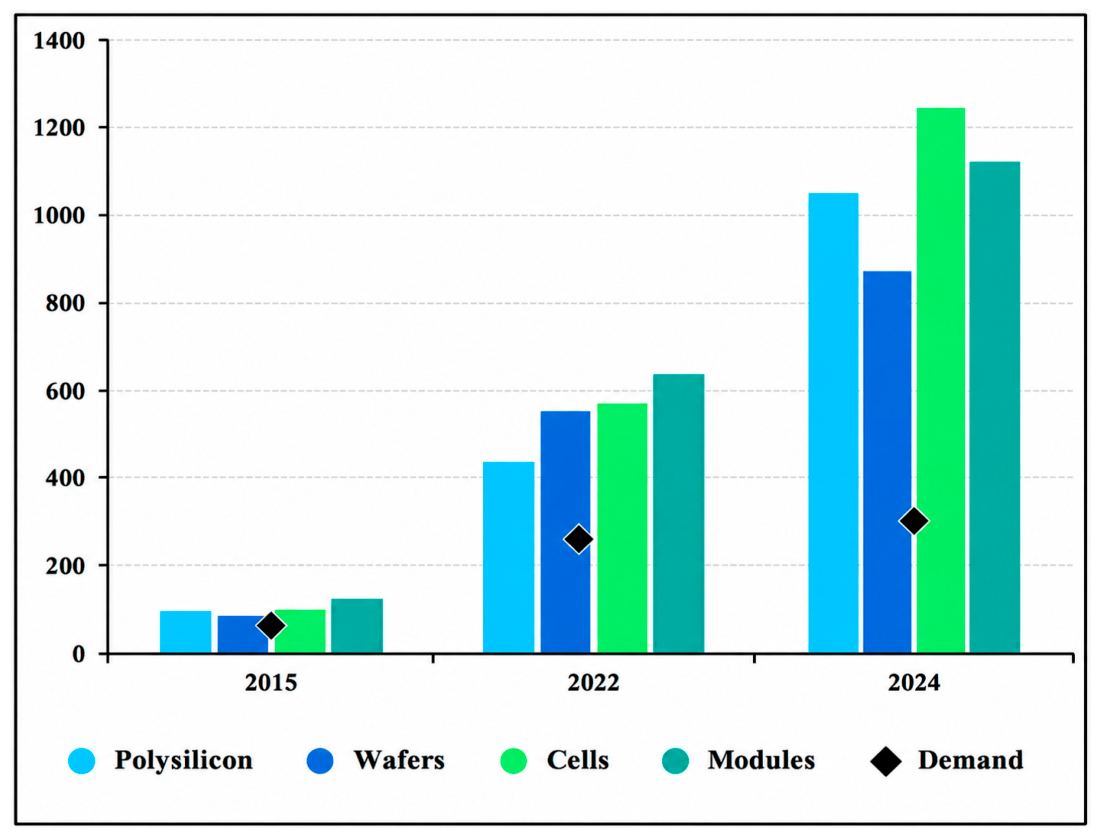
As shown in Figure 9, forecasts for the PV sector across various segments uniformly predict a surge in annual global manufacturing capacity, reaching up to 1000 GW by 2024, albeit at differing growth rates. This accelerated expansion is critical for meeting the International Energy Agency’s (IEA) Net Zero Emissions by 2050 target [46].
Figure 8.
Market share trends for various PV technologies from 2014 to 2030 [47].
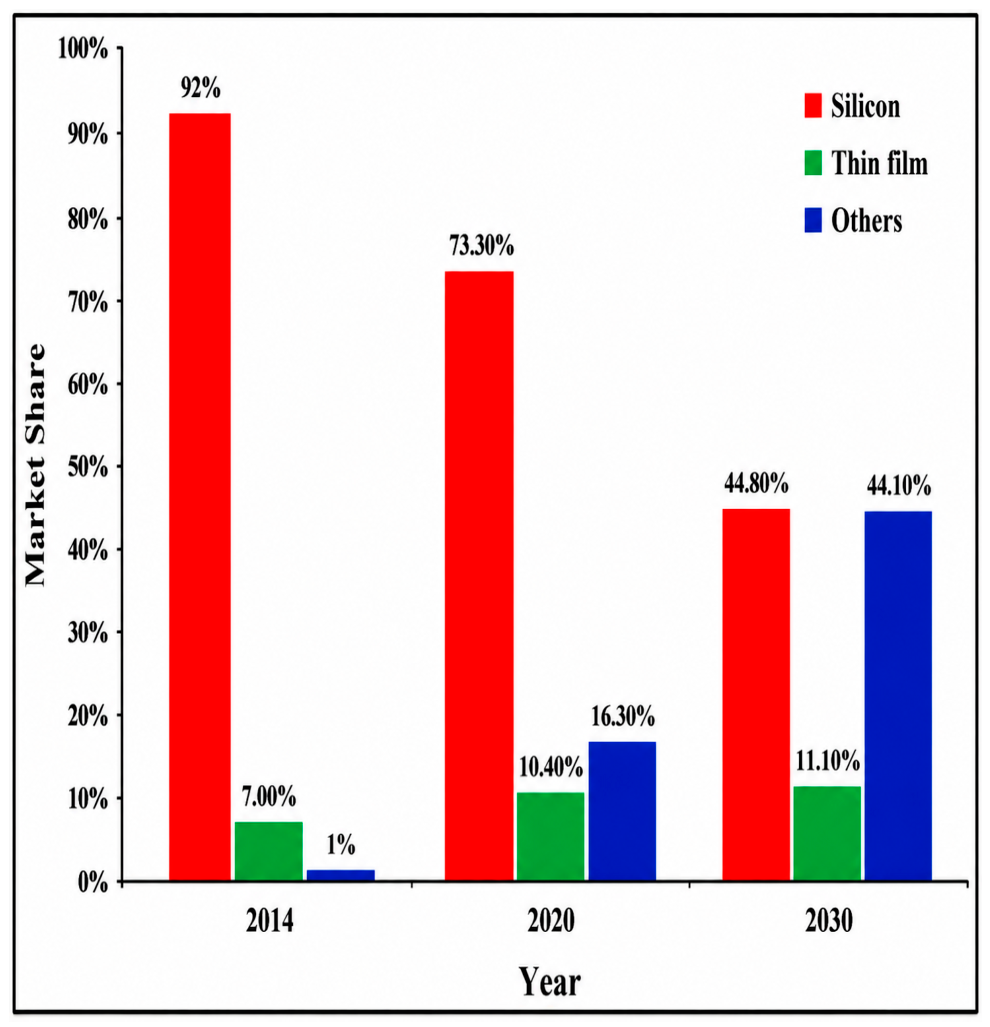
Figure 9.
Projected global PV manufacturing capacity from 2015 to 2024, segmented by technology type [46].
4. PV Cooling
The evolution of PV cooling systems has become increasingly critical for addressing thermal management challenges that significantly impact energy conversion efficiency, particularly in high-temperature environments. Excessive heat accumulation not only reduces PV performance but also accelerates material degradation, necessitating advanced thermal regulation solutions. Contemporary cooling methodologies can be systematically categorized into passive, active, and combined or hybrid systems, each presenting distinct advantages and limitations [48]. As [22] notes, a significant performance challenge for PV panels is the negative correlation between their electrical conversion efficiency and operating temperature.
Active or forced Air Convection: Implements either mechanical (fan-assisted) or natural convection mechanisms for heat dissipation, offering simpler implementation but demonstrating reduced effectiveness under extreme thermal loads.
Phase Change Material (PCM) Integration: Employs latent heat storage materials that undergo controlled phase transitions to regulate temperature fluctuations and stabilize electrical output.
Advanced Thermal Management Technologies: Incorporate innovative solutions including: spectrally selective surface coatings, nanomaterial-enhanced heat transfer fluids, thermoelectric cooling modules, and two-phase heat pipe systems.
These emerging approaches demonstrate enhanced thermal dissipation capabilities while potentially offering additional benefits such as reduced maintenance requirements and improved system longevity [22].
These cooling strategies are unified by their goal of sustaining PV panels within an optimal thermal range. This thermal management enhances electrical output, increases module durability, and supports the broader development of sustainable energy infrastructure. The primary approaches are categorized into passive and active cooling systems. This strategy employs natural heat transfer phenomena to regulate PV panel temperature autonomously, eliminating the need for parasitic energy consumption. Key examples encompass:
- Natural water flow: Utilizes gravity-driven or evaporative cooling, eliminating pump dependency. However, this method has limited thermal regulation capacity and requires additional heat management for the heated water.
- Natural convection: Exploits buoyancy-driven air movement, where heated air rises due to reduced density, creating a self-sustaining convective current. Enhancements such as extended fin structures can augment the heat-transfer surface area.
- Active Cooling: Employs mechanical assistance (e.g., pumps, fans, or suction devices) to intensify coolant flow and improve heat extraction. Examples include: Forced water circulation: Uses pumps to regulate panel temperature by modulating flow velocity, though higher flow rates increase energy consumption. Forced convection: Depends on fan-driven airflow across panel surfaces to maintain temperature stability, albeit with significant auxiliary power requirements [22].
While PV panels effectively generate electricity from sunlight, they are significantly impaired by heat buildup, which lowers their power conversion efficiency and hastens material deterioration. It has been demonstrated that a temperature rise of 10 °C can double the degradation rate of PV modules [49]. To counteract this thermal effect, PV/thermal (PV/T) hybrid systems have been engineered, combining a PV module with an integrated thermal management unit. These systems incorporate heat exchangers (thermal collectors) with diverse cooling media, each influencing performance differently [50]. The subsequent section will detail these configurations, categorized by cooling method as seen in Figure 10.
Figure 10.
Existing PV cooling classifications.
Furthermore, the classification of PV cooling technologies in this review article will be based primarily on whether external energy input is required for the cooling system to operate. This fundamental criterion establishes two primary categories: employed external energy cooling and unemployed external energy cooling. A third category, Hybrid Cooling, encompasses systems that integrate both passive and active elements. Within each primary category, subcategories are defined by the specific cooling medium or mechanism employed, including PCM, water, air, heat pipes, and thermoelectric systems.
4.1. Employed External Energy Cooling
Employed external energy cooling is an active cooling technique that utilizes forced convection to improve thermal management in PV systems. These approaches employ mechanical means to circulate a cooling fluid—such as air, water, or a refrigerant—through channels, tubes, nozzles, or embedded heat-transfer structures. Their implementation therefore requires auxiliary components such as pumps, fans, controllers, and fluid-circulation infrastructure. The principal benefit is enhanced convective heat removal and improved control of PV operating temperature, particularly under high irradiance or when passive cooling is insufficient. However, the electrical energy consumed by auxiliary devices constitutes a parasitic load and must be deducted from the gross increase in PV output when net performance is evaluated. Because many reviewed studies report temperature or efficiency improvement without reporting pump or fan consumption, the present review distinguishes gross gains from net gains and identifies net benefit as not determinable when auxiliary-energy data are unavailable. Maintenance requirements, pressure losses, water demand, and control strategy should therefore be evaluated together with thermal and electrical improvements when assessing the practical feasibility of active cooling [51].
4.1.1. Water Cooling
Liquid-based convective cooling systems for PV applications primarily incorporate two advanced methodologies: floating PV (FPV) technology and nanofluid cooling solutions. FPV systems have garnered significant research interest as they simultaneously address land-use constraints associated with conventional PV installations while enhancing system performance through passive water-based cooling mechanisms. Experimental investigations by [52] under Moroccan climatic conditions demonstrated that a 30° panel tilt angle configuration yielded optimal energy generation, exhibiting a 2.74 °C temperature reduction and 2.57% efficiency improvement compared to conventional land-based systems. This configuration produced 43.5% greater energy output than flat installations (0° tilt), attributed to enhanced heat dissipation from closer proximity to the water surface.
Complementary research by [53] revealed important design considerations for FPV systems. While 0° tilt configurations achieved more uniform temperature distribution across panel surfaces, the 30° tilt arrangement demonstrated superior overall performance, with energy production increases of 5% and 17% for monocrystalline and polycrystalline PV systems, respectively. The study further quantified considerable benefits in water conservation, indicating a 17% decrease in evaporation rates with floating PV (FPV) installations covering 28% of the water surface area.
Subsequent innovations in liquid-based cooling have emerged through the development of partially submerged PV (PSPV) systems. Refs. [54,55,56] executed a series of exhaustive studies within Egypt’s high-temperature environment, analyzing the relationship between the module’s tilt angle and its submerging ratio (SR). The SR is defined as the proportion of the PV module’s length immersed in water relative to its total length. Their findings revealed that a submerging ratio of 24% produced the greatest temperature reduction (12.2 °C). However, the optimal energy output was obtained with a 25° tilt angle and a 12% SR, which resulted in a power gain of 7.66 W and a 2.61% enhancement in conversion efficiency. Further research indicated that performance was highly sensitive to tilt angle, with a 15° tilt and 10% SR delivering superior overall energy performance, even though a 20% SR configuration provided more effective cooling [57].
Water cooling represents a targeted thermal management technique employed to optimize PV system performance, leveraging water’s high specific heat capacity for efficient thermal absorption. By facilitating the dissipation of surplus heat, this approach enhances temperature control and bolsters the overall energy conversion efficiency of PV modules. Water-based cooling strategies can be deployed in either passive, relying on natural convection or capillary action, or active configurations, utilizing pumped circulation, thereby providing versatile solutions for diverse application requirements [22].
Comprehensive research on water-cooled PV/thermal (PVT) systems has consistently demonstrated performance advantages over air-cooled configurations. Multiple flow designs have been evaluated, with comparative analyses by [58,59] confirming the enhanced efficiency of water-based PVT systems. These hybrid systems deliver dual benefits by increasing electrical generation and concurrently providing thermal energy for domestic hot water. A study [60] projected that optimally designed PVT installations could potentially meet approximately 50% of London’s electricity demand and 35–40% of household hot water needs under standard climatic conditions. Although challenges persist concerning material compatibility and leakage mitigation, water’s exceptional thermal conductivity continues to sustain significant research interest in these integrated systems [61].
Subsequent theoretical studies by [62,63] demonstrated key design compromises, indicating that partially enclosed collectors enhance thermal output, whereas fully enclosed designs improve electrical generation. A comparative investigation by [64] further clarified the performance differences between glazed and unglazed systems. Research into flow configurations identified spiral designs as especially efficient [65], and the application of anti-reflective coatings was highlighted as critical for optimizing overall system performance [66]. Separately, significant efficiency gains of 20% have been reported through the use of minimal water film cooling techniques [61,67].
Experimental research has validated the high-performance potential of water-based PVT systems. Studies have documented substantial combined electrical and thermal outputs [68], with specific configurations like spiral flow heat exchangers achieving efficiencies of 71.40% (thermal) and 12.40% (electrical) [69]. Further innovations include the introduction of a copper oscillating absorber, where increased mass flow rates were shown to enhance thermal efficiency and concurrently lower PV cell temperatures [70]. Theoretical analyses complement these findings, indicating that glazed systems exhibit superior performance under turbulent flow, while also highlighting a distinct trade-off between optimizing for maximum energy output versus exergy efficiency [61].
Extensive scholarly inquiry has focused on the thermal management of PV arrays using aqueous cooling methodologies, with a pronounced research focus on high-insolation environments such as the Middle East, North Africa, and Southeast Asia. This body of work has consistently substantiated the utility of diverse water-based cooling strategies in attenuating the characteristic efficiency degradation of PV modules induced by elevated operating temperatures [71].
Complementary research by [72] investigated an alternative surface-level cooling approach utilizing fine water mist application. The experimental protocol involved controlled spray application on PV panel surfaces, precise monitoring of thermal and electrical parameters, and comparative analysis under varying environmental conditions. The results demonstrated a maximum temperature reduction of 16 °C, corresponding to a 10.3% improvement in overall system efficiency. This performance enhancement directly addresses the well-documented inverse relationship between PV module temperature and conversion efficiency. Furthermore, the study confirmed proportional increases in electrical power output, validating the technical feasibility of spray-based cooling as a practical solution for PV thermal management. These findings collectively underscore the potential of water-based cooling strategies to significantly improve PV system performance in high-temperature operating environments, while simultaneously highlighting the importance of proper system design and operational parameter optimization.
Another study [73] advanced the field through an integrated experimental and computational study of low-concentration PV (LCPV) systems coupled with active water cooling. The research employed a novel dual-methodology approach in the experimental setup with optical concentration (1.5–4.0 suns), precision water cooling system, and real-time performance monitoring. Meanwhile, numerical modeling is set up with 3D computational fluid dynamics (CFD) simulation, multi-physics coupling of optical/thermal/electrical effects, and parametric optimization studies. Besides that, key findings of this study demonstrated a temperature reduction of 10–25 °C (ΔT vs. uncooled), efficiency improvement of 5–20%, and optimal configuration of 2.8 suns concentration with a 2.2 L/min flow rate. The numerical model showed excellent agreement with experimental results (RMSE < 5%), enabling accurate prediction of system performance across various climatic conditions. Economic analysis revealed the hybrid system could achieve LCOE reductions of 18–22% in high direct normal irradiance (DNI) regions compared to conventional PV installations. This work establishes the technical and economic feasibility of integrated concentration-cooling systems while providing a robust framework for their optimization. Both studies collectively demonstrate that active thermal management strategies can significantly enhance PV system performance while addressing critical challenges in high-temperature operation. The research underscores the importance of system-level design optimization and provides valuable insights for commercial implementation in solar energy projects [71].
A study [74] conducted a comprehensive investigation into surface-level water cooling techniques for PV panels under real-world operating conditions. The experimental study employed a controlled thin-film water application system to evaluate thermal regulation effects on PV performance. The methodology incorporated continuous water flow application across PV surfaces, precise monitoring of thermal and electrical parameters, surface temperature measurements (±0.5 °C accuracy), electrical efficiency calculations, power output quantification, and comparative performance analysis between cooled and uncooled configurations. The key findings demonstrated significant performance improvements in maximum temperature reduction of 18 °C (p < 0.01), consistent 9% enhancement in electrical conversion efficiency, and stable power output increase throughout operational periods. The research establishes thin-film water cooling as an effective thermal management strategy, particularly for large-scale PV installations in high-temperature environments. The study further notes the system’s technical feasibility and compatibility with existing PV infrastructure, while emphasizing the importance of water resource considerations in implementation. These results contribute to the growing body of research on hybrid PV/T systems, which combine electrical generation with thermal energy recovery for improved overall system efficiency. The findings particularly support the development of optimized cooling solutions for regions experiencing significant PV performance degradation due to elevated operating temperatures.
Further research has explored alternative water sources, such as graywater or harvested rainwater, to minimize the environmental footprint of PV cooling systems. A case study in Australia illustrated the practicality of utilizing rainwater collection systems to provide cooling water for residential PV installations. This approach not only enhances energy efficiency but also promotes sustainable water use in renewable energy applications [47].
Water-immersed PV systems present an efficient approach to boosting solar power generation. This passive cooling method involves submerging PV panels in a water reservoir at a predetermined depth as shown in Figure 11. The water’s cooling properties help maintain optimal operating temperatures, thereby enhancing PV performance. In another study, researchers analyzed the electrical and thermal performance of submerged PV panels, observing a 15% efficiency increase at a water depth of 4 cm [22]. Table 2 shows recent water-cooling studies.
Figure 11.
PV panel immersed in water [22].
Table 2.
Water cooling investigations [75].
Spray nozzle cooling functions as an active thermal regulation method for PV systems, employing directed water sprays to enhance heat dissipation and electrical output. Research by [72] experimentally assessed front, back, and simultaneous cooling arrangements (see Figure 12), concluding that the simultaneous configuration was most effective, yielding gross increases of 16.3% in energy production and 14.1% in efficiency (net gains of 7.7% and 5.9%, respectively). This intervention produced a significant temperature reduction, lowering panel operating temperatures from 54 °C to 24 °C [22]. System performance is contingent upon several engineering parameters, such as nozzle specification, conduit diameter, flow rate, and irrigation protocol (e.g., automatic, continuous, or pulsating). As a dual-purpose technology, it concurrently mitigates thermal stress, with temperature depressions up to 25 °C, and sustains surface cleanliness, offering a potential efficiency enhancement exceeding 17%. A primary constraint, however, is its inherent energy dependency for hydraulic operation, characteristic of active cooling systems.
Figure 12.
The experimental configuration used by [72].
Microchannel cooling systems represent an advanced thermal management solution for PV applications, leveraging microscale fluid channels to optimize heat dissipation and enhance system performance as seen in Figure 13. This technology exhibits considerable potential for enhancing thermal regulation and elevating the overall efficiency of PV modules via augmented convective heat transfer mechanisms investigated two-phase (air-water) flow in rectangular microchannels under controlled laboratory conditions, reporting a substantial 38% enhancement in power output compared to conventional systems [87]. Subsequent research by [88] utilizing single-phase water flow in similar microchannel configurations yielded comparable results, with power output improvements exceeding 30%.
Complementing these experimental studies, Ref. [89] conducted numerical simulations examining the combined use of heat spreaders with microchannel cooling. Their results confirmed multiple performance benefits, including reduced cell operating temperatures, decreased thermal gradients across the cell surface, and simultaneous improvements in both electrical output and net power generation. These findings collectively demonstrate that microchannel cooling technology offers a comprehensive solution for addressing the thermal management challenges inherent in PV systems, while simultaneously enhancing their energy conversion efficiency.
Figure 13.
Scheme of the microchannel water-cooling technique [87,90].

Jet impingement cooling represents a sophisticated thermal management technique for PV systems, utilizing high-velocity fluid streams to achieve superior heat dissipation. This method demonstrates significant potential for enhancing both the electrical output and operational stability of PV modules through targeted cooling. A study by [91] conducted experimental investigations of this technology, illustrated in Figure 14, documenting substantial temperature reductions from 69 °C to 36.6 °C during summer conditions and from 47.6 °C to 31.1 °C in winter. These thermal improvements translated to remarkable performance enhancements, with energy production increasing by 51.6% and conversion efficiency improving by 66.6% during peak summer operation. Winter performance showed comparable gains, with 49.6% and 82.6% improvements in power output and conversion efficiency respectively.
Figure 14.
Schematic diagram of the experimental jet impingement cooling system investigated [91].
Further developments in jet impingement technology were demonstrated by [92], who integrated the cooling system with a PV-thermal (PVT) collector. Their design achieved peak efficiencies of 72% (thermal), 11.35% (electrical), and 81% (combined) under standard test conditions (1000 W/m2 of solar irradiance). Complementary research by [93] substantiated the efficacy of this technology, recording a 47.3% reduction in module surface temperature, from 63.95 °C to 33.68 °C, through the implementation of a jet impingement cooling system. These collective findings establish jet impingement as a highly effective active cooling solution, capable of simultaneously addressing thermal management challenges while significantly boosting PV system performance [93].
The substantial efficiency improvements demonstrated across multiple studies suggest that jet impingement cooling may be particularly valuable for PV installations in high-temperature environments, where conventional systems typically experience significant performance degradation. However, the technology’s classification as an active cooling system necessitates careful consideration of the additional energy requirements for fluid circulation when evaluating net energy gains [91,92,93].
4.1.2. Nanofluid Cooling
Nanofluid cooling represents an advanced thermal management strategy for PV systems, employing engineered colloidal suspensions of metallic or non-metallic nanoparticles (1–100 nm) within a base fluid. These nano-engineered coolants exhibit superior thermophysical properties, notably enhanced thermal conductivity and heat transfer coefficients, relative to conventional fluids [94]. Experimental research by [95] demonstrates that hybrid nanofluids containing titanium oxide (TiO2) and aluminum oxide (Al2O3) nanoparticles facilitate a temperature rise of 9.6 °C, compared to 8.4 °C for pure water, indicating improved thermal transport capacity. This enhancement correlates with practical cooling performance, as nanofluids achieved a panel temperature reduction of 10 °C versus 9 °C for water cooling, resulting in respective power output gains of 4.1 W and 2.8 W [57].
Further optimization of nanofluid formulations has been demonstrated through compositional studies. Ref. [96] reported that a 4 wt% TiO2 + 0.2 wt% ZnO nanofluid formulation achieved a 20.65% PV temperature reduction, outperforming single-component nanofluids (17.73% for 0.2% TiO2 and 15.72% for 0.2% ZnO). The method of coolant application substantially influences cooling performance. Experimental results from [97] indicate that spray cooling utilizing a TiO2 nanofluid achieved a 4 °C module temperature reduction, a two-fold improvement over the 2 °C reduction observed with a standard water spray. This superior thermal management translated to concurrent gains of 6 W in power output and 1.6% in electrical efficiency.
A primary challenge in nanofluid deployment is colloidal stability. Ref. [98] addressed this issue through surfactant modification, demonstrating that adding sodium dodecyl sulfate (SDS) to carbon black (CB) nanofluids extended stability from 6 h to over 7 days while enabling superior cooling performance—achieving a 40.4 °C temperature reduction compared to 37.85 °C for water. This formulation delivered a 4.07 W increase in power and 14.07% efficiency enhancement. Alternative stabilization approaches have been explored by [99], who incorporated Al2O3 nanofluids into hydrogel matrices. This innovative approach effectively prevented nanoparticle agglomeration while achieving 17.9 °C temperature reduction and 10.1% efficiency improvement at 5 wt% nanoparticle concentration (see Figure 15).
Figure 15.
The assembly of a PV hydrogel-nanofluid composite system, with the depiction highlighting the hydrogel’s capacity to retain nanoparticles within its matrix following the saturation process [99].
While conventional coolants demonstrate limitations in thermal conductivity, nanofluids have emerged as a promising alternative. These engineered fluids, consisting of base liquids (e.g., water or ethylene glycol) with suspended metal oxide nanoparticles (1–100 nm), exhibit significantly enhanced heat transfer properties dependent on nanoparticle characteristics and concentration [100,101].
Extensive research has substantiated the enhanced thermodynamic properties of nanofluids. Studies by [102,103], among others, provide foundational evidence. Subsequent investigations confirm significant performance gains: Ref. [104] observed substantial improvements using a suspension with only 2% copper nanoparticles, while Ref. [105] documented electrical efficiency increases of 3.6% and 7.9% for 1% and 3% nanofluid concentrations, respectively. These benefits have been corroborated across various system designs, including configurations integrated with phase change materials, as confirmed by [106]. Ref. [107] provided specific performance data for different nanofluid compositions, with CuO/water achieving 21.30% thermal efficiency improvement (versus 15.14% for Al2O3/water). Ref. [108] extended this work through experimental evaluation of TiO2, SiO2, and SiC nanofluids, further validating the performance enhancement potential of nano-engineered coolants in PVT applications. This systematic progression from conventional water cooling to advanced nanofluid applications demonstrates the ongoing innovation in PV thermal management strategies, with each approach offering distinct advantages for different operational requirements and environmental conditions.
The implementation of nanofluids and hybrid nanofluids for cooling PV-thermal (PVT) systems constitutes a prominent area of contemporary research, presenting significant potential for advancing the efficiency and operational reliability of solar energy conversion technologies. These engineered colloidal suspensions possess exceptional thermophysical characteristics, particularly enhanced thermal conductivity compared to conventional heat transfer fluids, which facilitates more effective thermal regulation of PV cells. This capability maintains modules within their optimal operating temperature range while concurrently improving overall energy yield. Recent scholarly efforts have concentrated on analyzing the thermal dynamics and addressing the practical deployment challenges associated with nanofluid-cooled PVT systems [109,110,111,112], with diverse nanofluid compositions being systematically evaluated. Recent investigations have explored various nanoparticle compositions—including silver, aluminum oxide, titanium dioxide, and graphene—within active cooling architectures. These studies consistently report multiple performance benefits: enhanced thermal regulation, reduced operating temperatures, and consequent improvements in both electrical output and overall system efficiency (see Table 3).
Table 3.
Nanofluid studies from different researchers.
These studies collectively demonstrate that nanofluid cooling systems offer substantial performance advantages over conventional approaches, with proper formulation and stabilization being critical for optimal and sustained thermal management performance in PV applications. The ability to precisely engineer nanofluid properties through nanoparticle selection, concentration optimization, and stabilization techniques provides significant opportunities for advancing PV cooling technology [57].
Nanofluids present a promising avenue for improving PV cooling performance; however, their practical implementation beyond laboratory-scale applications faces considerable barriers. According to a 2026 review, despite their demonstrated potential, the industrial adoption of nanofluids remains constrained by challenges including long-term performance deterioration, particle sedimentation, elevated thermal resistance, pressure drop penalties, flow blockage, and corrosion risks, particularly at elevated nanoparticle concentrations [119]. Table 4 showed the nanofluid effect on PV system’s performance.
Table 4.
Effect of nanofluid on PV system performance [119,120,121,122].
4.1.3. Air Cooling
Air-based convective cooling methods for PV systems are broadly classified as either forced or natural. A numerical study by [123] evaluated several channel designs: flat channels, flat channels with fins, and curved fin channels. The results indicated that the curved fin configuration achieved the greatest temperature reduction of 21.25 °C, exceeding the performance of flat plates (20.51 °C) and flat fins (18.02 °C). However, this superior cooling came at a thermodynamic cost; the extended, turbulent airflow path in the curved fin design generated a higher pressure drop, necessitating greater fan power and thus yielding lower net energy efficiency. This trade-off was further exacerbated at higher air velocities, as increasing flow from 3 m/s to 5 m/s significantly raised energy consumption in the curved fin system. In terms of net power gain relative to uncooled panels, the flat fin channel provided the highest enhancement at 12.81 W, followed by the flat channel (6.96 W) and the curved fin channel (6.75 W).
Subsequent research underscores the critical role of channel geometry in attaining thermal uniformity across PV modules. A study by [124] evaluated air-conditioning-based PV cooling systems with varying duct area ratios (AR). As illustrated in Figure 16, the configuration with AR = 0.333 exhibited optimal performance, diminishing temperature non-uniformity from 7 °C (AR = 1.0) to 2.5 °C and elevating module efficiency from 16% to 22%. Separately, Ref. [125] examined a finned air-cooled channel within a building-integrated PV (BIPV) system under natural convection. Their results showed that the finned channel lowered outlet air temperature by 11.2 °C relative to a flat-plate channel, corresponding to an 8.1 °C reduction in PV temperature. In a complementary approach, Ref. [126] proposed a passive chimney-based cooling system leveraging the thermosiphon effect. By constricting the chimney outlet, the design promoted buoyancy-driven airflow, where increased solar irradiation accelerated air velocity. This method achieved a 13% reduction in PV temperature and a 6% improvement in electrical efficiency compared to uncooled modules. Collectively, these investigations demonstrate the significant potential for optimizing air-based convective cooling strategies to enhance PV system performance [57]. Table 5 shows existing studies on active air cooling.
Figure 16.
Air-cooling unit designed for PV (PV) thermal management. Diagram (a) presents the schematic of the configuration used for the experimental investigation, (b) detail of the proposed design improvements for the air-cooling duct [124].
Table 5.
Existing Studies on active air cooling [57].
Air-based PV-thermal (PVT) collectors have gained global recognition due to their economic viability. Ref. [129] proposed an advanced design incorporating anti-reflective coatings, yielding significant efficiency gains over traditional systems. Ref. [130] employed Artificial Neural Networks (ANN) to model and predict the thermal and electrical efficiencies of PV-thermal (PVT) systems. Multiple experimental studies and practical applications have confirmed that humidified air-cooling systems significantly improve PV panel efficiency. These systems are particularly effective in high-temperature environments, such as desert regions in the southwestern United States and the Middle East, where active humidified cooling has been shown to substantially reduce PV operating temperatures [71]. Ref. [131] experimentally tested an evaporative cooling (EC) system applied to PV panels, validating a heat and mass transfer model under real-world conditions. The EC system achieved a panel temperature reduction of up to 10 °C, correlating with a 5% increase in power output. The research underscored the system’s efficacy in hot, arid climates and highlighted the optimization of water consumption for viable real-world application.
Ref. [132] examined evaporative cooling’s sustainability across different climates. In temperate regions, 1–3 m2 of roof area and 50–150 L of rainwater storage per m2 of PV were sufficient for year-round operation, increasing annual electricity production by 3.6–4.6%. However, in semi-arid and desert climates (e.g., Lampedusa, Almeria, and Athens), water scarcity rendered large-scale implementation impractical. Ref. [133] proposed a hybrid system integrating PV cooling with atmospheric water harvesting, utilizing silica gel for simultaneous evaporative cooling and moisture adsorption. The system reduced PV temperatures by several degrees, improving efficiency by 5–10%, while simultaneously producing usable water—an innovative solution for arid regions.
Ref. [134] conducted energy and exergy analyses on PV modules with evaporative cooling, demonstrating temperature reductions of 10–20 °C, leading to 5–15% higher electrical efficiency. Exergy efficiency improved by 3–8%, indicating better thermodynamic utilization of solar energy. Ref. [135] conducted a comprehensive investigation into the integration of evaporative cooling systems with PV modules, employing combined experimental and numerical methodologies. The experimental setup utilized a water film applied directly to PV surfaces to facilitate evaporative cooling and reduce operational temperatures. A complementary computational model was developed to simulate the system’s thermal and electrical performance, predicting temperature distributions and efficiency enhancements across varying environmental conditions. The findings demonstrated a substantial temperature reduction of 10–15 °C in the cooled modules relative to conventional systems, corresponding to an efficiency improvement of 5–12%. The enhancement magnitude was found to be dependent on key operational parameters including solar irradiance, ambient temperature, and water application rates. Strong correlation between experimental measurements and model predictions validated the numerical approach as an effective tool for system optimization. This dual methodology provided critical insights for system design optimization, particularly regarding water flow regulation and evaporation process management.
Ref. [136] investigated an advanced dew-point evaporative cooling system for PV panel temperature regulation. This innovative approach utilizes indirect evaporative cooling principles, where air is cooled to near its dew point temperature through controlled evaporation processes without direct water contact with PV surfaces. The system design incorporates air circulation channels adjacent to PV modules, facilitating efficient heat exchange through evaporative cooling mechanisms. Experimental and analytical results demonstrated substantial performance enhancements, with panel temperature reductions of 10–20 °C achievable across various climatic conditions. These thermal improvements translated to electrical efficiency gains of 5–15%, accompanied by significant increases in power output. A distinct advantage of this method is its substantially reduced water consumption compared to conventional evaporative cooling systems, rendering it particularly suitable for arid regions.
Ref. [137] implemented this technology in extreme desert conditions (Aswan, Egypt) using a 1/3 HP evaporative cooler coupled with an insulated air channel system. Field testing under actual operating conditions confirmed the system’s effectiveness in low-humidity environments, demonstrating measurable improvements in electrical output through controlled temperature reduction. The system operated intermittently to maintain optimal thermal conditions while minimizing energy consumption. Comprehensive data collection included solar radiation intensity, electrical parameters (current and voltage), and thermal measurements, supported by rigorous uncertainty analysis to ensure measurement accuracy. These studies collectively demonstrate that both direct and dew-point evaporative cooling techniques offer viable solutions for enhancing PV system performance, with selection dependent on specific climatic conditions and water availability constraints. The integration of experimental validation with computational modeling provides a robust framework for system optimization and performance prediction.
Comparative studies by [138] evaluated three cooling configurations: uncooled reference, centralized blower, and distributed fan systems. Their findings indicated superior performance for distributed cooling, achieving 16.7% temperature reduction and 22.4% power enhancement compared to 9.1% and 13.2% improvements respectively for blower systems. This highlights the advantages of localized airflow management in PV cooling applications.
Li et al. (2022) developed an innovative compressed air system serving dual functions of simultaneous cooling and cleaning for PV arrays. Their time-dependent analysis revealed power output increases of 30.7–36.1% across different operation intervals (10–20 s). However, economic assessments indicated diminishing returns due to the transient nature of cooling effects relative to cleaning benefits, emphasizing the importance of optimized operational protocols for energy-positive performance. These studies collectively demonstrate that while gas active cooling offers significant efficiency improvements, system design and operational parameters critically determine net energy gains and economic viability [139].
4.1.4. Thermoelectric (TEC) Cooling
Thermoelectric cooler (TEC) function based on the Peltier effect, in which the application of an electric current across a junction of two different conductive materials induces localized heating or cooling, allowing for accurate thermal control. Recent advancements in PV-thermoelectric (PV-TEC) hybrid systems have investigated novel designs that utilize thermoelectric generators (TEGs) to supply power to the TEC components. Ref. [140] optimized the system by coupling the TEG with a carbon nanotube solar selective absorber (SSA), achieving efficiency and power density improvements of 3.97% and 3.98%, respectively.
A notable innovation was introduced by [141], who engineered an adaptive thermoelectric system capable of automatically toggling between TEG and thermoelectric cooler (TEC) modes based on real-time PV panel temperatures (see Figure 17). Their findings indicated temperature reductions of 14.6% in PV-TEC mode compared to 15.3% in PV-TEG mode, accompanied by efficiency gains of 4.45% and 9.87%, respectively. The research demonstrated that optimizing the operational period of the PV-TEC mode could raise overall system conversion efficiency by as much as 13.08%, albeit partially counterbalanced by the energy consumption of the TEC unit. The control architecture of this intelligent thermal management system, including its multiplexing strategy. A comparative evaluation of conductive cooling approaches—specifically PV-PCM (phase change material), PV-HS (heat sink), and PV-TEC configurations—is comprehensively summarized in Table 6. This comparison evaluates cooling performance through temperature differentials before and after system implementation, while energy performance is assessed through changes in power output and conversion efficiency following cooling system integration. These metrics provide a comprehensive framework for evaluating the relative merits of different thermal management approaches in PV applications [57].
Figure 17.
Schematic representation of the adaptive thermoelectric control system. (a) Operational flowchart of the intelligent temperature regulation module. Integrated with a variable flow rate mechanism, the thermoelectric (TE) device automatically alternates between thermoelectric generator (TEG) and thermoelectric cooler (TEC) modes depending on whether the measured temperature exceeds a predefined threshold (TS). Temperature acquisition and the generation of Pulse Width Modulation (PWM) signals to adjust liquid-cooling flow rates are managed by an Arduino microcontroller. (b) Multiplexing control strategy for TE devices in PV-thermoelectric hybrid (PV-TEH) systems. The operational mode—either cooling or energy harvesting—is determined by relay switching, which is governed by the Arduino UNO based on real-time temperature comparison. In TEG mode, electrical energy harvested by the TE module is directed to a TEG charge panel following DC-DC conversion. Conversely, during TEC operation, the TE module is powered by a dedicated PV charge panel [141].
Table 6.
Overview of conductive cooling configurations for PV systems and their corresponding performance characteristics [57].
4.2. Unemployed External Energy Cooling
4.2.1. Phase Change Material (PCM) Cooling
Phase change materials (PCMs) represent another effective passive cooling strategy, utilizing latent heat absorption to regulate PV temperatures. These systems have demonstrated exceptional performance, achieving >10 °C temperature reductions and efficiency improvements up to 6% [142,143]. Air-based cooling methods, including natural convection and enhanced heat sinks, provide comparable temperature decreases (≤10 °C), though their effectiveness is strongly influenced by ambient conditions [144,145]. The efficiency enhancements associated with these techniques are systematically compared, highlighting the economic advantages of air cooling and radiative methods over higher-performance photonic solutions. Temporal performance variations are examined, revealing diurnal fluctuations in cooling effectiveness across different technologies [48,146,147].
Phase Change Materials (PCMs) constitute a category of thermal storage media capable of absorbing and releasing substantial amounts of latent heat during near-isothermal phase transitions. This property enables them to store and discharge significant thermal energy with minimal temperature variation. Contemporary PCM classification systems are predominantly based on two principal criteria: chemical composition and the fundamental mechanism of phase transition [38].
Organic PCMs, particularly paraffins, fatty acids, polyolefins, and alcohols, have emerged as preferred materials for PV thermal regulation due to their advantageous properties. These include high latent heat capacity, negligible supercooling effects, non-corrosive behavior, and minimal volume changes during phase transitions. Their environmental compatibility and safety profile have prompted extensive research into their application for solar PV systems [148,149,150]. Inorganic alternatives, including various salts and hydrated salt compounds, offer complementary benefits for latent heat storage applications. While single-component hydrated salts demonstrate limitations in meeting modern energy storage requirements, recent advancements in mixed salt formulations have addressed these challenges. These composite materials enable precise tuning of phase transition temperatures through careful adjustment of salt ratios [151]. Eutectic systems, comprising carefully balanced organic or inorganic mixtures, provide additional flexibility in thermal property engineering, with melting points directly controllable through component mass concentration adjustments [150].
Recent scholarly investigations have extensively examined the application of Phase Change Materials (PCMs) in PV systems, with comprehensive evaluations of their technological advancements documented in the literature [151,152,153,154]. The conceptual foundation for PCM implementation in PV thermal regulation was first established in 1978, though substantive research into its cooling applications only commenced during the 1990s [155]. Contemporary implementations predominantly employ PCMs as passive thermal management solutions, offering distinct advantages including elimination of auxiliary energy requirements and enhanced system reliability. This passive approach facilitates stable operational temperatures for PV modules—a critical parameter for maintaining optimal PV conversion efficiency [156].
Phase Change Materials (PCMs) utilized for thermal management in PV systems are systematically classified into three main categories: organic, inorganic, and eutectic compounds [157,158]. Among these, organic PCMs—specifically paraffin waxes—have seen widespread adoption in PV cooling due to advantageous thermal characteristics such as tunable phase transition temperatures and high latent heat capacity [159]. A notable limitation of these materials, however, is their tendency to undergo gradual phase transitions over a temperature range rather than at a sharp melting point, a behavior evident in their transient heating profiles [160]. Certain non-paraffin organic substances, including coconut oil, vaseline, and ceresin, have demonstrated limited efficacy for PV cooling in tropical climates, primarily due to suboptimal phase change temperatures and insufficient latent heat values.
Inorganic PCM alternatives, primarily represented by three salt hydrates (Na2HPO4·12H2O, Na2SO4·10H2O, and CaCl2·6H2O), present several operational challenges that constrain their practical application. These materials demonstrate problematic characteristics including corrosive behavior, supercooling tendencies, and limited thermal cycling stability [159]. Additional complications arise from salt sedimentation and chemical decomposition during repeated phase transitions, leading to inconsistent thermal performance and ultimately restricting their suitability for PV cooling applications [150].
Eutectic PCMs (EPCMs) offer superior material design flexibility through customizable compositions of organic-organic, inorganic-inorganic, or hybrid combinations [161]. This tunability enables precise engineering of phase change temperatures to meet specific PV cooling requirements across various climatic conditions and operating temperatures [162,163]. The ability to tailor thermal properties has prompted significant research interest in EPCM-based PV cooling systems (PV-EPCM), with numerous studies investigating their performance characteristics and optimization potential [57].
An appropriate selection of phase change materials (PCMs) represents a fundamental aspect of PV thermal management systems, requiring careful evaluation of multiple material characteristics. As illustrated in Table 7, these considerations encompass thermal, chemical, physical, kinetic, and economic properties, with comprehensive assessment necessary to balance performance requirements against practical implementation constraints. The ideal PCM would combine all desirable attributes; however, material limitations necessitate trade-offs between competing characteristics. Thermal properties assume particular importance as they directly govern heat transfer efficiency from PV modules to the storage medium. Practical implementation further depends on material handling characteristics and demonstrated durability under repeated thermal cycling. Perhaps the most critical yet challenging criterion remains cost-effectiveness, as current market offerings of high-performance PCMs frequently prove economically impractical for widespread commercial adoption, presenting a significant barrier to large-scale deployment in PV applications. This cost-performance dichotomy continues to drive research into alternative material formulations and system optimization strategies [61].
Table 7.
List of PCM specifications in many aspects [61].
The selection of a PCM’s phase-transition temperature is crucial. The melting point must be lower than the operating temperature of the PV panel to absorb heat effectively, but above the ambient temperature to ensure that the PCM remains solid initially and can solidify again at night. This balance varies significantly with climate [164,165]. This correlation can be seen in Table 8.
Table 8.
Correlation of PCM properties with climate conditions [164,165,166,167].
Ref. [168] investigated an inorganic eutectic phase change material (EPCM) composed of a 70:30 blend of sodium carbonate decahydrate (SCD) and magnesium sulfate heptahydrate (MSH). Their experimental findings demonstrated consistent temperature reductions of 2.33 °C and 2.41 °C relative to ambient temperatures of 40.2 °C and 39.9 °C, respectively. Thermal analysis revealed a characteristic phase change behavior, with the EPCM reaching its melting point after 90 min of operation and maintaining thermal regulation for approximately 300 min before equilibrating with conventional PV module temperatures at 51.8 °C. The study’s economic analysis suggested diminishing returns for increased PCM thickness, highlighting the importance of cost–benefit optimization in system design.
A study by [169] conducted a systematic evaluation of organic fatty acid EPCM formulations, identifying an optimal 60:40 myristic acid (MA) to stearic acid (SA) composition that achieved superior cooling performance. This configuration yielded a 7.06 °C temperature reduction with corresponding improvements of 0.454 W in power output and 0.317% in conversion efficiency during initial operation. This work incorporated innovative heat exchanger designs, demonstrating that a hybrid finned-mesh container configuration improved cooling performance by an additional 1.22 °C and increased power output by 0.24 W during sustained operation (85–150 min interval). The results indicate potential for further performance enhancements through optimization of mesh density and distribution, as illustrated in Figure 18.
Figure 18.
(a) Schematic cross-section of the finned and combined mesh with finned PCM container. (b) Temperature profile for a representative first day of testing. (c) Temperature profile for a representative second day of testing [169].
Ref. [170] explored an alternative cooling paradigm using organic non-paraffin cold eutectic PCM (C-EPCM), which actively cooled PV modules through discharge of stored cold energy. Their results showed a clear thickness-dependent performance relationship, with 5 cm C-EPCM layers achieving 5.3 °C temperature reductions compared to 3.7 °C for 3 cm layers. However, the study crucially identified an energy penalty associated with pre-cooling the C-EPCM, highlighting a critical trade-off between improved thermal management and net system energy efficiency—a consideration essential for optimized system design.
For effective PV cooling using PCMs, a high rate of thermal energy charge and discharge is essential. A primary limitation, however, is the inherently low thermal conductivity of most PCMs, which significantly extends these thermal cycling durations [162]. Research by [171] addressed this by incorporating expanded graphite (EG) nanoparticles into a eutectic PCM blend of calcium chloride hexahydrate (90%) and magnesium chloride (10%). This modification yielded a marked increase in thermal conductivity, from 0.7156 W/m·K to 3.359 W/m·K. The enhanced thermal properties facilitated a PV panel temperature reduction of approximately 13 °C, maintaining operational temperatures below 40 °C even under peak irradiance. Furthermore, the system sustained a power output between 293 W and 300 W for 3.5–4 h during maximum radiation, corresponding to a 7.9% improvement in electrical efficiency. These results underscore the potential of nanoparticle-enhanced PCMs (NPCMs) to optimize PV thermal management and improve energy yield.
Ref. [172] demonstrated a significant improvement in thermal conductivity by incorporating a hybrid mixture of graphite nanoplatelets (GNP) and copper oxide (CuO) nanoparticles into polyethylene glycol 1500 (PEG1500), achieving an enhancement of up to 91.3% as shown in Figure 19. The hybrid application of GNP and CuO nanoparticles achieved a greater PV temperature reduction (6.8 °C) than systems utilizing either GNP (4.3 °C) or CuO (3.3 °C) individually. Furthermore, this hybrid nanoparticle strategy yielded a 1.46% improvement in electrical efficiency and shortened the thermal charge–discharge cycle duration from 180 to 165 min, demonstrating superior performance compared to configurations employing only CuO nanoparticles.
Figure 19.
Schematic diagram of the proposed nanoparticle-enhanced phase change material (NPCM) system for PV (PV) cooling, utilizing a hybrid mixture of nanoparticles [172].
Further advancements in PCM performance were reported by [173] who investigated the effects of adding a surfactant to paraffin wax to create a sodium nano-enhanced phase change material (SNPCM). This modification improved melting and solidification rates by 37.5% and 56.5%, respectively. The surfactant was introduced to mitigate nanoparticle agglomeration, a common issue where nanoparticles cluster together after repeated thermal cycling. The investigation determined that a nanoparticle concentration of 5 wt% delivered optimal cooling performance, achieving a PV temperature reduction of 31.6 °C, in contrast to the 9.2 °C reduction attained with pure PCM. These results underscore the pivotal importance of nanoparticle dispersion and surfactant integration for maximizing the efficacy of PCM-based PV thermal management systems.
Ref. [174] conducted a comparative analysis of PV systems integrated with nanoparticle-enhanced phase change materials (PV-NPCM), employing different nanoparticles dispersed in paraffin wax (PT58). Their results indicated that GNPs delivered the most effective cooling, reducing PV cell temperature by 9.94 °C. This exceeded the temperature reductions achieved with multi-walled carbon nanotubes (MWCNTs) (9.81 °C) and magnesium oxide (MgO) nanoparticles (8.36 °C). Correspondingly, electrical power output increased by 33.07%, 32.29%, and 30.45% for systems utilizing GNPs, MWCNTs, and MgO, respectively.
In a subsequent investigation, Ref. [175] evaluated the impact of carbon black (CB) and silica nanoparticles on the thermal and electrical performance of a PV-NPCM system. The incorporation of CB nanoparticles yielded a PV temperature reduction of 9.74 °C, while silica nanoparticles achieved an 8.92 °C decrease. These thermal enhancements corresponded to power output gains of 30.45% for CB and 30.20% for silica. The comparative analysis underscores the significant influence of nanoparticle selection on the efficacy of PCM-based PV cooling, with GNPs consistently demonstrating superior performance in both thermal regulation and energy output optimization.
Recent investigations have focused extensively on PCMs owing to their capability to absorb significant latent heat during phase transitions while experiencing minimal temperature rise [61,176,177]. A defining property of PCMs in this context is their ability to sustain temperatures below those of PV panels over extended periods, providing sustained thermal management rather than transient cooling [163,178]. In practical configurations, the integration of PCM modules directly beneath PV units, as depicted in Figure 20, has shown potential for lowering cell operating temperatures and consequently improving PV conversion efficiency. This passive cooling strategy presents distinct advantages over conventional PV/thermal (PV/T) systems, particularly in its reduced maintenance demands. Furthermore, unlike active cooling methods that depend on external energy inputs to circulate cooling fluids, PCM-based systems operate without additional electrical consumption, presenting a more sustainable and energy-efficient solution for thermal regulation in PV applications.
Figure 20.
The standard configuration of a PV module integrated with a Phase Change Material (PCM) layer for thermal management [155].
Despite the theoretical advantages of phase change materials (PCMs) for PV thermal regulation, their practical adoption faces considerable barriers. Primary challenges include intrinsically low thermal conductivity, limited energy storage capacity, potential leakage during phase change, and elevated costs. These constraints undermine system reliability and economic viability, making PV-PCM solutions less competitive than alternative cooling strategies [61].
The foundational research on PV-phase change material (PV-PCM) systems can be traced to the pioneering work of [179], who implemented a glass container filled with PCM at the rear of a PV panel to improve thermal conductivity. This early investigation marked the inception of PV-PCM technology. Ref. [180] further contributed to the advancement of PV-PCM systems by developing numerical models and validating them through experimental studies. In 2004, their research expanded to incorporate aluminum containers with RT25 PCM and fin structures to enhance thermal conductivity. By 2006, Huang and colleagues had examined the impact of varying fin dimensions and different PCM types (RT25 and GR40), demonstrating that a 40 mm depth of RT25 significantly lowered PV operating temperatures [181]. Further refinements were introduced in Huang’s 2011 study, which revealed that RT35 PCM, due to its higher solid-state density, formed larger cavities that improved heat transfer resistance [182]. The incorporation of metal fins with extended surface areas was found to enhance thermal distribution within the PCM, reducing mechanical stress during solidification and minimizing leakage risks. Additionally, reducing fin spacing was shown to further augment the thermal conductivity of PCMs, optimizing their performance in PV cooling applications. These cumulative advancements have played a pivotal role in shaping contemporary PV-PCM research and development.
An experimental study by [183] compared the efficacy of five PCMs for PV cooling: RT20 (paraffin), capric-palmitic acid (eutectic), capric-lauric acid (eutectic), SP22 (commercial blend), and CaCl2·6H2O (salt hydrate). The results indicated that the salt hydrate (CaCl2·6H2O) provided the most effective thermal management, sustaining a 10.0 °C reduction in PV temperature for five continuous hours under 1000 W/m2 irradiance. Subsequent research by [182] focused on optimizing PCM system design by evaluating the thermal performance of different fin geometries. Their work compared traditional straight fins against novel half-circular and triangular metal cell configurations, yielding important insights into how geometric design influences heat transfer and offering avenues for enhancing the thermal efficiency of PV-PCM systems.
Recent advancements in PCM technology for PV cooling systems have demonstrated significant progress through the utilization of micro-encapsulated phase change materials (MEPCMs). An innovated PV/thermal (PV/T) system was studied by substituting water with MEPCM slurry as the working fluid, demonstrating improved thermal regulation capabilities. Optimizing PV-PCM system performance requires careful consideration of several critical parameters, including PCM melting temperature, layer thickness, and climatic conditions [184,185]. Hasan et al. (2015) [183] conducted foundational outdoor experiments across diverse climatic zones, establishing baseline performance metrics through simplified single-day trials. Subsequent investigations have expanded upon these findings through comprehensive numerical modeling and experimental validation under varied environmental conditions. Empirical research across diverse geographical regions has yielded encouraging findings for PV-PCM systems. In Malaysia, [186] reported a PV module temperature reduction of 10.0 °C, while in Indonesia, [187] achieved electrical efficiency improvements from 6.1–6.5% to 7.0–7.8% using beeswax and paraffin-based systems. Research in South Korea demonstrated a mean temperature reduction of 4.0 °C [188]. Comparable investigations have been successfully conducted in varied climates including the United Arab Emirates [189], Germany [190], Spain [191], and Slovenia [192]. These geographically diverse studies collectively affirm the global viability of PV-PCM technologies while underscoring the necessity for region-specific system optimization.
Recent advancements in hybrid energy systems have demonstrated the potential of integrating phase change materials (PCMs) with concentrating PV-thermoelectric technologies. Ref. [193] developed an innovative system architecture that combines these components to optimize energy conversion efficiency. The thermal management challenges associated with concentrated PV systems have been systematically addressed by [194]. Their comprehensive investigation evaluated critical operational parameters, including solar concentration ratios, PCM layer thicknesses, and module inclination angles. This investigation offers significant insights into the thermal management of PV systems operating under high solar irradiance, where excessive heat accumulation critically degrades performance. The results advance the development of more efficient and thermally stable concentrated PV (CPV) systems through the strategic integration and optimization of Phase Change Materials (PCMs).
Ref. [195] established that PCM integration can significantly reduce electrical efficiency losses in PV/T systems attributable to elevated operating temperatures. Complementary findings by [190] revealed a 7 °C temperature reduction and improved thermal uniformity in PV panels through PCM implementation.
The results reported by [196] demonstrate strong concordance between computational and experimental methods, with electrical efficiencies of 12.4% and 12.28% for a PCM-based heat collector, respectively. Enhanced efficiencies of 12.59% and 12.75% were observed for PVT-PCM configurations. Despite this potential, research indicates persistent limitations. Ref. [197] observed a reduction in cooling capacity under extreme temperatures, attributed to incomplete phase change cycles. Similarly, Ref. [198] documented significant performance variability influenced by climatic conditions. These limitations highlight the need for a deeper understanding of PCM dynamics across varied operating environments. Promisingly, Ref. [199] successfully employed PCM composites to achieve stable thermal regulation, thereby extending operational time and yielding an average power increase of 7.28%. The hybrid PVT-PCM configuration has attracted considerable interest due to its dual capacity for simultaneous electrical power generation and thermal energy harvesting [200,201]. Experimental investigations by [13] under real-world conditions demonstrated that PCM integration can increase thermal energy extraction by a factor of seven compared to conventional PVT systems. Further developments in liquid-based systems were examined by [153], who achieved a 12.6% improvement in electrical efficiency through a water-cooled PVT-PCM configuration incorporating zinc oxide (ZnO) nanoparticles to augment the heat transfer fluid’s thermal conductivity. Alternative system architectures have also shown promise, with [202] reporting a 10.7% enhancement in overall system performance using an air-based PVT-PCM arrangement. Collectively, these investigations underscore the considerable potential of integrating PCMs within hybrid solar energy systems. They provide evidence of quantifiable enhancements in both electrical and thermal performance across a range of system configurations.
In summary, while PCM integration presents a viable strategy for enhancing PV/T system efficiency, critical challenges related to environmental adaptability and phase change reliability necessitate further investigation. A detailed comparison of experimental and simulation-based PCM cooling approaches for PV/T systems is consolidated in Table 9.
Table 9.
Summarize studies PV/T with PCM cooling.
4.2.2. Heat Pipes
Heat pipe technology has been successfully integrated into PV and PV-thermal (PV/T) systems to enhance thermal management and energy efficiency. Figure 21 illustrates a typical heat pipe PV system, where the heat pipe serves as a heat sink for the PV module. The evaporator section is thermally bonded to the PV panel using a conductive adhesive, while the condenser section dissipates heat to the ambient environment. This configuration effectively regulates the PV module’s operating temperature, maintaining it within optimal performance limits. In PV/T systems, the heat pipe’s evaporator is similarly attached to the PV panel, but the condenser’s waste heat is recovered by a circulating heat transfer fluid. The fluid conveys the captured thermal energy to storage units for later use in domestic or space-heating applications. To optimize system performance, insulation is applied to reduce unwanted heat dissipation to the environment. This integrated design enhances both PV electrical yield and useful thermal recovery, positioning PV/T technology as an efficient and sustainable method for cogenerating electricity and heat [150].
Figure 21.
Schematic diagrams of hybrid system configurations: (a) a heat pipe-integrated PV (PV) module and (b) a combined PV/thermal (PV/T) module utilizing heat pipe technology [150].
Ref. [208] performed a numerical study of a PV cooling system incorporating a pulsating heat pipe (PHP), as depicted in Figure 22. Their comparative assessment examined PHP cooling relative to other thermal management strategies, such as copper heat sinks, natural air convection, and active water-forced convection. Results indicated that passive cooling via the PHP improved system performance, achieving an 18% increase in electrical power output and a 10% reduction in the payback period compared to active water-cooled PV systems. The three-dimensional thermal distribution profiles presented in Figure 22 offer visual verification of the PHP’s enhanced temperature regulation efficacy.
Figure 22.
PHP-based cooling configurations: (a) multi-turn PHP array, (b) single-turn PHP layout, (c) temperature distribution across a PV panel cooled by a multi-turn PHP, and (d) temperature distribution across a PV panel cooled by a single-turn PHP [208].
Collectively, these studies establish the PHP’s efficacy as a passive cooling mechanism for high-intensity solar applications. Figure 23 exemplifies this practical application, illustrating the integration of a 3D PHP within a dish CPV assembly [150].
Figure 23.
Dish CPV system cooled by 3D PHP [37].
Ref. [37] experimentally investigated the performance of a PV/thermal (PV/T) system utilizing a micro heat pipe array (MHPA) with air-cooled condensation. The system exhibited high thermal uniformity across the PV surface, maintaining a temperature gradient below 0.77 K, and achieved a peak combined efficiency of 65.90% for thermal and electrical conversion. These results underscore the MHPA’s effectiveness for dual-energy generation. In synthesis with prior research, the cumulative evidence confirms that advanced heat pipe technologies represent a highly effective strategy for enhancing the efficiency and thermal regulation of solar energy systems across various design paradigms [150]. Table 10 shows some studies on heat pipe PV/T collectors.
Table 10.
Some studies on heat pipe PV/T collectors.
4.2.3. Fin Heat Sink Cooling
Design optimization presents a strategic method for improving PV cooling performance. Ref. [215] explored passive cooling by perforating PV panels with varying hole diameters (see Figure 24). Their findings indicated a direct correlation between the number of perforations and temperature reduction, though an optimal hole diameter was identified beyond which cooling efficiency diminished. In another study, Ref. [216] introduced slits into PV modules, achieving thermal reduction up to 3 °C.
Figure 24.
Schematic of a PV panel featuring perforated openings designed for enhanced thermal management [215].
The incorporation of heat sinks has emerged as an effective passive cooling strategy for PV systems. These devices, typically constructed from high-thermal-conductivity materials such as aluminum, utilize finned and extended-surface designs to enhance natural convection. As illustrated in Figure 25 and summarized in Table 11, various heat sink configurations have been investigated for their cooling efficacy. Key factors influencing performance include material properties, dimensional parameters, and geometric design. Research indicates that properly optimized heat sinks can reduce PV panel temperatures by up to 6 °C, leading to electrical efficiency improvements exceeding 4% [22].
Figure 25.
Schematic representation of a PV panel integrated with various heat sink configurations: (a) finned, (b) pinned, and (c) lapping fins, illustrating different approaches for thermal management [124], (d) new passive [125], and (e) multi-level [126].
Table 11.
Summary of key studies investigating PV panel cooling using various types of heat sinks as a passive thermal management method [22].
Rectangular continuous fins are among the most widely studied passive cooling methods for PV panels due to their simple design and ease of implementation. Ref. [228] revealed the superior thermal performance of rectangular fins over threaded pin variants, with a 155% greater heat dissipation capacity. However, research outcomes have shown variability in cooling effectiveness. In contrast, Ref. [220] achieved more significant thermal regulation using lapping fins, which reduced module temperatures by 24.6 °C and boosted electrical efficiency by 10.68%. Fin configurations are solid fins similar to those studied by [210] and other showing hollow fin designs examined by [225]. Despite their thermal benefits, continuous rectangular fins present practical challenges, particularly regarding their substantial weight, which complicates installation and necessitates reinforced structural support. This trade-off between cooling performance and system weight remains a critical consideration in the design and implementation of fin-based PV cooling solutions. The variation in reported effectiveness across studies underscores the importance of fin geometry optimization and site-specific implementation strategies [75].
Recent investigations have focused on optimizing fin geometries to improve thermal dissipation efficiency while minimizing material consumption in PV cooling systems. Various innovative designs have been examined, including hollow, truncated, and porous fin configurations. Comparative analysis by [176,225] revealed that wavy channel geometries demonstrated superior thermal performance, achieving a notable temperature reduction of 37.6 °C, outperforming both hollow elliptical fins and porous media alternatives. Alternative approaches, such as aluminum mesh implementations, have shown promising results with 6.56 °C temperature reductions [234], and compact heat sinks of various geometries have demonstrated average cooling improvements of 7.5 °C [235]. Additionally, U-shaped fin configurations have been shown to lower operating temperatures by 3 °C while boosting daily energy output by 7% [231].
Ref. [236] systematically evaluated these parameters, identifying optimal fin lengths within the 25–35 mm range for maximum thermal dissipation. Complementary research by [230] on longitudinal fin arrays demonstrated that configurations employing 10 fins could enhance power output by 2.5 W during peak solar conditions.
Ref. [227] examined the improvement of thermal performance in PV modules using aluminum alloy-based multidirectional tapered finned heat sinks (MTFHS). An innovative fin design was introduced to optimize airflow distribution over the core region of the PV module, thereby enhancing heat dissipation. To address the gap between theoretical modeling and real-world application, the researchers performed experimental tests using modern 405 Wp PERC half-cut cell PV modules under actual operating conditions. These tests covered solar irradiance levels from 200 to 1000 W/m2 and ambient temperatures between 26 and 38 °C. A comparison between modules equipped with the MTFHS cooling system and those without showed notable gains in both thermal and electrical performance. The experiments confirmed that the proposed heat sink design lowered module operating temperatures by as much as 12 °C. This thermal regulation translated into a measurable increase in electrical conversion efficiency, with the cooled modules exhibiting a 1.53% enhancement in performance compared to conventional uncooled PV units. These findings substantiate the potential of multidirectional tapered fin designs as an effective passive cooling solution for improving the operational efficiency of PV systems under varying environmental conditions.
Complementary research by [237] developed an advanced flared-fin heat sink design specifically optimized for CPV applications. Their design achieved a 10% reduction in overall thermal resistance, with parametric analysis revealing that fin length and density were the primary determinants of thermal performance, while the ramp angle exhibited minimal influence. These findings collectively advance the understanding of thermal management in high-concentration PV systems, providing critical design guidelines for passive cooling solutions operating near their performance thresholds. The studies highlight the importance of tailored heat sink geometries in maintaining cell temperatures within optimal ranges under concentrated illumination conditions.
Ref. [238] examined advanced thermal management strategies for PV modules operating under severe conditions. The experimental setup involved a comparative evaluation of four different heat sink configurations—flat plate, flared, straight, and pin fins—for the thermal regulation of triple-junction solar cells under concentrated light exposure. The study demonstrated that passive cooling solutions could extend the operational limit from 77× concentration (uncooled baseline) to an impressive 1775× concentration. Among the tested configurations, flared fin designs exhibited superior thermal performance compared to both rectangular and pin fin alternatives. In a complementary study focusing on different PV technology and climate conditions, Ref. [239] examined the thermal regulation of bifacial modules in subtropical environments using high-conductivity fin arrays. Their results showed that natural convection cooling through optimized fin structures could achieve a significant temperature reduction of 13.6 °C in high-temperature regions like Dubai.
Ref. [240] performed a systematic study to delineate the operational limits of passive cooling systems and to determine scenarios in which active cooling strategies become necessary for concentrator solar cells. Their numerical analysis, performed using COMSOL Multiphysics software version 5.4, evaluated three substrate materials—silicon wafer (Si wafer), direct-bonded copper (DBC), and insulated material substrate (IMS)—integrated with a micro-finned (MF) heat dissipation system. The study examined various solar concentration ratios while maintaining the recommended maximum operating temperature of 80 °C. Results demonstrated that the MF heat sink outperformed conventional flat plate designs, achieving temperature reductions of 55.43 °C (IMS), 56.07 °C (Si wafer), and 57.31 °C (DBC) under extreme 1000× concentration. The research further established maximum sustainable concentration limits of 401× (DBC), 431× (Si wafer), and 507× (IMS) through systematic variation of convective heat transfer coefficients (4–22 W/m2K).
Ref. [241] demonstrate the most substantial temperature drop (22 °C) for rectangular fins, establishing this work as representative of this geometry. Comparative analysis reveals that lapping fins [220] achieve superior thermal regulation (ΔT ≈ 22 °C), closely followed by truncated fins (ΔT ≈ 20 °C). Notably, Ref. [224] report the highest electrical efficiency gains through truncated fin implementation, while U-shaped, aluminum mesh, and staggered fin arrays exhibit more modest improvements—likely attributable to constrained convective surface areas in these configurations. Power generation analysis demonstrates that continuous rectangular fins [226] yield a 17% output enhancement, outperforming perforated rectangular and U-shaped variants. Intermediate improvements are observed for aluminum mesh and L-shaped multi-level fin designs. These findings underscore the critical relationship between fin geometry and cooling performance, highlighting the importance of optimized surface area and convective characteristics in passive thermal management systems.
4.3. Hybrid Cooling
The integration of phase change materials (PCMs) into PV panel designs presents a dual-function strategy to improve system performance by stabilizing operating temperatures and providing latent heat storage. PCMs absorb excess thermal energy during phase transitions, thereby mitigating temperature spikes and enabling controlled heat release. This approach is frequently implemented in advanced, multi-component system architectures. For instance, Ref. [242] developed an innovative PV/T system incorporating PCM balls with a water-based cooling circuit, enabling both passive and active thermal regulation. The actively cooled PV/T-PCM configuration achieved a notable overall efficiency of 74.1%, significantly outperforming a passively cooled PV/T-PCM system (34.6%) and a standard PV panel (12%). Other studies demonstrate similar synergistic benefits. Ref. [243] reported that a cooling system using a microencapsulated phase change material slurry enhanced thermal efficiency by 13.5% and electrical efficiency by 0.8% compared to conventional water-cooled PV/T systems. Ref. [201] combined a nanofluid (water with SiC nanoparticles) circulation system with a paraffin-based PCM doped with nano-SiC to increase thermal conductivity. This hybrid approach yielded a thermal efficiency of 72% and improved electrical efficiency by approximately 6.6%. Further optimization was achieved by [244] using a cooling nanofluid (water with 0.6 vol% SiC) circulated through a micro-fin tube embedded within a nano-PCM. This configuration resulted in an electrical efficiency of 9.6%, a thermal efficiency of 77.5%, and a power output of 14.5 W, surpassing the 10.49 W output of the reference PV panel.
In a concentrated PV/T (CPV/T) study, Ref. [245] evaluated five system configurations. The most effective design combined an Al2O3 nanofluid as the heat transfer fluid with copper fins embedded in a paraffin wax PCM container. This setup achieved an electrical efficiency of 17.02% and a thermal efficiency of 61.25%, while reducing the average module temperature by approximately 26.6 °C compared to a baseline CPV/T system. Table 12 shows studies on active PV cooling.
Table 12.
A comparative summary of selected studies on PV active cooling systems [51].
4.4. Comparative Analysis of PV Cooling
4.4.1. General Analysis
The analysis of photovoltaic cooling technologies demonstrates that the choice among passive, active, and hybrid systems is governed by a trade-off among thermal performance, net energy benefit, cost, resource demand, maintenance, climate suitability, scalability, and technology maturity. Passive solutions offer simplicity, negligible auxiliary electricity consumption, and generally lower maintenance, whereas active methods can provide stronger heat removal but require pumps or fans and may consume water or additional electricity. Hybrid systems can combine thermal storage and active heat removal but often introduce greater material and control complexity. Accordingly, the optimal strategy is application-specific rather than intrinsic to a cooling category. Table 13 summarizes these trade-offs using the common evaluation dimensions defined in Section 2.4.
Table 13.
Comparative Analysis of PV Cooling.
The comparative analysis of photovoltaic cooling technologies highlights distinct advantages and inherent trade-offs among passive, active, and hybrid systems. The selection of the most suitable cooling strategy depends on application-specific requirements, prevailing climatic conditions, resource availability, and economic constraints. For active systems, reported efficiency or power improvements should be interpreted as gross gains unless auxiliary pump/fan consumption is explicitly included; consequently, net energetic superiority cannot be assumed from temperature reduction or efficiency enhancement alone.
Passive cooling using fins emerges as the most economically viable and low-maintenance solution, with material costs as low as USD 22.10 for a 540 W panel and temperature reductions ranging from 5 to 12 °C. This technology performs optimally in temperate climates where ambient temperatures remain moderate, offering the additional benefits of zero water consumption and high scalability owing to its simple design. Given its high technological maturity, extensive research base, and commercial availability, passive fin cooling is particularly well-suited for residential and small-scale applications where budget limitations and ease of installation are primary considerations.
Active water and jet cooling delivers the highest performance among all categories, achieving temperature reductions of 15 to 33 °C and electrical efficiency improvements of 10 to 18%. This approach proves especially effective in hot climates with high solar irradiance, where it can substantially enhance PV system output. However, its scalability is constrained by the requirement for pumps, piping infrastructure, and a continuous water supply, while maintenance demands are considerably higher. The technology is well-established and commercially proven, with CPV systems incorporating active cooling costing approximately USD 5150 to 5200, making it suitable for utility-scale and concentrated PV applications where water availability is not a limiting factor.
Hybrid systems combining phase change materials (PCM) with water cooling offer excellent thermal regulation, with temperature reductions of 20 to 30 °C and efficiency gains of 7 to 15%. These systems are best suited for hot climates where thermal storage is advantageous, as PCM can absorb and release latent heat to stabilize PV temperatures. Nevertheless, the technology faces scalability challenges due to high PCM costs, encapsulation complexity, and potential leakage issues. Maintenance requirements are moderate to high, and the technology remains in the development stage with limited commercial deployment, making it more appropriate for specialized high-performance applications where thermal storage is a priority.
In conclusion, passive fins represent the most practical and economical solution for the majority of residential and small-scale applications. Active water cooling is the preferred choice for high-performance utility-scale systems in water-abundant regions, while hybrid PCM-water systems are best reserved for specialized applications requiring advanced thermal management. The selection of the optimal cooling technology should be guided by a thorough assessment of local climate conditions, water availability, budget constraints, and performance requirements to ensure the most effective and economically viable thermal management solution.
4.4.2. Simple Payback Period (SPP) Analysis
Economic feasibility is a critical consideration in the adoption of photovoltaic cooling technologies, and the Simple Payback Period (SPP) offers a practical and transparent method for assessing investment viability. By calculating the number of years needed for annual energy savings to equal the initial system cost, the SPP serves as an essential decision-making tool for researchers, manufacturers, and system designers. Table 14 represents the broad comparative analysis in terms of SPP analysis.
Table 14.
Comparison of Simple Payback Period (SPP) Analysis for PV Cooling Studies.
Across the reviewed studies, the Simple Payback Period (SPP) exhibits considerable variability, ranging from as low as 1.1 years to as high as 19.4 years. This wide dispersion is contingent upon several interrelated factors, including the specific cooling technology employed, the magnitude of initial capital expenditure, the annual energy savings achievable, and the prevailing local electricity tariffs.
Low-cost passive cooling systems, exemplified by the curled fin cooler investigated by [250], demonstrate exceptional economic viability, with SPP values spanning 1.1 to 8.45 years. This broad range is primarily attributable to the sensitivity of payback periods to electricity prices: at higher tariffs (0.55 USD/kWh), the investment is recovered in merely 1.1 years, whereas at lower tariffs (0.10 USD/kWh), the payback period extends to 8.45 years. The minimal initial investment of approximately USD 22.10 renders this passive approach particularly attractive, especially in regions characterized by elevated energy costs.
Moderate-cost active cooling systems, such as the CPV with active water cooling and reflectors studied by [82], achieve SPP values of approximately 3.23 years, with an initial investment of USD 5150 and annual financial savings of USD 283.85. Similarly, the combined fins-and-tubes system investigated by [251] attained an SPP of 4.52 years with a substantially lower initial cost of USD 85.10, demonstrating that effective cooling does not necessarily entail significant capital expenditure.
Hybrid systems, including the PV/T-TC heat pump system examined by [249] and the CCSF system analyzed by [252], exhibit SPP values ranging from 5.20 to 9.8 years. These systems typically involve higher initial investments (USD 5200–5700) but offer the advantage of recovering both electrical and thermal energy, thereby generating higher annual revenues that partially offset the increased upfront costs. The CCSF system, for instance, achieves an SPP of 8.3 years compared to 9.8 years for the conventional fin reference system, despite its higher initial cost.
Advanced cooling technologies, such as the CLPHP systems evaluated by [208], exhibit the longest payback periods, ranging from 13.0 to 19.4 years. These systems involve higher implied initial investments and relatively modest improvement rates (23–35%), resulting in extended recovery times. Active CLPHP cooling (13.0 years) outperforms passive CLPHP cooling (19.4 years) in terms of economic feasibility, while conventional water channel cooling falls between these extremes at 14.5 years.
In conclusion, the SPP analysis reveals a clear trade-off between initial investment and payback period. Passive cooling systems offer the shortest payback periods due to their minimal costs, while active and hybrid systems, despite higher upfront investments, can still achieve reasonable payback periods when they generate significant energy savings or recover thermal energy. The economic viability of any cooling system is highly dependent on local electricity prices, with higher tariffs consistently reducing the payback period and improving the overall return on investment.
5. Environmental Analysis
5.1. Carbon Dioxide Mitigation
CO2 mitigation serves as a crucial metric for evaluating climate change potential by limiting total annual greenhouse gas emissions and enabling market mechanisms to assign a monetary value to any shortfall through emissions trading [253]. Within the carbon credit framework, financial incentives facilitate transactions between businesses and individuals, encouraging participation in carbon footprint reduction while simultaneously financing global emission reduction initiatives. Carbon credits are an integral component of energy analysis and refer to tradable certificates or permits that represent the right to emit one tonne of carbon dioxide equivalent. Carbon trading, in turn, is an application of the broader emissions trading approach [254,255].
Embodied energy (EE) is defined as the total energy required for the production of any goods, materials, or services [256]. It is a commonly employed metric in environmental analysis, used to quantify the energy associated with producing a unit of a system by accounting for the energy consumed during material extraction, processing, manufacturing, and transportation [257]. EE calculations serve as an indicator of the overall environmental impact of materials and systems, as energy consumption is directly correlated with CO2 emissions, which contribute to greenhouse gas (GHG) emissions.
In practice, EE calculation requires the quantification of materials used throughout the construction and maintenance of the system over its entire life cycle. The mass of each material is then multiplied by its corresponding embodied energy coefficient (EEC), typically expressed in MJ kg−1, to obtain the total EE for the equipment [258]. The Energy Payback Time (EPBT), which represents the time required to recover the embodied energy, is calculated as follows:
A carbon credit is a tradable certificate or permit that grants businesses or industries the right to emit one tonne of carbon or carbon dioxide equivalent, playing a fundamental role in emissions trading approaches [259]. This mechanism provides a means of reducing greenhouse gas emissions on an industrial scale by establishing a cap on total annual emissions while allowing market forces to assign a monetary value to any shortfall [253]. The carbon credit model is frequently employed to quantify the carbon mitigation associated with the use of solar dryers, as well as the corresponding carbon credits earned. The total CO2 mitigation over the dryer’s lifetime is determined by calculating the difference between total CO2 mitigation and total CO2 emissions [255].
where E is the annual thermal output energy of the dryer, n is the dryer lifetime, and X is the CO2 mitigation per kWh of the dryer. The equation for X is given as follows:
where the first term accounts for power consumption loss (L1 = 10%), and the second term accounts for energy loss due to transmission and distribution (L2 = 45%). With these given values, the total CO2 mitigation of the system, denoted as X, is determined to be 2.01 kg. From the quantified net lifetime CO2 mitigation of the dryer system, the earned carbon credit can be calculated by multiplying this value by the cost of carbon credit, D, which typically ranges from USD 5 to 20 per tonne of CO2.
A simplified environmental analysis was conducted to examine the amount of CO2 reduction in relation to the percentage of solar dryer usage, the mass of the drying sample, and the type of food being dried under Lebanese climatic conditions. By quantifying the monthly energy consumption of the dryer (E), the amount of CO2 produced (MCO2), and the amount of CO2 emission reduction achieved by the system (Mreduced,CO2) can be determined as follows [255].
5.2. Life Cycle Assessment (LCA)
A simplified Life Cycle Assessment (LCA) tool has been developed to enable the evaluation and comparison of the energy and environmental performance of various solar-assisted plants under different climatic conditions. Due to its user-friendly structure, the tool is accessible to a wide range of users, including both LCA experts and non-specialist practitioners in the Solar Heating and Cooling (SHC) sector. It facilitates the comparison of energy and environmental balances between SHC systems—whether equipped with absorption or adsorption chillers—and conventional systems integrated with PV panels.
The simplified LCA approach offered by this tool requires lower cost, time, and effort, yet yields results that are comparable to those obtained from more detailed and resource-intensive LCA studies. Users can calculate the energy and environmental impacts of SHC systems and benchmark them against PV-assisted conventional systems by inputting basic data, such as annual energy consumption, system lifespan, and key component specifications [260].
5.3. Environmental-Economic Analysis
The environmental-economic analysis involves calculating the cost of annual reduction in carbon dioxide emissions by estimating the total energy generated from the solar system as an alternative to fossil fuels. The cost of annual reduction in carbon dioxide emissions (CARCDE), expressed in RM/year, is determined using the following equation:
where CFF represents the cost of fossil fuels in RM per tons of CO2 [261], calculated as:
with a conversion factor of approximately 4 based on the USD to MYR exchange rate.
The annual reduction in carbon dioxide emissions (ARCDE), expressed in tons, is calculated as:
where ACDE denotes the average carbon dioxide emission from fossil fuels in kg/kWh [262], with a standard value of 2 kg of CO2 emitted per kWh of electricity generated.
6. Economic Analysis
6.1. Production Cost Effectiveness Factor (FCE)
Sultan et al. (2020) [262] introduced a metric termed the production cost effectiveness factor (FCE), which quantifies the cost-performance relationship of PV cooling technologies. The FCE is derived from three principal parameters: the power output of the PV system with and without the cooler, the cost per watt of PV electricity, and the manufacturing expense of the cooler. This metric establishes a direct correlation between the cooler’s production cost and its power enhancement capability. To determine the most economically viable cooler design, the minimum FCE value is identified as the benchmark for optimal selection.
where:
= Cost per watt of PV power
= Power output of the reference PV system (without cooler)
= Manufacturing cost of the PV cooler
= Power output of the PV system with the cooler
6.2. Cost and Area Effectiveness Factor (FCAE)
To assess the economic viability of photovoltaic cooling systems, [263] proposed a metric designated as the cost and area effectiveness factor (FCAE). This parameter is formulated as the product of an area ratio and a cost ratio. The area ratio compares the surface area of the cooled PV system to the combined area of the reference PV module and the equivalent area derived from the enhanced power output. The cost ratio relates the sum of the reference PV power cost and the cooler manufacturing cost to the power cost of the cooled system.
where:
= Surface area of the PV system with the cooler
= Surface area of the reference PV system (without cooler)
= Equivalent area derived from the enhanced power output
= Cost per watt of PV power
= Power output of the reference PV system (without cooler)
= Manufacturing cost of the PV cooler
= Power output of the PV system with the cooler
6.3. Simple Payback (SPP) Analysis
The Simple Payback Period (SPP) serves as a fundamental economic metric for assessing the financial viability of photovoltaic cooling technologies. It offers a straightforward measure of investment recovery by determining the number of years needed for the cumulative annual net cash flow generated by the system to offset the initial capital expenditure () [251].
The SPP is defined by the following equation:
where:
= Initial investment cost (total cost of cooling system components)
Annual Net Cash Flow = Annual revenue generated from the additional electricity produced
For photovoltaic cooling applications, the initial investment is determined by the total cost of the cooling system components, while the annual net cash flow is derived from the monetary value of the additional electricity generated by the cooled PV panel, based on the applicable electricity tariff. Therefore, the SPP for PV cooling can be expressed as:
where:
Total Cost of PV Cooling = Sum of all costs associated with the cooling system (materials, installation, and any additional components)
Electricity Price Gained = Annual revenue from the additional electricity generated, calculated as:
where:
= Additional annual energy generated by the cooled PV system (kWh/year)
Electricity Tariff = Local electricity price ($/kWh)
7. Comparison Between Existing and Current Literature Reviews
In this review, photovoltaic (PV) cooling technologies are systematically classified into three broad categories: passive cooling, active cooling, and combined (hybrid) cooling. Each category is thoroughly explained with representative examples, with at least one example provided for each year over the past six years to illustrate the temporal evolution and recent advancements in the field. Furthermore, a comparative performance analysis of these cooling techniques is presented, highlighting the key developments and improvements achieved in recent years.
The present review extends beyond descriptive classification by applying the common comparison framework introduced in Section 2.4 to thermal, electrical, energetic, economic, environmental, and practical deployment considerations. In particular, it distinguishes gross from net performance for active cooling, discusses climate suitability and long-term engineering barriers, and integrates economic and environmental assessment with technology maturity and scalability. Compared with the closely related review by [264], which focused on the state of PV module cooling techniques and performance-assessment methods, the current review expands the scope to include recent developments through 2026, climate-dependent PCM selection, nanofluid durability and maintenance barriers, gross-versus-net active-cooling performance, comparative cost and payback information, environmental analysis, and future standardization needs. Table 15 summarizes the distinction between the present review and recent literature reviews.
Table 15.
Comparative list of recent review articles on PV cooling technology.
8. Limitations, Recommendations, and Future Research
Despite substantial progress in photovoltaic cooling technologies, several barriers continue to constrain widespread deployment. These include material and system complexity, high initial or operating costs, maintenance requirements, water and auxiliary-energy demand in some active systems, environmental burdens associated with materials and disposal, and strong dependence on local climate. The absence of standardized testing and reporting protocols further limits fair comparison because studies frequently differ in PV technology, irradiance, ambient conditions, cooling-system scale, test duration, and reported performance indicators.
The present review also has methodological limitations. Scopus was used as the sole primary bibliographic database, and the core mapping dataset focused on recent literature from 2020 to 2026. In addition, the reviewed studies exhibit substantial heterogeneity in experimental conditions and frequently omit information on auxiliary power, water consumption, maintenance, component lifetime, and cost. These gaps preclude a rigorous meta-analysis and, in many active-cooling cases, prevent direct calculation of net energy gain. The comparative conclusions should therefore be interpreted as evidence-based trends and trade-offs rather than universal numerical rankings.
To improve comparability, future studies should report reference and cooled-module conditions simultaneously; identify PV type and area; provide irradiance, ambient temperature, wind speed, and test duration; quantify auxiliary pump/fan energy and water use; distinguish gross from net electrical gains; and report cooling-system cost, maintenance requirements, and expected lifetime. For cooling configurations intended to improve temperature distribution, spatial temperature maps or suitable uniformity metrics should also be reported so that thermal symmetry and localized hot-spot suppression can be evaluated consistently.
Based on the systematic analysis of the barriers identified, the following future research directions are recommended to advance the field of photovoltaic cooling technologies. First, the development of advanced passive cooling solutions should focus on novel fin geometries—such as hollow, truncated, wavy, and porous configurations—to enhance heat dissipation, alongside the integration of phase change materials for thermal energy storage. Second, smart active cooling systems powered by artificial intelligence-driven control algorithms are needed to optimize pump and fan operations, thereby minimizing parasitic energy consumption while maximizing cooling performance. Third, research into sustainable materials should prioritize eco-friendly phase change materials, nanoparticles, and thermoelectric substances that offer reduced environmental impact and superior performance characteristics. Fourth, climate-adaptive systems capable of adjusting to varying environmental conditions through intelligent control and material selection are essential for ensuring consistent performance across diverse geographical regions. Fifth, the establishment of standardized performance metrics and internationally accepted testing protocols is critical to enable fair and reliable comparisons among different cooling technologies. Sixth, comprehensive life cycle assessment studies are required to evaluate the full environmental footprint of cooling technologies from manufacturing to end-of-life disposal. Seventh, detailed economic feasibility analyses, incorporating metrics such as levelized cost of electricity, net present value, and simple payback period, are necessary to guide commercialization strategies and inform policy decisions. Finally, hybrid system optimization should be pursued by integrating multiple cooling techniques to harness the synergistic benefits of each while mitigating their respective limitations, thereby achieving superior overall system performance.
9. Future Perspectives
The future trajectory of photovoltaic cooling technologies is poised at a critical juncture, where technological innovation, standardization, sustainability, and economic viability must converge to enable widespread adoption. Drawing from the systematic analysis of barriers and the identified research gaps, the following future perspectives are proposed to guide the advancement of this field. In general, Table 16 shows the description in every focus area.
Table 16.
Perspective and key focus for the future.
Future research should prioritize the development of novel fin geometries—including hollow, truncated, wavy, and porous configurations—to enhance heat dissipation without incurring penalties related to material costs or system weight. The integration of phase change materials with these advanced fin structures offers a promising pathway for combining extended surface area with latent heat storage, thereby improving both peak temperature reduction and thermal uniformity. Additionally, the development of bio-based and eco-friendly phase change materials derived from renewable sources will address sustainability concerns while maintaining thermal performance. These advancements will be particularly valuable for residential and small-scale applications where simplicity, low cost, and minimal maintenance are paramount.
Artificial intelligence and machine learning algorithms hold transformative potential for optimizing active cooling systems. Future research should focus on developing AI-driven predictive control systems that dynamically adjust pump and fan operations based on real-time environmental conditions, PV module temperature, and irradiance levels. This approach can minimize parasitic energy consumption while maximizing cooling effectiveness, thereby improving the net energy gain of active cooling systems. Furthermore, AI can enable predictive maintenance by detecting early signs of component degradation or fouling, reducing downtime and maintenance costs. The integration of smart sensors and Internet of Things (IoT) platforms will further enhance the responsiveness and reliability of active cooling systems.
The environmental impact of cooling materials—particularly nanoparticles, phase change materials, and thermoelectric substances—must be addressed through the development of sustainable alternatives. Future research should prioritize green nanofluids derived from biodegradable nanoparticles with minimal toxicity, bio-based phase change materials sourced from renewable feedstocks such as fatty acids and plant oils, and recyclable thermoelectric materials composed of earth-abundant, non-toxic elements. These sustainable materials will reduce the environmental footprint of cooling technologies while maintaining or even enhancing thermal performance. Life cycle assessment studies should be conducted to quantify the environmental benefits of these sustainable alternatives.
Given the strong dependence of cooling performance on local climatic conditions, future cooling systems must be designed to adapt dynamically to varying environmental parameters. This includes the development of climate-responsive phase change materials with tunable melting points that can be matched to specific climatic zones, adaptive hybrid systems that automatically switch between passive and active cooling modes based on ambient temperature and solar irradiance, and smart materials such as thermochromic and photonic coatings that modulate thermal emissivity and solar reflectance in response to temperature changes. These climate-adaptive systems will ensure consistent performance across diverse geographical regions and enhance the resilience of PV installations to changing climatic conditions.
The absence of unified testing and reporting standards represents a critical barrier to progress in the field. Future efforts should establish international testing protocols with harmonized methodologies for measuring thermal, electrical, and net-energy performance under consistent conditions. Standardized reporting metrics should be mandated, including reference and cooled module conditions, PV type and area, irradiance, ambient temperature, wind speed, test duration, auxiliary pump and fan energy consumption, water consumption, maintenance requirements, gross versus net electrical gains, cooling-system cost, expected lifetime, and spatial temperature uniformity metrics. Open-access databases should be developed to facilitate benchmarking and comparison of cooling technologies across different studies, enabling researchers and industry stakeholders to make informed decisions.
Future research must conduct comprehensive life cycle assessment studies to evaluate the full environmental footprint of cooling technologies from manufacturing to end-of-life disposal. Key considerations include embodied energy and carbon footprint of materials and manufacturing processes, resource depletion associated with rare-earth elements and critical materials, end-of-life management strategies for recycling, reuse, and safe disposal of phase change materials, nanofluids, and thermoelectric components, and the application of circular economy principles such as design for disassembly and material recovery. These assessments will provide a holistic understanding of the environmental trade-offs associated with different cooling technologies and guide the development of sustainable solutions.
To accelerate commercialization, future studies should provide detailed economic analyses using metrics such as levelized cost of electricity, net present value, simple payback period, return on investment, and cost–benefit analysis. Additionally, business models should be developed to address scalability from laboratory-scale prototypes to utility-scale deployment, financing mechanisms including incentives, subsidies, and carbon credit markets, and market readiness through technology readiness level assessments and commercialization pathways. These economic analyses will inform investment decisions and policy formulation, facilitating the transition of cooling technologies from research laboratories to commercial markets.
The future of photovoltaic cooling lies in hybrid systems that integrate multiple cooling techniques to harness synergistic benefits while mitigating individual limitations. Promising hybrid configurations include phase change materials combined with active water cooling for enhanced thermal regulation, phase change materials integrated with heat pipes for passive two-phase heat transfer, phase change materials coupled with thermoelectric cooling for active Peltier cooling, and photovoltaic/thermal systems with phase change materials for simultaneous electricity generation and thermal energy recovery. Future research should focus on optimizing the design, control, and integration of these hybrid systems for maximum net energy gain and economic viability.
Beyond average temperature reduction, future cooling technologies should prioritize thermal uniformity across the PV module. Localized hot spots and large temperature gradients can accelerate degradation and reduce overall performance. Future research should develop cooling designs that promote uniform temperature distribution, report spatial temperature maps and uniformity metrics in all studies, and investigate the impact of cooling on thermal stress and mechanical reliability. These efforts will enhance the long-term durability and performance of PV modules.
Addressing the multifaceted challenges of photovoltaic cooling requires close collaboration among materials scientists, mechanical engineers, electrical engineers, environmental analysts, economists, and policymakers. Future initiatives should foster interdisciplinary research centres and collaborative networks, facilitate knowledge transfer between academia and industry, promote open-access data sharing and benchmarking platforms, and engage policymakers to develop supportive regulatory frameworks. These collaborative efforts will accelerate innovation and ensure that research outcomes are translated into practical and scalable solutions.
10. Conclusions
This study reviewed the current state of photovoltaic (PV) cooling technologies and identified the key challenges limiting their effectiveness, comparability, and large-scale implementation. Based on the comprehensive analysis of recent advances, the following conclusions can be drawn:
- Operating temperature and spatial temperature uniformity remain critical factors affecting PV performance and longevity. Effective thermal management should therefore aim not only to reduce average module temperature but also to improve thermal symmetry by suppressing localized hot spots and large temperature gradients.
- A wide range of cooling technologies has been developed, including passive, active, and hybrid approaches. Passive methods offer simplicity and negligible auxiliary energy consumption, while active methods can provide higher cooling potential at the expense of pumps, fans, water demand, and system complexity. Hybrid solutions can combine complementary benefits but generally require more complex design and control.
- Gross power or efficiency improvement should not be interpreted automatically as a net energetic benefit. For active cooling, auxiliary electricity consumed by pumps, fans, and controls must be deducted from the additional PV output. Because this information is frequently not reported, transparent gross-versus-net performance reporting is a key requirement for future studies.
- The absence of unified testing and reporting standards prevents consistent evaluation and fair comparison among PV cooling technologies. A common framework based on thermal performance, electrical and net-energy performance, cost, environmental/resource requirements, climate suitability, maintenance, scalability, and technology maturity can improve the transparency of future comparisons.
Overall, the reviewed evidence shows that no single cooling technology is optimal under all conditions. Passive systems are generally attractive where simplicity and low maintenance dominate, active systems are advantageous when high heat-removal capacity justifies auxiliary energy and resource use, and hybrid systems are promising when advanced thermal regulation is required. Future progress should prioritize standardized testing, climate-adaptive design, improved thermal uniformity, life-cycle assessment, and complete reporting of net energy and economic performance.
Author Contributions
Conceptualization, I.O.H. and S.M.S.; methodology, I.O.H. and S.M.S.; investigation and literature curation, I.O.H.; formal analysis, I.O.H. and S.M.S.; writing—original draft preparation, I.O.H.; writing—review and editing, S.M.S., M.M., A.F. (Ahmad Fazlizan), A.F. (Ahmad Fudholi) and T.C.P.; visualization, I.O.H.; supervision, S.M.S. All authors have read and agreed to the published version of the manuscript.
Funding
This research received no external funding.
Data Availability Statement
The original contributions presented in this study are included in the article. Further inquiries can be directed to the corresponding author.
Acknowledgments
DeepSeek V3.1. was employed solely for paraphrasing and elaborating selected portions of the manuscript. DeepSeek’s role was limited to auxiliary tasks, performed only after the manuscript had been substantially developed. Generally, the manual and independent work occurred before any AI use, encompassing activities such as searching the literature and organizing the classification of PV cooling technologies and case studies, selecting figures and illustrations, arranging tables to support the PV cooling section, and elaborating the performance analysis in terms of economic and environmental assessment.
Conflicts of Interest
Author Ahmad Fudholi is affiliated with the Research Center for Energy Conversion and Conservation, National Research and Innovation Agency (BRIN), Indonesia. The remaining authors declare that the research was conducted in the absence of any commercial or financial relationships that could be construed as a potential conflict of interest.
Abbreviations
| ACDE | Average Carbon Dioxide Emission from Fossil Fuels |
| AEG | Annual Energy Generation |
| ANN | Artificial Neural Network |
| AR | Area Ratio |
| BIPV | Building-Integrated Photovoltaic |
| CARCDE | Cost of Annual Reduction in Carbon Dioxide Emissions |
| CB | Carbon Black |
| CdTe | Cadmium telluride |
| CO2 | Carbon dioxide |
| C-EPCM | Cold Eutectic Phase Change Material |
| CFD | Computational Fluid Dynamics |
| CIS | copper indium selenide |
| CLPHP | Closed-loop pulsating heat pipe |
| CPV | Concentrated Photovoltaic |
| CPV/T | Concentrated Photovoltaic/Thermal |
| CSP | Concentrated Solar Power |
| CuO | Copper oxide |
| DBC | Direct Bonded Copper |
| DNI | Direct Normal Irradiance |
| EC | Evaporative Cooling |
| EE | Embodied Energy |
| EEC | Embodied Energy Coefficient |
| EG | Expanded Graphite |
| EPBT | Energy Payback Time |
| EPCM | Eutectic Phase Change Material |
| EVA | Ethylene-Vinyl Acetate |
| FCAE | Cost and Area Effectiveness Factor |
| FCE | Production Cost Effectiveness Factor |
| FPV | Floating Photovoltaic |
| GHG | Greenhouse Gas |
| GNP | Graphite Nanoplatelet |
| HS | Heat Sink |
| IAB | International Advisory Board |
| IEA | International Energy Agency |
| IMS | Insulated Material Substrate |
| IRENA | International Renewable Energy Agency |
| ISIT | Institute for Research and Academic Journals |
| LCA | Life Cycle Assessment |
| LCOE | Levelized Cost of Energy |
| LCPV | Low-Concentration Photovoltaic |
| LCPVT | Low-Concentrating Photovoltaic Thermal |
| LHP | Loop Heat Pipe |
| MEPCM | Micro-Encapsulated Phase Change Material |
| MF | Micro-Finned |
| MgO | Magnesium oxide |
| MHPA | Micro Heat Pipe Array |
| MLFHS | Multi-Level Fin Heat Sink |
| MSH | Magnesium Sulfate Heptahydrate |
| MTFHS | Multidirectional Tapered Finned Heat Sinks |
| MWCNT | Multi-Walled Carbon Nanotube |
| m-Si | monocrystalline |
| NEPCM | Nanoparticle-Enhanced Phase Change Material |
| NPCM | Nanoparticle-Enhanced Phase Change Material |
| NREL | National Renewable Energy Laboratory |
| PCM | Phase Change Material |
| PERC | Passivated Emitter and Rear Cell |
| PHP | Pulsating Heat Pipe |
| PRISMA | Preferred Reporting Items for Systematic Reviews and Meta-Analyses |
| PSPV | Partially Submerged Photovoltaic |
| PV | Photovoltaic |
| PV-EPCM | Photovoltaic–Eutectic Phase Change Material |
| PV-HS | Photovoltaic–Heat Sink |
| PV-NPCM | Photovoltaic–Nanoparticle-Enhanced Phase Change Material |
| PV-PCM | Photovoltaic-Phase Change Material |
| PV-TEG | Photovoltaic–Thermoelectric Generator |
| PVT | Photovoltaic Thermal |
| PV/T | Photovoltaic thermal collector |
| PV-TEC | Photovoltaic-Thermoelectric Cooler |
| P-Si | polycrystalline |
| RAMESES | Reporting Standards for Realist Synthesis and Meta-narrative Reviews |
| ROSES | Reporting Standards for Systematic Evidence Syntheses |
| SA | Stearic Acid |
| SCD | Sodium Carbonate Decahydrate |
| SDS | Sodium Dodecyl Sulfate |
| SHC | Solar heating and cooling |
| Si | Silicon |
| SNPCM | Sodium Nano-Enhanced Phase Change Material |
| SR | Submerging Ratio |
| SSA | Solar Selective Absorber |
| STC | Standard Test Conditions |
| TEC | Thermoelectric Cooler |
| TEG | Thermoelectric Generator |
| TF PV | Thin film PV |
| TPT | Tedlar–Polyester–Tedlar |
| RMSE | Root mean square error |
| WoS | Web of Science |
References
- Osobajo, O.A.; Otitoju, A.; Otitoju, M.A.; Oke, A. The impact of energy consumption and economic growth on carbon dioxide emissions. Sustainability 2020, 12, 7965. [Google Scholar] [CrossRef] [Scilit]
- Dincer, I. Renewable energy and sustainable development: A crucial review. Renew. Sustain. Energy Rev. 2000, 4, 157–175. [Google Scholar] [CrossRef] [Scilit]
- Baba, Y.F.; Al Mers, A.; Ajdad, H.; Bouatem, A.; Faik, A.; Idrissi, B.B. No-vacuum monotube compound parabolic collector receiver for linear Fresnel concentrator: Numerical and experimental approach for dynamic behavior assessment. Energy Convers. Manag. 2022, 268, 115986. [Google Scholar] [CrossRef] [Scilit]
- Sajawal, M.; Rehman, T.-U.; Ali, H.M.; Sajjad, U.; Raza, A.; Bhatti, M.S. Experimental thermal performance analysis of finned tube-phase change material based double pass solar air heater. Case Stud. Therm. Eng. 2019, 15, 100543. [Google Scholar] [CrossRef] [Scilit]
- Rehman, T.U.; Qaisrani, M.A.; Shafiq, M.B.; Baba, Y.F.; Aslfattahi, N.; Shahsavar, A.; Park, C.W. Global perspectives on advancing PV system performance—A state-of-the-art review. Renew. Sustain. Energy Rev. 2025, 207, 114889. [Google Scholar] [CrossRef] [Scilit]
- Pravalie, R.; Patriche, C.; Bandoc, G. Spatial assessment of solar energy potential at global scale. A geographical approach. J. Clean. Prod. 2019, 209, 692–721. [Google Scholar] [CrossRef] [Scilit]
- Kabir, E.; Kumar, P.; Kumar, S.; Adelodun, A.A.; Kim, K.-H. Solar energy: Potential and future prospects. Renew. Sustain. Energy Rev. 2018, 82, 894–900. [Google Scholar] [CrossRef] [Scilit]
- Bouadila, S.; Baddadi, S.; Ayed, R. Experimental investigation on the thermal appraisal of heat pipe-evacuated tube collector-based water heating system integrated with PCM. Renew. Energy 2022, 199, 382–394. [Google Scholar] [CrossRef] [Scilit]
- Goyal, N.; Aggarwal, A.; Kumar, A. Concentrated solar power plants: A critical review of regional dynamics and operational parameters. Energy Res. Soc. Sci. 2022, 83, 102331. [Google Scholar] [CrossRef] [Scilit]
- Sharma, V.K.; Singh, R.; Gehlot, A.; Buddhi, D.; Braccio, S.; Priyadarshi, N.; Khan, B. Imperative role of PV and concentrating solar power technologies towards renewable energy generation. Int. J. Photoenergy 2022, 2022, 6983990. [Google Scholar] [CrossRef] [Scilit]
- International Energy Agency. World Energy Outlook 2021; IEA Publications: Paris, France, 2021. [Google Scholar]
- Gulper, T.; Tanker, V.; City, K. Key Findings of the Renewables 2020 Global Status ReporT. REN21. 2020. Available online: https://inis.iaea.org/records/7cske-9rp48 (accessed on 22 July 2026).
- Jean, J.; Brown, P.R.; Jaffe, R.L.; Buonassisi, T.; Bulović, V. Pathways for solar PVs. Energy Environ. Sci. 2015, 8, 1200–1219. [Google Scholar] [CrossRef] [Scilit]
- Osama, A.; Tina, G.M.; Gagliano, A. Thermal models for mono/bifacial modules in ground/floating PV systems: A review. Renew. Sustain. Energy Rev. 2025, 216, 115627. [Google Scholar] [CrossRef] [Scilit]
- Qaisrani, M.A.; Wei, J.; Khan, L.A. Potential and transition of concentrated solar power: A case study of China. Sustain. Energy Technol. Assess. 2021, 44, 101052. [Google Scholar] [CrossRef] [Scilit]
- Salameh, T.; Sayed, E.T.; Abdelkareem, M.A.; Olabi, A.; Rezk, H. Optimal selection and management of hybrid renewable energy System: Neom city as a case study. Energy Convers. Manag. 2021, 244, 114434. [Google Scholar] [CrossRef] [Scilit]
- Hu, M.; Zhao, B.; Ao, X.; Cao, J.; Wang, Q.; Riffat, S.; Su, Y.; Pei, G. Effect of the spectrally selective features of the cover and emitter combination on radiative cooling performance. Energy Built Environ. 2021, 2, 251–259. [Google Scholar] [CrossRef] [Scilit]
- Mamun, M.; Islam, M.; Hasanuzzaman, M.; Selvaraj, J. Effect of tilt angle on the performance and electrical parameters of a PV module: Comparative indoor and outdoor experimental investigation. Energy Built Environ. 2022, 3, 278–290. [Google Scholar] [CrossRef] [Scilit]
- Mangkuto, R.A.; Tresna, D.N.A.T.; Hermawan, I.M.; Saroji, G.; Wang, L.; Siregar, R.T. Experiment and simulation to determine the optimum orientation of building-integrated PV on tropical building façades considering annual daylight performance and energy yield. Energy Built Environ. 2024, 5, 414–425. [Google Scholar] [CrossRef] [Scilit]
- Yadav, K.; Kumar, B.; Swaroop, D. Mitigation of mismatch power losses of PV array under partial shading condition using novel odd even configuration. Energy Rep. 2020, 6, 427–437. [Google Scholar] [CrossRef] [Scilit]
- Ali, H.M. Recent advancements in PV cooling and efficiency enhancement integrating phase change materials based systems—A comprehensive review. Sol. Energy 2020, 197, 163–198. [Google Scholar] [CrossRef] [Scilit]
- Abou Akrouch, M.; Chahine, K.; Faraj, J.; Hachem, F.; Castelain, C.; Khaled, M. Advancements in cooling techniques for enhanced efficiency of solar PV panels: A detailed comprehensive review and innovative classification. Energy Built Environ. 2025, 6, 248–276. [Google Scholar] [CrossRef] [Scilit]
- Haddaway, N.R.; Pullin, A.S. The Policy Role of Systematic Reviews: Past, Present and Future. Springer Sci. Rev. 2014, 2, 179–183. [Google Scholar] [CrossRef] [Scilit]
- Roberts, P.D.; Stewart, G.B.; Pullin, A.S. Are review articles a reliable source of evidence to support conservation and environmental management? A comparison with medicine. Biol. Conserv. 2006, 132, 409–423. [Google Scholar] [CrossRef] [Scilit]
- Kouchaksaraei, H.R.; Karl, H. Service function chaining across openstack and kubernetes domains. In Proceedings of the 13th ACM International Conference on Distributed and Event-Based Systems; DEBS 2019; Association for Computing Machinery (ACM): New York, NY, USA, 2019; pp. 240–243. [Google Scholar] [CrossRef] [Scilit]
- Morgan, R.L.; Thayer, K.A.; Bero, L.; Bruce, N.; Falck-Ytter, Y.; Ghersi, D.; Guyatt, G. GRADE: Assessing the quality of evidence in environmental and occupational health. Environ. Int. 2016, 92–93, 611–616. [Google Scholar] [CrossRef] [Scilit]
- Mohamed Shaffril, H.A.; Ahmad, N.; Samsuddin, S.F.; Samah, A.A.; Hamdan, M.E. Systematic literature review on adaptation towards climate change impacts among indigenous people in the Asia Pacific regions. J. Clean. Prod. 2020, 258, 120595. [Google Scholar] [CrossRef] [Scilit]
- Malik, A.Q. Characterization of PV modules under real operating conditions. In Sustainable Energy Development and Innovation; Springer: Berlin/Heidelberg, Germany, 2022; pp. 67–71. [Google Scholar]
- Okay, K.; Eray, S.; Eray, A. Development of prototype battery management system for PV system. Renew. Energy 2022, 181, 1294–1304. [Google Scholar] [CrossRef] [Scilit]
- Franklin, E. Types of Solar PV Systems; College of Agriculture, University of Arizona: Tucson, Arizona, 2017. [Google Scholar]
- Livera, A.; Theristis, M.; Makrides, G.; Georghiou, G.E. Recent advances in failure diagnosis techniques based on performance data analysis for grid-connected PV systems. Renew. Energy 2019, 133, 126–143. [Google Scholar] [CrossRef] [Scilit]
- Allouhi, A.; Rehman, S.; Buker, M.S.; Said, Z. Up-to-date literature review on Solar PV systems: Technology progress, market status and R&D. J. Clean. Prod. 2022, 362, 132339. [Google Scholar] [CrossRef] [Scilit]
- Bachmann, F.; Loosen, P.; Poprawe, R. High Power Diode Lasers: Technology and Applications; Springer: Berlin/Heidelberg, Germany, 2007. [Google Scholar]
- Joshi, A.S.; Dincer, I.; Reddy, B.V. Performance analysis of PV systems: A review. Renew. Sustain. Energy Rev. 2009, 13, 1884–1897. [Google Scholar] [CrossRef] [Scilit]
- Gorjian, S.; Bousi, E.; Özdemir, Ö.; Trommsdorff, M.; Ravi, S.K.; Kumar, N.M.; Anand, A.; Kant, K. Progress and challenges of crop production and electricity generation in agrivoltaic systems using semi-transparent PV technology. Renew. Sustain. Energy Rev. 2022, 158, 112126. [Google Scholar] [CrossRef] [Scilit]
- Sargunanathan, S.; Elango, A.; Mohideen, S.T. Performance enhancement of solar PV cells using effective cooling methods: A review. Renew. Sustain. Energy Rev. 2016, 64, 382–393. [Google Scholar] [CrossRef] [Scilit]
- Wang, H.; Qu, J.; Sun, Q.; Kang, Z.; Han, X. Thermal characteristic comparison of three-dimensional oscillating heat pipes with/without sintered copper particles inside flat-plate evaporator for concentrating PV cooling. Appl. Therm. Eng. 2020, 167, 114815. [Google Scholar] [CrossRef] [Scilit]
- Gao, Y.; Wu, D.; Dai, Z.; Wang, C.; Chen, B.; Zhang, X. A comprehensive review of the current status, developments, and outlooks of heat pipe PV and PV/thermal systems. Renew. Energy 2023, 207, 539–574. [Google Scholar] [CrossRef] [Scilit]
- National Renewable Energy Laboratory. Best Research-Cell Efficiency Chart. 2023. Available online: https://www.nlr.gov/pv/cell-efficiency (accessed on 22 July 2026).
- Ahmed, F.E.; Hashaikeh, R.; Hilal, N. Solar powered desalination—Technology, energy and future outlook. Desalination 2019, 453, 54–76. [Google Scholar] [CrossRef] [Scilit]
- Ogbomo, O.O.; Amalu, E.H.; Ekere, N.N.; Olagbegi, P.O. A review of PV module technologies for increased performance in tropical climate. Renew. Sustain. Energy Rev. 2017, 75, 1225–1238. [Google Scholar] [CrossRef] [Scilit]
- Sato, D.; Yamada, N. Review of PV module cooling methods and performance evaluation of the radiative cooling method. Renew. Sustain. Energy Rev. 2019, 104, 151–166. [Google Scholar] [CrossRef] [Scilit]
- Kumar, R.; Rosen, M.A. A critical review of PV–thermal solar collectors for air heating. Appl. Energy 2011, 88, 3603–3614. [Google Scholar] [CrossRef] [Scilit]
- Kakoulaki, G.; Gonzalez-Sanchez, R.; Gracia Amillo, A.; Szabó, S.; De Felice, M.; Farinosi, F.; De Felice, L.; Bisselink, B.; Seliger, R.; Kougias, I.; et al. Benefits of pairing floating solar PV with hydropower reservoirs in Europe. Renew. Sustain. Energy Rev. 2023, 171, 112989. [Google Scholar] [CrossRef] [Scilit]
- Li, D.; King, M.; Dooner, M.; Guo, S.; Wang, J. Study on the cleaning and cooling of solar PV panels using compressed airflow. Sol. Energy 2021, 221, 433–444. [Google Scholar] [CrossRef] [Scilit]
- International Energy Agency. Renewable Energy Market Update—June 2023; IEA: Paris, France, 2023. Available online: https://www.iea.org/reports/renewable-energy-market-update-june-2023 (accessed on 22 July 2026).
- Chowdhury, M.S.; Rahman, K.S.; Chowdhury, T.; Nuthammachot, N.; Techato, K.; Akhtaruzzaman, M.; Tiong, S.K.; Sopian, K.; Amin, N. An overview of solar PV panels’ end-of-life material recycling. Energy Strategy Rev. 2020, 27, 100431. [Google Scholar] [CrossRef] [Scilit]
- Alao, K.T.; Gilani, S.I.U.H.; Sopian, K.; Alao, T.O.; Aslam, Z.; Hamzat, A.K.; Alara, O.R. Multi-method cooling strategies for PV systems: A comprehensive review of passive, active, and AI-optimized hybrid techniques. Multiscale Multidiscip. Model. Exp. Des. 2025, 8, 365. [Google Scholar] [CrossRef] [Scilit]
- Kane, A.; Verma, V.; Singh, B. Optimization of thermoelectric cooling technology for an active cooling of PV panel. Renew. Sustain. Energy Rev. 2017, 76, 1297–1307. [Google Scholar] [CrossRef] [Scilit]
- Verma, S.; Mohapatra, S.; Chowdhury, S.; Dwivedi, G. Cooling techniques of the PV module: A review. Mater. Today Proc. 2020, 38, 253–258. [Google Scholar] [CrossRef] [Scilit]
- Abd-Elhady, M.M.; Elhendawy, M.A.; Abd-Elmajeed, M.S.; Rizk, R.B. Enhancing PV systems: A comprehensive review of cooling, concentration, spectral splitting, and tracking techniques. Next Energy 2025, 6, 100185. [Google Scholar] [CrossRef] [Scilit]
- El Hammoumi, A.; Chalh, A.; Allouhi, A.; Motahhir, S.; El Ghzizal, A.; Derouich, A. Design and construction of a test bench to investigate the potential of floating PV systems. J. Clean. Prod. 2021, 278, 123917. [Google Scholar] [CrossRef] [Scilit]
- Nisar, H.; Janjua, A.K.; Hafeez, H.; Shakir, S.; Shahzad, N.; Waqas, A. Thermal and electrical performance of solar floating PV system compared to on-ground PV system—An experimental investigation. Sol. Energy 2022, 241, 231–247. [Google Scholar] [CrossRef] [Scilit]
- Elminshawy, N.A.S.; El-Damhogi, D.G.; Ibrahim, I.A.; Elminshawy, A.; Osama, A. Assessment of floating PV productivity with fins-assisted passive cooling. Appl. Energy 2022, 325, 119810. [Google Scholar] [CrossRef] [Scilit]
- Elminshawy, N.A.S.; Mohamed, A.M.I.; Osama, A.; Amin, I.; Bassam, A.M.; Oterkus, E. Performance and potential of a novel floating PV system in Egyptian winter climate on calm water surface. Int. J. Hydrogen Energy 2022, 47, 12798–12814. [Google Scholar] [CrossRef] [Scilit]
- Elminshawy, N.A.S.; Osama, A.; Saif, A.M.; Tina, G.M. Thermo-electrical performance assessment of a partially submerged floating PV system. Energy 2022, 246, 123444. [Google Scholar] [CrossRef] [Scilit]
- Utomo, B.; Darkwa, J.; Du, D.; Worall, M. Solar PV cooling and power enhancement systems: A review. Renew. Sustain. Energy Rev. 2025, 216, 115644. [Google Scholar] [CrossRef] [Scilit]
- Herrando, M.; Markides, C.N.; Hellgardt, K. A UK-based assessment of hybrid PV and solar-thermal systems for domestic heating and power: System performance. Appl. Energy 2014, 122, 288–309. [Google Scholar] [CrossRef] [Scilit]
- Bergene, T.; Lovvik, O.M. Model calculations on a flat-plate solar heat collector with integrated solar cells. Sol. Energy 1995, 55, 453–462. [Google Scholar] [CrossRef] [Scilit]
- Guarracino, I.; Mellor, A.; Ekins-Daukes, N.J.; Markides, C.N. Dynamic coupled thermal and electrical modelling of sheet-and-tube hybrid PV/thermal (PVT) collectors. Appl. Therm. Eng. 2016, 101, 778–795. [Google Scholar] [CrossRef] [Scilit]
- Togun, H.; Basem, A.; Kadhum, A.A.H.; Abed, A.M.; Biswas, N.; Rashid, F.L.; Mandal, D.K. Advancing PV thermal (PV/T) systems: Innovative cooling technique, thermal management, and future prospects. Sol. Energy 2025, 291, 113402. [Google Scholar] [CrossRef] [Scilit]
- Dubey, S.; Tiwari, G.N. Thermal performance of a combined system of PV thermal (PVT) solar water heater. Sol. Energy 2008, 82, 602–612. [Google Scholar] [CrossRef] [Scilit]
- Mishra, R.K.; Tiwari, G.N. Energy and exergy analysis of hybrid photovoltaic thermal water collector for constant collection temperature mode. Sol. Energy 2013, 90, 58–67. [Google Scholar] [CrossRef] [Scilit]
- Aste, N.; Del Pero, C.; Leonforte, F. Water PVT collectors performance comparison. Energy Procedia 2017, 105, 961–966. [Google Scholar] [CrossRef] [Scilit]
- Ibrahim, A.; Othman, M.Y.; Ruslan, M.H.; Alghoul, M.A.; Yahya, M.; Zaharim, A.; Sopian, K. Performance of PV thermal collector (PVT) with different absorbers design. Wseas Trans. Environ. Dev. 2009, 5, 321–330. [Google Scholar]
- Santbergen, R.; Rindt, C.C.M.; Zondag, H.A.; van Zolingen, R.J.C. Detailed analysis of the energy yield of systems with covered sheet-and-tube PVT collectors. Sol. Energy 2010, 84, 867–878. [Google Scholar] [CrossRef] [Scilit]
- Hosseini, R.; Hosseini, N.; Khorasanizadeh, H. An experimental study of combining a PV system with a heating system. In Proceedings of the World Renewable Energy Congress, Linköping, Sweden, 8–13 May 2011; Linköping University Electronic Press: Linköping, Sweden, 2011; Volume 57, pp. 2993–3000. [Google Scholar]
- Bhattarai, S.; Oh, J.H.; Euh, S.H.; Kafle, G.K.; Kim, D.H. Simulation and model validation of sheet and tube type PV thermal solar system and conventional solar collecting system in transient states. Sol. Energy Mater. Sol. Cells 2012, 103, 184–193. [Google Scholar] [CrossRef] [Scilit]
- Palaskar, V.N.; Deshmukh, S.P. Waste heat recovery study of spiral flow heat exchanger used in hybrid solar system with reflectors. Int. J. Energy Sci. 2015, 5, 6–16. [Google Scholar] [CrossRef] [Scilit]
- Misha, S.; Lateef, A.; Tamaldin, N.; Rosli, M.A.M.; Sachit, F.A. Simulation CFD and experimental investigation of PVT water system under natural Malaysian weather conditions. Energy Rep. 2019, 6, 28–44. [Google Scholar] [CrossRef] [Scilit]
- Alrashedy, A.E.; Abdelmohsen, H.S.; Abdelrahman, A.R.; Abdelhady, S. A Review Paper: Enhancement of the Performance of PV Systems by Evaporative and Water-Cooling Methods. Int. J. Appl. Energy Syst. 2025, 7, 21–35. [Google Scholar] [CrossRef] [Scilit]
- Nižetić, S.; Grubišić-Čabo, F.; Marinić-Kragić, I.; Papadopoulos, A.M. Experimental and numerical investigation of a backside convective cooling mechanism on PV panels. Energy 2016, 111, 211–225. [Google Scholar] [CrossRef] [Scilit]
- Zubeer, S.A.; Ali, O.M. Experimental and numerical study of low concentration and water cooling effect on PV module performance. Case Stud. Therm. Eng. 2022, 34, 102007. [Google Scholar] [CrossRef] [Scilit]
- Shalaby, S.M.; Elfakharany, M.K.; Moharram, B.M.; Abosheiasha, H.F. Experimental study on the performance of PV with water cooling. Energy Rep. 2022, 8, 957–961. [Google Scholar] [CrossRef] [Scilit]
- Bukar, A.M.; Almerbati, A.; Shuja, S.Z.; Zubair, S.M. Enhancing solar PV panel performance through active and passive cooling techniques: A comprehensive review. Renew. Sustain. Energy Rev. 2025, 216, 115611. [Google Scholar] [CrossRef] [Scilit]
- Hasan, H.A.; Sopian, K.; Togun, H.; Mahdi, J.M.; Mohammed, H.I.; Yaseen, Z.M. Experimental evaluation of thermal efficiency, electrical efficiency, and power production of low-concentrating PV-thermal system with micro-jet channel. Appl. Therm. Eng. 2024, 236, 121526. [Google Scholar] [CrossRef] [Scilit]
- Dwivedi, P.; Ganesh, S.A.; Sudhakar, K.; Soni, A.; Priya, S.S. Thermal and electrical performance of uncooled, nature-cooled, and PV thermal module. Int. J. Photoenergy 2023, 2023, 4720545. [Google Scholar] [CrossRef] [Scilit]
- Khelifa, A.; Kabeel, A.E.; Attia, M.E.H.; Zayed, M.E.; Abdelgaied, M. Numerical analysis of the heat transfer and fluid flow of a novel water-based hybrid PV-thermal solar collector integrated with flax fibers as natural porous materials. Renew. Energy 2023, 217, 119245. [Google Scholar] [CrossRef] [Scilit]
- Khalaf, A.E.; Eleiwi, M.A.; Yassen, T.A. Enhancing the overall performance of the hybrid solar PV collector by open water cycle jet-cooling. Renew. Energy 2023, 208, 492–503. [Google Scholar] [CrossRef] [Scilit]
- Hattam, S.Y.; Kadhum Aboaltabooq, M.H. Improving the efficiency of PV cells by using the distilled water immersion method. In IOP Conference Series: Earth and Environmental Science; IOP Publishing: Bristol, UK, 2022; Volume 961, p. 012011. [Google Scholar] [CrossRef] [Scilit]
- Akram Samad, N.M.; Khudhur, K.A.; Hasan, G.T. Investigate and analysis the efficiency of PV system with active cooling based on numerical method. Indones. J. Electr. Eng. Comput. Sci. 2021, 24, 1249–1259. [Google Scholar] [CrossRef] [Scilit]
- Zubeer, S.A.; Ali, O.M. Performance analysis and electrical production of PV modules using active cooling system and reflectors. Ain Shams Eng. J. 2021, 12, 2009–2016. [Google Scholar] [CrossRef] [Scilit]
- Pomares-Hernández, C.; Zuluaga-García, E.A.; Salas, G.E.E.; Robles-Algarín, C.; Ortega, J.S. Computational modeling of passive and active cooling methods to improve PV panels efficiency. Appl. Sci. 2021, 11, 11370. [Google Scholar] [CrossRef] [Scilit]
- D’Angola, A.; Enescu, D.; Ciocia, A.; Malgaroli, G.; Spertino, F.; Fracastoro, G.V. Theoretical and numerical study of a PV system with active fluid cooling by a fully-coupled 3D thermal and electric model. Energies 2020, 13, 852. [Google Scholar] [CrossRef] [Scilit]
- Bevilacqua, P.; Bruno, R.; Arcuri, N. Comparing the performances of different cool- ing strategies to increase PV modules electric in different meteorological conditions. Energy 2020, 195, 116950. [Google Scholar] [CrossRef] [Scilit]
- Hadipour, A.; Rajabi, M.; Rashidi, S. An efficient pulsed-spray water cooling system for PV panels: Experimental study and cost analysis. Renew. Energy 2021, 164, 867–875. [Google Scholar] [CrossRef] [Scilit]
- Valeh-e-Sheyda, P.; Rahimi, M.; Karimi, E.; Asadi, M. Application of two-phase flow for cooling of hybrid microchannel PV cells: A comparative study. Energy Convers. Manag. 2013, 69, 122–130. [Google Scholar] [CrossRef] [Scilit]
- Rahimi, M.; Karimi, E.; Asadi, M.; Valeh-e-Sheyda, P. Heat transfer augmentation in a hybrid microchannel solar cell. Int. Commun. Heat Mass Transf. 2013, 43, 131–137. [Google Scholar] [CrossRef] [Scilit]
- Soliman, A.M.A.; Hassan, H. 3D study on the performance of cooling tech- nique composed of heat spreader and microchannels for cooling the solar cells. Energy Convers. Manag. 2018, 170, 1–18. [Google Scholar] [CrossRef] [Scilit]
- Rahimi, M.; Asadi, M.; Karami, N.; Karimi, E. A comparative study on using single and multi header microchannels in a hybrid PV cell cooling. Energy Convers. Manag. 2015, 101, 1–8. [Google Scholar] [CrossRef] [Scilit]
- Bahaidarah, H.M.S. Experimental performance evaluation and modeling of jet im- pingement cooling for thermal management of PVs. Sol. Energy 2016, 135, 605–617. [Google Scholar] [CrossRef] [Scilit]
- Abdulrasool Hasan, H.; Sopian, K.; Fudholi, A. PV thermal solar water collector designed with a jet collision system. Energy 2018, 161, 412–424. [Google Scholar] [CrossRef] [Scilit]
- Javidan, M.; Jabari Moghadam, A. Experimental investiga- tion on thermal management of a PV module using water- jet impingement cooling. Energy Convers. Manag. 2021, 228, 113686. [Google Scholar] [CrossRef] [Scilit]
- Garud, K.S.; Hwang, S.-G.; Han, J.-W.; Lee, M.-Y. Review on performance enhancement of PV/thermal–thermoelectric generator systems with nanofluid cooling. Symmetry 2022, 14, 36. [Google Scholar] [CrossRef] [Scilit]
- Murtadha, T.K. Effect of using Al2O3/TiO2 hybrid nanofluids on improving the PV performance. Case Stud. Therm. Eng. 2023, 47, 103112. [Google Scholar] [CrossRef] [Scilit]
- Abdelhafez, E.; Hamdan, M.; Al-Maghalseh, M. Enhancing PV panel efficiency using a combination of Zinc Oxide and Titanium Oxide water-based nanofluids. Case Stud. Therm. Eng. 2023, 49, 103382. [Google Scholar] [CrossRef] [Scilit]
- Al Aboushi, A.; Abdelhafez, E.; Hamdan, M. Finned PV natural cooling using water- based TiO2 nanofluid. Sustainability 2022, 14, 12987. [Google Scholar] [CrossRef] [Scilit]
- Firoozzadeh, M.; Shiravi, A.H.; Lotfi, M.; Aidarova, S.; Sharipova, A. Optimum concentration of carbon black aqueous nanofluid as coolant of PV modules: A case study. Energy 2021, 225, 120219. [Google Scholar] [CrossRef] [Scilit]
- Abdo, S.; Saidani-Scott, H. Effect of using saturated hydrogel beads with alumina water-based nanofluid for cooling solar panels: Experimental study with economic analysis. Sol. Energy 2021, 217, 155–164. [Google Scholar] [CrossRef] [Scilit]
- Mandal, D.K.; Mondal, M.K.; Biswas, N.; Manna, N.K.; Al-Farhany, K.; Mitra, A.; Chamkha, A.J. Convective heat transport in a porous wavy enclosure: Nonuniform multi-frequency heating with hybrid nanofluid and magnetic field. Heliyon 2024, 10, e29846. [Google Scholar] [CrossRef] [Scilit]
- Halder, A.; Bhattacharya, A.; Biswas, N.; Manna, N.K.; Mandal, D.K. Convective heat transport and entropy generation in butterfly-shaped magneto-nanofluidic systems with bottom heating and top cooling. Int. J. Numer. Methods Heat Fluid Flow 2024, 34, 837–877. [Google Scholar] [CrossRef] [Scilit]
- Terekhov, V.I.; Kalinina, S.V.; Lemanov, V.V. The mechanism of heat transfer in nanofluids: State of the art (review). Part 1. Synthesis and properties of nanofluids. Thermophys. Aeromechanics 2010, 17, 1–14. [Google Scholar] [CrossRef] [Scilit]
- Sokhansefat, T.; Kasaeian, A.B.; Kowsary, F. Heat transfer enhancement in parabolic trough collector tube using Al2O3 Sustain. Energy Rev. 2014, 33, 636–644. [Google Scholar] [CrossRef] [Scilit]
- Diwania, S.; Siddiqui, A.S.; Agrawal, S.; Kumar, R. Modeling and assessment of the thermo-electrical performance of a PV-thermal (PVT) system using different nanofluid. J. Braz. Soc. Mech. Sci. Eng. 2021, 43, 190. [Google Scholar] [CrossRef] [Scilit]
- Sardarabadi, M.; Passandideh-Fard, M.; Heris, S.Z. Experimental investigation of the effects of silica/water nanofluid on PV/T (PV thermal units). Energy 2014, 66, 264–272. [Google Scholar] [CrossRef] [Scilit]
- Esfe, M.H.; Kamyab, M.H.; Valadkhani, M. Application of nanofluids and fluids in PV thermal system: An updated review. Sol. Energy 2020, 199, 796–818. [Google Scholar] [CrossRef] [Scilit]
- Lee, J.H.; Hwang, S.G.; Lee, G.H. Efficiency improvement of a PV thermal (PVT) system using nanofluids. Energies 2019, 12, 3063. [Google Scholar] [CrossRef] [Scilit]
- Al-Shamani, A.N.; Sopian, K.; Mat, S.; Hasan, H.A.; Abed, A.M.; Ruslan, M.H. Experimental studies of rectangular tube absorber PV thermal collector with various types of nanofluids under the tropical climate conditions. Energy Convers. Manag. 2016, 124, 528–542. [Google Scholar] [CrossRef] [Scilit]
- Abo-elnour, F.; Zeidan, E.B.; Sultan, A.A.; El-negiry, E.; Soliman, A.S. Enhancing the bifacial PV system by using dimples and multiple PCMs. J. Energy Storage 2023, 70, 108079. [Google Scholar] [CrossRef] [Scilit]
- Wongwuttanasatian, T.; Sarikarin, T.; Suksri, A. Performance enhancement of a PV module by passive cooling using phase change material in a fi nned container heat sink. Sol. Energy 2020, 195, 47–53. [Google Scholar] [CrossRef] [Scilit]
- Waqas, A.; Jie, J.; Xu, L. Thermal behavior of a PV panel integrated with PCMfilled metallic tubes: An experimental study. J. Renew. Sustain. Energy 2017, 9, 053504. [Google Scholar] [CrossRef] [Scilit]
- Refaey, H.A.; Abdo, S.; Saidani-Scott, H.; El-Shekeil, Y.A.; Bendoukha, S.; Barhoumi, N.; Abdelrahman, M.A. Thermal regulation of PV panels using PCM with multiple fins configuration: Experimental study with analysis. Therm. Sci. Eng. Progr. 2024, 49, 102457. [Google Scholar] [CrossRef] [Scilit]
- PraveenKumar, S.; Agyekum, E.B.; Kumar, A.; Velkin, V.I. Performance evaluation with low-cost aluminum reflectors and phase change material integrated to solar PV modules using natural air convection: An experimental investigation. Energy 2023, 266, 126415. [Google Scholar] [CrossRef] [Scilit]
- Baissi, M.T.; Lebbi, M.; Boutina, L.; Khelifa, A.; Touafek, K. Experimental investigation for enhancing PV module energy performance using phase change material. Environ. Sci. Pollut. Res. 2023, 30, 76112–76121. [Google Scholar] [CrossRef] [Scilit]
- Hissouf, M.; Najim, M.; Charef, A. Numerical study of a covered PV Thermal Collector (PVT) enhancement using nanofluids. Sol. Energy 2020, 199, 115–127. [Google Scholar] [CrossRef] [Scilit]
- Kumar, P.M.; Karthick, A.; Richard, S.; Vijayakumar, M.; Stalin, P.M.J.; Kumar, D.G.; Aswanth, G.; Aswath, M.; Eswarlal, V.K. Investigating performance of solar PV using a nano phase change material. Mater. Today Proc. 2021, 47, 5029–5033. [Google Scholar] [CrossRef] [Scilit]
- Javidan, M.; Moghadam, A.J. Effective cooling of a PV module using jet- impingement array and nanofluid coolant. Int. Commun. Heat Mass Tran 2022, 137, 106310. [Google Scholar] [CrossRef] [Scilit]
- Sharifpur, M.; Ahmadi, M.H.; Rungamornrat, J.; Malek Mohsen, F. Thermal management of solar PV cell by using single walled carbon nanotube (SWCNT)/Water: Numerical simulation and sensitivity analysis. Sustainability 2022, 14, 11523. [Google Scholar] [CrossRef] [Scilit]
- Pourpasha, H.; Mohammadfam, Y.; Heris, S.Z.; Yang, J. The long-term viability of nanofluids: Overcoming stability, performance degradation, and risks to human health and the environment. Adv. Colloid Interface Sci. 2026, 357, 103997. [Google Scholar] [CrossRef] [Scilit]
- Arifin, Z.; Prasetyo, S.D.; Trisnoaji, Y.; Rosli, M.A.M.; Bangun, W.B. Enhancing the Durability, Efficiency, and Sustainability of Nanofluid–PCM Photovoltaic/Thermal Systems: Meta Analysis of Current Constraints and Future Research Directions. Results Eng. 2026, 30, 111082. [Google Scholar] [CrossRef] [Scilit]
- Korzenszky, P.; Saadi, H.; Alreahi, M.; Hermanucz, P. Nanofluid-Based Cooling of Photovoltaic Systems: A Systematic Review of Performance Claims, Modeling Assumptions, and Deployment Readiness. Results Eng. 2026, 32, 111726. [Google Scholar] [CrossRef] [Scilit]
- Altınkök, S.; Altıgan, A. Nanofluids and phase-change materials for thermal management in photovoltaic/thermal systems: A critical review of performance, reliability, sustainability, and scale-up. Next Energy 2026, 13, 100850. [Google Scholar] [CrossRef] [Scilit]
- Ozcan, Z.; Gülgün, M.; Sen, E.; Çam, N.Y.; Bilir, L. Cooling channel effect on PV panel energy generation. Sol. Energy 2021, 230, 943–953. [Google Scholar] [CrossRef] [Scilit]
- Muneeshwaran, M.; Sajjad, U.; Ahmed, T.; Amer, M.; Ali, H.M.; Wang, C.-C. Performance improvement of PV modules via temperature homogeneity improvement. Energy 2020, 203, 117816. [Google Scholar] [CrossRef] [Scilit]
- Zheng, Y.; Miao, J.; Yu, H.; Liu, F.; Cai, Q. Thermal analysis of air-cooled channels of different sizes in naturally ventilated PV wall panels. Buildings 2023, 13, 3002. [Google Scholar] [CrossRef] [Scilit]
- Chandavar, A.U. Quantifying the performance advantage of using passive solar air heater with chimney for PV module cooling. Int. J. Energy Res. 2021, 45, 1576–1586. [Google Scholar] [CrossRef] [Scilit]
- Wang, N.; Ni, L.-L.; Wang, A.; Shan, H.-S.; Jia, H.-Z.; Zuo, L. High-efficiency PV-thermoelectric hybrid energy harvesting system based on functionally multiplexed intelligent thermal management. Energy Convers. Manag. 2022, 272, 116377. [Google Scholar] [CrossRef] [Scilit]
- Tahmasbi, M.; Siavashi, M.; Norouzi, A.M.; Doranehgard, M.H. Thermal and electrical efficiencies enhancement of a solar photovoltaic-thermal/air system (PVT/air) using metal foams. J. Taiwan Inst. Chem. Eng. 2021, 124, 276–289. [Google Scholar] [CrossRef] [Scilit]
- Rajab, M.Z.; Ziadan, K.M. The Morphology and Electrical Characterization for external doping (POT). In IOP Conference Series: Materials Science and Engineering; IOP Publishing: Bristol, UK, 2020; Volume 928. [Google Scholar]
- Chaibi, T.; Rhafiki, E.L.; Sim’on-Allu’e, R.; Guedea, I.; Cardamas, L.S.; Charro, G.O.; Kousksou, T.; Zeraouli, Y. Air-based hybrid pho tovoltaic/thermal systems: A review. J. Clean. Prod. 2021, 295, 126211. [Google Scholar]
- Haidar, Z.A.; Orfi, J.; Kaneesamkandi, Z. PV panels temperature regulation using evaporative cooling principle: Detailed theoretical and real operating conditions experimental approaches. Energies 2021, 14, 145. [Google Scholar] [CrossRef] [Scilit]
- Žižak, T.; Domjan, S.; Medved, S.; Arkar, C. Efficiency and sustainability assessment of evaporative cooling of PVs. Energy 2022, 254, 124260. [Google Scholar] [CrossRef] [Scilit]
- Hamed, M.H.; Hassan, H.; Ookawara, S.; Nada, S. PV thermal regulation and water harvesting hybrid system using evaporative cooling of silica gel layer. Process Saf. Environ. Prot. 2023, 181, 243–265. [Google Scholar] [CrossRef] [Scilit]
- Alktranee, M.; Péter, B. Energy and exergy 9, analysis for PV modules cooled by evaporative cooling techniques. Energy Rep. 2023, 9, 122–132. [Google Scholar] [CrossRef] [Scilit]
- Chea, T.; Deethayat, T.; Kiatsiriroat, T.; Asanakham, A. Experiment and model of a PV module with evaporative cooling. Results Eng. 2023, 19, 101290. [Google Scholar] [CrossRef] [Scilit]
- Yang, C.; Lin, J.; Miksik, F.; Miyazaki, T.; Thu, K. Dew-point evaporative cooling of PV panels for improved performance. Appl. Therm. Eng. 2024, 236, 121695. [Google Scholar] [CrossRef] [Scilit]
- Alrashedy, A.E.; Abdelmohsen, H.; Rekaby, A.; Abdelhady, S. Experimental Study to Enhance PV Efficiency in Arid Climate, an Innovative Method of Cooling using Humidified Air in Aswan, Egypt. Int. J. Appl. Energy Syst. 2024, 6, 65–72. [Google Scholar] [CrossRef] [Scilit]
- Hussien, A.; Eltayesh, A.; El-batsh, H.M. Experimental and numerical investigation for PV cooling by forced convection. Alex. Eng. J. 2023, 64, 427–440. [Google Scholar] [CrossRef] [Scilit]
- Li, Q.; Jiang, J.; Hong, Y.; Du, J. Numerical investigation of thermal management performances in a solar PV system by using the phase change material coupled with bifurcated fractal fins. J. Energy Storage 2022, 56, 106156. [Google Scholar] [CrossRef] [Scilit]
- Zhang, X.; Huang, Y.; Chen, Z. A hybrid system integrating PV module and thermoelectric devices for power and cooling cogeneration. Sol. Energy 2022, 239, 350–358. [Google Scholar] [CrossRef] [Scilit]
- Wang, G.; Yang, Y.; Yu, W.; Wang, T.; Zhu, T. Performance of an air-cooled PV/thermal system using micro heat pipe array. Appl. Therm. Eng. 2022, 217, 119184. [Google Scholar] [CrossRef] [Scilit]
- Ghamari, M.; See, C.H.; Hughes, D.; Mallick, T.; Reddy, K.S.; Patchigolla, K.; Sundaram, S. Advancing sustainable building through passive cooling with phase change materials, a comprehensive literature review. Energy Build. 2024, 312, 114164. [Google Scholar] [CrossRef] [Scilit]
- Hadjadj, M.; Nehari, T.; Zehouani, Z.A.; Allam, B. Innovative passive techniques and PCM integration in building envelopes for enhanced energy efficiency in desert regions. J. Energy Storage 2024, 103, 114322. [Google Scholar] [CrossRef] [Scilit]
- McCay, O.; Nimmagadda, R.; Ali, S.M.; Persoons, T. A parametric design study of natural-convection-cooled heat sinks. Fluids 2023, 8, 234. [Google Scholar] [CrossRef] [Scilit]
- Pujari, S.; Chintada, P.; Inkulu, A.K.; Deepa, G.G. Experimental investigations on heat sink circular pin fins and conical spines subjected to natural convection. In Lecture Notes on Multidisciplinary Industrial Engineering; Springer: Berlin/Heidelberg, Germany, 2019. [Google Scholar] [CrossRef] [Scilit]
- Bhatnagar, A.; Hegde, A.K.; Arunkumar, H.S.; Karanth, K.V.; Madhwesh, N. Innovative cooling for PV panels: Energy and exergy assessments of water-induced V-shaped channels. Results Eng. 2024, 24, 103100. [Google Scholar] [CrossRef] [Scilit]
- Hamzat, A.K.; Sahin, A.Z.; Omisanya, M.I.; Alhems, L.M. Advances in PV and PVT cooling technologies: A review. Sustain. Energy Technol. Assess. 2021, 47, 101360. [Google Scholar] [CrossRef] [Scilit]
- Maatallah, T.; Zachariah, R.; Al-Amri, F.G. Exergo-economic analysis of a serpentine flow type water based PV thermal system with phase change material (PVT-PCM/water). Sol. Energy 2019, 193, 195–204. [Google Scholar] [CrossRef] [Scilit]
- Siahkamari, L.; Rahimi, M.; Azimi, N.; Banibayat, M. Experimental investigation on using a novel phase change material (PCM) in micro structure PV cooling system. Int. Commun. Heat Mass Transf. 2019, 100, 60–66. [Google Scholar] [CrossRef] [Scilit]
- Gao, L.; Zhang, X.; Hua, W. Recent progress in PV thermal phase change material technology: A review. J. Energy Storage 2023, 65, 107317. [Google Scholar] [CrossRef] [Scilit]
- Kenisarin, M.; Mahkamov, K. Salt hydrates as latent heat storage materials: Thermophysical properties and costs. Sol. Energy Mater. Sol. Cells 2016, 145, 255–286. [Google Scholar] [CrossRef] [Scilit]
- Ali, S.; Mustafa, M. Barriers facing micro-encapsulated phase change materials slurry (MPCMS) in PV thermal (PV/T) application. Energy Rep. 2020, 6, 565–570. [Google Scholar] [CrossRef] [Scilit]
- Preet, S.; Bhushan, B.; Mahajan, T. Experimental investigation of water based PV/thermal (PV/T) system with and without phase change material (PCM). Sol. Energy 2017, 155, 1104–1120. [Google Scholar] [CrossRef] [Scilit]
- Anand, A.; Shukla, A.; Panchal, H.; Sharma, A. Thermal regulation of PV system for enhanced power production: A review. J. Energy Storage 2021, 35, 102236. [Google Scholar] [CrossRef] [Scilit]
- Ma, T.; Li, Z.; Zhao, J. PV panel integrated with phase change materials (PV-PCM): Technology overview and materials selection. Renew. Sustain. Energy Rev. 2019, 116, 109406. [Google Scholar] [CrossRef] [Scilit]
- Chandel, S.S.; Agarwal, T. Review of cooling techniques using phase change materials for enhancing efficiency of PV power systems. Renew. Sustain. Energy Rev. 2017, 73, 1342–1351. [Google Scholar] [CrossRef] [Scilit]
- Yang, X.; Sun, L.; Yuan, Y.; Zhao, X.; Cao, X. Experimental investigation on performance comparison of PV/T-PCM system and PV/T system. Renew. Energy 2018, 119, 152–159. [Google Scholar] [CrossRef] [Scilit]
- Hughes, B.R.; Cherisa, N.P.S.; Beg, O. Computational study of improving the efficiency of PV panels in the UAE. World Acad. Sci. Eng. Technol. 2011, 73, 273–287. [Google Scholar]
- Alhuyi Nazari, M.; Ahmadi, M.H.; Ghasempour, R.; Shafii, M.B. How to improve the thermal performance of pulsating heat pipes: A review on working fluid. Renew. Sustain. Energy Rev. 2018, 91, 630–638. [Google Scholar] [CrossRef] [Scilit]
- Koundinya, S.; Vigneshkumar, N.; Krishnan, A.S. Experimental study and comparison with the computational study on cooling of PV solar panel using finned heat pipe technology. Mater. Today Proc. 2017, 4, 2693–2700. [Google Scholar] [CrossRef] [Scilit]
- Sinaga, R.; Darkwa, J.; Omer, S.A.; Worall, M. The microencapsulation, thermal enhancement, and applications of medium and high-melting temperature phase change materials: A review. Int. J. Energy Res. 2022, 46, 10259–10300. [Google Scholar] [CrossRef] [Scilit]
- Alehosseini, E.; Jafari, S.M. Nanoencapsulation of phase change materials (PCMs) and their applications in various fields for energy storage and management. Adv. Colloid Interface Sci. 2020, 283, 102226. [Google Scholar] [CrossRef] [Scilit]
- Nazir, H.; Batool, M.; Bolivar Osorio, F.J.; Isaza-Ruiz, M.; Xu, X.; Vignarooban, K.; Phelan, P.; Inamuddin; Kannan, A.M. Recent developments in phase change materials for energy storage applications: A review. Int. J. Heat Mass Transf. 2019, 129, 491–523. [Google Scholar] [CrossRef] [Scilit]
- Poudhar, A.; Ghosh, A. Phase change materials for energy efficiency in PV systems and buildings: A review. J. Build. Eng. 2025, 104, 112360. [Google Scholar] [CrossRef] [Scilit]
- Pan, Z.; Zhang, X. Advances and Optimization of Phase Change Materials for PV Cooling in High-Altitude Regions. Energy Technol. 2026, 14, e202501986. [Google Scholar] [CrossRef] [Scilit]
- Awai, K.R.; King, P.; Patchigolla, K. Methodology and results of phase change material integration in PV-thermal systems for enhanced energy production in domestic settings: A review. J. Energy Storage 2026, 144, 119800. [Google Scholar] [CrossRef] [Scilit]
- Al Miaari, A.; Ali, H.M. Recent advances on nano-enhanced phase change materials (NEPCMs) for PV thermal management and role of machine learning: A review of fundamentals, preparation, characterization, and thermo-physical properties. J. Energy Storage 2025, 124, 116544. [Google Scholar] [CrossRef] [Scilit]
- Pichandi, R.; Murugavel Kulandaivelu, K.; Alagar, K.; Dhevaguru, H.K.; Ganesamoorthy, S. Performance enhancement of PV module by integrating eutectic inorganic phase change material. Energy Sources Part A Recovery Util. Environ. Eff. 2024, 46, 16360–16377. [Google Scholar] [CrossRef] [Scilit]
- Homlakorn, S.; Velmurugan, K.; Suksri, A.; Wongwuttanasatian, T. Comparative study for PV cooling using metal mesh inserted eutectic phase change material enclosure. Case Stud. Therm. Eng. 2023, 45, 103024. [Google Scholar] [CrossRef] [Scilit]
- Velmurugan, K.; Karthikeyan, V.; Korukonda, T.B.; Poongavanam, P.; Nadarajan, S.; Kumarasamy, S.; Wongwuttanasatian, T.; Sandeep, D. Experimental studies on PV module temperature reduction using eutectic cold phase change material. Sol. Energy 2020, 209, 302–315. [Google Scholar] [CrossRef] [Scilit]
- Zhang, Y.; Zhang, X. Thermal properties of a new type of calcium chloride hexahydrate-magnesium chloride hexahydrate/expanded graphite composite phase change material and its application in PV heat dissipation. Sol. Energy 2020, 204, 683–695. [Google Scholar] [CrossRef] [Scilit]
- Moein-Jahromi, M.; Rahmanian-Koushkaki, H.; Rahmanian, S.; Pilban Jahromi, S. Evaluation of nanostructured GNP and CuO compositions in PCM-based heat sinks for PV systems. J. Energy Storage 2022, 53, 105240. [Google Scholar] [CrossRef] [Scilit]
- Zaimi, N.H.M.; Nawabjan, A.; Rahman, S.F.A.; Hussin, S.M.; Hamidon, S.N.N.A. Evaluating the role of sodium dodecylbenzene sulfonate as surfactant towards enhancing thermophysical properties of paraffin/graphene nanoplatelet phase change material: Synthesis and characterization in PV cooling perspective. Int. J. Thermophys. 2022, 43, 9. [Google Scholar] [CrossRef] [Scilit]
- Jamil, F.; Ali, H.M.; Nasir, M.A.; Karahan, M.; Janjua, M.M.; Naseer, A.; Ejaz, A.; Pasha, R.A. Evaluation of PV panels using different nano phase change material and a concise comparison: An experimental study. Renew. Energy 2021, 169, 1265–1279. [Google Scholar] [CrossRef] [Scilit]
- Jamil, F.; Khiadani, M.; Ali, H.M.; Nasir, M.A.; Shoeibi, S. Thermal regulation of PVs using various nano-enhanced phase change materials: An experimental study. J. Clean. Prod. 2023, 414, 137663. [Google Scholar] [CrossRef] [Scilit]
- Oztop, H.F.; Akbal, O.; Biswas, N.; Selimefendigil, F. Analysis of melting behavior of layered different phase change materials for a cylinder insert into a channel. Therm. Sci. Eng. Prog. 2024, 51, 102638. [Google Scholar] [CrossRef] [Scilit]
- Sultan, H.S.; Mohammed, H.I.; Biswas, N.; Togun, H.; Ibrahem, R.K.; Mahdi, J.M.; Yaïci, W.; Keshmiri, A.; Talebizadehsardari, P. Revolutionizing the latent heat storage: Boosting discharge performance with innovative undulated phase change material containers in a vertical shell-and-tube system. J. Comput. Des. Eng. 2024, 11, 122–145. [Google Scholar] [CrossRef] [Scilit]
- Sharma, A.; Tyagi, V.V.; Chen, C.R.; Buddhi, D. Review on thermal energy storage with phase change materials and applications. Renew. Sustain. Energy Rev. 2009, 13, 318–345. [Google Scholar] [CrossRef] [Scilit]
- Hausler, T.; Rogass, H. Latent heat storage on PV. In Proceedings of the 16th European PV Solar Energy Conference and Exhibition, Glasgow, UK, 1–5 May 2000; James & James: London, UK, 2000; p. 2265. [Google Scholar]
- Huang, M.; Eames, P.; Norton, B. An experimental study into the application of phase change materials to limit the temperature rise in building integrated PV systems. In Proceedings of the International Solar Energy Society UK Section Conference-C, London, UK, 3–4 April 2001; International Solar Energy Society: London, UK, 2001; pp. 143–150. [Google Scholar]
- Huang, M.; Eames, P.; Norton, B. Phase change materials for limiting temperature rise in building integrated PVs. Sol. Energy 2006, 80, 1121–1130. [Google Scholar] [CrossRef] [Scilit]
- Huang, M.; Eames, P.; Norton, B.; Hewitt, N. Natural convection in an internally finned phase change material heat sink for the thermal management of PVs. Sol. Energy Mater. Sol. Cells 2011, 95, 1598–1603. [Google Scholar] [CrossRef] [Scilit]
- Hasan, A.; McCormack, S.; Huang, M.; Sarwar, J.; Norton, B. Increased PV performance through temperature regulation by phase change materials: Materials comparison in different climates. Sol. Energy 2015, 115, 264–276. [Google Scholar] [CrossRef] [Scilit]
- Biwole, P.H.; Eclache, P.; Kuznik, F. Phase-change materials to improve solar panel’s performance. Energy Build. 2013, 62, 59–67. [Google Scholar] [CrossRef] [Scilit]
- Park, J.; Kim, T.; Leigh, S.-B. Application of a phase-change material to improve the electrical performance of vertical-building-added PVs considering the annual weather conditions. Sol. Energy 2014, 105, 561–574. [Google Scholar] [CrossRef] [Scilit]
- Mahamudul, H.; Rahman, M.; Metselaar, H.; Mekhilef, S.; Shezan, S.; Sohel, R.; Bin Abu Karim, S.; Badiuzaman, W.N.I. Temperature regulation of PV module using phase change material: A numerical analysis and experimental investigation. Int. J. Photoenergy 2016, 2016, 1093024. [Google Scholar] [CrossRef] [Scilit]
- Thaib, R.; Rizal, S.; Mahlia, T.; Pambudi, N.A. Experimental analysis of using beeswax as phase change materials for limiting temperature rise in building integrated PVs. Case Stud. Therm. Eng. 2018, 12, 223–227. [Google Scholar] [CrossRef] [Scilit]
- Lim, J.-H.; Lee, Y.-S.; Seong, Y.-B. Diurnal thermal behavior of PV panel with phase change materials under different weather conditions. Energies 2017, 10, 1983. [Google Scholar] [CrossRef] [Scilit]
- Hasan, A.; Alnoman, H.; Rashid, Y. Impact of integrated PV-phase change material system on building energy efficiency in hot climate. Energy Build. 2016, 130, 495–505. [Google Scholar] [CrossRef] [Scilit]
- Japs, E.; Sonnenrein, G.; Krauter, S.; Vrabec, J. Experimental study of phase change materials for PV modules: Energy performance and economic yield for the EPEX spot market. Sol. Energy 2016, 140, 51–59. [Google Scholar] [CrossRef] [Scilit]
- Royo, P.; Ferreira, V.J.; Lopez-Sabiron, A.M.; Ferreira, G. Hybrid diagnosis to characterise the energy and environmental enhancement of PV modules using smart materials. Energy 2016, 101, 174–189. [Google Scholar] [CrossRef] [Scilit]
- Stritih, U. Increasing the efficiency of PV panel with the use of PCM. Renew. Energy 2016, 97, 671–679. [Google Scholar] [CrossRef] [Scilit]
- Cui, T.; Xuan, Y.; Yin, E.; Li, Q.; Li, D. Experimental investigation on potential of a concentrated PV-thermoelectric system with phase change materials. Energy 2017, 122, 94–102. [Google Scholar] [CrossRef] [Scilit]
- Emam, M.; Ookawara, S.; Ahmed, M. Performance study and analysis of an inclined concentrated PV-phase change material system. Sol. Energy 2017, 150, 229–245. [Google Scholar] [CrossRef] [Scilit]
- Arteconi, A.; Ciarrocchi, E.; Pan, Q.; Carducci, F.; Comodi, G.; Polonara, F.; Wang, R. Thermal energy storage coupled with PV panels for demand side management of industrial building cooling loads. Appl. Energy 2017, 185, 1984–1993. [Google Scholar] [CrossRef] [Scilit]
- Fayaz, H.; Rahim, N.A.; Hasanuzzaman, M.; Nasrin, R.; Rivai, A. Numerical and experimental investigation of the effect of operating conditions on performance of PVT and PVT-PCM. Renew. Energy 2019, 143, 827–841. [Google Scholar] [CrossRef] [Scilit]
- Hasan, A.; Sarwar, J.; Alnoman, H.; Abdelbaqi, S. Yearly energy performance of a PV-phase change material (PV-PCM) system in hot climate. Sol. Energy 2017, 146, 417–429. [Google Scholar] [CrossRef] [Scilit]
- Khanna, S.; Reddy, K.S.; Mallick, T.K. Climatic behaviour of solar PV integrated with phase change material. Energy Convers. Manag. 2018, 166, 590–601. [Google Scholar] [CrossRef] [Scilit]
- Luo, Z.; Huang, Z.; Xie, N.; Gao, X.; Tao, X.; Fang, Y.; Zhang, Z. Numerical and experimental study on temperature control of solar panels with form-stable paraffin/expanded graphite composite PCM. Energy Convers. Manag. 2017, 149, 416–423. [Google Scholar] [CrossRef] [Scilit]
- Ma, T.; Yang, H.; Zhang, Y.; Lu, L.; Wang, X. Using phase change materials in PV systems for thermal regulation and electrical efficiency improvement: A review and outlook. Renew. Sustain. Energy Rev. 2015, 43, 1273–1284. [Google Scholar] [CrossRef] [Scilit]
- Al-Waeli, A.H.A.; Sopian, K.; Kazem, H.A.; Chaichan, M.T. PV/thermal (PV/T) systems: Status and future prospects. Renew. Sustain. Energy Rev. 2017, 77, 109–130. [Google Scholar] [CrossRef] [Scilit]
- Su, D.; Jia, Y.; Alva, G.; Liu, L.; Fang, G. Comparative analyses on dynamic performances of PV–thermal solar collectors integrated with phase change materials. Energy Convers. Manag. 2017, 131, 79–89. [Google Scholar] [CrossRef] [Scilit]
- Maghrabie, H.M.; Elsaid, K.; Taha, E.; Radwan, A.; Abo-khalil, A.G.; Rezk, H.; Ali, M.; Olabi, A.G. Phase change materials based on nanoparticles for enhancing the performance of solar PV panels: A review. J. Energy Storage 2022, 48, 103937. [Google Scholar] [CrossRef] [Scilit]
- Rezvanpour, M.; Borooghani, D.; Torabi, F.; Pazoki, M. Using CaCl2·6H2O as a phase change material for thermo-regulation and enhancing PV panels’ conversion efficiency: Experimental study and TRNSYS validation. Renew. Energy 2020, 146, 1907–1921. [Google Scholar] [CrossRef] [Scilit]
- Firoozzadeh, M.; Shiravi, A.H.; Shafiee, M. Thermodynamics assessment on cooling PV modules by phase change materials (PCMs) in critical operating temperature. J. Therm. Anal. Calorim. 2021, 144, 1239–1251. [Google Scholar] [CrossRef] [Scilit]
- Sheik, M.A.; Aravindan, M.K.; Beemkumar, N.; Chaurasiya, P.K.; Jilte, R.; Shaik, S.; Afzal, A. Investigation on the thermal management of solar photo voltaic cells cooled by phase change material. J. Energy Storage 2022, 52, 104914. [Google Scholar] [CrossRef] [Scilit]
- Homlakorn, S.; Suksri, A.; Wongwuttanasatian, T. Efficiency improvement of PV module using a binary-organic eutectic phase change material in a finned container. Energy Rep. 2022, 8, 121–128. [Google Scholar] [CrossRef] [Scilit]
- Alizadeh, H.; Nazari, M.A.; Ghasempour, R.; Shafii, M.B.; Akbarzadeh, A. Numerical analysis of PV solar panel cooling by a flat plate closed-loop pulsating heat pipe. Sol. Energy 2020, 206, 455–463. [Google Scholar] [CrossRef] [Scilit]
- Brahim, T.; Jemni, A. Parametric study of PV/thermal wickless heat pipe solar collector. Energy Convers. Manag. 2021, 239, 114236. [Google Scholar] [CrossRef] [Scilit]
- Al-Amri, F.; Maatallah, T.S.; Al-Amri, O.F.; Ali, S.; Ali, S.; Ateeq, I.S.; Zachariah, R.; Kayed, T.S. Innovative technique for achieving uniform temperatures across solar panels using heat pipes and liquid immersion cooling in the harsh climate in the Kingdom of Saudi Arabia. Alex. Eng. J. 2022, 61, 1413–1424. [Google Scholar] [CrossRef] [Scilit]
- Kumar, R.; Montero, F.J.; Lamba, R.; Vashishtha, M.; Upadhyaya, S. Thermal management of PV-thermoelectric generator hybrid system using radiative cooling and heat pipe. Appl. Therm. Eng. 2023, 227, 120420. [Google Scholar] [CrossRef] [Scilit]
- Zhou, X.; Cao, X.; Leng, X.Z.; Zhou, S.L. Study on the temperature control performance of PV module by a novel phase change material/heat pipe coupled thermal management system. J. Energy Storage 2023, 64, 107200. [Google Scholar] [CrossRef] [Scilit]
- Praveen Kumar, S.; Gulakhmadov, A.; Agyekum, E.B.; Alwan, N.T.; Velkin, V.I.; Sharipov, P.; Safaraliev, M.; Chen, X. Experimental study on performance enhancement of a PV module incorporated with CPU heat pipe-A 5E analysis. Sensors 2022, 22, 6367. [Google Scholar] [CrossRef] [Scilit]
- Emam, M.; Soliman, A.M.A.; Abdelrahman, M.A.; Attia, A.A.A. Performance improvement of single-junction PV systems using a new design of a heat pipe-based heat sink: Experimental study. Appl. Therm. Eng. 2023, 219, 119653. [Google Scholar] [CrossRef] [Scilit]
- Abd-Elhady, M.S.; Serag, Z.; Kandil, H.A. An innovative solution to the over-heating problem of PV panels. Energy Convers. Manag. 2018, 157, 452–459. [Google Scholar] [CrossRef] [Scilit]
- Marinić Kragić, I.; Nižetić, S.; Grubišić Čabo, F.; Čoko, D. Analysis and optimization of passive cooling approach for free-standing PV panel: Introduction of slits. Energy Convers. Manag. 2019, 199, 112277. [Google Scholar] [CrossRef] [Scilit]
- Elbreki, A.M.; Sopian, K.; Fazlizan, A.; Ibrahim, A. An innovative technique of passive cooling PV module using lapping fins and planner reflector. Case Stud. Therm. Eng. 2020, 21, 100607. [Google Scholar] [CrossRef] [Scilit]
- Hernandez-Perez, J.G.; Carrillo, J.G.; Bassam, A.; Flota-Banuelos, M.; Patino-Lopez, L.D. Thermal performance of a discontinuous finned heatsink profile for PV passive cooling. Appl. Therm. Eng. 2020, 184, 116238. [Google Scholar] [CrossRef] [Scilit]
- Ahmad, E.; Fazlizan, A.; Jarimi, H.; Sopian, K.; Ibrahim, A. Enhanced heat dissipation of truncated multi-level fin heat sink (MLFHS) in case of natural convection for PV cooling. Case Stud. Therm. Eng. 2021, 28, 101578. [Google Scholar] [CrossRef] [Scilit]
- Elbreki, A.M.; Muftah, A.F.; Sopian, K.; Jarimi, H.; Fazlizan, A.; Ibrahim, A. Experimental and economic analysis of passive cooling PV module using fins and planar reflector. Case Stud. Therm. Eng. 2021, 23, 100801. [Google Scholar] [CrossRef] [Scilit]
- Hudișteanu, S.V.; Țurcanu, F.E.; Cherecheș, N.C.; Popovici, C.G.; Verdeș, M.; Huditeanu, I. Enhancement of PV panel power production by passive cooling using heat sinks with perforated fins. Appl. Sci. 2021, 11, 11323. [Google Scholar] [CrossRef] [Scilit]
- Johnston, E.; Szabo, P.S.B.; Bennett, N.S. Cooling silicon PV cells using finned heat sinks and the effect of inclination angle. Therm. Sci. Eng. Prog. 2021, 23, 100902. [Google Scholar] [CrossRef] [Scilit]
- Ahmad, E.Z.; Sopian, K.; Ibrahim, A.; Gan, C.K.; Razak, M.S.A. Experimental investigation of passively cooled PV modules on the power output performance. Int. J. Power Electron. Drive Syst. 2022, 13, 520–527. [Google Scholar] [CrossRef] [Scilit]
- Elbreki, A.M.; Mohamed, F.; Almaktar, M. A novel passive cooling for PV module temperature reduction using truncated fins: Simulation study. In 2022 IEEE 2nd International Maghreb Meeting of the Conference on Sciences and Techniques of Automatic Control and Computer Engineering (MI-STA); IEEE: New York, NY, USA, 2022; pp. 668–672. [Google Scholar] [CrossRef] [Scilit]
- Selimefendigil, F.; Oztop, H.F. Comparative study on different cooling techniques for PV thermal management: Hollow fins, wavy channel and insertion of porous object with hybrid nanofluids. Appl. Therm. Eng. 2023, 228, 120458. [Google Scholar] [CrossRef] [Scilit]
- Ekiz, A.; Selimli, S.; Dumrul, H. An experimental study of the effects of heat-sink surface form on PV module cooling and electrical performance. J. Energy Eng. 2023, 149, 04022062. [Google Scholar] [CrossRef] [Scilit]
- Razali, S.N.; Ibrahim, A.; Fazlizan, A.; Fauzan, M.F.; Ajeel, R.K.; Ahmad, E.Z.; Ewe, W.E.; Kazem, H.A. Performance enhancement of PV modules with passive cooling multidirectional tapered fin heat sinks (MTFHS). Case Stud. Therm. Eng. 2023, 50, 103400. [Google Scholar] [CrossRef] [Scilit]
- Amber, K.P.; Akram, W.; Bashir, M.A.; Khan, M.S.; Kousar, A. Experimental performance analysis of two different passive cooling techniques for solar PV installations. J. Therm. Anal. Calorim. 2021, 143, 2355–2366. [Google Scholar] [CrossRef] [Scilit]
- Egab, K.; Okab, A.; Dywan, H.S.; Oudah, S.K. Enhancing a solar panel cooling system using an air heat sink with different fin configurations. In IOP Conference Series: Materials Science and Engineering; IOP Publishing: Bristol, UK, 2020; Volume 671, p. 012133. [Google Scholar] [CrossRef] [Scilit]
- Farhan, A.A.; Hasan, D.J. An experimental investigation to augment the efficiency of PV panels by using longitudinal fins. Heat Transf. 2021, 50, 1748–1757. [Google Scholar] [CrossRef] [Scilit]
- Gomaa, M.R.; Hammad, W.; Al-Dhaifallah, M.; Rezk, H. Performance enhancement of grid-tied PV system through proposed design cooling techniques: An experimental study and comparative analysis. Sol. Energy 2020, 211, 1110–1127. [Google Scholar] [CrossRef] [Scilit]
- Refaey, H.A.; Abdelrahman, M.A.; Alharthi, M.A.; Bendoukha, S.; Khan, S.G.; Emam, M. Passive cooling of highly-concentrator triple-junction solar cell using a straight-finned heat sink: An experimental investigation. Case Stud. Therm. Eng. 2022, 40, 102521. [Google Scholar] [CrossRef] [Scilit]
- Refaey, H.A.; Alharthi, M.A.; Bendoukha, S.; Khan, S.G.; Emam, M.; Abdelrahman, M.A. An experimental investigation on passive cooling of a triple-junction solar cell at high concentrations using various straight-finned heat sink configurations. Case Stud. Therm. Eng. 2023, 51, 103626. [Google Scholar] [CrossRef] [Scilit]
- Kim, J.; Bae, S.; Yu, Y.; Nam, Y. Experimental and numerical study on the cooling performance of fins and metal mesh attached on a PV module. Energies 2019, 13, 85. [Google Scholar] [CrossRef] [Scilit]
- Krstic, M.; Pantic, L.; Djordjevic, S.; Radonjic, I.; Begovic, V.; Radovanovic, B.; Mancic, M. Passive cooling of PV panel by aluminum heat sinks and numerical simulation. Ain Shams Eng. J. 2024, 15, 102330. [Google Scholar] [CrossRef] [Scilit]
- Nehari, T.; Benlakam, M.; Nehari, D. Effect of the fins length for the passive cooling of the PV panels. Period. Polytech. Mech. Eng. 2016, 60, 89–95. [Google Scholar] [CrossRef] [Scilit]
- Luo, Q.; Li, P.; Cai, L.; Chen, X.; Yan, H.; Zhu, H.; Zhai, P.; Li, P.; Zhang, Q. Experimental investigation on the heat dissipation performance of flared-fin heat sinks for concentration PV modules. Appl. Therm. Eng. 2019, 157, 358–366. [Google Scholar] [CrossRef] [Scilit]
- Zaghloul, H.; Abdelrahman, M.A.; Abd Rabbo, M.F.; Emam, M. Passive thermal control of a triple-junction solar cell at high concentrations using various finned heat sink configurations. J. Clean. Prod. 2023, 387, 135844. [Google Scholar] [CrossRef] [Scilit]
- Li, J.; Zhou, Y.; Niu, X.; Sun, S.; Xu, L.; Jian, Y.; Cheng, Q. Performance evaluation of bifacial PV modules using high thermal conductivity fins. Sol. Energy 2022, 245, 108–119. [Google Scholar] [CrossRef] [Scilit]
- Alzahrani, M.; Baig, H.; Shanks, K.; Mallick, T. Estimation of the performance limits of a concentrator solar cell coupled with a micro heat sink based on a finite element simulation. Appl. Therm. Eng. 2020, 176, 115315. [Google Scholar] [CrossRef] [Scilit]
- Cuce, E.; Bali, T.; Sekucoglu, S.A. Effects of passive cooling on performance of silicon PV cells. Int. J. Low-Carbon Technol. 2011, 6, 299–308. [Google Scholar] [CrossRef] [Scilit]
- Hamada, A.; Emam, M.; Refaey, H.A.; Moawed, M.; Abdelrahman, M.A. Investigating the performance of a water-based PVT system using encapsulated PCM balls: An experimental study. Energy 2023, 284, 128574. [Google Scholar] [CrossRef] [Scilit]
- Fu, Z.; Li, Y.; Liang, X.; Lou, S.; Qiu, Z.; Cheng, Z.; Zhu, Q. Experimental investigation on the enhanced performance of a solar PVT system using micro-encapsulated PCMs. Energy 2021, 228, 120509. [Google Scholar] [CrossRef] [Scilit]
- Bassam, A.M.; Sopian, K.; Ibrahim, A.; Faizal, M.; Al-aasam, A.B.; Yahay, G. Experimental analysis for the PV thermal collector (PVT) with nano PCM and micro-fins tube nanofluid. Case Stud. Therm. Eng. 2023, 41, 102579. [Google Scholar] [CrossRef] [Scilit]
- Kouravand, A.; Kasaeian, A.; Pourfayaz, F.; Amin, M.; Rad, V. Evaluation of a nanofluid-based concentrating PV thermal system integrated with finned PCM heatsink: An experimental study. Renew. Energy 2022, 201, 1010–1025. [Google Scholar] [CrossRef] [Scilit]
- Tyagi, P.K.; Kumar, R. Performance enhancement of nanofluid-based PV/thermal system with a novel finned multi-block container of phase change material in the summer season of northern India. J. Energy Storage 2024, 90, 111733. [Google Scholar] [CrossRef] [Scilit]
- Bhat, A.Y.; Qayoum, A. Performance enhancement of PV-thermal system using hybrid tubes: An assessment of thermodynamic and thermohydraulic efficiencies. Appl. Therm. Eng. 2023, 230, 120652. [Google Scholar] [CrossRef] [Scilit]
- Fini, M.A.; Gharapetian, D.; Asgari, M. Efficiency improvement of hybrid PV-TEG system based on an energy, exergy, energy-economic and environmental analysis; experimental, mathematical and numerical approaches. Energy Convers. Manag. 2022, 265, 115767. [Google Scholar] [CrossRef] [Scilit]
- Abbas, S.; Zhou, J.; Hassan, A.; Yuan, Y.; Yousuf, S.; Sun, Y.; Zeng, C. Economic evaluation and annual performance analysis of a novel series-coupled PV/T and solar TC with solar direct expansion heat pump system: An experimental and numerical study. Renew. Energy 2023, 204, 400–420. [Google Scholar] [CrossRef] [Scilit]
- Chan-Dzib, E.; Bassam, A.; Carrillo, J.G. Novel curled cooler to enhance the efficiency of a photovoltaic panel system. Appl. Therm. Eng. 2024, 249, 123317. [Google Scholar] [CrossRef] [Scilit]
- Harmailil, I.O.; Sultan, S.M.; Fudholi, A.; Mohammad, M.; Tso, C.P. A new cooling method for photovoltaic module using U-shape aluminum fins and circular copper tubes: An indoor experiment and economic study. Case Stud. Therm. Eng. 2025, 72, 106396. [Google Scholar] [CrossRef] [Scilit]
- Bady, M.; Attia, M.E.H.; Tlili, I.; Khelifa, A. Boosting Solar PV/T Efficiency with Innovative Chain-Configured Semicircular Fins: A High-Performance Cooling Solution. Case Stud. Therm. Eng. 2026, 81, 108004. [Google Scholar] [CrossRef] [Scilit]
- Nayak, S.; Kumar, A.; Mishra, J.; Tiwari, G.N. Drying and testing of mint (Mentha piperita) by a hybrid PV-thermal (PVT)-based greenhouse dryer. Dry. Technol. 2011, 29, 1002–1009. [Google Scholar] [CrossRef] [Scilit]
- Hansen, K.; Vad Mathiesen, B. Comprehensive assessment of the role and potential for solar thermal in future energy systems. Sol. Energy 2018, 169, 144–152. [Google Scholar] [CrossRef] [Scilit]
- Desa, W.N.Y.M.; Fudholi, A.; Yaakob, Z. Energy-economic-environmental analysis of solar drying system: A review. Int. J. Power Electron. Drive Syst. 2020, 11, 1011. [Google Scholar] [CrossRef] [Scilit]
- Prakash, O.; Kumar, A.; Laguri, V. Performance of modified greenhouse dryer with thermal energy storage. Energy Rep. 2016, 2, 155–162. [Google Scholar] [CrossRef] [Scilit]
- Shrivastava, V.; Kumar, A. Embodied energy analysis of the indirect solar drying unit. Int. J. Ambient Energy 2017, 38, 280–285. [Google Scholar] [CrossRef] [Scilit]
- Hasan, M.; Langrish, T.A.G. Development of a sustainable methodology for life-cycle performance evaluation of solar dryers. Sol. Energy 2016, 135, 1–13. [Google Scholar] [CrossRef] [Scilit]
- Luxmore, M.; Tauyanashe, C.; Lawrence, M. Carbon Financing for Renewable Energy Projects in Zimbabwe—A Case of Chipendeke Micro-Hydro Scheme. Int. J. Sci. Res. 2013, 2, 370–374. [Google Scholar]
- Beccali, M.; Cellura, M.; Longo, S.; Guarino, F. Solar heating and cooling systems versus conventional systems assisted by PV: Application of a simplified LCA tool. Sol. Energy Mater. Sol. Cells 2016, 156, 92–100. [Google Scholar] [CrossRef] [Scilit]
- Tripathi, R.; Tiwari, G.N.; Dwivedi, V.K. Overall energy, exergy and carbon credit analysis of N partially covered PV Thermal (PVT) concentrating collector connected in series. Sol. Energy 2016, 136, 260–267. [Google Scholar] [CrossRef] [Scilit]
- Rajoria, C.S.; Agrawal, S.; Dash, A.K.; Tiwari, G.N.; Sodha, M.S. A newer approach on cash flow diagram to investigate the effect of energy payback time and earned carbon credits on life cycle cost of different PV thermal array systems. Sol. Energy 2016, 124, 254–267. [Google Scholar] [CrossRef] [Scilit]
- Sultan, S.M.; Tso, C.P.; Ervina, E.M.N. A new production cost effectiveness factor for assessing photovoltaic module cooling techniques. Int. J. Energy Res. 2020, 44, 574–583. [Google Scholar] [CrossRef] [Scilit]
- Harmailil, I.O.; Sultan, S.M.; Tso, C.P.; Fudholi, A.; Mohammad, M.; Ibrahim, A. A review on recent PV module cooling techniques: Types and assessment methods. Results Eng. 2024, 22, 102225. [Google Scholar] [CrossRef] [Scilit]
- Pathak, S.K.; Sharma, P.O.; Goel, V.; Bhattacharyya, S.; Aybar, H.; Meyer, J.P. A detailed review on the performance of photovoltaic/thermal system using various cooling methods. Sustain. Energy Technol. Assess. 2022, 51, 101844. [Google Scholar] [CrossRef] [Scilit]
- Bilen, K.; Erdoğan, İ. Effects of cooling on performance of photovoltaic/thermal (PV/T) solar panels: A comprehensive review. Sol. Energy 2023, 262, 111829. [Google Scholar] [CrossRef] [Scilit]
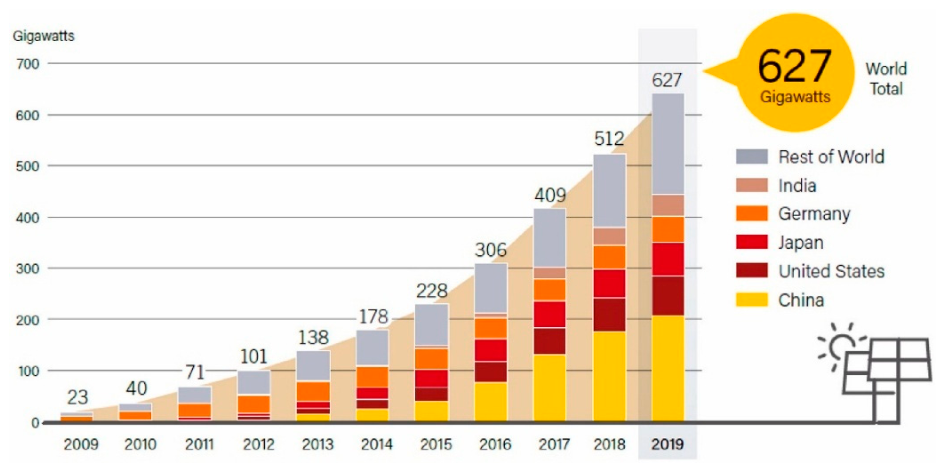
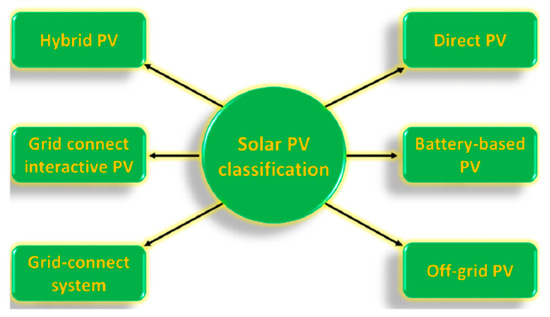
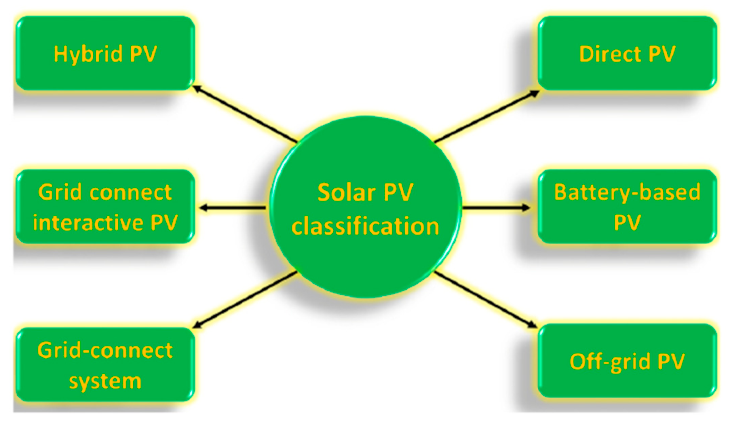
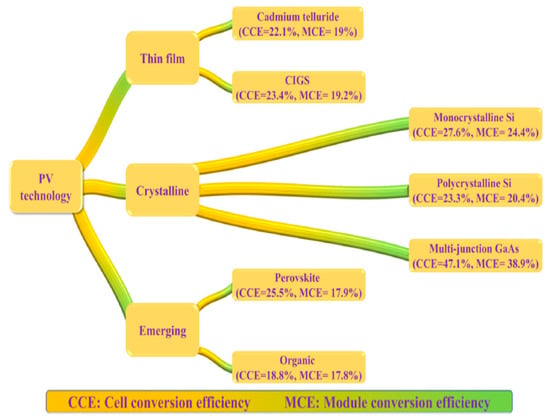
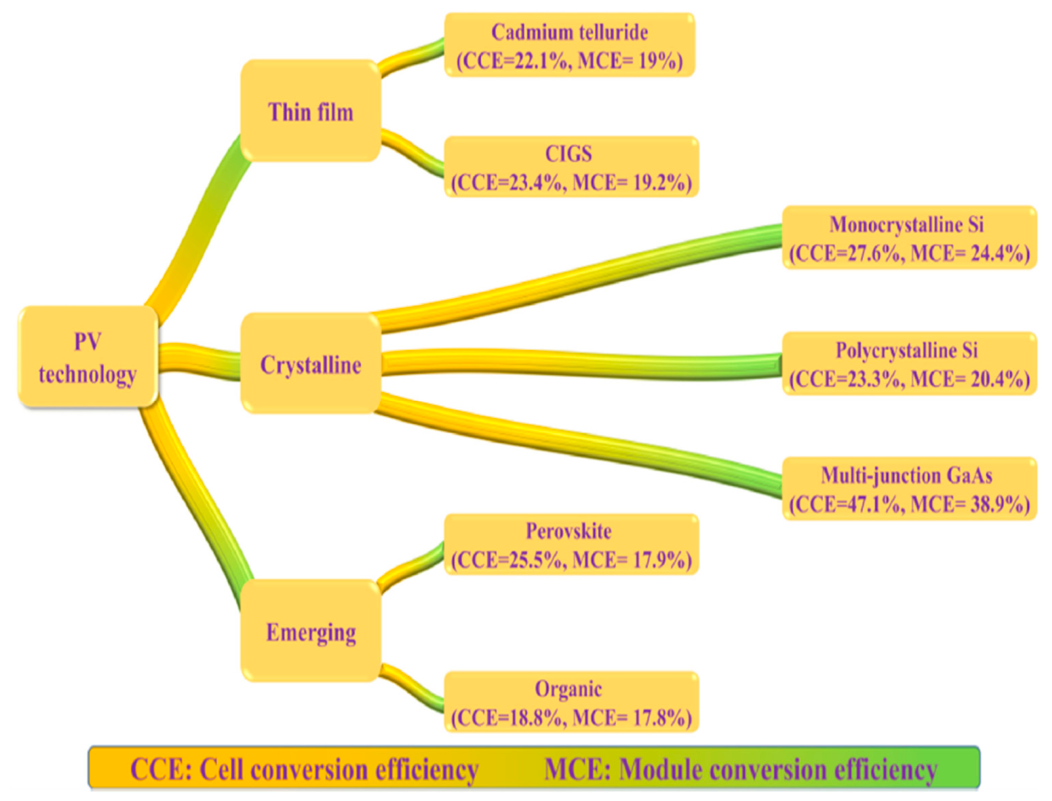
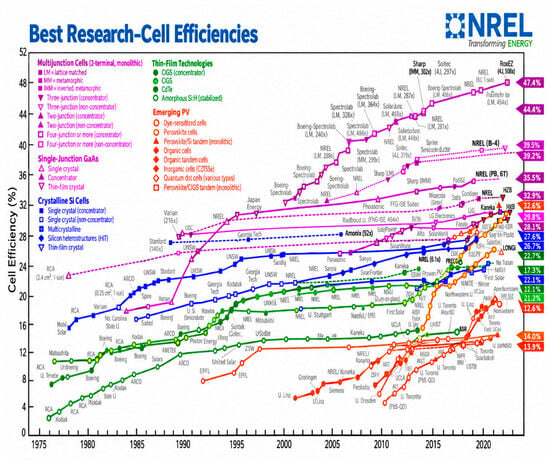
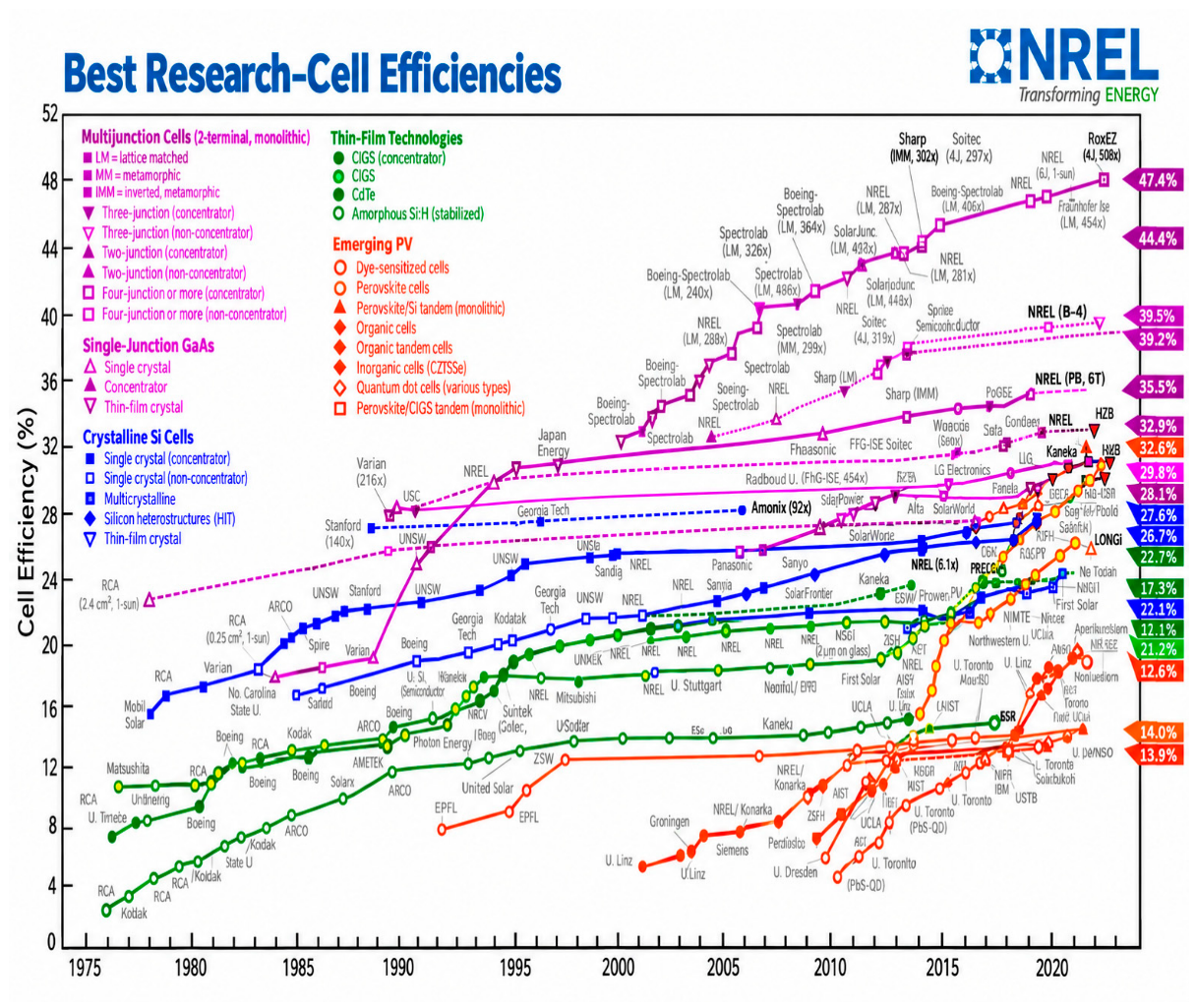
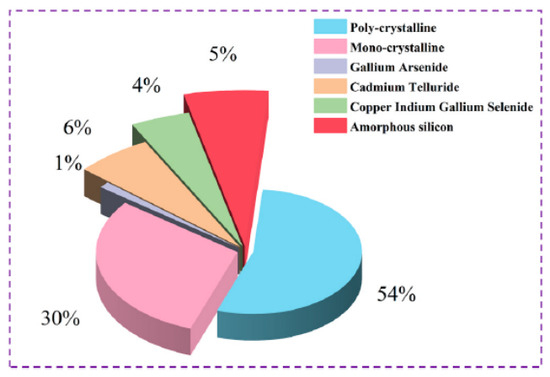
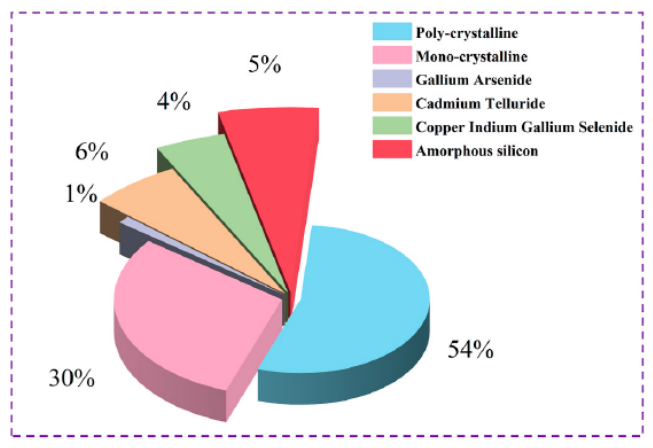
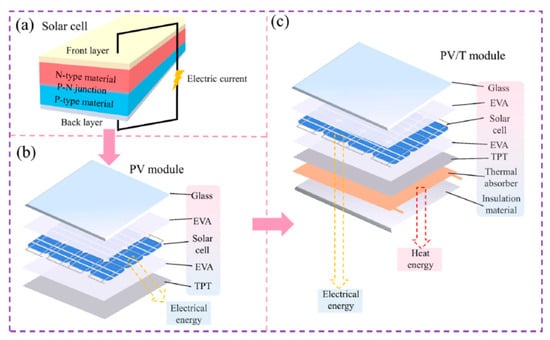
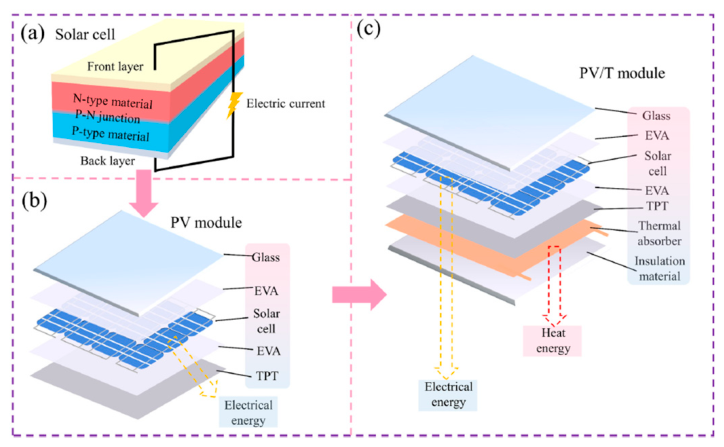
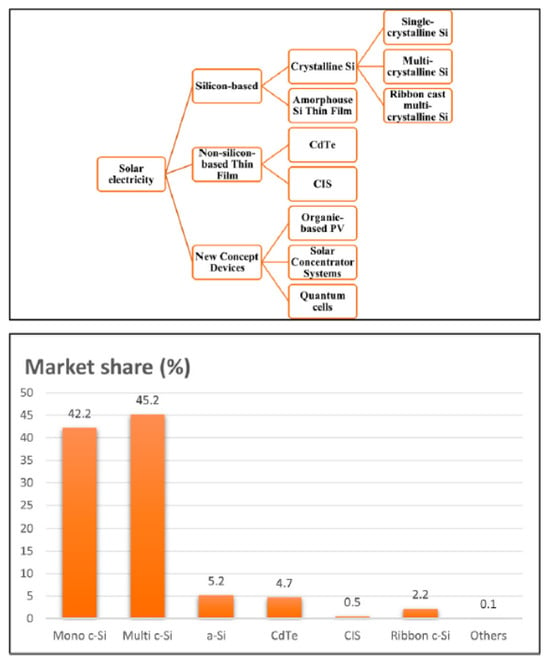
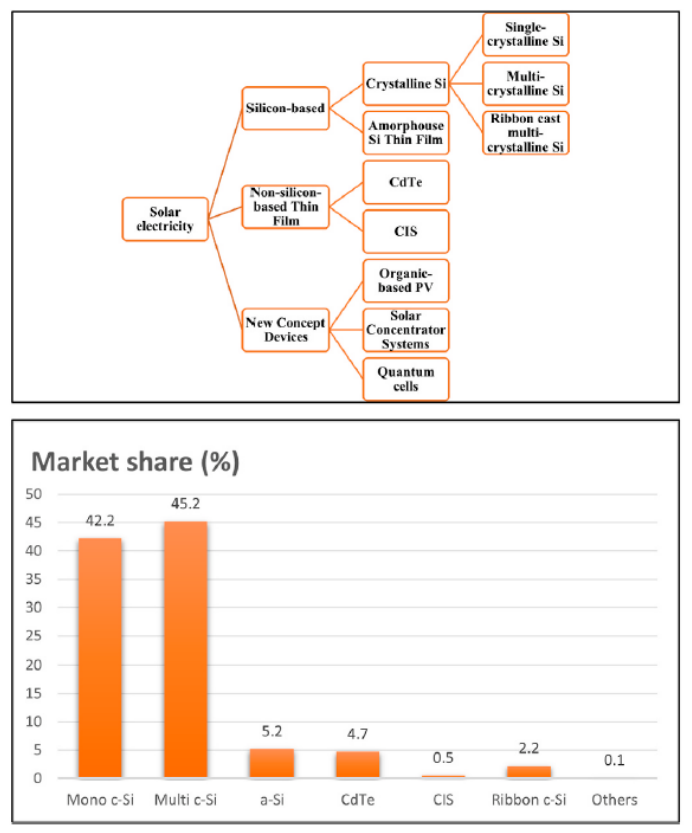
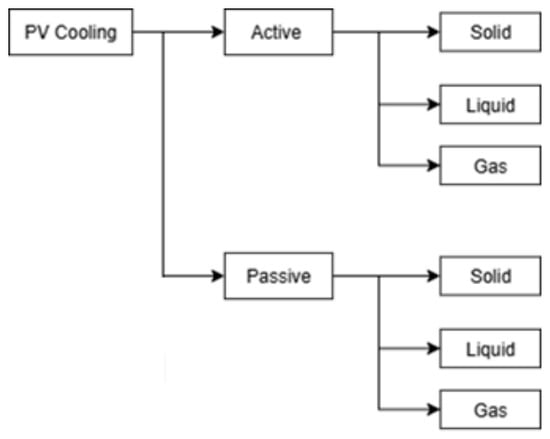
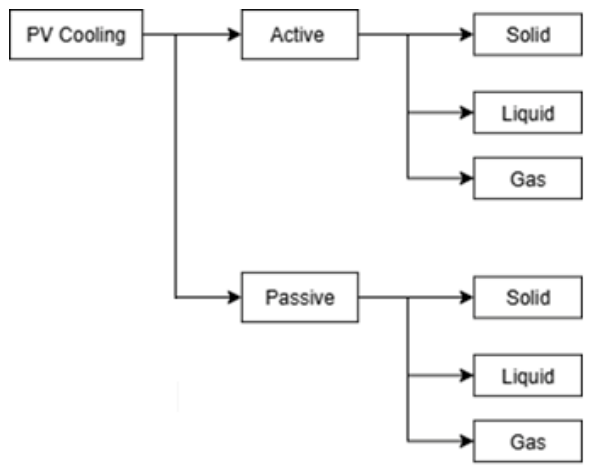


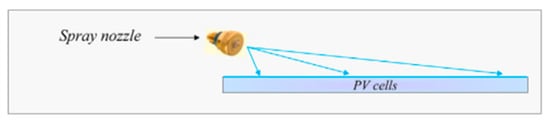
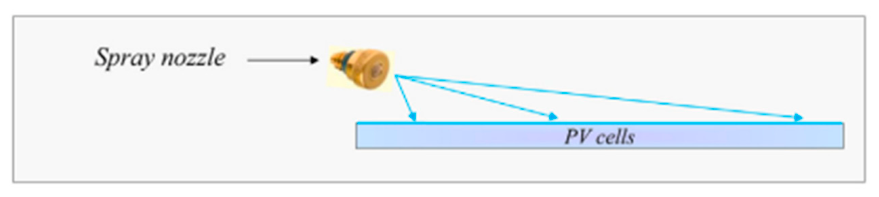


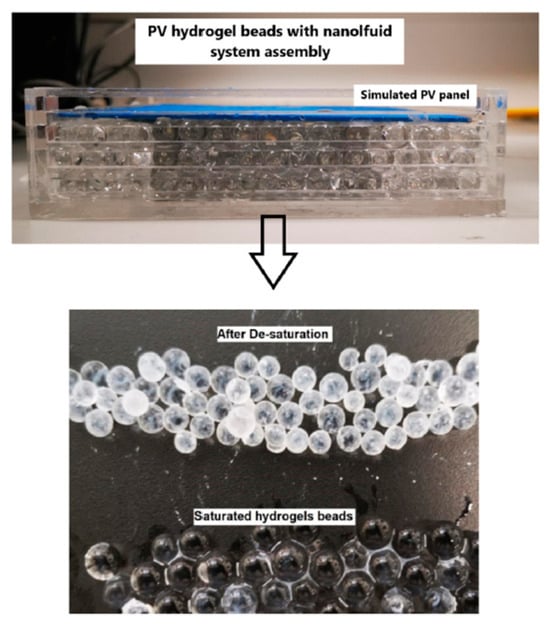
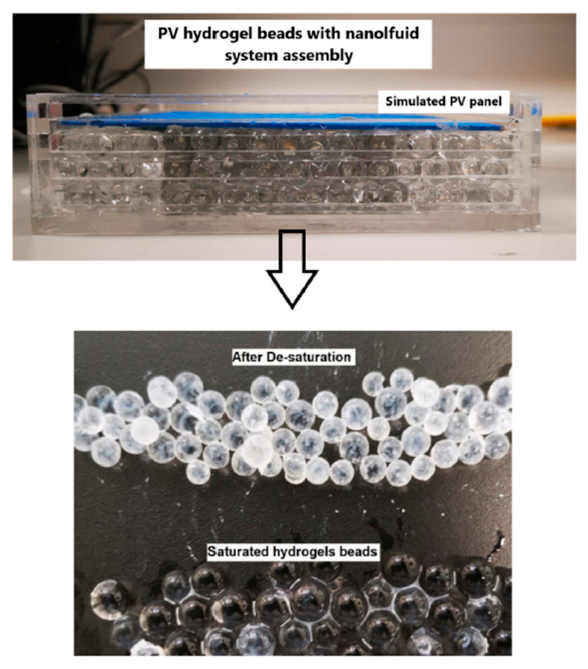
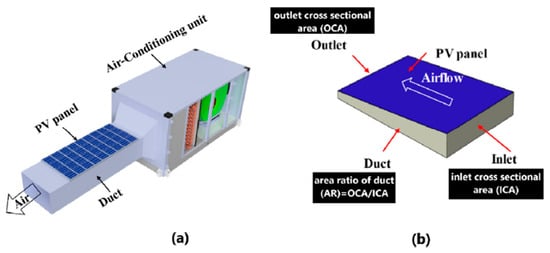
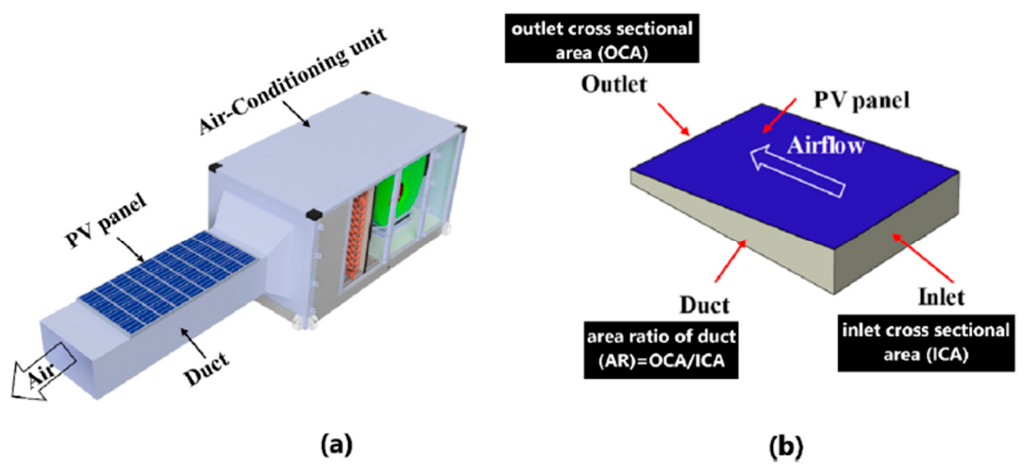
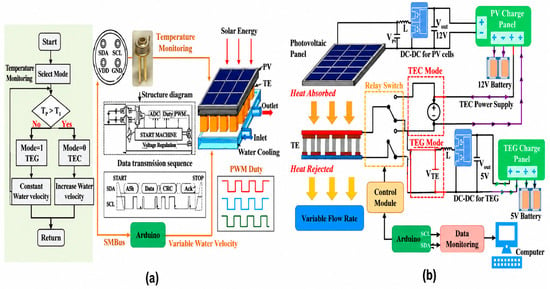
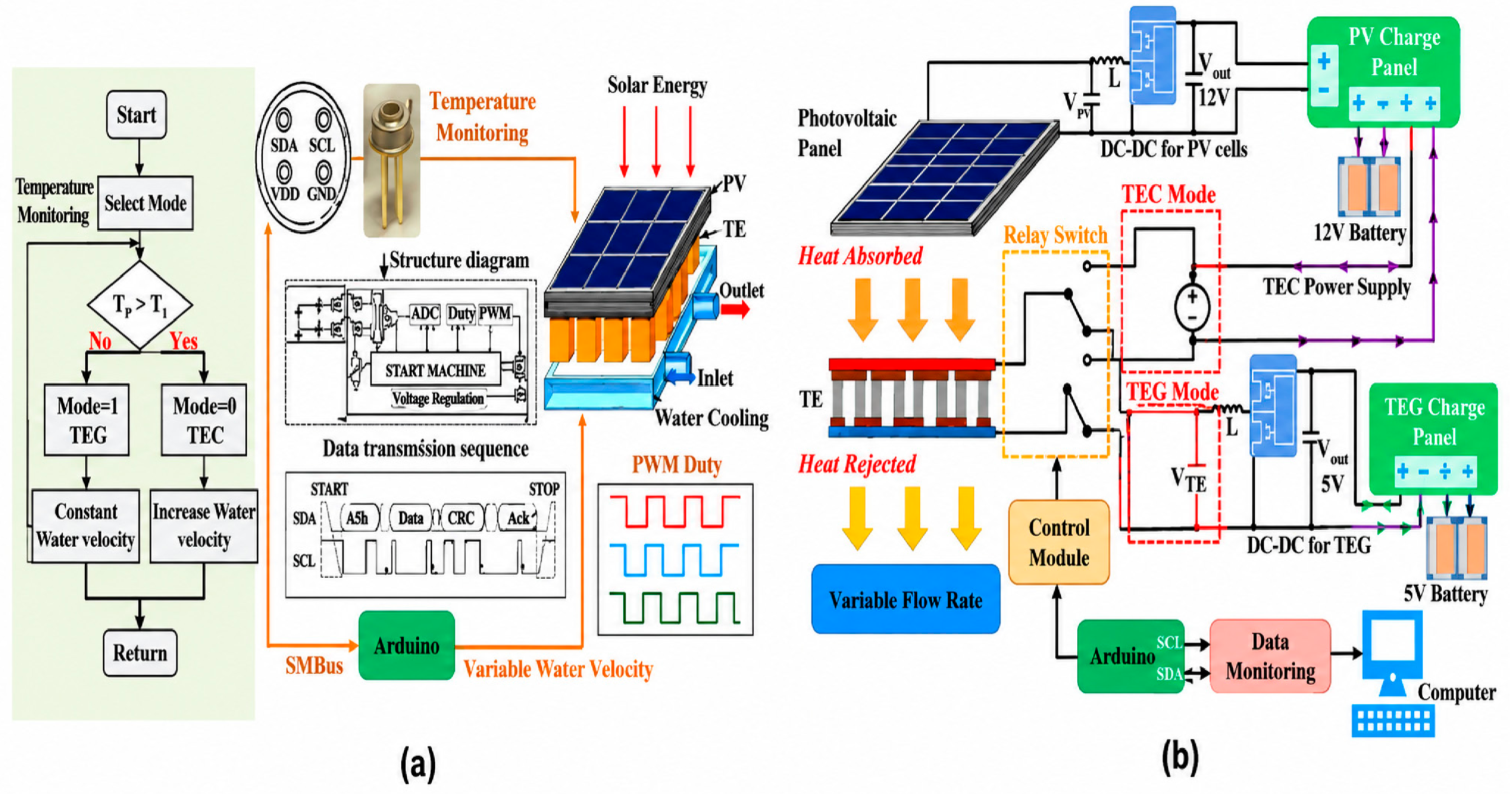
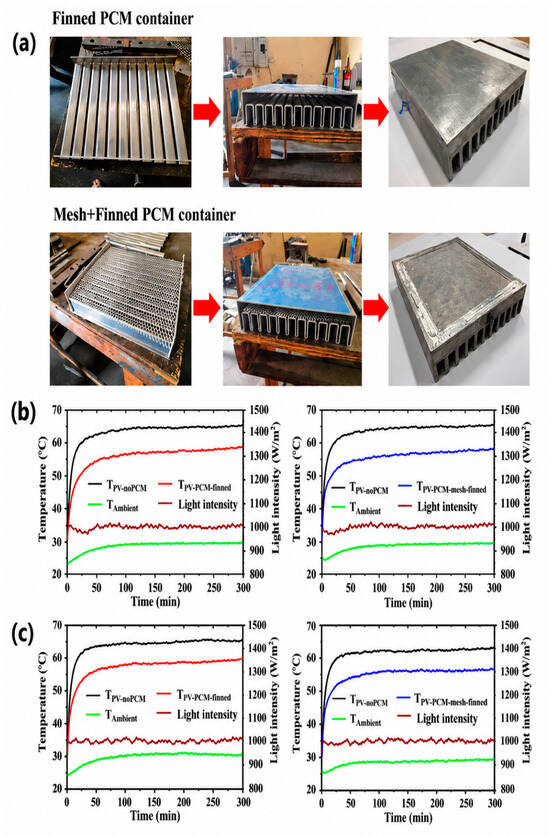
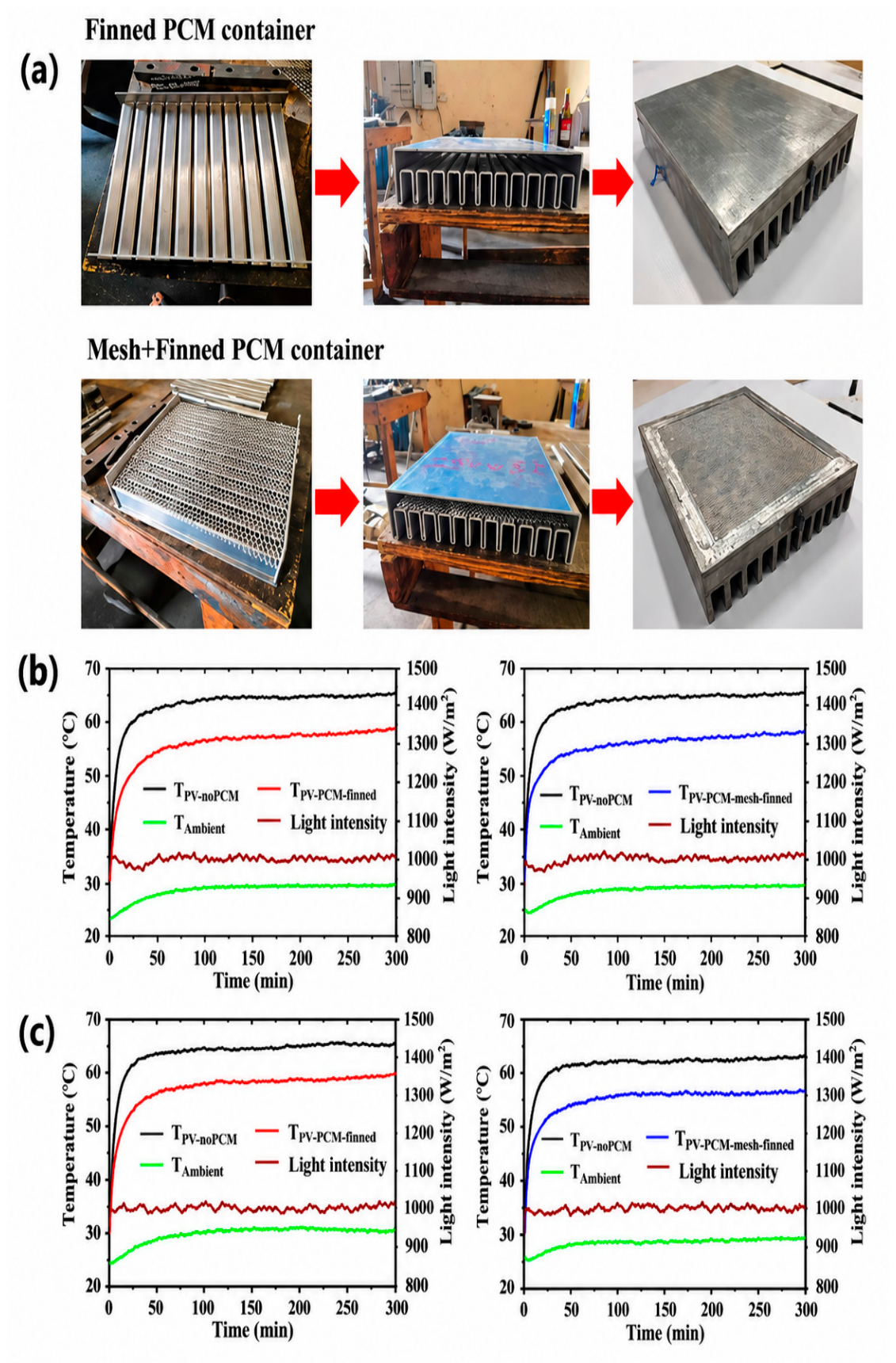
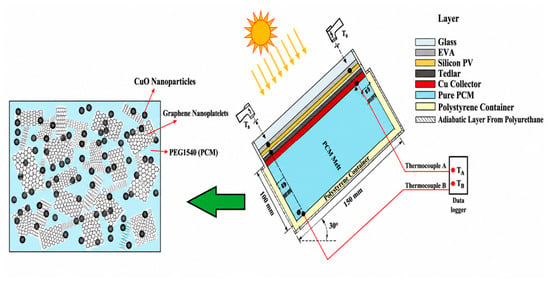
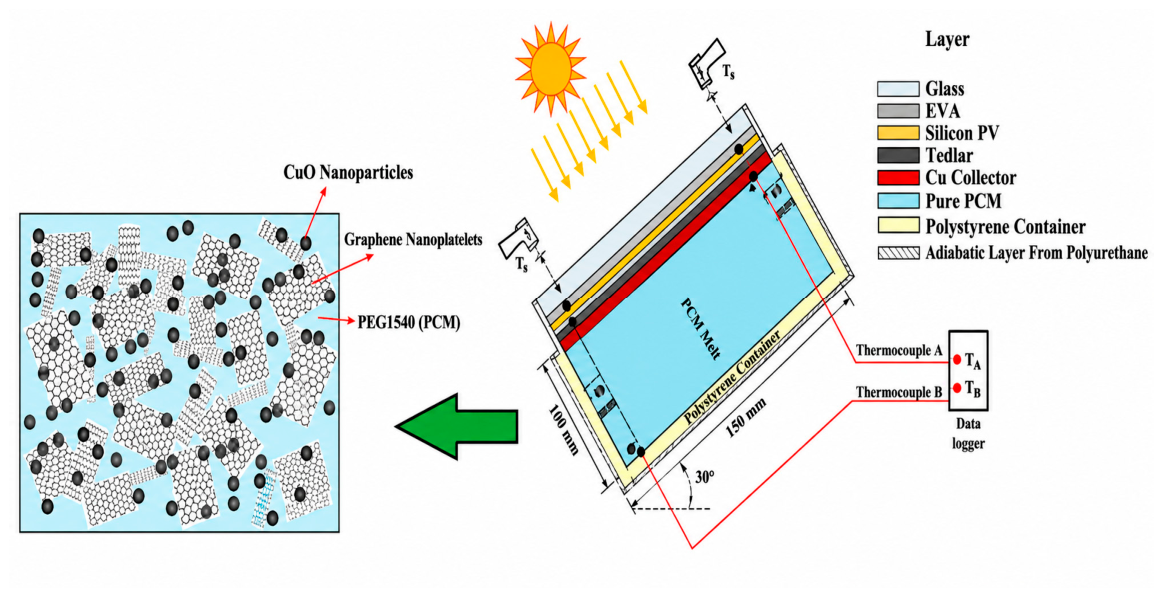
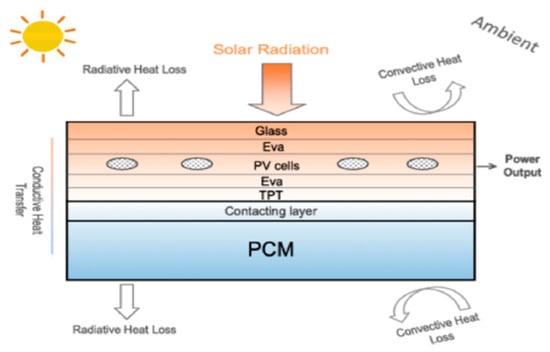
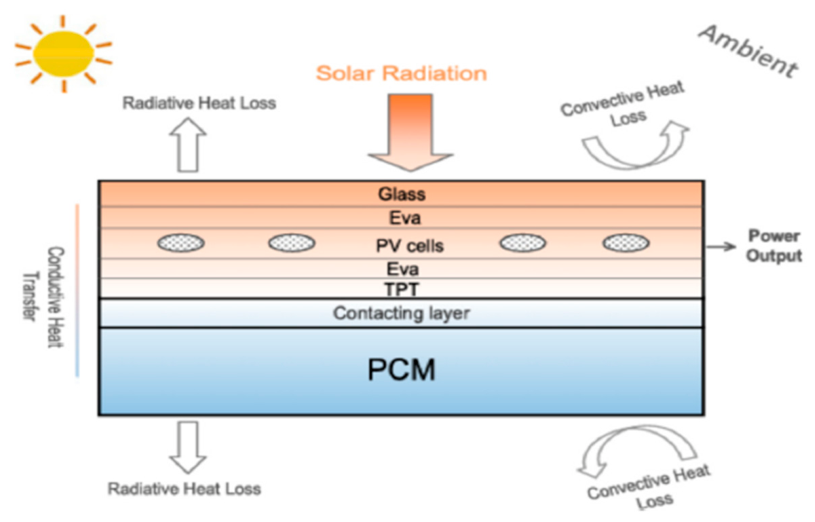
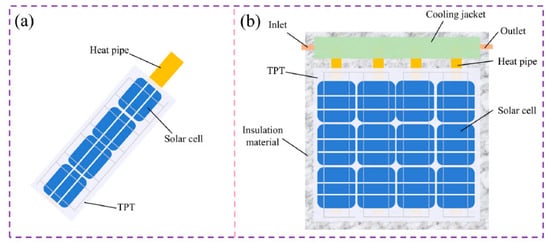
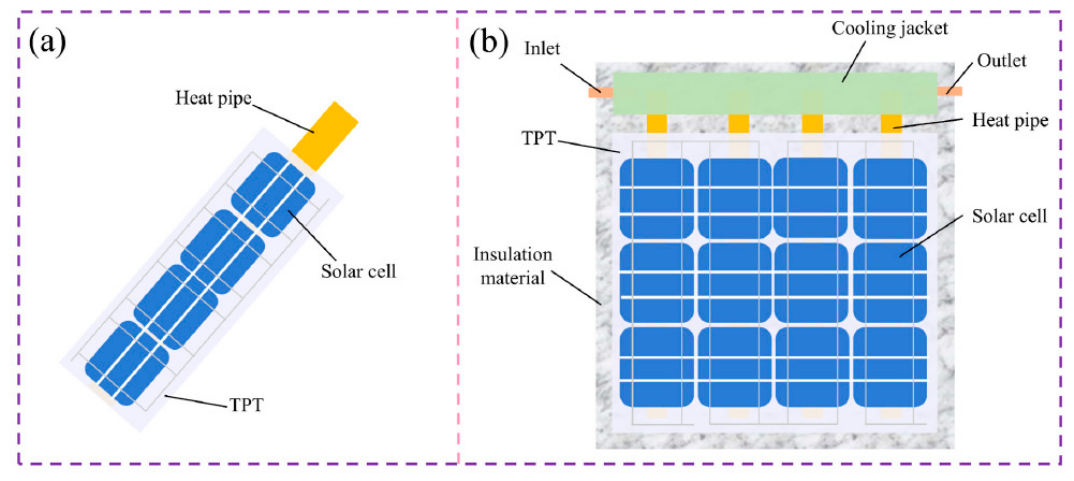
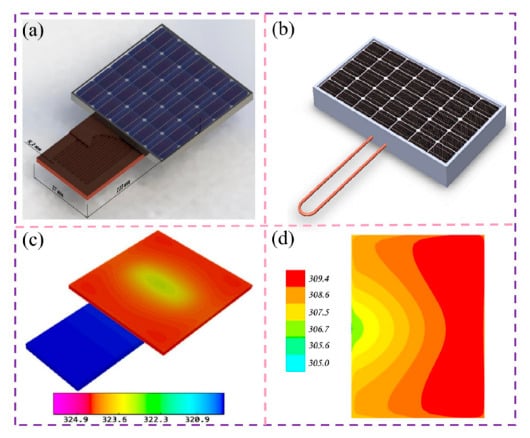
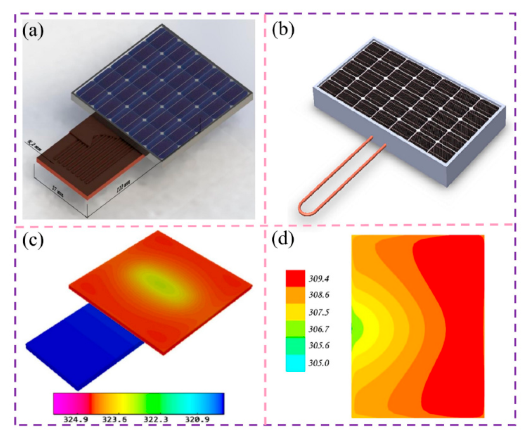
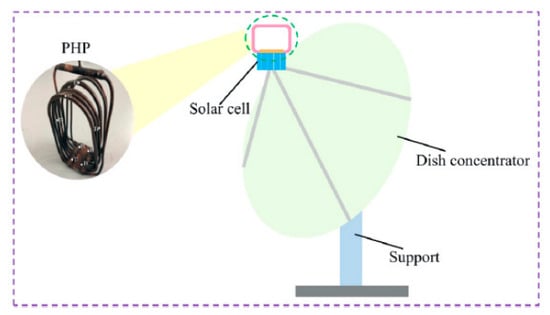
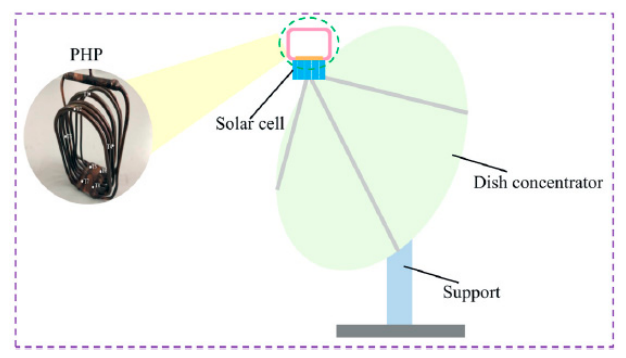
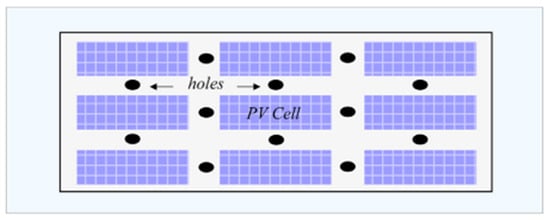
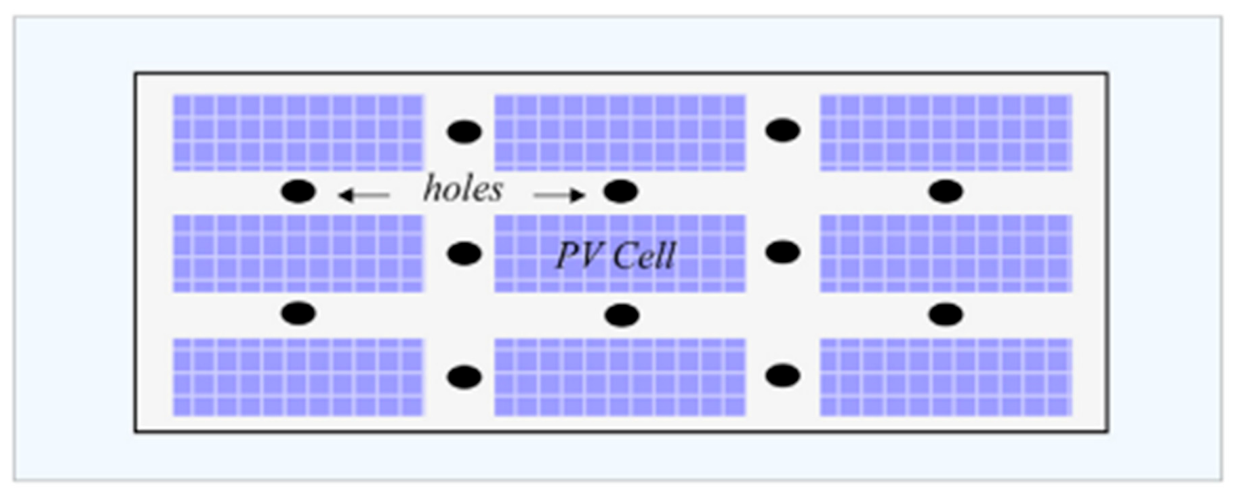
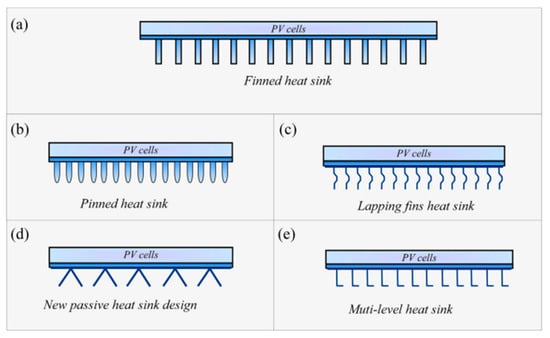
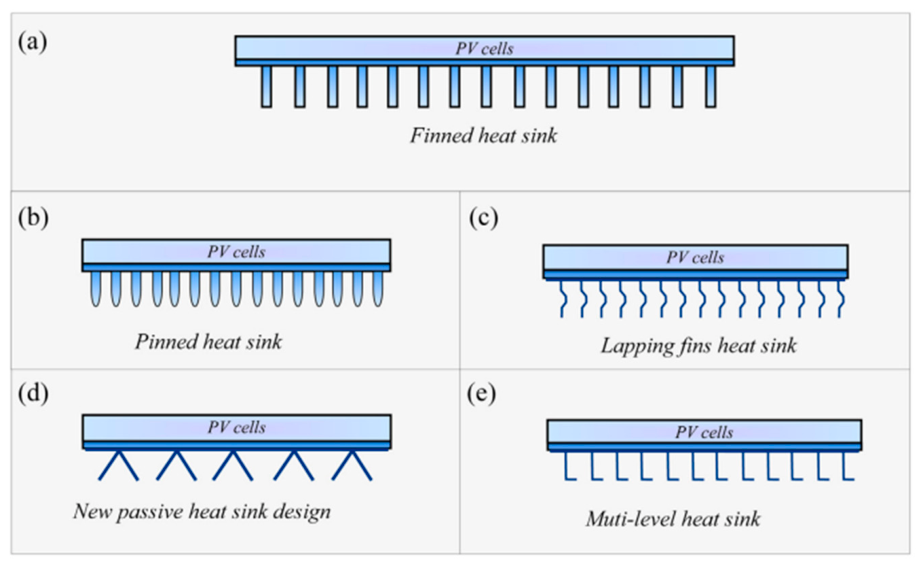

Disclaimer/Publisher’s Note: The statements, opinions and data contained in all publications are solely those of the individual author(s) and contributor(s) and not of MDPI and/or the editor(s). MDPI and/or the editor(s) disclaim responsibility for any injury to people or property resulting from any ideas, methods, instructions or products referred to in the content. |
© 2026 by the authors. Licensee MDPI, Basel, Switzerland. This article is an open access article distributed under the terms and conditions of the Creative Commons Attribution (CC BY) license.