

Journal Menu
► ▼ Journal Menu-
- Symmetry Home
- Aims & Scope
- Editorial Board
- Reviewer Board
- Topical Advisory Panel
- Early Career Editorial Board
- Instructions for Authors
- Special Issues
- Topics
- Sections & Collections
- Article Processing Charge
- Indexing & Archiving
- Editor’s Choice Articles
- Most Cited & Viewed
- Journal Statistics
- Journal History
- Journal Awards
- Conferences
- Editorial Office
Journal Browser
► ▼ Journal BrowserNeed Help?
Announcements
29 September 2026
Tu Youyou Award—Final Call for Nominations
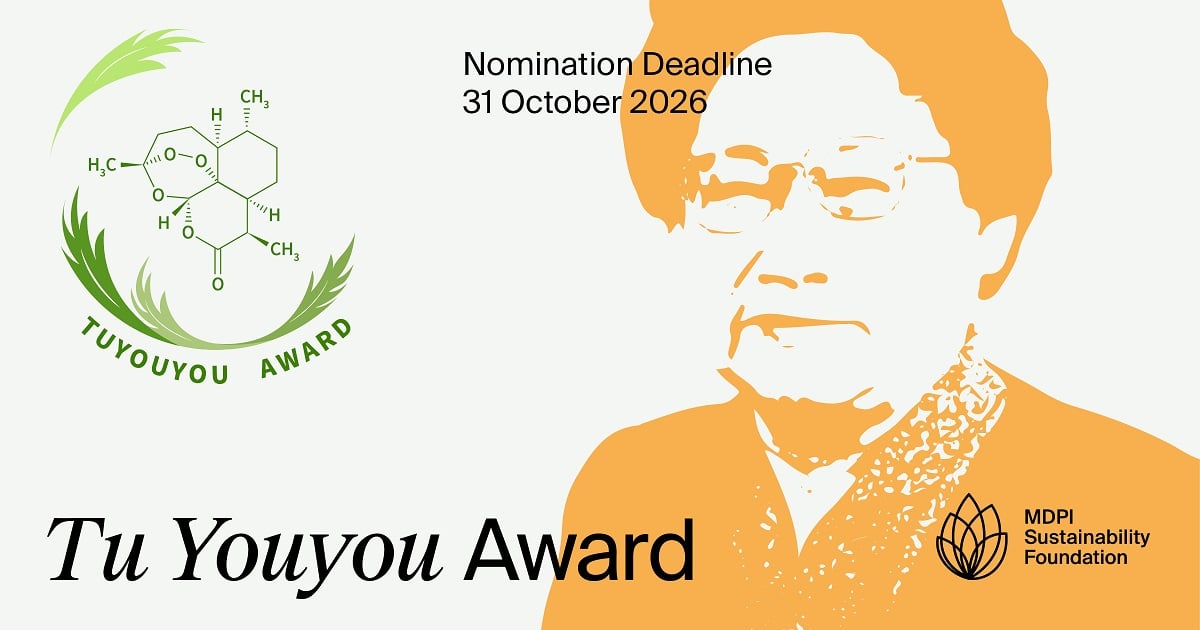
The nomination deadline for the Tu Youyou Award is approaching. Researchers are encouraged to submit nominations by 31 October 2026 (UTC-12).
The Tu Youyou Award recognizes outstanding researchers whose work has made significant contributions to natural products chemistry and medicinal chemistry, advancing scientific innovation and human health. It is named after Nobel laureate Tu Youyou, whose discovery of artemisinin has saved millions of lives.
The current award committee is chaired by Prof. Dr. William Gerwick, a Distinguished Professor at the University of California San Diego, USA, and a renowned expert in marine natural products chemistry and pharmacology. Under his leadership, the committee will evaluate nominations and recognize impactful research achievements in the related fields.
Prize:
- CHF 100,000
- A medal
- A certificate
The monetary prize will be shared equally should there be multiple recipients.
Who may be nominated?
- Scientists with outstanding achievements and contributions in the fields of natural products chemistry and medicinal chemistry.
Nominees must be individuals; team or group nominations are not permitted. Nominations are valid only for the current award cycle.
Who may submit a nomination?
- The director of the nominee’s host research institution or a recognized scientist within the field.
Self-nominations will not be considered.
Nomination materials:
- A biographical sketch
- A detailed description of the nominee’s contributions
- 5–10 representative academic publications
- A list of academic honors, awards, and funded projects
- A nomination letter signed by two nominators
How to submit?
Submit your nomination by 31 October 2026 via: https://tuyouyouprize.org/nomination/form.
For further information, please visit the Tu Youyou Award website. For any inquiries, please contact the Tu Youyou Award Team at tuyouyouaward@mdpi.com.
31 July 2026
Ursula Röthlisberger Receives the Inaugural Michele Parrinello Award
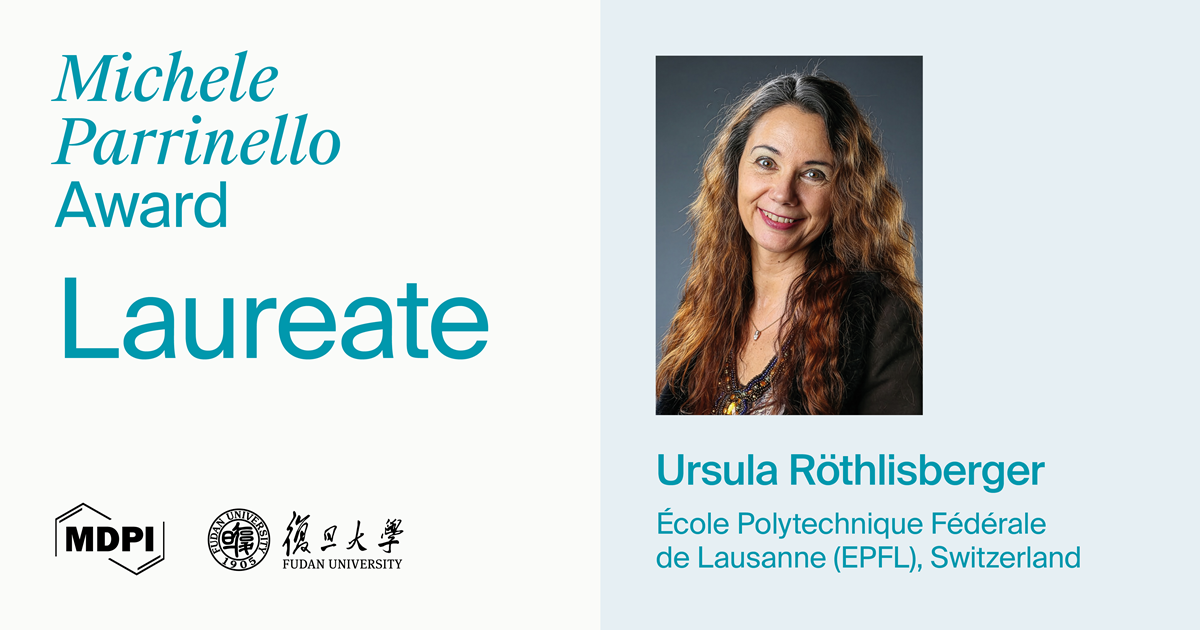
We are pleased to announce that the inaugural Michele Parrinello Award has been conferred upon Prof. Ursula Röthlisberger, in recognition of her outstanding contributions to computational chemistry and molecular simulation, particularly through her pioneering work in ab initio molecular dynamics and QM/MM multiscale simulation methods. This award celebrates researchers whose work embodies the spirit of scientific innovation and rigor that Professor Parrinello has championed throughout his career. We warmly congratulate Prof. Röthlisberger on this well-deserved recognition.
The achievements of Prof. Ursula Röthlisberger highlight the profound impact of computational methods on our understanding of complex chemical, biological, and materials systems. We invite the global scientific community to join us in celebrating her outstanding contributions to computational science.
“Professor Ursula Röthlisberger has been recognized by the 2026 Michele Parrinello Award Committee as an exceptional leader in computational chemistry and molecular simulation. Her innovative research has significantly advanced the predictive modeling of complex chemical and biological systems and has created lasting impact across multiple scientific disciplines. Through her outstanding scientific achievements, dedication to education, and leadership in the international research community, she has played a vital role in shaping the development of modern computational science.”
—Prof. Dr. Xin-Gao Gong, Chair of the Award Committee
2026 Michele Parrinello Award Laureate
|
Ursula Röthlisberger |
Prof. Ursula Röthlisberger is a professor at the Institute of Chemical Sciences and Engineering, EPFL, Switzerland, where she leads the Laboratory of Computational Chemistry and Biochemistry. Her research focuses on developing computational methods for molecular simulation, including ab initio molecular dynamics and quantum mechanical/molecular mechanical (QM/MM) multiscale approaches, to study complex chemical, biological, and materials systems. Her work has contributed to the advancement of computational frameworks for understanding molecular processes at the atomic level. She has also applied computational approaches to investigate next-generation photovoltaic materials, including dye-sensitized and perovskite solar cells, providing insights into material properties, stability, and performance through collaboration with experimental researchers. |

2026 Award Committee
Committee Chair:
- Prof. Dr. Xin-Gao Gong, Fudan University, China.
Committee Members (listed in alphabetical order):
- Prof. Alessandro Laio, Scuola Internazionale Superiore di Studi Avanzati, Italy;
- Prof. Michiel Sprik, University of Cambridge, UK;
- Prof. David J. Srolovitz, the University of Hong Kong, China;
- Prof. Mark E. Tuckerman, New York University, USA;
- Prof. Su-Huai Wei, Eastern Institute of Technology, Ningbo, China.
Note: The 2026 Award Committee comprises six members, including one anonymous member.
2026 Award Ceremony
The inaugural Michele Parrinello Award Ceremony will take place on 7 November 2026, at the Southern University of Science and Technology (SUSTech) in Shenzhen, China, as part of the 2026 MDPI Materials Science Conference. Further information and updates will be available on the official Michele Parrinello Award website.
About the Michele Parrinello Award
The Michele Parrinello Award was established in November 2025 to honor Professor Michele Parrinello’s enduring legacy in advancing computational science. This biennial international award recognizes senior researchers who have made outstanding contributions to computational physical sciences, encompassing physics, chemistry, and materials science. The recipient will receive a monetary prize of 50,000 EUR, a commemorative medal, and a certificate.
For further information about the award and the laureate, please visit the Michele Parrinello Award website.
8 October 2026
MDPI Topic Editor Club 2026 | Engineering Session, 15 October 2026

MDPI warmly invites you to the 2026 MDPI Topic Editor Club webinar series. This global platform connects worldwide Topic Editors, featuring emerging research themes, practical editorial experience sharing and academic communication. MDPI Topics are interdisciplinary thematic paper collections published across multiple MDPI journals. Led by professional Topic Editor teams and supported by MDPI’s efficient open access publishing workflow, they facilitate academic collaboration and help research reach broader global audiences.
Focusing on engineering, this session brings together Topic Editors to showcase editorial work, discuss the successes and challenges of Topic development, and share innovative strategies for building high-impact Topics. It offers a great chance for peer learning and cross-disciplinary collaboration to advance open access research in this field.
We welcome your participation in the 2026 MDPI Topic Editor Club, and look forward to your insights and questions during the live Q&A session.
Date: 15 October 2026 at 13:00 CEST | 7:00 EDT | 19:00 CST Asia
Webinar ID: 815 5310 9262
Landing page: https://sciforum.net/event/MTEC2026-ENG
Register now for free!

Program:
|
Speaker |
Presentation Title |
Time in CEST |
Time in EDT |
Time in CST Asia |
|
Mr. Marko Stojadinov |
MDPI Introduction |
13:00–13:10 |
7:00–7:10 |
19:00–19:10 |
|
Dr. Mehdi Amirkhani and Dr. Igor Martek |
MDPI Topics on Sustainable Construction: Challenges and Opportunities |
13:10–13:30 |
7:10–7:30 |
19:10–19:30 |
|
Q&A Session |
13:30–13:40 |
7:30–7:40 |
19:30–19:40 |
|
|
Prof. Azidine Guezzaz |
From AI-Based Intrusion Detection to Autonomous Cybersecurity |
13:40–14:00 |
7:40–8:00 |
19:40–20:00 |
|
Q&A Session |
14:00–14:10 |
8:00–8:10 |
20:00–20:10 |
|
|
Dr. Hafiz Muhammad Asif |
Next-Generation Wireless Communication Systems |
14:10–14:30 |
8:10–8:30 |
20:10–20:30 |
|
Q&A Session |
14:30–14:40 |
8:30–8:40 |
20:30–20:40 |
|
|
Mr. Marko Stojadinov |
Introduction of MDPI Topics |
14:40–15:00 |
8:40–9:00 |
20:40–21:00 |
|
Q&A Session |
15:00–15:10 |
9:00–9:10 |
21:00–21:10 |
|
|
Mr. Marko Stojadinov |
Closing of Webinar |
15:10–15:15 |
9:10–9:15 |
21:10–21:15 |
After registering, you will receive a confirmation email containing information on how to join the webinar. Registrations with academic institutional email addresses will be prioritized.
Unable to attend? Register anyway and we’ll let you know when the recording is available to watch.
Webinar Speakers:
- Dr. Mehdi Amirkhani, University of South Australia, Adelaide, Australia;
- Dr. Igor Martek, Deakin University, Geelong, Australia;
- Prof. Azidine Guezzaz, Cadi Ayyad University, Essaouira, Morocco;
- Dr. Hafiz Muhammad Asif, Sultan Qaboos University, Muscat, Oman;
- Mr. Marko Stojadinov, MDPI.
Relevant Topics:
“Sustainable Building Development and Promotion”
Edited by Igor Martek and Mehdi Amirkhani
Manuscript submission deadline: 31 December 2026
“Cybersecurity Symmetry: Encryption, AI, and Attack Patterns”
Edited by Mobyen Uddin Ahmed and Azidine Guezzaz
Manuscript submission deadline: 31 March 2027
“Revitalizing Buildings and Our Urban Heritage”
Edited by Igor Martek, Mehdi Amirkhani and Chayakan Siamphukdee
Manuscript submission deadline: 31 May 2027
“Blockchain for Sustainability: Applications in Energy, Supply Chain, and Green Finance”
Edited by Firdous Kausar, Hafiz Muhammad Asif and Mian Muhammad Waseem Iqbal
Manuscript submission deadline: 31 May 2027
“Sustainable Construction: Globalize, Organize, Build, Unite, Innovate, Lead, Develop”
Edited by Igor Martek and Mehdi Amirkhani
Manuscript submission deadline: 31 July 2028
30 September 2026
World Space Week—“Rocket Revolution”, 4–10 October 2026
World Space Week 2026 highlights the rapid progress in rocket technology and its pivotal role in enabling sustainable access to space. This year’s theme, “Rocket Revolution”, invites us to reflect on the challenges and opportunities brought by reusable launchers, lower launch costs, and growing mission frequency.
Selected MDPI journals, including Aerospace, Applied Sciences, Computation, Energies, Sensors, Signals, and Symmetry, provide key platforms for advancing global dialogue on space research. Through a curation of articles, Special Issues and reprints, these journals explore topics such as launch vehicle design and propulsion, and spacecraft sensing and control, fostering collaboration among scientists, engineers, and institutions worldwide.
World Space Week underscores the importance of rocket innovation and our shared responsibility to develop and apply launch technologies responsibly for a bright and sustainable future.

 |
 |
 |
 |
 |
 |
 |

“Embedded Wireless Flexible Sensor for Monitoring Interface Stress of Solid Rocket Motor”
by Bei Yan , Xiaozhou Lü, Kecai Ding, Yipeng Heng and Yong Li
Sensors 2026, 26(9), 2807; https://doi.org/10.3390/s26092807
“Sustainable Aviation Fuels: A Review of Current Techno Economic Viability and Life Cycle Impacts”
by Md Nasir Uddin and Feng Wang
Energies 2025, 18(20), 5510; https://doi.org/10.3390/en18205510
“Fuzzy Lyapunov-Based Gain-Scheduled Control for Mars Entry Vehicles: A Computational Framework for Robust Non-Linear Trajectory Stabilization”
by Hongyang Zhang, Na Min and Shengkun Xie
Computation 2025, 13(9), 205; https://doi.org/10.3390/computation13090205
“Sustainable Aviation Fuels: A Comprehensive Review of Production Pathways, Environmental Impacts, Lifecycle Assessment, and Certification Frameworks”
by Weronika Klimczyk, Remigiusz Jasiński, Jakub Niklas, Maciej Siedlecki and Andrzej Ziółkowski
Energies 2025, 18(14), 3705; https://doi.org/10.3390/en18143705
“Cost Effectiveness of Reusable Launch Vehicles Depending on the Payload Capacity”
by Si-Yoon Kang, Min-Seon Jo, Jeong-Yeol Choi and Soo Seok Yang
Aerospace 2025, 12(5), 364; https://doi.org/10.3390/aerospace12050364
“Reliability Assessment of a Series System with Weibull-Distributed Components Based on Zero-Failure Data”
by Ziang Li, Huimin Fu and Jianchao Guo
Appl. Sci. 2025, 15(5), 2869; https://doi.org/10.3390/app15052869
“RANS Simulations of Advanced Nozzle Performance and Retro-Flow Interactions for Vertical Landing of Reusable Launch Vehicles”
by Giuseppe Scarlatella, Jan Sieder-Katzmann, Martin Propst, Theodor Heutling, Jannis Petersen, Felix Weber, Marco Portolani, Marco Garutti, Daniele Bianchi, Dario Pastrone et al.
Aerospace 2025, 12(2), 124; https://doi.org/10.3390/aerospace12020124
“Decision-Making Framework for Aviation Safety in Predictive Maintenance Strategies”
by Igor Kabashkin, Roman Fedorov and Vladimir Perekrestov
Appl. Sci. 2025, 15(3), 1626; https://doi.org/10.3390/app15031626
“A Decreasing Horizon Model Predictive Control for Landing Reusable Launch Vehicles”
by Guillermo Zaragoza Prous, Enric Grustan-Gutierrez and Leonard Felicetti
Aerospace 2025, 12(2), 111; https://doi.org/10.3390/aerospace12020111
“Acoustic Rocket Signatures Collected by Smartphones”
by Sarah K. Popenhagen and Milton A. Garcés
Signals 2025, 6(1), 5; https://doi.org/10.3390/signals6010005
“Minimizing the Environmental Impact of Aircraft Engines with the Use of Sustainable Aviation Fuel (SAF) and Hydrogen”
by Łukasz Brodzik, Wojciech Prokopowicz, Bartosz Ciupek and Andrzej Frąckowiak
Energies 2025, 18(3), 472; https://doi.org/10.3390/en18030472
“Comprehensive Review of RF MEMS Switches in Satellite Communications”
by Bingqian Shao, Chengjian Lu, Yinjie Xiang, Feixiong Li and Mingxin Song
Sensors 2024, 24(10), 3135; https://doi.org/10.3390/s24103135
“Space Robot Sensor Noise Amelioration Using Trajectory Shaping”
by Emily Kuck and Timothy Sands
Sensors 2024, 24(2), 666; https://doi.org/10.3390/s24020666
“Symmetry-Breaking-Induced Internal Mixing Enhancement of Droplet Collision”
by Yupeng Leng, Chengming He, Qian Wang, Zhixia He, Nigel Simms and Peng Zhang
Symmetry 2024, 16(1), 47; https://doi.org/10.3390/sym16010047

|
“Advanced Signal Processing Technologies: Integrating AI, Future Communications, and Innovative Applications” |
“Human Body Communication and Wireless Sensing for Space and Challenging Environments” |
 |
 |
|
“Guidance and Control of Advanced Aerospace Vehicle from Near Space to Orbit” |
“Precise Orbit Determination of the Spacecraft (2nd Edition)” |
 |
 |
|
“Aircraft Aerodynamic Design and Analysis” |
“Integrated Computer Technologies in Mechanical Engineering—Synergetic Engineering V” |
 |
 |

 |
 |
 |
30 September 2026
2026 Nobel Prize—Where Breakthroughs Meet Open Sciences
Each October, the Nobel Prizes turn the world’s attention toward the discoveries that have redrawn the boundaries of science. They are science’s most prestigious recognition, and increasingly its most interdisciplinary. Recent laureates have been honored for work spanning quantum dots, machine learning, and molecular medicine, fields that rarely stay within a single discipline’s borders for long.
Open access has a growing role in that story. To date, more than 40 Nobel laureates have published their research in MDPI journals—a body of work spanning genetics, physics, chemistry, and medicine. Publishing openly means a laureate’s findings reach not only fellow scientists, but the students, clinicians, policymakers, and curious readers who would otherwise meet that work only secondhand, if at all. Open access doesn’t just carry Nobel-level research, it amplifies the voice behind it, letting the discovery speak directly to everyone it stands to affect.
This is also where MDPI’s breadth becomes an advantage. With over 500 journals covering the full spectrum of scientific inquiry, our platform mirrors the reality of modern discovery—where breakthroughs increasingly emerge at the intersection of fields, not within the walls of one. It’s this structure that lets us support interdisciplinary work from first submission to global publication, connecting researchers across borders and disciplines alike.
As this year’s laureates are announced, we’ll continue spotlighting where Nobel Prize–winning research intersects with the work of our authors, editors, and reviewers—celebrating both the achievements being recognized and the open access model that helps ensure they reach the widest possible audience.
Explore selected works by Nobel laureates within the MDPI portfolio below, and join us in celebrating the global impact of their ideas.

Put your scientific intuition to the test and join MDPI’s 2026 Nobel Prize Prediction Challenge! As we honor three decades of open research, we invite you to cast your votes for the next trailblazing laureates in chemistry, physics, and physiology or medicine. Predict the pioneer minds shaping tomorrow’s scientific legacy for a chance to win 100 CHF voucher of MDPI Video Service.
Deadline: 4 October 2026 | 18:00 CEST
Winner announcement: 16 October 2026


Discover high-impact research driving tomorrow’s breakthroughs. Browse our open access selections in Chemistry & Materials Science, Medicine & Pharmacology, and Physical Sciences, featuring key studies aligned with this year’s top Nobel prize-contending topics.
|
|
|
|


Join our distinguished Editors-in-Chief and Section Editors-in-Chief for an exclusive live discussion on this year’s Nobel Prize announcements. Our expert panel will break down the winning breakthroughs, explore their global impact, and discuss the future trajectories of open science across Chemistry, Physics, and Medicine. Don’t miss this opportunity to engage with leading voices in research.
|
|
2026 Nobel Medicine & Pharmacology Roundtable
|
|
|
2026 Nobel Physics Roundtable
|
|
|
2026 Nobel Chemistry & Materials Roundtable
|
|
|
2026 Nobel Chemistry & Materials Roundtable Session #2
|


MDPI remains committed to ensuring that the breakthroughs of today—and tomorrow—are shared, debated, and built upon by the global research community. Explore science, join the conversation, and be part of the next chapter.
30 September 2026
MDPI INSIGHTS: The CEO’s Letter #39 - Peer Review Week, Chief Publishing Officer, Tu Youyou Award, OASPA & AI

Welcome to the MDPI Insights: The CEO's Letter.
In these monthly letters, I will showcase two key aspects of our work at MDPI: our commitment to empowering researchers and our determination to facilitating open scientific exchange.
Opening Thoughts

Recognizing the People Behind Peer Review
September marked Peer Review Week 2026, this year focused on “Peer Review Capacity: Volume, Speed, and Quality.” The theme reflects a challenge across scholarly publishing: research output and submissions continue to grow, while the time and expertise researchers can dedicate to reviewing are finite.
At MDPI, more than 200,000 reviewers contribute their expertise each year. Their work is fundamental to maintaining the quality and integrity of the research we publish, and Peer Review Week gave us an opportunity not only to thank them, but also to reflect on how we can better support their contribution.

This year, we highlighted three commitments that guide our approach: protecting reviewers’ time and judgment, ensuring high-quality and efficient processes, and recognizing and rewarding reviewers for their contribution. We also shared results from our 2026 Voice of the Community surveys. Among 1,627 reviewer respondents, 86% rated their experience with MDPI as “Good” or “Excellent,” 88% said manuscripts matched their expertise, and 92% found our reviewer instructions clear and helpful. From the author perspective, 95% of 16,795 respondents agreed that reviewers’ comments helped improve their manuscripts.

Recognition is an important part of this relationship too. Through our Top 1000 Reviewers program, 743 scholars accepted awards this year, with a combined CHF 526,500 returned directly to the reviewer community through cash awards and APC vouchers. During Peer Review Week, we also created opportunities for reviewers to share their own experiences through webinars, including The Reviewer’s Perspective: Navigating Volume, Speed, and Quality in Peer Review and our UK Reviewer Club.

Peer review ultimately depends on people choosing to give their time and expertise to the work of other researchers. As publishing continues to evolve, including through new technologies and increasing research volumes, we should not lose sight of that human contribution. Thank you to all the reviewers who work with MDPI, and to our colleagues who support them every day.
Read more about Peer Review Week 2026 here.
Inside MDPI

Welcoming Dr. Constanze Schelhorn as MDPI’s Chief Publishing Officer
This month, we announced the appointment of Dr. Constanze Schelhorn as MDPI’s Chief Publishing Officer (CPO). The appointment marks an important step for MDPI and the latest chapter in a journey within the organization that now spans a decade.

Stefan Tochev (CEO, MDPI) with Constanze at STM, Frankfurt, Germany, October 2025.
Constanze joined MDPI in June 2016 and has taken on several different responsibilities across editorial, indexing, and publishing over the years.
Since 2023, she has held leadership roles as Head of Indexing and later Head of Publishing, before taking on the role of Chief Publishing Officer.
I’ve had the opportunity to work with Constanze over many of those years and to see her take on increasingly important responsibilities.
What I’ve always appreciated is the growth mindset and expertise she brings to her work, together with a commitment to quality.
She understands how MDPI works and how the publishing environment is evolving to meet the expectations of the academic communities we serve.
Looking Ahead
Publishing has changed considerably over the past decade, and that change is only accelerating. Research integrity, artificial intelligence, editorial standards, indexing requirements, new publishing models, and changing expectations from researchers and institutions are just some of the areas we are navigating.

Stefan Tochev (CEO, MDPI) with Constanze and Prof. Dr. Manoj Gupta, Editor-in-Chief of MDPI journal Technologies, in Singapore, January 2025.
MDPI has changed considerably too. As we celebrate our 30th anniversary this year, our journal portfolio now includes more than 540 titles, and the scale of our work brings greater opportunities and responsibilities.
Continuing to develop our publishing practices and ensuring that we respond to changes in academic publishing will remain important priorities for us.
Constanze’s experience across several areas of MDPI puts her in a position to help us do that.
As CPO, she will help provide strategic direction across our publishing functions while working with colleagues throughout the organization. She will also represent MDPI with external stakeholders, including industry organizations and indexing partners, ensuring that we remain engaged in the conversations shaping the future of publishing.
“Please join me in congratulating Constanze on her appointment”
Growing Together
There is another aspect of this appointment that I think is worth recognizing about MDPI. I appreciate seeing people develop alongside the organization. Constanze’s journey from joining MDPI in 2016 to becoming our Chief Publishing Officer ten years later is a good example of what can happen when experience, knowledge, and responsibility build over time.
Our 30th anniversary naturally gives us an opportunity to look back at how far MDPI has come. But it should also make us think about the people who will shape where we go next. I’m pleased that Constanze will be one of those people.
Please join me in congratulating Constanze on her appointment as we look forward to continuing to work with her in this new role and seeing what we can accomplish together.

P.S. A fun fact about Constanze: she loves climbing. So, if she’s visiting your city and you’re wondering how to make her feel at home, point her towards the nearest climbing gym.
Here’s a photo from a climbing session during our visit to the Singapore office in January 2025.
Impactful Research

A Decade of the Tu Youyou Award: Celebrating Scientific Excellence
Few examples demonstrate the potential impact of scientific research as clearly as Professor Tu Youyou's discovery of artemisinin. Her team’s work contributed to the development of artemisinin-based combination therapies for malaria, which the World Health Organization (WHO) recommends as the main treatment for P. falciparum malaria.
Behind that achievement is also a remarkable scientific journey: drawing on knowledge from traditional Chinese medicine, Professor Tu and her team investigated hundreds of extracts before identifying artemisinin and helping transform the treatment of malaria.
This legacy is at the heart of the Tu Youyou Award, established by MDPI in 2016 to recognize outstanding achievements in natural products chemistry and medicinal chemistry.
“Professor Tu Youyou's scientific journey is an extraordinary example”
Ten Years of the Tu Youyou Award
This year marks a decade since the award was established. Over that time, six scholars have been recognized as Tu Youyou laureates for their contributions to research and innovation.
The connection between MDPI and Professor Tu Youyou’s work goes back even further. In 2009, MDPI Founder and President, Dr. Shu-Kun Lin, launched a Special Issue in MDPI journal Molecules commemorating Professor Tu’s 80th birthday, several years before the establishment of the award.
Below is a photo of Professor Tu Youyou with MDPI Founder and President Dr. Shu-Kun Lin during an MDPI visit to congratulate Professor Tu on receiving the 2015 Nobel Prize in Physiology or Medicine.

The 2026 Tu Youyou Award continues this tradition, awarding CHF 100,000, together with a medal and certificate, to recognize the achievements in natural products chemistry and medicinal chemistry.
Scientific Excellence and Impact
Professor Dr. William Gerwick, Chair of the 2026 Tu Youyou Award Committee, recently reflected on what distinguishes the award: “This award is truly special in that it recognizes scientific excellence as well as impact.”
I think this combination is important. Research advances our understanding, but its influence can extend much further: inspiring new discoveries, informing new treatments, addressing societal challenges, and ultimately improving people’s lives.
Professor Tu Youyou's scientific journey is an extraordinary example. Her work combined rigorous scientific investigation with a problem of enormous human importance, ultimately contributing to treatments that have transformed the fight against malaria.
Recognizing researchers who continue this tradition allows us to celebrate both scientific achievement and the broader contribution research can make to society.
Nominations Open Until 31 October
Nominations for the 2026 Tu Youyou Award are now open to scientists with outstanding achievements and contributions in natural products chemistry and medicinal chemistry. Nominations may be submitted by directors of nominees’ host research institutions or scientists within the field. Self-nominations are not accepted.
The nomination deadline is 31 October 2026, with the announcement of the winner planned for March 2027.
Learn More
Coming Together for Science

OASPA 2026: Conversations Shaping the Future of Open Access
From 21–23 September, I attended the 2026 Conference of the Open Access Scholarly Publishing Association (OASPA) in Zagreb, Croatia.
MDPI has been a Platinum Sponsor of the OASPA conference for several years, supporting an event that brings together the open access (OA) community to discuss some of the opportunities and challenges shaping publishing. This year, MDPI also sponsored the conference reception at the City Museum of Zagreb.

The program covered topics from sustainable publishing and research assessment to open infrastructure, new models for OA agreements, and, of course, the growing influence of artificial intelligence (AI). For me, though, the value of conferences like OASPA goes beyond the program. It’s about hearing different perspectives from across publishing, reconnecting with familiar faces, building new relationships, and having conversations that sometimes lead somewhere unexpected.

Stefan Tochev (CEO, MDPI) at the OASPA conference in Zagreb, Croatia.
Open Access in the Age of AI
One discussion I particularly enjoyed was the opening-day panel, “Does open access still matter in a Gen AI world?” As AI continues to become an interface through which people discover and interact with research, making knowledge openly available remains important. But questions around trust, provenance, governance, and responsibility are becoming more difficult to separate from the OA conversation.
Who is responsible for ensuring that AI-generated or AI-mediated information can be trusted? What responsibilities sit with publishers, researchers, institutions, infrastructure providers, and AI companies? And, perhaps most importantly, how do we work together rather than trying to address these challenges in isolation?
There are no simple answers, but hearing these discussions highlighted the fact that many of us across publishing are working with similar questions. Creating spaces where we can explore them together is valuable.
“Who is responsible for ensuring that AI-generated or AI-mediated information can be trusted?”
Conversations That Lead Somewhere
The conference also reminded me of the value of simply meeting people. I had a great conversation with César Pallares from Consortia Colombia about the publishing ecosystem in Colombia and the possibility of exploring a consortium agreement with MDPI in Colombia. César was very open to continuing the conversation, and I’ve already connected this opportunity with colleagues from our Institutional Open Access Program (IOAP) team.
I also caught up with Yvonne Campfens, Executive Director of OA Switchboard, who has recently taken on the role of Director for the Academic Publishing in Europe (APE) conference. We look forward to continuing to support APE as part of MDPI’s broader commitment to academic and publishing-industry events.

And, of course, it was good to connect with familiar faces from previous OASPA conferences and meet new ones. These conversations happen over coffee, between sessions, at receptions, or sometimes while walking through a city. Not every conversation needs to result in a project or partnership. Sometimes the value is simply understanding another perspective, sharing what we’re working on, or beginning a relationship that develops over time.
Thank you to the OASPA team, speakers, moderators, participants, and fellow sponsors for creating that space in Zagreb. I’m pleased that MDPI could once again support the conference and, more importantly, be part of the conversations taking place there. I look forward to seeing where some of them lead.
Closing Thoughts

AI Is Making Science More Accessible. How Do We Keep It Trustworthy?
Artificial Intelligence (AI) is changing how people find, understand, and interact with scientific research.
For decades, one of the biggest barriers to engaging with scientific research was access. Open Access (OA) has helped change that, with around 61% of global journal articles, reviews, and conference papers published in 2025 now openly accessible. AI is now beginning to lower another barrier: understanding. Researchers can quickly navigate large volumes of literature, patients can ask for complex medical research to be explained in plain language, and policymakers can more easily explore findings outside their own areas of expertise.

But easier access and understanding don’t automatically make scientific information easier to trust.
This is the topic explored by our Scientific Communications Lead, Dr. Giulia Stefenelli, in her recent article for Research Information, Scientific literacy must keep pace with artificial intelligence.
A recent study cited in the article found that when GPT-4o was tested without external retrieval and asked to cite recent scientific literature, it fabricated citations in 78–90% of cases. By contrast, OpenScholar, a specialized AI system that retrieves information from millions of OA papers, achieved citation accuracy comparable to human experts.
One line about the gap between AI content generation and verification particularly stood out to me: “Generation is becoming cheap, but verification is not.” While AI can reproduce the appearance of credible scientific information, verifying the underlying data, references, methods, and conclusions still requires time, expertise, and access to the evidence.
“The important question is whether the underlying research can be trusted”
Detection Is Not Verification
Giulia’s distinction between AI detection and research verification is particularly relevant to scholarly publishing. A manuscript can contain AI-assisted language and report sound research. Equally, something written entirely by a person can contain fabricated data, inappropriate methods, or unsupported conclusions. The important question isn’t only “Was AI used?” but whether the underlying research can be trusted.
For publishers, this makes strong editorial processes, expert peer review, research integrity checks, transparency, and human accountability increasingly important.
A Shared Responsibility
Giulia argues that publishers cannot address this challenge alone. Researchers, institutions, publishers, technology providers, and readers all have a role to play in how scientific information is created, evaluated, communicated, and understood.
As AI continues to develop, our understanding of scientific literacy must develop alongside it. Making knowledge accessible and helping people understand it are important. The next question is: how do we make it easier for people to examine where information comes from and decide how much confidence it deserves?
You can read the full article on Research Information. It is a great example of the expertise within MDPI contributing to conversations about the future of scientific publishing and communications. Technology can help us address some of these challenges, but ultimately people must remain accountable for the decisions that shape the scientific record.
Chief Executive Officer
MDPI AG
28 September 2026
Meet Us at the 2026 Annual Conference on Cybersecurity in the Digital Space, 16–18 October 2026, Chengdu, China

Conference: 2026 Annual Conference on Cybersecurity in the Digital Space
Date: 16–18 October 2026
Location: Chengdu, China
MDPI will be attending the 2026 Annual Conference on Cybersecurity in the Digital Space, which will be held from 16 October to 18 October 2026, as an exhibitor. We welcome researchers from various backgrounds to visit our booth and share their latest ideas with us.
Co‑organized by the China Academy of Aerospace Systems Science and Engineering and Sichuan University, the 2026 Annual Conference on Cybersecurity in the Digital Space will be held in Chengdu, China.
To advance academic development and the translation of outstanding research achievements in the field of cyberspace security, Journal of Cyberspace Security Science plans to host this conference. It will invite leaders from relevant national regulatory authorities and renowned experts and scholars to interpret the industry landscape, share cutting‑edge research, and exchange practical experience. A series of academic seminars on cybersecurity will also be held, aiming to present the latest research progress and future development directions of cyberspace security from multiple dimensions and perspectives.
We warmly welcome you to join us in Chengdu, China, as we work together to promote the collective advancement of domestic and international research levels in the field of cyberspace security.
The following MDPI journals will be represented at the conference:
- Symmetry;
- Journal of Cybersecurity and Privacy (JCP);
- Network;
- Big Data and Cognitive Computing (BDCC).
If you are planning to attend this conference, please do not hesitate to start an online conversation with us. Our delegates look forward to meeting you in person at the booth and answering any questions that you may have. For more information, please visit https://n3.svipmeeting.com/web/zh.
22 September 2026
Symmetry | New Section “A1: Artificial Intelligence with Applications” Established

Symmetry (ISSN 2073-8994) is pleased to announce the launch of a new Section under the Section “A: Computer Science”, entitled “A1: Artificial Intelligence with Applications”.
While this Section’s scope remains within the Section “A: Computer Science”, it has been separated to provide a more focused platform for AI research.
The “A1: Artificial Intelligence with Applications” Section of Symmetry focuses on artificial intelligence and its diversified applications, exploring symmetry and asymmetry characteristics embedded in AI theories, algorithms and practical implementations. We invite original research, review papers and short communications covering AI fundamentals, algorithm development, deep learning, intelligent systems and cross-field applications across science and engineering. This column aims to foster interdisciplinary exchanges, advance innovative AI methodologies, and investigate the interplay between symmetry principles and modern artificial intelligence technologies.
Keywords:
- artificial intelligence;
- machine learning;
- deep learning;
- AI algorithms;
- intelligent systems.
Please find more details at https://www.mdpi.com/journal/symmetry/sections/artificial_intelligence_with_applications.
The “Artificial Intelligence with Applications” Section is currently recruiting Editorial Board Members (EBMs), Guest Editors, and volunteer reviewers. If you are an active researcher in this field and are passionate about publishing cutting-edge research, please contact us at symmetry@mdpi.com.
For further information on the journal Sections, please click here.
20 September 2026
The 1st International Conference on Modern Mathematical Physics (ICMMP 2026)—Late Poster Submissions Now Open
We would like to invite you to attend the 1st International Conference on Modern Mathematical Physics, jointly organized by the Institute for Advanced Study in Physics of Zhejiang University, the Innovation Academy for Precision Measurement Science and Technology of the Chinese Academy of Sciences, MDPI, and MDPI’s open access journals Modern Mathematical Physics (ISSN 3024-5034), Symmetry (ISSN 2073-8994, IF: 2.2), and Mathematics (ISSN 2227-7390, IF: 2.3). We are also grateful for the support of the Commission on Academic Exchange of the Chinese Physical Society.
This event will take place from 30 October to 3 November 2026 in Hangzhou, China, and aims to bring together leading researchers and experts from around the world to explore the latest developments in modern mathematical physics.
Late poster submission:
Researchers who missed the abstract submission deadline may still have the opportunity to present their work at ICMMP 2026 through the late poster submission option, which is currently open. We warmly welcome interested researchers to submit their poster abstracts through the submission system.
Submit them here: https://sciforum.net/submissions/ICMMP2026/link/1.
Honorary Chair:
- Prof. Dr. Changpu Sun, China Academy of Engineering Physics, Beijing, China.
Executive Chairs:
- Prof. Dr. Haiqing Lin, Zhejiang University, Hangzhou, China;
- Prof. Dr. Xiwen Guan, University of Chinese Academy of Sciences, Wuhan, China;
- Prof. Dr. Murray Batchelor, Australian National University, Canberra, Australia.
Chair of the Program Committee:
- Prof. JianXin Lu, University of Science and Technology of China, China.
Plenary Speakers:
- Prof. Augusto Smerzi, Shenzhen Technology University (SZTU), China;
- Prof. Michael Berry, University of Bristol, UK;
- Prof. Piljin Yi, Korea Institute for Advanced Study, Korea;
- Prof. Thierry Giamarchi, University of Geneva, Switzerland;
- Prof. Yupeng Wang, Institute of Physics, Chinese Academy of Sciences, China.
Keynote Speakers:
- Prof. Benjamin Doyon, King’s College London, UK;
- Prof. Chi-Ming Chang, Tsinghua University, China;
- Prof. Haiqing Lin, Zhejiang University, China;
- Prof. Murray Batchelor, Australian National University, Australia;
- Prof. Qiongyi He, Peking University, China;
- Prof. Roberta Citro, University of Salerno, Italy;
- Prof. Ruben Minasian, Université Paris-Saclay, France;
- Prof. Rudolf A. Roemer, University of Warwick, UK;
- Prof. Sameer Murthy, King’s College London, UK;
- Prof. Shizhong Zhang, The University of Hong Kong, China;
- Prof. Tomaz Prosen, University of Ljubljana, Slovenia;
- Prof. Urs Schreiber, New York University Abu Dhabi, UAE;
- Prof. Yunfeng Jiang, Southeast University, China.
Topics of interest:
S1. Quantum Field Theory, String & Brane Theory, and Gravitation;
S2. Condensed Matter Physics and Statistical Physics;
S3. Quantum Information and Quantum Metrology;
S4. Atomic, Molecular, and Optical Physics;
S5. Nonlinear Dynamics and Computational Physics.
Important dates:
Early bird registration deadline: 26 September 2026;
Covering author registration deadline: 10 October 2026.
Guide for authors:
To register for this event, please visit this website: https://sciforum.net/registration/ICMMP2026.
For details regarding abstract submission, poster submission, and publication opportunities, please refer to the “Instructions for Authors” section: https://sciforum.net/event/ICMMP2026/instructions-for-authors.
For any enquiries regarding this event, please contact icmmp2026@mdpi.com.
We look forward to seeing you at the 1st International Conference on Modern Mathematical Physics.
18 September 2026
Interview with Dr. Vijayalakshmi K. Kumarasamy, Prof. Dr. Yu Liang and Prof. Dr. Dalei Wu—Winners of the Symmetry Best Paper Award

We are pleased to announce that Dr. Vijayalakshmi K. Kumarasamy, Prof. Dr. Yu Liang and Prof. Dr. Dalei Wu’s paper “Integration of Decentralized Graph-Based Multi-Agent Reinforcement Learning with Digital Twin for Traffic Signal Optimization” has won the Symmetry Best Paper Award, as it is one of the exceptional articles published in Symmetry (ISSN 2073-8994). As winners of this award, authors will receive CHF 400, a certificate, and a free voucher for article processing fees valid for one year.
The following is a short interview with the winners, Dr. Vijayalakshmi K. Kumarasamy, Prof. Dr. Yu Liang and Prof. Dr. Dalei Wu:
1. Congratulations on winning the Symmetry Best Paper Award! Could you please briefly introduce yourself?
Dr. Vijayalakshmi K. Kumarasamy: Hello everyone. My name is Vijayalakshmi Kumarasamy, and I just recently graduated with my PhD in computer science. My great advisers were Prof. Liang and Prof. Wu. Currently I’m working as Visiting Assistant Professor at the University of Tennessee at Chattanooga and my research has focused on artificial intelligence, reinforcement learning, digital twins and especially intelligent transportation systems during my PhD thesis.
Prof. Dr. Dalei Wu: Good morning, everyone. I am a professor with the Department of Computer Science and Cyber Security at the University of North Georgia. I just moved from the University of Tennessee at Chattanooga. I started this position on July 1st this year. Previously the three of us worked in the same research group at UTC; that is why we did this research together and submitted and published this paper. I am very glad that this work received this award.
Prof. Dr. Yu Liang: Good morning. My name is Yu Liang. I am a professor of computer science and engineering at UTC, and my research interests are AI modeling simulations and numerical linear algebra.
2. Could you give a brief overview of the main content of your award-winning paper?
Dr. Vijayalakshmi K. Kumarasamy: This paper investigates how decentralized graph-based multi-agent reinforcement learning can be integrated with digital twin to improve traffic signal control. Our motivation was to address an important limitation of conventional traffic control. Traffic conditions vary considerably across intersections and throughout the day at different times. But traditional control methods may not adapt effectively to those changing conditions, like the changing and asymmetric conditions. In our work, each intersection is represented as an intelligent agent that makes local traffic signal decisions while also using graph-based information from the nearby intersections. So, the digital twin provides a realistic virtual representation of the traffic corridor in which the agent can learn and be evaluated safely. We tested the approach using MLK (Martin Luther King) Smart Car Corridor in Chattanooga, Tennessee. The result showed meaningful reductions in our vehicle stops and stop-related delays, which suggested that this approach would contribute to more efficient and environmentally suitable urban traffic management. I’m very pleased that our paper received more than 7,300 views and I believe the interest reflects the growing importance of combining artificial intelligence, digital twin and real-world transportation infrastructure.
3. Please introduce your current research focus and the main research areas of your team.
Dr. Vijayalakshmi K. Kumarasamy: I’m working on using edge processing, like internet of things, on how we can move our application into the real world and how it can scale up the application to multiple intersections. We have already designed our application that way, scalable and adaptable, and I’m focusing on how it can adapt to edge processing and include multimedia data, like pedestrians and pedestrian crossings with signal control data, with pedestrian arrival as well as images and videos. In the real world, traffic conditions vary based on the day and time, as well as weekdays and weekends.
Prof. Dr. Dalei Wu: My research mainly focuses on data-driven intelligent systems, cyber–physical systems and trying to integrate AI into the system to make them more adaptable, autonomous and intelligent. We especially explore using AI technology in transportation, energy and urban infrastructure.
Prof. Dr. Yu Liang: Besides what my colleagues have mentioned, we also have sponsored work involving AI-enabled medical applications, such as those used in physical and psychological therapy.
4. Could you describe some challenges and breakthroughs in your research field?
Prof. Dr. Dalei Wu: Because we use AI machine learning models sometimes, we don’t have high-quality data, especially data for training the machine learning models. That’s a challenge. To overcome it, we apply simulation modeling to generative data, but sometimes it is not close to real-world data and that affects the performance of the machine learning models.
Prof. Dr. Yu Liang: I think there are two big challenges we are facing right now; the first one is that this field of AI progresses so rapidly so it’s very challenging to keep up with the newly developed technologies. The second one is validation. We need a collaboration with domain experts to validate our AI systems. This can be challenging as not everyone is fond of AI.
Dr. Vijayalakshmi K. Kumarasamy: From my side, another challenge is getting from model development into real-world development. In the real world there are a lot of restraints and restrictions based on environment and safety conditions. I have encountered this challenge even in my current research paper as well. Safety is very important, especially when dealing with vulnerable users. Another challenge is handling sensitive information processing and accuracy. Furthermore, in this research, an important breakthrough is a movement towards safe and constrained reinforcement learning, where the operational rules are built directly into the agent’s action space.
5. What factors attracted you to submit your paper to Symmetry? How was your submission experience?
Dr. Vijayalakshmi K. Kumarasamy: With Symmetry, the submission process was very smooth, and we got clear instructions once the review process completed.
Prof. Dr. Dalei Wu: At the time when we were looking for journals to publish this paper, we found that Symmetry has a broad topic scope and publishes papers in different areas. The publications also have solid foundational work. These factors determined us to submit to the journal.
Prof. Dr. Yu Liang: I like Symmetry because it values both mathematic integrity and also engineering applications. This attracted me most to the journal.
6. In your opinion, which research topics will attract widespread attention in the academic community in the coming years?
Dr. Vijayalakshmi K. Kumarasamy: What I’m seeing more often are topics such as multimodal data integration, edge processing, and computer vision. These areas appear to be receiving increasing attention in current research and development. On the industry side, I noticed that they are trying to adapt to generative AI. Digital twins are also continuing to grow as an important area of research.
Prof. Dr. Dalei Wu: I think AI has achieved profound advances. I think the next steps for research will be how to integrate AI with physical world systems. The topic of physical AI, I think it will be pretty popular and attractive research topic. Some of the fundamental research challenges include achieving controllability, explainability, and reliability in AI-enabled physical systems.
Prof. Dr. Yu Liang: Besides what my colleagues just mentioned, I would like to add quantum computing, quantum sensing and quantum communication as relevant areas of research.
7. What advice would you give to young researchers who aspire to produce high-impact research results?
Prof. Dr. Dalei Wu: I would encourage young researchers to keep exploring and keep digging deeper; to be optimistic that no work will be wasted and they will be rewarded.
Dr. Vijayalakshmi K. Kumarasamy: We have to begin with a meaningful real-world problem, not just a trending technology. Be strong and collaborate across disciplines in different groups and chapters, try to attend conferences. Also, be honest with the limitations encountered and be curious and persistent.
Prof. Dr. Yu Liang: They should be confident. As a faculty member and adviser, I want to add that we should always have faith in our students and give them full academic freedom. We can tell them the topic but let the student figure out the pathway and how to do the work.
8. As the recipient of this award, could you share your feelings and whom you would like to thank?
Dr. Vijayalakshmi K. Kumarasamy: Obviously, first we have to thank our collaborators at Georgia Tech University, University of Pittsburgh and ORNL and our UTC team of course. We are very thankful to the Symmetry Editorial Office and all the reviewers for recognizing our work and encouraging us. In the future we look forward to submitting more papers and engaging with MDPI journals.
Prof. Dr. Dalei Wu: We are thrilled to receive this award. This research work was supported by a grant from DOE funded and the project was led by Dr. Mina Sartipi. We also want to thank all the team members, including Dr. Michael P. Hunter from Georgia Tech, Dr. Mina Sartipi from UTC, Dr. Aleksandar Stevanovic from Pittsburgh and other researchers from Oak Ridge National Laboratory. We are grateful to all our team members and co-authors.
Prof. Dr. Yu Liang: I would like to add a big thanks to Vijayalakshmi, our first author. Her background is mathematics. In the beginning when we started this project, Prof. Wu and I were a little worried about not being able to get all the work done, but she very pleasantly surprised us. I appreciate her and her contributions.
9. Symmetry is an open access journal. How do you think open access impacts readers and authors?
Dr. Vijayalakshmi K. Kumarasamy: I think open access increases the visibility of the paper. We noticed that for closed access journals, people will reach out to us to ask for the papers. Open access, however, provides immediate access so that anyone can quickly read it.
Prof. Dr. Dalei Wu: Yes, I think open access definitely gives readers more information sources. It also provides authors with increased visibility for their research.
Prof. Dr. Yu Liang: I believe the open access is the future.
More information about journal awards can be found at the following link: https://www.mdpi.com/journal/symmetry/awards.
