You are currently viewing a new version of our website. To view the old version click .

Modern Mathematical Physics

Modern Mathematical Physics is an international, peer-reviewed, open access journal on physics and mathematics published quarterly online by MDPI.

All Articles (9)

In this paper we present a brief review of extended general relativity in four dimensions and solve versions of the extended equations for the case of static spherical symmetry in various contexts, for a previously studied Lagrangian. The exterior vacuum yields a Schwarzschild solution with an additional scalar field potential that falls off logarithmically, the latter essentially an inverse square force. That is probably not adequate as a dark matter force, but might contribute. When a constant density field of ions holds sway in the exterior, a solution identical to the cosmological constant extension of Schwarzschild occurs, together with a scalar field potential declining as r3/2, however it is not asymptotically flat. An inverse square declining distribution of ionic material, according to perturbation theory, results in an additional linear gravity potential that would provide further attraction in the gravity term. A limited exact solution in the same case yields a cubic equation with a Schwarzschild solution, corresponding to A=0, and two MOND-like possible potentials, one vanishing at infinity, but a better solution must be found. The approximate solution is complex (one of many) and the system requires further study. Ionic matter is ubiquitous in the universe and provides a source for the scalar field, which suggests that the extended Einstein equations could be of utility in the dark matter problem, provided such an electromagnetic scalar force could be found and differentiated from the usual, far stronger electromagnetic forces. Further, it’s possible that the strong photon flux outside stars might have an influence, and is under current investigation. These calculations show that extending the concept of curvature and working in four dimensions with larger operators may bring new tools to the study of physics and unified field theories.

12 November 2025

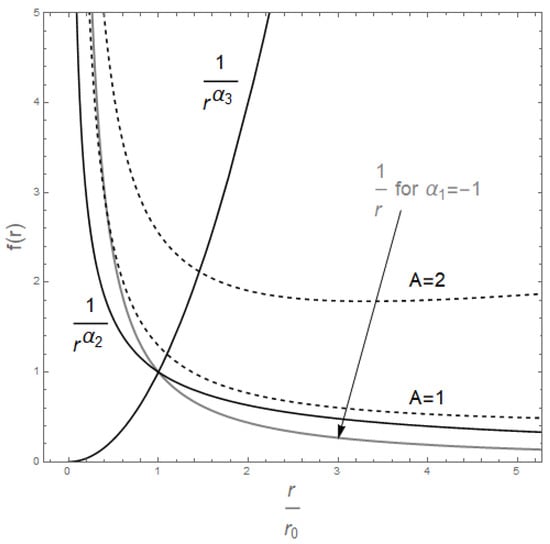
Solutions 
  
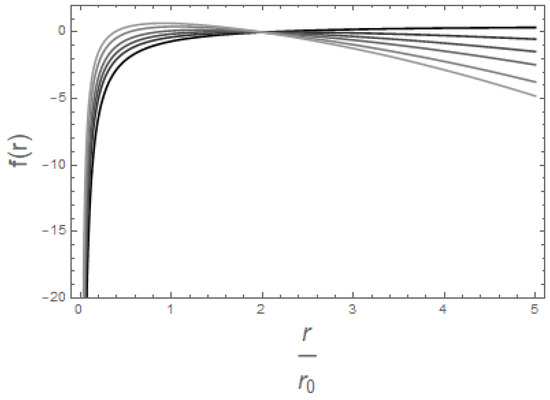
    f
    (
    r
    )
  
 for Equation (57). Gray curve represents 
  
    1
    /
    r
  
, Equation (58), that is the solution for 
  
    
      α
      1
    
    =
    −
    1
    ,
    A
    =
    0
  
. The two solid curves represent power solutions for 
  
    α
    
      2
      ,
      3
    
  
 and 
  
    A
    =
    1
  
. The dashed curves represent the general solution Equations (59) and (61) for 
  
    A
    =
    1
    ,
    2
  
 respectively.

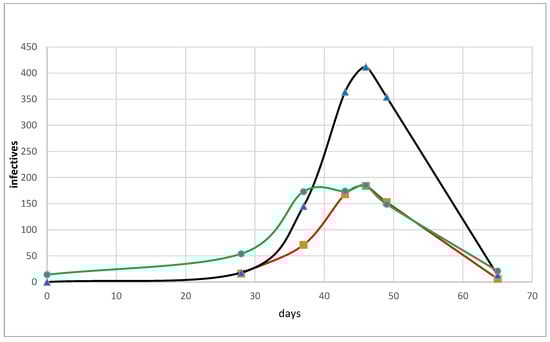
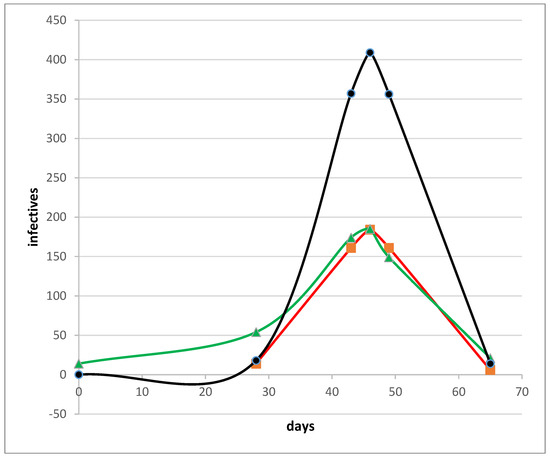
The integrable versions of SIR epidemic models are introduced. The exact solutions of these models are derived. The advantage of these models is the possibility of full analysis of obtained solutions and the simplicity of explicit formulas for the important metrics of spread of disease. The effectiveness of these formulas is illustrated by applications to the spread of COVID-19.

22 September 2025

The Fermi condensation flows in the sine-Gordon–Thirring model with two impurities coupling are investigated in this paper; these matter flows can be induced by the Ricci flow perturbation in the two-dimensional string σ model. The Ricci flow perturbation equations are derived according to the Gauss–Codazzi equations, and the two-loop asymptotic perturbation solution of the cigar soliton is reduced by using a small parameter expansion method. Moreover, the thermodynamic quantities on the cigar soliton background are obtained by using the variational functional integrals method. Subsequently, the Fermi condensation flows varying with the momentum scale λ are analyzed and discussed. We find that the energy density, the correlation function, and the condensation fluctuations will decrease, but the entropy will increase monotonically. The Fermi condensed matter can maintain thermodynamic stability under the Ricci flow perturbation.

15 August 2025

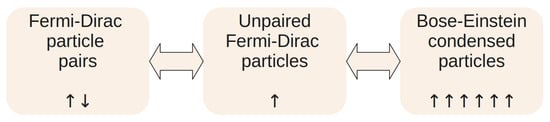
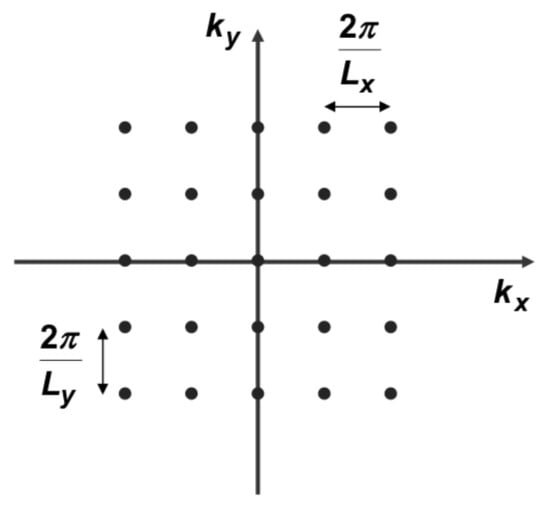
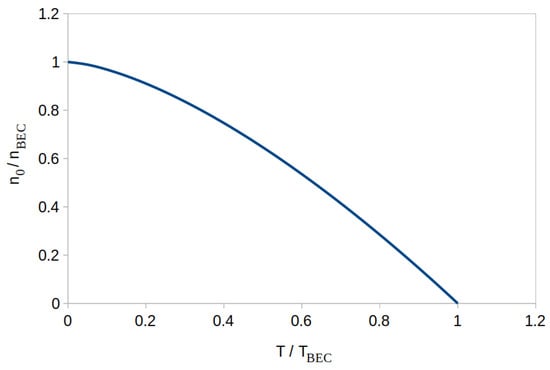
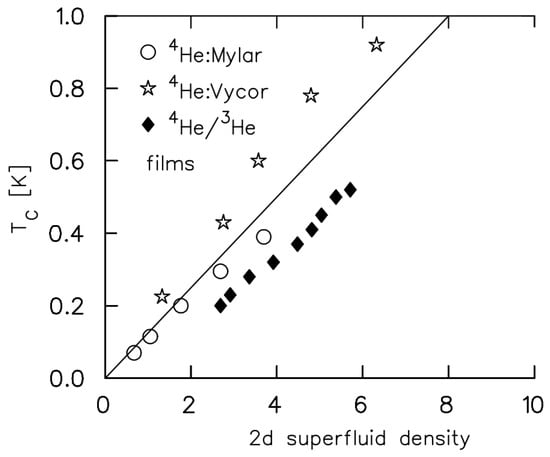
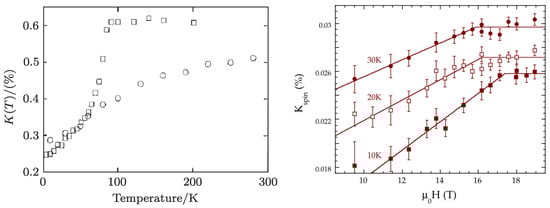
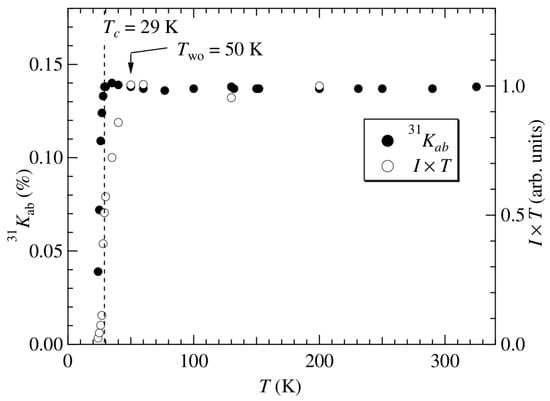
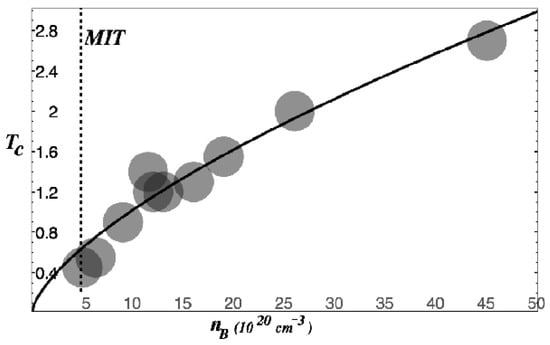
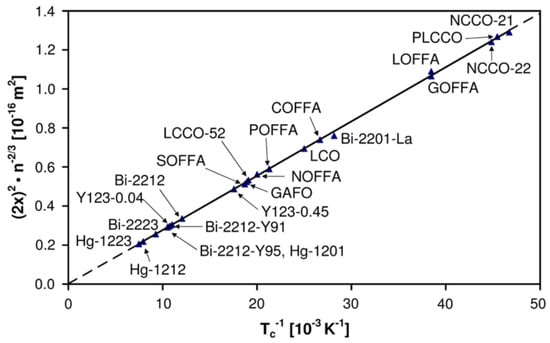
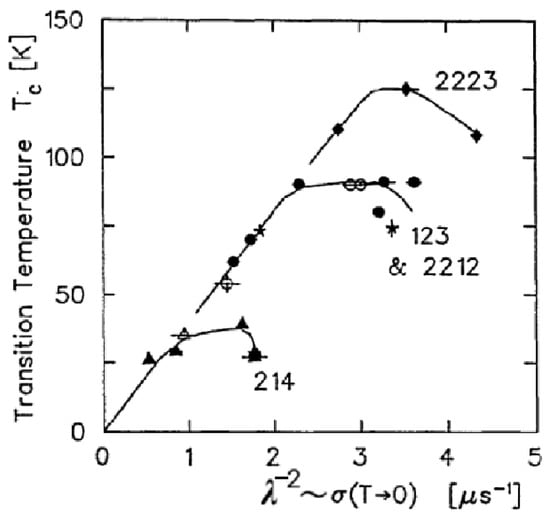
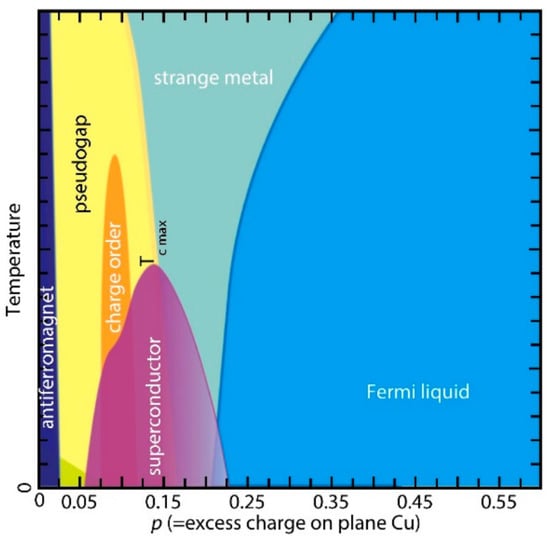
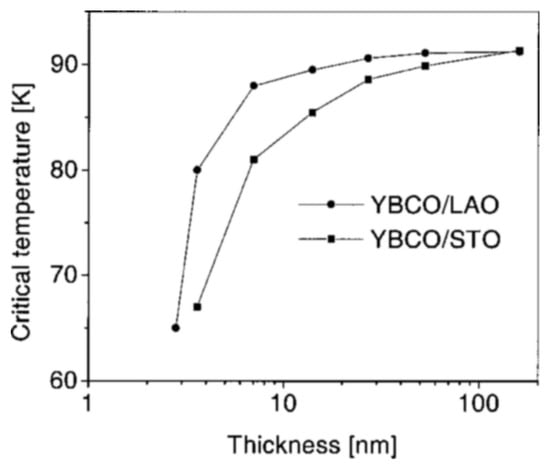
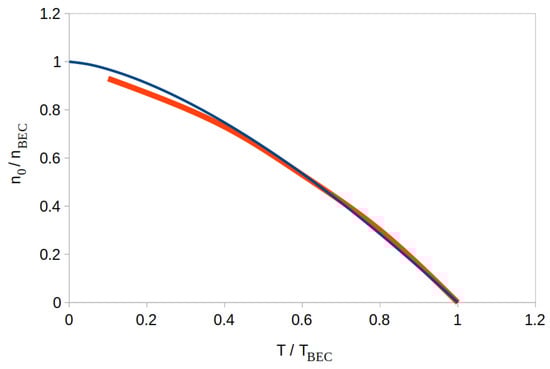
Bose–Einstein condensation is an intensely studied quantum phenomenon that emerges at low temperatures. While preceding Bose–Einstein condensation models do not consider what statistics apply above the condensation temperature, we show that neglecting this question leads to inconsistencies. A mathematically rigorous calculation of Bose–Einstein condensation temperature requires evaluating the thermodynamic balance between coherent and incoherent particle populations. The first part of this work develops such an improved Bose–Einstein condensation temperature calculation, for both three-dimensional and two-dimensional scenarios. The progress over preceding Bose–Einstein condensation models is particularly apparent in the two-dimensional case, where preceding models run into mathematical divergence. In the Discussion section, we compare our mathematical model against experimental superconductivity data. A remarkable match is found between experimental data and the calculated Bose–Einstein condensation temperature formulas. Our mathematical model therefore appears applicable to superconductivity, and may facilitate a rational search for higher-temperature superconductors.

24 July 2025

News & Conferences

Issues

Open for Submission

Editor's Choice

Get Alerted

Add your email address to receive forthcoming issues of this journal.

XFacebookLinkedIn
Mod. Math. Phys. - ISSN 3042-5034