


Journal Menu
► ▼ Journal Menu-
- Pharmaceuticals Home
- Aims & Scope
- Editorial Board
- Reviewer Board
- Topical Advisory Panel
- Early Career Editorial Board
- Instructions for Authors
- Special Issues
- Topics
- Sections & Collections
- Article Processing Charge
- Indexing & Archiving
- Editor’s Choice Articles
- Most Cited & Viewed
- Journal Statistics
- Journal History
- Journal Awards
- Society Collaborations
- Conferences
- Editorial Office
Journal Browser
► ▼ Journal BrowserNeed Help?
Announcements
9 August 2026
Meet Us at The 2nd International Conference on Pharmaceuticals and New Trends in Drug Discovery (ICOPharm-2), 11–14 May 2027, Lisbon, Portugal

We are excited to announce that abstract submissions are now open for The 2nd International Conference on Pharmaceuticals and New Trends in Drug Discovery (ICOPharm-2), which will take place from 11 to 14 May 2027 in Lisbon, Portugal. This second edition of the conference is organized by MDPI’s journal Pharmaceuticals (ISSN 1424-8247; IF: 5.7).
Following the success of the inaugural conference, ICOPharm-2 will once again bring together leading researchers, scientists, and professionals from academia and industry to discuss the latest developments, challenges, and opportunities in pharmaceutical sciences and drug discovery. The conference will foster scientific exchange and collaboration across disciplines, highlighting innovative approaches and emerging trends that are shaping the future of pharmaceutical research and therapeutic development.
Topics of interest:
S1. Synthetic Chemistry and Drug Discovery;
S2. Natural Products and Biopharmaceuticals;
S3. Target Identification and Modes of Action;
S4. Antimicrobial Agents and Strategies to Counter Resistance;
S5. Novel Neurotherapies, Inflammation, and Pain Treatment;
S6. Innovative Oncology Therapeutics and Precision Medicine.
Important dates:
Abstract submission deadline: 15 January 2027;
Early Bird registration deadline: 26 February 2027.
Guide for authors:
To submit your abstract, please click on the following link: https://sciforum.net/submissions/ICOPharm2027/1.
To register for the event, please click on the following link: https://sciforum.net/registration/ICOPharm2027/tickets.
We are pleased to announce two prestigious awards that will be presented to outstanding contributors at ICOPharm-2: Best Oral Presentation Award and Best Poster Award.
We encourage all attendees to regularly visit the conference website for updates and detailed information regarding the awards and scientific program.
Event Chairs:
- Prof. Dr. Amelia Pilar Rauter, University of Lisbon, Portugal;
- Prof. Dr. Mary Jane Meegan, Trinity College Dublin, Ireland;
- Dr. Jean Jacques Vanden Eynde, University of Mons-UMONS, Belgium.
We look forward to your contribution to ICOPharm-2 and to welcoming you to Lisbon to participate in inspiring and engaging scientific exchange.
15 September 2026
Meet Us at the 2026 Fall International Convention of The Pharmaceutical Society of Korea (PSK 2026), 21–23 October 2026, Suwon, Republic of Korea

Conference: 2026 Fall International Convention of The Pharmaceutical Society of Korea (PSK 2026)
Date: 21–23 October 2026
Location: Suwon, Republic of Korea
The 80th Anniversary of the International Conference of the Pharmaceutical Society of Korea (PSK 2026) is a major international conference in the field of pharmaceutical sciences, bringing together researchers, clinicians, educators, and industry professionals from Korea and around the world to share the latest advances in pharmaceutical research and innovation. The conference promotes scientific exchange and interdisciplinary collaboration through keynote lectures, international collaborative symposia, educational sessions, industry sessions, and poster presentations.
Held under the theme “Expanding Global Sustainability through Innovation in Pharmaceutical Sciences”, PSK 2026 will provide a platform for researchers and professionals to explore emerging developments across pharmaceutical sciences, drug discovery, precision medicine, biopharmaceuticals, natural products, and other related fields. The conference will also emphasize global partnerships and international collaboration through joint symposia with academic societies across Asia.
Visit the MDPI booth at PSK 2026 to connect with our team, discover journals across the pharmaceutical sciences, and explore opportunities for collaboration and publication.
The following open access journals will be represented at the conference:
- Antibiotics;
- Molecules;
- Drugs and Drug Candidates (DDC);
- Journal of Nanotheranostics (JNT);
- Pharmaceuticals;
- Pharmacoepidemiology;
- Pharmacy;
- Psychoactives;
- Sci. Pharm.;
- Medicines;
- Future Pharmacology;
- Journal of Pharmaceutical and BioTech Industry (JPBI);
- Marine Drugs;
- Pharmaceutics.
We look forward to meeting researchers and engaging with the pharmaceutical sciences community at PSK 2026. For more information about the conference, please visit the official website: PSK 2026.
15 September 2026
Interview with Dr. Chih Hung Lo and Dr. Jialiu Zeng—Winners of the Pharmaceuticals Best Paper Award

Name: Dr. Chih Hung Lo
Affiliation: Assistant Professor, Department of Biology & Interdisciplinary Neuroscience Program, Syracuse University, USA

Name: Dr. Jialiu Zeng
Affiliation: Assistant Professor, Department of Biomedical and Chemical Engineering & Interdisciplinary Neuroscience Program, Syracuse University, USA
|
1. Congratulations on receiving the Pharmaceuticals Best Paper Award! To start, could you briefly introduce yourself and tell us about the winning paper—its title, focus, and the main question you sought to answer? Chih Hung: I am an Assistant Professor in the Department of Biology and the Interdisciplinary Neuroscience Program at Syracuse University. My research focuses on understanding the mechanisms that drive neurological diseases, particularly how neuroinflammation, pathological protein aggregation, and autophagy–lysosomal dysfunction interact to cause damage to brain cells. We then use these mechanistic insights to identify and develop therapeutic strategies, including small molecules, peptides, and nanoparticle-based approaches. A recurring challenge is getting these therapies across the brain and to the right cells and specific targets, which has led us to study the blood–brain barrier (BBB) as an important determinant of therapeutic efficacy. Jialiu: I am an Assistant Professor in the Department of Biomedical and Chemical Engineering and the Interdisciplinary Neuroscience Program at Syracuse University. My research focuses on engineering nanomedicines and drug-delivery systems to overcome physiological barriers and control where therapeutics go in the body. We use polymer chemistry, biomaterials engineering, and nanotechnology to design nanoparticles with defined properties for tissue, cellular, and intracellular targeting. For me, the BBB is a particularly interesting engineering challenge because nanoparticle size, composition, surface chemistry, and targeting ligands can be deliberately tuned to control how these materials interact with the barrier and where they go after reaching the brain. Both: We are grateful to the selection committee for recognizing our review article, “Blood–Brain Barrier-Targeting Nanoparticles: Biomaterial Properties and Biomedical Applications in Translational Neuroscience” with the Best Paper Award. Our article focuses on one of the major challenges in treating neurological diseases: how to effectively deliver therapeutic agents across the BBB and into the brain. Specifically, we examined nanoparticles as a versatile and promising approach for overcoming this barrier. We explored how nanoparticle properties and surface modifications influence BBB targeting and penetration, while also considering BBB models and disease-associated changes that could be leveraged to improve delivery. At the core of the paper was a broader question: How can we better understand and engineer nanoparticles to achieve more effective and precise interactions with the BBB while ultimately moving these technologies closer to clinical translation for neurological diseases? We hope this review helps connect advances in biomaterials and nanotechnology with the biological complexity of the BBB and encourages the development of next-generation nanoparticle-based therapeutics. 2. What inspired this particular study? Was it part of a larger research program, or did it stem from a specific observation or question that arose unexpectedly? Chih Hung: For me, this study was motivated by a question that comes up repeatedly in our research: we can identify promising disease mechanisms and molecular targets and develop new therapeutic strategies, but how do we get these therapies to the right place in the brain to effectively treat neurological diseases? If we want to translate mechanistic discoveries into meaningful treatments, drug delivery becomes an essential part of the problem. This led me to think about the BBB not simply as a wall that needs to be crossed, but as a dynamic biological interface that changes with disease state and progression. This perspective inspired us to highlight the importance of considering BBB accessibility early in therapeutic design, whether we are developing small molecules, peptides, or nanoparticle-based therapies, and to emphasize that effective brain delivery should be considered alongside the therapeutic mechanisms. Jialiu: I have spent much of my career engineering nanoparticles to overcome biological and physiological barriers and thinking about what happens once they reach their destination. Small changes in particle size, surface chemistry, composition, or architecture can substantially alter how a nanoparticle interacts with a biological system. So, when we started discussing the BBB, the engineering question was: if the barrier is so complex and dynamic, how do we design the nanoparticle around it? At the same time, research on nanoparticles for BBB targeting and brain drug delivery was expanding rapidly, with a wide range of nanoparticle designs, targeting strategies, and experimental models being explored. Understanding how these different design features influence BBB targeting and identifying principles that can be applied across different systems was exactly what motivated us to write this review. Both: This study was driven naturally out of our broader interdisciplinary research at the intersection of neuroscience, biomaterials, nanomedicine, and drug discovery. This intersection of our expertise, together with our interest in fostering new collaborations across disciplines, ultimately inspired us to write this article and explore how we can more rationally design nanoparticle-based strategies for precise and effective delivery to the brain. 3. The selection committee recognized your paper for its significant contribution to pharmaceutical research. In your view, what is the most important finding or advancement that this paper brings to the field—whether in drug discovery, mechanism of action, or therapeutic application? Chih Hung: From a biological perspective, one of the important contributions of this review is highlighting that effective BBB-targeted delivery requires a deeper understanding of the BBB as a dynamic biological interface. We examined how the BBB changes across different disease states, how these changes can influence nanoparticle transport, and how different in vitro and in vivo models capture these complexities. This perspective emphasizes that successful brain delivery cannot be considered independently of the underlying biology and disease context. Jialiu: From an engineering perspective, our article brings together the growing body of work on how nanoparticle properties, including size, composition, surface chemistry, and targeting strategies, can be deliberately engineered to interact with the BBB. Rather than focusing on any single nanoparticle system, we sought to identify broader design principles that can explain why particular approaches work in different contexts. The important question is therefore not “which nanoparticle works best?” but “which design is best suited to a specific barrier, disease, and therapeutic target?” Both: We believe the broader contribution of this review is that it connects two perspectives that are often considered separately—the biology of the BBB and the engineering of therapeutic delivery systems—and places them within a common translational context. Rather than viewing BBB penetration simply as a technical challenge to overcome, we highlight the importance of understanding the interaction between the biological environment, nanoparticle design, and therapeutic goals. The article was therefore both an opportunity to synthesize what the field has learned so far and to identify the key questions and design principles that we believe will shape the next generation of brain drug-delivery strategies. 4. Every impactful paper has a backstory. Could you walk us through the key moments in this study’s development—from the initial idea, through the experimental work, to the final manuscript? Chih Hung: As discussed earlier, this review was developed from a recurring challenge in our research: how do we get promising therapies across the brain? As we explored the BBB more extensively, I realized that understanding brain delivery requires more than thinking about the BBB as a physiological barrier, as we also need to understand how it is altered in neurological diseases and how those changes might influence therapeutic delivery. As a biologist and neuroscientist, I felt that incorporating a clinician–scientist’s perspective was essential to understanding the BBB in the context of human disease and clinical relevance. This was what led us to bring Dr. Evridiki Asimakidou into the project, whose clinical expertise helped us think more deeply about how BBB dysfunction varies across neurological diseases and what these changes might mean for translating nanoparticle-based delivery strategies. Jialiu: From the engineering side, I was thinking about a complementary challenge: even if we develop a nanoparticle with promising BBB-targeting properties, how do we know whether it will actually work in a biologically relevant setting? The choice of experimental model can have a major influence on how we interpret nanoparticle transport and efficacy, so I realized that we needed to bring in synergistic expertise to develop and evaluate models that better capture the physiological properties of the BBB and other biological barriers. This led us to bring Dr. Justin Tan onboard, whose expertise in microfluidic and in vitro models provided an important engineering perspective on how we can more rigorously evaluate nanoparticle–BBB interactions and better bridge the gap between simplified laboratory models and physiological conditions. Both: Once the four of us came together, the review evolved through a very iterative process of reading the literature, discussing different findings, and challenging one another’s perspectives. We kept asking questions such as: What can we learn from this study beyond this particular nanoparticle, model, or disease context? What biological features are actually important for delivery, and how well do the experimental models capture them? Those discussions shaped the article around nanoparticle properties and targeting strategies, BBB models, disease-associated changes, and ultimately therapeutic translation. Although this was a review article rather than an experimental study, there was still a process that felt almost like an experiment where we brought together four different perspectives and used them to test, challenge, and refine how we think about the field. The final manuscript therefore reflects not just a synthesis of the literature, but the collective thinking that emerged from bringing together biology, engineering, modeling, and clinical perspectives. 5. Were there particular challenges or hurdles you encountered while conducting this research? How did your team overcome them? Chih Hung: One challenge was that the field does not always speak the same language. Different studies can use very different definitions of BBB penetration, brain delivery, or targeting, and a result described as successful in one study may be evaluated very differently in another. We also found that the biological context matters a lot where results from in vitro models do not necessarily tell us what will happen in neurodegenerative brains. So, one of the hardest challenges was making meaningful comparisons without forcing the literature into conclusions that the evidence did not really support. Jialiu: I think the same issue came through very strongly from the materials side. Two nanoparticles may both be described as “BBB-targeting”, but they can differ substantially in composition, size, surface properties, targeting ligands, and transport mechanism. Even small differences in experimental design can change the outcome. We therefore had to look carefully at the details behind each finding rather than accepting those conclusions without further scrutiny. In many cases, we had to go back to the original studies and ask: What was actually measured? How was it measured? And what can we reasonably conclude from the results? Both: That really encouraged us to be quite deliberate about how we interpreted the literature. We focused on the strength and context of the evidence, and we tried to distinguish findings that were supported across multiple systems from observations that were more model-specific. We also looked across the field, from basic nanoparticle design all the way to preclinical and clinical studies, which helped us see where the evidence was strong and where important gaps remained. In the end, the challenge was not just collecting information but assessing how each piece of evidence should be interpreted and how to connect findings that came from very different experimental settings. We think this systematic approach made the review more informative and actionable, because it highlights not only what we know about BBB-targeted delivery, but also where important gaps remain in the field, such as the need for more physiologically relevant models, more reliable and comprehensive measurements, and more rigorous comparisons across different strategies. 6. Finally, what message would you like to share with the Pharmaceuticals community—readers, future authors, and fellow researchers—as our newly recognized Best Paper Award winners? Chih Hung: We sincerely appreciate the Pharmaceuticals editorial team, selection committee, and the community for recognizing our work. If I could leave the field with one message, it would be that the next generation of drug delivery needs to interact with the biology we are trying to change. In neurological disease, there is profound heterogeneity—across disease states, among cell types, and even within intracellular compartments and organelles. Understanding this heterogeneity is essential for defining what successful delivery actually means and determining where, when, and in which cells a therapeutic needs to act. I think we are at an exciting point because the tools are finally catching up with the questions: iPSC-derived human cells, organoids, super-resolution imaging, and increasingly sophisticated single-cell, single-organelle, and spatial omics now allow us to ask where a therapeutic goes, which cells and compartments it reaches, and what it actually changes. Together, these technologies give us an opportunity to connect disease mechanisms with drug delivery at a level of resolution that was previously difficult to achieve. Jialiu: And from the engineering side, this opens up a very different way of thinking about nanomedicine. We do not have to view nanoparticles simply as carriers designed to deliver more drug to a particular tissue. Instead, we can target a particular cell type, organelle, or molecular pathway and tailor the material properties to achieve a defined biological effect. This perspective is increasingly shaping our own research. We are interested in developing specialized delivery systems that can actively interact with defined biological environments and help restore disease-associated dysfunction, rather than simply transporting a therapeutic agent. I think the combination of more human-relevant models, advanced imaging and omics technologies, and increasingly sophisticated materials engineering gives us an opportunity to move beyond empirical optimization toward more rational, biologically informed design. Both: And perhaps most importantly, we don’t think the hardest problems in brain drug delivery can be solved within one discipline. The next advances will come from integrating neurobiology, materials science, drug delivery, clinical medicine, and quantitative technologies from the very beginning. Better tools alone will not be enough, and we need to ask better questions and design the experiments and delivery systems around the biological problem. For us, this review was one step in that direction. Looking ahead, we hope the field will move beyond simply asking “does it reach the brain?” and instead explore “where does it go, why does it go there, what does it change, and does that change actually improve the disease?”. Overall, we think about brain delivery as a continuum of processes rather than a single transport event. This shift, from viewing delivery as a technical endpoint to recognizing it as an integral part of therapeutic design, is where we see the greatest opportunity for developing more precise, functional, and ultimately translatable nanomedicines. |
8 September 2026
Pharmaceuticals | Invitation to Read the Updated Editor’s Choice Articles

The goal of the Editor’s Choice Articles project is to promote high-quality articles published in Pharmaceuticals (ISSN 1424-8247). Please find below the list of articles carefully handpicked by the scientific editors of the journal, which we believe will be of interest to you. The full list of Editor’s Choice Articles can be viewed at the following link: https://www.mdpi.com/journal/pharmaceuticals/editors_choice.
by Aleksandra Tobiasz, Alina Jankowska-Konsur and Danuta Nowicka
Pharmaceuticals 2026, 19(4), 620; https://doi.org/10.3390/ph19040620
by Akile Tuncal and Rasime Kalkan
Pharmaceuticals 2026, 19(5), 761; https://doi.org/10.3390/ph19050761
by Adela Avdičević, Samo Lešnik, Urban Bren and Luka Čavka
Pharmaceuticals 2026, 19(4), 610; https://doi.org/10.3390/ph19040610
by Aeli P. Olson, Jonathan W. Engle and Mukesh K. Pandey
Pharmaceuticals 2026, 19(4), 591; https://doi.org/10.3390/ph19040591
by Ioana Creangă-Murariu, Ioana-Irina Rezuș, Roshanak Karami, Amir Makolli, Codrin Chifu, Anett Rancz, Zoltán Sipos, Péter Ferdinandy, Renáta Papp, Brigitta Teutsch et al.
Pharmaceuticals 2026, 19(5), 768; https://doi.org/10.3390/ph19050768
by Iván Benito-Vázquez, María Inés Morán-Valero, Marina Díez-Municio and Adal Mena-García
Pharmaceuticals 2026, 19(4), 597; https://doi.org/10.3390/ph19040597
by Maria Marmureanu, Mariana Valy Besoiu, Vlad Dionisie, Mihnea Costin Manea, Catalin Pleșea-Condratovici, Sorana Iulia Voican and Mirela Manea
Pharmaceuticals 2026, 19(4), 628; https://doi.org/10.3390/ph19040628
by Snehitha Akkineni, Mahek Gulani, Samir A. Kouzi, Martin J. D'Souza and Mohammad N. Uddin
Pharmaceuticals 2026, 19(5), 663; https://doi.org/10.3390/ph19050663
by Pietro Carmellini, Alessandro Cuomo, Maria Beatrice Rescalli, Mario Pinzi, Afendra Dourmas and Andrea Fagiolini
Pharmaceuticals 2026, 19(5), 662; https://doi.org/10.3390/ph19050662
by Min Hyeok Shin, Jin Woo Jeong, Se Eun Ha, Rajan Singh, Moon Young Lee, Seungil Ro and Tae Yang Yu
Pharmaceuticals 2026, 19(5), 791; https://doi.org/10.3390/ph19050791
by Ploutarchos Pastras, Ioanna Aggeletopoulou, Vasiliki Psalti and Christos Triantos
Pharmaceuticals 2026, 19(5), 783; https://doi.org/10.3390/ph19050783
by Luis Ramudo-Cela, Marta Izquierdo-García, María Dolores-Sequedo, Vicente Cubells-Perez, Sara Bernal, Pau Riera, Adriana Lasa, Laura Torres-Juan, Victor José Asensio, Iciar Martínez-López et al.
Pharmaceuticals 2026, 19(4), 568; https://doi.org/10.3390/ph19040568
by Andrea Zanoni, Sonia Facchin, Valentina Mari, Luisa Bertin and Edardo Vincenzo Savarino
Pharmaceuticals 2026, 19(5), 705; https://doi.org/10.3390/ph19050705
by Rozalia Beata Kozińska, Julia Ślęzak, Ignacy Ilski, Maja Podsiadła, Kamil Biedka and Emilia Królewicz
Pharmaceuticals 2026, 19(6), 903; https://doi.org/10.3390/ph19060903
- “Drug-Induced Amyloid-Related Imaging Abnormalities: A Neurovascular Perspective on Risk Assessment”
by Marialuisa Zedde, Mattia Losa, Andrea Donniaquio, Ilaria Gandoglia, Massimo Del Sette, Luca Roccatagliata, Fabrizio Piazza, Matteo Pardini and Rosario Pascarella
Pharmaceuticals 2026, 19(4), 579; https://doi.org/10.3390/ph19040579
by Rafael Silva, Joana Monteiro, Maria João Ramalho, Stéphanie Andrade, Joana A. Loureiro and Maria Carmo Pereira
Pharmaceuticals 2026, 19(5), 685; https://doi.org/10.3390/ph19050685
by Carmen Terán, Marta María Mato and Pedro Besada
Pharmaceuticals 2026, 19(4), 570; https://doi.org/10.3390/ph19040570
by Alicia Trenas-Calero, Nuria Prieto-Laín, Ana I. Gómez-Hernández, Miguel A. Pérez-Velasco, María-Rosa Bernal-López, María-Dolores López-Carmona, María-Dolores García de Lucas, Ricardo Gómez-Huelgas and Luis M. Pérez-Belmonte
Pharmaceuticals 2026, 19(4), 583; https://doi.org/10.3390/ph19040583
by Mariangela Rosa, Sabrina Marino, Giancarlo Morelli, Antonella Accardo and Carlo Diaferia
Pharmaceuticals 2026, 19(4), 624; https://doi.org/10.3390/ph19040624
by Eleni A. Karavia, Andreas Pittaras, Ourania Andreopoulou, Aikaterini Hatziri, Amalia Makrydimitri, Dimitrios Anagnostopoulos, Patroklos Vareltzis and Kyriakos E. Kypreos
Pharmaceuticals 2026, 19(4), 605; https://doi.org/10.3390/ph19040605
by Ioannis Pantazos, Christos Cholevas, Christos Vlachokostas, Afroditi Kapourani and Panagiotis Barmpalexis
Pharmaceuticals 2026, 19(4), 562; https://doi.org/10.3390/ph19040562
by Noeen Malik, Yashas Ullas Lokesha, Frezghi G. Habte and Heike E. Daldrup-Link
Pharmaceuticals 2026, 19(6), 889; https://doi.org/10.3390/ph19060889
by Mariana Luiza Silva, Matteo Mori, Stefania Villa, Andrea Tresoldi, Fiorella Meneghetti and Marcelle de Lima Ferreira Bispo
Pharmaceuticals 2026, 19(5), 707; https://doi.org/10.3390/ph19050707
by Matteo Lusardi, Caterina Bodio, Chiara Brullo, Gianfranco Parati, Pier Luigi Meroni, Maria Orietta Borghi, Elena Raschi and Laura Calvillo
Pharmaceuticals 2026, 19(7), 1003; https://doi.org/10.3390/ph19071003
by Mirela Nicolov, Adina Octavia Dușe, Elena-Daniela Jurj, Daiana Colibășanu, Adrian Voicu, Claudia Watz, Mirela Voicu and Lucreția Udrescu
Pharmaceuticals 2026, 19(6), 840; https://doi.org/10.3390/ph19060840
by Henry T. Peng, Tristan Bonnici, Catherine Tenn, Christian J. Kastrup and Andrew Beckett
Pharmaceuticals 2026, 19(6), 923; https://doi.org/10.3390/ph19060923
by Irma Martišienė, Jurgita Šapauskienė, Dominyka Adamonė, Ieva Lankutytė, Rasa Banienė, Vilma Zigmantaitė, Jonas Jurevičius and Regina Mačianskienė
Pharmaceuticals 2026, 19(7), 995; https://doi.org/10.3390/ph19070995
1 September 2026
MDPI INSIGHTS: The CEO’s Letter #38 – 2 Million Published Articles, Outstanding Reviewers, Michele Parrinello Award, AIS 2026 & WSF-12

Welcome to the MDPI Insights: The CEO's Letter.
In these monthly letters, I will showcase two key aspects of our work at MDPI: our commitment to empowering researchers and our determination to facilitating open scientific exchange.
Opening Thoughts

MDPI Reaches 2 million Published Articles
This month, MDPI reached an important milestone: the publication of our two-millionth article.
It is a number that would have been difficult to imagine in 1996, when MDPI’s first journal, Molecules, published its first volume of 74 papers. It took 25 years to reach our first million published articles in December 2022, and less than four years to reach the second million in August 2026.
From 74 Papers to Two Million Articles
The milestone also comes during our 30th anniversary year, providing another opportunity to reflect on how both MDPI and Open Access publishing have developed over the past three decades. Today, more than half of the world’s published research is Open Access, while MDPI has grown into a portfolio of journals supported by more than 70,000 Editorial Board Members. In 2025 alone, articles published in MDPI journals received 1.9 billion views and downloads.
While two million is an impressive number, what matters most is what sits behind it. Every article represents research conducted and shared by authors, editorial decisions made by academic editors, expertise contributed by reviewers, and the work of colleagues across MDPI supporting the publication and dissemination of research.
Many of the stories in this month’s CEO Letter reflect these communities. We recognize the contributions of the more than 209,000 reviewers who supported MDPI journals in 2025, celebrate scientific excellence through the inaugural Michele Parrinello Award, and look at how communities continue to develop through AIS 2026 and the 12th World Sustainability Forum.
“In 2025 alone, articles published in MDPI journals received 1.9 billion views and downloads”
Publishing at Scale, with Purpose
Reaching two million articles is an important milestone in MDPI’s history, but it is also a reminder of the responsibility that comes with publishing at this scale. As we look ahead, our focus remains on quality, research integrity, strong editorial standards, and providing researchers with reliable and efficient ways to share their work openly with the world.
Thank you to our authors, editors, reviewers, institutional partners, and colleagues around the world who have contributed to this journey.
Impactful Research

Recognizing Scientific Excellence: The Michele Parrinello Award
Supporting researchers means more than publishing and disseminating scientific work. It also means recognizing the researchers, editors, reviewers, and scholars whose contributions advance their fields.
I’m pleased to highlight the inaugural Michele Parrinello Award, which has been awarded to Prof. Ursula Röthlisberger of the École Polytechnique Fédérale de Lausanne (EPFL), Switzerland. Prof. Röthlisberger was recognized for her contributions to computational chemistry and molecular simulation, particularly her pioneering work in ab initio molecular dynamics and quantum mechanical/molecular mechanical (QM/MM) multiscale simulation methods.
Prof. Röthlisberger leads the Laboratory of Computational Chemistry and Biochemistry at EPFL, developing computational approaches to understand complex chemical, biological, and materials systems at the atomic level. Her work also extends to next-generation photovoltaic materials, demonstrating the interdisciplinary reach of computational science.
The Michele Parrinello Award was established in 2025 to honor Prof. Michele Parrinello's pioneering contributions to atomistic simulation and computational science. Presented biennially, it recognizes senior researchers who have made significant contributions across physics, chemistry, and materials science. The recipient receives a EUR 50,000 prize, commemorative medal, and certificate.
Awarding Scientific Excellence
The selection was overseen by an international Award Committee, chaired by Prof. Dr. Xin-Gao Gong of Fudan University and a group of researchers from institutions in China, Italy, the UK, and the USA. Nominations were evaluated based on rigor, integrity, and academic excellence. In announcing the winner, Prof. Gong highlighted the impact of Prof. Röthlisberger’s research across multiple scientific disciplines, alongside her contributions to education and leadership within the international research community.
Recognizing Contributions Across the Research Community
The Michele Parrinello Award is part of MDPI’s broader commitment to recognizing excellence across different disciplines, contributions, and career stages.
Our journal awards include:
- Best Paper Awards – recognizing outstanding published research
- Young Investigator Awards – supporting exceptional early-career researchers
- Best PhD Thesis Awards – recognizing promising emerging scholars
- Outstanding Reviewer Awards – acknowledging the essential contribution of peer reviewers
- Travel Awards – helping early-career researchers participate in international conferences
- Editor of Distinction Awards – recognizing exceptional contributions from Editorial Board Members.
Alongside these journal awards, MDPI supports flagship initiatives including the Tu Youyou Award, the World Sustainability Award, the Emerging Sustainability Leader Award, and now the Michele Parrinello Award.
Learn More:
Inside MDPI

Recognizing the People Behind Peer Review: MDPI’s 2025 Outstanding Reviewer Awards
Behind every published article is a network of people contributing their expertise to the scholarly record. Among them, reviewers play an essential role, providing independent assessment, feedback, and subject expertise that help editors make informed decisions and authors build on their research.
In 2025, more than 209,000 individuals contributed their expertise as reviewers for MDPI journals. This represents an enormous contribution of time and knowledge from researchers around the world, occurring often alongside their own research, teaching, and professional responsibilities.
I’m pleased to share the recipients of MDPI’s 2025 Outstanding Reviewer Awards, recognizing reviewers who have shown great dedication, expertise, and responsiveness throughout the peer-review process.
Outstanding Reviewers
As at July 2026, 181 MDPI journals have presented Outstanding Reviewer Awards to 412 recipients, highlighting their work across disciplines ranging from biology, chemistry, engineering, and medicine to environmental sciences, public health, and the social sciences. To learn more about the list of outstanding reviewers, please visit the following pages:
- Biology and Life Sciences;
- Business and Economics;
- Chemistry and Materials Science;
- Computer Science and Mathematics;
- Engineering;
- Environmental and Earth Sciences;
- Medicine and Pharmacology;
- Physical Sciences;
- Public Health and Healthcare;
- Social Sciences, Arts and Humanities.
While these awards highlight a select group of outstanding contributors, they also create an opportunity to acknowledge our entire reviewer community. Peer review depends on researchers sharing their knowledge and experience with others. Their feedback can improve manuscripts, support editors in making informed decisions, and contribute to maintaining the quality and integrity of the scientific record.
“Reviewers play an essential role, providing independent assessment, feedback, and subject expertise”
Supporting the Academic Community
The Outstanding Reviewer Awards are part of MDPI’s awards program, through which our journals recognize contributions across the academic community, including those from researchers, early-career scholars, reviewers, and Editorial Board Members.
Bringing these contributions to the forefront is important because much of the work that supports scholarly publishing happens behind the scenes. The time, expertise, and critical feedback provided by reviewers are essential to a rigorous and constructive peer-review process.
As MDPI celebrates its 30th anniversary, I would like to thank the more than 209,000 reviewers who contributed to our journals in 2025 and to congratulate the 412 Outstanding Reviewer Award recipients recognized for going above and beyond in supporting their respective research communities.
Coming Together for Science

AIS 2026: Growing a Community Around AI and Sensor Research
One of the most rewarding aspects of our conference program is seeing scientific communities develop over time. A conference may begin by bringing together researchers around an emerging field, but with each edition it can create new relationships, collaborations, and opportunities for researchers to reconnect and exchange ideas.
The 3rd International Conference on AI Sensors and Transducers (AIS 2026) is a good example of this growth.

“What stands out is the community developing around AIS”
This year’s conference took place from 2 to 7 August in Jeju, South Korea, welcoming over 560 participants – an increase of 225 attendees compared with 2025 and 160 compared with the inaugural conference of 2024. Across the program, participants contributed 373 presentations and 109 poster displays, including four plenary presentations, 52 keynote speeches, 192 invited talks, and 125 oral presentations.
Building an International Research Community
Beyond the numbers, what stands out is the community developing around AIS. Many researchers have now participated in all three editions of the conference, with delegates already expressing their intention to return for AIS 2027. The program also brought together established researchers from across the field for discussions on AI sensors and emerging sensing technologies.
 |
 |
Building Engagement in South Korea
This year’s conference reflects our continued engagement with the research community in South Korea. AIS 2026 welcomed 150 participants from the Korean academic community and strengthened our cooperation with the Korean Sensors Society.

This is an important part of what our conferences can achieve. By bringing researchers together in person, we create opportunities to present the latest research and build relationships between scholars, institutions, societies, and at MDPI that can continue after an event concludes.
Looking Ahead
With this momentum, AIS 2027 is planned for 29 July to 3 August 2027 in Kunming, Yunnan, China, with the participation of an international group of Conference Chairs already confirmed from institutions in Europe, North America, and Asia-Pacific.
Three editions into AIS, the continued growth of this conference shows what is possible when we invest consistently in scientific communities. The objective is not simply to organize larger conferences each year but to create spaces where researchers return, new collaborations develop, and scientific communities become stronger.
Many thanks to the Conference Chairs, speakers, sponsors, supporting organizations, participants, and all MDPI colleagues who contributed to AIS 2026. Growing an international event takes years of relationship-building and considerable work behind the scenes, and this year’s conference reflects that collective effort.

Closing Thoughts

World Sustainability Forum 12: Coming Together for a More Sustainable Future
Sustainability challenges rarely sit within a single discipline, institution, or country. Addressing them requires researchers, policymakers, industry, and communities to exchange ideas and work across traditional boundaries.
This is one of the ideas behind the World Sustainability Forum (WSF), which has now reached its 12th edition.
 |
 |
From 21 to 24 August, the 12th World Sustainability Forum (WSF-12) took place in Hong Kong, bringing together more than 300 experts, scholars, policymakers, and industry representatives from over 100 universities and research institutions across 53 countries and regions. The Forum received 543 abstract submissions, showcasing international interest in sustainability research.
Connecting Research, Policy, and Industry
Across four days, the scientific program featured 230 onsite presentations, including plenary, keynote, invited and oral presentations, together with 53 poster presentations. The program also included a plenary panel discussion, Connecting Sustainability Solutions Across Sectors, presenting perspectives from academia, government, and industry.
 |
 |
This interdisciplinary exchange is particularly important in sustainability research. Challenges relating to our cities, environment, energy systems, economies, and societies are increasingly interconnected, and progress depends on creating opportunities for different disciplines and sectors to learn from one another.
WSF-12 also generated opportunities for industry participation. As a Strategic Partner, the China National Petroleum Corporation (CNPC) E-Light International Communication Brand contributed to industry engagement throughout the Forum.

MDPI Sustainability Foundation Awards
Another highlight of WSF-12 was the presentation of three MDPI Sustainability Foundation Awards, celebrating the 2025 and 2026 winners of the World Sustainability Award and the 2026 winner of the Emerging Sustainability Leader Award.
 |
 |
 |
Recognizing researchers and emerging leaders in their fields is an important part of supporting scientific communities. These awards are an opportunity to celebrate individual achievements and highlight research that contributes to a more sustainable future.
Looking Ahead to WSF-13
After twelve editions, WSF is a great example of how a scientific community can develop over time. This is also what we hope to achieve through MDPI’s broader conference program. Scientific meetings should be more than individual events: by investing consistently in research communities, we can create spaces where people return, new relationships develop, different perspectives meet, and collaboration continues beyond the conference itself.

The next chapter is already taking shape. The 13th World Sustainability Forum(WSF-13) will take place from 8 to 11 June 2027 in Nice, France. Chaired by Prof. Dr. Adel Ben Youssef and organized by MDPI and the journal Sustainability in collaboration with Université Côte d’Azur, WSF-13 will continue the Forum’s interdisciplinary approach across the natural sciences, engineering, and social sciences.
Thank You
Many thanks to the Conference Chairs, speakers, strategic partners, sponsors, supporting organizations, participants, and all MDPI colleagues who contributed to WSF-12. Events of this scale require considerable coordination and collaboration behind the scenes, and the continued growth of WSF reflects the collective efforts of the MDPI Conference Department and a global community committed to sustainability research, innovation, and collaboration.

Chief Executive Officer
MDPI AG
20 August 2026
Meet Us at the 17th APS PharmSci International Conference (PharmSci 2026), 7–9 September 2026, Newcastle, UK
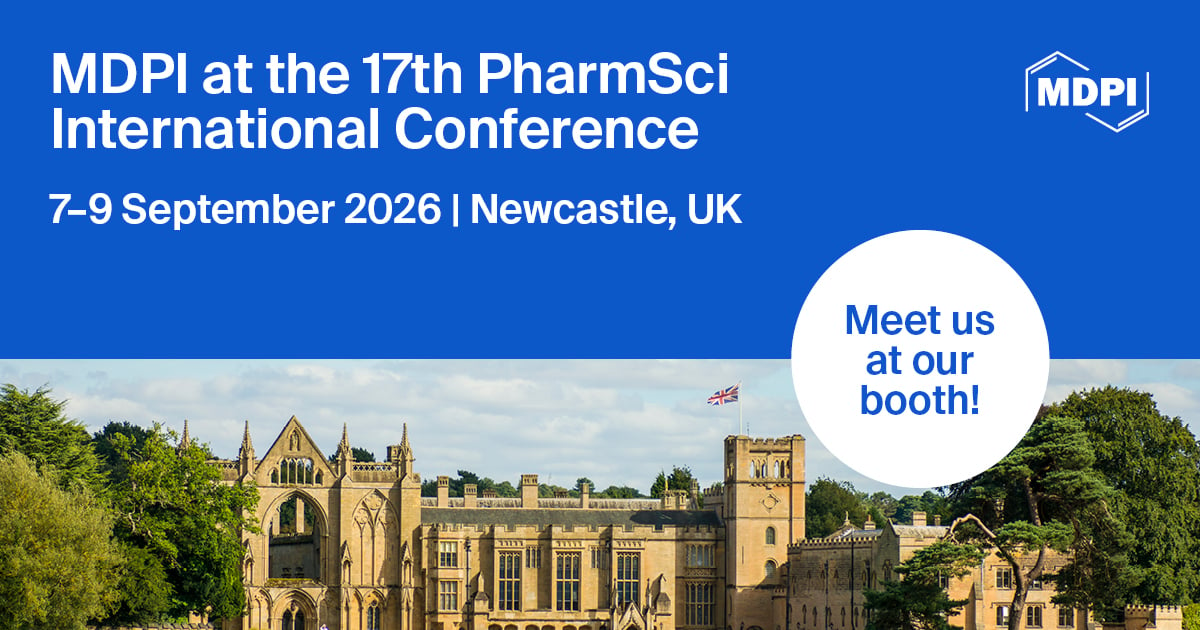
Conference: 17th APS PharmSci International Conference
Date: 7–9 September 2026
Place: Newcastle, UK
Conference website: https://apsgb.co.uk/pharmsci-2026/
We are pleased to announce that MDPI will be participating as an exhibitor at the 17th APS PharmSci International Conference, which will be held from 7–9 September 2026 in Newcastle, UK.
PharmSci 2026 will be dedicated to addressing the urgent challenges at the heart of pharmaceutical innovation.
The conference will provide a platform for deep discussion of the development and delivery of next-generation medicines by bringing together experts from across disciplines. We will showcase the vital role of pharmaceutical science and drug delivery innovation, alongside major recent developments in formulation, data science, AI, and sustainability, in shaping medicines of the future.
MDPI is proud to sponsor this event through the participation of the following journals:
- Pharmaceuticals;
- Pharmaceutics;
- Future Pharmacology;
- Pharmacy;
- Antibiotics;
- Biologics;
- Jox;
- Sci. Pharm.;
- Antibodies;
- DDC;
- Marine Drugs;
- Pharmacoepidemiology.
If you are planning to attend this conference, feel free to stop by our booth and speak with us. Our delegates look forward to meeting you in person and answering any questions that you may have.
For more information about this event, please visit the following website: https://apsgb.co.uk/pharmsci-2026/.
13 August 2026
Meet Us at the IASLC 2026 World Conference on Lung Cancer, 12–15 September 2026, Seoul, Republic of Korea

Conference: IASLC 2026 World Conference on Lung Cancer
Booth Number: 706
Date: 12–15 September 2026
Location: COEX, Seoul, Republic of Korea
The International Association for the Study of Lung Cancer (IASLC) is a globally recognized medical society dedicated to advancing research, education, and collaboration in lung cancer and thoracic malignancies.
Taking place in Seoul from 12 to 15 September 2026, the IASLC 2026 World Conference on Lung Cancer (WCLC 2026) will serve as a premier international forum for researchers, clinicians, and healthcare professionals to present the latest scientific discoveries, exchange innovative treatment strategies, and foster collaborations aimed at advancing the fight against lung cancer.
MDPI is excited to join WCLC 2026 as an exhibitor. We warmly invite attendees to visit our booth to discuss their latest research and learn how we can empower your scholarly journey through dedicated publishing services.
The following MDPI journals will be represented at the conference:
- Cancers;
- Current Oncology;
- Advances in Respiratory Medicine;
- BioMed;
- Clinics and Practice;
- Diagnostics;
- Journal of Clinical Medicine;
- Journal of Respiration;
- Pharmaceuticals;
- Precision Oncology;
- Surgical Techniques Development;
- Onco;
- Radiation;
- Targets.
Visit our booth to connect with our team and get your questions answered in person! Find more details about the event on the conference website.
6 August 2026
Pharmaceuticals | New Section “AI in Drug Development” Established

Pharmaceuticals (ISSN 1424-8247) is pleased to announce the launch of a new Section, entitled “AI in Drug Development”.
This Section is dedicated to the application of artificial intelligence (AI), machine learning (ML), and related computational approaches across all stages of drug discovery and development. Contributions may focus on the use of AI tools to enhance the prediction, design, evaluation, and optimization of drug candidates, as well as AI-driven strategies for understanding biological systems.
Manuscripts may include research that integrates AI with omics data, real-world evidence, or high-throughput screening technologies. Studies presenting novel AI algorithms, frameworks, or platforms with demonstrated pharmaceutical relevance are also within the scope of this Section.
Please find more details at https://www.mdpi.com/journal/pharmaceuticals/sections/ai_in_drug_development.
The “AI in Drug Development” Section is currently recruiting Editorial Board Members (EBMs), Guest Editors, and volunteer reviewers. If you are an active researcher in this field and are passionate about publishing cutting-edge research, please contact us at pharmaceuticals@mdpi.com. For further information on the journal Sections, please click here.
6 August 2026
Pharmaceuticals | Recruiting Section Editorial Board Members for the “AI in Drug Development” Section
Pharmaceuticals (ISSN 1424-8247) is pleased to announce the launch of a new Section, entitled “AI in Drug Development”.
This Section is dedicated to the application of artificial intelligence (AI), machine learning (ML), and related computational approaches across all stages of drug discovery and development. Contributions may focus on the use of AI tools to enhance the prediction, design, evaluation, and optimization of drug candidates, as well as AI-driven strategies for understanding biological systems.
Manuscripts may include research that integrates AI with omics data, real-world evidence, or high-throughput screening technologies. Studies presenting novel AI algorithms, frameworks, or platforms with demonstrated pharmaceutical relevance are also within the scope of this Section.
Please find more details at https://www.mdpi.com/journal/pharmaceuticals/sections/ai_in_drug_development.
The “AI in Drug Development” Section is currently recruiting Editorial Board Members (EBMs), Guest Editors, and volunteer reviewers. If you are an active researcher in this field and are passionate about publishing cutting-edge research, please contact us at pharmaceuticals@mdpi.com. For further information on the journal Sections, please click here.
We are now recruiting Editorial Board Members (EBMs) for the new Section. If you are an active researcher in one of the aforementioned fields and are passionate about publishing cutting-edge research, please do not hesitate to get in touch (pharmaceuticals@mdpi.com). You can find more information on our homepage: https://www.mdpi.com/journal/pharmaceuticals.
The main responsibilities of Editorial Board Members are as follows:
- Pre-screening and making decisions on new submissions related to their research interests;
- Setting up at least one Special Issue during their term on a topic related to their research interests (or supervising Special Issues related to their research field);
- Helping to attract suitable expert authors and invite young scholars to join the Early Career Editorial Board Members;
- Providing input or feedback regarding journal policies;
- Helping to promote the journal among their peers or at conferences;
- Attending Board meetings to suggest journal development strategies;
- Reviewing manuscripts.
The benefits of being an Editorial Board Member are as follows:
- The opportunity to publish one paper per year free of charge in Pharmaceuticals;
- A certificate in recognition of your position;
- Additional sponsorships for conferences organized by the Editorial Board Members of Pharmaceuticals;
- Travel grants for conferences that you attend or organize;
- Growing your network, prestige, and influence among scholars in your research community;
- Building and directing the community by identifying and introducing suitable collaborators;
- Gaining a fresh perspective and unique insights into how this field is developing.
If you are interested in becoming an Editorial Board Member for this Section of Pharmaceuticals or have potential candidates to recommend, please contact the Pharmaceuticals Editorial Office (pharmaceuticals@mdpi.com) with the following two files attached:
- A full academic CV;
- A short cover letter that details your interest in and enthusiasm for the position.
We look forward to receiving your applications.
Pharmaceuticals Editorial Office
5 August 2026
MDPI INSIGHTS: The CEO’s Letter #37 – Canada Summit, Sciforum Relaunch, 30 Years of Impactful Research & ISPRS 2026
Welcome to the MDPI Insights: The CEO's Letter.
In these monthly letters, I will showcase two key aspects of our work at MDPI: our commitment to empowering researchers and our determination to facilitating open scientific exchange.
Opening Thoughts

Reflections from the MDPI Canada Summit 2026 in Toronto (9–10 July)
As part of this year’s MDPI Summit events, we were delighted to host Editors-in-Chief (EiCs) and Editorial Board Members (EBMs) in Toronto for the MDPI Canada Summit 2026 this July.
Across the two days, we presented on topics including research integrity, editorial leadership, artificial intelligence, peer review, and the evolving role of the EiC. More importantly, the Summit created space for feedback and conversations with the academic community: these engagements continue play and important role in shaping how MDPI develops its journals and services.
Why Canada?
Canada has become one of the world’s leading Open Access (OA) nations. In 2025, 68% of Canadian research publications were published OA, with more than 73,000 OA articles produced during the year. Over the past five years alone, Canadian researchers have published more than 526,000 scholarly articles, showing both the scale and quality of Canadian research.
MDPI Toronto Office

“Canada has become one of the world’s leading Open Access nations”
Since opening in 2019, our Toronto office has grown to more than 85 colleagues supporting editorial operations, research integrity, marketing, societies, conferences, indexing, author services, and many other functions across North America. It was great to spend time with the team, see first-hand the energy and enthusiasm they bring to their work, and recognize the significant role they play in building relationships with the Canadian research community and delivering events such as this Summit.
MDPI and Canada
Today, Canada is an important part of the MDPI community:
- More than 53,800 articles from Canadian institutions published with MDPI since 1996
- More than 5,800 MDPI publications from Canadian researchers in 2025
- Nearly 1,900 Canadian Editorial Board Members, including 24 Editors-in-Chief; 49 Section Editors-in-Chief
- More than 30 Institutional Open Access Partnerships (IOAP) with universities across Canada

“The academic community is at the center of everything we do”
These numbers reflect the long-term partnerships with researchers, reviewers, editors, and institutions who continue to place their trust in MDPI.
Summit Program
Throughout the Summit, we presented and discussed topics against the following agenda:
- MDPI at 30: Introduction, Reflections and the Road Ahead – Stefan Tochev (CEO)
- Engagement with Academic Community and Society Partnerships – Karen Irwin (Associate Editorial Engagement Manager) and Carla Aloè (Head of Societies and Acquisition)
- Latest Developments in the Editorial Process – Summer Huggard (Operations Manager)
- Research Integrity and Publication Ethics – Renato Merki (Research Integrity Specialist)
- AI and Technology in Publishing – Dr. Barnaby Crook (Regional Engagement Editor)
- Panel Discussion – Bob Vrooman (Head of Business Development / Operations Manager, USA), Summer Huggard, Renato Merki, and myself

These presentations reinforce something we often say at MDPI: The academic community is at the center of everything we do. Each session concluded with a Q&A, allowing for discussions throughout the Summit to engage directly with our EiCs and EBMs.
Further Reading
I also had the opportunity to be interviewed by University Affairs about the evolving landscape of scholarly publishing, Open Access, and the importance of engaging with the research community. If you’re interested, you can read the interview in:
- English: University Affairs – MDPI Toronto Summit 2026: Bringing Together Leaders to Shape the Future of Scholarly Publishing
- Français: Affaires universitaires – Sommet MDPI de Toronto 2026
Thank You
As OA continues to grow around the world, events such as the MDPI Canada Summit remind us of the importance of meeting with our academic community in person. Listening to feedback, exchanging ideas, and building relationships are essential to ensuring that MDPI continues to evolve alongside the researchers, editors, reviewers, and institutions we serve.

Impactful Research

Five Journals, Five Different Stories of Success
Each year, the release of the Journal Citation Reports (JCR) provides an opportunity to look at the progress of our journal portfolio and, more importantly, the achievements of the research communities behind it.
A recent MDPI Blog article from Tommy Lax (Content Specialist, MDPI) highlights five journals whose 2025 Journal Impact Factor results show that success can take many forms – from achieving a first Impact Factor, to steady long-term growth, to leadership within highly competitive disciplines.
The featured journals include:
- Machine Learning & Knowledge Extraction (MAKE) – Among the 330 MDPI journals which received an Impact Factor in 2025, MAKE (ISSN 2504-4990) holds the accolade of having the highest rating of 8.4. The journal, which provides an advanced forum for the study of machine learning and its applications, is placed in Q1 for three subject categories: Computer science, artificial intelligence; Computer science, interdisciplinary applications; and Engineering, electrical & electronic.
- Antioxidants – Continuing its strong position across multiple scientific disciplines, Antioxidants (ISSN 2076-3921) was awarded an exceptional Impact Factor of 8.2. In addition, the journal was placed in Q1 in three subject categories: Biochemistry & molecular biology; Chemistry, medicinal; and Food science & technology.
- Biomass – This year, Biomass (ISSN 2673-8783) was recognized in the JCR for the first time, with a strong debut Impact Factor of 6.7. What makes this achievement even more impressive is the journal’s placement in Q1 of the category Engineering, chemical.
- Analytica – Remaining with the theme of growth, Analytica (ISSN 2673-4532), which provides an advanced forum for all aspects of fundamental and applied analytical chemistry, recorded one of the largest year-on-year increases in Journal Impact Factor, with a 7.4 – an astounding 3.8-point increase from its 2024 rating of 3.6.
- Batteries – Indexed in SCIE, Batteries (ISSN 2313-0105) received an updated Impact Factor of 6.3 this year, representing an increase of 1.5 versus last year, demonstrating consistent growth and increasing visibility over several years.
While citation metrics provide one perspective on journal performance, they tell only part of the story. Every milestone reflects the dedication of Editors-in-Chief, Editorial Board Members, reviewers, authors, and colleagues across MDPI who work together to uphold rigorous editorial standards and support high-quality research.
As a signatory of the Declaration on Research Assessment (DORA), MDPI supports a balanced approach to research evaluation. Journal-level metrics should be viewed alongside article-level indicators and the broader scientific and societal impact of published research.
Thank you to everyone whose commitment continues to strengthen our journals and advance Open Access across the global research community.
Inside MDPI

Building Better Tools for the Research Community: The Relaunch of Sciforum
Innovation at MDPI extends beyond journals. Over the past decade, we have continued to invest in products that support researchers, conference organizers, editors, reviewers, and institutions throughout the research lifecycle. As part of this ongoing investment, our Product and Engineering teams have been modernizing several of MDPI’s digital platforms. One important milestone in that journey is the relaunch of Sciforum, our conference management platform.
Read More: Sciforum Relaunch: Empowering Science through Seamless Event Management
Rather than simply updating an existing system, our product and engineering teams have rebuilt Sciforum, using a modern architecture designed to improve the user experience, support future growth, and continue to strengthen our position in the conference management market.
“Scalable technology is essential to delivering a high-quality experience”
Why We Rebuilt Sciforum
Technology must continue evolving alongside the needs of our users. The previous platform had served MDPI well for many years but had become difficult to extend and maintain. The new platform introduces a modular architecture that enables faster development, more flexibility, and a scalable foundation for future work.
Major improvements include:
- Simplified submission workflows
- Role-based dashboards
- A modern website builder
- Flexible pricing options
- Permanent data hosting
- A scalable architecture for future development

Supporting Our Conference Community
Sciforum is more than a software platform: it supports researchers, conference organizers, reviewers, speakers, and attendees by helping them organize, participate in, and share scientific meetings more efficiently. As MDPI continues to expand its conference activities worldwide, investing in modern, scalable technology is essential to delivering a high-quality experience for both our external partners and our internal teams.
Looking Ahead
The relaunch represents the beginning Sciforum’s next chapter. Planned improvements include: the Program Builder, Communication Hub, expanded payment options, Zoom integration, and a mobile application. These will continue to enhance the platform over the coming months.
Coming Together for Science

Highlights from ISPRS Congress 2026 – Toronto, Canada
In early July, I had the pleasure of attending the XXV ISPRS Congress in Toronto, one of the world’s leading gatherings for the geospatial and remote sensing research community. It was a great opportunity to meet researchers, editors, society leaders, and collaborators, while gaining insights into some of the latest developments in geospatial science and technology.
Over several days, I had the privilege of presenting the Jack Dangermond Award; speaking about MDPI’s approach to AI in publishing and our 30-year journey in Open Access publishing; participating in Editorial Board meetings; and engaging with members of the ISPRS community.
Below is a summary of these activities:
Celebrating excellence in research
One of the highlights of the week was presenting the Jack Dangermond Award for the best paper published in the ISPRS International Journal of Geo-Information (IJGI). Sponsored by MDPI and ESRI, the award recognizes an outstanding paper published over a four-year period and includes an ISPRS certificate together with a USD 10,000 prize.

Awards such as these remind us that journals are much more than publication platforms: they celebrate research that advances knowledge, inspires future work, and delivers meaningful impact for both science and society.
Presentations at ISPRS
I also had the pleasure to give two presentations during the congress:

1. The AI Revolution in Publishing: Challenges, Innovations, and MDPI’s Vision
The development of AI continues to transform scholarly publishing. During this session, I shared how MDPI is integrating AI responsibly, not to replace editorial judgement or peer review, but to support our staff by improving efficiency while maintaining scientific quality and research integrity.
2. MDPI: 30 Years of Open Access Publishing
I also had the opportunity to share MDP’s 30-year journey from a small publishing initiative to becoming a global Open Access publisher serving millions of researchers worldwide. As part of this session, my colleague Carla Aloè (Head of Societies and Acquisitions) introduced the ISPRS International Journal of Geo-Information (IJGI), sharing its development and contribution to the geospatial research community.

Meeting with Our Editorial Boards
Another rewarding aspect of the congress was meeting with the Editorial Boards of two of our journals:
- Remote Sensing
- ISPRS International Journal of Geo-Information
These discussions went beyond journal metrics. We heard ideas about editorial quality and emerging research areas, and we discussed reviewer engagement, diversity within editorial boards, and how journals can continue serving their communities for the future. These conversations are a great way to connect directly to the scientists who help shape our journals.


“One of our core missions has always been to make high-quality research openly accessible”
Partnerships matter
Scientific publishing is built on collaboration. Throughout the congress, our team welcomed researchers to the MDPI booth, met with authors and editors, and discussed opportunities for collaboration across our journals and society partnerships.
Special thanks to our MDPI colleagues who were present throughout the ISPRS congress supporting our Editorial Board meetings and the MDPI booth: Andy Tran, Carla Aloè, Carlo Cunanan, Diana Ribeiro Tosato, and Elena Duan.

Thank you to ISPRS for organizing this congress, to the researchers who shared their work, to our Editorial Board members, and to MDPI colleagues whose dedication continues to shape the journals and communities we support.
Closing Thoughts

Insights Into 30 Years of Impactful MDPI Research
As we celebrate 30 years of MDPI, it’s worth reflecting on the impact that the research we publish has on society. One of our core missions has always been to make high-quality research openly accessible so that it can inform new discoveries, public policy, education and innovation around the world.
A recent article on the MDPI Blog highlights several examples of MDPI publications that have gone beyond academic citations to help inform governments, international organizations and public policy discussions.
Research Creating Real-World Impact
The MDPI blog article features research that has contributed to topics including:
- protecting the Amazon rainforest through satellite mapping
- understanding climate change and urban heat inequality
- encouraging more young women to pursue STEM careers
- tackling obesity through healthier food environments
- shaping sustainable urban planning through the “15-minute city” concept
These examples remind us that publishing research is not only about producing articles: it is about helping knowledge reach the people who can use it to improve lives and address global challenges.
Thirty Years of Open Access
MDPI’s 30th Anniversary is also an opportunity to recognize the collective contribution of everyone across MDPI. Every manuscript processed, every review coordinated, every system developed, every conference organized, every partnership established and every article published contributes to a much larger purpose: helping scientific knowledge move further and faster.
You can explore the full article here: 30 Years of Impactful MDPI Research
You can also visit our 30th Anniversary page to learn more about MDPI’s journey over the past three decades.
Chief Executive Officer
MDPI AG
