


You are currently on the new version of our website. Access the old version .

Materials

Materials is an international peer-reviewed, open access journal on materials science and engineering published semimonthly online by MDPI.
The Spanish Materials Society (SOCIEMAT), Manufacturing Engineering Society (MES) and Chinese Society of Micro-Nano Technology (CSMNT) are affiliated with Materials and their members receive discounts on the article processing charges.
Indexed in PubMed | Quartile Ranking JCR - Q2 (Metallurgy and Metallurgical Engineering | Physics, Applied | Physics, Condensed Matter)
All Articles (54,415)

This study investigates the influence of the additive illite on the thermal, tribological, and energy efficiency characteristics of calcium grease (CG) at different concentrations (0.05 wt.%, 0.1 wt.%, 0.2 wt.%, 0.4 wt.%, 0.6 wt.%, and 0.8 wt.%). Thermo-gravimetric analysis under inert and oxidative atmospheres revealed that illite enhances thermal stability by increasing inorganic residue under N2, but promotes oxidative degradation under O2, limiting practical thermal use to around 400 °C. Grease with 0.1 wt.% illite (CGI2) performed well in tribological tests by reducing the coefficient of friction and wear scar diameter by 53% and 57%, respectively, compared to the base grease. Fleischer’s energy-based wear model showed that all grease samples operated within the mixed friction regime, and CGI2 exhibited a 93% higher apparent frictional energy density and a substantially lower wear intensity that was 47% lower than the base grease, indicating improved energy dissipation and wear resistance. All samples had the same weld load (1568 N), but CGI2 had a 21% higher load–wear index than the base grease in the extreme-pressure test, indicating better load-carrying capacity. In the energy consumption test, a 6% reduction in current consumption was observed in CGI2 in comparison with the base grease. Overall, illite at an optimal concentration significantly enhances lubrication performance, wear protection, and energy efficiency.
23 January 2026

(a) SEM image and (b) Raman spectrum of the additive.

In view of the depletion of high-grade magnesite resources in China, this study presents a comparative analysis of two industrial fused magnesia products produced via a flotation–fusion route. A low-grade magnesite (DSQLM-3, MgO 41.48 wt.%) was upgraded by reverse flotation to a concentrate (FDSQLM-3, MgO 47.55 wt.%) with >97% SiO2 removal. Two fused magnesia samples (FM-1 from natural high-grade ore DSQLM-1; FFM-3 from concentrate FDSQLM-3) were produced under identical arc-furnace melting (2800 °C, 4 h), followed by natural cooling. Although FFM-3 showed higher MgO (97.61 vs. 97.25 wt.%), its bulk density was comparable to FM-1 (3.45 vs. 3.46 g/cm3). XRD/Rietveld refinement and SEM-EDS indicated that CMS dominated the Ca–silicate assemblage in FM-1, whereas β/γ-C2S was observed in FFM-3, coinciding with a higher CaO/SiO2 (C/S) ratio (2.85 vs. 0.68). Image analysis further showed higher grain boundary microcrack metrics in FFM-3. These observations are consistent with reports in the literature stating that the β → γ transformation of C2S during cooling involves ~12% volume expansion that can contribute to cracking; however, cooling history and composition were not independently controlled in this industrial comparison, so the relationships are interpreted as data-supported associations rather than isolated causality. The results suggest that beneficiation strategies may benefit from managing residual oxide balance (especially C/S ratio) in addition to reducing total impurities. Mechanical and thermomechanical properties were not measured and should be evaluated in future work.
23 January 2026

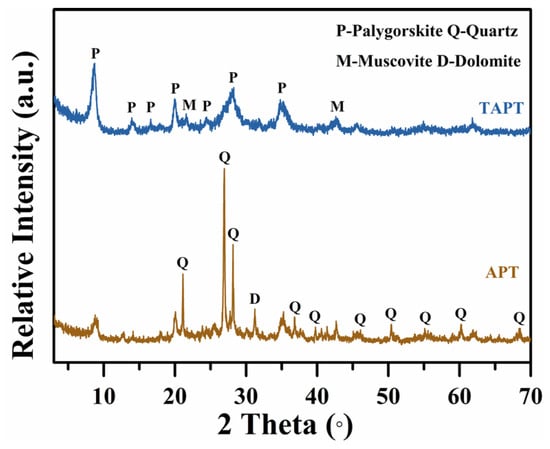
XRD patterns of the raw magnesite ores and identification of major impurity minerals: (a) full pattern; (b) partial enlargement of 18–32° (black—FDSQLM, red—DSQLM-1, blue—DSQLM-2, and purple—DSQLM-3).

To clarify the influence of gouge-induced altered layers on fracture initiation and load-bearing capacity of pipelines, X70 pipeline steel is taken as the research object. The geometry and partition of the altered layer are first determined by means of a micro-Vickers hardness array and a threshold criterion, and its mechanical parameters are then obtained from small-scale tensile tests. The altered layer is subsequently embedded into a finite element model of a gouged pipe as an independent material domain, and the Gurson–Tvergaard–Needleman (GTN) damage model is employed to simulate damage evolution and crack propagation under pure internal pressure and combined internal pressure and tensile loading. The results indicate that, compared with the base metal, the yield strength and ultimate tensile strength of the altered layer increase by about 39% and 47%, respectively, while the elongation to failure decreases from 16% to 1.8%, exhibiting a typical “high-strength–low-ductility” behavior. When the altered layer is considered, the fracture initiation location under pure internal pressure shifts from the base metal to the altered layer, and the burst pressure decreases from 19 MPa to 16.5 MPa. Under the combined internal pressure and tensile loading, the peak load changes little, whereas the ultimate displacement is reduced by about 26.5%, leading to a marked loss of pipeline ductility. These findings demonstrate that the gouge-induced altered layer has a significant effect on the fracture initiation pressure, failure mode, and load-bearing characteristics of gouged pipes. Modeling it as an independent material domain in finite element analysis can more realistically capture the failure behavior and safety margin of gouged pipelines, thereby providing a more reliable theoretical basis for improving integrity assessment criteria for externally damaged pipelines.

23 January 2026

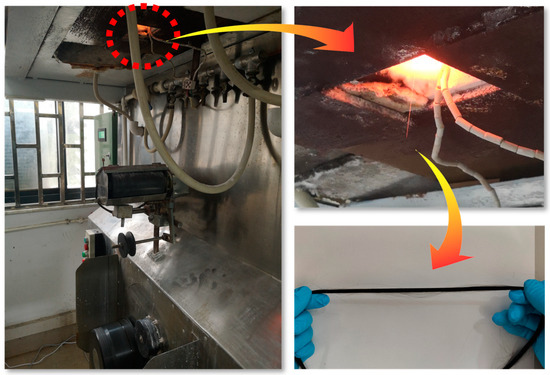
Pipeline with a scratch defect.

Slag entrainment within the mold is a significant cause of surface defects in continuously cast slabs. As a key component for controlling molten steel flow, the structure of the submerged entry nozzle directly influences the flow field characteristics and slag entrainment behavior within the mold. This paper employs a 1:4-scale water–oil physical model combined with numerical simulation to investigate the effects of elliptical and circular submerged entry nozzles on slag entrainment behavior in a wide slab mold under different casting speeds and immersion depths. High-speed cameras were used to visualize meniscus fluctuations and oil droplet entrainment processes. An alternating control variable method was employed to quantitatively delineate a slag-free “safe zone” and a “slag entrainment zone” where oil droplets fall, determining the critical casting speed and critical immersion depth under different operating conditions. The results show that, given the nozzle immersion depth and slag viscosity, the maximum permissible casting speed range without slag entrainment can be obtained, providing a reference for industrial production parameter control. The root mean square (RMS) of surface fluctuations was introduced to characterize the activity of the meniscus flow. It was found that the RMS value decreases with increasing nozzle immersion depth and increases with increasing casting speed, showing a good correlation with the frequency of slag entrainment. Numerical simulation results show that compared with elliptical nozzles, circular nozzles form a more symmetrical flow field structure in the upper recirculation zone, with a left–right vortex center deviation of less than 5%, resulting in higher flow stability near the meniscus and thus reducing the risk of slag entrainment.

23 January 2026

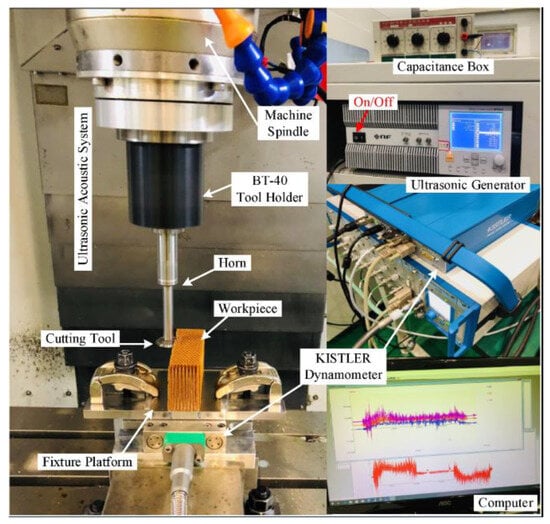
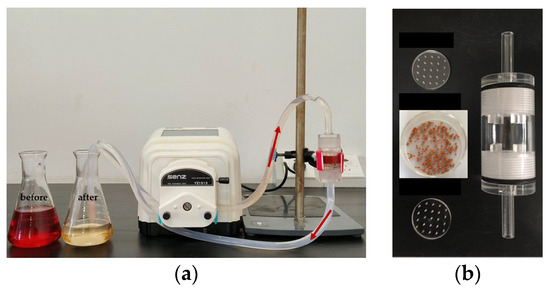
Schematic diagram of the water model structure of the wide slab continuous casting mold, adapted from Ref. [31]. (a) Physical view of the experimental setup; (b) Geometry of the mold water model.

News & Conferences

Issues

Open for Submission

Editor's Choice

Reprints of Collections

Materials in Cultural Heritage
Reprint

Materials in Cultural Heritage

Analysis, Testing, and Preservation
Editors: Žiga Šmit, Eva Menart
Advances in Rock and Mineral Materials
Reprint

Advances in Rock and Mineral Materials

Editors: Gorazd Žibret, Vilma Ducman, Lea Žibret

Get Alerted

Add your email address to receive forthcoming issues of this journal.

XFacebookLinkedIn
Materials - ISSN 1996-1944