



Int. J. Environ. Res. Public Health, Volume 23, Issue 5 (May 2026) – 146 articles
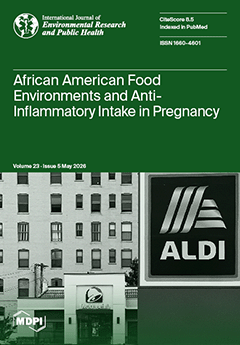
Cover Story (view full-size image):
This study examined how residential proximity to food environments relates to dietary intake among African American pregnant women in St. Louis, Missouri. Findings showed that legume consumption increased when women lived closer to fast food restaurants but farther from grocery stores. Fast food outlets that sell legumes, such as Taco Bell, were associated with higher intake in nearby neighborhoods, whereas grocery stores offering healthier options exist further from predominantly African American areas. These results highlight a distinct relationship between food environment distance and intake and underscore the need to investigate how food preparation methods may shape consumption patterns and maternal–fetal outcomes. View this paper
- Issues are regarded as officially published after their release is announced to the table of contents alert mailing list.
- You may sign up for e-mail alerts to receive table of contents of newly released issues.
- PDF is the official format for papers published in both, html and pdf forms. To view the papers in pdf format, click on the "PDF Full-text" link, and use the free Adobe Reader to open them.
Previous Issue
Next Issue
