


Highlights
Public health relevance—How does this work relate to a public health issue?
- Dementia represents a significant public health challenge, as it is one of the major causes of death, disability and dependency among older people worldwide.
- Dementia is often not diagnosed, and dementia action plans have identified the need to support general practitioners in dementia diagnosis and care.
Public health significance—Why is this work of significance to public health?
- Historically, specialists have been responsible for dementia diagnosis; this work explores how to share some of this responsibility with primary care.
Public health implications—What are the key implications or messages for practitioners, policy makers and/or researchers in public health?
- A public health approach to increasing timely diagnosis of dementia requires a co-designed, theory-informed, multi-component primary care practice change program.
- The intervention needs to extend beyond education and training to address barriers to dementia diagnosis and promote behaviour change.
Abstract
As the population ages and new therapies become available, general practitioners will have a significant role in the early detection, diagnosis, and management of dementia. However, both in Australia and globally, dementia remains under-recognised and under-diagnosed in primary care. The aim of this study is to develop a complex intervention, informed by behaviour change theory, to improve rates of dementia diagnoses in Australian primary care. Co-design participants included GPs, general practice nurses, practice managers and reception staff. A program logic model was used to describe the essential activities and mechanisms of the intervention. Six behaviour changes—education, training, enablement, modelling, persuasion, and environmental restructuring—were identified to address the identified barriers to dementia diagnosis in primary care. The intervention comprises seven activities—peer-led online dementia education and training, geriatrician ‘drop-in’ online support sessions, quality improvement in dementia care sessions, stand-alone videos, auditing and benchmarking, a dementia risk alert tool and a set of dementia diagnosis and management decision-making resources. Using behaviour change theory can assist in the development of complex interventions aimed at changing clinical practice and may assist in their evaluation.
1. Introduction
Optimal care and management of individuals living with dementia and their carers have been shown to mitigate the impact of symptoms and help maintain independence within the community for as long as possible [1]. The core principles of primary care include enhancing population health through health promotion and disease prevention, fostering long-term patient relationships, and providing coordinated, person-centred care [2]. These principles position primary care to deliver cost-effective healthcare and potentially more holistic support for people living with dementia compared to secondary care settings [3]. Consequently, as the population ages and new therapies become available, primary care is expected to assume a significant role in the early detection, diagnosis, and ongoing management of dementia [4].
Although general practitioners (GPs) are well-positioned to diagnose dementia and manage patient care [2], dementia remains under-recognised and under-diagnosed both in Australia and globally [5]. Documentation of a dementia diagnosis in primary care is lower than expected—68% of that reported in the Australian Census data and 48% of population estimates [6]. People living with dementia and carers report low satisfaction with GP care [7], and that GPs are reluctant to diagnose dementia [8] and often dismiss concerns [9].
Practitioner, community and health system level barriers to the diagnosis and management of dementia in primary care are well documented [7,10,11,12,13]. Individual barriers from the perspective of GPs include diagnostic uncertainty [14], the belief that the negative consequences of diagnosis (impact on self-image and experiences of stigma) outweigh the modest effects of symptomatic treatments [15,16], and a perceived lack of support options for patients following a diagnosis [1,7]. Barriers from the patient and family perspective include a lack of awareness by older people and families of dementia symptoms, or denial, and delayed help-seeking [9]. Institutional barriers include a lack of time and funding [10,17] and limited communication between GPs and specialists [18]. Strong interprofessional relationships and team-based care have been found to support GPs’ willingness to initiate conversations about dementia and start the diagnostic process [15].
Within Australia, and internationally, dementia action plans have identified the need to support GPs in their delivery of dementia care and have advocated the development and roll-out of dementia educational programs for GPs [19,20,21,22]. However, research on educational interventions for dementia shows mixed effects on GPs’ knowledge and confidence, with minimal demonstrated impact on clinical practice [23,24,25]. Guidelines and education increase knowledge but may not change motivations or opportunities. Similarly, introducing new policies such as financial incentives shows mixed results in bringing about practice change [26]. Instead, multi-component approaches are often necessary to effect a change in clinical practice [27] Globally, a variety of primary care models that combine education with additional strategies have been implemented to offer support to the GP to provide better dementia care for people. These models of care include case management models [28,29,30], integrated geriatrician-led memory clinics [31] and access to specialist dementia care nurses [32]. However, these models have had varying outcomes and have not been theoretically informed.
The Medical Research Council framework [33] emphasises the importance of a theoretical approach in the development and evaluation of complex interventions. Complex interventions refer to health or social care strategies that include multiple interacting elements and are designed to target multiple behaviours or operate across different levels, such as individuals or organisations [34]. Clinical practice, as a form of human behaviour, can be explained using behaviour change theories, which, in turn, can provide the foundation for systematically designing complex interventions aimed at clinical practice change [35].
The COM-B model and Behaviour Change Wheel (BCW) can be used to understand behaviour in the context in which it occurs. The model states that Capability (C), Opportunity (O) and Motivation (M) each exert an influence on Behaviour (B) [36].
Dementia diagnosis comprises a set of behaviours; hence, to improve diagnosis and care, primary care practitioners need to change their behaviours [35]. In this study, the COM-B model is used to identify potential levers for behaviour change that support dementia diagnosis and to design a complex intervention for behaviour change for a geographical region. The application of the COM-B behaviour model involves three steps: (a) identification of barriers and facilitators to dementia diagnosis; (b) identification of appropriate behaviour change techniques to improve rates of dementia diagnosis; and (c) involvement of key stakeholders in the co-design of an intervention. Using the COM-B model, the barriers to dementia diagnosis are linked to specific behaviour change functions or strategies.
This study presents the design of the primary care practice change intervention arm of the Facing Dementia Together research project, which, as a whole, aims to increase dementia help-seeking and diagnosis [37]. The other arm involves a public campaign aimed at encouraging older adults and their families to seek timely help for dementia assessment [9]. Both interventions are being evaluated.
2. Methods
2.1. Aim
The aim of this study is to develop a complex intervention to improve rates of dementia diagnosis in Australian primary care, informed by behaviour change theory.
2.2. Design
The Facing Dementia Together practice change intervention development is based on primary research [18] and co-design workshops with key stakeholders, supplemented with a rapid literature review (unpublished). Co-design is the process of active collaboration between stakeholders in designing context-specific solutions to a prespecified problem [38]. The reporting of the study followed the Standards for Reporting Qualitative Research (SRQR) [39] (see Table S1).
2.2.1. Using the BCW
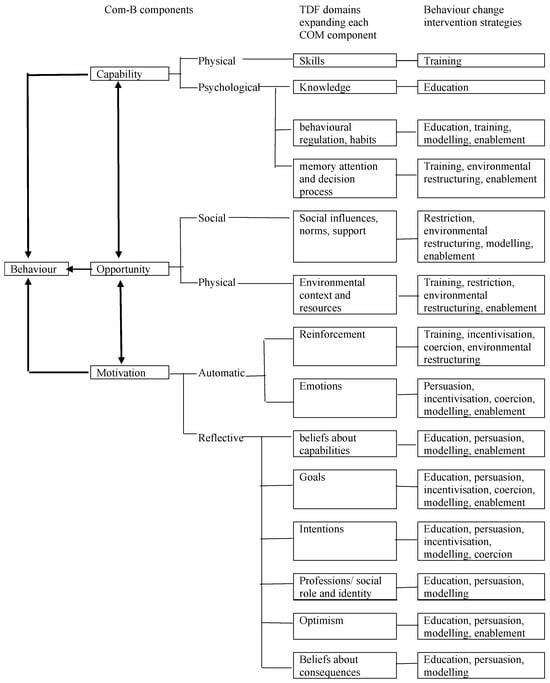
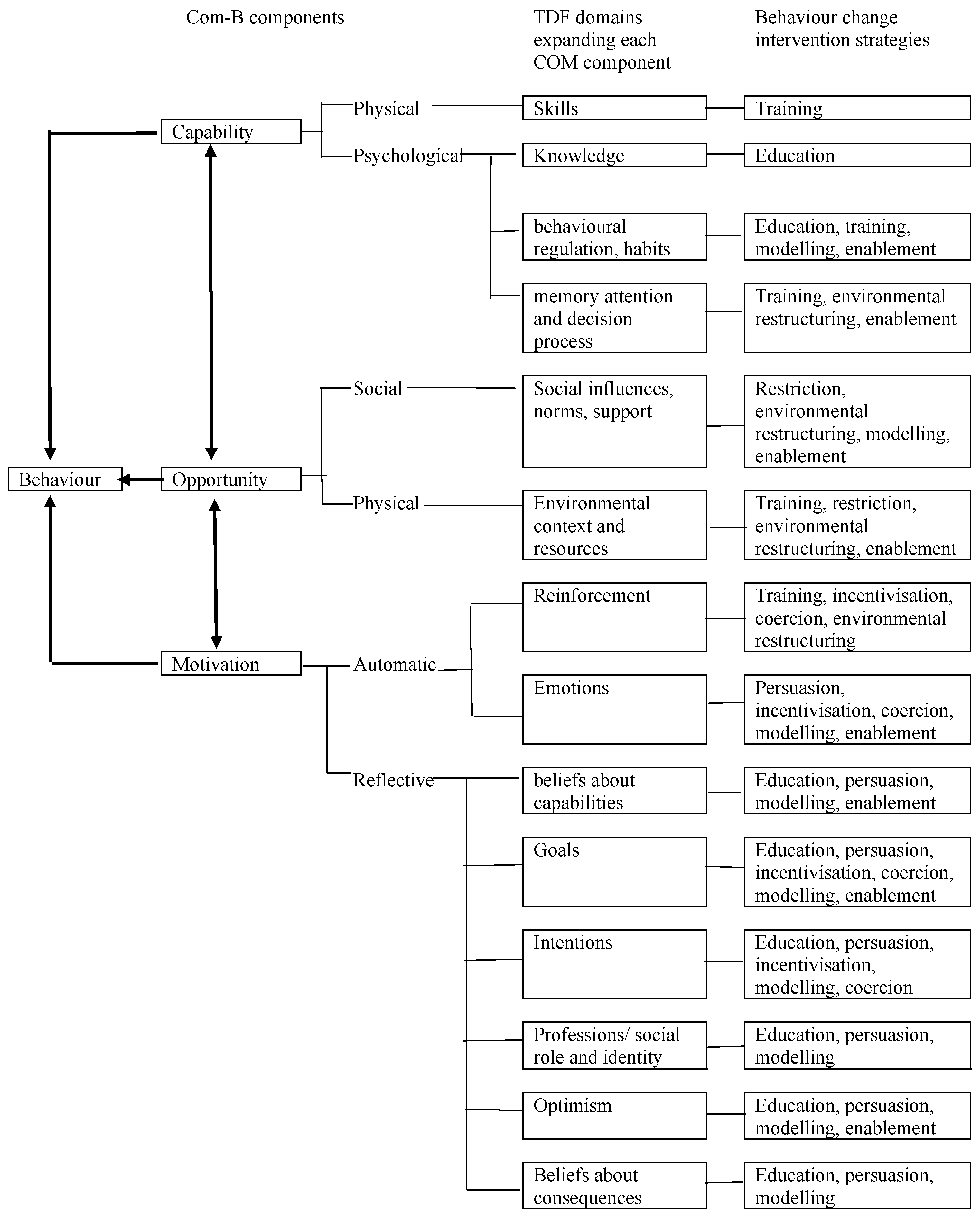
The BCW is made up of the COM-B, Theoretical Domains Framework (TDF) and nine intervention strategies [36]. The COM-B model is used as a starting point to understand behaviour in the context in which it occurs. The TDF builds upon the components of the COM-B model and outlines 14 types of barriers and facilitators that individuals may encounter. There are nine intervention strategies that drive behaviour change identified in the BCW. Each strategy targets different aspects of capability, opportunity, and motivation to effectively influence behaviour. Figure 1 illustrates the relationships between the COM-B, TDF and intervention strategies. Using the BCW allowed for a systematic approach in intervention development and evaluation.
Figure 1.
Links between Behaviour Change Wheel components—COM-B, TDF and behaviour change intervention strategies [36].
2.2.2. Setting
The study setting is general practices located in two Primary Health Network (PHN) regions in western Victoria and western Sydney. PHNs are regionally based, government-funded organisations that work to improve the efficiency, coordination and effectiveness of primary care. The PHNs were partners in the co-design and delivery of this intervention.
2.2.3. Co-Design Participants
Purposeful and convenience sampling were used to identify and invite individuals with knowledge and experience in primary care in dementia and contextual knowledge of the intervention regions. The sample of primary care stakeholders, including GPs, general practice nurses (GPNs), practice managers and PHN practice facilitators, was recruited through the Western Victoria and Western Sydney PHNs, as well as the research team’s networks. GPNs work within general practices and assist GPs with patient care. Practice managers, who are often registered nurses, oversee the day-to-day operations of general practices. PHN practice facilitators support general practices in implementing quality improvement initiatives and accessing government incentives and funding, digital health tools, and professional development activities.
The research team sent each potential participant an email invitation to participate in the co-design process. This email invitation included a link to the online participant information and consent form (PICF) hosted on Qualtrics (Provo, UT, USA).
2.2.4. Intervention Development Process
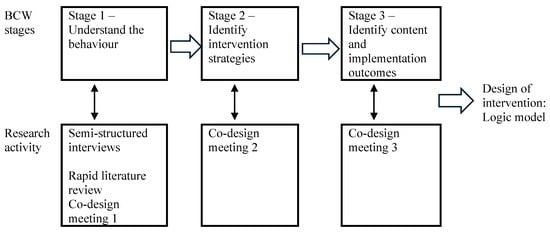
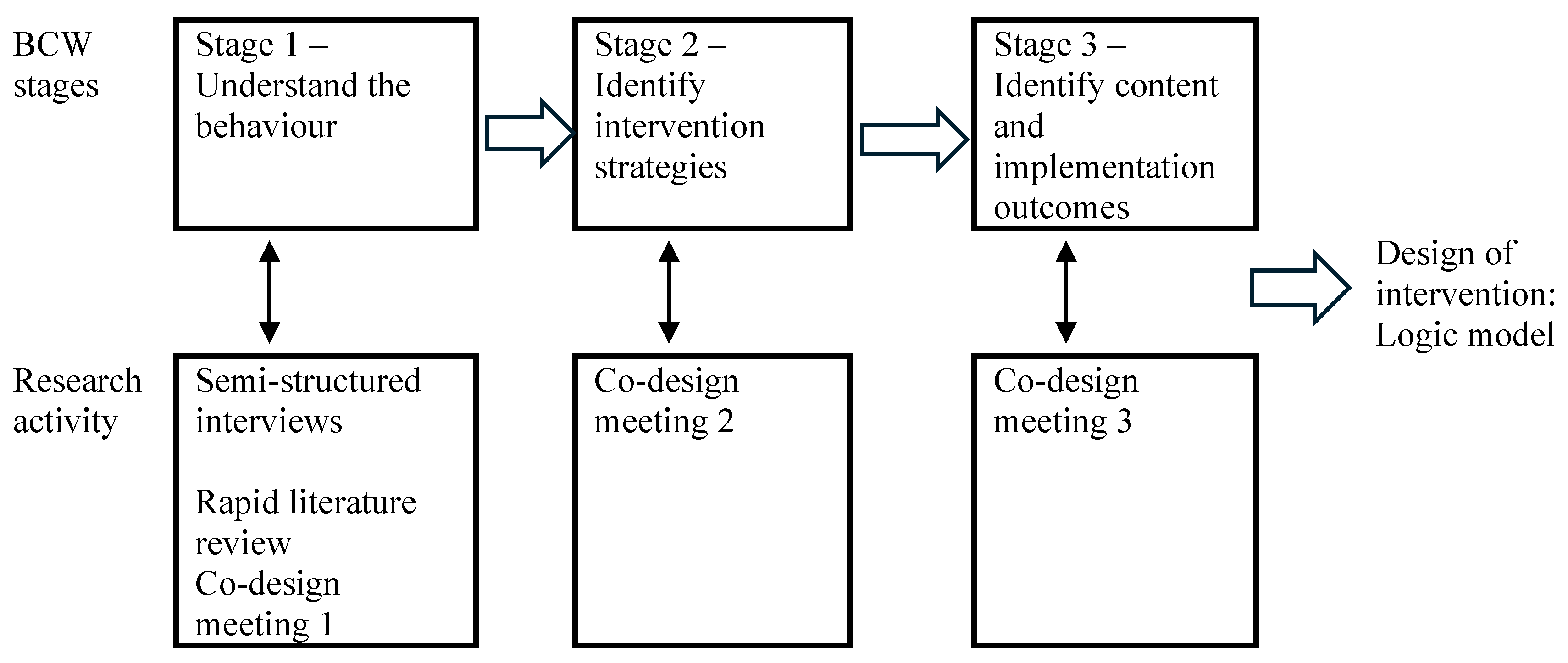
Development of the Facing Dementia Together practice change intervention was guided by the stages described in the BCW process [36]. The intervention development process is summarised in Figure 2.
Figure 2.
Facing Dementia Together practice change intervention development stages.
The co-design process involved three one-hour meetings conducted online using the ZOOM platform (version 5.14). These meetings took place between May and July 2023.
2.2.5. Foundational Research
Before co-design meeting 1, foundational research was carried out to understand the problem and identify what needs to change to increase rates of dementia diagnosis. The foundational research involved qualitative, semi-structured interviews with primary care stakeholders in both study locations. Its aim was to identify barriers to dementia diagnosis and provide a context for developing the Facing Dementia Together intervention [18]. A qualitative design with semi-structured interviews was conducted with 18 key primary care stakeholders recruited through the Western Victoria and Western Sydney PHNs. Four themes described current primary care practitioner practices in dementia diagnosis and management: (1) family concern triggers dementia investigation, (2) GPs delay conversations about dementia, (3) completing routine cognitive assessments in the 75+ health assessment, and (4) variability in post-diagnostic care.
A rapid review (unpublished) of the literature published between April 2013 and April 2023 on primary care best practices in dementia care was conducted. The review examined primary care interventions around dementia and identified intervention components and factors that influenced successful implementation and outcomes.
2.2.6. Stage 1—Understand the Behaviour (Co-Design Meeting 1)
The first co-design meeting focused on the first stage of the BCW theoretical framework to ‘understand the behaviour’ [36]. During this meeting, participants were presented with the foundational research findings and the public help-seeking campaign [9] describing the barriers and facilitators to dementia diagnosis [18] to provide a context for the development of the intervention. The co-design participants then identified the target audiences for the intervention (i.e., GPs, GPNs, etc.) and the behaviours needed to increase dementia diagnosis rates. Behaviours were defined as functionally equivalent to specific actions [36]. The marketing and communication conceptual framework, “Know, Believe, Do” was used as a pragmatic approach to structure the discussion. The co-design group described what each audience needed to know to have the capability to support dementia diagnosis, what they needed to believe and or feel to motivate them to change behaviour, and what they needed to do and when they could do it. Current versus desired behaviours were explored. Following the co-design meeting, the research team summarised and categorised the discussion outcomes into the COM-B model.
2.2.7. Stage 2—Identify Intervention Strategies (Co-Design Meeting Two)
The capabilities, opportunities, and motivations for each audience group were presented to the co-design group in meeting two for checking. Building on these, the co-design group provided input into the intervention’s main messages and generated ideas for activities to influence behaviour by each audience.
Following the second co-design meeting, the research team mapped the activities generated during the co-design meeting and identified from the literature review to the BCW intervention strategies [36]. This process identified the suite of intervention activities likely to bring about the desired behaviour change.
2.2.8. Stage 3—Identify Content and Implementation Outcomes (Co-Design Meeting Three)
During the third co-design meeting, participants described in more detail and prioritised intervention activities. This included a discussion of promotional methods for the practice change intervention.
The research team worked with stakeholders to further detail the Facing Dementia Together practice change intervention activities, balancing costs, effectiveness and potential ongoing use of resources post-research project. The intervention activities were developed between January and September 2024.
Following the co-design meeting, the research team developed a logic model to describe the essential activities and mechanisms of the intervention. Logic models are recommended in the planning, implementation, and evaluation of complex interventions [40].
2.2.9. Documentation and Prioritisation of Co-Design Decisions
Each co-design meeting was led by a facilitator (LF), and additional researchers (CG, MY, JJ) documented discussions and decisions. Priority areas for intervention development were sought through consensus within each meeting. The co-design meetings were audio-recorded to check the discussion content if required. A synthesis of the discussion in each co-design meeting was presented at the subsequent meeting and checked by participants for accuracy of interpretation and that decisions were captured accurately.
2.3. Reflexivity
The researchers are a multidisciplinary team with experience in primary care clinical dementia care, complex intervention design and/or dementia research: CG (PhD, primary care nurse, female); MY (MBBS, geriatrician, male); DP (PhD, general practitioner, female); SD (general practitioner, female); JJ (health researcher, female); LP (PhD, public health researcher, female); KL (PhD, occupational therapist, female); MG (PhD, occupational therapist, female); ET (PhD, pharmacist, male); HB (dementia researcher, psychiatrist, male); JS (PHN health analytics researcher, male); SF (health researcher, female); and LFL (PhD, psychologist, female). The team engaged in continuing discussions and challenged each other’s assumptions in developing the interventions.
2.4. Trustworthiness
Checking the interpretation of results was achieved by clarifying the meaning within the co-design discussions. A synthesis of the discussion in each co-design meeting was presented and checked for accuracy of interpretation with co-design participants in each subsequent meeting. An audit trail describing decision-making processes and outcomes was maintained throughout the intervention development process.
2.5. Patient and Public Participation
People living with dementia and their family carers contributed to the conceptualisation and design of the broader Facing Dementia Together project; however, they did not participate directly in this intervention design.
3. Results
3.1. Study Participants
A total of 15 individuals took part in co-design across three meetings, with individuals attending between one and three meetings, and each meeting having between eight and eleven participants. The study participants were primary care stakeholders (N = 15, 100%), including GPs (n = 5, 33%), GPNs (n = 4, 27%), a practice manager (n = 1, 6%), PHN practice facilitators (n = 3, 20%) and PHN Practice Facilitator Managers (n = 2, 13%). Participants came from Western Sydney (n = 7, 46%) and Western Victoria (n = 8, 53%). Ten (n = 10, 67%) participants identified as female, and five (n = 5, 33%) as male.
3.2. Stage 1—Understand the Behaviour
The Target Audience
GPs and GPNs were identified through co-design as the main audiences for the intervention. Changing the behaviour of these two groups was seen as having the greatest impact on increasing dementia diagnosis rates in primary care. Practice managers and receptionists were identified as secondary audiences who could support the practice change. Practice managers were described as the usual group who would oversee the implementation of practice improvement initiatives. Receptionists were identified as a secondary target audience as they have opportunities to notice patient behaviours that might indicate possible cognitive impairment.
PHN practice facilitators were identified as key stakeholders to drive change, as their role includes supporting practice improvement in primary care. This group was described as important in promoting the intervention, distributing resources and communicating intervention progress and outcomes.
A list of target behaviours that contribute to increasing the rate of dementia diagnosis for each audience group was generated. For the GP audience, these behaviours could be demonstrated by actions such as noticing potential cognitive changes, initiating conversations about cognitive changes, documenting the diagnosis of dementia in the patient’s medical record, referring to a specialist for assessment when needed, and communicating the diagnosis well. The capabilities, opportunities, and motivations to support each target audience to adopt the desired behaviours as part of the Facing Dementia Together practice change intervention are described in Table 1.
Table 1.
COM-B for each audience for the Facing Dementia Together practice change program.
3.3. The Intervention Strategies
Six out of the nine intervention strategies described in the BCW (refer to Figure 1) are identified as relevant based on the outcomes of co-design and mapped from the COM-B. These intervention functions are education (increasing knowledge and understanding), training (imparting skills), persuasion (using communication to promote action), environmental restructuring (changing the physical or social context), enablement (increasing means and reducing barriers to the behaviour), and modelling (providing an observable example of the action) (Refer Table 2).
Table 2.
Using the BCW to link the COM-B component and behaviour change strategies with intervention activities.
3.4. The Intervention Activities
The co-design participants generated a list of activities aimed at supporting the intervention audiences to engage in the behaviours that are predicted to contribute to increasing the rate of dementia diagnosis. Table 2 lists the intervention activities and how they align with the COM-B and selected BCW intervention strategies. The Facing Dementia Together practice change intervention is available on a website (https://facingdementiatogether.au/en/general-practice/) (accessed on 23 November 2025), which provides intervention information and access to the intervention’s resources.
Each activity included in the Facing Dementia Together practice change intervention covers multiple behaviour change strategies (refer to Table 2) and will be delivered concurrently. For example, peer-delivered online education sessions align with the behaviour change strategies of education and training, enablement, persuasion and modelling. Modelling and persuasion are addressed with the use of videos demonstrating health practitioner roles in the diagnosis of dementia. The main activity for each behaviour change strategy in the intervention is outlined below.
3.5. Online Dementia Education
An existing dementia in the primary care education program was identified. This education program is funded through Dementia Training Australia (DTA). DTA is a government-funded organisation that has been delivering dementia education for GPs and other members of the primary care team, notably GPNs, since 2013. This education program was identified as appropriate as it has a good reputation, is peer-led, is free of charge to attend, and contributes to GP and GPN Continuing Professional Development hours. The content and delivery of information were modified by the research team in collaboration with the DTA GP trainers based on the co-design outcomes. For example, content is included on why diagnosis is important even in late stages of dementia, the skills to have conversations about possible cognitive changes with a patient/family and managing difficult problems, such as driving and changed behaviour. Case studies and videos were included. Online delivery was selected in co-design as it was thought it would make it easier for time-poor primary care practitioners to attend.
The online dementia education primarily addressed ‘capability’ and aimed to increase audience knowledge and skills. Lack of knowledge and confidence in diagnosing dementia was recognised as a barrier to dementia diagnosis in the foundational research (Low et al., unpublished). In addition to ‘education’ and ‘training’, the online dementia education program aligned with several other behaviour change strategies as shown in Table 2. The use of peers to deliver education employs the behaviour change strategy of ‘persuasion,’ and the use of videos, such as a video of a GP ‘breaking the bad news’ to a patient, harnesses the behaviour change strategy of modelling. In the intervention, the education program is promoted and hosted by the PHN.
3.6. Geriatrician ‘Drop-In’ Support Sessions—Problem Solving with a Geriatrician
This activity aligned with the COM-B component ‘opportunity’ (social). It aims to provide GPs with an opportunity to discuss complex cases or raise diagnostic questions. The ZOOM platform will be used to optimise access, especially for GPs who are time-poor and geographically disparate. The barrier this intervention activity aims to mitigate is “uncertainty about diagnosis” by harnessing the intervention strategy “enablement” by providing support.
3.7. Practice Change Resources
A set of dementia diagnosis and management decision-making resources was developed, aligning with the COM-B components of capability (knowledge) and opportunity (physical). The corresponding intervention strategies are education and enablement. The resources include a ‘brain health checklist’, ‘pre-diagnosis management checklist’, post-diagnosis management checklist’, decision chart for when to refer to a specialist’, ‘take-home post-diagnostic patient information’, and ‘receptionist information on managing patients with cognitive changes’.
Practice development resources, including quality improvement templates and a business case describing the opportunity to improve practices around dementia, will also be included. A ‘Medicare Benefits Schedule (MBS) item pathway for dementia diagnosis and care’ was provided to demonstrate opportunities for funded dementia care to address the barrier of a lack of funded time to provide dementia care. The MBS is a listing of the healthcare services subsidised by the Australian Government.
The resources will be available on the Facing Dementia Together practice change website. Printed versions of the resources will also be available. The version tailored to general practices in the Western Victoria PHN can be viewed at https://facingdementiatogether.au/en/wp-content/uploads/sites/2/2024/05/Face-Dementia-GP-Resource-Pack-Western-Victoria.pdf (accessed on 23 November 2025).
3.8. Short Informative Articles in PHN Newsletter
The PHNs email an online newsletter to all general practices fortnightly. The newsletter includes healthcare information, available opportunities and new resources. In co-design, three topics relevant to GP practice were identified as commonly challenging. These topics are (1) Mild Cognitive Impairment in General Practice, (2) BPSD in General Practice, and (3) Driving and Dementia in General Practice. The goal is to offer practical advice on these topics, supporting capability (knowledge) using the behaviour change function of education. Each article includes a QR code to the Facing Dementia Together website. The articles are brief, at 300 words in length, and written in a conversational tone.
3.9. Stand-Alone Short Videos
Four stand-alone YouTube videos were made for the Facing Dementia Together practice change intervention website. They are titled, (1) ‘Detecting dementia—The role of medical receptionists’ (2:58), (2) ‘Supporting people living with dementia—The role of medical receptionists’ (2:30), (3) ‘Detecting dementia—Raising the issue in general practice’ (5:25) and (4) ‘Driving and dementia in general practice’ (5:30). These videos featured a GP, GPN, practice manager, receptionist and geriatrician, all from Western Victoria.
The purpose of the first three videos is to provide education to support a whole-of-practice approach in dementia diagnosis, describing how GPs, GPNs and receptionists all have a role. The COM-B component is motivation (professional role and identity). In co-design, receptionists were recognised as having an essential role in supporting patients who present with cognitive changes. Two videos are directed to the receptionist to increase capability (knowledge) in recognising cognitive changes, strategies to support people with cognitive changes, and communicating concerns to the GP and or GPN. The fourth video provided education to increase GPs’ capability (knowledge and skills) to have a conversation on driving and dementia. This topic was identified in the foundational research as a barrier to diagnosis, as GPs were reluctant to raise this topic [18].
3.10. Tailored Data—Auditing and Benchmarking
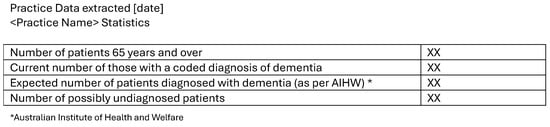
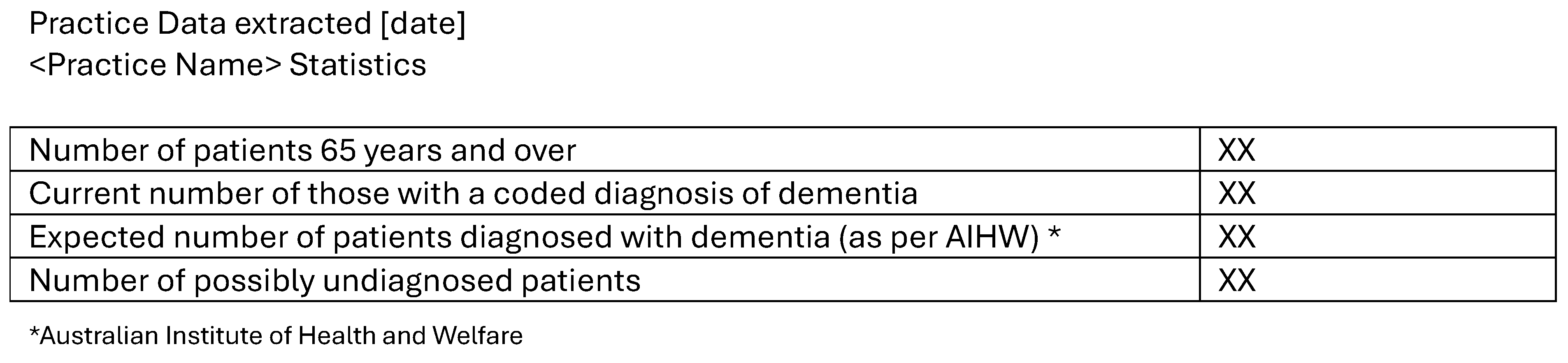
General practices will be able to review their own documented record of dementia diagnoses and compare this to the expected prevalence using data from the Australian Institute of Health and Welfare (AIHW) [41] by provision of a PHN-generated report. Figure 3 shows the report that the general practice will receive. This will be accompanied by an invitation to the education program and links to Facing Dementia Together resources.
Figure 3.
Auditing and benchmarking report.
This intervention activity supports dementia diagnosis through the COM-B component ‘motivation’ (belief about capabilities). It uses the intervention strategy of ‘persuasion’ by using a credible source and feedback to show that the GP can make a difference to the diagnosis of dementia. The auditing and benchmarking activity also aligns with ‘social opportunity’ (norms) by providing a comparison with prevalence data and motivation (reinforcement) through supporting new habits.
3.11. Risk Alert in Electronic Medical Record
This invention activity was available for Western Victoria PHN general practices only. A pop-up Population Level Analysis and Reporting (POLAR) data tool was developed by the Western Victoria PHN, providing a dementia risk alert for a patient using the Walrus point-of-care tool. Walrus is a point-of-care tool that prompts the GP about missing data, clinical prompts and risk scores for the patient on-screen. If the patient meets the criteria to be considered for a dementia risk assessment, the dementia risk tool alerts the GP via a pop-up notification. Depending on the patient’s age and indigenous status, a combination of factors will trigger the Dementia Prompt, namely, active smoker, alcohol consumption of 10+ drinks per week, diabetes Type 1 (active or inactive) or Type 2 diagnosis (active), and an active diagnosis of depression or atrial fibrillation or stroke or hypertension or insomnia or traumatic brain injury. The combination of data to inform the triggering of the risk alert tool is adapted from the validated CogDrisk risk assessment tool. The CogDrisk assessment tool assesses individual exposure to risk factors known to be associated with an increased risk of developing dementia [42]. GPs are given the option to follow a link to the full CogDrisk assessment tool for use with or by patients when a risk for dementia has been identified by the dementia risk tool.
This intervention activity aligns with the COM-B component capability (memory, attention and decision-making processes) and the intervention strategy ‘environmental restructuring’ as it provides an on-screen prompt. The risk alert tool will support GPs being alert to patients with chronic conditions being at a higher risk of developing dementia.
This intervention activity will not be developed in the Western Sydney PHN setting, as general practices in this region use different software incompatible with the risk alert being developed for use in Western Victoria. It was cost-prohibitive within this research project to develop the risk alert in the other software platform.
3.12. Logic Model
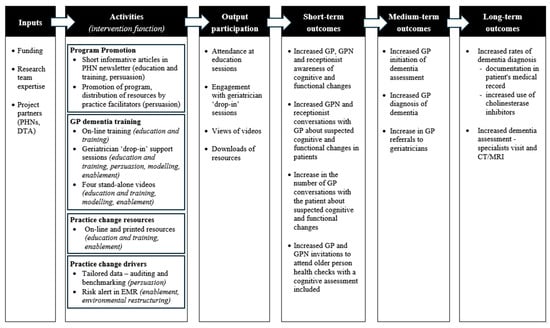
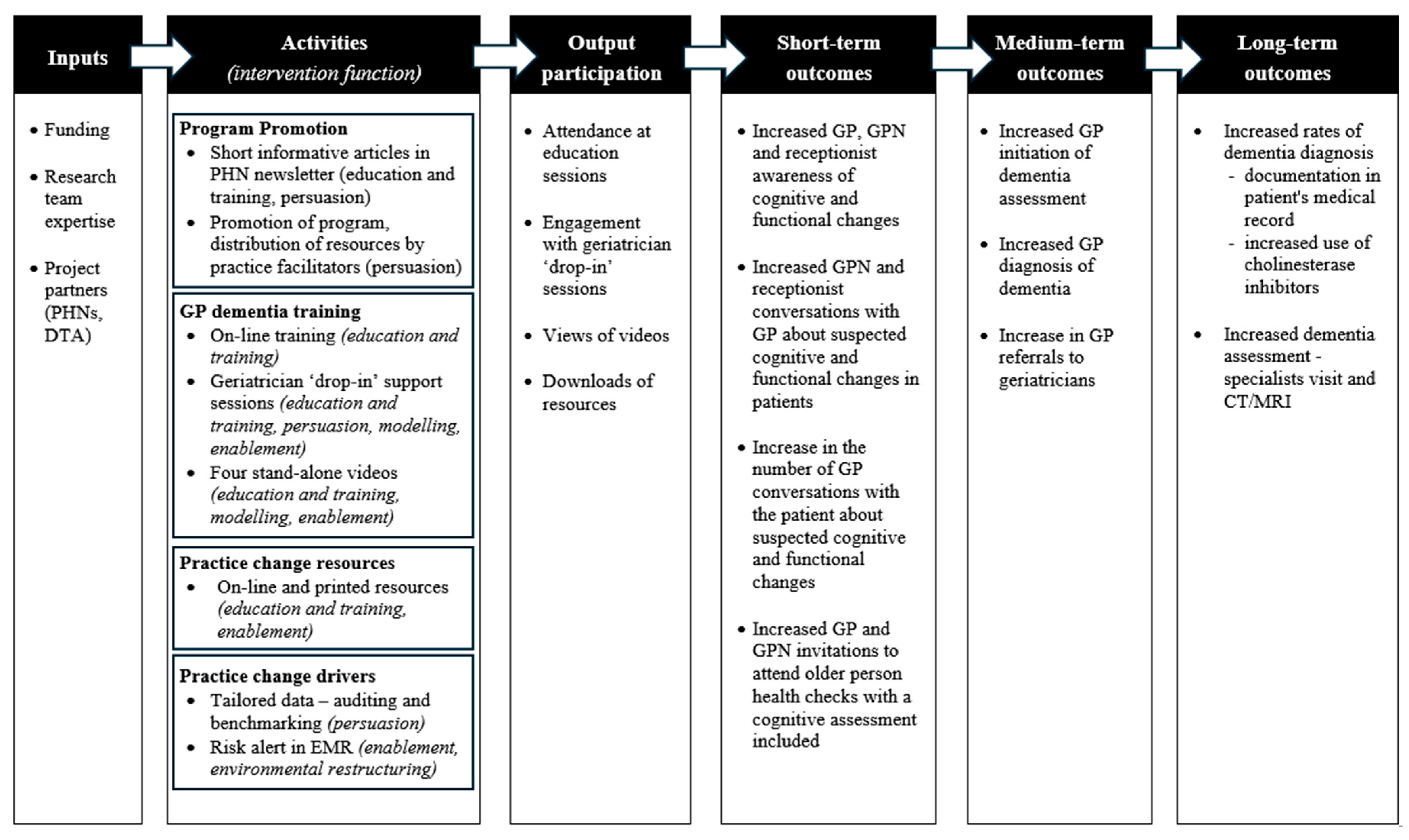
The essential elements and mechanisms of the Facing Dementia Together practice change intervention were brought together and are presented in the logic model shown in Figure 4. The logic model describes the outputs and projected outcomes of the intervention and will be used to guide implementation and evaluation.
Figure 4.
Logic model for Facing Dementia Together Practice Change Intervention Program.
4. Discussion
This study used a co-design process to develop a theoretically informed complex intervention aimed at increasing the rate of dementia diagnosis in primary care. Six behaviour change strategies were identified—education, training, enablement, modelling, persuasion, and environmental restructuring—using the COM-B model and BCW, to include in the intervention. Co-design prioritised seven activities to include in the Facing Dementia Together practice change intervention—peer-led on-line dementia education and training, geriatrician ‘drop-in’ on-line support sessions, quality improvement in dementia care sessions, stand-alone videos, auditing and benchmarking, a dementia risk alert tool, and a set of dementia diagnosis and management decision-making resources. It is reassuring to note that these behaviour change activities are consistent with effective strategies identified in the literature. What sets the Facing Dementia Together practice change intervention apart is its use of multiple strategies simultaneously, rather than relying on just one.
Education was included as it is an essential element for facilitating behavioural change, although it is often not sufficient on its own [43]. Education and training activities in the intervention comprised elements known to be effective. For instance, peer-led online sessions utilising practice-relevant case studies have been shown to increase participants’ self-reported knowledge and confidence regarding dementia care [44]. The online GP-led education and training sessions are supplemented with written resources and videos. Interactive educational outreach has been widely used to promote evidence-based clinical practice, and peer-to-peer education has proven effective in fostering stakeholder engagement and commitment to practice changes [45].
The videos outlined the opportunities of various primary care team members, including GPs, GPNs and receptionists, to support dementia diagnosis. These videos serve a dual purpose: providing information and modelling the desired behaviours to be adopted within primary care teams. This approach is supported by social learning theory, which posits that people acquire new behaviours, attitudes, and emotional reactions by observing others within a social context [46]. Modelling was employed in the intervention to reinforce the practical application of improved dementia diagnosis practices within a collaborative team approach.
All members of the primary care team were included in the education program, as interprofessional education contributes to enhanced teamwork and collaboration [47]. Team-based care is a foundational element of high-performing primary care [48] and was described as a facilitator to dementia diagnosis in the foundational research [18].
Clinical pathways were included in the intervention resources to support the provision of integrated care. The inclusion of this component is supported by evidence that practice change is enhanced if team members have a clear knowledge of who does what, when, where and how [12].
Persuasion and enablement were identified as important behaviour change functions to be included in the Facing Dementia Together practice change intervention. Provision of tailored data, auditing and benchmarking has been shown to prompt health practitioners to modify their practice when provided data showing that their clinical practice is inconsistent with a desirable target [49]. Using patient documentation tools, such as prompts and risk alerts, has been shown to enhance practitioner awareness, support clinical decision-making, and improve communication across the care team [12].
An intervention’s impact relies on how well it is implemented; thus, implementation outcomes are key to achieving the desired clinical or service changes [50]. Following the introduction of the Facing Dementia Together practice change intervention, the implementation outcomes, for example, site-specific and digital implementation variability, will be systematically assessed. Such evaluations provide insight into how and why implementation strategies either succeed or fail, particularly within complex health contexts [36].
Limitations and Strengths
The study was set in two Australian regions, potentially limiting the generalisability of findings. However, one setting was regional, and the other was a metropolitan multi-cultural setting, which is a strength. Additionally, a strength of the study was the development of an intervention tailored to local barriers to dementia diagnosis in primary care.
Using a relatively small purposive and convenience sample may limit generalisability to all practices, but every participant had prior experience in primary care, enabling them to reflect and offer valuable insights into the research question. The study did not gather information about participants’ levels of practitioner experience or their previous training in dementia, which could have contributed further to the findings. Despite this, all participants shared experiences from their own backgrounds, which supported strong internal validity, and there was a high level of agreement among the participants.
This paper details the multiple small decisions that were made during iterative co-design to develop a practice change intervention. Describing these processes transparently helps other researchers developing primary care interventions understand the rationale for the intervention components and may help them decide whether they are relevant for their context [51]. Co-design, purposively with primary care practitioners and members of organisations who promote practice improvement, helps ensure that the intervention will be both acceptable and sustainable. Consumers were not directly involved in the design of the primary care practice change intervention; however, the barriers they experienced [9] informed this study’s co-design process.
5. Conclusions
Dementia frequently goes undiagnosed, and national and international dementia action plans have highlighted the importance of supporting GPs in diagnosing and managing dementia. Our theory-informed, co-designed program was developed to address the multiple barriers to dementia identification and assessment in primary care in a manner that is potentially implementable across a region. The next step is to implement and evaluate.
Supplementary Materials
The following supporting information can be downloaded at: https://www.mdpi.com/article/10.3390/ijerph23050653/s1, Table S1: Standards for Reporting Qualitative Research (SRQR) [39].
Author Contributions
Conceptualization, all authors; methodology, L.-F.L. and M.Y.; formal analysis, C.G., M.Y. and L.-F.L.; investigation L.-F.L. and M.Y.; data curation, C.G.; writing—original draft preparation, C.G., L.-F.L. and M.Y.; writing—review and editing, all authors; project administration, L.-F.L. and J.J.; funding acquisition, L.-F.L. All authors have read and agreed to the published version of the manuscript.
Funding
This research was funded by the Medical Research Future Fund (MRFF) Dementia, Ageing and Aged Care Mission Projects Grant number APP 2015770.
Institutional Review Board Statement
The study was conducted in accordance with the Declaration of Helsinki and approved by the University of Sydney Human Research Ethics Committee (HREC 2022/689, 28 September 2022).
Informed Consent Statement
Informed consent was obtained from all subjects involved in the study.
Data Availability Statement
The raw data supporting the conclusions of this article will be made available by the authors upon request.
Conflicts of Interest
The authors declare no conflicts of interest. The funders had no role in the design of the study; in the collection, analyses, or interpretation of data; in the writing of the manuscript; or in the decision to publish the results.
Abbreviations
The following abbreviations are used in this manuscript:
| AIHW | Australian Institute of Health and Welfare |
| BPSD | Behaviours and psychological symptoms of dementia |
| BCW | Behaviour Change Wheel |
| COM-B | Capability, Opportunity, Motivation-Behaviour |
| GP | General practitioner |
| GPN | General Practice Nurse |
| DTA | Dementia Training Australia |
| PHN | Primary Health Network |
| SRQR | Standards for Reporting Qualitative Research |
References
- Mazza, D.; McCarthy, E.; Camões-Costa, V.; Mansfield, E.; Bryant, J.; Waller, A.; Lin, X.; Piterman, L. Prioritising national dementia guidelines for general practice: A Delphi approach. Australas. J. Ageing 2021, 41, 247–257. [Google Scholar] [CrossRef] [Scilit] [PubMed]
- Frost, R.; Rait, G.; Wheatley, A.; Wilcock, J.; Robinson, L.; Harrison Dening, K.; Allan, L.; Banerjee, S.; Manthorpe, J.; Walters, K.; et al. What works in managing complex conditions in older people in primary and community care? A state-of-the-art review. Health Soc. Care Community 2020, 28, 1915–1927. [Google Scholar] [CrossRef] [Scilit]
- Prince, M.; Comas-Herrera, A.; Knapp, M.; Guerchet, M.; Karagiannidou, M. Improving Healthcare for People Living with Dementia; Alzheimer’s Disease International (ADI): London, UK, 2016. [Google Scholar]
- Breithaupt, A.G.; Sideman, A.B.; Goode, C.; Hill-Sakurai, L.; Premkumar, M.; Scheffler, A.W.; Chodos, A.; Tsoy, E.; Rankin, K.P.; Kramer, J.H.; et al. Enhancing early detection of cognitive impairment in primary care with the TabCAT-BHA. Alzheimer’s Dement. 2025, 21, e70437. [Google Scholar] [CrossRef] [Scilit]
- Lang, L.; Clifford, A.; Wei, L.; Zhang, D.; Leung, D.; Augustine, G.; Danat, I.M.; Zhou, W.; Copeland, J.R.; Anstey, K.J.; et al. Prevalence and determinants of undetected dementia in the community: A systematic literature review and a meta-analysis. BMJ Open 2017, 7, e011146. [Google Scholar] [CrossRef] [Scilit]
- Dobson, A.J.; Flicker, L.; Almeida, O.P.; Waller, M.; Anstey, K. Different estimates of the prevalence of dementia in Australia, 2021. Med. J. Aust. 2023, 218, 320–321. [Google Scholar] [CrossRef] [Scilit]
- Mansfield, E.; Noble, N.; Sanson-Fisher, R.; Mazza, D.; Bryant, J. Primary Care Physicians’ Perceived Barriers to Optimal Dementia Care: A Systematic Review. Gerontologist 2018, 59, e697–e708. [Google Scholar] [CrossRef] [Scilit]
- Garrett, M.H.; Azar, D.; Goeman, D.; Thomas, M.; Craig, E.A.; Maybery, D. Health and social care needs of people living with dementia: A qualitative study of dementia support in the Victorian region of Gippsland, Australia. Rural Remote Health 2024, 24, 8244. [Google Scholar] [CrossRef] [Scilit] [PubMed]
- Low, L.-F.; Barcenilla-Wong, A.; Laver, K.; Yates, M.; Gibson, C.; Shen, S.; Hall, D.; Brodaty, H.; Pond, D.; Comans, T.; et al. Development of a model of help-seeking for dementia diagnosis by the person experiencing changes and family supporters. Aging Ment. Health 2025, 29, 814–823. [Google Scholar] [CrossRef] [Scilit]
- Cox, C.G.; Brush, B.L.; Kobayashi, L.C.; Roberts, J.S. Determinants of dementia diagnosis in U.S. primary care in the past decade: A scoping review. J. Prev. Alzheimer’s Dis. 2025, 12, 100035. [Google Scholar] [CrossRef] [Scilit] [PubMed]
- Aminzadeh, F.; Molnar, F.J.; Dalziel, W.B.; Ayotte, D. A Review of Barriers and Enablers to Diagnosis and Management of Persons with Dementia in Primary Care. Can. Geriatr. J. 2012, 15, 85–94. [Google Scholar] [CrossRef] [Scilit]
- Arsenault-Lapierre, G.; Le Berre, M.; Rojas-Rozo, L.; McAiney, C.; Ingram, J.; Lee, L.; Vedel, I. Improving dementia care: Insights from audit and feedback in interdisciplinary primary care sites. BMC Health Serv. Res. 2022, 22, 353. [Google Scholar] [CrossRef] [Scilit]
- Fox, C.; Maidment, I.; Moniz-Cook, E.; White, J.; Thyrian, J.R.; Young, J.; Katona, C.; Chew-Graham, C.A. Optimising primary care for people with dementia. Ment. Health Fam. Med. 2013, 10, 143–151. [Google Scholar] [PubMed]
- Bernstein-Sideman, A.; Ma, M.; Hernandez de Jesus, A.; Alagappan, C.; Razon, N.a.; Dohan, D.; Chodos, A.; Al-Rousan, T.; Alving, L.I.; Segal-Gidan, F.; et al. Primary Care Pracitioner Perspectives on the Role of Primary Care in Dementia Diagnosis and Care. JAMA Netw. Open 2023, 6, e2336030. [Google Scholar] [CrossRef] [Scilit] [PubMed]
- Visser, F.C.W.; van Eersel, M.E.A.; van der Zaag-Loonen, H.J.; Hempenius, L.; Perry, M.; van Munster, B.C. Doing the Right Thing? General Practitioners’ Considerations in Achieving a Timely Dementia Diagnosis. Int. J. Geriatr. Psychiatry 2024, 39, e6142. [Google Scholar] [CrossRef] [Scilit]
- Low, L.-F.; McGrath, M.; Swaffer, K.; Brodaty, H. Communicating a diagnosis of dementia: A systematic mixed studies review of attitudes and practices of health practitioners. Dementia 2019, 18, 2856–2905. [Google Scholar] [CrossRef] [Scilit]
- Balsinha, C.; Iliffe, S.; Dias, S.; Freitas, A.; Barreiros, F.F.; Gonçalves-Pereira, M. Dementia and primary care teams: Obstacles to the implementation of Portugal’s Dementia Strategy. Prim. Health Care Res. Dev. 2022, 23, e10. [Google Scholar] [CrossRef] [Scilit]
- Low, L.-F.; Gibson, C.; Barcenilla-Wong, A.; Daniel, S.; Phillipson, L.; Gresham, M.; Laver, K.; Tan, E.; Daly, S.; Pond, C.D.; et al. How does Australian primary care face dementia? Identifying current practice and barriers in dementia diagnosis and management in Australian primary care—A qualitative interview study. BMC Prim. Care 2026, 27, 167. [Google Scholar] [CrossRef] [Scilit]
- Irish Department of Health. The Irish National Dementia Strategy; Department of Health: Dublin, Ireland, 2014. [Google Scholar]
- Department of Health. Living Well with Dementia: A National Dementia Strategy; Department of Health: London, UK, 2009. [Google Scholar]
- Australian Department of Health. National Dementia Action Plan 2024–2034; Department of Health and Ageing, Ed.; Australian Government: Canberra, Australia, 2024.
- Public Health Agency of Canada. A Dementia Strategy for Canada; Public Health Agency of Canada: Ottawa, Canada, 2019.
- Cartz-Piver, L.; Calvet, B.; Mehrabian-Spassova, S.; Raycheva, M.; Rejdak, K.; Papuk, E.; Leperre-Desplanques, A.; Krolak-Salmon, P. Empowering general practitioners in dementia care: The ANTISTIGMA education intervention in Europe. Int. J. Geriatr. Psychiatry 2023, 38, e5958. [Google Scholar] [CrossRef] [Scilit]
- Perry, M.; Drašković, I.; Lucassen, P.; Vernooij-Dassen, M.; van Achterberg, T.; Rikkert, M.O. Effects of educational interventions on primary dementia care: A systematic review. Int. J. Geriatr. Psychiatry 2011, 26, 1–11. [Google Scholar] [CrossRef] [Scilit]
- Pond, D.; Mate, K.; Stocks, N.; Gunn, J.; Disler, P.; Magin, P.; Marley, J.; Paterson, N.; Horton, G.; Goode, S.; et al. Effectiveness of a peer-mediated educational intervention in improving general practitioner diagnostic assessment and management of dementia: A cluster randomised controlled trial. BMJ Open 2018, 8, e021125. [Google Scholar] [CrossRef] [Scilit] [PubMed]
- Flodgren, G.; Eccles, M.P.; Shepperd, S.; Scott, A.; Parmelli, E.; Beyer, F.R. An overview of reviews evaluating the effectiveness of financial incentives in changing healthcare professional behaviours and patient outcomes. Cochrane Database Syst. Rev. 2011, 2011, Cd009255. [Google Scholar] [CrossRef] [Scilit] [PubMed]
- Thyrian, J.R.; Hertel, J.; Wucherer, D.; Eichler, T.; Michalowsky, B.; Dreier-Wolfgramm, A.; Zwingmann, I.; Kilimann, I.; Teipel, S.; Hoffmann, W. Effectiveness and Safety of Dementia Care Management in Primary Care: A Randomized Clinical Trial. JAMA Psychiatry 2017, 74, 996–1004. [Google Scholar] [CrossRef] [Scilit]
- Callahan, C.M.; Boustani, M.A.; Unverzagt, F.W.; Austrom, M.G.; Damush, T.M.; Perkins, A.J.; Fultz, B.A.; Hui, S.L.; Counsell, S.R.; Hendrie, H.C. Effectiveness of collaborative care for older adults with Alzheimer disease in primary care: A randomized controlled trial. J. Am. Med. Assoc. 2006, 295, 2148–2157. [Google Scholar] [CrossRef] [Scilit]
- Gandolfi, S.; Bellè, N.; Nuti, S. Please mind the gap between guidelines & behavior change: A systematic review and a consideration on effectiveness in healthcare. Health Policy 2025, 151, 105–191. [Google Scholar] [CrossRef] [Scilit]
- Iliffe, S.; Robinson, L.; Bamford, C.; Waugh, A.; Fox, C.; Livingston, G.; Manthorpe, J.; Brown, P.; Stephens, B.; Brittain, K.; et al. Introducing case management for people with dementia in primary care: A mixed-methods study. Br. J. Gen. Pract. 2014, 64, 735–741. [Google Scholar] [CrossRef] [Scilit] [PubMed]
- Disler, R.; Pascoe, A.; Anderson, H.; Piejko, E.; Asaid, A.; Disler, P. A new model for general practice-led, regional, community-based, memory clinics. BMC Prim. Care 2022, 23, 242. [Google Scholar] [CrossRef] [Scilit]
- Dodd, E.; Cheston, R.; Fear, T.; Brown, E.; Fox, C.; Morley, C.; Jefferies, R.; Gray, R. An evaluation of primary care led dementia diagnostic services in Bristol. BMC Health Serv. Res. 2014, 14, 592. [Google Scholar] [CrossRef] [Scilit]
- Skivington, K.; Matthews, L.; Simpson, S.A.; Craig, P.; Baird, J.; Blazeby, J.M.; Boyd, K.A.; Craig, N.; French, D.P.; McIntosh, E.; et al. A new framework for developing and evaluating complex interventions: Update of Medical Research Council guidance. BMJ 2021, 374, n2061. [Google Scholar] [CrossRef] [Scilit]
- Moore, G.F.; Audrey, S.; Barker, M.; Bond, L.; Bonell, C.; Hardeman, W.; Moore, L.; O’Cathain, A.; Tinati, T.; Wight, D.; et al. Process evaluation of complex interventions: Medical Research Council guidance. BMJ Br. Med. J. 2015, 350, h1258. [Google Scholar] [CrossRef] [Scilit]
- Foy, R.; Francis, J.J.; Johnston, M.; Eccles, M.; Lecouturier, J.; Bamford, C.; Grimshaw, J. The development of a theory-based intervention to promote appropriate disclosure of a diagnosis of dementia. BMC Health Serv. Res. 2007, 7, 207. [Google Scholar] [CrossRef] [Scilit]
- Michie, S.; Atkins, L.; West, R. The Behaviour Change Wheel: A Guide to Designing Interventions; Silverback Publishing: London, UK, 2014. [Google Scholar]
- Facing Dementia Together. Facing Dementia Together. Available online: https://facingdementiatogether.au/en/ (accessed on 23 November 2025).
- Vargas, C.; Whelan, J.; Brimblecombe, J.; Allender, S. Co-creation, co-design, co-production for public health—A perspective on definitions and distinctions. Public Health Res. Pract. 2022, 32, e3222211. [Google Scholar] [CrossRef] [Scilit]
- O’Brien, B.C.; Harris, I.B.; Beckman, T.J.; Reed, D.A.; Cook, D.A. Standards for reporting qualitative research: A synthesis of recommendations. Acad. Med. 2014, 89, 1245–1251. [Google Scholar] [CrossRef] [Scilit]
- Skivington, K.; Matthews, L.; Simpson, S.A.; Craig, P.; Baird, J.; Blazeby, J.M.; Boyd, K.A.; Craig, N.; French, D.P.; McIntosh, E.; et al. Framework for the development and evaluation of complex interventions: Gap analysis, workshop and consultation-informed update. Health Technol. Assess. 2021, 25, 1–132. [Google Scholar] [CrossRef] [Scilit]
- Australian Institute of Health and Welfare. Dementia in Australia; Australian Institute of Health and Welfare: Canberra, Australia, 2025. [Google Scholar]
- Anstey, K.J.; Kootar, S.; Huque, M.H.; Eramudugolla, R.; Peters, R. Development of the CogDrisk tool to assess risk factors for dementia. Alzheimers Dement. 2022, 14, e12336. [Google Scholar] [CrossRef] [Scilit] [PubMed]
- Arlinghaus, K.; Johnston, C. Advocating for Behavior Change With Education. Am. J. Lifestyle Med. 2017, 12, 113–116. [Google Scholar] [CrossRef] [Scilit] [PubMed]
- Foley, T.; Jennings, A.; Boyle, S.; Smithson, W.H. The development and evaluation of peer-facilitated dementia workshops in general practice. Educ. Prim. Care 2018, 29, 27–34. [Google Scholar] [CrossRef] [Scilit]
- Luetsch, K.; Wong, G.; Rowett, D. A realist synthesis of educational outreach visiting and integrated academic detailing to influence prescribing in ambulatory care: Why relationships and dialogue matter. BMJ Qual. Saf. 2023, 33, 43–54. [Google Scholar] [CrossRef] [Scilit] [PubMed]
- Horsburgh, J.; Ippolito, K. A skill to be worked at: Using social learning theory to explore the process of learning from role models in clinical settings. BMC Med. Educ. 2018, 18, 156. [Google Scholar] [CrossRef] [Scilit]
- Jennings, A.; McLoughlin, K.; Boyle, S.; Thackeray, K.; Quinn, A.; O’Sullivan, T.; Foley, T. Development and evaluation of a primary care interprofessional education intervention to support people with dementia. J. Interprof. Care 2019, 33, 579–582. [Google Scholar] [CrossRef] [Scilit]
- Ghorob, A.; Bodenheimer, T. Building Teams in Primary Care: A Practical Guide. Fam. Syst. Health 2015, 33, 182–192. [Google Scholar] [CrossRef] [Scilit]
- Ivers, N.; Yogasingam, S.; Lacroix, M.; Brown, K.A.; Antony, J.; Soobiah, C.; Simeoni, M.; Willis, T.A.; Crawshaw, J.; Antonopoulou, V.; et al. Audit and feedback: Effects on professional practice. Cochrane Database Syst. Rev. 2025, 3, CD000259. [Google Scholar] [CrossRef] [Scilit] [PubMed]
- Proctor, E.; Silmere, H.; Raghavan, R.; Hovmand, P.; Aarons, G.; Bunger, A.; Griffey, R.; Hensley, M. Outcomes for implementation research: Conceptual distinctions, measurement challenges, and research agenda. Adm. Policy Ment. Health 2011, 38, 65–76. [Google Scholar] [CrossRef] [Scilit] [PubMed]
- Hoddinott, P. A new era for intervention development studies. Pilot Feasibility Stud. 2015, 1, 36. [Google Scholar] [CrossRef] [Scilit] [PubMed]

Disclaimer/Publisher’s Note: The statements, opinions and data contained in all publications are solely those of the individual author(s) and contributor(s) and not of MDPI and/or the editor(s). MDPI and/or the editor(s) disclaim responsibility for any injury to people or property resulting from any ideas, methods, instructions or products referred to in the content. |
© 2026 by the authors. Licensee MDPI, Basel, Switzerland. This article is an open access article distributed under the terms and conditions of the Creative Commons Attribution (CC BY) license.