Journal Description
Galaxies
Galaxies
is an international, peer-reviewed, open access journal on astronomy, astrophysics, and cosmology published bimonthly online by MDPI.
- Open Access— free for readers, with article processing charges (APC) paid by authors or their institutions.
- High Visibility: indexed within Scopus, ESCI (Web of Science), Astrophysics Data System, INSPIRE, Inspec, and other databases.
- Journal Rank: JCR - Q2 (Astronomy and Astrophysics) / CiteScore - Q2 (Astronomy and Astrophysics)
- Rapid Publication: manuscripts are peer-reviewed and a first decision is provided to authors approximately 25.8 days after submission; acceptance to publication is undertaken in 5.9 days (median values for papers published in this journal in the second half of 2025).
- Recognition of Reviewers: reviewers who provide timely, thorough peer-review reports receive vouchers entitling them to a discount on the APC of their next publication in any MDPI journal, in appreciation of the work done.
- Journal Cluster of Gravitation, Cosmology and Astrophysics: Universe, Galaxies, Particles and Astronomy.
Impact Factor:
3.8 (2024);
5-Year Impact Factor:
3.1 (2024)
Latest Articles
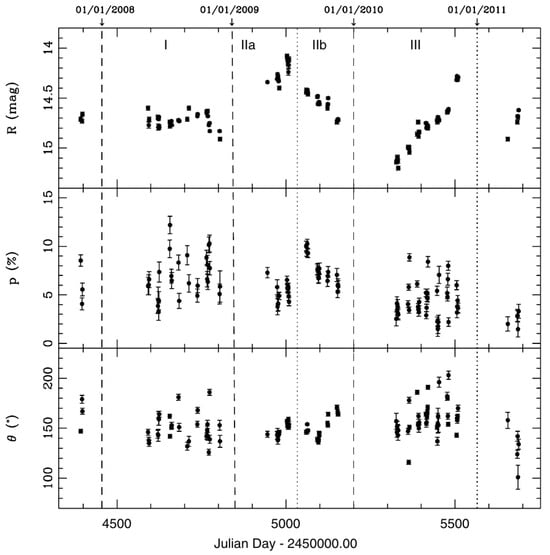
Optical Variability of HBLs on Diverse Timescales
Galaxies 2026, 14(3), 54; https://doi.org/10.3390/galaxies14030054 - 20 May 2026
Abstract
Since their discovery almost 60 years ago, BL Lac objects have been defined by their strong optical variability and their classification in the spectral energy distribution scheme. High-synchrotron-peaked BL Lacs (HBLs) are those whose synchrotron component peaks at frequencies higher than UV/X-rays. Historically,
[...] Read more.
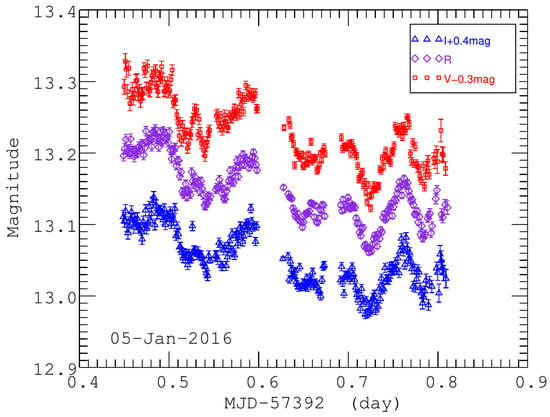
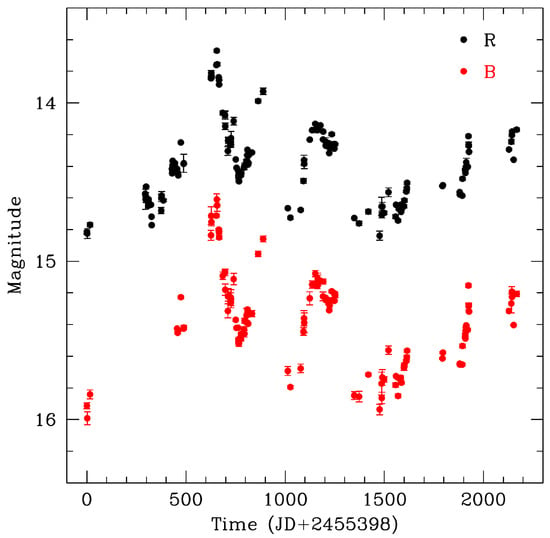
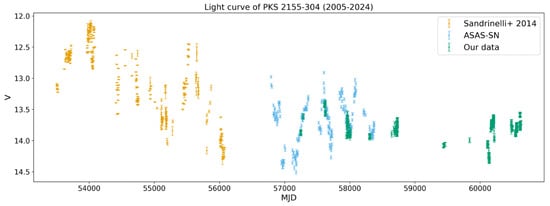
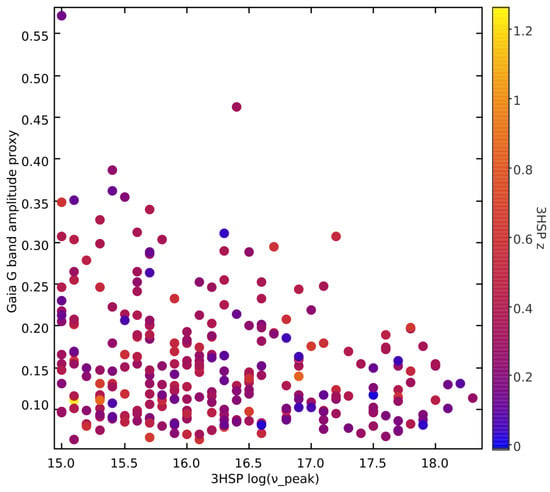
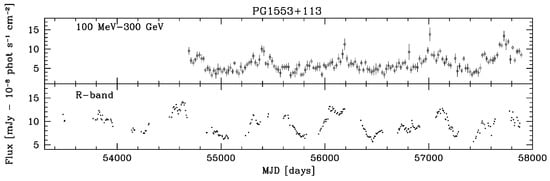
Since their discovery almost 60 years ago, BL Lac objects have been defined by their strong optical variability and their classification in the spectral energy distribution scheme. High-synchrotron-peaked BL Lacs (HBLs) are those whose synchrotron component peaks at frequencies higher than UV/X-rays. Historically, optical variability studies have focused mostly on their counterparts, low-synchrotron-peaked BL Lacs (LBLs), since HBLs have shown weaker optical variability. However, a population-wide study of HBL optical variability is still lacking, and it remains unclear whether HBLs are intrinsically less optically variable as a class or whether this reflects observational biases. Only a handful of HBL sources have been studied extensively due to their strong variability and reported periodicity. These sources have motivated several theoretical models, often conflicting, to explain the optical variability when present. Nevertheless, understanding the connection between the apparent weaker optical variability and the emission processes of HBLs remains a challenge. In this work, we review the current state of knowledge on this topic, with the expectation that upcoming optical monitoring observatories, such as the Vera C. Rubin, will provide new insights into the optical emission (and variability) mechanisms in HBLs.
Full article
(This article belongs to the Special Issue Multiwavelength Variability and Unstable Processes in High-Energy-Peaked BL Lacertae Objects)
►
Show Figures
Open AccessReview
Interstellar Filament Detection and Characterization: Methods and Implications for Studies of the Magnetized Interstellar Medium
by
Dana Alina
Galaxies 2026, 14(3), 53; https://doi.org/10.3390/galaxies14030053 - 18 May 2026
Abstract
Filamentary structures are ubiquitous in the interstellar medium and play a key role in the evolution of molecular clouds and star formation. Their morphology and relative orientation with respect to magnetic fields have been widely used as a diagnostic of magnetohydrodynamic processes, turbulence,
[...] Read more.
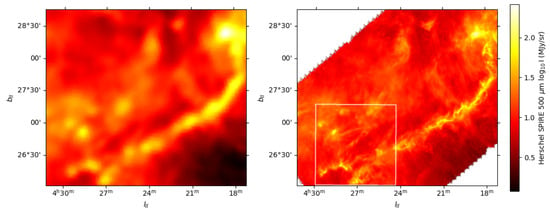
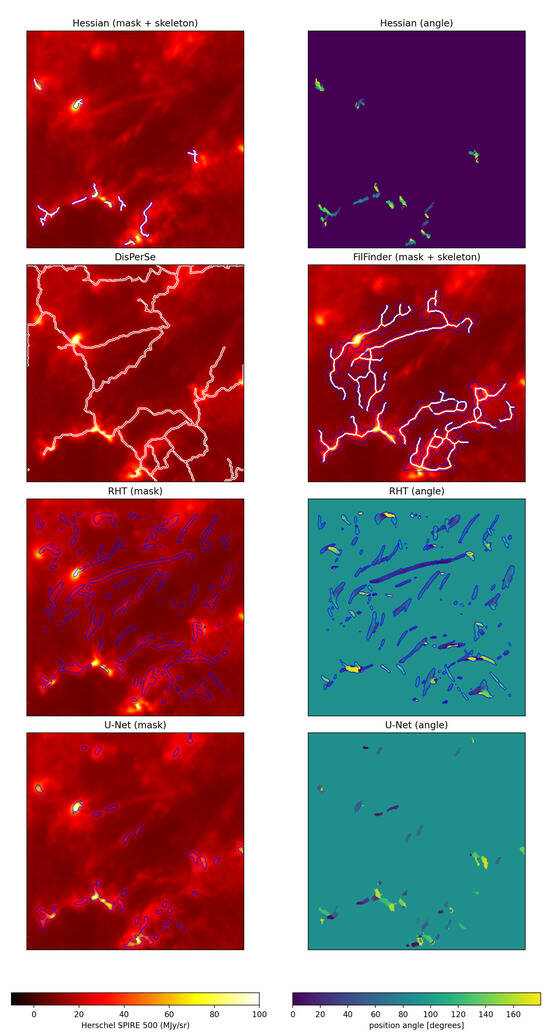
Filamentary structures are ubiquitous in the interstellar medium and play a key role in the evolution of molecular clouds and star formation. Their morphology and relative orientation with respect to magnetic fields have been widely used as a diagnostic of magnetohydrodynamic processes, turbulence, and gravitational accretion. In recent years, the growing availability of large continuum, spectroscopic, and polarization data stimulated the development of various filament detection techniques. In this review, we present a systematic overview of filament detection methods applied to observations of the interstellar medium. We classify the existing approaches into methodological categories, discuss underlying principles, illustrate their application on a same observational field, discuss limitations and advantages, in particular with respect to the studies of the relative alignment between magnetic fields and filaments. We conclude with presenting a point of view on the perspectives for filament studies in the era of ever-growing astronomical data volume.
Full article
(This article belongs to the Special Issue Astrophysical Magnetohydrodynamics, Plasma Physics and Cosmic Rays)
►▼
Show Figures

Figure 1
Open AccessCommunication
Long-Lived Merger Signatures in the Perseus Cluster and a Candidate Remnant Interpretation
by
Shawn Hackett
Galaxies 2026, 14(3), 52; https://doi.org/10.3390/galaxies14030052 - 18 May 2026
Abstract
Weak-lensing observations of the Perseus Cluster now indicate a massive sub-halo associated with NGC 1264 and a connecting mass bridge in a system long treated as a benchmark relaxed cool-core cluster. Perseus is also known from X-ray observations to host large-scale gas sloshing
[...] Read more.
Weak-lensing observations of the Perseus Cluster now indicate a massive sub-halo associated with NGC 1264 and a connecting mass bridge in a system long treated as a benchmark relaxed cool-core cluster. Perseus is also known from X-ray observations to host large-scale gas sloshing and an ancient cold front extending to several hundred kiloparsecs. This paper uses Perseus as a motivation for a narrower population question: do nominally relaxed clusters retain merger history information in residual mass–gas offsets after the obvious signatures of an active merger have faded? A candidate remnant stress–energy interpretation is introduced as one possible covariant language for such a long-lived structure, but the empirical test does not require acceptance of that interpretation. The work then carries out a literature-based pilot test using the cold front outer radius as an independent merger history proxy, published mass–gas or gas tracer offsets for relaxed/cool-core systems, and a separate control cohort of actively dissociative mergers. The resulting three-regime comparison separates young active mergers, relaxed low-offset systems, and relaxed systems with sourced offsets above 5 kpc. For all seven Regime 3 (relaxed, offset kpc) systems with vetted cold front/history proxies and sourced mass–gas offset measurements, the directional rank-order association has the predicted sign, , with ( , ). The one-sided statistic crosses the conventional threshold. The sample mixes lensing–X-ray centroid offsets, BCG/X-ray peak offsets, and weak-lensing sub-halo separations, and the result is not a decisive population detection: it is a suggestive directional signal in a small heterogeneous archival pilot. Its significance is that a framework-derived directional diagnostic, specified before the sample was assembled, is non-zero in the predicted sense and can now be tested with a homogeneous weak-lensing/X-ray/SZ survey.
Full article
(This article belongs to the Topic Dark Matter, Dark Energy and Cosmological Anisotropy)
Open AccessArticle
Photometric Metallicity of Galactic RR Lyrae Stars in the Gaia DR3 Era
by
Mahiguhappriya Prakash, Susmita Das, Harinder P. Singh and Nitesh Kumar
Galaxies 2026, 14(3), 51; https://doi.org/10.3390/galaxies14030051 - 17 May 2026
Abstract
►▼
Show Figures
RR Lyrae stars are pulsating variables crucial for distance determination and galactic structure studies. Metallicities of fundamental-mode (RRab) RR Lyrae stars are commonly derived from photometry using empirical relations involving the Fourier parameter and the pulsation period. We present a new,
[...] Read more.
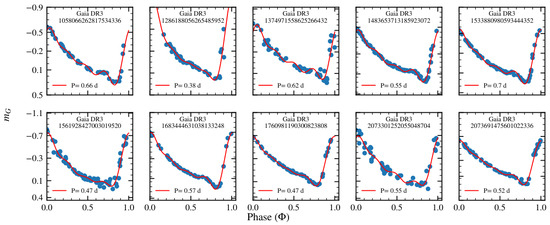
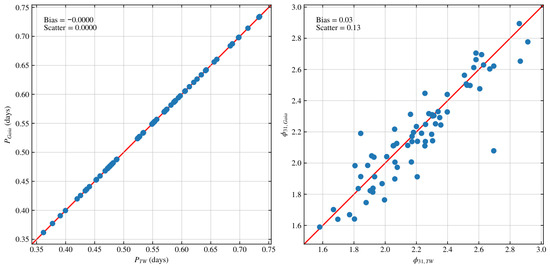
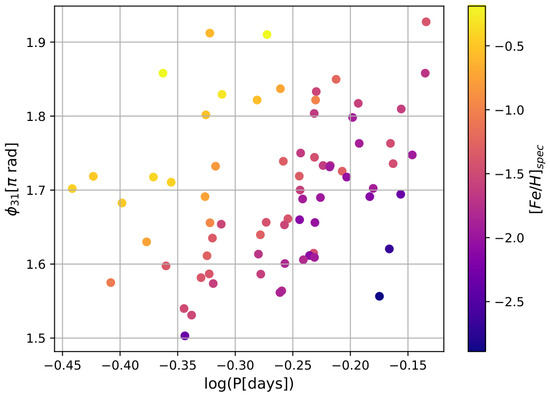
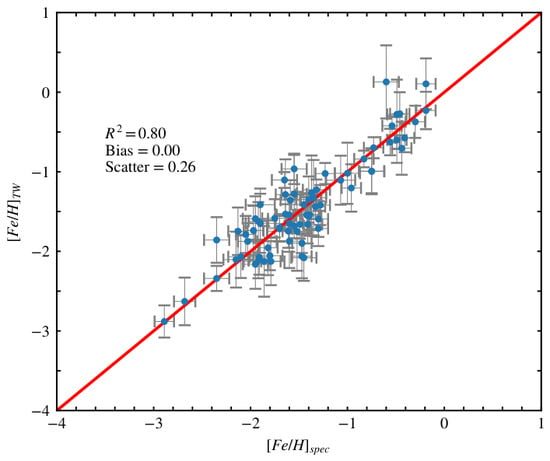
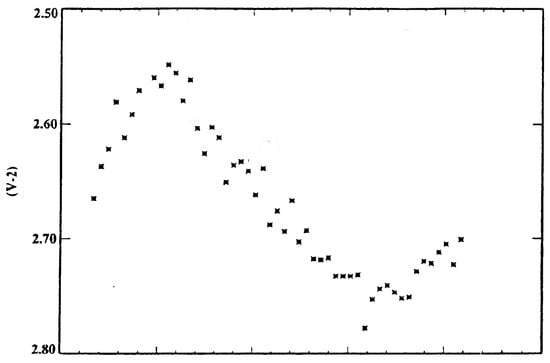
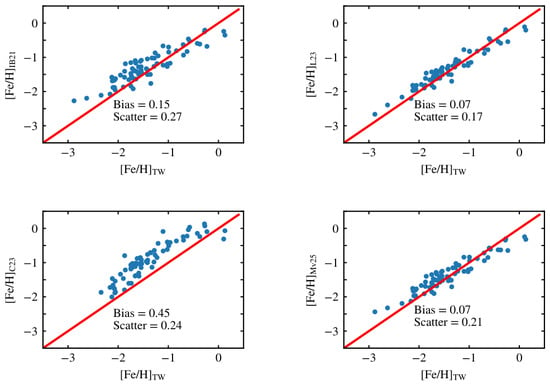
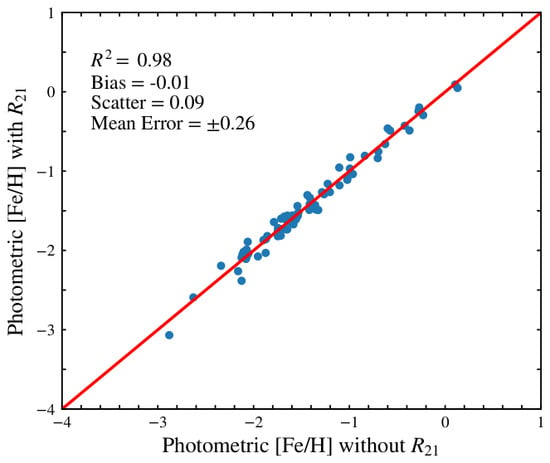
RR Lyrae stars are pulsating variables crucial for distance determination and galactic structure studies. Metallicities of fundamental-mode (RRab) RR Lyrae stars are commonly derived from photometry using empirical relations involving the Fourier parameter and the pulsation period. We present a new, calibrated G-band relationship between pulsation period P, Fourier parameter , and metallicity [Fe/H] for galactic RR Lyrae stars from the Gaia survey. A set of 72 fundamental mode RR Lyrae stars were identified for deriving the relation in the G-band after visual examination of their light curves. Unlike recent large-scale calibrations, our relation prioritizes calibration purity by anchoring exclusively to a homogeneously analyzed sample of high-resolution spectroscopic metallicities from the literature. Our best fit relation is . We compare the [Fe/H] predicted by our relation for the stars in our calibration sample with that obtained from previously established relations in the G-band using different approaches. Our calibrated G-band P- -[Fe/H] relationship demonstrates high reliability when validated against spectroscopic data, achieving a negligible bias of 0.00 dex and an empirical RMS scatter of 0.26 dex. Furthermore, by applying an Orthogonal Distance Regression (ODR) routine that fully propagates parameter covariance, we establish a mathematically strict empirical baseline whose theoretical uncertainties perfectly align with this observed dispersion. We find that the inclusion of the Fourier parameter offers no significant improvement in metallicity estimation. Comparisons with literature confirm that our linear relation aligns closely with other Gaia DR3-based studies, while offering improved precision over older DR2-based relations.
Full article

Figure 1
Open AccessReview
Spin Demographics of Active Supermassive Black Holes: Updated Estimates from X-Ray Reflection and Future Opportunities
by
Júlia M. Sisk-Reynés, Christopher S. Reynolds, James H. Matthews, Dominic J. Walton, Joanna M. Piotrowska, James F. Steiner, Javier A. García and Angelo Ricarte
Galaxies 2026, 14(3), 50; https://doi.org/10.3390/galaxies14030050 - 15 May 2026
Abstract
Understanding the growth of supermassive black holes (SMBHs) requires observational constraints on how their angular momentum—or spin—varies with mass, since the relative importance of coherent accretion, chaotic accretion, and mergers will be reflected in SMBH spin populations. Here we present an updated compilation
[...] Read more.
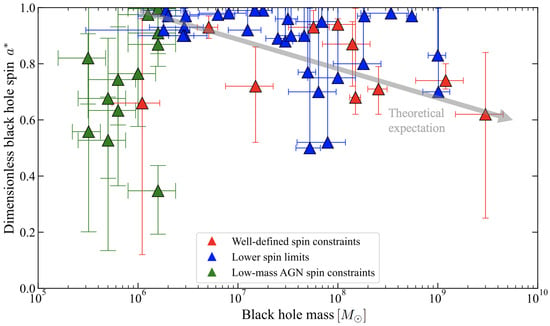
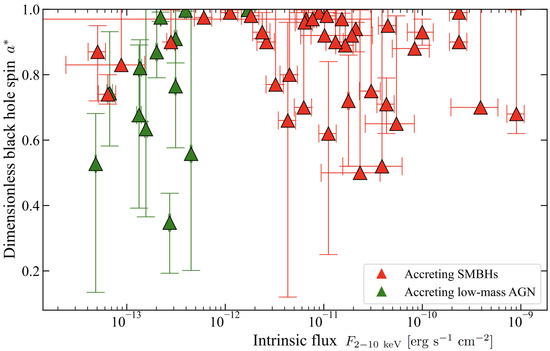
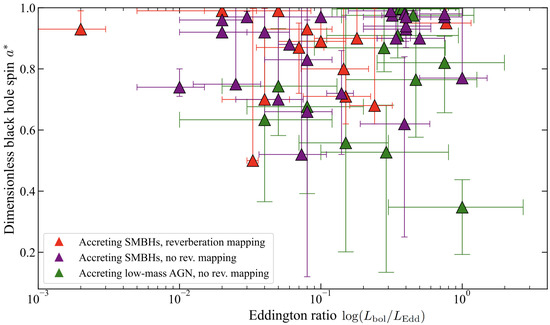
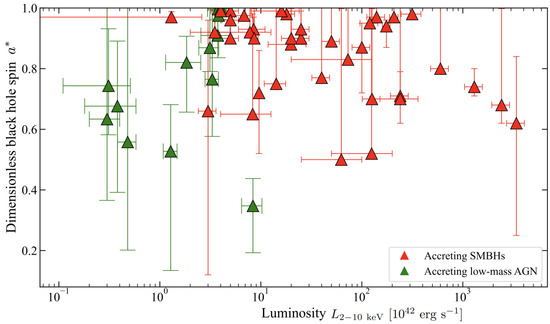
Understanding the growth of supermassive black holes (SMBHs) requires observational constraints on how their angular momentum—or spin—varies with mass, since the relative importance of coherent accretion, chaotic accretion, and mergers will be reflected in SMBH spin populations. Here we present an updated compilation of reflection-based SMBH spin measurements from the literature and assemble a set of ancillary quantities of interest for each SMBH (including redshift, Eddington ratio, and X-ray luminosity). No obvious apparent correlation between the Eddington-scaled accretion rate and the black hole spin is seen, noting that formal statistical tests are beyond the scope of this review. We discuss the limitations of using this heterogeneous mass–spin sample to test predictions of SMBH growth from semi-analytic models and cosmological simulations, emphasizing the need for a more uniform sample. We then highlight the encouraging prospects enabled by the next-generation NewAthena X-ray flagship observatory. Finally, we summarize how hierarchical Bayesian population inference applied to observed SMBH mass–spin populations will constitute a powerful framework for confirming tentative mass–spin trends in future samples.
Full article
(This article belongs to the Special Issue X-Ray Probes of Black Hole Spin and Accretion Physics)
►▼
Show Figures

Figure 1
Open AccessArticle
The Ba Isotopic Ratio as a Way of Distinguishing the R- and S-Process in Chemical Evolution Models
by
Federico Rizzuti, Gabriele Cescutti, Linda Lombardo, Lorenzo Roberti and Tatyana Sitnova
Galaxies 2026, 14(3), 49; https://doi.org/10.3390/galaxies14030049 - 14 May 2026
Abstract
Only recently, observational studies have started providing measurements for the barium isotopic ratio in metal-poor stars with unprecedented detail. This new approach can be extremely useful in tracing back the origin of neutron-capture elements, since the r- and s-process produce different amounts of
[...] Read more.
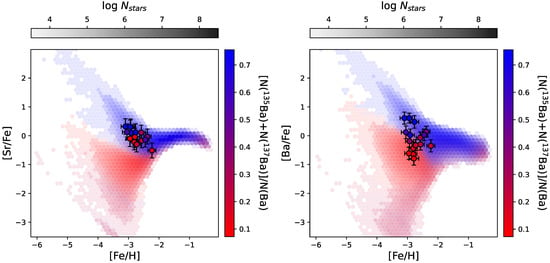
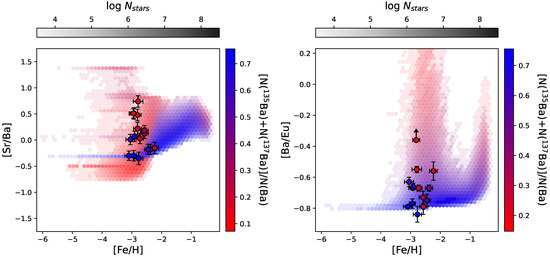
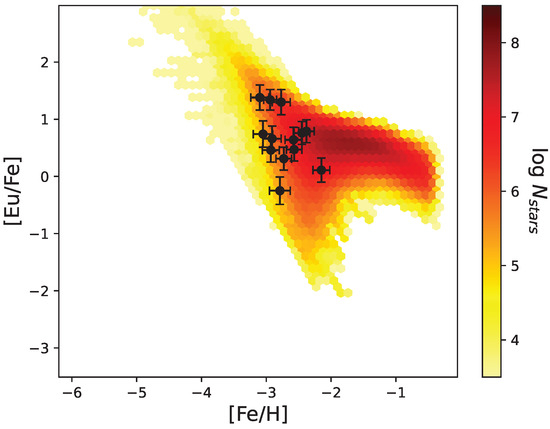
Only recently, observational studies have started providing measurements for the barium isotopic ratio in metal-poor stars with unprecedented detail. This new approach can be extremely useful in tracing back the origin of neutron-capture elements, since the r- and s-process produce different amounts of barium isotopes, and their astrophysical sites of production are still largely unconstrained. We employ here a stochastic chemical evolution model of the Galactic halo to compare observations to theoretical predictions. We find that in the earliest phases of evolution, both r- and s-process sites are required, with the model and observations agreeing well for Sr, Ba and Eu, possibly requiring a slightly larger s-process production for Sr. The model can actually explain the mixture of r- and s-process material often observed in halo stars. This work shows how is it possible now to use isotopic ratios in addition to elemental ratios to obtain additional constraints useful for the Galactic Archaeology investigation.
Full article
(This article belongs to the Special Issue Neutron Capture Processes in the Universe)
►▼
Show Figures

Figure 1

Open AccessArticle
Analysing Hubble Tension and Gravitational Waves for f(Q,T) Gravity Theories
by
Aritrya Paul and Shreya Banerjee
Galaxies 2026, 14(3), 48; https://doi.org/10.3390/galaxies14030048 - 14 May 2026
Abstract
►▼
Show Figures
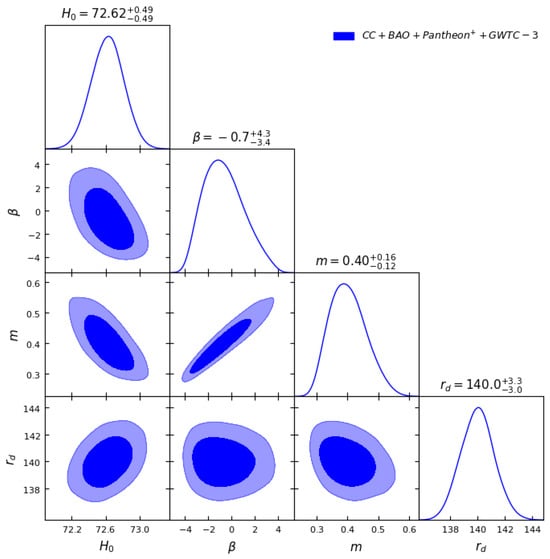
In this work, we examine viable models of gravity theories against observational data with the aim to constrain the parameter space of these models. We have analyzed four different models of
[...] Read more.
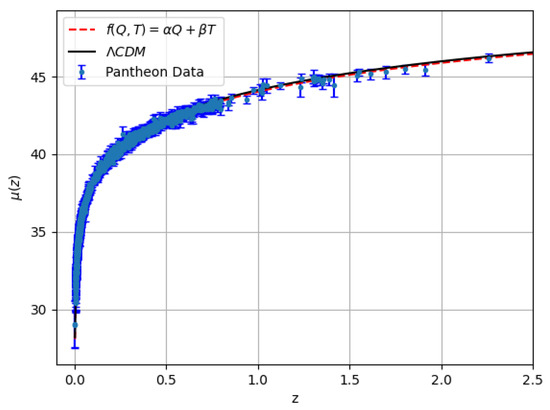
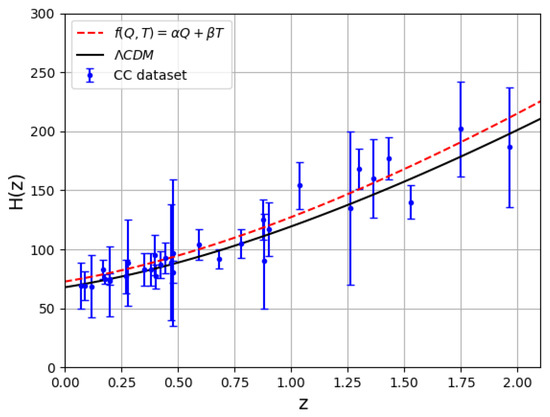
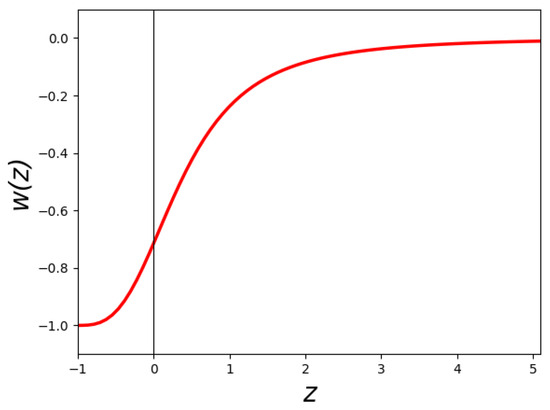
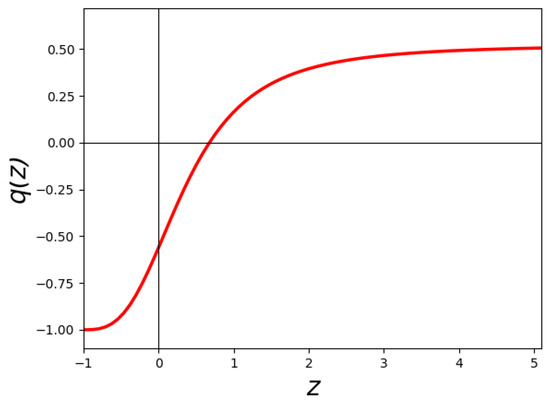
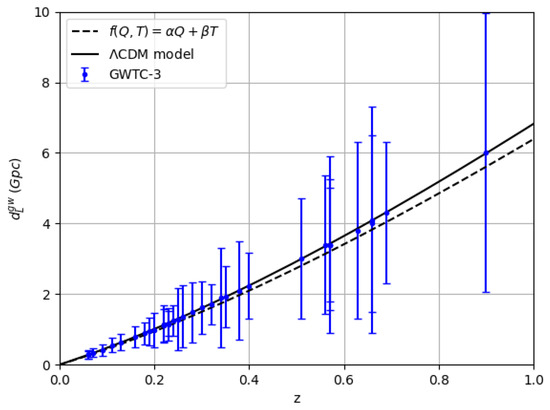
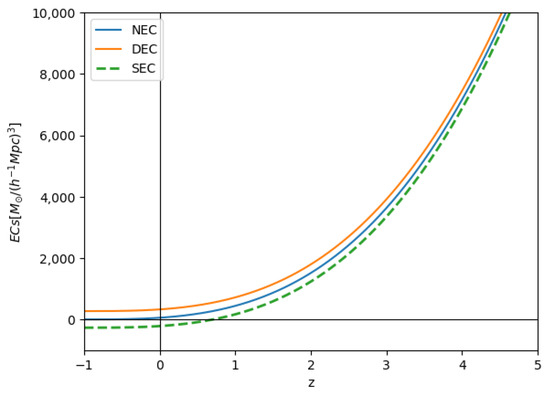
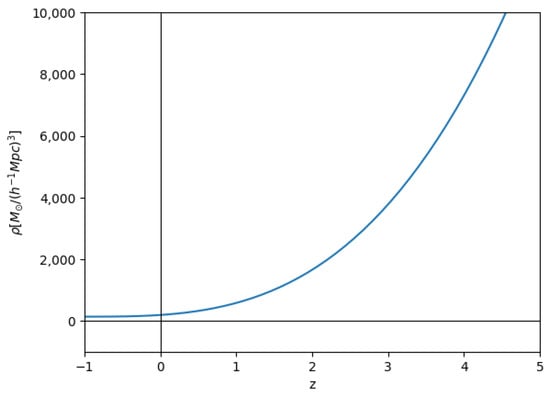
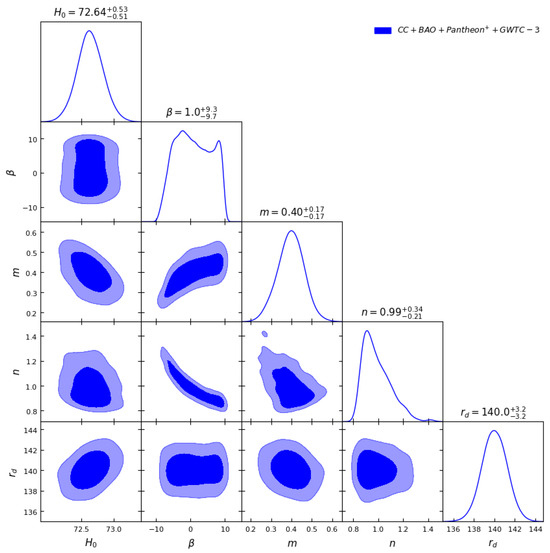
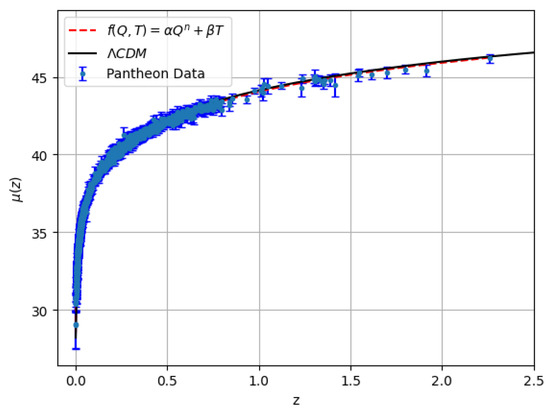
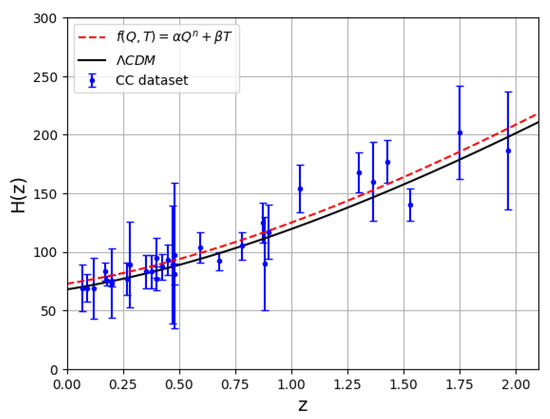
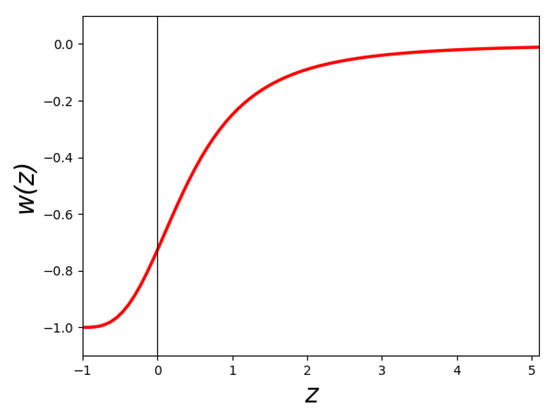
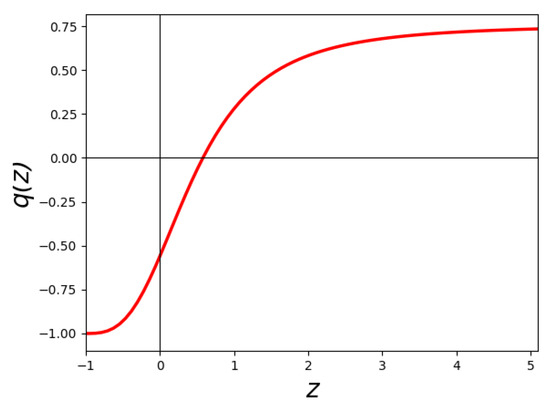
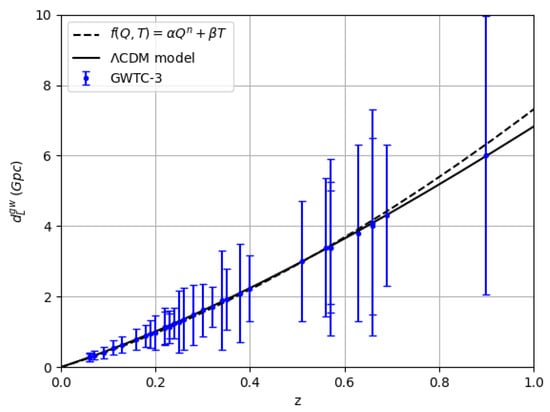
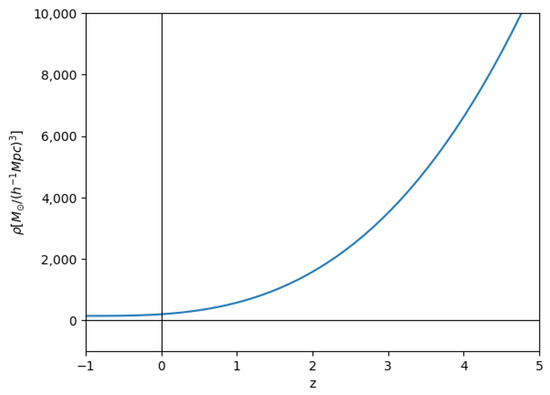
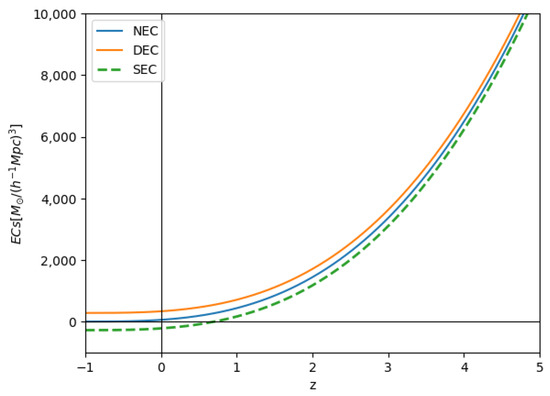
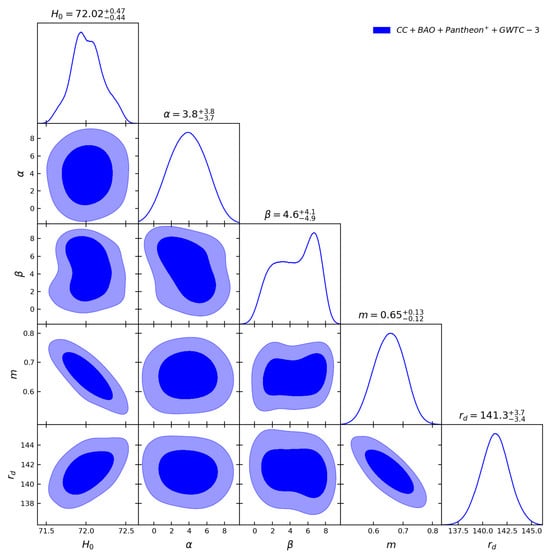
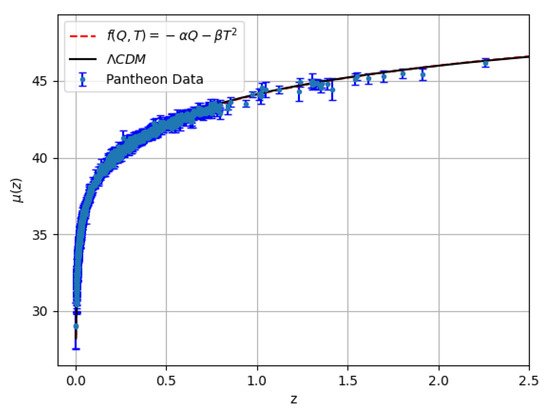
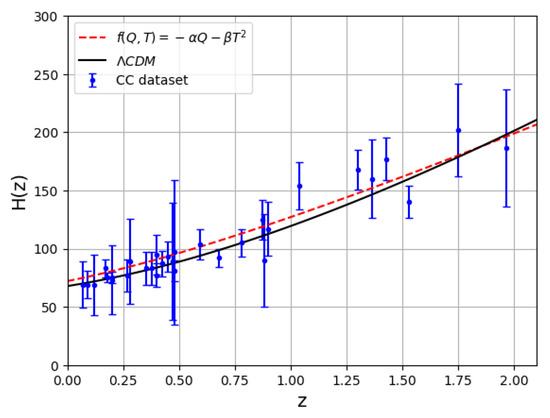
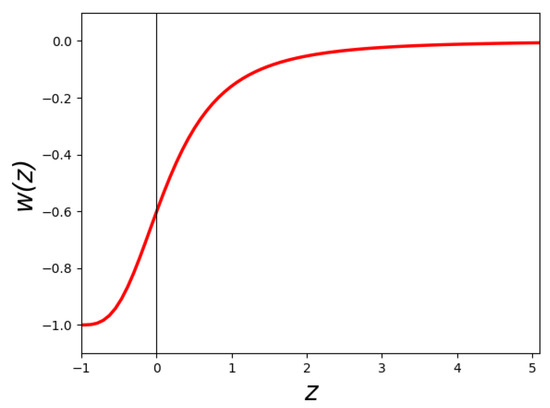
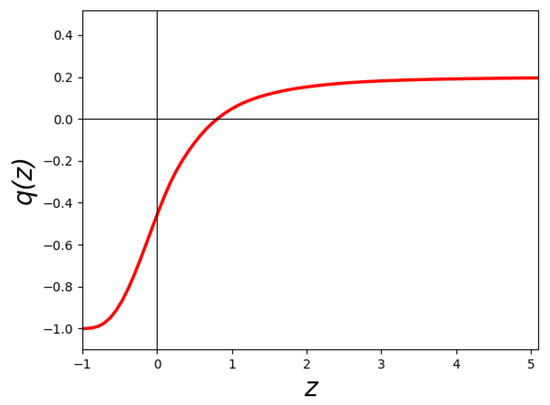
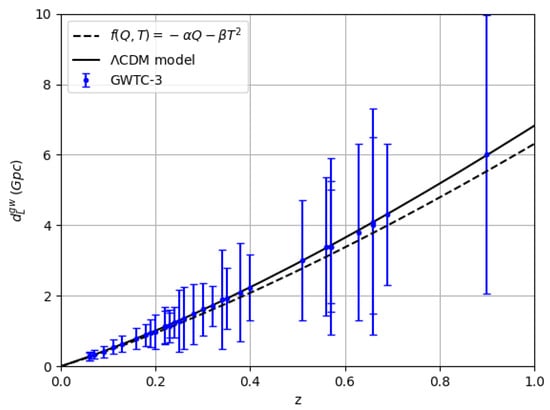
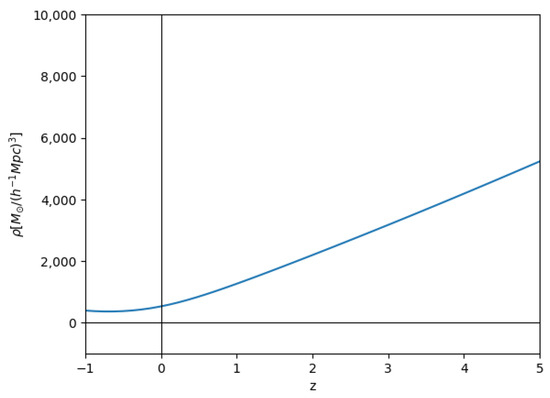
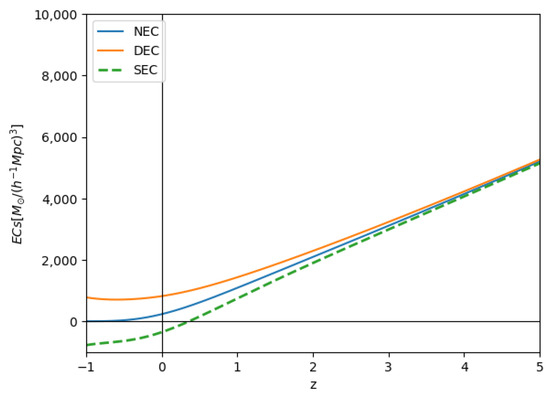
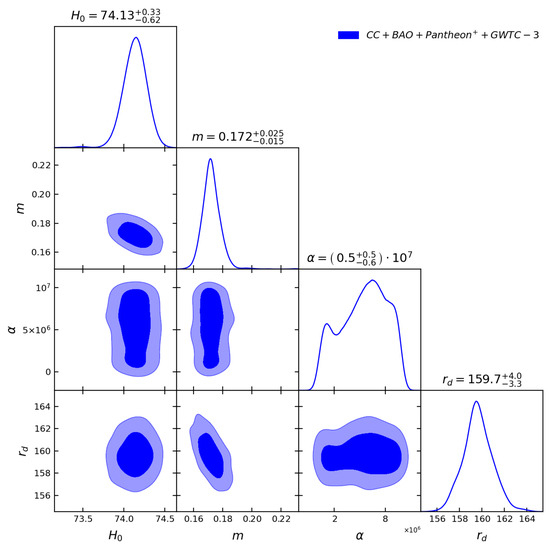
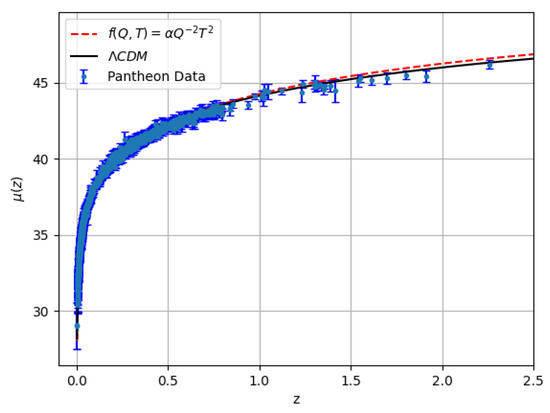
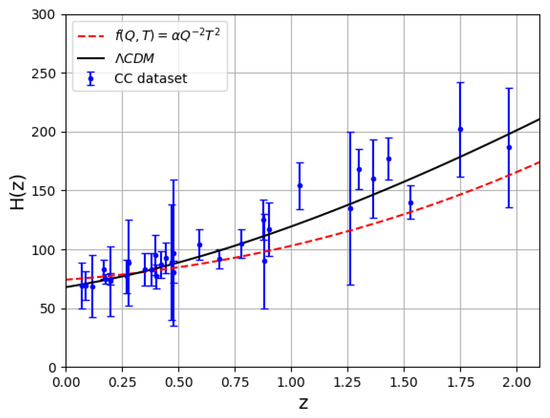
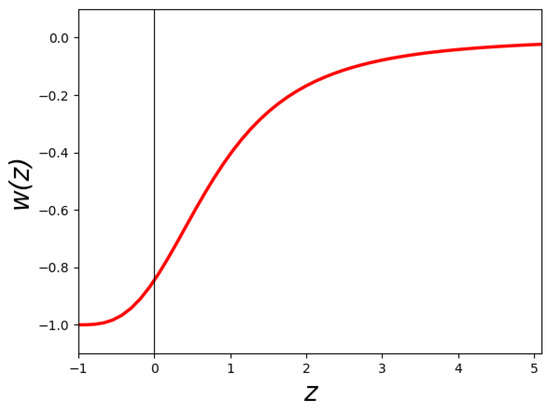
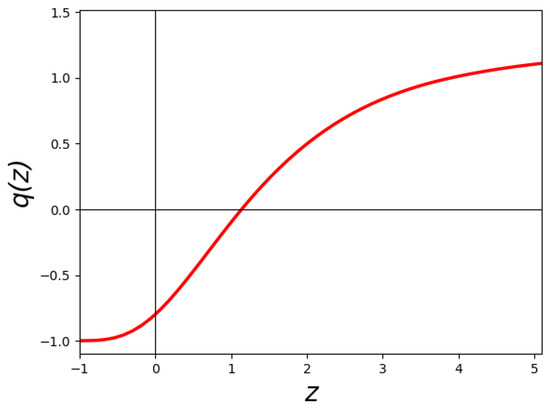
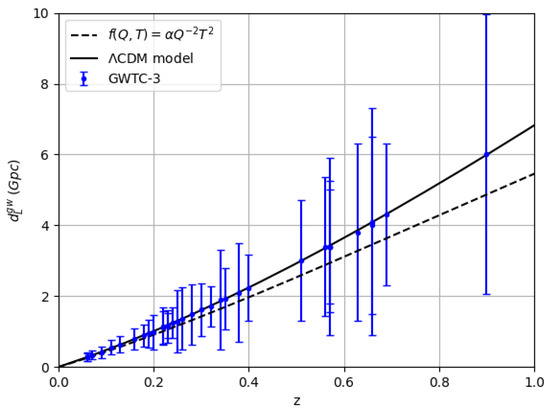
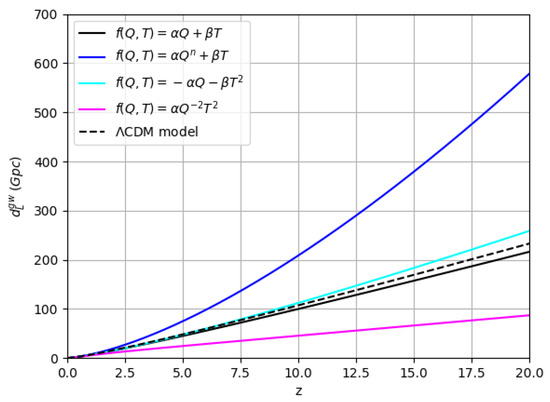
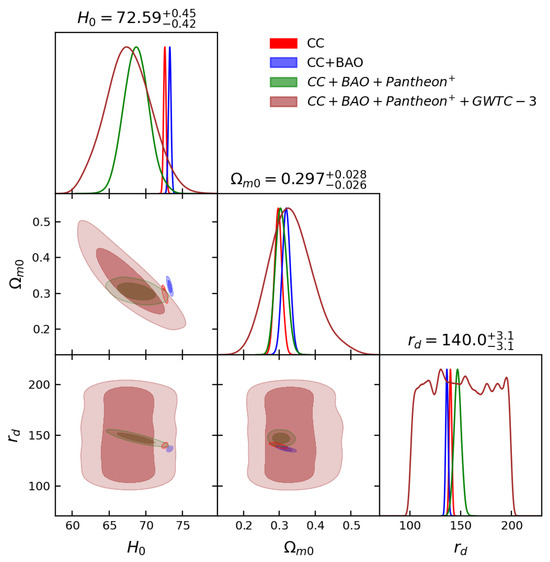
In this work, we examine viable models of gravity theories against observational data with the aim to constrain the parameter space of these models. We have analyzed four different models of gravity and tested them against against late-time background probes: Cosmic Chronometer (CC), Baryon Acoustic Oscillations (DESI BAO), and Gravitational wave(GWTC-3) data. We put stringent constraints on the gravity models, , , and along with other late-time cosmological parameters such as deceleration parameter ( ), equation of state parameter ( ), sound horizon distance ( ) and demonstrate their alignment with the model and the observational data. We show that these models have the capability to alleviate the Hubble tension in late time universe, by predicting the present value of the Hubble parameter close to 74 km/s/Mpc. gravity theory introduces alterations in the background evolution and imposes a friction term in the propagation of gravitational waves, this phenomenon has also been examined. We have shown their agreement with the Gravitational Wave (GW) luminosity distance with the Electromagnetic (EM) counter part GWTC-3 data from Advanced LIGO and Advanced VIRGO across different observing runs capturing coalescence of Binary Neutron Stars (BNS), mergers of Binary Black Holes (BBHs), and Neutron Star-Black Hole (NSBH) binaries with EM counterparts.
Full article

Figure 1
Open AccessArticle
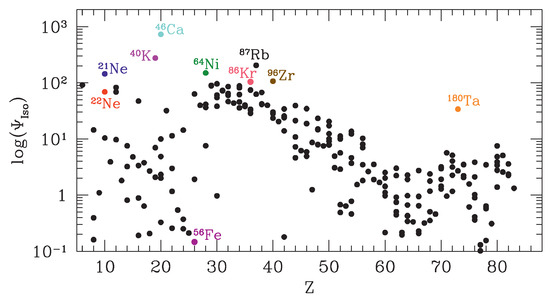
Nucleosynthesis of Elements Beyond Fe in C-O Shell Mergers
by
Lorenzo Roberti, Agnese Falla and Luca Boccioli
Galaxies 2026, 14(3), 47; https://doi.org/10.3390/galaxies14030047 - 14 May 2026
Abstract
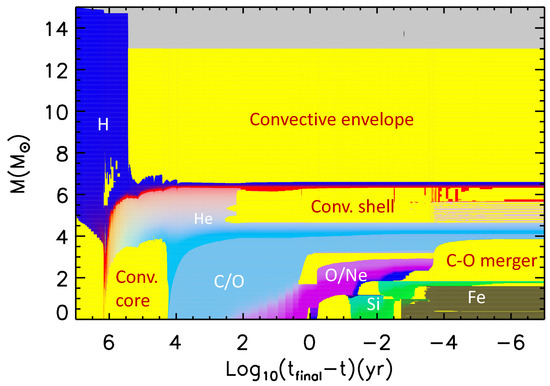
Carbon–oxygen (C–O) shell mergers in the final evolutionary stages of massive stars play a critical role in shaping the pre-supernova structure and the resulting nucleosynthesis. In this work, we investigate the impact of such a merger on the production of elements beyond the
[...] Read more.
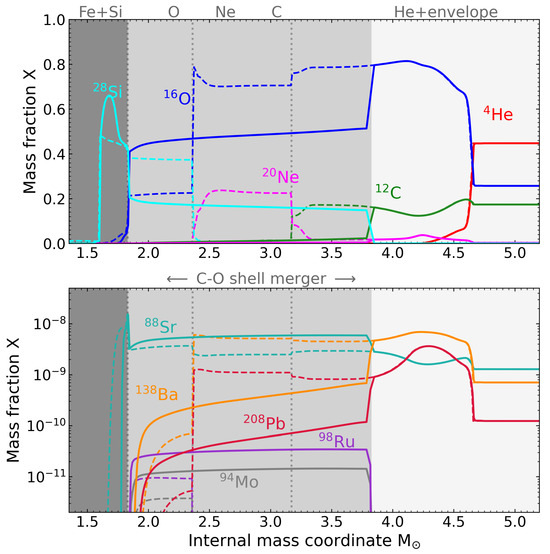
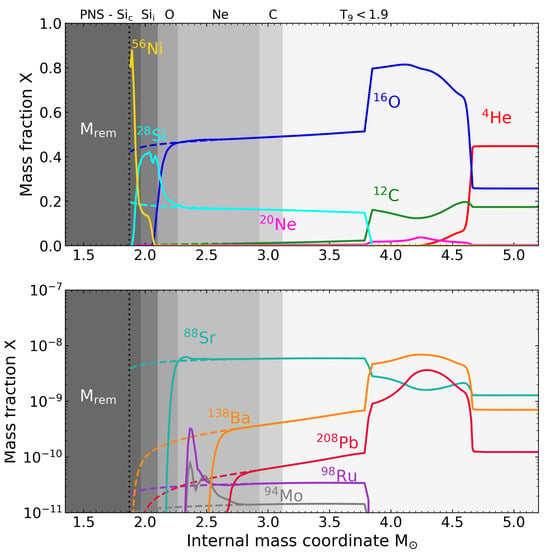
Carbon–oxygen (C–O) shell mergers in the final evolutionary stages of massive stars play a critical role in shaping the pre-supernova structure and the resulting nucleosynthesis. In this work, we investigate the impact of such a merger on the production of elements beyond the Iron peak, focusing on an extremely metal-poor ( ) rotating 15 stellar model. The results show that the merger favors the synthesis of weak s-process seeds and light p-nuclei, such as 88Sr, 94Mo, and 98Ru, via photodisintegration of heavier nuclei previously produced by rotational-induced nucleosynthesis. By simulating the subsequent core-collapse supernova explosion with a thermal bomb approach, we demonstrate that these chemical signatures are largely preserved, as the expanded structure of the merged shells significantly modifies the impact of the shock wave. These findings suggest that C–O shell mergers in early-generation stars could provide a primary-like source for intermediate and heavy elements, with important implications for the chemical evolution of the early Universe.
Full article
(This article belongs to the Special Issue Neutron Capture Processes in the Universe)
►▼
Show Figures

Figure 1
Open AccessArticle
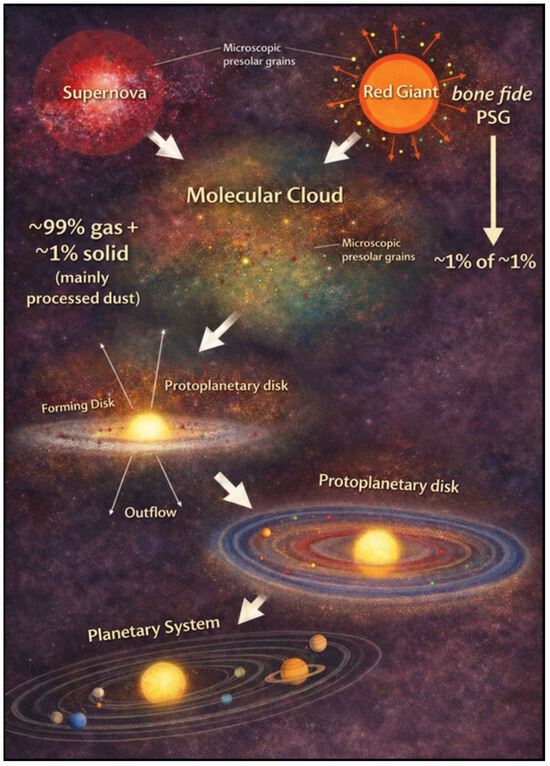
Just Beyond the S-Process Termination Point: Nucleosynthesis of Lead–Bismuth Cyclic Reactions
by
Nurzat Kenzhebayev, Manas Khassanov, Ruslan Spassyuk, Daulet Anarbek, Yerlan Aimuratov and Medeu Abishev
Galaxies 2026, 14(3), 46; https://doi.org/10.3390/galaxies14030046 - 14 May 2026
Abstract
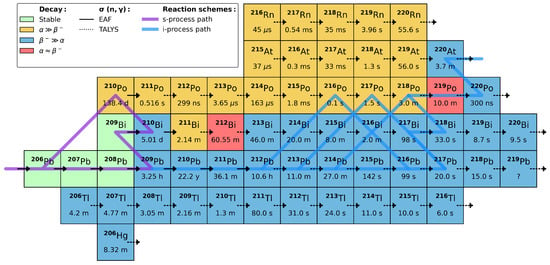
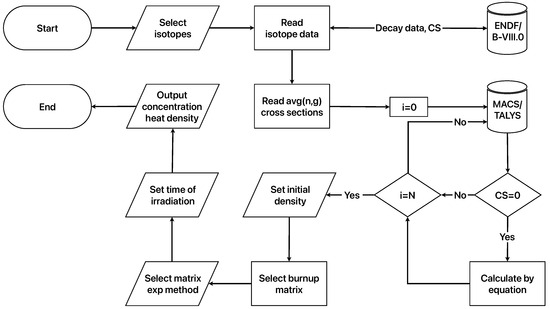
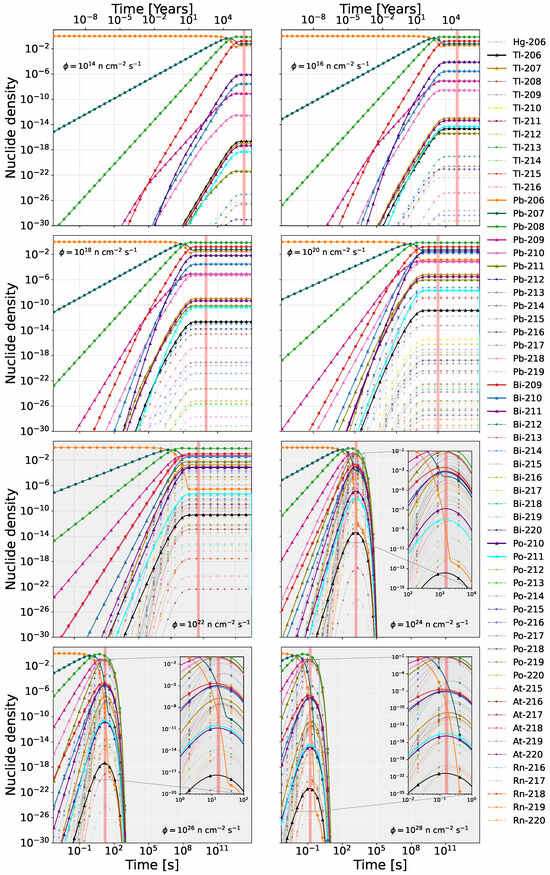
We examine cyclic nuclear reactions in the lead–bismuth (Pb–Bi) system near the s-process termination point. We present a numerical investigation of the isotopic evolution and decay heat generation in an extended 60-isotope nuclear reaction network under continuous 30 keV neutron irradiation (
[...] Read more.
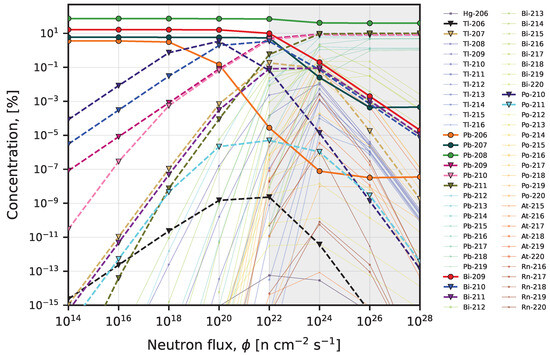
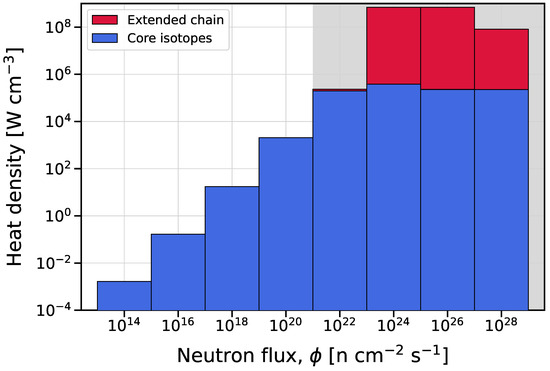
We examine cyclic nuclear reactions in the lead–bismuth (Pb–Bi) system near the s-process termination point. We present a numerical investigation of the isotopic evolution and decay heat generation in an extended 60-isotope nuclear reaction network under continuous 30 keV neutron irradiation ( – n cm−2 s−1) using the Chebyshev Rational Approximation Method (CRAM). The network accounts for 88 transitions, utilising a hybrid data approach that combines neutron capture cross-sections from EAF-2010 and TALYS with fundamental decay properties from the ENDF/B-VIII.0. Our simulations reveal two distinct evolutionary regimes. At moderate fluxes ( – n cm−2 s−1), the system establishes a steady cyclic loop driven by the -decay of , successfully reproducing the s-process termination isotopic distribution ( ), characteristic of low-metallicity AGB stars. As the flux exceeds n cm−2 s−1, the classical balance breaks down, propelling mass flow toward heavier trace isotopes and suggesting a potential transition into the intermediate neutron capture (i-process) regime. Heat density calculations demonstrate that while the energy release of the core cycle plateaus near W cm−3, the extended chain drives an energy surge to over W cm−3 at n cm−2 s−1 before the system enters an unstable transient state at extreme fluxes.
Full article
(This article belongs to the Special Issue Neutron Capture Processes in the Universe)
►▼
Show Figures

Figure 1

Open AccessReview
TeV-Band Properties of Nearby HBLs
by
Bidzina Kapanadze and Stefano Vercellone
Galaxies 2026, 14(3), 45; https://doi.org/10.3390/galaxies14030045 - 13 May 2026
Abstract
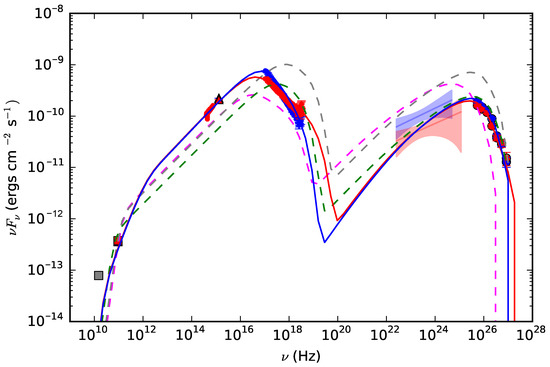
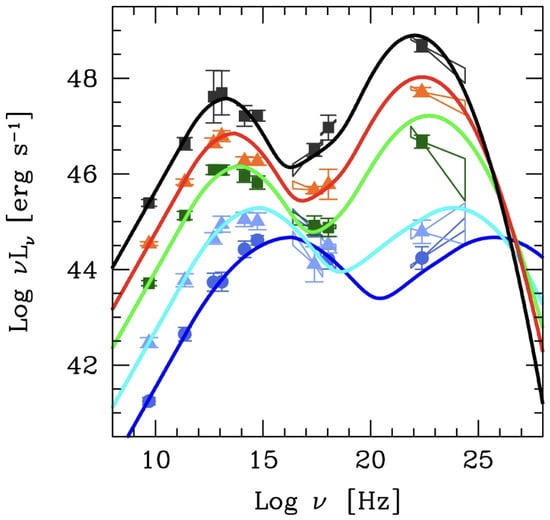
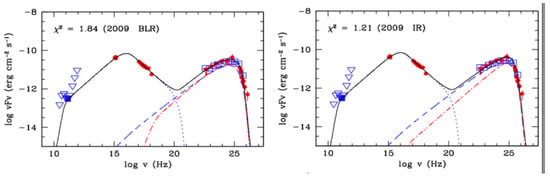
Nearby ( ) TeV-detected, high-energy-peaked BL Lacertae objects (HBLs) are among the most prominent extragalactic sources of the highest-energy photons, sometimes detected at energies of ∼10 TeV or beyond. These objects show a strong and complex flux variability, with strong
[...] Read more.
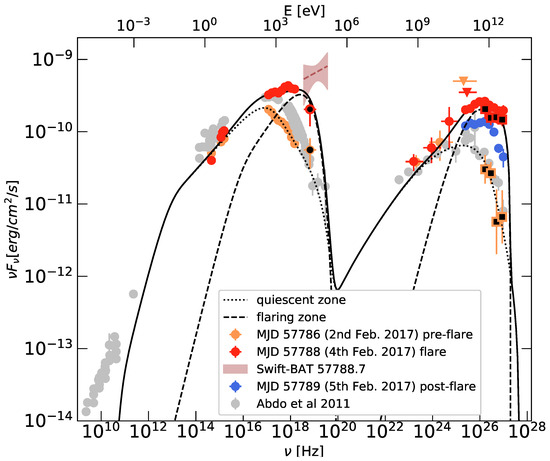
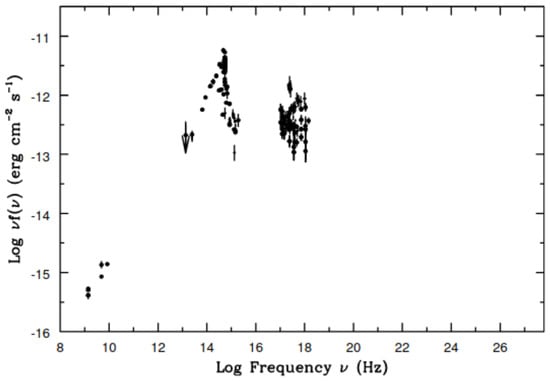
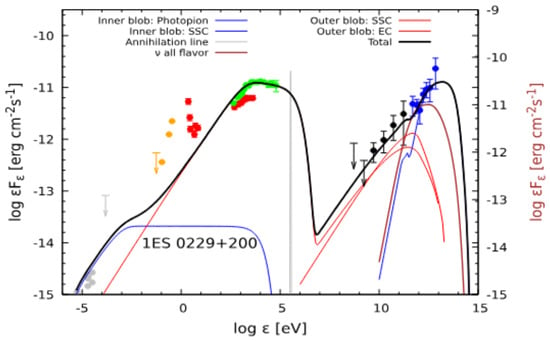
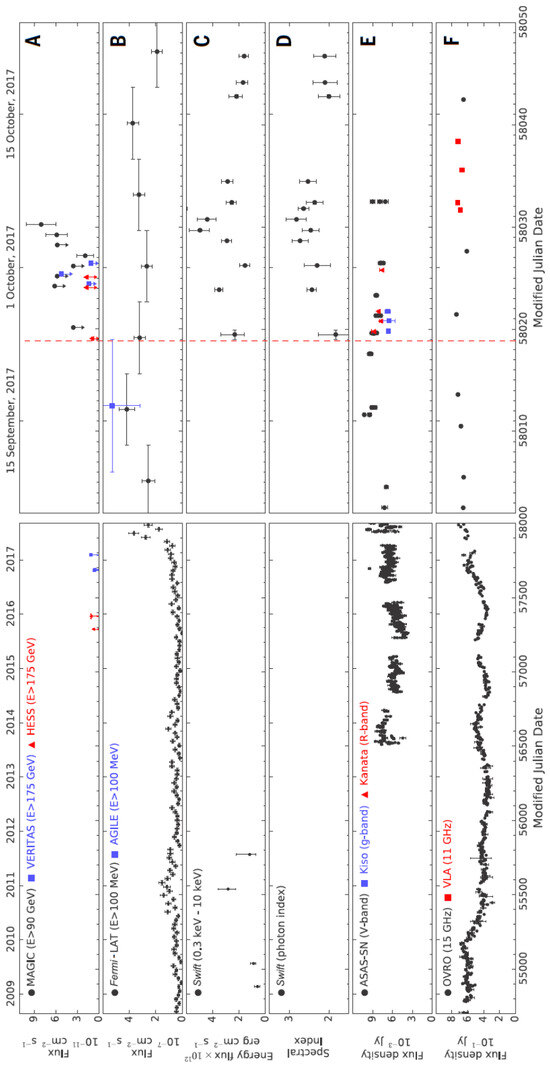
Nearby ( ) TeV-detected, high-energy-peaked BL Lacertae objects (HBLs) are among the most prominent extragalactic sources of the highest-energy photons, sometimes detected at energies of ∼10 TeV or beyond. These objects show a strong and complex flux variability, with strong flares and exceptional outbursts, as well as very rapid and large-amplitude TeV-band variations on timescales down to a few minutes during such instances. The higher-energy component of broadband spectral energy distribution (SED) is stretched over the MeV–TeV domain and, generally peaking beyond 100 GeV, has a controversial origin, and different emission scenarios (one- or multi-zone synchrotron self-Compton, hadronic cascades, etc.) are proposed. This paper presents a review of the TeV-band timing and spectral results obtained in the framework of different observational campaigns for nearby HBLs, their implications for different emission scenarios, and basic results from the corresponding SED modelings. Finally, the prospect of filling the observational gaps above some threshold energy by means of the planned projects for the dedicated -ray observations and, consequently, solving the different persisting problems related to the innermost structure, particle acceleration, and emission mechanisms are also presented.
Full article
(This article belongs to the Special Issue Multiwavelength Variability and Unstable Processes in High-Energy-Peaked BL Lacertae Objects)
►▼
Show Figures

Figure 1
Open AccessReview
Can Neutron-Capture Products Constrain the Origin of Life on Earth?
by
Katherine R. Bermingham and Bradley S. Meyer
Galaxies 2026, 14(3), 44; https://doi.org/10.3390/galaxies14030044 - 12 May 2026
Abstract
Neutron-capture products, such as molybdenum (Mo) isotopes, are an important tool that cosmochemists use to constrain the stellar precursors of the Solar System and, potentially, the origin of life on Earth. Using high-precision Mo isotope data from meteorites and terrestrial samples, studies have
[...] Read more.
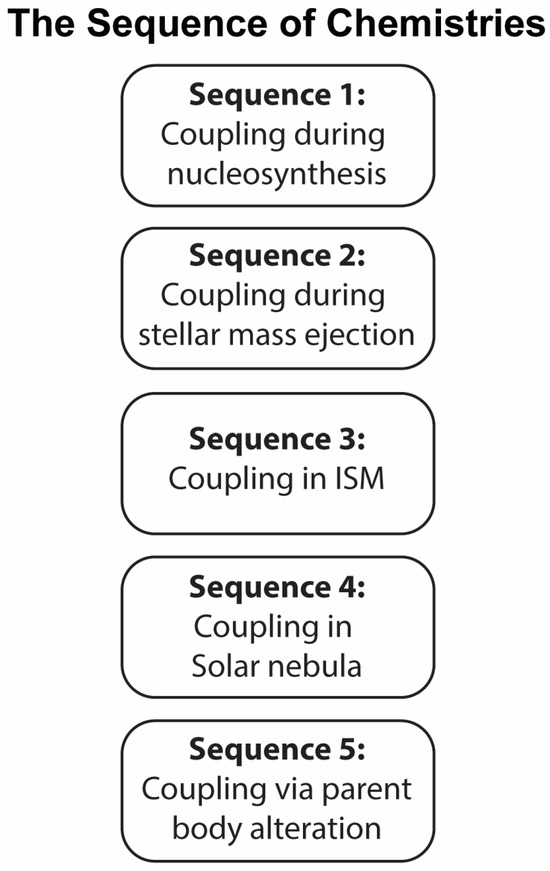
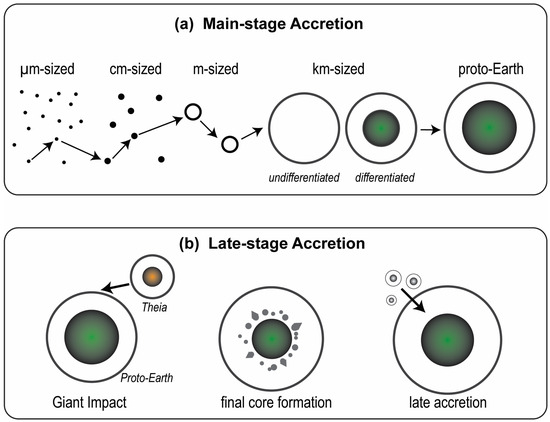
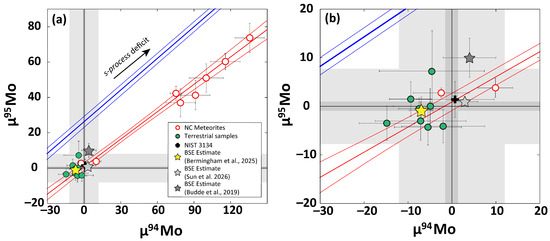
Neutron-capture products, such as molybdenum (Mo) isotopes, are an important tool that cosmochemists use to constrain the stellar precursors of the Solar System and, potentially, the origin of life on Earth. Using high-precision Mo isotope data from meteorites and terrestrial samples, studies have attempted to reconstruct Earth’s formation by linking its composition to material sourced from various heliocentric distances. Debate, however, persists about the nature of Earth’s late-stage building blocks that accreted around the time the Moon formed and whether they delivered life-essential elements (i.e., carbon, hydrogen, nitrogen, oxygen, phosphorus, and sulfur; CHNOPS), which are presumed to be more prevalent in the outer Solar System. Initially, it was proposed that the Moon-forming event involved the addition of material from both the inner and outer Solar System, thereby providing a mechanism for the delivery of a significant portion of life-bearing elements late in Earth’s formation. Recent advancements in analytical chemistry and their application to a wider range of samples than previously studied, however, led to a revised constraint: the Moon-forming event was dominated by inner Solar System material that was less enriched in CHNOPS, thereby relaxing the requirement for the delivery of a consequential amount of life-bearing elements late in Earth’s formation. A review of analytical approaches and findings is presented here to highlight the utility of neutron-capture products in constraining the origin of life on Earth.
Full article
(This article belongs to the Special Issue Neutron Capture Processes in the Universe)
►▼
Show Figures

Figure 1

Open AccessReview
Gamma Cassiopeiae: History and Mystery
by
Olga A. Tsiopa, Alexander F. Kholtygin and Petr K. Tsiopa
Galaxies 2026, 14(3), 43; https://doi.org/10.3390/galaxies14030043 - 8 May 2026
Abstract
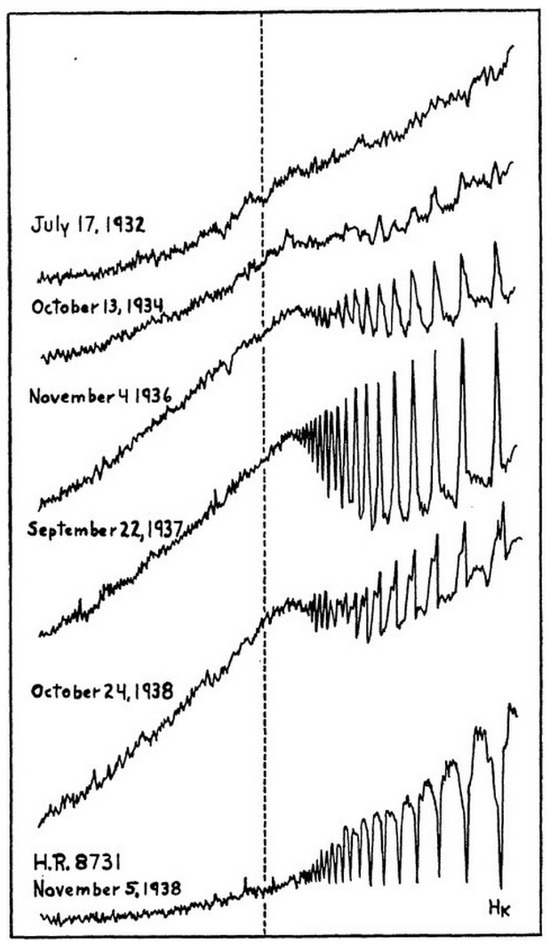
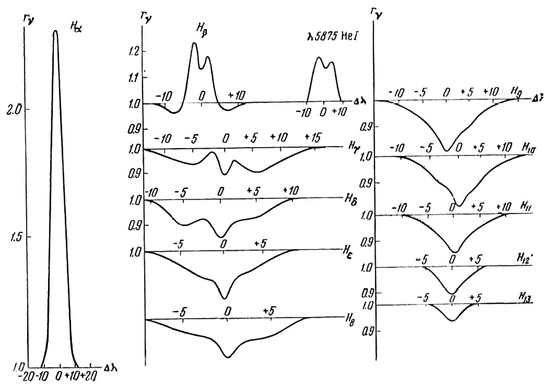
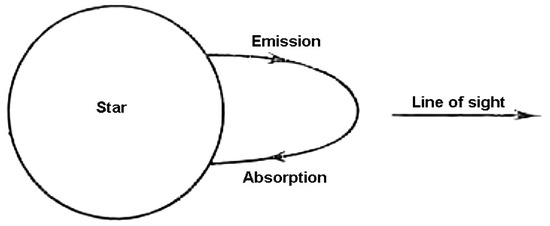
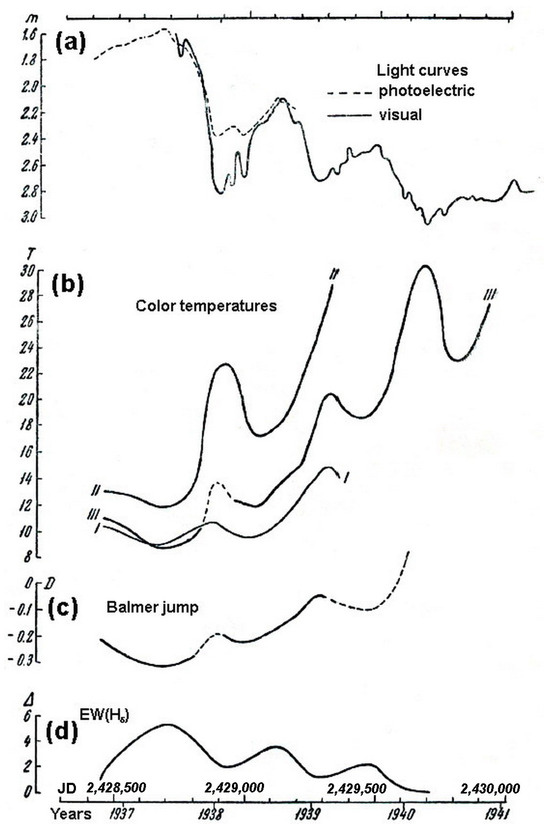
►▼
Show Figures
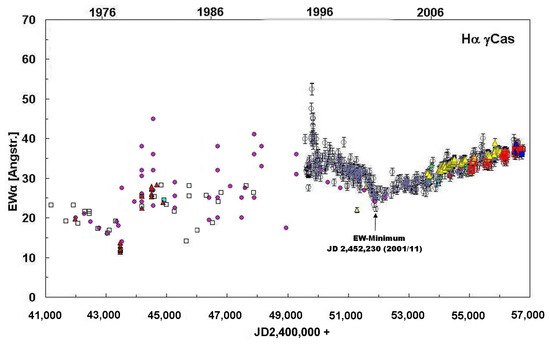
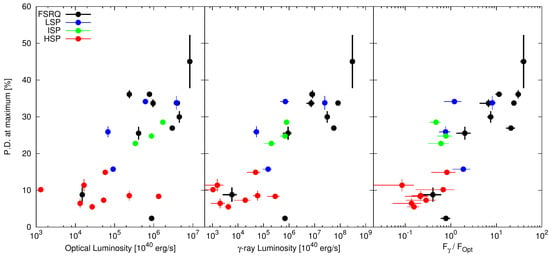
The history of observations of gamma Cassiopeiae ( Cas) is presented, including references to Soviet-era papers that have not been translated into English. The current state of knowledge is discussed. Particular attention is paid to the period of significant changes in the
[...] Read more.
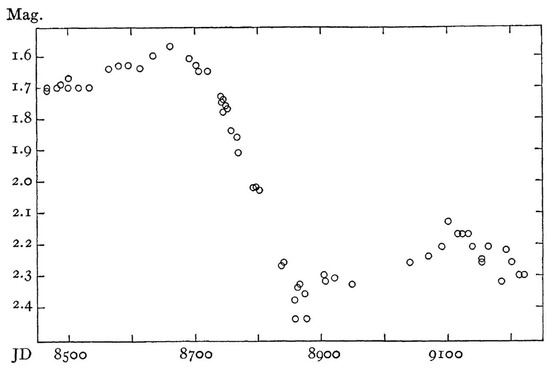
The history of observations of gamma Cassiopeiae ( Cas) is presented, including references to Soviet-era papers that have not been translated into English. The current state of knowledge is discussed. Particular attention is paid to the period of significant changes in the system’s characteristics during the 1930s and 1940s.
Full article

Figure 1
Open AccessArticle
Ba Isotope Ratio in CEMP-s and CEMP-rs Stars as a Signature of s-Process and i-Process
by
Tatyana Sitnova and Lyudmila Mashonkina
Galaxies 2026, 14(3), 42; https://doi.org/10.3390/galaxies14030042 - 6 May 2026
Abstract
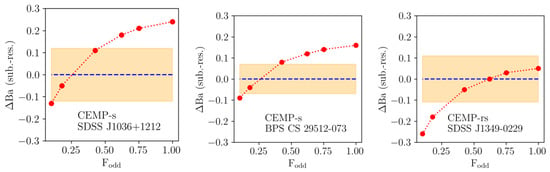
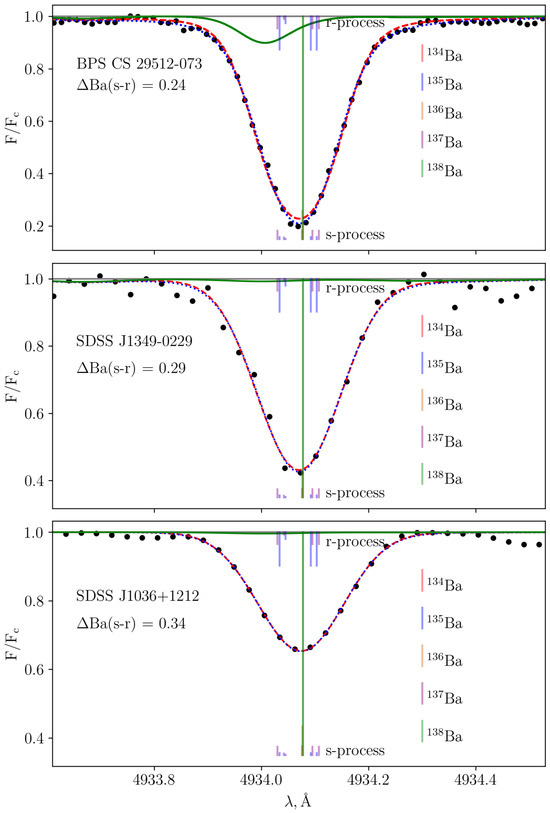
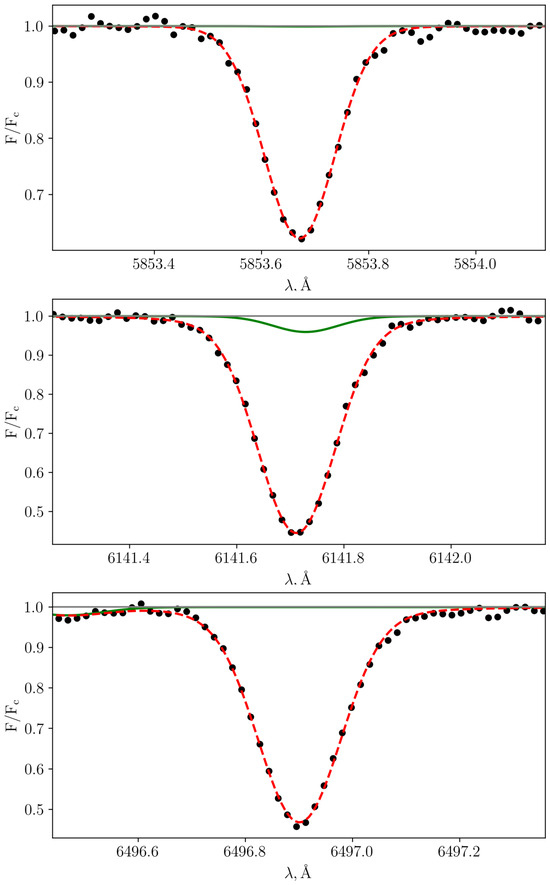
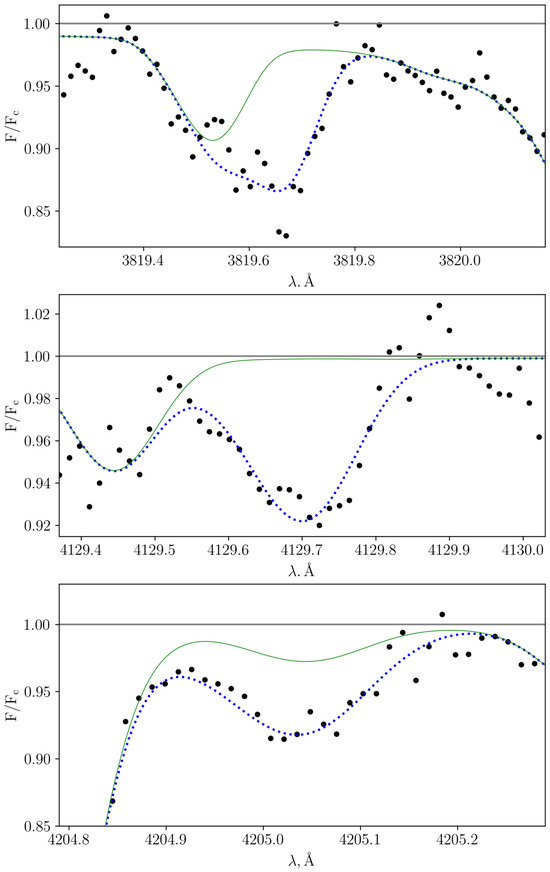
We present a spectroscopic analysis of three carbon-enhanced metal-poor (CEMP) stars of type CEMP-s and CEMP-rs and determine their non-local thermodynamic equilibrium (NLTE) abundances of Ba and the fractions of the odd Ba isotopes ( ). We found =
[...] Read more.
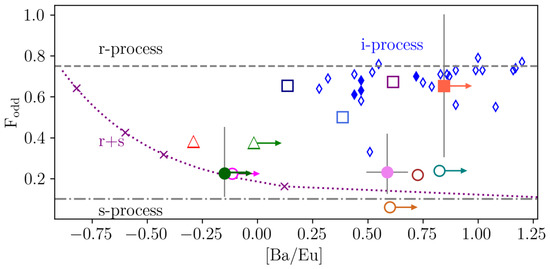
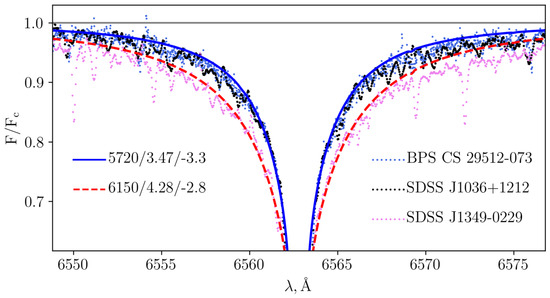
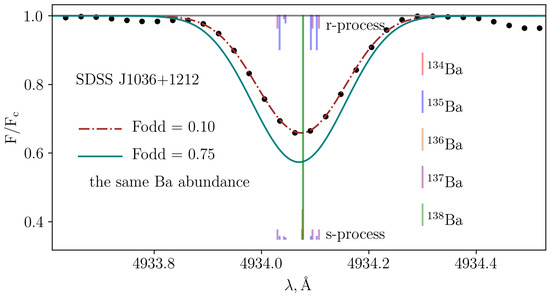
We present a spectroscopic analysis of three carbon-enhanced metal-poor (CEMP) stars of type CEMP-s and CEMP-rs and determine their non-local thermodynamic equilibrium (NLTE) abundances of Ba and the fractions of the odd Ba isotopes ( ). We found = 0. in SDSS J1349-0229, which is known in the literature as a CEMP-rs star, while the other two stars, BPS CS 29512-073 and SDSS J1036+1212, exhibit lower = 0. and 0. , respectively, and they are known in the literature as CEMP-s stars. The present result supports our earlier finding about distinct in CEMP-s and CEMP-rs stars. For obtaining observational constraints on i-process nucleosynthesis, further NLTE abundance determinations for many chemical elements are required.
Full article
(This article belongs to the Special Issue Neutron Capture Processes in the Universe)
►▼
Show Figures

Figure 1
Open AccessArticle
Search for Galactic Sources of Trans-GZK Cosmic Rays in the Local Void Sky Region
by
Lidiia Zadorozhna, Olexandr Gugnin, Bohdan Hnatyk, Olena Prykhodko, Valentyna Babur, Vadym Voitsekhovskyi and Pavlo Panasiuk
Galaxies 2026, 14(3), 41; https://doi.org/10.3390/galaxies14030041 - 6 May 2026
Abstract
►▼
Show Figures
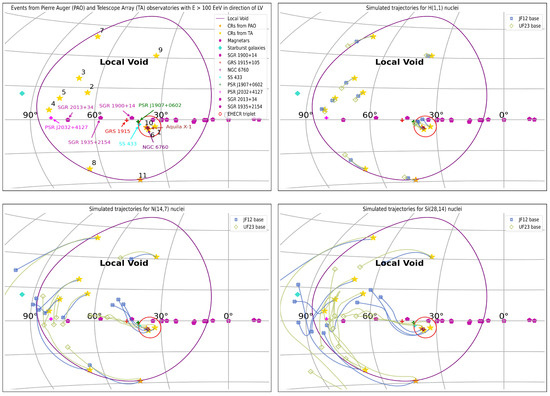
Identifying the sources of Ultra-High Energy Cosmic Rays (UHECRs, eV) remains a fundamental challenge in astrophysics due to the significant deflections of charged particles by Galactic and extragalactic magnetic fields. Until now, dozens of events with energies over
[...] Read more.
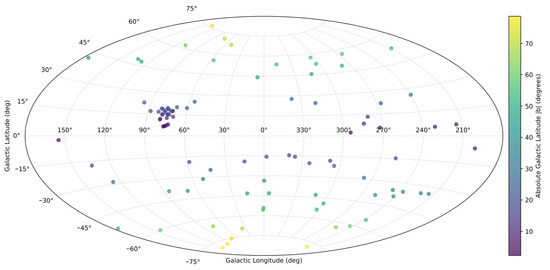
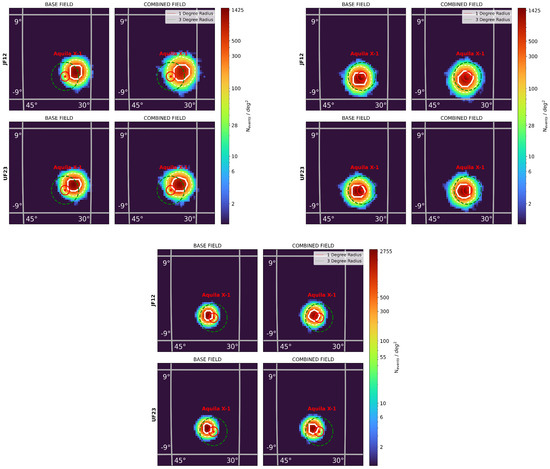
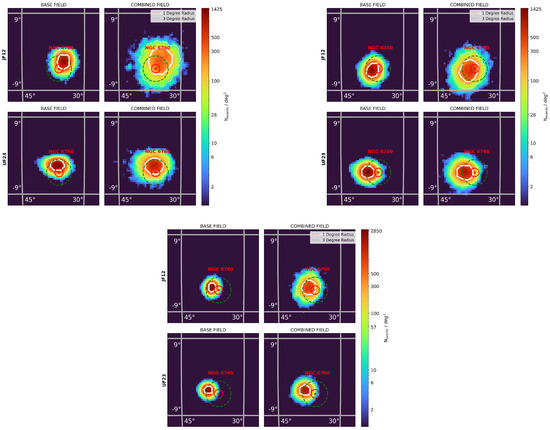
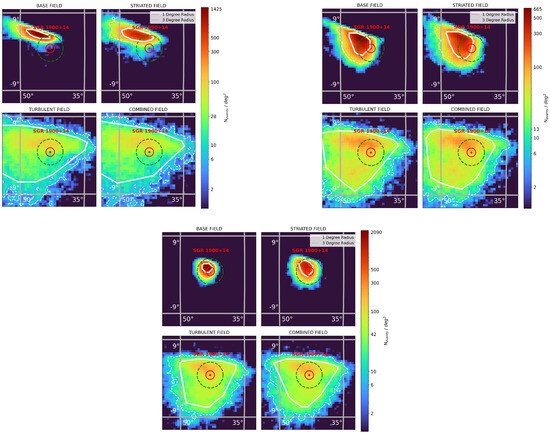
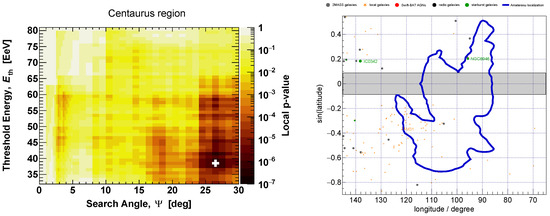
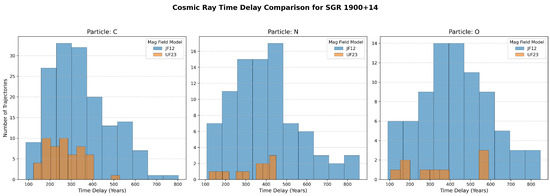
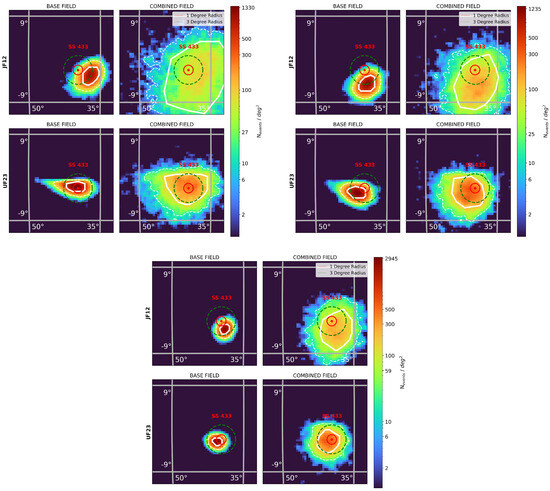
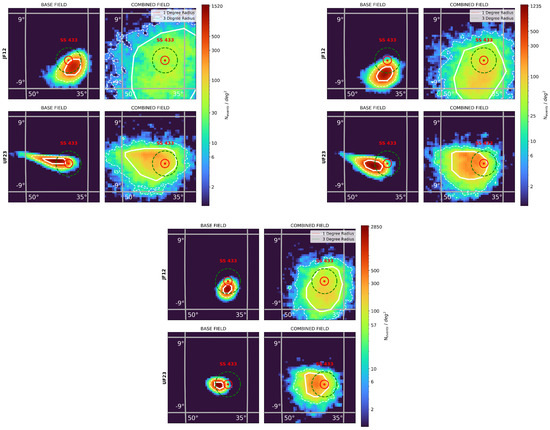
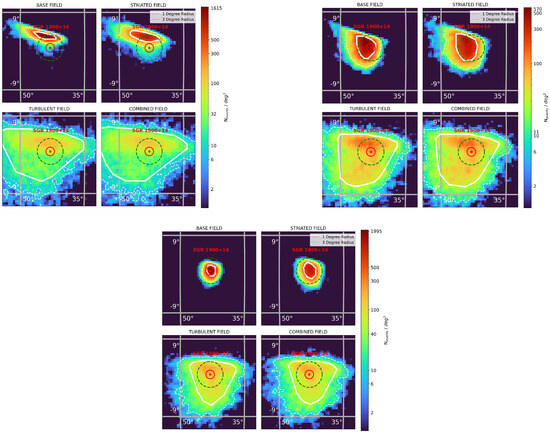
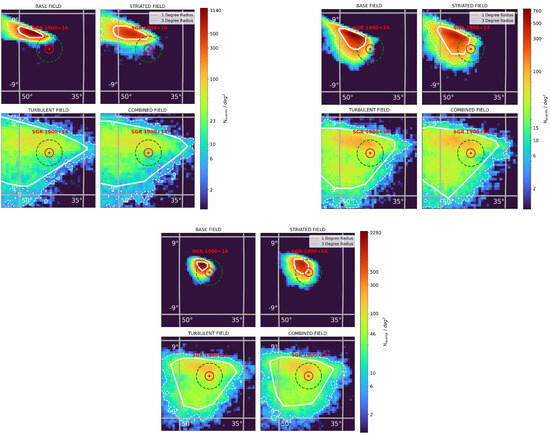
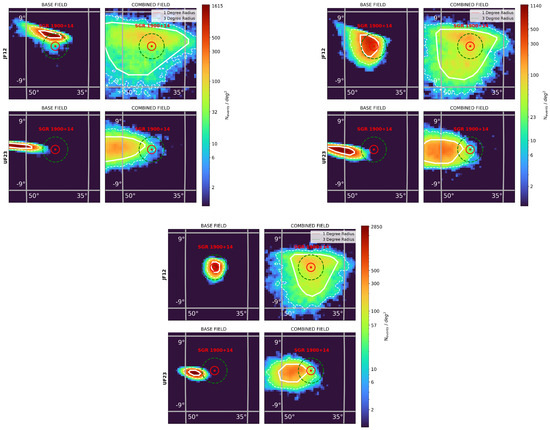
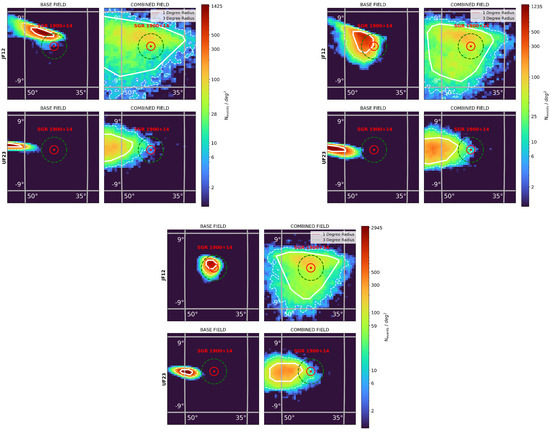
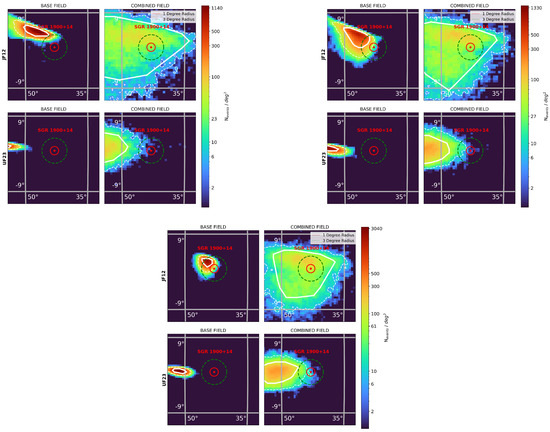
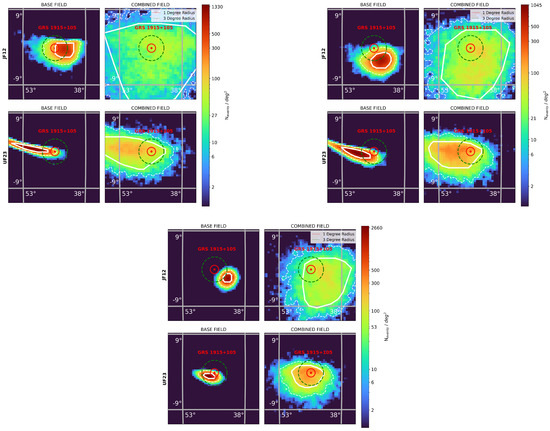
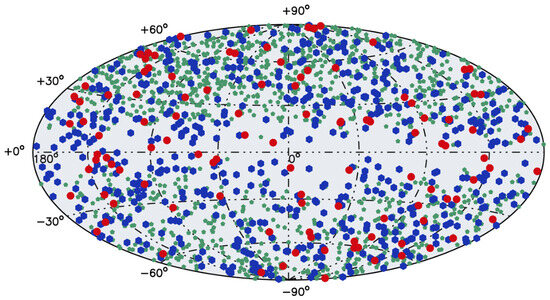
Identifying the sources of Ultra-High Energy Cosmic Rays (UHECRs, eV) remains a fundamental challenge in astrophysics due to the significant deflections of charged particles by Galactic and extragalactic magnetic fields. Until now, dozens of events with energies over eV—Extreme Energy Cosmic Rays (EECRs)—were detected by the Pierre Auger Observatory and Telescope Array, but none of them showed a statistically significant association with potential sources. In this study, we investigate potential sources of EECRs with arrival directions from Local Void region. Since the energy loss lengths of such EECRs are of order of 20–40 Mpc, i.e., smaller than the Local Void extension (∼60 Mpc), potential sources should be predominantly Galactic ones. Since the most promising UHECR accelerators are mildly relativistic shocks, we consider Galactic microquasars, magnetars, and pulsar wind nebulae as potential sources of EECRs in the Local Void sky region. Using event-by-event reconstruction of trajectories of detected EECRs via CRPropa backtracking in the Galactic magnetic field, we find the potential Galactic sources and corresponding charges Z for some of the detected EECRs. The most promising coincidence is found between the EECR event triplet detected by PAO and TA and SGR 1900+14, a Galactic magnetar exhibiting high-energy flaring activity, with the inferred propagation time delay being consistent with the characteristic age of the magnetar.
Full article

Figure 1
Open AccessReview
High-Synchrotron-Peaked BL Lacs as Multi-Messenger Sources: Connecting Ultra-High-Energy Cosmic Rays and Neutrinos
by
Luiz Augusto Stuani Pereira and Rita C. Anjos
Galaxies 2026, 14(3), 40; https://doi.org/10.3390/galaxies14030040 - 30 Apr 2026
Abstract
High-synchrotron-peaked (HSP) BL Lac objects are extreme particle accelerators whose synchrotron emission peaks at high frequencies, typically in the UV-to-X-ray band ( Hz; for EHSPs), implying electron Lorentz factors of order
[...] Read more.
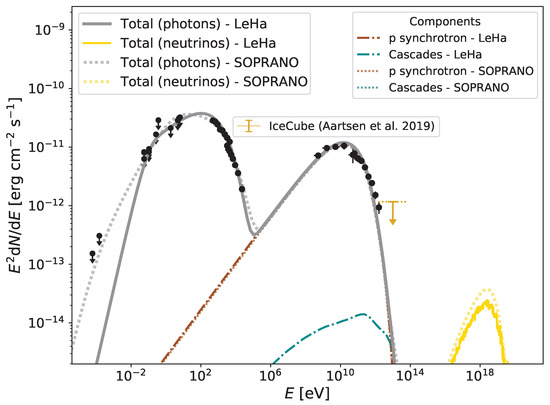
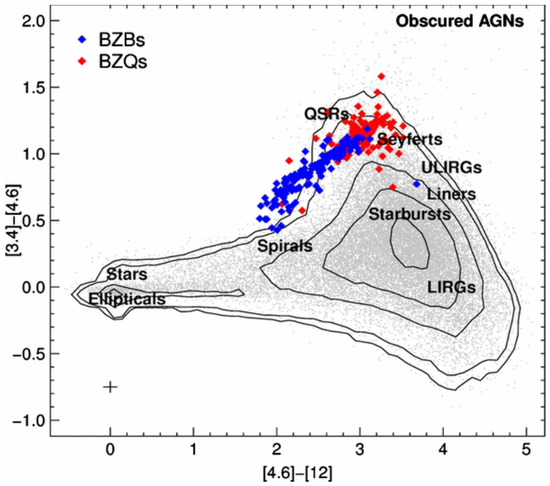
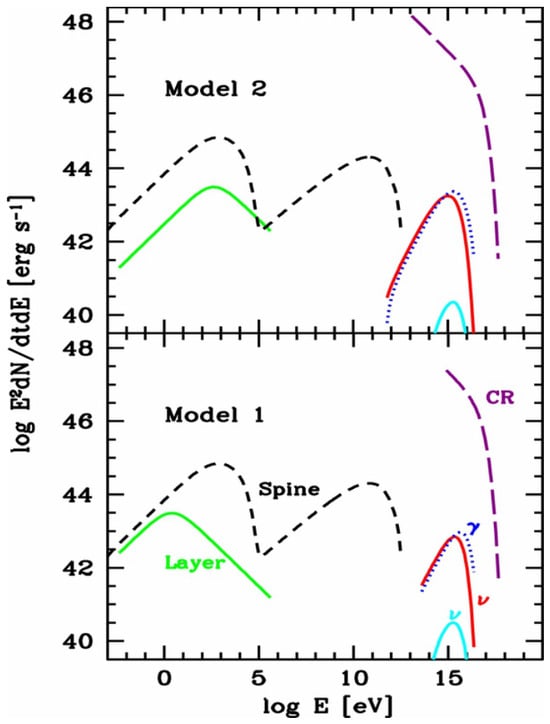
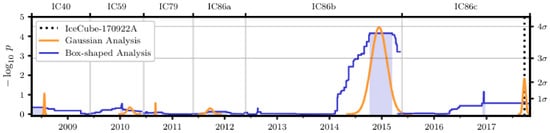
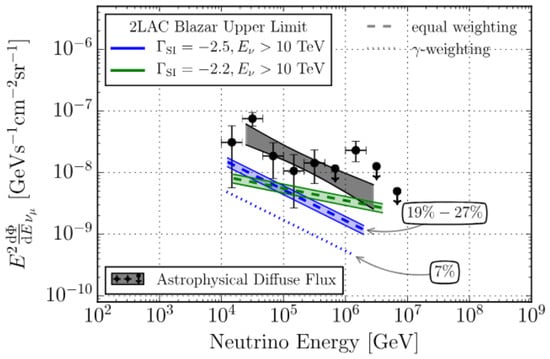
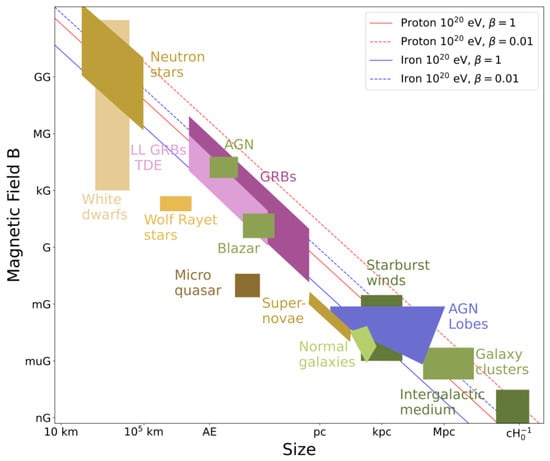
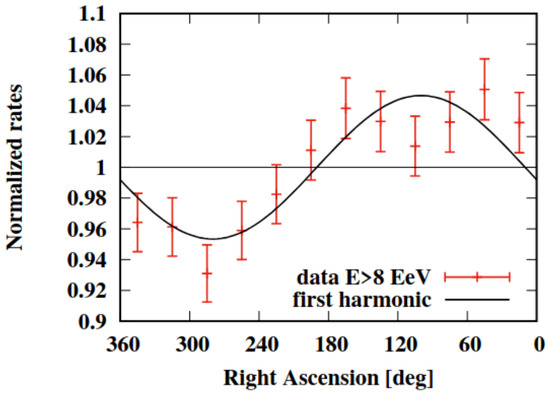
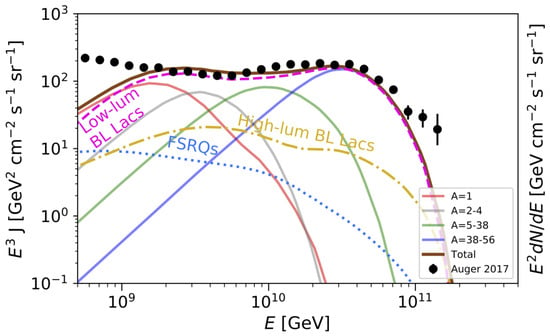
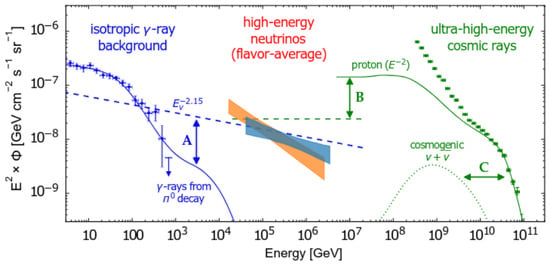
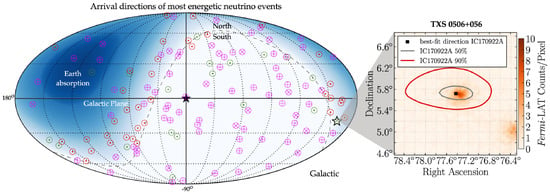
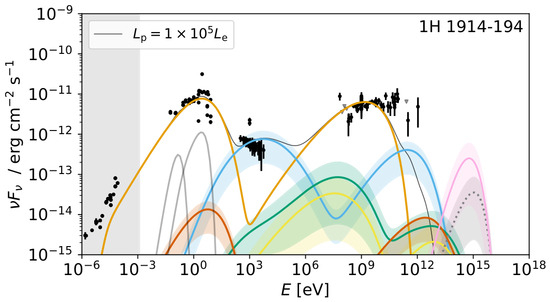
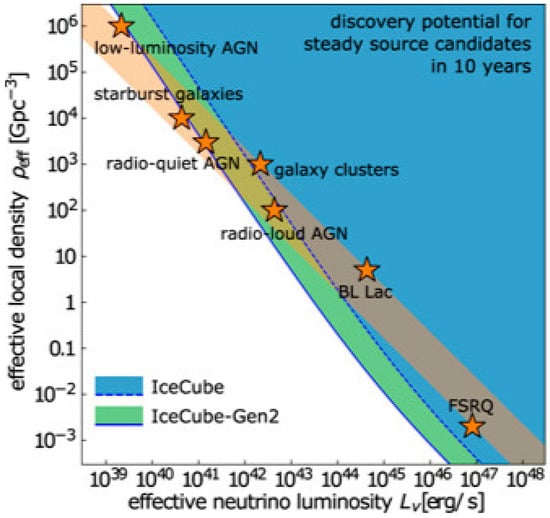
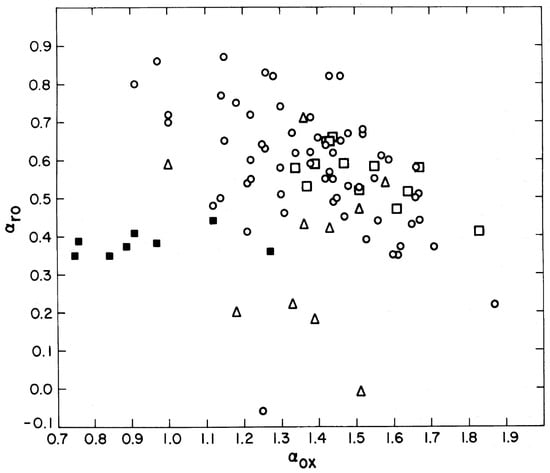
High-synchrotron-peaked (HSP) BL Lac objects are extreme particle accelerators whose synchrotron emission peaks at high frequencies, typically in the UV-to-X-ray band ( Hz; for EHSPs), implying electron Lorentz factors of order – . Their relative proximity ( ), clean radiation environments, and favorable Hillas parameters make them prime candidates for ultra-high-energy cosmic ray (UHECR) acceleration beyond eV and for neutrino production above 100 TeV. The 2017 association of IceCube-170922A with the flaring blazar TXS 0506+056 provided compelling evidence for blazars as neutrino sources, while an archival neutrino flare from 2014–2015 with no clear electromagnetic counterpart (13 events) revealed additional complexity in the emission mechanism. This review examines HSP physical properties, identifies them through WISE-based infrared selection (the 2WHSP and 3HSP catalogs, ∼2000 sources), and contrasts leptonic synchrotron self-Compton models with hadronic alternatives. We assess the observational evidence linking HSPs to high-energy neutrinos and UHECRs, finding that extreme baryonic loading ( – ) strains energetic budgets, Auger composition measurements favor heavy nuclei over proton-dominated scenarios, and the near-isotropy of UHECR arrival directions is difficult to reconcile with rare beamed sources. Potential resolutions involving magnetic reconnection, structured jets, and duty cycle effects are discussed. Next-generation facilities, including IceCube-Gen2, KM3NeT, CTAO, IXPE, and AugerPrime/TA × 4, will probe key observables to either establish HSP BL Lacs as sources of the highest-energy cosmic particles or redirect the search toward alternative accelerator classes.
Full article
(This article belongs to the Special Issue Multiwavelength Variability and Unstable Processes in High-Energy-Peaked BL Lacertae Objects)
►▼
Show Figures

Figure 1
Open AccessArticle
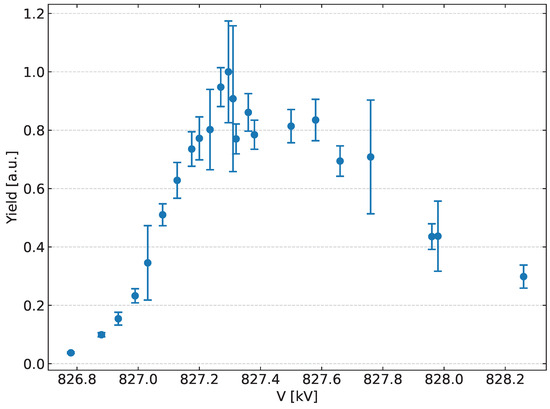
22Ne(α,n)25Mg at the INFN Bellotti Ion Beam Facility
by
David Rapagnani, Andreas Best, Daniela Mercogliano and Thomas William Chillery
Galaxies 2026, 14(3), 39; https://doi.org/10.3390/galaxies14030039 - 29 Apr 2026
Abstract
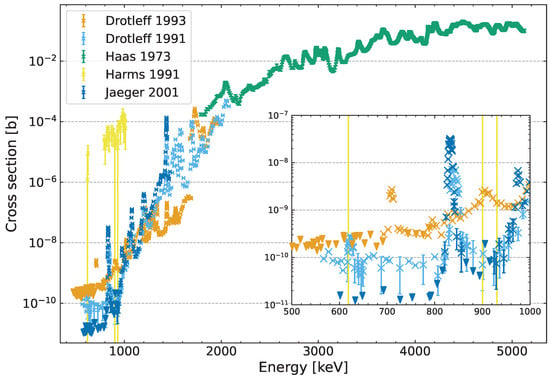
Neutron capture reactions are the main contributors to the synthesis of heavy elements through the s-process. 22Ne 25Mg is the main neutron source in stars, together with 13C 16O.
[...] Read more.
Neutron capture reactions are the main contributors to the synthesis of heavy elements through the s-process. 22Ne 25Mg is the main neutron source in stars, together with 13C 16O. At energies < 700 keV, limited data are available, i.e., reaction cross-section upper limits from direct experiments and highly uncertain estimates from indirect sources exist. The ERC project SHADES is currently performing direct cross-section measurements at these energies. We will present details on the ongoing experiment and discuss target characteristics, experimental backgrounds, and preliminary analyses on the detector efficiency and the 832 keV resonance.
Full article
(This article belongs to the Special Issue Neutron Capture Processes in the Universe)
►▼
Show Figures

Figure 1
Open AccessArticle
I-Process Nucleosynthesis in AM CVn Systems
by
Luciano Piersanti, Diego Vescovi, Sergio Cristallo, Lev R. Yungelson, Eduardo Bravo, Inmaculada Dominguez and Alexandre G. Kuranov
Galaxies 2026, 14(3), 38; https://doi.org/10.3390/galaxies14030038 - 29 Apr 2026
Abstract
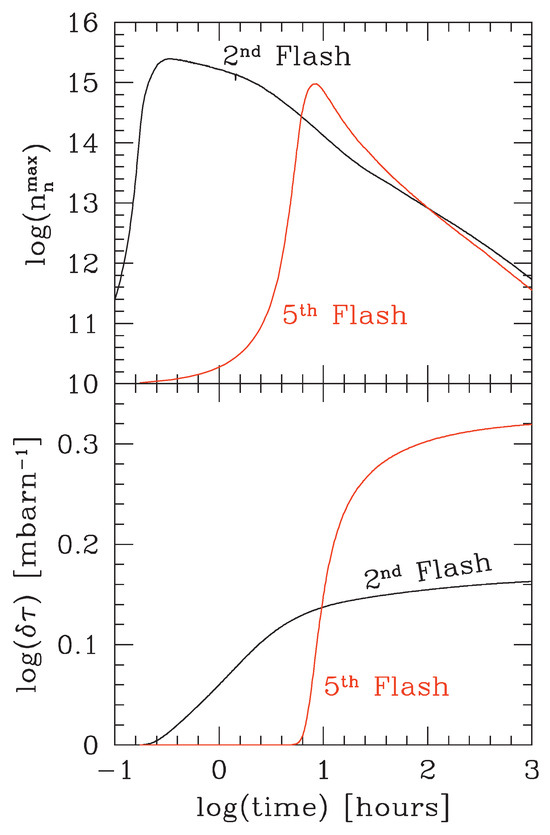
We investigate nucleosynthesis during very strong, non-dynamical recurrent He-flashes that are expected to occur in close binary systems hosting a carbon–oxygen white dwarf and a type-B subdwarf companion. In these systems, due to gravitational wave emissions, the subdwarf star is expected to fill
[...] Read more.
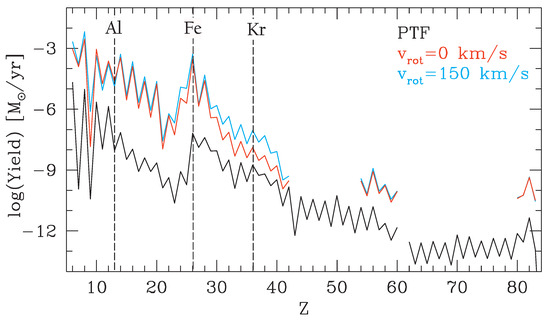
We investigate nucleosynthesis during very strong, non-dynamical recurrent He-flashes that are expected to occur in close binary systems hosting a carbon–oxygen white dwarf and a type-B subdwarf companion. In these systems, due to gravitational wave emissions, the subdwarf star is expected to fill its Roche lobe on a short timescale, resulting in mass transfer onto the companion. As accreted matter also deposits angular momentum, the external layers of the accretor begin to rotate very fast. So, dynamical He burning is avoided, and the WD instead experiences recurrent strong He flashes, which secularly reduce its mass. We consider the PTF J2238+743015.1 system as representative of the whole class of similar objects and compute its evolution by coupling our evolutionary code with a full nuclear network, including isotopes with a lifetime longer than 0.8 s. We find that during He-flash episodes, the delivered neutron flux is typical for the i-process nucleosynthesis, even if it is available for a very short time (1–10 h). As a consequence, only weak s-process nucleosynthesis takes place. The nucleosynthetic path in the ejected matter is quite similar to that of supernovae descending from massive stars. However, due to the rarity of these systems, as well as to the small amount of matter ejected during the He-flashes phase, their contribution to the evolution of the interstellar medium is negligible.
Full article
(This article belongs to the Special Issue Neutron Capture Processes in the Universe)
►▼
Show Figures

Figure 1
Open AccessArticle
Constraining Neutron-Capture Nucleosynthesis from Surface Chemical Composition of Chemically Peculiar Stars: The Puzzling Case of HE 1005-1439
by
Aruna Goswami, Arthur Choplin, Partha Pratim Goswami, Lionel Siess and Stephane Goriely
Galaxies 2026, 14(3), 37; https://doi.org/10.3390/galaxies14030037 - 23 Apr 2026
Abstract
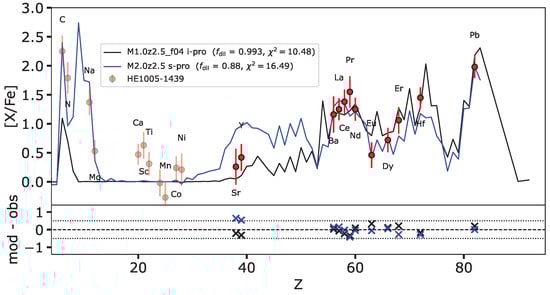
The chemical composition of stellar atmospheres provides a valuable window into the complex processes of stellar nucleosynthesis. Among chemically peculiar cool stars, many objects are the products of mass transfer in binary systems, including most carbon stars, CH stars, and CEMP-s and
[...] Read more.
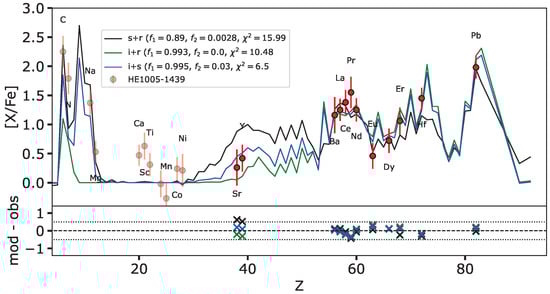
The chemical composition of stellar atmospheres provides a valuable window into the complex processes of stellar nucleosynthesis. Among chemically peculiar cool stars, many objects are the products of mass transfer in binary systems, including most carbon stars, CH stars, and CEMP-s and CEMP-r/s stars. Accurate and precise determinations of heavy-element abundances in these systems serve as powerful tracers of neutron-capture nucleosynthesis operating in the slow (s) and intermediate (i) regimes. Such measurements also place important constraints on binary evolution, mass-transfer mechanisms, the onset of early s-process enrichment, and the astrophysical sites and production pathways associated with the i-process. In this work, we investigate the origin of the extremely metal-poor star HE 1005-1439, which has previously been suggested to exhibit a surface composition enriched by a combination of s- and i-process nucleosynthesis. Using new multi-zone, detailed AGB models for both the s- and i-processes, we find that a mixed scenario provides a plausible explanation for the observed abundance pattern of HE 1005-1439, although a pure i-process AGB model yields an almost equally satisfactory fit.
Full article
(This article belongs to the Special Issue Neutron Capture Processes in the Universe)
►▼
Show Figures

Figure 1
Open AccessReview
VLBI Observations of Nearby HBLs: Physical Implications
by
Svetlana G. Jorstad, Alan P. Marscher and José L. Gómez
Galaxies 2026, 14(2), 36; https://doi.org/10.3390/galaxies14020036 - 21 Apr 2026
Abstract
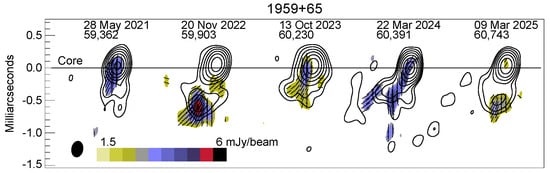
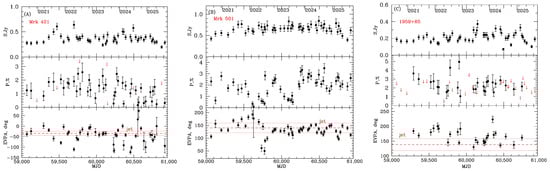
We review the jet kinematics of HBL blazars based on results of the MOJAVE survey, which obtained images of active galactic nuclei with the Very Long Baseline Array (VLBA) at 15 GHz, and the VLBA-BU-BLAZAR program as well as its successor BEAM-ME program,
[...] Read more.
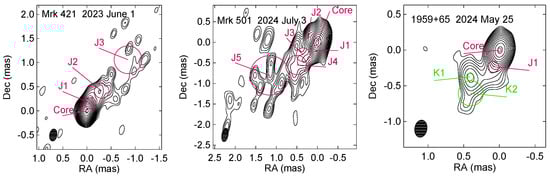
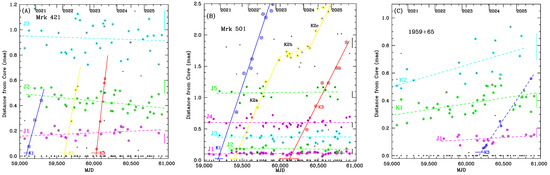
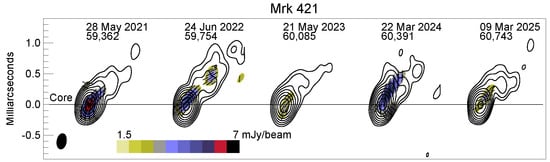
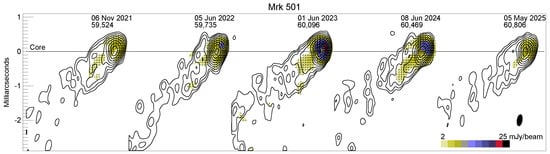
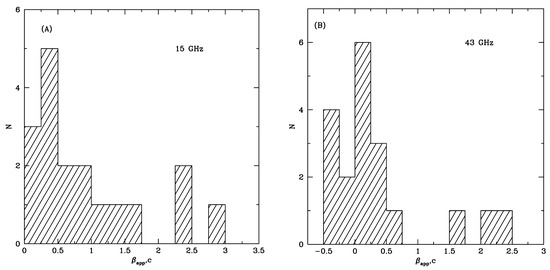
We review the jet kinematics of HBL blazars based on results of the MOJAVE survey, which obtained images of active galactic nuclei with the Very Long Baseline Array (VLBA) at 15 GHz, and the VLBA-BU-BLAZAR program as well as its successor BEAM-ME program, which have observed -ray blazars at 43 GHz. We present and discuss recent kinematic behavior and polarization properties of the parsec-scale jets of three typical HBL sources over the 2020–2025 period. We outline current physical implications for reconciling the high-energy characteristics of HBL sources with their parsec-scale jet properties.
Full article
(This article belongs to the Special Issue Multiwavelength Variability and Unstable Processes in High-Energy-Peaked BL Lacertae Objects)
►▼
Show Figures

Figure 1
Open AccessTechnical Note
Characterizing Drift-Limited Performance in Unguided Astrophotography with Large-Aperture Newtonian Telescopes
by
Jorge Nisperuza and Sebastian Valencia
Galaxies 2026, 14(2), 35; https://doi.org/10.3390/galaxies14020035 - 21 Apr 2026
Abstract
►▼
Show Figures
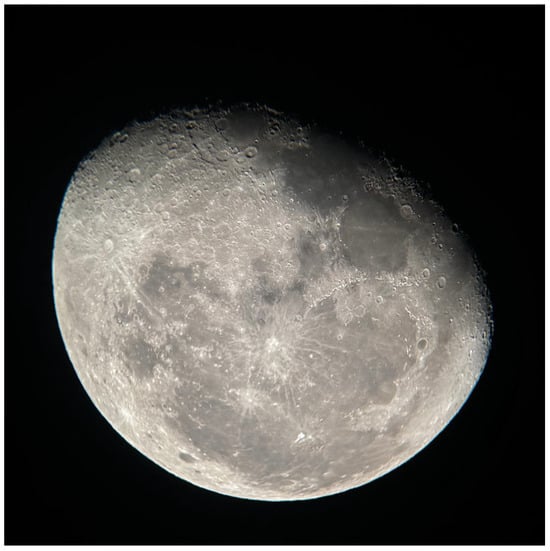
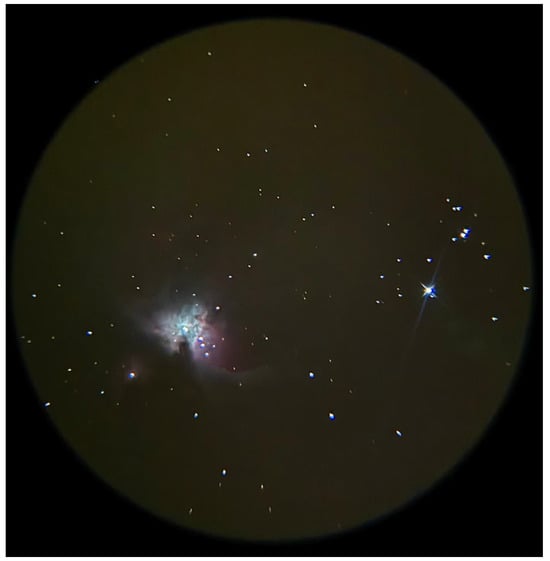
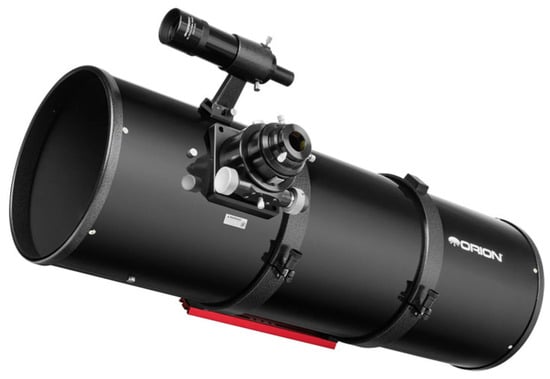
This technical note evaluates the observational performance limits of unguided smartphone-based astrophotography using a large-aperture Newtonian telescope under low-latitude sky conditions. Observations were conducted with a consumer-grade 10-inch Newtonian reflector coupled to an iPhone 15 Pro Max mounted on a manual altazimuth system,
[...] Read more.
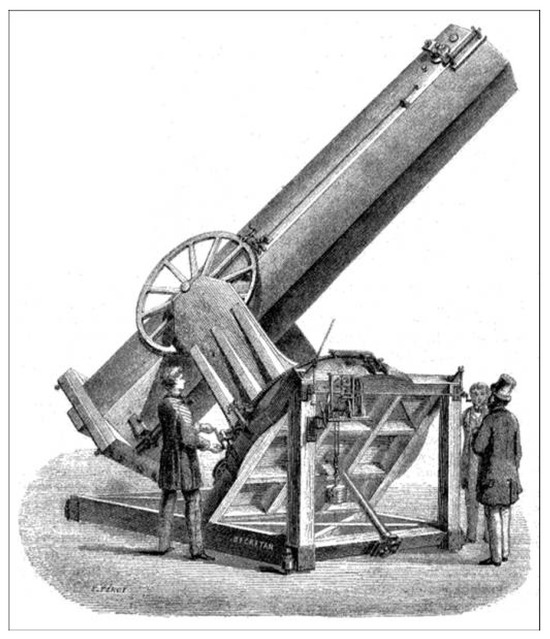
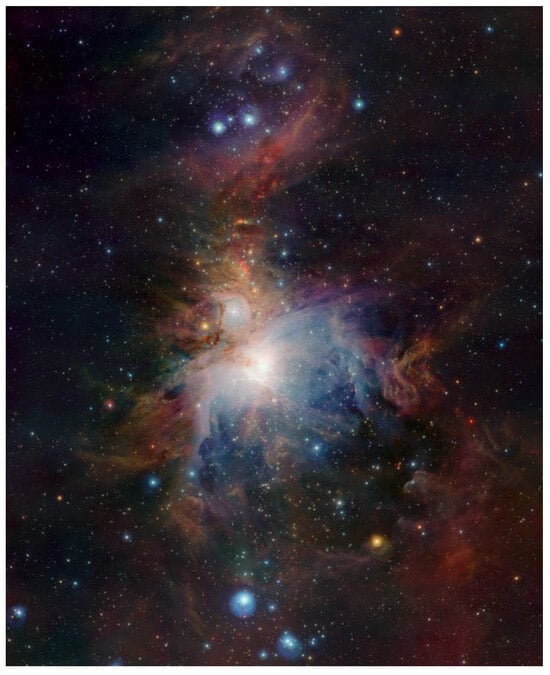
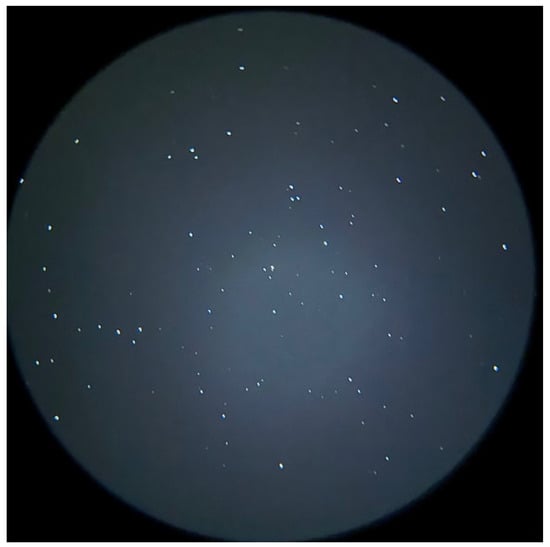
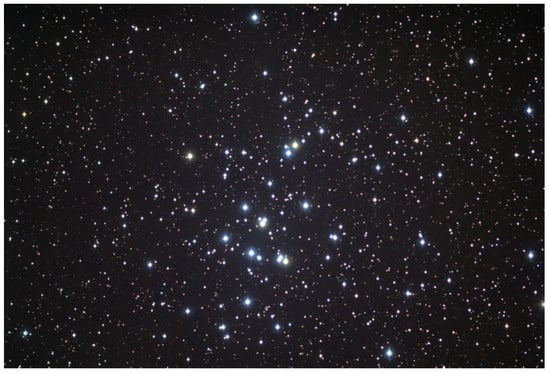
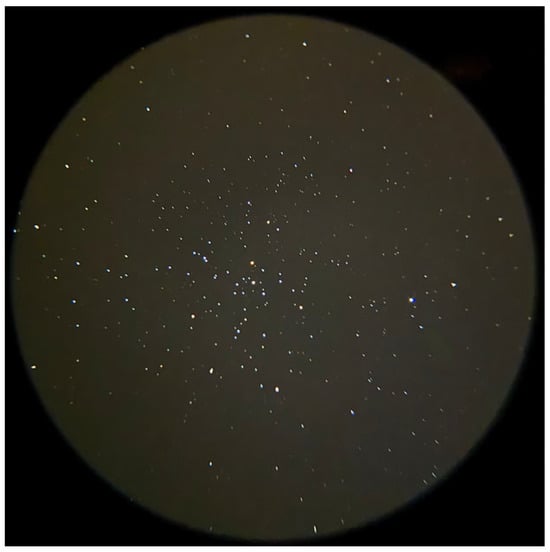
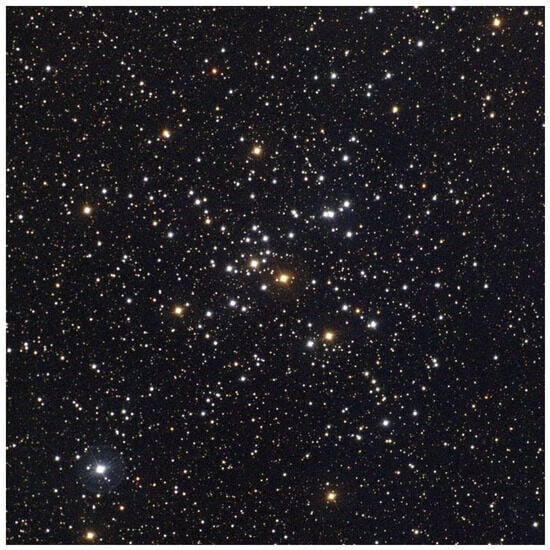
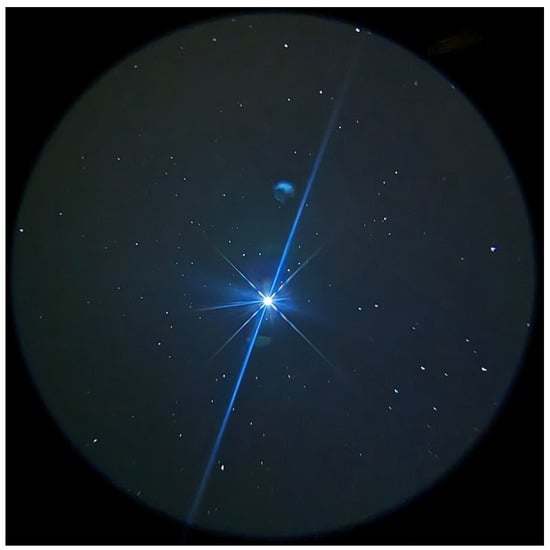
This technical note evaluates the observational performance limits of unguided smartphone-based astrophotography using a large-aperture Newtonian telescope under low-latitude sky conditions. Observations were conducted with a consumer-grade 10-inch Newtonian reflector coupled to an iPhone 15 Pro Max mounted on a manual altazimuth system, without motorized tracking, under semi-urban skies in Planeta Rica, Colombia (8.4° N). Image acquisition employed 5 s exposures in night mode combined with real-time manual drift correction. Under these conditions, resolved stellar and nebular structures were obtained for the Orion Nebula (M42) and the open clusters Messier 44 and Messier 41, reaching a limiting magnitude of approximately 9.5 while maintaining stellar elongation below ~1–1.3 arcminutes, consistent with the expected sidereal drift during a 5 s exposure. Lunar imaging achieved high spatial fidelity, resolving terminator features such as Tycho and Mare Imbrium with negligible motion artifacts. Imaging of Sirius (–1.46 mag) revealed pronounced sensor saturation and blooming, highlighting dynamic range limitations inherent to smartphone detectors. Quantitative analysis indicates that active manual correction reduced positional drift by approximately 52% relative to theoretical unguided motion models. The results demonstrate that optimized acquisition protocols enable reproducible and methodologically interpretable imaging of bright astronomical targets at equatorial latitudes, providing a practical framework for characterizing the constraints of unguided smartphone astrophotography.
Full article

Figure 1
Journal Menu
► ▼ Journal Menu-
- Galaxies Home
- Aims & Scope
- Editorial Board
- Reviewer Board
- Topical Advisory Panel
- Instructions for Authors
- Special Issues
- Topics
- Topical Collections
- Article Processing Charge
- Indexing & Archiving
- Editor’s Choice Articles
- Most Cited & Viewed
- Journal Statistics
- Journal History
- Journal Awards
- Editorial Office
Journal Browser
► ▼ Journal BrowserHighly Accessed Articles
Latest Books
E-Mail Alert
News
Topics
Topic in
Symmetry, Galaxies, Universe, Particles, Astronomy
Dark Matter, Dark Energy and Cosmological Anisotropy
Topic Editors: Kazuharu Bamba, Panayiotis Stavrinos, Ivan De MartinoDeadline: 31 December 2026
Special Issues
Special Issue in
Galaxies
From Cosmic Dawn to Hawking’s Glow: The Lifecycle and Legacy of Primordial Black Holes
Guest Editors: Mohammad Sami, Mayukh Raj GangopadhyayDeadline: 31 May 2026
Special Issue in
Galaxies
The Evolution of Gravitational Wave Detectors
Guest Editors: Maddalena Mantovani, Mattia BoldriniDeadline: 31 May 2026
Special Issue in
Galaxies
Gravitational-Wave Probes of Black Hole Spin and Binary Dynamics
Guest Editor: Alejandro Cardenas AvendañoDeadline: 1 June 2026
Special Issue in
Galaxies
Probing Black Hole Spins with Horizon-Scale Images
Guest Editor: George WongDeadline: 1 June 2026
Topical Collections
Topical Collection in
Galaxies
A Trip across the Universe: Our Present Knowledge and Future Perspectives
Collection Editor: Emilio Elizalde