Skip Content
You are currently on the new version of our website. Access the old version .

Galaxies

Galaxies

is an international, peer-reviewed, open access journal on astronomy, astrophysics, and cosmology published bimonthly online by MDPI.

Quartile Ranking JCR - Q2 (Astronomy and Astrophysics)

All Articles (1,159)

Estimating H I Mass Fraction in Galaxies with Bayesian Neural Networks

  • Joelson Sartori,
  • Cristian G. Bernal and
  • Carlos Frajuca

Neutral atomic hydrogen (H I) regulates galaxy growth and quenching, but direct 21 cm measurements remain observationally expensive and affected by selection biases. We develop Bayesian neural networks (BNNs)—a type of neural model that returns both a prediction and an associated uncertainty—to infer the H I mass, log10(MHI), from widely available optical properties (e.g., stellar mass, apparent magnitudes, and diagnostic colors) and simple structural parameters. For continuity with the photometric gas fraction (PGF) literature, we also report the gas-to-stellar-mass ratio, log10(G/S), where explicitly noted. Our dataset is a reproducible cross-match of SDSS DR12, the MPA–JHU value-added catalogs, and the 100% ALFALFA release, resulting in 31,501 galaxies after quality controls. To ensure fair evaluation, we adopt fixed train/validation/test partitions and an additional sky-holdout region to probe domain shift, i.e., how well the model extrapolates to sky regions that were not used for training. We also audit features to avoid information leakage and benchmark the BNNs against deterministic models, including a feed-forward neural network baseline and gradient-boosted trees (GBTs, a standard tree-based ensemble method in machine learning). Performance is assessed using mean absolute error (MAE), root-mean-square error (RMSE), and probabilistic diagnostics such as the negative log-likelihood (NLL, a loss that rewards models that assign high probability to the observed H I masses), reliability diagrams (plots comparing predicted probabilities to observed frequencies), and empirical 68%/95% coverage. The Bayesian models achieve point accuracy comparable to the deterministic baselines while additionally providing calibrated prediction intervals that adapt to stellar mass, surface density, and color. This enables galaxy-by-galaxy uncertainty estimation and prioritization for 21 cm follow-up that explicitly accounts for predicted uncertainties (“risk-aware” target selection). Overall, the results demonstrate that uncertainty-aware machine-learning methods offer a scalable and reproducible route to inferring galactic H I content from widely available optical data.

2 February 2026

Schematic contrast between a deterministic feed-forward neural network (left) and a Bayesian neural network (right). Deterministic networks learn point estimates and return a single prediction; BNNs place distributions over weights and/or outputs, yielding a full predictive distribution and calibrated uncertainty quantification.

Using twenty sectors of TESS observations and the hitherto unutilized radial velocities from the David Dunlap Observatory survey, we fully characterize the close binary TV UMi. Its nearly sinusoidal light curves are well explained by a low-inclination, shallowly-eclipsing model in marginal contact, with a dark spot whose longitudinal migration is strongly correlated with the eclipse time variations. We derive the orbital parameters of the binary and determine the masses and radii of the components with a precision of a few percent. The estimated age and the position of TV UMi on the theoretical HR diagram indicate it’s a relatively young late-type contact binary of the W subtype.

31 January 2026

(Top): the light curve of TV UMi. The phase-binned TESS observations are plotted as green circles, and the best-fitting model (detailed in Table 2) is plotted as a black line. The circle size is indicative of the mean observational error (≈0.0004). (Bottom): the velocity curves of TV UMi. The observed radial velocities from Pribulla et al. [6] are plotted as red dots for the primary, and as blue dots for the secondary star, and the best-fitting model is plotted as a black line. The residuals between the observations and the model are shown below the corresponding plots.

What does “Big Bang” mean? What was the actual origin of these two words? There are many aspects hidden under this name, which are seldom explained. They are discussed here. To frame the analysis, help will be sought from the highly authoritative voices of two exceptional writers: William Shakespeare and Umberto Eco. Both have explored the tension existing between words and the realities they name. And this includes names given to outstanding theorems and spectacular discoveries, too. Stigler’s law of eponymy is recalled in this context. These points will be at the heart of the quest here, concerning the concept of “Big Bang”, which only a few people know what it means, actually. Fred Hoyle was the first to pronounce these words, in a BBC radio program, with a meaning that was later called inflation. But listeners were left with the image he was trying to destroy: the explosion of Lemaître’s primeval atom (an absolutely wrong concept). Hoyle’s Steady State will be carefully compared with inflation cosmology. They are quite different, and yet, in both cases, the possibility of creating matter/energy out of expanding space is rooted in the same fundamental principles: those of General Relativity. As is also, the possibility of having a universe with zero total energy, anticipated by R.C. Tolman, in 1934 already. It will be shown, how to obtain accelerated expansion from negative pressure; how to reconcile energy conservation with matter creation in an expanding universe; and a curious relation between de Sitter spacetime and Steady State cosmology. Concerning the naming issue, it will be remarked that, today, the same label “Big Bang” is used in very different contexts: (a) the Big Bang Singularity; (b) as the equivalent of cosmic inflation; (c) speaking of the Big Bang cosmological model; (d) to name a very popular TV program; and more.

30 January 2026

(a) Juliet’s phrase in William Shakespeare’s play “Romeo and Julia”. (b) Cover of the first edition of Umberto Eco’s book “Il nome della rosa”. Both images: fair use license.

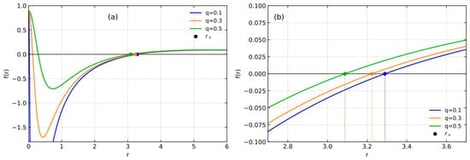
Objective: We examine whether a finite-range scalar–tensor modification of gravity can be simultaneously compatible with cosmological background data, galaxy rotation curves, and local/astrophysical consistency tests, while satisfying the luminal gravitational-wave propagation constraint (cT=1) implied by GW170817 at low redshifts. Methods: We formulate the model at the level of an explicit covariant action and derive the corresponding field equations; for cosmological inferences, we adopt an effective background closure in which the late-time dark-energy density is modulated by a smooth activation function characterized by a length scale λ and amplitude ϵ. We constrain this background model using Pantheon+, DESI Gaussian Baryon Acoustic Oscillations (BAOs), and a Planck acoustic-scale prior, including an explicit ΛCDM comparison. We then propagate the inferred characteristic length by fixing λ in the weak-field Yukawa kernel used to model 175 SPARC galaxy rotation curves with standard baryonic components and a controlled spherical approximation for the scalar response. Results: The joint background fit yields , Mpc, and . With λ fixed, the baryons + scalar model describes the SPARC sample with a median reduced chi-square of χν2=1.07; for a 14-galaxy subset, this model is moderately preferred over the standard baryons + NFW halo description in the finite-sample information criteria, with a mean ΔAICc outcome in favor of the baryons + scalar model (≈2.8). A Vainshtein-type screening completion with eV satisfies Cassini, Lunar Laser Ranging, and binary pulsar bounds while keeping the kpc scales effectively unscreened. For linear growth observables, we adopt a conservative General Relativity-like baseline (μ0=0) and show that current fσ8 data are consistent with μ00 for our best-fit background; the model predicts S8=0.791, consistent with representative cosmic-shear constraints. Conclusions: Within the present scope (action-level weak-field dynamics for galaxy modeling plus an explicitly stated effective closure for background inference), the results support a mutually compatible characteristic length at the Mpc scale; however, a full perturbation-level implementation of the covariant theory remains an issue for future work, and the role of cold dark matter beyond galaxy scales is not ruled out.

27 January 2026

Cosmological posterior for the effective background model (15) using Pantheon+, BAO, and the acoustic-scale prior. The inner and outer contours represent 68% and 95% confidence intervals, respectively, and the dashed lines in the histograms indicate the 16th, 50th, and 84th percentiles.

News & Conferences

Issues

Open for Submission

Editor's Choice

Reprints of Collections

Theory and Observation of Active B-type Stars
Reprint

Theory and Observation of Active B-type Stars

Editors: Lydia Sonia Cidale, Michaela Kraus, María Laura Arias

Get Alerted

Add your email address to receive forthcoming issues of this journal.

XFacebookLinkedIn
Galaxies - ISSN 2075-4434