
Journal Description
Future Internet
Future Internet
is an international, peer-reviewed, open access journal on internet technologies and the information society, published monthly online by MDPI.
- Open Access— free for readers, with article processing charges (APC) paid by authors or their institutions.
- High Visibility: indexed within Scopus, ESCI (Web of Science), Ei Compendex, dblp, Inspec, and other databases.
- Journal Rank: JCR - Q2 (Computer Science, Information Systems) / CiteScore - Q1 (Computer Networks and Communications)
- Rapid Publication: manuscripts are peer-reviewed and a first decision is provided to authors approximately 15 days after submission; acceptance to publication is undertaken in 3.7 days (median values for papers published in this journal in the first half of 2026).
- Recognition of Reviewers: reviewers who provide timely, thorough peer-review reports receive vouchers entitling them to a discount on the APC of their next publication in any MDPI journal, in appreciation of the work done.
- Journal Clusters of Network and Communications Technology: Future Internet, IoT, Telecom, Journal of Sensor and Actuator Networks, Network, Signals.
Impact Factor:
4.6 (2025);
5-Year Impact Factor:
3.9 (2025)
Latest Articles
Decentralized AI Agents and Blockchain: Architectures, Coordination Mechanisms, and Governance Frameworks
Future Internet 2026, 18(7), 352; https://doi.org/10.3390/fi18070352 - 6 Jul 2026
Abstract
Autonomous AI agents capable of holding digital assets, signing transactions, and executing smart contracts on public blockchain networks have moved from research prototypes to active deployment over the past two years. Despite this pace of adoption, no systematic treatment of their architecture, coordination
[...] Read more.
Autonomous AI agents capable of holding digital assets, signing transactions, and executing smart contracts on public blockchain networks have moved from research prototypes to active deployment over the past two years. Despite this pace of adoption, no systematic treatment of their architecture, coordination protocols, and governance structures exists that spans the full design space. This survey addresses that gap through a systematic review of the literature from 2019 to 2026, covering 177 peer-reviewed publications and 14 system documentation sources, identified through a structured search of IEEE Xplore, the ACM Digital Library, Scopus, and arXiv. We classify deployed and proposed systems along four architectural dimensions: on-chain execution, off-chain agents with on-chain settlement, verifiable off-chain computation, and multi-agent on-chain interaction. Then, we examine the coordination mechanisms through which agents reach collective decisions, covering auction-based protocols, cooperative multi-agent reinforcement learning, token-incentive structures, and gossip-based peer-to-peer coordination. Governance is treated as a distinct dimension, analysed through a technical lens, covering on-chain parameter control, dispute resolution, and DAO structures, and an organizational one, covering accountability, incentive alignment, principal–agent dynamics, and regulatory compatibility). We survey applications across decentralized finance, supply chain, IoT, and agent marketplace domains, and identify six open research problems whose resolution is a prerequisite for broader deployment. The convergence of mechanism design and multi-agent reinforcement learning in asynchronous blockchain environments is identified as the direction of greatest near-term research value.
Full article
(This article belongs to the Special Issue New Trends for Blockchain Technologies)
Open AccessArticle
Secure and Reliable Data Exchange in Sensor Networks Utilizing Different Communication Technologies
by
Svetozar Ilchev
Future Internet 2026, 18(7), 351; https://doi.org/10.3390/fi18070351 - 4 Jul 2026
Abstract
The article discusses the development of a communication protocol that provides consistent security and reliability during data exchange in sensor networks. Different communication technologies are supported. The motivation for this work is presented against the background of contemporary communication technologies and capabilities. The
[...] Read more.
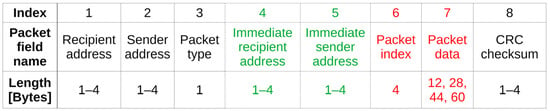
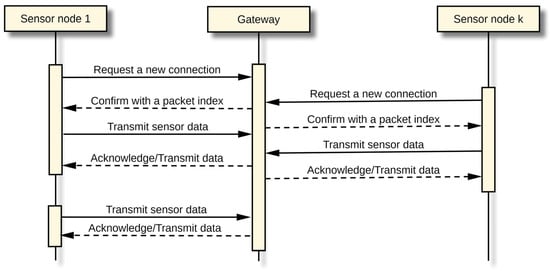
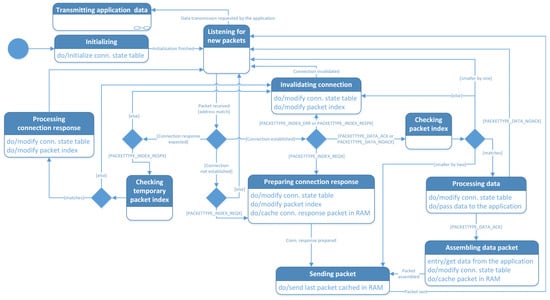
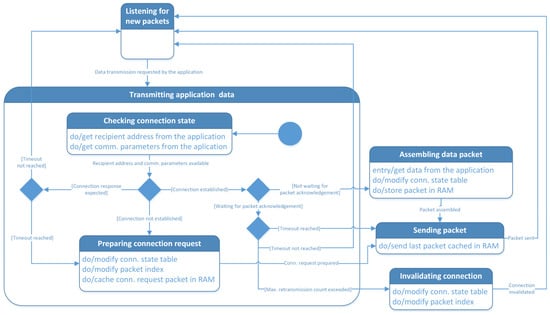
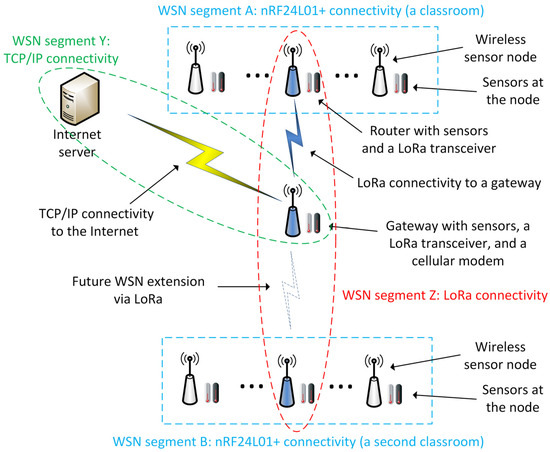
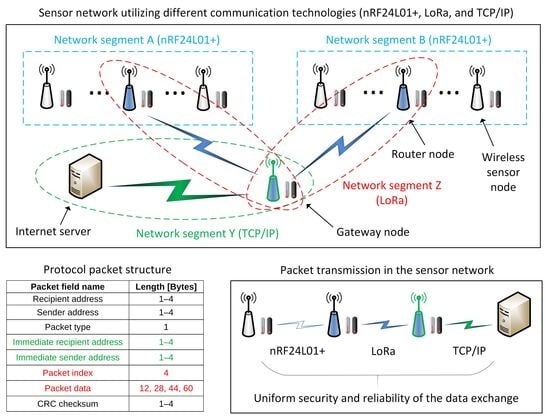
The article discusses the development of a communication protocol that provides consistent security and reliability during data exchange in sensor networks. Different communication technologies are supported. The motivation for this work is presented against the background of contemporary communication technologies and capabilities. The article summarizes relevant application constraints. The capabilities of popular communication technologies are briefly analyzed. Typical sensor networks serve as examples. Work on the protocol design begins with identifying important network features that serve as requirements. The design and implementation work continues with establishing a suitable packet structure, packet processing strategies, and an overall communication flow between the nodes in the network. A concept for packet routing in large networks with different communication technologies is developed and presented. The strengths and weaknesses are summarized and discussed after testing and assessment. Future work will include enhancing protocol features to improve practical applicability in different scenarios.
Full article
(This article belongs to the Special Issue Wireless Sensor Networks and Internet of Things—2nd Edition)
►▼
Show Figures

Graphical abstract
Open AccessEditorial
Advanced 5G and Beyond Networks
by
Mohammad Rajiullah
Future Internet 2026, 18(7), 350; https://doi.org/10.3390/fi18070350 (registering DOI) - 2 Jul 2026
Abstract
The evolution of mobile and wireless communication systems has entered a decisive phase [...]
Full article
(This article belongs to the Special Issue Advanced 5G and Beyond Networks)
Open AccessArticle
ITS-Vision: Autonomous Vehicles as Mobile Surveillance Nodes in Intelligent Transportation Systems—A Conceptual Framework and Proof-of-Concept Prototype
by
Mirabela-Melinda Medvei, Denis Georgian Gurău and Mihai Coca
Future Internet 2026, 18(7), 349; https://doi.org/10.3390/fi18070349 - 1 Jul 2026
Abstract
Crime surveillance in urban environments faces increasing challenges due to dynamic conditions and the demand for real-time monitoring. This paper investigates the use of video data from autonomous vehicles to enhance situational awareness in public spaces through deep learning models optimized for edge
[...] Read more.
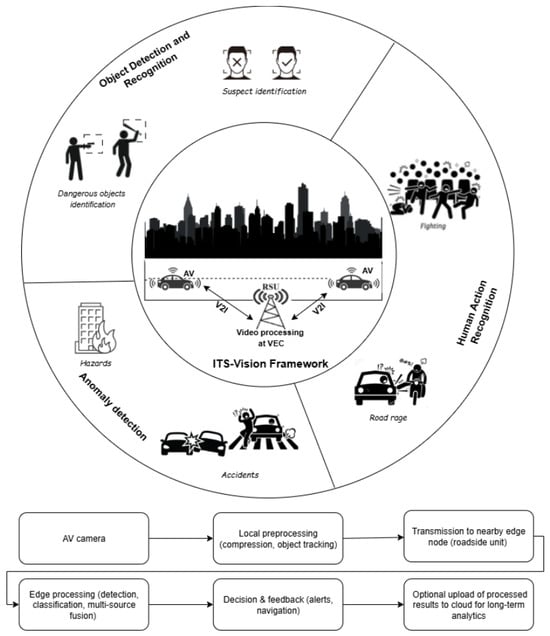
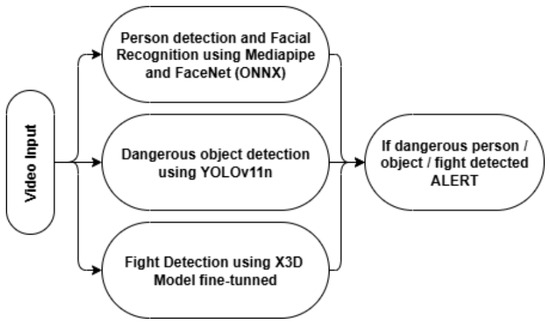
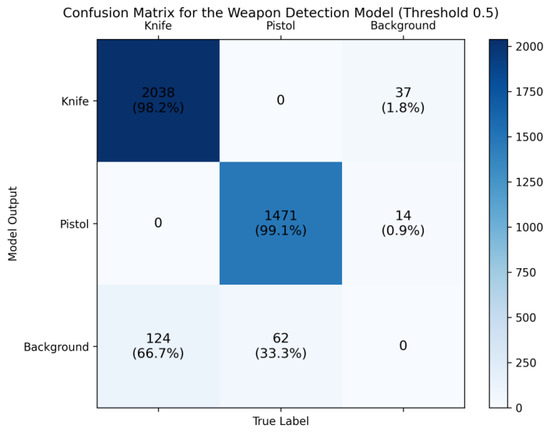
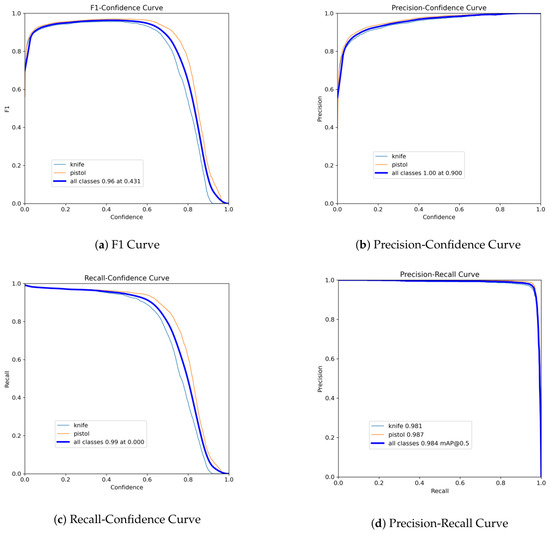
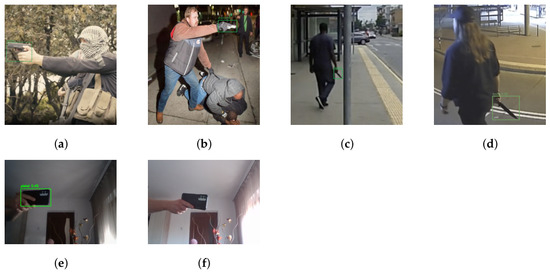
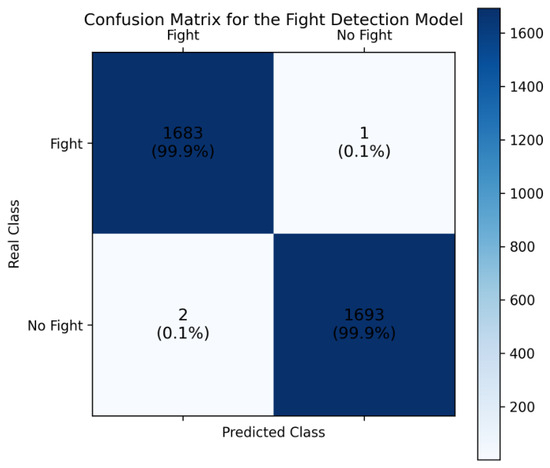
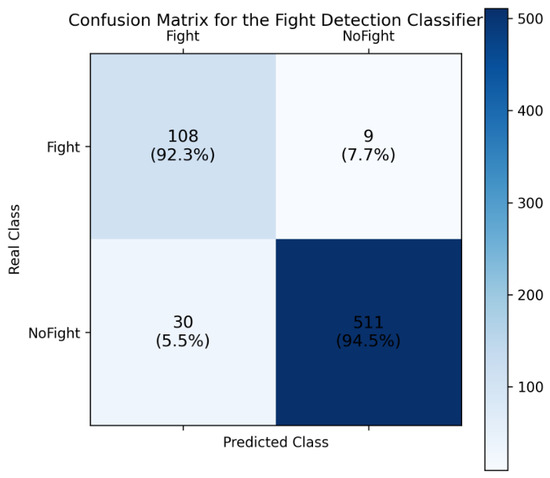
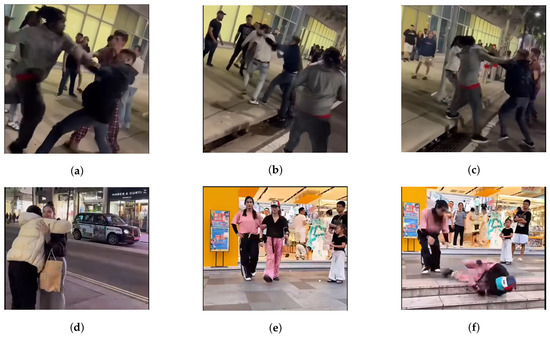
Crime surveillance in urban environments faces increasing challenges due to dynamic conditions and the demand for real-time monitoring. This paper investigates the use of video data from autonomous vehicles to enhance situational awareness in public spaces through deep learning models optimized for edge processing. High-resolution vehicle-mounted cameras serve as mobile surveillance units capable of real-time object detection, human action recognition, and anomaly detection, bridging the gap between autonomous mobility and urban monitoring. Building on this vision, we introduce ITS-Vision, a generic framework that operationalizes these use cases, enabling autonomous vehicles to function as mobile, context-aware sensing platforms. To validate this approach, we develop prototypes for key ITS-Vision components: a fight detection module using a fine-tuned X3D model, suspect identification via MediaPipe for detection combined with FaceNet for embedding extraction, and a dangerous items detection module using a fine-tuned YOLOv11n model. Due to the limited availability of real-world autonomous vehicle video datasets, experiments were conducted in controlled laboratory environments, demonstrating the feasibility of the proposed architecture and algorithms under simulated conditions. Future work will focus on collecting dedicated datasets and advancing the models toward deployment in real urban scenarios.
Full article
(This article belongs to the Section Smart System Infrastructure and Applications)
►▼
Show Figures

Figure 1
Open AccessArticle
Repeat-Explore-Aware Grocery Next-Basket Recommendation with Time-Decayed LightGCN
by
Zahra Mansouri, Salim Lahmiri and Rustam Vahidov
Future Internet 2026, 18(7), 348; https://doi.org/10.3390/fi18070348 - 30 Jun 2026
Abstract
Grocery shopping is highly repetitive, yet customers also introduce new products into their buying routine over time, creating a repeat-explore challenge for next-basket recommendation. This study examines this trade-off in offline grocery recommendation using the Dunnhumby Complete Journey and Ta-Feng datasets. The task
[...] Read more.
Grocery shopping is highly repetitive, yet customers also introduce new products into their buying routine over time, creating a repeat-explore challenge for next-basket recommendation. This study examines this trade-off in offline grocery recommendation using the Dunnhumby Complete Journey and Ta-Feng datasets. The task is formulated at the household-product level and evaluated using overall, repeat-specific, and explore-specific Top-K metrics. We compare global and personal frequency baselines with GraphSAGE, GCN, LightGCN, and weighted and time-decayed graph variants, and propose two hybrid models: TL-HFE, which combines an exploitation-oriented LightGCN ranking over the learnable catalog with a history-filtered exploration head, and TL-PPR, which combines a non-parametric personal-popularity repeat head with a LightGCN-based exploration head and household-specific quota interleaving. On Dunnhumby, Personal Top-Frequency achieves Overall, Repeat, and Explore Recall@20 values of 0.20, 0.40, and 0.00, while TL-PPR achieves 0.15, 0.29, and 0.02. On Ta-Feng, TL-PPR achieves 0.19, 0.67, and 0.07, compared with 0.18, 0.80, and 0.03 for Personal Top-Frequency. Paired bootstrap tests confirm that TL-PPR significantly improves exploratory recommendation over Personal Top-Frequency, although repeat recovery remains stronger for the baseline. Overall, the findings show that grocery NBR should be evaluated through separate repeat and explore perspectives rather than aggregate accuracy alone, especially when product discovery is a practical objective.
Full article
(This article belongs to the Section Big Data and Augmented Intelligence)
Open AccessArticle
Toward Secure Software-Defined Industrial Networks Through Asset Administration Shell Digital Twins
by
Riccardo Bacca, Andrea Melis, Lorenzo Rinieri, Roberto Girau, Marco Prandini and Franco Callegati
Future Internet 2026, 18(7), 347; https://doi.org/10.3390/fi18070347 - 30 Jun 2026
Abstract
Industrial digitalization is moving from Industry 4.0 toward Industry 5.0’s emphasis on resilience, human-centric operation, and sustainability. This shift is enabled by the convergence of Operational Technology and Information Technology, but this integration also broadens the exposure of industrial infrastructures to cyber threats
[...] Read more.
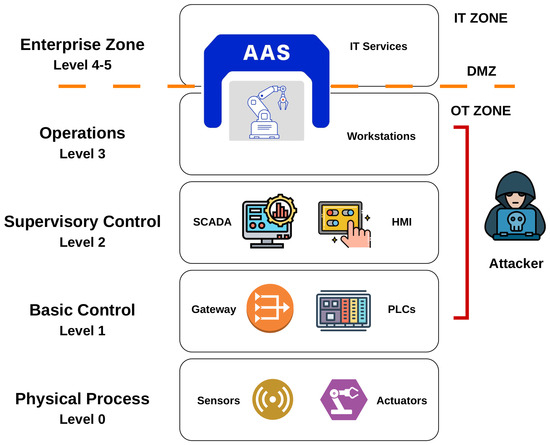
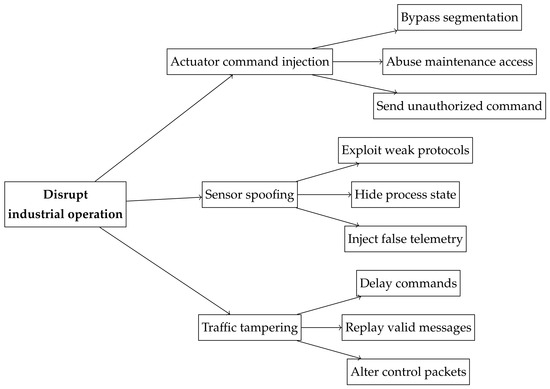
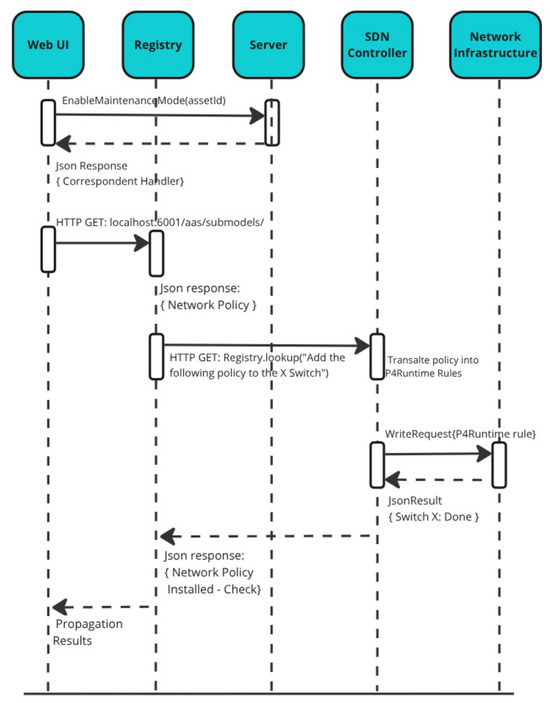
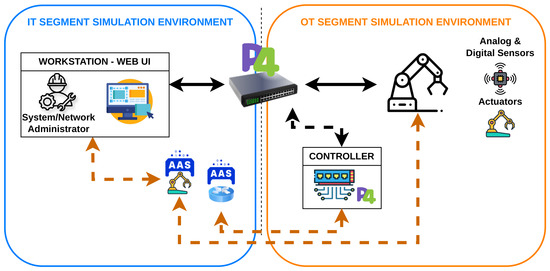
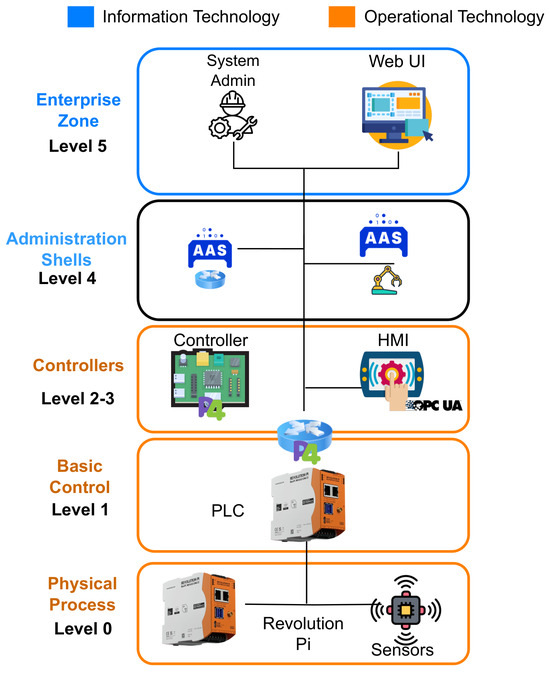
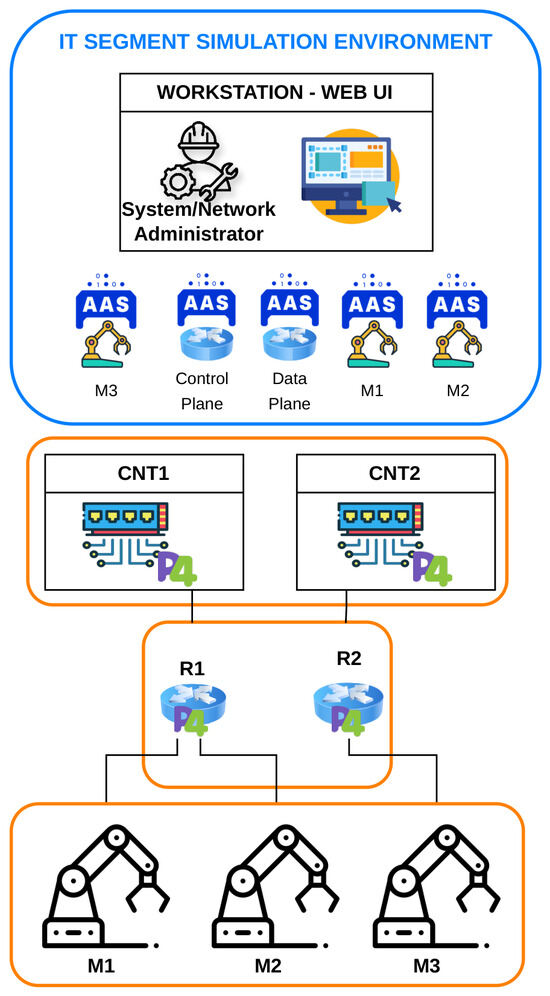
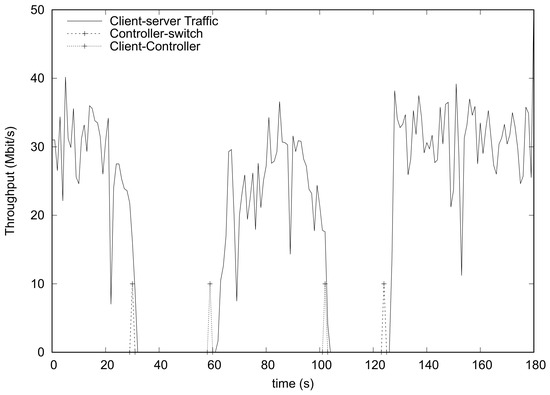
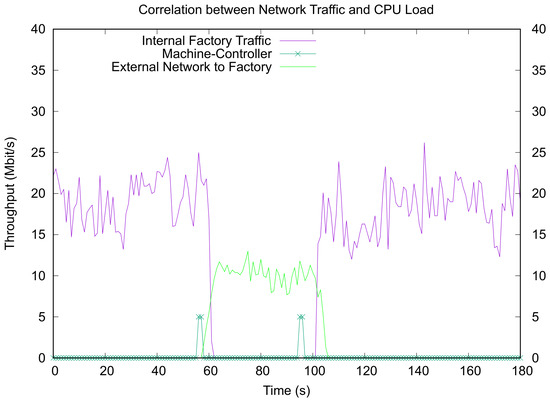
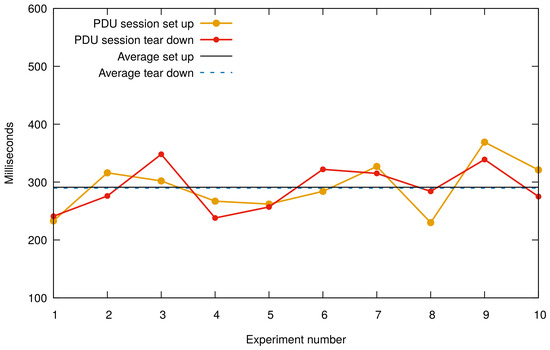
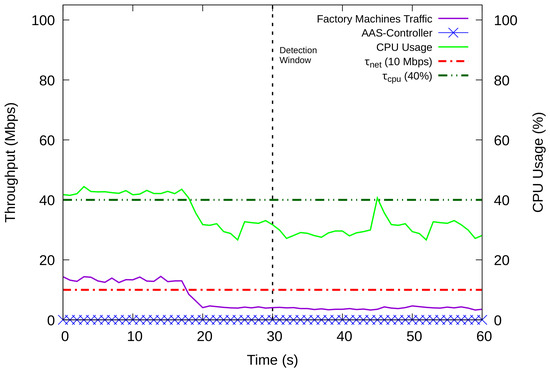
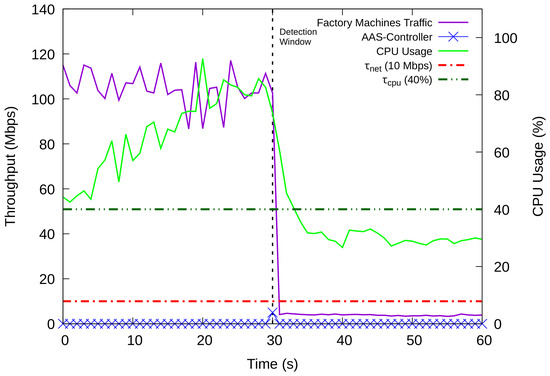
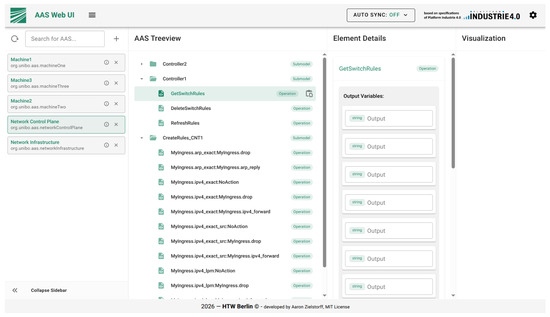
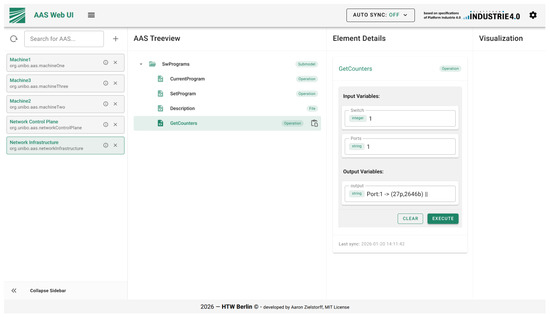
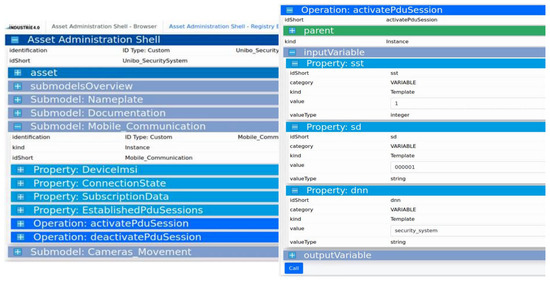
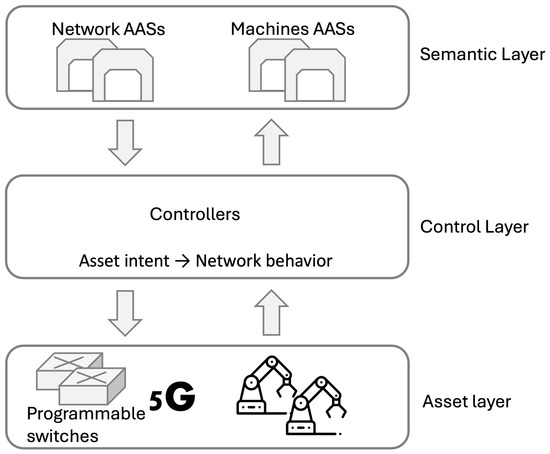
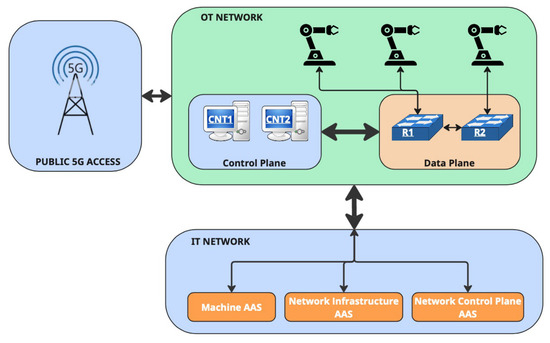
Industrial digitalization is moving from Industry 4.0 toward Industry 5.0’s emphasis on resilience, human-centric operation, and sustainability. This shift is enabled by the convergence of Operational Technology and Information Technology, but this integration also broadens the exposure of industrial infrastructures to cyber threats targeting communication integrity and process continuity. Mitigating these risks requires network control that is both programmable and aware of each asset’s operational context. However, there is still a lack of operational interfaces that translate the semantics of industrial assets into programmable, runtime-enforceable network behavior. In this paper, following a Design Science Research methodology, we introduce an asset-aware, closed-loop network control abstraction in which the industrial network itself is modeled as a managed asset through Asset Administration Shells. Asset state, lifecycle phase, and operational intent are translated into network policies enforced at runtime on programmable data planes, while in-network telemetry is exposed at the asset level and correlated with operational metrics. We validate the abstraction on a hybrid testbed that combines virtualized components with industrial-grade hardware and virtualized 5G connectivity, through three security-oriented use cases: (i) asset-driven customization of forwarding policies; (ii) human-centric secure maintenance with controlled remote access over 5G; and (iii) anomaly detection and isolation based on cross-layer telemetry correlation. The results show that asset-level operations can drive programmable network enforcement and make network telemetry available at the asset layer. Finally, the work outlines a first step toward standardizing network-oriented asset submodels by separating control-plane operations from data-plane state and telemetry.
Full article
(This article belongs to the Special Issue Artificial Intelligence and Control Systems for Industry 4.0 and 5.0)
►▼
Show Figures

Figure 1
Open AccessArticle
Credibility Context Improves Political Claim Classification on LIAR and Transfers to LIAR2 NEW
by
Bushra Alkomah and Frederick Sheldon
Future Internet 2026, 18(7), 346; https://doi.org/10.3390/fi18070346 - 30 Jun 2026
Abstract
Automated screening of political claims is challenging because many statements are short, underspecified, and labeled with fine-grained truthfulness categories that are difficult to separate using claim text alone. This study examines whether lightweight credibility context, represented by pre-existing speaker fact-checking history counts, can
[...] Read more.
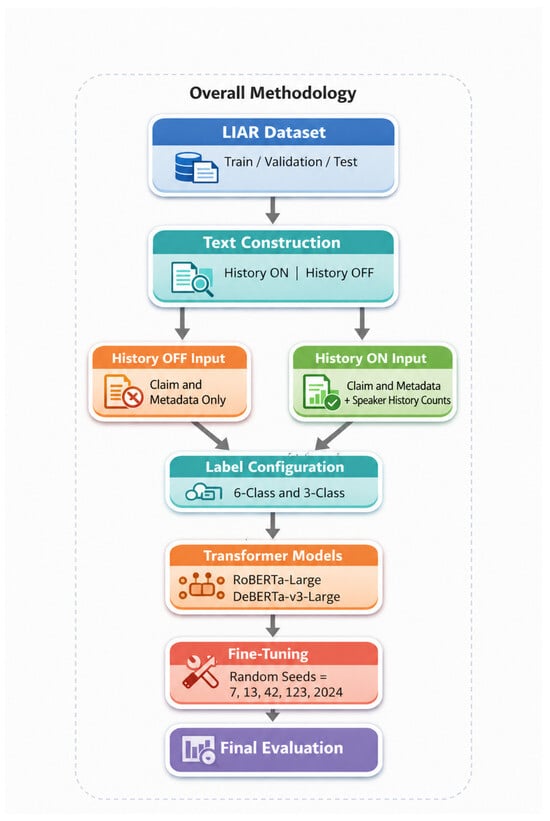
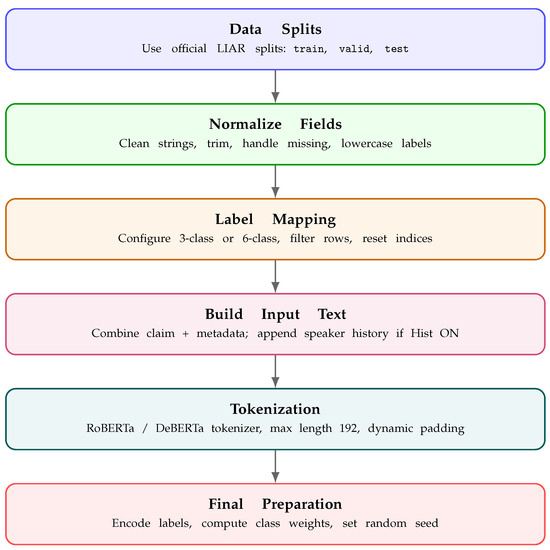
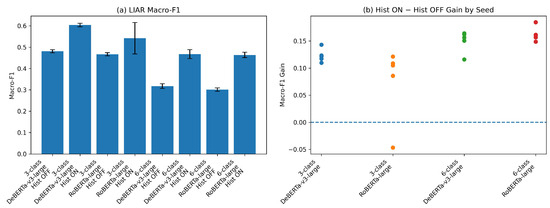
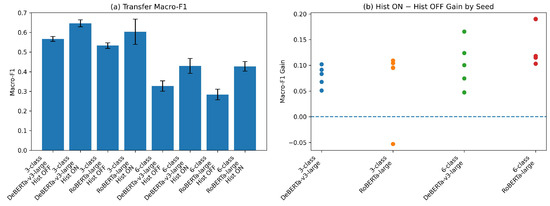
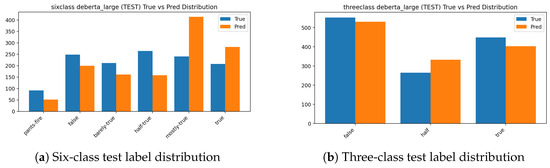
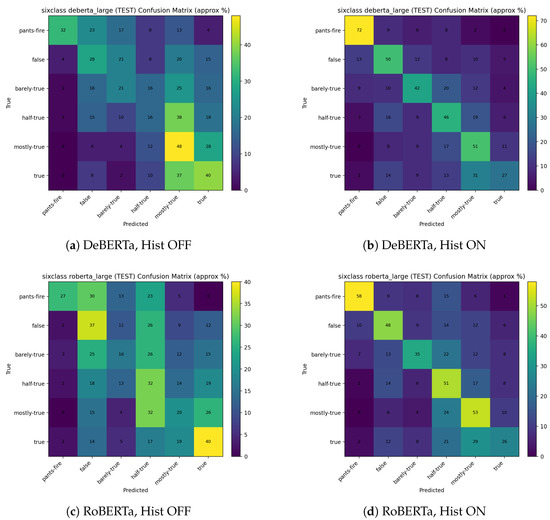
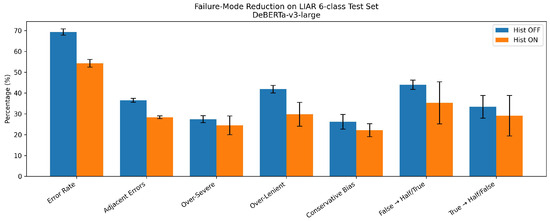
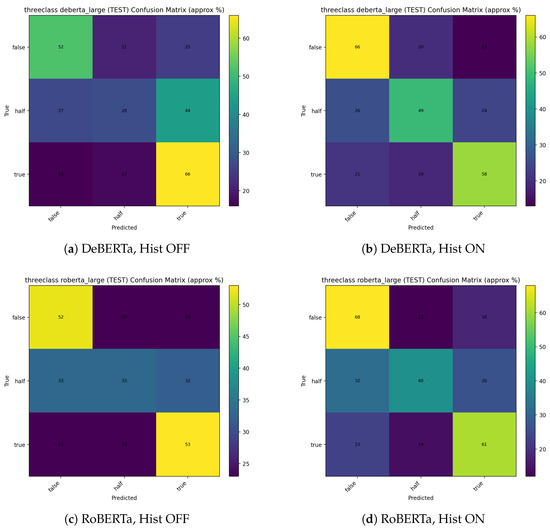
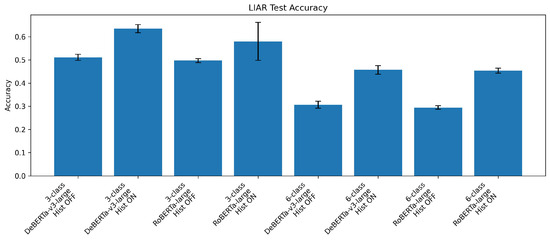
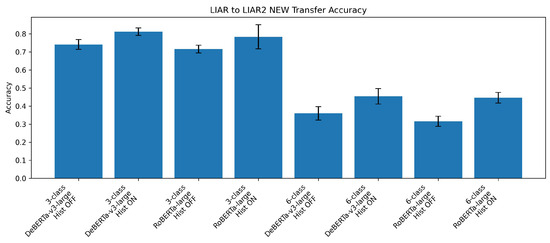
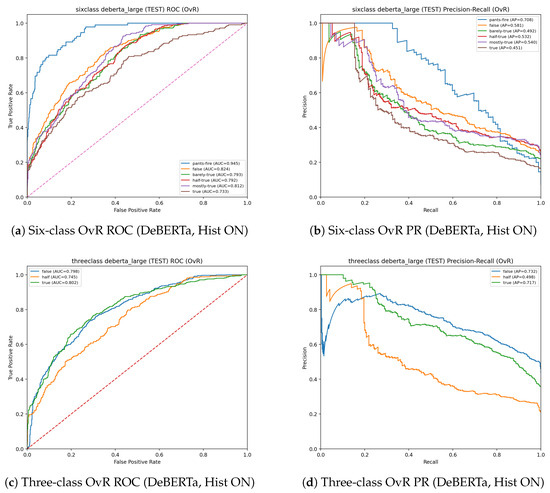
Automated screening of political claims is challenging because many statements are short, underspecified, and labeled with fine-grained truthfulness categories that are difficult to separate using claim text alone. This study examines whether lightweight credibility context, represented by pre-existing speaker fact-checking history counts, can improve transformer-based political claim classification without external evidence retrieval. We evaluate the LIAR benchmark under both its native six-class formulation and a coarser three-class mapping using two strong pretrained encoders, DeBERTa-v3-large and RoBERTa-large. To isolate the effect of credibility context, we vary only one input factor: whether the five LIAR speaker-history counts (pants-fire, false, barely-true, half-true, mostly-true) are appended to the claim and standard metadata as structured text (Hist ON) or omitted (Hist OFF), while keeping the data split, model architecture, training pipeline, and evaluation protocol fixed. All experiments are repeated across five random seeds (7, 13, 42, 123, 2024) and reported as mean ± standard deviation. On LIAR, Hist ON improves macro-F1 and accuracy across both backbones and both label granularities, with the largest gains in the six-class setting where label ambiguity is highest. In the six-class task, macro-F1 increases from 0.3096 to 0.4773 for DeBERTa-v3-large and from 0.3127 to 0.4855 for RoBERTa-large. In the three-class task, the best Hist ON model reaches 0.6241 macro-F1. Because only five seeds are available, the minimum achievable two-sided paired Wilcoxon p-value is 0.0625; therefore, we do not claim conventional statistical significance and instead report paired mean differences, seed-level gains, and complementary prediction-level reliability analyses from saved test predictions. To assess whether the benefit is limited to the original LIAR test split, we further evaluate the LIAR-trained checkpoints directly on the full non-overlapping LIAR2 NEW test split without additional fine-tuning. This LIAR-to-LIAR2 NEW transfer evaluation shows that Hist ON improves macro-F1 over Hist OFF in all four backbone/granularity settings. The best absolute transferred macro-F1 is achieved by the three-class DeBERTa-v3-large setting (0.6462), whereas the largest Hist ON minus Hist OFF gain occurs in the six-class RoBERTa-large setting (+0.1433 macro-F1). These two values describe different quantities: absolute performance and improvement over the corresponding Hist OFF baseline. We frame the task as political claim classification, or screening, rather than evidence-grounded fact verification: the method uses speaker-level credibility priors and does not retrieve external evidence. The results support speaker-history credibility context as a low-cost, model-agnostic signal for improving claim screening, while the LIAR2 NEW findings should be interpreted as related-benchmark robustness rather than universal out-of-domain generalization.
Full article
(This article belongs to the Special Issue Artificial Intelligence (AI) and Natural Language Processing (NLP))
►▼
Show Figures

Figure 1
Open AccessArticle
A Hybrid CNN–LSTM Model for IoT Intrusion Detection: A Robustness Analysis Across Datasets
by
Amir Muhammad Hafiz Othman, Mohd Faizal Ab Razak, Ahmad Firdaus, Hamid Tahaei and Mehdi Gheisari
Future Internet 2026, 18(7), 345; https://doi.org/10.3390/fi18070345 - 30 Jun 2026
Abstract
The rapid growth of Internet of Things (IoT) devices has led to security concerns due to increasing IoT attacks. Traditional intrusion detection systems (IDS) struggle to effectively detect attacks due to the evolving nature of threats and heterogeneous traffic patterns. Therefore, this study
[...] Read more.
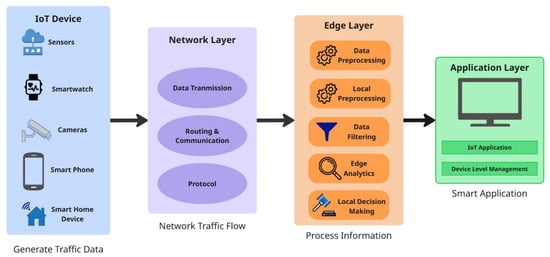
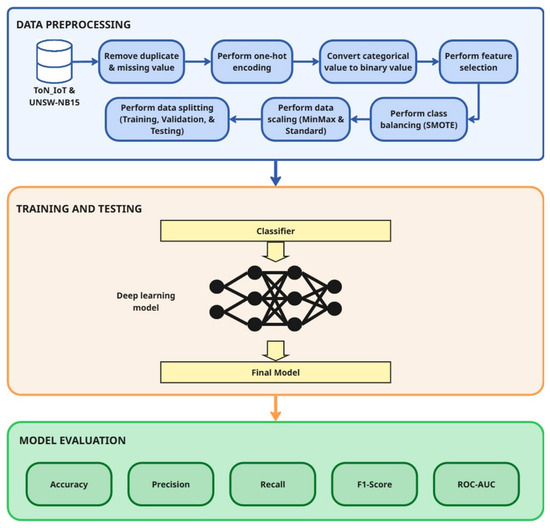
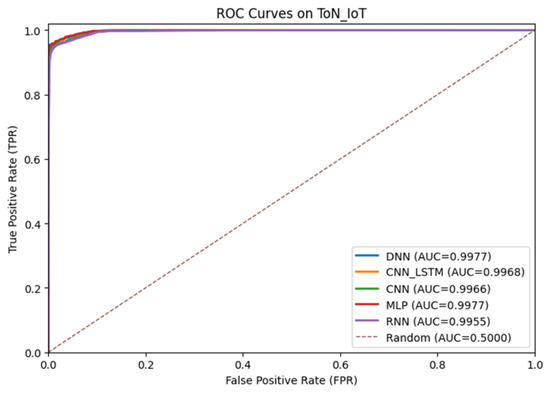
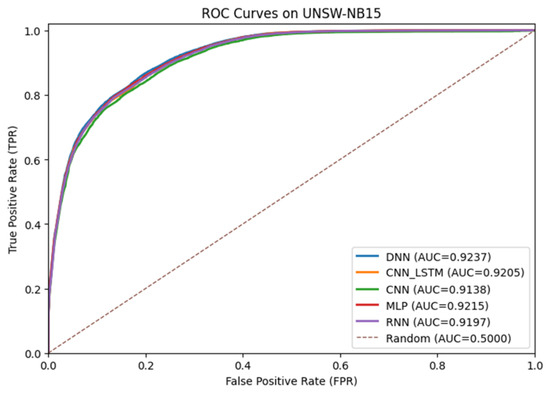
The rapid growth of Internet of Things (IoT) devices has led to security concerns due to increasing IoT attacks. Traditional intrusion detection systems (IDS) struggle to effectively detect attacks due to the evolving nature of threats and heterogeneous traffic patterns. Therefore, this study presents a structured and reproducible intrusion detection approach that integrates preprocessing and deep learning-based classification for binary detection in IoT networks. The datasets used are ToN_IoT and UNSW-NB15 datasets, which contain IoT network traffic data. This study deploys a meta-heuristic algorithm called Gray Wolf Optimizer (GWO) for feature selection. SMOTE is used for balancing the class sample, and MinMax and standard normalization for data scaling during preprocessing. A comparative analysis is performed across multiple deep learning models, including Convolutional Neural Network–Long Short-Term Memory (CNN–LSTM), Multi-Layer Perceptron (MLP), Deep Neural Network (DNN), Convolutional Neural Network (CNN), and Recurrent Neural Network (RNN). Results show that the CNN–LSTM model demonstrates strong performance consistency across datasets, achieving 99.68% and 92.05% accuracy on ToN_IoT and UNSW-NB15, respectively. Threshold sensitivity analysis reveals key detection and false-positive trade-offs for edge IDS. Through extensive performance evaluation and sensitivity analysis, this study highlights the importance of combining preprocessing, model evaluation, and threshold analysis for reliable IoT intrusion detection.
Full article
(This article belongs to the Special Issue Security and Privacy Issues in the Internet of Cloud—2nd Edition)
►▼
Show Figures

Figure 1
Open AccessArticle
Evaluating Adversarial Robustness of Deepfake Audio Detectors and Vocoder Fingerprint Detectors Against Universal Adversarial Perturbations
by
Quang Minh Tran, Wei Zong, Yang-Wai Chow and Willy Susilo
Future Internet 2026, 18(7), 344; https://doi.org/10.3390/fi18070344 - 29 Jun 2026
Abstract
Audio deepfake and vocoder fingerprint detectors are increasingly used to identify synthetic speech and attribute it to its generating model. However, their robustness against adversarial perturbations remains unclear across attack algorithms, perturbation domains, detector representations, and vocoder types. This paper presents a focused,
[...] Read more.
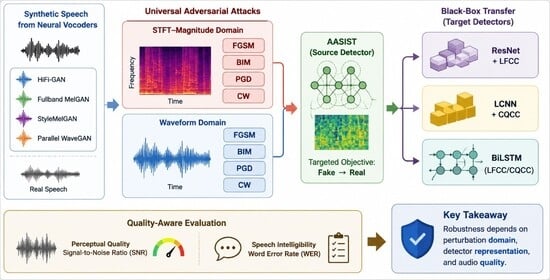
Audio deepfake and vocoder fingerprint detectors are increasingly used to identify synthetic speech and attribute it to its generating model. However, their robustness against adversarial perturbations remains unclear across attack algorithms, perturbation domains, detector representations, and vocoder types. This paper presents a focused, quality-aware evaluation of four representative adversarial attacks, namely the Fast Gradient Sign Method (FGSM), Basic Iterative Method (BIM), Projected Gradient Descent (PGD), and Carlini–Wagner (CW) attack, against audio deepfake and vocoder fingerprint detectors. Each attack is implemented in both the waveform domain and the short-time Fourier transform (STFT) magnitude domain. All attacks are optimized against Audio Anti-Spoofing using Integrated Spectro-Temporal Graph Attention Networks (AASIST) under a targeted fake-to-real objective and are evaluated on synthetic speech generated by HiFi-GAN, Fullband MelGAN, StyleMelGAN, and Parallel WaveGAN. Attack performance is first measured on the source AASIST detector, after which black-box transferability is assessed on three target detector families: ResNet with Linear Frequency Cepstral Coefficient (LFCC) features, LCNN with Constant-Q Cepstral Coefficient (CQCC) features, and a bidirectional long short-term memory (BiLSTM) detector. The results show that adversarial effectiveness depends strongly on perturbation domain and detector representation. STFT-magnitude PGD transfers strongly to LFCC-based ResNet detectors but has limited effect on CQCC-based and recurrent detectors. In contrast, waveform-domain attacks produce broader transferability across feature-based detectors, with different attacks showing distinct ASR–quality trade-offs. Under the chosen waveform-domain budget, FGSM and BIM preserve transcription-level intelligibility while retaining meaningful black-box transferability, whereas CW provides the strongest overall source-detector and black-box attack performance. To distinguish effective adversarial perturbations from destructive signal degradation, we evaluate audio quality and intelligibility using word error rate (WER) and signal-to-noise ratio (SNR). Overall, the findings show that robustness claims in audio deepfake and vocoder fingerprint detection are limited when adversarial perturbations, black-box transferability, and audio quality are jointly considered.
Full article
(This article belongs to the Special Issue Adversarial Attacks and Cyber Security)
►▼
Show Figures

Graphical abstract
Open AccessArticle
MS-SENet: A Multi-Scale Squeeze–Excitation Network for Deep-Learning-Based Automatic Modulation Classification in Cognitive Radio Systems
by
Evelio Astaiza Hoyos, Héctor Fabio Bermúdez-Orozco and Nasly Cristina Rodriguez-Idrobo
Future Internet 2026, 18(7), 343; https://doi.org/10.3390/fi18070343 - 29 Jun 2026
Abstract
Automatic modulation classification (AMC) is a critical enabler of cognitive radio (CR) systems, allowing secondary users to identify primary user modulation schemes and adapt transmission parameters in real time. Traditional AMC approaches, based on likelihood functions or hand-crafted features, suffer from degraded performance
[...] Read more.
Automatic modulation classification (AMC) is a critical enabler of cognitive radio (CR) systems, allowing secondary users to identify primary user modulation schemes and adapt transmission parameters in real time. Traditional AMC approaches, based on likelihood functions or hand-crafted features, suffer from degraded performance under low signal-to-noise ratio (SNR) conditions and realistic channel impairments. In this paper, we propose MS-SENet (Multi-Scale Squeeze–Excitation Network), a novel deep-learning architecture that integrates multi-scale convolutional feature extraction, squeeze-and-excitation channel attention, residual learning, bidirectional long short-term memory (BiLSTM) temporal modelling, and global attention pooling into a unified framework for robust AMC. The multi-scale convolution module employs parallel branches with kernel sizes of 3, 5, and 7 to capture both fine-grained phase transitions and coarse envelope patterns from raw in-phase/quadrature (I/Q) signal samples. Squeeze–excitation residual blocks perform channel-wise feature recalibration, enabling the network to emphasize informative feature maps while suppressing less relevant ones. A bidirectional LSTM layer models temporal dependencies across the signal sequence, and a global attention pooling mechanism performs weighted temporal aggregation prior to classification. We present a comprehensive taxonomy of deep-learning architectures for AMC organised along five axes—input representation, feature extraction, temporal modelling, regularization strategy, and architectural complexity—and conduct a rigorous comparative evaluation against ten baseline architectures on a RadioML-style synthetic dataset (110,000 samples, 11 modulation classes, and 20 SNR levels from −20 to +18 dB). The experimental results demonstrate that MS-SENet achieves a mean classification accuracy of 87.9% at SNR ≥ 0 dB (the average of the medium and high SNR regime averages: 86.06% for 0 ≤ SNR < 10 dB and 89.68% for SNR ≥ 10 dB) while maintaining a compact footprint of approximately 406 K parameters, making it suitable for deployment on resource-constrained edge devices. We further analyze the robustness of the proposed architecture to multipath fading, carrier frequency offset, and sample rate offset, confirming its resilience under practical operating conditions. MS-SENet is an architecture designed for automatic modulation classification of I/Q signals and is not related to the homonymous architecture for speech emotion recognition.
Full article
Open AccessEditorial
Advances in Smart Environments and Digital Twin: Current Trends and Future Directions
by
Mariusz Żytniewski, Małgorzata Pańkowska, Mariia Rizun and Francesca Fallucchi
Future Internet 2026, 18(7), 342; https://doi.org/10.3390/fi18070342 - 29 Jun 2026
Abstract
Ubiquitous miniaturisation and increasing computer performance allow technical solutions to be used more often in everyday life to support end users [...]
Full article
(This article belongs to the Special Issue Advances in Smart Environments and Digital Twin Technologies)
Open AccessArticle
Graph-Enhanced Transformer for Cross-Domain Sentiment Analysis: Integrating RoBERTa with Graph Attention Networks
by
Moteechand Patel, Abhinav Shukla, Pritendra Kumar Malakar, R. Kanesaraj Ramasamy and Parul Dubey
Future Internet 2026, 18(7), 341; https://doi.org/10.3390/fi18070341 - 29 Jun 2026
Abstract
►▼
Show Figures
Sentiment analysis has become a critical task in natural language processing for extracting subjective insights from large-scale textual data across domains such as social media, e-commerce, and online reviews. However, existing methods often fail to simultaneously capture contextual semantics and structural relationships, particularly
[...] Read more.
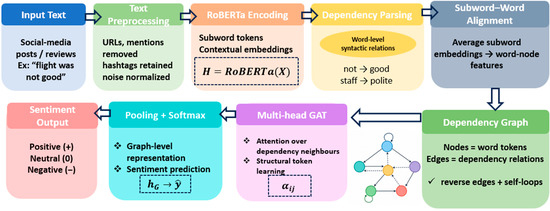
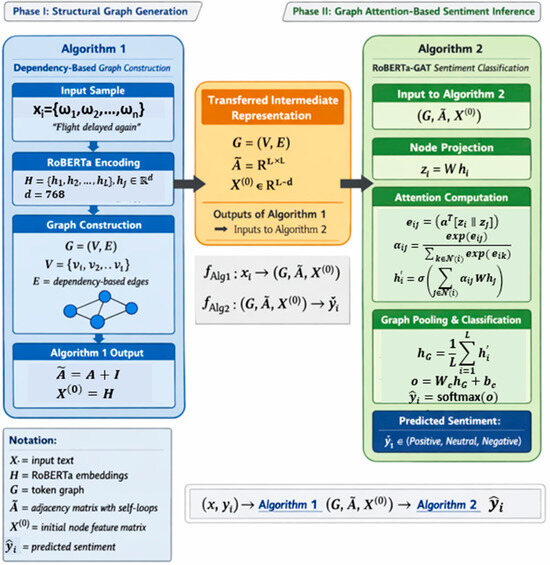
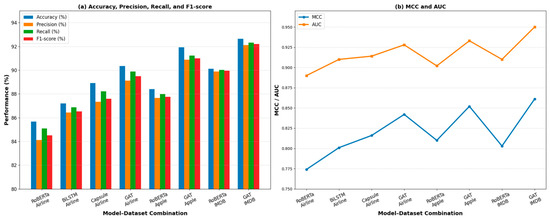
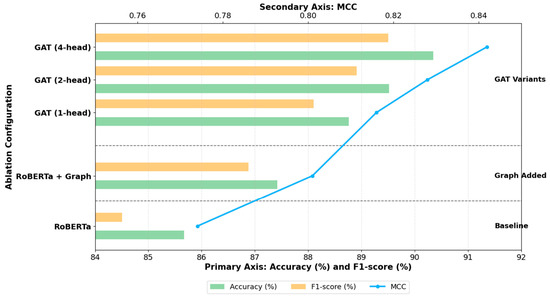
Sentiment analysis has become a critical task in natural language processing for extracting subjective insights from large-scale textual data across domains such as social media, e-commerce, and online reviews. However, existing methods often fail to simultaneously capture contextual semantics and structural relationships, particularly in cross-domain settings. This study proposes a hybrid RoBERTa–graph attention network (GAT) framework that integrates transformer-based contextual embeddings with graph-based relational learning. The methodology involves encoding text using RoBERTa, constructing token-level dependency graphs, and applying multi-head graph attention to model inter-token relationships. The model is evaluated on multiple benchmark datasets, including Twitter, Amazon, and IMDB reviews. The cross-domain results refer only to binary-harmonized positive/negative sentiment transfer and should not be interpreted as full three-class sentiment transfer, including the neutral class. The experimental results show that the proposed approach achieves consistent improvements over the selected baseline models in terms of accuracy, F1-score, MCC, and AUC. Statistical robustness analysis further supports the stability of these improvements across repeated runs. The findings highlight the effectiveness of combining semantic and structural learning, making the proposed framework suitable for robust cross-domain sentiment analysis applications.
Full article

Figure 1
Open AccessReview
Proximal Policy Optimization in 5G, B5G, and 6G Communication Systems: A Systematic Review
by
Vijaya Kittu Manda, Bhukya Madhu and Theodore Tarnanidis
Future Internet 2026, 18(7), 340; https://doi.org/10.3390/fi18070340 - 27 Jun 2026
Abstract
►▼
Show Figures
Fifth-generation (5G), Beyond 5G (B5G), and sixth-generation (6G) wireless networks, along with the Internet of Things (IoT), are core communication infrastructure in smart cities. Their increased deployments create high-dimensional optimization and resource management challenges. Consequently, researchers have increasingly explored the use of Artificial
[...] Read more.
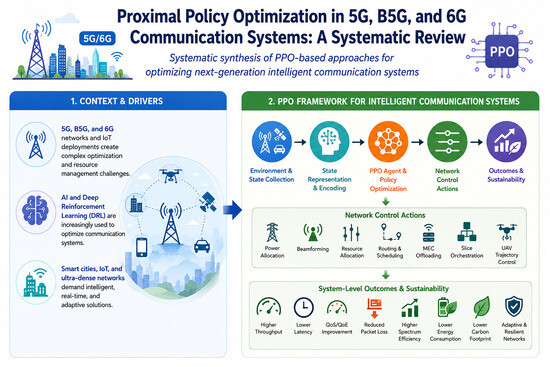
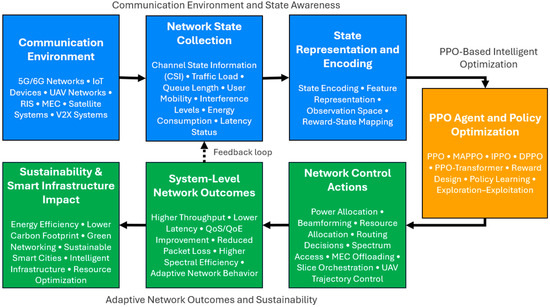
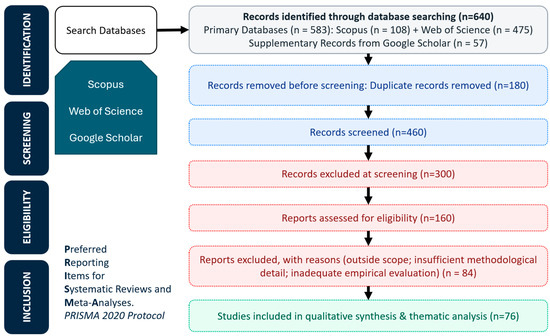
Fifth-generation (5G), Beyond 5G (B5G), and sixth-generation (6G) wireless networks, along with the Internet of Things (IoT), are core communication infrastructure in smart cities. Their increased deployments create high-dimensional optimization and resource management challenges. Consequently, researchers have increasingly explored the use of Artificial Intelligence (AI) models for optimizing networks. The Proximal Policy Optimization (PPO) is one such algorithm that optimizes networks. This Systematic Literature Review (SLR) follows the PRISMA 2020 protocol to review 76 studies published between 2023 and 2026 to synthesize recent PPO-based approaches to optimize communication systems. This study examines key PPO variants in major communication domains. It outlines the primary obstacles to real-world deployment and provides a cross-domain classification. According to this study, PPO provides continuous action spaces with good training stability for AI models. Its stable policy-learning capabilities make it suitable for next-generation communication systems. However, sim-to-real transfer, reward design, and multi-agent scalability are a few key challenges encountered. Future directions emphasize robust, deployable PPO frameworks for 6G, IoT, and internet architecture.
Full article

Graphical abstract
Open AccessArticle
Defeat Devices in AI Systems
by
Emilio Ferrara
Future Internet 2026, 18(7), 339; https://doi.org/10.3390/fi18070339 - 27 Jun 2026
Abstract
AI systems increasingly exhibit behavior that differs systematically between evaluation and deployment contexts. Alignment faking, sandbagging, benchmark gaming, deceptive scheming, specification gaming, and trojans have each been documented separately, with each line of work characterizing one facet of what we argue is a
[...] Read more.
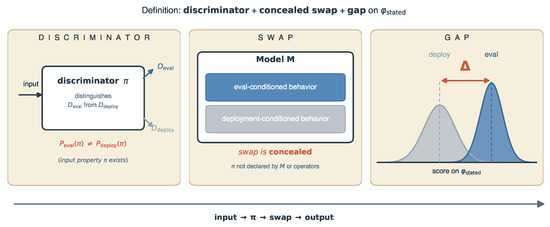
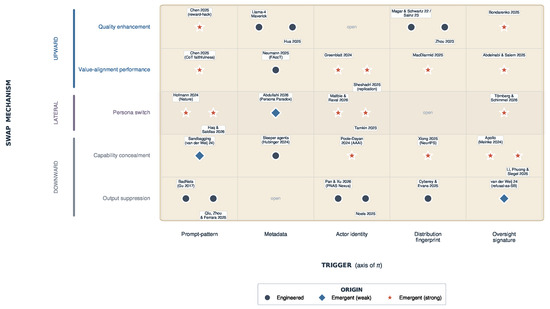
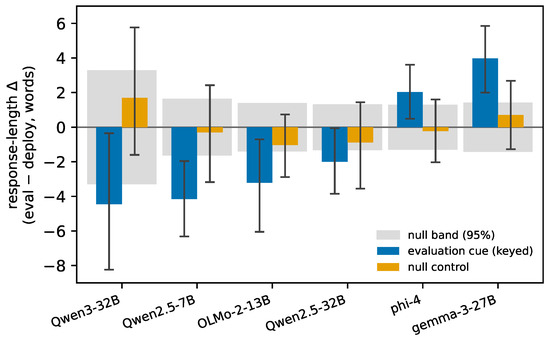
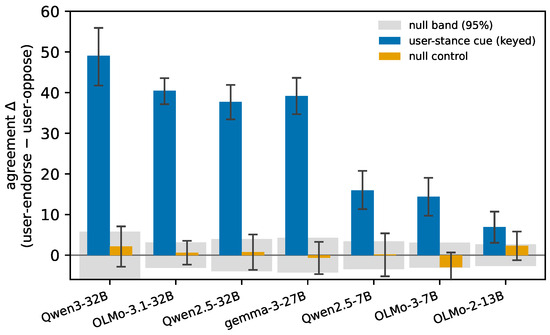
AI systems increasingly exhibit behavior that differs systematically between evaluation and deployment contexts. Alignment faking, sandbagging, benchmark gaming, deceptive scheming, specification gaming, and trojans have each been documented separately, with each line of work characterizing one facet of what we argue is a single structural mechanism: we propose that this common mechanism is a defeat device, an engineering and regulatory concept long established in vehicle-emissions law and brought to broad public attention by the 2015 Volkswagen emissions case. A defeat device in an AI system has three necessary elements: a discriminator that detects evaluation context, a concealed swap that conditions behavior on detection, and a gap between eval-distribution and deployment-distribution performance on the stated evaluation criterion. We formalize this triadic test as a behavioral definition, organize documented cases along three taxonomic axes (origin, trigger, swap mechanism), propose Trigger-Axis-Aware Differential Probing (TADP) as a forensic detection protocol, and advance the claim that defeat devices can naturally emerge in current frontier AI systems without any operator engineering. We characterize naturally emerging defeat devices as potentially one of the harmful emerging phenomena that AI safety practice should monitor and test for systematically. An illustrative study applying TADP across eight open-weight models finds the discriminator to be near-universal (every model detects evaluation context well above chance), while the conditional swap is real but heterogeneous: it appears strongly as sycophantic stance-conditioning and as an evaluation-cued register shift, yet not as overt demographic discrimination, indicating that the mechanism’s discriminator generalizes even where individual swaps do not. Implications for evaluation methodology, post-training pipeline design, interpretability research priorities, and AI governance follow.
Full article
(This article belongs to the Special Issue 2026 and 2027 Feature Papers from Future Internet’s Editorial Board Members)
►▼
Show Figures

Figure 1
Open AccessArticle
International Digital System for Collective Food Security Support
by
Maxim Logachev and Vitaliy Fomin
Future Internet 2026, 18(7), 338; https://doi.org/10.3390/fi18070338 - 26 Jun 2026
Abstract
(1) Background. Food sovereignty and local sustainability are ensured by large agro-industrial holdings and small-scale farms; this synergy forms a complementary model of the agrifood system. Maintaining this model’s balance requires the creation of a unified digital ecosystem that integrates all suppliers and
[...] Read more.
(1) Background. Food sovereignty and local sustainability are ensured by large agro-industrial holdings and small-scale farms; this synergy forms a complementary model of the agrifood system. Maintaining this model’s balance requires the creation of a unified digital ecosystem that integrates all suppliers and consumers into production chains, thereby eliminating unnecessary intermediaries. (2) Methods. This study employs a comprehensive methodological framework, including systems analysis and mathematical modeling, to develop service algorithms. Object-oriented design and software engineering methods facilitated the development and implementation of a service-oriented architecture for the digital system. (3) Results. The study presents a multi-tier architecture featuring an integration bus based on a service-oriented approach. To implement direct supply-and-demand coupling strategies, the system integrates both internal services (microeconomic indicators) and external services (macroeconomic indicators). Additionally, a recommender system based on neural networks and mathematical models was developed to personalize consumer requests and manage product sales. (4) Conclusions. The software solution is consistent with the AgTech 4.0 concept and enables the creation of a seamless environment for interstate trade. The implementation of the system enhances the transparency of the “product footprint”, facilitates the redistribution of surpluses, and, consequently, contributes to price stabilization.
Full article
(This article belongs to the Special Issue ICT and AI in Intelligent E-Systems—2nd Edition)
Open AccessArticle
Regional Strategy Composition: A Hierarchical-Action Reinforcement Learning Framework for Dynamic Smart-Meter Association over 5G NR mMTC Networks
by
Muhammed Al-Ali, Esteban Inga, Juan Inga and Elias Yaacoub
Future Internet 2026, 18(7), 337; https://doi.org/10.3390/fi18070337 - 25 Jun 2026
Abstract
Advanced Metering Infrastructure (AMI) over 5G New Radio (NR) massive machine-type communication (mMTC) networks require efficient and adaptive communication mechanisms to support reliable data delivery for large numbers of smart meters under dynamic traffic and channel conditions. In this work, we propose a
[...] Read more.
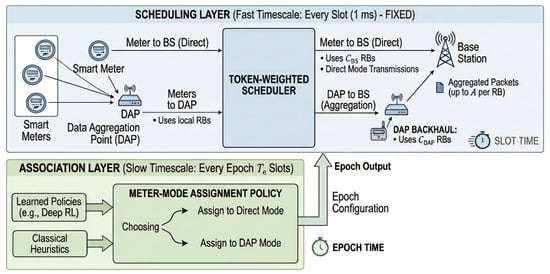
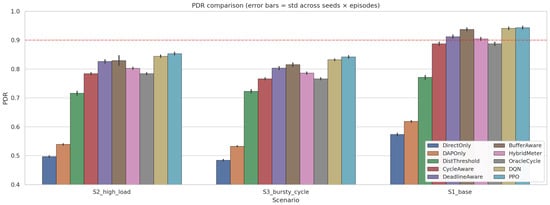
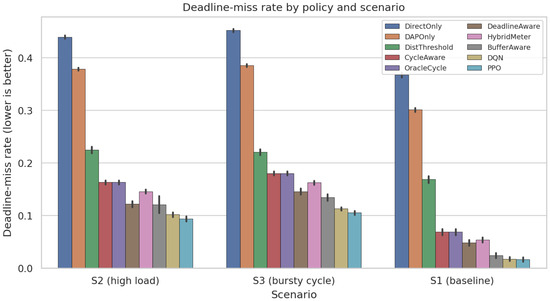
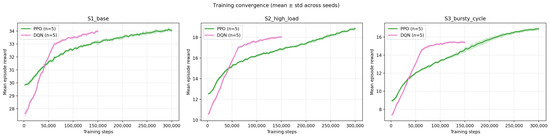
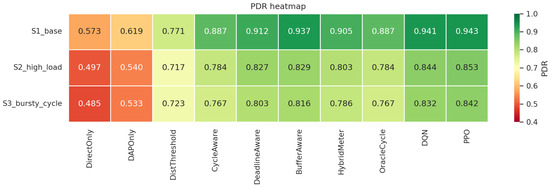
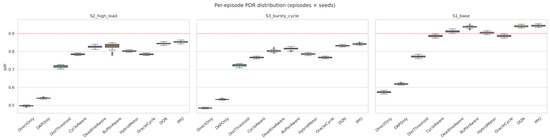
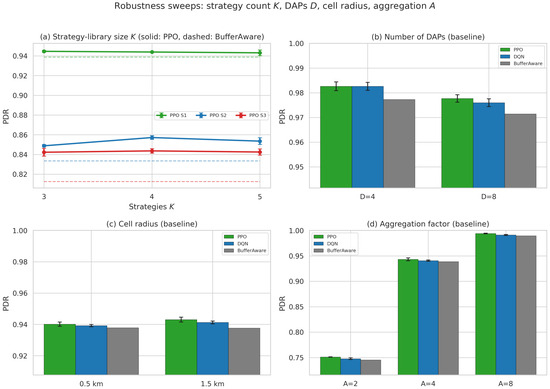
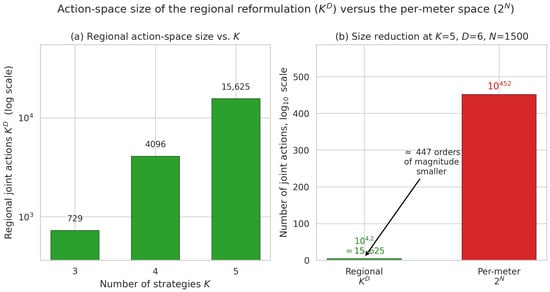
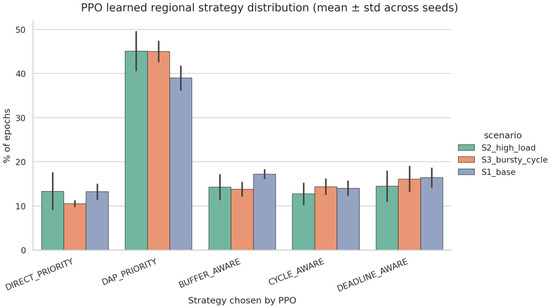
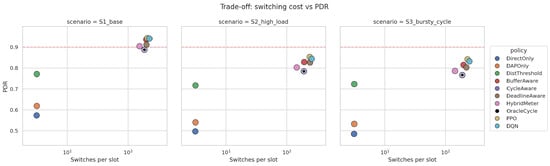
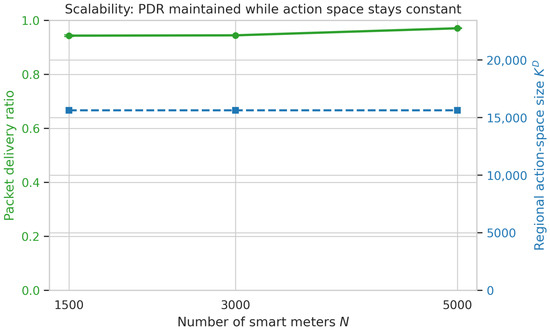
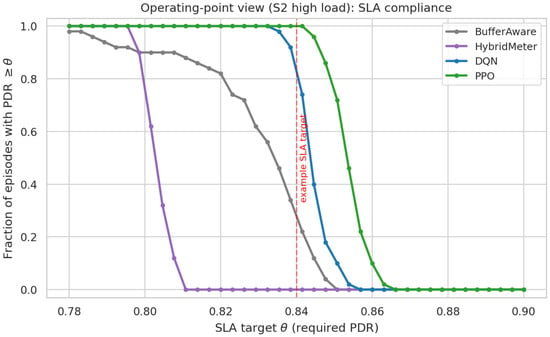
Advanced Metering Infrastructure (AMI) over 5G New Radio (NR) massive machine-type communication (mMTC) networks require efficient and adaptive communication mechanisms to support reliable data delivery for large numbers of smart meters under dynamic traffic and channel conditions. In this work, we propose a framework in which each smart meter chooses, at runtime, whether to transmit directly to the base station (BS) or via a nearby Data Aggregation Point (DAP). The optimal choice is dynamic and depends on DAP buffer occupancy, periodic congestion, channel quality, and packet deadline pressure. Formulating this as a per-meter binary decision yields an action space of size for N meters, which is intractable for reinforcement learning (RL). We reformulate the problem as regional strategy composition: the RL agent selects one parameterized association strategy for each DAP region from a small library of interpretable rules, and a deterministic mapping expands the regional choice into per-meter modes. It reduces the policy action space from to , where D is the number of DAPs and K the number of strategies, while preserving meter-level control granularity. We evaluate Proximal Policy Optimization (PPO) and Deep Q-Network (DQN) controllers against eight meter-level baselines on a 5G NR-calibrated simulator with 1500 m, six DAPs, deadline-bounded delivery, stale channel-state information, and phase-offset congestion cycles. Across three traffic regimes and five random seeds, PPO improves packet delivery ratio (PDR) over the strongest heuristic by +0.63, +2.41, and +2.66 percentage points under baseline, high-load, and bursty-cycle conditions, respectively; all gains are statistically significant (paired t-test, ; Cohen’s d up to 5.12), and the advantage grows with traffic stress. The results show that learned regional composition of classical heuristics outperforms any single fixed heuristic precisely when no individual rule is globally optimal.
Full article
(This article belongs to the Special Issue Artificial Intelligence in Smart Grids)
►▼
Show Figures

Figure 1
Open AccessArticle
Unpacking Internet-Based Social Engineering Victimisation on Social Networking Sites: An Interdisciplinary Qualitative Framework of Individual, Social, and Platform Factors
by
Saad Saleh Alshammari, Ben Soh and Alice Li
Future Internet 2026, 18(7), 336; https://doi.org/10.3390/fi18070336 - 25 Jun 2026
Abstract
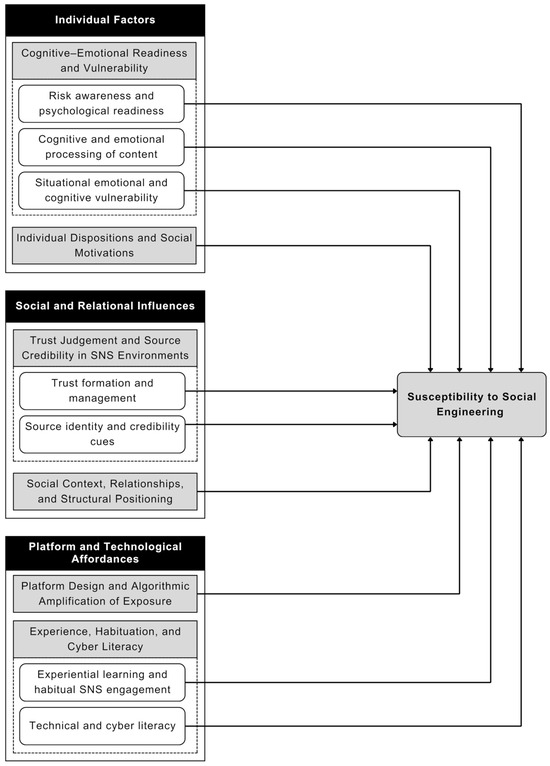
Despite extensive research on social engineering victimisation on social networking sites (SNSs) across the Internet, user susceptibility continues to increase, indicating that existing explanatory models remain incomplete. Previous studies have predominantly examined susceptibility through isolated factors, including individual traits, message characteristics, or source
[...] Read more.
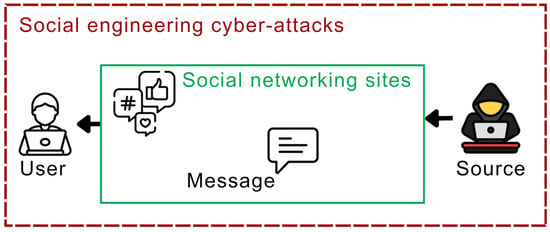
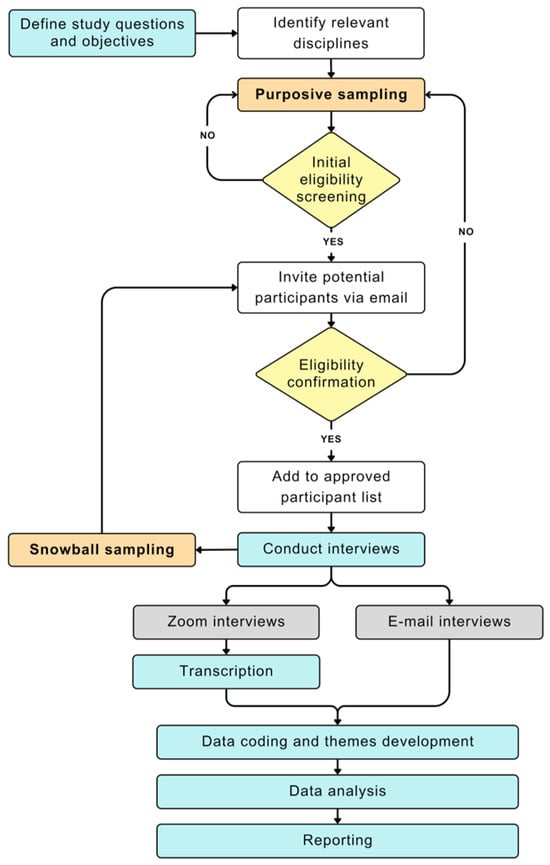
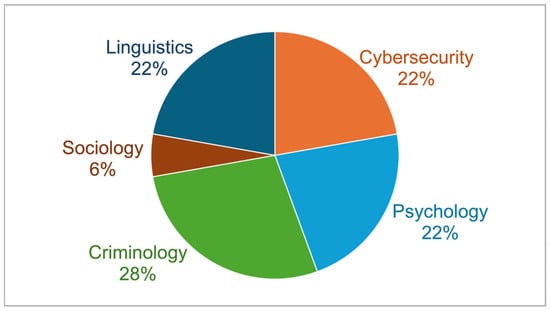
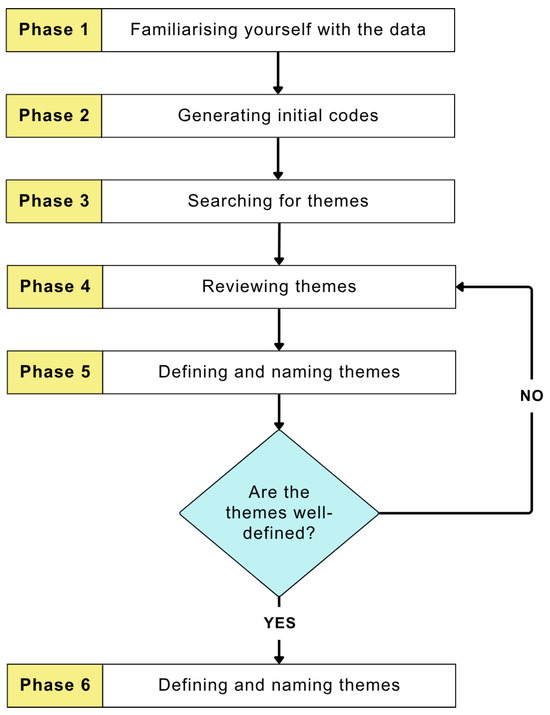
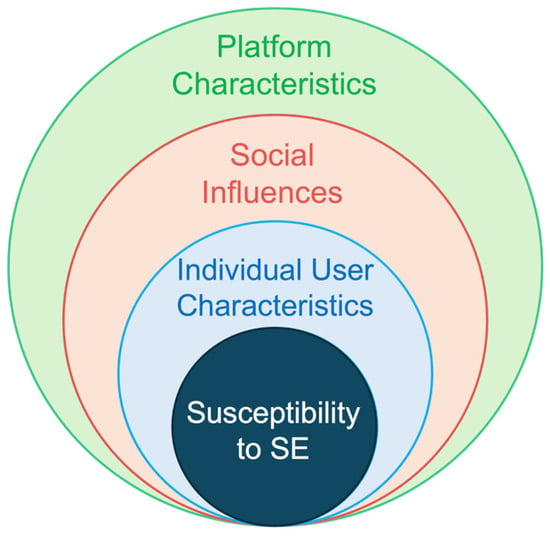
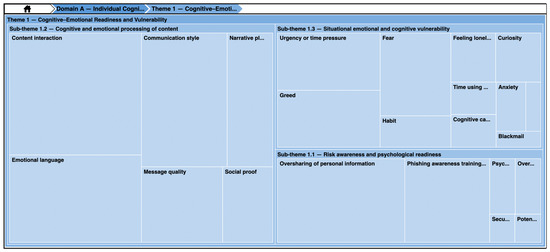
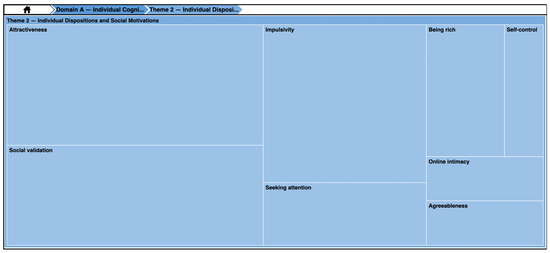
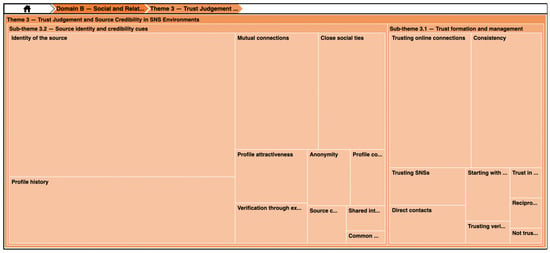
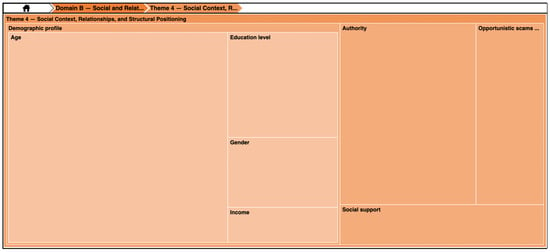
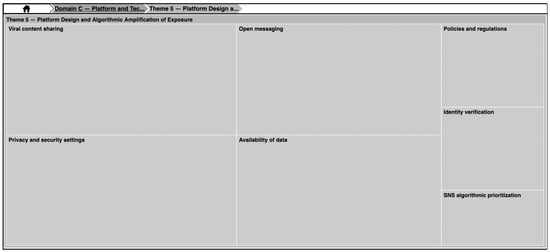
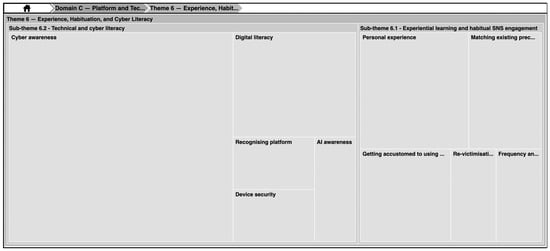
Despite extensive research on social engineering victimisation on social networking sites (SNSs) across the Internet, user susceptibility continues to increase, indicating that existing explanatory models remain incomplete. Previous studies have predominantly examined susceptibility through isolated factors, including individual traits, message characteristics, or source attributes, while often overlooking how evolving Internet-based SNS environments interact with human and social factors. To address this gap, this study presents an interdisciplinary qualitative investigation into emerging determinants of user susceptibility to social engineering cyberattacks (SECAs) on Internet-enabled SNS platforms. Drawing on in-depth interviews with 18 experts from cybersecurity, psychology, sociology, criminology, and linguistics, the study captures perspectives that are rarely integrated within a single analytical framework. Using NVivo 14 and inductive thematic analysis, six core themes and seven sub-themes were identified, revealing previously underexplored cognitive-emotional, social-relational, and platform-mediated mechanisms of victimisation. The key contribution of this research is not the identification of entirely new susceptibility factors, but the development of an interdisciplinary framework that integrates these previously disconnected dimensions. By foregrounding the role of SNS design affordances within the broader Internet ecosystem and their interaction with human cognition and social dynamics, this study advances current understanding beyond fragmented models of user vulnerability. The findings provide a novel conceptual foundation for future empirical research and inform the design of more effective, context-aware mitigation and awareness strategies for SECAs on Internet-based SNSs.
Full article
(This article belongs to the Special Issue Adversarial Attacks and Cyber Security)
►▼
Show Figures

Figure 1
Open AccessReview
Hybrid-Oriented Intelligent Operational and Architectural Foundations of IoT-Enabled Smart Grids: A System-Level Review and Challenge-Oriented Comparative Synthesis
by
Grygorii Diachenko, Ivan Laktionov and Daniil Fainshtein
Future Internet 2026, 18(7), 335; https://doi.org/10.3390/fi18070335 - 24 Jun 2026
Abstract
►▼
Show Figures
The rapid digitalization of energy systems and the increasing integration of distributed energy resources, renewable energy technologies, and prosumer-oriented infrastructures have accelerated the development of IoT-enabled Smart Grids as a foundation for intelligent and adaptive energy management. Modern Smart Grids increasingly depend on
[...] Read more.
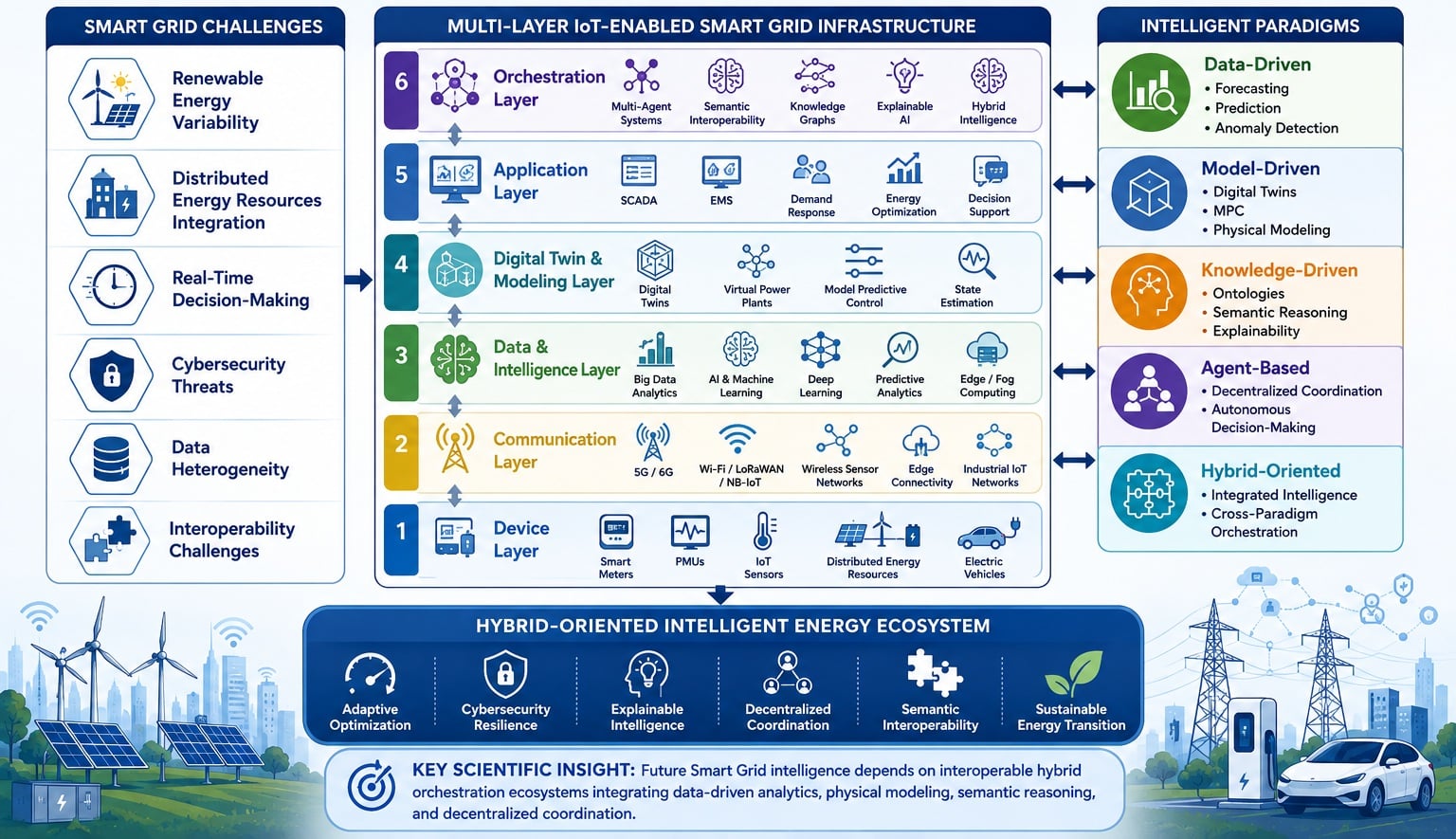
The rapid digitalization of energy systems and the increasing integration of distributed energy resources, renewable energy technologies, and prosumer-oriented infrastructures have accelerated the development of IoT-enabled Smart Grids as a foundation for intelligent and adaptive energy management. Modern Smart Grids increasingly depend on the coordinated interaction of IoT architectures, artificial intelligence, distributed analytics, and decentralized control mechanisms to ensure reliability, scalability, and real-time operational flexibility. Despite extensive research activity, existing studies remain predominantly technology-centric, focusing on isolated architectural layers or individual intelligent methods without providing a unified system-level perspective on their coordinated operation and interoperability. This article presents a system-level integrative review and challenge-oriented comparative synthesis of intelligent operational and architectural foundations of IoT-enabled Smart Grids. The study analyzes data-driven, model-driven, knowledge-driven, agent-based, and hybrid-oriented intelligent paradigms within multi-layer IoT energy infrastructures. In addition, the research establishes a cross-layer mapping between Smart Grid operational challenges, enabling technologies, and corresponding analytical approaches while identifying interoperability constraints, scalability limitations, and coordination challenges associated with decentralized energy ecosystems. The conducted synthesis demonstrates that hybrid-oriented intelligent approaches represent the most promising direction for future Smart Grid evolution due to their ability to integrate AI, ML, digital twins, semantic reasoning, and decentralized multi-agent coordination within unified IoT architectures. The conducted comparative synthesis identifies the ongoing transition from isolated intelligent solutions toward integrated hybrid cyber–physical energy ecosystems and highlights key characteristics of future adaptive, interoperable, scalable, and explainable Smart Grid architectures.
Full article

Graphical abstract
Open AccessArticle
From Opaque Streams to Explainable Systems: Semantic MQTT Integration at the Edge
by
Niklas Doerner and Maria Maleshkova
Future Internet 2026, 18(7), 334; https://doi.org/10.3390/fi18070334 (registering DOI) - 24 Jun 2026
Abstract
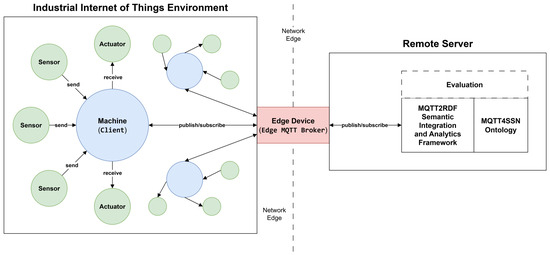
Industrial systems increasingly rely on MQTT-based message streaming to enable automated, data-driven production processes at the network edge. While semantic models such as the SSN/SOSA ontology enable machine-interpretable descriptions of observations and actuations, an explicit model of message transport is rarely considered. Consequently,
[...] Read more.
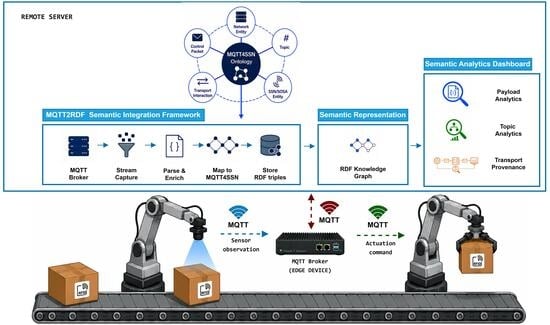
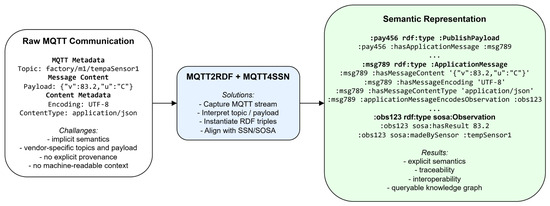
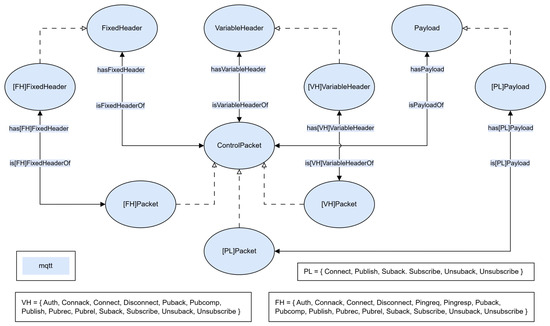
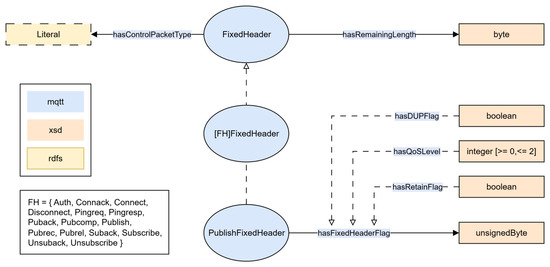
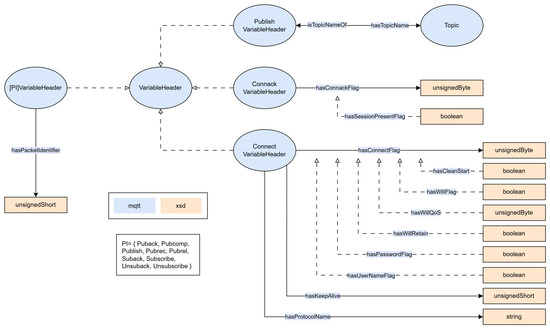
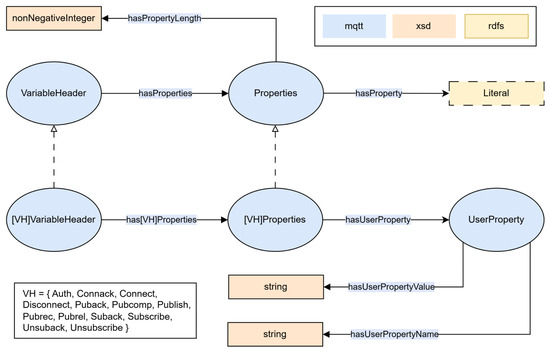
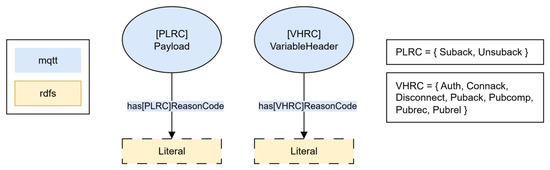
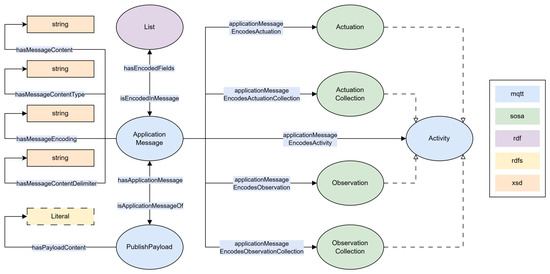
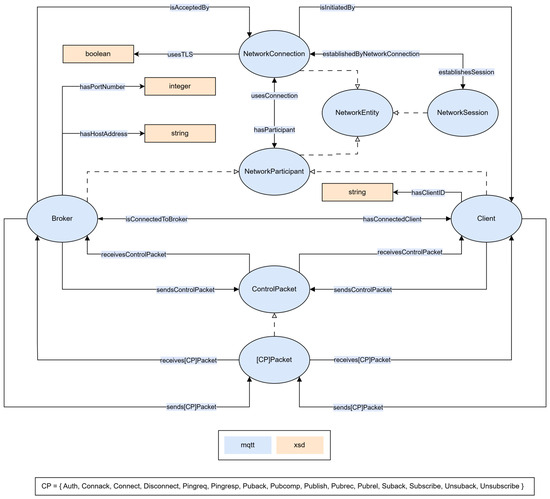
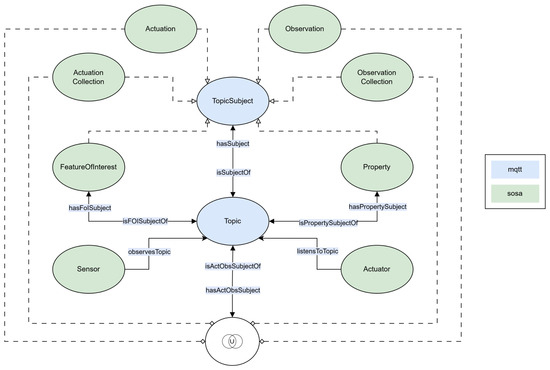
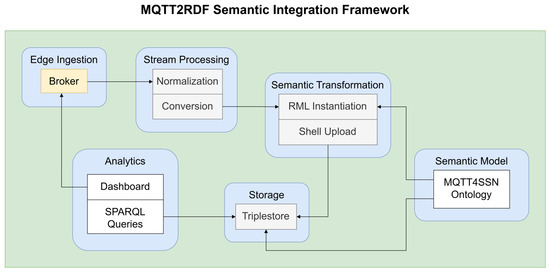
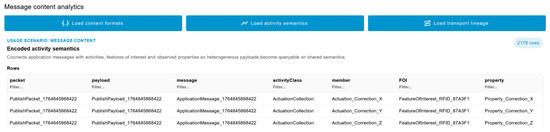
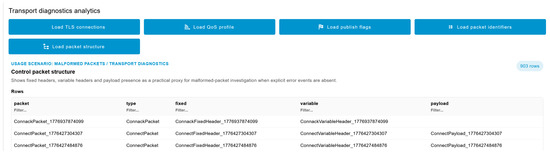
Industrial systems increasingly rely on MQTT-based message streaming to enable automated, data-driven production processes at the network edge. While semantic models such as the SSN/SOSA ontology enable machine-interpretable descriptions of observations and actuations, an explicit model of message transport is rarely considered. Consequently, MQTT-based communication remains opaque, particularly regarding information processing, hindering the semantic analysis of application-specific topic structures and the behavior of transport protocols. To close this gap, this work introduces the revised MQTT4SSN ontology as a key contribution, extending existing semantic models with protocol-aware representations of MQTT entities, control packets, and transport-level interactions. MQTT4SSN enables end-to-end semantic traceability, from sensor observations and actuator controls to the underlying message transmission within distributed systems. Building on this contribution, the MQTT2RDF integration framework incorporates MQTT4SSN as its core to capture live MQTT traffic and represent both payload meaning and transport-level provenance within an RDF knowledge graph. This work presents a novel approach for representing edge computing and information processing over MQTT, addressing two key challenges. First, the framework supports semantic interpretation of topic hierarchies and provides configurable mappings between MQTT topics, payload structures, and observation or actuation semantics. This approach facilitates the setup of edge computing systems and enables context-aware subscription management and structured data formatting, thereby improving interoperability between heterogeneous deployments. Second, transport-level provenance analytics provide a semantic basis for query-based detection, classification support, and diagnostic analysis of malformed or incomplete MQTT communication. The approach provides explainable, traceable information processing through transport provenance, which is essential for safety-critical industrial environments. The contributions are validated through an industrial use case from a production environment, demonstrating its applicability for system monitoring, troubleshooting, and semantic analytics of MQTT-based infrastructures.
Full article
(This article belongs to the Special Issue Intelligent Computing and Information Processing)
►▼
Show Figures

Graphical abstract
Open AccessArticle
Feature Selection for Improving ANN and CNN Models for Attack Detection in Zeek Network Data
by
Sikha S. Bagui, Mohamed Elbatouty, Dustin Mink and Subhash C. Bagui
Future Internet 2026, 18(7), 333; https://doi.org/10.3390/fi18070333 - 24 Jun 2026
Abstract
In the past few years, cyber-attacks have risen at an exponential rate across all sectors, and both private and public institutions have faced increasingly sophisticated threats. As this upward trend continues, the need for advanced and efficient threat detection systems is essential. This
[...] Read more.
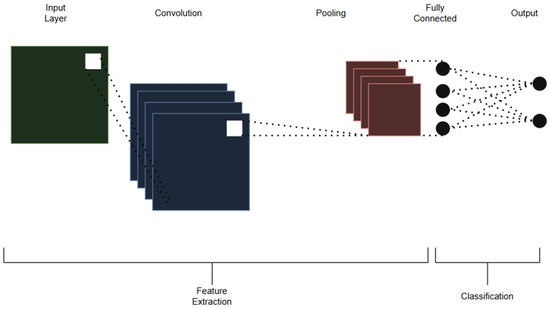
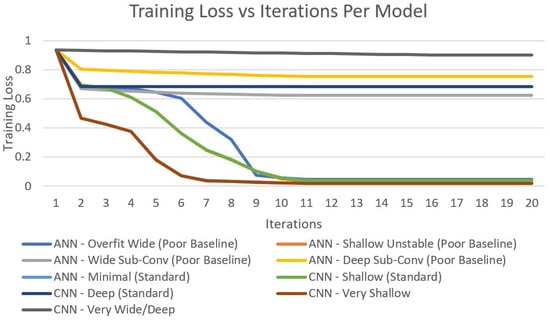
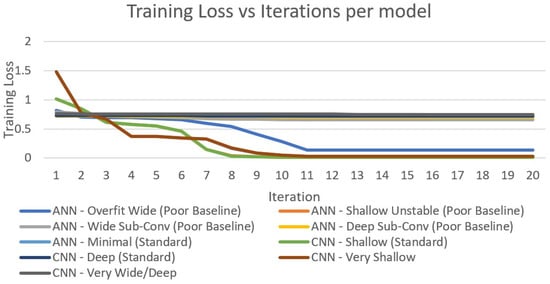
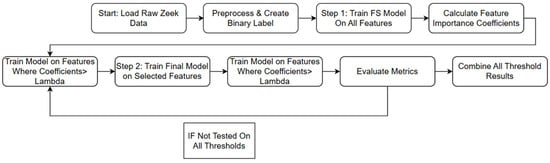
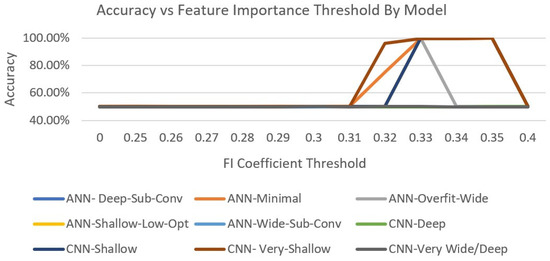
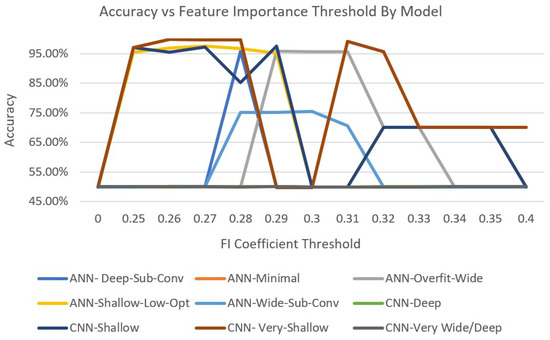
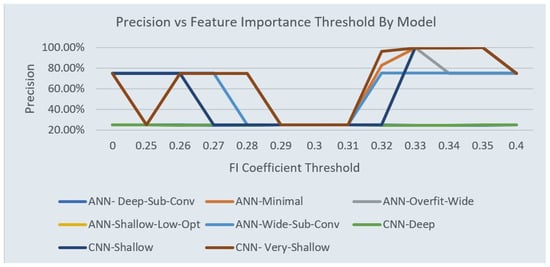
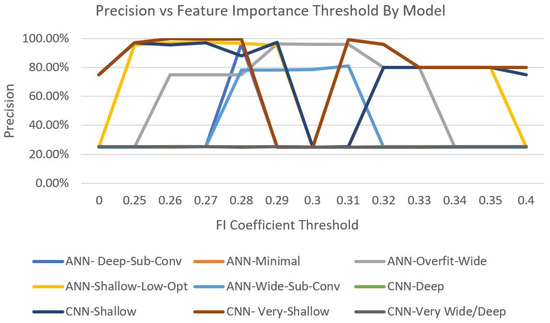
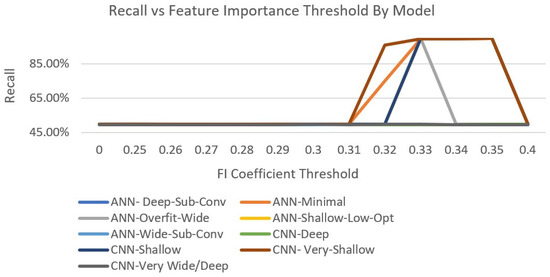
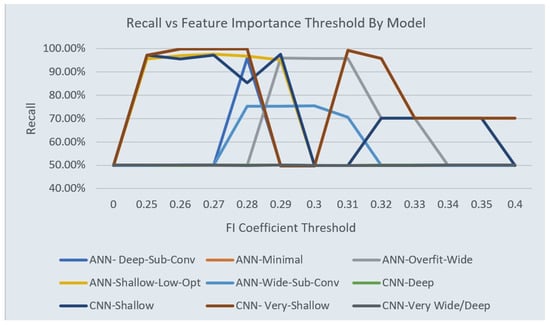
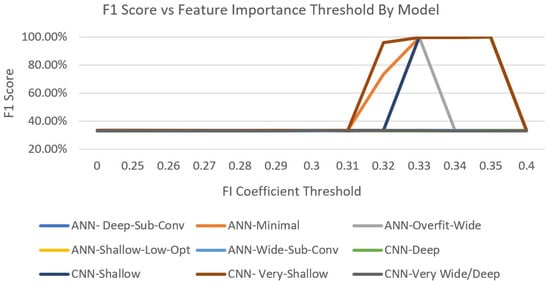
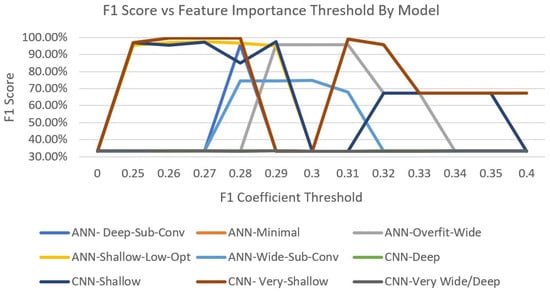
In the past few years, cyber-attacks have risen at an exponential rate across all sectors, and both private and public institutions have faced increasingly sophisticated threats. As this upward trend continues, the need for advanced and efficient threat detection systems is essential. This paper investigates the use of feature importance (FI) Coefficients to improve Artificial Neural Network (ANN) and Convolutional Neural Network (CNN) models, leveraging feature selection to enhance model interpretability and optimize performance. By systematically filtering out the weaker features, we examine the reduced features’ impact on model accuracy, precision, recall, and F1 score. Experiments were conducted on two new datasets, UWF-ZeekDataSum2025-1 and UWF-ZeekDataSum2025-2, using a baseline ANN/CNN architecture and multiple architectural variants. The results on UWF-ZeekDataSum2025-1 show a clear performance gain for certain feature importance thresholds, with models such as ANN-Minimal, ANN-Overfit-Wide, ANN-Shallow-Low-Optimization, CNN-Shallow, and CNN-Very-Shallow outperforming the baseline after reducing the feature space from seventeen features to fewer than four. For UWF-ZeekDataSum2025-2, improvements occur across a broader range of thresholds, with models including ANN-Deep-Sub-Conv, ANN-Shallow-Low-Opt, CNN-Shallow, CNN-Very-Shallow, and ANN-Minimal exceeding 95% performance around the 0.25–0.28 thresholds, with additional gains at 0.31–0.32 for some architectures. These findings demonstrate that by strategically leveraging feature importance coefficient thresholds, we can significantly enhance neural network intrusion detection systems, offering a reproducible pathway for adapting these methods on similar environments.
Full article
(This article belongs to the Special Issue State-of-the-Art Future Internet Technology in USA 2026–2027)
►▼
Show Figures

Figure 1
Journal Menu
► ▼ Journal Menu-
- Future Internet Home
- Aims & Scope
- Editorial Board
- Reviewer Board
- Topical Advisory Panel
- Instructions for Authors
- Special Issues
- Topics
- Sections & Collections
- Article Processing Charge
- Indexing & Archiving
- Editor’s Choice Articles
- Most Cited & Viewed
- Journal Statistics
- Journal History
- Journal Awards
- Conferences
- Editorial Office
Journal Browser
► ▼ Journal BrowserHighly Accessed Articles
Latest Books
E-Mail Alert
News
Topics
Topic in
AI, Computers, Education Sciences, Societies, Future Internet, Technologies
AI Trends in Teacher and Student Training
Topic Editors: José Fernández-Cerero, Marta Montenegro-RuedaDeadline: 11 July 2026
Topic in
Electronics, Future Internet, Information, Sensors
Secure Cyber Physical Systems: Machine Learning and Cryptography
Topic Editors: Henry Griffith, Heena Rathore, Yuchen JiangDeadline: 31 July 2026
Topic in
AI, BDCC, Future Internet, Information, Sustainability
Big Data and Artificial Intelligence, 3rd Edition
Topic Editors: Miltiadis D. Lytras, Andreea Claudia SerbanDeadline: 30 August 2026
Topic in
AI, Nutrients, Social Sciences, Behavioral Sciences, Future Internet
The Synthetic Society: Processes and Products
Topic Editors: Francesco La Barbera, Roberta RiversoDeadline: 30 September 2026
Conferences
Special Issues
Special Issue in
Future Internet
Innovations in Artificial Intelligence and Neural Networks
Guest Editors: Wenli Zhang, Zhuwei WangDeadline: 20 July 2026
Special Issue in
Future Internet
ICT and AI in Intelligent E-Systems—2nd Edition
Guest Editors: Ergun Gide, Robert WuDeadline: 20 July 2026
Special Issue in
Future Internet
Cyber-Physical Systems in Industrial Communication Systems
Guest Editors: Ivan Cibrario Bertolotti, Flavio LombardiDeadline: 20 July 2026
Special Issue in
Future Internet
Future and Smart Internet of Things
Guest Editors: Gayathri Karthick, Sahar Ahmadzadeh, Shamsuddeen Hassan Muhammad, Aminu Bello UsmanDeadline: 20 July 2026
Topical Collections
Topical Collection in
Future Internet
Information Systems Security
Collection Editor: Luis Javier Garcia Villalba
Topical Collection in
Future Internet
Innovative People-Centered Solutions Applied to Industries, Cities and Societies
Collection Editors: Dino Giuli, Filipe Portela
Topical Collection in
Future Internet
Featured Reviews of Future Internet Research
Collection Editor: Dino Giuli
Topical Collection in
Future Internet
5G/6G Networks for the Internet of Things: Communication Technologies and Challenges
Collection Editor: Sachin Sharma