


Abstract
Industrial systems increasingly rely on MQTT-based message streaming to enable automated, data-driven production processes at the network edge. While semantic models such as the SSN/SOSA ontology enable machine-interpretable descriptions of observations and actuations, an explicit model of message transport is rarely considered. Consequently, MQTT-based communication remains opaque, particularly regarding information processing, hindering the semantic analysis of application-specific topic structures and the behavior of transport protocols. To close this gap, this work introduces the revised MQTT4SSN ontology as a key contribution, extending existing semantic models with protocol-aware representations of MQTT entities, control packets, and transport-level interactions. MQTT4SSN enables end-to-end semantic traceability, from sensor observations and actuator controls to the underlying message transmission within distributed systems. Building on this contribution, the MQTT2RDF integration framework incorporates MQTT4SSN as its core to capture live MQTT traffic and represent both payload meaning and transport-level provenance within an RDF knowledge graph. This work presents a novel approach for representing edge computing and information processing over MQTT, addressing two key challenges. First, the framework supports semantic interpretation of topic hierarchies and provides configurable mappings between MQTT topics, payload structures, and observation or actuation semantics. This approach facilitates the setup of edge computing systems and enables context-aware subscription management and structured data formatting, thereby improving interoperability between heterogeneous deployments. Second, transport-level provenance analytics provide a semantic basis for query-based detection, classification support, and diagnostic analysis of malformed or incomplete MQTT communication. The approach provides explainable, traceable information processing through transport provenance, which is essential for safety-critical industrial environments. The contributions are validated through an industrial use case from a production environment, demonstrating its applicability for system monitoring, troubleshooting, and semantic analytics of MQTT-based infrastructures.
1. Introduction
Industrial technical systems increasingly depend on continuous data streams to support automated and data-driven decision-making in real time. In modern industrial Internet of Things (IoT) environments, sensors and actuators continuously generate high-frequency data that must be processed, transmitted, and interpreted across distributed systems. At the same time, there is a growing need for solutions that can integrate and map information from multiple heterogeneous sources, in various formats, into a unified semantic representation. The importance of this requirement is particularly evident in industrial IoT settings, where continuously generated sensor data streams must be semantically interpreted and sequenced in real time rather than being mapped once from static datasets.
A common architectural pattern to address these requirements is edge computing, where data is processed close to its source and selectively forwarded to higher-level systems for further complex computations [1,2]. In such architectures, sensors and actuators are connected to edge devices, which exchange data with backend services through scalable machine-to-machine communication protocols. One of these, the Message Queuing Telemetry Transport (MQTT) protocol [3] has become an established standard in IoT due to its lightweight Publish/Subscribe architecture, low bandwidth requirements, and high scalability [4,5]. With MQTT, clients publish messages to a central broker using topics that typically consist of hierarchical paths. The broker distributes them to clients who subscribe to the corresponding topics. This broker-based architecture decouples publishers and subscribers of messages, enabling efficient, scalable data exchange in highly dynamic, resource-constrained environments.
However, despite its widespread adoption, MQTT introduces significant interoperability and semantic challenges. Topic structures and payload contents often encode meaning only implicitly through vendor-specific naming conventions and proprietary data formats. As a result, the interpretation of transmitted messages depends heavily on application-specific knowledge, limiting interoperability, traceability, and automated reasoning across distributed systems. Regarding message transport metadata, protocol-level information such as message provenance, session context, and communication events remains opaque in conventional MQTT deployments. Aside from that, the Web of Things (WoT) community recommends the W3C SSN/SOSA ontology as a standard model for describing sensors, observations, and actuations in a machine-interpretable manner [6,7,8].
To illustrate these challenges, consider a modern industrial production environment in which multiple machines continuously exchange data with local and remote systems. Sensor observations and control commands must be transmitted reliably across distributed infrastructures to support monitoring, automation, and higher-level analytics. The environment shown in Figure 1 consists of several machines (clients) equipped with sensors (e.g., temperature, vibration, or pressure sensors) and actuators (e.g., robot arms). Each machine communicates with an MQTT broker at an edge device by publishing and subscribing to MQTT topics. The MQTT broker then interacts with a remote server, also by publishing and subscribing to MQTT topics for semantic integration and analysis. Summarized, in the factory environment, monitoring applications, control systems, and data-processing services from multiple clients subscribe to relevant topics to process incoming streams in real time. At the same time, the remote server performs higher-level semantic integration and analytics.
Figure 1.
Industrial IoT architecture showing sensor-actuator systems connected via an MQTT broker deployed on an edge device to a remote server for semantic integration and analysis. The arrows indicate communication flows, the dashed vertical line at the network edge separates the local environment from the remote server, and the dashed box on the remote server indicates the evaluation scope.
While this setup enables scalable and efficient communication among many clients, the exchanged messages remain semantically ambiguous. For instance, the meaning of a topic string or the structure of a payload is often only known to specific system components due to vendor specifications, hindering interoperability and automated integration. While SSN/SOSA provides rich semantics for observational processes and physical system deployment, it does not model machine-to-machine (M2M) communication protocols such as MQTT. In addition, heterogeneous payload structures and character encodings are outside its scope, limiting the interoperable integration of transmitted data streams [9]. Hence, the existing semantic models fail to capture the entire process of data transmission, from generation to interpretation, thus leading to incomplete semantic representation and limited analyses.
To address these limitations, this paper introduces MQTT2RDF, a reusable semantic integration framework that bridges the gap between sensor semantics and M2M communication semantics across distributed IoT systems. The framework enables transforming live MQTT message streams into RDF-based knowledge graphs (KGs), thereby supporting real-time semantic analytics. It provides artifacts for ontology population that capture MQTT traffic directly from the broker, instantiate RDF triples, and stream them into a triplestore. At its core, MQTT2RDF incorporates MQTT4SSN [10], an ontology that explicitly represents MQTT network entities, control packets, and session contexts. The ontology enables a comprehensive semantic representation of the MQTT protocol and aligns it with the observation, actuation, and sampling semantics of the W3C SSN/SOSA ontology [7,8]. By making message meanings explicit and machine-interpretable, the approach facilitates interoperability, traceability, and advanced semantic analytics in IoT environments. The MQTT4SSN ontology and the MQTT2RDF framework are openly available, adaptable, and extensible for use across various domains. This work makes the following contributions:
- MQTT4SSN Ontology: Further development of the previous version, providing a comprehensive representation that covers all MQTT 5.0 control packets, including their complete contents and structure. Enrichment of the network infrastructure with session context.
- MQTT2RDF Semantic Integration and Analytics Framework: A modular framework that integrates heterogeneous MQTT message streams into RDF-based KGs in real time. The framework supports semantic querying, provenance-aware analytics, anomaly detection, and explainable analysis across distributed IoT environments.
- Ontology and Framework Evaluation: A thorough evaluation of the ontology based on its coverage of the MQTT 5.0 specification [3] and a use case in the industrial context, complemented by runtime analysis of the framework, evaluating semantic processing overhead and practical applicability.
The remainder of this paper is structured as follows: Section 2 introduces an industrial usage scenario and motivates the development of a semantic integration and analytics framework. Section 3 provides an overview of related data models that represent the MQTT protocol and associated concepts (Section 3.1), semantic integration and KG population approaches (Section 3.2), and MQTT provenance, accountability, and integrity (Section 3.3). Section 4 describes the overall research methodology, including requirements definition (Section 4.1), the ontology engineering process (Section 4.2), integration and analytics framework design and implementation (Section 4.3), and considerations for publication and reusability (Section 4.4). Section 5 addresses the ontology development process of MQTT4SSN, covering its core concept (Section 5.1), ontology description (Section 5.2). Section 6 introduces MQTT2RDF, a framework for the semantic integration of continuous MQTT data streams into a triplestore, including broker integration and metadata limitations (Section 6.1), the threat and trust model (Section 6.2), the continuous semantic integration pipeline (Section 6.3), the conceptual procedure for semantic topic mapping (Section 6.4), and the semantic analytics dashboard (Section 6.5). Section 7 presents the evaluation of the proposed approach, including dataset and experimental setup (Section 7.1), ontology verification (Section 7.2), application-based ontology validation (Section 7.3), framework runtime analysis (Section 7.4), and evaluation discussion and limitations (Section 7.5). Finally, Section 8 concludes the paper and gives a direction for future work.
2. Motivating Industrial Usage Scenario
Consider a manufacturing company that produces customized packaging units. Packages are transported on a conveyor belt and handled by a robot arm. Each package is identified by an RFID tag, allowing the automation production system to associate sensor measurements, processing steps, and actuation commands with an individual product instance. During operation, a vision sensor mounted on the robot arm measures the three-dimensional grip position of each piece and publishes the measurements as MQTT messages. An edge device receives these messages, calculates correction offsets, and sends the resulting actuation commands back to the robot arm via MQTT, allowing the robot to adjust its grip before picking the packaging piece. Although this distributed system architecture is efficient and scalable, it creates several practical problems for integration, monitoring, and quality assurance.
Message Content Analytics: First, the meaning of the transmitted payloads is not explicit. Transmitted data can only be correctly interpreted if the receiving system already knows the payload structure, the unit, the associated sensor or actuator, and the production context. If a new sensor vendor introduces, e.g., a different payload format, the integration logic must often be adapted manually.
Semantic Topic Analytics: Second, MQTT topics are typically defined according to local or vendor-specific naming conventions. For example, a topic may indicate a production line, a robot, a sensor, or a measured property, but MQTT itself does not define the semantics of the topic levels. As a result, systems cannot reliably discover which topics provide observations of a certain property or which topics carry actuation commands for a specific robot arm without additional application-specific knowledge.
Transport and Provenance Analytics: Third, quality problems in the production process are difficult to trace across distributed systems. If a robot grips a package incorrectly, several causes are possible: the vision sensor may be malfunctioning, the edge device may have calculated incorrect values, the actuation command may have been delayed, or a message may have been lost or malformed during transmission. Conventional MQTT-based infrastructures transport messages but do not provide an integrated semantic representation that connects product identifiers (e.g., RFID), sensor observations, actuation commands, topics, clients, brokers, and available transport metadata. Semantic end-to-end traceability can support debugging and accountability analysis, for example, through Message Transport Provenance [11,12].
MQTT2RDF addresses these issues by transforming MQTT message streams into an RDF-based knowledge graph (KG). The MQTT4SSN ontology provides the semantic model for representing MQTT clients, brokers, topics, control packets, payloads, application messages, and their links to SSN/SOSA concepts such as sensors, observations, actuators, and actuations. In the packaging scenario, this enables the system to represent a measured grip position as a semantic observation related to a specific RFID-tagged packaging piece, and a correction value as an actuation-related command addressed to a robot arm.
The scenario, therefore, motivates three central analytics requirements addressed by MQTT2RDF: First, heterogeneous message contents must be transformed into semantically interpretable representations. Second, MQTT topics must be linked to the SOSA semantics they refer to. Third, application-level observations and actuation commands must be linked to their respective MQTT communication contexts to support provenance-aware traceability and diagnostics.
3. Related Work
The related work is structured according to three levels addressed in this paper. At the data model level, a structured literature review was conducted on related work on the semantic representation of the MQTT protocol using ontologies, as discussed in Section 3.1. At the framework level, we examine approaches to transformation. Furthermore, we searched for related solutions to integrate MQTT messages with their metadata into RDF-based KGs and for enabling semantic querying and analytics over these representations, as discussed in Section 3.2. Section 3.3 discusses related work on MQTT provenance, accountability, and integrity in relation to traceability, diagnostics, trust, and verification.
3.1. Related Data Models
The W3C Semantic Sensor Network (SSN) ontology and its SOSA core are widely adopted for describing sensors, observations, actuations, and sampling in semantic IoT systems in a machine-interpretable way [6,7]. SOSA results from the design and generalization of the original Stimulus Sensor Observation (SSO) core, offering a unified pattern for observation, sampling, and actuation [6]. Architecturally, SOSA is a lightweight core vocabulary, while SSN imports SOSA and adds richer axioms and modules to enable more expressive reasoning over systems, deployments, and capabilities [7,13]. The 2023 Semantic Sensor Network Ontology Working Draft, designated as 2023 Edition, added a number of new terms to the SSN Ontology [14]. Within this scope, SSN/SOSA deliberately stay at the conceptual layer: they do not define how observation streams are transported, how protocols such as MQTT relate to observations, or how messages are framed. Nor do they model heterogeneous payload formats or character encoding. Consequently, a semantic gap remains between SSN/SOSA-based descriptions and the message-level integration required for interoperable IoT data exchange.
The QUDT (Quantities, Units, Dimensions, and Data Types) vocabulary provides a machine-readable and unambiguous representation of quantity kinds, units of measure, and dimensional relations [15,16]. QUDT is commonly reused alongside semantic sensing ontologies, such as SSN/SOSA, to annotate observation results with explicit units and scales, thereby improving the interoperability of sensor data and associated technical metadata [6,7].
To the best of our knowledge, the only semantic representation of the MQTT messaging protocol is the MQTT to RDF draft ontology defined in the W3C WoT Binding Templates, hereafter referred to as MQV [17], and our previously published MQTT4SSN ontology [18]. MQV is denoted as work in progress and provides only an incomplete representation of MQTT.
MQTT4SSN models the semantics of the MQTT protocol and aligns them with the well-established SSN/SOSA ontology, enabling end-to-end traceability between sensing systems and message transfer [18]. While SSN/SOSA provides a solid foundation for modeling sensing systems [6,7], MQTT4SSN complements this by explicitly modeling the structure and metadata of the transmitted data [18]. MQTT4SSN models MQTT-specific entities, including brokers and clients, as well as control packet structures, their payloads, and associated topics [18]. Following best practices in ontology engineering, MQV was considered a potential ODP [19] and used as the starting point for the ontology design [17,18]. MQTT4SSN adapted most MQV concepts by aligning equivalent concepts, enabling direct inference across both ontologies and enabling future interoperability. Additional elements facilitate the semantic relationship with sensing systems represented using SSN/SOSA [7,18]. The ontology enables the representation of heterogeneous payload formats and character set encodings of the application message, carried within the publish packet’s payload, to handle structured data such as CSV or JSON [18]. The QUDT Vocabulary was integrated into MQTT4SSN to represent measurement results in a precise and interoperable manner, ensuring that units are machine-readable, semantically precise, and avoiding ambiguity in data interpretation [15,16,18]. Previous work on MQTT4SSN has focused on MQTT version 3.1.1. In addition, the model is limited to basic message properties of the publish, subscribe, and unsubscribe control packets [18]. The integration bridges the gap between sensor semantics and M2M communication semantics across distributed IoT systems with seamless alignment between observation, actuation, and sampling semantics and the message protocol. For future work, extending the ontology with the current MQTT 5.0 specification [3], which introduces enhanced message properties, coverage of all control packets, session control, and user-defined metadata features, was planned.
3.2. Semantic Integration and Knowledge Graph Population
While the previous subsection focused on semantic data models, this subsection outlines related work on semantic integration and KG population for framework-level approaches. In the context of IoT systems, such frameworks must transform device data, messages, and their metadata into RDF for querying and analysis. Related work addresses RDF mapping languages, approaches to KG materialization and virtualization, a solution for KG construction, and an overview of suitable brokers.
R2RML is the W3C standard mapping language for defining customized mappings from relational databases (RDBs) to RDF datasets [20]. RML extends R2RML to support mappings for other structured data formats, including JSON, CSV, and XML [20,21]. Further, xR2RML extends both R2RML and RML to cover mappings from non-relational (NoSQL) databases [22].
These mapping languages serve as a foundation for generating RDF from heterogeneous data sources. However, they primarily focus on mapping and do not define a comprehensive framework for continuously capturing and semantically representing live MQTT communication. Canim et al. describe two main strategies for exposing data as RDF graphs: materialization and virtualization [23]. During materialization, data from the sources is transformed into RDF triples and stored in an RDF-based graph database (GDB) or triplestore. In virtualization, a virtual knowledge graph (VKG) is generated on top of existing data sources, storing the source data rather than the generated RDF itself. This approach is also known as ontology-based data access [24,25]. For the materialization approach, several processors execute mapping rules to generate a KG. In terms of RML, according to the RML Implementation Report [26], the RMLMapper [27] is by far the most reliable processor. Ontop is an example of a virtualization approach that translates SPARQL queries into SQL queries, expressed by the KG and executed by the underlying RDB [25]. Ivanovic et al. presented MontoFlow, a semantic integration framework that adopts the Ontop approach over real-time sensor data, enabling SPARQL-based access without fully materializing RDF triples [28]. However, virtualization-based approaches limit the solution to relational data sources. Still, it illustrates the emerging need for stream RDF solutions aimed at real-time KG Population, where the goal is not only integration but also continuous semantic lifting of sensory data.
To address heterogeneous and streaming IoT data beyond purely relational sources, recent work has explored Extract, Transform, Load (ETL) oriented KG construction pipelines. Listl et al. provide an ETL implementation in Node-RED to construct manufacturing KGs from heterogeneous industrial automation data [29]. Node-RED is an open-source, low-code visual programming tool for wiring together physical devices using nodes [30], employed in both home automation projects and professional industrial IoT solutions. Scrocca et al. integrate domain knowledge into IoT systems using Semantic Web technologies and a low-code DataOps toolbox that interacts with devices through API-documented interfaces based on standard protocols, such as HTTP(S), MQTT, and CoAP [31].
Since semantic integration pipelines in MQTT-based IoT environments depend on broker-mediated communication, broker behavior and performance are relevant for practical deployment. Bender et al. evaluate several popular open-source MQTT broker implementations with respect to interoperability, resource consumption, and latency [32]. Their results show that Mosquitto [33] is suitable for resource-constrained devices, while EMQX [34] consistently delivers the best overall performance among the tested brokers.
3.3. MQTT Provenance, Accountability, and Integrity
In addition to semantic data modeling, provenance-based and transparency-oriented analysis, as well as accountability and integrity, represent further relevant directions in MQTT-related work, as they address traceability, diagnostics, trust, and verification. Markovic et al. [11] and Markovic and Edwards [12] investigate transparency and semantic provenance in MQTT-based IoT communication. Their work focuses on representing broker-mediated communication events and broker behavior to make interactions between IoT agents more transparent and traceable. However, these approaches focus primarily on broker transparency and provenance representation. In contrast, ontology-based MQTT models aim to provide a broader semantic representation of MQTT protocol structures, communication context, and their relationships to domain-specific concepts such as observation and actuation. A related approach addresses accountability and integrity in MQTT communication. Lazzaro and Buccafurri [35] propose an MQTT accountability and data integrity mechanism based on blockchain technology and the InterPlanetary File System (IPFS), a distributed storage system. These works complement ontology-based MQTT modeling. Provenance and transparency approaches help trace MQTT communication events, while accountability and integrity mechanisms help verify recorded messages and assign them to a publisher.
4. Methodology
This work follows a design-oriented research approach to develop a semantic integration solution for real-time MQTT data streams in IoT environments. The proposed solution consists of two complementary contributions: (i) the MQTT4SSN ontology for semantic modeling and (ii) the MQTT2RDF framework, including supporting artifacts for runtime data transformation and KG population. The methodology begins with the definition of overall requirements for both semantic modeling and the framework, addressed in Section 4.1. It subsequently integrates ontology engineering (Section 4.2) with the design and implementation of an integration and analytics framework (Section 4.3). The process is guided by the SABiOx ontology engineering methodology [36], which structures development into five phases: requirements gathering, setup, knowledge capture, ontology design, and ontology implementation. In addition, principles from semantic web engineering are applied to ensure that the resulting artifacts are both theoretically sound and practically applicable. Finally, considerations regarding publication and long-term reusability of the developed artifacts are addressed in Section 4.4.
4.1. Requirements Definition
The requirements for the proposed solution are derived from the challenges identified in the introduction Section 1 and the industrial usage scenario in Section 2. These requirements can be grouped into two categories: semantic modeling requirements and framework-level requirements. From a semantic modeling perspective, the solution must provide a formal representation of MQTT communication, including control packets, topics, payloads, and session context. Furthermore, it must enable the semantic description of heterogeneous payload formats and data structures, while also supporting alignment with the established SSN/SOSA concept for representing sensor observations and actuations. From a framework-level perspective, the solution must be able to capture live MQTT message streams from a broker and interpret topics and payloads based on configurable mappings. In addition, it must instantiate RDF triples in real time according to the ontology and stream the resulting data into a queryable KG to enable further analysis. These requirements form the foundation for both the ontology engineering process (Section 4.2) and the integration framework architecture (Section 4.3).
4.2. Ontology Engineering Process
The development of the MQTT4SSN ontology follows the SABiOx methodology, considering requirements gathering, setup, knowledge capture, ontology design, and ontology implementation [36]. A key aspect of the engineering process is the parallel iterative development of the ontology and the framework. The ontology defines the semantic structure that the framework must instantiate, while the framework provides the practical applicability. During development, CQs (Table 1) were continuously applied against the KG using the framework, leading to iterative refinements of both the semantic model and the framework’s transformation logic.
Table 1.
An excerpt of one CQ per category (CQ1–CQ5) and dimension (g = general; u = use-case-specific). The table shows only a subset of the matched entities and does not cover all possible answers.
Requirements Gathering: To capture the relevant conceptual requirements of the ontology systematically, a structured set of competency questions (CQs) was defined. These questions were derived from both the MQTT 5.0 specification [3] and real-world industrial scenarios, ensuring compliance with the standard and practical applicability. The CQs serve as a central instrument for defining the scope and granularity of the knowledge representation and divide the model into five key areas: (1) the Control Packet Hierarchy, (2) the Fixed and Variable Headers, (3) the Payload with the Application Message, (4) the Network Infrastructure, and (5) the Topic Subject. Within each of these areas, the questions are further divided into general CQs, which capture fundamental structural and semantic requirements, and use-case-specific CQs, which focus on concrete analytical and operational scenarios. The CQs form the basis for subsequent formalization into SPARQL queries and ensure that the ontology can answer relevant analytical questions in real-world applications.
Setup: In the setup phase, we set up the technical environment for the iterative ontology engineering process. As the ontology was developed using RDF/OWL as a formal representation language, the free, open-source ontology editor Protégé [37] was used, which supports iterative modeling and validation. For version control and collaborative development, a Git-based repository was used. To ensure logical consistency and support iterative testing of the ontology, the OntOlogy Pitfall Scanner! (OOPS!) [38] was used. The MQTT2RDF framework was set up in parallel to enable the transformation of MQTT messages into RDF, allowing early validation (Section 7.3) of the ontology against real data streams using SPARQL queries. For the automatic generation of the ontology documentation, including a WebVowl [39] visualization, the WIDOCO assistant [40] was used.
Knowledge Capture: As the model is explicitly designed for the MQTT message protocol, the official MQTT 5.0 specification [3] was systematically analyzed to extract relevant concepts, relationships, and constraints. This includes control packet structures, message flows, session management, and error handling mechanisms. Additionally, concepts from edge computing and IoT architectures were considered.
Ontology Design: The ontology design phase was guided by the previously defined CQs, which iteratively refined the conceptual structure and ensured that all relevant aspects of the domain were sufficiently represented. The CQs served as a reference for identifying required classes, properties, and relationships, as well as for validating whether the evolving model meets the requirements. In the ontology design phase, ontology design patterns (ODP) [19] were used as suitable, reusable modeling solutions. Existing ontologies and vocabularies, including SSN/SOSA [6,7], QUDT [15,16], and MQV [17], were reused and, if necessary, expanded. These reusable models were identified in the literature review (Section 3.1).
Ontology Implementation: The semantic model was implemented in RDF/OWL and enriched with annotations, labels, and documentation to ensure usability and interoperability. The final ontology is applied with the Semantic Integration and Analytics Framework (Section 4.3), and published in accordance with the FAIR principles (Section 4.4).
4.3. Semantic Integration and Analytics Framework Design
In parallel with the ontology development, the conceptual design of the MQTT2RDF framework was defined to operationalize the MQTT4SSN ontology in live MQTT-based IoT communication. The design goal was not to specify a simple RDF transformation of individual MQTT payloads, but to define a reusable semantic integration process that reconstructs the context in which MQTT messages are produced, transmitted, and received. In this way, the framework design supports transforming implicit communication semantics into an explicit, queryable KG for integration, traceability, and semantic analytics. The resulting conceptual pipeline is depicted in Figure 2.
Figure 2.
Transformation of raw MQTT communication into a semantic representation using MQTT2RDF and MQTT4SSN. The arrows indicate the direction of the processing and transformation flow from raw MQTT communication through the MQTT2RDF and MQTT4SSN processing component to the resulting semantic representation. The left panel illustrates a typical MQTT message with implicit semantics and limited machine-readable context. The middle component outlines the processing steps, including stream capture, topic and payload interpretation, RDF triple generation, and alignment with SSN/SOSA ontology. The right panel illustrates the resulting semantic representation with explicit semantics, enabling improved traceability, interoperability, and queryability within a KG.
At first, the pipeline captures MQTT traffic from the broker and enriches incoming messages with metadata. Further, the topic structure and message payload are transformed according to configurable parsing and mapping rules. This allows the framework to handle heterogeneous payload formats and different topic naming conventions used in industrial deployments. The interpreted data is then semantically enhanced into RDF by instantiating MQTT4SSN concepts. The generated triples are continuously inserted into a triple store, thereby forming an incrementally constructed KG of the running MQTT-based system.
The framework was conceptually structured as a set of loosely coupled components. The capture component interfaces with the MQTT environment and obtains the message stream. The interpretation component extracts the meaning of topics and payloads using configurable rules, enabling different deployments and payload formats to be supported without changing the ontology itself. The semantic lifting component creates RDF resources and relationships according to MQTT4SSN concepts. Finally, the storage component writes the generated triples to a triplestore, making the continuously populated KG available for SPARQL queries and higher-level analysis.
In addition to the semantic integration pipeline, the framework includes a semantic analytics dashboard. The dashboard provides a user interface for exploring the generated KG and, for example, inspecting network entities, network sessions, topics, messages, and payloads. The dashboard presents a semantically enriched representation of the communication stream instead of raw topic strings or payloads. This allows users to search for relevant data streams by semantic criteria, such as observed property, feature of interest, sensor, or topic relation. The dashboard addresses the three usage scenarios introduced earlier: message content analytics, semantic topic analytics, transport, and provenance analytics.
The modular design makes the framework extensible and adaptable to different MQTT deployments. This enables reuse and integration across deployments where MQTT is used for device communication, but where topic structures, payload formats, and semantic requirements vary.
4.4. Publication and Reusability
To ensure transparency and reuse, both the MQTT4SSN ontology and the MQTT2RDF framework are Findable, Accessible, Interoperable, and Reusable (FAIR) [41], we have made MQTT4SSN openly available on GitHub, and permanently archived it via Zenodo (GitHub: https://github.com/doernern/MQTT4SSNOntology, accessed on 15 June 2026; Zenodo: https://doi.org/10.5281/zenodo.16704302, accessed on 15 June 2026) under a DOI [10], along with an open-use license (https://creativecommons.org/licenses/by-nc-sa/4.0/, accessed on 15 June 2026). The ontology is richly annotated with labels, comments, machine-readable metadata, and human-readable documentation (https://www.w3id.org/MQTT4SSN-Ontology, accessed on 15 June 2026) to promote reuse, extension, and integration into other semantic IoT applications. The documentation includes a WebVowl [39] visualization (https://doernern.github.io/MQTT4SSNOntology/documentation/webvowl/, accessed on 15 June 2026) that was automatically generated by the WIDOCO assistant [40].
5. MQTT4SSN Ontology
Previous work on MQTT4SSN has focused on MQTT version 3.1.1. and only covers basic message properties, limited to the three control packets PUBLISH, SUBSCRIBE, and UNSUBSCRIBE. This version is not suitable for a complete end-to-end traceability of the message transfer, for example, for analyzing transport provenance.
5.1. Core Concept
The core concepts of the MQTT4SSN ontology capture the semantic representation of the MQTT message protocol, incorporating both observational and actuatable semantics, thereby enabling end-to-end traceability between sensing systems and message transfer. SSN/SOSA [7,8] provides rich semantics for observations and actuations in connection with their observational and actuatable properties, as well as the feature of interest. MQTT4SSN complements this by explicitly modeling the structure and metadata of the transmitted data. The representation of MQTT Control Packets, including their contents and structure, the network infrastructure, the application message, as well as the alignment of the topic with SOSA/SSN, forms the core of the ontology. Where possible, QUDT [16] vocabularies were used to enrich the ontology. The alignment with the MQV [17] ontology remains, but is not further discussed in the work due to the draft’s incompleteness.
We further developed the previous version of MQTT4SSN by adding new classes and properties, modifying existing concepts, and extending the ontology scope from MQTT 3.1.1 to MQTT 5.0. The previous version focused on basic coverage of the three control packets: PUBLISH, SUBSCRIBE, and UNSUBSCRIBE. In comparison, the revised MQTT4SSN ontology provides a protocol-aware representation of MQTT 5.0 communication and covers all MQTT 5.0 control packet types defined in the MQTT 5.0 Specification [3]. This includes packet contents, properties, reason codes, user properties, and session-related context. Table A1 in Appendix A summarizes the main conceptual and implementation-level differences between the earlier and revised versions. In sum, the revised version extends the ontology from 24 to 81 classes, from 67 to 166 object properties, and from 13 to 78 datatype properties. In addition, the total number of entities in the MQTT4SSN namespace increases from 104 to 325, while the number of triples involving the MQTT4SSN namespace increases from 1141 to 4252. These quantitative adaptations reflect a broader conceptual extension from a publication-centered model toward a protocol-aware ontology for MQTT 5.0 communication with session context, supporting provenance-based diagnostics. Apart from that, the revision expands the semantic coverage by introducing support for an advanced packet structure, extensible metadata, session context, topic semantics, and the interpretation of application messages, as well as provenance-based traceability. Thus, the updated ontology provides a broader semantic coverage for MQTT-based integration and diagnostics than the former version.
The comprehensive MQTT 5.0 coverage does not imply that every deployment has to instantiate all modeled components. On the contrary, MQTT4SSN is designed as a superset model from which lightweight deployment profiles can instantiate the appropriate conceptual model elements for a particular use case. For instance, a simple semantic integration scenario may only instantiate clients, brokers, topics, the PUBLISH packet, the payload, and the application message. In addition, a transport-diagnostics scenario may also include the instantiation of session context, reason codes, MQTT 5.0 properties, and broker metadata. This design preserves comprehensive protocol coverage while allowing practical deployments to remain lightweight and application-specific. Beyond the specification of conceptual axioms, logical constructs were incorporated to enhance semantic rigor and ensure consistency across the ontology:
Class and Property Specialization and Generalization: We define special classes and properties for a general class, respectively, to achieve more semantic depth. In the other direction, we have generalized some classes or properties for general queries or to cluster common semantic backgrounds.
Class and Property Disjointness: We explicitly define class and property disjointness among subclasses and, respectively, among subproperties to enhance ontological clarity and enable more precise reasoning and querying over instances.
Inverse Property: Almost every object property received an inverse, allowing more targeted queries in both directions.
Equivalences: The original MQT4SSN ontology integrated the concepts of MQV [17] through equivalent classes and properties with owl:equivalentClass and owl:equivalentProperty, respectively. Due to the draft’s incompleteness, the ontology is not discussed further in this work. However, the MQV ontology remains in MQTT4SSN for possible future developments.
Semantic Annotation: To provide a clear and reusable ontology, we enriched all classes, properties, and the ontology itself with rdfs:label and rdfs:comment annotations. In addition, we annotated all MQTT-related datatype properties with skos:example based on the MQTT 5.0 Specification [3], helping with better understanding at the instantiation.
Namespace: We use the prefix mqtt: to denote classes and properties defined in the MQTT ontology namespace. The prefixes qudt: and sosa: denote the namespaces for QUDT [15,16] and SOSA [6,7,8]. To specify the XML Schema Datatypes [42], the prefix xsd: is used.
5.2. Ontology Description
At the core of MQTT4SSN are five conceptual clusters: (1) the Control Packet Hierarchy, (2) the Fixed and Variable Headers, (3) the Payload with the Application Message, along with its relation to SSN/SOSA, (4) the Network Infrastructure, and (5) the Topic Subject alignment with SSN/SOSA semantics.
The complete references, including all classes, properties and axioms are provided in the ontology documentation (https://www.w3id.org/MQTT4SSN-Ontology, accessed on 15 June 2026). This section examines the design choices and analytical value enabled by the semantic model. It demonstrates how the modeled concepts make MQTT-based communication semantically traceable by supporting topic interpretation, payload understanding, and transport-level provenance.
1. Control Packet Hierarchy: In the previous, restricted version of MQTT4SSN [18], only the three control packets PUBLISH, SUBSCRIBE, and UNSUBSCRIBE were considered. The revised version extends this scope to all MQTT 5.0 control packet types defined in the MQTT 5.0 OASIS Standard [3]. Figure 3 gives an overview of the resulting control packet hierarchy and shows how packet types are related to fixed and variable headers, as well as payloads.
Figure 3.
ControlPackets with Headers and Payload. Oval elements represent classes, dashed lines with unfilled triangular arrowheads indicate subclass relationships, and solid arrows between classes denote object properties. Relations in both directions indicate inverse properties.
This design enables querying MQTT communication at different levels of abstraction. Generic queries can address all instances of a control packet, while more specific queries can focus on individual packet types. This distinction is relevant because not every MQTT control packet contains the same structural components. For example, PUBLISH packets carry application data, whereas other packet types mainly support connection handling, acknowledgments, subscription management, and session maintenance. Modeling this hierarchy enables the KG to distinguish between data-carrying messages and protocol-related events. In practice, this supports analysis questions such as which packet type transported a certain payload, which packets were exchanged during a connection or subscription process, or how protocol-related events can be used to trace the sequence of MQTT communication.
2. Fixed and Variable Headers: Figure 4 and Figure 5 illustrate the ontology design for modeling fixed and variable headers of MQTT control packets. These headers contain protocol-level metadata that enable understanding of how a message was transported, acknowledged, or processed by the MQTT communication layer.
Figure 4.
Fixed Header with datatype properties. Oval elements represent classes, rectangular elements represent datatypes, and dashed rectangular elements represent literals where more than one datatype range is specified. Dashed lines with unfilled triangular arrowheads indicate subclass relationships, while solid arrows from classes to datatypes or literals denote datatype properties.
Figure 5.
Variable Header with datatype properties. Oval elements represent classes, and rectangular elements represent datatypes. Dashed lines with unfilled triangular arrowheads indicate subclass relationships. Solid arrows between classes denote object properties, while solid arrows from classes to datatypes denote datatype properties. Where relations are shown in both directions, inverse properties are indicated.
The fixed header contains structural information common to MQTT control packets, such as the control packet type and the remaining length. For certain packet types, such as PUBLISH, additional flags are represented. An intended design choice is that these flags can be modeled either as compact byte-oriented values or as decomposed semantic properties, depending on the needs of an application. This dual modeling approach allows the ontology to support both low-level protocol representation and higher-level semantic interoperability.
The variable header captures metadata whose structure depends on the respective MQTT control packet type. The PUBLISH variable header links the packet to the topic used for message routing. In other packet types, variable headers may include packet identifiers, configuration parameters, acknowledgment-related information, or connection-related metadata. Representing these elements semantically enables analysis questions such as which topic was used for a transmitted message, which acknowledgment is associated with a packet identifier, or which connection-related settings were present during a communication event.
MQTT 5.0 further introduces a versatile property mechanism, represented in MQTT4SSN through property classes and packet-specific relations, as shown in Figure 6. These properties are important for preserving extensible protocol metadata, including user-defined metadata. User properties are modeled as key-value pairs and can therefore be used to attach application- or vendor-specific semantic information to modeled MQTT communication elements, allowing such metadata to be stored, queried, and interpreted within the KG.
Figure 6.
Properties of Variable Header. Oval elements represent classes, and rectangular elements represent datatypes. Dashed lines with unfilled triangular arrowheads indicate subclass relationships. Solid arrows between classes denote object properties, while solid arrows from classes to datatypes denote datatype properties.
Reason codes are modeled as protocol metadata that may occur in variable headers or payloads, depending on the packet type, as shown in Figure 7. They are relevant for diagnostics because they provide information about connection outcomes, acknowledgments, subscription results, or protocol-level responses. The ontology supports queries that connect application-level events with corresponding protocol-level responses. For instance, a user can analyze whether an observation or actuation event associated with a message is linked to an acknowledgment, a subscription result, or another MQTT protocol response represented in the KG.
Figure 7.
Reason Codes located in Payload and Variable Header. Oval elements represent classes, and dashed rectangular elements represent literals where more than one datatype range is specified. Solid arrows from classes to literals denote datatype properties.
3. Payload and Application Message: The payload represents the part of an MQTT control packet that carries application-specific content or packet-specific data structures. In the context of semantic integration, the most important case is the PUBLISH payload, because it carries the application message exchanged between MQTT clients. However, while the raw payload already contains application-specific information, this information is not yet semantically linked to domain concepts in the KG, such as sensor observations, actuation commands, product identifiers, or other domain-specific events.
To bridge the protocol and application layers, MQTT4SSN introduces the application message as class shown in Figure 8. This class abstracts from the raw payload encoding and represents the transmitted content as an application-level entity point. The PUBLISH payload remains connected to the protocol-level representation, while the application message captures the decoded, semantically described interpretation of the content. This separation is a central design decision: the same MQTT payload can be preserved as transmitted data and, at the same time, be linked to its meaning in the application domain.
Figure 8.
Application Message. Oval elements represent classes, rectangular elements represent datatypes, and dashed rectangular elements represent literals where more than one datatype range is specified. Dashed lines with unfilled triangular arrowheads indicate subclass relationships. Solid arrows between classes denote object properties, while solid arrows from classes to datatypes or literals denote datatype properties. Where relations are shown in both directions, inverse properties are indicated. Colors indicate the namespace.
The application message includes descriptive metadata such as content format (e.g., CSV, JSON), character encoding (e.g., UTF-8), and, depending on the content type, additional structural information such as a content delimiter (e.g., comma-separated values). This is particularly relevant for heterogeneous payload formats. For structured content formats containing multiple values, such as CSV, the model captures the set of fields (e.g., column names). For example, a CSV payload containing RFID, sensor, actuator, and grip-point values can be represented not only as a string, but also as a structured application message with explicit fields. This enables queries that ask which message encoded a certain observation, whether expected fields are missing, which payload format was used, or which application-level values were transmitted.
The application message class further serves as the entry point for linking MQTT messages to SSN/SOSA concepts. Through this alignment, an application message can encode an observation, an actuation, or a collection. To provide a uniform abstraction, these SSN/SOSA concepts are generalized by an activity class. The alignment makes it possible to connect the meaning of a transmitted payload to the MQTT packet and transport context through which it was exchanged. In practical terms, a semantic observation or actuation can be traced back to the payload, the PUBLISH packet, the topic, the publisher, and the available transport metadata represented in the KG. This connection provides the basis for transport provenance across protocol-level and application-level information.
4. Network Infrastructure: Figure 9 illustrates the ontology design for modeling the MQTT network infrastructure. This part of the ontology represents the communication participants and their relations to packets, connections, and sessions.
Figure 9.
Network Infrastructure. Oval elements represent classes, and rectangular elements represent datatypes. Dashed lines with unfilled triangular arrowheads indicate subclass relationships. Solid arrows between classes denote object properties, while solid arrows from classes to datatypes denote datatype properties. Where relations are shown in both directions, inverse properties are indicated. Colors indicate the namespace.
Within the network infrastructure, clients and brokers are modeled as network participants that communicate through network connections. A broker is identified by its host address and port number, while a client has its client identifier. The network connection represents the communication channel between participants and may optionally include Transport Layer Security (TLS).
In addition to connections, MQTT4SSN represents network sessions as logical communication contexts between a client and a broker. An MQTT session is established via a network connection and may persist across multiple network connections. The ontology design enables analysis questions such as which client was connected to which broker, which packets were exchanged in a session, or whether multiple connections belong to the same logical communication context.
The network infrastructure model supports transport provenance by linking network participants to sent and received MQTT control packets. This enables domain-level events, such as sensor observations or actuation commands, to be traced to the network context in which they were transmitted. While the model does not perform automatic root-cause analysis, it makes the relevant communication context explicit and queryable.
5. Topic Subject: Figure 10 illustrates the ontology design for modeling MQTT topics and their semantic alignment with SSN/SOSA. In MQTT, a topic is syntactically just a string used for message routing. The MQTT protocol itself does not define its meaning, but topic names typically follow vendor- or application-specific naming conventions. This makes topic interpretation difficult in heterogeneous deployments, where different vendors or systems may use different topic structures for similar semantic content.
Figure 10.
Topic Subject. Oval elements represent classes. Dashed lines with unfilled triangular arrowheads indicate subclass relationships, and solid arrows between classes denote object properties. Where relations are shown in both directions, inverse properties are indicated. Colors indicate the namespace.
MQTT4SSN distinguishes between the topic string and the topic subject as its semantic interpretation. While the topic preserves the original MQTT topic string, the topic subject links it parts to SSN/SOSA concepts such as observation, actuation, collections of these, as well as features of interest and observable properties. This distinction supports semantic discovery and interoperability. For example, a user can query which topics refer to a specific observed property, such as a grip-point coordinate, which topics are associated with a certain RFID-tagged product, or which topics carry actuation-related information for a robot arm.
6. MQTT2RDF Semantic Integration and Analytics Framework
MQTT2RDF is a modular semantic integration framework that enables seamless integration of heterogeneous data from real-time MQTT messages into an RDF triplestore. The framework addresses dynamic ontology population and serves as a foundation for end-to-end semantic analytics. A shared semantic layer enables automated systems to integrate semantic analytics in a vendor-agnostic, interoperable manner, enabling heterogeneous devices and services to exchange data with machine-interpretable meaning and supporting reliable cross-domain reasoning, event detection, and real-time adaptive control. As part of its semantic core, MQTT2RDF integrates the MQTT4SSN ontology. As shown in Figure 11, the semantic integration framework comprises the following artifacts:
Figure 11.
Architecture deployment of the Semantic Integration Framework (MQTT2RDF).
- Containerized deployment environment (deployment layer)
- MQTT broker (edge ingestion layer)
- Node-RED processing flows (stream processing layer)
- RML mapping definitions and execution scripts (semantic transformation layer)
- MQTT4SSN ontology (semantic model layer)
- RDF triplestore (storage layer)
- Semantic Analytics Dashboard using SPARQL queries (analytics layer)
The framework architecture consists of an MQTT broker as the edge ingestion layer, a stream processing layer based on Node-RED [30], a semantic transformation layer using RMLMapper [27], and a triplestore as the storage layer, which incorporates the MQTT4SSN ontology as a semantic model layer. The entire framework is deployed as a Docker [43] environment to ensure reproducibility, simplified deployment, and portability across different environments, thereby supporting FAIR and open science principles.
6.1. Broker Integration and Metadata Limitations
In our implementation, the EMQX MQTT platform [34] is used as a broker and GraphDB [44] as the RDF triplestore. While EMQX ensures reliable MQTT message ingestion and forwarding, the subsequent layers perform semantic integration. To the best of our knowledge, no open-source MQTT broker transparently exposes the full range of protocol-level metadata (e.g., control packet flags). As a result, the framework relies on the metadata accessible via broker interfaces and webhook mechanisms. An alternative approach would be to capture raw MQTT traffic at the TCP level (e.g., using Wireshark [45] or TShark [46]) to extract complete protocol information. However, this would introduce additional complexity and is therefore not integrated into the current framework. Due to the adaptable and interchangeable nature of the framework layers, other suitable solutions, for example, the broker and the triplestore, could be used.
6.2. Threat and Trust Model
MQTT4SSN and MQTT2RDF are designed for semantic traceability and diagnostic analysis, but not for providing cryptographic security guarantees. Therefore, complementary mechanisms within the deployed architecture, such as TLS, broker-level authentication, digital signatures, integrity checks, or trusted audit logs, must ensure message integrity, client authentication, and non-repudiation. Since this work assumes that the MQTT broker and the metadata provided via its webhook interfaces are trustworthy, provenance analytics are limited to the communication context actually captured by the broker interface. If the broker is compromised, if publisher-provided payloads contain false information, or if the broker only partially forwards packet-level metadata, the resulting KG may be incomplete or unreliable. Under these circumstances, the framework with the ontology can identify operational issues, including missing payload fields, inconsistent topic mappings, delayed messages, incomplete communication context, or missing semantic links. A summarized overview of the diagnostic capabilities and security limitations of the current MQTT2RDF implementation is provided in Appendix B, Table A2. However, adversarial manipulation and unauthorized payload modification cannot be addressed solely through the semantic model and require dedicated security and accountability mechanisms. In summary, MQTT4SSN and MQTT2RDF focus on representing and querying the context of MQTT communication, while the deployed architecture remains responsible for ensuring the trustworthiness and security of the captured data.
6.3. Continuous Semantic Integration Pipeline
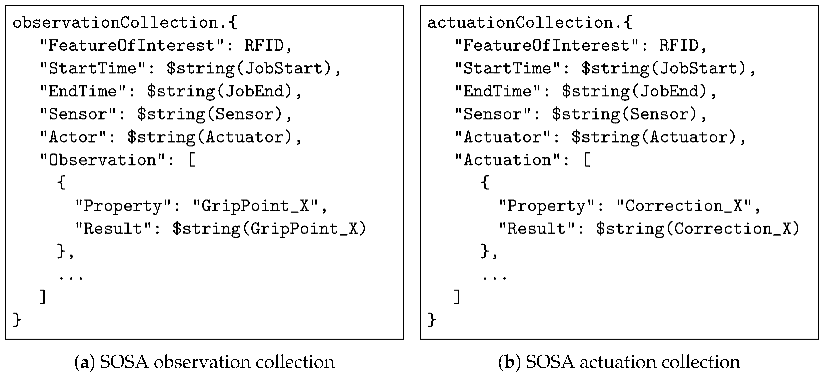
The semantic integration process is designed as a continuous pipeline: Incoming MQTT messages are forwarded by the broker via webhooks to a receiving endpoint, enabling real-time data exchange. Node-RED subscribes to these event-specific endpoints and processes the incoming messages within configurable flows. Independent of the original payload format, the data is transformed and normalized into a use-case-specific, uniform JSON schema. This schema combines the raw payload with relevant metadata (e.g., topic, timestamp, and control packet type), thereby preparing the data for semantic lifting. A key feature of the framework is its ability to handle heterogeneous payload formats and character encodings. MQTT messages often contain application-specific and unstructured payloads, which are abstracted through this normalization step. To illustrate the transformed data, Listing 1 shows exemplary normalized payloads in a unified JSON structure using JSONata.
The resulting structures follow the SOSA-based conceptual model of observations and actuations, forming the basis for subsequent semantic lifting. At the end of each processing flow, the normalized data is persisted as JSON files, organized by MQTT control packet type. Changes to these files trigger the RDF mapping process: the RMLMapper instantiates RDF individuals based on mapping definitions expressed in RML and semantically grounded in the MQTT4SSN and SOSA ontologies. The mapping process follows a modular design, with each MQTT control packet type associated with a specific mapping file and its corresponding execution script. The generated RDF triples are continuously streamed into the triplestore, enabling the KG to be populated almost in real time without batch processing.
| Listing 1. Exemplary normalized JSONata transformations in a unified JSON structure. |
 |
6.4. Conceptual Procedure for Semantic Topic Mapping
In the current implementation, semantic topic information is represented and made queryable through MQTT4SSN and MQTT2RDF, but the automatic derivation of semantic meaning from MQTT topic structures is not yet implemented. To illustrate the intended approach of semantic topic naming, we define a conceptual mapping procedure that can be implemented on top of the existing framework. Since MQTT topic structures are application- or vendor-specific, they may follow different naming conventions. Each raw topic received from the broker can be interpreted using configurable mapping profiles. Such profiles define how individual topic levels, their order, and their hierarchical context may be associated with ontology concepts such as production site, plant, device, sensor, actuator, feature of interest, observed property, or actuatable property.
First, the raw topic is decomposed into ordered topic levels using the MQTT topic separator “/”. The original topic string is retained to ensure traceability. Second, a configurable mapping profile can assign individual topic levels, their positions, and their hierarchical context with the semantic model. Such profiles may also include alias rules for vendor-specific abbreviations or naming conventions. Third, the resulting associations can be linked to corresponding semantic entities in the KG. If no mapping rule exists, the topic or topic-level part can be marked as unresolved.
Typical topic-mapping cases, including vendor-specific naming conventions, missing semantic information, reused topic levels, and conflicting mappings, are summarized in Appendix C, Table A3.
6.5. Semantic Analytics Dashboard
Building upon the continuously updated KG, the semantic analytics dashboard provides an interactive analytics layer for real-time semantic exploration. The dashboard is implemented as an extension of the Node-RED environment and integrates SPARQL-based queries directly into reusable flow components. Each analytical view corresponds to a semantically defined query pattern derived from initially defined CQs and is rendered as structured tables and aggregated summaries.
The dashboard is divided into several analytical perspectives that reflect key usage scenario for semantic IoT systems, identified in Section 2. First, Message Content Analytics (Figure 12) enables the inspection of heterogeneous payload structures and their semantic enrichment, allowing users to interpret observations and actuations in a unified manner independent of their original encoding.
Figure 12.
MQTT2RDF Dashboard: Message content analytics.
Second, Semantic Topic Analytics (Figure 13) reveals the relationship between MQTT topic hierarchies and the underlying sensor and actuator semantics, enabling the discovery of relevant data streams based on observed properties or features of interest.
Figure 13.
MQTT2RDF Dashboard: Semantic topic naming analytics.
Third, Transport and Provenance Analytics (Figure 14) supports the investigation of message transmission behavior by correlating control packet types, QoS levels, connection states, and other protocol-level metadata, thereby enabling traceability and debugging of communication failures.
Figure 14.
MQTT2RDF Dashboard: Transport diagnostics analytics.
By using the explicit semantics encoded in MQTT4SSN and SOSA, the dashboard allows users to correlate information across traditionally separated layers, such as linking sensor observations to network-level transmission characteristics or identifying inconsistencies between expected and observed system behavior. The integration of semantic queries into the dashboard enables domain-independent analytics workflows and supports reproducible, explainable analysis of IoT systems.
The semantic integration framework and semantic analytics dashboard are designed to be adaptable and domain-independent. While MQTT is a prerequisite, making it particularly suitable for industrial IoT scenarios, core components such as the broker or triplestore can be replaced within the Docker environment with minimal adjustments to the stream-processing or semantic-transformation layers.
7. Evaluation
Following the SABiOx methodology [36], we evaluate the ontology through verification (Section 7.2) and application-based validation (Section 7.3). In addition, we conduct a runtime analysis (Section 7.4) to assess the processing overhead of the implemented semantic lifting pipeline under controlled variations of message count and payload size. Finally, we discuss the scope and limitations of the evaluation (Section 7.5).
Verification ensures that the ontology is correctly designed and implemented in accordance with our requirements, as determined by the CQs. Application-based validation checks whether MQTT4SSN can be instantiated through MQTT2RDF in an industrially motivated use-case scenario and whether the resulting KG can answer the defined CQs. For the evaluation, we generated a synthetic dataset with a PowerShell script (Section 7.1) based on the EKI project, which covers an industrial case scenario.
The evaluation is therefore intended to examine the practical feasibility of semantic integration, queryability, and processing overhead in the implemented framework, rather than to provide a full-scale MQTT broker benchmark or a comparative triplestore performance study. During development and evaluation, we checked the ontology with the OOPS! [38] to prevent modeling errors through potential pitfalls. The final OOPS! Evaluation detects only minor pitfalls, including unconnected ontology elements (P04), missing annotations (P08), and missing inverse relationships (P13). The warnings P04 and P08 refer to imported ontologies, whereas we explicitly modeled the identified relationships in P13 as non-inverse. The full OOPS! evaluation report is available in the ontology documentation (https://www.w3id.org/MQTT4SSN-Ontology, accessed on 15 June 2026).
7.1. Dataset and Experimental Setup
For the dataset, synthetic sensor and actuator signals were generated using a PowerShell script provided in the MQTT2RDF Repository (GitHub: https://github.com/doernern/MQTT2RDF, accessed on 15 June 2026; Zenodo: https://doi.org/10.5281/zenodo.17823700). The script generates CSV-formatted MQTT payloads following the structure in Listings 2 and 3 based on the EKI project (https://dtecbw.de/home/forschung/hsu/projekt-eki/, accessed on 15 June 2026). It allows the number of messages and rows per message to be configured for the runtime analysis. The evaluation is based on an industrial production scenario involving a robotic packaging line, in which a conveyor belt transports packaging pieces. A vision sensor is placed on the robot’s arm to measure the grip position in three dimensions (sosa:Property). These sensor signals (sosa:hasSimpleResult) are sent to an edge device via MQTT in CSV format (Listing 2) for further processing.
| Listing 2. Comma-separated sensor measurements with column header. |
| RFID;JobStart;JobEnd;GripPoint_X;GripPoint_Y;GripPoint_Z;Sensor;Actuator RFID_87A3F1;20251203091502;20251203091502;102.44;50.15;20.10;VisionSensor_01;RobotArm_01 RFID_87A3F2;20251203091502;20251203091502;101.10;50.05;20.60;VisionSensor_01;RobotArm_01 RFID_87A3F3;20251203091502;20251203091502;100.35;49.70;20.15;VisionSensor_01;RobotArm_01 |
The robot captures the package under a unique RFID number (sosa:FeatureOfInterest) and transmits it as metadata alongside its sosa:Sensor and sosa:Actuator identifiers. The processing system compares the measured position with the nominal target and calculates correction offsets in real time. The edge device sends actuation signals (sosa:hasSimpleResult) for the correction points (sosa:Property) via MQTT in CSV format (Listing 2) to the robot, which adjusts its grip before picking.
| Listing 3. Comma-separated actuator commands with column header. |
| RFID;JobStart;JobEnd;Correction_X;Correction_Y;Correction_Z;Sensor;Actuator RFID_87A3F1;20251203091502;20251203091502;-0.44;-0.15;+0.10;VisionSensor_01;RobotArm_01 RFID_87A3F2;20251203091505;20251203091505;-0.10;-0.05;+0.60;VisionSensor_01;RobotArm_01 RFID_87A3F3;20251203091508;20251203091508;+0.65;+0.30;+0.15;VisionSensor_01;RobotArm_01 |
The EMQX MQTT platform [34] was used as a broker, sending event-based webhooks that an HTTP node in Node-RED listens to. The evaluation is limited to the metadata exposed by the EMQX webhook interface. Since the webhook interface does not provide the complete set of packet-level MQTT metadata, missing protocol fields were represented by placeholder values during normalization in Node-RED. These placeholders are used only to test whether the integration framework can instantiate the corresponding semantic structures defined by the ontology.
7.2. Ontology Verification
During ontology engineering, we first defined a structured set of CQs in accordance with our requirements, derived from the official MQTT 5.0 Specification [3]. These CQs define the scope of knowledge to be represented in the model design.
Initially, we defined CQs that encompass the components of the MQTT message protocol. Then, we defined CQs that address the gap between the observation, actuation, and sampling semantics and the message protocol. We structured the CQs into four major categories: the Control Packet Hierarchy (CQ1), the Fixed and Variable Headers (CQ2), the Payload with the Application Message (CQ3), the Network Infrastructure (CQ4), and the Topic Subject (CQ5). Each category reflects a distinct conceptual layer of the ontology and targets specific modeling requirements. We defined a total number of 9 general and 37 use-case-specific CQs. The two complementary dimensions, general and use-case-specific CQs, serve both to define the overall scope and key concepts of the ontology and to ensure its practical applicability. This includes usage scenarios such as interpreting heterogeneous message content, structuring semantic topic hierarchies, and analyzing transport errors and provenance information to support reliable diagnostics and integration. Table 1 shows an excerpt of one CQ per category and dimension to illustrate how each conceptual category is represented by both a general modeling question and a use-case-specific analytical question. The complete set of 46 CQs was translated into executable SPARQL queries, prepared as category-related Jupyter notebooks available on GitHub (https://github.com/doernern/MQTT2RDF, accessed on 15 June 2026), and evaluated against the instantiated KG.
CQs related to the Control Packet Hierarchy focus on the representation and differentiation of all MQTT control packet types defined in the specification. They include questions about the classification of packets, their structural relationships, and their association with headers and payloads. The Fixed and Variable Headers category captures protocol-specific metadata and configuration parameters. The corresponding CQs investigate how header fields, flags, properties, and reason codes are represented within the model. For the Payload and Application Message, the CQs focus on the representation of payload structures and their transformation into semantically interpretable application-level messages. In particular, they address how raw payload content can be linked to structured message representations, including content types, encodings, and field structures, as well as how these messages can be connected to SSN/SOSA concepts such as observations or actuations. The Network Infrastructure category comprises CQs that address the interaction between MQTT clients and brokers, including message exchange, sessions, and network connections. These questions focus on how participants exchange control packets and how communication provenance can be reconstructed and analyzed. Finally, the Topic Subject category includes CQs that target the semantic interpretation of MQTT topics. These questions investigate how topic strings can be decomposed into semantically meaningful components and aligned to SSN/SOSA concepts such as activities, features of interest, and observable properties.
Furthermore, we subdivided these categories into a general and use-case-specific dimension. General CQs cover the intended requirements, while use-case-specific CQs focus more on practical applicability, providing a foundation for later analysis.
The alignment between the designed and implemented ontology with the defined CQs confirms the conceptual completeness of the model. All CQs could be mapped to specific ontology entities, indicating complete coverage of the intended requirements and scope definition.
7.3. Ontology Validation
Validation assesses the operational applicability of the MQTT4SSN ontology by examining whether it can be instantiated with scenario-based MQTT streaming data derived from an industrially motivated use-case scenario and supports the derivation of meaningful, context-aware insights. In contrast to verification, this step follows an application-based validation approach, in which the ontology is evaluated by integrating it into the MQTT2RDF framework. Consequently, the validation simultaneously reflects the performance and suitability of the framework that operationalizes the ontology. While verification focused on the conceptual coverage and modeling of the defined CQs, the validation evaluates whether these CQs can be answered successfully on instantiated streaming data within a dynamic data-processing environment.
To validate the correctness and completeness of the instantiated KG, the full set of 46 previously defined CQs was executed as SPARQL queries within a Jupyter Notebook environment.
7.4. Framework Runtime Analysis
The runtime analysis was initiated via a command-line test setup that runs a shell script simulating MQTT clients that generate CSV-formatted messages and publish them to a broker. This setup enables controlled experimentation with varying numbers of data volumes. In this evaluation, the number of rows per message is used as a proxy for payload size, because each additional CSV row increases the number of application-level values that must be normalized, semantically lifted, and represented as RDF resources. Therefore, the evaluation captures the effect of increasing message content. Specifically, we evaluated different configurations by varying (a) the number of messages (1, 10, 100) and (b) the number of rows per message (1, 10, 100), resulting in a runtime analysis to evaluate the performance characteristics of the processing pipeline. We limited the evaluation to PUBLISH control packets due to their application content. The ingestion pipeline includes preprocessing payloads, batching, and executing semantic mappings. During preprocessing, incoming CSV data is parsed and structurally normalized into JSON. In the subsequent queuing and batching phase, messages are temporarily buffered to enable efficient batch processing. The mapping stage then applies the defined RML-based transformation rules to convert the structured data into RDF triples aligned with the MQTT4SSN ontology. The batching mechanism is configured with a maximum batch size of 20 messages and a timeout threshold of 200 ms, ensuring a balance between latency and throughput. The messages are ingested, preprocessed, and transformed into RDF representations in near real-time. This process results in a continuously growing KG that integrates both semantically enriched message-level metadata and observation data.
Table 2 outlines the experimental setup and captures the execution times for preprocessing, queuing, and batching, and semantic mapping across different data configurations.
Table 2.
Runtime analysis (in milliseconds) of CSV data transmitted via MQTT for (a) varying numbers of messages and (b) rows per message . The maximum batch size is limited to 20, with a batch timeout of 200 ms for each run. Bold values indicate aggregated runtime totals.
The evaluation was conducted on a typical notebook equipped with an Intel Core i9-14900HX processor and 64 GB of RAM. The measurements show that the Node-RED preprocessing part remains comparatively stable across all configurations. For single-message cases, the Node-RED total ranges from 224.00 ms to 262.00 ms, while for 10-message cases, it ranges from 225.60 ms to 243.40 ms, and all 100-message cases remain close to 225–229 ms. The semantic transformation (mapping) based on shell scripts and the upload to the triplestore account for the majority of the total execution time. For the largest configuration, 100 messages with 100 rows per message, the Node-RED part accounts for 226.74 ms of the total 5155.58 ms, while the shell-based part accounts for 4928.84 ms. The mapping step alone requires 2903.64 ms and is therefore larger than the measured triplestore upload time of 256.07 ms in this configuration. This indicates that the primary bottleneck is not MQTT ingestion, payload normalization, or batching, but semantic lifting (mapping) and RDF persistence (upload). Although RDF transformation introduces measurable overhead, the overall processing time remains within a range suitable for near real-time integration in IoT environments under the evaluated message configurations. Compared with simpler JSON logging, broker logs, and ad hoc RDF mappings, the main benefit of MQTT2RDF is the explicit semantic linking of payload content, topic interpretation, MQTT communication context, and SSN/SOSA-level observation and actuation semantics in a queryable KG.
7.5. Evaluation Discussion and Limitations
Overall, the validation and runtime analysis demonstrate that MQTT4SSN can be instantiated from scenario-based MQTT stream data and that the resulting KG can answer the defined CQs in near real time under the evaluated message configurations. Under the tested conditions, the results support the feasibility of the proposed semantic lifting pipeline. However, they do not constitute a general benchmark for large-scale deployments. The runtime analysis was conducted in a controlled notebook-based setup using synthetically generated data from an industrially motivated scenario. Therefore, the results characterize the implemented pipeline, but do not cover the full variability of production environments, vendor-specific payload formats, or long-running system behavior. Furthermore, the current implementation relies on EMQX webhook metadata and is limited to the MQTT communication context exposed by the broker interface. Stress testing, broker and triplestore comparisons, variations in message rates, topic complexity, and triplestore configurations were not conducted in this evaluation.
8. Conclusions and Future Work
Industrial technical systems rely on automated, data-driven processes that exchange sensing and actuation signals in real-time through edge devices, frequently over the MQTT messaging protocol. This article introduces MQTT2RDF, a semantic integration framework that provides artifacts for populating ontologies from real-time MQTT traffic. We presented the further developed MQTT4SSN ontology as the semantic core of the framework. The ontology models the semantics of the MQTT protocol and aligns them with SSN/SOSA concepts, enabling end-to-end traceability between sensing systems and message transfer. We have extended our previous proposed ontology version with a detailed solution that covers all MQTT 5.0 control packets, including their complete field contents. The semantic integration framework and ontology provide a foundation for a semantic analytics environment to explore MQTT message transfer, such as message transport provenance. However, this provenance-oriented analysis is limited to the communication context captured by the broker interface and assumes that the metadata provided by the broker is trustworthy. Cryptographic security guarantees, such as message integrity, client authentication, and non-repudiation, fall outside the scope of MQTT4SSN and MQTT2RDF and must be ensured by complementary mechanisms within the deployed architecture. We have set up an industrial production process scenario as a use case that transmits real-time sensor and actuator data with MQTT. The practical applicability of the framework and its semantic core was validated through a set of general and use-case-specific CQs. The use-case scenario achieves full coverage of the modeled requirements.
Although MQTT4SSN was explicitly designed for the MQTT messaging protocol and to address the missing transport-layer component in the otherwise well-established SOSA ontology, parts of the proposed modeling pattern are reusable beyond MQTT, indicating the model’s generalizability. In particular, the distinction between protocol-level payload representation and application-level semantic interpretation, realized through the payload of the PUBLISH packet and application message classes, can serve as a reusable ODP for other messaging and streaming infrastructures. Whereas MQTT control packets and their fields are protocol-specific, the application-level message content, together with its descriptive metadata such as content type, encoding, delimiter, and encoded fields, provides an abstraction that can inspire the modeling of semantically interpretable payloads across different protocol-based communication settings. Likewise, the MQTT-specific part of MQTT4SSN can be reused as an ODP and aligned with SSN/SOSA, as well as with other ontologies for describing sensing systems and related message-based infrastructures. The comprehensive MQTT 5.0 model is intended as a reusable superset from which deployment-specific profiles can instantiate only the required concepts.
Future work will address four main directions. First, we will further develop semantic topic naming by automatically deriving MQTT topic hierarchies from observation and actuation semantics. This will reduce manual configuration effort and improve interoperability across deployments with application- or vendor-specific topic conventions. Second, we will extend the semantic analytics environment to support query-based transport-provenance workflows for detecting and classifying malformed or otherwise faulty MQTT packets. This includes investigating packet-level capture mechanisms, such as raw MQTT traffic analysis, to complement the broker-exposed metadata used in the current implementation. Third, we will conduct larger-scale runtime evaluations, including message-rate stress tests, variations in topic complexity, and comparisons of broker and triplestore configurations. Finally, we will investigate deployment-specific MQTT4SSN profiles to support lightweight instantiation for application-focused scenarios and more detailed protocol-aware instantiation for transport diagnostics.
Author Contributions
N.D.: Writing—original draft, Methodology, Investigation, Formal analysis, Conceptualization. M.M.: Writing—review & editing, Supervision, Methodology, Investigation, Formal analysis, Conceptualization. All authors have read and agreed to the published version of the manuscript.
Funding
This research was conducted as part of the project “EKI—Engineering für die KI-basierte Automation in Produktionsumgebungen” (hereinafter EKI; https://dtecbw.de/home/forschung/hsu/projekt-eki/, accessed on 15 June 2026). The project is funded by dtec.bw—Digitalization and Technology Research Center of the Bundeswehr, which we gratefully acknowledge. dtec.bw is funded by the European Union—NextGenerationEU.
Data Availability Statement
The MQTT4SSN ontology (GitHub: https://github.com/doernern/MQTT4SSNOntology, accessed on 15 June 2026; Zenodo: https://doi.org/10.5281/zenodo.16704302, accessed on 15 June 2026) and the MQTT2RDF artifacts (GitHub: https://github.com/doernern/MQTT2RDF, accessed on 15 June 2026; Zenodo: https://doi.org/10.5281/zenodo.17823700, accessed on 15 June 2026) are available in separate GitHub repositories and archived on Zenodo with individual DOIs [10,47]. The Ontology documentation (https://www.w3id.org/MQTT4SSN-Ontology, accessed on 15 June 2026) is available under a persistent identifier. An MQTT2RDF manual is available in the MQTT2RDF repository (https://github.com/doernern/MQTT2RDF, accessed on 15 June 2026; Zenodo: https://doi.org/10.5281/zenodo.17823700, accessed on 15 June 2026). All resources are licensed under Attribution-NonCommercial-ShareAlike 4.0 International (https://creativecommons.org/licenses/by-nc-sa/4.0/, accessed on 15 June 2026).
Acknowledgments
During the preparation of this work, the authors used Grammarly to check grammar and spelling. After using this tool, the authors reviewed and edited the content as needed and take full responsibility for the publication’s content.
Conflicts of Interest
The authors declare no conflicts of interest.
Abbreviations
The following abbreviations are used in this manuscript:
| CQ | competency question |
| ETL | Extract, Transform, Load |
| FAIR | Findable, Accessible, Interoperable, and Reusable |
| GDB | graph database |
| IoT | Internet of Things |
| IPFS | InterPlanetary File System |
| KG | knowledge graph |
| MQTT | Message Queuing Telemetry Transport |
| M2M | machine-to-machine |
| ODP | Ontology Design Pattern |
| OOPS! | OntOlogy Pitfall Scanner! |
| QoS | Quality of Service |
| QUDT | Quantities, Units, Dimensions, and Data Types |
| RDB | relational database |
| TLS | Transport Layer Security |
| SSN | Semantic Sensor Network |
| VKG | virtual knowledge graph |
| WOT | Web of Things |
Appendix A. MQTT4SSN Ontology Delta Table
The Table A1 provides a detailed comparison between the previous MQTT4SSN ontology and the revised MQTT 5.0-oriented version, and complements the summary in Section 5.1.
Table A1.
Delta between the previous MQTT4SSN ontology and the revised version.
Appendix B. Diagnostic Capabilities and Security Limitations
Table A2 distinguishes operational errors from adversarial manipulation and summarizes the diagnostic boundaries of the current implementation. It indicates which cases the semantic model can represent or detect, and which require complementary security mechanisms. The table complements the discussion in Section 6.2.
Table A2.
Diagnostic capabilities and security limitations of the current MQTT2RDF implementation.
Appendix C. Semantic Topic-Mapping Cases
Table A3 summarizes typical MQTT topic-mapping cases that can be supported by a future configurable mapping procedure based on MQTT4SSN and MQTT2RDF. It complements Section 6.4.
Table A3.
Conceptual handling of semantic topic-mapping cases.
References
- Bayar, A.; Şener, U.; Kayabay, K.; Eren, P.E. Edge Computing Applications in Industrial IoT: A Literature Review. In Proceedings of the Economics of Grids, Clouds, Systems, and Services (GECON 2022); Lecture Notes in Computer Science; Springer: Cham, Switzerland, 2023; Volume 13430, pp. 124–131. [Google Scholar] [CrossRef] [Scilit] [PubMed]
- Savaglio, C.; Mazzei, P.; Fortino, G. Edge Intelligence for Industrial IoT: Opportunities and Limitations. Procedia Comput. Sci. 2024, 232, 397–405. [Google Scholar] [CrossRef] [Scilit]
- Banks, A.; Briggs, E.; Borgendale, K.; Gupta, R. MQTT Version 5.0. 2019. Available online: https://docs.oasis-open.org/mqtt/mqtt/v5.0/os/mqtt-v5.0-os.html (accessed on 15 June 2026).
- Saha, N.; Paul, P.; Ji, K.; Harik, R. Performance evaluation framework of MQTT client libraries for IoT applications in manufacturing. Manuf. Lett. 2024, 41, 1237–1245. [Google Scholar] [CrossRef] [Scilit]
- Katsikeas, S.; Fysarakis, K.; Miaoudakis, A.; Van Bemten, A.; Askoxylakis, I.; Papaefstathiou, I.; Plemenos, A. Lightweight & Secure Industrial IoT Communications via the MQ Telemetry Transport Protocol. In Proceedings of the 2017 IEEE Symposium on Computers and Communications (ISCC), Heraklion, Greece, 3–6 July 2017; IEEE: Piscataway, NJ, USA, 2017; pp. 1193–1200. [Google Scholar] [CrossRef] [Scilit]
- Janowicz, K.; Haller, A.; Cox, S.J.D.; Le Phuoc, D.; Lefrançois, M. SOSA: A Lightweight Ontology for Sensors, Observations, Samples, and Actuators. J. Web Semant. 2019, 56, 1–10. [Google Scholar] [CrossRef] [Scilit]
- Haller, A.; Janowicz, K.; Cox, S.J.D.; Le Phuoc, D.; Taylor, K.; Lefrançois, M. Semantic Sensor Network Ontology. W3C Recommendation 19 October 2017. Available online: https://www.w3.org/TR/vocab-ssn/ (accessed on 15 June 2026).
- W3C Spatial Data on the Web Interest Group. SSN/SOSA Ontology Draft. Draft Version. 2024. Available online: https://w3c.github.io/sdw-sosa-ssn/ssn/ (accessed on 15 June 2026).
- Sandeep, M.; Chandavarkar, B.R.; Khatri, S. Heterogeneous Data Format Integration and Conversion (HDFIC) Using Ontology-Based Techniques in IoT. Evol. Syst. 2024, 15, 375–396. [Google Scholar] [CrossRef] [Scilit]
- Doerner, N.; Maleshkova, M. MQTT4SSN v2.0. 2026. Available online: https://zenodo.org/records/20271380 (accessed on 15 June 2026).
- Markovic, M.; Corsar, D.; Asif, W.; Edwards, P.; Rajarajan, M. Towards Transparency of IoT Message Brokers. In Provenance and Annotation of Data and Processes: 7th International Provenance and Annotation Workshop, IPAW 2018, London, UK, 9–10 July 2018, Proceedings; Belhajjame, K., Gehani, A., Alper, P., Eds.; Lecture Notes in Computer Science; Springer: Cham, Switzerland, 2018; Volume 11017, pp. 200–203. [Google Scholar] [CrossRef] [Scilit]
- Markovic, M.; Edwards, P. Enhancing Transparency of MQTT Brokers for IoT Applications Through Provenance Streams. In Proceedings of the 6th International Workshop on Middleware and Applications for the Internet of Things (M4IoT ’19), Davis, CA, USA, 9–13 December 2019; ACM: New York, NY, USA, 2019; pp. 17–20. [Google Scholar] [CrossRef] [Scilit]
- Taylor, K.; Haller, A.; Lefrançois, M.; Cox, S.J.D.; Janowicz, K.; Garcia-Castro, R.; Le Phuoc, D.; Lieberman, J.; Atkinson, R.; Stadler, C. The Semantic Sensor Network Ontology, Revamped. In Proceedings of the Journal Track Co-Located with the 18th International Semantic Web Conference (ISWC 2019), Auckland, New Zealand, 26 October 2019; d’Amato, C., Kagal, L., Eds.; CEUR Workshop Proceedings; CEUR-WS.org: Aachen, Germany, 2019; Volume 2576, pp. 1–9. Available online: https://ceur-ws.org/Vol-2576/paper11.pdf (accessed on 15 June 2026).
- Cox, S.J.D.; Lefrançois, M.; Warren, R.; Atkinson, R.; Moreira de Sousa, L.; Schleidt, K.; Grellet, S.; Haller, A.; Janowicz, K.; Le Phuoc, D.; et al. Semantic Sensor Network Ontology—2023 Edition. W3C First Public Working Draft, World Wide Web Consortium (W3C), 16 September 2025. Available online: https://www.w3.org/TR/vocab-ssn-2023/ (accessed on 15 June 2026).
- QUDT.org. Quantities, Units, Dimensions and Types (QUDT) Ontology Version 1.1. 2011. Available online: https://www.linkedmodel.org/doc/qudt/1.1/ (accessed on 15 June 2026).
- QUDT.org. QUDT Ontologies Overview. 2024; Overview of Quantity Kinds, Units, Dimensions, and Data Types in QUDT. Available online: https://qudt.org/pages/QUDToverviewPage.html (accessed on 15 June 2026).
- W3C Web of Things. MQTT-to-RDF Ontology and Binding Templates. 2024. Available online: https://w3c.github.io/wot-binding-templates/bindings/protocols/mqtt/ontology.html (accessed on 15 June 2026).
- Doerner, N.; Maleshkova, M. MQTT4SSN: An Ontology for the MQTT Message Protocol. In Proceedings of the Joint Proceedings of the 16th Workshop on Ontology Design and Patterns (WOP 2025) and the 1st Workshop on Bridging Hybrid Intelligence and the Semantic Web (HAIBRIDGE 2025), Co-Located with the 24th International Semantic Web Conference (ISWC 2025); CEUR Workshop Proceedings; Novakazi, F., Dalal, A.S., Eds.; CEUR-WS.org: Nara, Japan, 2025; Volume 4093, pp. 57–70. [Google Scholar] [CrossRef]
- Blomqvist, E.; Gangemi, A.; Presutti, V. Experiments on pattern-based ontology design. In Proceedings of the Fifth International Conference on Knowledge Capture (K-CAP ’09), Redondo Beach, CA, USA, 1–4 September 2009; ACM: New York, NY, USA, 2009; pp. 41–48. [Google Scholar] [CrossRef] [Scilit]
- Das, S.; Sundara, S.; Cyganiak, R. R2RML: RDB to RDF Mapping Language. W3C Recommendation, World Wide Web Consortium (W3C), 27 September 2012. Available online: https://www.w3.org/TR/r2rml/ (accessed on 15 June 2026).
- De Meester, B.; Heyvaert, P.; Delva, T.; Dimou, A.; Vander Sande, M. RDF Mapping Language (RML), Version 1.1.2. Unofficial Draft, RML.io, 20 June 2024. Available online: https://rml.io/specs/rml/ (accessed on 15 June 2026).
- Michel, F.; Djimenou, L.; Faron-Zucker, C.; Montagnat, J. xR2RML: Relational and Non-Relational Databases to RDF Mapping Language (Version 5); Specification v5; I3S Laboratory, Université Côte d’Azur, CNRS, Inria. 2017. Available online: https://webusers.i3s.unice.fr/~fmichel/xr2rml_specification_v5.html (accessed on 15 June 2026).
- Canim, M.; Cornelio, C.; Farrell, R.; Fokoue, A.; Gao, K.; Gunnels, J.; Iyengar, A.; Musa, R.; Rodriguez-Muro, M.; Uceda-Sosa, R. A knowledge and reasoning toolkit for cognitive applications. In Proceedings of the Fifth ACM/IEEE Workshop on Hot Topics in Web Systems and Technologies (HotWeb ’17), San Jose/Silicon Valley, CA, USA, 14 October 2017; ACM: New York, NY, USA, 2017; Article 13; pp. 1–10. [Google Scholar] [CrossRef] [Scilit]
- Xiao, G.; Ding, L.; Cogrel, B.; Calvanese, D. Virtual Knowledge Graphs: An Overview of Systems and Use Cases. Data Intell. 2019, 1, 201–223. [Google Scholar] [CrossRef] [Scilit]
- Xiao, G.; Lanti, D.; Kontchakov, R.; Komla-Ebri, S.; Güzel-Kalaycı, E.; Ding, L.; Corman, J.; Cogrel, B.; Calvanese, D.; Botoeva, E. The Virtual Knowledge Graph System Ontop. In Proceedings of The Semantic Web—ISWC 2020; Pan, J.Z., Tamma, V., d’Amato, C., Janowicz, K., Fu, B., Polleres, A., Seneviratne, O., Kagal, L., Eds.; Lecture Notes in Computer Science; Springer: Cham, Switzerland, 2020; Volume 12507, pp. 259–277. [Google Scholar] [CrossRef] [Scilit]
- Heyvaert, P.; Dimou, A.; Chaves-Fraga, D. RML Implementation Report. Unofficial Draft, RML.io, 17 February 2022. Available online: https://rml.io/implementation-report/ (accessed on 15 June 2026).
- Heyvaert, P.; Van Assche, D.; De Meester, B.; Haesendonck, G.; de Vleeschauwer, E.; Oo, S.M. RMLMapper-JAVA. Available online: https://zenodo.org/records/18032528 (accessed on 15 June 2026). [CrossRef] [Scilit]
- Ivanovic, P.; Burbach, S.; Maleshkova, M. MontoFlow—A Maritime Ontology Framework for Modeling Ship Sensory Systems. In Proceedings of The Semantic Web—ISWC 2025: 24th International Semantic Web Conference, Nara, Japan, November 2–6, 2025, Proceedings, Part II; Garijo, D., Kirrane, S., Salatino, A., Shimizu, C., Acosta, M., Nuzzolese, A.G., Ferrada, S., Soulard, T., Kozaki, K., Takeda, H., et al., Eds.; Lecture Notes in Computer Science; Springer Nature: Cham, Switzerland, 2026; Volume 16141, pp. 276–294. [Google Scholar] [CrossRef] [Scilit]
- Listl, F.G.; Fischer, J.; Sohr, A.; Dittler, D.; Jazdi, N.; Weyrich, M. Utilizing ISA-95 in an Industrial Knowledge Graph for Material Flow Simulation—Semantic Model Extensions and Efficient Data Integration. Procedia CIRP 2023, 120, 1558–1563. [Google Scholar] [CrossRef] [Scilit]
- OpenJS Foundation and Contributors. Node-RED: Low-Code Programming for Event-Driven Applications. Available online: https://nodered.org (accessed on 15 June 2026).
- Scrocca, M.; Grassi, M.; Carenini, A.; Calbimonte, J.P.; Anicic, D.; Celino, I. A DataOps Toolbox Enabling Continuous Semantic Integration of Devices for Edge-Cloud AI Applications. arXiv 2025, arXiv:2508.02708. [Google Scholar] [CrossRef] [Scilit]
- Bender, M.; Kirdan, E.; Pahl, M.O.; Carle, G. Open-Source MQTT Evaluation. In Proceedings of the 2021 IEEE 18th Annual Consumer Communications & Networking Conference (CCNC), Las Vegas, NV, USA, 9–12 January 2021; IEEE: Piscataway, NJ, USA, 2021; pp. 1–4. [Google Scholar] [CrossRef] [Scilit]
- Light, R.A. Mosquitto: Server and client implementation of the MQTT protocol. J. Open Source Softw. 2017, 2, 265. [Google Scholar] [CrossRef] [Scilit]
- EMQ Technologies Inc. EMQX: The Unified MQTT Platform for AI and IoT Data Streaming. Available online: https://www.emqx.com/en (accessed on 15 June 2026).
- Lazzaro, S.; Buccafurri, F. Achieving Accountability and Data Integrity in Message Queuing Telemetry Transport Using Blockchain and Interplanetary File System. Future Internet 2024, 16, 246. [Google Scholar] [CrossRef] [Scilit]
- Aguiar, C.Z.; Souza, V.E.S. SABiOx: The extended systematic approach for building ontologies. In Proceedings of the 17th Seminar on Ontology Research in Brazil (ONTOBRAS 2024) and 8th Doctoral and Masters Consortium on Ontologies (WTDO 2024); Fonseca, C.M., Zamborlini, V., Cardoso, E., Emygdio, J.L., Eds.; CEUR Workshop Proceedings; CEUR-WS.org: Vitória, Brazil, 2024; Volume 3905, Available online: https://ceur-ws.org/Vol-3905/paper1.pdf (accessed on 15 June 2026).
- Musen, M.A. The Protégé project: A look back and a look forward. AI Matters 2015, 1, 4–12. [Google Scholar] [CrossRef] [Scilit] [PubMed]
- Poveda-Villalón, M.; Gómez-Pérez, A.; Suárez-Figueroa, M.C. OOPS! (OntOlogy Pitfall Scanner!): An On-line Tool for Ontology Evaluation. Int. J. Semant. Web Inf. Syst. 2014, 10, 7–34. [Google Scholar] [CrossRef] [Scilit]
- Lohmann, S.; Link, V.; Marbach, E.; Negru, S. WebVOWL: Web-based Visualization of Ontologies. In Knowledge Engineering and Knowledge Management. EKAW 2014; Springer: Cham, Switzerland, 2015; Volume 8982, pp. 154–158. [Google Scholar] [CrossRef] [Scilit]
- Garijo, D. WIDOCO: A wizard for documenting ontologies. In Proceedings of the International Semantic Web Conference; Springer: Cham, Switzerland, 2017; pp. 94–102. [Google Scholar] [CrossRef] [Scilit]
- Wilkinson, M.D.; Dumontier, M.; Aalbersberg, I.J.; Appleton, G.; Axton, M.; Baak, A.; Blomberg, N.; Boiten, J.W.; da Silva Santos, L.B.; Bourne, P.E.; et al. The FAIR Guiding Principles for scientific data management and stewardship. Sci. Data 2016, 3, 160018. [Google Scholar] [CrossRef] [Scilit] [PubMed]
- Biron, P.V.; Malhotra, A. XML Schema Part 2: Datatypes Second Edition. W3C Recommendation, 28 October 2004. Available online: https://www.w3.org/TR/xmlschema-2/ (accessed on 15 June 2026).
- Merkel, D. Docker: Lightweight linux containers for consistent development and deployment. Linux J. 2014, 2014, 2. [Google Scholar]
- GraphDB Downloads and Resources—graphdb.ontotext.com. Available online: https://graphdb.ontotext.com/ (accessed on 15 June 2026).
- Wireshark Foundation. Wireshark: Network Protocol Analyzer. 2024. Available online: https://www.wireshark.org/ (accessed on 15 June 2026).
- Wireshark Foundation. TShark: Command-Line Network Protocol Analyzer. 2024. Available online: https://www.wireshark.org/docs/man-pages/tshark.html (accessed on 15 June 2026).
- Doerner, N.; Maleshkova, M. MQTT2RDF v1.0. 2025. Available online: https://zenodo.org/records/20341765 (accessed on 15 June 2026).
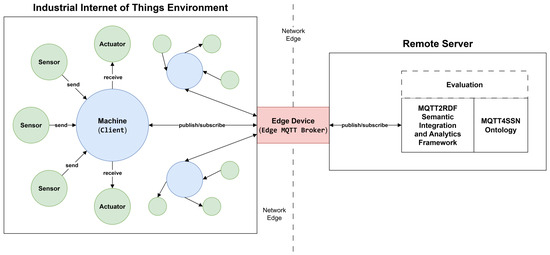
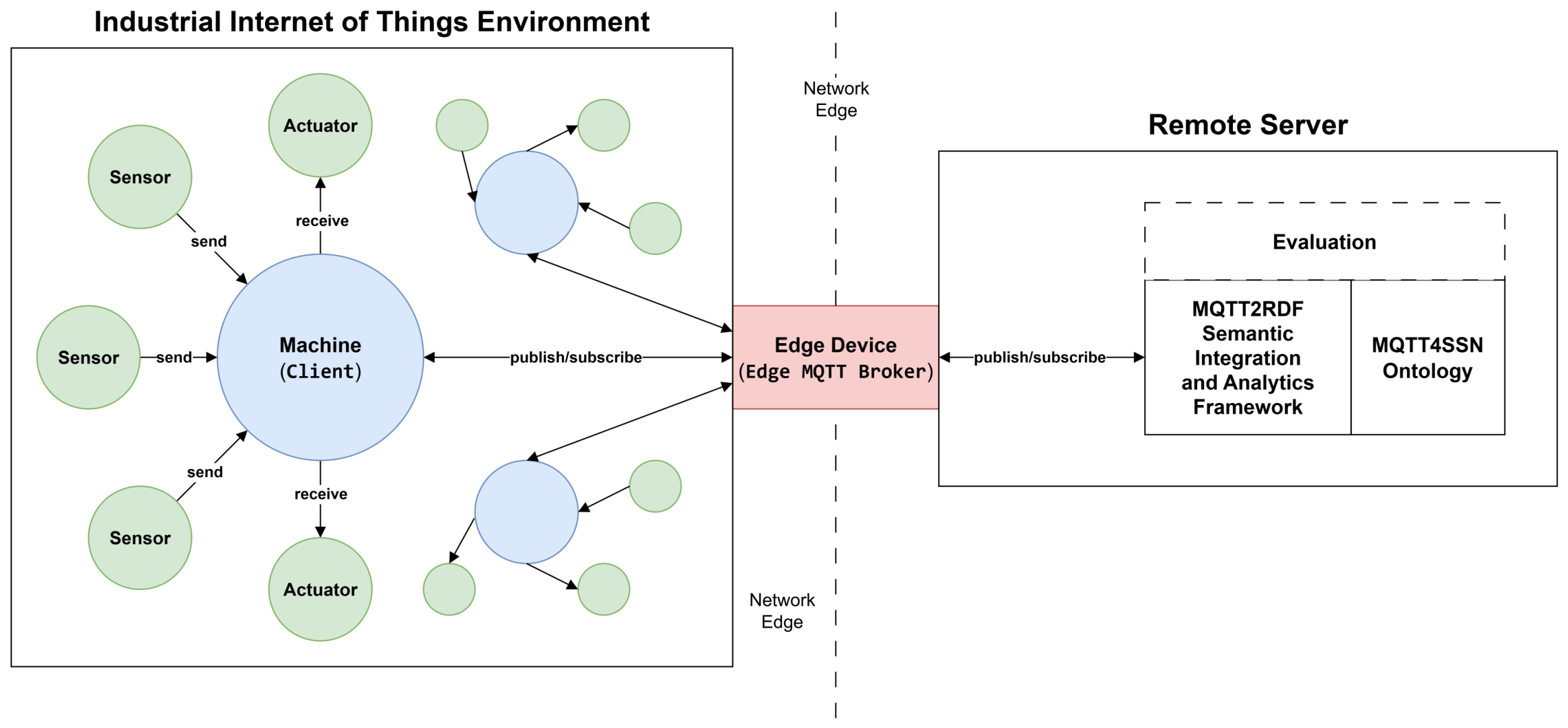
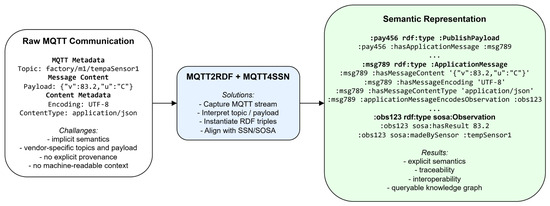
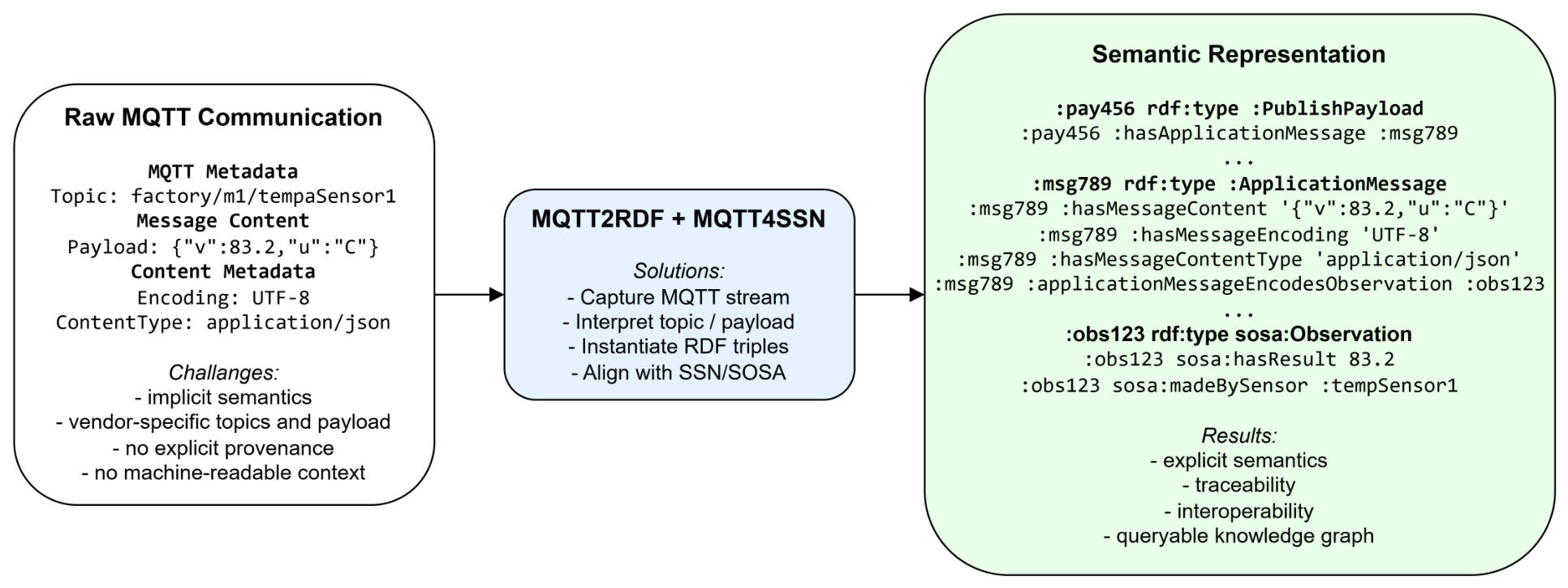
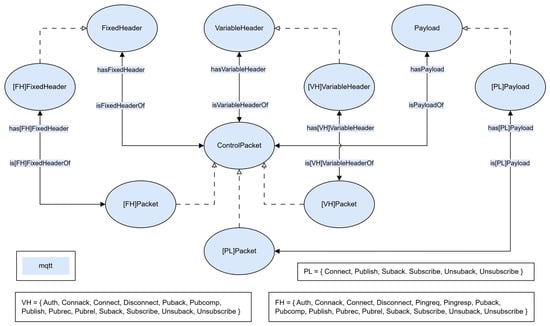
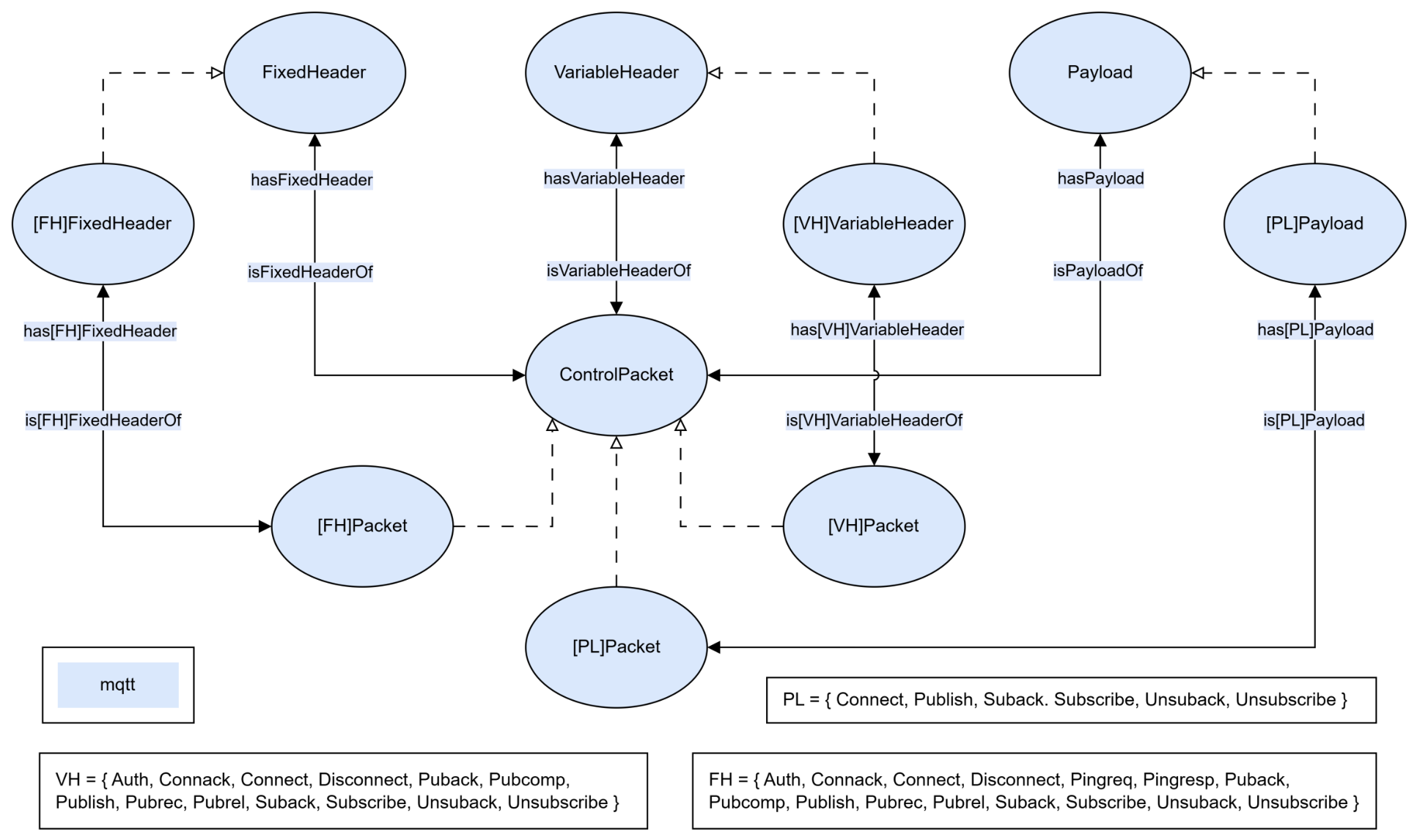
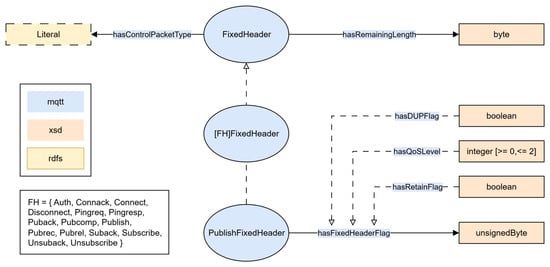
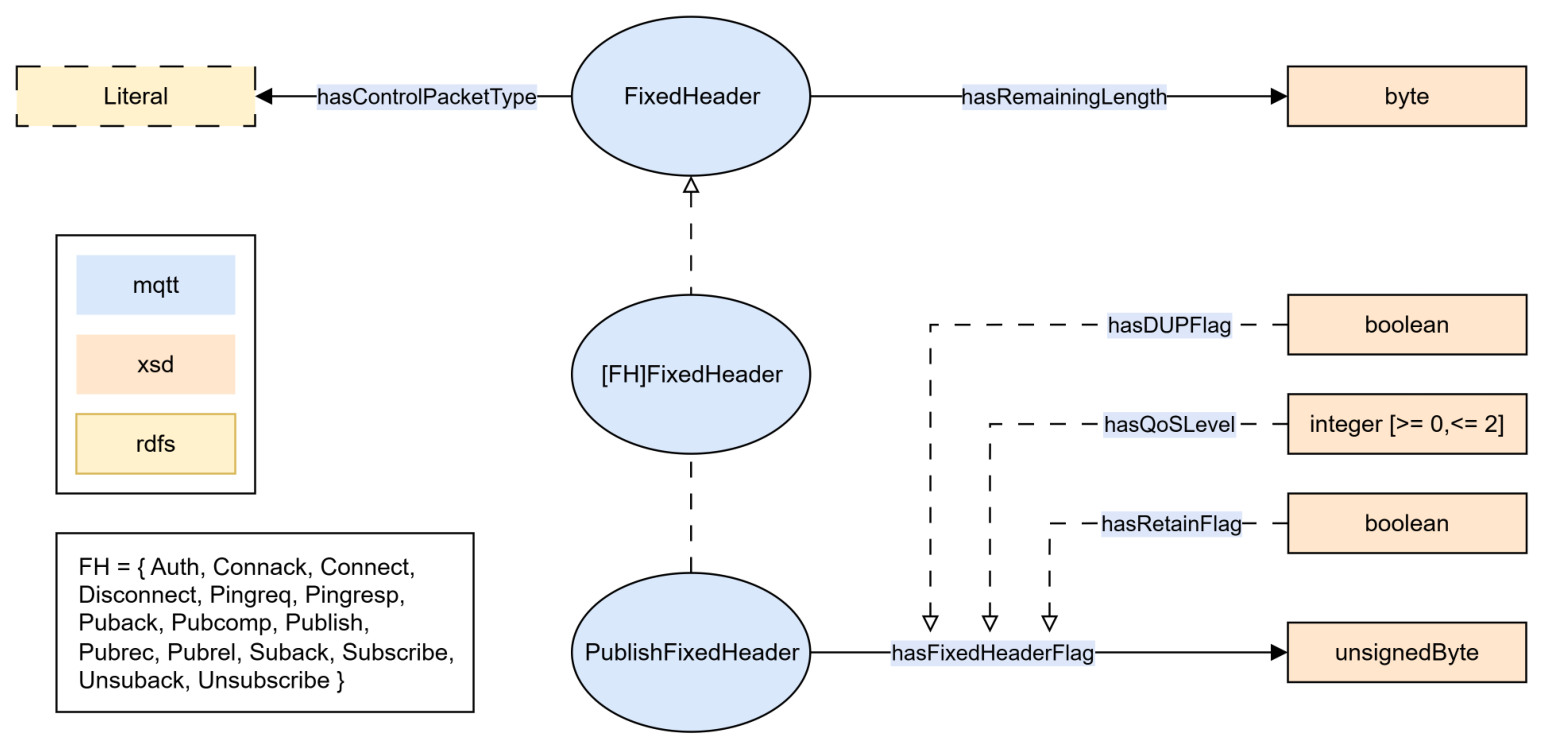
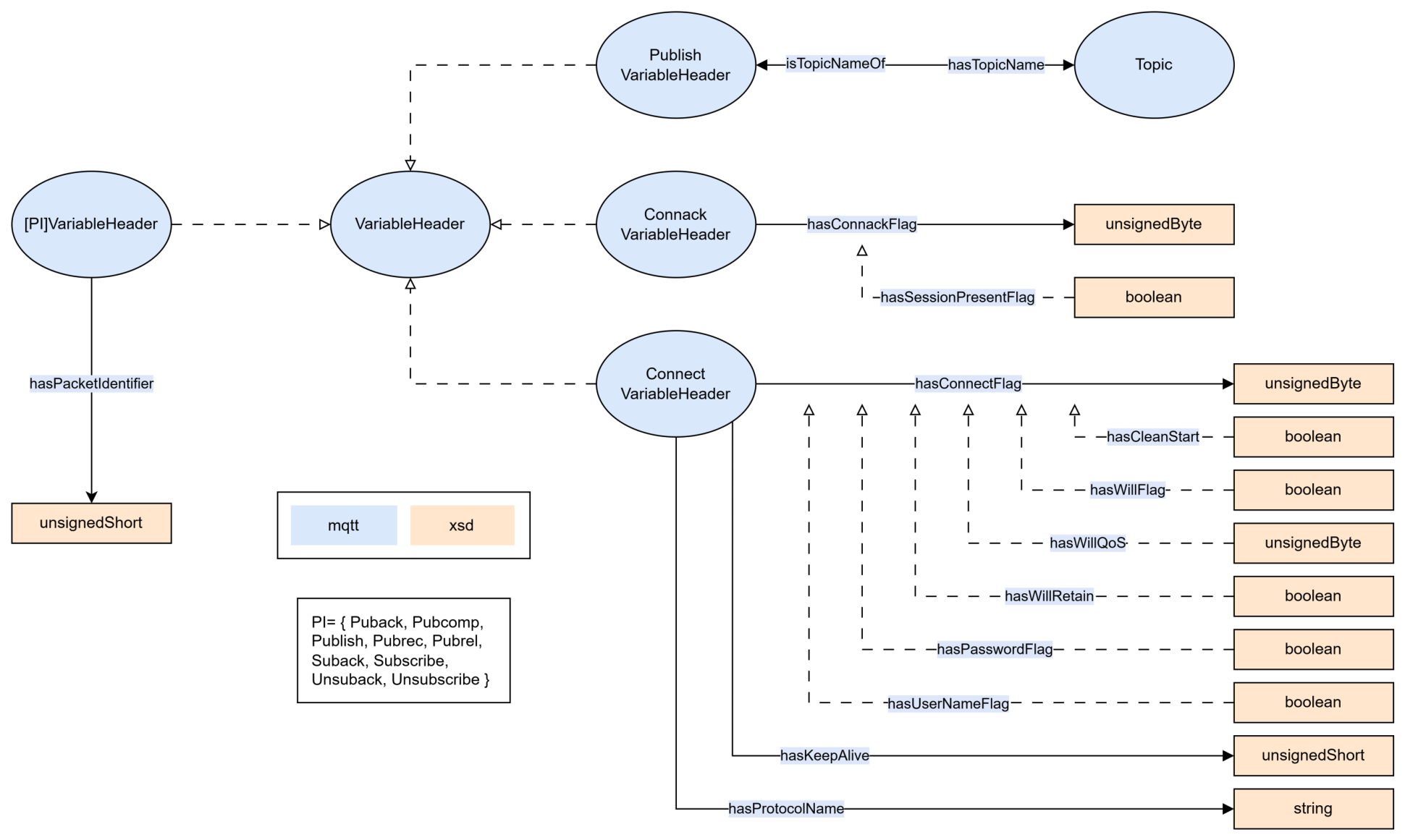
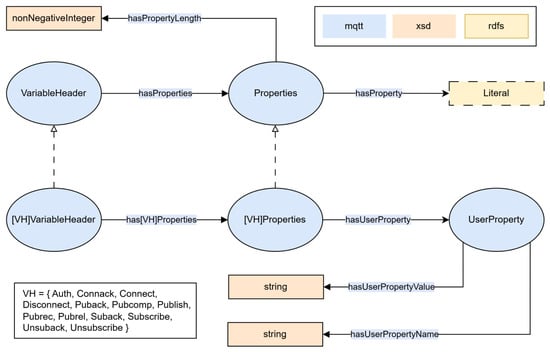
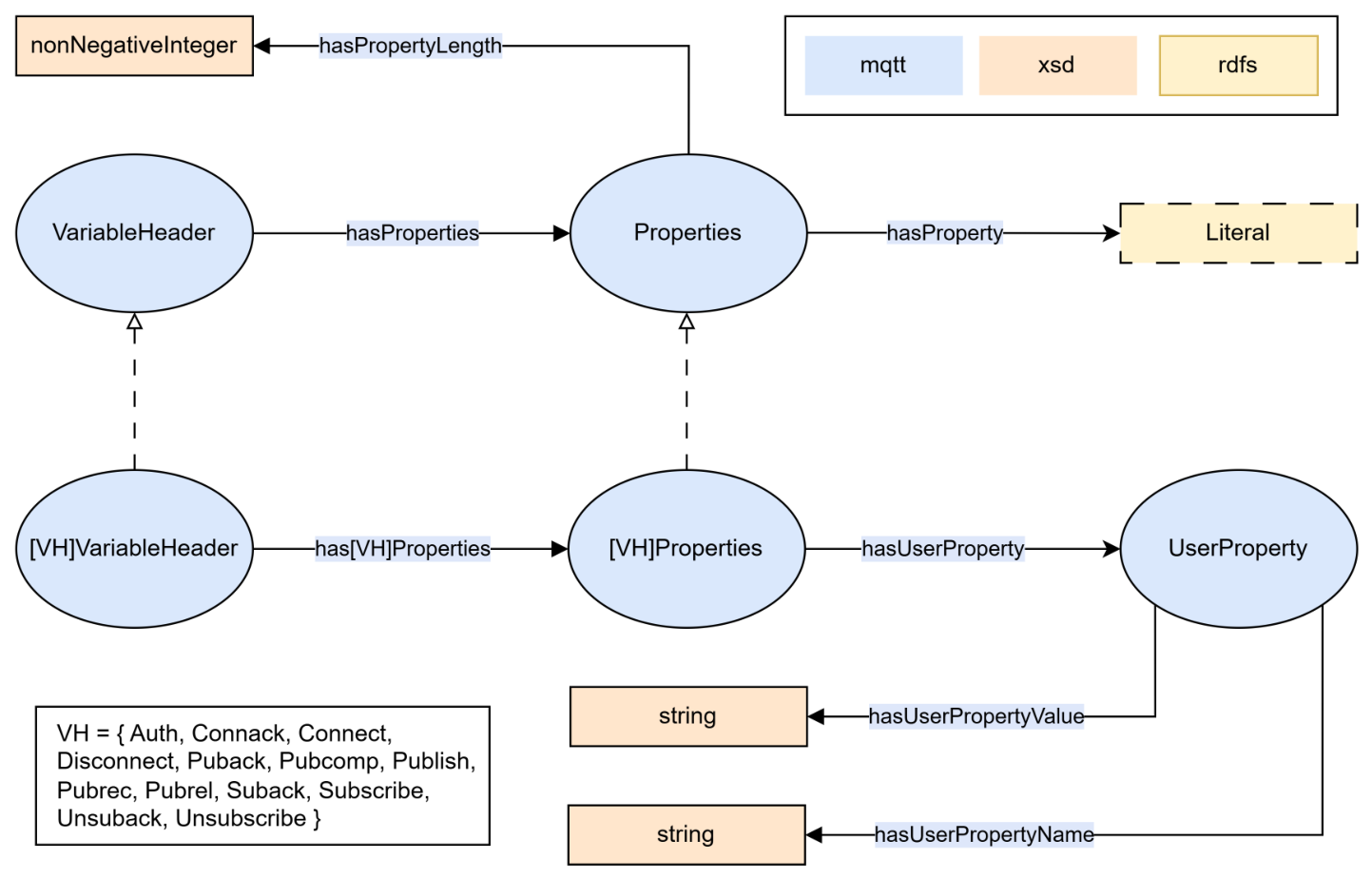
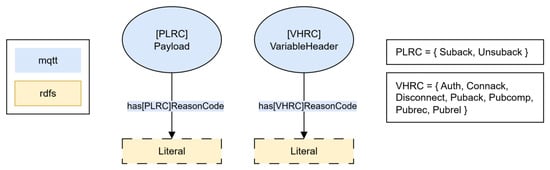
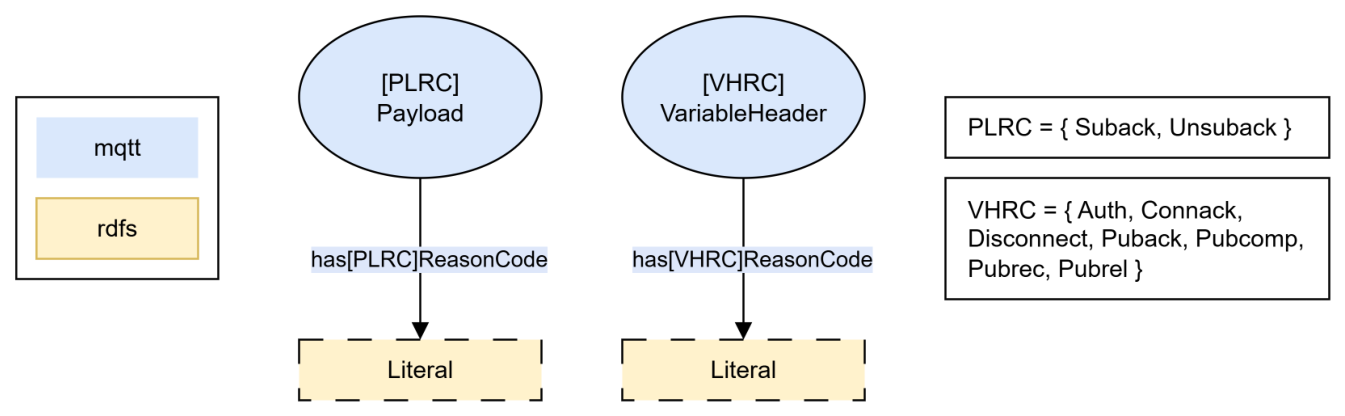
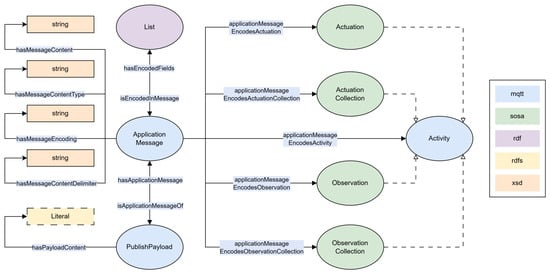
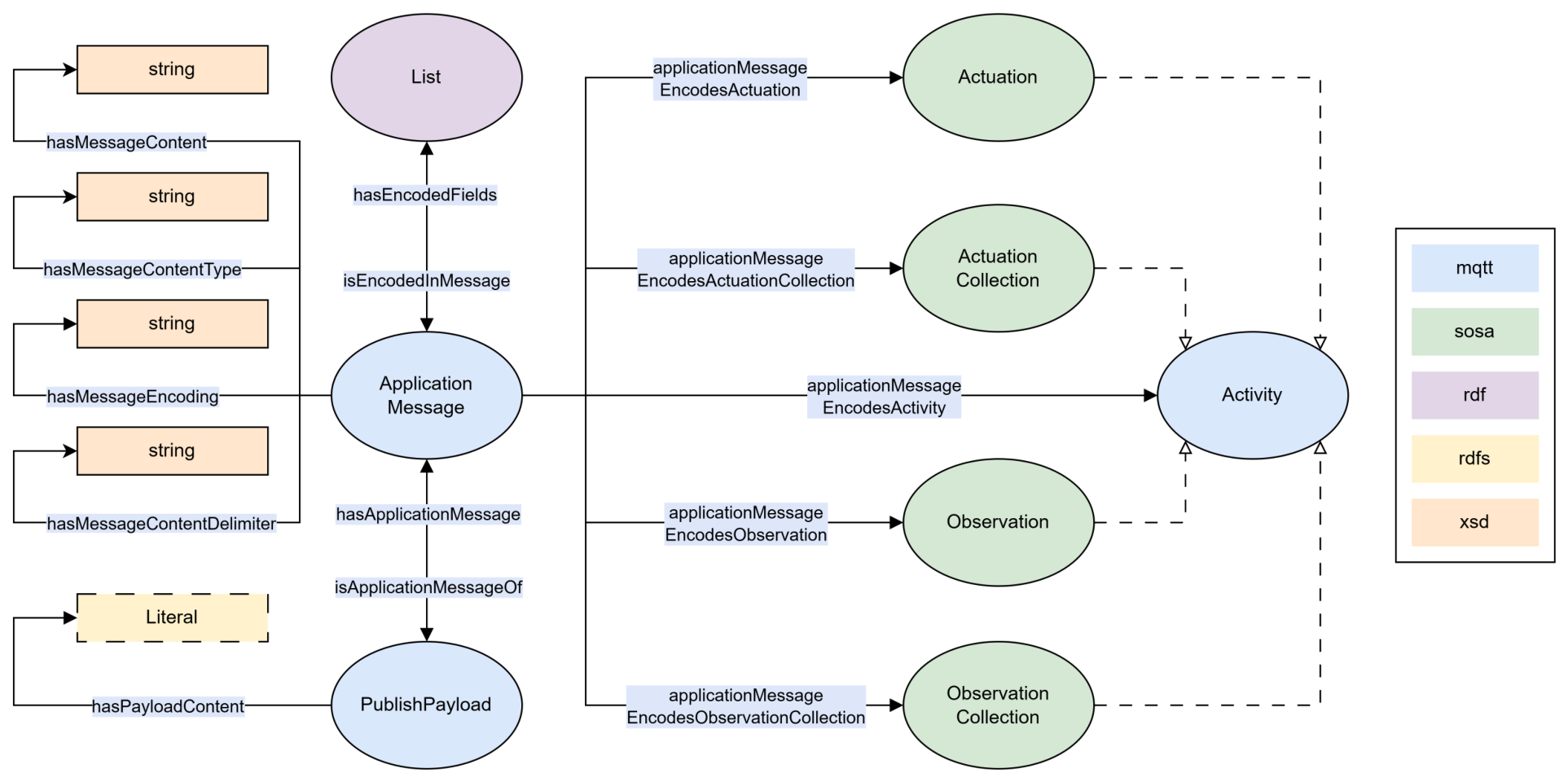
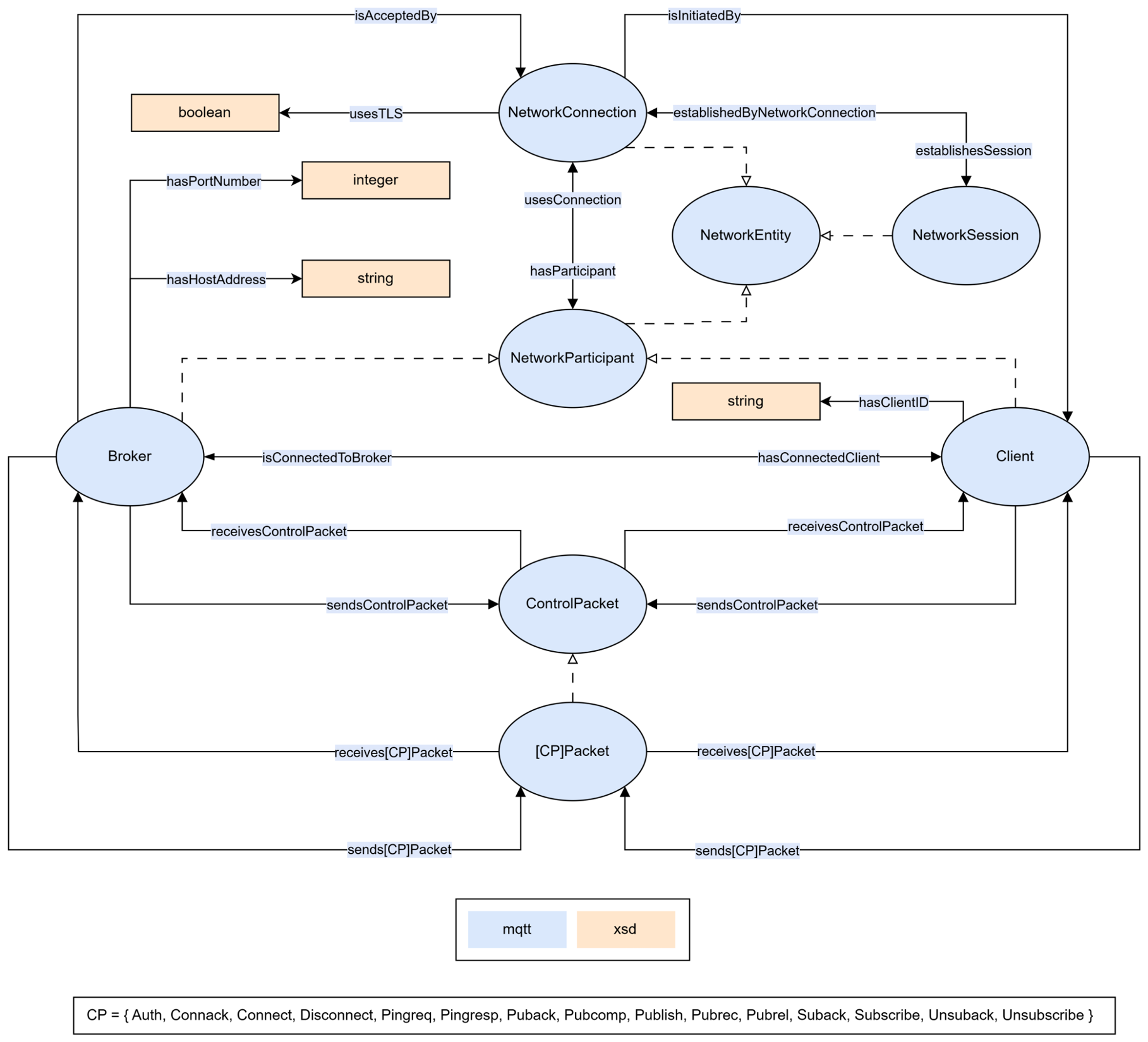
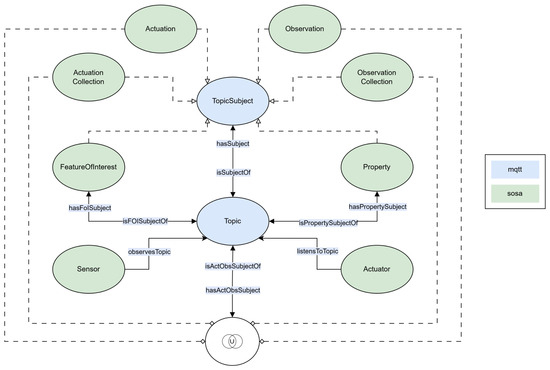
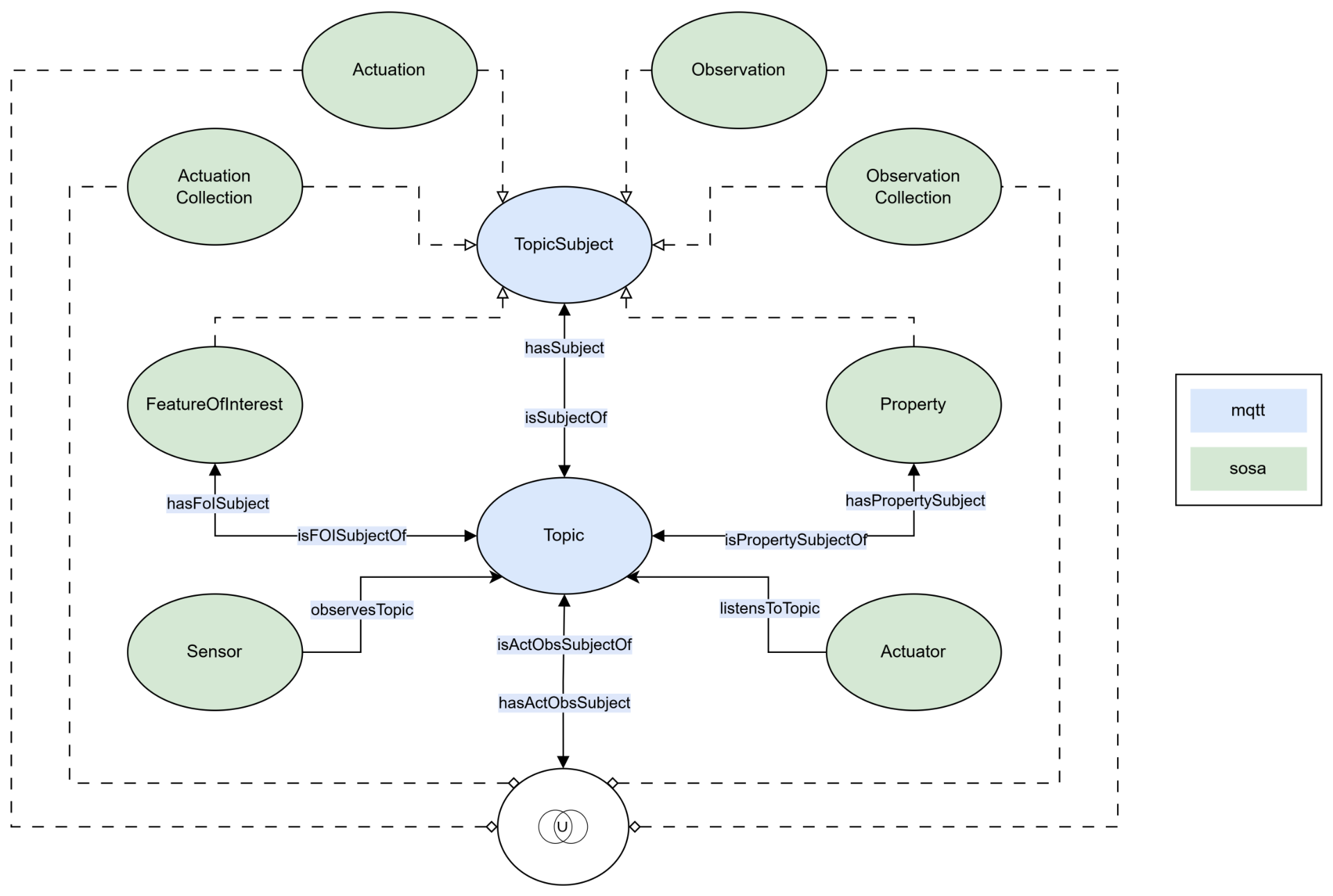
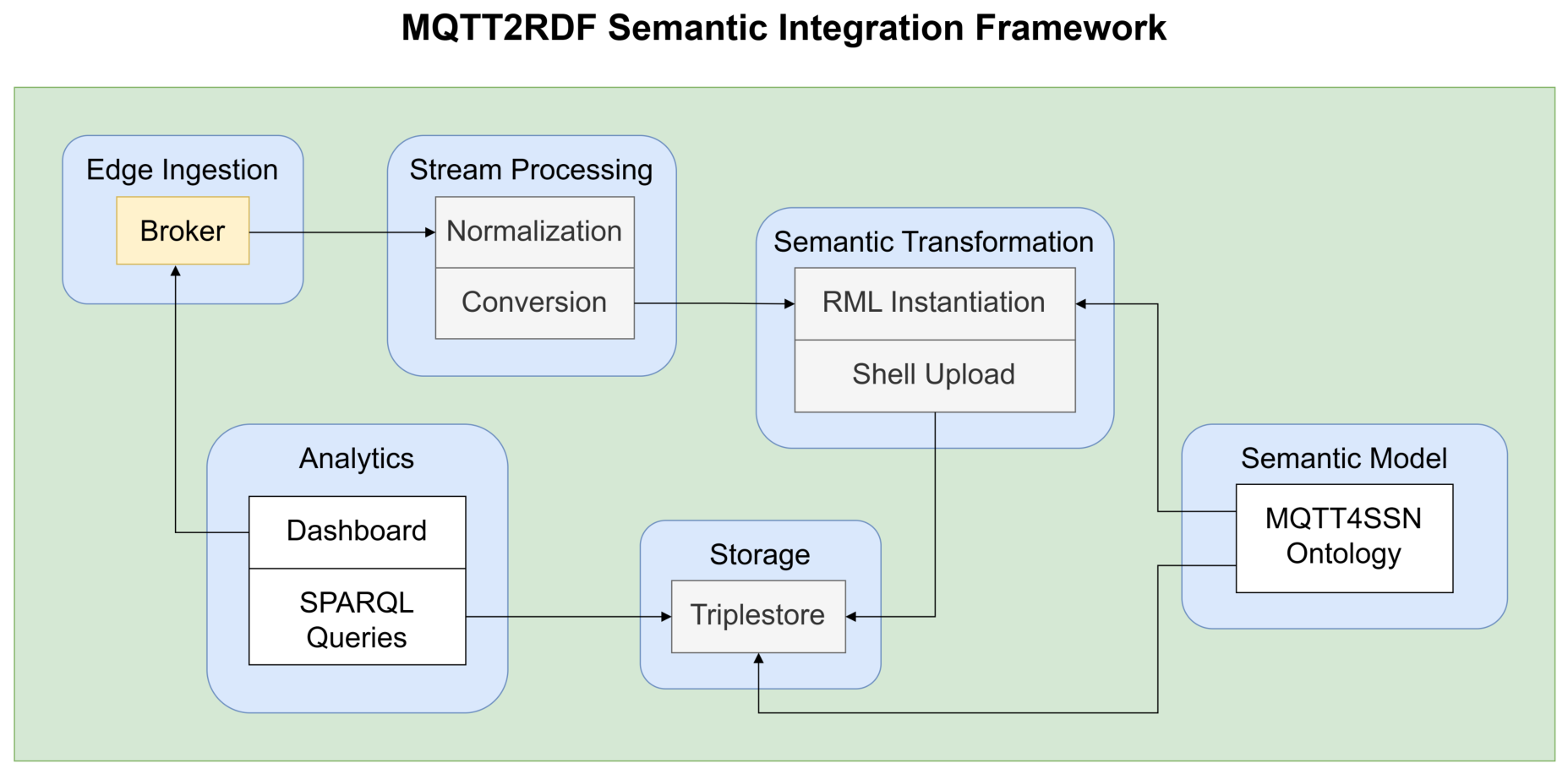
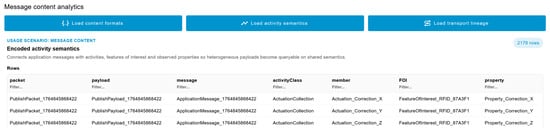
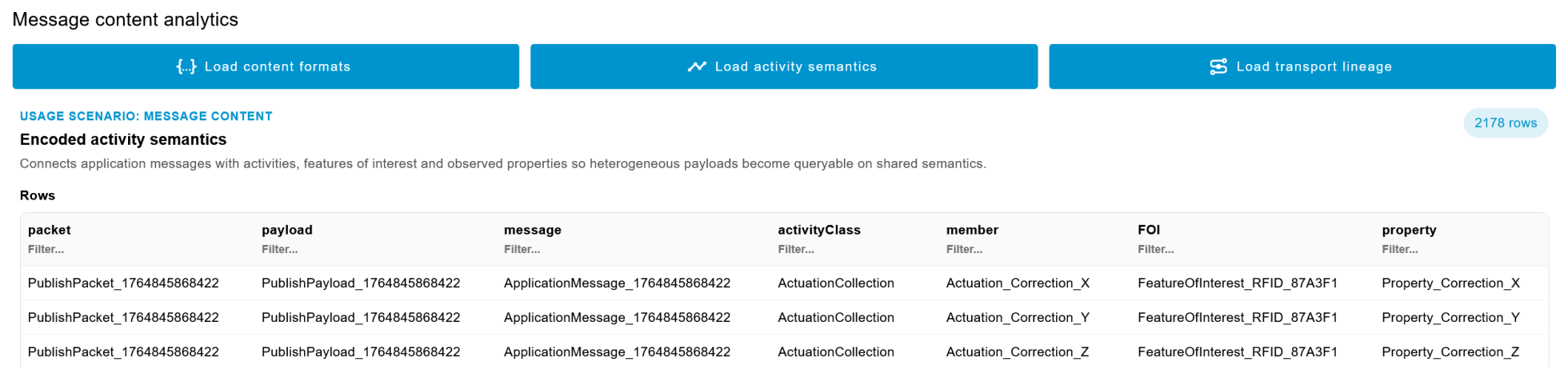

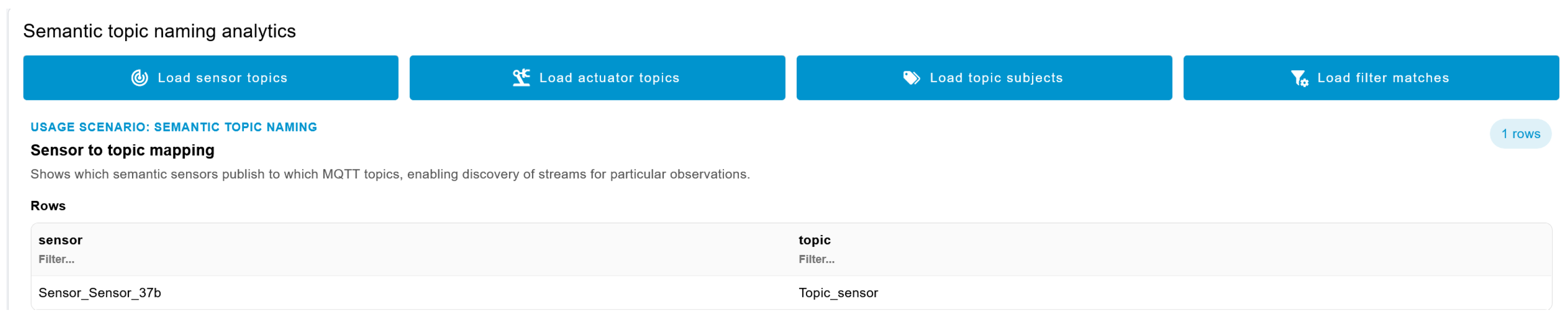
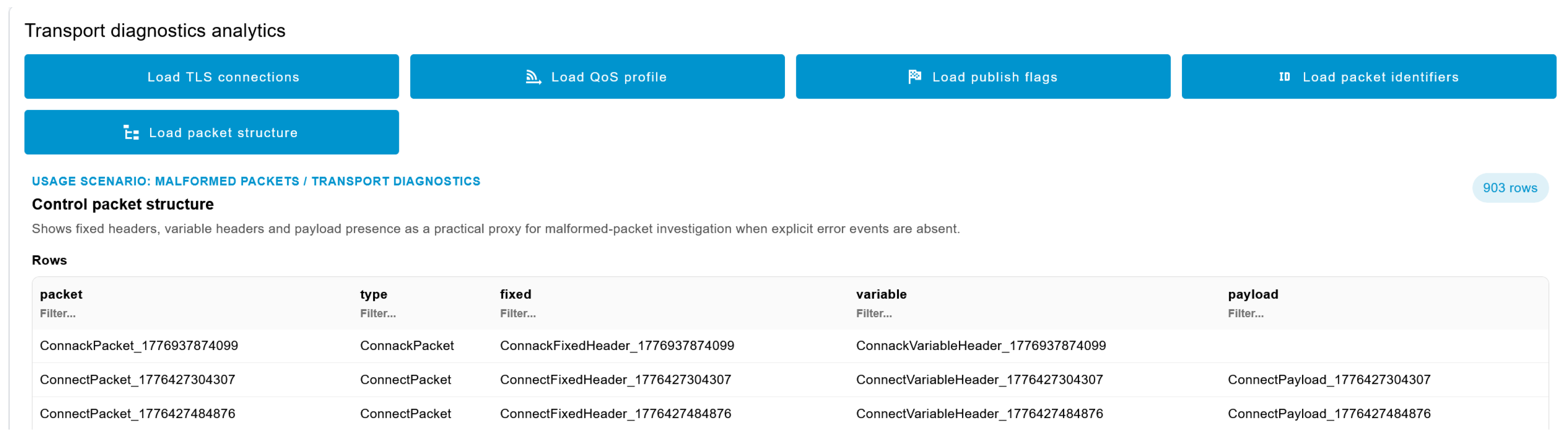

Disclaimer/Publisher’s Note: The statements, opinions and data contained in all publications are solely those of the individual author(s) and contributor(s) and not of MDPI and/or the editor(s). MDPI and/or the editor(s) disclaim responsibility for any injury to people or property resulting from any ideas, methods, instructions or products referred to in the content. |
© 2026 by the authors. Licensee MDPI, Basel, Switzerland. This article is an open access article distributed under the terms and conditions of the Creative Commons Attribution (CC BY) license.